California

Our Weekly Picks: September 22-28, 2010

0

WEDNESDAY 22

MUSIC

Mary Wilson

As one of the founding members of the Supremes, Mary Wilson sang on countless classic rock, R&B, soul, and doo-wop hits, including “Baby Love,” “Come See About Me,” “Stop! In The Name Of Love,” “Back In My Arms Again,” and many, many more. While that legendary group’s rise to fame has been celebrated in fictionalized form with the hit film and stage production Dreamgirls, Wilson has continued to perform and record, wowing fans with her outstanding voice that still powerfully belts out her hits, along with her interpretations of jazz standards. Fans can expect a bit of both when she comes to the city for a series of special, intimate shows. (Sean McCourt)

Wed/22-Sat/25, 8 p.m.; Sun/26, 7 p.m., $40–$55

Rrazz Room

Hotel Nikko

222 Mason, SF

1-866-468-3399

www.therrazzroom.com


EVENT

Jonathan Safran Foer

Every once in a while, a nonfiction book arrives that makes my head hurt, my tear ducts blow, and my appetite long for more discerning times ahead. Last time it was The Omnivore’s Dilemma. This time it’s Eating Animals, the author of loss literature Everything is Illuminated and Extremely Loud and Incredibly Close Jonathan Safran Foer’s voyage into the depraved bowels of our country’s factory farms. Since I lack the power of Safran Foer’s elegant prose, lemme summarize his findings: they are a stain upon our earth. Let him tell you himself at this benefit for the ever-fantastic 826 Valencia. (Caitlin Donohue)

8 p.m., $20

Herbst Theater

401 Van Ness, SF

(415) 392-4400

www.cityarts.net


DANCE

Alyce Finwall Dance Theater and PunkkiCo Dance

From the outside, a red door is all that distinguishes performing arts venue the Garage from other warehouse-like SoMa buildings. Once inside, the intimate space seems too small to function as a theater. Yet the diverse range of upcoming and established choreographers that RAW (the venue’s resident artist workshop) hosts always manages to bring explosive dance to the small, box-like space. This week RAW hosts PunkkiCo Dance and Alyce Finwall Dance Theater. Using the Garage’s interior space for inspiration, choreographer Raisa Punkki and her company present End Trance, a piece exploring large movement within claustrophobic spaces. Similarly, Alyce Finwall Dance Theater (directed by choreographer-dancer Finwall) explores explosive and raw movement in a piece that investigates femininity, beauty, and identity, to name a few. (Katie Gaydos)

Through Thurs/23

8 p.m., $15

Garage

975 Howard, SF

(415) 518-1517

www.975howard.com


THURSDAY 23

MUSIC

Big Boi

When is Outkast dropping its next album? When it damn well feels like it, that’s when. In the meantime, get up with the more elegant side of the ATL hip-hop duo — the checkered space-ghetto luxe of André 3000’s “Hey Ya!” partied hard, but when you found your dance partner and were ready to really get down, where’d you turn? “The Way You Move,” that’s where. Big Boi’s double time flows fill in languorous beats on new solo album Sir Lucious Leftfoot: The Son of Dusty Chico, which Jive demurred on because it was too much “a piece of art.” Their loss, and when Def Jam picked it up again, our gain. (Donohue)

8 p.m., $35

Regency Ballroom

1300 Van Ness, SF

www.theregencyballroom.com


EVENT

Oktoberfest by the Bay

Can’t make it all the way to Munich this year to mark the 200th anniversary of Oktoberfest? Then throw on your lederhosen and dirndls and bring your appetite for beer, bratwurst, and Bavarian-themed good times and head down to our own San Francisco waterfront for the 11th annual Oktoberfest by the Bay. A smorgasbord of food awaits to soak up the specialty suds being offered up by Spaten, as will a host of bands playing traditional music for all the partygangers raising their steins and dancing the schuhplattln. Prost! (McCourt)

Thurs/23–Fri/24, 5 p.m.–midnight; Sat/25, 11 a.m.–midnight;

Sun/26, 11 a.m.–6 p.m., $25–$30

Pier 48 (across from AT&T Park), SF

1-888-746-7522

www.oktoberfestbythebay.com


FRIDAY 24

PERFORMANCE

3 For All

Some veteran performers think they know it all already, feeling sufficient unto themselves. But despite the dizzying level of expertise evinced by 3 For All’s Rafe Chase, Stephen Kearin, and Tim Orr, these guys still take suggestions. In fact, they don’t do what they do without a little help from the audience, by way of nouns, adjectives, and odd phrases shouted out in eager expectation that these three improv masters will take their idea and transform it into a breathless and hysterical wonder of theatrical spontaneity. Really, if you haven’t seen 3 For All do its thing, you haven’t seen all that improv has to offer. These are the troupe’s last San Francisco performances of 2010. (Robert Avila)

Through Sat/25

8 p.m., $22–$25

Bayfront Theater

Fort Mason Center, Bldg. B

Marina at Laguna, SF

www.improv.org


FILM

“Radical Light: Return to Canyon, Program II”

Filmmaker Bruce Baillie first conceived of Canyon Cinema as a communal gathering in the redwood groves between Oakland and Moraga. The screenings showcased fresh, avant-garde work and self-produced newsreels, along with classic serials and government films. “We’d sit under the trees in the summer with all the dogs and people and watch,” Baillie once reminisced to interviewer Scott MacDonald. Canyon came down the mountain soon enough, but this special 50th anniversary event revives its original al fresco spirit. The show features many fine Canyon films new and old, as well as a newsreel produced by the kids of the Canyon School with help from USF’s film students. Baillie will be there too, still tossing the seeds of creative growth. (Max Goldberg)

6 p.m., free

Canyon School

187 Pinehurst, Canyon

www.sfcinematheque.org


EVENT

“24 Days of Central Market Arts: Kick-off Event”

In an area known for its uninviting sights and smells, visitors to the central Market Street area can instead treat themselves to the sights and sounds of art during 24 Days of Central Market Arts. The three-week festival kicks off today with LEVYdance, Robert Moses’ Kin, and Kunst-Stoff, followed by Cali & Co & The Welcome Matt, and vocalist Joshua Klipp with Sarah Bush Dance Project. Saturday continues with performers including La Alternativa and Hope Mohr Dance. The event culminates Sunday with more performances, belly dance classes, an improv dance jam, and indie rockers Handshake. (Emmaly Wiederholt)

Through Oct. 17

Kick-off: Fri/24, 1–2 p.m. and 5–7 p.m.;

Sat/25-Sun/26, 1–-5 p.m., free

Mint Plaza

Fifth St. between Market and Mission, SF

www.centralmarketarts.org


DANCE

Lenora Lee

In Lenora Lee’s Passages, politics and art work in tandem to tell the story of one person. Yet the piece also speaks for the courage and determination of thousands of others who left — and still leave — everything behind to make a better life for themselves, their children, and in Lee’s case, a grandchild. Lee’s grandmother was married in China and spent 10 years waiting to reunite with her husband on Gold Mountain, as California was called. She became an anchor in the little girl’s life, one in which dance lessons and visits with Grandma fused. The interdisciplinary Passages — with media design by Olivia Ting and a score by Francis Wong — commemorates the centennial of the Angel Island Immigration Station. (Rita Felciano)

Fri/24–Sat/25, 8 p.m.; Sun/26, 2:30 p.m., $20

Dance Mission Theater

3316 24th St., SF

1-800-838-3006

www.asianimprov.org


SUNDAY 26

MUSIC

Git Some

Gotta love hard rockers — and even harder livers — like those in Denver’s Git Some. Mixing hardcore maximalism with post-punkin’ Jesus Lizard freewheelery, the foursome — founded by ex-Planes Mistaken for Stars members Chuck French and Neil Keener — tear through bulldozers à la “There Is So Much Blood” and thrashers such as “Entrails for the Altar” on the new Loose Control with the barely harnessed ferocity of zombies served a groaning sideboard of fresh body parts. Translation: meaty satisfaction — the added wrinkle being the occasional butt-wiggling, cheese-gobblin’ guitar-god flourish found on, say, “Broken Bodies Glisten.” Taste the glove — and Git Some love? (Kimberly Chun)

With Pins of Light and Hazzard’s Cure

8 p.m., $6

Knockout

3223 Mission, SF

(415) 550-6994

www.theknockoutsf.com


TUESDAY 28

MUSIC

Odd Nosdam

Get your cerebral and head-bopping fix at this show featuring two all-star experimental electronic artists. The Bay Area’s Odd Nosdam makes sound collages with ideas and samples pulled from the worlds of hip-hop, ambient music, drone, and indie-rock, often set among creative drum patterns you can still tap your foot to. Austria-based musician Christian Fennesz (see music feature) combines spacey, manipulated electric guitar with dissonant textures and glitchy beats. Either of these guys playing on their own would make for a fantastic show. Together, for $10 per set, you’d be a fool to miss it. (Landon Moblad)

With Fennesz

8 p.m., $20

Swedish American Hall (above Café Du Nord)

2170 Market, SF

(415) 861-5016

www.cafedunord.com


EVENT

Guillermo del Toro

In addition to directing superbly haunting, dark, atmospheric films like Hellboy (2004) and Pan’s Labyrinth (2006), Guillermo del Toro also pens novels (with cowriter Chuck Hogan), the second of which, The Fall, hits stores this week. Though the topic of vampires may seem worn out to some, with the teenybopper Twilight series driving some genre fans to swear they’ll stake themselves at the mention of one more fang-based outing, del Toro brings the bite back into the fold with this second part of a planned trilogy of tales. Join the talented artist for a special evening of discussion about his work on the written page and silver screen. (McCourt)

7:30 p.m., $12–$75

Sundance Kabuki Theater

1881 Post, SF

1-800-838-3006

www.booksmith.com 


The Guardian listings deadline is two weeks prior to our Wednesday publication date. To submit an item for consideration, please include the title of the event, a brief description of the event, date and time, venue name, street address (listing cross streets only isn’t sufficient), city, telephone number readers can call for more information, telephone number for media, and admission costs. Send information to Listings, the Guardian Building, 135 Mississippi St., SF, CA 94107; fax to (415) 487-2506; or e-mail (paste press release into e-mail body — no text attachments, please) to listings@sfbg.com. We cannot guarantee the return of photos, but enclosing an SASE helps. Digital photos may be submitted in jpeg format; the image must be at least 240 dpi and four inches by six inches in size. We regret we cannot accept listings over the phone.

PG&E’s secret pipeline map

9

news@sfbg.com

>>CLICK HERE TO VIEW THE FULL-SIZE PG&E SECRET PIPELINE MAP (PDF)

It’s been nearly two weeks since the pipeline in San Bruno exploded and killed four people, injuring many more and destroying 37 homes. And it’s left a lot of people in San Francisco wondering: could it happen here?

Of course it could. PG&E has more than 200 miles of major gas pipelines under the city streets that are scheduled to be replaced — and that means they’re reaching the end of their useful life. Just like the pipe that blew up in San Bruno.

Are any running under your home or business? PG&E isn’t going to tell you.

That’s bad. “The public has a right to this information,” City Attorney Dennis Herrera told us. And Sup. Ross Mirkarimi has introduced a resolution calling on PG&E to make the locations of its pipelines, electric lines, and other potentially parts of the company’s infrastructure public.

But here’s what worse: even the city’s public safety departments — the ones that would have to respond to a catastrophic event involving a gas main break — don’t know where those lines are.

“I’m still looking for that map myself,” said Lt. Mindy Talmadge, a spokesperson for the Fire Department.

The city’s Public Utilities Commission, which, among other things, digs its own trenches to install and repair water pipes, doesn’t have the PG&E map. Neither does the the California PUC, which regulates PG&E.

It might also make sense for the City Planning Department to have the map; after all, zoning an area for the future development of dense housing that sits on top of an explosive gas main might be an issue. “People need to start holding PG&E accountable,” Planning Commission member Christina Olague told us. “Why shouldn’t PG&E release [the map] given the recent tragedy?”

PG&E insists that the exact location of the gas mains should remain secret because someone might want to use the information for a terrorist attack. But if the San Francisco Fire Department and Department of Emergency Services can’t get the map of the pipelines, something is very wrong. Even Sup. Sean Elsbernd, who has been allied with PG&E against public power issues, agreed that “the public safety agencies should certainly have that information.”

The Mirkarimi resolution urges PG&E “to cooperate with the city’s request for infrastructure information.” Mayor Gavin Newsom has already appointed the fire chief and city administrator to conduct a utility infrastructure safety review that would evaluate the location, age, and maintenance history of every pipeline underneath city streets.

Not every state allows utilities to keep this information secret. In both Washington and Texas, maps of underground pipelines are easily accessible, said Carl Weimer, executive director of the Bellingham, Washington-based nonprofit Pipeline Safety Trust. Texas even has an online system, he said.

But in California, PG&E keeps even essential safety agencies in the dark. If a fire came near where a PG&E pipeline was buried — or if an earthquake fractured some of the lines and gas started to leak — Talmadge said the San Francisco Fire Department wouldn’t be able to do anything about the explosive gas except call PG&E. Only the private utility can shut off the gas, which is under high pressure in the main lines.

“We radio to our dispatch center and request PG&E to respond … They would contact PG&E and have them respond,” she explained.

The department doesn’t prepare specifically for that sort of event. “We do not have a specific gas leak training … it would be more of a hazardous material training,” Talmadge said.

The remarkable thing is that much of the data the city doesn’t have — and PG&E won’t give up — can be pulled together from publicly accessible data. The major news media, particularly The Bay Citizen, have been pursuing the story and have run pieces of the map. Several newspapers and websites have published rough maps outlining where the major underground pipes are.

But as far as we know, nobody’s done a full-scale look at what the existing public records show.

Using information that the U.S. Department of Transportation has put on the Web, we’ve managed to put together a pretty good approximation of the secret map PG&E doesn’t want you to see.

We took a map from the DOT’s Pipeline and Hazardous Materials Safety Administration and layered it over a map of San Francisco. The maps of the southeast part of the city are more accurate; the information on gas mains going through the north and west side of town are sketchier. But the lines appear to run parallel to major streets, and we’ve put together a guide that at the very least can tell you if there’s a potentially explosive gas line in your neighborhood — and maybe even under your street.

Obviously, every house or business that has natural gas service — and that’s most of San Francisco — is hooked up to a gas pipe, and those feeder pipes run under almost every street. But the gas in those lines is under much lower pressure than the gas in the 30-inch main lines shown on this map, where pressure can reach 200 pounds per square inch. It was a main pipe that blew up under San Bruno.

It’s not surprising that the southeast — traditionally the dumping ground for dangerous and toxic materials — would have the most gas mains, and the most running through residential areas. One line, for example, snakes up Ray Street and jogs over to Delta Street on the edge of McLaren Park and near a playground. It continues under Hamilton and Felton streets, under the Highway 280 and onto Thornton Street before heading into the more industrial areas near Evans Avenue.

Another main line goes under the south side of Bernal Heights, running below Banks Street, around the park, then down Alabama Street to Precita Street, where it connects with 25th Street. That line then heads to Potrero Hill, where it follows Rhode Island Street to 20th Street.

Research assistance by Nichole Dial.


Alerts

0

alert@sfbg.com

WEDNESDAY, SEPT. 22

District 10 candidate forum


With all the candidates running for supervisor in District 10, it’s difficult to decide whom to vote for in the upcoming election. Hear from candidates for D10 supe at this forum hosted by the League of Women Voters, Potrero Hill Association of Merchants and Businesses, Potrero Boosters, Dogpatch Neighborhood Association, and UCSF.

6 p.m., free

Genentech Auditorium

UCSF Mission Bay

1675 Owens, SF

www.lwvsf.org

Inside Pakistan and Palestine


Listen to viewpoints from humanitarian workers who have spent time in Pakistan or Palestine at this benefit featuring authors Sadia Ashraf and Ethan Casey, Comprehensive Disaster Response Services (CDRS) Executive Director Todd Shea, and grassroots human rights organizer Kathy Sheetz. Proceeds benefit SHINE/CDRS, who provide medical supplies, food, water, and volunteers in Pakistan’s flood-affected areas.

7:15 p.m., $5–$10 sliding scale

Starr King Room

First Unitarian Universalist Church and Center

1187 Franklin, SF

(415) 355-0300

SATURDAY, SEPT. 25

California Coastal Cleanup Day


Lend a hand to help clean up our beaches and shorelines and raise awareness about the importance of coastal environmental stewardship at one of the 800 clean-up site locations. Make Cleanup Day greener by taking public transportation and bringing a bucket or reusable bag, lightweight gardening gloves, and a reusable water bottle.

9 a.m.–noon, free

Various locations, contact for details

1-800-COAST-4U

www.coast4u.org

Reset San Francisco


Learn more about the new online community, Reset San Francisco, which aims to bring San Franciscans together to share ideas and solutions on ways to make the city work better for everyone. Find out how you can weigh in on the budget crisis, Muni reform, public schools, taxes, and more of the issues that contribute to the quality of life in the city.

10 a.m., free

Dianne Feinstein Elementary School

2550 25th Ave., SF

www.resetsanfrancisco.org

Tenderloin Community Health and Safety Fair


Find out about community resources in the Tenderloin at this family fair featuring live music, free health care for teens, free dental screenings for children, flu shots, mental health screenings, parent support and domestic violence services, information about the new Safe Passage program, tenant and immigration rights, legal services, and more. Interpreters available in Chinese, Vietnamese, Spanish, Thai, Arabic, Lao, and Russian.

11 a.m.–3 p.m., free

Tenderloin’s Children’s Playground

570 Ellis, SF

(415) 592-2714

SUNDAY, SEPT. 26

Lymewalk


Wear lime green, bring signs, balloons, and pets and join in this walk around Civic Center to help raise awareness for Lyme disease and funds for the California Lyme Disease Association (CALDA). Following the walk, attend a slideshow and discussion on the spread of Lyme disease by ticks and how to protect yourself and your pet.

1 p.m., free

Meet at Larkin at Fulton in front of Main Library, SF

www.lymedisease.org
Mail items for Alerts to the Guardian Building, 135 Mississippi St., SF, CA 94107; fax to (415) 437-3658; or e-mail alert@sfbg.com. Please include a contact telephone number. Items must be received at least one week prior to the publication date.

Subpoena PG&E’s maps

0

EDITORIAL If you’re worried about the safety of the natural gas mains running below San Francisco — and you should be — you might take a look at a city on the Peninsula, one about 22 miles south of the site of the gas explosion in San Bruno. Since 1927, the city of Palo Alto has been running its own gas and electric utility — and instead of worrying about pipelines blowing up, the city recently won an award for safety.

Palo Alto workers inspected every inch of every gas pipe in 2009, and the steel pipes are replaced every 37 years — well ahead of the rated lifetime of the material. Oh, and by the way: gas and electricity are way cheaper in Palo Alto.

Pacific Gas and Electric Co., the private utility that operates most of the pipelines underneath northern California, has a different approach. In the past, the company has been nailed for diverting ratepayer money from public safety and maintenance into executive salaries and profits. And the backlog of deferred pipeline maintenance (despite the fact that the company has been given rate hikes to pay for replacing old pipes) suggests that the pattern may be continuing.

That’s yet another in the long line of reasons why San Francisco needs to replace the incompetent, bloated private company with a public utility system.

It’s also the reason the city needs to be moving on every front to find out exactly where all of PG&E’s hazardous infrastructure is.

PG&E, as we report in this issue, doesn’t want anyone to know where the dangerous, aging gas mains run. Even the San Francisco Fire Department doesn’t have the map. So if a fire breaks out a few feet away from a gas line that could explode at any minute, the first responders have no way to know. That’s just crazy.

We’ve managed to piece together, from existing public records, a pretty good approximation of the secret PG&E map (see page 12), and it shows that some of the gas mains run right below densely populated urban neighborhoods. The company acknowledges that more than 200 miles of pipes in the city are due for replacement — but won’t release the maintenance schedule or any information about when the various pipes are in line for upgrades.

That’s an issue of basic public safety — and city officials shouldn’t tolerate it for another moment.

PG&E says it’s concerned about threats to the pipelines — but the real threat is to the public. If the residents of San Bruno who had been smelling gas — and San Bruno police and firefighters — knew that there was a 50-year-old pipeline carrying gas at 200 pounds per square inch underneath the residential area, they might have ordered an evacuation. That would have saved lives.

The California Public Utilities Commission can probably order PG&E to release its maps of all of its gas mains in the state, but the CPUC has never been terrribly good at regulating the utility and can’t be counted on here. So the San Francisco mayor, Board of Supervisors, and city attorney need to act.

The board should, of course, pass Sup. Ross Mirkarimi’s resolution calling on PG&E to cooperate with city officials on timely disclosure of the information. But the supervisors should be prepared to go further. They have the legal right to issue subpoenas, and if PG&E doesn’t at least give the relevant maps to the Fire Department, the board should demand that PG&E’s chief executive, Peter Darbee, show up at a public hearing and produce it. City Attorney Dennis Herrera also has the power, under limited circumstances, to issue subpoenas — and this certainly seems to qualify.

Meanwhile, the board should begin to hold hearings on the larger issue — could San Francisco run its own electric utility and a natural gas system too? Or should we just trust our safety to a company that can’t seem to find a gas leak that blew up an entire neighborhood?

Subpoena PG&E’s maps

1

EDITORIAL If you’re worried about the safety of the natural gas mains running below San Francisco — and you should be — you might take a look at a city on the Peninsula, one about 22 miles south of the site of the gas explosion in San Bruno. Since 1927, the city of Palo Alto has been running its own gas and electric utility — and instead of worrying about pipelines blowing up, the city recently won an award for safety.

Palo Alto workers inspected every inch of every gas pipe in 2009, and the steel pipes are replaced every 37 years — well ahead of the rated lifetime of the material. Oh, and by the way: gas and electricity are way cheaper in Palo Alto.

Pacific Gas and Electric Co., the private utility that operates most of the pipelines underneath northern California, has a different approach. In the past, the company has been nailed for diverting ratepayer money from public safety and maintenance into executive salaries and profits. And the backlog of deferred pipeline maintenance (despite the fact that the company has been given rate hikes to pay for replacing old pipes) suggests that the pattern may be continuing.

That’s yet another in the long line of reasons why San Francisco needs to replace the incompetent, bloated private company with a public utility system.

It’s also the reason the city needs to be moving on every front to find out exactly where all of PG&E’s hazardous infrastructure is.

PG&E, as we report in this issue, doesn’t want anyone to know where the dangerous, aging gas mains run. Even the San Francisco Fire Department doesn’t have the map. So if a fire breaks out a few feet away from a gas line that could explode at any minute, the first responders have no way to know. That’s just crazy.

We’ve managed to piece together, from existing public records, a pretty good approximation of the secret PG&E map (see here), and it shows that some of the gas mains run right below densely populated urban neighborhoods. The company acknowledges that more than 200 miles of pipes in the city are due for replacement — but won’t release the maintenance schedule or any information about when the various pipes are in line for upgrades.

That’s an issue of basic public safety — and city officials shouldn’t tolerate it for another moment.

PG&E says it’s concerned about threats to the pipelines — but the real threat is to the public. If the residents of San Bruno who had been smelling gas — and San Bruno police and firefighters — knew that there was a 50-year-old pipeline carrying gas at 200 pounds per square inch underneath the residential area, they might have ordered an evacuation. That would have saved lives.

The California Public Utilities Commission can probably order PG&E to release its maps of all of its gas mains in the state, but the CPUC has never been terrribly good at regulating the utility and can’t be counted on here. So the San Francisco mayor, Board of Supervisors, and city attorney need to act.

The board should, of course, pass Sup. Ross Mirkarimi’s resolution calling on PG&E to cooperate with city officials on timely disclosure of the information. But the supervisors should be prepared to go further. They have the legal right to issue subpoenas, and if PG&E doesn’t at least give the relevant maps to the Fire Department, the board should demand that PG&E’s chief executive, Peter Darbee, show up at a public hearing and produce it. City Attorney Dennis Herrera also has the power, under limited circumstances, to issue subpoenas — and this certainly seems to qualify.

Meanwhile, the board should begin to hold hearings on the larger issue — could San Francisco run its own electric utility and a natural gas system too? Or should we just trust our safety to a company that can’t seem to find a gas leak that blew up an entire neighborhood?

Holding corporations accountable for job creation claims

0

Amid the ongoing state budget impasse and an election season dominated by scapegoating public employee unions for public sector fiscal problems, Sen. Leland Yee (D-SF) today introduced legislation to hold corporations that receive tax breaks accountable for the jobs they claim to create, a bill that was quietly killed earlier this year after being approved by both houses of the Legislature.

Opposition to the bill by corporate interests should puncture the oft-repeated myth that tax breaks spur job creation rather than simply increased corporate profits, a myth that leads everyone from SF Mayor Gavin Newsom to Gov. Arnold Schwarzenegger to push business tax breaks that have hobbled the ability of governments to effectively function.

After intense lobbying against the measure by banks and the California Chamber of Commerce, SB 1391 fell one vote short on the concurrence approval it needed on the last night the Legislature’s regular session after some Southern California legislators who had originally voted for it decided to let it die. So Yee has reintroduced the bill as SBx6 20 for consideration during the upcoming special session that the governor called to deal with tax reform, which begins when legislators return to vote on the state budget as soon as this week.

The measure would require corporations that claim job creation tax credits to annually file information with the Franchise Tax Board listing how many full-time positions they offer. If the number of jobs at the company drops over a three-year period – a common occurrence in this era of outsourcing and downsizing – the corporations would be required to pay back taxpayers for their tax breaks.

“It is wrong for California to provide upwards of $14 billion in corporate tax credits without transparency and accountability,” Yee said in a public statement, also adding, “A working mother on CalWORKS or disabled senior receiving in-home supportive services has to jump through numerous bureaucratic hoops to receive minimal life-sustaining benefits, but if you are a Wall Street bank or big corporation looking for scarce tax credits, no one asks any questions.”

Numerous studies and books such as the Great American Jobs Scam have shown how the pervasive argument that cutting business taxes promotes job growth just isn’t true, even though it is taken as an article of faith by corporation and business-friendly politicians. But one need only consider the current jobless economic recovery – in which corporate profits have rebounded while unemployment remains stubbornly high – to doubt the Chamber of Commerce messaging.

Yee’s Chief of Staff Adam Keigwin tells the Guardian the measure simply makes sense, particularly in the context of a discussion about tax reform: “Here we have found a majority vote solution to a revenue issue and a fairness issue,” he told us. “If we’re going to give these tax breaks, fine, but make sure there’s accountability.”

The Other kind of SF comedy makes a comeback

0

“The stage used to be right here.” Bob Ayres, founding partner of the classic Haight-Ashbury stand up comedy club, The Other Café, is sitting in his old yuckster stomping grounds, now a neighborhood crepery. He’s gesturing to the corner of the restaurant, roughly where we’re sitting, and where his small stage used to host everyone from Robin Williams to Jerry Seinfeld. Now in its place it’s just me and Bob and a guy eating a sandwich two tables down. Could a desire for resurrection be driving Ayres’ Other Café reunion show this weekend (Sat/25)?

Ayres, fresh back from living in Nevada City (“I missed my peeps”) is now rocking an impressive Jew ‘fro and a distinctive pendant under a partially unbuttoned shirt.  Over a bottle of mineral water and a cup of coffee we chat about just what San Francisco misses about the scene at The Other, which he opened with partner Steve Zamek in 1977. It was initially a place for bluegrass shows as well as the comedy it eventually chose to specialize in. 

Located in a neighborhood known for its progressive values – “the Haight was ground zero for that,” Ayres tells me — the club gained a reputation for comedians that avoided berating their audience and using swear words or “take my wife” jokes as a cheap crutch for laughs. Eschewing liquor sales and smoking inside the club doors (perhaps the first venue in California to do so), the team cultivated an environment that was less a meat market, bar-like ambience, and more a place where people came to hear consistently good jokes. 

A generation of comedians with sitcoms built around their act would come up from L.A. to play the cafe, agents sent up their big name clients to practice their material for the Tonight Show in front of an audience that could appreciate clean jokes. When the club first opened, the glut of comedy now available on cable was merely a glimmer in the distance, long before the 1990 merger of the Ha! Channel and Comedy Central that brought stand up into living rooms from San Francisco to San Antonio. Clubs like these were where comedy lovers came to see everyone who was new and hot. “It became the hottest thing around for three to four years,” says Ayres.

A young Jay Leno holds the mic to his chin at the Other, circa 1980

With an official crowd capacity of 49, the Other would regularly squeeze in 180 comedy fans for local favorites like Dana Carvey, who pioneered his “Church Lady” character right where I’m sipping my cup of soy milk and medium roast. “Our doorman was always on the lookout for the fire marshall,” Ayres tells me. So you could squeeze everyone out the back door real quick if he came? “We didn’t have a back door. That was another problem,” he laughs.

A community of sorts formed around the Other, whose staff was dedicated to promoting unique, non-repetitive shows that they themselves would watch. Some employees were more passionate about punchlines than others – Paula Poundstone washed dishes in the Other Café’s kitchen before she made the leap to the stage, knowing the neighborhood well enough to even time comments about the perennially empty 10 p.m. #37 Corbett Muni bus, which would thunder past the club each evening when the headliner was onstage. 

One such night, Poundstone stopped her set, strode out the door and boarded the bus, leaving club staff to cover the mid-set interruption. Slightly uncomfortable for those left behind, yes, but indicative of a place where comedians felt comfortable experimenting with their act. “That was a time when it was more funny to tell the story later,” Ayres tells me. That said, he relished those moments when the stars would go off script into moments of improv. “That’s usually when they were the best.”

I ask him what makes good comedy, and he answers with a story about his “hero,” Steve Martin. Before shows, Ayres says, Martin would stuff baloney into his shoes “so if he didn’t get laughs he could always think of the baloney.” The point being that if you can make yourself laugh, you stand a good chance of making your audience laugh as well. “I think that plays out in every part of life,” Ayres counsels me.

So what does he miss most about the days of fire code violations and impromptu sets? “Knowing there’s a great comedian in your club that night, and inviting all your friends and family. After you see a good comedy show you are happy.” Ayres remembers standing at the front door on Cole and Carl after such a night’s performance, watching smiling faces leave the club. “Then you’re high. You’re, like, doing something good for the people.”

But when I ask Ayres what young comedians he recommends for a night on the town like the ones he’s reminiscing about, he demurs to name a single one, telling me that he’s not well enough acquainted with the scene today. Look for that coyness to change: Ayres is setting up young comedian showcases in Boston, Chicago, and New York over the next year. He says he’ll be checking out possible acts for upcoming shows he’ll be putting together in the Bay Area. 

“It’s clear to me that we have a following: an older crowd who wants a more focused, comfortable setting,” he tells me with an air of a man who knows that he knows what he knows. Look to his reunion show this weekend, then, not just for a look at once was, but possibly what will be for San Francisco comedy.

The Other Café reunion show

Sat/25 7:30 p.m., $70

Palace of Fine Arts

3601 Lyon, SF

(415) 563-6504

www.theothercafe.com


The news that didn’t make the news in SF

0

Every year, the Guardian features the Top 10 Project Censored stories presented by the Sonoma State University project that spends all year analyzing which stories the mainstream media missed. But which stories did not find their way into the mainstream press here in the San Francisco Bay Area?

News outlets other than the Guardian typically ignore Project Censored (unless you count SF Weekly’s snark), so you might say that even Censored tends to be censored. Other than that, we note that issues not hand-delivered via press release or PR campaign might receive less attention than those obvious stories. Using a rather unscientific process of surfing alternative news sites online to find out which stories didn’t get a lot of play in the mainstream, we’ve come up with an assortment of Local Censored stories – though this is by no means a comprehensive list. What other news didn’t make the news?

Local Censored stories:

* What we didn’t hear about when PG&E was pushing Prop 16

Speaking at an informational hearing in Sacramento in February 2010 about Pacific Gas & Electric Co.’s ballot initiative, Proposition 16, former California Energy Commissioner John Geesman noted that the state’s most powerful utility company was using customer money to finance a bid to change the state constitution for its own purposes. Prop 16, which earned a thumbs-down from voters in the June election, would have created a two-thirds majority vote requirement before municipalities could set up electricity services separate from PG&E. While there was no shortage of reporting about the astounding sums of cash that PG&E sank into Prop. 16, hardly anyone aside from Geesman picked up on the more salient point of what PG&E was not spending its money on.

“California’s investor-owned utilities face a Himalayan task in modernizing our electricity system and building the infrastructure necessary to serve a growing economy,” Geesman wrote on his blog, titled PG&E Ballot Initiative Fact Sheet. “They ought to focus on that, rather than manipulating the electorate to kneecap their few competitors.” It is now abundantly clear that PG&E’s aging gas pipelines in San Bruno were badly in need of replacement – and the utility’s neglect opened the door the catastrophic explosion that occurred Sept. 9, resulting in tragic loss of life and destroying homes. “The current leadership at PG&E has lost its way. Nobody is minding the ship,” senator Mark Leno told the Guardian shortly after the blast. “Enough with the self-initiated, self-serving political campaigns. … How about focusing on the current mission — to provide gas and electricity safely, without death and destruction?”

PG&E Ballot Initiative Fact Sheet: http://pgandeballotinitiativefactsheet.blogspot.com/
Huffington Post: http://www.huffingtonpost.com/christine-pelosi/deadly-priorities-why-did_b_713800.html

* What you might not have read about Johannes Mehserle’s murder trial
 
If you looked to Colorlines.com, Blockreportradio.com, the San Francisco Bay View, or Indybay.org for coverage of Johannes Meherle’s murder trial for the fatal shooting of Oscar Grant, then you got a different picture from the one offered by mainstream Bay Area news outlets. There may well be plenty of details about the trial that didn’t make the cut for mainstream news, but one particular point caught our eye as something that should’ve warranted more prominent coverage, or at very least sparked deeper questions from mainstream press. According to the witness testimony of Jackie Bryson, who was with Grant on the train platform the night of the shooting, Grant’s friends immediately urged BART police to call an ambulance after Grant had been shot, but police didn’t do it right away.

Here’s the report from Block Report Radio: “Jack Bryson said he yelled at Oscar after he was shot to stay awake and to the police to call the ambulance. The unidentified officer who was on Bryson declared, ‘We’ll call the ambulance when you shut the fuck up!’ Bryson went on to say that he was never searched on the Fruitvale platform or at the Lake Merritt BART police station, which seems ridiculous if you consider the earlier testimony of former BART police officers Dominici and Pirone, who were involved in the murder and who testified last week that they had felt threatened by Oscar Grant and his friends.” So, if it’s true that Grant’s friends were told to “shut the fuck up” when they were urging BART cops to call an ambulance, and that the supposedly threatening parties weren’t ever searched, why didn’t these points receive as much attention in the media as, say, the claim that years earlier, Grant may have resisted arrest? After witnessing the death of his friend, Bryson said in his testimony, he was detained for hours while wearing handcuffs pulled so tight that his wrists hurt, only to be told afterward that since he had not been read his Miranda rights, he was not under arrest. To be fair, the detail about calling the ambulance did make it into the Chronicle, near the bottom of a blog post, under the subhead, “Friend’s claim.”

Block Report Radio: http://www.blockreportradio.com/news-mainmenu-26/894-jack-bryson-hits-the-stand.html
Colorlines: http://colorlines.com/archives/2010/06/defense_opens_with_gripping_testimony.html

* Homelessness on the rise in San Francisco

The controversy surrounding Prop L, a proposed ordinance to ban sitting and lying down on the sidewalk, has been widely reported on — but there’s a more pressing issue related to homelessness that hasn’t gotten nearly as much ink. An article in New America Media, “Shelters predict homeless count to skyrocket,” highlighted a perceived surge in San Francisco’s homeless population, evidenced by overwhelmed service providers who can hardly keep up with demand. “We’re serving 200,000 more meals per year than two years ago, but we haven’t had the capacity to add staff,” the chief executive officer of the Glide Foundation noted in the article. The drop-in center, she added, no longer had enough seats to accommodate those in need. According to a fact sheet issued by the Coalition on Homelessness in July of 2009, 45 percent of respondents to a COH survey were experiencing homelessness for the first time. The overwhelming majority of respondents, 78 percent, became homeless while living in San Francisco.

New America Media: http://newamericamedia.org/2010/04/shelters-predict-homeless-count-to-skyrocket.php
Coalition on Homelessness: http://www.cohsf.org/en/

* The long wait for Section 8

It isn’t easy for a tenant with a Section 8 voucher to find housing in the San Francisco Bay Area. In San Francisco, there’s a barrier to getting the voucher in the first place, since the waitlist is currently closed. Those who have vouchers are often passed over by landlords, and the string of denials can drive people to unstable housing situations such as extended hotel stays. An article in POOR Magazine features the story of Linda William, a woman who left a San Francisco public housing project with a Section 8 voucher in hand only to embark on a wild goose chase, ultimately winding up in a low-end motel outside Vallejo. “Well whaddya know,” William told the POOR magazine reporter, “I found closed wait lists on almost all the low-income housing units in all of those places and all the rest of the landlords wouldn’t even return my calls when I told them I had section 8.” An article by Dean Preston of Tenants Together that appeared in BeyondChron, meanwhile, spotlights the issue of landlord discrimination against Section 8 tenants.  “In the Section 8 voucher program, participating tenants pay 30 percent of their rent and the Housing Authority pays the balance to the landlord,” Preston writes. “It takes years for eligible tenants to be able to participate in the program. Once tenants get off the wait list, the landlord must sign a payment contract with the housing authority in order to receive the portion of the rent paid by the government. By refusing to sign onto the program, some landlords seek to force rent controlled tenants into situations where they cannot pay their rent.”
POOR Magazine: http://www.poormagazine.org/node/3277
BeyondChron: http://www.beyondchron.org/news/index.php?itemid=8012

* San Francisco’s trashy secret

Despite being thought of as a beacon of sustainability, San Francisco’s not-so-green waste stream is something that didn’t make the front page of many papers – except, of course, this one. Sarah Phelan’s “Tale of Two Landfills,” a Guardian cover story this past June, examined San Francisco’s decidedly unenlightened policy of transporting waste far outside of the city despite a goal of reducing waste to zero in the next 10 years. Here’s an excerpt: “It’s a reminder of a fact most San Franciscans don’t think much about: The city exports mountains of garbage into somebody else’s backyard. While residents have gone a long way to reduce the waste stream as city officials pursue an ambitious strategy of zero waste by 2020, we’re still trucking 1,800 tons of garbage out of San Francisco every day. And now we’re preparing to triple the distance that trash travels. ‘The mayor of San Francisco is encouraging us to be a green city by growing veggies, raising wonderful urban gardens, composting green waste and food and restaurant scraps,’ Irene Creps, a San Franciscan who owns a ranch in Wheatland, told us. ‘So why is he trying to dump San Francisco’s trash in a beautiful rural area?’”

SFBG: http://www.sfbg.com/2010/06/15/tale-two-landfills

* The real unemployment rate

The Bureau of Labor Statistics makes a distinction between so-called “discouraged workers” who have stopped looking for jobs, and the jobless who are actively seeking employment, so the official unemployment rate (9.7 percent in San Francisco, according to the most recent data) may be much lower than the actual unemployment rate.

We haven’t seen any brilliant local reporting on this issue, but the problem is summed up nicely in this YouTube video produced by a personal finance software firm.

http://www.youtube.com/watch?v=Ulu3SCAmeBA&feature=player_embedded

Quick Lit: Sept 15-Sept 21

0

Literary readings, book tours, and talks this week

Jonathan Safran Foer, Rebecca Solnit, How to Grow a School Garden, digital art collecting, and more.

Thursday, Sept 16

Stephen Breyer
Supreme Court Justice Stephen Breyer will discuss his new book, Making Our Democracy Work.
8 p.m., $20
Herbst Theater
401 Van Ness, SF
www.cityboxoffice.com

East Eats West: Writing in Two Hemispheres
Hear author Andrew Lam in conversation with Richard Rodriguez about his new collection of essays about the unexpected consequences of the Vietnamese diaspora.
6 p.m., $12
Mechanics’ Institute
57 Post, SF
(415) 393-0100

How to Grow a School Garden
Author Arden Bucklin-Sporer will discuss How to Grow a School Garden: A Complete Guide for Parents and Teachers, which offers parents, teachers, and school administrators tips and advice on how to build school gardens and how to develop the programs that support them. 
7 p.m., free
BookShop West Portal
80 West Portal, SF
(415) 564-8080

Rebecca Solnit
Hear one of San Francisco’s most provocative writers discuss her past book, which include Wanderlust, A Paradise Built in Hell, and A Field Guide to Getting Lost, and her upcoming book, Infinite City: A San Francisco Atlas.
7 p.m., $10-$20
JCCSF
3200 California, SF
(415) 292-1233

Saturday, Sept 18

Diane K. Martin, Lisa Gluskin, and Melissa Stein
Attend this poetry reading with recently published poets Diane K. Martin, author of Conjugated Visits, Lisa Gluskin, author of Tulips, Water, Ash, and Melissa Stein, author of Rough Honey.
7:30 p.m., free
Pegasus Books Downtown
2349 Shattuck, Berk.
(510) 649-1320

Sunday, Sept 19 

“Collecting the Impossible”
Prominent collectors, critics, and artists will discuss the historical dynamics or collecting digital art and building an art market for challenging work. Panel participants will include Richard Rinehart, Digital Media Director & Adjunct Curator of the Berkeley Art Museum and Pacific Film Archive, collectors Dennis Scholl and Jeff Dauber, Katie Clark from the Catharine Clark Gallery in San Francisco, Chief U.S. Correspondent for The Art Newspaper Jason Kaufman, and artist Lynn Hershman Leeson.
2 p.m., $12
Yerba Buena Center for the Arts
701 Mission, SF
(415) 978-2787

Tuesday, Sept 21

Jonathan Safran Foer
Join Foer, author of Everything is Illuminated and Eating Animals, as he talks about our dining habits, insatiable appetites, and the cultural meaning of food. He will explore the ethical, environmental, and health risks behind commercial fishing and factory farming.
7 p.m., $18
Shultz Cultural Hall
Oshman Family JCC
3921 Fabian, Palo Alto
www.tickets.commonwealthclub.org

Words for Empty and Words for Full
Poet Bob Hicok will read from his new collection.
7 p.m., free
BookShop West Portal
80 West Portal, SF
(415) 564-8080

Chron endorsement dishonestly attacks marijuana measure

5

Once again proving itself to be an corporate-run embarrassment to a city that has been at the forefront of progressive reform – including the movement to legalize medical marijuana – the San Francisco Chronicle this morning recommended that voters reject Prop. 19, which would allow cities and counties to legalize marijuana use by adults. And it did so with tortured logic and a cowardly, disingenuous claim to support legalizing marijuana.

As a journalist who has covered the medical marijuana industry in the Bay Area, I didn’t recognize the chaos that Chron editorial writers say resulted from the landmark 1996 measure Prop. 215, the medical marijuana measure written right here in San Francisco, home to a well-regulated, professional network of cannabis dispensaries, thanks to the city proactively setting guidelines. The cities cited in the Chron all did nothing to set standards for medical marijuana dispensaries, whereas in cities like San Francisco that did, an increasingly important sector of the local economy flourished with few problems.

Prop. 19 would similarly allow cities and counties to create systems for regulating marijuana for recreational use – or to not allow it if they so chooses. Yet the Chron takes issue with this localized approach, writing, “The measure establishes no state controls over distribution and product standards; it does nothing to help cure the state’s budget deficit.”

Both statements simply aren’t true. The measure explicitly gives the state authority to tax and regulate marijuana, Assembly member Tom Ammiano already has proposed legislation to do so if the Prop. 19 passes, and the California Legislative Analyst’s Office has estimated it could bring in more than $1.5 billion annually into state coffers.

Although the Chron claims “that the ‘war on drugs’ – especially as it applies to marijuana – has been an abject failure,” it bemoans a provision in the measure that prevent employers from firing employees simply for having marijuana in their systems, as it would be if someone smoked a joint three weeks ago, despite having no impact on job performance. “Pre-employment testing would be banned,” the Chron writes, as if that were a bad thing. The editorial also complains that people would be allowed to grow small plots of marijuana in their backyards. Again, and the problem with that is what exactly?

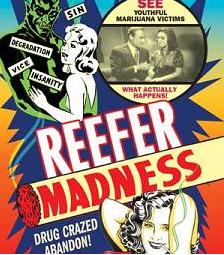
Bottom line: Chron editorial writers fall into the same old tired reefer madness stereotypes that have driven the drug war’s “abject failure,” but they just aren’t honest enough to admit the contradiction with their stated claim that “if this were simple a referendum on the status quo, and the ability of a 21-or-older Californian to possess an ounce or less for personal use, it might be an easy ‘yes’ vote.”

Because the reality is that’s what this measure does, simply lift the prohibition on pot, while also including language supporting local control and basic civil rights. There are some valid arguments against Prop. 19 – such as it lets jurisdictions tax or regulate pot too much – but those honest disagreements weren’t raised by the newspaper.

Instead, the paper made it sound like measure would fill the roads with stoned drivers and every neighborhood with the stench of marijuana, which is laughably alarmist. San Francisco’s experience with medical marijuana should serve as an indicator. This city has been the most accepting and legitimizing of marijuana for decades. It’s part of our culture. But drug surveys from our school district and others show that the rate of marijuana use among young people here is lower than the state average, and we have been at the forefront of world-renowned technological innovation and academic research, so clearly the normalization of marijuana hasn’t corrupted our youth or turned us all into menacing zombies.

The Chronicle’s presentation of the issue, and its recommendation on this measure, are anachronistic throwbacks to another era and should be tossed into the dustbin of history where they belong.

Appetite: 3 twists on the Caprese salad

0

The purity and simplicity of a caprese salad, or insalata caprese as it is known in Campania, Italy, where it originated, is hard to outdo. Silky buffalo mozzarella, red tomatoes and fresh basil are drizzled with olive oil and salt. When I eat a quality caprese, I am immediately transported to Italia, eating lunch alongside glimmering water, maybe the canals of Venice or the expanse of Lake Como, the juice of the tomatoes dripping down my chin and a glass of Sangiovese in hand. That this experience could be improved upon is doubtful, but what of variations in a caprese’s perfection? A few local San Francisco restaurants have taken its key elements of tomatoes and mozzarella and created something unexpected… 

ROCKETFISH’S FARMERS TOMATO SALAD — Rocketfish, Potrero Hill’s newest sushi lounge, also deals in Japanese small plates. In this izakaya spirit, the kitchen serves what seems to be a simple farmers tomato salad ($7). Caprese elements create the base: heirloom tomatoes and buffalo mozzarella. But it takes on a whole new dimension sprinkled with honey balsamic and ume salt, then given a bit of crisp with caramelized fennel crumbled over the top. It works so well, it almost outshines the sushi. 

JARDINIERE’S HEIRLOOM TOMATO SALAD — Pop into Jardiniere‘s bar or sit down for a meal and start with its heirloom tomato salad ($16). You’ve seen all this before: plump, gorgeous heirloom tomatoes over arugula with croutons for crunch. But wait: interspersed in the arugula are Padron peppers and Castelvetrano olives. Sweet tomatoes, salty olives, and piquant peppers hint of a marriage between Italy and Spain, one officiated by California. The combo feels so natural, you’ll wonder why you don’t see it more often. 

BAR CRUDO’S LOBSTER SALAD — A recent visit to the ever brilliant crudo haven of Bar Crudo yielded salad loaded with chunks of lobster and creamy burrata (the pinnacle of mozzarella… with cream) topped with mache leaves. While some nights they make it with gold and chiogga beets ($17), my last visit entailed a load of plump tomatoes with the lobster and burrata ($18), again elevating the basics of a caprese to luxury salad level. 

Our Weekly Picks: September 15-21, 2010

0

WEDNESDAY 15


MUSIC

Head Cat

Boasting a bona fide all-star lineup of musicians, rockabilly super group the Head Cat features Lemmy Kilmister of Motorhead on bass and vocals, Slim Jim Phantom of the Stray Cats on drums, and Danny B. Harvey of the Rockats on guitar and piano. Breathing new life and a new attitude into classic tunes by Buddy Holly, Eddie Cochran, Carl Perkins, Johnny Cash, and others, the trio hits the road for a few special gigs whenever they can find the rare time in their mutually busy touring schedules. Fans can expect a new slew of hell-bent covers from their yet untitled forthcoming second album, along with a couple of original songs born from the same vein of the seminal sound that forged the template for all rock ‘n’ roll to come. (Sean McCourt)

With Red Meat and Bad Men

9 p.m., $20

Uptown

1928 Telegraph, Oakl.

www.uptownnightclub.com


THURSDAY 16


MUSIC

Wild Nothing

Don’t call it “chillwave:” Wild Nothing’s Jack Tatum makes woozy beach music that owes more to ’80s Cocteau Twins dream-pop than the recent lo-fi progeny who bear that wince-inducing label. The dream-pop badge is one Tatum wears proudly, initially gaining online chatter from a faithful rendition of Kate Bush’s “Cloudbusting” before releasing debut album Gemini, which features a lot of those deep drum machine sounds you used to hear out of Collins and Gabriel before they moved on to Disney theme songs and cover albums, respectively. Joining Tatum at this Popscene event is Swedish Balearic pop star Eric Berglund, of Tough Alliance fame, performing as DJ CEO. Don’t forget the beach ball! (Peter Galvin)

With DJ CEO and JJ

9 p.m., $10–$13

Popscene

330 Ritch, SF

www.popscene-sf.com

EVENT

“w00tstock”

Though the Revenge of the Nerds movies were made back in the 1980s, the collective social paradigm had yet to really shift in favor of our pocket protector-wearing brethren. But now, with the near ubiquity of computers, entertainment technology, and mainstream success of events like Comic-Con, the time has come to push those horn-rimmed glasses back up our noses and bask in the geek glory that is upon us. Join Adam Savage from Mythbusters, Wil Wheaton from Star Trek: The Next Generation, music-comedy team Paul and Storm, and others for a night of music, comedy, readings, films, demonstrations, and more that embrace geek pride. (McCourt)

Through Fri/17

7:30 p.m., $30

Great American Music Hall

859 O’Farrell, SF

(415) 885-0750

www.gamh.com


FRIDAY 17


FILM

The Room

Oh, hi. You know, we have a policy about not running sold-out events in Picks, and I suspect tickets for the Red Vic’s screenings of 2003’s The Room — hot commodities under any circumstances — are in scarce supply, especially since writer-director-producer-star Tommy Wiseau plans to attend each showing in person. But how could I naaaht include what just might be the cinematic event of the year? If you’ve seen The Room, you know whereof I speak. If you haven’t seen it, you are tearing me a part [sic]. Gather your spoons, your football, your red roses, your red dress, your pizza, your tuxedo, your drug debts, your green screen, your phone-tapping device, and your most romantic slow jamz — maybe that’ll be enough Room mojo to secure a front-row seat. (Cheryl Eddy)

Through Sat/18

8 p.m. and midnight, $15

Red Vic

1727 Haight, SF

(415) 668-3994

www.redvicmoviehouse.com


SATURDAY 18


MUSIC

Kele

Kele Okereke has a deeply soulful voice that forms the heart of his steady band, Bloc Party, consistently matching dramatic post-punk guitars and ruthless drums with gusto. But it appears Kele’s interests are more far-reaching than anyone ever thought: he brings those soulful vocals to a collection of chintzy U.K. house in his first ever solo album. The Boxer is a hodgepodge of ideas and styles that survives solely on the exuberance Okereke brings to each performance. He’s so happy to be making these songs, you can literally hear him smiling as he sings. (Galvin)

With Does It Offend You, Yeah?, Innerpartysystem, Aaron Axelsen, and Miles

9 p.m., $20

Mezzanine

444 Jessie, SF

(415) 625-8880

www.mezzaninesf.com

DANCE

Mary Armentrout Dance Theater

Mary Armentrout is a choreographer of keen perception and sharp intelligence. As an artist, her pieces are witty and wonderfully theatrical — yet they also explore important ideas. Unfortunately, she is not very prolific, so this premiere should be a real treat. The site-specific the woman invisible to herself explores issues around identity even as it questions the very nature of performance — as a state of being and as a theatrical practice. Armentrout structured woman as a solo for herself — and for Natalie Green, Nol Simonse, and Frances Rotario. It will be performed for small audiences at sunset in and around her studio, the Milkbar in East Oakland. (Rita Felciano)

Through Oct. 3

Sat.–Sun., 6:30 p.m. (times vary), $20

Milkbar at the Sunshine Biscuit Factory

851 81st St., Oakl.

(510) 845-8604

www.maryarmentroutdancetheater.com

EVENT

Creature Feature Night at AT&T Park

Beloved local TV horror host and writer John Stanley resurrects the classic Creature Features show for a spooktacular evening at the ballpark tonight — after cheering on the Giants as they take on the Milwaukee Brewers, fans can head out onto the field for some eerie entertainment, prizes, and limited edition T shirts. Then, under cover of darkness (and likely shrouded in a perfect scene-setting fog), the high tech scoreboard will transform into a giant movie screen, showing the 1954 Universal monster melee Creature From The Black Lagoon. Be sure to bring a blanket — and watch out for any beasts clamoring out of McCovey Cove! (McCourt)

6:05 p.m., $25

AT&T Park

24 Willie Mays Plaza, SF

www.sfgiants.com/specialevents

www.bayareafilmevents.com

EVENT

“A Tribute to Fess Parker”

For multiple generations of kids, Fess Parker was a true American hero. Though he was just an actor, he came to embody the stature and values of the roles he played, particularly those of Daniel Boone, and of course, the one he is most remembered for, Davy Crockett. Parker passed away earlier this year, but his legacy will live on in the hearts of his fans, who can celebrate his life and work this weekend with a series of Davy Crockett screenings and a special tribute event featuring members of his family. (McCourt)

Sat/18–Sun/19, 3 p.m. (also Sat/18, 10:15 a.m.), $5–$12

Walt Disney Family Museum Theater

104 Montgomery, Presidio, SF

(415) 345-6800

www.waltdisney.org

EVENT

UFO X Fest

Because you’ve only got 472 days left until 2012. Because that lenticular cloud you peeped over Mount Shasta on Labor Day weekend left you a little tingly. Because The X-Files hasn’t been on TV for eight years. Whatever the reason, mysterious forces are pulling you to UFO X Fest. G’wan, heed them — the two-day lineup of speakers, films, and collegiate paranoia is just the ticket for truthiness. Speakers include a chappie who has assembled a database of 142,000 recorded UFO sightings and a cryptohunter whose specialty lies in scrutinizing unexplained cattle mutilations. Through Sun/19. (Caitlin Donohue) 

9:30 a.m., $89.99 (weekend pass, $149.99)

Historic Bal Theater

14808 East 14th St., San Leandro

(510) 614-1224

www.ufoxfest.com


SUNDAY 19


MUSIC

Melvins

No strangers to the SF stage, Seattle’s iconoclastic sludge merchants the Melvins are back, with a new album, The Bride Screamed Murder, in tow. The band has long specialized in mind-bending songwriting and arrangement, and The Bride doesn’t disappoint, working in everything from free jazz to boot camp-style call-and-response — “Captain Beefheart playing heavy metal” according to guitarist/vocalist King Buzzo (and his legendary coiffure). The dual-drummered quartet (Big Business skinsperson Coady Willis joined in 2006) will be presaged by the delectably grungesque L.A.-by-way-of-SF trio Totimoshi, touring on 2008’s thumping Milagrosa but touting a new record very soon. (Ben Richardson)

With Totimoshi

9 p.m., $21

Slim’s

333 11th St, SF

(415) 255-0333

www.slims-sf.com

FILM


“Radical Light: Landscape as Expression”

San Francisco plays itself in dozens of Hollywood movies, but the avant-garde works featured in the inaugural “Radical Light” program explore the imaginary city, the one perpetually coming into shape through the fog and over the hills. Of the city’s topography, filmmaker-teacher Sidney Peterson noted with some delight, “The straight line simply resisted use.” Tonight’s bill draws on the works of artists similarly disinclined: Bruce Baillie’s lovely Ella Fitzgerald-scored camera movement (1966’s All My Life); Chris Marker’s science-fiction views of Emeryville trash sculptures (1981’s Junkopia); Dion Vigne’s electrifying survey of North Beach’s surfaces (1958’s North Beach); and in-person appearances from two established masters, Lawrence Jordan (1957-78’s Visions of a City) and Ernie Gehr (1991’s Side/Walk/Shuttle). (Max Goldberg)

6:30 p.m., $9.50

Pacific Film Archive

2575 Bancroft, Berk.

(510) 642-1412

www.bampfa.berkeley.edu


TUESDAY 21


MUSIC

Cloud Cult

The inspiration for much of Craig Minowa’s music with Cloud Cult is, and seemingly will always be, the sudden death of his two-year-old son in 2002. An event like that is likely to shape any man’s future. Although the Cloud Cult moniker existed previous to that devastating moment, it’s absolutely appropriate for a band that thrives on songs about the next life, fear, and pain. Let me backpedal a bit though, because while those are scary subjects, this is not scary music. We’re talking jubilant indie music here, and, judging the tunes apart from their lyrical content, Minowa crafts some wildly fun, experimental beats that prove that the things that shape you don’t have to define you. (Galvin)

With Mimicking Birds

8 p.m., $15

Independent

628 Divisadero, SF

(415) 771-1421

www.theindependentsf.com

FILM

“Robert Altman vs. Friendship!”

Of the three consecutive Robert Altman double-headers at the Roxie this week, I’ll put my money on this one every time. California Split (1974) remains one of the great troves of talk in American movies and a prime example of the director’s open sound design. In a just world, lovers of 1998’s The Big Lebowski would line up for Elliot Gould and George Segal as compulsive gamblers and friends, blurting out pearls on betting, the Seven Dwarves, stealing time, and California (“Everybody’s named Barbara”). As for 3 Women (1977), I still think I must have dreamed Shelley Duvall and Sissy Spacek being in the same movie. (Goldberg)

7 and 9 p.m., $6–10

Roxie Theater

3117 16th St., SF

(415) 863-1087

www.roxie.com 

The Guardian listings deadline is two weeks prior to our Wednesday publication date. To submit an item for consideration, please include the title of the event, a brief description of the event, date and time, venue name, street address (listing cross streets only isn’t sufficient), city, telephone number readers can call for more information, telephone number for media, and admission costs. Send information to Listings, the Guardian Building, 135 Mississippi St., SF, CA 94107; fax to (415) 487-2506; or e-mail (paste press release into e-mail body — no text attachments, please) to listings@sfbg.com. We cannot guarantee the return of photos, but enclosing an SASE helps. Digital photos may be submitted in jpeg format; the image must be at least 240 dpi and four inches by six inches in size. We regret we cannot accept listings over the phone.

Nobunny unmasked!

2

arts@sfbg.com

MUSIC The morning of our scheduled interview, he sends me a text message, asking me to push things back a bit. Because he says he’s been up until 5:30 a.m., I figured he’s spent the previous night out being a bad bunny. But my assumptions are incorrect: the self-professed early bird known as Nobunny has stayed up late getting work done. The masked man, who now lives in Oakland, is out and about in San Francisco. I remain patient, knowing that he has plenty on his plate, including the release of his new album and an imminent European tour.

Nobunny’s First Blood (Goner Records) is more polished in production than previous efforts, including Love Visions (1-2-3-4 Go! Records), his breakthrough from 2008. He’s been at it for nearly 10 years now, but our hometown hero’s ascent to garage-rock stardom hasn’t come easy. Before getting off the phone with me, he speaks of darker days in Chicago, where he went from two-time Bozo Show visitor to “lying and stealing heroin addict,” only to be saved by a heartbroken sister and a pre-Hunx and His Punx member of the now-defunct Gravy Train. And by the time I finish interviewing him, he shares some information that I didn’t expect him to delve into, giving me glimpses of original obsessions, addictions, and future ambitions.

Still, at about the 30-minute mark, our first conversation comes to a sudden halt when Nobunny alerts me he has to put money in his parking meter. My time is up. After all, Blag Dahlia of Dwarves fame is expecting him for a radio interview. (Nobunny takes a page out of that fellow Chicago-to-Bay Area transplants’ book by shedding his threads on stage with the exception of the mask.)

I have the sense that Nobunny is holding back a little, like there is a wall. Is he guarded? Maybe a little nervous? He’d publicly admitted to shooting heroin before, but it isn’t until after our initial phone call that he begins to be genuine and upfront about his humbling experiences and the struggle that made him who he is today. All the while, I feel he is in complete control of our interactions, and imagine that’s probably what it’s like to work with someone so self-critical in the studio. The dichotomy of the man behind the mask begins to unravel.

We initially speak through a dodgy cell phone connection, interrupted by distracting wind and disruptive sirens. I’m in the TL, and he’s in the Mission. Both environments are worn down, sort of like the mangy Muppet-looking mask Nobunny wears during show time. He’s lived through misery before. He spent one winter in Chicago with a trash bag serving as his front door, and worked the graveyard shift at a highway gas station during his last year in the city. “I lived in a cage in a squatted grocery store that had become a shooting gallery-crack house,” Nobunny says. “Things were not all right.”

Just a week earlier, I’d seen Nobunny at the Total Trash Fest. He did what he does best: live rock ‘n’ roll, delivered sweaty and in briefs, with some crowd-surfing. The one new song worked into the set hinted at First Blood‘s tone. The album itself clocks in at a short but very sweet 26 minutes. Nobunny rips through the tracks, playing guitar, bass, and drums himself. He gets some assistance from his pal Jason “Elvis Christ” Testasecca, who’s aided him with home recordings in the past, and a couple of other musicians who get honorable mentions in the credits.

“Blow Dumb,” First Blood‘s first single, has been described as “Velvet-y” sounding. Perhaps because the Velvet Underground is associated with New York’s high-art scene by way of Warhol’s Factory, Nobunny points out that the track is a love song to California. It gives a special nod to the Bay Area and hyphy, but also shows some love for SoCal, with a possible Burger Records shout out. The end result is ideal for a groovy road trip with friends, riding down Highway 1 with nothing better to do than smile in the sun.

Content-wise, not everything on First Blood is so buoyant. Elsewhere, Nobunny’s lyrics confront sexual desire, unbalanced relationships, inner weakness, and the self improvements necessary to pull yourself out of the proverbial gutter and see the world. Plenty of lustful longings are laid out as he expresses exactly what he wants in the twangy-sounding “Pretty Please Me”: a noncommittal fling, no questions asked, just as long as it feels right.

The blatant “(Do the) Fuck Yourself” conjures up perverse images straight from Nobunny’s stage show, where his masked persona goes public, employing ball-gags while prancing around scantily-clad. When we finally meet in person, I ask him where these antics come from. His answer is quite simple, and makes sense coming from a rabbit, “I’m just horny,” he says. All the while, in order to maintain a “shred of anonymity,” he wears his favorite deranged-looking mask. It never seems to come off.

“I don’t think I’d like to deal with being in an un-masked band at, say, Hunx’s or Thee Oh Sees’ comparable level of popularity.” Nobunny says, when asked about the get-up. “Knowing eyes are on you when you are not on stage sounds maybe not always fun.” Nonetheless, a fruitful creative partnership with Hunx has been vital to Nobunny’s survival: “Seth [Bogart, a.k.a. Hunx] has been a very supportive friend, and, yes, in some ways I feel he saved me, or at the very least vastly improved my living situation.”

Though Nobunny often expresses the wish to record and play alone, he’s no stranger to collaboration, including a recent live session with Jack White at Nashville’s Third Man Records. Not all dream teams come true, though — since childhood he’d hoped to work with another master of disguises, the famously introverted King of Pop. “Michael Jackson was my first obsession, ” he says. “I wanted to be him. I still want to be him. According to Rocktober’s History of Masked Rock ‘n’ Roll, MJ was a masked musician with all his surgeries and what not. We all wear masks, some are just easier to spot than others.”

Speaking of costumed camouflage, First Blood‘s final track, “I Was On (The Bozo Show)” is a psyched-out, swirling down-tempo dirge with many levels of dedication. One could read it as homage to the late clown-god Larry Harmon (a.k.a. Bozo), as Nobunny hazily recalls his lost innocence and how he sat in the back row of a Chicago television with his little brother to meet the world-famous archetype on two separate occasions. Yes, Nobunny was on The Bozo Show — twice.

But behind its showbiz facade, “I Was On (The Bozo Show)” is also an agonizing confession from a former addict. “It’s for my blood brother and sister as well as my friends who struggle with drug addiction,” Nobunny says. “In another time, clowns made children happy and the circus was fun, but now they’ve become just another relic of past, tarnished by the more common association that their images are horrifying and that they are to be feared. I’m pretty sure no Juggalo ever went to clown school.”

A mythical creature from garage rock’s underbelly, Nobunny has earned his success, even securing a gig at the Playboy Mansion in L.A. as part of his 10-year anniversary celebration next Easter. But he’s no stranger to the addictions he sings about on First Blood final track. “My sister had been buggin’ me a bit to come visit her in Arizona, and I finally decided to take her up on it before I killed myself,” he says, still discussing “I Was On (The Bozo Show)”‘s origins. “I drove across the country shooting dope the whole way to the desert west of Tucson. She didn’t even know I was using. She nursed me back to health out there all alone in the desert. Our only neighbor was an 80-something yogi from India who was out there on a 30-day silent meditative prayer.”

If that sounds like material for a boulevard of broken dreams tell-all, in all seriousness, Nobunny has come out of the experience stronger, poised for new adventures, but most of all, grateful. “I am thankful to have enough fans to make touring worthwhile,” he said. “While I’d still be writing and recording and performing with no one looking, it’s really nice to see people at our shows dancing and singing along and smiling.”

Five things you should know about Steve Moss

29

Sarah@sfbg.com

In August 2010, Steve Moss, who is running for District 10 supervisor, took out an ad in the Potrero View, which he owns, titled “Five things you need to know about Steve Moss.”

The ad, paid for by Moss’ political campaign, stated that Moss “edits and publishes this very paper (but got its endorsement on his own merits).” A year earlier, when Moss filed for the D–10 race, he promised in the View that “the paper will not endorse any of the contenders.” Reached by phone, Moss said that part of the ad was intended as a joke.

The other four bullet points seemed to be factual statements about Moss’ accomplishments. But Moss’ misleading ad got the Guardian taking a closer look, and, along the way, we found a lot of other things you probably didn’t know about Moss.

As far as we know, none of these things are illegal, and Moss can certainly argue that none of them are wrong. But since this is a progressive district, we thought voters would want to know a little more before the November election.

1. He’s a carpetbagger

Moss portrays himself as a District 10 resident who spent the last decade raising his family on Potrero Hill. In fact, during 2008 and 2009, Moss wasn’t living on Potrero Hill at all. When he filed his intent to run in the D–10 race in 2009, he was living near Dolores Park in a four-floor, four-unit, $1.6 million apartment building he owns. And shortly before he filed his intent to seek office, Moss’ wife told friends that the family was only moving to District 10 so Moss could run for supervisor, and that if he lost, they would be moving back to the Dolores Park area.

In his declaration of intent to run, a legal document he signed under penalty of perjury Aug. 4, 2009, Moss listed his address as 2325 Third St. That address is where the View; Moss’ nonprofit San Francisco Community Power; and M.Cubed, Moss’ private consulting company, share space. It’s also where where the Moss campaign asked supporters to send checks. It’s not where Moss was living with his family.

Indeed, evidence that came to light in a lawsuit between Moss and his wife, Debbie Findling, and a couple who co-own the property where Moss used to reside on Kansas Street, indicate that he moved out of D-10 in November 2007 and was living at 296 Liberty Street, in District 8, until February 2010.

In a July 8, 2009 e-mail to friends, filed in court in this lawsuit, Moss’ wife noted: “Steven has decided to run for city supervisor in District 10!!! (Sophie Maxwell’s term ends in November 2010) so we’ll be moving back to the hill in early spring! If you hear of any lovely rentals let us know. Or — I know it’s a crazy idea — but if you’re interested in swapping houses with us for a year as an even trade, you can move into our place on Dolores Park! (We’re hedging our bets in case he doesn’t win, we’d be moving back to Dolores Park after the elections. If he does win, we’ll find a long-term place to live … ).”

Reached by phone, Moss told us that it was only his candidate intention statement — a form that allows a candidate to start to raise money — that he filed while living at Liberty Street in 2009, not his official declaration of candidacy form. The language on the two forms is slightly different; the intent form only asks for a “street address” while the actual declaration of candidacy asks for a “residence” address.

Moss said he filed his declaration of candidacy a few days before the deadline, this summer. That form requires candidates to have resided in the district for not less than 30 days immediately preceding the date they file.

Moss insisted that he currently lives in a rental house at 2145 18th Street. “I’m planning to win,” Moss told us. “And we’re very much enjoying the house on Potrero Hill and hoping to stay there.”

2. He managed to avoid the condo lottery.

Moss and his wife bought a two-unit house on Kansas Street in May 2000 for $648,000 and filed for a condo conversion permit in 2002. San Francisco only allows only 200 condo conversions a year. It’s tough to get a permit, it’s very lucrative if you do, and most applicants — including two-unit buildings with a single owner — have to enter a lottery. But thanks to a strange short-term loophole in the law, Moss managed to get away without doing that.

The application, which got tentative approval in March 2004, notes that Moss and his wife — single owners of a two-unit building — did not win the lottery or qualify for a bypass. Asked how he managed this, Moss pointed to a loophole in legislation that former Sup. Jake McGoldrick passed in 2001. “The McGoldrick clause allowed us to directly convert it,” Moss said.

McGoldrick’s law tightened the conversion rules, but allowed two-unit buildings that, like Moss’, had only one owner-occupant, to slip through. The odd thing is that Andrew Zacks, a lawyer who represents landlords, and the Small Property Owners of San Francisco sued to overturn the McGoldrick legislation (not because of the loophole but because of the new restrictions) and the Superior Court ruled in January 2003 that the law was “unconstitutional on its face” and ordered that the city “shall not enforce this ordinance.” That should have ended the loophole, too.

Records show that Moss’ condo application was signed Feb. 10, 2003 by Planning’s Larry Badiner and received tentative mapping approval March 2004.

Department of Public Works Surveyor Bruce Storrs told us he thinks Moss’ case fell through the cracks. “It doesn’t say it was a McTIC,” Storrs said, using the nickname for McGoldrick’s condo conversion loophole, as he reviewed Moss’ file. “But it’s the only thing that makes any sense.”

There’s no indication that Moss did anything wrong, but he sure got a sweet deal. Records show that after he got his conversion permit, he sold the upper unit of Kansas Street in 2007 for more than he paid for the entire building in 2000.

3. He has the support of some very anti-tenant folks.

Attorney Zacks, who specializes in evictions and TICs, gave Moss $500, and the candidate claimed it was because his wife knows Zacks from the playground of the school where their kids both go. Pressed, Moss confirmed that Zacks is his attorney in a court case against the co-owners of the Kansas Street property and in another action he filed against a tenant in his Liberty Steet building in May 2009.

Moss also has the support of the Small Property Owners group, which opposes almost all tenants rights and is among the most conservative, pro-property rights groups in the city. He told us he made a mistake in seeking that endorsement.

And on Aug. 24, conservative campaign finance consultant Jim Sutton, who typically represents big business interests, filed papers representingThe Alliance For Jobs And Sustainable Growth,” which is financing three independent expenditure committees, one supporting Moss; another supporting Scott Weiner in D-8; and the third supporting Theresa Sparks in D–6.

4. He’s involved in a nasty lawsuit with his former neighbor.

Records show that after Moss and Findling subdivided their property on Kansas Street, they sold the upper unit to Edward Penrose and Heather Gibbons in 2007 and moved near Dolores Park.

Court filings suggest the couples remained friendly until March 2010, when Moss and Findling tried to sell the Kansas Street lower unit for $600,000 and ran into problems.

After the deal fell through, Moss and Findling turned around and sued Penrose and Gibbons, claiming that their behavior “constitutes a nuisance.”

In their complaint, Moss and Findling claim they suffered emotional distress, loss of sale, and diminution of the value of their lower unit on Kansas Street “due to the need, going forward, to disclose to buyers that [Penrose and Gibbons] have a propensity to engage in malicious and antisocial behavior.”

On July 30, Gibbons and Penrose countersued. They claim that when they offered to purchase 673 Kansas Street, Moss and Findling never disclosed that there was a boundary line dispute or prior instances of flooding, drainage, and grading problems that had damaged an abutting property.

Now Penrose and Gibbons are asking the court to rescind the purchase agreement whereby they obtained ownership of their Kansas Street condo.

Findling and Moss responded Aug. 31, claiming that “cross-complainants have unclean hands in that, beginning in the spring of 2010, they undertook efforts to interfere with the sale of the lower unit 673 1/2 Kansas] by making unfounded noise complaints and did discourage the buyer from consummating the transaction.”

Asked about this messy legal dispute, Moss said, “We were unhappy with the outcome of a sale in escrow that they disturbed.”

5. His nonprofit pays a bunch of money to his private consulting firm.

In 2001, Moss and two partners founded a private consulting company called M.Cubed. A few months later, Moss and his partners also founded SF Community Power, a nonprofit that started using M.Cubed as a consultant. “M.Cubed was subsequently awarded a contract from SF Community Power. I’m paid directly from SF Community Power, and I’m paid a consulting fee at M.Cubed, depending how much I work,” Moss told us.

Records show that as SFCP’s director, Moss made $48,000 in 2009 and $50,000 in 2008. But more than $1 million has moved from Moss’ nonprofit into Moss’ private consulting firm since 2001.

Moss confirms that SF Power has received $350,000, some of it from Pacific Gas and Electric Co. through the California Public Utilities Commission in 2010; $440,000 in 2009; and $500,000 in 2008 — and that some of those dollars went to M.Cubed.

“I intervene in regulatory cases on behalf of SF Community Power,” Moss said, “And then, if you win a case, you get compensation after the case.”

The Potrero View shares office space with the nonprofit and the consulting firm. Last year, SFCP paid $22,000 in rent, and the View paid SFCP $5,000 toward that rent.

Alhough Moss’ campaign asked supporters to mail contributions to the office that all three of Moss’ business entities share, his campaign finance records show that as of June 30, he had paid no rent for campaign headquarters. “I haven’t had a campaign headquarters,” Moss said. “It’s pretty much been at my house.”

Rep Clock

0

Schedules are for Wed/15–Tues/21 except where noted. Director and year are given when available. Double and triple features are marked with a •. All times are p.m. unless otherwise specified.

ARTISTS’ TELEVISION ACCESS 992 Valencia, SF; www.atasite.org. $5-10. "OpenScreening," Thurs, 8. For participation info, contact ataopenscreening@atasite.org. "Other Cinema:" "Blows Against BP!", works by Rick Prelinger and others, Sat, 8. "3rd I’s Green Eye: The Anatomy of a Carbon Footprint:" Climate of Change (Hill, 2007) Sun, 3:30; "Around the World Without Flying: A Year of Carbon Footprints, Cargo Ships, and Climate Uprisings," multimedia presentation, Sun, 5:30.

CASTRO 429 Castro, SF; (415) 621-6120, www.castrotheatre.com. $7.50-10. The Bridge on the River Kwai (Lean, 1957), Wed-Thurs, 7:30 (also Wed, 1, 4:15). "Midnites for Maniacs: Reinventing Prom:" •Peggy Sue Got Married (Coppola, 1986), Fri, 7:30; Back to the Future (Zemeckis, 1985), Fri, 9:45; and Zapped! (Rosenthal, 1982), Fri, 11:59. "Janus Films Presents: Charlie Chaplin:" •The Circus (1931) and The Idle Class (1921) with "A Day’s Pleasure" (1919), Sat, 2, 4:30, 7, 9:20; •City Lights (1931), A Dog’s Life (1981), and Sunnyside (1919), Sun, 2, 5, 8; •Modern Times (1936) with "Payday" (1922), Mon, 2:30, 4:45, 7, 9:15; •The Great Dictator (1940), Tues, 3:30, 7, and The Kid (1921), Tues, 5:50, 9:20.

CHRISTOPHER B. SMITH RAFAEL FILM CENTER 1118 Fourth St, San Rafael; (415) 454-1222, www.cafilm.org. $6.50-10.25. The Agony and the Ecstasy of Phil Spector (Jayanti, 2009), call for dates and times. Cairo Time (Nadda, 2009), call for dates and times. The Girl Who Played With Fire (Alfredson, 2009), call for dates and times. The Sicilian Girl (Amenta, 2008), Sept 17-23, call for times.

FORBIDDEN ISLAND TIKI LOUNGE 1304 Lincoln, Alameda; www.forbiddenislandalameda.com. Free. "Forbidden Thrills: Incredibly Strange and Strangely Incredible Films:" •The Incredibly Strange Creatures Who Stopped Living and Became Mixed-Up Zombies (Steckler, 1964), and Spider Baby (Hill, 1965), Mon, 7:30.

HUMANIST HALL 390 27th St, Oakl; www.humanisthall.org. $5. Crude Impact (Wood, 2006), Wed, 7:30.

MECHANICS’ INSTITUTE 57 Post, SF; (415) 393-0100 (reservations required). $10. "CinemaLit: Loves Labours: Leo McCarey Revisited:" Love Affair (McCarey, 1939), Fri, 6.

PACIFIC FILM ARCHIVE 2575 Bancroft, Berk; (510) 642-5249, www.bampfa.berkeley.edu. $5.50-9.50. "Unseen Cinema:" "The Amateur as Auteur," Wed, 7:30. "Drawn From Life: Comic Books and Graphic Novels Adapted:" Popeye (Altman, 1980), Thurs, 7; Sin City (Miller and Rodriguez, 2005), Sat, 8:50. "Swoon: Great Leading Men in Gorgeous 35mm Prints:" Breathless (Godard, 1959), Fri, 7. "Shakespeare on Film:" A Midsummer Night’s Film (Dieterle and Reinhardt, 1935), Sun, 4; King Lear (Godard, 1987), Fri, 9. "Elegant Perversions: The Cinema of João César Monteiro:" Recollections of a Yellow House (1989), Sat, 6:30; Silvestre (1981), Sun, 4. "Radical Light: Alternative Film and Video in the San Francisco Bay Area:" "Landscape as Expression," Sun, 6:30.

RED VIC 1727 Haight, SF; (415) 668-3994. $6-10. Cyrus (Duplass and Duplass, 2010), Wed-Thurs, 7:15, 9:15 (also Wed, 2). The Room (Wiseau, 2003), Fri-Sat, 8 and midnight. Director and star Tommy Wiseau in person at all shows. The 400 Blows (Truffaut, 1959), Sun-Mon, 7:15, 9:25 (also Sun, 2). "Good Vibrations Fifth Annual Independent Erotic Film Festival: Hot Euro Porn Night," short films, Tues, 8. Visit www.events.goodvibes.com for complete schedule.

ROXIE 3117 and 3125 16th St, SF; (415) 863-1087, www.roxie.com. $5-9.75. The Agony and the Ecstasy of Phil Spector (Jayanti, 2008), Wed-Thurs, 7, 9:15. Exit Through the Gift Shop (Banksy, 2010), Wed, 7, 9:15. The Two Escobars (Zimbalist and Zimbalist, 2010), Wed, 7, 9:15. "San Francisco Latino Film Festival," Thurs-Sun. Check www.sflatinofilmfestival.com for program information. "Robert Altman vs…:" "Robert Altman vs. Teenagers!: •Brewster McCloud (1972), Mon, 7, and O.C. and Stiggs (1984), Mon, 9; "Robert Altman vs. Friendship!: •California Split (1974), Tues, 7, and 3 Women (1977), Tues, 9.

SAN FRANCISCO ART INSTITUTE 800 Chestnut, SF; www.iranianfilmfestival.org. $10. "Third Annual Iranian Film Festival," independent feature and short films made by or about Iranians, Sat-Sun, 11am.

SAN FRANCISCO PUBLIC LIBRARY Koret Auditorium, 100 Larkin, SF; www.sfpl.org. Free. "Amandla! South Africa During and After Apartheid:" Amandla! A Revolution in Four Part Harmony (Hirsch, 2003), Thurs, noon.

VIZ CINEMA New People, 1746 Post, SF; www.vizcinema.com. $10-15. Detroit Metal City (Lee, 2008), Sept 18-30, check website for times.

YERBA BUENA CENTER FOR THE ARTS 701 Mission, SF; (415) 978-2787, www.ybca.org. $6-8. A Brighter Summer Day (Yang, 1991), Thurs, 7; Sun, 2.

PG&E’s deadly failures

0

EDITORIAL In 1994, a fire raged through the tiny community of Rough and Ready in Nevada County. The inferno destroyed a dozen homes and caused $2 million in damage. The cause: tree limbs that Pacific Gas and Electric Co. should have trimmed brushed against high-voltage power lines.

A furious local district attorney filed criminal charges — and in a dramatic trial, evidence emerged that PG&E had intentionally taken $80 million in ratepayer money designated for tree trimming and diverted it into executive salaries and profits.

After a natural gas line that was installed in 1948 burst last week in San Bruno, killing five and devastating a community, local and state officials should be asking if the company is still taking money that should be spent upgrading and maintaining its system and spending it elsewhere.

There’s certainly evidence that the company’s safety record is shoddy. In 2003, a fire at a Mission District substation caused 100,000 people to lose power — and the CPUC chided PG&E for failing to follow its own rules and for general procedural laziness. In 2005, an underground explosion at Kearny and Post streets caused a fire that seriously injured a pedestrian on the sidewalk above. In June 2009, a fire at a PG&E vault at O’Farrell and Polk streets caused an explosion that roared up through a manhole and cut power to 8,600 customers.

In San Bruno, neighbors reported smelling gas in the days before the explosion. PG&E trucks had come to the scene and left without repairing the problem.

In the Rough and Ready fire, PG&E was found guilty of criminal negligence — and the San Mateo County D.A., James P. Fox, should immediately start looking into the possibility of filing charges against the company. In the meantime, San Francisco ought to be taking a long, hard look at the state of the private utility’s infrastructure in the city — and how much of it is vulnerable to deadly failure.

The mayor, the supervisors, and the city attorney should demand that PG&E produce a map of every gas line, power line, transformer, and substation in the city — with details about age, condition, and maintenance history. The city should hire an independent auditor to investigate how much of what PG&E has under and above the city streets is old, crumbing, poorly maintained, and likely to fail. The results should be made public — and the city should take whatever legal action is necessary to ensure that the company’s equipment doesn’t pose an imminent risk to local residents and businesses.

State Sen. Mark Leno is calling for a hearing, and PG&E officials should be forced to discuss, in public, how this disaster was allowed to happen. City officials, and the local Legislative delegation, should also be pushing the California Public Utilities Commission to investigate how PG&E has been spending the money it collects from ratepayers for maintenance and system upgrades. It’s clear that company profits were healthy enough for PG&E to spend $46 million on a failed ballot initiative that would have blocked public power in the state; why wasn’t that money used to replace the ancient natural gas pipes in San Bruno? Where else is the company skimping on facilities? How much of the company’s system needs immediate upgrades, and what’s PG&E’s budget and schedule for that work?

There’s a larger point here: none of the public power systems in Northern California have had this type of accident. None of the publicly run utilities have been found guilty of diverting maintenance money to executive salaries and profits. San Francisco’s first modest moves toward public power will come with the establishment of a community choice aggregation system — but that system will still rely on PG&E’s grid. The sooner the city can move to get rid of that private monopoly and build its own power system, block by block and neighborhood by neighborhood if necessary, the less likely it will be that a San Bruno-type catastrophe will happen here.

PG&E’s deadly failures

2

The CPUC should investigate how PG&E has been spending the money it collects from ratepayers for maintenance and system upgrades

EDITORIAL In 1994, a fire raged through the tiny community of Rough and Ready in Nevada County. The inferno destroyed a dozen homes and caused $2 million in damage. The cause: tree limbs that Pacific Gas and Electric Co. should have trimmed brushed against high-voltage power lines.

A furious local district attorney filed criminal charges — and in a dramatic trial, evidence emerged that PG&E had intentionally taken $80 million in ratepayer money designated for tree trimming and diverted it into executive salaries and profits.

After a natural gas line that was installed in 1948 burst last week in San Bruno, killing five and devastating a community, local and state officials should be asking if the company is still taking money that should be spent upgrading and maintaining its system and spending it elsewhere.

There’s certainly evidence that the company’s safety record is shoddy. In 2003, a fire at a Mission District substation caused 100,000 people to lose power — and the CPUC chided PG&E for failing to follow its own rules and for general procedural laziness. In 2005, an underground explosion at Kearny and Post streets caused a fire that seriously injured a pedestrian on the sidewalk above. In June 2009, a fire at a PG&E vault at O’Farrell and Polk streets caused an explosion that roared up through a manhole and cut power to 8,600 customers.

In San Bruno, neighbors reported smelling gas in the days before the explosion. PG&E trucks had come to the scene and left without repairing the problem.

In the Rough and Ready fire, PG&E was found guilty of criminal negligence — and the San Mateo County D.A., James P. Fox, should immediately start looking into the possibility of filing charges against the company. In the meantime, San Francisco ought to be taking a long, hard look at the state of the private utility’s infrastructure in the city — and how much of it is vulnerable to deadly failure.

The mayor, the supervisors, and the city attorney should demand that PG&E produce a map of every gas line, power line, transformer, and substation in the city — with details about age, condition, and maintenance history. The city should hire an independent auditor to investigate how much of what PG&E has under and above the city streets is old, crumbing, poorly maintained, and likely to fail. The results should be made public — and the city should take whatever legal action is necessary to ensure that the company’s equipment doesn’t pose an imminent risk to local residents and businesses.

State Sen. Mark Leno is calling for a hearing, and PG&E officials should be forced to discuss, in public, how this disaster was allowed to happen. City officials, and the local Legislative delegation, should also be pushing the California Public Utilities Commission to investigate how PG&E has been spending the money it collects from ratepayers for maintenance and system upgrades. It’s clear that company profits were healthy enough for PG&E to spend $46 million on a failed ballot initiative that would have blocked public power in the state; why wasn’t that money used to replace the ancient natural gas pipes in San Bruno? Where else is the company skimping on facilities? How much of the company’s system needs immediate upgrades, and what’s PG&E’s budget and schedule for that work?

There’s a larger point here: none of the public power systems in Northern California have had this type of accident. None of the publicly run utilities have been found guilty of diverting maintenance money to executive salaries and profits. San Francisco’s first modest moves toward public power will come with the establishment of a community choice aggregation system — but that system will still rely on PG&E’s grid. The sooner the city can move to get rid of that private monopoly and build its own power system, block by block and neighborhood by neighborhood if necessary, the less likely it will be that a San Bruno-type catastrophe will happen here.

Endorsement interviews: Emily Murase

0

Emily Murase has a lot on her plate. The mother of two daughters in the San Francisco public school system, she is also the executive director of the San Francisco Department on the Status of Women, a member of the Rosa Parks School Site Council, the Japanese Bilingual Bicultural Program Parent Teacher Community Council, and the Lowell Alumni Association Board of Directors; she also sits on the boards of the Lakeshore Acres Improvement Club, the San Francisco Girl Scouts, and Democratic Women in Action.

As if that weren’t enough, she’s running for school board, and has earned the endorsements of California Senators Mark Leno and Leland Yee, Mayor Gavin Newsom, five members of the Board of Supervisors, and United Educators.

When she met with the Guardian, Murase spoke about tackling the budget deficit, addressing the opportunity gap for African American, Latino, and Pacific Islander students, and fighting truancy. She said she’s in favor of reforming Prop. 13 to promote adequate funding for education, but in the short-term she envisions setting up a system to solicit ideas from people working within the school system to identify opportunities for savings.

Murase said she supports a parcel tax to generate more funding for schools. She’s also in favor of developing a formal system for evaluating teacher performance. Murase said she supported JROTC in the past, but would be interested in forging more robust partnerships between public schools and skilled trades in order to create a broader array of career pathways for students. School lunches should be prepared locally, she added, and this could also translate into a learning opportunity for kids.

Listen to the entire interview below.


murase by endorsements2010

PG&E’s tragically misplaced priorities challenged

0

Throughout the spring political season, we at the Guardian argued there were more important things on which Pacific Gas & Electric could be spending $45 million – the amount it spent on Prop. 16, its losing effort to kill public power programs in California – such as infrastructure maintenance, lowering its high rates, or adding more renewable projects to its dirty energy portfolio.


Now that the deadly gas explosion in San Bruno has been linked to internal company warnings that PG&E’s 52-year-old line was dangerously in need of replacement and that it failed to heed customer complaints about smelling gas in the air for weeks before the explosion, it appears that the company could finally be called to account for its misplaced priorities.


State Sen. Mark Leno is calling a joint hearing into the matter before the Public Safety Committee, which he chairs, and the Utilities Committee. “The current leadership at PG&E has lost its way. Nobody is minding the ship,” Leno told the Guardian. He said that he’s furious about the explosion and PG&E’s shoddy safety record.
“Enough with the self-initiated, self-serving, self-funded political campaigns,” he told us. “Enough with the illegal attempts to interfere with community choice aggregation in Marin. Enough with the mad rush to smart meters. How about focusing on the current mission — to provide gas and electricity safely reliably and affordably, without death and destruction?”


Ironically, it’s possible that PG&E’s efforts to prevent a greater public role into how energy is provided to Californians could end up resulting in far more public oversight over a utility that has put more energy into regular political campaigns – from this year’s statewide campaign to similarly over-the-top spending to kill public power proposals recently in San Francisco, Yolo, and Sacramento counties – than the energy business. Leno told us the model of the private regulated utility no longer works. “This hybrid creation of sort of public, kind of private, state regulated but not really is a creation that no longer functions.”


Meanwhile, while the PG&E-friendly San Francisco Chronicle has yet to really connect the dots on this disaster, other mainstream San Francisco voices are. For example, Christine Pelosi – daughter of Speaker of the House Nancy Pelosi – yesterday penned a piece for the Huffington Post that explicitly connects the Prop. 16 campaign to the deadly explosion, entitled. “Deadly Priorities: Why Did PG&E Spend Millions on Politics, Instead of Pipelines?”


She closes the piece with an apt question, one that Leno’s committee will hopefully answer: “The San Bruno tragedy is a clarion call to rebuild America and insist on ratepayer say on utility pay. I think most taxpayers would reject deadly priorities that put politics over pipelines and choose repairs to the ground literally crumbling beneath our feet, and most ratepayers would choose crumbling infrastructure repairs over political campaigns. Wouldn’t you?”


Yes, we would.

PG&E’s history of blowups

4

By Noah Arroyo

We don’t yet know if the San Bruno fire is a horrific accident or an equally horrific mistake. But Pacific Gas and Electric Company, which owns and operates the gas line that ruptured, has a history of incidents that look a lot like this one. Some of these incidents have caused power outages. Others have blown things up, or injured people.

The company also has a history taking money that ought to go to maintenance and diverting it into fat corporate profits.

In December of 2003, a cable fire at the Mission Substation of the Golden Gate Control Center caused a more than 100,000 people to lose power. The California Public Utilities Commission inspected the incident and found that PG&E suffered from general procedural laziness, and that “PG&E failed to follow three recommendations made in its 1996 Root Cause Analysis Report following [a] 1996 fire.”


At the time, San Francisco City Attorney Dennis Herrera noted: “The evidence is clear that PG&E knew about problems that endangered public safety and threatened to cost San Francisco businesses millions—and yet did nothing to fix them.”

Then, in August 2005, something exploded underground the intersection of Kearny and Post. A manhole cover shot into the air and the escaping fire severely burned a passer by. The event’s catalyst was a failed transformer, owned and operated by PG&E.

In June last year, a fire peeked and then roared from a manhole with enough force to resemble an explosion to onlookers. The electrical fire, at O’Farrell and Polk, was coming from a PG&E vault. The impact? 8,600 customers lost power. This, like Thursday’s fire at San Bruno, was a fire bigger and more resilient than what emergency responders at first assumed. At least in 2009, nobody died.

Another difference: In 2009, leading up to the explosion, PG&E didn’t know about the problem beforehand.

Why hadn’t PG&E replaced this natural gas pipe (the San Bruno fire’s origin) since its installation in 1948? Was the problem one of cost? If so, would replacing such a pipe cost more than the $46 million the company spent trying to push Proposition 16 in June’s election?

Or could this be a replay of the Rough and Ready fire of 1994?

That year, an inferno raged through the small Nevada County town, destroying a dozen homes and causing $2 million in damage. The cause of the fire? Tree limbs that PG&E was supposed to trim brushing against the company’s power lines.

The local district attorney sued, and during the trial, evidence came to light that PG&E had taken $80 million from ratepayers — money that was supposed to be used for tree trimming — and diverted it to executive salaries and to pad the bottom line.

The company was found guilty of criminal negligence and fined $2 million.

So if PG&E in fact failed to maintain its facilities, at great cost to the public, it wouldn’t be the first time.


Court denies SF Weekly’s request for rehearing

0

The state Court of Appeal denied Sept 9th a request by SF Weekly and its chain parent for a rehearing in the Bay Guardian’s lawsuit. That allows the appelate decision affirming the Guardian’s trial court victory  to stand.

The court issued a few minor amendment to footnotes in the case, but denied the Weekly’s request that the evidence be reconsidered. That means the decision remains as precedent-setting case law in California.

The court decision was a major victory not just for the Bay Guardian but for small businesses across the state who are facing predatory chains that sell below cost with the goal of harming competition.


Appetite: Drinking in the Wente Vineyards Concert Series

0

There may be other Bay Area concert winery venues (Mountain Winery, for example), but none like family-run Wente Vineyards in Livermore. Run by the same family for five generations and set on a 3000-acre expanse of golden rolling hills and vineyards, Wente is managed by delightfully down-to-earth members of the family who keep the business alive, yes, with wine-making, but also with a scenic golf course, a restaurant, and the aforementioned concert venue.

It’s magic sitting out under the warm Livermore night sky, cradled by palms, vineyards and foliage, in a venue big enough to feel like an event, small enough to offer visibility. On August 19, I trekked out for a Chris Isaak show. I was a fan in high school, pleased to say he’s utterly charming in person, maintaining old-fashioned showmanship and witty banter in a sparkly, classic country/Elvis-style wardrobe. The setting could not have enhanced the enchantment of his music more. The range (and randomness) of Wente shows is wide — with appearances from my longtime hero, Harry Connick, Jr., or the likes of Liza Minnelli, Earth, Wind & Fire, The Fray, even ZZ Top (!)

The rest of this year’s line-up includes Willie Nelson with Ryan Bingham on Monday, September 13, the one-and-only Harry Connick (sadly, his show is sold out) on September 21st, and a just-added Don Henley show on September 20th. Tickets are pricey, running just shy of $90 to nearly $150 for seats, or anywhere from $150 to just below $300 with dinner, whether it be outdoor picnics or a multi-course meal, wine included, in their restaurant. Of course, you can eat at the restaurant on non-concert days without concert prices.

But the combo of the two certainly makes for a memorable special occasion or date, and what surprises most is the quality of the food in a full, three-course dinner. My dinner was paired nicely with bottles of 2006 Murrieta’s Well, a melon, vanilla-tinged white Meritage ($11 glass; $40 bottle), and a 2006 Annika Syrah, rich with plum and wild blackberry ($24 glass; $96 bottle).

Executive chef Eric Berg uses produce and herbs from their own organic garden (there’s even a master gardener, Diane Dovholuk, on staff) and unusual offerings, like bison tenderloin tartare with yellow beets, green onion, creme fraiche, sorrel puree and beet greens. It was a treat to eat bison raw, tender and fresh with garden accents. Simple and pure shines in the case of Frog Hollow Peaches with red onion, toasted hazelnuts, mizuna greens and pancetta vinaigrette. A perfect Summer dish.

Liberty Farms duck breast “scaloppini” with leg confit, horseradish gnocchi, charred lemon zest and smoked eggplant puree was appropriately prepared medium-rare with the confit leg adding succulence. Wagyu flatiron steak & Maine lobster is a pleasing “surf and turf” combo, prepared with stewed heirloom chiles, fingerling potato fondant, in a lobster-veal sauce.

Though I especially liked the sound of frozen horchata with hibiscus soup, local strawberries and mint, it was more like a bright palate cleanser than spiced with horchata flavor, while a local nectarine tartlette with sweet corn ice cream and salted caramel lingered longer and pleasurably.

Needless to say, it’s a hefty splurge, but the whole package, both dinner and concert, is a uniquely California experience: vineyards, palm trees, garden-fresh cuisine, even an Old West feeling of remoteness out among dry, rolling hills, create a bewitching evening.