California

Whiskeyfest 2010 highlights, part two

0

Earlier on sfbg.com, Virginia Miller turned WhiskyFest into Whisky Week, meeting with seven different distillers who’d come to attend the Fest from such far-flung booze berths as Kentucky and Scotland. Here’s part one of her scotch-heavy Whisky Week highlights. Read on for part two: conversations with bourbon and rye distillers.

10/8 COFFEE WITH JIMMY RUSSELL OF WILD TURKEY – The morning before WhiskyFest I learned about a company that’s been a Kentucky mainstay since 1855, and met with its master-distiller since 1954. Jimmy Russell comes from a family of distillers: grandad, dad — who worked for him at Wild Turkey in the early years — and now Russell is distilling with his son, Eddie. Jimmy could not be more charming. An older Southern gentleman, he’s soft-spoken, with an adorable sense of humor that I discovered as we chatted over coffee.

Russell makes Wild Turkey bourbons and ryes “the old-fashioned way” and says he doesn’t even tell his son all of his distilling secrets. They use barrels charred four times and made of white oak mainly from Missouri, Kentucky and the Ozarks of Arkansas. Their basic bourbons are a blend of six, eight and ten year-aged, with a lower proof than some bourbons, generally 108-110 proof. He explains lower proof is actually more costly as there is more water added to dilute higher proof bourbons. 

The distiller’s yarns about his town of Lawrenceburg, KY are fascinating, particularly because it’s in a mostly dry county where no drinks are allowed in restaurants and bars do not exist. “We’re not dry, we’re moist”, he says, as there are a few limited options to purchase drink in the area. It was only a couple years ago they secured a souvenir liquor license, one of many complicated hoops to jump through to in order to allow tastings in their actual distillery. Russell says he adheres to the Southern Baptist tradition that one only drinks hard liquor for medicinal purposes. He qualifies in a gentle, Southern drawl, “I keep a cough pretty much most of the time”.

10/7 SIPPIN’ WHEATED BOURBON WITH PARKER BEAM – Amidst the annoying happy hour din at Bloodhound last Thursday night, distilling legend Parker Beam was hanging out with the Heaven Hill crew and a few of their whiskeys. They pulled out a bottle of brand new Parker’s Heritage Wheated Bourbon, an earthy, wood-laced wheat beauty whose mix blends in corn and malted barley.

Parker raised a glass as we attempted to chat above the din. Hearing took some effort as the delightful Parker speaks in a slow, Southern drawl that lulls one into a real enjoyment of the moment. His passion for distilling shines in his calm demeanor. He’s distilled for decades, both with father, Earl and son, Craig. And yes, he’s related to “that” Beam. His grandfather and namesake, Park Beam’s, brother was the storied Jim Beam (aka James Beauregard Beam). Parker is part of a royal distilling heritage. I asked if his son had any children who might next enter the fray. “My son has five daughters, so no,” he surmised. “But who knows? Maybe we’ll have the first female bourbon distiller someday.” It wouldn’t be the first noteworthy accomplishment in the Beam family’s rich history.

10/10 BACON BRUNCH WITH KEITH KERKHOFF OF TEMPLETON RYE – Setting: Reza Esmaili’s Long Bar. Food: delectable spread from chef Erik Hopfinger. Heaping bacon piles of Eden Farms Berkshire Pork — And don’t forget the rye. Templeton Rye from Templeton, Iowa, to be exact. The brunch was in celebration of this delightful rye — previously restricted for sale to Illinois and Iowa — finally becoming available in San Francisco.

Templeton is so small batch that you won’t find it in any Bay Area shops outside of SF, where our usual suspects, like Cask, Jug Shop, and K&L all stock the brand. Assistant master-distiller Keith Kerkhoff (I wrote about a Whiskies of the World seminar with their president, Scott Bush earlier this year) and brand manager Michael Killmer hosted us for a relaxed, festive brunch where the coffees were spiked with the rye and topped with Fernet whipped cream. Welcome to SF, Templeton.

Waxing poetic with Maker’s Mark at The Alembic

10/10 DIPPING WAX WITH KEVIN SMITH OF MAKER’S MARK — At The Alembic, Kevin Smith, the master distiller of Maker’s Mark, spent a couple hours with a small group, tasting through various ages of the bourbon from white dog to pours that were years older than the finished Maker’s product, so that we could get an idea of when a spirit is ready. From a somewhat neutral base cut down to 90 proof, the bourbon gained most of its flavor from barrel aging, and we sampled a woody 12-year version that came off astringent and tannic, though not unpleasant. Smith used the two to highlight their choice of the smoother, rounder balance of the fully matured final product which is aged roughly years.

We finished with Maker’s 46, their first new product in 50 years. I’ve had it a few times and it makes sense Kevin said the inspiration was rye whiskey with advanced spicing, toasty oak and that “cinnamon bite.” It’s certainly my preferred Makers. Thanks to The Alembic for serving us a gorgeous, bright Maker’s 46 cocktail: sweet vermouth, absinthe, maraschino and a mint garnish. But the session wasn’t over until we had hand-dipped glasses in Maker’s signature red wax, a tradition established from the chemist wife of Bill Samuels, Sr. (Maker’s original owner). She loved brandy and wanted the bottle shape and wax to imbue Maker’s with a brandy elegance.

Interestingly, California just surpassed Kentucky as Maker’s number one-selling US market. Raise a glass, shall we, to the pioneers and tastemakers who brought love of spirits to share during this past whirlwind week of whisky.

Subscribe to Virgina’s twice monthly newsletter, The Perfect Spot

Talking with Pelosi’s GOP opponent

28

I had a fascinating discussion this morning with John Dennis, the Repubican candidate running against Nancy Pelosi. He’s not going to win, of course, but he’s gotten some national press, including a nice piece by John Nichols, the veteran liberal editor at the Madison-based Capitol Times and a plug from the Huffington Post. Matt Gonzales has endorsed him.

Dennis is a libertarian Republican, but not a nut job or a conspiracy wacko. He’s intelligent, articulate and makes some very good points. He is, for example, totally against the wars in Iraq and Afghanistan, and calls for an immediate pullout of both quagmires. He supports same-sex marriage (it took me a while to get that out of him, but he does), supports Prop. 19, opposes DADT, and wants the feds to stop cracking down on undocumented immigrants in California. He’s against warrantless wiretaps and torture, and wants to repeal the worst parts of the PATRIOT Act. He thinks we should review all of our military bases abroad — just as we have with domestic bases — and close the ones we don’t really need anymore.

In other words, on Iraq, Afghanistan, the Pentagon budget, social issues, the drug war and civil liberties, he’s way out of synch with his party — and a lot better than Pelosi, the good liberal Democrat. And Arthur Bruzzone, my old pal and the former chair of the Republican Party, came down with Dennis and told me that the Guardian really ought to endorse him.

We’ve said some bad things about Pelosi; after all, she privatized the Presidio. She’s been weak on the wars, weak on same-sex marriage, weak on taxes and corporate welfare — and a lot more interested in raising money for Democrats than in representing her district. She won’t even debate Dennis, which is typical of her arrogance.

On the other hand: Dennis has a problem. He’s a member of a party that’s run by barbarians, and if he got elected, and was part of a GOP majority, some very bad people would be in charge. He knows that, and says he wants to change the GOP from within; good luck with that.

And since I spent much of my time these days talking about the gap between the rich and the poor and how utterly unsustainable a nation is when 5,000 families at the top control more wealth than 160 million at the bottom, I have a hard time with libertarians who don’t believe in income taxes.

And that’s Dennis. He told me that he thinks the income tax should be replaced with a consumption tax (that is, a sales tax), which is about the most regressive idea you can imaging. He said he thinks the Bush tax cuts should continue. He thinks government is too big and ought to be dramatically cut back.

I don’t think Pelosi much supports a radical redistribution of wealth in this country, but the Democrats at least are going to let the insane tax cuts for the rich expire. And that’s something.

So I understand Matt Gonzalez, and I had a wonderful talk with Dennis, and I hope you all listen to it (below). And I get the “beyond left and right” thing that the HuffPo talks about. But on the basic economic issues — like wealth redistribution through progressive taxation — the good libertarians and I will never agree. And that’s kind of a deal-breaker.


john dennis by endorsements2010

Downtown massively outspends progressives

17

With only three weeks until the election, downtown interests are massively outspending progressive groups.(Conservative estimates suggest a 5:1 ratio, based on an analysis of campaign finance disclosures at the Ethics Commission.) And these downtown interests have plenty in reserve, as cash is funneled into a bunch of improbably-named political action committees that hope to influence the outcome of district elections and local measures on the fall ballot.

The Alliance for Jobs and Sustainable Growth, which is backed by the Chamber of Commerce, the SF Police Officers Association, and United Health Care Workers, recently got an infusion of cash from the conservative-minded Building Owners and Managers Association and Golden Gate Restaurant Association. And the alliance is already spending gobs of money in support of Theresa Sparks in D6, Scott Wiener in D8 and Steve Moss in D10.

The Coalition for Sensible Government, which recently received a $100,000 injection of cash from the SF Association of Realtors, is spending in support of Sparks in D6, Wiener and Rebecca Prozan in D8, and Lynette Sweet and Moss in D10. The coalition is also spending in support of Proposition G (transit operator wages) and Prop. L (Newsom’s sit-lie legislation)  and in opposition to Prop. M (community policing/ foot patrols) and Prop N (property transfer tax).

And a PAC consisting of the Coalition for Responsible Growth, Plan C, San Franciscans for a Better Muni, SF Forward (sponsored by the SF Chamber of Commerce and SPUR) received $85,000 from the Committee on Jobs, $60,000 from the SF Association of Realtors, and $35,000 from SF Forward.

This PAC, which has already spent $466,000 this year, recently plunked down $1,000 to produce a voter guide for Plan C–a group that focuses on condo conversions and is endorsing Sparks in D6, Wiener in D8, and Sweet (as its first ranked choice) and Moss (as its second ranked choice) in D10.

It isn’t surprising that downtown PACs have deep pockets and almost identical slates. But it is a bit of a shocker that their slates are apparently almost identical to the Small Business Advocates, a group that has somewhat differing values and only a couple hundred members.

Reached by phone, SBA director Scott Hauge said the group has a couple hundred members–and claimed that SBA’s Board supports Sparks in D6, Moss in D10, and supports Measures G, K, L and opposes Measures J, M & N.

Hauge acknowledged that these positions are identical to those of downtown interests.
“We have been working with large companies,” Hauge said, claiming that small and big business’ interests are “the same” in this particular election cycle.

To date, neither the Chamber’s Steve Falk nor UHW’s Leon Chow have replied to the Guardian’s calls about the genesis of their so-called Alliance for Jobs and Sustainable Growth (Chow posted a comment on our politics blog and that is really not the same as a live conversation.)

But Tim Paulson, executive director of the San Francisco Labor Council wasn’t afraid to go on record in opposition to the Alliance and its 2010 slate.

“We’re really disappointed that there are labor organizations that feel they have to team up with Golden Gate Restaurant Association, which is against healthcare, and with CPMC [California Pacific Medical Center], which is working to keep nurses from joining a union,” Paulson said. “This alliance does not reflect what the San Francisco labor movement is about.”

A door hanger that the Labor Council distributed in conjunction with the SF Democratic Party confirms that both organizations support Debra Walker in D6 and Rafael Mandelman in D8. But while the Dem Party supports DeWitt Lacy, Malia Cohen and Eric Smith (in that order) in D10, the Labor Council only supports Cohen and Chris Jackson (in that order) in D10.

But despite their differing D10 candidate slate, both these progressive groups support Measures J, M and N, and oppose Measures B, K and L.

“When we see the Hotel Council stoop to attack Mike Casey, one of the greatest labor leaders in SF history, for fighting hotels who want to take away healthcare and diminish the retirement benefits for workers who make $25K to $30K a year, that’s really disturbing,” Paulson said, referring to a recent op-ed in the SF Examiner that was written by Patricia Breslin, executive director of the Hotel Council.

“And any union that makes an alignment with groups that don’t share the values of the San Francisco Labor Council, that’s really disturbing to me and the Labor Council,” Paulson said.

Noting that downtown is spending buckets of money on the election, Paulson observed that the Labor Council’s values are about “sharing the wealth.”

“So we don’t want Measure B [Jeff Adachi’s pension reform] or K (Newsom’s hotel tax) or L (Newsom’s sit-lie legislation),” Paulson concluded. “And we have three solid weeks to do this.”

Bar Agricole

1

paulr@sfbg.com

DINE At the risk of sounding like a grossly premature exit poll, I am willing to say that Bar Agricole, which opened mid-August on a rather grimy block of 11th Street, is already, and easily, the best restaurant on that block. Not that the bar (pardon my punnery) is set all that high. You might very well think that Butter, across the street, doesn’t represent serious competition. You might, if you have a long memory, remember Undici (later Eleven), a lofty, 1990s place across the street that might have been worthy of being mentioned in the same breath as Bar Agricole — but was also deafening. Bar Agricole is supremely worthy and not deafening.

The sonic detail deserves mention for several reasons, one of which is that the restaurant looks like it should be deafening. Once you gain the dining room (after a trek up a woody incline, past a semi-secluded open-air terrace), you find yourself in a onetime plumbing-supply shop remade in the sleek Euro-modern style that you might find in one of the more happening neighborhoods of Stockholm. Interior vistas consist of wood, plate glass, and seating that doesn’t look ergonomic. Noise is almost always the companion of these chic design elements.

But Bar Agricole’s tables are spaced widely enough to let the restaurant breathe, and, for a rustic-enviro touch, the long bar is made from wood recycled from an Ohio farm, if my eavesdropping ears heard the story right. The madding crowd is never far away, yet the sound is muted just enough not to become the center of attention. It’s like watching a big pot of simmering stock coming to a boil it never quite reaches. This kind of ambience management is a subtle but real triumph.

Agricole — as Francophiles might know — refers not only to agriculture but to a type of rum favored by the French. The chief impresario of the place, Thad Vogler, is a cocktail man, and the cocktail list is impressive. But you’d have a hard time finding any mixed drink to top the white, or unaged (“blanche”) armagnac, which, like my beloved grappa, is as clear as water but fruitier, more melodious, less openly fiery. Like agricole rum, it finds its way into a number of cocktails, but it’s splendid when taken straight.

Chef Brandon Jew’s cooking is also melodious and goes down easy. The theme is California eclectic, with, like a corniche, a fair number of tight twists and turns. The chopped liver on toast ($8), for instance, was warmed all the way through, which lent the dish an appealing melted-fused quality. Tomatoes with bottarga ($14) revealed itself to be a colorful salad of heirloom fruit with a heavy (and unannounced) scattering of shell beans. For seasoning, there were flecks of bottarga (salt-cured fish ovaries, a Mediterranean delicacy).

The kitchen’s eye for color is sharp. A plate of picalilli ($6), or pickled vegetables, was dominated by luminous yellow cauliflower florets and nearly as luminous quarters of red beet. Other players: halved baby carrots, long beans, skinny green peppers flushed with red as if by dawn, and whole okra pods. Altogether it looked like something Cézanne might like to paint, if he didn’t gobble it down first, which was what we did.

No menu is truly complete without at least one flop. At Bar Agricole, this would be the beguilingly named sardine roll mops ($6), which consisted of a large piece of fish wrapped pig-in-a-blanket-style around a pickle spear the color of radiator fluid, then laid on a board of flatbread and doused with crème fraîche. The overall effect was supposed to be, I guess, a variation on a Sunday-morning shmear, but the flatbread was uncooperative and difficult to eat and the fish-pickle pairing wasn’t much better, despite the cream’s attempts at reconciliation. If a dysfunctional family were turned into food, it might seem something like this.

On the other hand, we loved the tanginess of the olive-oil poached tuna ($14) mingled with fennel-root shavings and cilantro. And the corn pudding ($16) — like an eggy polenta, topped with corn kernels, okra halves, whole padrón peppers, and served in an earthenware crock — was original and sublime, while being at least plausibly vegetarian-friendly.

If you like lemon verbena cream, you’ll want dessert. A puffy cloud of it semi-salved the dryness of the blueberry shortcake ($8) — tons of blueberries, though — while another puff appeared, uncredited, with the wondrously glazed peach-pluot upside-down cake. If you had to bet the farm on one of these, you’d be wise to choose the latter. 

BAR AGRICOLE

Dinner: nightly, 6 p.m.–1 a.m.

355 11th St., SF

(415) 355-9400

www.baragricole.com

Full bar

AE/DS/MC/V

Tolerable noise

Wheelchair accessible


Big Oil’s false choice

0

rebeccab@sfbg.com

Tapping into voters’ economic insecurities at a time of record high unemployment rates, out-of-state oil interests say addressing global warming will cost California more jobs. But a broad coalition that includes environmentalists and top business groups argue that just the opposite is true, saying the economy will suffer if we suddenly kill the incentives now driving the clean energy industry, one business sector that actually grew during the recession.

Proposition 23 would indefinitely suspend Assembly Bill 32, California’s Global Warming Solutions Act. Texas oil companies are bankrolling the initiative, spending millions of dollars to convince voters that they must choose between saving jobs and saving the environment. Since jobs are more important right now, they argue, the environment will have to wait.

But the other side — which includes groups such as the Chamber of Commerce, whose top priority is always job creation — is promoting the compelling idea that the path to economic recovery lies in rising to the challenge of climate change. They argue that addressing global warming now isn’t just about avoiding more out-of-control wildfires, diminishing crop yields, prolonged intense droughts, coastal flooding, and other calamities that climate scientists say global warming will bring to California. It’s also about creating jobs now and trying to lower California’s 12.4 percent unemployment rate, the third highest nationwide.

The push to defeat Prop. 23 has brought together prominent business people, public-health advocates like the American Lung Association, big green organizations such as the Sierra Club, and environmental-justice advocates who are pushing for green jobs as a way to fend off poverty and tackle air quality problems in disadvantaged neighborhoods. If the coalition of unlikely allies is successful, Big Oil’s comfortable lock on the energy market could be thrown off balance by California’s emerging green economy.

“Ultimately, we think it’s going to be a David vs. Goliath battle, because they have very deep pockets,” said No on 23 campaign spokesperson Steve Maviglio. “The proponents are playing to the fears of those most affected by the economy.”

When voters decide on this one, it will signify a choice to proceed down one of two paths at an important crossroads. A global climate summit in Copenhagen late last year failed to produce an effective response to climate change. A push for a federal cap-and-trade system to combat global warming yielded similarly disappointing results. AB32 presents a third chance to set a new standard, and a precedent, for curbing greenhouse gas emissions. But if Prop. 23 passes, environmentalists will have struck out.

A report issued in July by the National Academy of Sciences lays bare the far-reaching implications of policy decisions around climate change. “Emissions reductions choices made today matter in determining impacts experienced not just over the next few decades,” the report notes, “but in coming centuries and millennia.”


CLOSE RACE

In 2006, Gov. Arnold Schwarzenegger signed AB32, mandating a statewide reduction of greenhouse gases to 1990 levels by the year 2020. The law is slated to go into full effect in January 2012, when a cap-and-trade system will make it more costly and burdensome for major polluters to continue burning high quantities of fossil fuels, among other strategies.

The law helps alternative energy companies and creates incentives for large and small businesses to green their operations. Prop. 23, deceptively titled the “California Jobs Initiative,” would suspend AB32 until the state’s unemployment rate drops to 5.5 percent for four consecutive quarters. A decade could pass before such a market condition is in place — in the past 40 years, it’s occurred just three times.

Speaking at the Commonwealth Club in Santa Clara in September, Schwarzenegger blasted Texas-based oil companies Tesoro Corporation and Valero Energy Corporation, which have contributed a combined $5.6 million to the Prop. 23 campaign, for trying to deceive California voters. “They are creating a shell argument that this is about saving jobs,” Schwarzenegger said. “Does anybody really believe that these companies, out of the goodness of their black oil hearts, are spending millions and millions of dollars to protect jobs? It’s not about jobs at all, ladies and gentlemen. It is about their ability to pollute and thus protect their profits.”

Prop. 23 has been unpopular even among many traditional right-wing and business interests. Oil giants Chevron and BP have remained neutral on it. Republican gubernatorial candidate Meg Whitman also renounced it, but straddled the fence by vowing to suspend AB32 for a year anyway.

According to a breakdown of campaign spending issued by opponents, oil interests contributed 97 percent of the funding for Prop. 23, while out-of-state interests were responsible for 89 percent. Kansas-based Koch Industries, run by billionaire siblings David and Charles Koch, dropped $1 million into the effort. The Koch brothers have been singled out as the financial backbone of the Tea Party.

Yet despite bipartisan opposition in Sacramento, polls suggest Prop. 23 could be a close race. A recent Los Angeles Times poll showed a dead heat among California voters, with 40 percent in favor, 38 percent opposed, and about one-fifth of likely voters undecided. The television commercials advocating Yes on 23 drive home a simple yet misleading message: “Save jobs. Stop the energy tax.” A spokesperson from the Yes on 23 campaign did not return the Guardian’s calls seeking comment.

Ironically, jobs are also the cornerstone of the No on 23 campaign’s arguments. “We have very heavy hitters who see this as a job killer,” Maviglio said. The campaign is highlighting the fact that the only economic area that has experienced growth amid the recession is green tech.

Democratic gubernatorial candidate Jerry Brown referenced green jobs as a bright hope for economic recovery in a televised debate against Whitman, and the prospect of green job creation as a way to alleviate poverty is clearly articulated in The Green Collar Economy, a widely influential book by Green for All founder Van Jones. Green for All has joined the Greenlining Institute and a host of 80 organizations statewide in a united front against Prop. 23, called Communities United Against Prop. 23, which is part of the larger opposition campaign dubbed Communities United Against the Dirty Energy Prop.

Low-income communities and communities of color will be disproportionately affected if Prop. 23 wins, said Orson Aguilar, executive director of the Greenlining Institute. “The communities we represent are feeling a double impact,” Aguilar noted. “They’re suffering from pollution,” since power plants and polluting industries tend to be sited in low-income communities, “and they’re suffering from unemployment and the economic crisis. There definitely is a double-whammy.”


LOCAL MOMENTUM

At a recent green business symposium hosted by Urban Solutions, a nonprofit that aids small businesses and seeks to create job opportunities in low-income communities, a Castro District merchant explained her decision to enter green-business certification process. “I’m dedicated to going green because, No. 1, it’s the right thing to do,” said Elaine Jennings, who runs Small Potatoes Catering & Events. “No. 2, it’s the right thing to do. And No. 3, it’s the right thing to do.”

But the moderator of the panel, a business reporter, wasn’t as interested in the moral rationale — instead, she followed up by asking whether going green was a wise financial move. Anthony Tsai, green business program manager at Urban Solutions, made the case that it is. Water bills have gone up 40 percent since 2000, Tsai said. Electricity costs have gone up 60 percent and waste disposal fees have increased 250 percent. By conserving energy and water and reducing waste, small businesses can save money during tough economic times.

Aguilar sees energy-efficiency building retrofits as an opportunity to create jobs for disadvantaged populations. In order to comply with the climate regulations under AB32, energy-efficiency retrofits would have to be completed to hit conservation targets. “We have thousands, if not millions, of buildings in California that need to be retrofitted,” he said. “A lot of people who are out of work are in the construction industry. Latinos and African Americans were hit hard when construction fell.” With energy retrofits and solar-panel installations on the agenda, AB32 could be good news for electricians, too, Aguilar said.

There are signs that AB32 is already giving green business a lift. A manufacturer of electric delivery trucks, for example, relocated from Mexico to California’s Central Valley late last year. A wind-energy company recently relocated to San Diego from Spain. The solar industry is growing faster in California, particularly in the Bay Area, than anywhere else nationwide. And in the past five years, roughly $9 billion in venture capital investment has gone into clean tech industries, with more going to California than any other state.

“Prop. 23 would essentially pull the rug out from under this explosive growth, which we’re experiencing during a recession,” Maviglio noted.

Jeanine Cotter, CEO of Luminalt, an independently owned San Francisco solar and installation company, is active in the campaign to defeat Prop. 23. “There is an entire ecosystem that feeds off of good policy,” Cotter said. If Prop. 23 passes, “we will lose the spark that we have and we will go backward.”

Despite the economic downturn, Luminalt experienced its best year in 2009 in the six-year history of the company, and if AB32 goes into effect in 2012 as planned, the demand for new solar installations will only grow. But with less than a month to go before the election, Cotter said she was alarmed by the lack of awareness about Prop. 23, even among environmentalists.

“We were at West Coast Green with No on 23 literature,” she said, referencing a widely attended green-business conference, “and I was shocked at how many people didn’t know what it is.”


RISKING IT

Small business owners and conscience-driven activists aren’t the only ones touting this theory of a new energy economy. The San Francisco Chamber of Commerce, a fiscally conservative business association that is often at odds with environmentalists and progressives, is actively campaigning against Prop. 23 — and it’s not out of any sense of moral duty.

If Prop. 23 succeeds, explained Chamber spokesperson Rob Black, it will scare off the venture capitalists. “For them, water’s like money,” he explained. “It will flow to the easiest place to invest.” Regulation like AB32 guarantees a return on investment for climate-friendly technology, he added. But if that regulatory structure is thrown into question, investors may flee overseas because investing would be too risky. “If we walk away from clean tech, the next Microsoft will be a Chinese company,” Black said.

Donnie Fowler, a political consultant who has worked for Al Gore and other top Democrats, is a senior adviser to the Clean Economy Network and a leader in the effort to defeat Prop. 23. Oil companies “went to Washington and spent hundreds of millions” lobbying against climate change regulations, Fowler pointed out. “Now they’ve opened up a second front. If California goes backward, all of those senators and Congressional representatives will say, ‘No way … I’m surely not taking a political risk. If they went backward, there’s no reason we should go forward.'”

Fowler said that for environmentalists, voting No on 23 could be seen as an affirmation of statewide efforts to address climate change in a meaningful way. “This is a real opportunity,” he said, “for Californians to stand up and say we’ve had enough. We are going to take a stand — right now.”

www.stopdirtyenergyprop.com

www.communitiesagainstprop23.com

Rep clock

0

Schedules are for Wed/13–Tues/19 except where noted. Director and year are given when available. Double and triple features are marked with a •. All times are p.m. unless otherwise specified.

ARTISTS’ TELEVISION ACCESS 992 Valencia, SF; www.atasite.org. $6-15. “Pow! Pow! Pow! Art Festival 2010,” live performance, video installations, and more, Thurs, 8. “Immigrant Film Festival,” Fri, 7 and Sat-Sun, 3. “Other Cinema:” Space, Land and Time: Underground Adventures with Ant Farm (Federici and Harrison, 2010), Sat, 8:30. “Next! And Attention Deficit Gift: A 99 Hooker Screening,” Sun, 8. “Electroacoustic audio-visual improvisations” with Bill Hsu, Gino Robair, and John Shiurba, Tues, 8.

CASTRO 429 Castro, SF; (415) 621-6120, www.castrotheatre.com. $7.50-10. Where the Boys Are (Levin, 1961), Wed, 2:30, 4:45, 7, 9:15. Connie Francis in person to introduce 7pm show. “14th Annual Arab Film Festival:” Masquerades (Salem, 2008), Thurs, 7:30. This event, $20; for more info, visit www.arabfilmfestival.org. “Midnites for Maniacs: Don’t Get Bit … By Big Mouths:” •Fright Night (Holland, 1985), Fri, 7:15; An American Werewolf in London (Landis, 1981), Fri, 9:30; and The Evil Dead (Raimi, 1981), Fri, 11:45. “Connie Francis: The Legend Continues,” live concert with full orchestra, Sat, 8. Presented by the Rrazz Room; visit www.cityboxoffice.com for tickets ($49-99). “Montgomery Clift Double Feature:” •From Here to Eternity (Zinnemann, 1953), Sat, 2:30, 7, and Wild River (Kazan, 1960), Sat, 4:50, 9:15.

CERRITO 10070 San Pablo, El Cerrito; www.rialtocinemas.com. $7. “Cerrito Classics:” Rosemary’s Baby (Polanski, 1968), Thurs, 7:45.

CHRISTOPHER B. SMITH RAFAEL FILM CENTER 1118 Fourth St, San Rafael; (415) 454-1222, www.cafilm.org. $6.50-10.25. “Mill Valley Film Festival,” Wed-Sun. Program information at www.mvff.com. 36 (Marchal, 2005), Oct 18-21, 6:30, 9.

DELANCEY STREET SCREENING ROOM 600 Embarcadero, SF; www.modjeskawomantriumphantmovie.com. Free ($5-10 suggested donation). Modjeska: A Woman Triumphant (Myszynski), Sun, 3.

FORBIDDEN ISLAND TIKI LOUNGE 1304 Lincoln, Alameda; www.forbiddenislandalameda.com. Free. “Forbidden Thrills: Half N’ Half Halloween Horrors:” •Werewolf in a Girl’s Dormitory (Heusch, 1961), and The Manster (Breakston and Crane, 1959), Mon, 7:30.

GRAND LAKE 3200 Grand, Oakl; (510) 452-3556. $10. Enemies of the People (Lemkin and Sambath, 2009), Wed, 4:30, 7:15, 9:30.

HUMANIST HALL 390 27th St, Oakl; www.humanisthall.org. $5. Sharkwater: The Truth Will Surface (Stewart, 2006), Wed, 7:30.

LUMIERE 1572 California, SF; www.landmarkafterdark.com. Free. “Monthly Anime:” “Sengoku Basara,” Thurs, 7.

MECHANICS’ INSTITUTE 57 Post, SF; (415) 393-0100 (reservations required). $10. “CinemaLit: Apocalypse Noir:” Matinee (Dante, 1993), Fri, 6.

PACIFIC FILM ARCHIVE 2575 Bancroft, Berk; (510) 642-5249, www.bampfa.berkeley.edu. $5.50-9.50. “Radical Light: Alternative Film and Video in the San Francisco Bay Area:” “1961-71,” Wed, 7:30; “Stories Untold,” Sat, 6; “The Exotic Erotic,” Sat, 8:30; “Procession of the Image Processors,” Sun, 6:30. “Shakespeare on Screen:” Chimes at Midnight (Welles, 1966), Thurs, 7; Romeo + Juliet (Luhrmann, 1996), Sun, 4. “Days of Glory: Revisiting Italian Neorealism:” Bellissima (Visconti, 1953), Fri, 7; Miracle in Milan (De Sica, 1951), Fri, 9:10. “Home Movie Day:” “Film Check-In,” Sat, 11am; “Home Movie Day Screening,” Sat, 1. Metropolis (Lang, 1926), Tues, 7.

PIEDMONT 4186 Piedmont, Oakl; www.landmarktheatres.coom. $8. The Room (Wiseau, 2003), Sat, midnight.

RED VIC 1727 Haight, SF; (415) 668-3994. $6-10. Dr. Strangelove (Kubrick, 1964), Wed-Thurs, 7:15, 9:15 (also Wed, 2). Cropsey (Zeman and Brancaccio, 2009), Fri-Tues, 7:15, 9:15 (also Sat-Sun, 2, 4).  

ROXIE 3117 and 3125 16th St, SF; (415) 863-1087, www.roxie.com. $5-9.75. Exit Through the Gift Shop (Banksy, 2010), Wed-Thurs, 9:15. Grant Morrison: Talking With Gods (Meaney, 2010), Wed, 9:30 and Thurs, 7. Who Is Harry Nilsson (And Why Is Everybody Talkin’ About Him?) (Scheinfeld, 2010), Wed, 7, call for times. “SF DocFest,” Oct 14-28. Program information at www.sfindie.com.

SAN FRANCISCO MUSEUM OF MODERN ART 151 Third St, SF; www.sfmoma.org. $5. “Jordan Belson: Films Sacred and Profane,” Thurs, 7.

SAN FRANCISCO PUBLIC LIBRARY Koret Auditorium, 100 Larkin, SF; www.sfpl.org. Free. “Beyond Manny and Marcos: A Showcase of Far-Out Filipino American Films and Theater,” Sat, 3-5:30.

VIZ CINEMA New People, 1746 Post, SF; www.vizcinema.com. $10. “Ozu and His Muse: Setsuko Hara,” Early Summer (1954), Fri, 4:30 and Sat, 3:15; Late Autumn (1960), Sat, 12:15, Sun, 6, and Mon, 4:30; Late Spring (1949), Sun, 12:15 and Tues, 715; Tokyo Twilight (1947), Sun, 2:30 and Mon, 7:15.

YERBA BUENA CENTER FOR THE ARTS 701 Mission, SF; (415) 978-2787, www.ybca.org. $6-8. “Jim Henson and Friends: Inside the Sesame Street Vault,” Thurs, 7:30 and Sat, 2. “San Francisco Jewish Film Festival Presents: Tough Guys: Images of Jewish Gangsters in Film:” Little Caesar (LeRoy, 1931), Sun, 2.

On the cheap listings

0

On the Cheap listings are compiled by Paula Connelly. Submit items for the listings at listings@sfbg.com.

WEDNESDAY 13

“How to Cook Like a Scientist” Bazaar Café, 5927 California, SF; (415) 831-5620. 7pm, free. Meet Jeff Potter, author of Cooking for Geeks, who combines cooking with Mythbusters to create a food-as-science, cooking experience for those who like to know how things work.

THURSDAY 14

Sparring with Beatnik Ghosts Beat Museum, 540 Broadway, SF; (415) 399-9626. 7pm, free. This ongoing multimedia poetry series returns to the Beat Museum with host Daniel Yaryan and featuring readings by David Meltzer, San Francisco Poet & Beat Icon, Ellyn Maybe & Her Band, Steve Arntson, Jerry Ferraz, Martin Hickle, Richard Loranger, Whitman McGowan, Ginger Murray, Julie Rogers, Margery Snyder, and Chris Vannoy.

FRIDAY 15

Mark I. Chester Benefit Mark I. Chester Studio, 1229 Folsom, SF; (415) 621-6294. 7pm; free, donations encouraged. Celebrate Mark I. Chester’s 60th birthday while helping to raise funds for a new book. View Chester’s current exhibit, “Doing Time on Folsom St: a 30 year retrospective of fine art gay radical sex photography” and enjoy readings and performances by Carol Queen, Tom Orr, Seth Eisen and Jesse Hewitt and more. Sponsored by the Center for Sex and Culture.

“Writing Our Word, Speaking Our Minds, Telling Out Stories” San Francisco Main Library, Latino/Hispanic Community Meeting Room, 100 Larkin, SF; (415) 557-4400. 6pm, free. Featuring readings by and about lesbians with disabilities with Elana Dykewomon, Barbara Ruth, Teya Schaffer, Dominika Bednarska, and the Mothertongue Feminist Theater Collective.

SATURDAY 16

“The Classics” 1:AM Gallery, 1000 Howard, SF; (415) 861-5089. 5:30pm, free. Attend the closing reception for this exhibit, curated by Nate1, that brings together original vintage work from the artists that put San Francisco on the graffiti map and defined Bay Area graffiti style. Guest speaker Spie will give an informative tour of the exhibit on Bay Area graffiti.

Halloween Bazaar Modern Eden Gallery, 403 Francisco, SF; (415) 420-2898. 7pm, free. End your day of touring open studios in North Beach, as part of SF Open Studios’ weekend two, at this spooky-themed trunk show featuring wares by local artists JuJu by Sarah, Marya Zoya Taxidermy Courture, Blackbird Bazaar, Squid Rose designs, and more plus pumpkin carving and painting, music, drinks, and treats. Costumes encouraged.

Potrero Hill Festival 20th street between Missouri and Wisconsin, SF; www.potrerofestival.com. 11am-4pm, free. Soak up the best of Potrero Hill at this street fair with a view featuring local merchants and residents selling their wares, arts, and crafts, two stages with live music, food from Potrero Hill restaurateurs, information booths, and kids activities including a bouncy house, petting zoo, pony rides, and performances.

Taste of Fillmore Fillmore between Post and Jackson, SF; www.tasteoffillmore.com. 1pm-6pm; free admission, $20 for wrist band. Buy a wrist band and enjoy food and wine tastings at boutiques and restaurants, or just walk around and check out some live jazz, walk through home décor scenes installed on the sidewalks, watch cooking demonstrations, fashion shows, and more.

Trolley Dances Meet at the Harvey Milk Center for Recreational Arts at Duboce Park, Scott at Duboce, SF; www.epiphanydance.org. 11am-2:45pm, tours leave every 45 min.; free with MUNI fare. Get out of the theater and into the streets with traveling performances by Epiphany Productions SDT, Joe Goode Performance Group, Sara Shelton Mann, and more as they take you from Duboce Park to the SF Botanical Garden in Golden Gate Park for several unique performance locations.

“The Wild Kitchen” Omnivore Books on Food, 3885a Cesar Chavez, SF; (415) 282-4712. 3pm, free. Hear authors Connie Green and Sara P. Scott discuss their book, The Wild Kitchen: Seasonal Foraged Foods and Recipes, and the increasing popularity of wild delicacies. Green sells her gathered goods across the country to Napa Valley’s finest chefs, so before you buy that expensive meal, consider the free buffet that is California.

Writers with Drinks Make Out Room, 3225 22nd St., SF; (415) 647-2888. 7:30pm, $5-$10 sliding scale. This installment of the monthly spoken word variety show features Marcia Clark, Ken Scholes, Jamie Freveletti, Stephen O’Connor, Kirya Traber and Daniel Allen Cox. Proceeds to benefit the Center for Sex and Culture.

Yerba Buena Fair Yerba Buena Gardens, Mission between 3rd and 4th St., SF; (415) 644-0728. 11am-3pm, free. Celebrate the Yerba Buena neighborhood at the fair featuring live music, dancing, acrobats, neighborhood food vendors, street food vendors, art and history walks, prizes and giveaways, kids activities, and more.

SUNDAY 17

Capsule Hayes Valley Park, Octavia at Hayes, SF; www.capsulesf.com. 11am-6pm, free. Enjoy this fashion design open air market and community party where you can browse locally made clothing, upcycled jewelry and accessories, steampunk-inspired wear, graphic tees, kids clothes, and designer housewares while listening to live music by members of the Jazz Mafia, Brent Bishop and the Part Poopers, and more.

Fiesta on the Hill Cortland between Bocana and Folsom, SF; (415) 206-2140. 10am-6pm, free. Join your friends and neighbors for the 22nd annual Fiesta to benefit the Bernal Heights Neighborhood center, an organization that works to maintain the ethnic, cultural, and economic diversity of Bernal Heights. This alcohol free family event to feature a petting zoo, pony rides, a pumpkin patch, non-profit booths, live music, food vendors and more.


Trans action time

0

le.chicken.farmer@gmail.com

CHEAP EATS And then there was Kiz’s wedding, and I was honored to be a part of her get-ready team. Although: I had nightmares about branding her face with a curling iron or, worse, catching her hair on fire.

She must have had the same nightmares, because when the big day finally came, she barely let me touch her hair. This was probably for the best. She looked awesome and entirely unmismanaged by her get-ready team, and anyway the ceremony was held outside, at the lighthouse in Santa Cruz, in a wind so strong that the four women holding the chuppah damn near missed the vows for parasailing to Reno. Kiz’s naturally fantastic hair was pretty much horizontal the whole time anyway. It stayed fantastic, but horizontally fantastic.

Wind notwithstanding, both she and her dude went ahead and said they did, and that was it, give or take a lot of other things.

For example: three times in the past 30 days I have heard straight newlyweds include, as a part of their ceremony, shout-outs to California gays. Meaning straight people with a conscience are feeling increasingly weird about their participation in a bigoted and discriminatory system that excludes many of their close friends.

Cool!

Cooler yet will be when straight couples start to stop getting married, in protest. Proving beyond a shadow of a doubt that in fact antiquated marriage laws undermine marriage, whereas queerness might could rejuvenate it.

Coolest of all will be when I get married. Won’t that be a hoot? Won’t that change the cynical way everyone feels (or at least I feel) about the eroding, outmoded institution?

For the moment, of course, there is nothing preventing trans people in most states from being married — legally (as long as no nasty dispute ever arises inspiring someone to prove for the sake of financial gain or custody or some such that their marriage was never really valid — which, really, how often does anything like that happen in this neat, clean world we live in?)!

My more immediate concern is one no amount of legislation can ever redress, undress, or even approach: how to get on the menu. As it is, there are not a lot of guys willing to be seen in broad daylight with girls like me, let alone take us home to mother. Let alone stand on some windy precipice and say they do. I’m working on this. I have ideas. Big ‘uns.

But speaking of going behind a rock and yipping like a coyote, there’s Los Coyotes right there near the 16th Street BART station. I’ve walked by it a zillion times without it ever registering, until Earl Butter was kind enough to notice the picture in the window of meat and melted cheese all over a bed of french fries.

He did what you’re supposed to do: he told me, so at the next imaginable mealtime we were there, sharing a big plate of carne asada fries and a pretty small bowl of birria.

The birria was greasy and bare-bones. In this case, that means we found a lot of weird pieces of bone without any meat on them. But there was a lot of meat too. And nothing else. Oh well … that’s birria, as the saying goes. Just goat and goodness, and you gotta love that.

Well, I do. Points for serving it any old day of the week. And points for adding carne asada fries to the Mission District burrito scene. It wasn’t the best carne asada. Or the best cheese, or the best fries, for that matter. But somehow when you added them all up, it was a damn great thing to be eating.

And we each drank a lemonade and each ate some green chips with a variety of salsas, including a mango one. And one that was just strips of pickled nopales and onions, speaking (still) of coyotes.

The atmosphere is really good, too. A lot of cool, colorful tile work, and color and brightness in general, plus Mexican soap operas on TV.

New favorite taqueria? Next time I’ll get a burrito, and weigh back in.

Taqueria Los Coyotes

Mon.–Thu. 9:30 a.m.–10 p.m.;

Fri.–Sat. 9 a.m.–3 a.m.

3036 16th St., SF

(415) 861-3708

MC,V

Beer and wine

Waiting to inhale

0

news@sfbg.com

Much of the controversy around Proposition 19, which would legalize marijuana in California for even nonmedical uses, involves speculation about what comes next. Hash bars on Market Street? Packs of joints next to the cigarettes in Mission District bodegas? Bags of green buds available with the bongs for sale on Haight Street? They are questions that have yet to get serious consideration in the city where the medical marijuana movement was launched.

The measure would give local governments almost complete control over how to regulate recreational-use cannabis sales in much the same way that cities set their own standards for medical marijuana dispensaries, a realm in which San Francisco has shown real leadership and created a well-functioning, successful, and legitimate industry (see “Marijuana goes mainstream,” Jan. 27).

But San Franciscans have been slow to prepare for the post-Prop. 19 world, with some other Bay Area cities leaving it in the dust on these issues. Oakland City Council Member Rebecca Kaplan, who is now running for mayor, not only spearheaded that city’s ballot measures on taxing recreational pot sales and permitting large scale growing operations, she’s actively talking using the Amsterdam model to revitalize the city’s downtown business district.

“[Hash bars] absolutely potentially would be part of the mix,” Kaplan told us when we asked about the issue during her mayoral endorsement interview, seeing it as part of a multipronged economic development strategy.

When asked if Oakland should have places where people could go to blaze legally, something Oakland doesn’t allow in its medical marijuana dispensaries, Kaplan said, “Yes. Oh yeah, we’re definitely gonna have those. The only question is gonna be whether the consumption facilities are separate from [those for] sales,” or if they’re under the same roof.

Kaplan thinks this will be part of the winning strategy that takes cannabis use off street corners while acknowledging its appeal to visitors and “synergy with the restaurants. When I talk about wanting to replicate the Amsterdam model in Oakland … it doesn’t just mean that you have … a regulated cannabis facility. You also have restaurants, shops, pedestrian safety, nice lighting, patio dining, musicians, artists.”

She points out that although an Oakland-regulated cannabis industry may use current alcohol regulation as a template, the two substances would not be sold alongside each other. “Frankly, ABC [California Department of Alcoholic Beverage Control) will freak out.” That means, at least in Oakland, you won’t be able to purchase cannabis at bars, liquor, or grocery stores.

On this side of the bay, Sup. Ross Mirkarimi — who wrote the regulations on the city’s medical marijuana facilities — says it is “extremely premature” to contemplate Amsterdam-esque hash bars. “That would have to occur within a strong regulatory framework,” he said, one the Board of Supervisors has yet to envision. San Francisco attorney David Owen, who has helped advise some medical marijuana purveyors, said some dispensaries currently allow on-site medication, and San Francisco might legislate to extend the practice to bars.

Meanwhile other California cities such as Berkeley and Oakland are anticipating Prop. 19’s passage much more proactively. Berkeley’s Measure S would tax cannabis businesses, applying different rates to for profit med-use cannabis businesses, nonprofit med-use businesses, and rec-use businesses (which won’t exist unless Prop 19 passes). The measure would secure medical-use cannabis for low-income patients and tighten regulations on Berkeley’s current med-use dispensaries and cultivators regardless of how Prop. 19 fares. There’s also a Measure T on the ballot that would establish a new committee that, in the event that Prop. 19 passes, would advise city officials on how to implement it.

Berkeley City Council Member Kriss Worthington said planning for the post-Prop. 19 world is smart to “synchronize a forward movement on the state and local level” and to “hit the ground running,” a sentiment that Kaplan also voiced for Oakland and one shared by other cities.

Stockton’s Measure I would tax rec-use cannabis businesses at a higher rate than med-use businesses. Sacramento’s Measure C is similar, containing a provision for a rec-use tax range if Prop. 19 passes. Richmond’s Measure V would tax 5 percent of gross sales of cannabis, and could apply to rec-use businesses too. Oakland’s Measure V would add a 5 percent tax to other taxes already on med-use cannabis, and put a 10 percent sales tax on rec-use cannabis. Measure H, on Rancho Cordova’s ballot, would tax personal cultivation at a higher tax on any square footage beyond the 25 square feet that Prop 19 specifies. Long Beach’s Measure B would establish a business license tax on the city’s potential recreational cannabis businesses. Even Albany, which has no dispensaries, would tax for-profit and nonprofit dispensaries differently through its Measure Q.

But Mirkarimi said he would like to tax marijuana cultivation, and has even voiced support for med-use cannabis dispensaries working directly with SF General Hospital to provide to patients, “thereby segregating a special use” and keeping cannabis prices low or nonexistent based on patient needs.

So if Prop. 19 passes, where will San Franciscans be able to purchase rec-use cannabis? Current med-use dispensaries may be a logical choice. “We already have the infrastructure,” said SF dispensary Medithrive co-owner Daniel Bornstein.

Whereas alcohol purveyors are accustomed to providing one barrier to purchase (when they card the buyer), dispensaries such as Medithrive offer many. “We already card and only accept patronage from those with a valid doctor recommendation. We also require he/she become a member of the dispensary and limit to one visit per day.”

When he contemplates whether Medithrive might provide rec-use cannabis in the future, Bornstein says “If [the city adopts] a responsible statute that’s fair, we would welcome the opportunity to offer a broadened service to more people.”

That avenue troubles Mirkarimi. “I don’t know how that works,” he said. Rec-use cannabis purchase would require no doctor’s notes and could occur within a for-profit business model. How would dispensaries legally reconcile making money under their nonprofit status? “I don’t want to put that burden on them,” Mirkarimi said.

Prop. 19 offers other potential implementation conundrums. For example, the measure will only give local governments the option to legalize the limited cultivation/sale of cannabis. Legalization won’t be compulsory. Therefore, it is likely that a post-Prop. 19-approved California will become a patchwork of alternating “dry” and “wet” municipalities.

So let’s say you’re on a road trip and you pass through many cities that all treat cannabis differently. Bornstein and his Medithrive partner Misha Breyburg worry about such a “patchwork of legal complexity.” But Prop. 19 provides for the legal transport of cannabis through cities that prohibit its sale, and California Assemblymember Tom Ammiano has already proposed legislation to smooth out the rough spots in Prop. 19 and answer open questions.

So for now, everyone is just waiting to see what state voters do.


Alerts

0

alert@sfbg.com

WEDNESDAY, OCT. 13

Commune and resist

Dubbed the Community and Resistance Tour, this two-hour event seeks to connect the BP oil spill, expressions of racism in Jena, La., and organizing women in prison. Come hear Jordan Flaherty and other speakers discuss these and other struggles for justice and liberation. The event is sponsored by Left Turn Magazine and other radical and independent media projects.

7 p.m.–9 p.m., free

Station 40

3030-B 16th St., SF

www.communityandresistance.wordpress.com


THURSDAY, OCT. 14

Get radical for our schools

Sisters Organized for Public Education hosts a community meeting to develop strategies for opposing further cuts to the public school system. Come beforehand and get to know people at the buffet with vegetarian options.

7 p.m. lecture, free;

6:15 buffet, $7.50 donation New Valencia Hall

625 Larkin, Suite 202, SF

415-864-1278


Food sovereignty for Haiti

Discussion focused on how food justice and sovereignty are working on the ground in Haiti, here in the Bay Area, and elsewhere. The lively event is hosted by Weyland Southon of KPFA’s Hard Knock Radio and features keynote speaker Pierre Labossiere, a Haitian activist with HaitiAction Committee, and performances by Tacuma King and Bay Area youth Arts.

7 p.m., $10

Humanist Hall

390 27th St., Oakl.

510-548-2220, ext 233


FRIDAY, OCT. 15

Turn a New Leaf

Gay Shame San Francisco holds this community meeting to discuss the closing of the New Leaf LGBTQ Counseling Center and what it calls the medicalization of life, criminalization of illness, and growth of the prison-military-medical-nonprofit-industrial complex.

11:30 a.m., free

Market and Ninth streets, SF

www.gayshamesf.org


SATURDAY, OCT. 16

Our planet, ourselves

“Earth at Risk: Building a Resistance Movement To Save the Planet” is a daylong event designed to highlight the dire threat that reckless industrialization poses to the planet and build a resistance movement around possible solutions. Host Derrick Jensen interviews 10 people who each hold an impassioned critique of overindustrialized civilization and who offer solutions.

9 a.m.–5 p.m., free

Seven Hills Conference Center

San Francisco State University

1600 Holloway, SF

www.derrickjensen.org


Foraged Health

Take a class on medicinal plants available in California. The class is taught by Tellur Fenner of Blue Wind Botanical Medicine Clinic. Come learn what Mother Earth has to offer underfoot and overhead.

1 p.m. – 4 p.m., $20 members; $30 public

18 Reasons

593 Guerrero, SF

www.brownpapertickets.com/event/130794


Radical Mental Health

This grassroots media project was created by and for people struggling with that catch-all term, “mental disorders.” Filmmaker Ken Paul Rosenthal presents his poetic documentary Crooked Beauty, which documents Jack McNamara’s journey from psychiatric patient to mental health advocate. Benefits San Francisco’s Icarus Project.

6 p.m.–9 p.m., $5–$10 suggested donation

California Institute for Integral Studies

1453 Mission, SF

www.crookedbeauty.com 

Mail items for Alerts to the Guardian Building, 135 Mississippi St., SF, CA 94107; fax to (415) 255-8762; or e-mail alerts@sfbg.com. Please include a contact telephone number. Items must be received at least one week prior to the publication date.

OFA opens SF office, hosts debate watch party

12


President Obama’s political operation, Organizing For America, is opening its first San Francisco office today (Tues/12), just in time to hold a watch party for this evening’s final California gubernatorial debate between Jerry Brown and Meg Whitman. So stop by 1406 Valencia at 6:30 for the debate, or stop by at 4 pm to watch Obama greet the crowd via video hookup.

Emily Dulcan, OFA’s California communications director, said the office will be focused on get-out-the-vote efforts for the Nov. 2 election, including phone banking and precinct walking for races that include Brown for Governor, U.S. Sen. Barbara Boxer’s reelection effort, Congressional races, and even some local measures.

“A lot of our volunteers hover between local races and the big races,” said Dulcan, who said she was starting to feel good about the chances of Democrats doing well at the polls. “People are really starting to see what’s at stake in this election. We can go back to the failed policies of the Republicans and President George W. Bush, or we can move forward under President Obama.”

While history and many pundits predict the Democrats will lose seats in Congress this fall – mostly because of the stubbornly bad economy and the fact that the party in power usually loses ground in the midterm elections – recent computer modeling by the New York Times showed there’s an almost unprecedented amount of uncertainty in forecasting how this election will really go. And that it could largely depend on which party can get out the vote in a fairly lackluster election season.

Appetite: 3 recent food books pique our palates

0

These three books (one factual journey, one memoir, one cookbook) have two things in common: they’re all new this year and centered around food.

TWAIN’S FEAST by Andrew Beahrs — Andrew Beahrs, an East Bay local, displays his affection for the great Mark Twain in this thoroughly researched book. Twain’s Feast explores the history of foods Twain waxed eloquent about that are either gone entirely or slowly making their way back into the American landscape.  Experiencing food and coffee in his European travels “as tasteless as paper”, Twain found American cooking of his time “generous”, “genuine”, “real”. Of course, the prairie hens he grew up with, fresh possum and raccoon, New Orleans’ sheep-head and croakers, and the “heaven on the half shell” of San Francisco’s own oysters and mussels, are largely extinct or rare nowadays.

The book is, yes, a poignant ode to the pre-mass-produced, homogenized, dangerously grown American “food” we now know. It’s also a hopeful challenge to the reader, worded gently in the epilogue: “… choices about what we eat help to determine which American landscapes survive and thrive.”

There are many worthy stories here, both for the Twain aficionado and food historian. What I came away with, besides a reminder to support the craftswomen and men making food and growing animals with care (which we’re heavily blessed with in the Bay Area), was Twain’s insataible passion for robust flavor, a hunger to drink life to the dregs. I relate to the way he eats… and heartily writes about it.

As Beahrs says, “… Twain’s love for a dish was inseparable from his love of life.” Amen.

HUNGRY TOWN by Tom Fitzmorris — Make no bones about it, I have a mad love affair with New Orleans, a city you hear me go on about often enough. Naturally, I ate up (no pun intended) Tom Fitzmorris‘ new Hungry Town, a leading Nola restaurant reviewer both in print and on the radio for decades.

He knows the city’s food scene intimately: its history, key players, essential recipes (included in the book), and the post-Katrina struggle that has brought the culinary magic of the ultimate Southern city back to even greater heights (and more restaurants) than before the storm. His post-Katrina assessments are honest insights into just how torn apart families and businesses were, including his own. But he unabashedly claims: “Food Saves New Orleans”.

I value his commitment to Creole and Cajun as the “default” styles of cooking in New Orleans, essential to the city’s future. He states: “The genius of New Orleans cooking is not that we cook better than anyone else. It’s that nobody in the world cooks our local specialties – except when they consciously imitate us (usually badly, I’ve found). The day that our food fails to be flagrantly distinctive… is the day we become Anywhere, USA. That’s also the day I’m leaving town.”

THE SUNSET COOKBOOK — Cooks take note: 10/19 is the release date of the massive, 1000+ recipe tome that is the latest edition of the Sunset Cookbook. It’s a fine one. Not only are the clean, bright photos dangerous to peruse on an empty stomach, but the book manages to be both approachable and widely comprehensive, with sections on every aspect of a meal you can think of from bread to cocktails to preserves and pickles.

Sunset magazine‘s food editor, Margo True, is also the book’s editor and she maintains a cohesive standard of ‘farmers-market-fresh’ ingredients with regional Western foods. Yes, Sunset magazine is based in the Bay Area, so California ethos displays prominently with international influences married to a rich range of produce. But the styles of cooking cover the world, showcasing food of the West as what it truly is: global.

Many recipes tempt me here, including this snack and shake:

Avocado Fries
SERVES 6 | TIME 30 minutes

Canola oil for frying
1⁄4 cup flour
1⁄4 tsp. kosher salt, plus more to taste
2 eggs, beaten to blend
11⁄4 cups panko (Japanese-style bread crumbs)
2 firm-ripe medium Hass avocados, pitted, peeled, sliced into 1⁄2-in. wedges

1. Preheat oven to 200°. In a medium saucepan, heat 11⁄2 in. oil until it registers 375° on a deep-fry thermometer.

2. Meanwhile, mix flour with salt in a shallow plate. Put eggs and panko in separate shallow plates. Dip avocado wedges in flour, shaking off excess. Dip in egg, then panko to coat. Set on two plates in a single layer.

3. Fry a quarter of the avocado wedges at a time until deep golden, 30 to 60 seconds. Transfer wedges to a plate lined with paper towels. Keep warm in oven while cooking remainder. Sprinkle with salt to taste.

California Date Shake
One of the great foods of the Sunshine State, the date shake is exactly what you want to be slurping while visiting baking-hot date country near Palm Springs. Our favorite shake is the one at Shields Date Gardens, in Indio. Shields uses its own date “crystals”—dehydrated Deglet Noor and Blonde dates (the latter is one of its signature varieties). You can order these online or substitute fresh, as we’ve done here. This shake is sensational with a shot of rum stirred in.

Makes 1 shake (11⁄3 cups) | TIME 10 minutes

4 pitted Medjool dates (about 3 oz.), coarsely chopped
1⁄4 cup very cold milk
11⁄4 cups high-quality vanilla ice cream

In a blender, blend dates and milk until smooth and super-frothy. Add ice cream and pulse a few times, until just blended.

Subscribe to Virgina’s twice monthly newsletter, The Perfect Spot

A trio of great Hispanic leaders

0

Dick Meister, former labor editor of the SF Chronicle and KQED-TV Newsroom, has covered labor and politics for a half-century. Contact him through his website, www.dickmeister.com, which includes more than 250 of his columns.

It’s Hispanic Heritage Month, an excellent time to remember three of the most important Hispanic labor leaders in U.S. history. All three were engaged in the much needed and very tough job of organizing and improving the generally poor conditions of the nation’s largely Latino farm labor force.

Cesar Chavez, of course, is one of the farm worker leaders we should particularly honor. Another is Dolores Huerta, who joined Chavez in founding the United Farm Workers union – and who, in fact, is still organizing and otherwise helping Latino workers, particularly women.

The third leader who’s especially deserving of honor is the lesser known but no less important t pioneer farm labor organizer, Ernesto Galarza. Despite his important work, Galarza has been largely forgotten – though certainly not by me.  He’s been dead now for a quarter-century, but I recall him well from my days as a reporter covering farm labor:

His shining, black hair and fierce, penetrating gaze. His angry, intense words and slashing speeches against those who resisted demands for reform. His scholarly writing and novels and poetry – and his teaching.

Galarza was one of the loudest and most unusual of the voices that have been raised for the farm worker. He had a Ph. D., wrote a half-dozen books and numerous pamphlets and articles , and taught at all levels, from elementary school to university.

Yet Galarza was also an active union organizer – a key leader in laying the groundwork for the farm labor movement led by Cesar Chavez.

Galarza came to California’s fields in 1948, as an officer of the American Federation of Labor’s now long gone National Farm Labor Union. He had grown up in California, and had worked on farms as a teenager.

But Galarza had left that behind to head off to college on a scholarship and, eventually, to Columbia University for a doctorate in Latin American affairs.

After that, Galarza worked for the Pan American Union in Washington – until, characteristically, he became enraged over what he felt was the organization’s overlooking the exploitation of Latin American workers by US business interests. He resigned to take the job with the National Farm Labor Union.

Galarza led several strikes, but he was completely thwarted by the federal Bracero program that allowed growers to import penniless, undemanding Mexican workers to replace US workers who dared to strike or otherwise seek better treatment. So Galarza shifted his efforts into trying to abolish the Bracero program.

For more than a dozen years he fought a frustrating and often lonely battle. He spoke out endlessly before legislative committees and elsewhere, He issued hundreds of reports documenting the abuses of U.S. and Mexican workers under the Bracero program,. But the program remained untouched, and by 1960, Galarza’s union was gone. Near exhaustion, he turned mainly to writing and teaching.

But finally, in 1964, the public pressure that Galarza had a key role in generating led Congress to kill the Bracero program. It’s no coincidence that year, 1964, was the same year in which Cesar Chavez began his organizing drive. For Galarza was correct: The existence of the Bracero program had made farm labor organizing impossible.

By the time of Galarza’s death at 78 in 1984, the Chavez-led United Farm Workers had become an effective, nationally supported union.

The farm labor system still relies heavily on desperately poor immigrant workers, But thanks to the farm workers union that Ernesto Galarza helped bring about, many workers have had the chance to seek – and many have won – the right to the decent lives that Ernesto Galarza spent so much of his life seeking for them.

I was fortunate enough to also get to know Cesar Chavez.  I first met him when I was covering labor for the San Francisco Chronicle. It was on a hot summer night 45 years ago in the little farm town of Delano in southern California.

“Si se puede . . . It can be done . . . Si se puede.” He said it repeatedly as we talked deep into the early morning hours.

Si se puede . . . But I would not be persuaded. Too many others, over too many years, had tried and had failed to win for farm workers the union rights they had to have if they were to escape their severe economic and social deprivation. The Industrial Workers of the World who stormed across western fields early in the 20th century, had first tried organizing farm workers – and failed. Failing, too, were Communist organizers, socialists, and AFL and CIO organizers.

I was certain Chavez’ effort would be no different from theirs. Boy, was I wrong.  I had not accounted for the tactical brilliance, creativity, courage and just plain stubbornness of Cesar Chavez.

He understood that farm workers had to organize themselves, not depend on outsiders to do it. Chavez led the workers in creating a union of their own, which then sought out – and won – widespread support  from influential outsiders through boycotts and other tactics of non-violence patterned after those of Mohandas Gandhi and Martin Luther King Jr.

Chavez proved beyond doubt that the poor and oppressed can prevail against even the most powerful of opponents – if they can effectively organize themselves and adopt non-violence as their principal tactics. As Chavez explained, “We have our bodies and spirits and the justice of our cause as our weapons.”

The results of the Chavez-led organizing drives were impressive – the first farm union contracts in U.S. history, and the California law, also a first, that requires growers to bargain collectively with workers who vote for unionization.

Chavez worked closely with Dolores Huerta in creating and leading the United Farm Workers union. Huerta was, for instance, one of the principal leaders of the worldwide grape boycott that forced growers to agree to those first farm labor contracts  – which Huerta negotiated despite her lack of experience in contract bargaining.

Huerta’s work with the UFW was just a part of her lifelong and extraordinarily successful and courageous fight for economic and social justice that she waged while also raising 11 children.

Huerta’s traveled the country, speaking out and joining demonstrations for a wide variety of causes and successfully lobbying legislators for important gains for Hispanic immigrants and others.

Huerta started out as an elementary school teacher in northern California in 1955, but soon tired of seeing the children of farm workers regularly come to school hungry. That, and her anger over the injustices suffered by the local farm workers, led Huerta to quit teaching and join the Community Services Organization – the CSO – an organization founded by community organizer Saul Alinsky, with Chavez eventually serving as its General Director.

The CSO helped local Chicanos wage voter registration drives and take other actions to win a strong political and economic voice. But when the CSO’s other directors refused to agree to a union organizing drive among local farm workers, Chavez and Huerta quit to organize on their own. Like so many others, the CSO directors said it couldn’t be done. Thankfully, they were wrong and Cesar Chavez and Dolores Huerta were right.

But being right is just the first step, essential as it is. Hundreds of thousands, if not millions of poorly treated farm workers badly need to be organized, badly need the decent treatment that unionization can bring them, as it did to many others that the extraordinary efforts of Cesar Chavez, Dolores Huerta, and Ernesto Galarza helped bring to many others.

Dick Meister, former labor editor of the SF Chronicle and KQED-TV Newsroom, has covered labor and politics for a half-century. Contact him through his website, www.dickmeister.com, which includes more than 250 of his columns.

A tax break for the billionaire Fisher family

1

The L.A. Times reported Oct. 6 that the Fisher family — the heirs to right-wing power-broker Don Fisher’s GAP fortune — is set to get a $20 million tax break in the new state budget. It’s astonishing, and an example of how the backroom budget process is utterly corrupt.


From what I hear in Sacramento, the proposal came from the Republicans, although so far, nobody outside the small circle of budget dealmakers knows exactly which legislator or lobbyist pushed the issue. And it now appears, I’m told, that the tax break won’t be in the main budget; it will be addressed later in the week, as part of another bill.


But it’s not going to be easy to defeat — there are plenty of Democrats who support the deal, in part because the Fisher family is saving some old-growth redwoods.


But please: This is one of the richest families in America. These folks don’t need a $20 million handout from the state of California. 

Whitman’s global warming positions leave her stand unclear

2

Gubernatorial candidate Meg Whitman is playing both sides of the fence on the issue of global warming, belatedly opposing Prop. 23 – the measure that would suspend AB 32, California’s long-term plan for reducing greenhouse gas emissions and promoting clean technology – but promising to delay implementation of AB 32 for a year anyway.

Yet the California Air Resources Board, the department tasked with drafting the regulations for the bill, isn’t even scheduled to finish drafting all the rules for the measure until Jan 1, 2011, and those rules wouldn’t go into effect for another year anyway. So it appears that Whitman’s stand is simply pandering to those who don’t see global warming as a pressing problem, in the process leaving uncertainty about how she would handle the issue if elected.

Still, her stance worries a swath of businesses that were hoping to cash in on a renewable-friendly economy. “There are already 500,000 Clifornian’s working in the clean energy sector and around 160,000 of them are in construction and manufacturing,” Donnie Fowler, senior advisor at the Clean Economy Network, told us.

Fowler is part of a campaign to promote the growth of the renewable economy. However, their pressing task is raising awareness of the potentially damaging effects if Prop 23 is passed. The measure would suspend the regulations within AB32 indefinitely and require, potentially, a citizen’s initiative to overturn it. The other option would be to wait until the unemployment rate drops below 5.5 percent for four consecutive quarters – a rare occurrence – at which point the suspension would automatically be lifted.

The LA Times released a poll last week that has Prop 23 winning by a slight margin, with 40 percent in favor of the initiative and 38 percent opposed. The proposition’s current success is largely a result of large donations from Texas based oil companies Tesoro Corp and Valero Energy Corp. and multibillionaire libertarian brothers David and Charles Koch.

Much of the opposition to AB32, however, has arisen from the anti-tax fervor sweeping the country – which Whitman has played on. Before she started making her rhetorical sojourn to the middle, coming out against Prop. 23 just last month, she told the San Jose Mercury that I probably would today, I need to think about that,” when asked whether she would veto AB32. Well, she thought about it and has since maintained that she would only suspend the bill long enough to assess what impact it would have on California jobs. Yet, the phrase job killer remains on her website.

Derek Walker, Director of the California Climate Initiative, thinks she is probably smart enough to understand what kind of impact suspending AB32 would have on renewable energy businesses currently operating in California.

But, if she is elected, will she have the political will to renege on her promised moratorium? And what would her position be if Prop 23 is passed?  Would renewable energy companies be left high and dry? Would she come to their aid?

“It would be very uncertain in the absence of AB32. However, the overwhelming support would almost require a plan to keep California’s clean energy economy growing,” Walker said.

Our Weekly Picks: October 6-12, 2010

0

WEDNESDAY 6

MUSIC

Caribou

Electronic music whiz Dan Snaith, a.k.a. Caribou, has a spirited stage show. In contrast to the solo job of the albums, Caribou gigs include a full live band and have been known to feature multiple drummers and percussionists (including Snaith himself), plus trippy, projected visuals. For a taste of his knack for polishing 1960s psych and ’70s krautrock weirdness with a modern dance club sheen, check out this year’s Polaris Music Prize runner-up, Swim, or 2003’s excellent Up In Flames. (Landon Moblad)

With Emeralds

9:30 p.m., $18

Regency Ballroom

1290 Sutter, SF

1-800-745-3000

www.theregencyballroom.com


THURSDAY 7

PERFORMANCE

Ralph Lemon

Early in his career Ralph Lemon made intimate, highly formal, nonnarrative dances. Then he engaged in huge, multiyear, multidisciplinary enterprises that took him from Abidjan to Beijing and Kyoto. Now he has come home — sort of. Lemon was raised in Minnesota, but in researching his family he encountered a now 102-year old Mississippian with whom he has worked for the last eight years on How Can you Stay in the House and Not Go Anywhere? The work consists of a performance, film, and visual arts installation — all on one ticket. Lemon’s work has always been well considered and choreographically cogent. No reason to think How Can You? will diverge from the norm. (Rita Felciano)

Through Sat/9

8 p.m., $25–$30

Novellus Theater

Yerba Buena Center for the Arts

701 Mission, SF

(415) 978-2787

www.ybca.org


MUSIC

Glass Candy

The music industry is a fickle mistress, and when bands take a long time to release material it becomes really easy to forget their past accomplishments. Take Glass Candy: it’s been a minute since the band made any significant waves, instead laying low the past few years and releasing 12-inch singles on trusty record label Italians Do It Better. The band’s style is a mash of disco and contemporary electronics that recall the best John Carpenter scores if they had blasé vocals by Nico. Candy’s singer Ida No remains the group’s greatest asset, and her delivery manages to be silly and sexy at the same time. This show proves that Italians Do It Better understands how to properly conduct a comeback, casting Candy, the label’s biggest successes, as headliners on an all-star bill that includes spin-off outfit Chromatics and, most surprisingly, label owner Mike Simonetti with a DJ set. (Peter Galvin)

With Chromatics, DJ Mike Simonetti, Soft Metals, and DJ Omar

9 p.m., $15

Rickshaw Stop

155 Fell, SF

(415) 861-2011

www.rickshawstop.com


MUSIC

Tera Melos

Roseville three-piece Tera Melos storms Bottom of the Hill for a night of loud, mathy, prog-inspired rock ‘n’ roll. With new album Patagonian Rats fresh off the presses, Tera Melos seems poised to make some noise in indie-rock circles all over the country. Guitarist Nick Reinhart possesses a bottomless bag of wildly frantic riffs and finger taps, while the rhythm section thrashes along with shifting time signatures and complex song structures. Tera Melos isn’t the first or only band to make this kind of music these days, but it’s certainly one of the best. (Moblad)

With Skinwalker and Glaciers

9 p.m., $10

Bottom of the Hill

1233 17th St., SF

(415) 621-4455

www.bottomofthehill.com


DANCE

Margaret Jenkins Dance Company

If you are at all interested in seeing out how mature artists — let’s say, with a track record of more than 35 years — keep turning out good work, there is probably no better way than to keep watching the Margaret Jenkins Dance Company. Jenkins’ MO — she suggests ideas; the dancers come up with responses; she edits the responses — has worked remarkably well, even for San Francisco Ballet dancers, who certainly are not trained along the lines of individual responsibility. This one-night stand offers a return of the wondrous first section of last year’s Other Suns I and a preview peek at Light Moves. Jenkins works for the first time with multimedia artist Naomie Kremer, who creates moving images based on her own paintings. (Felciano)

8 p.m., $18–$26

Jewish Community Center of San Francisco

3200 California, SF

(415) 292-1200

www.jccsf.org/arts


FRIDAY 8

MUSIC

Fool’s Gold

Drag rock is very big right now. Who needs authenticity when you can see a band like Edward Sharpe and the Magnetic Zeros being all folk, as if everyone just forgot about Ima Robot? (Oh wait, we did.) Well, same deal with Fool’s Gold and afropop. Of course, Vampire Weekend tries to do the same thing (it’s also known as Graceland-ing), but Fool’s Gold doesn’t have that annoying ka-ching of a cash register in every one of its songs. With a pair of ’60s throwbacks opening, it should make for a musical voyage through time and space. (Ryan Prendiville)

With Bitter Honeys and Soft White Sixties

8:30 p.m., $12

Rickshaw Stop

155 Fell St., SF

(415) 861-2011

www.rickshawstop.com


MUSIC

“Tankcrimes Brainsqueeze”

Tankcrimes is a resolutely underground Oakland record label, kicking out small-scale, mostly vinyl releases of criminally overlooked punk and metal bands. Focusing on breakneck tempos, DIY values, and that delicious intersection between punk’s manic energy and metal’s lumbering power, the label has nurtured a small stable of unimpeachable acts. “Tankcrimes Brainsqueeze” is a two-day festival celebrating these crossover crusaders, headlined by Richmond, Va., party animals Municipal Waste and Oakland’s own splattercore dungeon masters Ghoul. Hard-punning death metallers Cannabis Corpse will also appear. Look forward to 48 hours of demented double-time, disemboweled corpses, and decimated beer supplies. (Ben Richardson)

With Vitamin X, Toxic Holocaust, Direct Control, A.N.S., Voetsek, Ramming Speed, and more

Fri/8, 7:30 p.m.; Sat/9, 7 p.m., $15–$17 (two-day pass, $30)

Oakland Metro

630 Third St., Oakl.

(510) 763-1146

www.oaklandmetro.org


MUSIC

Davy Jones

As a member of the Monkees, Davy Jones was one of the original teen idols — he sang lead on some of their biggest hits, including “Daydream Believer” and “A Little Bit Me, A Little Bit You.” Unlike many of the other early pop heartthrobs, however, he has since gone on to a highly successful four-decade (and counting) career in show biz. His many other memorable performances and appearances over the years include a variety of acclaimed stage roles, television cameos (think The Brady Bunch) and solo albums. Expect a little bit of everything at these intimate shows. (Sean McCourt)

Fri/8, 8 p.m.; Sat/9-Sun/10, 7 p.m.

(also Sat/9, 9:30 p.m.), $45–$47.50

Rrazz Room

Hotel Nikko

222 Mason, SF

(415) 866-3399

www.therrazzroom.com


SATURDAY 9

EVENT

“Behind the Scenes on Treasure Island with Harrison Ellenshaw”

Now considered a swashbuckling classic, Disney’s Treasure Island (1950) was the first entirely live-action film that the studio produced. And one of the people who helped bring the tale of Long John Silver to life was the immensely talented Peter Ellenshaw, who created a series of matte paintings that provided the wondrous sense and grand scope of the various background scenes. His son Harrison, an equally accomplished artist in his own right (having worked on projects such as The Empire Strikes Back (1980)) will be on hand today to discuss his father’s work on the perennial pirate favorite, sharing some of his family’s history and the secrets that went into creating the magic for Walt Disney. (McCourt)

3 p.m., $9–$12;

Screenings, 1 and 4 p.m. daily through Oct. (except today), $5–$7

Walt Disney Family Museum Theater

104 Montgomery, Presidio, SF

(415) 345-6800

www.waltdisney.org


MONDAY 11

DANCE

WestWave Dance Festival

Monday nights are livening up this fall during WestWave Dance’s 19th annual contemporary choreography festival. Designed to allow new and established choreographers to develop and present work without the hassles of self-production, the festival presents 20 choreographers from the Bay Area and beyond in four showcases through December. Evening two of the series is an eclectic mix of choreographers hailing from various backgrounds and aesthetics: Viktor Kabaniaev, Tammy Cheney, Rachel Barnett, Annie Rosenthal Parr, and Kara Davis’ project-agora deliver to audiences a sampling of what our rich and unique contemporary dance scene has to offer. (Emmaly Wiederholt)

8 p.m., $22

Cowell Theater

Fort Mason Center

Marina at Laguna, SF

www.westwavedancefestival.org


MUSIC

Valient Thorr

Chapel Hill, N.C’.s Southern rocking punks Valient Thorr may sound good on record, but they have to be seen to be believed. Frontperson “Valient Himself” is a bearded lunatic, flying around the stage and spreading the rock gospel with the verbose alacrity of a storefront preacher. The band behind him provides no-holds-barred punk-rock rave-ups with a hefty dose of Southern rock filigree and a dash of unhinged weirdness. New platter The Stranger was produced by knob-god Jack Endino, who thickened the sound without diluting the band’s digressive tendencies. The Thorriors will be cranking it out from atop Bottom of the Hill’s lofty stage, raining down sweat while they do it. (Richardson)

With Red Fang and FlexXBronco

9 p.m., $12

Bottom of the Hill

1233 17th St., SF

(415) 626-4455

www.bottomofthehill.com


TUESDAY 12

MUSIC

PS I Love You

Sure, the White Stripes blew the doors open for guitar drum duos to rock and have mainstream success, but the Black Keys proved that it wasn’t all just a quasi-incestuous fluke. Now all the boys feel comfortable doing it together. We’re not going to try and claim that Ontario, Canada’s PS I Love You is the only stripped down, sticks and picks outfit in town tonight, but if the spiraling, echoing post-pop songs off their just released first album (the single “Facelove” in particular) are any indication, you’d be hard up to find one that gives it to you like this. (Prendiville)

With Gold Medalists and Downer Party

9 p.m., $7

Hemlock Tavern

1131 Polk St., SF

www.hemlocktavern.com 


The Guardian listings deadline is two weeks prior to our Wednesday publication date. To submit an item for consideration, please include the title of the event, a brief description of the event, date and time, venue name, street address (listing cross streets only isn’t sufficient), city, telephone number readers can call for more information, telephone number for media, and admission costs. Send information to Listings, the Guardian Building, 135 Mississippi St., SF, CA 94107; fax to (415) 487-2506; or e-mail (paste press release into e-mail body — no text attachments, please) to listings@sfbg.com. We cannot guarantee the return of photos, but enclosing an SASE helps. Digital photos may be submitted in jpeg format; the image must be at least 240 dpi and four inches by six inches in size. We regret we cannot accept listings over the phone.


Scroll of sound

0

arts@sfbg.com

MUSIC One of the singular ironies among the speedy online dissemination of sounds has to be the rediscovery of so many 1960s- and ’70s-era women singer-songwriters who came, sang, and seemingly disappeared in the wake of Joni, Judy, and Joan. Singular among Judee Sill, Vashti Bunyan, Karen Dalton, and those other ladies of the canyon is Linda Perhacs, the maker of Parallelograms, an achingly beautiful ode to nature and an all-too-brief testament to one young woman’s life, first released on Kapp in 1970 and most recently re-released in 2008 by Sunbeam.

From the start, psychedelic and folk-rock aficionados have been swept away by Parallelograms‘ opener "Chimacum Rain," as Perhacs’ overdubbed harmonies pour down like a sweet shower in the Olympic Peninsula while she tenderly pieces out, "I’m spacing out, I’m seeing/ Silences between leaves." But the title track is the heart of the album. A child of both Joni Mitchell and Free Design, with its jazzy washes of atonal color, circling Celtic guitar figure, and exploratory electronic effects, "Parallelograms" is a genuinely haunting masterpiece of experimental psychedelia — a future-folk madrigal that has inspired artists as disparate as Daft Punk (which used her "If You Were My Man" demo in 2007’s Electroma) and Devendra Banhart (who sang with Perhacs on "Freely," from 2007’s Smokey Rolls Down Thunder Canyon).

It’s a recording informed by the natural world of Perhacs, born Linda Jean Arnold in Southern California, raised among the the redwoods of Mill Valley, and relocated once more to Topanga Canyon as a young dental hygienist. By day, she’d work on the teeth of the famous and talented in Beverly Hills, and on the weekend, she and her husband, artist Les Perhacs, would venture into the "very raw wilderness" of Big Sur, Mendocino, and Alaska, she tells me today from LA, where she continues to apply her healing powers to celebrated smiles. "I’d walk the beaches in Baja, California, or the Sea of Cortez, Canada or the Pacific Northwest. I’d spend a lot of time alone walking — that’s when I started to write songs. It just seemed to come naturally in the middle of such beauty. I was just describing what I was seeing."

That vision — and its sonic incarnation — was recognized by Oscar-winning film composer Leonard Rosenman, a patient who had studied with Arnold Schoenberg and befriended Perhacs. Once he heard her rough demo and saw her "scroll" — her sketchlike notation for the song "Parallelograms," which she saw as a "moving sound sound-sculpture" — Rosenman decided he had to record her. "He said, ‘I could live a lifetime and only come up with two ideas this good,’" recalls Perhacs. The composer gave Universal Records a demo of two of her more conventional songs, secured funding, and assembled such ace players as guitarist Steve Cohn and percussionists Shelley Mann and Milt Holland to play on the LP, telling Perhacs, "If you see the executives from Universal walking in with suits, switch to another song because they’ll never understand this piece." In Perhacs’ words, "He supported me, but let the creativity of a young person come through."

Perhacs’ rare vision continues to shine through, though she never tried to replicate Parallelograms‘ many-layered vocals and effects live until recently. In fact, her forthcoming San Francisco Art Institute concert of new material — and a few songs from the 1970 classic, she promises — is only her third public performance. Rather, after making her powerful, influential sole disc, life — and spirit — called Perhacs, who passionately holds forth on theosophist Annie Besant’s thought forms (which find a place in Perhacs’ SFIAF concert), Paramahansa Yogananda, and Sister Josefa Mendez’s unabridged The Way of Divine Love.

"I’m a trained nurse," explains the songwriter, who remembers making music at age 5. "I know this stuff isn’t good for people. I know I lost a bunch of close friends in the ’70s. "Paper Mountain Man" — we lost him at 33. He was being a space pilot with his mind, and we lost him. I knew the dangers, and I knew from working on entertainment personalities in Beverly Hills. I didn’t want that world. I knew it would have an effect on an unformed personality. My sense of caution told me, ‘Do not go on the road and try to live that kind of life.’ My sense of inner balance told me, ‘Keep your balance.’"

The lack of label promotion and the first pressing of Parallelograms, badly remixed for AM radio, discouraged Perhacs from pursuing music further, until a 2003 visit by Wild Places’ Michael Piper, who first reissued the album on CD using the original LP. Shortly before his visit, Perhacs had almost died of pneumonia, but she soon discovered that her album had found a second life, too: "I was really weak when this guy got a hold of me and said, ‘The Internet has sent the album all over the world. I just felt guilty that you didn’t know what was going on.’" Perhacs had hung on to her own masters as well as demos she made after Parallelograms, and with Piper’s help, the original mix and never-before-heard songs like "If You Were My Man" were finally released. A vinyl version of Parallelograms as it was meant to be heard is due soon on Mexican Summer.

And Perhacs is making new music, inspired and supported by such friends and fans as We Are the World’s Aaron Robinson and Robbie Williamson, and Julia Holter, who performed with her not long ago at Red Cat in LA — a new community akin to her long-ago Topanga Canyon creative milieu. "When we had a budget it went really quickly and was very organized," she says sweetly today. "We all have straight gigs, as you call them, so it’s hard to get us all together to rehearse or record." Nevertheless, she adds, "I felt very comfortable with what I stayed with, which was spiritual pursuit. Going on the road did not feel right to me, but at this stage of my life, I don’t feel vulnerable — you could put me in the middle of a million people and I would feel solid with the choices I made."

LINDA PERHACS
With Julia Holter and CLoudS
Sat/9, 7 p.m., $17
San Francisco Art Institute Lecture Hall
800 Chestnut, SF
www.human-ear.
org

Endorsements 2010: San Francisco candidates

53

SUPERVISOR, DISTRICT 2


JANET REILLY


Frankly, we were a little surprised by the Janet Reilly who came in to give us her pitch as a District 2 supervisorial candidate. The last time we met with her, she was a strong progressive running for state Assembly as an advocate of single-payer health care. She was challenging Fiona Ma from the left, and easily won our endorsement.


Now she’s become a fiscal conservative — somewhat more in synch with her district, perhaps, but not an encouraging sign. Reilly seems to realize that there’s a $500 million budget deficit looming, but she won’t support any of the tax measures on the ballot. She’s against the hotel tax. She’s against the real estate transfer tax on high-end properties. She’s against the local car tax. She opposed Sup. David Chiu’s business tax plan that would have shifted the burden from small to larger businesses (even though it was clear from our interview that she didn’t understand it).


She talked about merging some of the nonprofits that get city money, about consolidating departments, and better management — solutions that might stem a tiny fraction of the red ink. But she wouldn’t even admit that the limited tax burden on the very rich was part of San Francisco’s budget problem.


Her main proposal for creating jobs is more tax credits for biotech, life sciences, and digital media and more public-private partnerships.


It’s too bad, because Reilly’s smart, and she’s far, far better than Mark Farrell, the candidate that the current incumbent, Michela Alioto-Pier, is backing. We wish she’d be realistic about the fiscal nightmare she would inherit as a supervisor.


On the positive side, she’s a strong supporter of public power and she has good connections to the progressive community. Unlike Alioto-Pier, she’d be accessible, open-minded, and willing to work with the progressive majority on the board. That would be a dramatic change, so we’ll give her the nod.


We were also impressed with Abraham Simmons, a federal prosecutor who has spent time researching city finance on the Civil Grand Jury. But he supports sit-lie, Prop. B and Prop. S, and opposes most new tax proposals and needs more political seasoning.


DISTRICT 4


NO ENDORSEMENT


We’ve always wanted to like Carmen Chu. She’s friendly, personable, intelligent, and well-spoken. But on the issues, she’s just awful. Indeed, we can’t think of a single significant vote on which she’s been anything but a call-up loyalist for Mayor Newsom. She even opposed the public power measure, Prop. H, that had the support of just about everyone in town except hardcore PG&E allies.


She’s running unopposed, and will be reelected. But we can’t endorse her.


DISTRICT 6


1. DEBRA WALKER


2. JANE KIM


3. GLENDON “ANNA CONDA” HYDE


CORRECTION: In our original version of this endorsement, we said that Jim Meko supports the sit-lie ordinance. That was an error, and it’s corrected below.


A year ago, this race was artist and activist Debra Walker’s to lose. Most of the progressive community was united behind her candidacy; she’d been working on district issues for a couple of decades, fighting the loft developers during the dot-com boom years and serving on the Building Inspection Commission. Then School Board member Jane Kim decided to enter the race, leaving the left divided, splitting resources that might have gone to other critical district races — and potentially helping to put the most pro-business downtown candidate, Theresa Sparks, in a better position to win.


Now we’ve got something of a mess — a fragmented and sometimes needlessly divisive progressive base in a district that’s key to holding progressive control of the board. And while neither of the two top progressive candidates is actively pursuing a credible ranked-choice voting strategy (Kim has, unbelievably, endorsed James Keys instead of Walker, and Walker has declined to endorse anyone else), we’re setting aside our concern over Kim’s ill-advised move and suggesting a strategy that is most likely to keep the seat Chris Daly has held for the past 10 years from falling to downtown control.


Walker is far and away our first choice. She understands land use and housing — the clear central issues in the district — and has well thought-out positions and proposals. She says that the current system of inclusionary housing — pressing market-rate developers to include a few units of below-market-rate housing with their high-end condos — simply doesn’t work. She supports an immediate affordable housing bond act and a long-term real estate transfer tax high enough to fund a steady supply of housing for the city’s workforce. She told us the city ought to be looking at planning issues from the perspective of what San Francisco needs, not what developers want to build. She’s in favor of progressive taxes and a push for local hiring. We’re happy to give her our first-place ranking.


Jane Kim has been a great SF School Board member and has always been part of the progressive community. But she only moved into District 6 a year and a half ago — about when she started talking about running for supervisor (and she told us in her endorsement interview that “D6 is a district you can run in without having lived there a long time.”) She still hasn’t been able to explain why she parachuted in to challenge an experienced progressive leader she has no substantive policy disagreements with.


That said, on the issues, Kim is consistently good. She is in favor of indexing affordable housing to market-rate housing and halting new condo development if the mix gets out of line. She’s for an affordable housing bond. She supports all the tax measures on this ballot. She’s a little softer on congestion pricing and extending parking-meter hours, but she’s open to the ideas. She supports police foot patrols not just as a law-enforcement strategy, but to encourage small businesses. She’d be a fine vote on the board. And while we’re sympathetic to the Walker supporters who would prefer that we not give Kim the credibility and exposure of an endorsement, the reality is that she’s one of two leading progressives and would be better on the board than the remaining candidates.


Hyde, a dynamic young drag queen performer, isn’t going to win. But he’s offered some great ideas and injected some fun and energy into the race. Hyde talks about creating safe injection sites for IV drug users to reduce the risk of overdoses and the spread of disease. He points out that a lot of young people age out of the foster-care system and wind up on the streets, and he’s for continuum housing that would let these young people transition to jobs or higher education. He talks about starting a co-op grocery in the Tenderloin. He proposes bus-only lanes throughout the district and wants to charge large vehicles a fee to come into the city. He’s a big advocate of nightlife and the arts. He lacks experience and needs more political seasoning, but we’re giving him the third-place nod to encourage his future involvement.


Progressives are concerned about Theresa Sparks, a transgender activist and former business executive who now runs the city’s Human Rights Commission. She did a (mostly) good job on the Police Commission. She’s experienced in city government and has good financial sense. But she’s just too conservative for what remains a very progressive district. Sparks isn’t a big fan of seeking new revenue for the city telling us that “I disagree that we’ve made all the cuts that we can” — even after four years of brutal, bloody, all-cuts budgets. She doesn’t support the hotel tax and said she couldn’t support Sup. David Chiu’s progressive business tax because it would lead to “replacing private sector jobs with public sector jobs” — even though the city’s own economic analysis shows that’s just not true. She supports Newsom’s sit-lie law.


Sparks is the candidate of the mayor and downtown, and would substantially shift the balance of power on the board. She’s also going to have huge amounts of money behind her. It’s important she be defeated.


Jim Meko, a longtime neighborhood and community activist, has good credentials and some solid ideas. He was a key player in the western SoMa planning project and helped come up with a truly progressive land-use program for the neighborhood. But he supports Prop. B and is awfully cranky about local bars and nightlife.


James Keys, who has the support of Sup. Chris Daly and was an intern in Daly’s office, has some intriguing (if not terribly practical) ideas, like combining the Sheriff’s Department and the Police Department and making Muni free). But in his interview, he demonstrated a lack of understanding of the issues facing the district and the city.


So we’re going with a ranked-choice strategy: Walker first, Kim second, Hyde third. And we hope Kim’s supporters ignore their candidate’s endorsement of Keys, put Walker as their second choice, and ensure that they don’t help elect Sparks.


DISTRICT 8


RAFAEL MANDELMAN


This is by far the clearest and most obvious choice on the local ballot. And it’s a critical one, a chance for progressives to reclaim the seat that once belonged to Harvey Milk and Harry Britt.


Mandelman, a former president of the Milk Club, is running as more than a queer candidate. He’s a supporter of tenants rights, immigrants’ rights, and economic and social justice. He also told us he believes “local government matters” — and that there are a lot of problems San Francisco can (and has to) solve on its own, without simply ducking and blaming Sacramento and Washington.


Mandelman argues that the public sector has been starved for years and needs more money. He agrees that there’s still a fair amount of bloat in the city budget — particularly management positions — but that even after cleaning out the waste, the city will still be far short of the money it needs to continue providing pubic services. He’s calling for a top-to-bottom review of how the city gets revenue, with the idea of creating a more progressive tax structure.


He’s an opponent of sit-lie and a supporter of the sanctuary city ordinance. He supports tenants rights and eviction protection. He’s had considerable experience (as a member of the Building Inspection Commission and Board of Appeals and as a lawyer who advises local government agencies) and would make an excellent supervisor.


Neither of the other two contenders make our endorsement cut. Rebecca Prozan is a deputy city attorney who told us she would be able to bring the warring factions on the board together. She has some interesting ideas — she’d like to see the city take over foreclosed properties and turn them into housing for teachers, cops, and firefighters — and she’s opposed to sit-lie. But she’s weak on tenant issues (she told us there’s nothing anyone can do to stop the conversion of rental housing into tenancies-in-common), doesn’t seem to grasp the need for substantial new revenues to prevent service cuts, and doesn’t support splitting the appointments to key commissions between the mayor and the supervisors.


Scott Wiener, a deputy city attorney, is a personable guy who always takes our phone calls and is honest and responsive. He’s done a lot of good work in the district. But he’s on the wrong side of many issues, and on some things would be to the right of the incumbent, Sup. Bevan Dufty.


He doesn’t support public power (which Dufty does). He says that a lot of the city’s budget problems can’t be solved until the state gets its own house in order (“we can’t tax our way out of this”) and favors a budget balanced largely by further cuts. In direct contrast to Mandelman, Wiener said San Franciscans “need to lower our expectations for government.” He wants broad-based reductions in almost all city agencies except Muni, “core” public health services, and public safety. He doesn’t support any further restrictions on condo conversions or TICs. And he has the support of the Small Property Owners Association — perhaps the most virulently anti-tenant and anti-rent control group in town.


This district once gave rise to queer political leaders who saw themselves and their struggles as part of a larger progressive movement. That’s drifted away of late — and with Mandelman, there’s a chance to bring it back.


DISTRICT 10


1. TONY KELLY


2. DEWITT LACY


3. CHRIS JACKSON


District 10 is the epicenter of new development in San Francisco, the place where city planners want to site as many as 40,000 new housing units, most of them high-end condos, at a cost of thousands of blue-collar jobs. The developers are salivating at the land-rush opportunities here — and the next supervisor not only needs to be an expert in land-use and development politics, but someone with the background and experience to thwart the bad ideas and direct and encourage the good ones.


There’s no shortage of candidates — 22 people are on the ballot, and at least half a dozen are serious contenders. Two — Steve Moss and Lynette Sweet — are very bad news. And one of the key priorities for progressives is defeating the big-money effort that downtown, the police, and the forces behind the Van Ness Avenue megahospital proposal are dumping into the district to elect Moss.


Our first choice is Tony Kelly, who operates Thick Description Theater and who for more than a decade has been directly involved in all the major neighborhood issues. He has a deep understanding of what the district is facing: 4,100 of the 5,300 acres in D10 have been rezoned or put under the Redevelopment Agency in the past 10 years. Planners envision as many as 100,000 new residents in the next 10 years. And the fees paid by developers will not even begin to cover the cost of the infrastructure and services needed to handle that growth.


And Kelly has solutions: The public sector will have to play a huge role in affordable housing and infrastructure, and that money should come from higher development fees — and from places like the University of California, which has a huge operation in the district and pays no property taxes. Kelly wants to set up a trigger so that if goals for affordable housing aren’t met by a set date, the market-rate development stops. He supports the revenue measures on the ballot but thinks we should go further. He opposes the pension-reform measure, Prop. B, but notes that 75 percent of the city’s pension problems come from police, fire, and management employees. He wants the supervisors to take over the Redevelopment Agency. He’s calling for a major expansion of open space and parkland in the district. And he thinks the city should direct some of the $3 billion in short-term accounts (now all with the Bank of America) to local credit unions or new municipal bank that could invest in affordable housing and small business. He’s a perfect fit for the job.


DeWitt Lacy is a civil-rights lawyer and a relative newcomer to neighborhood politics. He speaks passionately about the need for D10 to get its fair share of the city’s services and about a commitment to working-class people.


Lacy is calling for an immediate pilot program with police foot patrols in the high-crime areas of the district. He’s for increasing the requirements for developers to build affordable housing and wants to cut the payroll tax for local businesses that hire district residents.


Lacy’s vision for the future includes development that has mixed-use commuter hubs with shopping and grocery stores as well as housing. He supports the tax measures on the ballot and would be willing to extend parking meter hours — but not parking fines, which he calls an undue burden on low-income people.


He’s an outspoken foe of sit-lie and of gang injunctions, and with his background handling police abuse lawsuits, he would have a clear understanding of how to approach better law-enforcement without intimidating the community. He lacks Kelly’s history, experience, and knowledge in neighborhood issues, but he’s eminently qualified and would make a fine supervisor.


Chris Jackson, who worked at the San Francisco Labor Council and serves on the Community College Board, is our third choice. While it’s a bit unfortunate that Jackson is running for higher office only two years after getting elected to the college board, he’s got a track record and good positions on the issues. He talks of making sure that blue-collar jobs don’t get pushed out by housing, and suggested that the shipyard be used for ship repair. He wants to see the city mandate that landlords rent to people with Section 8 housing vouchers. He supports the tax measures on the ballot, but also argues that the city has 60 percent more managers than it had in 2000 and wants to bring that number down. He thinks the supervisors should take over Redevelopment, which should become “just a financing agency for affordable housing.” He wants to relocate the stinky sewage treatment plant near Third Street and Evans Avenue onto one of the piers and use the area for a transit hub. He’s still relatively unseasoned, but he has a bright political future.


Eric Smith, a biodiesel activist, is an impressive candidate too. But while his environmental credentials are good, he lacks the breadth of knowledge that our top three choices offer. But we’re glad he’s in the race and hope he stays active in community politics.


Malia Cohen has raised a lot of money and (to our astonishment) was endorsed No. 2 by the Democratic Party, but she’s by no means a progressive, particularly on tenant issues — she told us that limiting condo conversions is an infringement of property rights. And she’s way too vague on other issues.


Moss is the candidate of the big developers and the landlords, and the Chamber of Commerce is dumping tens of thousands of dollars into getting him elected. He’s got some good environmental and energy ideas — he argues that all major new developments should have their own energy distribution systems — but on the major issues, he’s either on the wrong side or (more often) can’t seem to take a stand. He said he is “still mulling over” his stand on sit-lie. He supports Sanctuary City in theory, but not the actual measure Sup. David Campos was pushing to make the policy work. He’s not sure if he likes gang injunctions or not. He only moved back to the district when he decided to run for supervisor. He’s way too conservative for the district and would be terrible on the board.


Lynette Sweet, a BART Board member, has tax problems (and problems explaining them) and wouldn’t even come to our office for an endorsement interview. The last thing D10 needs is a supervisor who’s not accountable and unwilling to talk to constituents and the press.


So we’re going with Kelly, Lacy, and Jackson as the best hope to keep D10 from becoming a district represented by a downtown landlord candidate.


SAN FRANCISCO BOARD OF EDUCATION


MARGARET BRODKIN


KIM-SHREE MAUFAS


HYDRA MENDOZA


Three seats are up on the School Board, and three people will get elected. And it’s a contested race, and in situations like that, we always try to endorse a full slate.


This fall, it was, to put it mildly, a challenge.


It’s disturbing that we don’t have three strong progressive candidates with experience and qualifications to oversee the San Francisco Unified School District. But it seems to be increasingly difficult to find people who want to — and can afford to — devote the time to what’s really a 40-hour-a-week position that pays $500 a month. The part-time school board is an anachronism, a creature of a very different economic and social era. With the future of the next generation of San Franciscans at stake, it’s time to make the School Board a full-time job and pay the members a decent salary so that more parents and progressive education advocates can get involved in one of the most important political jobs in the city.


That said, we’ve chosen the best of the available candidates. It’s a mixed group, made up of people who don’t support each other and aren’t part of anyone’s slate. But on balance, they offer the best choices for the job.


This is not a time when the board needs radical change. Under Superintendent Carlos Garcia, the local public schools are making huge strides. Test scores are up, enrollment is increasing, and San Francisco is, by any rational measure, the best big-city public school district in California. We give considerable credit for that to the progressives on the board who got rid of the irascible, secretive, and hostile former Superintendent Arlene Ackerman and replaced her with Garcia. He’s brought stability and improvement to the district, and is implementing a long-term plan to bring all the schools up to the highest levels and go after the stubborn achievement gap.


Yet any superintendent and any public agency needs effective oversight. One of the problems with the district under Ackerman was the blind support she got from school board members who hired her; it was almost as if her allies on the board were unable to see the damage she was doing and unable to hold her accountable.


Our choices reflect the need for stability — and independence. We are under no illusions — none of our candidates are perfect. But as a group, we believe they can work to preserve what the district is doing right and improve on policies that aren’t working.


Kim-Shree Maufas has been a staunch progressive on the board. She got into a little trouble last year when the San Francisco Chronicle reported that she’d been using a school district credit card for personal expenses. That’s not a great move, but she never actually took public money since she paid back the district. Maufas said she thought she could use the card as long as she reimbursed the district for her own expenses; the rules are now clear and she’s had no problems since. We don’t consider this a significant enough failure in judgment to prevent her from continuing to do what she’s been doing: serving as an advocate on the board for low-income kids and teachers.


Maufas is a big supporter of restorative justice and is working for ways to reduce suspensions and expulsions. She wants to make sure advanced placement and honors classes are open to anyone who can handle the coursework. She supports the new school assignment process (as do all the major candidates), although she acknowledges that there are some potential problems. She told us she thinks the district should go back to the voters for a parcel tax to supplement existing funding for the schools.


Margaret Brodkin is a lightening rod. In fact, much of the discussion around this election seems to focus on Brodkin. Since she entered the race, she’s eclipsed all the other issues, and there’s been a nasty whisper campaign designed to keep her off the board.


We’ve had our issues with Brodkin. When she worked for Mayor Newsom, she was part of a project that brought private nonprofits into city recreation centers to provide services — at a time when unionized public employees of the Recreation and Parks Department were losing their jobs. It struck us as a clear privatization effort by the Newsom administration, and it raised a flag that’s going to become increasingly important in the school district: there’s a coming clash between people who think private nonprofits can provide more services to the schools and union leaders who fear that low-paid nonprofit workers will wind up doing jobs now performed by unionized district staff. And Brodkin’s role in the Newsom administration — and her background in the nonprofit world — is certainly ground for some concern.


But Brodkin is also by far the most qualified person to run for San Francisco school board in years, maybe decades. She’s a political legend in the city, the person who is most responsible for making issues of children and youth a centerpiece of the progressive agenda. In her years as director of Coleman Advocates for Children and Youth, she tirelessly worked to make sure children weren’t overlooked in the budget process and was one of the authors of the initiative that created the Children’s Fund. She’s run a nonprofit, run a city department, and is now working on education issues.


She’s a feisty person who can be brusque and isn’t always conciliatory — but those characteristics aren’t always bad. Sup. Chris Daly used his anger and passion to push for social justice on the Board of Supervisors and, despite some drawbacks, he’s been an effective public official.


And Brodkin is full of good ideas. She talks about framing what a 21st century education looks like, about creating community schools, about aligning after-school and summer programs with the academic curriculum. She wants the next school bond act to include a central kitchen, so local kids can get locally produced meals (the current lunch fare is shipped in frozen from out of state).


Brodkin needs to remember that there’s a difference between being a bare-knuckles advocate and a member of a functioning school board. But given her skills, experience, and lifetime in progressive causes, we’re willing to give her a chance.


We also struggled over endorsing Hydra Mendoza. She works for Mayor Newsom as an education advisor — and that’s an out-front conflict of interest. She’s a fan of Obama’s Education Secretary, Arne Duncan, whose policies are regressive and dangerous.


On the other hand, she cares deeply about kids and public education. She’s not a big supporter of charter schools (“I’ve yet to see a charter school that offers anything we can’t do ourselves,” she told us) and while she was on the wrong side of a lot of issues (like JROTC) early in her tenure, over the past two years she’s been a good School Board member.


There are several other candidates worth mentioning. Bill Barnes, an aide to Michela Alioto-Pier, is a good guy, a decent progressive — but has no experience in or direct connection to the public schools. Natasha Hoehn is in the education nonprofit world and speaks with all the jargon of the educrat, but her proposals and her stands on issues are vague. Emily Murase is a strong parent advocate with some good ideas, but she struck us as a bit too conservative (particularly on JROTC and charter schools.) Jamie Wolfe teaches at a private school but lacks any real constituency or experience in local politics and the education community.


So given a weak field with limited alternatives, we’re going with Maufas, Brodkin and Mendoza.


SAN FRANCISCO COMMUNITY COLLEGE BOARD


JOHN RIZZO


The San Francisco Community College District has been a mess for years, and it’s only now starting to get back on track. That’s the result of the election of a few progressive reformers — Milton Marks, Chris Jackson, and John Rizzo, who now have enough clout on the seven-member board to drag along a fourth vote when they need it.


But the litany of disasters they’ve had to clean up is almost endless. A chancellor (who other incumbent board members supported until the end) is now under indictment. Public money that was supposed to go to the district wound up in a political campaign. An out-of-control semiprivate college foundation has been hiding its finances from the public. The college shifted bond money earmarked for an arts center into a gigantic, expensive gym with a pool that the college can’t even pay to operate, so it’s leased out to a private high school across the street.


And the tragedy is that all three incumbents — two of whom should have stepped down years ago — are running unopposed.


With all the attention on the School Board and district elections, not one progressive — in fact, not one candidate of any sort — has stepped forward to challenge Anita Grier and Lawrence Wong. So they’ll get another term, and the reformers will have to continue to struggle.


We’re endorsing only Rizzo, a Sierra Club staffer who has been in the lead in the reform bloc. He needs to end up as the top vote-getter, which would put him in position to be the board president. Rizzo has worked to get the district’s finances and foundation under control and he richly deserves reelection.


BART BOARD OF DIRECTORS, DISTRICT 8


BERT HILL


It’s about time somebody mounted a serious challenge to James Fang, the only elected Republican in San Francisco and a member of one of the most dysfunctional public agencies in California. The BART Board is a mess, spending a fortune on lines that are hardly ever used and unable to work effectively with other transit agencies or control a police force that has a history of brutality and senseless killing.


Fang supports the suburban extensions and Oakland Airport connector, which make no fiscal or transportation sense. He’s ignored problems with the BART Police for 20 years. It’s time for him to leave office.


Bert Hill is a strong challenger. A professional cost-management executive, he understands that BART is operating on an old paradigm of carrying people from the suburbs into the city. “Before we go on building any more extensions,” he told us, “we should take care of San Francisco.” He wants the agency to work closely with Muni and agrees there’s a need for a BART sunshine policy to make the notoriously secretive agency more open to public scrutiny. We strongly endorse him.


ASSESSOR-RECORDER


PHIL TING


San Francisco needs an aggressive assessor who looks for every last penny that big corporations are trying to duck paying — but this is also a job that presents an opportunity for challenging the current property tax laws. Phil Ting’s doing pretty well with the first part — and unlike past assessors, is actually stepping up to the plate on the second. He’s been pushing a statewide coalition to reform Prop. 13 — and while it’s an uphill battle, it’s good to see a tax assessor taking it on. Ting has little opposition and will be reelected easily.


PUBLIC DEFENDER


JEFF ADACHI


Adachi’s done a great job of running the office that represents indigent criminal defendants. He’s been outspoken on criminal justice issues. Until this year, he was often mentioned as a potential progressive candidate for mayor.


That’s over now. Because Adachi decided (for reasons we still can’t comprehend) to join the national attack on public employees and put Prop. B on the ballot, he’s lost any hope of getting support for higher office from the left. And since the moderate and conservative forces will never be comfortable with a public defender moving up in the political world, Adachi’s not going anywhere anytime soon.


Which is fine. He’s doing well at his day job. We wish he’d stuck to it and not taken on a divisive, expensive, and ill-conceived crusade to cut health care benefits for city employees.


SAN FRANCISCO SUPERIOR COURT


SEAT 15


MICHAEL NAVA


To hear some of the brahmins of the local bench and bar tell it, the stakes in this election are immense — the independence of the judiciary hangs in the balance. If a sitting judge who is considered eminently qualified for the job and has committed no ethical or legal breaches can be challenged by an outsider who is seeking more diversity on the bench, it will open the floodgates to partisan hacks taking on good judges — and force judicial candidates to raise money from lawyers and special interests, thus undermining the credibility of the judiciary.


We are well aware of the problems of judicial elections around the country. In some states, big corporations that want to influence judges raise and spend vast sums on trial and appellate court races — and typically get their way. In Iowa, three judges who were willing to stand on principle and Constitutional law and declare same-sex marriage legal are facing what amounts to a well-funded recall effort. California is not immune — in more conservative counties, liberal judges face getting knocked off the bench by law-and-order types.


It’s a serious issue. It’s worth a series of hearings in the state Legislature, and it might be worth Constitutional change. Maybe trial-court elections should be eliminated. Maybe all judicial elections should have public campaign financing. But right now, it’s an elected office — at least in theory.


In practice, the vast majority of the judicial slots in California are filled by appointment. Judges serve for four-year terms but tend to retire or step down in midterm, allowing the governor to fill the vacancy. Unless someone files specifically to challenge an incumbent, typically appointed judge, that race never even appears on the ballot.


The electoral process is messy and political, and raising money is unseemly for a judicial officer. But the appointment process is hardly pure, either — and governors in California have, over the past 30 years, appointed the vast majority of the judges from the ranks of big corporate law firms and district attorney’s offices.


There are, of course, exceptions, and Gov. Arnold Schwarzenegger has been better than his predecessor, Democrat Gray Davis. But overall, public interest lawyers, public defenders, and people with small community practices (and, of course, people who have no political strings to pull in Sacramento) have been frustrated. And it’s no surprise that some have sought to run against incumbents.


That’s what’s happening here. Michael Nava, a gay Latino who has been working as a research attorney for California Supreme Court Justice Carlos Moreno, was going to run for a rare open seat this year, but the field quickly got crowded. So Nava challenged Richard Ulmer, a corporate lawyer appointed by Schwarzenegger who has been on the bench a little more than a year.


We will stipulate, as the lawyers say: Ulmer has done nothing wrong. From all accounts, he’s a fine judge (and before taking the bench, he did some stellar pro bono work fighting for reforms in the juvenile detention system). So there are two questions here: Should Nava have even filed to run against Ulmer? And since he did, who is the better candidate?


It’s important to understand this isn’t a case of special interests and that big money wanting to oust a judge because of his politics or rulings. Nava isn’t backed by any wealthy interest. There’s no clear parallel to the situations in other areas and other states where the judiciary is being compromised by electoral politics. Nava had every right to run — and has mounted an honest campaign that discusses the need for diversity on the bench.


Ulmer’s supporters note — correctly — that the San Francisco courts have more ethnic and gender diversity than any county in the state. And we’re not going to try to come to a conclusion here about how much diversity is enough.


But we will say that life experience matters, and judges bring to the bench what they’ve lived. Nava, who is the grandson of Mexican immigrants and the first person in his family to go to college, may have a different perspective on how low-income people of color are treated in the courts than a former Republican who spent his professional career in big law firms.


We were impressed by Nava’s background and knowledge — and by his interest in opening up the courts. He supports cameras in the courtrooms and allowing reporters to record court proceedings. He told us the meetings judges hold on court administration should be open to the public.


We’re willing to discuss whether judicial elections make sense. Meanwhile, judges who don’t like the idea of challenges should encourage their colleagues not to retire in midterm. If all the judges left at the end of a four-year term, there would be plenty of open seats and fewer challenges. But for now, there’s nothing in this particular election that makes us fear for the independence of the courts. Vote for Nava.


>>BACK TO ENDORSEMENTS 2010

Endorsements 2010: State ballot measures

25

PROP. 19

LEGALIZE MARIJUANA

YES, YES, YES

The most surprising thing about Prop. 19 is how it has divided those who say they support the legalization of marijuana. Critics within the cannabis community say decriminalization should occur at the federal level or with uniform statewide standards rather that letting cities and counties set their own regulations, as the measure does. Sure, fully legalizing marijuana on a large scale and regulating its use like tobacco and alcohol would be better — but that’s just not going to happen anytime soon. As we learned with the legalization of marijuana for medical uses through Prop. 215 in 1996, there are still regional differences in the acceptance of marijuana, so cities and counties should be allowed to treat its use differently based on local values. Maybe San Francisco wants full-blown Amsterdam-style hash bars while Fresno would prefer far more limited distribution options — and that’s fine.

Other opponents from within marijuana movement are simply worried about losing market share or triggering federal scrutiny of a system that seems to be working well for many. But those are selfish reasons to oppose the long-overdue next step in legalizing adult use of cannabis, a step we need to take even if there is some uncertainty about what comes next. By continuing with prohibition Californians and their demand for pot are empowering the Mexican drug cartels and their violence and political corruption; perpetuating a drug war mentality that is ruining lives, wasting resources, and corrupting police agencies that share in the take from drug-related property seizures; and depriving state and local governments of tax revenue from the California’s number one cash crop.

Bottom line: if there are small problems with this measure, they can be corrected with state legislation that Assemblymember Tom Ammiano has already pledged to carry and that Prop. 19 explicitly allows. But this is the moment and the measure we need to seize to continue making progress in our approach to marijuana in California. Vote yes on Prop. 19.


PROP. 20

CONGRESSIONAL DISTRICT REAPPORTIONMENT

NO

Prop. 20 seeks to transfer the power to draw congressional districts from elected officials to the 14-member California Citizens Redistricting Commission, the state agency created in 2008 to draw boundary lines for California state legislative districts and Board of Equalization districts.

Supporters argue that Prop. 20, (which is backed by Charles Munger Jr., the heir to an investment fortune) would create more competitive elections and holds politicians accountable. And indeed, there’s been some funky gerrymandering going on the the state for decades.

But the commission is hardly a fair body — it has the same number of Republicans as Democrats in a state where there are far more Democrats than Republicans. And most states still draw lines the old-fashioned way, so Prop. 20 could give the GOP an advantage in a Democratic state. States like Texas and Florida, notorious for pro-Republican gerrymandering, aren’t planning to change how they do their districts.

That’s why former state Assemblymember John Laird (D-Santa Cruz), who lost his recent bid for the State Senate thanks to gerrymandering and an August special election, calls Prop. 20 “the unilateral disarmament of California.”

It could also create a political mess in San Francisco, Laird said. “An independent commission could end up dividing the city north/south, not east/west. Or it could throw Sen. Mark Leno and Leland Yee into the same district.” Vote no.


PROP. 21

VEHICLE LICENSE FEE FOR PARKS

YES

Part of the reason California is in the fiscal crisis it is now facing — underfunding schools, slashing services, and considering selling off state parks — is because Gov. Arnold Schwarzenegger ran for office on a pandering pledge to deeply cut the vehicle license fee, costing the state tens of billions of dollars since then. It was the opposite of what this state should have been doing if it was serious about addressing global warming and other environmental imperatives, not to mention encouraging car drivers to come closer to paying for their full societal impacts, which study after study shows they don’t now do. This measure doesn’t fully correct that mistake, but it’s a start.

Prop. 21 would charge an $18 annual fee on vehicle license registrations and reserve at least half of the $500 million it would generate for state park maintenance and wildlife conservation programs. As an added incentive, the measure would also give cars free entrance to the state parks, a $50 million perk. Of the remaining $450 million, $200 million could be used to back-fill state general fund revenue now going to these functions, which means most of this money would go to parks and wildlife.

We’d rather see funds derived from private car use go to mass transit and other alternatives to the automobile, but we’re not going to quibble with the details on this one. California desperately needs the money, and it’s time for drivers to start giving back some of the money they shouldn’t have been given in the first place.


PROP. 22

LOCAL REDEVELOPMENT FUNDS

NO

This one sounds good, on the surface: Prop. 22 would prevent the state from taking money from city redevelopment agencies to balance the budget in Sacramento. But it’s not so simple: Sometimes it actually makes sense to use redevelopment money to fund, say, education — and only the state can do that. Besides, this particular bill only protects cities, not counties — so San Francisco will take even more of a hit in tough times. Vote no.


PROP. 23

SUSPENDING AIR POLLUTION CONTROL LAWS

NO, NO, NO

Think of Prop. 23 as a band of right-wing extremists orchestrating a sneak attack on the one hope this country has for removing its head from the tarball-sticky sand and actually doing something, for real this time, about global warming. Assembly Bill 32, California’s Global Warming Solutions Act, imposes enforceable limits on greenhouse gas emissions by 2012 — and now, Big Oil is drilling deep into its pockets in an effort to blow up those limits.

Funded by Texas oil companies Tesoro Corporation and Valero Energy Corporation in conjunction with the Koch brothers, billionaires who have been called the financial backbone of the Tea Party, Prop. 23 would reverse a hard-fought victory by suspending AB32 until unemployment drops to 5.5 percent for four consecutive quarters — not likely to happen anytime soon. In truly sleazy fashion, proponents have dubbed Prop. 23 the “California jobs initiative.”

The environmental arguments for rejecting Prop. 23 are obvious, but this time there’s a twist — even the business community doesn’t like it. Take it from Rob Black of the San Francisco Chamber of Commerce, which is actively opposing Prop. 23. “There is a fear that clean energy policy is a communist plot,” Black explained. “We actually think it’s a good capitalist strategy.” To most business leaders, AB32 is like the goose that laid the golden egg — it encourages investment in green technology, which is probably California’s best future economic hope. Vote no on 23.


PROP. 24

BUSINESS TAXES

YES

Prop. 24 repeals some special-interest tax breaks that the Legislature had to accept as part of the latest budget deal. In essence, it restores about $1.7 billion worth of taxes on corporations, particularly larger ones that hide income among various affiliates. Vote yes.


PROP. 25

SIMPLE MAJORITY BUDGET PASSAGE

YES, YES, YES

Prop. 25 would be a step toward ending the budget madness that defines California politics every year. It would allow the state Legislature to pass a budget and budget-related legislation can be passed with a simple majority vote.

It’s not a full solution — a two-thirds vote would still be required to pass taxes. But at least it would allow the majority party to approve a blueprint for state spending and help end the gridlock caused by a small number of Republicans. Vote yes.


PROP. 26

TWO-THIRDS VOTE FOR FEES

NO, NO, NO.

Prop. 26 would require a two-thirds supermajority vote in the Legislature and at the ballot box in local communities to pass fees, levies, charges and tax revenue allocations that under existing rules can be enacted by a simple majority vote

It’s supported by the Chamber of Commerce, Chevron, Occidental Petroleum, the Wine Institute, and Aera Energy.

Opponents argue that Prop. 26 should be called the “Polluter Protection Act” because it would make it harder to impose fees on corporations that cause environmental or public health problems. For example, it would be harder to impose so-called “pollution fees” on corporations that discharge toxics into the air or water. It would also make it nearly impossible for San Francisco to impose revenue measures like the Alcohol Fee sponsored by Sup. John Avalos. It’s another in a long line of attempts at the state level to block local government from raising money. Vote no.


PROP. 27

ELIMINATING REDISTRICTING COMMISSION

YES

We opposed the 2008 ballot measure creating the redistricting commission, arguing that, while allowing the state Legislature to draw its own seats is a problem, the solution would make things worse. The panel isn’t at all representative of the state (it has an equal number of Republicans and Democrats) and could be insensitive to the political demographics of California cities (it makes sense, for example, to have Senate and Assembly lines in San Francisco divide the city into east and west sides because that’s how the politics of the city tend to break).

This measure abolishes that panel and would allow the Legislature to draw new lines for both state and federal offices after the 2010 census. We don’t love having the Legislature handle that task — but we like the existing, unaccountable, unrepresentative agency even less. Vote yes.


>>BACK TO ENDORSEMENTS 2010
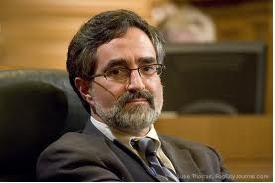
Endorsements 2010: State races

24

GOVERNOR

EDMUND G. BROWN

We have issues with Jerry Brown. The one-time environmental leader who left an admirable progressive legacy his first time in the governor’s office (including the Agricultural Labor Relations Board, the California Conservation Corps, and the liberal Rose Bird Supreme Court) and who is willing to stand up and oppose the Diablo Canyon nuclear power plant has become a centrist, tough-on-crime, no-new-taxes candidate. And his only solution to the state budget problems is to bring all the players together early and start talking.

But at least since he’s started to debate Republican Meg Whitman face to face, he’s showing some signs of life — and flashes of the old Jerry. He’s strongly denouncing Whitman’s proposal to wipe out capital gains taxes, reminding voters of the huge hole that would blow in the state budget — and the $5 billion windfall it would give to the rich. He’s talking about suing Wall Street financial firms that cheated Californians. He’s promoting green jobs and standing firm in support of the state’s greenhouse-gas emissions limits.

For all his drawbacks (his insistence, for example, that the Legislature shouldn’t raise any taxes without a statewide vote of the people), Brown is at least part of the reality-based community. He understands that further tax cuts for the rich won’t solve California’s problems. He knows that climate change is real. He’s not great on immigration issues, but at least he’s cognizant that 2 million undocumented immigrants live in California — and the state can’t just arrest and deport them all.

Whitman is more than a conservative Republican. She’s scary. The centerpiece of her economic platform calls for laying off 40,000 state employees — thereby greatly increasing the state’s unemployment rate. Her tax plan would increase the state’s deficit by another $5 billion just so that a tiny number of the richest taxpayers (including her) can keep more of their money. She’s part of the nativist movement that wants to close the borders.

She’s also one of the growing number of candidates who think personal wealth and private-sector business success translate to an ability to run a complex state government. That’s a dangerous trend — Whitman has no political experience or background (until recently she didn’t even vote) and will be overcome by the lobbyists in Sacramento.

This is a critically important election for California. Vote for Jerry Brown.


LIEUTENANT GOVERNOR


GAVIN NEWSOM

Why is the mayor of San Francisco running for a job he once dismissed as worthless? Simple: he couldn’t get elected governor, and he wants a place to perch for a while until he figures out what higher office he can seek. It’s almost embarrassing in its cold political calculus, but that’s something we’ve come to expect from Newsom.

We endorsed Newsom’s opponent, Janice Hahn, in the Democratic primary. It was hard to make a case for advancing the political career of someone who has taken what amounts to a Republican approach to running the city’s finances — he’s addressed every budget problem entirely with cuts, pushed a “no-new-taxes” line, and given the wealthy everything they wanted. His immigration policies have broken up families and promoted deporting kids. He’s done Pacific Gas and Electric Co. a nice favor by doing nothing to help the community choice aggregation program move forward.

Nevertheless, we’re endorsing Newsom over his Republican opponent, Abel Maldonado, because there really isn’t any choice. Maldonado is a big supporter of the death penalty (which Newsom opposes). He’s pledged never to raise taxes (and Newsom is at least open to discussion on the issue). He used budget blackmail to force the awful open-primaries law onto the ballot. He’s a supporter of big water projects like the peripheral canal. In the Legislature, he earned a 100 percent rating from the California Chamber of Commerce.

Newsom’s a supporter of more funding for higher education (and the lieutenant governor sits on the University of California Board of Regents). He’d be at least a moderate environmentalist on the state Lands Commission. And he, like Brown, is devoting a lot of attention to improving the state’s economy with green jobs.

We could do much worse than Newsom in the lieutenant governor’s office. We could have Maldonado. Vote for Newsom.


SECRETARY OF STATE


DEBRA BOWEN

California has had some problems with the office that runs elections and keeps corporate filings. Kevin Shelley had to resign from the job in 2005 in the face of allegations that a state grant of $125,000 was illegally diverted into his campaign account. But Bowen, by all accounts, has run a clean office. Her Republican opponent, Damon Dunn, a former professional football player and real estate agent, doesn’t even have much support within his own party and is calling for mandatory ID checks at the ballot. This one’s easy; vote for Bowen.


CONTROLLER


JOHN CHIANG

Chiang’s been a perfectly decent controller, and at times has shown some political courage: When Gov. Arnold Schwarzenegger tried to cut the pay of state employees to minimum-wage level, Chiang refused to go along — and forced the governor to back down. His opponent, state Sen. Tony Strickland (R-Los Angeles), wants to use to office to promote cuts in government spending. Vote for Chiang.


TREASURER


BILL LOCKYER

Lockyer’s almost certain to win reelection as treasurer against a weak Republican, Mimi Walters. He’s done an adequate job and pushed a few progressive things like using state bonds to promote alternative energy. Mostly, though, he seems to be waiting for his chance to run for governor — and if Jerry Brown loses, or wins and decides not to seek a second term, look for Lockyer to step up.


ATTORNEY GENERAL


KAMALA HARRIS

This is going to be close, and it’s another clear choice. We’ve had our differences with Harris — she’s trying too hard to be a tough-on-crime type, pushing some really dumb bills in Sacramento (like a measure that would bar sex offenders from ever using social networking sites on the Internet). And while she shouldn’t take all the blame for the problems in the San Francisco crime lab, she should have known about the situation earlier and made more of a fuss. She’s also been slow to respond to serious problem of prosecutors and the cops hiding information about police misconduct from defense lawyers that could be relevant to a case.

But her opponent, Los Angeles D.A. Steve Cooley, is bad news. He’s a big proponent of the death penalty, and the ACLU last year described L.A. as the leading “killer county in the country.” Cooley has proudly sent 50 people to death row since he became district attorney in 2001, and he vows to make it easier and more efficient for the state to kill people.

He’s also a friend of big business who has vowed, even as attorney general, to make the state more friendly to employers — presumably by slowing prosecutions of corporate wrongdoing.

Harris, to her credit, has refused to seek the death penalty in San Francisco, and would bring the perspective of a woman of color to the AG’s office. For all her flaws, she would be far better in the AG’s office than Cooley. Vote for Harris.


INSURANCE COMMISSIONER


DAVE JONES

Jones, currently a state Assemblymember from Sacramento, won a contested primary against his Los Angeles colleague Hector de la Torre and is now fighting Republican Mike Villines of Fresno, also a member of the Assembly. Jones is widely known as a consumer advocate and was a foe of Prop. 17, the insurance industry scam on the June ballot. A former Legal Aid lawyer, he has extensive experience in health-care reform, supports single-payer health coverage, and would make an excellent insurance commissioner.

Villines pretty much follows right-wing orthodoxy down the line. He wants to replace employer-based insurance with health savings accounts. He argues that the solution to the cost of health insurance is to limit malpractice lawsuits. He wants to limit workers compensation claims. And he supports “alternatives to litigation,” which means eliminating the rights of consumers to sue insurance companies.

Not much question here. Vote for Jones.


BOARD OF EQUALIZATION, DISTRICT 1


BETTY YEE

The Board of Equalization isn’t well known, but it plays a sizable role in setting and enforcing California tax policy. Yee’s a strong progressive who has done well in the office, supporting progressive financial measures. She’s spoken out — as a top tax official — in favor of legalizing and taxing marijuana. We’re happy to endorse her for another term.


SUPERINTENDENT OF PUBLIC INSTRUCTION


TOM TORLAKSON

We fully expected a November runoff between Torlakson and state Sen. Gloria Romero. Both Democrats had strong fundraising and political bases — and very different philosophies. Romero’s a big charter school and privatization fan; Torlakson has the support of the teachers unions. But to the surprise of nearly everyone, a wild-card candidate, retired Los Angeles educator Larry Aceves, came in first, with Torlakson second and Romero third. Now Aceves and Torlakson are in the runoff for this nonpartisan post.

Aceves is an interesting candidate, a former principal and school superintendent who has the endorsement of the San Francisco Chronicle and the San Francisco Green Party. But he’s too quick to take the easy line that the teachers’ unions are the biggest problem in public education, and he wants the unilateral right to suspend labor contracts.

Torlakson wants more charter-school accountability and more funding for primary education. He’s the far better candidate.


STATE SENATE


DISTRICT 8

Leland Yee

Yee’s got no opposition to speak of, and will easily be re-elected. So why is he spending money on a series of slick television ads that have been airing all over San Francisco, talking about education and sending people to his website? It’s pretty obvious: The Yee for state Senate campaign is the opening act of the Yee for San Francisco mayor campaign, which should kick into high gear sometime next spring. In other words, if Yee has his way, he’ll serve only a year of his next four-year term.

Yee infuriates his colleagues at times, particularly when he refuses to vote for a budget that nobody likes but everyone knows is necessary to keep the state afloat. He’s done some ridiculous things, like pushing to sell the Cow Palace as surplus state property and turn the land over to private real estate developers. But he’s always good on open-government issues, is pushing for greater accountability for companies that take tax breaks and then send jobs out of state, has pushed for accountability at the University of California, and made great progress in opening the records at semiprivate university foundations when he busted Stanislaus State University for its secret speaking-fees deal with Sarah Palin.

With a few strong reservations, we’ll endorse Yee for another term.


STATE ASSEMBLY, DISTRICT 12


FIONA MA

A clear hold-your-nose endorsement. Ma has done some truly bad things in Sacramento, like pushing a bill that would force the San Francisco Unified School District to allow military recruiters in the high schools and fronting for landlords on a bill to limit rent control in trailer parks. But she’s good on public power and highly critical of PG&E, and she has no opposition to speak of.


STATE ASSEMBLY, DISTRICT 13


TOM AMMIANO

Ammiano’s a part of San Francisco history, and without his leadership as a supervisor, we might not have a progressive majority on the Board of Supervisors. Ammiano was one of the architects of the return to district elections, and his 1999 mayoral campaign (against Willie Brown) marked a turning point in the organization, sophistication, and ultimate success of the city’s left. He was the author of the rainy day fund (which has kept the public schools from massive layoffs over the past couple of years) and the Healthy San Francisco plan.

In Sacramento, he’s been a leader in the effort to legalize (and tax) marijuana and to demand accountability for the BART Police. He’s taken on the unpleasant but critical task of chairing the Public Safety Committee and killing the worst of the right-wing crime bills before they get to the floor. He has four more years in Sacramento, and we expect to see a lot more solid progressive legislation coming out of his office. We enthusiastically endorse him for reelection.


STATE ASSEMBLY, DISTRICT 14


NANCY SKINNER

Skinner’s a good progressive, a good ally for Ammiano on the Public Safety Committee, and a friend of small business and fair taxation. Her efforts to make out-of-state companies that sell products in California pay state sales tax would not only bring millions into the state coffers but protect local merchants from the likes of Amazon. We don’t get why she’s joined with Berkeley Mayor Tom Bates to try to get rid of Kriss Worthington, the most progressive member of the Berkeley City Council, but we’ll endorse her for re-election.


STATE ASSEMBLY, DISTRICT 16


SANDRE SWANSON

Swanson’s a good vote most of the time in Sacramento, but he’s not yet the leader he could be — particularly on police accountability. The BART Police murdered Oscar Grant in Swanson’s district, yet it fell to a San Franciscan, Tom Ammiano, to introduce strong state legislation to force BART to have civilian oversight of the transit cops. Still, he’s done some positive things (like protecting state workers who blow the whistle on fraud) and deserves another term.


>>BACK TO ENDORSEMENTS 2010

Opinion: For Democratic unity

6

We ran out of space in today’s print edition and couldn’t publish either of the two opeds I wanted to run, so I’m posting them here. The first one is by the chairman of the SF Democratic Party.

By  Aaron Peskin

As one of the most Democratic cities in California, San Francisco has a special responsibility to make sure we help elect a Democratic ticket on November 2nd.  We always take that responsibility seriously – but this year we will have the pleasure of helping elect our own to statewide office: Gavin Newsom as Lt. Governor, Kamala Harris as Attorney General and even native son Jerry Brown as California’s next Governor.

Because so many of our nominees are from San Francisco – and because San Francisco is so Democratic – and because so many of the statewide elections are so, so close – what we do to turn out the vote here in San Francisco could very well be the difference between victory and defeat for many statewide candidates. 

A quick look at the numbers shows just how important San Francisco could be in this year’s statewide races. In November of 2008, a total of 388,112 San Franciscans cast ballots. In November of 2006, the last gubernatorial contest, just 253,719 San Franciscans voted. That is a difference of 134,393 votes.

Local Democratic Party leaders agree a coordinated campaign could turn out at least 20% of these “occasional” voters and probably many more.  That means we could add a minimum of more than 25,000 votes from this Democratic base to the statewide total.

In a year in which the polls show razor-thin margins separating the winners from the losers, a 25,000 vote margin could make the difference between Democratic policies like support for schools, investing in green jobs and protecting a woman’s right to choose and the Republican reaction supported by Meg Whitman, Carly Fiorina, Steve Cooley and Able Maldonado.
Considering how important Democratic unity is to our city and our state – we need to pay it more than lip service. And that’s what our local party is trying to do.

It is certainly true that there are important local issues upon which we disagree. For example, I certainly take issue with some of Mayor Newsom’s positions – such as his so-called Sit/Lie ordinance. I know that he takes issue with many of my positions.

There are many in our party unhappy with Newsom for putting an attack on the ballot on the elected members of the local party in this crucial election.  Again, I know Mayor Newsom has expressed his displeasure with the local party for not supporting some of his candidates and positions.

But these local disagreements are small in comparison to what is at stake for Californians. They are actually small compared to what is at stake for San Franciscans – a city that relies on state aid to support our schools and colleges, much of our local health services and many other important programs.

That’s why unity is the only sensible policy in this crucial 4-weeks of voting until the November 2nd election. And that’s why I have a simple and genuine invitation to Mayor Newsom and the other statewide candidates.

Come help us help you.

We are gathering every day at our headquarters at 1261 Howard Street to knock on doors, register voters and make phone calls to get out the vote.  Come show with your presence that turning out the vote is so important that we will turn aside both petty differences and legitimate policy disagreements on local concerns.

Across California our opponents are attacking “San Francisco” Values. Come show that a core value of San Francisco Democrats is uniting to support the greater good.

Quick Lit: Oct. 6-Oct. 12

0

Literary readings, book tours, and talks this week

Litquake 2010 goes out with a bang featuring novelists, scientists, poets, comedians, sexy storytellers, and more, culminating in this year’s not-to-be-missed Lit Crawl.


Wednesday, Oct. 6

“The Art of Narrative Nonfiction”
Much is said about how to write fiction, but what about non-fiction? This panel moderated by best-selling author David Ewing Duncan will discuss the techniques for turning a biography into a National Book Award Winner. Featuring Tamim Ansary, Frances Dinkelspiel, Richard Rhodes, and T.J. Stiles.
6 p.m., free
San Francisco Main Library
100 Larkin, SF
www.litquake.org

Bawdy Storytelling
Hear real people sharing their bona fide sexual exploits in ten minutes or less. Storytellers are an eclectic mix of authors, poets, comedians, actors, and regular people, including Tim Barsky, Stephen Elliot, Johnny Funcheap, Jow Klocek, Joe Kukura, and Morgan.
7 p.m., $10
Blue Macaw
2565 Mission, SF
www.litquake.org

“The Complex Societies of Ants and Honeybees”
Join Litquake and the California Academy of Sciences for a discussion led by two leading experts, Mark W. Moffett and Dr. Thomas D. Seeley, on our planet’s smallest and most complex social organizations. Co-sponsored by KQED, and moderated by KQED’s QUEST TV series producer Amy Miller.
7 p.m., $15
Morrison Planetarium
California Academy of Sciences
55 Music Concourse
Golden Gate Park, SF
www.litquake.org


“Dance, Intergenerational Trauma, and the Diaspora”
Learn about the Katherine Dunham Technique at this lecture featuring Eyla Moore, teacher at ODC, Dance Commons, Hip Line, and Dance Fitness Studio, and Aliyah Dunn Salahuddin, dancer and tutor in City College of San Francisco’s African American Scholastic Program.
3 p.m., free
City College of San Francisco
Ocean Campus
Rosenberg Library, Room 305
50 Phelan, SF
(415) 239-3854

Flight of Poets
Internationally renowned sommelier Christopher Sawyer pairs six talented local poets with six great wines carefully selected to illuminate their work. Featuring Camille T. Dungy, Robin Ekiss, Paul Hoover, Ada Limón, Zachary Mason, Christopher Sawyer, and Matthew Siegel.
7 p.m., $15 includes wine flight 
Hotel Rex
562 Sutter, SF
www.litquake.org

The Funny Side of Sex
Join Daily Show correspondent Kristen Schaal as she celebrates her first book, The Sexy Book of Sexy Sex, along with Scott Jacobson, co-author of the new book Sex: Our Bodies Our Junk, illustrator Michael Kupperman, and actor and writer Ted Travelstead. This evening of live and uncensored sex-humor unfolds at San Francisco’s legendary Cobb’s Comedy Club. Co-sponsored by Chronicle Books.
8 p.m., $15
Cobbs Comedy Club
915 Columbus, SF
www.litquake.org

Lit on the Lake
Celebrate East Bay writers at this litquake event featuring acclaimed novelists including Melanie Abrams, Elaine Beale Lucy Jane Bledsoe, Jacqueline Luckett, Lisa Braver Moss, and Kristin McCloy.
6 p.m., $5-$10 donation
Gondola Room
Lake Chalet
1520 Lakeside, Oakl.
www.litquake.org

100th Literary Death Match
Celebrate the kickoff of a worldwide Literary Death Match tour where judges, W. Kamau Bell, Mark Fiore, and Jane Smiley, will pass centurial judgment on a must-see lineup featuring readers Jason Bayani, David Corbett, Kari Kiernan, and Joel Selvin. Hosted by Todd Zuniga, Elissa Bassist, Alia Volz, and M.G. Martin.
7 p.m., $15
Elbo Room
647 Valencia, SF
www.litquake.org

Radar Reading Series: Litquake Edition
This monthly literary series brings in first-time novelists, playwrights, shoplifting poets, and riot girl historians for readings, followed by a Q&A session hosted by Michelle Tea. Featuring Chinaka Hodge, Tao Lin, Sara Marcus, and Beth Pickens.
6 p.m., free
Latino Reading Room
San Francisco Main Library
100 Larkin, SF
www.litquake.org

Thursday, Oct. 7

Booksmith Bookswap
Bring a book you passionately love but can part with and learn about dozens of new, fantastic books. Ticket price includes two drinks, appetizers, and a 20% discount card to purchase books after the event.
6:30 p.m., $25
Booksmith
1644 Haight, SF
www.litquake.org

Feminine Wiles
Hear witty women read from their most recent books, featuring Elif Batuman, Marisa Crawford, Katie Crouch, Thaisa Frank, Joyce Maynard, Kaya Oakes, and Shawna Yang Ryan.
7 p.m., free
Noe Valley Recreational Center
295 Day, SF
www.litquake.org

The International Homosexual Conspiracy
Author Larry-bob Roberts offers humorous insights into the absurdities of modern life and queer culture, from contemporary topics like mistaken first impressions, to sustainable yet unaffordable pants, and critiques of bourgeois mindsets.
7 p.m., free
Modern Times Bookstore
888 Valencia, SF
www.mtbs.com

Litquake Bites
Local food and books, two of San Francisco’s favorite pastimes, converge at this delicious and informative lunchtime event featuring presentations and tastings by four innovative food purveyors and authors including Sarah Billingsley, Gordon Edgar, Steve Sando, and Amy Treadwell.
Noon, free
Book Passage
1 Ferry Building, SF
www.litquake.org


Stories on the Stage
Hear short fiction stories about love lost, love never found, and love perpetually out of touch with authors Daniel Handler, Daniel Alarcón, and Yiyun Li. Directed by Sean San José, co-founder of Campo Santo, the award-winning resident theater company of San Francisco’s Intersection for the Arts.
7:30 p.m., $25
Roda Theater
Berkeley Repertory Theatre
2025 Addison, Berk.
www.litquake.org

Friday, Oct. 8

All-Memoir Women’s Night
From finding love in foreign lands to struggling with poverty, from being in the sandwich generation to making the perfect brownie, women are fearless when it comes to exploring life and its myriad joys and challenges. Hear authors Zoe Fitzgerald Carter, Katherine Ellison, Laura Fraser, Frances Lefkowitz, Meredith Maran, Kate Moses, Janice Cooke Newman turn inward to provide us with stories that delight, dismay, and entertain. Emceed by Litquake co-director Jane Ganahl.
6:30 p.m., $5-$10 donation
Paris Ballroom
501 Geary, SF
www.litquake.org


“How to Write and Sell Erotica”

Join a panel of editors, anthologists, and published authors as they offer practical tips and personal insights about how to write and sell all forms of erotica. Find out what magazines, websites, anthologies, and book publishers you can sell your work to, as well as  tips on how to write more marketable erotica.
7:30 p.m., $5-$15 donation
Center for Sex and Culture
1519 Mission, SF
www.sexandculture.org

“It’s All Over But the Crying”
Enjoy a night of author talks on the world of sports, from the infinite variations of major-league baseball to the international phenomenon of the World Cup, with Alan Black, Howard Bryant, Dan Epstein, Dan Fost, David Henry Sterry, Jason Turbow, and Michael Zagaris. Special multimedia presentation by Bay Area sports photographer Michael “Z Man” Zagaris. Emceed by Litquake co-director Jack Boulware.
7 p.m., $10
Hemlock Tavern
1131 Polk, SF
www.litquake.org

Jonathan Lethem
Novelist, essayist, and short story writer Jonathan Lethem will discuss his latest novel, Chronic City. Co-presented by Litquake and San Francisco’s Jewish Community Center.
11 a.m., $20
Jewish Community Center of San Francisco
3200 California, SF
www.litquake.org


Litquake at the Bikestore

In the late 19th century, an accountant named Frank Lenz quit his job to cycle around the world. Two years later he mysteriously disappeared during the final leg of the journey. Hear author David V. Herlihy discuss this mystery and his new book The Lost Cyclist. In conjunction with Green Apple Books.
7 p.m., free
Public Bikes
123 South Park, SF
www.litquake.org

Saturday, Oct. 9

Lit Crawl
Get your fill of literary entertainment at galleries and bars across the Mission, where each phase offers crawlers a choice of attending readings happening simultaneously at over a dozen venues. With best-selling authors, poets, professors, bawdy story-tellers, amateurs, and professionals, it’ll be tough to choose three.
Phase I 6pm-7pm, Phase II 7:15pm-8:15pm, Phase III 8:30pm-9:30pm; free
Various venues along the Valencia Street Corridor
Mission District, SF
www.litquake.org

Sunday, Oct. 10

Social Justice with Claudette Colvin
Attend this social justice event featuring a conversation between Enid Lee and Civil Rights legend Claudette Colvin, who refused to give up her seat to a white person on a Montgomery bus in 1955 and was the star witness in the federal case Browder v. Gayle, which desegregated the Montgomery buses. Also featuring a performance piece by Awele Makeba and a performance by poet, activist, and spoken word artist Bryonn Bain.
1:30 p.m., free
San Francisco Main Library
100 Larkin, SF
www.litquake.org

Tuesday, Oct. 12

Bill Bryson
Hear the author of At Home in conversation with Roy Eisenhardt.
8 p.m., $20
Herbst Theater
401 Van Ness, SF
www.cityboxoffice.com

Left in the Dark
Authors R.A. McBride and Julie Lindow celebrate twentieth century movie theatres and movie going in this book titled, Left in the Dark: Portraits of San Francisco Movie Theatres, a collection of personal essays and fine art photographs that casts the theatres as characters within the city’s cultural landscape.
7 p.m., free
City Lights Bookstore
261 Columbus, SF
www.litquake.org

Joseph O’ Neill
The award-winning novelist of Netherland will be discussing his new family memoir, Blood-Dark Track.
7 p.m., $20
Jewish Community Center of San Francisco
3200 California, SF
(415) 292-1200