California

Getting the Kink out

2

joe@sfbg.com

The spotlights shone down, the athletes tussled, and the crowd screamed.

The toned and tattooed female wrestler tackled the topless, tanned, blond wrestler from behind, pulling her down like a tumbling tower. The mat thumped. Cheers erupted. In a sudden reversal, the tanned wrestler gained leverage with her right arm and slammed the tattooed fighter’s shoulders onto the mat, giving the blond the win.

What happened next was definitely not standard wrestling fare.

The tanned wrestler, triumphant, digitally penetrated the tattooed fighter. Her moans silenced the crowd, who listened, rapt. The fight wasn’t sport, but porn, America’s real favorite pasttime. Ultimate Surrender is just one of San Francisco-based studio Kink.com’s 30 or so paid subscription porn websites, including Fucking Machines, Everything Butt, and Hogtied.

But a new series of proposed state laws threatens the state’s porn industry, and the freakiest city on the West Coast may soon say goodbye to its highest profile porn purveyor, Kink.com, which for years has operated out of the historic Armory building on 14th and Mission streets.

The situation raises a question: Is Kink.com breaking up with San Francisco? If legislation requiring condoms on-set in porn and stricter state safety requirements become law, Kink.com CEO Peter Acworth tells the Guardian he has no choice but to leave California entirely.

“We can’t do business under those circumstances,” Acworth told us. “We can’t make a product that can compete.”

The tussle between pornographers, porn actors, and state lawmakers is a crucible where worker safety — and the right to choose how that safety is implemented — may soon be decided. Caught in the crossfire, freaky and sex-positive San Francisco stands to get a whole lot less kinky.


ECHOES OF LOS ANGELES

California Assembly Bill 1576 would legally require condom use while shooting porn, mandatory STD testing, and pornographic studios required to hold health records of their talent. The bill cleared the Assembly’s Committee on Labor and Employment just last month, the first step on a short road to gaining the governor’s signature.

Assemblymember Isadore Hall (D-Los Angeles), sponsored the bill, and the day it cleared committee he was triumphant.

“For too long, the adult film industry has thrived on a business model that exploits its workers and puts profit over workplace safety,” Hall said in a press statement. “The fact is, adult film actors are employees, like any other employee for any other business in the state. A minimum level of safety in the workplace should not have to be negotiated.”

The concern is largely over HIV infection on the sets of porn studios, and two parallel statewide efforts are working towards safety on porn sets. The state bill is the first, and the second is the renewed vigor in enforcing longstanding California Division of Occupational Safety and Health regulations.

In the early 1990’s, the federal Occupational Safety and Health Administration adopted a bloodborne pathogens regulation, and DOSH adopted a similar regulation soon after. DOSH’s standard requires employers to take measures to prevent employees’ eyes, skin, and mucous membranes from coming in contact with blood and “other potentially infectious materials,” including semen and vaginal secretions.

To some industries, the standard mandates rubber gloves and goggles. For the porn industry, the DOSH regulations are a moratorium on porn stars ejaculating on each others’ faces, deeming facials a workplace hazard. That standard porn finale can have life-changing ramifications.

“In 2004, there was a big (HIV) outbreak in the industry,” Eugene Murphy, senior safety engineer at DOSH, told the Guardian. “It was demonstrated HIV was clearly contracted on set.”

These infections mostly occurred in Los Angeles, once the center of the porn universe until Measure B arguably changed that. Los Angeles voters mandated porn studio condom use in 2012, and two years later, LA newspapers reported many pornographers have relocated to Las Vegas to escape the regulatory requirements.

The statewide pushback on porn is largely driven by the AIDS Healthcare Foundation, whose President Michael Weinstein has smiled for the cameras alongside Hall and other lawmakers every step of the way.

DOSH began its part in the porn crackdown in Los Angeles, but Murphy was charged with looking into San Francisco’s Kink.com, where Acworth is chafing against the idea of mandatory condoms.


RUBBERS REBUFFED

Acworth said he used to believe condoms should be mandatory for performers. After the porn set HIV infections in 2004, Kink.com buckled down.

“I attempted to run the business as condom mandatory for about a year,” Acworth told us. He even pronounced their necessity in an interview on CNN. But there were complications.

“There was pressure from the models themselves because of the chaffing issues,” he said. Porn performers have echoed those sentiments as well.

In an interview with entertainment site Nerve, popular porn star James Deen (see “Dick and smile,” 7/31/12) said he had no problem with personal condom use, but women he’s worked with often complained of chafing.

“I was talking to a girl about it and she was like, ‘Dude, I’m in pain everyday and constantly swollen,'” he told Nerve. “Condoms are intended to be used on an average-sized penis for average sex, and we have entertainment sex, for anywhere from 20 minutes to four hours.”

The condom effort tanked at Kink. Acworth said he withdrew the policy after listening to his performers’ wishes. The studio does adhere to 14-day HIV tests, and condoms are available in a “double-blind” agreement, by which actors can purportedly safely ask for condoms and not fear retaliation.

Despite those efforts, Kink was later awash in condom controversy. Earlier this year, DOSH fined Kink $78,000 in violations connected with the alleged on-stage HIV infections of two actors in 2013, one of whom alleged that a shoot continued despite one actor having a bleeding cut on his penis.

Acworth adamantly asserts the HIV transmission happened in these actors’ personal lives, and says the issue is used as a wedge by the AIDS Healthcare Foundation to push a political agenda. The Guardian attempted to contact the foundation but did not hear back by press time.

Regardless, Murphy said, DOSH is pursuing regulatory requirements around bloodborne pathogens at Kink, and the enforcement of those regulations is not tied to the whether the initial HIV infection case was verified or not.

“My concern,” Murphy said, “is whether there is a healthy and safe workplace.”


COMMUNITY TIES

Acworth came to San Francisco for the reasons many do: he wanted a place to be weird, or in his case, kinky.

He wanted a new home from which to shoot his leather porn site, Hogtied.com. New York City was big, but at the time (the ’90s), he felt San Francisco had a more established leather scene in the Folsom Street Fair and leather shops like Mr. S.

“San Francisco,” Acworth said, sitting across from us in a leather bondage chair, “appeared to be more geared up.”

Although not universally loved within the BDSM community, the studio is popular in San Francisco. Part of the credit may go to Kink’s recent revitalization of one of the largest spaces in its 200,000-square-foot historic brick fortress: the Drill Court.

The vast, arch-roofed space was outfitted with modern sound proofing for the benefits of performers and neighbors, but its life as a performance space is not new. In the 1920s, boxers traded blows under its lights, and history may repeat itself, Armor Community Center Sales Manager Quincy Krashna told us.

He’s in talks with Golden Boy Promotions (boxer Oscar De La Hoya’s company) to bring prize fighting back to this historic space. In recent months, the Drill Court played host to a massive New Year’s Eve party, a Game of Thrones-themed dance night and cancer fundraiser, and even an evangelical medical conference, where missionaries offered free dental and doctor checkups to the public.

“The Holy Spirit was truly present at this event,” a doctor from the program, Building Bridges, wrote on the program’s website.

Even bigger changes could be in store. Last month, Acworth filed an application with the city to convert most of the historic Armory into office space, what he called a “last ditch” plan in case the state condom ban passes and Kink decamps for Nevada.

“This move represents an insurance policy,” he told us.

In a public May 11 letter to Weinstein of the AIDS Healthcare Foundation, Acworth asked the foundation for a truce: “I am reaching out to you and AHF, in the hopes of a day where we may sit across the table from one another and agree on common goals and strategy on protecting performers as opposed to continuing this battle.”

As he notes in his letter, if pornographers lose this battle, the companies may relocate. If Acworth finds himself uncomfortably bound and gagged by new regulations, his safe word may be: Nevada.

Income gap

4

news@sfbg.com

It seems like San Francisco may surpass itself as the city with the highest minimum wage in the country, as labor activists and business groups are each pitching their own fall ballot measures to raise wages for the lowest paid workers.

The city’s current minimum wage of $10.74 is the highest in the country, but that still isn’t enough, according the labor activists, not in the city with the most expensive rent in the US and one of the largest income gaps.

“We have the highest growing gap between the rich and the poor, and the economic disparity is so high right now,” said José Argüelles of Young Workers United. He said the raising the minimum wage “isn’t the whole solution, but it’s part of it. Folks working full time in San Francisco should be able to afford to live in San Francisco.”

But sometimes even working full time in San Francisco isn’t enough to live here. A 2012 study by the San Francisco Department of Health found that even in the most inexpensive neighborhoods of the city, one would have to work 3.4 full-time minimum wage jobs to afford rent in a two-bedroom market rate apartment. In the priciest neighborhoods, one would have to work up to eight full-time jobs to afford rent.

All of this is occurring at a time when minimum wage debates are taking place across the country. President Obama has suggested raising the federal minimum wage from the current $7.25/hour to $10.10/hour, although Congress has been less receptive. Here in California, the state minimum wage of $8/hour will rise to $9/hour this July, and $10/hour by 2016.

The San Francisco ballot measure favored by labor activists is an initiative to raise the hourly minimum wage to $15 by 2017, with a sliding time frame depending on the size of the business. Proponents of the measure, dubbed the Minimum Wage Act of 2014, are just beginning to collect the necessary 9,702 signatures to qualify for the November ballot, and a recent poll found that 59 percent of likely voters supported the increase, while only 36 percent were opposed.

Business groups are usually the first ones to object to higher wages, but the San Francisco Chamber of Commerce and other small business-leaders are working with Mayor Ed Lee to craft their own, albeit more watered-down, ballot measure to increase pay. Despite their efforts, the $15/hour initiative took them by surprise and they are “outraged,” according to a statement released by the Chamber.

“This initiative is nothing more than a thinly veiled attempt to influence the outcome of the consensus-building process that will begin this week under the leadership of Mayor Ed Lee,” Chamber President Bob Linscheid said in the statement.

But many small businesses actually want to see the minimum wage increased, said John Eller of Alliance of Californians for Community Empowerment, one of the labor groups sponsoring the $15/hour initiative.

“What we heard when we talked to small businesses was that big money is coming in to buy up properties, that prices are getting jacked up, and that they are getting displaced, just like the residents of San Francisco,” Eller said. “But genuine interest in San Francisco, supporting young people, getting people out of poverty, and dealing with displacement were the themes that kept coming up.”

The business community wants to see the higher minimum wage phased in over a longer period of time and supports a more “moderate” wage, although an exact rate has not been decided, according to an email sent by Henry Karnilowicz, president of the San Francisco Council of District Merchants Associations. Other concessions that business leaders ask for include a separate, lower minimum wage for tipped servers and new hires in-training.

Raising the minimum wage “is about being fair and being reasonable,” said Karnilowicz. “It’s not true that small businesses are making a fortune, and I’d hate to see a big Walmart or Target coming into town to take their place.”

But Argüelles says that including special exceptions and a piecemeal law is a step in the wrong direction.

“In the past, San Francisco has led the way [with fair labor laws],” he said. “I think we can set a higher standard than that.”

Opponents to raising the minimum wage often claim that doing so hurts jobs and the economy, but a study from economists at UC Berkeley says otherwise. Unemployment in San Francisco has dropped since the last major minimum wage increase, and businesses absorb the extra labor costs through reduced employee turnover and improved efficiency.

The study also found that affected workers are largely adults and disproportionately women and people of color, two groups for whom the income gap is especially vast.

A measure qualifies for the ballot in one of two ways: either by garnering enough signatures through the initiative process, or being placed on the ballot directly by the mayor or a group of four or more supervisors. As of now, it seems plausible that San Franciscans will have two minimum wage measures to choose from this year, one from signatures and another from Mayor Lee.

On May 7, the Chamber released a press release stating that it’s seeking a single, consensus measure rather than two competing ordinances. Labor activists also hope to see one measure, Argüelles said.

There are no details yet on what Lee’s minimum wage ordinance would look like, if he sponsors one. There’s potential for a compromise between labor activists and business leaders, meaning one ballot measure with wide support. Otherwise, it will likely be one measure pitted against the other.

The deadline for Lee to submit his ordinance to the Department of Elections is June 17.

Stored power

0

rebecca@sfbg.com

BASED ON EARTH

For this second installment of our environmental news column, we’re looking at climate change from wildly different perspectives. We’ll explore whether local green-tech manufacturing firms can help wean California off fossil fuels, highlight some key data from the National Climate Assessment, and hear from an Amazonian shaman who’s fed up with white people making a mess of the planet and his home territory.


STASHING ELECTRONS

A new green technology sector in the Bay Area could help find the missing puzzle piece needed to establish a sustainable clean-energy mix for the state’s future.

Californians continue to rely on a majority of electricity sources that are environmentally unfriendly: natural gas, nuclear power, and even coal. Generating electricity by burning fossil fuels contributes to air pollution, consumes vast quantities of freshwater, and releases greenhouse-gas emissions, exacerbating global climate change.

But this is all starting to change. Since California requires utilities to convert one-third of their energy mix to renewable sources by 2020, there’s incentive for investment in carbon-free alternatives, such as wind and solar. Meanwhile, procurement decisions at the California Public Utilities Commission have pushed utilities to purchase more renewable power.

“Solar is succeeding beyond people’s expectations around the world,” because pricing has come down, said Julie Blunden, a consultant and energy-sector expert who formerly served as vice president at SunPower. “California set itself up to say, ‘we’re for changes to our power sector.'”

But renewables have an inherent problem — the power they produce can’t always be tapped just when it’s needed. Without some way to store the electricity generated by a wind or solar array, to be kept on hand for when demand hits a peak, wind and solar are unreliable for primary energy generation because they’re subject to fluctuations in wind and natural light. This is where energy storage comes in.

Throughout the Bay Area, companies specializing in battery manufacturing are starting to gain traction, with 11 regional battery manufacturers enrolling in CalCharge, an accelerator program for energy storage created with help from the U.S. Department of Energy and the California Clean Energy Fund.

CalCharge gives regional energy-storage companies access to national laboratories such as Lawrence Berkeley National Lab, facilities described by DOE renewables expert David Danielson as “science and engineering powerhouses at the forefront of clean energy innovation.”

One of the first grid-scale energy storage firms to join CalCharge is EnerVault, a flow battery manufacturer that’s working on a major installation in Turlock that will be co-located with a tracking solar system and an electric irrigation pump.

“The little dark secret about solar is that it’s intermittent,” explained Tom Steipen, CEO of Primus Power, a flow battery manufacturing firm based in Hayward that recently joined CalCharge.

On cloudy days, solar arrays won’t produce as much power. Wind presents similar challenges: “Wind in North America is stronger at night — but we don’t need it at night, we need it in the afternoon. So anything you can do to de-couple the instantaneous supply from demand is good for the environment, good for the economy, and that’s what energy storage does. … I like to describe it as a warehouse of electrons.”

Primus makes energy pods — an array of batteries that stand about six feet tall, placed in two rows within a shipping container — fed by renewable power arrays and tied in with the grid.

The pods can be stacked in Lego-like fashion, enabling more energy storage. They are then positioned beside a second shipping container, outfitted with equipment to convert stored DC power to AC power that can be sent over transmission lines.

Primus Power plans to make one of its first energy pod shipments to Miramar, the site of a marine base near San Diego where the movie Top Gun was filmed. The base is powered with its own contained micro-grid, but it was impacted by brownouts a couple years ago. With this project, Primus faces a test for its energy pods, which are estimated to last up to 20 years: Can the flow batteries, in combination with solar, produce reliable electricity for three full days?

If the pods can supply a smooth power supply, Primus wins — but more importantly, it will be a vote of confidence for carbon-free energy sources as significant sources of electricity generation.


“MONEY WON’T SAVE THE WORLD”

Davi Kopenawa is sometimes called the “Dalai Lama of the Rainforest.” He’s a shaman, activist, and spokesperson for his Yanomami tribe, the largest relatively isolated tribe in South America, which lives according to traditional indigenous ways in territory located within the Brazilian Amazon.

After years of battling the Brazilian government, Kopenawa and his people won a successful campaign for demarcation of the Yanomami territory in 1992. He co-wrote a book, The Falling Sky, with French anthropologist Bruce Albert, recently published by the Harvard University Press.

Today, the Yanomami are facing new pressures. Mining speculators are encroaching into their indigenous territory, causing fears of displacement, environmental destruction, and disease. In the past, exposure to disease brought dire consequences, resulting in widespread fatalities.

Kopenawa recently made a rare visit to San Francisco, giving talks at the Presidio Trust, UC Berkeley, and City Lights Books — and we got the chance to interview him while he was here.

Speaking via translation provided by Fiona Watson, research director of the human rights organization Survival International, Kopenawa talked about the Yanomami’s looming worries of environmental destruction and displacement that could be ushered in by mining companies.

“People are returning, invading it again, and repeating exactly what happened 20 years ago,” he told us. “These people are mainly gold miners who are looking for the riches of the Earth … They’re looking for oil, diamonds, and other precious materials, which is what white people want.”

He travels in part to seek support from the international community. “The majority of Yanomami have never left their land — they haven’t come out like I have,” he said. “So they don’t really see at close quarters how we are fighting against the politicians. However, the Yanomami and I, we continue to fight.”

Kopenawa had a lot to say about climate change and what has been done so far to address it: “All of you, the governments, the white people, need to listen to us, if you want to control the rich people who are always there … seeking raw materials from the earth, cutting down the forests, destroying the rivers.”

Indigenous leaders have spoken out internationally on the issue of climate change, he added, but the message has fallen on deaf ears. “They had the big UN climate meeting in Copenhagen,” he said. “But that didn’t result in anything. They only wasted money. They made us think that the city people would resolve things, but they couldn’t. The problem is the governments don’t listen. … The problem really is about capitalism, that’s at the root of the problem.”

Kopenawa’s perspective as a shaman in an indigenous culture is radically different from the world of government and politics, and he shakes his head at what he sees as utter complacency when it comes to implementing meaningful change.

“They’re only interested in the Internet, in paper, building more roads, stripping out the riches of the earth, destroying the trees,” he said. “We are different. We see the dangers, and we see that they are getting nearer. The cities are growing, the population is growing, and so the pollution is growing. There’s a lot of money in the world…But money won’t save the world.”

He advocates a new way of thinking about human progress.

“People have to stop thinking about ‘progress,’ which is pulling out the riches of the earth, and negotiating and doing business and having money all the time,” he said. “This is the error of the city people. I’ve tried to tell the city people, you need to minimize this problem of the climate, or else it will stop raining. And it will keep getting hotter.”


MORE WILDFIRES, LESS WATER

The Obama Administration unveiled the third National Climate Assessment on May 6, a hefty document detailing climate change impacts facing every region of the U.S.

Unsurprisingly, California’s own climate-related woes stem from water scarcity. Here are some details:

More money needed for drinking water. “Climate change will increase the cost of maintaining and improving drinking water infrastructure [estimated at $4.6 billion annually as things stand], because expanded wastewater treatment and desalinating water for drinking are among the key strategies for supplementing water supplies.”

Market impacts on delicious agricultural products. “California produces about 95 percent of U.S. apricots, almonds, artichokes, figs, kiwis, raisins, olives, cling peaches, dried plums, persimmons, pistachios, olives, and walnuts, in addition to other high-value crops. Drought and extreme weather affect the market value of fruits and vegetables more than other crops because they have high water content.”

More wildfires. “Numerous fire models project more wildfire as climate change continues. Models project … up to a 74 percent increase in burned area in California, with northern California potentially experiencing a doubling under a high emissions scenario toward the end of the century.”

Based on Earth is a monthly column by Guardian News Editor Rebecca Bowe.

Marcus Books of San Francisco evicted

For months, we’ve been covering the story of Marcus Books, the nation’s oldest continuously operating black-owned, black-themed bookstore located in San Francisco’s Fillmore District. Facing eviction from the purple Victorian where the bookstore had operated since 1981, the family that owns it had launched an ambitious fundraising campaign in an effort to remain in place.

Widespread community support for the culturally significant bookstore even led to the Board of Supervisors granting landmark status for the bookstore’s Fillmore Street address, on account of “its long-term association with Marcus Books … and for its association with Jimbo’s Bop City, one of the City’s most famous, innovative and progressive jazz clubs.”    

But as the Bay Guardian has just learned, the bookstore was evicted on May 6. Now it seems the family is in the process of packing up the books and determining what the next step is.

In the meantime, here’s an open letter sent to supporters via email by bookstore co-owners Tamiko, Greg, and Karen Johnson.

Dear Supporters: 
It was difficult to know what to tell you about our struggle to stay in our building, its winding path of lawyers and judges and protests and promises, hopes and gravities made it difficult to report our status on a curved road. But the current property owner has changed the locks to the door of 1712 Fillmore Street.

Marcus Books missed a couple of rent payments (not such a rare thing considering that at the same time the largest US banks and even our government asked taxpayers to give them hundreds of billions of dollars of assistance). However, the mortgage holder, PLM Lender, foreclosed on the building that housed Marcus Books of San Francisco since 1981. It was sold to the Sweis family (realtors and owners of Royal Taxi in San Francisco). The Johnson family (co-owners of Marcus Books of San Francisco) has been trying to buy the building back for a year and half.   

The Sweis’ bought this building in a bankruptcy “auction” (apparently, they were the only bidder) for $1.6 million. The Johnsons offered $1.8 million; the Sweis set their price at $3.20 million, hoping to double their purchase price after a few months ownership. After some public outrage resulting in public protests against the Sweis, a negotiation brought their asking price down to $2.6 million, adding a million dollar profit to their purchase without adding any improvements to the property and adding a stipulation that the entire $2.6 million be raised within 90 days.

Marcus Books supporters, including the local chapter of the NAACP; ACCE (Alliance of Californians for Community Empowerment; Japantown activists; Westside Community Services; Julian Davis, our fearless legal council; Carlos Levexier’s “Keep It Lit” campaign committee; local literary community including writers and other bookstores; people from all over the world: friends, family, customers, churches and unions took a stand against the bulldozing of community. Individuals, unions, and churches donated $25,000. The Community Land Trust of San Francisco garnered loan pledges of $200,000 and Westside Community Services offered a loan of $1.60 million. Though by any standards that would have been more than enough for a down payment, the Sweiss’ refused the $1.85 million start and filed for eviction.

Concurrently, the San Francisco Board of Supervisors unanimously passed a resolution requiring every division of city government make it a priority that they each use their “powers” to help Marcus Books stay in its location. In addition, and after 5 years of efforts by John Templeton (the leader in Black California history), and Greg Johnson (co-owner of Marcus Books of San Francisco), London Breed and Malia Cohen, two San Francisco Supervisors, initiated the Board of Supervisors’ unanimous vote granting landmark status.

With the numerous speeches of San Francisco Mayor Ed Lee stating his commitment to righting the wrongs of the San Francisco Redevelopment Agency’s slaughter of the thriving African American Fillmore District, we at Marcus Books believed the City would take some affirmative action on our behalf, since Marcus Books is the only surviving Black business since the Redevelopment devastation. Maybe that support is around the next bend? Well the locks have been changed, the cavalry is not in sight, and it’s time to pack up the books and store them till we find another space.

You might ask yourself, why bother? Materialism rules the day. That is not news. More often than not, we take it for granted that the “bottom line” is the only line worth respecting, though it respects no one. This is a common conception, but not right. Right is the vertical line that runs through all levels: from its spiritual top to its earthly roots. This verticality is manifested only by integrity. Integrity defies gravity in its perpetual longing for truth. Millions of people have been put out of their homes by bottom-line-feeders. It’s common, but it’s not okay, now or at any other time. Sometimes you just have to take a stand. Integrity is a verb.

In 1970, I had a vision bout rebirth. A segment of that vision informs this struggle. In this particular scene, the spirit is climbing the Tree of Humanity, being lifted higher and higher by those entwined in The Tree. The spirit never steps on anyone’s face or heart. It just carries their dreams up with it. Because it is growing towards rebirth, it gets younger with each step up. Though there are thousands of supporters at the bottom of The Tree, there are fewer at the top and the helping hands are fewer and far between. At the top of The Tree, at the stratum of the clouds, quantity has morphed in into quality. Here a storm of wind and rain rages, lightning strikes and a mad dog spirals up The Tree, snapping at the heels of the now, infant spirit. Teetering on a limb, the spirit sees a man face down in the mud at the bottom of The Tree. Seems he got there from letting go of his faith in The Tree. The surrounding clouds urge the spirit fall.
 
“Cross Section”
The rumors, that were whispered,
            Here, the silence screams,
            And branches battle shadows
            To defend their dreams.
 
            Where Black is cut in pieces,
            Can’t hold myself together.
            Time cuts me down,
            Life me brought up,
            But lead me to this weather.
 
            The Time says, ‘Fall
            To soulless ease.
            To struggle is disgrace.
            The gravity will grant you peace,
            And hide your shameful face.’
 
            But I am born of honor:
            Descendent from above.
            My Father’s name is Wisdom
            And my Mother’s name is Love.
            And I have strength of purpose.
            That’s what my climb’s about.
            As I’m cut off,
            I will hold ON
            And trustingly Black-out.”
 
(Copyright 1997, Karen Johnson)
 
 For the hundreds of people who have lent their time, money, and prayers, we are truly grateful.
 
–Tamiko, Greg, and Karen Johnson, co-owners Marcus Books of San Francisco
 
 . . . to be continued

Carmageddon cometh

42

news@sfbg.com

STREET FIGHT

San Francisco — already overwhelmed with private automobiles — faces a grim future of gridlock unless there is a radical change in how we think about city streets, parking, and regional transportation.

The facts are clear. Every day there are 1.7 million private car trips to, from, or within the city, according to the city’s transportation plan. Coupled with almost 10,000 vehicles registered per square mile, San Francisco today has one of the densest concentrations of cars on the planet, more than any peer city in the United States. In the business-as-usual scenario, the streets are forecast to absorb another half-million car trips. By 2040 there will be 2.2 million car trips on the exact same street grid we have today.

This is madness and it is dysfunctional for everyone. If you think Muni is unreliable now, it will be useless in 2040 as it stalls in the morass of 2.2 million car trips jammed onto city streets. Pedestrian injuries and deaths will rise with another 160 cars hitting pedestrians annually, simply due to oversaturation of automobiles. Cyclists might be able to weave around the stalled traffic, but it will be an ugly scene that fouls the air. Motorists will be stuck in their own gridlock, evermore impatient, distracted, honking, lurching through blocked intersections, sneaking through yellow lights, blocking crosswalks, double parking, and irritated with fellow drivers and everyone around. No one will be happy

This does not have to be. The city’s transportation agency hopes to reduce car trips from 1.7 to 1.6 million by 2018, a modest goal but barely holding the line. Reducing existing car trips by 100,000 while also adding thousands upon thousands of housing units and jobs, most coming with more parking, will quickly undo this humble ambition. The city can do more and the data shows us that there are many opportunities.

Consider that 68 percent of car trips within San Francisco are less than three miles. That’s 650,000 car trips per day that are generally pretty short — with a bicycle it’s less than a half-hour ride on relatively even terrain. If the city were able to get half of those car trips to switch to bicycle trips, it would be well on its way to averting carmageddon.

A more ambitious goal, increasing cycling to 20 percent of all trips, is the official city policy adopted by the Board of Supervisors. That’s 500,000-600,000 trips by bicycle every day, most of which can take place within that three-mile range, especially if cleverly arranged “wiggles” (level routes circumventing steeper hills) are laid out on the most logical corridors. But to carry that many cyclists, real space has to be allocated for them.

Out at San Francisco State University, where I teach a new Bicycle Geographies course that aims to increase cycling to the campus, there is tremendous opportunity to shift these kinds of short trips to bicycling. For students, faculty, and staff, bicycling is compatible with rapid transit, particularly for the “last mile” segments, such as between BART and SF State.

Bicycling is also a way to relieve local bus and light rail transit crowding — the 28 bus line on 19th Avenue, for example, is often jam packed and the city has only modest goals to improve that key line. Unlike transit or highways, bicycles do not require costly, long-term capital investment or operating funds and so can be deployed much more quickly.

It will be decades and cost hundreds of millions to improve the M-line, only now in the planning phase. We can lay down cycletracks much more quickly. Bicycling is also among the most equitable forms of urban transportation because it is affordable and accessible to almost everyone. This is obviously relevant to working-class students at SF State.

SF State has a memorandum of understanding with the city that obliges the university to reduce drive-alone automobile trips to campus, and the campus will not build any more car parking. With 4 percent of commute trips to SF State by bicycle (and only 2 percent among faculty) there is potential to increase the mode-share of bicycling as a path to reducing greenhouse gas emissions and auto trips.

The spatial proximity to Daly City and Balboa Park BART stations, as well as the Excelsior and Sunset, all under three miles from campus, means that the bicycle is well-suited to be a substitute for many short-range automobile trips and help the campus meet its goals. Yet what my students have found this semester is that it is all but impossible to bike safely to and from SF State, and the southwestern quadrant of San Francisco is largely left out of current bicycle planning in the city.

Taking multiple bicycle field trips over the past few months, we surveyed the opportunities for making safe routes to campus and envisioned what it would take to increase cycling to 20 percent of trips to and from SF State. Starting with the Balboa Park station, which is next to a deplorable tangle of freeway ramps, we ask what it would look like if fully-separated cycletracks were built on Geneva or Ocean avenues. These could connect City College and the Excelsior, and by way of a westward and southward jog, to a bicycle boulevard on Holloway Avenue, enabling a safe and convenient, 1.7-mile, 15-minute bike ride to SF State. Expanding the nascent Bay Area Bike Share to connect SF State and Balboa Park BART would create even more opportunity for cycling.

To the south of SF State, Daly City BART is a 1.4-mile, 10-minute bike ride that is daunting and poorly signed. It could be made safe and inviting with bicycle boulevards on streets parallel to traffic-clogged 19th Avenue and Junipero Serra. Borrowing from signature bicycle and pedestrian bridges in Pleasant Hill and Berkeley, perhaps there is an opportunity to build a bridge across Brotherhood Way toward the BART station, leveling an otherwise steep climb that discourages cycling.

To the north of campus, describing the designated 20th Avenue bicycle route as “a bit of a challenge” is an understatement. Cyclists must thread a cluttered shopping mall parking lot and overbuilt wide streets, and then confront a median blockading the way across Sloat Boulevard. While the megaproject to improve the M-line could include a cycletrack on this stretch of 19th Avenue, we should not wait a generation to increase cycling between SF State and the Sunset. The 20th Avenue route can be made welcoming now, with a fully-separated cycletrack and fixes on the Sloat intersection.

SF State, probably one of the most diverse campuses in the nation, has highly motivated students seeking real solutions to the huge problems society faces. The students are coming of age under extreme pressure of economic inequity and ecological duress, but they also see ways out of the mess created by the wasteful car culture and its linkages to ecological and social problems. They want to act now, and unlike past generations, they are shunning driving and many of them desire to reside in livable cities that offer choices for how they get around.

But what we have found this semester is that the campus is extremely isolated, difficult to access by bicycle, and walled-off by car sewers. Older, uninviting bicycle lanes are fragmented, disjointed, and seem to be an afterthought. With imagination, ingenuity, and political will, this can be remedied with bicycle improvements that cost far less than adding more car lanes and parking to the campus or surrounding area. And this would go much further at improving quality of life for neighbors who now have to put up with campus-generated traffic. Keeping the status quo, which means even more car trips but within the same space, is a dead end.


TRANSBAY DREAMS

Speaking of dead ends, San Francisco seems to specialize in dead-end train projects. The Central Subway, which is experiencing cost overruns and possible mismanagement, is one of these dead ends. There is no current option to have trains exiting to Geary or onto Columbus and possibly running on Lombard into the Marina, and that is a shame. Having the subway exit to the surface is probably the only way to make this project worthwhile.

There’s another dead end train project at the Transbay Terminal in downtown San Francisco. Yet unlike the Central Subway quagmire, I am impressed with the scale and possibilities for the Transbay Terminal project and there is opportunity to fix this dead end. Going back to the city’s business-as-usual traffic forecast, in 2040 car trips into the city from the Bay Bridge would increase 18 percent, and by 21 percent from San Mateo County. Aside from scratching my head wondering where exactly all of these cars are supposed to go, we simply need to stop this onslaught before the city becomes too dumb to move.

BART cannot solve it alone, as it will probably approach half a million riders per day by 2016, placing many downtown stations at or near capacity. BART also does not run all the way down the peninsula. Sometimes there are back-of-the envelope proposals to build a second BART tunnel under the bay, but this idea should be weighed against another idea. Rather than build a second BART tunnel to Oakland, how about a joint Amtrak California/Caltrain tunnel under the bay, and creating a true Grand Central Station of the West at Transbay? Let’s punch through the dead end currently planned for the east end of the Transbay Terminal “train box” and truly connect Northern California by rail.

This does not need to be high-speed rail, but rather the conventional, off-the-shelf electric rail already planned for Caltrain, of the variety that operates in the Northeastern US and much of Europe — efficient, high capacity trains that can travel 100-120 mile per hour comfortably and safely. In conjunction with a new transbay rail tunnel, the Capitol Corridor should be electrified and right of way captured from the freight railroads. One could take an electrified “baby bullet” from San Jose, through San Francisco, and continue to the East Bay and Sacramento. As Caltrain is electrified to the south, let’s also electrify the Altamonte Commuter Express trains, bring them across a rebuilt Dumbarton Bridge, and run high-frequency rail service into the new Transbay Terminal.

Understanding that this will take time to build, in the short term the Bay Bridge should be reconfigured to have bus-only lanes (and a bicycle lane on the bottom deck of the west span) and a greatly expanded AC Transit service that can relieve the looming BART crowding to the East Bay.

How to pay for these transbay dreams? A transbay rail project could get funding from Amtrak and other federal sources, requiring our congressional delegation to work for it. The state gasoline tax or eventual carbon taxes, and revenue from tolling Bay Area freeways, should be in the mix. The 101 and 280 should be tolled as well as the Caldecott Tunnel and I-80 in the East Bay, with revenue directed at electric rail in the long term and regional buses short term. And while people are talking about reforming Proposition 13 to end the artificially low property taxes on commercial land, let’s remember that transit — whether Muni, BART, or Caltrain — brings massive value to commercial property owners. They should be realistically expecting to pay in. In short, there are possibilities and ways to do this.

Here’s one small additional idea for raising seed money: In the wake of the Google bus controversy, the SFCTA, SFMTA, SF Planning Department, and City Attorney’s Office should assemble a crack team of California Environmental Quality Act experts and send them (on Caltrain and bike share!) down to comment on every large-scale suburban office project proposed in Silicon Valley. For example, Mountain View, where Google has its campus, is effectively displacing part of its transportation and housing responsibility to San Francisco.

As part of the CEQA mitigation for these suburban office projects, San Francisco ought to be demanding that Google/ Mountain View contribute to paying for the Transbay Terminal and electrifying Caltrain (a separate fund would be directed to affordable housing as mitigation for displacement). This is a similar line of reasoning to the May 1 lawsuit against the Google bus pilot, but it draws in those responsible for the poor planning in suburban sprawl. Regardless, the city ought to take a look at a CEQA mitigation angle for addressing the impacts these suburban decisions are having on the city.


PRAYING FOR ENLIGHTENMENT

One last point about transit finance: I sure hope Mayor Ed Lee, his political advisors, and all those religious ministers who complained about paying for metered parking on Sundays (see “Politics over policy,” April 22) have a plan to advocate for the November ballot proposals to help finance Muni.

They sold out sustainable transit advocates, their biggest ally on the November ballot initiatives, and have offered no rational explanation for their strategy, just an emotional hunch that somehow some people can’t cope with Sunday metering, and that making it free again will convince them to support increased public transit funding.

I imagine there is a well-thought-out campaign strategy, whereby every Sunday between now and November, the mayor is visiting all the churches in the city, and cajoling the ministers to use their pulpits to enthusiastically preach the merits of increasing the vehicle license fee (as well as approving a related general obligation bond).

After all, the VLF is a progressive tax — the more expensive your car, the more you pay. The older and cheaper your car, the less you pay. And bringing in $73 million annually would contribute to making God’s green earth cleaner, and help transport God’s children safely to work and on their errands. Praise the Lord and free parking on Sunday! Amen.

Street Fight is a monthly column by Jason Henderson, a geography professor at SF State and the author of Street Fight: The Politics of Mobility in San Francisco.

This Week’s Picks: May 7 – 13, 2014

0

WEDNESDAY 7


Science Talk: “The Mysteries of Sleep”

Wonderfest, “the Bay Area Beacon of Science,” is a nonprofit that has been organizing fun, funky science events and meet-ups for nearly two decades, and best of all, most of them are free. This talk, presented at the SoMa StrEat Food Park (with all of the delectable food truck and beer options that entails) will tackle one of the last great biological mysteries — something we spend one-third of our lives doing, yet something scientists still understand very little about. Matthew P. Walker, an associate professor of psychology at Cal, will describe the latest research that suggests sleep is actually a highly active process, necessary for improving our learning processes, memory, creativity, and emotions. So grab a friend, grab some grub and get your education on, then go home and get a good night’s rest — you’ll be smarter for it. (Emma Silvers)

7pm, free

SoMa StrEat Food Park

428 11th St, SF

www.wonderfest.org


THURSDAY 8


Bike to Work Day 20th Anniversary

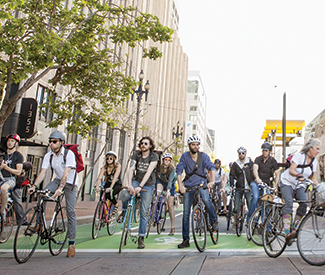
Got a bike? Ride it. Today marks the 20th anniversary of San Francisco’s Bike to Work Day, and it’s never been more rewarding to be a two-wheeled commuter. With thousands of cyclists on the road today, not only do tailpipe emissions decrease dramatically, but the visible presence of cyclists encourages motorists to share the road. What’s more, many small businesses will have special treats for bikers, and the SF Bicycle Coalition will have safety classes, workshops, parties, raffles, and energizer stations (snacks, beverages, and goodie bags) throughout the city. If you’re a two-wheeling newbie, don’t fret. The Coalition will also have Commuter Convoys leading you through the city. Keep an eye out for bike-friendly businesses: Yoga Tree is offering a free class to anyone who shows up on two wheels. Don’t forget your helmet! (Laura B. Childs)

All day, free

Various locations throughout SF

www.sfbike.org


“The New Forty-Niners” and “Scavenger: Adventures in Treasure-Hunting”

For centuries, stories of treasure hunters and great explorers have dominated American history. From the Gold Rush millionaire Samuel Brannan to Huck Finn to Lewis and Clark, the thirst for adventure and wealth is a building block of the American Dream. Tonight, Rayko Photo Center presents two exhibits based on this dream. “Scavenger: Adventures in Treasure Hunting,” by Jenny Riffle, documents one man’s treasure hunt, accompanied by his metal detector. Riffle romantically captures the mythical adventurer as he ventures out into rural Washington like a 21st century Mark Twain character. The second exhibit, Sarina Finklestein’s “The New Forty-Niners,” is a four year-long photo project chronicling modern-day gold prospectors in California. In gritty and rugged photographs, the exhibit reveals a small self-sustaining society dependent on gold mining, reminiscent of the original Gold Rush. (Childs)

Opening reception 6pm-8pm, free

Exhibits on display through June 21, 2014

Rayko Photo Center

428 Third St, SF

(415) 496-3775

www.raykophotocenter.com


FRIDAY 9


Katherine Hawthorne’s ‘The Escapement’

Last November choreographer Katharine Hawthorne premiered Timepiece at the Joe Goode Annex. Bringing a background in physics and dance to her artistic practice, she had created an intricately structured and intriguing piece of choreography in which she explored the concept of time — not just dance as a time-based art, but time as a way of structuring the way we live our lives and think about the world. In the new The Escapement, she continues that process by examining the way clocks have enabled us to divide time into regular intervals. The invention of the “escapement” mechanism, apparently, was central to the process. Performing with Hawthorne will be Jesse L. Chin, Katherine Disenhof, Suzette Sagisi, and Megan Wright. (Rita Felciano)

May 9-10, 8pm, $15-25

Joe Goode Annex

401 Alabama St., SF

www.theescapement.eventbrite.com


#GIRLBOSS book signing with Sophia Amoruso

With advice like “money looks better in the bank than on your feet,” #GIRLBOSS is one giant kick in the butt. The CEO, founder, and self-proclaimed “chief troublemaker” at the online fashion retailer NastyGal, Sophia Amoruso isn’t your typical CEO. Before reaching meteoric fame with her $100 million brand, Amoruso was an anarchist who survived off dumpster-diving and shoplifting. Dubbed the “Cinderella of tech,” Amoruso started an eBay store while living in San Francisco, selling old clothes; some eight years later, it’s a global marketplace specializing in scandalous and trendy clothing for 20-somethings. Filled with quick-whips and snarky illustrations, #GIRLBOSS covers all the nitty-grittiness of owning a company, and demystifies any ideas that because you were popular in high school, you’re guaranteed success — you have to work for it. (Childs)

7pm-9pm, free

Books Inc. Bookstore Opera Plaza

601 Van Ness, SF

(415) 776-1111

www.booksinc.net


Kadavar

Black Sabbath may be past their prime, but Berlin’s Kadavar is keeping the ’70s heavy metal dream alive — psychedelic, snarling, seething, dope-smoking, and very hairy. Drawing heavily —very heavily— from Sabbath and Pentagram (with some nods to Zeppelin), Kadavar have joined the time-travelling ranks of Electric Wizard and Uncle Acid and the Deadbeats in producing some seriously killer heavier metal tunes. Though Kadavar wears its influences on its sleeve, as these guys are singing through their prodigious facial hair about wizards, witchcraft, and lost souls, they are undeniably genuine. Their love for the music is clear, and entirely impossible not to headbang to. (Zaremba)

With The Shrine, Mondo Drag, DJ Rob Metal

9:30pm, $12

Bottom of the Hill

1233 17th St, SF

(415) 626-4455

www.bottomofthehill.com


SATURDAY 10


Cat fight: Battle of the feline film fests

If you are a cat fan — or simply fond of Internet kitty videos — today is basically Christmas, Hanukkah, your birthday, Talk Like a Pirate Day, and every other awesome holiday rolled into one. In SF, the Roxie rolls out its “First Annual San Francisco Intergalactic Feline Film and Video Festival for Humans,” a meow-thful of a name befitting a fest that promises “a two-week film festival in the span of 12 hours.” In Oakland, OakCatVidFest presents an entire day of pussy magic; in addition to outdoor screenings, there will be cat-themed bands and dance performances, plus adoptable cats and the chance to sign up to be a kitten foster parent. Superstar Internet feline Lil Bub (of documentary, talk-show, and tongue-wagging fame) will appear at both events. And so should you! (Cheryl Eddy)

Intergalactic Feline Film and Video Fest

Noon, $12 ($30, all-access badge)

Roxie

3125 16th St, SF

www.roxie.com


20th Anniversary Serial Mom Tribute with Ricki Lake

“I don’t like to read about movies. They’re so violent,” picture-perfect suburban hausfrau Beverly R. Sutphin (Kathleen Turner) tells a couple police officers during a brief non-lethal moment in Serial Mom. John Waters’ 1994 comedy about a secretly demented wife and mother with very, very high etiquette standards — you really do not want to wear white after Labor Day around he r— remains his personal best since the breakthrough of Hairspray (1988). That film’s discovery Ricki Lake, cast as Sutphin daughter Misty, will appear in person for Peaches Christ’s “Mother’s Day celebration to die for,” also featuring a pre-show performance with D’Arcy Drollinger and “the erotic dance stylings of SexiTude.” There will be blood. (Dennis Harvey)

8pm, $35-55

Castro Theatre

429 Castro, SF

(415) 621-6120

www.peacheschrist.com


Old 97’s

Reassuring us all that growing up doesn’t mean you have to lose your sense of humor, the Old 97’s — the solid, steady fathers of alt-country, who never quite exploded (or imploded) like some of mid-’90s their counterparts did — are currently touring the country with their tenth studio album, Most Messed Up. The tour also functions as a 20th anniversary party for the band, and the record serves as perfect accompaniment: Never have songs about the ravages of road life and the slights of middle age sounded so fun. The band’s die-hard fans know they’re in for a helluva rocking live show, too, though the guys claim to never rehearse; if you’ve only heard a few radio singles, this is your chance to see what the fuss is actually all about. (Silvers)

With Nikki Lane

8pm, $25

The Fillmore

1805 Geary, SF

www.thefillmore.com


SUNDAY 11


RiFF RAFF

Let’s start with the burning question: Is this guy for real? Part of the intrigue of Riff Raff’s over-the-top, ultra-campy hip-hop persona is that it might be totally genuine. This caricature-like white guy from Houston with a BET tattoo, a grill, and cornrows, who raps about Dolce and Gabbana, could be an elaborate joke. Nut authentic or not, Riff Raff is a hot commodity; “Feat. Riff Raff” seems to be the most popular phrase on iTunes. He’s tight with Drake, Justin Bieber, has over 50 million views on YouTube, and scored some seriously solid guests for his upcoming record Neon Icon — Action Bronson, Childish Gambino, and Diplo, to name just a few. Love him or hate him (it’s one or the other) Riff is undeniably fascinating, and this performance won’t be one you forget any time soon. (Zaremba)

With Grandtheft

8pm, $25

Regency Ballroom

1290 Sutter, SF

www.theregencyballroom.com


MONDAY 12


The San Francisco Moth StorySLAM

You know the upside to life’s hideously embarrassing moments, right? Like that time you broke your ankle by slipping on a banana at the Muni station, at rush hour, and had to have Muni employees help you off the platform while covered in banana mush? And also you were headed to a job interview? (Note: this recently happened to an actual friend.) The upside, of course, is that you have an awesome story to tell, and this monthly “story slam,” based on the award-winning New York-based series The Moth, rewards naked honesty as much as it does storytelling flair. Fact-checkers won’t be on hand, but stories must be true and take five minutes or less to tell; contestants can’t use notes or cheat-sheets of any kind. But beyond that, anything goes, so start your storytelling engines.(Silvers)

7:30pm, $8

The Rickshaw Stop

155 Fell St, SF

www.rickshawstop.com


Ms. Lauryn Hill

Sure, she’s had her share of troubles over the years: prison time for tax evasion, comments about race that gave PR people across the nation simultaneous heart attacks, a laundry list of tardiness and other diva-tastic behaviors. But at the end of the day, Lauryn Hill is still among the most gifted musicians of the last two decades; her Grammy-sweeping album The Miseducation of Lauryn Hill, which turns 16 this August, still graces many a Top 10 list (this critic’s included). Live, she’s been experimenting with a more reggae-fied and big band sound over the last few years, giving hits like “Doo Wop (That Thing)” the weight of a pseudo-religious revival experience. And if the new music she dropped following her release from prison in the fall of last year is any indication, this tour should be a good one. She might be late, she might be ornery — she won’t be boring. (Silvers)

With Daniel Bambaata Marley

8pm, $49.50-82.50

The Warfield

982 Market, SF

www.thewarfieldtheatre.com


The Guardian listings deadline is two weeks prior to our Wednesday publication date. To submit an item for consideration, please include the title of the event, a brief description of the event, date and time, venue name, street address (listing cross streets only isn’t sufficient), city, telephone number readers can call for more information, telephone number for media, and admission costs. Send information to Listings, the Guardian, 225 Bush, 17th Flr., SF, CA 94105; or e-mail (paste press release into e-mail body — no attachments, please) to listings@sfbg.com. Digital photos may be submitted in jpeg format; the image must be at least 240 dpi and four inches by six inches in size. We regret we cannot accept listings over the phone.

Events: May 7 – 13, 2014

0

Listings are compiled by Guardian staff. Submit items for the listings at listings@sfbg.com. For further information on how to submit items for the listings, see Selector.

WEDNESDAY 7

“The Gulf of Guinea Island Expeditions: Academy Adventures at the Center of the World” California Academy of Sciences, Tusher African Hall, 55 Music Concourse Dr, Golden Gate Park, SF; www.calacademy.org. 7pm, $10-12. Cal Academy biologist Robert Drewes discusses the latest Academy research in Africa’s Gulf of Guinea Islands.

THURSDAY 8

Kim Bancroft Mechanics’ Institute, 57 Post, SF; www.milibrary.org. 6pm, $15. Bancroft presents a performance inspired by her new, abridged edition of early 20th century historian (and Bancroft’s great-great-grandfather) Hubert Howe Bancroft’s Literary Industries: Chasing a Vanishing West.

“Bike to Work Day” Citywide, SF; sfbike.org/btwd. All day, free. Celebrate the 20th anniversary of Bike to Work Day by pedaling to work. The SF Bicycle Coalition hosts 26 “Energizer Stations,” as well as bike safety classes and other related events.

“Frankly Speaking: A Book Party!” Take 5 Café, 3130 Sacramento, Berk; www.eroplay.com. 7-9pm, free. A celebration of the life and work of performance artist Frank Moore.

“The Secret Lives of Microbes: Amoeba in the Room” Koret Auditorium, SF Public Library, 100 Larkin, SF; www.calacademy.org. 6pm, free. Botanist Nicholas P. Money discusses microbial biodiversity.

FRIDAY 9

Sophia Amoruso Books Inc., Opera Plaza, 601 Van Ness, SF; www.booksinc.net. 7-9pm, free. The founder and CEO of popular online fashion retailer Nasty Gal shares her debut book, #GIRLBOSS.

SATURDAY 10

“Fillmore Spring Fling” Check in at Kiehl’s, 1971 Fillmore, SF; fillmoreparty.eventbrite.com. 1-5pm, $20. Fillmore Street’s merchants (including boutiques like Alexis Bittar, Benefit, James Perse, Steven Alan, etc.) combine forces for this raffle giving away gift certificates, wine tastings, yoga classes, and more.

“I Was a Teenage Zombie Prom” El Rio, 3158 Mission, SF; www.sfzombiebar.com. 9pm, $10. Get gussied up in your finest zombie-prom attire (tiaras, pouffy gowns, brrraaaaiiiinnnsss) and raise money for AIDS LifeCycle by enjoying performances by Ana PocaLips, Johnny Rockitt, Rita Dambook, Florence Frightengale, and others.

“Red Bull Ride + Style” Justin Herman Plaza, Embarcadero at Market, SF; redbull.com/ridenstyle. 11am-4pm, free. Fifty of the world’s best fixed gear racers and freestylers compete in this annual battle, a spectator-friendly event which also makes use of custom-built, artistically-designed race courses and ramps.

“Valencia Corridor Sidewalk Sale” Valencia St, SF; www.valenciastsf.com. All day, free. The merchants of Valencia and its adjacent streets (826 Valencia, BellJar, Mission Bicycle Company, Paxton Gate, etc.) offer deals and specials.

“Writers with Drinks” Make-Out Room, 3225 22nd St, SF; www.writerswithdrinks.com. 7:30pm, $5-10. With Bich Minh Nguyen, Ariel Gore, David Winter, and Baruch Porras-Hernandez.

SUNDAY 11

Nike missile site tour Park at Marin Headlands Visitors’ Center (meet at missile site gate), 948 Fort Barry, Sausalito; RSVP required to ragtiming@comcast.net. 11:15am, free. Congregation Kol Shofar presents this private tour by a Golden Gate National Recreation Area ranger, visiting the historic, Cold War-era Nike missile site. All ages and nonmembers welcome.

MONDAY 12

“Anarchism: Its Past, Present, and Future” Global Exchange, 2017 Mission, SF; (510) 776-2127. 6:15pm, free. Panel discussion with Ramsey Kanaan (AK Press and PM Press), Liz Highleyman (journalist and historian), and Joey Cain (Bound Together Bookstore, LGBT activist).

“The Story of the Human Body” California Academy of Sciences, Tusher African Hall, 55 Music Concourse Dr, Golden Gate Park, SF; www.calacademy.org. 7pm, $12-15. Biologist Daniel Lieberman discusses the major evolutionary transformations that have shaped the human body.

TUESDAY 13

“Brown vs. Board of Education at 60: Examining Racial Equity in SF in Education” California Historical Society, 678 Mission, SF; www.californiahistoricalsociety.org. 6-8pm, free. San Francisco Human Rights Commission, Lawyers’ Committee for Civil Rights, USF School of Education, and Coleman Advocates present this conversation honoring the 60th anniversary of the Brown v. Board of Education court decision.

“Litquake’s Epicenter: Kaui Hart Hemmings and Michelle Richmond” Hotel Rex, 562 Sutter, SF; www.litquake.org. 7pm, $5-15. Hemmings (The Descendants) discusses her latest book, The Possibilities, with Michelle Richmond, author of Golden State.

“Odd Salon Presents: Evolve” DNA Lounge, 375 11th St, SF; www.oddsalon.com. 7pm, $15. Speakers Danielle Vincent, Chris Ventor, Chris Carrico, and Chris Reeves share stories of change and adaptation. *


Take to the sky

0

arts@sfbg.com

DANCE With world premieres by Amy Seiwert and Val Caniparoli, and the late Michael Smuin’s affectionate tribute to George Gershwin, Smuin Ballet closed its 20th anniversary season with fine choreography, good music, excellent performances, and, most of all, an intelligent perspective of what ballet in the 21st century has to offer. Today Smuin is a thoroughly contemporary troupe with a promising vision of what it wants to be.

Caniparoli set his full ensemble piece, Tutto Eccetto il Lavandino (everything but the kitchen sink), to a number of Vivaldi scores, including at least one for pipe organ. The work is accurately named. The emotional range slithered between goofy and poignant, refined and raucous. At times, the attempts to be clever and amusing at all costs could have been a little more restrained. But as a whole, the variety of approaches Caniparoli took made for an appealing new work.

Still a character dancer with the San Francisco Ballet despite his 30 years of experience choreographing all over the country, Caniparoli created a lively, unpretentious romp for 16 dancers, balancing smaller, more emotionally-flavored sections with full ensemble numbers. Unlike other contemporary ballet choreographers, who seem to feel that the toe shoe is hopelessly passé, Caniparoli put his women on point. They were completely at ease engaging in his more complex approach to working feet.

Some of the gestural language — stepping through a ring created by arms, crawling between legs, covering ears, torso shakes, flailing arms — looked like movie silliness, but mostly still charmed because everything grew so clearly out of the music.

Caniparoli has a nuanced touch with duets and trios. He also takes full advantage of today’s athletically trained dancers; the women are lifted, slid, and turned over and upside down in every way. The ever-shifting relationship between Terez Dean, Aidan DeYoung, and Weston Krukow felt congenial. More romantic was the duet for the long-limbed and beautifully matched Jane Rehm and Joshua Reynolds. Another, for Ben Needham-Wood and Christian Squires, initially seemed contentious, but ended by looking toward a possibly common future.

Seiwert’s But Now I Must Rest is an exquisite and embracing tribute to the late Cape Verde singer Cesária Évora. It is a work in which Seiwert takes a more theatrical dramatic approach to dance making than usual. But Now is a beautifully realized piece of choreography, performed by dancers in tune with Seiwert’s vision. It showcases the very fine Susan Roemer, one of Smuin’s longtime dancers, in the role of the “barefoot diva” who, by choosing to perform without shoes, paid tribute to the millions of women who cannot afford them. The solicitous Reynolds partnered her sometimes lovingly, sometimes just by holding her up. He seemed a friend, a lover, a guide.

Using as raw material gestures and movements from Évora’s performances — researched with the help of dancer Katherine Wells — Seiwert created wave after wave of lush and sensuous dancing that flooded the stage. Sometimes it enveloped Roemer and Reynolds; sometimes it served as a foil, much the way backup musicians might function; and sometimes the dancers embraced each other as a community. And everything was performed to those lilting beats and rocking rhythms.

A lightly skipping trio (Dean, Jonathan Dummar and Krukow) streaking across the stage suggested happier times, but Christian Squires’ ashen solo dragged him down with grief. It was a risk to actually have him weep, but he brought it off.

The production values were excellent. Sandra Woodall’s earth-toned costumes, with bustiers for the women and, for everyone, floor-length skirts with slits to the hip, allowed for freedom of movement and highlighted working legs. Brian Jones’ azure lighting suggested a view one might glimpse, gazing out from an island.

The excerpts from Smuin’s full-evening Dancin’ with Gershwin threw a spotlight on a man of the theater, at home in ballet but also in love with Broadway. When he created the work in 2001, Smuin commissioned the still impressive costumes from the excellent Willa Kim; lighting from Sara Linnie Slocum; and serviceable sets by Rick Goodwin. Dancin’ opened with video posters from the shows by the redoubtable Gershwins; they elicited both sighs and cheers from the audience.

It’s a rare company that offers its performers opportunities in ballroom, ballet, tap, jazz, modern, and show dancing. Smuin’s troupe took to the challenge with obvious glee. Erin Yarbrough swooned and triumphed with Krukow. Supported by guys with strippers’ fans, Erica Felsch relished being the vamp, though she was no competition to Marilyn Monroe. A poignant Rehm’s pained but resilient “Summertime,” as sung by Peter Gabriel, recalled the whole of the composer’s glorious Porgy and Bess. With Shannon Hurlbut, still a respectable tapper, at the helm, the dancers click-clacked through the final “Shall We Dance.” If that was a question, the answer was a resounding “Yes!” *

XXCENTRICS SPRING DANCE SERIES

Wed/7-Sat/10, 8pm (also Sat/10, 2pm); Sun/11, 2pm, $24-$64

Yerba Buena Center for the Arts

700 Howard, SF

smuinballet.org/xxcentric

Performances continue through June 7 at various Northern California venues.


Political power play unseats SF Police Commissioner

0

Police Commissioner Angela Chan fought the federal government as they unjustly tried to deport undocumented San Franciscans who were guilty of no crimes, and won. She fought to arm the SFPD with de-escalation tactics instead of Tasers, and won again.

But at the April 30 Board of Supervisors meeting, Chan lost. The board denied her reappointment to the Police Commission, and seven supervisors voted to appoint her opponent, Victor Hwang, instead.

The decision came after heated backdoor politicking by Chinatown political leader Rose Pak, insiders told us. Politicians involved would only speak on background, for fear of reprisal from Pak, yet indicated that Pak felt Chan did not consult often enough with Chinatown interests and focused too broadly on issues of concern to other communities.

Chan gained national recognition for her work against Secure Communities, challenging a provision that allows U.S. Immigration and Customs Enforcement to call for illegal holds of undocumented persons they’d later like to deport. Pak came out swinging against Chan in the wake of those battles, we were told.

“It’s a sad day for the immigrant rights movement when a strong leader cannot be reappointed,” Sup. Eric Mar said just before the vote.

After Sup. Katy Tang introduced the motion to strike Chan’s name from the appointment, and replace it with Hwang’s, other supervisors noted the obvious elephant in the room — there was not only one vacant seat on the police commission, but two.

Supervisor John Avalos suggested the Board of Supervisors make a motion to request the mayor appoint Hwang himself, allowing for both Chan and Hwang to be appointed.

But Board of Supervisors President David Chiu said he’d asked Mayor Lee that very question to no avail. “It is not something that will happen,” he said. “It is not the practice of the mayor to solve difficult decisions of the board. It’s up to us.”

Sups. Mark Farrell, Scott Wiener, Malia Cohen, London Breed, Jane Kim, Tang and Chiu voted to strike Chan’s name from the appointment, and to vote to appoint Hwang instead. (Joe Fitzgerald Rodriguez)

LAWSUIT FILED TO HALT TECH SHUTTLE PILOT

The road to regulating Google Buses has a new pothole: a lawsuit.

A lawsuit filed in San Francisco Superior Court May 1 demands the San Francisco Municipal Transportation Agency’s commuter shuttle pilot program be put on hold while a full environmental review is conducted under the California Environmental Quality Act.

“We know that these buses are having devastating impacts on our neighborhoods, driving up rents and evictions of long-time San Francisco residents,” said Sara Shortt, executive director of the Housing Rights Committee of San Francisco and one of the lawsuit petitioners. “We’ve protested in the streets and taken our plea to City Hall to no avail. We hope to finally receive justice in a court of law.”

The suit was filed against the City and County of San Francisco, Mayor Ed Lee, the Board of Supervisors, the SFMTA, Google, Genentech, Apple, and a handful of private transportation providers. It alleges the tech shuttle pilot project is in violation of the California Vehicle Code, which prohibits any vehicle — except common carriers (public buses) — to pull into red zones that are designated as bus stops. It also alleges the city abused its discretion and violated the CEQA by exempting the Shuttle Project from environmental review. (Joe Fitzgerald Rodriguez)

ILLEGAL ANTI-CAMPOS FLYERS TARGETED IN ETHICS COMPLAINT

Several San Francisco neighborhoods over the last week have been targeted with illegal campaign flyers against Assembly candidate David Campos — breaking both state election laws requiring the group and its funding source to be identified and local laws against placing political flyers on utility poles and other surfaces.

Former Ethics Commission Eileen Hansen this week filed a complaint about the guerilla campaigning with the California Fair Political Practices Commission, which has jurisdiction over state races.

“I am asking for the intervention of your office into what appears to be a blatant and arrogant violation of campaign finance reporting and disclosure laws in California’s 17th Assembly District Primary Election,” Hansen wrote in the April 30 letter. “As you well know, the political climate in San Francisco is quite sensitive, and nerves are raw. If this violation is allowed to continue, it will have a chilling effect on the entire election and further alienate voters, and potential voters.”

The race between Campos and David Chiu has indeed gotten more heated in recent weeks, but Chiu campaign manager Nicole Derse denies that the campaign has any knowledge or involvement with the illegal campaigning: “We think everyone in this race should be transparent.”

In her letter, Hansen casts doubt on the Chiu campaign’s claims of innocence: “The wide distribution, professional design, and overnight appearance in distant locations strongly suggest that these flyers have been produced and distributed by a funded political organization aligned with Assembly candidate David Chiu, whose aim is to attack and discredit Chiu’s opponent David Campos.”

And she even identifies a leading suspect in this illegal campaigning: Enrique Pearce and his Left Coast Communications firm, which has a history of dirty tricks campaigning on behalf of Mayor Ed Lee and other establishment politicians. Hansen notes that the flyers appeared right after the registration of a new campaign committee, San Franciscans for Effective Government to Support David Chiu. Although the group hasn’t reported any fundraising yet, its contact phone number goes to Left Coast Communications and Pearce, who hasn’t yet returned our calls on the issue.

This campaign stunt in reminiscent of an “independent expenditure” effort in the District 6 supervisorial race in 2010, when Pearce was connected to a mailer supporting Sup. Jane Kim that was funded partially by Willie Brown, again because the supposedly independent group listed his phone number even though he was worked directly for Kim.

The anti-Campos mailers include some nasty and misleading charges, labeling Campos “City Hall’s Hypocrite” by falsely claiming Campos ignored rising evictions until he decided to run for the Assembly and that he was concerned about Google buses but wanted to charge them less than $1 per stop. A third flyer claims Campos “lets wifebeater sheriff keep his job” for his vote against removing Sheriff Ross Mirkarimi from office for official misconduct.

“This is a secretly funded shadow organization aligned with David Chiu, committing a desperate move that is as illegal and it is false in its claims,” Campos told us, saying he hopes the FPPC is able to stop and punish those involved. (Steven T. Jones)

SUPES CALL FOR INCREASED YOUTH FUNDING

José-Luis Mejia says he’s seen a little bit of everything in his work with transitional-age youth.

A few have died suddenly; others wound up incarcerated. Then there are those who beat the odds by attending top-level universities, opening up their own businesses, or dedicating themselves to public service.

As associate director of Transitional Age Youth San Francisco, Mejia was part of a grassroots coalition that has been working for about two years on crafting a measure that aims to increase funding for youth programs, seeking to give a boost to transitional-age youth services in particular.

It culminated with the April 30 introduction at the Board of Supervisors of a suite of new proposals to support youth programs, including a pair of charter amendments that will appear on the November ballot.

An amendment sponsored by Sup. John Avalos would renew the existing Children’s Fund, renaming it the Children and Youth Fund, and increasing the property-tax set-aside that supports it from three cents per $100 of assessed valuation to five cents. Funding would be designated for programs set up to aid “disconnected transitional-aged youth,” including homeless or disabled youth, unmarried parents, those who identify as LGBTQ or are aging out of foster care, and other specified categories. The amendment would also create a Commission on Children, Youth, and Their Families, to oversee the Department of Children Youth and their families. A second charter amendment would extend the Public Education Enrichment Fund (PEEF), another source of funding for youth programs.

Avalos has strong support on the Board, but the mayor’s office has reportedly been pressuring supervisors not to support Avalos’ measure.

“As we all know, San Francisco is experiencing incredible economic activity,” Avalos noted April 30. “We’re experiencing growth and speculation that is lifting many boats, but not lifting all boats. And some of the people who are not doing so well are children and families.”

The Children’s Fund, and PEEF currently set aside over $100 million for children and youth in San Francisco. The funding sources would sunset if action were not taken to extend them. (Rebecca Bowe)


Alerts: May 7 – 13, 2014

0

THURSDAY 8


12th Annual Human Rights Awards

Palace of Fine Arts, 3301 Lyon, SF. www.humanrightsaward.org. 6-8:30pm, $115. Each year, the Human Rights Awards honors the inspiring individuals and organizations who create radical change and real democracy. This year, we are honoring the 50 year anniversary of the Freedom Schools, anti-GMO activist María Estela Barco Huerta, and the Cuban Five, Cuban intelligence agents arrested in the United States while infiltrating anti-Castro organizations openly plotting attacks against the Cuban people. The evening will feature dining, dancing, and a presentation of the awards.


Wise Latinas: Writers on Higher Education

Modern Times Bookstore, 2919 24th St., SF. www.moderntimesbookstore.com. 7-9pm, free. For some Latinas, college, where they are vastly underrepresented, is the first time they are immersed in American culture outside their homes—and where the values of two cultures often clash. Wise Latinas: Writers on Higher Education is an anthology exploring this experience. This event will feature four Bay Area based contributors to anthology — Blanca Torres, Ingrid Rojas Contreras, Erika Martinez and Yalitza Ferreras. Join us to hear more about the anthology and a discussion.


FRIDAY 9


Dirty Energy, Clean Solutions: Climate Conference 2014

Unitarian Universalist Church, 1187 Franklin, SF. www.350bayarea.org. 7-9:30pm, $30 or $23 for students. Friday night will be the kick-off event for a three day interactive conference that will feature activists and leading scientists addressing technical and political climate topics in the Bay Area and beyond. Topics to be addressed include fracking, fossil fuels, and clean energy solutions, plus workshops and training sessions on how to live green. Expert scientists and activists will present cutting-edge information that will significantly raise our effectiveness as climate activists.


SATURDAY 10


Public Update and Open House on Ocean Beach Projects

County Fair Building, 1199 9th Ave., SF. www.spur.org. 9am-12pm, free. The Ocean Beach Master Plan, a vision for San Francisco’s western coast, recommends ways to improve coastal access, restore ecological function and protect critical infrastructure in the face of chronic erosion and sea level rise. Three projects — addressing coastal management, transportation, and open space — are currently underway to carry those recommendations forward. The project teams will be on hand to discuss their work and get your ideas and feedback.


TUESDAY 13

Examining Racial Equity in SF Education

California Historical Society, 678 Mission, SF. brownvboardat60.eventbrite.com. 5-8pm, free. Join the San Francisco Human Rights Commission, the Lawyers’ Committee for Civil Rights, the University of San Francisco School of Education and Coleman Advocates for Children and Youth for a conversation honoring the 60th Anniversary of the Brown v. Board of Education court decision. The event will focus on the continuing legacy of Brown v. Board of Education and the successes and continued challenges of achieving racial equity in the San Francisco schools. The evening will include historical context, student reflections, and an interactive panel discussion.

Chiu for Assembly

106

OPINION

San Francisco is at a crossroads. While some residents benefit from prosperity, an affordable housing crisis coupled with income inequality make this a time of struggle for other San Franciscans.

Our inclusive, diverse culture that has historically made San Francisco a haven for artists, immigrants, and innovators is at stake. Given this, effective progressive leadership is critical to ensuring that our city remains a place where all San Franciscans can afford to live and prosper. That’s why I urge you to vote for my friend, President of the Board of Supervisors David Chiu, to represent San Francisco in the California State Assembly.

As president, David has demonstrated an inclusive, unifying leadership style that has had a transformative impact at City Hall. He really listens to everyone, and brings people together to address our city’s most critical challenges. He combines rock solid progressive values with a fervent drive to do more than talk — to actually get the big stuff done.

The proof is in the pudding: he’s passed more pieces of legislation than any other current supervisor in every major policy arena, and his colleagues have elected him president three times.

David has delivered consistently on our city’s most critical issue: affordable housing. A tenant in San Francisco himself for the past 18 years, David has fought to protect and expand affordable housing across the city, leading efforts to build more housing for homeless veterans, transitional age youth, and seniors.

He supported rebuilding dilapidated public housing projects that have been in total disrepair. He has supported the strengthening of habitability standards in housing across the board. He led the charge to create a 10-year moratorium on condo conversions and to prioritize victims of Ellis Act evictions for our city’s affordable housing opportunities.

After multiple failed attempts by supervisors over two decades, he passed legislation to finally legalize in-law units, preserving one of our city’s largest existing stocks of affordable housing. David will continue to work to stem San Francisco’s affordable housing crisis in the Assembly, including pushing hard to reform the Ellis Act.

David has been a leader on a host of other important issues. An avid biker who doesn’t own a car, David has spearheaded groundbreaking environmental legislation, banning the sale of plastic water bottles on city property, expanding urban agriculture, and prohibiting the delivery of unwanted Yellow Pages. He’s increased funding for community arts, an issue close to my heart as an artist. He has championed language access for our city’s immigrants, and fought for the reunification of LGBT immigrant families.

Under his leadership, San Francisco is the first city in the country to establish the right to civil counsel for low-income residents being denied basic human rights such as housing, as well as to give workers the right to request flexible and predictable working arrangements to take care of their families. He passed progressive business tax reform that will bring $300 million of new revenues over the next decade.

When it comes down to it, we have two Assembly candidates, David Chiu and David Campos, who share the strongly held progressive values of the Guardian’s readers. I am a longtime supporter of the Guardian and have valued its endorsement in my previous races. The difference lies in style and effectiveness.

I know how urgently San Francisco needs a leader in the Assembly who can bring people together to get significant things done. The challenges and opportunities our city faces demand it. I know David Chiu can do this because he has done it, over and over again, in five and a half remarkably effective years of progressive leadership on the Board of Supervisors.

Please join me in supporting David Chiu for State Assembly.

Debra Walker is an artist who serves on the Building Inspection Commission, recently reappointed to that seat by David Chiu.

Waiting for transit

21

joe@sfbg.com

Transit options for wheelchair users and people with disabilities are under threat in the Bay Area, and riders are losing ground on multiple transit fronts.

In late April and early May, hundreds of advocates for those with disabilities took to the streets, protesting BART’s Fleet of the Future, a touring mockup of a new BART trains slated to roll out in 2017.

The trains are a step backward in wheelchair accessibility, among other issues, advocates said.

Just last month, advocates for senior and those with disabilities stormed a San Francisco Municipal Transportation Agency Board of Directors meeting, asking for free Muni for the most economically disadvantaged among them. They were denied based on dollar amounts, while drivers were given an $11 million giveback restoring free Sunday parking meters.

The SFMTA promised to revisit the issue in January. Meanwhile, San Francisco’s wheelchair accessible taxi fleet has seen its drivers flee to so-called “rideshare” companies — whose cars aren’t equipped to carry wheelchairs — causing what officials say is a record low number of wheelchair accessible taxi trips.

Compounding that decision was the SFMTA’s March adoption of its Transit Effectiveness Project, which the agency billed as expanding service by 12 percent and improving the system’s efficiency, but some advocates for seniors and the disabled noted it removed some bus stops, requiring longer walks by those who have a hard time getting around.

The transit troubles cover most of the transportation options available to San Franciscans with disabilities, and that’s the problem.

“We’re one of the most transit-dependent populations,” Peter Mendoza, a community organizer with the Independent Living Resource Center, told the Guardian. He also uses a wheelchair. “Everything we do in our everyday life, we mostly do with public transportation.”

Their needs are simple: getting groceries, seeing a movie, picking up their kids from school. People with disabilities are now in a multi-pronged fight for their right to everyday mobility, and to do so with dignity.


BART’S FLAWED NEW FLEET

A walking tour of BART’s Fleet of the Future shows much is new: computer screens with live GPS updates of the train’s location, triple-bike racks, and redesigned seats. BART Vehicle Systems Engineer Brian Bentley proudly showed us the new touch screens in the driver’s cockpit.

For people with disabilities, the Fleet of the Future is a step backward. Their first beef with BART’s new trains is a simple one: there’s a pole in the way of the door.

Hundreds of disability advocates protested BART’s public tour of its newly redesigned trains just last week, with more protests planned for the future. All they want is the damned pole moved.

The handhold in question features a triple-pronged design: what begins as one vertical metal column branches into three partway off the ground.

“Where the pole is now is in the path of travel for the accessible seating area,” Mendoza said. “People holding onto the poles and the power wheelchairs will be in a sense be trying to occupy the same space.”

BART’s Fleet of the Future will arrive in limited numbers in 2015, and fully roll out by 2017, according to the BART website. BART plans to use the new trains for decades. So will BART move the pole to a different location in the car before then?

“It’s too soon to say,” BART spokesperson Alicia Trost told the Guardian. “That’s why we’re doing outreach.”

Trost told us BART did its due diligence by garnering feedback from the BART Disability Task Force. But the DTF, a volunteer body serving like a consistent focus group, informed BART of the pole-problem years ago.

“From day one, they identified the pole as being a problem,” BART Access Coordinator Ike Nnaji told us. Now, he said, “the pole has been moved slightly.”

The triple column handhold has also been raised since the initial outcry. But advocates say the changes still haven’t solved mobility problems. And lack of BART access would be especially poignant, as the trains are now one of the most seamless public transit trips a wheelchair rider can take, advocates told us.

Unlike a Muni or AC Transit bus, no one needs to strap in a wheelchair user on a BART train. After an elevator ride to the train platform (assuming they’re working), they easily roll onto the train: no muss, no fuss.

“On BART, I can be a regular customer,” longtime disability rights activist Corbett O’Toole told the Guardian. “I can ride it with dignity.”

The wheelchair-using community isn’t the only one with BART concerns. Emergency intercoms have long been an issue with the deaf community, O’Toole told us. The BART train’s new video screen would be a natural place to integrate visual emergency communication, she said.

Trost told us BART is trying to balance the needs of many communities, from bicyclists to folks not tall enough to reach the handholds.

“It’s public transit, you try to help everyone,” she said. But people with disabilities are a group with federal law mandating consideration of their access, Mendoza said.

We asked BART if the agency had specific employees (besides the DTF) in charge of ensuring American with Disabilities Act compliance. BART spokesperson Luna Salaver told us the agency doesn’t have an ADA compliance officer, but its engineering staff and consultants are well-versed in ADA compliance issues.

BART’s board may take a direct vote on disability access modifications to the Fleet of the Future at its May 22 meeting, but that may be subject to change.

While the wheelchair accessibility of the Fleet of the Future is hotly contested, the future of rideshare disability access remains a mystery to most.


RIDESHARE TROUBLES

Regulations task the taxi industry with providing wheelchair accessible cabs, something the rideshares don’t do, at least not yet. And as taxi drivers flee to the more profitable rideshare industry, fewer and fewer wheelchair accessible taxis are being driven in San Francisco.

Worryingly, the newest numbers from the SFMTA paint a portrait of hundreds of stranded wheelchair users. In January 2013, there were 1,379 wheelchair trips via taxi cab, according to numbers provided by the SFMTA, which regulates taxis. This January, that number plummeted to nearly half that.

The drivers just weren’t there. The SFMTA Board of Directors voted in January to offer a $10-per-trip cash incentive for drivers that pick up wheelchair users. But it was like a bandage on a gaping wound: the number of taxis picking up wheelchair users in San Francisco has not yet increased.

And Uber, Lyft, and Sidecar aren’t yet equipped to pick up wheelchair users.

As we’ve previously reported, Lyft, Sidecar, and Uber were recently required to file disability access plans with the California Public Utilities Commission. Some mention researching wheelchair access in the future, but most of the one-page plans tout their apps’ ability to speak to visually impaired users. None promise wheelchair-accessible cars.

The SFMTA is trying to lure taxi drivers back from these Transportation Network Companies through waived permit fees. Deputy Director of Taxi Services Christiane Hayashi said, “the total cost to the public of the TNC phenomenon is over $3 million and counting.”

Despite the stark numbers offered by the SFMTA, the CPUC doesn’t see the situation as a crisis. At a hearing on accessible transit, Marzia Zafar, the director of policy and planning division at the CPUC, told the Guardian there isn’t enough data at this point to say why the disabled community isn’t riding taxis as often as they did before.

“The commission will step in once we have information, verifiable information, that there’s a divide between the disabled and abled communities,” she said. “If there is such discrimination (on part of the TNCs), we will step in and bridge that divide.”

The CPUC could require TNCs to provide access, BART may modify its Fleet of the Future, and the SFMTA can still provide free Muni for seniors and people with disabilities in January.

And in the meanwhile, people with disabilities are waiting for a ride which may or may not ever arrive.

Cycling to City Hall

56

steve@sfbg.com

When the first Bike to Work Day was held in San Francisco 20 years ago, cyclists had little support in City Hall. But on May 8, almost every one of the city’s top political leaders will take part in Bike to Work Day, pledging their support to an increasingly popular and important transportation option.

In fact, Bike to Work Day has become such an anticipated event in San Francisco that city officials and cycling advocates in recent years have used it as the deadline to unveil the latest high-profile bike project to demonstrate the city’s commitment to cycling.

This year, it’s the new contraflow bike lanes on lower Polk Street, an important connection from Market Street to City Hall that helps cyclists avoid dangerous, car-centric Van Ness Avenue or Larkin Street — without having to illegally cut up the one-way section of Polk.

When that $2.5 million bike and pedestrian project — with its attractive landscaping, pedestrian bulb-outs, pretty green lanes, and trio of special bike-only signal lights — was officially opened on May 2, bike activists kept circling the new lanes as if they were doing victory laps.

“I cannot think of a better way to kick off Bike Month in the Bay Area and the 20th anniversary of Bike to Work Day, coming up May 8, than to celebrate what I think is the most beautiful, functional, well-designed, and what is probably going to be the best used piece of bike infrastructure in our city,” San Francisco Bicycle Coalition Director Leah Shahum said at the ribbon-cutting ceremony.

She and the others who spoke at the event praised the city officials who moved quickly to complete this project, calling it a testament to the growing political will to make streets safer and more welcoming for cyclists.

“I will be honest, we put a lot of pressure on to get this done by Bike to Work Day,” Shahum said. “We really wanted to make sure you all and the folks throughout this city could, this year, for the first time in San Francisco’s history, make a safe and comfortable and direct link from Market Street…to City Hall.”

Building high-profile, separated cycletracks to the steps of City Hall seems to symbolically mark the arrival of cyclists into the political mainstream.


TIMES HAVE CHANGED

Twenty years ago, California Bicycle Coalition Director Dave Snyder was the head of SFBC, and he was able to persuade only one member of the Board of Supervisors to participate in that first Bike to Work Day.

“I should give a shout-out to Tom Ammiano because he was the first supervisor to care enough to ride on Bike to Work Day, back when the Board of Supervisors didn’t really care about cycling,” Snyder told us. “These days, it’s not uncommon for supervisors to ride for transportation, but back then none did.”

Shahum remembers it as well, back before the SFBC was one of the city’s largest member-based political advocacy organizations.

“Twenty years ago, Bike to Work Day was a fun but sort of lonely event,” Shahum told us, noting how the number of cyclists on the road has exploded in recent years. “Riding on a regular Thursday during rush hour feels like Bike to Work Day used to feel 20 years ago.”

But both Snyder and Shahum said the universal statements of support for cycling that emanate from City Hall these days are only half the battle.

“It’s a good idea to promote bicycling as a mainstream activity, and we won that battle,” Snyder said. “Now, we have to get them to put their money where their mouth is.”

With cycling projects receiving less than 1 percent of the city’s transportation funding, and city officials so far unwilling to pay for the projects that would allow the city to meet its official goal of 20 percent of all vehicle trips being by bike by the year 2020, Snyder said, “We haven’t accomplished that second goal yet.”

“We hear them all talk about investing money in bike infrastructure,” Shahum told us, “but now the decision makers need to do it.”

A report released in December by the Budget and Legislative Analyst’s Office shows that San Francisco spends less per capita on bike infrastructure, at just over $9 annually, than other bike-friendly US cities such as Portland, Minneapolis, and Seattle. And it found the city would need to spend about $580 million to reach its official goal of 20 percent bike mode-share by 2020.

Even meeting the SFMTA’s more moderate Strategic Plan Scenario — which aims to reach 8-10 percent mode-share by 2018 by creating 12 miles of new bike lanes and upgrading 50 existing miles and 50 intersections — would require $191 million. That’s $142 million more than the SFMTA now has budgeted for the work.


FUNDING PITCH

At the May 2 event on Polk Street, city officials used the new project to call on voters to approve a pair of transportation funding measure proposed by Mayor Ed Lee for the November ballot — an increase in the vehicle license fee and a $500 million general obligation bond — which the Board of Supervisors will consider later this month.

“Do you guys like what you see here?” SFMTA Director Ed Reiskin told the crowd, eliciting a rousing response. “Would you like to see more of this kind of work all over San Francisco?”

Then Reiskin connected that goal to the fall ballot measures, the lion’s share of which will go to Muni improvements.

“With the funds we have, there’s only so much of this we can do and we know the need is so great to make biking and walking a safer and more attractive means of getting around the city. If we want to do more of this, we’re going to need more support in November,” Reiskin said.

The city has make significant progress on new bike infrastructure in recent years, after a legal challenge of the city’s Bicycle Plan stalled projects for four years. Ben Jose, a spokesperson for the SFMTA, told us the Polk project is the 52nd of 60 bike improvement projects from the Bike Plan.

“And those that are left are signature projects like this one,” Jose said at the event, referring to high-profile bike lanes along Bayshore and Masonic boulevards, on upper Polk Street, and along Second Street that are among the bike projects now in the pipeline. But the city hasn’t yet devoted the resources to completing the city’s bike network.

“We want to do more projects like this with money from the fall ballot measure,” Rachel Gordon, a spokesperson for the Department of Public Works, told us. “We don’t have enough money in our general fund to do these projects and we hear loud and clear the streets need to be safer for bicyclists and pedestrians.”


LITTLE PROJECT, BIG GAIN

The new bikes lanes on Polk are only a few blocks, but it is those kinds of small but critical connections that determine whether cycling in the city is safe or scary.

“I want to know that I can bike safety going north and south on Polk Street, which is why I strongly, strongly support our protected bike lanes on Polk Street, so this is super exciting. As a beginning cyclist, these are the kinds of routes I need to see to get out of my car and onto a bike, so I’m really excited this is the direction our city is moving in,” Sup. Jane Kim said at the event.

Reiskin noted how awkward and unsafe it has been to get from Market Street to City Hall or up Polk Street: “Physically, it’s a pretty small project, but it’s so critically important for those of us who do get around by bike.”

Cyclist Shannon Dodge also spoke at the event, describing her previously awkward commute to work from the Mission District to Russian Hill: “It might look like a tiny stretch of bike lanes to most people, but to me and lots of other people it will make a huge difference. It means we can turn now directly onto Polk Street and we can do it safely.”

She also compared cycling in San Francisco today to the days just before Bike to Work Day began.

“Twenty-one years ago this month, I moved to San Francisco from the East Coast. I came in a van with three friends, so I didn’t bring a lot of possessions. But I did bring my bike and I’ve been biking in San Francisco ever since,” Dodge said.

Back then, in her younger days, she didn’t mind battling for space on the streets of San Francisco.

“When I first moved here, just out of college, safety was not that important to me. I kind of enjoyed the adrenaline rush of being out on a bike in traffic,” she said. “But now I’m a mom. I have a 3-year-old son, and my husband and I bike our son to and from his preschool everyday. And on the weekends we explore the city, which usually means he’s on one of our two bikes. Pretty soon, he’ll be riding his own bike out on San Francisco streets. So safety is incredibly important to me, as it is to all families.”

Illegal anti-Campos flyers the subject of an ethics complaint

189

Several San Francisco neighborhoods over the last week have been targeted with illegal campaign flyers against Assembly candidate David Campos — breaking both state election laws requiring the group and its funding source to be identified and local laws against placing political flyers on utility poles and other surfaces.

Former Ethics Commission Eileen Hansen this week filed a complaint about the guerilla campaigning with the California Fair Political Practices Commission, which has jurisdiction over state races.

“I am asking for the intervention of your office into what appears to be a blatant and arrogant violation of campaign finance reporting and disclosure laws in California’s 17th Assembly District Primary Election,” Hansen wrote in the April 30 letter. “As you well know, the political climate in San Francisco is quite sensitive, and nerves are raw. If this violation is allowed to continue, it will have a chilling effect on the entire election and further alienate voters, and potential voters.”

The race between Campos and David Chiu has indeed gotten more heated in recent weeks, but Chiu campaign spokesperson Nicole Derse denies that the campaign has any knowledge or involvement with the illegal campaigning: “We think everyone in this race should be transparent.”

In her letter, Hansen casts doubt on the Chiu campaign’s claims of innocence: “The wide distribution, professional design, and overnight appearance in distant locations strongly suggest that these flyers have been produced and distributed by a funded political organization aligned with Assembly candidate David Chiu, whose aim is to attack and discredit Chiu’s opponent David Campos.”

And she even identifies a leading suspect in this illegal campaigning: Enrique Pearce and his Left Coast Communications firm, which has a history of dirty tricks campaigning on behalf of Mayor Ed Lee and other establishment politicians. Hansen notes that the flyers appeared right after the registration of a new campaign committee, San Franciscans for Effective Government to Support David Chiu. Although the group hasn’t reported any fundraising yet, its contact phone number goes to Left Coast Communications and Pearce, who hasn’t yet returned our calls on the issue. [UPDATE: Pearce called back and categorically denied any involvement with the illegal flyers, and he blasted Hansen for speading what you called “scurrilous lies” with no foundation, saying he has called her directly and expects an apology.]

This campaign stunt in reminiscent of an “independent expenditure” effort in the District 6 supervisorial race in 2010, when Pearce was connected to a mailer supporting Sup. Jane Kim that was funded partially by Willie Brown, again because the supposedly independent group listed his phone number even though he was worked directly for Kim.

The anti-Campos mailers include some nasty and misleading charges, labeling Campos “City Hall’s Hypocrite” by falsely claiming Campos ignored rising evictions until he decided to run for the Assembly and that he was concerned about Google buses but wanted to charge them less than $1 per stop. A third flyer claims Campos “lets wifebeater sheriff keep his job” for his vote against removing Sheriff Ross Mirkarimi from office for official misconduct.

“This is a secretly funded shadow organization aligned with David Chiu, committing a desperate move that is as illegal and it is false in its claims,” Campos told us, saying he hopes the FPPC is able to stop and punish those involved. 

Lawsuit filed to halt “Google bus” shuttle pilot program

17

The road to regulating Google Buses has a new pothole: a lawsuit. 

A lawsuit filed in San Francisco Superior Court today demands the San Francisco Municipal Transportation Agency’s commuter shuttle pilot program be set aside while a full environmental review is conducted under the California Environmental Quality Act.

“We know that these buses are having devastating impacts on our neighborhoods, driving up rents and evictions of long-time San Francisco residents,” Sara Shortt, executive director of the Housing Rights Committee of San Francisco and one of the lawsuit petitioners, said in a press statement. “We’ve protested in the streets and taken our plea to City Hall to no avail. We hope to finally receive justice in a court of law.”

The suit was filed against the City and County of San Francisco, Mayor Ed Lee, the Board of Supervisors, the SFMTA, Google, Genentech, Apple, and a handful of private transportation providers. It alleges the tech shuttle pilot project is in violation of the California Vehicle Code which prohibits any vehicle, except common carriers (public buses), to pull into red zones that are designated as bus stops. It also alleges the city abused its discretion and violated the CEQA by exempting the Shuttle Project from environmental review.

The Coalition for Fair, Legal and Environmental Transit, Service Employees International Union Local 1021, the union’s Alysabeth Alexander, and Shortt are the petitioners of the suit. In early April, they also petitioned the Board of Supervisors to vote for an environmental review of the tech shuttles.

The contentious meeting lasted over 7 hours, with housing advocates and tech workers firing shots from both sides into the night. Ultimately the supervisors voted 8-2 against the environmental review, a move seen as driven by a deferential attitude towards the technology industry in San Francisco. 

Paul Rose, a spokesperson for the SFMTA, responded to the lawsuit in an email to the Guardian.

“The agency developed this pilot proposal to help ensure the most efficient transportation network possible by reducing Muni delays and congestion on our roadways,” Rose wrote.  “We have not yet had a chance to review the lawsuit and it would not be appropriate to comment on any pending litigation.”

The early April vote was only the latest in the city’s alleged deferential treatment towards the commuter shuttles. 

The SFMTA allowed the shuttles to use Muni bus stops for years without enforcing illegal use of red zones, the suit alleges. A study by the city’s Budget and Legislative analyst revealed that out of 13,000 citations written to vehicles in red zones in the last three years only 45 were issued to tech shuttles — despite the SFMTA’s knowledge of 200 “conflicting” bus stops between Muni and the tech shuttles. 

Much has been made of those startling numbers, with petitioners alleging a “handshake deal” on the part of the SFMTA to tech company shuttles, allowing them to park at red zones at will.

But emails the Guardian obtained by public records request show Carli Paine, head of the tech shuttle pilot program, followed up complaints on illegal stops made by tech shuttles since 2010, but to no avail. 

“Know that I have made clear to the shuttle providers that the law says that it is not legal to stop in the Muni Zones,” Paine wrote in a July 2012 email to a colleague who was in contact with tech companies. “Participating in this process does not mean that they are guaranteed not to get tickets–especially if they are doing things that create safety concerns or delay Muni.”

Paine also attempted to clarify enforcement policies around the shuttles with enforcement officers from the SFPD and SFMTA, also to no avail, the emails show.

The deferential treatment to shuttles may not have originated from the SFMTA then, but from higher up the political ladder. 

“There are a number of our supervisors who do not want to buck the tech industry,” Shortt told the Guardian. “They feel there may be more to gain from allowing illegal activity to continue by these corporations than support.”

But does the suit call for the tech shuttles to stop running? We asked Richard Drury, the attorney filing the suit, to explain the specific asks of the suit.

“Not technically no,” Drury said. “They’ve operated illegally for years and the city turned a blind eye. They could continute to do that while the city runs an environmental review, but if the SFMTA or Police Department decided to start ticketing them for $271, they could.” 

So the lawsuit wouldn’t stop the shuttles. It just asks for them to be reviewed. 

Among issues regarding air quality the shuttles’ heavy weight damages city streets at much higher rates than cars, studies by the city’s Budget Legislative Analyst showed. Studies conducted by students and other interested individuals revealed increased rents near shuttle stops, which the filers of the lawsuit say leads to a displacement of residents.

Displacement is a consideration in CEQA reviews, a recent addition to state law.  

“We’re just asking for the city to study the impacts,” Drury said. “Maybe that means the shuttles get clean fuel, or corporations pay to offset displacement of residents.”

Below is a downloadable PDF of the lawsuit.

Google Bus Commuter Shuttle Lawsuit by FitztheReporter

Naming of a park facility sparks political fight

We at the Bay Guardian were alerted today that San Francisco Recreation & Parks commissioners are poised to name a Golden Gate Park building after a conservationist who blogs openly about “illegal aliens,” and has widely disseminated his view that environmentalists have been “silenced” on the subject of immigration “by intimidation and political correctness.”

But prominent members of the environmental community say Jake Sigg, who worked as a gardener for the Recreation and Parks Department for 31 years, ought to be recognized for his years of contribution to San Francisco parklands. 

A single agenda item for the May 1 meeting of the Operations Committee of the Rec & Parks Commission proposes renaming a Golden Gate Park facility located at 811 Stanyan Street as the Jake Sigg Stewardship Center. The building, which recently underwent a $2.3 million renovation, houses the headquarters for the department’s volunteer and Natural Areas programs.

Sigg, who is in his late 80s, sends out a regular email newsletter to his personal list; it reportedly reaches thousands locally. He also posts content on his personal blog, naturenewssf.blogspot.com. While his emails contain an assortment of poetry and ruminations on the natural world, he’s also been known to express his point of view on immigration – and it has not been well received. It’s prompted rebukes from readers; some have characterized it as racist.

In an exchange from last May that is posted to his blog, a reader named Linda Hunter told Sigg she was offended by an installment in which he used the phrase “illegal aliens.”

In response, Sigg wrote: “I’m not clear on what offends you, other than language. Undocumented workers are illegal aliens, so I don’t understand your point. Trotting out racism is lazy and a refusal to think about a serious problem. I will repeat what I’ve said several times in the past:  My concern on immigration derives solely from population pressures. If you are concerned about human numbers and what that is doing to the planet and to us, you cannot ignore immigration, especially when it is uncontrolled, as now.”

In a private email sent by environmentalist Becky Evans last year and later published by Sigg, Evans said she was “dismayed by the anti-immigrant diatribe in your newsletter,” saying, “all of us are descendants of immigrants except the few who are Native Americans.”

In response, Sigg wrote:

“I am surprised at you, Becky, especially when you use stale, no longer relevant, arguments–such as being descendants of immigrants, &c.  That is a dull old saw.  This country seemed limitless in space and resources and we welcomed immigrants with open arms. Can you say that today?”

When we caught up with Sigg by phone he said he did not believe his views on immigration should be at all connected to the proposal to name the building after him, which stemmed from his decades-long track record as a leader of volunteers.

When we got into a discussion on immigration policy, he said, “I think that our immigration policies are too lax. The borders are too loose, and we need to stabilize our population. If someone wants to accuse me of racism, it just doesn’t hold water. Racism is an implication that somehow and some way certain races are inferior to others and I find that idea absurd.”

Regardless of what anyone thinks, Sigg has a First Amendment right to say whatever he wants.

But things get complicated when one considers that Rec & Park is about to name a public building – owned collectively by San Franciscans, in a city of immigrants designated as a safe zone for the undocumented – after Sigg, who isn’t shy about broadcasting his opinion that undocumented people should be prevented from migrating by land from south of the Mexican border.

This idea of naming the building after Sigg has won the support of prominent environmentalists including Tom Radulovich of Livable City, San Francisco Environment Commissioner Ruth Gravanis, Nature in the City, San Francisco Laborers Union Local 261 and others in a formal letter submitted to the Operations Committee. Unclear is whether supporters know of his views on immigration, or even care or believe it should have any bearing on naming the building.

There’s also a murky political backstory. Brent Plater, executive director of Wild Equity, told us that the whole thing stems from an ongoing controversy over Sharp Park.

The idea of naming the building after Sigg originated with Phil Ginsburg, who directs the city’s Rec & Park Department. Sigg is aligned with Ginsburg in the belief that Rec & Park should move forward with a Significant Natural Resource Areas management plan, which would generally do positive things for natural lands yet contains provisions that many environmentalists oppose, given the negative ramifications they would have for Sharp Park.

“The vast majority of the environmental community opposes this plan – except Jake Sigg,” Plater explained. “To reward Jake for this, Phil wants to put Jake’s name on a building.”  

In response to that idea, Sigg said it had no merit, saying, “People just imagine these things … They just want to poke Rec & Park in the eye.”

Meanwhile, Wild Equity and other environmentalists are suing Rec & Park over its planned construction at Sharp Park, the subject of a long battle over how the area’s golf course impacts two endangered species: the San Francisco garter snake and the California red-legged frog.

Sigg said he thought the lawsuit had no merit and would hold up the management plan, which he hopes to see advance.

It will be interesting to see what the commissioners do with this one. Will Sigg’s views on immigration be deemed irrelevant to the decision over whether or not to name a public San Francisco building after him, as he believes is appropriate?

We left messages for Rec & Park but we did not receive a call back by press time.

This Week’s Picks: April 30 – May 6, 2014

0

May the fourth be with you

THURSDAY 1


Carletta Sue Kay

Randy Walker has been active in the San Francisco music scene for over 15 years, singing in various bands and working at our beloved Amoeba records, but it was only when he adopted the female persona befitting of his songwriting that he began gaining recognition. For his alter ego, Walker adopted the name of his cousin, an ex-con who served time for domestic terrorism and threatening to blow up her boyfriend with a pipe bomb. As Carletta Sue Kay, Walker is a sight to behold, wig askew, makeup smeared, and dress disheveled. But what comes out of Carletta’s mouth is anything but messy. Ranging from torch songs to pure rock and roll, Walker’s voice soars clearly and beautifully, singing of love and heartbreak in a truly touching way. (Haley Zaremba)

With the Young Lovers, Moon Honey, Queen Crescent

8pm, $10

The Rickshaw Stop

155 Fell, SF

(415) 861-2011

www.rickshawstop.com


Astonishing Animation

If you have yet to experience the mystical and beautiful worlds built by Hayao Miyazaki, your inner child is missing out. From the lush countryside where a magical Totoro roams, to an ethereal castle that floats high in the clouds, to a bustling bathhouse filled with both good and bad spirits, Miyazaki’s films bring together stunning animation and sublime storytelling that’s entertaining for both children and adults. This week, the Yerba Buena Center for the Arts begins its monthlong tribute to Japanese animation with a retrospective of the most influential films by Studio Ghibli and its founder. After 50 years in animation — and a well-deserved Oscar — the Japanese animator and director announced his retirement (for the third time) last month on the eve of the US release of his The Wind Rises. While the films are crucial to Japanese culture, with countless references to Japanese mythology, they also serve as social commentary on the environment, technology, and gender roles. Explore the astonishing realms and characters that have captivated audiences for centuries, beginning with Miyazaki’s debut film, Nausicaä of the Valley of the Wind. (Laura B. Childs)

7:30pm, $10

Check YBCA’s website for additional showtimes

Yerba Buena Center for the Arts

701 Mission, SF

(415) 978 2787

www.ybca.org


San Francisco Ballet

This is San Francisco Ballet’s last program of the season, and one that illustrates why some of us still love ballet the way we do. The intellectual rigor and deep musicality of George Balanchine’s Agon remains as breathtaking as it was when premiered in 1957. In 1983, Jerome Robbins — who has been called the greatest American-born choreographer — also took the music of his time and made it his own. In Glass Pieces, named after its composer but perhaps also for its luminous transparency, you see the music come to life by giving it a swing that is quintessentially Robbins. In between the two, Artistic Director Helgi Tomasson programmed Mr. B’s Brahms-Schoenberg Quartet. The work is musically intriguing, and gorgeously choreographed. You need first-class dancers to make it work. SFB has them. (Rita Felciano)

May 1, 3, 6, 9, 8pm; May 3 and 11, 2pm; May 7, 7:30pm; $15-$340

War Memorial Opera House, SF

(415) 865-2000

www.sfballet.org


FRIDAY 2


Marcus Shelby: The Legacy of Duke Ellington: 50 Years of Swing!

Put up your dukes: Shakespeare’s got them, and so does jazz. They come together in this glorious tribute to Edward Kennedy “Duke” Ellington by Marcus Shelby and his 16-piece jazz orchestra. The two-part program begins with selections from the incomparable composer’s full half-century of music making, featuring guest appearances by singer Faye Carol and violinist Mathew Szemela. Then, in the second half,Shelby and his orchestra join forces with members of the California Shakespeare Theater, performing Such Sweet Thunder, Ellington and celebrated collaborator Billy Strayhorn’s 12-part musical suite inspired by the woks of the Bard. (Robert Avila)

May 2, 8pm, $22 and up

Zellerbach Hall, UC Berkeley

(510) 642-9988

www.calperformances.org


SATURDAY 3


Cinco de Mayo Block Party

It’s that time of year again when the United States celebrates a Mexican holiday that Mexico doesn’t celebrate. Where Americans see the date as a sort of Mexican Fourth of July, Mexican-Americans observe Cinco de Mayo to honor their heritage. In their 152 years, the Cinco de Mayo festivities have continuously brought together Americans and Mexicans from a variety of communities and backgrounds. This year’s celebration will take place in the heart of the Mission District on Valencia Street between 21st and 24th streets. The block party will include yummy Latino foods, exotic music and dance as well as colorful artistry for purchase. Enjoy the sunny Sunday with this vibrant community that has shaped our city’s culture. (Childs)

10am-6pm, free

Valencia between 21st and 24th streets, SF

(415) 206-7752

www.sfcincodemayo.com


Trainwreck Cabaret

One part comedy show, one part burlesque night, one part off-color magic showcase, Trainwreck Cabaret bills itself as “San Francisco’s most unusual variety show,” a wild, woolly mashup of singers, dancers, and all kinds of other performers from the city’s creative underground; the idea is to take the vibe of old vaudeville and give it a dark (darker?) modern twist. Hire a babysitter, grab an early drink nearby, and enter the charmingly divey Dark Room Theater with zero expectations — this monthly showcase is the place to be for a good, weird time. Who says the Mission’s all yuppies these days? (Emma Silvers)

10pm, $20

Dark Room Theater

2263 Mission, SF

www.darkroomsf.com


SUNDAY 4


Yerba Buena Gardens Festival

If you tire of the Powell and Market street performers — no disrespect, that dude on the buckets is no joke — ’tis the season to wiggle over a few blocks and check out the impressive talent on display at this year’s Yerba Buena Gardens festival. Today’s kick-off concert features a 10-time Grammy winner, Latin jazz pianist Eddie Palmieri, and his Salsa Orchestra; Palmieri is 77 years young and has been putting out records since 1962. The rest of the fest, which runs through Oct. 26, includes a wide array of performers, with the next few weeks bringing San Jose Taiko, Pacific Mambo Orchestra, Ensemble Mik Nawooj, André Thieffy and Zydeco Magic, John Santos Sextet, and more to the stage. Pack a lunch and soak up the sounds. (Cheryl Eddy)

1pm, free

Yerba Buena Gardens

760 Howard, SF

www.ybgfestival.org


Urban Air Market

Hayes Valley welcomes the Urban Air Market for the first time this year. Explore over 100 booths selling sustainable men’s, women’s, and children’s apparel, eco-friendly art and home decor, and organic beauty and health products. What’s more, in celebration of its 10th anniversary, the sustainable marketplace will have live music and creative performances, DIY demos and “re-fashion” workshops. Whether you’re on the hunt for a special Mother’s Day gift, looking for a unique gift for yourself, or just in need of an outdoor stroll, this urban block party is the perfect lazy Sunday afternoon affair. (Childs)

11am-6pm, free

Octavia at Hayes, SF

www.urbanairmarket.com


How Weird Street Faire

This street fair, an electronic music dance party that has long been one of our favorite events in San Francisco, returns for its 15th annual incarnation, bigger and better than ever. With a tip of its space helmet to the date it landed on this year — “May the Fourth be with you,” the unofficial Star Wars Day — the theme for this year is How Weird in Outer Space. So come as your favorite alien or space cadet, or come in good old-fashioned raver ware, but just come — because this is a seven-stage dance party not to be missed. (Steven T. Jones)

Noon-8pm, $10 requested donation (gets you a Magic Sticker good for reduced-price drinks)

Howard at 2nd St, SF

www.howweird.org


MONDAY 5


Ingrid Michaelson

Picking up the piano at age four and attending private music schools throughout her upbringing, Ingrid Michaelson’s entire life has revolved around music. Now, at 34, it shows. Michaelson has perfected the art of the pop hook and disarming lyricism. After she worked tirelessly to self-record, self-promote, and even co-release all her own work, Michaelson’s DIY ethic finally got her noticed on the Internet in 2006. Thanks to her insanely catchy and cleverly tender “The Way I Am,” Michaelson found her way to the spotlight and continues to churn out charming sing-alongs that are impossible to dislike. Her songs have been featured in virtually every popular TV show, and you may be surprised at just how many of her songs you’re familiar with. Her charged, confident live act is not to be missed. (Zaremba)

With Storyman, The Alternate Routes

7:30pm, $29.50

Fox Theater

1807 Telegraph, Oakland

(510) 302-2250

www.thefoxoakland.com


TUESDAY 6


The Pains of Being Pure at Heart

With a name like The Pains of Being Pure at Heart, it’s difficult not to regress into your angsty 16-year-old self. The band was born in the time of MySpace, putting out songs with longer titles than length, making them relatable and, better yet, quotable — perfect for scribbling in notebook margins or typing into AIM away messages. The Pains have grown from an awkward trio playing drum beats on an iPod into a solid indie foursome since Kip Berman and Alex Naidus formed the band based on a mutual reverence for Smashing Pumpkins and Nirvana. Fun fact: Keyboard and backup vocalist Peggy Wang doubles as one of the pioneering editors at BuzzFeed. The indie band veers into shoegaze with its lulling boy-girl vocals. The Pains are playing at the Independent just a week before the release of Days of Abandon, so expect several songs from the band’s upcoming third album. (Childs)

8pm, $15

The Independent

628 Divisadero, SF

(415) 771-1421

www.theindependentsf.com


Atomic Bomb! The Music of William Onyeabor with David Byrne

Having recently been re-issued via Luaka Bop, featured from NPR to Vice, and championed by Damon Albarn, now is the opportune time for Nigerian musician William Onyeabor to rise from (near hoax-like) obscurity and revel in belated fame. [See: Rodriguez.] Just one problem: a born-again Christian, Onyeabor has cast out and disowned the synthesizer-driven (and occasionally politically minded) Afro-funk dance tracks he created in the ’70s and ’80s. But to celebrate the music, a cover band featuring David Byrne, Hot Chip’s Alexis Taylor, Bloc Party’s Kele Okereke, and LCD Soundsystem drummer Pat Mahoney should do it justice. (Ryan Prendiville)

With The Lijadu Sisters, Joshua Redman, Sinkane, Money Mark, and more

8pm, $32.50-45

The Warfield

982 Market, SF

(415) 345-0900

www.thewarfieldtheatre.com


The Guardian listings deadline is two weeks prior to our Wednesday publication date. To submit an item for consideration, please include the title of the event, a brief description of the event, date and time, venue name, street address (listing cross streets only isn’t sufficient), city, telephone number readers can call for more information, telephone number for media, and admission costs. Send information to Listings, the Guardian, 225 Bush, 17th Flr., SF, CA 94105; or e-mail (paste press release into e-mail body — no attachments, please) to listings@sfbg.com. Digital photos may be submitted in jpeg format; the image must be at least 240 dpi and four inches by six inches in size. We regret we cannot accept listings over the phone.

Rep Clock: April 30 – May 6, 2014

0

Schedules are for Wed/30-Tue/6 except where noted. Director and year are given when available. Double and triple features marked with a •. All times pm unless otherwise specified.

ARTISTS’ TELEVISION ACCESS 992 Valencia, SF; www.atasite.org. $6-10. “Other Cinema:” “In and Out of Afghanistan,” Sat, 8:30.

BALBOA THEATRE 3630 Balboa, SF; cinemasf.com/balboa. $7.50-10. Super Duper Alice Cooper (Dunn, Harkema, and McFadyen, 2014), Thu, 7, 9:30. “Popcorn Palace:” School of Rock (Linklater, 2003), Sat, 10am. Matinee for kids.

CASTRO 429 Castro, SF; (415) 621-6120, www.castrotheatre.com. $8.50-11. •The Bride Wore Black (Truffaut, 1968), Wed, 7, and Obsession (De Palma, 1975), Wed, 9. •Daisies (Chytilová, 1966), Thu, 7:30, and Times Square (Moyle, 1980), Thu, 9. San Francisco International Film Festival, Fri. See complete schedule and ticket info at festival.sffs.org. •Pee-Wee’s Big Adventure (Burton, 1985), Sat, 3:45, 8:30, and It’s a Mad, Mad, Mad, Mad World (Kramer, 1963), Sat, 5:30. Frozen (Buck and Lee, 2013), Sun, 1. Presented sing-along style; advance tickets ($10-16) at www.ticketweb.com.

CHRISTOPHER B. SMITH RAFAEL FILM CENTER 1118 Fourth St, San Rafael; (415) 454-1222, www.cafilm.org. $6.50-$10.75. times. Super Duper Alice Cooper (Dunn, Harkema, and McFadyen, 2014), Thu and May 8, 7. For No Good Reason (Paul, 2013), May 2-6, call for times. Locke (Knight, 2014), May 2-6, call for times. Decoding Annie Parker (Bernstein, 2013), Sun, 7. This event, $12.

CLAY 2261 Fillmore, SF; www.landmarktheatres.com. $10. “Midnight Movies:” The Neverending Story (Petersen, 1984), Fri-Sat, midnight.

GOETHE INSTITUT SAN FRANCISCO 530 Bush, Second Flr, SF; goethe.de/ins/us/saf/enindex.htm. $5. •Jonas in the Jungle (Sempel, 2013), Wed, 6:30, and Animals of Art (Sempel, 2011), Wed, 8:40. With director Peter Sempel in person.

JEWISH COMMUNITY CENTER OF SF 3200 California, SF; www.jccsf.org. $25. “Mark Cantor’s Giants of Jazz on Film: Broadway to Hollywood and All That Jazz,” films featuring jazz performances, Sat, 8.

MECHANICS’ INSTITUTE 57 Post, SF; milibrary.org/events. $10. “CinemaLit Film Series: Comedy Tonight:” Groundhog Day (Ramis, 1993), Fri, 6.

MISSION CULTURAL CENTER FOR LATINO ARTS 2868 Mission, SF; www.missionculturalcenter.org. $15. Tamale Road: A Memoir from El Salvador (Villatoro, 2012), Fri, 7.

PACIFIC FILM ARCHIVE 2575 Bancroft, Berk; (510) 642-5249, bampfa.berkeley.edu. $5.50-9.50. “Film 50: History of Cinema:” After Life (Kore-eda, 1999), Wed, 3:10. San Francisco International Film Festival, through May 8. See complete schedule and ticket info at festival.sffs.org.

PARAMOUNT THEATRE 2025 Broadway, Oakl; www.ticketmaster.com. $18-29.75. “Project YouthView 2014: The Power of Youth in Film,” youth-created short films and more, Fri, 7.

ROXIE 3117 and 3125 16th St, SF; (415) 863-1087, www.roxie.com. $6.50-11. “Iran Via Documentaries:” Bassidji (Tamadon, 2009), Wed, 7. Next Goal Wins (Jamison and Brett, 2014), Wed, 7, 9; Thu, 9:30. The Unknown Known (Morris, 2013), Wed, 9:30. “PlayGround Film Festival,” short films adapted from plays by Bay Area writers, Thu, 6:45, 8:15. This event, $10-20. “Synesthesia Film Festival: Screening #2,” short films, Thu, 7. The M Word (Jaglom, 2013), May 2-8, 6:45, 9:15.

YERBA BUENA CENTER FOR THE ARTS 701 Mission, SF; www.ybca.org. $8-10. “Astonishing Animation: The Films of Hayao Miyazaki and Studio Ghibli:” Nausicaä of the Valley of the Wind (Miyazaki, 1984), Thu, 7:30; Sun, 5; Whisper of the Heart (Kondo, 1995), Sat, 7:30; Sun, 3:30; Kiki’s Delivery Service (Miyazaki, 1989), Sun, 1. *


Theater Listings: April 30 – May 6, 2014

0

Stage listings are compiled by Guardian staff. Performance times may change; call venues to confirm. Reviewers are Robert Avila, Rita Felciano, and Nicole Gluckstern. Submit items for the listings at listings@sfbg.com.

THEATER

OPENING

“Des Voix: Found in Translation Biennial 2014” Various venues, SF; www.desvoixfestival.com. Prices vary. May 1-25. In addition to Communiqué N°10 (listed in Ongoing, below), this festival of contemporary French playwrights and cinema includes four new play translations, a “New Play Nightclub,” film screenings, and more. Presented by Playwrights Foundation, Tides Theatre, Cutting Ball Theater, French International School, and the French Consulate of San Francisco.

“DIVAfest” Exit Theatre, 156 Eddy, SF; www.divafest.info. Prices and showtimes vary. May 1-24. This 13th annual festival celebrates the work of women artists, with performances including the premiere of Rat Girl (adapted from the memoir by rocker Kristin Hersh), Margery Fairchild’s ballet comedy The Pas De Quatre, a reading by acclaimed poet Diane di Prima, and more.

Dracula Shelton Theater, 533 Sutter, SF; sfdracula.blogspot.com. $35. Opens Thu/1, 8pm. Runs Thu-Sat, 8pm. Through May 31. Kellerson Productions presents a new adaptation of the Bram Stoker classic.

Du Barry Was a Lady Eureka Theatre, 215 Jackson, SF; www.42ndstmoon.org. $25-75. Previews Wed/30-Thu/1, 7pm; Fri/2, 8pm. Opens Sat/3, 6pm. Runs Wed-Thu, 7pm; Fri, 8pm; Sat, 6pm (also May 10 and 17, 1pm); Sun, 3pm. Through May 18. 42nd Street Moon presents Cole Porter’s saucy musical comedy, with comedian and writer Bruce Vilanch starring.

Romeo and Juliet Phoenix Theatre, 414 Mason, Ste 601, SF; www.eventbrite.com. $20. Previews Thu/1, 8pm. Opens Fri/2, 8pm. Runs Thu-Sat, 8pm; May 11 and 24, 3pm. Through May 24. Ninjaz of Drama performs Shakespeare’s tragic romance.

Seminar San Francisco Playhouse, 450 Post, Second Flr, SF; www.sfplayhouse.org. $20-100. Previews Wed/30-Fri/2, 8pm. Opens Sat/3, 8pm. Runs Tue-Thu, 7pm; Fri-Sat, 8pm (also Sat, 3pm); May 18 and June 1 and 8, 2pm. Through June 14. San Francisco Playhouse performs Theresa Rebeck’s biting comedy.

Waxing West Brava Theater Center, 2781 24th St, SF; www.brava.org. $20. Opens Thu/1, 8pm. Runs Thu-Sat, 8pm (Sat/3, show at 3pm); Sun, 3pm. Through May 18. Brava! For Women in the Arts and RasaNova Theater present the West Coast premiere of Saviana Stanescu’s tale of a Romanian mail-order bride haunted by her country’s past.

BAY AREA

Nantucket Marsh Berkeley MainStage, 2120 Allston, Berk; www.themarsh.org. $25-100 (all tickets include a picnic dinner). Opens Sat/3, 7pm. Runs Thu and Sat, 7pm. Through June 14. Acclaimed solo perfomer Mark Kenward presents his “haunting yet hilarious” autobiographical show about growing up on Nantucket.

ONGOING

Communiqué N°10 Exit on Taylor, 277 Taylor, SF; www.cuttingball.com. $10-50. Opens Thu/1, 7:30pm. Runs Thu, 7:30; Fri-Sat, 8pm (also Sat, 2pm); Sun, 5pm. Through May 25. Cutting Ball Theater closes its 15th season with the American premiere of Samuel Gallet’s drama inspired by recent racial tensions in France.

E-i-E-i-OY! In Bed with the Farmer’s Daughter NOHSpace, 2840 Mariposa, SF; www.vivienstraus.com. $20. Fri-Sat, 8pm. Through May 10. Vivien Straus performs her autobiographical solo show.

Feisty Old Jew Marsh San Francisco Main Stage, 1062 Valencia, SF; www.themarsh.org. $25-100. Sat, 8pm; Sun, 7pm. Starting May 17, performance schedule changes to Sat-Sun, 5pm. Extended through July 13. Charlie Varon performs his latest solo show, a fictional comedy about “a 20th century man living in a 21st century city.”

Foodies! The Musical Shelton Theater, 533 Sutter, SF; www.foodiesthemusical.com. $32-34. Fri-Sat, 8pm. Open-ended. AWAT Productions presents Morris Bobrow’s musical comedy revue all about food.

Pearls Over Shanghai Hypnodrome Theatre, 575 10th St, SF; www.thrillpeddlers.com. $30-35. Thu-Sat, 8pm. Through May 31. Five years ago, Thrillpeddlers breathed new life into a glitter-dusted piece of Sixties flotsam, beautifully reimagining the Cockettes’ raunchy mock-operetta Pearls Over Shanghai (in collaboration with several surviving members of San Francisco’s storied acid-drag troupe) and running it for a whopping 22 months. Written by Cockette Link Martin as a carefree interpretation of a 1926 Broadway play, the baldly stereotyped Shanghai Gesture, it was the perfectly lurid vehicle for irreverence in all directions. It’s back in this revival, once again helmed by artistic director Russell Blackwood with musical direction by Cockette and local favorite Scrumbly Koldewyn. But despite the frisson of featuring some original-original cast members — including “Sweet Pam” Tent (who with Koldewyn also contributes some new dialogue) and Rumi Missabu (regally reprising the role of Madam Gin Sling) — there’s less fire the second time around as the production straddles the line between carefully slick and appropriately sloppy. Nevertheless, there are some fine musical numbers and moments throughout. Among these, Zelda Koznofsky, Birdie-Bob Watt, and Jesse Cortez consistently hit high notes as the singing Andrews Sisters-like trio of Americans thrown into white slavery; Bonni Suval’s Lottie Wu is a fierce vixen; and Noah Haydon (as the sultry Petrushka) is a class act. Koldewyn’s musical direction and piano accompaniment, meanwhile, provide strong and sure momentum as well as exquisite atmosphere. (Avila)

The Provoked Wife Fort Mason Center, Southside Theater, SF; www.generationtheatre.com. $15-35. Thu/1-Sat/3, 8pm; Sun/4, 3pm. Generation Theatre performs Sir John Vanbrugh’s Restoration comedy.

Shit & Champagne Rebel, 1772 Market, SF; shitandchampagne.eventbrite.com. $25. Fri-Sat, 8pm. Open-ended. D’Arcy Drollinger is Champagne White, bodacious blond innocent with a wicked left hook in this cross-dressing ’70s-style white-sploitation flick, played out live on Rebel’s intimate but action-packed barroom stage. Written by Drollinger and co-directed with Laurie Bushman (with high-flying choreography by John Paolillo, Drollinger, and Matthew Martin), this high-octane camp send-up of a favored formula comes dependably stocked with stock characters and delightfully protracted by a convoluted plot (involving, among other things, a certain street drug that’s triggered an epidemic of poopy pants) — all of it played to the hilt by an excellent cast that includes Martin as Dixie Stampede, an evil corporate dominatrix at the head of some sinister front for world domination called Mal*Wart; Alex Brown as Detective Jack Hammer, rough-hewn cop on the case and ambivalent love interest; Rotimi Agbabiaka as Sergio, gay Puerto Rican impresario and confidante; Steven Lemay as Brandy, high-end calf model and Champagne’s (much) beloved roommate; and Nancy French as Rod, Champagne’s doomed fiancé. Sprawling often literally across two buxom acts, the show maintains admirable consistency: The energy never flags and the brow stays decidedly low. (Avila)

Sleeping Cutie: A Fractured Fairy Tale Musical Thick House, 1695 18th St, SF; sleepingcutiemusical.tix.com. $30-40. Thu-Sat, 8pm; Sun, 2pm. Though May 11. Off a Cliff Productions and PlayGround present Diane Sampson and Doug Katsaros’ world-premiere musical.

The Speakeasy Undisclosed location (ticket buyers receive a text with directions), SF; www.thespeakeasysf.com. $70 (gambling chips, $5-10 extra; after-hours admission, $10). Thu-Sat, 7:40, 7:50, and 8pm admittance times. Extended through May 24. Boxcar Theater’s most ambitious project to date is also one of the more involved and impressively orchestrated theatrical experiences on any Bay Area stage just now. An immersive time-tripping environmental work, The Speakeasy takes place in an “undisclosed location” (in fact, a wonderfully redesigned version of the company’s Hyde Street theater complex) amid a period-specific cocktail lounge, cabaret, and gambling den inhabited by dozens of Prohibition-era characters and scenarios that unfold around an audience ultimately invited to wander around at will. At one level, this is an invitation to pure dress-up social entertainment. But there are artistic aims here too. Intentionally designed (by co-director and creator Nick A. Olivero with co-director Peter Ruocco) as a fractured super-narrative — in which audiences perceive snatches of overheard stories rather than complete arcs, and can follow those of their own choosing — there’s a way the piece becomes specifically and ever more subtly about time itself. This is most pointedly demonstrated in the opening vignettes in the cocktail lounge, where even the ticking of Joe’s Clock Shop (the “cover” storefront for the illicit 1920s den inside) can be heard underscoring conversations (deeply ironic in historical hindsight) about war, loss, and regained hope for the future. For a San Francisco currently gripped by a kind of historical double-recurrence of the roaring Twenties and dire Thirties at once, The Speakeasy is not a bad place to sit and ponder the simulacra of our elusive moment. (Avila)

The Suit ACT’s Geary Theater, 415 Geary, SF; www.act-sf.org. $20-120. Opens Wed/30, 8pm. Runs Wed-Sat, 8pm (also Sat and May 7 and 14, 2pm); Sun, 2pm (May 18, show at 1pm); Tue, 7pm (May 13, show at 8pm). Through May 18. ACT performs Peter Brook, Marie Hélène Estienne, and Franck Krawcyzk’s music-infused drama about betrayal and resentment adapted from the short story by South African author Can Themba.

Tipped & Tipsy Marsh Studio Theater, 1062 Valencia, SF; www.themarsh.org. $20-50. Sat, 5pm; Sun, 7pm. Extended through May 17. Last fall’s San Francisco Fringe Festival began on a high note with Jill Vice’s witty and deft solo, Tipped & Tipsy, and the Best of Fringe winner is now enjoying another round at solo theater outpost the Marsh. Without set or costume changes, Vice (who developed the piece with Dave Dennison and David Ford) brings the querulous regulars of a skid-row bar to life both vividly and with real quasi-Depression-Era charm. She’s a protean physical performer, seamlessly inhabiting the series of oddball outcasts lined up each day at Happy’s before bartender Candy — two names as loaded as the clientele. After some hilarious expert summarizing of the dos and don’ts of bar culture, a story unfolds around a battered former boxer and his avuncular relationship with Candy, who tries to cut him off in light of his clearly deteriorating health. Her stance causes much consternation, and even fear, in his barfly associates, while provoking a dangerous showdown with the bar’s self-aggrandizing sleazeball owner, Rico. With a love of the underdog and strong writing and acting at its core, Tipsy breezes by, leaving a superlative buzz. (Avila)

The World’s Funniest Bubble Show Marsh San Francisco, 1062 Valencia, SF; www.themarsh.org. $8-11. Sun, 11am. Extended through May 25. The popular, kid-friendly show by Louis Pearl (aka “The Amazing Bubble Man”) returns to the Marsh.

BAY AREA

Fences Marin Theatre Company, 397 Miller, Mill Valley; www.marintheatre.org. $37-58. Tue and Thu-Sat, 8pm (also Sat/3 and May 10, 2pm); Wed, 7:30pm; Sun, 2 and 7pm. Through May 11. Marin Theatre Company performs August Wilson’s Pulitzer- and Tony-winning drama, with an all-star cast of Bay Area talent: Carl Lumbly, Steven Anthony Jones, and Margo Hall.

The Letters Harry’s UpStage, Aurora Theatre Company, 2081 Addison, Berk; www.auroratheatre.org. $28-32. Wed-Sat, 8pm; Sun, 2pm. Through June 1. Aurora Theatre Company showcases its new second-stage performance space with John W. Lowell’s suspenseful thriller.

Not a Genuine Black Man Osher Studio, 2055 Center, Berk; www.berkeleyrep.org. $30-45. Wed, 7pm (no shows May 14, 21, or 28); Thu-Sat, 8pm (no shows Sat/3 or May 9-10). Through May 31. Brian Copeland brings his acclaimed, long-running solo show to Berkeley Rep for a 10th anniversary limited run.

Smash Dragon Theatre, 2120 Broadway, Redwood City; www.dragonproductions.net. $30. Thu/1-Sat/3, 8pm; Sun/4, 2pm. Dragon Theatre performs Jeffrey Hatcher’s political comedy.

Tribes Berkeley Repertory Theatre, Roda Theatre, 2015 Addison, Berk; www.berkeleyrep.org. $29-99. Tue and Thu-Sat, 8pm (also Sat, 2pm); Wed and Sun, 7pm (also Sun, 2pm; no 2pm show May 18). Through May 18. Berkeley Rep performs Nina Raine’s family drama about a young deaf man who comes of age.

The 25th Annual Putnam County Spelling Bee Julia Morgan Theater, 2640 College, Berk; www.berkeleyplayhouse.org. $18-60. Thu/1-Fri/2, 7pm; Sat/3, 1 and 6pm; Sun/4, noon and 5pm. Berkeley Playhouse performs the Tony-winning musical comedy.

Wittenberg Aurora Theatre, 2081 Addison, Berk; www.auroratheatre.org. $32-60. Tue, 7pm; Wed-Sat, 8pm; Sun, 2 and 7pm. Extended through May 11. Aurora Theatre Company performs David Davalos’ comedy about reason versus faith.

PERFORMANCE/DANCE

“Acting Out: For the Health of It” Brava Theater Center, 2781 24th St, SF; bcation.org/actingout2014. Thu/1, VIP reception 6-7pm; show 7:15-9pm. $35-75. Breast Cancer Action benefits from this variety show featuring author Peggy Orenstein, the Sarah Bush Dance Project, comedian Irene Tu, bluegrass band Beauty Operators, and host Tania Katan.

“Baile en la Calle: The Mural Dances” Precita Eyes Mural Center, 2981 24th St, and Balmy Alley, SF; www.brava.org. Sun/4, tours at 11am, noon, 1pm, and 2pm. Free. Epiphany Productions, CuicacallDance Company, Cuicacalli Escuela de Danza, and Loco Bloco offer dance interpretations of the murals along the Mission’s historic Balmy Alley.

“Bay Area National Dance Week” Various locations; www.bayareadance.org. Wed/30-Sun/4. Free. This year’s theme is “iconic dance moves from pop culture,” and includes film screenings, free classes, outdoor dance performances, and more.

Caroline Lugo and Carolé Acuña’s Ballet Flamenco Peña Pachamama, 1630 Powell, SF; www.carolinalugo.com. Sun/4, May 10, 17, and 25, 6:15pm; May 11, 1pm. $15-19. Flamenco performance by the mother-daughter dance company, featuring live musicians.

Company C Contemporary Ballet ODC Theater, 3153 17th St, SF; www.odcdance.org. Thu/1-Sat/3, 8pm. $25-48. Also May 8-10, 8pm; May 11, 2pm, $25-48, Lesher Center for the Arts, 1601 Civic, Walnut Creek; www.lesherartscenter.org. With two world premieres by Maurice Causey and Charles Moulton.

“Dancing on the Edge of the World” Dance Mission, 3316 24th St, SF; www.dancemission.com. Fri/2, 8pm; Sat/3-Sun/4, 3pm (also Sun/4, 7pm). $15-20. Grrrl Brigade performs an homage to Howard Zinn’s A People’s History of the United States.

“Dirty Little Ditties” Phoenix Theatre, 414 Mason, SF; www.brownpapertickets.com. Fri/2-Sat/3, 8pm. $20. Miss Jane Aquilina and Miss Robusta Capp perform a show that promises to be “not your mother’s cabaret.”

“The Eye of Horus” Jessie Square, 736 Mission, SF; www.dancersgroup.org. Wed/30 and Sat/3, 12:30pm. Free. Dancers’ Group and Yerba Buena Gardens Festival present a new, site-specific work by Sara Shelton Mann.

Feinstein’s at the Nikko 222 Mason, SF; www.feinsteinssf.com. This week: Jeremy Jordan, Thu/1-Fri/2, 8pm; Sat/3-Sun/4, 7pm, $45-60.

“Five Funny Females” Great Star Theater, 636 Jackson, SF; 5funnyfemales.eventbrite.com. Fri/2-Sat/3, 8 and 10pm. $20. A different bill of five female comedians at each show.

“Leonard Cohen Love Fest” Mechanics’ Institute Library and Chess Room, 57 Post, SF; www.milibrary.org. Wed/30, 7pm. $10-20. A capella choir Conspiracy of Beards and author-musician Sylvie Simmons pay tribute to the music of Leonard Cohen.

“The Lusty Month of May” Martuni’s, 4 Valencia, SF; www.tomshawtrio.com. Sat/3, 7pm. $10. Vocalist Karen Hirst salures spring, the Great American Songbook, and more, with singer-pianist Tom Shaw, drummer Roberta Drake, and violinist Donny Lobree.

“Magic at the Rex” Hotel Rex, 562 Sutter, SF; www.magicattherex.com. Sat, 8pm. Ongoing. $25. Magic and mystery with Adam Sachs and mentalist Sebastian Boswell III.

“Out of Line Improv” Stage Werx, 446 Valencia, SF; outoflineimprov.brownpapertickets.com. Sat, 10:30pm. $12. Ongoing. A new, completely improvised show every week.

“Purple: A Circus Tribute to Prince” Circus Center, 755 Frederick, SF; purpleshow.eventbrite.com. Sat/3, 7:30pm. $15-20. Circus acts set to Prince hits like “1999” and “Raspberry Beret.”

“Rotunda Dance Series” San Francisco City Hall, 1 Carlton B. Goodlett Place, SF; www.dancersgroup.org. Fri/2, noon. Free. This month: La Tania Baile Flamenco performs dances from Spain.

“San Francisco Comedy College” Purple Onion at Kells, 530 Jackson, SF; www.purpleonionatkells.com. $5-10. “New Talent Show,” Wed-Thu, 7. Ongoing. “The Cellar Dwellers,” stand-up comedy, Wed-Thu, 8:15pm and Fri-Sat, 7:30pm. Ongoing.

“Shiner” Mojo Theater, 2940 16th St, SF; www.faultlinetheater.com. Thu/1-Sat/3, 8pm; Sun/4, 7pm. $10-20. FaultLine Theater performs Christian Durso’s grunge-era drama.

“Terminator Too: Judgment Play” DNA Lounge, 373 11th St, SF; www.dnalounge.com. Thu/1, 9pm. $25-50. The creators of Point Break Live! take on James Cameron’s 1991 sci-fi classic, with an audience member picked on the night of the show to embody Schwarzenegger’s iconic role.

“Yerba Buena Gardens Festival” Yerba Buena Gardens, 760 Howard, SF; www.ybgfestival.org. Sun/4, 1pm. Free. Eddie Palmieri Salsa Orchestra kicks off the annual outdoor performance festival, which runs through Oct 26.

BAY AREA

“Cinderella” Lesher Center for the Arts, Margaret Lesher Theatre, 1601 Civic, Walnut Creek; www.fantasyforum.org. Thu/1-Fri/2, 9:30 and 11am (also Fri/1, 7pm); Sat/3, 10am, noon, 2pm, and 4pm; Sun/4, 11am and 1pm. $14. Fantasy Forum Actors Ensemble performs a family-friendly musical based on the fairy tale, with audience participation encouraged.

“Dance on Center” Osher Studio, 2055 Center, Berk; www.dlkdance.com. Sat/3, 8pm. $15-25. Kathryn Roszak’s Danse Lumiere kicks off a new series with dance works by Lissa Resnick, Dalia Rawson, and Kathryn Roszak, plus a film by Amy Seiwert.

“Doapcoev: A Town Where Dancing Was Not Allowed” Malonga Casquelourd Center for the Arts, 1428 Alice, Oakl; www.brownpapertickets.com. Sun/4, 3pm. $15-25. Dimensions Dance Theater and Rites of Passage present this dance performance inspired by Footloose.

“The Fifth String: Ziryab’s Passage to Cordoba” Islamic Cultural Center of Northern California, 1433 Madison, Oakl; www.goldenthread.org. Fri/2-Sat/3, 7pm; Sun/4, 3pm. $15-22. Also May 15-17, 8pm; May 18, 3pm, Brava Theatre Center, 2781 24th St, SF. Golden Thread continues its “Islam 101” performance series with this family-friendly play with live music.

“Lilith, The Night Demon in One Lewd Act” Hoytt Theater, Osher Marin JCC, 200 N. San Pedro, San Rafael; www.marinjcc.org. Thu/1, 7:30pm. $39-49. Also Sat/3, 8pm, $30-35, JCC of the East Bay, 1414 Walnut, Berk; www.jcceastbay.org. Also Sun/4, 3pm, $39-49, Menlo-Atherton High School, 555 Middlefield, Atherton; www.thecenteratma.org. “The bawdy alternate Jewish story of creation,” presented in folk-opera form.

“MarshJam Improv Comedy Show” Marsh Berkeley, 2120 Allston, Berk; www.themarsh.org. Fri, 8pm. Ongoing. $10. Improv comedy with local legends and drop-in guests.

“Pele Ma” Hamilton Amphitheater Park, Hamilton Parkway, Novato; www.hulaon.org. Sat/3, 1-3pm. $10. Hula performance directed by Kumu Hula Shawna Alapa’i and featuring the students of Halau Hula Na Pua O Ka La’akea.

“Piñata Dance Ritual” Shawl Anderson Dance Center, 2704 Alcatraz, Berk; www.lizboubion.org. Sun/4, 4pm. $5-50. Piñata Dance Collective presents this performance to benefit artistic director Liz Boubion’s 350 Xochi Quetzal Artist Residency. *


 

Events: April 30 – May 6, 2014

0

Listings are compiled by Guardian staff. Submit items for the listings at listings@sfbg.com. For further information on how to submit items for the listings, see Selector.

WEDNESDAY 30

“Saving the California Condor” Zimmer Auditorium, Oakland Zoo, 9777 Golf Links Rd, Oakl; www.oaklandzoo.org. 6:30-9:30pm, $12-20. Oakland Zoo’s Conservation Speaker Series presents biologist Joe Burnett of the Ventana Wildlife Society and Oakland Zoo veterinarian Dr. Andrea Goodnight.

THURSDAY 1

“Eating Cultures” SOMArts Cultural Center, 934 Brannan, SF; www.aawaa.net. Opening reception, 6-9pm. Free. Exhibit runs Tue-Fri, noon-7pm; Sat, noon-5pm. Through May 30. As part of the Asian Pacific Islander Cultural Center’s United States of Asian America Festival, the Asian American Women Artists Association presents a juried art exhibition featuring work inspired by food and food traditions.

“Jackpot NightLife” California Academy of Sciences, 55 Music Concourse, SF; www.calacademy.org. 6-10pm, $12. 21 and over. NightLife studies the statistics of luck, with visual FX wizards from Tippett Studio (Cosmos), Rat Pack-era tunes by DJ Tanoa, casino games, and more.

Ben Ross Green Arcade, 1680 Market, SF; www.thegreenarcade.com. 7pm, free. The author discusses Dead End: Suburban Sprawl and the Rebirth of American Urbanism.

FRIDAY 2

“Artwear” de Young Museum, Golden Gate Park, 50 Hagiwara Tea Garden, SF; www.famsf.org. 9:30am-8:30pm. Also Sat/3, 9:30am-4:30pm. Free. Shop wearable art by 16 local textile and jewelry artisans and designers.

Jo Becker Book Passage, 1 Ferry Building, SF; www.bookpassage.com. 12:30pm, free. The Pulitzer-winning journalist reads from Forcing the Spring: Inside the Fight for Marriage Equality.

SATURDAY 3

“Bikes to Books Rides Again!” Meet at Jack London Alley, near South Park and Second St, SF; www.burritojustice.com. 12:45pm, free. Burrito Justice and the San Francisco Bicycle Coalition host this seven-mile bike tour celebrating the literary history of San Francisco. Tips from the organizers: “Bring bikes with gears, snacks, and enthusiasm.”

“California Bookstore Day” Various locations; www.cabookstoreday.com. Nearly 100 bookstores across the state participate in this celebration with parties, author readings, in-store events, and exclusive day-of merch. Check website for local events.

“A La Carte and Art” Castro between Church and Evelyn, Mtn View; www.miramarevents.com. 10am-6pm. Free. Through Sun/4. This two-day festival features live music, a juried arts and crafts show, a classic car show, a farmers market, and more.

“Pegapalooza” Pegasus Downtown, 2349 Shattuck, Berk; Pegasus Oakland, 5560 College, Oakl; and Pegasus on Solano, 1855 Solano, Berk; www.pegasusbookstore.com. May 3-10. The bookstore marks its 45th anniversary with a full slate of festivities; tonight’s kick-off, in honor of California Bookstore Day, is a conversation between Dave Eggers and Malcolm Margolin at the Shattuck location (7:30pm, free).

Jenni Pulos Book Passage, 1 Ferry Building, SF; www.bookpassage.com. 11am, free. The Bravo star (Flipping Out) reads from her new memoir-advice tome, Grin and Bear It.

Shipyard Artists Spring Open Studios Hunters Point Shipyard, Innes at Donahue, SF; Islais Creek Studios, 1 Rankin, SF; www.shipyardartists.com/sos. 11am-6pm. Also Sat/4. Free. More than 125 artists participate in this 25th anniversary open studios event.

SUNDAY 4

“Poetry Unbound #4” Art House Gallery, 2905 Shattuck, Berk; berkeleyarthouse.wordpress.com. 5:15pm, $5. Readings by Deborah Fruchey, Blanca Torres, and Carol Hogan, followed by an open mic.

Urban Air Market Hayes Valley Octavia and Hayes, SF; www.urbanairmarket.com. 11am-6pm, free. Sustainable shopping (clothing, jewelry, home décor, body products, etc.) covers Hayes Valley at this open-air event.

MONDAY 5

“Cinco de Mayo at Habitot Children’s Museum” Habitot Children’s Museum, 2065 Kittredge, Berk; www.habitot.org. 9:30am-12:30pm, $8-10. Celebrate Mexican culture with special craft projects.

“The Cosmic Cocktail: Three Parts Dark Matter” Morrison Planetarium, California Academy of Sciences, 55 Music Concourse, SF; www.calacademy.org. 7:30pm, $8-12. University of Michigan physics professor Katherine Freese discusses the hunt for dark matter.

“Reclaiming Cinco de Mayo” San Francisco Living Wage Coalition, 2940 16th St, SF; www.livingwage-sf.org. 6-10pm, $5-25. Independent art and literature gala benefiting the SF Living Wage Coalition and its sister organization, Las Hormigas, in Ciudad Juarez.

TUESDAY 6

“An Evening with Benjamin Jealous and Belva Davis” Yerba Buena Center for the Arts, 701 Mission, SF; www.ybca.org. 7pm, $20-25. The former NAACP president and the pioneering journalist meet for an onstage conversation.

“Israel’s 66th Independence Day” Justin Herman Plaza, Embarcadero at Market, SF; www.sfjcsf.org. Noon-1:30pm, free. With live Israeli music, falafel vendors, community leaders, and more. *


Two views of the waterfront

31

rebecca@sfbg.com

The Golden State Warriors’ announcement that its planned 18,000-seat basketball arena would be moved off the San Francisco waterfront was fresh in everyone’s mind when former San Francisco Mayor Art Agnos visited the Bay Guardian office on April 23, and he was electrified by the win.

“I resent anyone suggesting that this is not a genuine people-powered victory — again,” Agnos said. “Because that’s what it was, bottom line.”

The former mayor has traveled up and down the city in recent months promoting Proposition B, an initiative on the June 3 ballot that may well have cleared the Warriors Arena from its proposed waterfront perch at Piers 30-32 had the team not announced that it would be taking that step independently.

If it passes, Prop. B will require voter approval for any development project along city-owned waterfront property that exceeds height limits set by the Waterfront Land Use Plan approved in 1997. Such a rule would have squarely targeted the Warriors’ proposal.

The sports arena had been slated for a 13-acre parcel a stone’s throw from the Bay Bridge that is now a parking lot, where it would have hovered above the water like a floating spacecraft. Across the street, at a site known as Seawall Lot 330, the Warriors had proposed installing shops, parking, a condo tower, and a hotel.

Agnos and the backers of Prop. B hadn’t anticipated the Warriors’ announcement that its waterfront venue would be moved to private property, a 12-acre lot in Mission Bay purchased from tech giant Salesforce.com.

“We thought, because people at the top of this city’s government told us so, they would prevail,” Agnos said of Mayor Ed Lee and others championing the waterfront arena. “They didn’t.”

Agnos and his allies say it was the prospect of voters having to sign off on a proposal that was hatched behind closed doors that caused the Warriors to choose a more appropriate location.

“We helped them go to a different place where we now support what they’re doing — because it makes more sense for this city, and for our bay, as well as our waterfront. That’s what the issue is,” Agnos told us. “The spin doctors had their ass handed to ’em … had their ass handed to ’em, by a low-income group of allies, over their $20,000–$30,000, gold-plated contracts per month. And so now, they understand.”

They understand that the waterfront of San Francisco is a battleground and the people are willing to fight to ensure the public interest trumps private profits.

pier70

A rendering of proposed development at Pier 70, envisioning tech offices and housing.

PRECIOUS PARCELS

A historic map hanging in a corridor at the Port of San Francisco building, in a rehabbed terminal at Pier 1 along The Embarcadero, traces the original curve of a coastline that once separated the city from San Francisco Bay.

The existing waterfront juts out considerably from where its natural edge once fell, and today’s urban landscape features a mix of entire neighborhoods, tall buildings, parks, restaurants, merchant corridors, and transport terminals, all perched atop fill covered by layers of concrete.

Its shipping days long gone, much of San Francisco’s human-constructed waterfront now serves as a draw for visitors, the iconic subject of countless tourist photographs. But at other locations along the shoreline, vacant waterfront parcels are hotly contested land-use battlefronts.

“We’re clearly in a period of significant controversy,” the Port’s Special Project Manager Brad Benson told us. The Warriors Arena, Benson said, had been an opportunity for the Port to rehabilitate and generate revenue from Piers 30-32, which originated as two finger piers constructed in 1912, joined by a concrete slab in the 1950s.

Despite being in control of some of the most valuable real estate along the West Coast, the Port of San Francisco remains in a perpetual financial pinch, due to its need to fix up crumbling piers and aging infrastructure. The Port is governed by a Waterfront Land Use Plan, outlining possible uses for each parcel, and it also conducted a survey to identify properties that could be developed to help generate revenue.

“The Port has a big capital need,” Benson said, noting that many of the “piers and buildings were beyond their useful life when they were transferred to the city” from the state in 1968. Facing nearly $2 billion in capital needs, the Port’s modus operandi is to seek out private developers to partner with on development projects for parcels under its ownership, in order to secure funding that would go toward backlogged improvements.

That didn’t happen with the Warriors, however — the sports team approached the city out of the blue, and the project quickly won the fervent backing of Mayor Lee, who has appointment power over the five-member commission that governs the Port. At one point, Lee even claimed that this flashy sports arena would be his “legacy project.”

To longtime grassroots activists who are deeply involved in how land-use decisions are made on valuable waterfront parcels, it looked to be yet another example of what Prop. B supporter Jennifer Clary called “kneejerk development” — out of sync with carefully thought out shoreline planning efforts.

“The Port gets jerked around by every mayor,” said Clary, president of San Francisco Tomorrow, part of the coalition backing Prop. B. “Every mayor comes up with some stupid project.” She ticked off a list of failed waterfront developments (such as Mills Mall, proposed for Piers 27-31; and a 50-story U.S. Steel Building that would have towered over the Ferry Building), only to have them voted down or halted by grassroots neighborhood activists who viewed them as inappropriate designs fueled by greed and greased by political connections.

Behind the objection to Prop. B, Clary added, “is that the mayor will have to think a little more” before backing projects of this nature.

Whether opponents of the Warriors Arena plan looked at it and saw a traffic nightmare, an inappropriate use of public land, or a bad financial deal for a city needing to contend with ever-growing pressures on its critical infrastructure, members of the coalition that’s backing Prop. B feared the public would have little sway when it came to the final decision-making. A bid to restore that balance, by arming voters with veto power under the law, was the impetus behind Prop. B.

City Hall has ignored the will of regular folks who collectively own Port land along the shoreline, said Agnos, campaign consultant Jon Golinger, and Prop. B proponent and Sierra Club volunteer Becky Evans — listening only to the Mayor’s Office and deep-pocketed developers who stand to make millions by building on extremely valuable land that’s held in the public trust under California law.

“The people are putting the developers in touch with the values of this city, and what we want in this city,” Agnos said, thumping his index finger on the table to emphasize the point. “Prop. B puts people in the room who have not been there, and now [developers] have to pay attention.”

The task of developing Piers 30-32 would have required expensive substructure modification, requiring the involvement of bureaucratic agencies such as the US Army Corps of Engineers, the Bay Conservation Development Commission, and the State Lands Commission. The Warriors estimated that it would invest $120 million in improvements such as seismic upgrades and an elevation grade to deal with the looming problem of sea-level rise, but the threat of having to win voter approval represented yet another hoop to jump through. So when a new option opened up offering greater certainty, the Warriors pulled the plug on Piers 30-32.

Even though Lee’s “legacy project,” the main physical target of Prop. B, is no longer a factor in the June election, backers of the initiative say the measure is still important to restore democratic balance in a development process that freezes out ordinary citizens. Opponents, meanwhile, say the initiative threatens to undermine a complex planning process that engages the public and needn’t be tampered with.


IN THE PIPELINE

Prop. B would prohibit city officials from approving taller buildings than are currently allowed under zoning for Port-owned waterfront parcels, unless voters give those height increases a green light at the ballot box.

Since many of the properties in question are already built out, or preserved by historic landmark designation, Prop. B would impact only a handful of waterfront lots that remain in play as potential sites for new development. Among them are Piers 30-32 and Seawall Lot 351, the site of the 8 Washington luxury condo tower that the electorate flushed down the tubes in a decisive ballot referendum vote last fall, despite Board of Supervisors’ approval.

The same group that opposed 8 Washington launched Prop. B. Last year’s ballot referendum — also named Prop. B, and buoyed by the campaign slogan No Wall on the Waterfront — asked voters whether they favored increasing building heights above the zoning limit at the waterfront site where the luxury condo project would have gone.

San Francisco voters, in no mood to support a high rise for the superrich at a time when anger over skyrocketing rents was bubbling over and droves of low-income residents were being edged out by eviction, shot it down. Many political observers took the outcome as a signal that City Hall politicians are out of touch with voters.

Simon Snellgrove, the developer of the failed 8 Washington project, is reportedly working on a new building design. But since any new plans for 8 Washington are embryonic at best, and the fate of Piers 30-32 is anyone’s guess, the Prop. B ballot measure has immediate implications for two waterfront developments in particular.

One, on and around Pier 48, is being pushed by the San Francisco Giants. The other lies farther south, at Pier 70, a sprawling strip of waterfront that runs behind Illinois Street, from The Ramp restaurant at Mariposa to the old Potrero Power Plant.

giantsdev

The Giants’ planned development would be a short distance from AT&T Park. 

During World War II, some 18,500 workers built ships at Pier 70 for the war effort, in brick and metal warehouses that still stand vacant and dilapidated. The site also housed a coal-fired power plant that was later converted to natural gas, leaving behind toxic residue that is up to Pacific Gas and Electric Co. to remediate. Farther north along Pier 70, BAE Systems conducts ship repair, a task that has been performed at the site since 1868.

Today, a 28-acre parcel of Pier 70 that is proposed for development by Forest City is home to nothing more than pigeons, feral cats, and the occasional hawk that swoops into a cavernous metal-roofed structure that stands near the waterfront and dates back to 1941, barely visible from the street. Someday in the not-so-distant future, developers imagine it will be populated with tech office workers (Google is used as an example of an anchor tenant in slides presented to the city), makers and small vendors, and thousands of residents who would call the place home.

The site is zoned with a 40-foot height limit, but developers are considering plans with a range of building heights that would be on a similar scale to Mission Bay. Part of the improvements to the property will require raising the elevation grade to deal with sea-level rise. Forest City has planned for a minimum of around 1,000 residential units — the majority market-rate, but with a mix of affordable housing as well.

Representatives from Forest City said that if Prop. B passes, “We’ll be prepared to seek voter approval with a dynamic project guided by … a community-based master plan,” and had not taken an official stance on the ballot measure. If voters were to reject an increase of the 40-foot height limit at the site, which is zoned for heavy industry, the project would no longer be financially feasible.


GIANT TOWER SCRUTINIZED

At Seawall Lot 337, a parcel near the Giants’ stadium which is primarily used as a parking lot during baseball games, the team is backing a project that would include 3.5 million square feet of new residential, office, and retail development, possibly including a 380-foot tower. Across the way at Pier 48 would be a new Anchor Steam brewery, and about five acres of open space.

The Giants plan resulted from the Port’s request for potential development partners to submit bids for that property, which went out in 2007.

“They very quietly have been pushing a plan that Prop. B made public,” Golinger said of the Giants’ plans. “They screamed at everyone involved in our coalition during the signature drive to get us to drop it. They funded a lawsuit … to get it kicked off the ballot.”

The Guardian independently confirmed that the team is part of the group that has challenged Prop. B in court. That legal challenge was unsuccessful in getting the initiative struck from the June ballot, but a judge could take up the question again if Prop. B is approved.

The parcel where the Giants have pitched a rental housing, office, and retail complex with a maximum height limit of 380 feet is zoned with a height limit of zero, zoned for open space in city plans. Nevertheless, “The [Port’s request for qualifications] called for developing up to 300 feet,” Benson explained, calling the current zoning “a remnant of the old Mission Bay plan,” which envisioned a park with wetlands and open space. The Port’s request for proposals went out after a subcommittee was formed, and public hearings were held on the design plans.

Asked why the Port would bake such a tall height limit into its RFQ, Benson responded, “There was a desire to avoid replicating the heights at Mission Bay,” the nearby redevelopment area characterized by lower, boxy buildings that seem to be universally regarded as ugly and lacking charm.

Few people are as intimately familiar with Mission Bay as Corinne Woods, whose houseboat is enveloped on either side by the sprawling development. When Woods first claimed a berth at Mission Creek for her floating home in 1985, “it was surrounded by open empty fields, abandoned warehouses, and lots of fennel,” she said. “We had wonderful parties.”

Outside her dock just off Channel Street is a community garden, a strip of green space shaded by willow and eucalyptus trees where night herons take refuge. Just beyond that is the Mission Bay South redevelopment area, a sprawling construction site that’s ushered in building cranes, swirling dust, pile drivers, and more recently, a five-alarm blaze that required the entire Fire Department to extinguish.

The fledgling neighborhood that now occupies the already-built part of Mission Bay might as well have dropped out of the sky, and the building profiles are wide and flat. “I would rather see slim, articulated towers, with more open space,” Woods admitted.

In the years between 1985 and today, Woods has fought the Port on behalf of her live-aboard community to be allowed to remain floating in place, becoming an unlikely expert on the byzantine process of waterfront planning along the way.

As a key member of half-dozen or so community advisory groups formed to weigh in on major waterfront developments, Woods has ardent faith in the civic engagement aspect of the planning process. She fears Prop. B could upset years of careful neighborhood negotiations by limiting the discussion to nothing more than a conversation about height limits.

houseboat

Corinne Woods opposes Prop. B.

Woods is a plaintiff in the lawsuit the Giants are funding to challenge Prop. B, aligned with developer-friendly housing activist Tim Colen and building trades head Michael Theriault on the side that opposes Prop. B. But despite the millions of dollars that are on the line, Woods insists she has no dog in this fight. “I can’t even get free tickets to Giants games,” she said.

She does hope for the five-acre park that the Giants plan would install as part of the Seawall 337 / Pier 48 plan, a short walk from her houseboat. But she says her opposition to Prop. B is rooted in her experience of a traditional planning process that rewards neighbors who have the patience to sit through hours of grueling advisory group meetings with negotiating power vis-à-vis developers. Asked directly what the problem is with letting voters weigh in, Woods responded, “Because they don’t know what the fuck they’re talking about!”

But that leave-it-to-the-experts attitude is just the thing that Prop. B’s backers say is dangerous for waterfront planning, since it places final decision-making in the hands of profit-seeking real estate interests, a public agency in dire need of funding, and a mayor with political ties to developers.


THE HOUSING QUESTION

Given that the thrust of Prop. B is to democratize the planning process, few are in a hurry to align themselves with the formal No on B campaign — most of the opposition money seems to have been funneled into the Giants’ lawsuit, even though the Giants have officially taken a neutral stance on Prop. B. However, the message from opponents of Prop. B is that the initiative would kill sorely needed housing.

The Port of San Francisco, which is legally barred from taking a position on the initiative, reported in a February analysis to the Department of Elections that it could have the effect of leaving between 1,990 and 3,690 new housing units “delayed, reduced, or abandoned,” including between 268 and 596 affordable units. Those figures are based on early project proposals brought by the Warriors, the Giants, and Forest City, assuming those planning proposals would be “delayed by a need for a vote, or rejected by the voters” under a Prop. B regime.

A nonbinding Giants term sheet notes that the team would build rental housing, 15-20 percent of those units affordable, while Forest City’s Pier 70 proposal includes 1,000 new housing units with on-site affordable that would exceed the 12 percent required under city law.

Targeting housing “is a scary message,” campaign consultant Golinger said, charging the opposition with preying on voters’ fears to encourage people to vote down a measure that would democratize waterfront planning.

“This myth that we’re trying to stop housing is just that,” Agnos chimed in. “It’s just a political ploy by those who want to build high-end, high-rise, luxury condos — a la 8 Washington, a la Giants — on public property.”

The housing question is key. At a time when so many people are facing eviction or being priced out, the refrain that building more housing is the only solution to relieve pressure is oft-repeated, particularly by developers. However, these projects would introduce far more market-rate units than affordable projects, plopping down well-to-do neighborhoods in spaces that have sat on the margins in recent history, further changing the social character of the city. And proponents of Prop. B question whether the waterfront is really the right place to add new affordable units.

Meanwhile, the affordable housing community seems to be aligned in its support of Prop. B. The San Francisco Tenants Union, the Affordable Housing Alliance, the AIDS Housing Alliance of San Francisco, and other organizations that have aligned to push for stronger tenants’ rights and promote affordable housing have all endorsed the measure.

WHO DECIDES?

Given the popularity of a measure that fundamentally seeks to democratize the planning process, all development teams with skin in the game have declined to take a position on the measure. So have Mayor Lee and Board of Supervisors President David Chiu, who each played significant roles in recent waterfront battles, with Lee championing the Warriors Arena and Chiu opposing 8 Washington and assisting with the signature-gathering effort to stop it.

Sup. David Campos, in contrast with Chiu and Lee, has taken a stance on Prop. B. In a recent interview, he outlined his reasons for supporting it.

“I think that something has happened in City Hall, where I think the approval process is such that it has led to certain projects being approved that don’t really reflect the reality of what this city needs, and that have truly left the public out of the process in a meaningful way,” Campos told us. “And 8 Washington passed 8-3 at the Board of Supervisors, with a supermajority. The fact that the voters overwhelmingly rejected that project tells you that there has been a disconnect between what the board and folks in City Hall are doing, and where the public actually is.” To correct that imbalance and allow more San Franciscans to shape the city’s waterfront, Campos said, “I think it’s appropriate for us to go to the ballot and let the voters decide.”

Lawsuits target Airbnb rentals

4

LAWSUITS TARGET AIRBNB RENTALS

The San Francisco City Attorney’s Office last week filed a pair of lawsuits against local landlords who illegally rent out apartments on a short-term basis, units that had been cleared of tenants using the Ellis Act. Meanwhile, the San Francisco Tenants Unions has hired attorney Joseph Tobener to file more such lawsuits, and he is preparing to file at least seven lawsuits involving 20 units.

The lawsuits are the latest actions in a fast-moving crackdown on Airbnb and other online companies that facilitate short-term apartment rentals that violate city laws against converting apartments into de facto hotel rooms, including VRBO.com and Homeaway.com.

Board of Supervisors President David Chiu recently introduced legalization that would legalize, limit, and regulate such rentals, a measure that will be considered this summer. That legislation comes on the heels of Airbnb’s decision to stop stonewalling the city (and us at the Guardian, which has been raising these issues for the last two years) by agreeing to start paying the transient occupancy taxes it owes to the city for its transactions and creating new terms of service that acknowledge its business model may violate local laws in San Francisco and elsewhere (see “Into thin air,” 6/6/13).

As we’ve reported, City Attorney Dennis Herrera has been working with tenant groups and others on a legal action aimed at curtailing the growing practice of landlords using online rental services to skirt rent control laws and other tenant protection, removing units from the permanent housing market while still renting them out at a profit.

“In the midst of a housing crisis of historic proportions, illegal short-term rental conversions of our scarce residential housing stock risks becoming a major contributing factor,” Herrera said in a public statement. “The cases I’ve filed today target two egregious offenders. These defendants didn’t just flout state and local law to conduct their illegal businesses, they evicted disabled tenants in order to do so. Today’s cases are the first among several housing-related matters under investigation by my office, and we intend to crack down hard on unlawful conduct that’s exacerbating—and in many cases profiting from—San Francisco’s alarming lack of affordable housing.”

Tobener tells the Guardian that the San Francisco Tenants Union hired him to discourage local landlords from removing units from the market. “The San Francisco Tenants Union is just fed up with the loss of affordable housing,” Tobener told us. “It’s not about the money, it’s about getting these units back on the market.” (Steven T. Jones)


SF LOOKS TO MARIN FOR RENEWABLES

Just in time for Earth Day, a renewed effort to reduce the city’s carbon emissions was introduced at the April 22 Board of Supervisors yesterday. Sup. John Avalos introduced a resolution calling for a study of San Francisco joining Marin Clean Energy, which provides renewable energy to that county’s residents.

The move is seen largely as an effort to circumvent Mayor Ed Lee’s opposition to implementing a controversial renewable energy plan called CleanPowerSF (see “Revisionist future,” April 15).

“Mayor Lee and the Public Utilities Commission objected to CleanPowerSF, but they have offered no other solution to provide San Franciscans with 100 percent renewable electricity,” Avalos said in a public statement. “With this ordinance, we can either join Marin or we can implement our own program, but we can no longer afford to do nothing.”

The resolution is the latest effort in the long saga to implement CleanPowerSF, San Francisco’s proposed renewable energy alternative to PG&E, whose current energy mix is only 19 percent renewable. Much of PG&E’s current mix is dirty and directly contributes to half of San Francisco’s carbon footprint, according to the city’s own recent Climate Action Strategy.

Joining Marin under a Joint Powers Authority would provide a vehicle for San Francisco to enact CleanPowerSF’s goals, long blocked by the mayor. San Francisco’s renewable energy effort may have lingered in legal limbo for years, but Marin made the switch to renewables in 2010.

“It’s something people want, and it also reduces greenhouse gas emissions,” Marin Clean Energy Executive Officer Dawn Weisz told the Guardian. Much of Northern California, she noted, has little choice but to use PG&E for their electricity.

“The people never chose to have a monopoly in place,” she said. “People like having choices.” (Joe Fitzgerald Rodriguez)

BEACH FIRES CONTAINED

The National Parks Service is once again moving to limit and maybe even ban fires on Ocean Beach, replaying an episode from 2007 that was temporarily solved by volunteers and artistic new fire rings placed by the group Burners Without Borders, despite a lack of follow-through by NPS’s Golden Gate National Recreation Area.

Citing complaints about burning toxic materials, leaving messes, and people drinking on the beach (gasp!), the GGNRA this week announced a summer pilot program that would include moving the curfew up from 10pm to 9pm, installing a dozen new fire rings, and improved public outreach and monitoring of the conditions on the beach.

“We [have] over the years seen a rising problem over safety and general breaking of park rules like broken bottles. And with incidents of assault and underage drinking, mostly occurring during the night, GGNRA Area Director Howard Levitt told the Guardian.

But Tom Price, who helped create the 2007 compromise, said GGNRA never kept its end of the bargain — such as installing more rings to supplement the half-dozen created by artists, or creating visible signage so visitors would know what the rules area — and now it’s acting in a rapid, unilateral, and unreasonable way to ban beach fires.

“They never did the outreach or education or put out more fire rings,” Price said, urging people to let GGNRA know they support allowing fires on Ocean Beach, one of just two spots within GGNRA jurisdiction where they’re allowed (Muir Beach is the other). “The Parks Service has to be reasonable, and banning fires after 9pm in not reasonable.” (Steven T. Jones and Bryan Augustus)

TAX WEALTH, PIKETTY SAYS

French economist Thomas Piketty got a warm welcome in San Francisco last week when nearly 200 people turned out to hear him discuss what is fast-becoming the defining book of this new Gilded Era of escalating disparities in wealth: Capital in the 21st Century.

“The book has been so popular that Harvard University Press has run out,” The Green Arcade owner Patrick Marks said in introducing Piketty at a the April 22 event held across Market Street from the bookstore, in the McRoskey Mattress Company, in order to accommodate the large crowd.

Indeed, Capital has recently been lauded by a string of influential publications, ranging from The Nation through The New York Times to the Wall Street Journal, all acknowledging this as perhaps the most exhaustive study on wealth data ever collected — and a clear-eyed warning that capitalism isn’t the self-correcting system that its biggest boosters claim it is.

Piketty’s work shows how when the return on capital is greater than the annual growth rate of the overall economy, which is usually the case (except when interrupted temporarily by the major wars of the 20th Century, or the 90 percent tax rate on the highest US incomes after World War II), that dynamic consolidates wealth in ever-fewer hands, which is bad for the health of the economic system. The only real cure, Piketty concludes, is a progressive global tax on wealth. Yet Piketty tries to avoid being too prescriptive, choosing to let his research speak for itself. “All I’m trying to do is present this book so everyone can make up his own mind,” Piketty told the gathering. In fact, he thinks the cure he outlines at the end of his book is less important than what comes before it: “You can disagree with everything in Part IV and still find interest in Parts I, II, and III.” (Steven T. Jones)