Books

Dreams on 45

0

johnny@sfbg.com

MUSIC Sonny Smith is sitting at a window table at the Latin with a cap on his head and a small glass of red wine and some 7-inch single cover art by Stephanie Syjuco in front of him. I get a whiskey and sit down to talk about the matter at hand: art, music, mythologies, and “100 Records,” the gargantuan yet in some ways quite local show of sounds and images he’s putting together at Gallery 16. One man, 100 records — with help from dozens of artists, a number of musicians, a carpenter, and an electrician, Smith not only has created a number of 45s by fictional musicians and bands, he’s built a jukebox to play them.

The due date for Smith’s mammoth creation is a week away, and he’s in the final stages of assembling it. “I’ve been struggling to write down all the bios,” he says, as we talk about some of his imaginary recording acts, which range from New Orleans drag queens to Utah nature lovers. “They’re not Wikipedia-esque, but more like entries in a Rolling Stone Encyclopedia [of Rock & Roll]. At the beginning, I was swapping names and titles all the time — if a surf jam turned out to be a folk song, I could give it to another character. But now, with the last three [records], it has to be what it is.”

What is it? An open-ended project, not solo and self-enclosed in the manner of the Magnetic Fields’ 1998 69 Love Songs, where Stephin Merrit’s formulaic writing reached its apex. Instead, Smith is allowing “100 Records” to form itself as he assembles it. “I’ve only brushed up against the edges of it all becoming interwoven,” he explains over the post-work barroom din. “It’s almost as if I’d rather it not be — if you read the Harry Smith Anthology [of American Folk Music], or a biography of a musician, it’s enjoyable that there are so many loose ends.”

The visual artists contributing to “100 Records” — including William T. Wiley, Alicia McCarthy, Harrell Fletcher, Paul Wackers, and Mingering Mike (who knows a thing or two about creating folk musical figures) — have responded to Smith’s call for cover art in a variety of ways. “Alice Shaw was this character Carol Darger, and I was Jackie Feathers,” Smith says, to give one country-tinged example. “Their biography is that they’ve gotten married and been divorced twice. We took photos together for cover art. And Jackie Feathers also has solo records with art by different artists.”

When one thinks of Sonny Smith, band names don’t come to mind, though his latest endeavor Sonny and the Sunsets plays wittily off of his current San Francisco neighborhood. For years, Smith has put his plain name forward rather than come up with musical monikers. “100 Records” changed all that. “What’s weird is that I tried for years to come up with cool band names,” he says. “I’d come up with one and think, ‘That’s dumb.’ I’ve never had a knack for it. But because [the acts in “100 Records” are] fictional, it was easy to come up with band names — the names came left and right. A lot of the names that came to me I’d be happy to use as real band names. In fact, I’m trying to get a couple of the bands to become real bands.”

Indeed, one of the groups on “100 Records,” the Loud Fast Fools, will soon make the transition from fiction to the reality of today with a gig at the Knockout. Smith’s recording process for the project has been varied. He’s taken instrumental passages from obscure ’50s, ’60s, and ’80s songs, patched and lopped them with Guitar Hero, and put vocals on top. He’s recorded solo. He also knocked out dozens of songs with a multi-instrumentalist group of largely San Francisco musicians, some of whom he refers to by last name: Stoltz, Dwyer.

“There are a couple of balls-out, crazy ‘Louie Louie’-type numbers, and Spencer [Owen] played drums on those,” Smith says, describing the sessions. “It was some of the best drumming I’ve ever played with. He had these bizarre beats and fills. I thought, ‘This is so perfect — this is probably how a song like “Louie Louie” happened.'”

A spaghetti-narrative project like “100 Records” is a natural for Smith, a storyteller who has documented his life in comic book form and written plays. Later in the interview, with the Rolling Stones’ Tattoo You on the stereo at my apartment, he tells me that one of the first singles he bought was by Mick Jagger. “I didn’t buy it because I knew anything — the guy at the record store just told me to buy it,” he says. “It was a record store in Fairfax that was Van Morrison’s parents’ record store. He just bought the store and put his parents there to run it.” This anecdote then spirals into a funny one that a member of Morrison’s band told him about being stuck playing an endless version of “Domino” on a darkened arena concert stage while Morrison secretly caught a cab and a plane to L.A.

Smith has a keen eye for the mythologizing involved in music, and how a college radio DJ can build the guy down the street into a mysterious cult figure. Around the release of one album, his label pestered him to write a fake Pitchfork review, but he declined. “I’d be more into writing a fake Playboy interview,” he says. Ironically, Pitchfork has come calling of late, writing about Sonny and the Sunsets.

Internet career-makers come and go. For now, Smith is more concerned with opening night of “100 Records” and the debut of his own art contribution to the show, a customized jukebox. “It’s a hell of a thing, ” he says, after breaking down the differences between Wurlitzers and other brands, and explaining that a rat-infested jukebox buried under stacks at Adobe Books first inspired the idea. “My friend who is a master carpenter used this German ’50s jukebox as a reference. It’s almost like a joke — like making a stove from scratch. Why would someone do that? But someone did.” That someone is Smith, and he’s hosting a jukebox party this week.

SONNY SMITH: 100 RECORDS

With music by the Sandwitches and Sonny and the Sunsets

Fri/9, 6–9 p.m. (through May 14), free

Gallery 16

501 Third St., SF

(415) 626-7495

Benefits: April 7-April 13

0

Ways to have fun while giving back this week

Thursday, April 8

1369 Lights
Be among the first to get a copy of the new Moholy Ground Magazine, the New Photography Journal. Meet Moholy Ground staff and featured artists and enjoy cocktails and music from DJ BoomBostic spinning soul, motown, and funk. The Moholy Ground Project publishes nonprofit art journals and books and provides low cost promotions and marketing to art organizations and individuals involved in the art community.
7 p.m., $5
Blue Six Acoustic Room
3043 24th St., SF
www.moholyground.org

Friday, April 9

FACT/SF

Grab some gloves, hats, or any other costumes you feel like wearing  and head to this fundraiser party for the dance troupe FACT/SF featuring a silent auction, drinks, snacks, performances by Light Fiction, Lily Taylor, Emily Woo Zeller, DJ Nuxx, and more, including a sneak preview of FACT/SF’s new project, The Consumption Series.
8 p.m., $20-100 sliding scale
Mama Calizo’s Voice Factory
1519 Mission, SF
www.factsf.org

Saturday, April 10

Catwalk 2010
Watch as aspiring male to female transgender models from all over the country compete for the Catwalk 2010 crown in categories such as cocktail wear, swimwear, and evening wear. Proceeds from the event go to the AIDS Housing Alliance.
7 p.m., $40
SOMArts Gallery
934 Brannan, SF
catwalkusa.com

Poker Tounament
Attend this poker tournament to benefit Bay Area Women Against Rape (BAWAR), an organization that provides 24 hour services for survivors of sexual assault and their significant others. First, second, and third place winners will receive prizes and there will be raffle drawings throughout the night.
7:30 p.m., $50 buy in
Station Barber Shop
Suite 100
4400 Grand, Oak.
(510) 214-2299
poker@bawar.org, call or email to register

Soiree 8
Celebrate the San Francisco LGBT Community Center’s eighth anniversary with a night of decadent foods from San Francisco restaurants, entertainment from queer artists, and flowing cocktails featuring special guests Theresa Sparks and David Campos. The evening is scheduled to end with a dance party with music by local DJs.
7 p.m., $95
Terra Gallery
511 Harrison, SF
soiree.sfcenter.org

Sunday, April 11

Rose Pistola Cooks for North Beach
Enjoy a bountiful family style dinner, served at long tables, and accompanied by wines by Fancis Coppola Wines to benefit the North Beach Citizens, a neighborhood organization for the homeless. The hosts of the evening will be Lawrence Ferlinghetti and Jeanette Etheredge, so expect poetry  readings, film screenings, dancing, and other suprises.
6 p.m., $125
Basement of Sts. Peter and Paul Church
666 Filbert, SF
www.northbeachcitizens.org

Quick Lit: April 7-April 13

0

Literary readings, book tours, and talks this week

Wednesday, April 7

How to Defeat Your Own Clone
Hear authors Terry Johnson and Kyle Kurpinsky deliver educational and entertaining advice on how to survive the not too distant bioengineered future at this reading of their recent book, How to Defeat Your Own Clone And Other Tips for Surviving the Biotech Revolution.
7:30 p.m., free
Booksmith
1644 Haight, SF
(415) 863-8688


The Racial Discourses of Life Philosophy: Négritude, Vitalism, and Modernity
Attend this reading and discussion on this new book by author Donna V. Jones, where she revisits narratives on life produced in the early twentieth century and shows how Bergson, Nietzsche, and the poets Léopold Senghor and Aimé Césaire fashioned the concept of life into a central aesthetic and metaphysical category while also implicating it in discourses on race and nation.
5:30 p.m., free
University Press Books
2430 Bancroft, Berk.
(510) 548-0585

Spiritual Life of Bay Area Tribes
Attend this lecture on the spiritual life of Bay Area native tribes by Richie Richards of Lakota descent, who is a Native American specialist dedicated to bringing Native American studies to elementary schools.
7:30 p.m., free
Northbrae Community Church
941 The Alameda, Berk.
(510) 526-3805

Thursday, April 8

Manwha For Girls
Join authors Trina Robbins, Mike Madrid, and curator Andrew Farago as they discuss the role of girls and women in comics and female comics artists in conjunction with the current exhibit, “Korean Comics: A society through small frames,” in the Jewett Gallery open through June 13.
6 p.m., free
San Francisco Main Library
Lower level, Latino/Hispanic community meeting room
100 Larkin, SF
(415) 557-4400

 
Mystery Panel
Check out this mystery panel featuring Shirley Tallman, author of Scandal on Rincon Hill, and Ronald Tierney, author of Death in Pacific Heights.
7 p.m., free
Books Inc. Laurel Village
3515 California, SF
(415) 221-3666


“Why there are words”

Hear a diverse group of award winning authors read selections from their work that fall under the theme “crazy.” Featured writers to include Ethan Watters, Tom Barbash, Wendy Tokunaga, Allison Landa, Ryan Sloan, and Aggie Zivaljevic.
7 p.m., $5
Studio 333
333A Caledonia, Sausalito
(415) 331-8272

Saturday, April 10

Amy Goodman
Investigative journalist Amy Goodman says, “The role of reporters is to go where the silence is and say something,” and she does exactly that. Goodman is known for her dedication to looking beyond mainstream media news to expose human rights violations and political injustice. Hear her discuss her views and recent book, Breaking the Sound Barrier.
5:30 p.m., $20
Commonwealth Club
595 Market, 2nd floor, SF
(415) 597-6700

Diet for a Hot Planet
Author Anna Lappe believes that if we are serious about addressing climate change, we have to talk about food. Hear more about this theory at a reading of her new book, Diet for a Hot Planet: the climate crisis at the end of your fork and what you can do about it. Sponsored by the Center for Urban Education about Sustainable Agriculture (CUSA).
11 a.m.; $10, proceeds to benefit the Small Planet Fund
Port Commission Hearing Room
Ferry Building
101 Embarcadero, SF
(415) 291-3276 ext. 106

Kings of Poetry
Attend this spoken word poetry event featuring African American poets from throughout the Bay Area. Open mic to follow.
2 p.m., free
San Francisco Main Library
3rd floor, African American Center
100 Larkin, SF
(415) 557-4400

Pearl of China
Hear Anchee Min discuss her latest novel about Nobel Prize winning author Pearl S. Buck, a writer that Min was forced to denounce during the Cultural Revolution in China. Part of the Asian Art Museum’s current exhibit celebrating Shanghai, through Sept. 5.
2:30 p.m., free
Chinatown Branch Library
1135 Powell, SF
(415) 355-2888

Sunday, April 11

Phillip Schultz
Hear Pulitzer Prize winning poet Philip Schultz read and discuss selections from his recent book of poetry, The God of Loneliness, at this celebration of the third anniversary of Writers Studio Workshops in San Francisco.
3 p.m., free
Space Gallery
1141 Polk, SF
(415) 377-3325

Judith Tannenbaum
Hear Judith Tannenbaum discuss her new book of poetry, By Heart: Poetry, prison, and two lives, about her relationship with poet Spoon Jackson, an inmate in the California prison system serving life without parole, as she examines injustices in our prison system.
4 p.m., free
Booksmith
1644 Haight, SF
(415) 863-8688

Monday, April 12

Mark Danner
Hear journalist and author Mark Danner discuss his new book, Stripping Bare the Body, written from and about the world’s war zones, with New York Times Op-Ed columnist Frank Rich.
8 p.m., $20
(415) 392-4400
www.cityboxoffice.com

Get Lit!
Bring your own literary contributions or those of your favorite authors to share at this candle lit, wine bar literary salon.
7 p.m., free
1550 Hyde Café and Wine Bar
1550 Hyde, SF
(415) 775-1550

Legend of a Suicide
Hear author David Vann discuss his new collection of five short stories and one novella that center around the story of an Alaskan father’s suicide.
7 p.m., free
Books Inc. Berkeley
1760 4th St., Berk.
(510) 525-7777

No Rich, No Poor!
Join Charles Andrews in this discussion based on his new book about whether capitalism can be repaired or if it needs to be replaced and what a potential new “program of common prosperity” could look like.
7 p.m., free
Modern Times Bookstore
888 Valencia, SF
(415) 282-9246
www.mtbs.com

Wordcatcher
Take a tour into the obscure territory of word origins in Phil Cousineau’s new book, Wordcatcher: An odyssey into the world of weird and wonderful words.
7:30 p.m., free
Booksmith
1644 Haight, SF
(415) 863-8688

Tuesday, April 13

The Collected Poetry of Dahlia Ravikovitch
Hear translators Chana Bloch and Chana Kronfeld discuss the poetry of Israel’s leading female poet Dahlia Ravikovitch and the newly released collection of her verse, Hovering at a Low Altitude: The collected poetry of Dahlia Ravikovitch. Ravikovitch’s innovative and political poetry provides an inspiring window into the writer’s tortured life as an activist in Israel.
12:30 p.m., free
111 Minna Gallery
111 Minna, SF
(415) 974-1719

“Andy Warhol: Good for the Jews?”
Hear author and performer Josh Kornbluth discuss his process in creating his one-man show, Andy Warhol: Good for the Jews?, in response to Warhol’s 1980 series of paintings of prominent Jewish historical figures.
7:30 p.m., free
Jewish Community Library
1835 Ellis, SF
(415) 567-3327, ext. 704

Live Shots: Edible Art Contest, Omnivore Books, 04/01/10

0

Foodies filled Omnivore Books in Noe Valley on Thursday night, some to compete and some to eat, for the first Edible Art Contest. The competitors were judged on taste and creativity and the mix of entries were quite impressive. 

There were “still-life” cookies, a “swimming pool” of chocolate pudding complete with a paddling pup and orange inner-tube, and “salumi” made with dried fruit and nuts created by local gluten-free cookbook writer Jacqueline Mallorca.

Once everyone had sampled each entry, it was time to vote. The runner-up of the contest was an amazing three tiered princess cake covered in edible cameos and gold icing, but the winner was the “Alabama Lane Cake,” inspired by To Kill A Mockingbird and said to have enough bourbon in it to have actually been the culprit of the poor bird’s demise. All the entries were decadent desserts and after several kinds of cakes, cookies and pudding, I was on a major sugar high and just grateful I could actually hold my camera steady with all that sweetness rushing through my veins.

Omnivore Books, with its incredible collection of awesome new and old food books, hosts all sorts of other cool events (Alice Waters will be there on April 10th) and food contests, making it pretty much a foodie’s idea of heaven.

Events listings

0

Events listings are compiled by Paula Connelly. Submit items for the listings at listings@sfbg.com.

WEDNESDAY 7

California Nights California Historical Society Museum, 678 Mission, SF; (415) 357-1848. 6pm, free. Connect, learn, and discuss the future of the Golden State at this open house in conjunction with the current exhibition, Think California, a collection of artwork, artifacts, and ephemera that represent different parts of California’s history.

Castro Farmers’ Market Noe between Market and Beaver, SF; for a list of farmers’ markets in the area, visit pcfma.com. 4-8pm, free. Attend the seasonal opening of the Castro Farmers’ Market and enjoy fresh fruits and vegetables, live music, a blessing by the Sisters of Perpetual Indulgence, and more.

Women’s International Film Festival Various Bay Area locations, visit http://www.sfwff.com/ for more information. Wed. – Sun., ticket prices vary. Choose from a diverse selection of films made by female filmmakers from around the world, featuring work by local and international women in all areas of film, in short and feature productions.

THURSDAY 8

1369 Lights Blue Six Acoustic Room, 3043 24th St., SF; www.moholyground.org. 7pm, $5. Be among the first to get a copy of the new Moholy Ground Magazine, the New Photography Journal. Meet Moholy Ground staff and featured artists and enjoy cocktails and music from DJ BoomBostic spinning soul, motown, and funk. The Moholy Ground Project publishes nonprofit art journals and books and provides low cost promotions and marketing to art organizations and individuals involved in the art community.

BAY AREA

Freedom Dreams @ 17th, 510, 17th St., Oak.; (415) 777-5500. 7pm, $5-$20 sliding scale. Attend the launch party for Community United Against Violence’s (CUAV) Safetyfest, a festival celebration safe ways for queer and trans people in the Bay Area to strut their stuff. Proceeds to benefit CUAV’s programs supporting LGBTQQ survivors of hate and domestic violence.

Three Ring Bingo RhythMix Cultural Works, 2513 Blanding, Alameda; (510) 865-5060. 7:30pm; $20, including one drink. Play ten knockout rounds of Bingo while enjoying performance art spectacles complete with live entertainment, tumbling numbers, cash prizes, the Yay Girls, Lucky Lucy, and emcee Mr. Entertainment.

FRIDAY 9

BAY AREA

"What I Learned at Straight Camp" UC Berkeley Campus, room 2050 VLSB, Dwinelle Hall, off Bancroft and Telegraph, Berk.; atheists.meetup.com. 7pm, free. Hear about Ted Cox’s undercover stint in gay-to-straight therapy programs at this presentation including music, videos, and a live demonstration. Cox is a godless writer from Sacramento.

SATURDAY 10

Cesar E. Chavez Parade and Festival Parade starts at 19th St. and Guerrero; 24th Street Fair, 24th St. between Treat and Bryant, SF; (415) 621-2665. Noon parade, 1pm street fair; free. People of all races and creeds are encouraged to participate in honoring the life and work of civil rights and labor leader Cesar E. Chavez at this parade and festival featuring live music, ethnic dance, entertainment, food vendors, and more.

BAY AREA

Yuri’s Night Bay Area NASA Ames Research Center, Hangar 211, Moffett Field, Mountain View; ybna.org. Noon – Midnight, $49.50. Join other space enthusiasts to interact with exhibits from a wide range of groups including Google Earth, Zero Gravity Arts Consortium, Loco Bloco, the Astronomical Society of the Pacific, and more and catch the huge line up of musical acts to be performing on two stages including N.E.R.D., the Black Keys, Les Claypool, Common, and more.

SUNDAY 11

Reinventing Porcelain San Francisco Airport Commission Aviation Library and Louis A. Turpen Aviation Museum, Departures Level, International Terminal, San Francisco International Airport, SF; (650) 821-6700. 1:30pm, free. Attend this lecture with Malcolm D. Gutter, professor at Foothill College and UC Berkeley Extension, about the development of Meissen, Europe’s oldest porcelain, during the Golden Age. This lecture is in conjunction with the exhibit, "Evolution of a Royal Vision: The Birth of Meissen Porcelain," through Sept. 13.

Phillip Schultz Space Gallery, 1141 Polk, SF; (415) 377-3325. 3pm, free. Hear Pulitzer Prize winning poet Philip Schultz read and discuss selections from his recent book of poetry, The God of Loneliness, at this celebration of the third anniversary of Writers Studio Workshops in San Francisco.

Wildflower Ramble Mt. Livermore, Angel Island Park; (415) 435-3522. From Tiburon take 10am ferry, meet at Gift Shop at 10:30am. From San Francisco take 10:35am Blue and Gold Fleet ferry from Pier 41, meet at Visitor’s Center at 11am; $5. Learn about the wildflowers that grow on Mt. Livermore on this docent led, 4 1/2 mile hike. Wear comfortable, layered clothing. Bring lunch and liquids.

MONDAY 12

No Rich, No Poor! Modern Times Bookstore, 888 Valencia, SF; (415) 282-9246. 7pm, free. Join Charles Andrews in this discussion based on his new book about whether capitalism can be repaired or if it needs to be replaced and what a potential new "program of common prosperity" could look like.

Post-Punk Extravaganza Needles and Pens, 3253 16th St., SF; (415) 255-1534. 7pm, free. Join Microcosm Publishing for their West Coast author tour featuring zine author Joe Biel showing his latest documentary, If It Ain’t Cheap It Ain’t Punk, followed by a Q&A about DIY Publishing, Mia Partlow and Michael Hoerger presenting the secret history of food and espionage in conjunction with their new book, Edible Secrets, and more.

Appetite: 3 DIY books for spring

0

Spring is here, in fits and starts, and it’s a time for fresh inspiration. Whether you’re intrigued by curing fish, bottling homemade condiments, growing pineapple guava on your rooftop, or baking Chinese almond cookies, here’s some special books to walk you through it.

Jam It, Pickle It, Cure It by Karen Solomon
One of the best (comprehensive but approachable) books I’ve ever seen in the D.I.Y. food realm, Karen Solomon’s Jam It, Pickle It, Cure It covers a wide range of possible projects with appealing, natural photos. Solomon (a former Guardian alum, by the way), presents instructions and storage details for brining olives and kimchee, bottling dressings and mustard, preserving bacon or jerky, making jams. Popsicles have their own delectable section — coconut cream pops, anyone?

I’m delighted to see a drink section that leads you through spirit infusions, and brewing your own Jamaican ginger beer or Chai. Candies, butter, cheeses, marshmallows, chips, pasta, there’s nothing you can’t make. With the charming Solomon as your guide, it all becomes accessible.
P.S. Don’t miss the April 29 Jam and DIY session with Karen at 18 Reasons.

A Little Piece of Earth: How to Grow Your Own Food in Small Spaces by Maria Finn
Maria Finn lives the charmed life on a houseboat in Sausalito, growing her own food… and is a fine tango dancer to boot. Thankfully, she’s sharing her food knowledge in her just-released book, A Little Piece of Earth, a clean, straightforward resource for growing your own in small spaces (i.e. city dwellers). It could be strawberries or vanilla orchids in a window, passion fruit or olive trees on a rooftop, fig trees or serrano peppers on your balcony, bok choy or pea shoots on the back patio. Community gardening and foraging each get their own section, and there are recipes to preserve the lemons or candy the kumquats you’re growing, or use those foraged morels. Finn gets you thinking literally outside the box about endless possibilities for growing exotic produce within apartment limits.

Field Guide to Candy by Anita Chu
Bay Area local, Anita Chu, knows sweets. She’s honed her sweet tooth at pastry school and on her Dessert First blog. Her Field Guide to Candy is a thick, pocket-sized book jam-packed with recipes on chocolate, fruits and jellies, marshmallows, fudge, caramels, toffee, pralines, and peanut brittle… to name just a few. Chu goes well beyond American candy classics to recipes like daifuku mochi, a sweet rice Japanese dumpling, or burfi, a fudge-like confection native to India and Pakistan and made with ghee (Indian clarified butter). With concise, step-by-step directions and pictures of necessary baking tools next to each step, Chu does her best to make candy-making easy, even sharing a bit history behind each sweet.

Ross on the road: The great white north

1

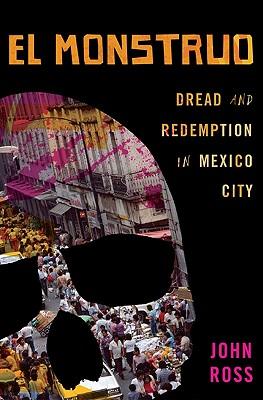
Editors note: Guardian correspondent John Ross is traveling across the nation pomoting his new book, El Monstruo — Dread & Redemption in Mexico City, and is sending us dispatches from the road. This week: Twin Cities, Madison and Northern Michigan.


 1. BLUE IGLOO


As I deplaned the Southwest Shuttle from Denver wrapped in my blue igloo, a puffed up garment that doubles my skeletal girth, a sudden spasm of panic punched me in the gut. Had I slept through my stop and disembarked in Fargo, North Dakota instead?
Minneapolis might just as well have been Fargo. The dead winter landscape lay frozen under week-old snowdrifts and the Twin Cities shivered in negative wind chill numbers beneath a leaden sky from which a cold hard rain would pelt down for a week. Fargo or Minneapolis? It didn’t much matter where I had landed – just don’t toss me into the wood chipper.


On my first evening in this desolate region, I was invited to dialogue with the Minnesota Immigrant Freedom Network at a community center in St. Paul. About 15 transplanted Mexicans, many of them related by marriage or friendship, pulled together in a circle in the gymnasium while the kids romped in the other room. Each called out his or hers’ “patria chica,” their home state or region or town. I talked about Mexico down on the ground today in the cheerless winter of 2010, the 100th anniversary of a distant revolution. How four out of every ten heads of households are out of work. 10,000 farmers and their families forced to abandon their milpas as millions of tons of NAFTA corn inundate the country. 19,000 dead in Felipe Calderon’s disastrous attempt to beat down the drug cartels. Who will be next?


Those in the circle leaned forward on their folding chairs, bending into my words as if I was a messenger bringing bad news from home. One woman began to weep and another rose to comfort her.


Later, I pulled out my book, El Monstruo – Dread & Redemption in Mexico City to show them what I had written. Families who would probably not eat meat for a week if they bought one snapped up three Monsters and asked me to sign them for their children — Alejandra, Yesica, Jeni, Alfonso, Jonaton — so that they could learn about the country they had been forced to abandon, in their new language.


As the session wound down, Mariano (not his real name) invited the families to a Jewish Seder the next week at a progressive Minneapolis schul. Then they would get on the buses and head for Washington D.C., a 150 hour round trip, to march for immigration reform on March 21st, the first day of spring. In the nooks and crannies of Obama’s America, Mexicans were beginning to come out of four years of social hibernation to rally for immigration reform, not a hot button issue in this economically strewn landscape.


I hung up with my old camarada Tomas Johnson, one of the apostles of fair trade Zapatista coffee — similar dispensaries like Just Coffee in Madison and Higher Grounds in Michigan are sprinkled over the frigid Midwest. Café has played a diminished role in the slender Zapatista economy ever since Muk’Vitz, a Tzotzil Indian cooperative, imploded when coffee prices soared — coyotes, bottom-feeder speculators, started showing up on the members’ doorsteps offering a few pesos more than the fair trade price.


Coffee is not an ideal resource upon which to build Zapatista autonomy — the price is set far away on commodity exchanges in London and New York and the product itself is destined for the jaded palettes of the connoisseur class in the cities of the north. Moreover, the coffee crop soaks up corn land and adds nothing to indigenous nutrition.


I marked my journey into my 73rd year at a house fiesta hosted by Tomas’s steady squeeze, an audiologist who gifted me with a hearing aid so that I might be able to decipher that questions hurled at me from the small audiences I address. This time last year, I was being wheeled into a green, antiseptic operating room for a round of chemotherapy that would k.o. the tumor that had taken over my liver. This birthday is the real gift.


I entertained privileged white students at several universities during my stay in the Twin Cities, got hopelessly lost in a frigid wasteland trying to find a Lutheran college, told tall tales to a handful of Raza at the U. of Minn, and attended a showing of the Benny More bio-pic at a jam-packed local theater. Benny’s scintillating calor radiating from the screen in waves of tropical heat juxtaposed oddly against the backdrop of the frozen north. Minneapolis-St Paul, with their new populations of color – Somalis, Ethiopians, Eritreans, Hmung, and Latinos – spice up this staid old state with exotic flavors. The music has changed: Reggaeton and Rancheros have replaced Spider John Koerner. I drink in the Albert Ayler-like contortions of a longhaired white boy at a jam session downstairs at the Clown Lounge.


Politics too are not as usual in this once-upon-a-time farmer-labor socialist paradise: Keith Ellison is the nation’s first Muslim congress person and a middle-of-the-road Democrat comedian stands small in the shoes of Paul Wellstone. In the other corner, the pit viper Michelle Bachman spits her venom into the black lagoons of Obamalandia.


II. TURKEY MOLE


I’m back on the Big Dog — there are plenty of Mexicans here but no Mexican bus. On the jump over to Madison, I chat with a well-seasoned black man during a smoke break. He wants to know where I’m headed. I’m on a low-rent book tour, I explain, I move from city to city to sell my books. “I’m on a book tour myself,” he laughs, “I get off where I want to and see if I like it or not. Hung up in Oswego for eight days but wasn’t anything there for me…”


There is a down-at-the-heels traveling class — the evicted and foreclosed, laid off and uprooted — rolling around the underbelly of this damaged country with no fixed destination in mind, looking for a place to light, some place that feels like home.


Norm Stockwell, who keeps WORT-FM, the Voice of Madison’s Voiceless, choogling, picks me up at the Greyhound depot, a furniture-less warehouse that resembles an immigrant detention center on the outskirts of town, and drives me over to the once-a-month Socialist pot-luck, but only scraps and few stained paper plates are left. A few hours earlier, the Madison P.D. visited the premises at the behest of the Wisconsin Socialist Party to remove a truculent member who had been abruptly expelled from its ranks, an astonishingly unpolitical resolution to a political dispute.


Madison is a city that doesn’t leave much up to chance. Cops are ever at the ready to surveil radical meetings. One cannot post a hand-scrawled street sign protesting injustice without first obtaining a permit from the city. No household is allowed to house more than three chickens (no roosters), a law that necessitates chicken inspectors and has given birth to the Chicken Liberation Front.


The State Capitol, a knock-off the Nation’s, is forever on the eyeline in Madison to remind one of the power of the State, I expect. The city is laid out on a grid so that all avenues spoke off from its monstrous dome – you have to move out of town to escape the radiation.


On Saturday, March 20th, a fistful of eternal protestors gathered at the foot of this granite beast to mark the start of the eighth year of the illegal invasion and occupation of Iraq and the decimation of millions of its people. As I trudged up State Street towards the Capitol, I flashed back to our feverish days as Human Shields in Baghdad in March 2003 and thought about Sasha for whom the war never goes home, climbing the hills of Amman, delivering collateral repair from dawn to dusk to the million Iraqi refugees that forgotten war has exiled to the Jordanian capitol.


Our presidents invade so many foreign countries that they can’t even remember the name of the last one they destroyed. Iraq has been erased from the North American mind screen in favor of Afghanistan, the Good War on Obama’s agenda. Last month, Sasha and Mary’s Collateral Repair Project took in just $50 in donations and CRP is in danger of folding. Send them some Yanqui shekels at (www.collateralrepairproject.org.)


The annual commemoration of the Iraqi genocide draws smaller and smaller knots of humanity each year — 80 or so souls in Madison, 500 in San Francisco, not 10,000 in Washington. But the next day, as Baracko’s Dems braved the racist jibes and hard fruit of the Teabaggers to enter the hallowed halls of Congress and narrowly vote up a phony health care reform bill that excludes immigrants from coverage and leaves the insurance congloms on top, 200,000 assembled outside to back up a proposed immigration reform that smells just as cheesy as Obamacare.


The rally proved to be the largest confluence of immigrant workers since that miraculous May 1st four years ago when millions came out of the shadows to shout “aqui estamos y no nos vamos.” After that milestone moment, the immigrant rights movement was driven into the underground by Bush’s ICE raids, Lou Dobbs, the Minutemen, real-time Mexico bashing with knives and bottles, Sheriff Joe’s Arizona storm troopers, good ol’ American-as-apple-pie racism, and the squeamish response of the official Latino leadership.


Now the indocumentados are taking their first baby steps back into the maelstrom of U.S. politics. Hundreds of grassroots groups like the Minnesota Immigration Freedom Network rented buses and drove off to Washington on the first day of spring and May 1st, the day on which immigrant workers first took to the streets of America 124 years ago in the battle for the eight hour day, now looms large on the calendar of resistance.


Lester Dore is a graphic artist who operates under the influence of the king of the calaveras Jose Guadalupe Posada, the brothers Flores Magon, and the breathtaking explosion of popular art that detonated on the walls of Oaxaca during the 2006 uprising in that southern city. Lester whips up a pair of prints to celebrate the publication of “El Monstruo” and the life after death of Praxides G. Guerrero, the first anarchist to fall in the 100 year-old-this-year Mexican revolution. He serves up a big pot of Mole de Guajalote (Turkey) and invites us over. Three compas from Toluca in Mexico State share the sumptuous repast and the conversation quickly slides into Mexican. I learn the origin of the Chilango-ismo “teparocha” (falling down drunk) but eschew the vino (the liver lives on.)


III. SANCTUARY IN THE HEARTLAND


Driving the long route around Lake Superior into northern Michigan, the first tentative fingers of spring have brought a thawing to the land. The cherries that draw thousands of migrant workers to the Lower Peninsula are threatening to burst into bud. Gladys Munoz (her real name) directs Migrant Health Services for seven northern Michigan counties. She is based in Traverse City, a comfortable upper crust enclave — the billion buck mansions out on the peninsula are in the El Chapo Guzman category of ostentation (Michael Moore is rumored to be in residence in the environs ensconced in a lavish log cabin roughly the size of downtown Flint.)


Gladys knows where the bodies are buried. We ply the backroads to the labor camps hidden away down in the dank gullies. Guatemalans and Mexicans stream into this region each spring to do the stoop labor no gringo will do and pick the Maraschinos that top off the parfaits of the few upwardly mobile Americans left in the wake of the ravaged economy (Michigan unemployment clocks in around 15%.) Gladys tells me about three babies born without brains — she suspects pesticides. She speaks about a man from Chiapas who hung himself when he found out that he had contacted AIDS — a priest was called upon to perform an exorcism at the house where he expired. And a young Triqui Indian mother from Oaxaca picking cucumbers for a Vlasic pickle contractor who was stranded in a country that doesn’t recognize her language after her husband went fishing for supper without a license and Fish & Game turned him over to the Migra.


We visit with Liliana (not her real name) from the drug war-riddled hot lands of Guerrero state. The patron is a kindly old farmer who has installed cable TV for the workers and we watch Barack Obama extol the wonders of his tarnished health care bill. Liliana’s husband is picking oranges in Florida but will soon return to work the cherry. She says he doesn’t much believe that an immigration reform measure will make it out of congress – “just some more blahblahblah…” But Liliana will march this May 1st if she can get a ride — undocumented workers are not permitted drivers’ licenses in the state of Michigan.


Traverse City is good to me. I perform at a local organic coffee roaster for a roomful of social change agents. The next morning, Jody T. who gave up her life to drive this garrulous old gaffer around the bioregion, steers the Viva into a trepidatious triangle. Cadillac was once the home base for Timothy McVeigh and the Michigan Militia, a recent flashback on the Ten O’clock News after a Christian posse purportedly targeted cops for blood sacrifice in preparation for the appearance of the Anti-Christ. To the west, small towns with Dutch-inflected names like Holland and Zeeland and Vreland dot the lakeside.


White clapboard outposts of the Dutch Reform Church, the architect of South African apartheid, their steeples spiring piously into the spring breeze, hug the highway. The Dutch Reform Church is the spiritual home of the Prinz family whose most celebrated spawn, Eric, is the go to guy at Blackwater. Further south we slide into Grand Rapids where the similarly affiliated DeVos dynasty’s Amway holds sway. The Prinzes and the DeVoses (a good reason not to root for the Orlando Magic) finance such repositories of right-wing fanaticism as Focus On The Family and Operation Rescue. The largesse of Dick DeVos rivaled the Mormon Church in putting California’s homophobic Proposition 8 over the top.


Grand Rapids, once the furniture capitol of the known universe and now the home of the Gerald Ford Museum of Presidential Imbeciles, is a good boxing town (Buster Mathis and Roger Mayweather have gyms here) and a swelling Latino population has changed the complexion of the city. Despite the downturn, Grand Rapids is trying to upgrade its downtown but the further one gets from the core of the city, the seedier things look.


Koinonia House is a sanctuary near the old demolished heart of Grand Rapids — in fact, it is the only structure left standing on its block. Established by disaffected seminarians like Jeff Smith in the early 1980s when the U.S. waged war on Central America, K House became a station on the underground railroad built by the Sanctuary Movement. The first refugees were Guatemalan Indians fleeing the scorched earth genocide of Efrain Rios Montt. In recent years, K House has taken in Mexicans fleeing that “desgraciada pobreza” back home, like Carlos and Alynn (their real names) who have brought their remarkable art with them to El Norte.


Jeff kicks back and reminisces about the fates of former tenants. The big-bellied wood stove belches out waves of warmth on a chill late March morning. The big arms of the fluffy old lounger envelop a weary traveler and hold him close. K House remains a sanctuary deep in the heart of a wounded land.


Stay tuned. Chicago, St Louis, Jackson Mississippi – there is still a whole lot of traveling to do as the Monstruo tour moves eastwards.               


FIN


John Ross and “El Monstruo – Dread & Redemption in Mexico City” will visit St. Louis April 4th-7th, and Millsaps College Jackson Mississippi April 9th for a symposium on Mexico City – he will tour Baltimore, Washington, New York, and Boston April 19th through May 1st. For details write johnross@igc.org.

Blink

0

le.chicken.farmer@gmail.com

CHEAP EATS He was tapping a red-tipped cane, staying close to the buildings, and sometimes bumping into them. We greeted each other in passing. And the second person I saw that morning, walking to BART in the dark, was using a red-tipped cane too, but also holding onto her man’s arm. Her hat was tall and adorned with either fruit, flowers, or both. I took off my glasses and wiped them on my shirt.

The children have been wonderful. Boink, who started reading books to his little sister while I was away, says "I love you" about a million times a day now. One of the first things we did was make gnocchi, and now Popeye the Sailor Baby is old enough to help roll them too.

The Chunks de la Cooter remember all our songs and games, and Chunk II hardly ever lets go of me when I’m there. As if, more than even me, she can’t believe I’m back and ain’t lettin’ go this time.

I feel like I’ve just woken up from a really, really bad dream, rolled over in my sweat-soaked life, and blinked into the also-blinking eyes of my four True Loves, age two, two, three, and four. These four, they give my heart right back to me.

Boink thinks we should open a restaurant together. Inclined to believe him, I picture the boy 14 years from now, standing on a step-stool next to me, lightly dusted in flour from his fuzzy blond head to his pink tennis shoes — only I guess by then he’ll have flour in his beard too.

Maybe in the meantime — his parents and child labor laws willing — I can practice him in my imaginary guerilla Guerrero Street pastry war against Tartine. He can sell lemonade to the liner-uppers across the street while I learn to cook. Or better yet: limeade.

The burritos I have eaten have tended to be from Cancun, of course, with Earl Butter, and of course El Farolito with Dan-Dan the Fireman and Phenomenon. With one exception. That was El Buen Sabor, with Last Straw Sullenger, who is helping me to curtain and depression-proof my new hovel.

And she bought me a burrito for lunch.

Now I was never very fond of Good Taste during my previous stomps through the Mission, I forget why. But Earl Butter told me El Buen Sabor got better, and I trust him, as you know.

As you also know, if you’ve been reading Cheap Eats while I was out there getting my ass kicked, the buttery one just doesn’t venture beyond a two-block radius of his house at lunchtime or dinnertime. Or breakfast time, for that matter.

So what I think he likes about El Buen Sabor is that it’s the closest beans to home for him, and now me. Well, their two table-top squeezy-thingie salsas are excellent — both the red and the green. They both have some seriousness to them, and are good not only on chips and burritos, but back home poured over slightly stale and heavily buttered drop biscuits. I speak from first-hand leftover experience. But personally, I don’t think the place is any better than I think I used to think it was. That is: nothing special.

They do have brown rice and spinach tortillas, as Last Straw proved by asking for, and getting, both. With her vegetarian burrito.

Whereas I got my vegetarian burrito with as much unhealthiness as possible: white rice, refried beans, and carnitas. It was good, but honestly, unless you live one block away and are Earl Butter, or have recently eaten Mexican food in Regensburg, Germany … it’s nothing to write home about.

Let alone a restaurant review.

So now, if you’ll excuse me, I would like to go back outside again, before it gets dark again, and look into one of those stenciled sidewalk gems again, for a while longer.

This one:

I WOULD STEAL THE STARS FOR YOUR and then I can’t quite make out the last word but I believe it to be HAT.

There is more than one way to read this.

EL BUEN SABOR

Daily: 10 a.m.–10:30 p.m.

697 Valencia, SF

(415) 552-8816

D/MC/V

Beer & wine

L.E. Leone’s new book is Big Bend (Sparkle Street Books), a collection of short fiction.

Point for point

0

› arts@sfbg.com

LIT In Chekhov’s story “Lady with Lapdog,” there is a passage that describes the inner life “running its course in secret” as that which holds “everything that was essential, of interest and of value … hidden from other people.” This revelation resonates throughout Elif Batuman’s new book, The Possessed: Adventures with Russian Books and the People Who Read Them (Farrar, Straus, and Giroux, 304 pages, $15). Drawing its title from Dostoyevsky, The Possessed offers a compelling glimpse into the inner life of its author, one informed by a love for books.

Batuman’s graduate studies at Stanford took her on adventures to Samarkand, Uzbekistan; St. Petersburg, Russia; Ankara, Turkey; and Venice, Italy, but the richness of her descriptions owe less to exotic settings or the course of events than to the books she packs in her suitcase. Batuman’s chapters on Samarkand, which can be read as a crash course on Uzbek literature, are filled with recollections of Navoi, Farid al-Din Attar, Muqimiy, and G’afur G’ulom (the “Uzbek Maxim Gorky”).

Borges’s fanciful story “On Exactitude in Science” describes a map so large and exact that it covers the land “point for point.” The story ends with an eerie image of a tattered map stretching into the desert, inhabited by people and animals, until it becomes the very world that it outlines. In the same sense as Borges’s map, literature provides its own cartography. Like a true bibliophile, Batuman reads (and writes) as a traveler: a Don Quixote figure who navigates her way through the life that is revealed by tracing the longitudes of the life that is hidden.

From Stanford, where she currently teaches comparative literature, Batuman spoke with the Guardian about The Possessed.

SFBG In the last paragraph of “Summer in Samarkand” you write, “I am reluctant to say that what ended in Samarkand was my youth.” What do you mean by that?

Elif Batuman The pathos of graduate school is that you go in at 22, and they kind of spit you out at age 30, and you’re like, “Where did my youth even go? What became of it?” When you’re young, every adventure could be this life-changing thing that opens the door to something new, and after a certain point you kind of stay the same, and you’re doing all these things, but it’s just a succession of events. The biological narrative has ended, because you’ve reached adulthood, and the burden of creating that narrative falls onto you in a way that’s not the case when you’re young and everything is so dramatic.

SFBG At the same time, as a writer you feel that if you don’t incorporate your experience into some kind of narrative, it becomes a wasted experience.

EB One of the huge reliefs of writing this book is that I finally did something with that time in Samarkand. There is a nice story by Isaac Babel called “My First Fee” where he talks about how his untold stories are sitting in his heart “like a toad on a stone.” It is a little bit like that.

SFBG The Possessed is a literary memoir, and you write about people you meet in your academic career. You also talk about people you met at conferences, your boyfriends, and various academic trials and tribulations. What have these people’s reactions been?

EB I did get some negative response about “Who Killed Tolstoy” from a professor. She basically said that she thought I shouldn’t have published it, and she thought it was in terrible taste and horribly indiscreet.

SFBG Really?

EB It was [about] that episode on the bus. It was kind of a peculiar e-mail: “When I read this, I thought it was fiction, but recently I found out that this incident on the bus happened.”

SFBG When the guy who had an accident on the bus wouldn’t throw out his pants afterward?

EB Yeah. She used the phrase “despicably cruel.” I was frustrated by that e-mail, because it seemed to me the story was only being read as gossip when I tried really hard, when people did things that I thought were interesting or funny, to write about them in the service of some larger point. In the Tolstoy piece, it was about the universal frailty of the human body that affects all of us. It wasn’t about one guy who did something embarrassing, but about this horrible plight that we’re all in as human beings.

SFBG The Possessed got overwhelmingly positive reviews. When people said not-so-positive things, did you have to develop a thicker skin?

EB I can’t read reviews, because they freak me out. If they’re one paragraph, I’ll read it. My publishers send these publicity updates with one-sentence reviews in them, so I know the Buster Keaton–Susan Sontag quote [laughs].

SFBG “If Susan Sontag had coupled with Buster Keaton, their prodigiously gifted love child might have written this book.” It’s a weird description.

EB [Laughs.] It freaked out my mother. She was like, “Why would they say something like that? Why do they think Susan Sontag should be your mother and not me?’

Quick Lit: March 31-April 6

0

Literary readings, book tours, and talks this week

Wednesday, March 31

Vito Acconci
Hear writer/visual artist turned designer and architect, Vito Acconci, talk about “Words/Action/Architecture,” where he will discuss recent and upcoming projects of Acconci Studio like an artificial island in Graz, an elevated subway station in Coney Island, and a street that runs through a building in Indianapolis.
7:30 p.m., free
Mills College
Lisser Theater
5000 MacArthur, Oak.
(510) 430-2164


Performing South Africa’s Truth Commission: Stages of Transition
Join author Catherine M. Cole as she discusses South Africa’s Truth and Reconciliation Commissions, which helped to end apartheid by providing a public forum to exposed human rights abuses, and how the truth commission as public ritual and national theater provided a medium for performing evidence and truth to legitimize a new South Africa.
5:30 p.m., free
University Press Books
2430 Bancroft, Berk.
(510) 548-0585


Thursday, April 1

James Hannaham and Andrew Sean Greer
McSweeney’s and Modern Times Bookstore present an April Fool’s Day evening of literary debauchery with James Hannaham reading from his award-winning novel, God Says No, and Andrew Sean Greer reading his acclaimed NASCAR piece from the McSweeney’s publication, San Francisco Panorama.
7 p.m., free
Amnesia
853 Valencia, SF
(415) 970-0012
www.mtbs.com

April Martin Chartrand
Attend this audio visual presentation of April Martin Chartrand’s book, Angel’s Destiny: A novel story of poems and illustrations, and experience the emotional life of a multi-cultural woman in the United States trying to overcome violent adversities and embrace self-love.
6 p.m., free
San Francisco Main Library
100 Larkin, SF
angelsdestiny2009.blogspot.com

K.M. Soehnlein
Hear Soehnlein read from his new book, Robin and Ruby, a sequel to The World of Normal Boys where he introduces the character Robin MacKenzie. In this new story of love and loss we meet Robin’s sister Ruby.
7:30 p.m., free
Books Inc.
2275 Market, SF
(415) 864-6777

Surviving the Dragon
Hear author Arjia Rinpoche share his inspiring survival story of the years he spent in Tibet during the Cultural Revolution at this reading for his book, Surviving the Dragon: A Tibetan Lama’s life under Chinese rule. Rinopoche witnessed the torture and arrest of his monastery family, spent 16 years in a forced labor camp, and endured many other hardships before he escaped to the United Stated in 1998.
7:30 p.m., free
The Booksmith
1644 Haight, SF
(415) 863-8688
www.booksmith.com

World Poetry Night in the Oral Tradition
Enjoy recited poetry from diverse cultures and time periods in the “oral tradition,” where one poem inspires another from classics such as Rumi, Sappho, Hafiz, Whitman, Shakespeare, T.S. Eliot, Dickinson, Neruda, and more.
7 p.m., $12
Mechanics’ Institute
57 Post, SF
(415) 393-0100
www.milibrary.org

Friday, April 2

Litpunk
Enjoy intense, punk-edged lit readings and music at this punk rock alternative to the popular Litquake annual reading series. Featuring Penelope Houston, lead singer of the Avengers, reading poetry, prose, and singing, John Shirley, author and former lead singer of SadoNation, Eddie Jetson, of Ice 9, “Jennifer Blowdryer,” Johnny Genocide, and more.
7:30 p.m., $5
Makeout Room
3225 22nd St., SF
(415) 647-2888


Reality Hunger: A manifesto

Author David Shields argues that our culture is obsessed with reality because we experience hardly any. At this reading, Shields will share his stance that aims to reframe how we think about “truthiness.”
7:30 p.m., free
The Booksmith
1644 Haight, SF
(415) 863-8688
www.booksmith.com

Saturday, April 3

Indivisible: An anthology of Contemporary South Asian American Poetry
Kick off national poetry month at this book launch, reading, and signing of this collection of poetry from contemporary American poets from different cultures and faiths who trace their origins back to Bangladesh, India, Nepal, Pakistan, and Sri Lanka. The anthology aims to capture the simultaneous tensions of belonging and not belonging in America.
Featured contributors: Ravi Chandra, Tanuja Mehrotra, and Swati Rana
7:30 p.m., free
Booksmith
1644 Haight, SF
(415) 863-8688
www.booksmith.com

Monday, April 5

The Hills in Berkeley
Attend this UC Berkeley geology talk where professor Dr. Doris Sloan will discuss the formation of the Hills in Berkeley.
7:30 p.m., $5
The Hillside Club
2286 Cedar, Berk.
(510) 848-3277
www.hillsideclub.org

Tuesday, April 6

Homero Aridjis with Lawrence Ferlinghetti
Hear Mexican poet, novelist, and environmentalist, Homero Aridjis read from his new collection of poetry, Solar Poems, addressing both his ecological concerns and a mystical relationship to the sun. Lawrence Ferlinghetti will also read several poems from the new bilingual edition of his book, What is Poetry?/¿Qué es la Poesía?, which Aridjis translated.
7 p.m., free
City Lights Bookstore
261 Columbus, SF
www.citylights.com

Biking Book Club
Join members of the SF Bike Coalition and other biking enthusiasts for this book club and discussion group about bike and transportation related books. The current book up for discussion is Traffic: Why we drive the way we do by Tom Vanderbilt. Bring ideas for future reads.
6:30 p.m., free
San Francisco Bicycle Coalition
995 Market, SF
www.sfbike.org/books

Insectopedia
Hear author Hugh Raffles discuss his new book that pays tribute to bugs of all kinds in this collection of 26 offbeat and bizarre essays and philosophical musings.
7 p.m., free
BookShop West Portal
80 West Portal, SF
(415) 564-8080

A 40-year Last Gasp that’s getting stronger

0

By Cécile Lepage

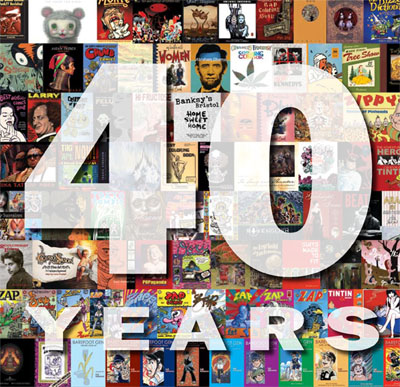
Last Gasp, San Francisco’s landmark independent and underground publisher, is turning 40. To celebrate this feat – in four decades, Last Gasp has spawned more than 300 comics and 250 books – it is throwing a party and an art show Thurs/April 1 at 111 Minna Gallery.

Who dared wager, in the mid-1970s, that Last Gasp would survive the withering of the underground comix scene? Head shops, the main outlet for unedited explicit sex-, drug-, and violence-ridden content (the “x” in comix stands for X-rated), were being prosecuted and forced to shut down due to anti-drug paraphernalia laws. Comics stores favored the more mainstream adventures of masked men in tights. Finally,“there wasn’t the same appetite for comics anymore,” according to Colin Turner, associate publisher to his dad Ron, who founded Last Gasp. No matter: the small venture outlived its peers by continually adapting, tuning to consumer demand and catering to bookstores’ standards and their stapled-leaflet scorn. Over the years, Last Gasp branched out into artist monographs, coloring pads, music-related books and graphic novels.

Yet, browsing its odds-and-ends catalogue, one gets the sense that Last Gasp hasn’t compromised its bizarre and satirical bent. Sure, it might carry such mundane items as coloring books, but beware of the twist! Gangsta Rap Coloring Book flaunts 48-pages of line drawn gangsta rappers. As for Tee Corinne’s Cunt Coloring Book, well, the title says it all. Last Gasp may have diversified, but it never reneged on complete artistic license, the hallmark of underground comix.

Today, Last Gasp thrives in the areas of lowbrow art and pop surrealism. Lowbrow is an umbrella label for “art forms that are popular and wonderful, that people love, but that aren’t respected in the fine art world”, according to Colin. It ranges from tattoos and Kustom Kulture to street art and graffiti – artistic expressions rooted in pop culture that take place on canvases ranging from car exteriors to skin..

As for pop surrealism, the genre emerged from cartoon-y visuals only to reclaim traditional old master painting craftsmanship. Artists such as Scott Musgrove, Camille Rose Garcia and Mark Ryden colonize canvasses with impeccably-rendered phantasmagorical creatures and weird visions. Neglected for years by art institutions, the loose-knit community of lowbrow artists is gradually being endorsed by upscale galleries and museums, a shift that once again attests to Ron Turner’s prescient flair. Back in the day, he promptly discerned underground comix’ wide appeal and cultural relevance, supporting the work of then-young and aspiring artists such as R. Crumb, Bill Griffith, and Spain Rodriguez, all of whom matured into cult or mainstream icons.

It could be said that Ron Turner got sidetracked into publishing. In the late 1960s, the Fresno native enrolled in the SF State psychology department. The Peace Corps volunteer, freshly returned from a stint in Sri Lanka, was thrust into the Bay Area countercultural upheaval and its myriad of grassroots movements. As a Berkeley Ecology Center activist, he figured that he could raise funds by releasing an environmentally-oriented comic book.

“I thought the graphic approach would engage teenagers, help them thwart authority figures, and provide answers to ecological concerns”, Ron recalls. With the mentorship of Gary Arlington, the San Francisco Comic Book Company owner who was selling Zap Comix under the counter, he compiled and printed 20,000 copies of Slow Death Funnies 1. By that time, his Ecology Center accomplices had dispersed, and their successors only agreed to redeem 10 copies of the title. “My garage was filled with 19,990 Slow Death Funnies 1 and I had to find a way to get rid of them”, he laughs.

This task proved easier than one might initially presume: with his good-humored nature, Turner unloaded his goods at 200 locations, not just head shops but also universities, hairdressers and even a leather jacket store. Eventually,Last Gasp reprinted the comic and sold around 45,000 copies. After this initiation, the socially-aware Turner satyed in the business because “it was a kooky way to shed some light on issues that needed attention.”

Last Gasp’s second publication was the all-woman feminist first It Ain’t Me Babe. “At the time, I was living alone with my newly-born daughter and I was drawing comics,” says Trina Robbins, who put together the title. “But you wouldn’t know it, because the 98% male underground comix industry had shut me out. I heard that Ron was looking for material for a women’s liberation comic book. I phoned him. The next day he visited me, wrote me a check for $1,000 — which in those days was quite an amount of money — and voilà!”

The 1975 book Amputee Love probed another rarely addressed topic, the sexual life of a crippled couple. “UC medical centers purchased some copies to sensitize nurses to the fact that amputation does not mean death of sexuality,” says Ron Turner. Other notable contributions to unconventional subject matters include Anarchy (1978) and Cocaine Comix (1976).

According to Ron Turner, cartoonists hold the highest rank in creativity because they can communicate their vision the most clearly: “Most art is some form of propaganda. The artist wants to sell you on his vision and what it leads to.” Turner’s fascination with human behavior conditioning stems from his psychology studies.

At 70, Ron Turner still sports a hippie hairstyle: a white hair ponytail and an eccentric plaited beard running down to the navel of his buddha-like belly. Comix aficionados regard him not only as a pillar but also as a guardian angel. “Last Gasp is unique in that it’s a publishing house and also a distributor. It has kept many smaller and larger presses afloat,” explains Cartoon Art Museum curator Andrew Farago.

Niched in a corner room of Last Gasp’s Florida Street offices, Turner’s personal collection of popular art is an eclectic mix of original drawings and paintings, side show banners, circus items and vinyl sculptures. “Are these for real?”, hollers a guy named Charlie, who is lending a hand in preparing the anniversary art show. He has uncovered a pile of four framed paintings that serial killer John Wayne Gacy made while on death row. Lowbrow art is definitely not for the fainthearted.

Events listings

0

Events listings are compiled by Paula Connelly. Submit items for the listings at listings@sfbg.com. For further information on how to submit items for the listings, see Picks.

THURSDAY 1

Last Gasp Anniversary Show 111 Minna Gallery, 111 Minna, SF; (415) 974-1719. 6pm, free. Celebrate the 40th anniversary of Last Gasp, publisher of underground books and comics, at this party and art show featuring art by Gary Baseman, Tim Biskup, Glenn Barr, Robert Crumb, and many more, and readings by local writers, including San Francisco Poet Laureate Diane di Prima.

St. Stupid’s Day Begins at Justin Herman Plaza, Embarcadero at Market, SF; www.saintstupid.com. Noon, free. Help bring color, music, and satire to the financial district’s "temples of the Free Market" at this parade featuring a "dead lottery ticket" offering at the Federal Reserve Bank headquarters, a penny toss at the "banker’s heart," a "sock exchange" at the old Pacific Stock Exchange building, and more. Brought to you by the First Church of the Last Laugh.

BAY AREA

"Book Smart" Oakland Public Library, Temescal Branch, 5205 Telegraph, Oak.; (510) 597-5049. Through April 30, free. Peruse the library while taking in a unique art exhibit of mixed-media paintings by Nancy Mizuno Elliott that will be scattered throughout the library to surprise people as they browse the stacks, exploring the interconnectedness of solitude and stimulation.

FRIDAY 2

Al-Mutanabbi Street San Francisco Zen Center, 300 Page, SF; (415) 255-6524. 7:30pm, free. Attend the first U.S. exhibition of the al-Mutanabbi Street Broadside Project, a collection of poetry and art commemorating the 2007 car bombing of Baghdad’s historic book-selling al-Mutanabbi Street, featuring a poetry reading by contributing authors. Donations will be accepted for Doctors Without Borders.

La Mesa Red Poppy Art House, 2698 Folsom, SF; (415) 826-2402. 8pm, free. Take part in this peer-to-peer salon featuring traditional musicians, dancers, and artists from the Alliance for California Traditional Arts (ACTA) Roundtable Series, which aims to strengthen Bay Area intercultural traditional arts networks and leadership.

SATURDAY 3

Big Idea Night Yerba Buena Center for the Arts, 701 Mission, SF; (415) 978-2787. 9pm, free. RSVP recommended: www.ybcafree.org. Celebrate the role we all play in the underground arts community at this event put together by the Oakland based art collective The People featuring DJs, dance demonstrations, live painting, participatory art, live dance videography, a local Caribbean food vendor, extended hours for current exhibits, and more.

"Consumed" Femina Potens Art Gallery, 2199 Market, SF; (415) 864-1558. 7:30pm, free. Sate your artistic hunger at the opening of a month long exhibit titled, "Consumed – Affairs with the edible," featuring artwork by Maria Kretschmann, Malia Schlaefer, Liz Maher, and Francesca Berrini that address women’s complex relationship with food. Meet the artists, rub elbows with fellow foodies, and enjoy refreshments and snacks.

Exploratorium Film Collection Exploratorium, McBean Theater, 3601 Lyon, SF; (415) 561-0360. 2pm; included in the price of admission, $15. Watch contemporary film works alongside classic experimental, documentary, and science films from the Exploratorium’s 16 mm collection as part if their 40th anniversary Cinema Arts Program.

Healthy Saturdays Golden Gate Park, JFK Drive between Tea Garden and Transverse, SF; www.sfbike.org/?ggp. All day every Saturday from April thru September, free. Enjoy the kick off of the season of car-free Saturdays in Golden Gate park weather you’re a skater, bicyclist, pedestrian, or onlooker.

Skate this Art Gallery 28, 1228 Grant, SF; (415) 563-6965. 6pm, free. Learn more about the art of skateboarding at the opening of this annual exhibit while helping to raise money for the North Beach Citizens (NBC) center, an outreach program for the disabled and homeless of North Beach. Reception to feature skateboard art auction, raffles, film screenings, poetry readings, and more.

Starchild on Sit Lie Magnet, 4122 18th St., SF; (415) 581-1600. 7pm, free. Hear Starchild, a bisexual, libertarian, activist, sex worker, and supervisorial candidate, discuss the proposed Sit/Lie law with Jon Sugar. The law proposes to ban sitting and lying on sidewalks in SF and will soon be voted on by the Board of Supervisors. Live music to follow.

West Coast Live San Francisco Ferry Building, Port Commission Room, second floor, 101 Embarcadero, SF; (415) 433-9500. 10am, $18. Attend a live broadcast of West Coast Live hosted by Sedge Thomson with special guests Anchee Min, Walter Mosley, and Olympia Dukakis, and featuring music by Dana Cooper and the Exceptional Mike Greensill. West Coast Live broadcasts from locations that convey the culture and sounds of the West to listeners.

SUNDAY 4

Spring Celebration and Easter Parade Union Street, Gough to Fillmore, SF; www.unionstreetsf.com. 10am-5pm, free. Catch the 2pm Easter parade, enjoy outdoor dining at temporary sidewalk bistros, listen to live music, compete in the Easter bonnet contest, and take part in some of the family oriented activities being offered at this local celebration of Spring.

MONDAY 5

Film Arts Forum Mezzanine, 444 Jessie, SF; (415) 625-8880. 7pm, $8. Join the San Francisco Film Society (SFFS) for an arts forum titled, "Tales from Terror," an appreciation, dissection, and dismantling of the misunderstood horror genre and its ties to the Bay Area.

The cheeseman can

0

The subtitle of Rainbow Grocery cheesemonger Gordon “Zola” Edgar’s new memoir (supertitled Cheesemonger, appropriately enough) would be enough for me to count the book a success; “Life on the wedge.” Ha! See, right there, he had me ready to head out to his Omnivore Books reading (Sat/3) fangirl style, washed rind Taleggio in hand, hounding for an autograph. Luckily, the rest of his book is pretty good too. 

Where Cheesemonger triumphs is its accessibility. Edgar covers a lot of ground within its pages — Bay area agricultural/urban history, the ins and outs and importance of worker collectives, food justice, and of course, the art and science that is cheese. But it is all tied together with that rare liberal ethos that is both positive, and commonsensical. 

A word about those first three topics. Edgar’s tome ties how we eat to how we live to how our world works, coherently and colorfully enough that it stays interesting even to the casual reader. Cheesemakers, unlike produce farmers or vintners, have yet to really have their day in the sustainable food mania’s sun. Here in Cheesemonger, we get a clear picture of how factory produced cheese differs from that which is made from the milk of grass-fed cows and handcrafted by sustainable methodologies- and an explanation of why many dairy farmers have been forced to turn to mass production methods. Edgar utilizes his middle-man status at Rainbow’s worker collective in the book to neatly connect the latter with the stomachs and wallets of SF’s working Joes. Michael Pollan’s Omnivore’s Dillemma functions similarly — but Pollan’s got nothing on Edgar’s encyclopedic knowledge of the most delicious of all foods. 

Ah, cheese. On my journalist’s salary, most of the cheese I’m eating these days ranges between the gold standard “block” cheddar and whatever brie I can swipe off of art reception buffet tables, so this book’s vivid descriptions of handcrafted Telemes and Sainte-Maure de Touraines were awe inspiring. I now have a grocery list the length of one of my legs, full of fancy cheeses to try (thanks for that, Gordon).

I kid, because Edgar does a great job of acknowledging how fine cheese’s price tag can keep out of the mouths of most Americans. “When American foodies mock other Americans for not appreciating fine cheese, they should remember that the US equivalent to French Bried is a forty-pound block of commodity Cheddar,” he writes.

So milk thistle coagulated Serra de Estrela doesn’t often make it’s oozy, pungent way into your grocery basket- Cheesemonger still makes for great food porn. Edgar breaks down how cheeses are made, gives helpful information on basic categories, explains what makes a rind and why the hell cheese is aged in caves, and perhaps most importantly, what to look out for when you do decide to splurge on a wedge (tip: stay away from rBGH hormone). I learned things about how the dairy industry works that every milk-and-cheese consumer should know — particularly about our government’s regulations and how ridiculous allocations of subsidies affect the food that’s available on our shelves. As a self-identified “cheese punk,” Edgar convinces you that to try the raw milk, the stinky, the smaller portions of local, expensive stuff- when you can afford it, of course, is to fight the man’s influence over the standardization and control of our larders.

Now that is tasty radicalism. And now, pass the Roquefort.

Gordon Edgar

Sat/3 3 p.m., free

Omnivore Books

3885A Cesar Chavez, SF

(415) 282-4712

www.omnivorebooks.com


When do we get to vote on PG&E’s latest rate hike?

The Chronicle’s David Baker reported today that Pacific Gas & Electric Co. has proposed a new fee structure that would raise the average residential customer bill by $10.73 more each month, bringing it to a total of $88.13.

This new rate-hike proposal comes as the utility prepares to spend $35 million on Proposition 16, a ballot initiative that would essentially lock in its monopoly against competition by requiring a two-thirds vote before local governments could set up alternative power providers. John Geesman, former executive director of the California Energy Commission, called PG&E’s current rates “excessive” when he blasted Prop 16 before a joint hearing of the California Legislature. Geesman commented that the California Public Utilities Commission (CPUC) doesn’t set rates “at a level calculated to provide a $35 million slush fund for sole-sponsored political adventurism.”

“PG&E says it will spend up to $35 million, and insists all of that money will come from its shareholders,” he noted. “You and I know that every nickel that passes through PG&E’s books comes from its captive customers — its regulated utility is the only business PG&E has!  It ought to be illegal to take ratepayer money and use it politically against ratepayer interests.  If PG&E’s making an excessive return, it ought to give the money back.”

PG&E has sent out mailers claiming that San Francisco’s own community choice aggregation effort would drive up the cost of monthly utility bills. Yet the track record for existing municipal utilities shows that historically, PG&E rates have been higher.

Dan Berman, an energy expert who has worked as an analyst for the CPUC, highlighted this point when speaking before the CPUC March 17. In 2008, PG&E charged an average of 13.6 cents per kilowatt-hour, while the Sacramento Municipal Utility District (SMUD) charged 10.7 cents, he noted. “That means PG&E charged 27.3 percent more than SMUD, the largest publicly owned utility in Northern California,” Berman said.

On March 20, the San Jose Mercury News published an editorial shooting down Prop 16. Here’s an excerpt:

“If [PG&E CEO Peter Darbee] is looking for a cheaper way to hold onto his customers, here’s a suggestion: Instead of spending tens of millions of ratepayer dollars on political campaigns, PG&E could use that money to lower rates and find more sources of renewable energy — the main reasons cities consider breaking away in the first place.

“But don’t hold your breath. And don’t miss the opportunity to send PG&E an unequivocal message by ignoring the barrage of misleading advertising and voting no on Proposition 16. The constitution of the state of California should not be for sale.”

John Ross: The damaged spine of America

2


I am on a low-rent book tour with my new cult classic El Monstruo – Dread & Redemption In Mexico City.  For the next three months, I will stumble across this land from sea to stinking sea probing the underbelly of Obama’s America.  The findings will be posted on these pages.


LAS CRUCES N.M. — The snow was already dusting the Organ Mountains fringing this high desert town, promising a hard winter further up the spine of Obama’s America. I ride the Mexican bus (officially doing business as the El Paso-L.A, Limousine Express) when I ply the back roads of the southwest. Greyhound, with its stern rules and regulations and surly drivers who threaten their cargos with summary expulsion for minor infractions, doesn’t much inspire me these days.  


With notable exceptions, Greyhound passengers are a harried and haunted bunch, riding the Big Dog from trouble to trouble, often with all their possessions stuffed into plastic garbage bags. In the cruelest of gestures, the Greyhound management has recently banned garbage bags as an instrument of luggage.  Zombie passengers on the Big Dog stare out at the distant horizon submerged in their worries or stab music into their ears to sever all human communication. No one talks to their fellow travelers anymore.

By way of contrast, the Mexican bus bubbles with chatter.  “Platicame!” (“Talk to me!”) my seatmates insist. The chitchat often gravitates towards work — where they have recently toiled, the job towards which they are headed. Wistful nostalgia for their families and pueblos down in Mexico are common ground. Rancheros belch from the speakers and the taste of tamales flavors the ride. It feels like going home.

Bus rides are an opportunity to reinvent oneself. I am usually the only gabacho on these long hauls through the rugged mountains and barren deserts of the southwest, but I speak colloquial, unaccented Mexican and who I really am excites curiosities. These days, my kuffiyah wrapped around my scrawny neck, I pass myself as an Arab from Mexico City hawking books from tank town to tank town, a plausible story — back home, Arabs are often stereotyped as itinerant peddlers.

North of Las Cruces, the Mexican bus is pulled into a Migra shed and the conversation modulates real quick. A blonde woman agent jumps on board and demands to see everyone’s documents. She studies the passports and green cards under the glare of her flashlight and then shines it into the eyes of the passengers to see who will blink first. One young man — he looks like a university student – is pulled off the bus and is never seen again. When the Mexican bus slides out of the shed, the chatter resumes — but with one less voice in the mix.

Clayton, a young Wobbly who used to run a bookshop down by the rail yards in Albuquerque that was mostly frequented by hobos looking for a little warmth in a cold winter world, is now teaching at a troubled middle school. Patrol cars are often parked out front and half the kids – 99.99% of who are “Hispanics” (read Mexicans) – have juvenile police records. Clayton asks me in to talk to the students, who have never seen a real author in the flesh.  

We hunker down in the library and I step into my Grandpa persona and tell tales of the Mexican revolution while Clayton projects portraits of the Great Zapata and Pancho Villa on the audio-visual screen. I recount how the two men met in a rural schoolhouse in Xochimilco, now a borough of Mexico City, in December 1914. For an hour the two sat in frozen silence until Zapata, unable to contain his bitterness, declares that Carranza, their rival, is “un hijo de puta!” The kids fall off their little library chairs in gales of Mexican mirth. Clayton frets for his job but the librarian apparently doesn’t understand Spanish.  

I show the kids my books. Helen, a boisterous tweener, grabs “Iraqigirl” from Clayton’s hand and announces she is taking it home. The next day, she returns it with a review: “this is the best book I have ever read.” Two boys sit at the round reading table with copies of “El Monstruo — Dread & Redemption In Mexico City” and “Murdered by Capitalism — 150 Years of Life & Death on the American Left” spread before them. They pour over the subversive pages all through the lunch hour. When we prompt them that we have to leave, they hide the books under their hoodies.

 “I don’t have it — check me out!” Salvador (not his real name) challenges. The librarian rushes over and promises the boys that she has just ordered the books on line for them. They will be here Monday morning.  “But this is only Thursday,” protests Manuel (not his real name.)  

Garfield middle school is the best stop so far on this monstrous book tour.

Attendance at public events in Albuquerque is sparse. A vegan spread at the Catholic Worker House drums up a dozen hungry souls, a presentation of “Iraqigirl” at the Peace & Justice Center eight, including an Iraqi woman who leaves early. I show “Corazon del Tiempo” (“Heart of Time”), the new Zapatista movie (it was previewed at Sundance) in a small room at the university – Weather veterano Mark Rudd and the remarkable investigator Nelson Valdez and a handful of starry-eyed students (“Corazon” is a love story) show up.  


I sorely miss my old pal Tilda Sosaya who fought doggedly for prisoners’ rights in the nearly wholly privatized New Mexico prison system for decades after her son was imprisoned for ten years for some dumb teenage caper. Last March, I wrote Tilda that I had been diagnosed with liver cancer and she wrote back that she had it too. The cancer took her quickly and now she is gone and her son is back in prison. We fight for justice but life in this lane is not very just.

I catch the day train up to Santa Fe to visit with the writer Chellis Glendinning. Chellis has lived for the past 18 years on a tiny plot in Chimayo, the land of miraculous dirt and a key distribution point for black tar heroin from Sinaloa and Nayarit — see her “Chiva – How One New Mexican Town Took On The Global Heroin Trade.” Now she is pulling up stakes and throwing in with Evo Morales. Her jeep flies a Bolivian flag and she is rushing to be in Cochabamba for the tenth anniversary of the landmark struggle against the privatization of that city’s water supply by the Bechtel Corporation. Adios companera — la lucha sigue y sigue y sigue!

I am back on the Mexican bus heading towards Denver. The riders get off at whistlestops like Las Vegas and Durango and Colorado Springs where they will do the dirty work of this country — walloping pots, washing cars, cleaning motel rooms, milking cows, shoveling their manure, keeping Obama’s America spic and span for the next paying customer at minimum wages if indeed they are not cheated out of them by unscrupulous contractors.  

When the guy across the aisle gets curious, I revive my new identity as an Arab peddler. “Donde esta tu mujer?” he asks (“Where is your wife?”) and I lie that she is in Iraq taking care of her people. “The Yanquis invaded her country and bombed her neighborhood…”  “Pobre gente,” he sympathizes.  Santiago (is that his real name?) is from Hidalgo de Parral, Chihuahua and says he is on his way to work the Colorado ski resorts where so many Mexicans slave for Senor Charlie these days. He knows all about exile.  

I am invited to deliver a pair of lectures at Denver University, Condoleezza Rice’s alma mater (her father was provost.)  Doug Vaughn, also a DU grad who went left at an early age, notices that I will be speaking at the same time as Cindy Courville, Condi’s roommate who followed her to the National Security Council and then became U.S. emissary to the African Union.

My talks are programmed for the Josef Korbel Center for International Studies. Josef Korbel was Madeline Albright’s father, to give you some assessment of my chances of winning converts here. Indeed, the students are polite and well-groomed, models of future CIA assets — in tracking down the announcement of Courville’s talk on a Korbel Center bulletin board, Doug encounters a CIA recruitment leaflet. The grad students have been forewarned they will be visited by a representative of the lunatic fringe and busy themselves with their e-mail under the pretext of taking notes.  

Academic acrimony flourishes in the Denver- Boulder axis.  Everywhere else in this land where my father croaked, the trials and tribulations of Ward Churchill and his ill-timed assault on the “little Eichmans” deconstructed in the Twin Towers conflagration went out with the fish wrap the next morning — but here in mile-high city, mention of Ward and Colorado AIM can still start a prairie fire. Although such Churchill accusers as the governor and the Colorado U president have long since resigned due, in fact, to other scandals after successfully silencing Ward, his detractors’ thirst for blood remains unsatiated.

Infused with the venom of the dearly departed Bellencourts (who Churchill once dissed as “Nebraska wigmakers”), Ernesto B. Vigil, author of an action-packed bio of Corky Gonzalez, the Denver-based Xicano founder of the Nation of Aztlan, is still brandishing the long knives. Ward Churchill is a fake Indian, Ernesto obsesses, a white guy whose claim to indigenousness is backed up by white people because white people only listen to white people.  White people think they know everything, he scoffs in a heated e-mail in which he disparages my whiteness a dozen times in as many lines.

Actually, I don’t give a rat’s ass if Ward Churchill is one/sixteenth Cherokee or not (the tribal government recently expelled all its black members) — Churchill remains the most lucid writer on American genocide in this benighted country.

Boulder is said to be the most over-regulated city in North America although white liberal enclaves like Madison Wisconsin and Arcata California could give Boulder a run for its money.  I accompany Joe Richey, a local alternative radio sleuth, to the Boulder dog pound to bail out his black lab “Yanqui” (as in “Yanqui! Go home!) “Yanqui” has been adjudged guilty of illicit dog-like behavior i.e. nuzzling a neighborhood garbage can.  

After Joe pays off the authorities and the mutt is released to his custody and properly admonished, we drive past a local dog park.  In a paroxysm of charitable intent, the Boulder City Council permits the homeless to encamp at night amidst the dog turds but they must be gone by daybreak when the pooches of the city’s housed residents take possession or risk a $100 fine. How the homeless, forced to bed down in dog shit nightly, can afford this astronomical sum is unclear. Such is what passes for compassion on the underbelly of Obama’s Amerikkka.


On my final day in Denver, Hank Lamport, a local schoolteacher who favorably reviewed “El Monstruo” for the Post, today the only daily in this formerly two-newspaper town, drives me out to the Rocky Mountain Arsenal National Wildlife Rehabilitation Area. Until a few years ago, the Rocky Mountain Arsenal manufactured and stored deadly nerve gas, chiefly Serin — an occasional lost canister still spooks the wildlife.  The displays at the Visitors’ Center feature photos of workers filling “Honest John” missiles with the stuff. Napalm was also cooked up here. I study the glazed eyes of taxidermied foxes and coyotes and bald eagles and hastily bid adieu.

On the way out of town, we stop to worship the victuals in an Aurora, Colorado taco shop. Hank laments that when he first became a devotee of “Tacos y Salsas,” the clientele, uniformly Mexicanos, would greet him with a “buen provecho” (“good appetite” — a universal courtesy in the Spanish-speaking world) but now the customers have become so gringo-ized that the salutation is a lost art. Nonetheless, when we polish off our orders and head for the door, two working stiffs at the next table wish us each “buen provecho.”
  
It warms the cockles of my contused heart to know that such cultural resistance still percolates out here on the damaged spine of Obamalandia.

Next stop: the frozen, melancholy flatlands of the Great Midwest.  

John Ross and “El Monstruo – Dread & Redemption in Mexico City” (“gritty and pulsating” – NY Post) will be visiting Traverse City and Grand Rapids Michigan in the final week of March. You can catch them at the Headland Café in Chicago’s Rogers Park March 31st, Toronto’s Hoggtown April 1st-4th, and St. Louis Mo. April 7th.  


Neighborliness

0

le.chicken.farmer@gmail.com

CHEAP EATS My soccer team is good. They win without me by gaudy scores like 18-1. When I’m there we still win, mostly, but with better manners. And sometimes we tie or even lose, but only when I’m there. This makes me feel needed.

After games the guys drink beer out of Dixie cups then go grocery shopping, because they’re married, and the girls, being single, go out for brunch or lunch or breakfast and talk about the guys. We wonder what they said, since they speak Portuguese and we don’t. My assumption has always been that they are yelling at me.

They play hard, but then they seem so nice, with their Dixie cups and shopping lists. Of course I am in love with my city right now, and all the people, grocery stores, and restaurants in it.

Even Tartine, which is the view from my new window, and on weekends especially is loused with line-loving wahoos. I love Tartine because I ate a sandwich from there once, a few years ago, and as I recall it was pretty fucking great. But also I love them because they represent a very special challenge to me, and you all know how I appreciate a good challenge.

So: my long-term goal in my new go-round at 18th and Guerrero streets is to annoy Tartine out of business. Just for fun! And not by saying mean things about them either. Obviously some talented folks are putting out some cool beans over there, to line ’em up like they do. No, I have in mind a more neighborly way to undo them.

First, let me fire up my tiny shitty old studio-size gas oven, then I will have to learn how to make morning buns better than theirs. Check that, then I will have to learn what a morning bun is. Hold on a second.

(Insert sound of idle whistling here)

I’m back. OK, mmm, hold on a second, my fingers are pretty sticky. OK, don’t worry, this is not a review of Tartine. I’m not going to say a word about their morning buns, only that it might take me a long time to put them out of business. But that’s fine, because time is a thing I have. Time, a tiny oven, and the means to make a cup or two of coffee.

My plan, then: to swing my gated window open and play my steel drum so enticingly that everyone standing in Tartine’s line will cross the street to see what gives. Then … I will give. I will offer them morning buns, mugs of coffee, and semi-intelligent conversation, for free of course, and so dazzled will they be by my neighborliness that they will eventually forget all about why they came to the Mission in the first place.

It’s a dream, and a distant and misty one at that, I know.

Meanwhile, for the last couple Sundays while all of Chestnut Street has been lined up outside my Mission District window, I have been on Chestnut Street having brunch, lunch, and breakfast at the wonderful and empty Chestnut Diner.

My new favorite restaurant! It was turned on to me by Alice Shaw the Person, who, having a car, carts us to and from our soccer games, which have been conducted lately in the Marina.

The omelets are great. The hash browns are fine. The décor is fantastic: light-blue-topped chrome stools around a J-shaped counter, with booths on either side.

I just can’t recommend the burgers, because they don’t understand rare there. Listen:

Me: Can I have that rare please?

Waitressperson: Half?

Me: (thinking, half?) Huh? No, Rare.

She: Oh, well.

Me: No, rare.

She: Half?

And so on until I gave up and ordered an omelet. But she looked sad about this, so I explained what rare meant and ordered a bacon burger. That way, when it came overcooked (which of course it did), it would still taste good. Which of course it did. *

CHESTNUT DINER

Daily: 7 a.m.–3 p.m.

1312 Chestnut, SF

(415) 441-1168

MC/V

No alcohol

L.E. Leone’s new book is Big Bend (Sparkle Street Books), a collection of short fiction.

Film listings

0

Film listings are edited by Cheryl Eddy. Reviewers are Kimberly Chun, Michelle Devereaux, Max Goldberg, Dennis Harvey, Johnny Ray Huston, Erik Morse, Louis Peitzman, Lynn Rapoport, Ben Richardson, and Matt Sussman. The film intern is Peter Galvin. For rep house showtimes, see Rep Clock. For first-run showtimes, see Movie Guide.

OPENING

Chloe See "Moore and Less." (1:36) Elmwood, SF Center, Sundance Kabuki.

Greenberg Roger Greenberg (Ben Stiller) is 40, and you might think he’s going through a midlife crisis — if he hadn’t been in pretty much this same crisis for 15 years or more. Still very edgy and fragile after a nervous breakdown-sparked institutional stay, he’s holing up at the comfortable Hollywood home of a big-deal brother while the latter and family are on vacation in Vietnam. (The implication being that Roger is most welcome here when no one else actually has to endure his prickly, high maintenance company.) While in residence he reconnects with old friends including the ex-girlfriend (Jennifer Jason Leigh) he dumped yet never quite got over — though clearly she did — and the ex-bandmate (Rhys Ifans) he burned by wrecking their one shot at a major-label deal. He also gets involved, kinda-sorta, with big bro’s personal assistant Florence (mumblecore regular Greta Gerwig), whose passivity and low self-esteem make her the rare person who might consider a relationship with someone this impossible. Like all Noah Baumbach films, especially the slightly overrated Squid and the Whale (2005) and vastly underrated Margot at the Wedding (2007), his latest pivots around a pathologically self-absorbed and insensitive protagonist who exasperates anyone unlucky or blind enough to fall into his or her orbit. Working from a story co-conceived by spouse Leigh, Baumbach’s script sports his usual sharp dialogue, penetrating individual scenes, and narrative surprises. But it also gets stuck in dislikable Roger’s rut, finding conflict easily but stubbornly resisting even the smallest useful change. For all its amusing and uncomfortable moments, Greenberg emerges a dual character slice with no real point. Neither Roger or Beth reward long scrutiny (least of all as a hapless potential couple), while the few screen minutes Ifans and Leigh get make you wish their roles had hijacked the focus instead. (1:40) Piedmont, Shattuck. (Harvey)

Hot Tub Time Machine At last, Crispin Glover returns to his time-travel movie roots! (1:55) California.

How to Train Your Dragon Yet another 3D cartoon for the kiddies. At least this one is about Vikings. (1:38)

*The Sun It may have taken five years for Alexander Sokurov’s The Sun (2005) to reach local theaters, but then the Russian master’s contemplation of Emperor Hirohito’s last days as Godhead is decidedly out of time. Painterly and slow like all Sokurov’s work, the film specifically follows his estranged reconstructions of Hitler’s retreat with Eva Braun (1999’s Moloch) and Lenin’s demise (2000’s Taurus). In August 1945, Hirohito broke with tradition by making a direct appeal to the Japanese people to end military operations; soon thereafter he renounced his divine rights. The Sun‘s elliptical narration intuits the emperor’s paled existence, and Issey Ogata’s lead performance, centering on a fish-out-of-water puckering of the lips, amply conveys the shuttered hours of a man who, in experience if not in fact, is not quite human. The muted use of available light and a disquieting sound design (faraway air-raid sirens yield to the barest brush of a finger) eschew historiography’s harsh glare, instead returning primal scenes of power to a dreamlike state of unknowing. Sokurov’s most hallucinatory effects are reserved for ashen views of firebombed Tokyo which float free from perspective or clear boundary; a brief fantasy in which fish-like warplanes spew apocalyptic destruction suggests the emperor’s childlike imagination and set the stage for his historical date with General MacArthur, realized by Sokurov less as a diplomatic breakthrough than a leaden twilight. (1:50) Shattuck. (Goldberg)

Waking Sleeping Beauty Hollywood history is full of epic rivalries, juicy scandals, multi-million-dollar mistakes, and triumphant comebacks. Sometimes, all of the above and more can be contained within a single studio, or even a single studio division, or even a single studio division during a finite number of years, as illustrated by this insidery peek at Disney’s animation division. The doc gives a bit of background, but focuses its attentions on 1984-1994, a ten-year span that saw the floundering department struggle through post-Walt, identity-crisis blues before blossoming into a rejuvenated powerhouse. Waking Sleeping Beauty director Don Hahn was a producer on the Oscar-nominated Beauty and the Beast (1991), so he’s uniquely positioned to tell the story as it unfolded, using home movies and countless interviews. High points include a glimpse of late composer Howard Ashman introducing his demo for the iconic Little Mermaid (1989) tune "Under the Sea" (it was Ashman’s idea to give the crab character a Jamaican accent), and plenty of dish on the legendary Jeffrey Katzenberg-Michael Eisner feud. (1:26) Embarcadero. (Eddy)

ONGOING

Ajami You may recognize the title of Yaron Shoni and Scandar Copti’s debut collaboration as one of five films nominated for a 2010 Academy Award in the Foreign Category. Though it didn’t bring home the grand prize, Ajami remains a complex and affecting story about desperation and its consequences in a religiously-mixed town in Israel. As we follow the lives of four of Ajami’s residents the narrative shifts perspective almost maddeningly, switching characters seemingly at the height of each story’s action. But once all of the stories fully intersect, the final product has the distinction of feeling both meticulously calculated and completely natural. I was most impressed to learn that Shani and Copti prepared their actors with improvised role-playing rather than scripts. By withholding what was going to happen in a scene before shooting, we are treated to looks of surprise and emotion on actor’s faces that never feel unnatural. Attaining such a level of realism may be Ajami‘s crowning achievement; it can’t have been easy to make a foreign world feel so familiar. (2:00) Shattuck. (Galvin)

Alice in Wonderland Tim Burton’s take on the classic children’s tale met my mediocre expectations exactly, given its months of pre-release hype (in the film world, fashion magazines, and even Sephora, for the love of brightly-colored eyeshadows). Most folks over a certain age will already know the story, and much of the dialogue, before the lights go down and the 3-D glasses go on; it’s up to Burton and his all-star cast (including numerous big-name actors providing voices for animated characters) to make the tale seem newly enthralling. The visuals are nearly as striking as the CG, with Helena Bonham Carter’s big-headed Red Queen a particularly marvelous human-computer creation. But Wonderland suffers from the style-over-substance dilemma that’s plagued Burton before; all that spooky-pretty whimsy can’t disguise the film’s fairly tepid script. Teenage Alice (Mia Wasikowska) displaying girl-power tendencies is a nice, if not surprising, touch, but Johnny Depp’s grating take on the Mad Hatter will please only those who were able to stomach his interpretation of Willy Wonka. (1:48) Castro, Empire, 1000 Van Ness, SF Center, Sundance Kabuki. (Eddy)

*The Art of the Steal How do you put a price on something that’s literally priceless? The Art of the Steal takes an absorbing look at the Barnes Collection, a privately-amassed array of Post-Impressionist paintings (including 181 Renoirs) worth billions — and the many people and corporate interests who schemed to control it. Founder Albert C. Barnes was an singular character who took pride in his outsider status; he housed his art in a specially-constructed gallery far from downtown Philadelphia’s museum scene, and he emphasized education and art appreciation first and foremost. But he had no heirs, and after his death in 1951, opportunists began circling his massive collection; the slippery political and legal dealings that have unfolded since then are nearly as jaw-dropping as Barnes’ prize paintings. Philly documentarian Don Argott has a doozy of a subject here, and his skillful, even suspenseful film does it justice. (1:41) Smith Rafael. (Eddy)

The Blind Side When the New York Times Magazine published Michael Lewis’ article "The Ballad of Big Mike" — which he expanded into the 2006 book The Blind Side: Evolution of a Game — nobody could have predicated the cultural windfall it would spawn. Lewis told the incredible story of Michael Oher — a 6’4, 350-pound 16-year-old, who grew up functionally parentless, splitting time between friends’ couches and the streets of one of Memphis’ poorest neighborhoods. As a sophomore with a 0.4 GPA, Oher serendipitously hitched a ride with a friend’s father to a ritzy private school across town and embarked on an unbelievable journey that led him into a upper-class, white family; the Dean’s List at Ole Miss; and, finally, the NFL. The film itself effectively focuses on Oher’s indomitable spirit and big heart, and the fearless devotion of Leigh Anne Tuohy, the matriarch of the family who adopted him (masterfully played by Sandra Bullock). While the movie will delight and touch moviegoers, its greatest success is that it will likely spur its viewers on to read Lewis’ brilliant book. (2:06) Oaks. (Daniel Alvarez)

Brooklyn’s Finest "Really? I mean, really?" asked the moviegoer beside me as the final freeze-frame of Brooklyn’s Finest slapped our eyeballs. Yes, that’s the sound of letdown, despite the fact that Brooklyn’s Finest initially resembled a promisingly gritty juggling act in the mode of The Wire and Cop Land (1997), Taxi Driver (1976) and Training Day (2001). Bitter irony flows from the title — and from the lives, loves, bad habits, pressure-cooker stress, and unavoidable moral dilemmas of three would-be everyday cops, all occupying several different rungs on a food chain where right and wrong have an unpleasant way of switching sides. Eddie (Richard Gere) is the veteran officer just biding his time till he gets his pension, all while comforting himself with the meager sensuous attentions of hooker Chantel (Shannon Kane). Sal (Ethan Hawke) is the bad detective, stealing from the dealers to fund a dream home for his growing family with Angela (Lili Taylor). Tango (Don Cheadle) is the undercover detective who has cultivated friendships with dealers like Caz (Wesley Snipes) and sacrificed his marriage for a long-promised promotion from his lieutenant (Will Patton) and his superior (Ellen Barkin, in likely the most misogynist portrayal of a lady with a badge to date). You spend most of Brooklyn’s Finest waiting for these cops to collide in the most unfortunate, messiest way possible, but instead the denouement leaves will leave one wondering about unresolved threads and feeling vaguely unsatisfied. In any case, director Antoine Fuqua and company seem to pride themselves on their tough-minded if at times cartoonish take on law enforcement, with Hawke in particular turning in a memorably OTT and anguished performance. (2:13) 1000 Van Ness. (Chun)

The Bounty Hunter There’s a real feeling of impotence in reviewing a movie whose ad was pasted on the side of the bus you took to the screening. This thing is determined to be seen, and that’s a true shame. Those who heed the call of the ubiquitous marketing campaign will have to sit through a dull parade of contrivances concerning a bounty hunter (Gerard Butler) whose latest catch is his court-skipping ex-wife (Jennifer Aniston). She’s a hotshot city journalist who’s forced to continue her investigation of a police cover-up while handcuffed to a car door and bickering with her old flame. The trajectory of the plot is obvious enough, but there’s so little chemistry between the two actors that the inevitable reconciliation practically constitutes a twist ending. Aniston saw fit not to whine her way through this role, which is something, but nothing nearly as complimentary can be said about Butler. He emotes in lurches, with the presence of a guy who’s not sure acting is the right direction for his life but still really wants to give it a go. If "This. Is. Sparta!" weren’t burned into my brain I would swear the man had never been in front of a camera before. (1:50) 1000 Van Ness, SF Center, Sundance Kabuki. (Jason Shamai)

The Crazies Disease and anti-government paranoia dovetail in this competent yet overwhelmingly non-essential remake of one of George A. Romero’s second-tier spook shows. In a small Iowa hamlet overseen by a benevolent sheriff (Timothy Olyphant) and his pregnant wife (Radha Mitchell), who’s also the town doctor, a few odd incidents snowball into all-out chaos when a mysterious, unmarked plane crashes into the local water supply. Before long, the few residents who aren’t acting like homicidal maniacs are rounded up by an uber-aggressive military invasion. Though our heroes convey frantic panic as they try to figure out what the hell is going on, The Crazies never achieves full terror mode. It’s certainly watchable, and even enjoyable at times. But memorable? Not in the slightest. (1:41) 1000 Van Ness. (Eddy)

Crazy Heart "Oh, I love Jeff Bridges!" is the usual response when his name comes up every few years for Best Actor consideration, usually via some underdog movie no one saw, and the realization occurs that he’s never won an Oscar. The oversight is painful because it could be argued that no leading American actor has been more versatile, consistently good, and true to that elusive concept "artistic integrity" than Bridges over the last 40 years. It’s rumored Crazy Heart was slotted for cable or DVD premiere, then thrust into late-year theater release in hopes of attracting Best Actor momentum within a crowded field. Lucky for us, this performance shouldn’t be overlooked. Bridges plays "Bad" Blake, a veteran country star reduced to playing bars with local pickup bands. His slide from grace hasn’t been helped by lingering tastes for smoke and drink, let alone five defunct marriages. He meets Jean (Maggie Gyllenhaal), freelance journalist, fan, and single mother. They spark; though burnt by prior relationships, she’s reluctant to take seriously a famous drunk twice her age. Can Bad handle even this much responsibility? Meanwhile, he gets his "comeback" break in the semi-humiliating form of opening for Tommy Sweet (Colin Farrell) — a contemporary country superstar who was once Bad’s backup boy. Tommy offers a belated shot at commercial redemption; Jean offers redemption of the strictly personal kind. There’s nothing too surprising about the ways in which Crazy Heart both follows and finesses formula. You’ve seen this preordained road from wreckage to redemption before. But actor turned first-time director Scott Cooper’s screenplay honors the flies in the windshield inherited from Thomas Cobb’s novel — as does Bridges, needless to say. (1:51) Piedmont, 1000 Van Ness, Shattuck, Sundance Kabuki. (Harvey)

Diary of a Wimpy Kid Spoiler alert: nothing happens in Diary of a Wimpy Kid. That was OK when it was just a book—author Jeff Kinney’s illustrated novel works due in large part to his whimsical drawings and tongue-in-cheek humor. It’s a kids’ book, but it’s fun for adults, too. The same can’t be said for the film adaptation: Diary of a Wimpy Kid sticks close to its source material without the creativity necessary to make it work on the big screen. As in the book, Greg Heffley (Zachary Gordon) navigates the treacherous terrain of middle school, struggling to cope with an awkward best friend, a brutal older brother, and parents who just don’t understand. All the actors turn in solid performances — Gordon is a particularly good find. But there’s so little here to work with. The best that can be said about Diary of a Wimpy Kid is that it’s cute and mostly harmless: a pleasant diversion for young’uns, and a tolerable bore for the parents they drag along. (2:00) 1000 Van Ness. (Peitzman)

*An Education The pursuit of knowledge — both carnal and cultural — are at the tender core of this end-of-innocence valentine by Danish filmmaker Lone Scherfig (who first made her well-tempered voice heard with her 2000 Dogme entry, Italian for Beginners), based on journalist Lynn Barber’s memoir. Screenwriter Nick Hornby breaks further with his Peter Pan protagonists with this adaptation: no man-boy mopers or misfits here. Rather, 16-year-old schoolgirl Jenny (Carey Mulligan) is a good girl and ace student. It’s 1961, and England is only starting to stir from its somber, all-too-sober post-war slumber. The carefully cloistered Jenny is on track for Oxford, though swinging London and its high-style freedoms beckon just around the corner. Ushering in those freedoms — a new, more class-free world disorder — is the charming David (Peter Sarsgaard), stopping to give Jenny and her cello a ride in the rain and soon proffering concerts and late-night suppers in the city. He’s a sweet-faced, feline outsider: cultured, Jewish, and given to playing fast and loose in the margins of society. David can see Jenny for the gem she is and appreciate her innocence with the knowing pleasure of a decadent playing all the angles. The stakes are believably high, thanks to An Education‘s careful attention to time and place and its gently glamored performances. Scherfig revels in the smart, easy-on-eye curb appeal of David and his friends while giving a nod to the college-educated empowerment Jenny risks by skipping class to jet to Paris. And Mulligan lends it all credence by letting all those seduced, abandoned, conflicted, rebellious feelings flicker unbridled across her face. (1:35) Oaks, Smith Rafael. (Chun)

*The Ghost Writer Roman Polanski’s never-ending legal woes have inspired endless debates on the interwebs and elsewhere; they also can’t help but add subtext to the 76-year-old’s new film, which is chock full o’ anti-American vibes anyway. It’s also a pretty nifty political thriller about a disgraced former British Prime Minister (Pierce Brosnan) who’s hanging out in his Martha’s Vineyard mansion with his whip-smart, bitter wife (Olivia Williams) and Joan Holloway-as-ice-queen assistant (Kim Cattrall), plus an eager young biographer (Ewan McGregor) recently hired to ghost-write his memoirs. But as the writer quickly discovers, the politician’s past contains the kinds of secrets that cause strange cars with tinted windows to appear in one’s rearview mirror when driving along deserted country roads. Polanski’s long been an expert when it comes to escalating tension onscreen; he’s also so good at adding offbeat moments that only seem tossed-off (as when the PM’s groundskeeper attempts to rake leaves amid relentless sea breezes) and making the utmost of his top-notch actors (Tom Wilkinson and Eli Wallach have small, memorable roles). Though I found The Ghost Writer‘s ZOMG! third-act revelation to be a bit corny, I still didn’t think it detracted from the finely crafted film that led up to it. (1:49) California, Piedmont, Sundance Kabuki. (Eddy)

*The Girl With the Dragon Tattoo By the time the first of Stieg Larsson’s so-called "Millennium" books had been published anywhere, the series already had an unhappy ending: he died (in 2004). The following year, The Girl With the Dragon Tattoo became a Swedish, then eventually international sensation, its sequels following suit. The books are addicting, to say the least; despite their essential crime-mystery-thriller nature, they don’t require putting your ear for writing of some literary value on sleep mode. Now the first of three adaptive features shot back-to-back has reached U.S. screens. (Sorry to say, yes, a Hollywood remake is already in the works — but let’s hope that’s years away.) Even at two-and-a-half hours, this Girl With the Dragon Tattoo by necessity must do some major truncating to pack in the essentials of a very long, very plotty novel. Still, all but the nitpickingest fans will be fairly satisfied, while virgins will have the benefit of not knowing what’s going to happen and getting scared accordingly. Soon facing jail after losing a libel suit brought against him by a shady corporate tycoon, leftie journalist Mikael Blomkvist (Michael Nyqvist) gets a curious private offer to probe the disappearance 40 years earlier of a teenage girl. This entangles him with an eccentric wealthy family and their many closet skeletons (including Nazi sympathies) — as well as dragon-tattooed Lisbeth Salander (Noomi Rapace), androgynous loner, 24-year-old court ward, investigative researcher, and skillful hacker. Director Niels Arden Oplev and his scenarists do a workmanlike job — one more organizational than interpretive, a faithful transcription without much style or personality all its own. Nonetheless, Larsson’s narrative engine kicks in early and hauls you right along to the depot. (2:32) Albany. (Harvey)

Green Zone Titled for the heavily-guarded headquarters of international occupation in Baghdad, Green Zone reunites director Paul "Shaky-Cam" Greengrass with star Matt Damon, the two having previously collaborated on the last two Bourne films. Instead of a super-soldier, this time around Damon just plays a supremely insubordinate one as he attempts to uncover the reason why his military unit can’t find any of Saddam’s WMDs. With the aid of the CIA, a Wall Street Journal reporter and a friendly Iraqi, Damon goes rogue in order to suss out the source of the misinformation. The Iraq War action is decent if scarce, but an overindulgence in (you guessed it) shaky-cam and political jargon cannot hide the fact that Green Zone‘s plot is simplistic and probably light on actual facts. Damon makes a fine cowboy-cum-hero, but the effectiveness of the mix of patriotism and Pentagon paranoia will vary based on your penchant for such things. Still, Green Zone moves fast enough that it remains worth a matinee for conspiracy thriller aficionados. (1:55) Empire, 1000 Van Ness, Sundance Kabuki. (Galvin)

The Hurt Locker When the leader of a close-knit U.S. Army Explosive Ordnance Disposal squad is killed in action, his subordinates have barely recovered from the shock when they’re introduced to his replacement. In contrast to his predecessor, Sgt. James (Jeremy Renner) is no standard-procedure-following team player, but a cocky adrenaline junkie who puts himself and others at risk making gonzo gut-instinct decisions in the face of live bombs and insurgent gunfire. This is particularly galling to next-in-command Sanborn (Anthony Mackie). An apolitical war-in-Iraq movie that’s won considerable praise for accuracy so far from vets (scenarist Mark Boal was "embedded" with an EOD unit there for several 2004 weeks), Kathryn Bigelow’s film is arguably you-are-there purist to a fault. While we eventually get to know in the principals, The Hurt Locker is so dominated by its seven lengthy squad-mission setpieces that there’s almost no time or attention left for building character development or a narrative arc. The result is often viscerally intense, yet less impactful than it would have been if we were more emotionally invested. Assured as her technique remains, don’t expect familiar stylistic dazzle from action cult figure Bigelow (1987’s Near Dark, 1989’s Blue Steel, 1991’s Point Break) — this vidcam-era war movie very much hews to the favored current genre approach of pseudo-documentary grainy handheld shaky-cam imagery. (2:11) Shattuck. (Harvey)

*The Last Station Most of the buzz around The Last Station has focused on Helen Mirren, who takes the lead as the Countess Sofya, wife of Leo Tolstoy (Christopher Plummer). Mirren is indeed impressive — when is she not? — but there’s more to the film than Sofya’s Oscar-worthy outbursts. The Last Station follows Valentin Bulgakov (James McAvoy), hired as Tolstoy’s personal secretary at the end of the writer’s life. Valentin struggles to reconcile his faith in the anarchist Christian Tolstoyan movement with his sympathy for Sofya and his budding feelings for fellow Tolstoyan Masha (Kerry Condon). For the first hour, The Last Station is charming and very funny. Once Tolstoy and Sofya’s relationship reaches its most volatile, however, the tone shifts toward the serious — a trend that continues as Tolstoy falls ill. After all the lighthearted levity, it’s a bit jarring, but the solid script and accomplished cast pull The Last Station together. Paul Giamatti is especially good as Vladimir Chertkov, who battles against Sofya for control of Tolstoy’s will. You’ll never feel guiltier for putting off War and Peace. (1:52) Albany. (Peitzman)

*The Most Dangerous Man in America: Daniel Ellsberg and the Pentagon Papers For many, Daniel Ellsberg is a hero — a savior of American First Amendment rights and one of the most outspoken opponents of the Vietnam war. But as this documentary (recently nominated for an Academy Award) shows, it’s never an an easy decision to take on the U.S. government. Ellsberg himself narrates the film and details his sleepless nights leading up to the leak of the Pentagon Papers — the top secret government study on the Vietnam war — to the public. Though there are few new developments in understanding the particulars of the war or the impact the release of the Papers had on ending the conflict, the film allows audiences to experience the famous case from Ellsberg’s point of view, adding a fresh and poignantly human element to the events; it’s a political documentary that plays more like a character drama. Whether you were there when it happened or new to the story, there is something to be appreciated from this tale of a man who fell out of love with his country and decided to do something about it. (1:34) Shattuck, Smith Rafael. (Galvin)

*Mother You can guarantee that a movie titled Mother is not gonna be a love fest, ever. And through the lens of The Host (2006) director-writer Bong Joon-ho, motherly love becomes downright monstrous — though altogether human. Much credit goes to the wonderful lead actress Kim Hye-ja as the titular materfamilias, who’s frantically self-sacrificing, insanely tenacious, quaintly charming, wolfishly fearsome, and wildly guilt-ridden, by turns. On the surface, she’s a sweetly innocuous herbalist and closet acupuncturist — happily, and a wee bit too tightly, tethered to her beloved son Yoon Do-joon (Won Bin). He’s a slow-witted, forgetful, and easily confused mop-top who flies into deadly rages when taunted or called a "’tard." When Do-joon is quickly arrested and charged with the murder of schoolgirl Moon Ah-jung (Mun-hee Na), Mom snaps into action with a panic-stricken, primal ferocity and goes in search of the killer to free her boy. But there’s more to Do-joon, his studly pal Jin-tae (Ku Jin), and Moon Ah-jung than meets the eye, and Mother discovers just how much she’s defined, and twisted, herself in relation to her son. Bong gives this potentially flat and cliched noirish material genuine lyricism, embedding his anti-heroine in a rural South Korean landscape like a penitent wandering in an existential desert, gently echoing filmmakers such as Ingmar Bergman and Abbas Kiarostami and beautifully transcending genre. (2:09) Shattuck. (Chun)

Our Family Wedding America Ferrera and Lance Gross play a couple of lovebirds who must jump through some serious family hoops before they get married in the mostly serviceable Our Family Wedding. What begins as a dual Guess Who’s Coming to Dinner, with the differences in each family’s traditions forcing complications and compromises, soon loses sight of its matrimonial plot as the focus steers towards a childish rivalry between the fathers. While it’s being marketed as a goofy comedy, the final product seeks a relatively sentimental tone, which makes the few slapstick moments — like a goat trying to rape Academy Award-winning actor Forest Whitaker — seem pretty inappropriate. Still, for some audiences the well-tread plot will act as comfort food: they fight, they make up, and it all ends in a big wedding where we watch the characters dance for damn near ten minutes. (1:41) 1000 Van Ness. (Galvin)

*A Prophet Filmmaker Jacques Audiard has described his new film, A Prophet, as "the anti-Scarface." Yet much like Scarface (1983), A Prophet bottles the heady euphoria that chases the empowerment of the powerless and the rise of the long-shot loner on the margins. In its almost-Dickensian attention to detail, devotion to its own narrative complexity, and passion for cinematic poetry, A Prophet rises above the ordinary and, through the prism of genre, finds its own power. The supremely opportunistic, pragmatically Machiavellian intellectual and spiritual education of a felon is the chief concern of here. Played by Tahar Rahim with guileless, open-faced charisma, Malik is half-Arab and half-Corsican — and distrusted or despised by both camps in the pen. When he lands in jail for his six-year sentence, he’s 19, illiterate, friendless, and vulnerable. His deal with the devil — and means of survival — arrives with Reyeb (Hichem Yacoubi), temporarily locked up before his testifies against the mob. Corsican boss Cesar Luciani (Niels Arestrup) wants him dead, and Malik is tagged to penetrate Reyeb’s cell with a blade hidden in mouth. After Malik’s gory rebirth, it turns out that the teenager’s a seer in more ways than one. From his low-dog position, he can eyeball the connections linking the drugs entering the prison to those circulating outside, as well as the machinations intertwining the Arab and Corsican syndicates. It’s no shock that when Cesar finds his power eroding and arranges prison leaves for his multilingual crossover star that Malik serves not only his Corsican master, but also his own interests, and begins to build a drug empire rivaling his teacher’s. Throughout his pupil’s progress, Audiard demonstrates a way with Henri Cartier-Bresson’s decisive moment, and when Malik finally breaks with his Falstaffian patriarch, it makes your heart skip a beat in a move akin to the title of the director’s last film. This Eurozone/Obama-age prophet is all about the profit — but he’s imbued with grace, even while gaming for ill-gotten gain. (2:29) Shattuck, Smith Rafael. (Chun)

Remember Me Ominously set in New York City during the summer of 2001, Remember Me, starring Robert Pattinson (of the Twilight series) and Emilie de Ravin (of TV’s Lost), pretty much answers the question of whether it’s still too soon to make the events of September 11 the subject of a date movie. Or rather, not the subject so much as the specter waiting just off-camera for its walk-on while brooding 21-year-old Tyler Hawkins (Pattinson) quotes Gandhi, gets into brawls, gets drunk, writes letters to his dead brother, and otherwise channels despondency and rage into various salubrious outlets. One of these is romancing (under circumstances severely testing the viewer’s credulity) de Ravin’s Ally Craig, grappling somewhat more constructively with her own familial tragedy. Ally is the sort of self-possessed, strong-willed young woman whose instincts, shortly after she’s been backhanded by her drunk father (Chris Cooper), tell her to placate and have sex with her drunk boyfriend when he comes home enraged after battling his own father (Pierce Brosnan). She is there to teach Tyler, through quirky habits like eating dessert first, what director Allen Coulter (2006’s Hollywoodland) wishes to teach us: that time is short and one must fill one’s life with meaningful actions — like throwing a fire extinguisher through a window to convince a classroom of tweens to stop bullying one’s little sister. The film is seeded with allusions to an impending catastrophe that feels less integrated than exploited. And it’s uncomfortable seeing the fall of the towers used to make the ground shake under a sweet, fairly depthless depiction of love and grief. (2:08) Empire, 1000 Van Ness, Sundance Kabuki. (Rapoport)

Repo Men If you are considering going to see Repo Men you’ll need to go ahead and turn off your brain first — the guy who wrote it sure did. The script is jam-packed with contrivances and tonal inconsistencies, which is a shame because the plot had potential. In a near future when mechanical replacement organs are a reality, Jude Law plays Remy, an ex-soldier hired by the Union to find recipients that cannot afford their bills and repossess their artificial organs to return to the manufacturer. After a freak accident, Remy needs a replacement organ himself and when he can’t pay, the Union sends his childhood friend and ex-partner Jake (Forest Whitaker) to retrieve it. Repo Men is at its best when it embraces its cartoonishness, when the film is so stupid that it transcends the hodge-podge story and glows with goofy grotesque action. If you can, stick around ’til the climax that includes an Old Boy (2003) homage (rip-off) and one of the more laugh-out-loud ridiculous endings I’ve seen in a long time. But high-art, this ain’t. (1:53) 1000 Van Ness, Shattuck, Sundance Kabuki. (Galvin)

The Runaways In Floria Sigismondi’s tale of the rise and fall of a 1970s all-girl band, LA producer Kim Fowley (Michael Shannon) proclaims that the Runaways are going to save rock and roll. It’s hard to gauge the sincerity of this pronouncement, but you can certainly hear, in songs like "Cherry Bomb" and "Queens of Noise," how the band must have brightened a landscape overrun by kings of prog rock. Unfortunately, a handful of teenagers micromanaged by a sleazy, abusive nutcase proved not quite up to the task, though the band did launch the careers of metal guitarist Lita Ford (Scout Taylor-Compton) and, more famously, Joan Jett (Kristen Stewart). Sigismondi’s film entertainingly sketches the Runaways’ beginnings in glam rock fandom and gradual attainment of their own rabid fan base. We get Currie lip-synching Bowie to catcalls at the high school assembly, Jett composing "Cherry Bomb" with Fowley, glamtastic hair-and-wardrobe eye candy, pills-and-Stooges-fueled intra-band fooling around, and five teenage girls sent off sans chaperone on an international tour with substantial quantities of hard drugs in their carry-on luggage. What follows is less pretty: a capsule version of the band’s disintegration after the departure of bottoming-out 16-year-old lead singer Cherie Currie (Dakota Fanning). In a film darkened by Currie’s trajectory, Jett’s subsequent success is a feel-good coda, but it’s awkwardly attached and emblematizes one of The Runaways‘ main problems. When the band begins to fall apart, the film doesn’t know which way to turn and ends up telling no one’s story well. (1:42) 1000 Van Ness, SF Center. (Rapoport)

She’s Out of My League From the co-writers of the abysmal Sex Drive (2008), She’s Out of My League could be another 90-minute assemblage of gross-out humor, dick jokes, and unabashed homophobia. As it turns out, the latest offering from Sean Anders and John Morris is legitimately funny — far better than the trailer (and that half-assed title) would have you believe. The adorkable Jay Baruchel stars as Kirk, a hapless loser who finds himself dating bonafide hottie Molly (Alice Eve). Once you get past the film’s silly conceit — Kirk’s only "movie ugly," and personality goes a long way — you’re left with a surprisingly charming comedy. The characters are amusing and the wit is sharp. Not to mention the fact that She’s Out of My League offers a downright heartfelt message. There’s a sincerity here that feels genuine instead of just tacked-on: yeah, yeah, it’s about what’s inside that counts, but there’s more to it than that. Ignore the dreadful "jizz in my pants" scene, and the movie’s almost an old-fashioned romcom. (1:44) 1000 Van Ness, SF Center. (Peitzman)

Shutter Island Director Martin Scorsese and muse du jour Leonardo DiCaprio draw from oft-filmed novelist Dennis Lehane (2003’s Mystic River, 2007’s Gone Baby Gone) for this B-movie thriller that, sadly, offers few thrills. DiCaprio’s a 1950s U.S. marshal summoned to a misty island that houses a hospital for the criminally insane, overseen by a doctor (Ben Kingsley) who believes in humane, if experimental, therapy techniques. From the get-go we suspect something’s not right with the G-man’s own mind; as he investigates the case of a missing patient, he experiences frequent flashbacks to his World War II service (during which he helped liberate a concentration camp), and has recurring visions of his spooky dead wife (Michelle Williams). Whether or not you fall for Shutter Island‘s twisty game depends on the gullibility of your own mind. Despite high-quality performances and an effective, if overwrought, tone of certain doom, Shutter Island stumbles into a third act that exposes its inherently flawed and frustrating storytelling structure. If only David Lynch had directed Shutter Island — it could’ve been a classic of mindfuckery run amok. Instead, Scorsese’s psychological drama is sapped of any mystery whatsoever by its stubbornly literal conclusion. (2:18) California, 1000 Van Ness, Sundance Kabuki. (Eddy)

Trash Lit: Spenser says goodbye in ‘The Professional’

0

The Professional
Robert B. Parker
Penguin Books, 289 pages, $26.99

I just read the last Spenser novel, ever.

That’s a hard sentence to write. Spenser’s been around a long time, and I’ve read all 37 of Robert B. Parker’s classic tough-guy detective books, and even though they all have the same characters, similar plots, similar dialogue and similar themes, they’re all good. Every last one of them.

And I think it’s probably a good thing that this was the last one of them. I don’t know if Parker realized he was coming to the end of his life as he wrote The Professional, but you get the sense that Spenser is coming to the end of his. Not that the guy’s going to die – like Travis McGee, Spenser will long outlive his creator. But this book has a sort of melancholy sadness to it, a sweet sort of swan song feeling, and by the time you get to the end, you sense that Spenser’s pretty much done.

The plot is typical Parker: A sleazy con man is seducing young women who have rich older husbands. He videotapes the encounters and then threatens the clueless chicks with blackmail. He wants money, big money, or he’ll tell the hubbies – and the days of living large (and waiting to inherit the cash) will come to an end. The women are afraid to go to the cops, of course, so they go to Spenser. His job is to make the con man back off.

It’s the sort of thing that in an earlier version of Spenser would have been too simple to drag out into an entire novel. He’d go with his buddy Hawk, warn the sleazeball that the future was looking pretty shaky, maybe smack him around a bit just for good measure, the dude would split town and all would be well.

But this time, Spenser can’t do it. He almost kinda likes the creep, who is utterly straightforward about his lust for young women, his love for the chase and the score and his gleeful wonder at the fact that he’s figured out a way to make money at the game. Spenser and his main squeeze, Harvard shrink Susan Silverman, puzzle over the bad guy, polyamory relationships and the ethics of sex, while one of the rich hubbies, who has figured things out, sends two dumb-as-a-box-of-rocks thugs to kill Mr. Smooth. So Spenser has to stop them, but as it turns out, he kind of likes the thugs, too, since they are, after all, totally authentic: Marginal men who realize they have no value to society except for their ability to be half-rate muscle.

In the end, there’s a murder, and Spenser makes everything (almost) right. But his heart really isn’t in it.

In fact, this is the first and only Spenser book I’ve ever read that had an overdone edge to it. The dialogue is what makes Parker’s stuff work, and the interactions between Spenser and Silverman and Hawk in The Professional were predictable and dull. It’s as if the master of modern pot-boilers, the Man himself, Robert B. Parker, author of more than 50 top-rate books, was finally running out of steam.

There are the usual literary references (including a nice plug for Janet Evanovich, one of my longtime faves), but they seemed forced. The violence is tired. I was almost ready to give up, but I stuck around for the end, which was worthwhile – if only because it told me that this was the last we’d be hearing from Spenser.

The Professional reminded me of The Green Ripper, John D. MacDonald’s latter-era McGee book, where the author is clearly done with the character but cranks him up for one last stand, one final favor to the fans, a victory lap that gets more and more painful as it nears the finish line.

If you’re a Parker fan, you need to read The Professional. It’s a wake, of sorts; a chance to say goodbye. And it may have been Parker’s way to telling his fans that the fun is finally over.

Fine hike was like seeds in a bag of good weed

2

By Jobert Poblete

Legislation designed to help pot smokers instead had many of them going all like, “Dude, what the fuck?!?!” But the author is now telling everyone to chill out, no problem, he’s got it under control.

California Sen. Mark Leno (D-SF) introduced a bill last month that would make possession of up to one ounce of marijuana an infraction instead of a misdemeanor. As introduced, the bill – Senate Bill 1449 – would also raise fines to $250 from $100, which pot advocates and their allies thought was a serious bummer. But Leno called this a “drafting error” that he intends to correct with an amendment this week.

Marijuana possession is currently the only misdemeanor on the books that does not result in a jail sentence. Leno told us that SB 1449 would correct this irregularity. Leno also said that the bill would save the state time and money. Unlike infractions, misdemeanor charges give defendants the right to costly jury trials and access to public defenders.

“Because of the allowance for a jury trial, a lot of time, money, and effort is wasted when it’s an infraction, misnamed,” Leno told us. “Either we call it what it is – a $100 fine is an infraction – or if it is a misdemeanor, then increase the penalty to include jail time. But no one wants to do that.”

Similar bills have failed in the Senate before. But Leno thinks that the economic crisis and changing attitudes have changed the climate in Sacramento. He cited polls that show a majority of Californians support decriminalizing marijuana possession altogether and an initiative to do just that could appear on the November ballot.

Drug policy reform advocates supported the move to make possession an infraction instead of a misdemeanor but raised concerns about the possible increase in fines. “We have always supported making marijuana possession an infraction instead of a misdemeanor,” said Dale Gieringer, vice chair of the National Organization for the Reform of Marijuana Laws.

Aaron Smith, California policy director at the Marijuana Policy Project, raised concerns about the possible increase in fines and emphasized the need to focus on broader efforts to decriminalize marijuana. “Everyone should be focusing on making marijuana taxed and regulated instead of fiddling with the fines,” Smith said.

Leno considers his bill complementary to the broader efforts to legalize marijuana. “If we’re going to decriminalize and tax, we’re really going from infraction to decriminalization,” Leno said. “It’s really an infraction, so let’s call it that.”

The incredibly filthy truth

0

arts@sfbg.com

MUSIC Since Xiu Xiu’s Fabulous Muscles came out six years ago, the indie press circuit has settled in to give the group a long run of 4-or-5-star, 7.5-to-10-point, and good-to-very-good ratings. It’s the 2000s’ equivalent of 1970s major label benign neglect, which allowed nominally successful artists to go weird in plain sight.

Xiu Xiu has never not been weird, but it’s a deep and personally honest weirdness that, while acknowledged, is rarely unpacked. Critically, it simply has room to exist, but listening to fans, it seems like this band could save your life. Though they are clearly pop — something band leader Jamie Stewart insists on — dusting off the surface reveals a network of underground reference points that actually have the power to shock the middle class.

If those terms — underground, middle class — seem old-fashioned, that’s because they have the potential to describe life as it’s lived, something Xiu Xiu is clearly going for. These terms might be misapplied to indie rock, but Xiu Xiu’s decadence is a moral one beneath the veneer of self-indulgence. Bright red stickers on Xiu Xiu jewel cases contain descriptions of the charitable organizations that the band contributes part of the profits to, not critical plaudits.

Though Xiu Xiu’s personnel fluctuates, Stewart works best with a female counterpoint. Romantic partner Angela Seo has stepped up as muse and collaborator on the band’s latest record, Dear God, I Hate Myself (Kill Rock Stars). Inside, reference points speak not just to Stewart’s personal obsessions — and Xiu Xiu is nothing if not an intensely personal project — but also reveal what’s really at stake in songs that can seem comically self-loathing and also authentically therapeutic.

As with previous releases, everything that happens on Dear God, I Hate Myself can be unpacked from its poppiest song. To my ears, that’s "Chocolate Makes You Happy." It has many of the elements that make up the Xiu Xiu profile: there’s an outsize chorus, a combination of sturdy electronic beats and destabilizing live percussion, and lyrics that are simultaneously moving and outrageous. Seven albums in, Stewart’s breathy voice is still pushing lyrics like "Chocolate makes you happy/As you deign to sing along/When you thrust your fingers down your throat/And wash away what’s wrong," then pivoting seconds later to deliver something like "out of your mind with whoreishness, incredibly young, incredibly filthy."

Musically, Stewart is sticking with the influences he named years ago: Henry Cowell’s dissonant tone clusters and bisexuality, the Cure’s bedroom catharsis and ill-managed longing, the guilelessness of video game music. Equally important, though, are writers like Dennis Cooper and Peter Sotos, gay writers often categorized as "transgressive" for their fiction’s (though Sotos’ writing takes the form of metareportage of pedophilic crime) interest in distinguishing between fantasy and reality. The impulse seems like a moral one; it’s how they draw that line that gets attention. Sotos is certainly the more underground of the two — press photos of an earlier lineup had Xiu Xiu’s faces partially obscured by books, including Sotos’ 2000 Index — and his way of presenting the intolerable has a few less narrative safe-words than Cooper’s.

The reason Xiu Xiu exists, as Stewart has written on the band’s blog, is to be "blunt about awful shit" — awful shit that Stewart or his loved ones have experienced. The personal register distinguishes it from Sotos’ newsprint-stained writings, but both have a narrative technique easily mistaken for no technique, a kind of narrative edge-play. What makes the band so compelling and relevant and seemingly ill-understood is that they take the plunge into being ridiculous, outrageous, and over-the-top — labeling them "confessional" is selling them seriously short. Lyrics and music put the listener close to soiled underwear and civilian corpses, atrocities that take place in the family den or in Fallujah.

Talking openly and achingly about things painfully hidden acknowledges the manipulation and artifice of pop music and, in doing so, puts more faith in its power. Xiu Xiu inspires testimonials because their music creates a place for collective grief. As a result, their music’s catharsis is a personal and political one. And though not every listener has a need for it, in doing what it does naturally, the band takes indie rock snake oil and turns it into chocolate.

XIU XIU

With tUnE-YaRdS and Noveller

Sat/20, 10 p.m., $12

Bottom of the Hill

1233 17th St., SF

(415) 621-4455

www.bottomofthehill.com

Life after death

0

arts@sfbg.com

FILM By the time the first of Stieg Larsson’s so-called “Millennium” books had been published anywhere, the series already had an unhappy ending. Its author planned 10 volumes total, but only finished three (plus some work on a fourth) before he died in 2004, none printed during his lifetime. The following year The Girl With the Dragon Tattoo became a Swedish, then eventually international sensation, its sequels following suit (though the English-translated third won’t come out here till May).

The books are addicting, to say the least, and despite their essential crime-mystery-thriller nature, don’t require putting your ear for writing of some literary value on sleep mode. As a result, there’s a sense of frustration and injustice that Larsson isn’t around to finish the job — no doubt exacerbated by the rumors that have milled around his premature demise. Like his male protagonist, he was a well-known muckracking journalist specializing in exposing right-wing scandals (especially racist and white-power organizations), so his massive heart attack at an apparently very healthy age 50 naturally set the conspiracy theories rolling.

Then there’s the matter of what happened to his fabulous, ever-escalating posthumous “Millennium” wealth: he never married a longtime partner, since his nonfiction work had drawn death threats and registration as a legal couple might have led violent extremists to their door. Unfortunately, that meant the onetime Trotskyist journal editor’s fortune now flows directly to the conservative family he was largely estranged from. No doubt there will be eventual books and films about this real-life intrigue.

Meanwhile, the first of three adaptive features shot back-to-back has reached U.S. screens. (Sorry to say, yes, a Hollywood remake is already in the works — but let’s hope that’s years away.) Even at two-and-a-half hours, this Girl With the Dragon Tattoo by necessity must do some major truncating to pack in the essentials of a very long (600 pages), very plotty novel. Some significant relationships, back stories, subsidiary characters, most humor, and a lot of interesting detail are sacrificed; that paring down means some very disturbing violence (warning: the book’s Swedish title was Men Who Hate Women) now looms much larger.

Still, all but the nitpickingest fans will be fairly satisfied, while virgins will have the benefit of not knowing what’s going to happen and getting scared accordingly. Soon facing jail after losing a libel suit brought against him by a shady corporate tycoon, leftie journalist Mikael Blomkvist (Michael Nyqvist) gets a curious private offer to probe the disappearance 40 years earlier of a teenage girl. This entangles him with an eccentric wealthy family and their many closet skeletons (including Nazi sympathies) — as well as dragon-tattooed Lisbeth Salander (Noomi Rapace), androgynous loner, 24-year-old court ward, investigative researcher, and skillful hacker. She and Blomkvist eventually, uneasily team up to uproot what becomes a very nasty burial ground of old misdeeds.

Director Niels Arden Oplev (replaced on the two remaining films by Daniel Alfredson) and his scenarists do a workmanlike job — one more organizational than interpretive, a faithful transcription without much style or personality all its own. Mikael is straight man to Lisbeth’s wild card, yet Nyqvist is still duller than need be; Jacob Groth’s original score is downright cheesy at times. Nonetheless, Larsson’s narrative engine kicks in early and hauls you right along to the depot, with nary a dull moment, nor an overly formulaic one. And to think he wrote the series as a sort of hobby (supposedly basing Lisbeth on Pippi Longstocking!), doubtless never imagining in death he’d quite possibly take a turn as the world’s most popular author.

THE GIRL WITH THE DRAGON TATTOO opens Fri/19 in Bay Area. theaters.