Berkeley

Teeny ‘Tiny’

0

THEATER A reunion between Berkeley Rep artistic director Tony Taccone and playwright Tony Kushner is a notable event. This is a relationship that goes back to the original production of Angels in America, after all. Currently up: Tiny Kushner. The amusingly self-effacing title, however, flagging an evening of short works by still one of the biggest names on the American theatrical landscape, ends up disappointingly prescient.

Flip Flop Fly! concerns a postmortem lunar encounter between two eccentric female historical figures: American entertainer and self-styled interplanetary composer Lucia Pamela (Valeri Mudek); and the Hitler-loving Queen of Albania (Kate Eifrig). The meeting delivers little more than a fairly tired clash between a naïve but boundlessly imaginative American and a crustily authoritarian European, climaxing in a Mel Brooks moment of musical harmonizing.

Next comes Terminating or Sonnet LXXV or "Lass Meine Schmerzen Nicht Verloren Sein" or Ambivalence. Terminating is a high point, witty and wisecracking, in a New Yorker sort of way. Terminating‘s clever riffing on love and our existential, species-defining "ambivalence" also comes buoyed by J.C. Cutler’s terrific turn as former patient Hendrick, a slovenly yet charming manic trying to worm his way back onto the couch, and into the bed, of his rattled lesbian analyst (an equally solid Eifrig).

Then comes the interminable East Coast Ode to Howard Jarvis: a little teleplay in tiny monologues, a facile comedy concerning a tax evasion scheme rifling through the lower echelons of New York’s state bureaucracy, generated from afar by a cartoonish white supremacist with what he considers the mother of all tax loop holes. The wearying, jaggedly-paced series of scenes features a large set of social and ethnic caricatures by Lichtscheidl (who is dutiful but not quite up to the task) set against a backdrop of print-heavy IRS forms that, as a text, frankly begins to look no less interesting than the one being performed.

Also thin is Dr. Arnold A. Hutschnecker in Paradise, another light take on potentially weighty themes in a fanciful setting, this one affably shared by a thousand-eyed "recoding angel" (Eifrig) and Nixon’s old shrink (Cutler).

If the evening means to showcase the breadth of Kushner’s work, there’s actually small reward in its repetitious themes and gestures — but, rather than highlighting larger, probing concerns, they instead feel like deeply grooved habits of form and rarely give rise to anything very inspired. The marked exception is the last piece, Only We Who Guard the Mystery Shall Be Unhappy, which, while problematic and dated, has the merit of being truly angry and at least fitfully commanding in its encounter between Laura Bush and a group of dead Iraqi children in heaven on the eve of the Iraq invasion. Here the play and playwright have something to voice and it carries. (Robert Avila)

TINY KUSHNER Through Nov 29, $27–$-71. Berkeley Repertory Theatre, 2025 Addison, Berk. (510) 647-2949. berkeleyrep.org

What if …

0

le.chicken.farmer@gmail.com

CHEAP EATS Surreally, I find myself a student at Kennesaw State University north of Atlanta. It’s weird. Not the least because I am not really of course a student. I’m a guest of the university. Technically I’m a guest of a guest of the university.

Romea is the rock star. I’m a tag-alonger, which suits me. Turns out I am good at tagging along. Sometimes I even say things. For example, I have managed to interject the word "barbecue" into several cuisiney conversations, and while they acknowledge it exists, days pass before anyone offers to take us to it. Liberal academic smarty-pantses in the South (or at least here) associate barbecue with Republicans, I find, and therefore don’t want any, at worse, or at best consider it a guilty pleasure. To which I say … well, to which I am speechless, actually.

Being a hanger-onner, I hang on, biding my time in respectful silence and tiding myself over (to the amusement of our hostess) with fried chicken wings from the grocery store deli. Next week in North Carolina, I know, I will have my way. My way = pulled pork and sweet tea.

Speaking of sweet, Romea and me are so increasingly insanely in-lovingly besmoldered of each other, I don’t think we can at this point bear to be apart. There are physical symptoms. And it’s so great to be so in love with a writer, but so strange to not be able to read her novels. Not to mention her short stories. One of which I have heard her read now twice, and I’ve read it on paper, and am just now beginning to get an inkling of what happens.

I know I’m going to be fluent in German one day, but …

I mean, I feel certain about Romea. About us. I have never been more sure of anything, but …

Well, her love poems to me she has the decency to write in English, at least, and with all the possible objectivity in the world I can say that they are wonderful, but …

You know, it could take decades. I could be old, and about to die happy, in love and in German, as I imagine, before I can really really read one of her novels, and …

I mean, not that it could possibly matter … not that in fact it isn’t half the fun of it, not knowing, but what if … what if I ultimately only then find out that I find her prose slightly somewhat stilted? Or something. I’m just asking.

This afternoon Romea rocks the Goethe Institute in Atlanta. This morning, against the worst odds ever, we sit side by side on our comfy bed in the cozy attic apartment of KSU’s International House, her practicing today’s reading aloud, in German, me trying to write in English, and about 20 guys in work boots walking with Southern accents on our heads, sliding ladders, scraping shingles, hammering roof nails, staple-gunning … Outside our window, on the lawn, there’s a generator, a table saw, and a 100 percent chance of rain. Thunderstorms, actually. I can’t wait. It’s going to seem so quiet, so calm, ka-boom.

I’ve danced to a lot of things in my day, but can’t quite pick the beat out of this one. Still, I have something to say. It’s just going to be hard to understand me over all this racket. One day in Berkeley, I said ONE DAY IN BERKELEY when Vik Wholesale was closed, I mused with the Maze at India Chaat & Sweets over curry goat. Curry goat! Well, goat curry, technically, is what they call it there. And it’s $12.99. Almost all their stuff is more than $10, which would explain why no one else was eating there.

Oh, but it was so quiet. I could hear the Maze’s musings, and he could hear mine, and neither of us had to raise our voice, as I recall. In fact we kind of whispered.

And the curry goat curry was great. But really, why anyone would want to eat there except in an emergency (i.e. Vik’s is closed) … is far, far beyond me.

INDIA CHAAT & SWEETS

Mon., Wed.–Fri., 11:30 a.m.–3:30 p.m, 4:30 p.m.–9:30 p.m.

Sat., 11:30 a.m.–10 p.m.; Sun., 11:30 a.m.–9:30 p.m.

824 University, Berk.

(510) 704-1200

Beer & wine

MC/V

L.E. Leone’s new book is Big Bend (Sparkle Street Books), a collection of short fiction.

Poor turnout

0

news@sfbg.com

The Guinness World Record for the largest mobilization of human beings was recently broken when 173 million people demanded that their governments eradicate extreme poverty around the world. But U.S. media barely noted the call and San Francisco’s event had low attendance, suggesting an uphill struggle for the cause in the world’s richest nation.

Millions gathered at more than 3,000 Stand Up, Take Action events in 120 countries Oct. 16-18 in an attempt to put pressure on governments to achieve the United Nations Millennium Development Goals, but less than 30 people gathered on the steps of San Francisco City Hall to support the movement.

Sup. John Avalos was one of the speakers at the event, organized by a coalition of local activist groups and student volunteers. Admitting that he was "expecting it to be a little bigger," Avalos said the event was just the start of what needed to be a much larger movement by the American people.

"There is a strange phenomenon occurring at the moment. It’s as if people are a little bit asleep about the need to be active," Avalos told the Guardian. "Because we have an administration they view as being more supportive of human rights and economic and social justice, people are being lulled into thinking things will just get better."

Standing just a short walk away from the birth place of the United Nations, Avalos bought attention in his speech to the rich history San Francisco has in mobilizing social change. "We do the best to live up to it, but we have a long way to go. Around the world this is the time to uproot poverty — we try to provide a safety net, but it could be stronger."

The Stand Up, Take Action, End Poverty Now! campaign is in its fourth year and is organized by the UN Millennium Campaign in an attempt to raise awareness of the Millennium Development Goals (MDGs), a series of benchmarks designed to eradicate global poverty.

At the United Nations Millennium Development Summit in 2000, 189 world leaders promised to "end poverty by 2015." The eight goals include eliminating extreme poverty and hunger, achieving universal primary education, and combating HIV/AIDS, malaria, and other diseases.

Rep. Barbara Lee (D-Oakland) has authored or coauthored every major piece of legislation dealing with global HIV/AIDS issues since she was elected to Congress. She told the Guardian that MDGs must be placed in context with poverty in America. "Sometimes people argue that we must look after our own first, but my position is that if you look at the eight Millennium goals, they all apply to our own country too," Lee said. "Look at the plight of people who are disproportionately affected by HIV/AIDS in our country — especially in African American and Latino communities.

"With the economic downturn, poverty rates in America are soaring, putting more people into circumstances the MDGs focus on outside of America," she continued. "I think it really is important to make those connections."

Lee compared the foreclosure crisis and lack of regulation in the financial markets over the last eight to 10 years to the "wild West" and calls America’s 47 million uninsured a "moral disgrace."

"It is about priorities and political will, and this will be determined by the voices of people saying it must be done," she said. "People have to push for these changes and remember that it didn’t just stop with the election. We have to raise awareness while at the same time working on changing policy. Otherwise we can get stuck debating issues and not doing the work that has to be done to change these very deplorable conditions."

Sup. David Campos was the only other supervisor to speak at the Civic Center event. He said he is committed to the fight against global poverty and wants to see the government represent the values San Francisco was founded on.

"We need to shed light and bring attention to one of the largest issues facing the world today — severe poverty," Campos said. "I really believe that as a city, as a state, and as a country, we not only need to make sure we push the U.S. to follow the lead of other countries, but actually become a leader in making these Millennium goals a reality."

After the event, Campos told the Guardian: "It doesn’t surprise me that more people didn’t show up to the event. But part of the task is to spread the word. San Francisco has been a leader in a number of these issues in the past, and I think we should play a key role in this one."

Campos said that one solution might be to put forward a resolution before the Board of Supervisors to support MDGs and have the city take a formal position on it.

"It is definitely something we are talking about to demonstrate San Francisco’s commitment to the issue," he said. "A lot of people don’t know about the goals, or the fact that the U.S. hasn’t really made them a priority. We need to spread the word and let people know this kind of a movement is only going to be a success if people take it upon themselves to play a leadership role."

Brian Webster, a volunteer who organized the SF event, drew attention to the large number of supporters for the MDGs in California. More than 250,000 people have signed up for the One Campaign, a global NGO that partnered with the U.N. Millennium Campaign in the events.

"For campaigners, it is now a matter of trying to join together and identify vast strategies to communicate what needs to be done," Webster said. "We will continue to educate communities, politicians, and civic leaders in what can be done this month, in the next six months, and ultimately, in the next six years."

While the Bush administration rarely mentioned MDGs while in office, many activists believe President Barack Obama’s public recognition of the goals at a recent U.N. summit demonstrates a change in American policy.

"In other countries, there has been more education and awareness about the goals. But here in America, it is almost like we are starting eight years late," said Anita Sharma, the North American director for the U.N. Millennium Campaign. "President Obama has said that the MDGs are American goals and has even talked about his plans for achieving them."

Also, despite the low numbers at the San Francisco event, Sharma says more than 190,000 people from North America participated in last weekend’s campaign, an increase of more than 70,000 from last year’s attempt.

"It’s not like Americans don’t care about global poverty — in fact we give more in charitable contributions than any other country in the world," she said. "It just takes quite a lot to get Americans into the streets and mobilized. There needs to be more education out there, that’s all."

Ananya Roy, a UC Berkeley professor of city and regional planning and education director of the Blum Center for Developing Economies, says she doesn’t think MDGs can be achieved worldwide by 2015. Even so, she stressed the important role they played in the framework of development.

Speaking at UC Berkeley’s Stand Up and Take Action Event, she said: "The goals are important because they are seen as a new global social contract that makes issues of poverty and inequality quite urgent. They also come with measurements and targets, which is meant to create accountability."

Roy placed particular emphasis on the eighth goal: building a global partnership for development. She noted that that increased awareness can change the ways the U.S. and European governments operate in terms of aid and trade.

"This multilateral contract requires more than simply the action and leadership of the U.S. and Western Europe," she said. "We need to think about poverty and inequality that is immediately around us, understand how we are involved in the production of depravity, and then we must act in solidarity.

"We need to be thinking about poverty as it exits here in the U.S. and not just as an abstract problem that belongs to someplace else," she added. "It is also our problem."

According to a 2009 U.N. report, progress toward achieving the MDGs has been slow in some cases and certain achievements have been reversed by the economic downturn. The report estimates that there will be 55 million to 90 million more people living in extreme poverty than anticipated before the crisis.

For Chandler Smith, media coordinator for the One Campaign — which campaigns for better development policies and more effective aid and trade reform — the Guinness certification marks progress toward achieving the MDGs. "That this year is breaking another world record speaks to the power of people to organize around the world, shows that we are a global community, and that there is a sustainability in the movement," he said.

"As for the North American aspect, we are always trying to educate people more about these issues. Our results show that a lot of our work has been done — but that we also have more work to do."

Unholy sheet

0

superego@sfbg.com

OK, it’s official — there’s way too much boo this Halloween. Scariest of all, I’m just going to shut up for once and let the parties do the talking. Gasp!

STAY GOLD

The original, frighteningly fantastic queer dance party kicks off the costumed train wreck that will be Halloween ’09. You bet there’s be rainbow unicorns. Wed/28, 10:30 p.m., $3. MakeOut Room, 3225 22nd St., SF. www.makeoutroom.com

DANGER

French rockers enliven the terrifyingly popular 18+ indie club mainstay Popscene, with Veil Veil Varnish opening up, DJ Omar, and other treats. Thu/29, 9 p.m., $5. 330 Ritch, SF. www.popscene-sf.com

ALL HALLOW’S EVE

Perfectly goth and industrial powerhouse parties Meat and Death Guild team up with burlesque killers Hubba Hubba Revue for some spectacular murder on the dance floor. Fri/30, 9 p.m.–late, $13. DNA Lounge, 375 11th St., SF. www.dnalounge.com

BUZZIN’ FLY

Whoa, the seminal deep house club and label headed by Everything But the Girl’s Ben Watt is touching down for a costumed Devil’s Night of smooth beats mayhem. Fri/30, 10 p.m., $20. 103 Harriet, SF. www.1015.com

COCKBLOCK MASQUEERADE

The horribly homolicious — hot young dyke alert! — monthly promises "feathers, face paint, papier-mâché masks, glitter, gold, and glam." With DJs Nuxx and Zax. Fri/30, 10 p.m., $10. Supperclub, 657 Harrison, SF. www.cockblocksf.com

MISS HONEY BOO

Vogue! Drop! Scare! DJs Chelsea Starr, Errol, Nikki B, and more present a runway of death for all you underworld, drag-bedazzled queens. Fri/30, 10 p.m., $5. Triple Crown, 1760 Market, SF. www.triplecrownsf.com

TEMPLE RISING — HALLOW’S EVE

Rising up from the late ’90s rave scene, decks fave Ben Tom relights 1000 Glo-sticks with new track "It’s a Party." The nutso Goldsweats kids hold down the basement. Fri/30, 10 p.m.-4 a.m., $20. temple, 540 Howard, SF. www.templesf.com

ALBINO!

The raucous Berkeley band ‘vades the Independent cosmic tunes at a Star Wars-themed get-down, with the Afrolicious brothers thrusting funky warm-up tunes. Sat/31, 8:30 p.m., $18. Independent, 628 Divisadero, SF. www.independentsf.com

BIBI MASQUERADE

What’s better than a gyrating gaggle of queer Arabian and Middle-Eastern lovelies (and friends)? A drag-studded masquerade party for them, with DJs Cheon, Emancipacion, and Masood. Sat/31, 9 p.m.– 3 a.m., Six, 60 Sixth St., www.myspace.com/bibisf

BIG TOP HOMOWEEN

It’s a spooky disco circus installment of this monthly gay glitterati fiesta from Joshua J and Juanita More, with creepy drag clowns, skeletal go-go boys, and DJs Kevin Graves and Marcus Boogie. Sat/31, 9 p.m.-3 a.m., $10. Club Eight, 1151 Folsom, SF. www.eightsf.com

BOOOTIE

Everyone’s a sawed-off wiener when monster mashup club Bootie unleashes its annual big-H hoedown, with Smashup Derby live, Princess Kennedy, and some smashing Seattle players in the Frankenboot room upstairs. Sat/31, 9 p.m.-late, $15. DNA Lounge, 375 11th St., www.bootiesf.com

CLUB 1994: HALLOWEEN SPECIAL

What did they wear for Halloween before the Internet? Find out at this trés fashionable way-back machine, with DJs Jeffrey Paradise and Richie Panic and the Tenderlions live. Sat/31, 9 p.m., $10–$15. Paradise Lounge, 1501 Folsom, SF. www.club1994.com

COCKFRIGHT

Fear no anal embrace! Fantastic, supergay monthly ironic jock appreciation night Cockfight becomes a haunted locker room with DJ Earworm. Sat/31, 9 p.m., $5 with costume. UndergroundSF, 424 Haight, SF. www.cockfightsf.com

DRESS TO KILL

Bloodcurdlingly cute monthly indie rock dance club Fringe explodes with a screaming array of visual effects and tunes by DJ Blondie K and suboctave. Sat/31, 9 p.m., $5. Madrone, 500 Divisadero, SF. www.fringesf.com

GREEN GORILLA 13

Celebrating a devilishly lucky 13 years, the legendary San Francisco techno collective rages out with Abe Dusque, M3, Sharon Buck, and more. Sat/31, 8 p.m.-4 a.m., $10–<\d>$20. Triple Crown, 1760 Market, SF. www.triplecrownsf.com

HALLOWEEN: A PARTY

Horror queens Heklina and Peaches Christ team up for a wicked drag spectacular featuring the sequin-shredding antics of Jackie Beat, Putanesca, Holy McGrail, Cookie Dough, and so many more. Sat/31, 9 p.m.–3 a.m., $15 with costume, Cat Club, 1190 Folsom, SF. www.trannyshack.com

HOLLA-WEEN

AC/DC tribute band BC/DC salutes you, local electro-poppers Wallpaper sparks it up, and DJ Shane King tickles your bass bone. Holla. Sat/31, 8 p.m.-3a.m., $25. mezzanine, 444 Jessie, SF. www.mezzaninesf.com

MIXHELL

An onslaught of face-melting live hardcore electro from the former drummer of Sepultura(!) and his wife, plus Nisus, Apache Cleo, and DJ Bling Crosby. Sat/31, 10 p.m., $12 advance. Poleng, 1751 Fulton, SF. www.hacksawent.com

NIGHT OF THE LIVING BASS

Low-end burner heroes Opel present a three-arena rumble to rip out your brain, with Syd Gris, Unerzone, and Germany’s Wolfgang Gartner. Sat/31, 9 p.m.-5 a.m., $15 advance. Mighty, 119 Utah, SF. www.mighty119.com

NIGHTMARE ON SIXTH STREET

Show off your all-hallowed hilarity to some mind-blowing hip-hop and turntablist beats, as De La Soul’s Maseo joins Shortkut, DJ Nyce, and Jah Yzer on the operating tables. Sat/31, 10 p.m.–3 a.m., $12 advance. Club Six, 60 Sixth St., www.clubsix1.com

TEENAGE DANCE CRAZE HALLOWEEN

One of my favorite clubs, digging up those old-time, pre-’70s 45s from the vinyl graveyard. Do the Monster mash! Sat/31, 9:30 p.m., $10. The Knockout, 3223 Mission, SF. www.myspace.com/teenagedancecraze

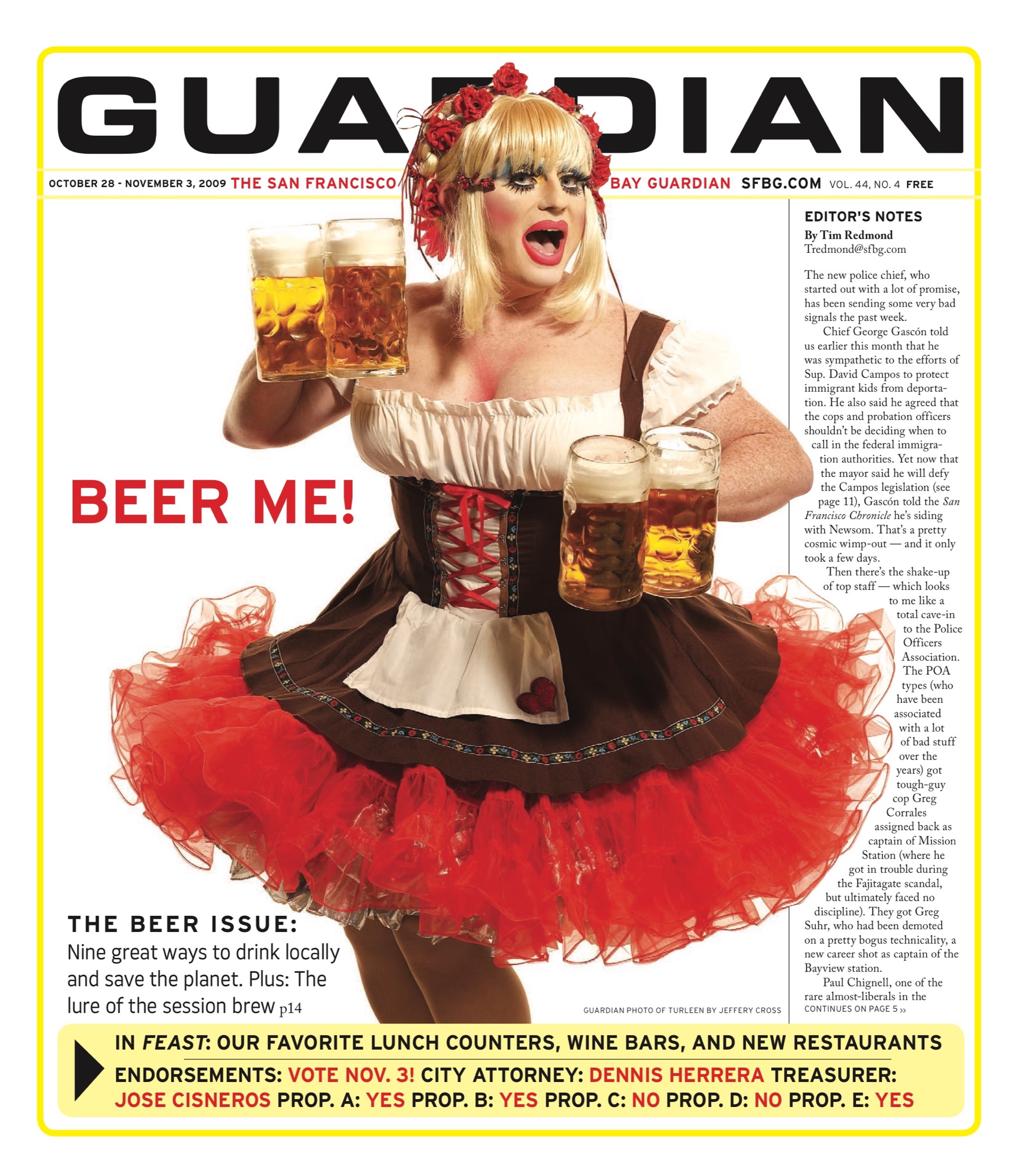
Beer here!

0

molly@sfbg.com

It all started with Stella.

I’d made my weekly (OK, sometimes twice or thrice-weekly) stop at Amnesia and ordered a pint of the Belgian lager not-so-affectionately known among beer snobs as "British Budweiser." Why Stella? It’s light, easy to drink a lot of, and feels classier than PBR. So when I’m not on a $2-a-beer budget, Stella Artois is often what I order.

This time, however, the mustachioed bartender Matthew Harman didn’t simply poor me a glass. It was earlier than usual. He had some time. And he knew me well enough to guess I might be open to the speech he was about to give.

"Do you really want a Stella?" he asked. "Because there are better beers that aren’t shipped halfway across the world and owned by InBev." I consented to let him give me tastes of alternatives and eventually settled on a slightly more hoppy but equally drinkable lager from Sudwerk brewery in Davis.

I enjoyed the beer. But better yet, I enjoyed the wake-up call. Though I’ve become accustomed to buying groceries, clothing, gifts, coffee, and even liquor from local, independent manufacturers and retailers, when it comes to beer, I’ve been lazy. I don’t think before I drink.

What’s worse? I live in the land of craft brews. Though there are now 1,500 craft breweries nationwide, the movement started in Northern California, Oregon, and Washington — with flagship brands like Anchor, Pyramid, and Anderson Valley within driving distance (or, in the case of Anchor, a stone’s throw) from my office. And as the industry has grown and changed, there are ever more options for a range of palates — and purses. In short: there’s little excuse for thoughtless imbibing.

So why drink local? First, there’s the environmental reason: it requires a lot of energy to ship all those heavy bottles and kegs full of liquid across the country and around the world. Then there’s wanting to support the local economy: money spent on Bay Area businesses stays in the Bay Area. There’s the more intangible concept of local pride. "We support our lousy local sports teams," says Lars Larson, master brewer at Berkeley’s Trumer Brauerei. "Why not support our local brewing excellence?" And perhaps most important is taste: beer, like produce and dairy products, is best when fresh.

But the world of beer-making is complex. When it comes to assessing a brewery’s greenness, for example, the question often becomes: how green? If you grow your own hops but send them to Wisconsin for brewing, is that still environmentally sound? Or if a brewery is based in Seattle but makes beer in Berkeley, does it still support the local economy? The answers vary and can be subjective. But the good news is that whatever the reason for wanting to choose brews more thoughtfully, there’s a nearby option — or 12 — to satisfy it.

If you still just love the taste of Stella, or want an import that has no local substitute (like Guinness), or appreciate that the Budweiser you’re sipping was probably made in a brewery 60 miles away, well, more power to you. Even Harman won’t argue (though he’ll happily give tastings of alternatives to anyone who stops by the Valencia Street bar Sundays at 6 p.m.). The real point is to use the same criteria for choosing beer — values, politics, and palate — you do for food and wine. Here’s hoping our guide to some of the Bay Area’s famed and favorite breweries will help you make that decision.

ANCHOR BREWING COMPANY


This landmark brewery has existed in one form or another since 1896, making it the granddaddy of Bay Area brewing. Its current identity comes to us with thanks to Fritz Maytag, who bought 51 percent of the operation in 1965 and is still the driving force behind the company best known for its unique Anchor Steam beer. We love Anchor’s handcrafted brews, commitment to the community, and willingness to experiment with new ideas, including distilling gin and whiskey.

1705 Mariposa, SF. (415) 863-8350, www.anchorbrewing.com

ANDERSON VALLEY BREWING COMPANY


This pillar of the Bay Area craft brew scene has been building its reputation on balanced, drinkable options like Boont Amber since 1987. Other favorites include the nearly hopless Summer Solstice, the oh-so-hoppy Hop Ottin’ IPA, and the Brother David line of abbey-style ales (named for Toronado owner David Keene). But we’re particularly excited about the 2009 Estate Fresh Hop beer, produced with hops grown on brewery grounds (where, by the way, all water is taken from wells on the property and all beer is made in a facility that’s 40 percent solar-powered).

17700 Hwy 253, Boonville. (707) 895-2337, www.avbc.com

MOONLIGHT BREWING


Beer drinkers looking for a truly local, truly independent brewery need look no further than this Sonoma County one-man operation. Well-respected brewer Brian Hunt established the tiny business in 1992 and still delivers his keg-only offerings like Death and Taxes black beer, Reality Czeck pils, and Homegrown Fresh Hop Ale himself. Hunt also has been growing a share of his hops onsite since 2003.

Santa Rosa. (707) 528-2537, www.moonlightbrewing.com

PYRAMID BREWING COMPANY


One of the first craft breweries to appear on the public’s radar, this Seattle-based company also has been operating out of its Berkeley brewery and alehouse since 1997. Until recently, Pyramid operated as a publicly-owned company; now it is part of the Independent Brewers Union. Under this arrangement, the brewery is owned by East Coast brewers Mad Hat but conducts its business as an autonomous unit. The company also has revamped its image, renaming classics like Pyramid Hefeweizen (now Haywire Hefeweizen) and Pyramid Apricot Ale (now Audacious Apricot Ale) and introducing a host of new offerings — some only available at Pyramid brewpubs. But with locations in Sacramento, Walnut Creek, and Berkeley, that means plenty of access to exclusives like the nitrogenated Draught Pale Ale or the session beer Crystal Wheat Ale.

901 Gilman, Berk. (510) 527-9090, www.pyramidbrew.com

RUSSIAN RIVER


Now based in Santa Rosa, the brewery most famous for its Pliny the Elder Double IPA used to be owned by Korbel Champagne Cellars. Vinnie Cilurzo and his partner bought the business in 2003, but have continued to combine aspects of both industries, including a line of beers that are aged in used wine barrels from local wineries. Look for tasting nights of this special line, nicknamed the "’Tion" beers, at pubs like Toronado.

725 Fourth St., Santa Rosa; (707) 545-BEER, www.russianriverbrewing.com

SIERRA NEVADA


The big news surrounding the Chico-based brewery that introduced much of America to Pale Ale is its upcoming Estate Harvest Ale, inspired by the winemaking of its Napa and Sonoma neighbors and made with hops and barley grown onsite. Also exciting? Two collaborations with Maryland-based brewery Dogfish Head — Limb and Life, released on draft this month, and Life and Limb, due out in 24-oz bottles and limited draft in November.

1075 E. 20th St., Chico. (530) 893-3520, www.sierranevada.com

SPEAKEASY ALES & LAGERS


Many beer drinkers gravitate to Speakeasy because of the distinctive, noir-feeling of its packaging and stay for the big, satisfying taste of classics like Big Daddy I.P.A. and Prohibition Ale. Though the Bayview-based brewery’s offerings are available on tap and in the bottle all over the Bay Area, we suggest visiting a Firkin’ Friday happy hour open house at the brewery from 4 to 9 p.m. every week.

1195 Evans Ave, SF. (415) 64-BEER-1, www.goodbeer.com

TRUMER BRAUEREI


This Berkeley brewery encompasses what’s advantageous about imported and local beers. The only non-Austrian outlet for this 400-year-old recipe gets many of its ingredients from its sister company in Salzburg. But bottles, packaging, and, of course, the beer, all are made in the East Bay. What makes Trumer special is a process called "endosperm mashing," which means brewers separate the barley husks from the starchy endosperm during milling, then reintroduce them at the end of the process to highlight the warm, toasty flavor of the malt. Trumer also uses a process called krausening, a slow, secondary fermentation that helps build natural carbonation. (One reason for its signature glassware is to show off the tiny Champagne-like bubbles.)

1404 Fourth St., Berk. (510) 526-1160

21ST AMENDMENT


This Prohibition-themed South Park brewery has been getting lots of attention lately for its canned craft beers — Hell or High Watermelon Wheat Beer and Brew Free! Or Die IPA — and for good reason. Though cans are the best way to keep beer fresh (since sunlight can’t penetrate metal), convenient for carrying, allowed at locales where glass isn’t, and (let’s face it) good for shotgunning, the delivery method has long been associated with cheap, watery beer. But this stigma seems to be slowly eroding, thanks in no small part to forward-thinking breweries like 21st Amendment.

563 Second St., SF. (415) 369-0900, www.21st-amendment.com

We realize that this list is only a tiny glimpse at the myriad breweries, alehouses, brewpubs, and better beer bars in and around the Bay Area. Indeed, Northwest Brewing News lists more than 100 such places between Bakersfield and Blue Lake — and we’re willing to bet there are many more. Check our Web site for information and extended interviews about breweries like Bear Republic, Shmaltz, Thirsty Bear, Triple Rock, and Magnolia, plus recommendations from beer experts at Toronado, City Beer, and Healthy Spirits.

Still think we’re missing someone? Let us know.

———

Light beer’s plight

I like to drink beers. Plural. I’m the guy the ad men were thinking of in that classic jingle, the one that goes "Shaefer is the one beer to have when you’re having more than one." One summer a few years back, my friends and I polished off 1,000 cans of beer over a four-day weekend on Lake Shasta; there were only about 10 of us drinking. Do the math on that one, and you get a sense of my taste for the blessed amber fluid.

But that was then, and this is now. And today I have two kids who wake up at 6 a.m. and keep me on the go day and night; I’m not as young as I used to be; and I can’t handle the intoxication the way I once did.

But I still drink beers, plural, every day, and I’m not about to give it up. What I’ve done is switched to light beer. Correction: "Light" is a bad word. Among serious drinkers, it’s called "session beer."

It’s a choice more and more people are making in this country — beer with lower alcohol content is one of the fastest growing parts of the industry. But it presents a problem: how do you drink local (and high quality beer) when most of the craft breweries and brewpubs focus almost entirely on the heavy and the strong?

Quick definition here: light beer is generally promoted and advertised as having fewer calories than regular brew. But I could care less about beer making me fat (I can always give up food). What I’m talking about is what’s known in the business as ABV; that’s alcohol by volume. Typical American beer — say, Budweiser — runs about 5 percent. Typical craft brew — say, Anchor Liberty Ale — is about 6 percent. The more serious stuff is even stronger — Lagunitas Maximum India Pale Ale, for example, clocks in at 7 percent.

Typical light beer — say, Bud Light, at 4.2 percent ABV — has almost 20 percent less alcohol than Bud, 30 percent less than Liberty Ale, and only about half as much as some of the more extreme brews.

And for those of us who would rather have four light beers than two Imperial Red Ales (and really — in America, is that even a choice?), the craft brew pickings are fairly slim. Especially in Northern California.

"You are living in the land of the IPA," Bill Manley, communications coordinator for Sierra Nevada brewery, which makes no lighter beers, told me.

It’s not as if we’re without choices. Anchor makes a Small Beer (with the leftovers from it’s brutally strong Barleywine Ale) that comes in at about 3.5 percent ABV, but you almost never see it in stores. The 21st Amendment brewpub makes an excellent Great American Bitter that meets the session-beer standard of less than 4.5 percent. Magnolia makes an English Mild, and there’s Stone Levitation Ale (4.4 percent). But again: check out most liquor stores and none of those are on the shelf.

Across the country, that’s starting to change. Lew Bryson, a beer writer and blogger in Pennsylvania, has started the Session Beer Project (sessionbeerproject.blogspot.com) to share information about full-flavored, high-quality brews that don’t knock you silly after a bottle or two. "There are more people like us than most craft brewers would credit," Bryson told me.

The term "session beer" comes from England. By some accounts, it dates back to World War II when pubs were only open for short "sessions" so the workers could get back to the munitions plants in a relatively functional state. By Bryson’s definition, a session beer has an ABV below 4.5 percent and doesn’t overwhelm the party.

There are distinct advantages to lower-alcohol beers. "I was at a session brew festival two years ago and went through six pints in about two hours," he said. "I keep a Breathalyzer in my car, and when it was time to go home, I blew .02" — well within the legal limit in every state in America.

A brewpub near Bryson’s house on the outskirts of Philly sells a Belgian ale called Mirage with an ABV of just 2.9 percent. "I can have a couple of pints with lunch and it doesn’t blow my entire afternoon," he said.

Yet the reluctance remains. "A lot of brewers, they hear low-alcohol and they think light beer — and that’s the enemy," Bryson said.

Mike Riley, marketing director at Anderson Valley Brewing that makes no beer with less than 5 percent ABV, added: "It’s one of those stigmas that’s gone on for a long time."

In fact, I could only find one craft brewer in the country that actually makes a "light" beer: Minhas Brewery in Monroe, Wis., which makes Huber Light and Minhas Light. "People were asking for it," Gary Olsen, the brewery manager told me. "Our first reaction was, why make something that doesn’t taste like anything? But we found out you can make a very good lighter beer."

Yes, indeed. And when Anchor starts making (and marketing) Liberty Ale Light, I promise — I’ll give up Bud Light forever. (Tim Redmond)

6 supper-worthy soups

0

Take almost any kid to the grocery store and their favorite place is likely the candy aisle. Me? I salivated in front of the soups. All those colorful cans promising savory combinations of belly-warming meat and veggies caught my childhood fancy, no matter the season in my temperate hometown of San Diego. Back then, the decision always was between hearty beef barley, comforting chicken noodle, and more-fun-than-tasty alphabet soup. Now my palate has matured — but my taste for a brothy meal in a bowl has not. I still consider the greatest dining find to be a liquid lunch with ingredients so fresh and seasonings so rich that ordering a "proper" entrée is superfluous.

LA TAQUERIA MENUDO


If you’re looking for a traditional Mexican stew (or just a fantastic hangover cure) in a hipster-free environment, head out of the sunny, skinny-jeaned Mission District and into the fog of the Excelsior. There, at La Taqueria Menudo, you can find a steaming bowl of perfectly spicy pozole. (Similar to menudo, minus the creepy surprises of tripe — or Ricky Martin). This under-appreciated neighborhood joint serves the classic dish with plump hominy and pork so tender it comes apart when you stab it with your spoon. The dish is traditionally served with cabbage and radishes, but La Taqueria serves it with limes, cilantro, onions, and chile de arbol. No matter. The spicy depth of the soup’s flavor unravels in so many layers, and the accompanying tortillas are always so warm and soft, that those deviations get lost in the mist.

4591 Mission, SF. (415) 333-8604

SOUP FREAKS


Overall reviews of this mini-chain are mixed, but we love this company’s dedication to organic ingredients and free-range, hormone-free meat. And say what you will about any of the other soups, the chili here is transcendent. Made with four different types of beans, fresh tomatoes, and bell peppers with a bit of crunch, this cold-weather classic is satisfying year-round.

90 New Montgomery, SF. (415) 369-9602; 1900 Powell, Emeryville. (610) 601-7687; soupfreaks.com

LA MEDITERRANEE


It may be rare to get San Francisco days so sweltering you need chilled soup to counter them. But La Mediterranee’s cold cucumber soup is worth ordering whatever the weather. The cool blend of fresh fruit (cucumber is one, you know) and warm garlic melds perfectly with the creamy yogurt base, proving bright enough for an Indian summer lunch and dense enough for a nippy autumn supper.

2210 Fillmore, SF. (415) 921-2956; 288 Noe, SF. (415) 431-7210; 2936 College, Berkeley. (510) 540-7773, www.cafelamed.com

SUPPENKÜCHE


It’s easy to assume that all German cuisine is bland and heavy, particularly dishes like potato soup. But the kartoffelsuppe at Hayes Valley’s Suppenküche proves that central European food can be hearty without inducing a heart attack — or a born-of-boredom nap. The thick, savory, beef-based stew may warm your belly, but the balance of spice and starch is delicate enough to delight the palate of diners who’ve never set foot in Münich or Milwaukee.

525 Laguna, SF. (415) 252-9289, www.suppenkuche.com

BURMA SUPERSTAR


Made from a mix of samusas, falafel, cabbage, and fried potatoes, the samusa soup at this Richmond District eatery might sound like the last stop for wayward leftovers, but this thick, salted delight is the reason many diners make the trek to Clement Street in the first place. Indeed, this stewed version of the popular eatery’s varied specialties is so good you might be inspired to skip the next course altogether.

309 Clement, SF. (415) 387-2147, www.burmasuperstar.com

SAN FRANCISCO SOUP COMPANY


SF Soup Company may seem to be everywhere, but it’s an entirely local enterprise. Even better, it has found a way to take tomato soup — the dreaded accompaniment to the ubiquitous grilled cheese sandwich of childhood — far beyond its boring, watery reputation. The secret? Combining the sweet acidity of the native South American plant with savory basil in an organic, creamy base. Add in the choice of wheat or french bread and you’ve got a delicious, healthy meal option wherever you are in the city.

Various SF and Bay Area locations, www.sfsoupco.com

Pears and pairings

0

le.chicken.farmer@gmail.com

CHEAP EATS There’s that stretch of Fillmore Street between the Western Addition and Japantown. I’m rarely there, but when I am, it amazes and amazes me how otherworldly it increasingly becomes. Chains, boutiques, chains … It’s so sort-of centrally San Francisco, yet you forget where you are and can easily become disoriented.

Or worse: disillusioned.

I have started out looking for a bite, and wound up desperately turned around, trying in vain to get back on a freeway that isn’t there, never was, and never will be.

Why does it look like this, and what does it look like? A cross between the worst of New Mexico and the best of Iowa. I don’t know. I’m redisoriented, just thinking about it.

It’s not that I can’t decide. I can: I want everything both ways.

And there I was, on my pointless way from point A to point B, and I needed a little something to chew on in my car.

Did I tell you I was studying German? Yep. It started last spring after the first time I said bye-bye to my bilingually bisexually both-gendered and many-named new lover Romea at the airport. I wanted to be able to say, basically, I love you, but a million different ways, and in German. So I haven’t stopped studying since, although my goals have changed a little.

Or I should say broadened.

But I practice in my car, a lot, and the other day I accidentally said to Crawdad in English, in a kitchen in Berkeley, without thinking, "Can I this pear eat?"

Which, when I realized what I’d done, thrilled the bejesus out of me. The sentence was grammatically perfect, in German, and the pear, unblinkingly granted by Crawdad, was delicious and crisp.

I used to only like pears that made my gums bleed. Now I like all kinds. Not yet ready ones, the over-ready yellow ones that bruise when you look at them, Asian pears … Pears are good. And this one was perfect, just like the grammar that got me it.

And got me out of my Fillmore Street predicament. Which, saying so …

Well, there’s a barbecue place there I think, but I didn’t see it. And then at the last minute, just as I was about to lose my sense of reality forever and ever and become a duck — about a block from Geary and, therefore, Japantown — I started to see one or two realistic looking Korean joints, and this: the Fillmore Mexican Grill & American Deli.

A burrito would be just the thing. I love eating burritos in my car, because then you find the beans and rice and things in the cracks between seats, or under them, many months later, and remember. And, too, there was an open parking space right in front, which meant I could leave the car unlocked and wouldn’t have to worry about anyone stealing my dirty soccer socks and unspit sunflower seeds.

Cavalierly did I step up to the counter, where I was immediately unhorsed by the appearance of an Asian woman who took my order and, in so doing, made my day. A lot of people would be put off by Asian-run Mexican grills, or vice versa. In fact at one time in my life I might have been guilty of similar small-mindednesses. Now I cherish such plot-twists, and for years have secretly wondered how the sentence "What kind of beans?" would sound with an Asian accent.

So I ordered my burrito.

"What kind of beans?" she said.

I swooned, and pretended not to understand so she would say it again, but instead she only listed my choices: pinto, refried, etc.

I said, "Refried."

They only had one kind of salsa, which was green and good. And the chips were freshly homemade, or at least seemed so, which is all that really matters. And some other things.

Oh, it was a pretty good burrito. It was alright. Nothing otherwise special, except I should point out that one of their meat choices (the one I got) is chicken and steak, and another is steak and prawn, and still another is salmon and prawn.

These are a little more expensive, yes, but, you know, so is life when you are Gemini.

FILLMORE MEXICAN GRILL

Sun.–Thu., 10 a.m.–9 p.m.;

Fri.–Sat., 10 a.m.–-midnight

1552 Fillmore, SF

(415) 921-9900

Beer

MC/V/AE/D

L.E. Leone’s new book is Big Bend (Sparkle Street Books), a collection of short fiction.

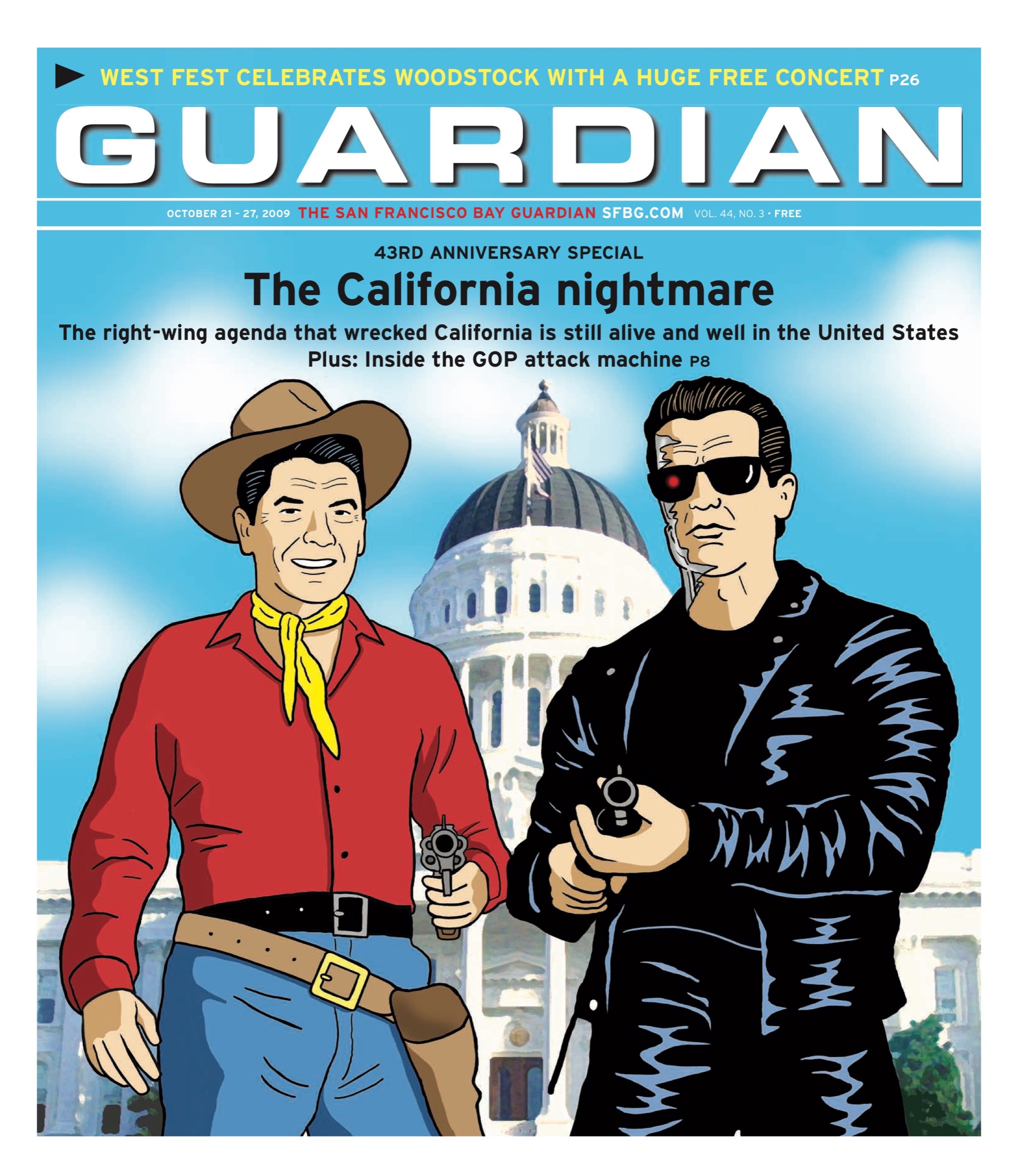
Attack of the right-wing nuts

0

news@sfbg.com

In April 2006, with the approval ratings of President George W. Bush plummeting, his senior political advisor, Karl Rove, began discussing a plan to turn things around.

His strategy: attack progressive organizations that were registering low-income people to vote and helping them fight corporate power — and claim it was about voter fraud.

The main White House target, newly released records show, was the Association of Community Organizations for Reform Now (ACORN). By the end of 2006, Rove would oversee the removal of eight U.S. attorneys, including two who refused to press bogus charges against ACORN in New Mexico and Missouri, and a third under similar suspicions in Washington state.

ACORN made a convenient target for Rove and his gang — and the well-orchestrated attacks on that group, which have exploded into the headlines this year, provide a compelling case study in how the right wing operates in this country.

Although it was the GOP that removed tens of thousands of likely Democratic voters from the rolls in the 2000 and 2004, the Republicans and their allies were able to make the issue of voter fraud all about ACORN, using a handful of isolated problems to undercut an organization focused on giving a voice to poor people.

Founded in Little Rock, Ark. at the end of the 1960s, ACORN has grown into the nation’s top community-organizer group, thanks to success in improving poor people’s housing, wages, and educational access. By the eve of the 2008 presidential election, ACORN had helped register more than 1.3 million voters — mostly young, low-income minorities — in 21 states, including the battleground states of Florida, Pennsylvania, Michigan, and Ohio.

As The Nation put it, these successes made ACORN “something of a right-wing bogeyman.”

And while the recent furor over a conservative videographer secretly taping ACORN employees saying dumb things has somehow become one of the big political stories of the year, the major media have mostly ignored how this attack is part of a larger conservative strategy.

In August, hundreds of pages of e-mails and transcripts related to the 2006 U.S. attorney-firing scandal were released to the press and public — but few news outlets mentioned that Rove was focused on attacking ACORN’s voter registration efforts, even though ACORN and voter fraud are repeatedly mentioned in these documents.

“This is about a campaign that goes back a decade to big business and that people who don’t like what ACORN does and is effective at — namely, helping groups to organize and put pressure on banks around sub[prime] mortgage loans to stop racial discrimination,” Peter Dreier, a professor of politics at Occidental College, told us.

It wasn’t really about voter fraud. As former U.S. Attorney David Iglesias, a Republican from New Mexico, recently stated on The Rachel Maddow Show: “They were looking at numbers [and] didn’t like the demographic tidal wave that was coming their way so they wanted to engage the machinery of the Justice Department to stop that wave.”

After two years of investigating ACORN and other supposed perpetrators of left-wing voter fraud, Igelias said, “I couldn’t find one case I could prosecute.”

But for the right-wing attack machine, it didn’t matter — the damage was done.


THEIR MASTERS’ VOICE

White House communications strategist Anita Dunn created a stir in mid-October when she told CNN host Howie Kurtz that Fox News “is really more of a wing of the Republican Party. … Let’s not pretend they’re a news network like everybody else is.”

It didn’t take long for Fox commentator Glenn Beck to retaliate. In a series of broadcasts, he attacked Dunn, compared the Obama administration to a communist dictatorship, and likened the criticism to the Holocaust. “Ask yourself this question,” Beck said during a radio segment, vaguely addressing people he called “good journalists” at other mainstream news networks. “When they’re done with Fox, and you decide to speak out on something — it’s the old ‘first they came for the Jews, and I wasn’t Jewish.'” Beck concluded the segment by warning his audience, “this is how a dictatorship always starts.”

Beck’s comment may strike San Francisco progressives as outrageous, but given the rhetoric routinely issuing from the right-wing megaphone, it’s also 100 percent predictable.

But when Dunn called Fox News Channel an arm of the GOP, she was dead on. Consider the history of its chairman and CEO, Roger Ailes, who ran Richard Nixon’s 1968 presidential campaign and later those of presidents Ronald Reagan and George H.W. Bush, guiding them all to victory through his brilliant and successful media campaign strategies.

“Roger Ailes is a newsman with a profound disdain for newsmen,” according to a New York magazine profile. “Fox News is being promoted as an anti-network, a news channel designed to appeal to the people … who don’t trust [the others].” Portrayed in the story as a “self-described paranoid,” Ailes reportedly resigned from an earlier position as head of CNBC after questions were raised about his desire to use his position as a weapon against his enemies.

Fox News is an outgrowth of its parent company, Rupert Murdoch’s News Corporation. A look at the board of directors of this multinational giant yields some startling insight into who controls the “fair and balanced” news network. Ailes himself has a seat at the table — but not every board member has a background in media.

News Corp. board member Viet Dinh, for example, is an attorney who came to the United States as a boy from Vietnam. In a 2002 interview with the Los Angeles Times, Dinh, who then served as an assistant attorney general at the Department of Justice, recalled an exchange he had with then-Attorney General John Ashcroft in the wake of the Sept. 11 attacks. “He told me: ‘The art of leadership is the redefinition of the possible. I want you to be the think tank to help me redefine the possible for the Department of Justice.'”

Dinh successfully redefined “the possible” by acting as a primary author of the USA PATRIOT Act, quickly propelling himself to prominence as a darling of conservatives and an enemy of civil liberties watchdog groups. A law professor at Georgetown University, Dinh is also founder and chief of Bancroft Associates PLLC, a consulting firm that specializes in helping Fortune 500 companies “navigate the federal and state criminal or civil investigations, congressional investigations, and complex litigation,” according to the firm’s Web site. It also specializes in public relations.

Another board member is José Maria Aznar, former prime minister of Spain. Aznar was born into a politically active, conservative family in Spain in 1953, and both his father and grandfather held government jobs under Gen. Francisco Franco, the fascist dictator. Aznar was handpicked by Manuel Fraga, a minister under Franco, to succeed him in leading Spain’s center-right People’s Party (Partido Popular), according to an article in the U.K.’s The Independent.

Aznar now serves as president of the Foundation for Social Studies and Analysis, a right-wing think tank based in Spain that, according to its Web site, works closely with the CATO Institute, the Heritage Foundation, and other conservative U.S. think tanks.

Occupying other seats at News Corp.’s board table is an assortment of professors, attorneys, public-relations experts, and businessmen with their fingers in a variety of banks and multinational corporations. Among the more familiar names are Phillip Morris, Ford Motor Co., Hewlett Packard, Goldman Sachs, HSBC North America, and JP Morgan Chase. Lesser known are the investment banking firms that have stakes in the petroleum industry, utilities, mining companies, and real estate.

While the connections between corporate interests and the country’s leading conservative propagandist are extensive and obvious, there’s a stark contrast between the message delivered by Fox News and the interests of its parent company.

Fox News plays up the theme of patriotism and reinforces the idea that there is a distinction between “real Americans” and outsiders. But Fox’s board is made up of members whose lives and economic interests are scattered across the globe, but have one common thread: they all control extraordinary sums of concentrated wealth.


PROPAGANDA AND EMOTIONS

While Dunn called Fox News Channel an arm of the Republican Party, others have gone so far as to label its content pure propaganda — and incredibly effective propaganda at that.

“This is very, very sophisticated propaganda,” says Bryant Welch, a clinical psychologist, author, and expert on political manipulation. “I don’t think progressives really get it that it’s a technique being used all the time.”

Welch said when he began working as a Washington, D.C., lobbyist on behalf of the American Psychological Association years ago, he started observing the tricky political maneuverings at play in the nation’s capital through the eyes of a psychotherapist who had spent some 30,000 hours helping patients confront their deep-seated hang-ups.

To his surprise, Welch found that some of the most successful right-wing political operatives also seemed to have an understanding of psychology — although they use the knowledge very differently. “A lot of it is psychological manipulation,” Welch asserts.

George Lakoff, a professor of linguistics at UC Berkeley and author of Don’t Think of an Elephant: Know Your Values and Frame the Debate, offered a similar analysis. He said Republicans approach issues as a marketing challenge. “They’ve learned from the cognitive scientists. Even if they don’t understand the science, they know how to do marketing.”

Welch, who is also an attorney and Huffington Post blogger, provides an analysis of how the right wing gets its message across in his book, State of Confusion: Political Manipulation and the Assault on the American Mind. He argues that public relations professionals, right-wing commentators, and others in the business of shaping public opinion are skilled at tapping into widespread feelings of anxiety and uncertainty.

“In this world, things are confusing,” he explains. “You’ve got to be constantly adapting and assimiutf8g new information. When times get confusing, people have a hard time forming a sense of what’s real.”

Right-wing television and radio personalities like Sean Hannity, Glenn Beck, or Rush Limbaugh prey on this widespread uncertainty, Welch argues, by providing viewers and listeners with an absolute version of reality that is easily grasped, neatly divided into right and wrong, and spelled out in very certain terms.

“The thing that Bill O’Reilly and Sean Hannity do is, they sound very powerful, certain, and aggressive,” Welch told us. “[Viewers] identify with that strength. They draw a sense of security from someone who has certainty about what is real.”

Viewers who find that their anxiety subsides when they tune in are hard-pressed to go back and reexamine their views later on, Welch said, because they’re satisfied with the answers they’ve been given. And in right-wing messaging, those answers consistently cast government as the enemy.

On Fox and AM radio, the use of repetition helps drive home an idea until it becomes a conviction in the mind of a listener. Television reinforces those key phrases with patriotic color schemes. The whole package is designed to transform an audience’s sense of bewilderment over a complex world into trust in spokespeople helping them make sense of it.

The right-wing commentators’ success lies partly in their ability to harness core human emotions such as paranoia or envy, Welch said. He pointed to the health care debate as an example, noting how Fox News has repeatedly played up the false concept of “death panels” to create fear.

To counter this tactic, Lakoff suggests that the left would do well to learn how to frame things in moral terms instead of playing defense against right-wing spin masters.

President Obama’s problem, Lakoff said, is that he is still trying to unify the country. “More power to him, but I don’t believe it’s possible,” Lakoff said. “Republican presidential candidate Sen. John McCain got 47 percent of the vote, bad as he was, and given how terrible a campaign he ran, and given that Obama ran a perfect campaign. So Obama’s election was not a landslide, even though he had one of the best campaign organizations and one of the best framed campaigns ever.” Obama doesn’t play the same manipulative games, Lakoff noted. “Obama believes that if you just tell the truth, it’ll be OK, and every day have a truth squad to find the conservative lies,” Lakoff said. “What he didn’t understand was that by focusing on the conservative lies, he was in fact helping the conservative cause. It’s like Richard Nixon saying, ‘I’m not a crook.'” That why Lakoff says it’s so important for Obama, and for the progressive movement in general, to define the moral imperative behind empowering the people and their government to create a better world, then aggressively push a campaign to do so. “It’s the ‘this is the right thing to do’ approach,” Lakoff explained. “And once it’s been framed that way, then you can say what’s false or true. But you should never go on the defensive first. As soon as you go point by point, you are on the defensive.”

The lesson of California

0

news@sfbg.com

Much of the right-wing agenda that has thrown this nation into economic chaos can be traced back to what was once called the Golden State.

The tax revolts that started here under Gov. Ronald Reagan and continued to sweep the country and the world under President Reagan never abated. Indeed, they have only been strengthened by the big business power that created and benefited from them.

But now that California is showing signs of being the country’s first failed state — caught in fiscal freefall and mired in political gridlock as a generation’s worth of neglected problems surge to the surface — this state has become a cautionary tale for that anti-government ideology.

Trends in America tend to start out west, and the economic and political disaster that California has become contains critical lessons for the rest of the country.

Lewis Uhler — president and founder of the National Tax Limitation Committee — speaks candidly and proudly of his key early role in helping build a conservative movement to limit the size of government and do battle with those who want the public sector to actively promote social and economic justice.

Uhler, a UC Berkeley Boalt Hall School of Law graduate who did legal work for conservative causes in the 1960s, was tapped by then-Gov. Reagan in 1970 to be the director of the Office of Economic Opportunity, a federally-funded legal assistance program created as part of President Lyndon Johnson’s war on poverty.

While that may seem like a strange role for an avowed conservative and former member of the John Birch Society, Uhler says Reagan basically brought him in to wreck the program and fight the feds. “I was asked to put my money where my mouth was for my conservative philosophy,” Uhler told the Guardian. “OEO was set up to ensure conflict and confrontation … The mission of legal services was to change public policy through lawsuits they decided to file. I thought it was a corruption of the legal system.”

At the time, public-interest law and liberal economic and social policies were on the rise in California and spreading to the rest of the nation. So the Reaganites fought back.

Rather than helping poor plaintiffs file environmental, consumer protection, equal rights, or other types of lawsuits designed to level the playing field with powerful interests, Uhler blocked lawsuits brought by attorneys he calls “ambulance-chasers” and gutted the program. “Ultimately,” he said, “we vetoed funding for California Rural Legal Assistance.”

And for his efforts, Uhler was rewarded with a cabinet-level position: assistance secretary of the Health and Welfare Agency. Again, his role wasn’t to make the agency more effective, but to make it less effective in a realm where he believes government was too big and too active.

“The problem was uncontrolled state and local spending,” Uhler said. “Intuitively, everyone who gathered around Reagan shared the same philosophy that government doesn’t really contribute anything to economic growth.”

In 1972, Reagan gave Uhler the opportunity to work more directly on the mission of cutting taxes and shrinking the size of government, naming him chair of the Governor’s Tax Reduction Task Force. It was, in many ways, the beginning of the vast right-wing conspiracy.

“I asked to be given the chance to go across the country and find the best free market minds in the country to develop these policies,” Uhler said, explaining that he wanted to borrow the liberal strategy of giving an academic veneer to their ideas, as presidents Kennedy and Johnson had done in the realm of foreign policy. “Our side had never really done that.”

Uhler’s first stop was the University of Chicago School of Economics, where he met with noted free market economists Milton Friedman, James Buchanan, and George Stigler, who were brought into the cause.

Today’s vast network of conservative think tanks didn’t exist at that time, so Uhler tapped conservative thinkers from the American Enterprise Institute and the Hoover Institute at Stanford University, as well as other conservative economists such as Peter Drucker from Claremont McKenna College.

“There were 35 people who helped us design the first effort at a constitutional initiative in California to limit year-over-year growth of the state’s general fund,” Uhler said. “All of us as free market enthusiasts and economists all shared the belief that government beyond a certain level eats the seed corn of the nation and doesn’t produce anything.”

While voters narrowly rejected their group’s first effort to cap government growth — Proposition 1 on the November 1973 ballot — the ground had been prepared and the seeds had been sown for the tax revolts that would sweep the country in the late 1970s, with many of the campaigns coordinated by Uhler and the organization he formed for that purpose in 1975, the National Tax Limitation Committee, and a rapidly growing network of similar, interconnected organizations.

As Uhler worked with Reagan to weaken California’s government from within, his fellow travelers were developing national and international strategies to create aggressive, coordinated, well-funded campaigns to attack government and spread the free market dogma.

In August 1971, Lewis Powell — a conservative corporate attorney who President Richard Nixon had just nominated to the U.S. Supreme Court (where he served from 1972-87) — wrote a confidential memorandum to the leadership of the U.S. Chamber of Commerce titled “Attack on the American Free Enterprise System.”

He sounded the alarm that the ascendant environmental and consumer movements were going to destroy capitalism in the country unless corporate America aggressively fought back in a coordinated fashion, which he spelled out in great detail.

He called for all major corporations to develop aggressive legal and public relations strategies for fighting the left, creation of a network of think tanks and media outlets to push the conservative message, manipulation of the legal system, and sponsorship of university programs to study conservative ideas and incubate future leaders — which all came to pass in the coming decades.

“American business [is] ‘plainly in trouble’; the response to the wide range of critics has been ineffective and has included appeasement: the time has come — indeed, it is long overdue — for the wisdom, ingenuity, and resources of American business to be marshaled against those who would destroy it,” Powell wrote.

Part of that strategy involved having the federal government promote and popularize free market economic theories being developed by Friedman and his colleagues at the University of Chicago, a movement that is well-documented by journalist Naomi Klein in her book The Shock Doctrine: The Rise of Disaster Capitalism.

In 1971, Friedman and his colleagues began working with rich conservatives in Chile who were allied with Gen. Augusto Pinochet, who in turn were conspiring with the CIA to overthrow and assassinate the democratically elected, leftist President Salvador Allende, which they successfully did on Sept. 11, 1973.

Friedman’s economic theories called for a radical restructuring of society — slashing taxes and social spending; removing most regulation and trade restrictions; crushing labor unions; promoting economic growth at any cost — and Pinochet executed the strategy in brutal fashion, ordering the death of at least 3,200 of his political opponents, including the car-bomb assassination of economist Orlando Letelier in Washington, D.C., in 1976.

Friedman and Pinochet consulted openly and shared a basic disdain for social programs and progressive taxation. “The major error, in my opinion,” Friedman wrote in a letter to Pinochet in 1975, referring to the government antipoverty programs Pinochet dismantled, was “to believe that it is possible to do good with other people’s money.”

The model Pinochet and Friedman developed in Chile would eventually go global — promoted by its top cheerleaders, Reagan and British Prime Minister Margaret Thatcher — and be implemented (with disastrous results for most citizens but creating huge profits for wealthy individuals and corporations) in Indonesia, Bolivia, Argentina, Peru, Russia, Poland, South Africa, Japan, and elsewhere.

But with the corporate media and conservative opinion-shapers focused mostly on economic growth — ignoring persistent poverty and the brutal tactics used to suppress the popular movements that tried to resist Friedman’s “economic shock therapy” — Friedman had become a sort of free-market prophet by the time he died in 2006.

“In the torrent of words written in eulogy to Milton Friedman, the role of shocks and crises to advance his worldview received barely a mention,” Klein wrote. “Instead, the economist’s passing provided an occasion for a retelling of the official story of how his brand of radical capitalism became government orthodoxy in almost every corner of the globe.”

California’s fiscal shackles have been in place since 1978, when Proposition 13 and subsequent measures capped property taxes and required an undemocratic two-thirds vote to either raise taxes or pass the annual budget.

A Republican landlord lobbyist named Howard Jarvis charged onto the field that Reagan, Uhler, and their team had prepared and took advantage of a gaping hole in political leadership to set off a movement that would cripple the United States of America.

There was some logic to it then. Times were good in California in the 1970s, good enough that people were flocking to the state by the millions. That was driving up property values — and thus property taxes.

Jarvis bought his home for $8,000 in 1946; 30 years later, it was assessed at $80,000. In fact, inflation was running at close to 10 percent a year in California. Homeowners were getting huge tax hikes each year, and tenants were getting huge rent hikes at a time when state government had a budget surplus.

Homeowners saw millions of dollars sitting in the coffers in Sacramento while they couldn’t pay their tax bills. Yet nobody in the Legislature or governor’s office came up with a solution.

So when Jarvis showed up with petitions to roll back property taxes and prevent future increases, he found a broad base of support. Even tenants went along — Jarvis and his gang promised that property-tax cuts would be passed on to tenants and would mean the end of the escautf8g rent hikes.

Jarvis collected signatures for a radical measure that essentially blocked all property tax increases and allowed new assessment only when a parcel sold. It was, in the end, a huge tax giveaway to major corporations. Since commercial property turned over far less often than residential property (and since commercial sales could be hidden as stock transfers), big businesses wound up paying far less of the state’s tax burden. Corporations used to pay about two-thirds of the state’s property taxes, and individuals one-third; now that is reversed.

It didn’t help tenants, either. Few of the landlords who saw the benefits of Prop. 13 passed the money along to their renters. Most just kept it. San Francisco activist Calvin Welch likes to say that Howard Jarvis was “the father of rent control.”

The campaign against Prop. 13 warned of the dangers of cutting local government; police and fire chiefs appeared in ads opposing it. But the No on 13 folks never talked about the huge windfall big corporations would get from the measure, or the huge disparities in wealth that would be created by defunding government and dereguutf8g corporations.

If the goal was to skew the concentration of wealth in the state, it worked brilliantly. According to the California Budget Project (CBP) of the Franchise Tax Board, recent data taken before the current economic recession illustrates an ever-widening chasm between the wealthiest taxpayer and the working-class person.

The total adjusted personal income for Californians rose by nearly $64 billion in 2006-07 — with approximately three-quarters of that increase going to the top fifth of wealthiest taxpayers, and 30 percent going to the top 1 percent. That left only $19 billion for everyone else.

“The average taxpayer in the top 1 percent experienced a $128,261 increase in AGI [adjusted gross income] between 2006 and 2007, which was more than three times the total AGI of the average middle-income taxpayer in 2007 ($36,115),” stated the June 2009 report.

This continues a long-term trend in which the wealthy continue to leave the average income-earner behind in a trail of dollar-sign dust. From 1995 to 2007, income gains for that top 1 percent come to a whopping 117.3 percent increase — nearly 13 times more than the gains of the middle-income taxpayer.

The nation’s income gap has reached a “level higher than any other since 1917,” according to a paper by University of California, Berkeley economic professor Emmanuel Saez. According to Saez’s analysis of census data, there’s been a steady increase in the income gap since the 1970s, rising 20 percent over the years.

Yet even today, the defenders of Prop. 13 continue to sound the same consistent themes. “Those who are directly involved in government are a militant special interest,” Howard Jarvis Taxpayer Association executive director Kris Vosburgh told us. “They don’t like anything that limits their revenue stream.”

While that last statement could be applied equally to corporations or other private sector enterprises, as Vosburgh reluctantly admitted when asked, he continues to imply malevolence to those who defend government. He said the state’s current fiscal collapse can only be solved by slashing government expenditures.

“It is not valid to be talking about revenue-side solutions,” he said. “Our position is the state has enough money to accomplish its goals.”

People have never liked paying taxes, but the antitax movement is about far more than just that basic individual desire to hold onto our money.

The attacks were well planned, carefully targeted, and part of a much larger effort aimed at maintaining corporate and conservative power, undermining the New Deal, reducing taxes on the rich, and radically reducing the size and scope of the public sector.

As Powell called for, corporations have aggressively challenged, in legal courts and those of public opinion, every significant progressive advance — from San Francisco’s attempt at universal health care to California’s tentative first steps to address global warming.

With a level of discipline unheard of on the left, conservative opinion-shapers pound their talking points and enforce party unity through mechanisms like the “no new taxes” pledge that every Republican in the California Legislature has signed and heeded, under the very real threat of recall.

Opposition to taxes is now so deeply embedded into the psyche of the California electorate, and such a core tenet of today’s Republican Party, that elected officials who tout fiscal responsibility allowed the state’s debts to go unpaid (destroying its credit rating in the process) and its education and transportation systems to be decimated rather considering new revenues.

Gov. Arnold Schwarzenegger’s spokesperson Aaron McLear told us, “He believes we ought to live within our means and pay for only the programs we can afford.”

That simple talking point gets repeated no matter how the question is asked, or when we point out that it means we’re being forced to live within historic lows this year. But they claim the people support them.

“We had tax increases on the May ballot and they were rejected by a 2-1 margin. We should listen to the will of the voters,” McLear said.

Never mind that this regressive, dishonest package of temporary tax hikes was opposed by the Guardian and a variety of pro-tax progressive groups. McLear wouldn’t even admit that point or respond to it honestly.

And he’s certainly right that most polls show a majority of Californians don’t want new taxes. But these polls also show that people want continued government services, more investment in our neglected state infrastructure, and a whole bunch of other contradictory things.

That’s why newspapers and analysts around the world are looking at California, the world’s eighth largest economy, and wondering (as the Guardian of London headline asked Oct. 4): “Will California become America’s first failed state?”

In many ways, it already is. The question now is whether we’ll try to learn from and correct our mistakes. Ryan Riddle contributed to this report. ———–

THE CONSERVATIVE RELIGION

When I asked Lewis Uhler, one of the architects of the Reagan revolution, what Americans believed in these days — where the people he likes to talk about who hate the government (but are also admittedly disillusioned with Wall Street) turn — he answered simply: religion.

It should come as no surprise that many religious fundamentalists tend to side with the free market conservatives — both ideologies require a leap of faith and ignoring certain troubling facts, such as increasing disparities of wealth, natural resource depletion, and global warming.

Their arguments mostly make sense — until these inconvenient truths come up.

Certainly, turning over more public resources to free market capitalists, cutting taxes, and slashing government regulation will spur private sector economic growth, just as advocates claim.

But that growth has a cost. The wealth won’t be shared by everyone. Indeed, poverty has persisted even through even the economic boom of the 1990s — but almost everyone will be affected by underfunded road, education, public safety, and other essential systems.

As the conservative movement has successfully limited taxes and cut regulation over the last 40 years, working class wages have stagnated as the rich have gotten richer. Many of the world’s oil reserves have peaked and gone into decline, and rapidly increasing carbon emissions have collected in the atmosphere and caused global warming.

So how do conservatives respond to these realities as they argue for the continued dismantling of government, which is the only entity with the scope and incentive to deal with these problems? They simply deny them.

Uhler decried the “pseudoscience of climate change” as hindering economic progress and claimed that there’s actually been a global cooling trend in the last 10 years. (Actually the last 10 years have been some of the hottest on record, causing glaciers around the world to melt, according to data and observations from a consensus of the world’s climate scientists, including NASA, the Union of Concerned Scientists, and the United Nations Climate Change Conference.)

It’s the same story with the consolidation of wealth, which hurts the free market fantasy that letting the super-wealthy keep more money will eventually trickle down to benefit us all. Uhler simply denied the growing disparity of wealth, saying the “movement between quintiles is significant.”

He was talking about people’s ability to go from poor to rich with a little hard work and initiative, the core idea of free market conservatives. But data from the U.S. Census Bureau and many other entities indicate that median wages have been stagnant for decades (which wouldn’t be true if there was lots of upward mobility) and that most of the wealth created in the U.S. over the last 40 years has pooled with the top 1 percent.

In fact, when it comes to measuring social impacts, Uhler has simply one metric: “Governments at all levels are twice the size they should be to maximize economic growth.” (Steven T. Jones)


Michael Pollan’s modest proposals

0

By Sarah Morrison

While down-to-earth food expert and journalist Michael Pollan might not quite have offered the definitive “Omnivore’s Solution” — to cite the title of his talk — when he kick-started the 2009/10 Strictly Speaking series at Berkeley’s Zellerbach Hall (9/30/2009), he did provide an entertaining and accessible critique of what he called America’s “unhealthy obsession with healthy eating.”

“We are lost, really lost in the supermarket,” said the author of three New York Times bestsellers, shortly after he took the stage humorously laden down with Safeway bags, and enough packets of Twinkies, Fruit Loops, Soda and Wonder Bread to make even the most gluttonous in the audience start to feel queasy. Promising to “connect the dots between diet and health in food systems as a whole,” Pollan guided the enthusiastic audience through his easy-to-follow theory of food politics – a theory that he summed up in seven words: “Eat food, not too much, mostly plants.”

pollan.jpg
Michael Pollan

Satirising the nation’s obsession with “nutritionism,” a pseudo-science that Pollan compared to surgery in the 1650’s (“promising and fascinating to watch, but are you really ready to let them operate on your life?”), the lecture went on to critique the demonising of certain nutrients in American society (think trans fat, carbohydrates, sugars), and the intellectualising of food to the point where the regular American feels unable to eat anything without the help of an expert by their side.

Camera lucida

0

Film is not really a medium for perfection — too many moving parts, too much equipment. But then, Robert Beavers isn’t your typical filmmaker. For 40 years, he’s done everything by hand, off in the hinterlands of the avant-garde. It’s not every day, or year, that you encounter a retrospective like SF Cinematheque and the Pacific Film Archive’s co-presentation of Beavers’ 18-film cycle, made between 1967 and 2002, "My Hand Outstretched to the Winged Distance and Sightless Measure." The title is more literal than you might expect.

The evident perfectionism of the films (all blown up from Bolex 16mm to luminous 35mm) and Beavers’ relative obscurity are not coincidental. In 1967, he and Gregory Markopoulos fled the New York scene for Europe, where they could better exact a cinematic language in view of art history. One of the earliest chronological entries in the cycle, "Early Monthly Segments" (1968-70, revised in 2002), dates from these teenage years and threads a beguiling, if fragmentary, ode to love at the limits, filtered through the auburn and aqua scrims of Mediterranean sky and sea, with in-camera effects wavering the eye.

Though most of the "Winged Distance" cycle depends on a uniquely synesthetic coordination of sound and image, the silent "Early Monthly Segments" already demonstrates Beavers’ thrilling capacity for poetic association, mnemonic arrangements, and sensual representations and enactments of the filmmaking apparatus. In later work, the arresting beauty of his cross-fertilized cinematography and field recordings calms the mind; the alliterative rhythms of color, composition, and touch that multiply and encode that beauty make it race.

Besides being, in his words, "protected by solitude and the spirit that came from our dedication to filmmaking" in his life with Markopoulos, Beavers was able to immerse himself in the long trails of European classicism — its painting, music, literature, architecture. Scholar P. Adams Sitney writes of Beavers, "Nothing is more American than [his] fascination with the monuments of European culture." But the elegant still lives of these monuments are endowed with a weirdly interior, hieroglyphic weight that unbinds the visual patterns of tourism, whether aesthetic or geographic. In Beavers’ work, material touch conducts thought, the human body landscape.

Of all Beavers’ inspirations, it is architecture that best helps me begin to grasp his visionary artisanship. As with a cathedral or ruin, his films possess a beauty to behold and one that beholds you: you admire a curving wall, at a distance, and the space itself takes measure of your senses, curving sight and sound.

"MY HAND OUTSTRETCHED TO THE WINGED DISTANCE AND SIGHTLESS MEASURE"

Thurs/15, 7 p.m.; Sun/18, 2 p.m.; Tues/20, 7:30 p.m.

$5.50–$-9.50

Pacific Film Archive

2757 Bancroft, Berk

(510) 642-5249

www.bampfa.berkeley.edu

‘Dead’ is alive

0

DANCE REVIEW Wonderboy, Basil Twist’s adorably insecure puppet in Joe Goode’s 2008 work of the same name, has grown up. His name is Monroe (Daniel Duque-Estrada), and he lives in a community looking eerily like that in one of Armistead Maupin’s light-hearted Tales of the City. It even includes a wise woman named Anna (Lura Dola) who likes to grow plants. But Goode digs deeper.

Monroe is the hero of Goode and Holcombe Waller’s new musical Dead Boys. He is still scared, but now to the point where he has shut down his emotions. It’s not a good way to be, particularly if you are a would-be writer whose sense of pain, anger, and helplessness paralyzes your work as well as your life. One of Dead’s funniest monologues is Monroe’s raging using performance theory vocabulary, the lingua franca in today’s academy.

Created with and performed by students from UC Berkeley’s departments of Theater, Dance, and Performance Studies and Music, the evening-length Boys is a "multidisciplinary mashup of dance, music, and theater," as Goode calls it. At 90 minutes, it takes Monroe a long time to take the risk of perhaps being hurt one more time. Nor is his motivation for the decision — the channeling of one more gay man having died unnecessarily? — all that clear.

Dead is Goode and Waller’s second collaboration, and one can only hope they continue to work together. The wistfulness and wit of their sensibilities are in synch. Waller writes good melodies, but his use of the six musicians is first rate. Often the orchestra makes its own comment on the action.

Dead‘s first act is slow in setting up the characters’ gender-fluid identities. It becomes a background-foreground issue and tends to hold back the work’s dramatic thrust. That could be better balanced. Goode, however, peoples the piece with intriguing individuals: the motor-mouth, bondage-embracing jock (Ben Abbott); the flower child/seer Roberta (Caitlin Marshall); and Monroe’s counterpart, the commitment-leery Carly (Rachel Ferensowicz). Carly’s hilarious go-away-closer duet with transsexual DJ (Megan Lowe) is a jewel of sharp choreography, split-second timing, and valiantly performed vocals. In general, the performances are good; some approach professional-level.

The choreography, mostly for the chorus, is small-scale but appropriate, since it speaks for the unseen — the dead boys. The set (Erik Flatmo), costumes (Wendy Sparks), and lighting (David K.H. Elliot) are excellent. With some work, this show could travel.

DEAD BOYS

Fri/16-Sat/17, 8 p.m.; Sun/18, 2 p.m., $15

Zellerbach Playhouse

UC Berkeley, Berk

(510) 642-8827

www.tdps.berkeley.edu

Brütal odyssey

0

>>Read Ben Richardson’s full interview with Tim Schafer here

arts@sfbg.com

GAMER "The first time we pitched it, they wanted us to change the genre, to make it about country or hip-hop or something."

Game designer Tim Schafer is sitting in his SoMa office, in his favorite chair — appropriately, a rocking chair — and talking about his masterpiece. "They were saying, ‘Why don’t you open it to all music?’ We said, ‘Look — this is a game about epic battles, good vs. evil, Braveheart-type moments. And heavy metal is the musical genre that focuses heavily on folklore. It sings about medieval combat. It’s really the only genre that makes sense for it.’"

The game is Brütal Legend (Double Fine/EA), and in the end, Schafer got his way. Taking control of Eddie Riggs, a grizzled roadie voiced by Jack Black, the player journeys through a metal landscape inspired by the album covers the designer studied in his youth. Wielding a massive battle-ax and a magical guitar, Riggs encounters righteous friends and fiendish foes, including characters voiced by luminaries like Lemmy Kilmister, Ozzy Osbourne, Rob Halford, and Lita Ford. The soundtrack is a carefully compiled list of headbang-inducing classics.

Schafer agrees that the game is his most personal creation to date. "All games are wish fulfillments. All games are about fantasy. This is a game where I’ve been able to make my own wish fulfillment. I would like to go back in time with a cool car and a battle-axe while listening to heavy metal."

THE TROOPER

Growing up in Sonoma, the designer escaped his suburban life by rocking out to Ozzy Osbourne, Black Sabbath, Judas Priest, and Iron Maiden. He would drive down to San Francisco for shows, catching sets at Mabuhay Gardens or the Stone. The music introduced him to a mythic world of horned hell-monsters, glistening chrome, and mortal combat, a world he never quite left behind.

He attended both UC Santa Cruz and UC Berkeley, dividing his attention between computer programming and creative writing, two talents he would later fuse. At Berkeley, he took a class on folklore from Alan Dundes, a provocative professor whose belief in the power of folklore influenced Schafer’s work tremendously. In 1989, he got a job in San Rafael at Lucasfilm Games, now LucasArts. He was assigned to The Secret of Monkey Island, a comedic adventure game by designer Ron Gilbert. Monkey Island was the perfect vehicle for Schafer’s talents, taking full advantage of his boundless imagination, storytelling sense, and biting wit. It is best remembered for its "insult sword fighting" section, in which dueling buccaneers trade verbal jabs in lieu of physical ones.

Mitch Krpata, game critic for the Boston Phoenix and author of the blog Insult Swordfighting, identified the defining quality of Schafer’s LucasArts output via e-mail: "Character. There are a few archetypes that most games go to again and again: silent man of action, easygoing everyman, tormented soul out for revenge. Schafer’s protagonists aren’t like that. They’re individuals. They’re good guys, but they have flaws, and their flaws aren’t things like they just care too much, dammit."

BE QUICK OR BE DEAD

After finishing the biker-themed Full Throttle in 1995, Schafer hunted inspiration. It came to him as an unlikely combination of themes, both closely tied to his San Francisco home. Initially, he was devouring classic noir films at the Lark and Castro theatres. A trip to the Day of the Dead parade in the city’s Mission District delivered the epiphany. The higher-ups at LucasArts had been agitating for a game with 3-D graphics, a prospect he did not relish. "I really hated the look of 3-D art back then, because it looked like a nylon stretched over a cardboard box," he remembers.

Picking through a table of Day of the Dead ephemera, the idea came: "I saw those calavera statues. Instead of modeling all of the bones in papier-mâché, they’ll just make a tube and paint the bones on the outside. I was like, ‘This is just like bad 3-D art. This is great!’"

Additional fodder was provided by doctor visits to 450 Sutter — a building that combines Art Deco architecture with Mayan motifs — and Schafer began work on his most ambitious project to date. Drawing on his collegiate folklore training, he and his team wove together elements of Day of the Dead tradition, Aztec folk tales, and noir cinema to create 1998’s Grim Fandango (LucasArts), a sprawling epic of crime and love in which all the characters were stylized, calavera-style skeletons "living" in the Land of the Dead. Featuring a labyrinthine, affecting story, delectable hard-boiled dialogue, and stunning art direction, it is still ranked among the best games of all time.

RUNNING FREE

Schafer left LucasArts in 1999, concerned that the company would exercise its ownership of his beloved characters without his participation. He wanted to found his own studio in San Francisco. As he told me over the phone, "Working at a company where you can look out the window and see the city outside is just so inspiring. It’s not just about having great restaurants at lunch, though that’s part of it." Starting in his living room "in a bathrobe and flip-flops," the nascent Double Fine Productions — named after a "double fine zone" sign on the Golden Gate bridge — jumped from location to location, including an unheated warehouse with a rodent problem and a toilet that often unleashed an "ocean of human waste" into the office.

The first Double Fine game was 2005’s Psychonauts, an ambitious project about a summer camp for psychic kids that failed to reach the wide audience it deserved. Even in this rarefied setting, Schafer included bits of the city’s lore. A character named Boyd was based on a homeless man who hung out near the team’s offices, doing odd jobs and enlightening the Double Fine crew with his extensive conspiracy theories.

"Sometimes he would just be on a rant about [how] the government would be trying to read his mind using satellites, or using the broken glass in the streets to bend their optics around," Schafer recalls. "He just produced great quotes: ‘I don’t want to be liquid, I want to be a turtle with rockets strapped to my back!’" Deciding to include him in the game, the designer painstakingly created a flow-chart that would procedurally generate conspiracy theories for Boyd to spout onscreen. "He constructs it by coming up with a conspirator, what their plan is, what the victim of it is, and strings it all together with a bunch of coughing and stuff."

FROM HERE TO ETERNITY

Brütal Legend, Double Fine’s latest game, was released Oct. 13, and gamers across the country will have the opportunity to play through the piece of San Francisco folklore most familiar to Schafer: the one based on himself. By making a game about a character transported from our familiar world into an ax-happy metal battleground, the designer has turned his story, the story of a misfit headbanger from a city steeped in metal history, into a new kind of 21st century myth.

Collective growth

0

arts@sfbg.com

MUSIC Last December, Anticon celebrated its 10th anniversary with a concert at the Knitting Factory in New York. It was an emotional reunion. Many fans flew from around the world to see a hip-hop collective that hadn’t performed together since a 2002 concert at Slim’s in San Francisco. Peter Agoston, the event’s promoter, says it took a year to pull it together.

This was a far cry from 1999, when most of the original Anticon seven (along with more than a few couch-surfers) lived communally in an East Oakland warehouse. Tim "Sole" Holland, Adam "Dose One" Drucker, Yoni "WHY?" Wolf, Brendon "Alias" Whitney, Jeffrey "Jel" Logan, David "Odd Nosdam" Madson and James Brandon "the Pedestrian" Best sought to revolutionize hip-hop, injecting the art form with absurdist humor and beatnik poetry. Every month, they held court at Rico’s Loft in San Francisco, performing college radio hits like "It’s Them" and "Rainmen" as throngs of Bay Area backpackers shouted along. Doseone, Anticon’s madcap poet, says, "We were crew, posse, label, brotherhood, and boys-club."

A decade later, Anticon has become a brand and a myth. Baillie Parker, who faithfully attended those Rico’s Loft showcases, became an eighth member, label manager, and co-owner in 2001. Slowly (and sometimes painfully), he steered the label toward solvency, streamlining the collective’s unpredictable adventures into a small business. Then he ceded day-to-day responsibilities to his former intern Shaun Koplow, a student at UC Berkeley. After Koplow graduated, he moved back to his native Los Angeles, and now runs the label there.

Today, Anticon Records is surprisingly durable and stylistically varied. Recent albums include melancholy rock (Anathallo’s Canopy Glow, 2008), wintry indietronica (Son Lux’s At War With Walls and Mazes, 2008) and punchy, synthesized instrumental beats (Tobacco’s Fucked Up Friends, 2008).

Meanwhile, the collective that founded the label has splintered and scattered across the country. Some remained in the Bay Area (Dose One, Jel, Odd Nosdam, and Parker) while others moved elsewhere (Sole in Denver, Colorado; Alias in Portland, Maine; and the Pedestrian in Los Angeles; Yoni Wolf is currently "homeless" while he embarks on a months-long tour). They still own the label and make major decisions together. However, each pursues his individual career. Some collaborate, others do not.

What does it all mean? It doesn’t take a Rashomon-like investigation to figure it out. "We all send each other friendly [e-mail] messages every few months, but we’re not like this cult. And I think that’s good," says Sole. "When we tried to be a cult, we realized that none of us made very good cult members."

ORIGINS OF AN ICON

Anticon’s symbol is an ant, designed by Aaron Horkey of Burlesque Design. Ant-icon. The name comes from the Pedestrian, a Los Angeles native, and Sole, who grew up in Portland, Maine. The two met in 1992 on a Prodigy message board for cassette trading. Both were avid tape collectors, the lingua franca for music dispersion before the Napster era. They bonded over a love for the Los Angeles scene, where Freestyle Fellowship and the Shapeshifters pioneered speed-rapping and obtuse, free-associative rhymes; early Midwest battle-rap crews like Atmosphere and 1200 Hobos; and obscure Canadian groups like the Sebutones.

Anticon coalesced around a series of fortuitous happenings. Alias and Sole met when both lived in Portland; there was the 1997 Scribble Jam, famous in rap circles for its battle between Dose One and a pre-Slim Shady Eminem; Doseone’s frenzied networking skills brought him in touch with Jel, and then Sole; and Dose One made fast friends with WHY? and Odd Nosdam when he lived in Cincinnati in the late 1990s.

After Sole and the Pedestrian came up with the Anticon concept in 1998, Sole moved to Oakland to work for Listen.com. The rest of the crew eventually followed him there. "I was making $50,000 a year during the dot-com rush," he says. "I didn’t have any expenses, so I just put all the money into starting the label."

Anticon’s first release, 1999’s Music for the Advanced Hip Hop Listener EP was an invitation and a challenge, with Alias’ "Divine Disappointment," which imagines an argument between father and son, and "Holy Shit," a posse track marked by precociously off-kilter rap flows. A compilation, Music for the Advancement of Hip-Hop, followed later that year. "For me, it was about representing these underground aesthetic movements," says the Pedestrian.

But the only song anyone remembers from those records was Sole’s missive "Dear Elpee." On the surface, it was a battle record directed at El Producto, the incredibly talented rapper/producer whose group Company Flow recorded the 1997 opus Funcrusher Plus. El-P memorably coined the term "independent as fuck" to distance himself from mainstream rap, then lost in the throes of Puff Daddy’s hyper-commercial "jiggy" era. But Sole saw hypocrisy in East Coast tastemakers such as Rawkus Records, which distributed Company Flow’s records. He felt they excluded anyone who didn’t live in New York City, and was disgusted at how they extolled "independent" virtues while launching sophisticated marketing campaigns to promote themselves.

"Dear Elpee" wasn’t just a dis against a popular rapper, it was a distillation of Anticon’s scrappy, outsider stance. "Underground hip-hop is a mentality. It’s not supposed to be commercial. You’re supposed to spit an 80-bar verse and people are going to love it," says Sole. "I felt like [hip-hop] needed a little chin check."

On his subsequent two solo albums, 1999’s Bottle of Humans and 2001’s Selling Live Water, Sole honed his sarcastic and brutally honest persona. He criticized himself and attacked his unnamed enemies, exposing thoughts of paranoia and depression. With songs like the brilliantly melancholy title track, he sowed the seeds of what would later become known as "emo rap."

Meanwhile, Jel and Odd Nosdam (along with other producers such as Alias and DJ Mayonnaise) drew from a wide breadth of influences, from orchestral rock like Radiohead and Flying Saucer Attack to electronic acts like Boards of Canada. They made tracks using rudimentary equipment, including 4-track and 8-track recorders and SP-1200 sampling keyboards, resulting in songs that expounded a murky and intimate low-fi aesthetic.

Anticon’s recordings were imbued with a childlike playfulness. In 1998, Sole, Doseone, and Alias collaborated with Minneapolis rapper Slug [from Rhymesayers group Atmosphere] under the name Deep Puddle Dynamics. Alias explains the concept: "[The group name is] in reference to puddles … because of how they form, you sometimes can’t tell how deep they are until you stand in them or observe them really closely."

Deep Puddle Dynamics’ 1999 album, The Taste of Rain … Why Kneel (a title inspired by Jack Kerouac’s poem "Some Western Haiku"), mixed wide-eyed abstraction with introspective thoughts. On the yearning "June 26, 1998," they trade lines until their voices became a kind of Greek chorus. "What is the meaning of life?" they chant. "Fortune, health, knowledge, success / Woman, man, trust, progress / Culture, faith, healing, destiny / Endurance, family, science, society."

"It was so inspiring to be around those cats and see how they operate," says Alias of those recording sessions. His shy New England demeanor contrasted sharply with Doseone and Sole’s bravado. "It’s weird to go back and listen to it now. … It shows its age, and it shows its awkwardness."

However, Anticon’s precocious search for deeper truths through hip-hop, a genre often maligned for its lack of intellectual discourse, endeared them to listeners around the world. The collective helped spark a cottage industry of aspiring rappers, a sensibility built around tweaked flows and five-minute soliloquies, and nourished a brief, exhilarating moment of hip-hop experimentalism in the early 2000s.

Alias says, "I’ve been at shows and had kids come up and tell me how much my music has meant to them. They’ll tell me stories like when their father passed away, all they did was listen to ‘Watching Water’ [from The Other Side of the Looking Glass, 2002] for a week. Then they’ll show me that they have these Anticon-related tattoos or something. It’s crazy. It makes me feel embarrassed."

OFFBEAT STREET

If Sole is the blustery visionary who led Anticon into war, then Doseone is the eccentric who personifies its unfettered creativity. His catalog, issued via several record labels, ranges from the bleak tone poems of Circle, his 2000 album with producer Boom Bip; to Subtle, a band formed with Jel and keyboardist Dax Pierson. Over the course of three albums (including 2008’s Exiting Arm), Subtle molded rap, electronics, rock, jazz-fusion and whatever else they could find into a searing and dense whirlwind of word and sound.

"We were artists’ artists without a doubt. Still are," says Doseone. "It was DIY … and you could hear the flaws, the sensitivities, the trying-something-new, even when it was over the top or egregious."

Doseone’s strangely disembodied, half-sung raps epitomized Anticon’s greatness as an offbeat take on hip-hop culture. It should have made a bigger impact on the rap industry, and there are several reasons why it didn’t. First, Sole’s battle with the iconic El-P, whose music was just as experimental and groundbreaking as anything Anticon made, turned many people against him. And yes, Anticon was undoubtedly too weird for a generation raised on 2Pac and Jay-Z.

Most damaging were assumptions that Anticon was full of rich, ego-driven art-school snobs who made hip-hop for white people.

Those accusations struck Jel as funny. The Midwest native has been devoted to hip-hop for most of his life, and his placid, straightforward demeanor results from a staunchly lower-middle-class background. "All the shit that came out of nowhere about us not paying dues all comes from the racism that was involved," he says.

The Pedestrian admits that part of the problem was attitude. "When we were doing that whole pretentious ‘Music for the Advancement of Hip-Hop’ shit, for me it was about representing these underground aesthetic movements," he says. "I didn’t imagine we would look as white as we did. It really surprised the shit out of me. And in retrospect, we should have done things differently.

"In those early years, the crowd was pretty fucking white," he continued. "I know there was definitely a consciousness about it — we were thinking about it. But we were fucking kids. We didn’t know how to deal with these really difficult situations."

By the summer of 2002, when Anticon held a series of come-to-Jesus meetings to determine the label’s future, all of its members realized they weren’t a hive-mind group of crazy MCs à la Wu-Tang Clan (with Sole as the RZA), but eight very different people. Wolf, whose esoteric music masks a highly disciplined songwriting approach, felt those aspirations were "unrealistic." "There was almost a utopian idea about record-making, that it could almost be a socialist affair," he says.

As Anticon evolved from a movement into a traditional company, it meandered creatively and financially. Some released material that paled in comparison to past efforts (Sole’s Live from Rome, 2005). New signings, such as indie-pop multi-instrumentalist Dosh (self-titled, 2003) struggled to gain recognition for music that had nothing to do with hip-hop. Eventually, though, Anticon Records learned how to promote releases by its onetime collective as well as its growing indie-rock and electronic roster.

"The way it’s perceived by artists, particularly rock artists, I think they see it as a natural progression," says Sole of Anticon Records’ development. "All the outside-of-hip-hop-world friends we’ve made over the years see it as a natural evolution because what we’ve done has always been pretty melodic and rock and musical anyway."

Some of the onetime "cult" members who felt overshadowed during those early years forged individual identities. Alias, who always felt "awkward" when he rapped, moved back to Maine with his wife and focused on production instead. His efforts yielded 2007’s Brooklyn/Oaklyn, an evocative collaboration with Brooklyn singer Rona "Tarsier" Rapadas.

After a somewhat uneven solo debut (2003’s Oaklandazulasylum), Wolf formed a trio under his old WHY? moniker. Their next two albums (Elephant Eyelash, 2005; Alopecia, 2008) impressively blended Wolf’s prior talent for harmonies, loquacious wordplay, and poetic imagery with the band’s newly-minted melodic rock arrangements. By scoring rapturous national press, he epitomized Anticon Records’ new status as a fast-rising independent label.

WHY? just released its fourth album, Eskimo Snow, which consists of unused material from the Alopecia sessions. Wolf still does a fair amount of rapping, or rhyming in rhythm, even if the results can no longer be classified as strictly hip-hop. "I’ve incorporated it into my pantheon of musical styles," he says, adding that "the next record could be a disco record, for all I know."

BRAND OF OUTSIDERS


Anticon hasn’t abandoned hip-hop. Doseone and Jel just released their third album as the cryptically-named Themselves; their 2000 debut was notable for producing the indie-rap classic "It’s Them." With CrownsDown, Doseone returns to the arena he once flourished in. "There’s purity to the construction and presentation of this record that is derived from Guru and Premier," Doseone says, referring to the classic rap duo Gang Starr.

This year has also brought Chicago duo Serengeti & Polyphonic’s Terradactyl; and Bike for Three!, a collaboration between Buck 65 (formerly of Sebutones) and Belgian electronic musician Greetings from Tuskan. The difference between now and 10 years ago is that these albums aren’t the latest missives from Anticon the collective. They just enhance the label’s reputation for honest, lyrically-driven, complex music.

Amid all this activity, Anticon’s original theorists seem like the odd men out. Back in the day, the Pedestrian was the crew’s sardonic (and sometimes arrogant) prankster, sending out eloquent and confrontational press releases inspired by Dadaism and Situational Ethics. By 2002, however, the former high-school dropout went back to school, enrolling in Laney College. He transferred to UC Berkeley, earned a degree in literature, then enrolled at the University of Southern California, where he’s working on a PhD in ethnic studies.

"There was once an aesthetic collective. And now we’re a record label whose brand name has some lingering connection to that aesthetic," says the Pedestrian, who still treats hip-hop as a hobby and elaborate game theory. "But what we decide to put out and the music we all make is infused with those early years of collaboration. Those were important, foundational years for all of us."

Sole lives in Denver with his wife, and works as an IT technician for Denver Open Media, a public-access station. "It’s not my label anymore. I’m just one voice in it, and I try to contribute as meaningfully as I can to it," he says, adding that he wishes Anticon had a traditional rap profile. So for his new album, Plastique, he decided to work with Fake Four Inc., home to underground artists like Awol One and Mikah 9 (from Freestyle Fellowship).

With Plastique, he focuses on a wide-ranging critique of political injustice, capitalism, and Western hegemony, fed by radical works like Kurt Vonnegut’s Slaughterhouse Five and Guy Debord’s Society of the Spectacle. Sometimes, Sole fits the American lone wolf profile, railing about the world’s troubles.
"Do I wish it was still a crew? Yeah. I miss that. To me, that’s what it’s all about," he says. "But when you’re married, you don’t want to be hanging out all the time. You want to be home, making a stew and watching Heroes."

WHY?
With Mount Eerie, Au, Serengetti and Polyphonic
Sat/17, 9 p.m. (doors 8 p.m.), $16
Great American Music Hall
859 O’Farrell, SF
(415) 885-0750
www.gamh.com

SOLE
With Astronautalis, Sahib
Sat/17, 10 p.m. (doors 9 p.m.), $10-12
Uptown Nightclub
1928 Telegraph, Oakl
(510) 451-8100
www.uptownnightclub.com

Events listings

0

Events listings are compiled by Paula Connelly. Submit items for the listings at listings@sfbg.com.

WEDNESDAY 14

Jungle Effect Commonwealth Club, 2nd floor, 595 Market, SF; (415) 597-6700. 6pm, $15. Hear about the experience of Daphne Miller, MD, as she traveled to five countries around the world where common diseases, such as diabetes, heart disease, cancer, and depression, are rare to learn about how nutrition and indigenous foods can prevent chronic illnesses.

THURSDAY 15

Old Growth Redwoods San Francisco Public Library, Richmond Branch, 351 9th Ave., SF; (415) 557-4277. 6:30pm, free. Learn about the beauty, delicate ecosystem, and challenges we face to preserve California’s old growth redwood forests at this slide show and discussion with William Walsh, development director of the San Francisco Bay chapter of the Sierra Club.

Passage of Tibet’s Salween River KoKo Cocktails, 1060 Geary, SF; (415) 885-4788. Listen to extreme traveler, author, and NPR commentator Craig Childs recount his experience in the first expedition to descended the upper Salween River in Tibet. Featuring breathtaking images and exclusive video footage.

Wild Imagination Contemporary Jewish Museum, 736 Mission, SF; (415) 655-7800, litquake.org. 6pm, free. Hear children’s books authors Daniel Handler, of the Lemony Snicket series, Lisa Brown, and Jonathan Keats explore the privilege of writing for and about children. In conjunction with Litquake and the current exhibition, There’s a Mystery There: Sendak on Sendak.

BAY AREA

Indigenous Permaculture Ecology Center, 2530 San Pablo, Berk.; (510) 548-2220 ext.233. 6:30pm, $5-50. Learn about the methods and practices that traditional farmers from New Mexico use to steward land in order to create sustainable, self-sufficient communities.

SATURDAY 17

Alternative Press Expo Concourse Exhibition Center, 620 7th St., SF; (619) 491-2475. Sat. 11am-7pm, Sun.11am-6pm; $10 , $15 both days. Attend fun and informative programs focused on special guests and various aspects of independent and alternative comics, including some of the top creative talent working in comics today.

Potrero Hill Festival Brunch at the Potrero Hill Neighborhood House, 953 DeHaro; street fair 20th St. between Missouri and Arkansas, SF; www.potrerofestival.com. Brunch 9am, street fair 11am; brunch $10, fair free. Enjoy a traditional New Orleans Jazz Brunch made by students of the California Culinary Academy before heading over to a street fair featuring local vendors selling wares, arts, and crafts, live music, and activities for kids.

SOEX Grand Opening Southern Exposure, 3030 20th Street, SF; (415) 863-2141. 4-10pm, free.

Celebrate Southern Exposure’s new location and the Bay Area artist community by attending their inaugural exhibition, Bellwether, and letting loose at a block party on Alabama between 19th and 20th St. Block party to feature outdoor seating, food from local street food vendors, and music.

Theater Chili Cook Off San Francisco LGBT Community Center, 1800 Market, SF; (415) 255-7846. 2pm; $1 for tastes, $30 all you can eat. Support Bay Area theater organizations while chowing down on some traditional, vegetarian, or "anything goes" chili and vote for your favorite. Featuring live music.

Vegan Bake Sale Ike’s Place, 3506 16th St., SF; vegansaurus.com. 11am, free. Buy baked goods from over 40 bakers. including Violet Sweet Shoppe, Bike Basket Pies, and Fat Bottom Bakery. Proceeds from this delicious and conscientious sale to benefit Give Me Shelter Cat Rescue.

SUNDAY 18

Festival De Los Volcanes Horace Mann Middle School, 3351 23rd St., SF; (415) 642-4404. 10am, free. Join in on this second annual Central American cultural celebration featuring prominent local musicians, poets, rap artists, and community leaders.

Futurism Brava Theater Center, 2781 24th St., SF; (415) 647-2822. 4pm, 6pm, 7:30pm; $10, $15 for both programs. SFMOMA, Italian Cultural Institute, UC Berkeley, YBCA, and SF Center for the Book are teaming up to present a program in the tradition of the 100 year old avant-garde Futurism movement, which aims to combine every art medium. Enjoy a series of short live performances and films unique to this tradition at the Brava Theater. To find out about other Futurism programs happening throughout the Bay Area visit, www.sfmoma.org.

MONDAY 19

Gregory Maguire Jewish Community Center of San Francisco, 3200 California, SF; (415) 292-1233. 8pm, $10-18. Step inside the mind of Gregory Maguire, best-selling author of Wicked: The Life and Times of the Wicked Witch of the West, which became the basis for the Tony Award-winning musical, Wicked.

Joyce Carol Oates Herbst Theater, 401 Van Ness, SF; (415) 392-4400. 8pm, $20. See Joyce Carol Oates, author of 39 novels, including three forthcoming books, in an interview with KQED’s Michael Krasny as part of a literary series benefiting the 826 Valencia College Scholarship Program.

Reel Fabulous New Conservatory Theater Center, Decker Theater, 25 Van Ness, SF; (415) 861-8972. 7:30pm, $30. Catch the one-night-only benefit starring Bay Area Emmy-winning producer, columnist, critic, and historian Jan Wahl titled, Reel Fabulous: LGBT in Hollywood. The performance will feature stories and clips from films directed by, written by, or starring LGBT artists and technicians.

Veterans Stories Project Oakland Veteran’s Hall, 200 Grand, Oak; (925) 684-4424. 10am, free. Contribute your Pearl Harbor and WWII stories for an online museum project designed to collect and preserve the personal recollections of U.S. wartime Veterans. Homefront civilians who worked in support of the armed forces are also invited to contribute.

*\

Music listings

0

Music listings are compiled by Paula Connelly and Cheryl Eddy. Since club life is unpredictable, it’s a good idea to call ahead to confirm bookings and hours. Prices are listed when provided to us. Submit items at listings@sfbg.com.

WEDNESDAY 14

ROCK/BLUES/HIP-HOP

Lane Coker and Big Delta, Papa’s Garage Boom Boom Room. 9:30pm, $5.

Shawn Colvin Yoshi’s San Francisco. 8pm, $30.

Great Lake Swimmers, Wooden Birds, Laura Gibson Great American Music Hall. 9pm, $16.

Lickets, Marianne Dissard, Andrew Collberg Hemlock Tavern. 9pm, $7.

New Fangled Wasteland, Guns for San Sebastian, Fred Torphy Café du Nord. 9:30pm, $10.

Parents, Boy in the Bubble, Cannons and Clouds Red Devil Lounge. 8pm, $8.

Planet Loop Madrone Art Bar. 9pm, free.

Pogues, Chris Shiflett and the Cheaters Regency Ballroom. 8pm, $58-70.

Reduced to Ruin, Band of Annuals, Anaura Hotel Utah. 9pm, $6.

Ash Reiter, Michael Musika, TaughtMe El Rio. 8pm, $5.

Sid Morris Blues Band Rasselas Jazz. 8pm, free.

Tan Sister Radio, Lloyd’s Garage, Wonderland PD, Pine Away Rock-It Room. 8:30pm, $6.

Thee Vicars, Shannon and the Clams, Larry and the Angriest Generation, Sonic Chicken 4 Elbo Room. 9pm, $7.

These Arms Are Snakes, DD/MM/YYYY, Glaciers Bottom of the Hill. 9pm, $12.

Earl Thomas unplugged Biscuits and Blues. 8pm, $16.

JAZZ/NEW MUSIC

"B3 Wednesdays" Coda. 9pm, $7. With Pete Levin.

Ben Marcato and the Mondo Combo Top of the Mark. 7:30pm, $10.

Karen Segal Trio Yoshi’s San Francisco. 10pm, $14.

"Meridian Music: Composers in Performance" Meridian Gallery, 535 Powell, SF; (415) 398-7229. 7:30pm, $10. With Doctor Bob.

New Rite Spot All-Stars Rite Spot, 2099 Folsom, SF; (415) 552-6066. 9pm.

Tin Cup Serenade Le Colonial, 20 Cosmo Place, SF; (415) 931-3600. 7pm, free.

FOLK/WORLD/COUNTRY

Freddy Clarke Peña Pachamama, 1630 Powell, SF; (415) 646-0018. 8pm, $12.

Gaucho, Michael Abraham Jazz Session Amnesia. 8pm, free.

Seth Augustus Band Climate Theater, 285 Ninth St., SF; (415) 704-3260. 8pm, $7-15.

Zej Plough and Stars. 9pm, free.

DANCE CLUBS

Booty Call Q-Bar, 456 Castro; www.bootycallwednesdays.com. 9pm. Juanita Moore hosts this dance party, featuring DJ Robot Hustle.

Hands Down! Bar on Church. 9pm, free. With DJs Claksaarb, Mykill, and guests spinning indie, electro, house, and bangers.

Jam Wednesday Infusion Lounge. 10pm, free. DJ Slick Dee.

Open Mic Night 330 Ritch. 9pm, $7.

Qoöl 111 Minna Gallery. 5-10pm, $5. Pan-techno lounge with DJs Spesh, Gil, Hyper D, and Jondi.

RedWine Social Dalva. 9pm-2am, free. DJ TophOne and guests spin outernational funk and get drunk.

Respect Wednesdays End Up. 10pm, $5. Rotating DJs Daddy Rolo, Young Fyah, Irie Dole, I-Vier, Sake One, Serg, and more spinning reggae, dancehall, roots, lovers rock, and mash ups.

Synchronize Il Pirata, 2007 16th St.; (415) 626-2626. 10pm, free. Psychedelic dance music with DJs Helios, Gatto Matto, Psy Lotus, Intergalactoid, and guests.

THURSDAY 15

ROCK/BLUES/HIP-HOP

Cirque Noir Boom Boom Room. 9:30pm, $10.

David Bromberg Big Band, Angel Band Great American Music Hall. 8pm, $40.

Family Curse, Gort, Hot Daxx, Tellurian Sleeves Annie’s Social Club. 8pm, $7.

Jail, Mojomatics, Pipsqueak, Sonic Chicken 4 Hemlock Tavern. 9pm, $7.

KMFDM, Angelspit, Legion Within Regency Ballroom. 8pm, $30.

Mae, Locksley, Deas Vail Bottom of the Hill. 8pm, $14.

Moby, Kelly Scarr Warfield. 8pm, $34.

Mofo Party Band Biscuits and Blues. 8pm, $15.

Mother Hips Café du Nord. 9pm, $25.

Paper Raincoat, Adam Levy, Derek Evans Hotel Utahl. 9pm, $10.

Pretty Lights, DJ Rootz, DJ Morale Independent. 9pm, $22.

"Rumpus Music and Comedy Night" Rickshaw Stop. 8pm, $10. With John Wesley Harding, Jason Finazzo, Terra Naomi, Nato Green, and more.

Say Anything, Eisley, Moneen, Moving Mountains Slim’s. 7:30pm, $20.

Schlong, Get Rad, Street Justice Eagle Tavern. 9:30pm, $6.

67 Satellite El Rio. 6pm, free.

Glenn Tilbrook, Marianne Keith Red Devil Lounge. 8pm, $15.

Varukers, Doomsday Hour, Dopecharge, Deface Thee Parkside. 9pm, $10.

BAY AREA

English Beat, Damon and the Heathens Uptown. 9pm, $20.

Gogol Bordello, Apostle of Hustle Fox Theater. 8pm, $32.50.

JAZZ/NEW MUSIC

Margie Baker Shanghai 1930. 7pm, free.

Eric Kurtzrock Trio Ana Mandara, Ghirardelli Square, 891 Beach, SF; (415) 771-6800. 7:30pm, free.

Laurent Fourgo Le Colonial, 20 Cosmo Place, SF; (415) 931-3600. 7:30pm, free.

Patrick Greene Coda. 9pm, $7.

Marlina Teich Trio Brickhouse, 426 Brannan, SF; (415) 820-1595. 7-10pm, free.

Miguel Zenon’s "Esta Plena" Yoshi’s San Francisco. 10:30pm, $12.

Stompy Jones Top of the Mark. 7:30pm, $10.

Trombone Trio Rite Spot, 2099 Folsom, SF; (415) 552-6066. 9pm.

FOLK/WORLD/COUNTRY

Flamenco Thursdays Peña Pachamama, 1630 Powell, SF; (415) 646-0018. 8pm, 9:30pm; $12.

Gema y Pavel Brava Theater, 2781 24th St., SF; (415) 641-7657. 7:30pm, $25. A benefit concert for Instituto Familiar de la Raza.

Jeannie and Chuck’s Country Roundup Atlas Café. 8pm, free.

Kularts undercover Bayanihan Community Center, 1010 Mission, SF; (415) 348-8042. 8pm, $10. A benefit for the survivors of Typhoon Ondoy in the Philippines turning Filipino love for cover tunes into aid.

Red Mountain, Stellamara with Dan Cantrell Amnesia. 9:30pm, $7.

Round Mountain, Stellamara Amnesia. 9pm, $7.

String Chamber Ensemble, Classical Revolution Amnesia. 6pm, free.

Tipsy House Plough and Stars. 9pm, free.

DANCE CLUBS

Afrolicious Elbo Room. 9:30pm, $5-6. DJs Pleasuremaker, Señor Oz, J Elrod, and B Lee spin Afrobeat, Tropicália, electro, samba, and funk.

Caribbean Connection Little Baobab, 3388 19th St; 643-3558. 10pm, $3. DJ Stevie B and guests spin reggae, soca, zouk, reggaetón, and more.

Club Jammies Edinburgh Castle. 10pm, free. DJs EBERrad and White Mice spinning reggae, punk, dub, and post punk.

Drop the Pressure Underground SF. 6-10pm, free. Electro, house, and datafunk highlight this weekly happy hour.

Funky Rewind Skylark. 9pm, free. DJ Kung Fu Chris, MAKossa, and rotating guest DJs spin heavy funk breaks, early hip-hop, boogie, and classic Jamaican riddims.

Gurp Out Club Six. 9pm, $10.With DJs Fresh Coast All-Stars, Luke Sick, Bo-Strangles, and more spinning hip hop.

Heat Icon Ultra Lounge. 10pm, free. Hip-hop, R&B, reggae, and soul.

Kick It Bar on Church. 9pm. Hip-hop with DJ Jorge Terez.

Koko Puffs Koko Cocktails, 1060 Geary; 885-4788. 10pm, free. Dubby roots reggae and Jamaican funk from rotating DJs.

Meat DNA Lounge. 9:30pm, $2-5. Industrial treats and BBQ meats with DJs BaconMonkey, Netik, and Lexor.

Mestiza Bollywood Café, 3376 19th St., SF; (415) 970-0362. 10pm, free. Showcasing progressive Latin and global beats with DJ Juan Data.

Popscene 330 Rich. 10pm, $10. Rotating DJs spinning indie, Britpop, electro, new wave, and post-punk.

Represent Icon Lounge. 10pm, $5. With Resident DJ Ren the Vinyl Archaeologist and guest.

Rock Candy Stud. 9pm-2am, $5. Luscious Lucy Lipps hosts this electro-punk-pop party with music by ReXick.

Solid Club Six. 9pm, $5. With DJs Mpenzi, Polo Mo’qz, Shortkut, and more spinning roots, reggae, and dancehall.

Toppa Top Thursdays Club Six. 9pm, $5. Jah Warrior, Jah Yzer, I-Vier, and Irie Dole spin the reggae jams for your maximum irie-ness.

FRIDAY 16

ROCK/BLUES/HIP-HOP

Bog Savages Maggie McGarry’s, 1533 Grant, SF; (415) 399-9020. 9pm, free.

*Butthole Surfers, Melvins Regency Ballroom. 9pm, $30.

David Bromberg Big Band, Angel Band Great American Music Hall. 8pm, $40.

Delgado Brothers Biscuits and Blues. 8 and 10pm, $20.

Devil’s Own, Porkchop Express, Hang Jones Hotel Utah. 9pm, $8.

Floater, Flamingo Gunfight Red Devil Lounge. 8pm, $10.

Intelligence, Hank IV, Mayyors, Bronze, DJ Crackwhore Elbo Room. 9pm, $10.

Nellie McKay and the Aristocrats Yoshi’s San Francisco. 8 and 10pm, $22.

Music Lovers, Minks Make-Out Room. 7pm, $7.

Next, Scranton, Ol’ Cheeky Bastards, Psycho Kitty Pissed Off Pete’s, 4528 Mission, SF; (415) 584-5122. 9pm, free.

Phenomenauts, Go Jimmy Go, Struts, Horror-X DNA Lounge. 8:30pm, $14.

Queers, Secretions, Go-Going-Gone Girls Bottom of the Hill. 9pm, $12.

Quick and Easy Boys Grant and Green. 9pm.

Ronkat’s Katdelic Boom Boom Room. 10pm, $12.

"Scott Alcoholocaust’s Birthday Party" Annie’s Social Club. 9:30pm, $7. With Everything Must Go, Fucking Wrath, Sabertooth Zombie, and Trust Nothing.

Sky Larkin, Peggy Sue and the Pirates, EFFT Hemlock Tavern. 9:30pm, $9.

Three Hour Tour El Rio. 9pm, free.

Wax Tailor, Abstract Rude Slim’s. 9pm, $16.

BAY AREA

Ani DiFranco Zellerback Auditorium, UC Berkeley, Berk; www.livenation.com. 8pm, $35.

Nomeansno, Triclops!, Disastroid Uptown. 9pm, $13.

Snow Patrol, Plain White T’s Fox Theater. 8pm, $35.

JAZZ/NEW MUSIC

Audium 9 1616 Bush, SF; (415) 771-1616. 8:30pm, $15.

Black Market Jazz Orchestra Top of the Mark. 9pm, $10.

Terrence Brewer Shanghai 1930. 7:30pm, free.

"Cultural Encounters: Friday Nights at the deYoung presents Jazz at Intersection" Wilsey Court, de Young Museum, 50 Hagiwara Tea Garden Dr, SF; www.deyoungmuseum.org. 6:30pm, free. With Howard Wiley and the Angola Project.

Eric Kurtzrock Trio Ana Mandara, Ghirardelli Square, 891 Beach, SF; (415) 771-6800. 8pm, free.

Lucid Lovers Rex Hotel, 562 Sutter, SF; (415) 433-4434. 6-8pm.

Robby Marshall Group Union Room (at Biscuits and Blues). 9pm, $5.

Soul Delights Rite Spot, 2099 Folsom, SF; (415) 552-6066. 9pm.

Valerie Troutt and the Fear of a Fat Planet Crew Red Poppy Art House. 8pm, $12-20.

BAY AREA

"Binary Series #7: Intersections Between Cities and Media" CNMAT, 1750 Arch, Berk; (415) 871-9992. 8pm, $12. "Trio Fibonacci: Quebecois Compositions" with the music of Laurie Radford and Serge Provost, Hideo Kawamoto and Damon Waitkus, and video by Agnes Szelag.

FOLK/WORLD/COUNTRY

Bluegrass Bonanza Plough and Stars. 9pm, $7.

Brass Menazeri, Fishtank Ensemble, DJ Zeljko Café du Nord. 9:30pm, $15.

Cuban Nights Peña Pachamama, 1630 Powell, SF; (415) 646-0018. 8:30pm, $15. With Fito Reinoso.

Neal Morgan, Dominant Legs, Lemonade Amnesia. 9pm, $8.

Theresa Perez, Amy Epstein, Melanie Kurdian Dolores Park Café. 7:30pm, free.

Rob Reich and Craig Ventresco 7pm, free.

Sila Coda. 10pm, $10.

Tippy Canoe ArtZone Gallery, 461 Valencia, SF; (415) 441-8680. 10pm; open to holders of Doc Fest tickets or ticket stubs only, free. Opening night party for SF Doc Film Fest.

DANCE CLUBS

Activate! Lookout, 3600 16th St; (415) 431-0306. 9pm, $3. Face your demigods and demons at this Red Bull-fueled party.

Arrhythmia Club Six. 9pm, $10. With DJs Tony Hewitt, Wally Callerio, and more spinning house.

Bar on Church 9pm. Rotating DJs Zax, Zhaldee, and Nuxx.

Blow Up Rickshaw Stop. 10pm, $15. With DJs Jeffrey Paradise and Richie Panic spinning dance music.

Deep Fried Butter, 354 11th St., SF; (415) 863-5964. DJs jaybee, David Justin, and Dean Manning spinning indie, dance rock, electronica, funk, hip hop, and more.

Exhale, Fridays Project One Gallery, 251 Rhode Island; (415) 465-2129. 5pm, $5. Happy hour with art, fine food, and music with Vin Sol, King Most, DJ Centipede, and Shane King.

510’s Finest Presents: King Thee Parkside. 10pm, $4. This new party promises "hoochie dance jamz."

Gay Asian Paradise Club Eight, 1151 Folsom, SF; www.eightsf.com. 9pm, $8. Featuring two dance floors playing dance and hip hop, smoking patio, and 2 for 1 drinks before 10pm.

Glamour Gravity, 3251 Scott, SF; (415) 776-1928. 9pm. A networking party for the fashion industry.

Jump Off Club Six. 9pm, $10. Pure house music all night long.

Look Out Weekend Bambuddha Lounge. 4pm, free. Drink specials, food menu and resident DJs White Girl Lust, Swayzee, Philie Ocean, and more.

Loose Stud. 10pm-3am, $5. DJs Domino and Six spin electro and indie, with vintage porn visual projections to get you in the mood.

M4M Fridays Underground SF. 10pm-2am. Joshua J and Frankie Sharp host this man-tastic party.

Punk Rock and Shlock Karaoke Annie’s Social Club. 9pm-2am, $5. Eileen and Jody bring you songs from multiple genres to butcher: punk, new wave, alternative, classic rock, and more.

SATURDAY 17

ROCK/BLUES/HIP-HOP

Astra, Orchid, Children of Time Annie’s Social Club. 9pm, $10.

Brother Ali, Evidence, Toki Wright, BK-One Slim’s. 9pm, $15.

Down Down Down, Common Men, Dandelion War, Con of Man Retox Lounge. 9pm, $5.

*"Frank El Rio and Scott Alcoholocaust’s Joint Birthday Party" El Rio. 10pm, $8. With Ludicra, King City, and Futur Skullz.

Goodbye Nautilus, Chop, My First Earthquake Hemlock Tavern. 9:30pm, $6.

*Jesus Lizard, Killdozer Fillmore. 9pm, $25.

MC Trachiotomy Hemlock Tavern. 6pm, $5.

Eric McFadden and friends, Shakewell Boom Boom Room. 9:30pm, $12.

Nellie McKay and the Aristocrats Yoshi’s San Francisco. 8 and 10pm, $22.

Nerf Herder, Goodbye Gadget, Lone Angels Bottom of the Hill. 10pm, $12.

A Place to Bury Strangers, These Are Powers, All the Saints, Geographer Independent. 9pm, $14.

Pop Rocks Red Devil Lounge. 9pm, $10.

Ras Kass, Xienhow, Sincere, Bossasaurus, Team Razor Fang, Nerd Nate Rock-It Room. 9pm, $10.

"Sansei Live" San Francisco Presidio Officer’s Club, 50 Moraga, Presidio, SF; (415) 931-2294. 6pm, $75. With Lyrics Born, ScoJourners, and Kaz-Well. Benefits Kimochi, Inc., who help Bay Area seniors live independently.

EC Scott Biscuits and Blues. 8 and 10pm, $20.

"Treasure Island Music Festival" Treasure Island; www.treasureislandfestival.com. Noon, $65. With MGMT, MSTRKRFT, Girl Talk, Brazilian Girls, Streets, Passion Pit, and more.

Why?, Mount Eerie, Au, Serengetti and Polyphonic Great American Music Hall. 9pm, $16.

BAY AREA

"Monsters of Folk" Fox Theater. 8pm, $39.50-45.50. With Conor Oberst, Jim James, M. Ward, and Mike Mogis.

Sole, Astronautalis Uptown. 9pm, $12.

JAZZ/NEW MUSIC

Audium 9 1616 Bush, SF; (415) 771-1616. 8:30pm, $15.

Dead Kenny Gs Coda. 10pm, $15.

Eric Kurtzrock Trio Ana Mandara, Ghirardelli Square, 891 Beach, SF; (415) 771-6800. 8pm, free.

Jessica Johnson Shanghai 1930. 7:30pm, free.

Robby Marshall Group Union Room (at Biscuits and Blues). 9pm, $5.

Ricardo Scales Top of the Mark. 9pm, $10.

BAY AREA

Wayne Shorter Quartet Zellerbach Hall, UC Berkeley, Berk; (510) 642-9988, www.calperformances.org. 8pm, $28-52.

FOLK/WORLD/COUNTRY

Carnaval Del Sur Peña Pachamama, 1630 Powell, SF; (415) 646-0018. 8pm, $15. Live Flamenco music and dance.

Knotty Pine String Band Plough and Stars. 9pm, $7.

Robbie O’Connell Balclutha ship, Hyde Street Pier, Fisherman’s Wharf, SF; (415) 561-6662. 8pm, $14.

Octomutt, Grooming the Crow Rite Spot, 2099 Folsom, SF; (415) 552-6066. 9pm.

Okay-Hole Amnesia. 10pm, $6.

Jerry Santos Palace of Fine Arts Theater, Bay and Lyon, SF; (415) 392-4400. 8pm, $35-40. Hawaiian musician and composer joined by award-winning dance troupe Na Lei Hulu | Ka Wekiu.

Tango No. 9 Red Poppy Art House. 8pm, $12-20.

DANCE CLUBS

Bar on Church 9pm. Rotating DJs Foxxee, Joseph Lee, Zhaldee, Mark Andrus, and Niuxx.

Cock Fight Underground SF. 9pm, $6. Locker room antics galore with electro-spinning DJ Earworm and hostess Felicia Fellatio.

Covenant, Ejector, DJ Kyron 5 DNA Lounge. 9pm, $18. Also with Death Guild DJs Decay, Melting Girl, and Joe Radio.

Fire Corner Koko Cocktails, 1060 Geary; 885-4788. 9:30pm, free. Rare and outrageous ska, rocksteady, and reggae vinyl with Revival Sound System and guests.

HYP Club Eight, 1151 Folsom, SF; www.eightsf.com. 10pm, free. Gay and lesbian hip hop party, featuring DJs spinning the newest in the top 40s hip hop and hyphy.

Non Stop Bhangra Rickshaw Stop. 9pm, $20. Celebrate the dance and music of Punjab.

PURE Entertainment Butterfly Lounge, 1370 Embarcadero, SF; www.partywithpure.com. DJs Ken and Genesis Kim spinning hip hop and top 40s at this PURE launch party.

Saturday Night Live Fat City, 314 11th St; selfmade2c@yahoo.com. 10:30pm.

Saturday Night Soul Party Elbo Room. 10pm-2am, $5. DJs Lucky, Paul Paul, and Phengren Oswald spin butt-shakin’ ’60s soul on 45.

Spirit Fingers Sessions 330 Ritch. 9pm, free. With DJ Morse Code and live guest performances.

TekAndHaus Anu, 43 6th St., SF; (415) 543-3505. 10pm, $5. DJs dCoy, Javalight and Zenith spinning tech-house.

TOPR Club Six. 9pm, $10. With DJs 2 Fresh, Beset, Quest, Rec League, and more spinning hip hop.

SUNDAY 18

ROCK/BLUES/HIP-HOP

All That Remains, Lacuna Coil, Maylene and the Sons of Disaster, Taking Dawn Regency Ballroom. 7pm, $22.

Adrian Belew Slim’s. 8pm, $25.

Brothers Goldman Boom Boom Room. 9:30pm, free.

Lumerians, Grass Widow Hemlock Tavern. 9pm, $10.

Nellie McKay and the Aristocrats Yoshi’s San Francisco. 2 and 7pm, $5-22.

Messerchups Red Devil Lounge. 8pm, $20.

La Roux, DJ Omar Great American Music Hall. 8pm, $15.

Straylight Run, Anarbor, Camera Can’t Lie Rickshaw Stop. 7pm, $12.

"Treasure Island Music Festival" Treasure Island; www.treasureislandfestival.com. Noon, $65. With Flaming Lips, Decemberists, Beirut, Grizzly Bear, Yo La Tengo, Walken, Bob Mould, and more.

JAZZ/NEW MUSIC

Dead Kenny Gs Coda. 9pm, $12.

Dozie Rrazz Room, Hotel Nikko, 222 Mason, SF; 1-866-468-3399. 7pm, $30.

Rob Modica and friends Simple Pleasures, 3434 Balboa, SF; (415) 387-4022. 3pm, free.

Pete Yellin’s Quartet Noe Valley Ministry, 1021 Sanchez, SF; www.noevalleyministry.org/jazzvespers. 5pm, free.

Wood Brothers Yoshi’s San Francisco. 9:30pm, $15.

FOLK/WORLD/COUNTRY

Marla Fibish, Erin Shrader, Richard Mandel and friends Plough and Stars. 9pm, $5.

Fiesta Andina! Peña Pachamama, 1630 Powell, SF; (415) 646-0018. 7pm, $10. With Eddy Navia and Sukay.

Tony Furtado and friends, Mia Dyson Swedish American Hall (upstairs from Café du Nord). 7:30pm, $15.

Jerry Santos Palace of Fine Arts Theater, Bay and Lyon, SF; (415) 392-4400. 2pm, $35-40. Hawaiian musician and composer joined by award-winning dance troupe Na Lei Hulu | Ka Wekiu.

Underskore Orchestra, Japonized Elephants Amnesia. 9pm, $7-10.

DANCE CLUBS

Catholic Paradise Lounge. 10pm, $3. Celebrate the release of this Patrick Cowley album.

DiscoFunk Mashups Cat Club. 10pm, free. House and 70’s music.

Dub Mission Elbo Room. 9pm, $6. Dub, roots, and classic dancehall with DJ Sep, J Boogie, and Irie Dole.

5 O’Clock Jive Inside Live Art Gallery, 151 Potrero, SF; (415) 305-8242. 5pm, $5. A weekly swing dance party.

Gloss Sundays Trigger, 2344 Market, SF; (415) 551-CLUB. 7pm. With DJ Hawthorne spinning house, funk, soul, retro, and disco.

Honey Soundsystem Paradise Lounge. 8pm-2am. "Dance floor for dancers – sound system for lovers." Got that?

Jock! Lookout, 3600 16th; 431-0306. 3pm, $2. This high-energy party raises money for LGBT sports teams.

Kick It Bar on Church. 9pm. Hip-hop with DJ Zax.

Religion Bar on Church. 3pm. With DJ Nikita.

Stag AsiaSF. 6pm, $5. Gay bachelor parties are the target demo of this weekly erotic tea dance.

MONDAY 19

ROCK/BLUES/HIP-HOP

Beach House, Papercuts, DJ Andy Cabic Bottom of the Hill. 9pm, $14.

Duct Tape Date, My Addiction El Rio. 9pm, $8.

Dysrhythmia, Grayceon, Say Bok Gwai, DJ Rob Metal Thee Parkside. 8pm, $8.

Owl City, Scenic Aesthetic, Brooke Waggoner Slim’s. 7:30pm, $13.

Phantom Kicks, Ventid Hemlock Tavern. 7pm, $5.

Casey Prestwood and the Burning Angels, Hang Jones, Mississipi Riders Elbo Room. 9pm, $5.

*Jay Reatard, Nobunny, Hunx and His Punx, Box Elders, Digital Leather Great American Music Hall. 8pm, $18.

*"w00tstock" Swedish American Hall. 7:30pm, $22. With Paul and Storm, Wil Wheaton, and Mythbusters’ Adam Savage.

JAZZ/NEW MUSIC

Beth Custer Ensemble feat. Chris Grady Yoshi’s San Francisco. 8pm, $14.

Michael Burns Rite Spot, 2099 Folsom, SF; (415) 552-6066. 8pm.

"Jazz at the Rrazz" Rrazz Room, Hotel Nikko, 222 Mason, SF; 1-866-468-3399. 8pm, $25. With the Mike Greensill Trio and Gary Foster.

Lavay Smith Trio Enrico’s, 504 Broadway, SF; www.enricossf.com. 7pm, free.

FOLK/WORLD/COUNTRY

Homespun Rowdy Amnesia. 8:30pm, free.

DANCE CLUBS

Black Gold Koko Cocktails, 1060 Geary; 885-4788. 10pm-2am, free. Senator Soul spins Detroit soul, Motown, New Orleans R&B, and more — all on 45!

Death Guild DNA Lounge. 9:30pm, $3-5. Goth and industrial with Decay, Joe Radio, and Melting Girl.

Going Steady Dalva. 10pm, free. DJs Amy and Troy spinning 60’s girl groups, soul, garage, and more.

King of Beats Tunnel Top. 10pm. DJs J-Roca and Kool Karlo spinning reggae, electro, boogie, funk, 90’s hip hop, and more.

Manic Mondays Bar on Church. 9pm. Drink 80-cent cosmos with Djs Mark Andrus and Dangerous Dan.

Monster Show Underground SF. 10pm, $5. Cookie Dough and DJ MC2 make Mondays worth dancing about, with a killer drag show at 11pm.

Network Mondays Azul Lounge, One Tillman Pl; www.inhousetalent.com. 9pm, $5. Hip-hop, R&B, and spoken word open mic, plus featured performers.

Spliff Sessions Tunnel Top. 10pm, free. DJs MAKossa, Kung Fu Chris, and C. Moore spin funk, soul, reggae, hip-hop, and psychedelia on vinyl.

TUESDAY 20

ROCK/BLUES/HIP-HOP

Boca do Rio, Valerie Orth, Ben Benkert Elbo Room. 8:30pm, $7.

Brandi Carlile Fillmore. 8pm, $26.

Ghostface Killah, Souls of Mischief, Fashawn, Strong Arm Steady, Deep Rooted Slim’s. 9pm, $26.

Nathan James Biscuits and Blues. 8pm, $15.

Nodzzz, Thomas Function, Yusseff Jerusalem Hemlock Tavern. 9pm, $7.

Carrie Rodriguez Hotel Utah.8pm, $10.

Strike Anywhere, Polar Bear Club, Crime in Stereo, Ruiner Bottom of the Hill. 8pm, $12.

Those Darlins’, Choir of Young Believers, Grates Rickshaw Stop. 8pm, $10.

Patrick Watson, Threes and Nines Great American Music Hall. 9pm, $15.

"w00tstock" Swedish American Hall. 7:30pm, $22. With Paul and Storm, Wil Wheaton, and Mythbusters’ Adam Savage.

Hawksley Workman Café du Nord. 8:30pm, $15.

BAY AREA

Koffin Kats, Jim Rowdy Show, Tater Famine Uptown. 9pm, $10.

Stone Temple Pilots Fox Theater. 8pm, $52.50.

JAZZ/NEW MUSIC

Dave Parker Quintet Rasselas Jazz. 8pm.

Equinox Trio Rite Spot, 2099 Folsom, SF; (415) 552-6066. 9pm.

"An Evening with Peter Sellars and Earplay" Forest Hill Clubhouse, 381 Magellan, SF; www.earplay.org. 6pm, $100.

"Jazz Mafia Tuesdays" Coda. 9pm, $7. With Shotgun Wedding Quintet.

MO Jazz Simple Pleasures, 3434 Balboa, SF; (415) 387-4022. 8pm, free.

Ricardo Scales Top of the Mark. 6:30pm, $5.

Spanish Harlem Orchestra Yoshi’s San Francisco. 8 and 10pm, $16-24.

FOLK/WORLD/COUNTRY

Slow Session Plough and Stars. 9pm, free.

Tippy Canoe, Mikie Lee Prasad Revolution Café, 3248 22nd St, SF; (415) 642-0474. 8:30pm, free.

DANCE CLUBS

Cuntry Monkey Annie’s Social Club. 9pm, free. Drunken Monkey goes country with bluegrass, honky tonk, rockabilly, and more.

DJ Ism Boom Boom Room. 9:30pm, free.

Drunken Monkey Annie’s Social Club. 9pm-2am, free. Rock ‘n’ roll for inebriated primates like you.

Eclectic Company Skylark, 9pm, free. DJs Tones and Jaybee spin old school hip hop, bass, dub, glitch, and electro.

La Escuelita Pisco Lounge, 1817 Market, SF; (415) 874-9951. 7pm, free. DJ Juan Data spinning gay-friendly, Latino sing-alongs but no salsa or reggaeton.

Rock Out Karaoke! Amnesia. 7:30pm. With Glenny Kravitz.

Share the Love Trigger, 2344 Market, SF; (415) 551-CLUB. 5pm, free. With DJ Pam Hubbuck spinning house.

Stump the Wizard Argus Lounge. 9pm, free. Music and interactive DJ games with DJs What’s His Fuck and Wizard.

Womanizer Bar on Church. 9pm. With DJ Nuxx.


Hot sex events this week: Oct 7-13

1

Compiled by Molly Freedenberg

pinkangelsfront_1009.jpg

Celebrate seamen with Fleet Week, done the Lusty Lady way.

————-

>> Sex Workers’ Writing Workshop
Gina de Vries hosts this weekly workshop for current and former sex workers who want to share their writing with a non-judgmental audience.

Wed/7, 6-8pm.
$10-$20
Center for Sex and Culture
1519 Mission, SF
sexandculture.org

————-

>> Ask Our Doctors: Cock Rings
Dr. Charlie Glickman tells you everything you want to know about playing with these amazing, sexy toys, including talks about the anatomy of the penis, different types of rings, and tips on how to use ’em.

Wed/7, 5:30pm.
Free.
Good Vibrations Berkeley
2504 San Pablo Ave, Berk
(510) 841-8987
events.goodvibes.com

————-

>> Fleet Week at Lusty Lady
Army, Navy, Air Force, Marine, or civilian, it’s your patriotic duty to see some (unionized, worker-owned) booty! The Lusty Lady is open 24 hours a day, with the Pink Angels dancing 11am-3am in honor of seamen.

Thurs/8-Tues/13, dancing 11am-3am
No cover
Lusty Lady
1033 Kearny, SF
www.lustyladysf.com

————-

Saving the bay

0

rebeccab@sfbg.com

GREEN CITY When three women from the Berkeley Hills banded together in 1961 to halt monstrous development plans that would have filled in huge swaths of the San Francisco Bay, it became what some have characterized as the first-ever grassroots environmental campaign in the Bay Area.

Critics dismissed Catherine Kerr, Sylvia McLaughlin, and Esther Gulick as "enemies of progress, impractical idealists, do-gooders, posy pickers, eco-freaks, enviro-maniacs, little old ladies in tennis shoes, and even almond cookie revolutionaries," Gulick once told a crowd at UC Berkeley. But their critics were defeated in the end, and popular support for preserving the bay prevailed.

Organizing initially over almond cookies and tea, the trio of housewives forged ahead with the Save San Francisco Bay Association, which later evolved into Save The Bay. They drummed up widespread support for stronger coastal protections to curb rampant bay fill and garbage dumping along the waterfront.

Their efforts eventually helped spur the creation of the San Francisco Bay Conservation and Development Commission (BCDC), which later served as a template for the creation of the California Coastal Commission and influenced the push for federal coastline protection.

This bit of history is the key narrative to Saving The Bay, a four-part documentary series produced by filmmaker Ron Blatman, KQED, and KTEH to tell the story of the San Francisco Bay. Narrated by Robert Redford and featuring luminaries like oceanographer Sylvia Earle, former Secretary of the Interior Stewart Udall, and renowned California historian Kevin Starr, the four-hour documentary is the most comprehensive history of the bay ever produced.

The filmmaker refers to it as "the project that ate my life," since it took seven years to complete. His production crew amassed about 1,000 images from 70 different institutions, he says, and even collected historic film clips to illustrate the story through the lens of various eras. The funding was provided by a host of public agencies and corporate donors.

"The title comes from the three women in the Berkeley Hills," explains Blatman. But the series begins at a much earlier point in history: the time when the Miwok and Ohlone were the only people who inhabited the area, which was rich with natural wonder and teeming with fish and wildlife.

In some ways, the story of the San Francisco Bay is depressing. Viewers are confronted with the dramatic impacts that 160 years of industry and development have had on the region’s once-thriving ecosystem. From the loss of native tribes to the collapse of fisheries, to fill projects that permanently altered wetlands to lingering toxic byproducts of heavy industry, San Francisco’s transformation from a sleepy little town before the Gold Rush era into today’s thriving metropolitan hub has brought no shortage of irreversible environmental consequences.

Still, Blatman says that in the end, it’s a feel-good story. "If you went back 40 years and drew a projection of what the bay would look like today, you’d never get this picture," he points out. The Save the Bay movement revolutionized the way people thought about the San Francisco Bay, he says, and the preservation mindset has marked a positive turnaround. Today, wetland restoration projects abound, and people are accustomed to the idea that the shoreline is a resource that is equally shared by all members of the public — even though these were radical concepts several decades ago.

The inception of this documentary project was accidental, Blatman says. It started because Will Travis, executive director of BCDC, needed something better than the low-quality educational slideshow he used to bring new BCDC commissioners up to speed on the natural history of the bay. A mutual friend introduced the two, and the filmmaker agreed to produce a half-hour educational piece. But the project grew deeper, wider, and much longer.

Lately, Travis says his focus has shifted from educating people about the past to warning them about the future. As a consequence of climate change, sea levels are rising, and the bay is projected to expand. "I hate to tell Ron," Travis jokes, "but he’s going to have to make another film."

Saving the Bay premieres on KQED Channel 9 Thursday evenings Oct. 8 and 15 from 8-10 p.m. (repeating overnight and Sundays Oct. 11 and 18 noon-2 p.m.). The series will then run on KTEH four successive Thursday evenings Oct. 22 to Nov. 12 from 9-10 p.m. For more, visit www.savingthebay.org.

Events listings

0

Events listings are compiled by Paula Connelly. Submit items for the listings at listings@sfbg.com.

WEDNESDAY 7

Dead-ication Booksmith, 1644 Haight, SF; (415) 863-8688. 7:30pm, free. Join well-known author Ben Fong-Torres as he presents his new book, The Grateful Dead Scrapbook: The Long, Strange Trip in Stories, Photos, and Memorabilia. The book is a collection of never-before published photos, flyers, fan letters, and other ephemera, accompanied by Fong-Torres’ personal experience of the San Francisco music scene at that time, as a writer for Rolling Stone magazine.

FRIDAY 9

HPV: The Silent Killer Commonwealth Club, 2nd floor, 595 Market, SF; (415) 869-5930. Noon, $15. Hear from health care professionals about the future of HPV prevention and treatment and the controversy surrounding the current vaccine.

Litquake Various venues across Bay Area; www.litquake.org. Oct. 9-17, $0-30. Join in on this inclusive celebration of San Francisco’s unique contemporary literary scene by attending lectures, readings, workshops, panel discussions, and, best of all, parties. Attend the Porchlight Storytelling Series, where authors take the stage to tell true takes of punk rock excess (Mon/12). See Amy Tan be roasted by her peers including, Dave Eggers, Andrew Sean Greer, and Armistead Maupin at the Barbary Coast Award ceremony (Wed/14). Witness a Literary Death Match where writers compete for bragging rights (Thurs/15).

Litquake’s Book Ball Herbst Theater, Green Room, 401 Van Ness, SF; www.litquake.org. 8pm; $19.99, includes one drink and snacks. Kick off this years litquake at a Black, White, and Read harlequin ball where attendees don masks inspired by their favorite books or writers. Live music, dancing, and plenty of authors guaranteed.

SATURDAY 10

Chinese-American Art Chinese Culture Center of San Francisco, 3rd floor, 750 Kearny, SF; (415) 986-1822, ext. 21. 1pm, free. Attend this lecture by Stanford University Professor Gordon H. Chang on Chinese-American art followed by a guided tour of the current exhibition Chromatic Constructions: Contemporary Fiber Art by Dora Hsiung.

Hip Hop Chess Federation John O’Connell High School, 2355 Folsom, SF; www.bayareachess.com. 9am-6pm, free. This all day youth empowerment program includes a chess tournament, music, chess lessons, graffiti art battles, martial arts, and more to promote unity, strategy, and non-violence. Hip hop celebrity guests include Rakaa Iriscience, Ray Luv, Traxamillion, Casual, Conscious Daughters, and more. All ages welcome.

Morbid Curiosity Borderland Books, 866 Valencia, SF; (415) 824-8203. 3pm, free. Celebrate the release of a new book drawn from the pages of Morbid Curiosity magazine called, Morbid Curiosity Cures the Blues: True Stories of the Unsavory, Unwise, Unorthodox, and Unusual, with readings by Simon Wood crashes his car, Katrina James drinks blood, A.M. Muffaz endures an exorcism, and more.

Open Studios Various studios around neighborhoods Bernal Heights, Castro, Duboce, Eureka Valley, Glen Park, Mission, Noe Valley, and Portola. Sat-Sun 11am-6pm.

Writing about Art The Lab, 2948 16th St., SF; (415) 864-8855. 3pm, $5-10 sliding scale. Attend the first installment of a three part series, Critical Sources: Writing about Art in the Bay Area, featuring speakers Glen Helfand, Tirza True Latimer, Matt Sussman, and David Cunningham.

Yoga Tree Anniversary Yoga Tree Castro Studio, 97 Collingwood, SF; (415) 701-YOGA. 7pm, free. As a thank you to the community in honor of Yoga Tree’s ten year anniversary, owners Tim and Tara are offering a night of free yoga, Kirtan, dance, entertainment, and goodies.

BAY AREA

Indigenous Peoples Day Berkeley Farmers’ Market, Center at Martin Luther King, Jr., Berk.; (510) 595-5520. 10am, free. Celebrate Indigenous Peoples Day with a Pow Wow and Indian Market featuring Native American dancing, drumming, and singing, and a Native American crafts sale. The farmers’ market will also be holding a free fall fruit tasting with a whole range of Fall varieties you can find at the Berkeley Farmers’ Market.

SUNDAY 11

Arab Cultural Festival County Fair Building, Golden Gate Park, 9th Ave. at Lincoln, SF; (415) 664-2200. Noon, $6. Celebrate the contributions of the Arab-American community to San Francisco at this day-long showcase of the art, entertainment, food and traditions of Arab and Arab-American people that have contributed to the Bay Area’s cultural landscape.

Japanese Confinement in North America National Japanese American Historical Society, 1684 Post, SF; (415) 921-5007. Hear Greg Robinson read and discuss his book, A Tragedy of Democracy: Japanese Confinement in North America, which analyses the confinement of 120,000 people of Japanese descent in the United States during World War II.

Philosophy Talk Marsh Theater, 1062 Valencia, SF; (415) 826-5750. Noon, $20. Be part of a live studio audience at this recording of Philosophy Talk, a public radio show hosted by two Stanford philosophy professors and broadcast locally on KALW 91.7 and nationally on other public radio stations. The show’s topics will be "The Minds of Babies" with guest Alison Gopnick and "Nihilism and Meaning" with guest Hubert Dreyfus.

WhiskyWeek Seminars Elixir, 3200 16th St., (415) 552-1633. From Sun/11-Thrus/15, various times; $35 per seminar, www.elixirSF.com to sign up. In honor of WhiskeyWeek, learn about five different approaches to whiskey making from experts from whiskey makers around the world, like Glenmorangie, St. George, Yamazaki, and more.

BAY AREA

Radical Love Long Haul Infoshop, 3124 Shattuck, Berk.; (510) 540-0751. 7pm, $10-15 sliding scale. Attend this workshop and discussion with Wendy-O Matik on how to re-invent your relationships outside the dominant social paradigm, focusing on love and intimacy, not sex. The components at the heart of this non-judgmental workshop are feminism, social activism, and revolution.

MONDAY 12

Meet the Programmers Mezzanine, 444 Jessie, SF; (415) 625-8880. 7pm, $8. Attend this SFFS Film Arts forum starting with a preview of the Film Society’s fall festival lineup, followed by a panel discussion featuring programmers from various San Francisco film festivals, followed by peer-to-peer screenings, review, and feedback on works in progress, leading into an open networking forum.

TUESDAY 13

Jew Tube Congregation Sherith Israel, 2266 California, SF; (415) 346-1720. 7pm; $48, for five part series. Every Tuesday for 5 weeks David Perlstein will show two episodes that demonstrate the evolution of Jewish identity and issues throughout the past 60 years of television situation comedies at this series titled, Jew Tube: TV Sitcoms’ Jewish Family Portraits.

On Print Journalism Herbst Theater, 401 Van Ness, SF; (415) 392-4400. 8pm, $20. Hear Jill Abramson, Managing Editor, The New York Times, and Jane Mayer, Staff Writer, The New Yorker, discuss the current state of print journalism, the impact of the shift toward a more digital world, and the future of print media.

Music listings

0

Music listings are compiled by Paula Connelly and Cheryl Eddy. Since club life is unpredictable, it’s a good idea to call ahead to confirm bookings and hours. Prices are listed when provided to us. Submit items at listings@sfbg.com.

WEDNESDAY 7

ROCK/BLUES/HIP-HOP

Bad Girls Go to Hell, Street Score, Battery Powered Grandpa, High School Parties Rickshaw Stop. 8pm, $5.

Tia Carroll and the Hardwork Biscuits and Blues. 8pm, $15.

Highhorse, Famous, Eric Shea and the High Deserters El Rio. 8pm, $5.

Little Junior Davis and the Knucklehead Blues Hounds Rasselas Jazz. 8pm, free.

Lotus, Break Science Independent. 9pm, $1-20.

Kermit Lynch and His Band Great American Music Hall. 7pm, $125.

Mimicking Birds, Kathryn Anne Davis Hotel Utah. 9pm, $7.

Mudbug Coda. 9pm, $7.

Mumlers, Emily Jane White, Osage Orange Hemlock Tavern. 9pm, $7.

No Use for a Name, Perfect Machines, Rockfight Thee Parkside. 8pm, $10.

People Under the Stairs, Kenan Bell Slim’s. 9pm, $16.

Starfucker, Deelay Ceelay, Strength Bottom of the Hill. 9pm, $10.

Andrew W.K. and Calder Quartet Café du Nord. 8pm, $25.

Witness the Horror, Hukaholix, Murderess Annie’s Social Club. 8pm, $6.

JAZZ/NEW MUSIC

Cat’s Corner Savanna Jazz. 7pm, $5-10.

Katona Twins Hotel Rex, 562 Sutter, SF; (415) 398-6449, www.performances.org. 6:30pm, $20.

Ben Marcato and the Mondo Combo Top of the Mark. 7:30pm, $10.

Realistic Orchestra Yoshi’s San Francisco. 10:30pm, $14.

Carlos Reyes Yoshi’s San Francisco. 8pm, $20.

Tin Cup Serenade Le Colonial, 20 Cosmo Place, SF; (415) 931-3600. 7pm, free.

FOLK/WORLD/COUNTRY

Bluegrass Country Jam Plough and Stars. 9pm, free. With Jeanie and Chuck.

Gaucho, Michael Abraham Jazz Session Amnesia. 8pm, free.

New Directions in Indian Classical Music Climate Theater, 285 Ninth St., SF; (415) 704-3260. 8pm, $7-15.

DANCE CLUBS

Afreaka! Attic, 3336 24th St; souljazz45@gmail.com. 10pm, free. Psychedelic beats from Brazil, Turkey, India, Africa, and across the globe with MAKossa.

Bizarre Love Triangle Elbo Room. 9pm, $5. Eighties dance party with DJs Anso and Choice.

Booty Call Q-Bar, 456 Castro; www.bootycallwednesdays.com. 9pm. Juanita Moore hosts this dance party, featuring DJ Robot Hustle.

Dubstep vs. Disco Poleng Lounge. 10pm, $5. Featuring In Flagranti.

Hands Down! Bar on Church. 9pm, free. With DJs Claksaarb, Mykill, and guests spinning indie, electro, house, and bangers.

Hump Night Elbo Room. 9pm, $5. The week’s half over – bump it out at Hump Night!

Jam Wednesday Infusion Lounge. 10pm, free. DJ Slick Dee.

Qoöl 111 Minna Gallery. 5-10pm, $5. Pan-techno lounge with DJs Spesh, Gil, Hyper D, and Jondi.

RedWine Social Dalva. 9pm-2am, free. DJ TophOne and guests spin outernational funk and get drunk.

Respect Wednesdays End Up. 10pm, $5. Rotating DJs Daddy Rolo, Young Fyah, Irie Dole, I-Vier, Sake One, Serg, and more spinning reggae, dancehall, roots, lovers rock, and mash ups.

Synchronize Il Pirata, 2007 16th St.; (415) 626-2626. 10pm, free. Psychedelic dance music with DJs Helios, Gatto Matto, Psy Lotus, Intergalactoid, and guests.

THURSDAY 8

ROCK/BLUES/HIP-HOP

Atomic Bomb Audition, Diminished Men, Blanketship Hemlock Tavern. 9pm, $6.

Bite, Black Dream, Capp Street Girls, MC Meat Hook and the Vital Organs Annie’s Social Club. 8pm, $6.

Tim Bluhm, Neal Casal, and Fred Torphy Make-Out Room. 7pm, $12.

Boombox, Ana Sia Independent. 9pm, $15.

Brass Liberation Orchestra, Charming Hostess, Loco Bloco El Rio. 7pm, $5-20.

Death Valley High, Thrill of it All, King Loses Crown Café du Nord. 9:30pm, $10.

Foreigner Fillmore. 8pm, $45.

Great American Taxi, Kate Gaffney Connecticut Yankee, 100 Connecticut, SF; (415) 552-4440. 9pm, $12.

Carey Head, Kirk Hamilton, Alex Kelly Hotel Utah. 9pm, $7.

Jelly Bread Boom Boom Room. 9:30pm, $5.

"Manofest 2009" Thee Parkside. 9pm, $7. With Hellowar (Hellhunter), Barry Manowar (Fleshies), Womanowar (Dalton), Warriors of the World, and DJ Rob Metal.

Coco Montoya Biscuits and Blues. 8pm, $18.

Sugar and Gold, Battlehooch, Vows Eagle Tavern. 9pm, $5.

Teenage Jesus and the Jerks, Burmese, TITS Slim’s. 8pm, $25.

TLXN, Birdmonster, Erin Brazill Bottom of the Hill. 9:30pm, $8.

BAY AREA

Loggins and Messina Paramount Theatre. 8pm, $39.50-79.50.

JAZZ/NEW MUSIC

Eric Kurtzrock Trio Ana Mandara, Ghirardelli Square, 891 Beach, SF; (415) 771-6800. 7:30pm, free.

Laurent Fourgo Le Colonial, 20 Cosmo Place, SF; (415) 931-3600. 7:30pm, free.

John Kalleen Group Shanghai 1930. 7pm, free.

Marlina Teich Trio Brickhouse, 426 Brannan, SF; (415) 820-1595. 7-10pm, free.

"SF Jazz Presents Hotplate: Wil Blades plays Jimmy Smith" Amnesia. 8pm, $5.

Stanley Clarke Trio with Hiromi and Lenny White Yoshi’s San Francisco. 8 and 10pm, $32.

Stompy Jones Top of the Mark. 7:30pm, $10.

FOLK/WORLD/COUNTRY

Will Blades Amnesia. 9pm, $5. Tribute to Jimmy Smith.

Manicato Coda. 9pm, $7.

Parno Graszt, Brass Menazeri Rickshaw Stop. 7:30pm, $10.

Shannon Céilí Band Plough and Stars. 9pm, free.

Eric and Suzy Thompson Atlas Café. 8pm, free.

Toubab Krewe Great American Music Hall. 9pm, $18.

DANCE CLUBS

Afrolicious Elbo Room. 9:30pm, $5-6. DJs Pleasuremaker, Señor Oz, J Elrod, and B Lee spin Afrobeat, Tropicália, electro, samba, and funk.

CakeMIX SF Wish, 1539 Folsom, SF. 10pm, free. DJ Carey Kopp spinning funk, soul, and hip hop.

Caribbean Connection Little Baobab, 3388 19th St; 643-3558. 10pm, $3. DJ Stevie B and guests spin reggae, soca, zouk, reggaetón, and more.

Drop the Pressure Underground SF. 6-10pm, free. Electro, house, and datafunk highlight this weekly happy hour.

Funky Rewind Skylark. 9pm, free. DJ Kung Fu Chris, MAKossa, and rotating guest DJs spin heavy funk breaks, early hip-hop, boogie, and classic Jamaican riddims.

Gymnasium Matador, 10 6th St., SF; (415) 863-4629. 9pm, free. With DJ Violent Vickie and guests spinning electro, hip hop, and disco.

Heat Icon Ultra Lounge. 10pm, free. Hip-hop, R&B, reggae, and soul.

Kick It Bar on Church. 9pm. Hip-hop with DJ Jorge Terez.

Kissing Booth Make Out Room. 9pm, free. DJs Jory, Commodore 69, and more spinning indie dance, disco, 80’s, and electro.

Koko Puffs Koko Cocktails, 1060 Geary; 885-4788. 10pm, free. Dubby roots reggae and Jamaican funk from rotating DJs.

Mestiza Bollywood Café, 3376 19th St., SF; (415) 970-0362. 10pm, free. Showcasing progressive Latin and global beats with DJ Juan Data.

Motion Sickness Vertigo, 1160 Polk; (415) 674-1278. 10pm, free. Genre-bending dance party with DJs Sneaky P, Public Frenemy, and D_Ro Cyclist.

Popscene 330 Rich. 10pm, $10. Rotating DJs spinning indie, Britpop, electro, new wave, and post-punk.

Represent Icon Lounge. 10pm, $5. With Resident DJ Ren the Vinyl Archaeologist and guest.

Toppa Top Thursdays Club Six. 9pm, $5. Jah Warrior, Jah Yzer, I-Vier, and Irie Dole spin the reggae jams for your maximum irie-ness.

Trinity Dance DNA Lounge. 7:30pm, $16. Tribute to Leonard Cohen, Tom Waits, and Nick Cave with 5 Cent Coffee, Fromagique, and DJs James Bradley, Persephone, Mz Samantha, and Kit.

FRIDAY 9

ROCK/BLUES/HIP-HOP

*Children of Bodom, Black Dahlia Murder, Austrian Death Machine, Skeletonwitch Regency Ballroom. 7pm, $30.

D’Fibrillatorz Mocha 101, 1722 Taraval, SF; (415) 702-9869. 8pm, free.

Damon and Naomi Amoeba, 1855 Haight, SF; (415) 831-1200. 6pm, free.

*Floating Goat, Dirty Power, Serpents Crown Annie’s Social Club. 5pm, $5.

A Hawk and a Handsaw, Damon and Naomi Independent. 9pm, $14.

Honey Island Swamp Band Boom Boom Room. 10pm.

Danny James and Pear, These Hills of Gold, Parlour Suite Knockout. 9pm, $7.

Jane Doe’s Union Room (at Biscuits and Blues). 9:30pm, $10.

Monsters Are Not Myths, Wave Array, Sentinel Hotel Utah. 9pm, $12.

Mutemath Fillmore. 9pm, $25.

Kim Nalley Biscuits and Blues. 8 and 10pm, $22.

OvO, Subarachnoid Space, Worm Orouboros Hemlock Tavern. 9pm, $10.

*"Part Time Punks Mini-Fest" Mezzanine. 8pm, $20. With Raincoats, Section 25, Gang of Four, For Against, and more.

Phil and Jackets, Forget About Boston, Jacob Wolkenhauer, Essence, DJ Roy Two Thousand Café du Nord. 9:30pm, $10.

Polvo, Moggs Slim’s. 9pm, $15.

Rosewood Thieves, Dead Trees, Mist and Mast Bottom of the Hill. 10pm, $10.

Stung, Petty Theft Red Devil Lounge. 8pm, $12.

BAY AREA

Belly of the Whale, Pentacles, Groundskeeper, Talky Tina Uptown. 9pm, free.

Jason Mraz, Brett Dennen, Robert Francis, Bushwalla Greek Theater, UC Berkeley, Berk; www.ticketmaster.com. 7pm, $47.50.

JAZZ/NEW MUSIC

Audium 9 1616 Bush, SF; (415) 771-1616. 8:30pm, $15.

Black Market Jazz Orchestra Top of the Mark. 9pm, $10.

"Cultural Encounters: Friday Nights at the deYoung presents Jazz at Intersection" Wilsey Court, de Young Museum, 50 Hagiwara Tea Garden Dr, SF; www.deyoungmuseum.org. 6:30pm, free. With Nice Guy Trio’s Root Exchange Finale: Season Two.

8 Legged Monster Coda. 10pm, $10.

Eric Kurtzrock Trio Ana Mandara, Ghirardelli Square, 891 Beach, SF; (415) 771-6800. 8pm, free.

Josh Jones Latin Jazz Ensemble Vin Club, 515 Broadway, SF; (415) 277-7228. 7pm, free.

"Lester Bowie Tribute Concert" Herbst Theatre, 401 Van Ness; (415) 392-4400, www.cityboxoffice.com. 7:30pm, $30-50. With James Carter, Corey Wilkes, Fred Ho, Roscoe Mitchell, and Famoudou Don Moye.

Lucid Lovers Rex Hotel, 562 Sutter, SF; (415) 433-4434. 6-8pm.

Michael Zilber Jazz Quartet Red Poppy Art House. 8pm, $12-20.

Stanley Clarke Trio with Hiromi and Lenny White Yoshi’s San Francisco. 8 and 10pm, $32.

Terry Disley Experience Shanghai 1930. 7:30pm, free.

Words Partisan Gallery, 112 Guerrero, SF; www.partisangallery.com. 9pm, free.

FOLK/WORLD/COUNTRY

Mild Colonial Boys Plough and Stars. 9pm, $7. With Fergus Feeley.

Wisin Y Yandel Bill Graham Civic Auditorium, 99 Grove, SF; www.goldenvoice.com. 8pm, $56-76.

DANCE CLUBS

Activate! Lookout, 3600 16th St; (415) 431-0306. 9pm, $3. Face your demigods and demons at this Red Bull-fueled party.

Bar on Church 9pm. Rotating DJs Zax, Zhaldee, and Nuxx.

Exhale, Fridays Project One Gallery, 251 Rhode Island; (415) 465-2129. 5pm, $5. Happy hour with art, fine food, and music with Vin Sol, King Most, DJ Centipede, and Shane King.

Fat Stack Fridays Koko Cocktails, 1060 Geary, SF; (415) 885-4788. 10pm, free. With rotating DJs Romanowski, B-Love, Tomas, Toph One, and Vinnie Esparza.

Fo’ Sho! Fridays Madrone. 10pm, $5. DJs Kung Fu Chris, Makossa, and Quickie Mart spin rare grooves, soul, funk, and hip-hop classics.

Gay Asian Paradise Club Eight, 1151 Folsom, SF; www.eightsf.com. 9pm, $8. Featuring two dance floors playing dance and hip hop, smoking patio, and 2 for 1 drinks before 10pm.

Grime City Club Six. 9pm, $7. With DJs Joe Nice, Bogl, Grime City Crew, Emcee Chilo, and more spinning dubstep.

Gymnasium Stud. 10pm, $5. With DJs Violent Vickie and guests spinning electro, disco, rap, and 90s dance and featuring performers, gymnastics, jump rope, drink specials, and more.

I Can’t Feel My Face Amnesia. 10pm, $3. With DJs EUG and J Montag spinning punk, funk, electro, rock, disco, hip hop, and no wave.

Look Out Weekend Bambuddha Lounge. 4pm, free. Drink specials, food menu and resident DJs White Girl Lust, Swayzee, Philie Ocean, and more.

Lovebuzz Annie’s Social Club. 9pm, $5. Classic punk, 90s, and rock with Jason aka Jawa, Jetset James, and Melody Nelson.

Lucky Road DNA Lounge. 9pm, $10. Gypsy punk dance party with Hot Pink Feathers, Barbary Coast Shakedown, Tara Quinn, Sister Kete, MssRockwell DeVill, DJ Alxndr, and Gypsy Bazaar.

M4M Fridays Underground SF. 10pm-2am. Joshua J and Frankie Sharp host this man-tastic party.

Punk Rock and Shlock Karaoke Annie’s Social Club. 9pm-2am, $5. Eileen and Jody bring you songs from multiple genres to butcher: punk, new wave, alternative, classic rock, and more.

Shit Robot Paradise Lounge. 9pm, $10. With DJs Tal M. Klein and Chardmo spinning disco and funk.

6 to 9 800 Larkin, 800 Larkin, SF; (415) 567-9326. 6pm, free. DJs David Justin and Dean Manning spinning downtempo, electro breaks, techno, and tech house. Free food by 800 Larkin. Treat Em Right Elbo Room. 10pm, $5. Hip-hop, funk, reggae, and Latin with DJs Vinnie Esparza and B-Cause.

SATURDAY 10

ROCK/BLUES/HIP-HOP

Cory Brown, Melissa Phillips Red Devil Lounge. 9pm, $8.

Curtis Bumpy Coda. 10pm, $10.

Chapter 2, Panda Conspiracy Boom Boom Room. 10pm, $12.

Disastroid, Big Blue Whale, Solid Hemlock Tavern. 10pm, $7.

Fast Times Pier 39, SF; www.pier39.com. 7:30pm, free.

"Frisco Freakout!" Thee Parkside. 2pm, $15. With Heavy Hills, Lumerians, Powell St. John and the Aliens, Assemble Head in Sunburst Sound, Liquorball with Steve MacKay, Wooden Shjips, Citay, and more.

Ernie Johnson Velma’s, 2246 Jerrold, SF; (415) 824-7646. 8pm.

Kyle Hollingsworth Band, Zach Gill Independent. 9pm, $17.

Metronomy, Fool’s Gold, Leopold and His Fiction Bottom of the Hill. 10pm, $12.

Pi Bruno’s. 8:30pm, $5-10.

La Plebe, Get Dead, Compton SF, Keeners Annie’s Social Club. 9:30pm, $8.

"Rocket Dog Rescue Benefit" El Rio. 3pm. With Lady Fingaz, Solid, Jay Trainer Band, and Scranton.

Satyricon, Bleeding Through, Toxic Holocaust, Chthonic Slim’s. 8pm, $20.

Stone Foxes, Bhi Bhiman, Dubious Ranger Hotel Utah. 8:30pm, $10.

Tommy Castro Band and the Legendary Rhythm and Blues Revue Great American Music Hall. 8pm, $17.

Tower of Power Fillmore. 8pm, $40.

"Tricycle Music Fest West" San Francisco Main Library, 100 Larkin, SF; http://tricyclefest.org. 10am-2pm, free. With Hipwaders, Charity and the JamBand, and Frances England and the Time-Outs.

Mitch Woods Biscuits and Blues. 8 and 10pm, $20.

BAY AREA

Bob Dylan and His Band Greek Theater, UC Berkeley, Berk; www.ticketmaster.com. 7:30pm, $50.

Har Mar Superstar, Heavenly States, Hot Tub, Somehow at Sea Uptown. 9pm, $15.

JAZZ/NEW MUSIC

Audium 9 1616 Bush, SF; (415) 771-1616. 8:30pm, $15.

Eric Kurtzrock Trio Ana Mandara, Ghirardelli Square, 891 Beach, SF; (415) 771-6800. 8pm, free.

Jack Pollard Shanghai 1930. 7:30pm, free.

Ricardo Scales Top of the Mark. 9pm, $10.

Stanley Clarke Trio with Hiromi and Lenny White Yoshi’s San Francisco. 8 and 10pm, $32.

Paula West with George Mesterhazy Quartet Herbst Theatre, 401 Van Ness, SF; www.performances.org. 8pm, $27-39.

FOLK/WORLD/COUNTRY

Culann’s Hounds Plough and Stars. 9pm, $7.

"Fela Kuti Birthday Celebration" Café du Nord. 9:30pm, $12. With DJ Jeremiah and the Afrobeat Nation, and DJ Said.

Krosswindz Knockout. 9pm, $6.

Maus Haus, Church Amnesia. 9pm, $7.

Mission Bohemia Red Poppy Art House. 8pm, $12.

Stellamara Noe Valley Ministry, 1021 Sanchez, SF; (415) 454-5238. 8:15pm, $17.

DANCE CLUBS

Bar on Church 9pm. Rotating DJs Foxxee, Joseph Lee, Zhaldee, Mark Andrus, and Niuxx.

Bootie DNA Lounge. 9pm, $6-12. Mash-ups with DJs Reno, ComaR, Phatbastard, and residents Adrian and Mysterious D, and Dada.

HYP Club Eight, 1151 Folsom, SF; www.eightsf.com. 10pm, free. Gay and lesbian hip hop party, featuring DJs spinning the newest in the top 40s hip hop and hyphy.

Krazy for Karaoke Happy Hour Knockout. 5-9pm, free. Belt it out with your host Deadbeat.

Rebel Radio Club Six. 9pm, $10. With DJs Green B and Funky C spinning reggae and hip hop and a live performance by Hypnotic Vibrations.

Reggae Gold SF Endup. 10pm, $5. With DJs Daddy Rolo, Polo Mo’Quuz, and more spinning reggae, dancehall, and remixes all night.

Same Sex Salsa and Swing Magnet, 4122 18th St., SF; (415) 305-8242. 7pm, free.

Spirit Fingers Sessions 330 Ritch. 9pm, free. With DJ Morse Code and live guest performances.

Summer Saturdays Bar On Church. 9pm, free. With DJ Mark Andrus spinning top 40, mashups, hip hop, and electro.

Tormenta Tropical Elbo Room. 10pm, $5-10. Electro-cumbia with Sabo, Disco Shawn, and Oro 11.

SUNDAY 11

ROCK/BLUES/HIP-HOP

Academy Is, Mayday Parade, Set Your Goals, You Me At Six Regency Ballroom. 7pm, $18.

And You Will Know Us By the Trail of Dead, Future of the Left Hotel Utah. 8pm, $20.

"Battle of the Bands" DNA Lounge. 5:30pm, $12. With Raya Nova, Inner Sunset, Accept Your Fate, Dopesick Tight, and more.

Hanalei, Daikon, Themes, Polar Bears Thee Parkside. 8pm, $7.

Honey Island Swamp Band, Whisky Pills Pier 23. 4pm.

In ‘n Out Boom Boom Room. 10pm, $12.

Mensclub, Short Dogs Grow, Street Lyons, John Thaxton Bottom of the Hill. 1pm, $10.

Nadja, Date Palms, Portraits Hemlock Tavern. 9pm, $6.

Thursday, Fall of Troy, Dear Hunter, Touche Amore Slim’s. 7:30pm, $20.

Gregg Wright Biscuits and Blues. 8pm, $15.

BAY AREA

Bob Dylan and His Band Greek Theater, UC Berkeley, Berk; www.ticketmaster.com. 7:30pm, $50.

JAZZ/NEW MUSIC

Rob Modica and friends Simple Pleasures, 3434 Balboa, SF; (415) 387-4022. 3pm, free.

Stanley Clarke Trio with Hiromi and Lenny White Yoshi’s San Francisco. 2 and 7pm, $5-32.

FOLK/WORLD/COUNTRY

Meredith Edgar Amnesia. 7pm, free.

Jack Gilder, Kevin Bemhagen, Richard Mandel and friends Plough and Stars. 9pm, free.

Paulo Presotto and the Ziriguidum Project Coda. 9pm, $7.

Lavay Smith and Her Red Hot Skillet Lickers, Lady A and Her Heeldraggers Amnesia. 9pm, $7-10.

DANCE CLUBS

DiscoFunk Mashups Cat Club. 10pm, free. House and 70’s music.

Dub Mission Elbo Room. 9pm, $6. Dub, roots, and classic dancehall with Kush Arora, MC Zulu, Spit Brothers, and DJ Sep.

5 O’Clock Jive Inside Live Art Gallery, 151 Potrero, SF; (415) 305-8242. 5pm, $5. A weekly swing dance party.

Gloss Sundays Trigger, 2344 Market, SF; (415) 551-CLUB. 7pm. With DJ Hawthorne spinning house, funk, soul, retro, and disco.

Honey Soundsystem Paradise Lounge. 8pm-2am. "Dance floor for dancers – sound system for lovers." Got that?

Jock! Lookout, 3600 16th; 431-0306. 3pm, $2. This high-energy party raises money for LGBT sports teams.

Kick It Bar on Church. 9pm. Hip-hop with DJ Zax.

Religion Bar on Church. 3pm. With DJ Nikita.

Stag AsiaSF. 6pm, $5. Gay bachelor parties are the target demo of this weekly erotic tea dance.

MONDAY 12

ROCK/BLUES/HIP-HOP

BluesMix Biscuits and Blues. 8pm, $15.

Elliott Brood, Rosi Golan, Wooden Sky Café du Nord. 8pm, $10.

Burmese, Javelina, Waylon Genocide Elbo Room. 9pm, $5.

Shawn Colvin Yoshi’s San Francisco. 8pm, $30.

Sean Kingston, Flo Rida, New Boyz, Jaiko Warfield. 8pm, $35-40.

Sean McArdle, James Finch Jr., Caught in Motion Club Waziema, 543 Divisadero, SF; (415) 999-4061. 8pm, free.

Mono, Maserati Great American Music Hall. 8pm, $15.

Nomeansno, Triclops! Independent. 8pm, $15.

JAZZ/NEW MUSIC

Lavay Smith Trio Enrico’s, 504 Broadway, SF; www.enricossf.com. 7pm, free.

FOLK/WORLD/COUNTRY

Toshio Hirano Amnesia. 8:30pm, free.

DANCE CLUBS

Black Gold Koko Cocktails, 1060 Geary; 885-4788. 10pm-2am, free. Senator Soul spins Detroit soul, Motown, New Orleans R&B, and more — all on 45!

Death Guild DNA Lounge. 9:30pm, $3-5. Goth, industrial, and synthpop with Decay, Joe Radio, Melting Girl, Miz Margo, and Lexor.

Going Steady Dalva. 10pm, free. DJs Amy and Troy spinning 60’s girl groups, soul, garage, and more.

King of Beats Tunnel Top. 10pm. DJs J-Roca and Kool Karlo spinning reggae, electro, boogie, funk, 90’s hip hop, and more.

Manic Mondays Bar on Church. 9pm. Drink 80-cent cosmos with Djs Mark Andrus and Dangerous Dan.

Monster Show Underground SF. 10pm, $5. Cookie Dough and DJ MC2 make Mondays worth dancing about, with a killer drag show at 11pm.

Network Mondays Azul Lounge, One Tillman Pl; www.inhousetalent.com. 9pm, $5. Hip-hop, R&B, and spoken word open mic, plus featured performers.

Spliff Sessions Tunnel Top. 10pm, free. DJs MAKossa, Kung Fu Chris, and C. Moore spin funk, soul, reggae, hip-hop, and psychedelia on vinyl.

TUESDAY 13

ROCK/BLUES/HIP-HOP

Bell X1 Independent. 8pm, $15.

Shawn Colvin Yoshi’s San Francisco. 8pm, $30.

Frankenstein L.I.V.S., Ashtray, Just Head Knockout. 10pm, free.

Craig Horton Biscuits and Blues. 8pm, $15.

Junior Boys, Circlesquare Mezzanine. 9pm, $18.

Kid Congo Powers and the Pink Monkeybirds, Bridez, Baths Hemlock Tavern. 9pm, $10.

Juliette Lewis, Ettes, American Bang Slim’s. 8pm, $16.

Pogues, Devotchka, Sean Wheeler and Zander Schloss Warfield. 8pm, $47.50-69.50.

Subdudes, Jimmy Sweetwater and Craig Ventresco Great American Music Hall. 7:30pm, $21.

Sunny Day Real Estate Fillmore. 8pm, $27.50.

A Wilhelm Scream, Living With Lions, Riot Before, Heartsounds Thee Parkside. 8pm, $10.

Yellow Dress, Lime Colony, Passenger and Pilot, JJ Schultz Band Bottom of the Hill. 9pm, $8.

Yogoman Burning Band, Makru, Slow Trucks Café du Nord. 9:30pm, $10.

JAZZ/NEW MUSIC

Dave Parker Quintet Rasselas Jazz. 8pm.

"Jazz Mafia Tuesdays" Coda. 9pm, $7. With Spaceheater’s Blast Furnace.

Ricardo Scales Top of the Mark. 6:30pm, $5.

FOLK/WORLD/COUNTRY

Barry O’Connell, Vinnie Cronin and friends Plough and Stars. 9pm, free.

DANCE CLUBS

Alcoholocaust Presents Argus Lounge. 9pm. With DJs What’s His Fuck, Lightnin’ Jeff G., and Damage Case.

Drunken Monkey Annie’s Social Club. 9pm, free. Random tunes and chaos with DJ Reptile.

Eclectic Company Skylark, 9pm, free. DJs Tones and Jaybee spin old school hip hop, bass, dub, glitch, and electro.

La Escuelita Pisco Lounge, 1817 Market, SF; (415) 874-9951. 7pm, free. DJ Juan Data spinning gay-friendly, Latino sing-alongs but no salsa or reggaeton.

Latin Biatz Elbo Room. 9pm, $5. Funk, hip-hop, and Latin with Funky C, Joya, and DJ C-Funk.

Rock Out Karaoke! Amnesia. 7:30pm. With Glenny Kravitz.

Share the Love Trigger, 2344 Market, SF; (415) 551-CLUB. 5pm, free. With DJ Pam Hubbuck spinning house.

Womanizer Bar on Church. 9pm. With DJ Nuxx.

Quintessence

0

THEATER San Francisco’s Brava Theatre is mostly dark, except for the spotlights on stage. Under the white light, singer Nomy Lamm’s face peers out from under the beak of a vulture headpiece. She flaps her feathered wings and thrusts her hips, like she is working a hula hoop in slow motion.

"I remember the feel of your hands on my body," Lamm sings. "Makes me scream, ‘Am I broken?’"

It is three weeks before the premiere of this year’s Sins Invalid’s performance art show of the same name, and artistic director Patty Berne sits near the back of the theater. She watches Lamm’s rehearsal intently, and as the performance ends, her face splits into an approving smile. "Oh Nomy, I am so frickin’ excited," Berne exclaims. "That was so hot — you don’t even know!"

Currently in its fourth year, Sins Invalid is an annual performance project about sexuality and disability. The upcoming show, which runs for three nights at Brava, showcases 12 performances from local and international artists, including Oakland’s Seeley Quest and the U.K.’s Mat Fraser. The collection of theatrical, musical, spoken word, and multimedia performances includes passages that are confrontational and provocative and moments that are soft and sweet.

According to Berne, who is also the cofounder of Sins, the show’s dimensions reflect the diverse issues that people with disabilities face, living in societies where they are traditionally perceived as unsexy, or even sexless. "[People with disabilities] are thought of as asexual and [it’s assumed] that our lives are defined by our disabilities," she says. "Thinking that we are neutered is absurd. It’s like assuming parents stop having sex because they have a child."

According to the Sins Invalid mission statement, the performance project not only supports artists with disabilities, it also strives to centralize "artists of color and queer and gender-variant artists." The goal of the organization, explained cofounder Leroy Moore, has been to create a community of historically marginalized artists and to provide a mirror for those who are disabled, queer, or of color.

The tone of this year’s two-hour show is set with Lamm’s opening act, "a sexy monster rock opera" called The Reckoning. Dressed as a vulture, Lamm plays a dejected animal that struggles to know itself and its place in the universe. In the more intimate Bird Song, she is an abandoned baby bird that sings from a nest made of stuffed panty hose and prosthetic legs.

"[Bird Song] is about quiet power. It’s like, ‘I know what I have, and when you’re ready to see it, come say hi,’" said Lamm.

Other artists, among them Fraser and choreographer/dancer Antoine Hunter, use their bodies to create powerful performances. In the solo act No Retreat, No Surrender, Fraser taps into his martial arts training to simulate being physically beaten to a soundtrack of insults commonly hurled by ableists. In The Scene, theater marries film in a sexually explicit and tense performance about a man who visits a dominatrix and unexpectedly undergoes an inner transformation.

Moore, who plays the visitor in The Scene, explained that in addition to flipping the notion of who visits a dominatrix, the piece is about loving oneself. "In the beginning [of the scene, the man going to the domme] is not sure what to expect. At the end, he comes to love himself and know ‘I am beautiful.’"

Since the inaugural Sins Invalid showing at Brava in 2006, what once was a one-night annual event has blossomed into a three evenings of performance. According to Berne, previous shows have packed full houses. The public’s reaction to the project, many Sins artists say, has been a validating — if not overwhelming — experience.

For Sins performer Quest, who lives day-to-day as a "broke-ass artist schlep," receiving shout-outs from past audience members is one of the most rewarding parts of the experience. "All year ’round, people are like, ‘I saw you at the show, and I told about my friend about you guys!’ People are circuutf8g the news and it’s totally gratifying."

By helping to create new dialogue among the disabled and able-bodied communities, many of those involved with Sins feel like they are making history — and as Moore states, rewriting the books as well. "[Being involved in Sins] feels like I’m correcting history for people with disabilities," says the Berkeley activist. "History is not written from us — it’s always about others. Now we get to speak our own stories."

Houston-based Maria Palacios, a spoken word artist who has been with Sins for three years, feels that the project passes the torch of hope to the next generation of people with disabilities. "When I was growing up, I didn’t have a Barbie with a wheelchair," Palacios said. "But now kids will have us as heroes to look up to — they will have a history in place already."

SINS INVALID

Fri/2–Sat/3, 8 p.m.; Sun/4, 7 p.m.

Brava Theatre

2789 York, SF

(510) 689-7198

www.brownpapertickets.com, www.sinsinvalid.org

Musical melange

0

arts@sfbg.com

STAGE Kneehigh Theatre’s Noël Coward–inspired cinema-theater hybrid, Brief Encounter, the British import currently up at American Conservatory Theater, is a shrewd melding of winning formulas borrowed from more adventurous recent theatrical works as well as old-time British music hall entertainments. In addition to entr’acte bits, or the visual play on plays and films, actor-singers play their own instruments, à la the recent revival of Sweeney Todd — and in the more pretentious sequences, characters undulate à la Twyla Tharp to projected surf or a gust of wind.

But, not unlike Berkeley Rep’s American Idiot, Brief Encounter is a bit too clever and too cute for its own good, and not nearly brief enough. Very well executed by a versatile and charming cast, it’s a slick crowd-pleaser on its nostalgically cinematic surface, but there’s nothing behind the screen. Moreover, despite the originating premise, along with a song or two and a borrowed line here and there, there is an unexpectedly meager dose of Coward-like sensibility in the mix. Indeed, it’s a little ironic that the show makes so much of Coward’s own admission that he was "no good at love," since the central love affair borrowed from his play and screenplay comes across here as dull, while Coward’s rarely were: Cal Shakes recently proved as much with its fine production of Private Lives, very much still alive in the messy and violent tendencies knocking around inside its otherwise trim and tidy formula.

Brief Encounter works better than the snoresome American Idiot. But both flounder around as excuses for arty, music-laden entertainment, while the ol’ 1949 Rogers and Hammerstein musical juggernaut, South Pacific (freshly laundered in the traveling version of director Bartlett Sher’s 2008 Tony-winning production), comes in like a tsunami and washes them clean away (or right out of our hair, to borrow a line from somewhere). As everything you want from a musical, South Pacific, now at the Golden Gate Theater courtesy of SHN’s Best of Broadway series, is nothing short of awesome.

As a rule, musicals are spectacles for entertainment first, any intended social import usually going only so far. But while the two cents of social commentary being offered up by both South Pacific and American Idiot don’t amount to a Threepenny Opera, only South Pacific really delivers here too. Backed by an excellent cast, first-rate choreography and staging, and enthralling musical direction, South Pacific feels remarkably fresh in general, as if still at the peak of its powers, and its tackling of American racial prejudice — in the intertwined stories of Lt. Joe Cable (a dashing Anderson Davis), smitten with a young Polynesian (a sweetly innocent Sumie Maeda), and the equally rocky affair between Ensign Nellie Forbush (a wonderful Carmen Cusack) and French exile Emile de Becque (formidable baritone and charmer Rod Gilfry) — still comes across with a blunt force, albeit one circumscribed by the imperatives of happy endings.

BRIEF ENCOUNTER

Through Oct. 11, check Web site for showtimes, $14–$82

American Conservatory Theatre, 415 Geary, SF

(415) 749-2228, www.act-sf.org

SOUTH PACIFIC

Through Oct. 25, check Web site for showtimes, $30–$99

Golden Gate Theatre, One Taylor, SF

(415) 512-7770, http://shnsf.com

Censored!

0

news@sfbg.com

Peter Phillips, director of Project Censored for 13 years, says he’s finished with reform. It’s impossible, he said in a recent interview, to try to get major news media outlets to deliver relevant news stories that serve to strengthen democracy.

"I really think we’re beyond reforming corporate media," said Phillips, a professor of sociology at Sonoma State University and director of Project Censored. "We’re not going to break up these huge conglomerates. We’re just going to make them irrelevant."

Every year since 1976, Project Censored has spotlighted the 25 most significant news stories that were largely ignored or misrepresented by the mainstream press. Now the group is expanding its mission — to promote alternative news sources. But it continues to report the biggest national and international stories that the major media ignored.

The term "censored" doesn’t mean some government agent stood over newsrooms with a rubber stamp and forbid the publication of the news, or even that the information was completely out of the public eye. The stories Project Censored highlights may have run in one or two news outlets, but didn’t get the type of attention they deserved.

The project staff begins by sifting through hundreds of stories nominated by individuals at Sonoma State, where the project is based, as well as 30 affiliated universities all over the country.

Articles are verified, fact-checked, and selected by a team of students, faculty, and evaluators from the wider community, then sent to a panel of national judges to be ranked. The end product is a book, co-edited this year by Phillips and associate director Mickey Huff, that summarizes the top stories, provides in-depth media analysis, and includes resources for readers who are hungry for more substantive reporting.

Project Censored doesn’t just expose gaping holes in the news brought to you by the likes of Fox, CNN, or USA Today — it also shines a light on less prominent but more incisive alternative-media sources serving up in-depth investigations and watchdog reports.

Phillips is stepping down this year as director of Project Censored and turning his attention to a new endeavor called Media Freedom International. The organization will tap academic affiliates from around the world to verify the content put out by independent news outlets as a way to facilitate trust in these lesser-known sources. "The biggest question I got asked for 13 years was, who do you trust?" he explained. "So we’ve really made an effort in the last three years to try to address that question, in a very open way, in a very honest way, and say, these are [the sources] who we can trust."

Benjamin Frymer, a sociology professor at Sonoma State who is stepping into the role of Project Censored director, says he believes the time is ripe for this kind of push. "The actual amount of time people spend reading online is increasing," Frymer pointed out. "It’s not as if people are just cynically rejecting media — they’re reaching out for alternative sources. Project Censored wants to get involved in making those sources visible."

The Project Censored book this year uses the term "truth emergency."

"We call it an emergency because it’s a democratic emergency," Huff asserted. In this media climate, "we’re awash in a sea of information," he said. "But we have a paucity of understanding about what the truth is."

The top 25 Project Censored stories of 2008-09 highlight the same theme that Phillips and Huff say has triggered the downslide of mainstream media: the overwhelming influence of powerful, profit-driven interests. The No. 1 story details the financial sector’s hefty campaign contributions to key members of Congress leading up to the financial crisis, which coincided with a weakening of federal banking regulations. Another story points out that in even in the financial tumult following the economic downturn, special interests spent more money on Washington lobbyists than ever before.

Here’s this year’s list.

1. CONGRESS SELLS OUT TO WALL STREET


The total tab for the Wall Street bailout, including money spent and promised by the U.S. government, works out to an estimated $42,000 for every man, woman, and child, according to American Casino, a documentary about sub prime lending and the financial meltdown. The predatory lending free-for-all, the emergency pumping of taxpayer dollars to prop up mega banks, and the lavish bonuses handed out to Wall Street executives in the aftermath are all issues that have dominated news headlines.

But another twist in the story received scant attention from the mainstream news media: the unsettling combination of lax oversight from national politicians with high-dollar campaign contributions from financial players.

"The worldwide economic meltdown and the bailout that followed were together a kind of revolution, a coup d’état," Matt Taibbi wrote in "The Big Takeover," a March 2009 Rolling Stone article. "They cemented and formalized a political trend that has been snowballing for decades: the gradual takeover of the government by a small class of connected insiders who used money to control elections, buy influence, and systematically weaken financial regulations."

In the 10-year period beginning in 1998, the financial sector spent $1.7 billion on federal campaign contributions, and another $3.4 billion on lobbyists. Since 2001, eight of the most troubled firms have donated $64.2 million to congressional candidates, presidential candidates, and the Republican and Democratic parties.

Wall Street’s spending spree on political contributions coincided with a weakening of federal banking regulations, which in turn created a recipe for the astronomical financial disaster that sent the global economy reeling.

Sources: "Lax Oversight? Maybe $64 Million to DC Pols Explains It," Greg Gordon, Truthout.org and McClatchey Newspapers, October 2, 2008; "Congressmen Hear from TARP Recipients Who Funded Their Campaigns," Lindsay Renick Mayer, Capitol Eye, February 10, 2009; "The Big Takeover," Matt Taibbi, Rolling Stone, March 2009.

2. DE FACTO SEGREGATION DEEPENING IN PUBLIC EDUCATION


Latinos and African Americans attend more segregated public schools today than they have for four decades, Professor Gary Orfield notes in "Reviving the Goal of an Integrated Society: A 21st Century Challenge," a study conducted by UCLA’s Civil Rights Project. Orfield’s report used federal data to highlight deepening segregation in public education by race and poverty.

About 44 percent of students in the nation’s public school system are people of color, and this group will soon make up the majority of the population in the U.S. Yet this racial diversity often isn’t reflected from school to school. Instead, two out of every five African American and Latino youths attend schools Orfield characterizes as "intensely segregated," composed of 90 percent to 100 percent people of color.

For Latinos, the trend reflects growing residential segregation. For African Americans, the study attributes a significant part of the reversal to ending desegregation plans in public schools nationwide. Schools segregated by race and poverty tend to have much higher dropout rates, more teacher turnover, and greater exposure to crime and gangs, placing students at a major disadvantage in society. The most severe segregation is in Western states, including California.

Fifty-five years after the Supreme Court’s Brown vs. Board of Education ruling, Orfield wrote, "Segregation is fast spreading into large sectors of suburbia, and there is little or no assistance for communities wishing to resist the pressures of resegregation and ghetto creation in order to build successfully integrated schools and neighborhoods."

Source: "Reviving the Goal of an Integrated Society: A 21st Century Challenge," Gary Orfield, The Civil Rights Project, UCLA, January 2009

3. SOMALI PIRATES: THE UNTOLD STORY


Somali pirates off the Horn of Africa were like gold for mainstream news outlets this past year. Stories describing surprise attacks on shipping vessels, daring rescues, and cadres of ragtag bandits extracting multimillion dollar ransoms were all over the airwaves and front pages.

But even as the pirates’ exploits around the Gulf of Aden captured the world’s attention, little ink was devoted to factors that made the Somalis desperate enough to resort to piracy in the first place: the dumping of nuclear waste and rampant over-fishing their coastal waters.

In the early 1990s, when Somalia’s government collapsed, foreign interests began swooping into unguarded coastal waters to trawl for food — and venturing into unprotected Somali territories to cheaply dispose of nuclear waste. Those activities continued with impunity for years. The ramifications of toxic dumping hit full force with the 2005 tsunami, when leaking barrels were washed ashore, sickening hundreds and causing birth defects in newborn infants. Meanwhile, the uncontrolled fishing harvests damaged the economic livelihoods of Somali fishermen and eroded the country’s supply of a primary food source. That’s when the piracy began.

"Did we expect starving Somalians to stand passively on their beaches, paddling in our nuclear waste, and watch us snatch their fish to eat in restaurants in London and Paris and Rome?" asked journalist Johann Hari in a Huffington Post article. "We didn’t act on those crimes — but when some of the fishermen responded by disrupting the transit-corridor for 20 percent of the world’s oil supply, we begin to shriek about ‘evil.’"

Sources: "Toxic waste behind Somali piracy," Najad Abdullahi, Al Jazeera English, Oct. 11, 2008; "You are being lied to about pirates," Johann Hari, The Huffington Post, Jan. 4, 2009; "The Two Piracies in Somalia: Why the World Ignores the Other," Mohamed Abshir Waldo, WardheerNews, Jan. 8, 2009

4. NORTH CAROLINA’S NUCLEAR NIGHTMARE


The Shearon Harris nuclear plant in North Carolina’s Wake County isn’t just a power-generating station. The Progress Energy plant, located in a backwoods area, bears the distinction of housing the largest radioactive-waste storage pools in the country. Spent fuel rods from two other nuclear plants are transported there by rail, then stored beneath circuutf8g cold water to prevent the radioactive waste from heating.

The hidden danger, according to investigative reporter Jeffery St. Clair, is the looming threat of a pool fire. Citing a study by Brookhaven National Laboratory, St. Clair highlighted in Counterpunch the catastrophe that could ensue if a pool were to ignite. A possible 140,000 people could wind up with cancer. Contamination could stretch for thousands of square miles. And damages could reach an estimated $500 billion.

"Spent fuel recently discharged from a reactor could heat up relatively rapidly and catch fire," Robert Alvarez, a former Department of Energy advisor and Senior Scholar at the Institute for Policy Studies noted in a study about safety issues surrounding nuclear waste pools. "The fire could well spread to older fuel. The long-term contamination consequences of such an event could be significantly worse than Chernobyl."

Shearon Harris’ track record is pocked with problems requiring temporary shutdowns of the plant and malfunctions of the facility’s emergency-warning system.

When a study was sent to the Nuclear Regulatory Commission highlighting the safety risks and recommending technological fixes to address the problem, St. Clair noted, a pro-nuclear commissioner successfully persuaded the agency to dismiss the concerns.

Source: "Pools of Fire," Jeffrey St. Clair, CounterPunch, Aug. 9, 2008

5. U.S. FAILS TO PROTECT CONSUMERS AGAINST TOXICS


Two years ago, the European Union enacted a bold new environmental policy requiring close scrutiny and restriction of toxic chemicals used in everyday products. Invisible perils such as lead in lipstick, endocrine disruptors in baby toys, and mercury in electronics can threaten human health. The European legislation aimed to gradually phase out these toxic materials and replace them with safer alternatives.

The story that has gone unreported by mainstream American news media is how this game-changing legislation might affect the U.S., where chemical corporations use lobbying muscle to ensure comparatively lax oversight of toxic substances. As global markets shift to favor safer consumer products, the U.S. Environmental Protection Agency is lagging in its own scrutiny of insidious chemicals.

As investigative journalist Mark Schapiro pointed out in Exposed: The Toxic Chemistry of Everyday Products and What’s at Stake for American Power, the EPA’s tendency to behave as if it were beholden to big business could backfire in this case, placing U.S. companies at a competitive disadvantage because products manufactured here will be regarded with increasing distrust.

Economics aside, the implications of loose restrictions on toxic products are chilling: just one-third of the 267 chemicals on the EU’s watch list have ever been tested by the EPA, and only two are regulated under federal law. Meanwhile, researchers at UC Berkeley estimate that 42 billion pounds of chemicals enter American commerce daily, and only a fraction have undergone risk assessments. When it comes to meeting the safer, more stringent EU standard, the stakes are high — with consequences including economic impacts as well as public health.

Sources: "European Chemical Clampdown Reaches Across Atlantic," David Biello, Scientific American, Sept. 30, 2008; "How Europe’s New Chemical Rules Affect U.S.," Environmental Defense Fund, Sept. 30, 2008; "U.S. Lags Behind Europe in Reguutf8g Toxicity of Everyday Products," Mark Schapiro, Democracy Now! Feb. 24, 2009

6. AS ECONOMY SHRINKS, D.C. LOBBYING GROWS


In 2008, as the economy tumbled and unemployment soared, Washington lobbyists working for special interests were paid $3.2 billion — more than any other year on record. According to the Center for Responsive Politics, special interests spent a collective $32,523 per legislator, per day, for every day Congress was in session.

One event that triggered the lobbying boom, according to CRP director Sheila Krumholz, was the federal bailout — with the federal government ensuring that the lobbyists got a piece of the pie. Ironically, some of the first in line were the same players who helped precipitate the nation’s sharp economic downturn by engaging in high-risk, speculative lending practices.

"Even though some financial, insurance and real estate interests pulled back last year, they still managed to spend more than $450 million as a sector to lobby policymakers," Krumholz noted. "That can buy a lot of influence, and it’s a fraction of what the financial sector is reaping in return through the government’s bailout program."

The list of highest-ranking spenders on Washington lobbying reads like a roster of some of the most powerful interests nationwide. Topping the list was the health sector, which spent $478.5 million lobbying Congress last year. A close runner-up was the finance, insurance, and real-estate sector, spending $453.5 million. Pharmaceutical companies plunked down $230 million; electric utilities spent $156.7 million; and oil and gas companies paid lobbyists $133.2 million.

Source: "Washington Lobbying Grew to $3.2 Billion Last Year, Despite Economy," Center for Responsive Politics, Open Secrets.org

7. OBAMA’S CONTROVERSIAL DEFENSE APPOINTEES


President Barack Obama’s appointments to the Department of Defense have raised serious questions among critics who’ve studied their track records. Although the news media haven’t paid much attention, the defense appointees bring to the administration controversial histories and conflicts of interest due to close ties to defense contractors.

Obama’s decision to retain Robert Gates, Secretary of Defense under President George W. Bush, marks the first time in history that a president has opted to keep a defense secretary of an outgoing opposing party in power.

Gates, a former CIA director, has faced criticism for allegedly spinning intelligence reports for political means. In Failure of Intelligence: The Decline and Fall of the CIA, author and former CIA analyst Melvin Goodman described him as "the chief action officer for the Reagan administration’s drive to tailor intelligence reporting to White House political desires." Gates also came under scrutiny for questions surrounding whether he misled Congress during the Iran-contra scandal in the mid-1980s, and was accused of withholding information from intelligence committees when the U.S. provided military aid to Saddam Hussein during the Iran-Iraq war.

Critics are also uneasy about the appointment of Deputy Defense Secretary William Lynn, who formerly served as a senior vice president at defense giant Raytheon Company and was a registered lobbyist for Raytheon until July 2008. Lynn, who previously served as Pentagon comptroller under the Clinton administration, came under fire during his confirmation hearing for "questionable accounting practices." The Defense Department failed multiple audits under Lynn’s leadership because it was unable to properly account for $3.4 trillion in financial transactions made over the course of several years.

Sources: "The Danger of Keeping Robert Gates," Robert Parry, ConsortiumNews.com, Nov. 13, 2008; "Obama’s Defense Department Appointees- The $3.4 Trillion Question," Andrew Hughes, Global Research, Feb. 13, 2009; "Obama Nominee Admiral Dennis Blair Aided perpetrators of 1999 church Killings in East Timor," Allan Nairn, Democracy Now! Jan. 7, 2009; "Ties to Chevron, Boeing Raise Concern on Possible NSA Pick," Roxana Tiron, The Hill, Nov. 24, 2008


8. BIG BUSINESS CHEATS THE IRS


The Cayman Islands and Bermuda are magnets for Bank of America, Citigroup, American International Group, and 11 other financial giants that were the beneficiaries of the federal government’s 2008 Wall Street bailout. It’s not the balmy weather that inspires some of America’s wealthiest companies to open operations in the Caribbean archipelago: the offshore oases provide safe harbors to stash cash out of the reach of Uncle Sam.

According to a 2008 report by the Government Accountability Office, which was largely ignored by the news media, 83 of the top publicly-held U.S. companies, including some receiving substantial portions of federal bailout dollars, have operations in tax havens that allow them to avoid paying their fair share to the Internal Revenue Service. The report also spotlighted the activities of Union Bank of Switzerland (UBS), which has helped wealthy Americans to use tax schemes to cheat the IRS out of billions.

In December 2008, banking giant Goldman Sachs reported its first quarterly loss, and promptly followed up with a statement that its tax rate would drop from 34.1 percent to 1 percent, citing "changes in geographic earnings mix" as the reason. The difference: instead of paying $6 billion in total worldwide taxes as it did in 2007, Goldman Sachs would pay a total of $14 million in 2008. In the same year, it received $10 billion and debt guarantees from the U.S. government.

"The problem is larger than Goldman Sachs," U.S. Representative Lloyd Doggett, a Texas Democrat who serves on the tax-writing House Ways and Means Committee, told Bloomberg News. "With the right hand out begging for bailout money, the left is hiding it offshore."

Sources: "Goldman Sachs’s Tax Rate Drops to 1 percent or $14 Million," Christine Harper, Bloomberg News, Dec. 16, 2008; "Gimme Shelter: Tax Evasion and the Obama Administration," Thomas B. Edsall, The Huffington Post, Feb. 23, 2009

9. U.S. CONNECTED TO WHITE PHOSPHOROUS STRIKES IN GAZA


In mid-January, as part of a military campaign, the Israeli Defense Forces fired several shells that hit the headquarters of a United Nations relief agency in Gaza City, destroying provisions for basic aid like food and medicine.

The shells contained white phosphorous (referred to as "Willy Pete" in military slang), a smoke-producing, spontaneously flammable agent designed to obscure battle territory that also can ignite buildings or cause grotesque burns if it touches the skin.

The attack on the relief-agency headquarters is just one example of a civilian structure that researchers discovered had been hit during the January air strikes. In the aftermath of the attacks, Human Rights Watch volunteers found spent white phosphorous shells on city streets, apartment roofs, residential courtyards, and at a U.N. school in Gaza.

Human Rights Watch says the IDF’s use of white phosphorous violated international law, which prohibits deliberate, indiscriminate, or disproportionate attacks that result in civilian casualties. After gathering evidence such as spent shells, the organization issued a report condemning the repeated firing of white phosphorus shells over densely populated areas of Gaza as a war crime. Amnesty International, another human rights organization, followed suit by calling upon the United States to suspend military aid to Israel — but to no avail.

The U.S. was a primary source of funding and weaponry for Israel’s military campaign. Washington provided F-16 fighter planes, Apache helicopters, tactical missiles, and a wide array of munitions, including white phosphorus.

Sources: "White Phosphorus Use Evidence of War Crimes Report: Rain of Fire: Israel’s Unlawful Use of White Phosphorus in Gaza," Fred Abrahams, Human Rights Watch, March 25, 2009; "Suspend Military Aid to Israel, Amnesty Urges Obama after Detailing U.S. Weapons Used in Gaza," Rory McCarthy, Guardian/U.K., Feb. 23, 2009; "U.S. Weaponry Facilitates Killings in Gaza," Thalif Deen, Inter Press Service, Jan. 8, 2009; "U.S. military resupplying Israel with ammunition through Greece," Saed Bannoura, International Middle East Media Center News, Jan. 8, 2009.

10. ECUADOR SAYS IT WON’T PAY ILLEGITIMATE DEBT


When President Rafael Correa announced that Ecuador would default on its foreign debt last December, he didn’t say it was because the Latin American country was unable to pay. Rather, he framed it as a moral stand: "As president, I couldn’t allow us to keep paying a debt that was obviously immoral and illegitimate," Correa told an international news agency. The news was mainly reported in financial publications, and the stories tended to quote harsh critics who characterized Correa as an extreme leftist with ties to Venezuelan President Hugo Chavez.

But there’s much more to the story. The announcement came in the wake of an exhaustive audit of Ecuador’s debt, conducted under Correa’s direction by a newly created debt audit commission. The unprecedented audit documented hundreds of allegations of irregularity and illegality in the decades of debt collection from international lenders. Although Ecuador had made payments exceeding the value of the principal since the time it initially took out loans in the 1970s, its foreign debt had nonetheless swelled to levels three times as high due to extraordinarily high interest rates. With a huge percentage of the country’s financial resources devoted to paying the debt, little was left over to combat poverty in Ecuador.

Correa’s move to stand up against foreign lenders did not go unnoticed by other impoverished, debt-ridden nations, and the decision could set a precedent for developing countries struggling to get out from under massive debt obligation to first-world lenders.

Ecuador eventually agreed to a restructuring of its debt at about 35 cents on the dollar. Nonetheless, the move served to expose deficiencies in the World Bank system, which provides little recourse for countries to resolve disputes over potentially illegitimate debt.

Sources: "As Crisis Mounts, Ecuador Declares Foreign Debt Illegitimate and Illegal," Daniel Denvir, Alternet, November 26, 2008; "Invalid Loans to Ecuador: Who Owes Who," Committee for the Integral Audit of Public Credit, Utube, Fall 2008; "Ecuador’s Debt Default," Neil Watkins and Sarah Anders, Foreign Policy in Focus, Dec. 15, 2008

——–

OTHER STORIES IN THE TOP 25

11. Private Corporations Profit from the Occupation of Palestine

12. Mysterious Death of Mike Connell—Karl Rove’s Election Thief

13. Katrina’s Hidden Race War

14. Congress Invested in Defense Contracts

15. World Bank’s Carbon Trade Fiasco

16. US Repression of Haiti Continues

17. The ICC Facilitates US Covert War in Sudan

18. Ecuador’s Constitutional Rights of Nature

19. Bank Bailout Recipients Spent to Defeat Labor

20. Secret Control of the Presidential Debates

21. Recession Causes States to Cut Welfare

22. Obama’s Trilateral Commission Team

23. Activists Slam World Water Forum as a Corporate-Driven Fraud

24. Dollar Glut Finances US Military Expansion

25. Fast Track Oil Exploitation in Western Amazon

Read them all at www.projectcensored.org

How an online newspaper can succeed

0

EDITORIAL Dave Iverson, host of KQED’s Friday Forum show, introduced the Sept. 25 program with a pretty obvious comment: "Conversations about the future of journalism, and newspapers in particular, are rarely optimistic affairs." He went on to describe the new effort by Warren Hellman, KQED, and the UC Berkeley journalism school to create a new media outlet in San Francisco (a story that broke first in the Guardian‘s politics blog).

The guests, including Neil Henry, dean of the j-school; Carl Hall, the former San Francisco Chronicle reporter; and Jeff Clarke, president of KQED; talked in vague platitudes about the big new plans — and then spent much of the time defending and lauding the Chronicle, which one guest called "a great paper."

But that’s not how the callers saw it — and not how much of the Bay Area perceives San Francisco’s major daily newspaper. And therein is a critical lesson for the new journalistic effort.

For the record: we would hate to see the San Francisco Chronicle fail. A daily newspaper plays a crucial role in urban life, politics, and society. No number of part-time bloggers and citizen journalists will ever be able to perform the watchdog role of a fully-staffed newspaper.

And we welcome the new effort by Hellman and his crew. With the dramatic decline in the Chron‘s fortunes, there’s less and less coverage of crucial news in the city, and an aggressive new outlet could be very good news for San Francisco.

But the people who manage the new venture need to understand that the problems the Chronicle faces are not entirely due to the economy and changes in the newspaper business. Frankly, the Chron has consistently spurned, ignored, trivialized, and sought to discredit the entire progressive movement and a wide range of progressive issues. It’s been a conservative newspaper in one of the nation’s most liberal cities. It’s been a cautious publication, wary of serious challenges to the city’s power structure. There’s not a single liberal or progressive columnist at the paper. Opinion writers like C.W. Nevius seem to disdain everything about San Francisco and urban life in general. The political coverage tends to treat the left as something to be mocked. There’s no real labor reporting any more, no aggressive consumer reporting, little pursuit of big structural corruption issues.

It’s little wonder then that a significant percentage of San Franciscans (in particular, younger people) see no reason whatsoever to pick up the San Francisco Chronicle. And KQED (which gets big donations from some of the city’s biggest corporations and the social and political elite) is hardly the voice of young, progressive San Francisco. (Pacific Gas and Electric Co., for example, is one of the greatest corporate criminals in San Francisco history — and also a major KQED donor.)

As one local media observer told us, this new Web-based publication "can’t just be about getting the old band back together for another tour."

If a new online city newspaper is going to succeed, it’s going to have to take San Francisco — with all its diverse communities — seriously. It’s going to have to be willing to offend the big-business power structure. It’s going to need a strong, independent, editorial voice that includes, rather than marginalizes, the progressive point of view. And it’s going to have to attract writers who are interested in communicating to a generation that has abandoned the Chron.

That means Hellman and the gang have to hire a respected editor — and vow not to interfere if the stories and editorials don’t support the agendas of the members of the nonprofit board.

The nonprofit model is tricky for newspapers: foundations and big donors have their own interests, and they often want the organizations they bestow their largesse upon to behave in ways that are antithetical to good journalism. If this new group can make it work (and produce a locally- operated product — unlike the Chron, which is owned by Hearst Corporation in New York) we’re all for it. But a new model of journalism in San Francisco will require more than a new publishing technology. That’s going to be the hardest part.