Bars

‘Infinite City’ maps out inexhaustible SF

0

In the introduction to her thrilling new book, Rebecca Solnit provides the best explanation for why Infinite City: A San Francisco Atlas (University of California Press) can only be referred to as a San Francisco atlas, not the San Francisco atlas. “Every place is if not infinite then practically inexhaustible … any single map can depict only an arbitrary selection of the facts on its two-dimensional surface…”

What makes Solnit’s atlas appealing is the very arbitrary nature of the facts she chooses to have represented through a selection of 22 gorgeously rendered maps and a series of essays — many written and curated by guest collaborators with a particular interest in the storied intersection between geography and culture: poets, activists, archivists. From a map of “the names before the names,” an overview of the more than 100 indigenous tribes settled within the Bay Area circa 1769, to a map of the few remaining 6 a.m. bars which once catered to a large population of third-shift workers, to a map juxtaposing 2008’s tally of 99 murders within San Francisco proper with its flourishing population of Monterey cypress trees, the atlas reveals the truths simmering beneath the accepted fictions.

Or rather, a series of selective truths — for part of the joy of Infinite City is the infinite ways in which it can be read. The geo-politically inclined will want to take note of map #4: Right Wing of the Dove, which documents the locations of corporations such as Bechtel, military outposts such as Travis Air Force Base, and defense research laboratories such as Lawrence Livermore National Laboratory while maps for the Bay Area’s self-proclaimed foodie set include both map #7: Poison/Palate, and map #18: The World in a Cup, which details just a sampling of our many beloved coffee houses. Other maps include overviews of black history, butterfly habitats, queer spaces, Ellis act evictions… The subjects, like the possibilities, seem endless.

There’s even a map of San Francisco reimagined as a human head, accompanied by a tongue-in-cheek phrenological reading by novelist Paul La Farge.

It’s the map of Solnit’s internal San Francisco juxtaposed with that of performance artist Guillermo Gómez-Peña’s that comes closest to explaining the human compulsion to want to map out our known territories. In this particular map, both subjects define a series of unrelated places by defining who they are when they are there. From Rebecca: “In the Japanese Tea Garden I am always six years old; in the Sunset, I am almost Irish enough, but not San Franciscan enough; in the Excelsior, I am some chick from the Mission.” From Guillermo: “On the Golden Gate Bridge I still don’t feel suicidal; in Chinatown I am mistaken as a tourist from Spain or Argentina; In the Bollywood Café at 19th and Capp, I am the wrong kind of brown.”

As any of the greats of travel literature might point out, it’s tapping into our relationships with place that we are able to explore our relationships with others and ourselves more deeply. Infinite City offers a more than a few possibilities for each.

Hot sexy events: December 1-7

2

Are you an ecosexual? Do you enjoy skinny dipping, walking barefoot through tall grasses, thrill to a particularly hot sunset – perhaps fill with a lover’s rage at the notion of mountaintop removal and clear-cut forests? 

Well then. Annie Sprinkle is out, and proud, and ready to help you be too: the classic neo-porn star has participated in lavish art weddings the world over with partner Beth Stevens to bind themselves to Mother Earth’s peaks and valleys (often with Annie’s 36E peaks on prominent display). Sprinkle is taking the show to Mission Control for an eco-party tomorrow (Thurs/2), along with Carol Queen’s demonstration of eco-friendly sex toys, and a Gaiia-centered ritual with Francesca Gentille. You may just come out of the earth-loving closet yourself, nature mama.


Bunny Pistol’s Holiday Party

Before you unwrap your presents, watch your (onstage) presents unwrap themselves – burlesque woman-about-town Bunny Pistol is bringing her friends, door presents, and goodies to one of Polk Street’s best bars: the Hemlock. Come make merry…

Wed/1 8:30-11:30 p.m., $6

Hemlock Tavern

1131 Polk, SF

(415) 923-0923

www.hemlocktavern.com


Speakeasy: Ecosexual

Green porno, x-rated environmental activists, closed door rites with a tantra shaman, oh my! Mission Control’s pushing pause on their swinging sex-a-thons for a night to honor the earth. Turns out there’s quite a few of our town’s sex luminaries that are more than willing to connect their cumming with conservation.

Thurs/2 7-11 p.m., $15-20 members and allies only

Mission Control

2519 Mission, SF

www.missioncontrolsf.org


Bent Black and Blue Gala

SF’s kinky youth fiesta is turning five and best believe they’re throwing themselves a soiree. This one will include a designated whipping girl for birthday spanks, magic shows, an anal ring toss (!), and all-night showings of This Ain’t Avatar on the big screen. Plus all the play you can play, you naughty young things.

Fri/3 9 p.m.-2 a.m., $20

SF Citadel

1277 Mission, SF

(415) 626-2746

www.sfcitadel.org


First Friday Follies: F#%k the Holidays

Started as a bangin’ burlesque after-party for downtown Oakland’s Art Murmur walk, First Friday Follies has turned into an attraction unto itself – no cover burlesque? No problem! I’ve had reports that previous shows have involved the onstage canoodling of a ham and cheese sandwich (different lovely ladies playing each filling ingredient), and this week’s theme, F#%k the Holidays, seems like it will lend itself to striptacular shenanigans. 

Fri/3 9:30 p.m., free

Stork Club

2330 Telegraph, Oakl.

(510) 444-6174

www.storkcluboakland.com


Joy Alchemy Playshop

This new sex play space in downtown Oakland has taken to offering regular theme nights that center around rather ambiguous, good things. This month: entice and titillate. At the same time?! Yes, I know, it’s a bit repetitious, but the night promises to be chock-full of everything. Yes everything: art, story-telling, improv, nudity, acceptance, lovin’. Plus, your registration gets you a “session with Hamid”! Who is Hamid, you ask? Direct all questions to hamidrb@yahoo.com. Oh, and it’s also a potluck.

Sat/4 5:30-9:30 p.m., $40-45 pre-registration encouraged

Joy Alchemy

2273 Telegraph, Oakl.

(510) 693-6822

www.joyalchemy.joyofcreativity.com


Eclipse

5,400 square feet of dungeon play space for all women, women-identified, or transpeople. Hosted by Ms. Cat and Ajax, Eclipse is a regularly occurring female space, and this party promises to be no less steamy and sexy as the rest of their three years of frolicking have been.

Sat/4 8 p.m.- 1 a.m., $25

SF Citadel

1277 Mission, SF

(415) 626-2746

www.sfcitadel.org


What the Dickens

5

caitlin@sfbg.com

DAYS OF YORE For some, the holidays mean a frenzied stagger through the mall or a return to the cocoon of familial love. Others simply curl into a fetal position and try to block out consumerism’s bland canned tinkle of bells.

But for many in the Bay Area, the holidays mean donning some crinoline, a corset, or a snappy cravat and traipsing about a maze of freshly built village streets — engaging perfect strangers with a faux Victorian British accent. Such is life at the Great Dickens Christmas Fair, a nine-day event celebrating its 32nd year of “‘Appy Christmas, guv’nuh!”

In a foul, holiday-incurred blackness of a hangover, I was learning about the intricacies of epochal mass delusion in the Dickens family parlor — a party of cucumber sandwiches and polite conversation in a cozy corner of the Cow Palace, where the fair is set. Kevin Patterson, a beaming dandy of a man, greeted me with a blast of British cheer, although we quickly settled back into Californian when my somewhat reduced energy level and clumsy manhandling of a porcelain teacup became apparent.

Patterson’s parents started the fair, inspired by the sartorial glee of the Renaissance Pleasure Faire. “It was a natural shift from Queen Elizabeth and Shakespeare to Queen Victoria and Charles Dickens,” he tells me. Three generations of his family are now involved in its production, including his children and wife, Leslie. He says a fair of this kind exists nowhere else, not even in merry olde England.

I’m trying to figure out what makes a person want to be a part of such an involved pantomime. The three acres of Dickensian playground are host to more than 800 performers. There are the can-can girls flashing their bloomers at Mad Sal’s dockside alehouse, Father Christmas, homeless drunks, even the queen herself, who promenades past us to the loud delight of the waitstaff inside the family parlor.

The cast also includes a shriveled Scrooge (who is flown over from England specifically to play the role), dogs, and small children. Here and there dart 10-year-old boys delivering telegrams. Everyone is speaking in some approximation of Victorian dialect, and most seem reluctant to break through their shamming — we run into a belligerent William Sykes, apparently prior to being deported to Australia on charges of manslaughter, in one of the fair’s five (!) bars at one point and are nearly put off our spiced mead by his growlings.

It’s all about the season, Patterson explains. He tells me that the Victorian era, the birthplace of the Industrial Revolution, was when many of the traditions we celebrate today came about. “It was a simpler time.”

Perhaps, but not if you base your impressions of, say, the costume guidelines for the hundreds of cheery participants (easily seen on the fair’s website), or the dialect instructions, or the weekly e-mail missives that gently remind players that cell phones were not a feature of 1800s England and are not to be brandished, even if it is to take a photo of the live corset models or — gasp! — Dickens himself. “Authenticity is important. Most people in our cast care so much about doing it right,” says Patterson.

The rules of conduct are so expansive that classes are offered at a nearby high school in the weeks leading up to the fair for those hoping to brush up on their speech, improvisation skills (all the better to create the “environmental theater” effect Patterson IS looking for) as well as how to make your own clothing. Most people in those days had to, you know.

But the casual visitor to the Great Dickens Christmas Fair need not adhere to all these strictures, though I did feel très gauche in my jeans and hooded sweatshirt. We spent most of our time in the “unsavory” parts of town where custom dictates glottal stops for words with double t’s, and “anyfink” instead of “anything.” You find the filthiest drunks thereabouts, not to mention the boozy pub songs of Mad Sal’s, and a boudoir photography booth to show off your new spendy corsetry from Hayes Valley’s Dark Garden.

Not to mention an absinthe bar (pouring some local brews), hair-braiding salons, an explorer’s club, steampunk wonder shows, tarot readers, meat pies, crafts galore — and the happenstance magic of coming across a bunch of Dickensians spontaneously acting out some scene of yore-ness, not because they’re being watched by a gawking family but because they really, really like playing out life in Victorian England.

In one such scene, two women were strumming mandolins on the floor, their tiny ankle boots peeking out from voluminous skirts. Around them a perfectly period audience looked on from chairs set against the walls. Even in my slightly dehydrated, deflated state, I could enjoy their dedication to this homey weirdness.

“It’s our family holiday. We look forward to celebrating it every year,” twinkles Patterson, as I bid adieu to the posh environs of the family parlor. Charles Dickens himself sees me out onto the fake street outside, thanking me for attending his fair.

GREAT DICKENS CHRISTMAS FAIR

Sat/4–Sun/5, Dec.11–12, Dec.18–19;

11 a.m.–7 p.m., $12–$25

Cow Palace

2600 Geneva, SF

1-800-510-1558

www.dickensfair.com


The America’s Cup rip-off

10

EDITORIAL Gigantic international sporting events tend to be great fun for the people who attend. They make great promotional videos for the host city. They can generate big revenue and profits for some private businesses.

But when the party’s over and the bills come due, these extravaganzas aren’t always a boon to the municipal treasury. And at a time when San Francisco can’t afford to pay for teachers and nurses and recreation directors, the supervisors ought to be giving much greater scrutiny to the deal that could bring the America’s Cup yacht races to the bay.

In 2009, as the city of Chicago was preparing an unsuccessful bid for the 2016 Olympics, the Chicago Tribune took a look at what the 1996 games had meant to another U.S. city, Atlanta. The Trib’s conclusion: lots of private outfits and big institutions did well — the Atlanta Braves got a new baseball stadium and the Georgia Institute of Techology got a new swimming and diving center — but the city itself didn’t get much money at all.

That’s exactly the way the deal that Mayor Gavin Newsom negotiated with Larry Ellison, the multibillionaire database mogul and yachtsman, is shaping up. A shadowy new corporation controlled by Ellison would get control of more than 30 acres of prime waterfront land worth hundreds of millions of dollars. The city could lose $42 million, and possibly as much as $128 million.

We don’t dispute the huge economic impact of holding an event that could attract more than 1 million visitors to the Bay Area. Those people will spend money in bars, restaurants, shops, and hotels. The waterfront improvements and increased tourism will create, according to economic reports, 8,840 jobs.

But as the Board of Supervisors budget analyst points out, those are not permanent, full-time jobs; much of the increased employment needs would be met by increased productivity (bartenders and waiters handling more customers than usual), overtime, and temporary jobs. And again: Most of the benefits will go to the private businesses in the tourist industry. The city’s increased tax revenue won’t be nearly enough to cover the expenses. Even if the America’s Cup group raises $32 million — and that’s not guaranteed in the deal — the city would still be down $10 million.

So in effect, San Francisco is preparing to spend $42 million of taxpayer money (and to forego as much as $86 million more by giving away waterfront land that could be developed) to benefit the sixth-richest person in the world, a new company he’s going to create and control, and the tourist-related businesses in town.

Oh, and to make it even juicier: the city is promising to seek state approval for Ellison to build condos or a hotel on the waterfront — something nobody else can legally do.

This doesn’t strike us as a terribly good deal.

It looks worse when you consider how the negotiations proceeded: The mayor and other city officials insisted they were scrambling to give Ellison everything he wanted to make sure that San Francisco beat out two other competitors. But as Rebecca Bowe reports on page 12, there were no other formal bids; Ellison’s team, based at the Golden Gate Yacht Club, was only negotiating with one city, San Francisco.

There are alternative proposals. The Telegraph Hill Dwellers Association wants to see the race complex moved from the Central Waterfront to the Northern Waterfront, and there may be ways of saving money. And Sup. Ross Mirkarimi points out that if Ellison wins the races in 2013 and comes back again the next time around, San Francisco could become what Newport, R.I., once was: a repeat host to an event that will bring more and more benefits as time goes on. That, however, involves a number of risks and variables that are far from certain at this point.

We’d like to know a lot more about what Ellison’s development plans are. We’d like to know who, exactly, will be running his new corporation that will get development rights for a couple of nice waterfront parcels.

But before the supervisors sign off on any deal, they need to set a bottom line: this can’t cost the city any net revenue. The San Francisco city treasury and local taxpayers shouldn’t be subsidizing an event created by and for the very wealthy.


Film Listings

0

Film listings are edited by Cheryl Eddy. Reviewers are Kimberly Chun, Michelle Devereaux, Peter Galvin, Max Goldberg, Dennis Harvey, Johnny Ray Huston, Louis Peitzman, Lynn Rapoport, Ben Richardson, and Matt Sussman. The film intern is Ryan Prendiville. For rep house showtimes, see Rep Clock. 

OPENING

Cool It Bjørn Lomborg, author of The Skeptical Environmentalist, is a controversial figure in the climate change community. “He’s a massive negative force in this issue,” says a Stanford professor in Cool It, a documentary from Ondi Timoner (2004’s Dig!) Accused of being a climate change denier, Lomborg argues that it is not the case; he accepts the reality global warming, but believes current approaches are misguided. What do you do with $250 billion to fight climate change? Lomborg’s answer: prioritizing solving basically every major social and medical problem facing the world (wouldn’t that be nice) while also funding new technologies. The film gets insulting at parts, comparing Lomborg’s opponents to school children. (When Timoner takes the time to humanize, showing Lomborg calling his aging mother, it’s just insulting to the audience.) Ultimately, taken with films like 2006’s An Inconvenient Truth, there’s a convincing argument for a need to go home from the theater and look the issues up firsthand. (1:28) Bridge. (Prendiville)

*Four Lions If you think terrorism is no laughing matter you might resist English director-cowriter Chris Morris’ first film, which does make it pretty damn funny — it being the fanaticism, doggerel, and dim-bulbdom that can create suicide bombers, not the suicide bombing (or other murderous acts) themselves. Yes, people get hurt here, but within the Three Stooges tradition of folks who can’t stop boinking themselves or one another with mallets, or in this case (somewhat) more sophisticated weaponry. The protagonists here are working-class Sheffield Muslims, two of whom (Kayvan Novak, Riz Ahmed) just spectacularly flunked out of terrorist training camp in Pakistan. The others include a recent convert to Islam (Nigel Lindsay) who seems to be in it solely to lend his all-purpose rage an excusing “cause,” and a guy (Adeel Akhtar) training crows to deliver bombs — well, he’s trying. Their goal: getting blown to smithereens (hopefully taking as many infidels with them as possible) during the London Marathon. So … what’s their jihad? Let’s just say zeal outstrips cogency of moral mission, let alone competency at becoming a public threat, amongst these arbitrarily Koran-misquoting bozos. Four Lions manages to mix the credible and farcical, satirizing holy-terrorism without insulting religion (or culture, or ethnicity) itself. Despite very deft performances, script and direction remain hit ‘n’ miss to a point — but at that point, encompassing the long marathon-centered climax, it all turns freakin’ hilarious. (1:42) Lumiere. (Harvey)

Morning Glory Rachel McAdams plays a morning-show producer; Harrison Ford and Diane Keaton play her battling co-anchors. (1:47) Marina, Shattuck.

127 Hours See “Rock Rolled.” (1:30) Embarcadero.

Skyline Aliens invade LA, sending a cast of C-listers a-scurryin’ from a barrage of special effects. (runtime not available)

*Strange Powers: Stephin Merritt and the Magnetic Fields The release of the 1999 collection 69 Love Songs put the Magnetic Fields and Stephin Merritt, the group’s prickly mastermind, into the spotlight for the first time. Since then, the group has willingly slinked back into the arms of its devoted fan base while continuing to write some of the prettiest, cleverest, and most timeless-sounding pop songs around. Typically known as a bit of a recluse, Merritt allowed full access to the filmmakers, who captured over ten years of live footage, recording sessions, and personal interviews. Pulling back the curtain in this case isn’t a bad thing at all, as the group’s overall charm is balanced out with Merritt’s mysterious ambiguity intact. Some of the best moments — Merritt playing with his Chihuahua, casually arguing with his band mates, musing on the differences between Los Angeles and New York gay bars — find beauty in the mundane; just like the songs themselves. (1:22) Roxie. (Landon Moblad)

Unstoppable After a dunderheaded train-yard worker essentially flicks the “hellbent” switch on an unmanned train loaded with hazardous materials, it’s up to odd-couple operators Denzel Washington (old; cranky; in endearing subplot, his daughters work at Hooters) and Chris Pine (young; cocky; in weirdly off-putting subplot, his wife has a restraining order against him) to chase down that loco-motive and prove the movie’s title wrong. The film mostly darts between the interior of a train car, for Washington-Pine bickering; railroad mission control, where a miscast Rosario Dawson literally phones in her performance; TV news reports, lazily illustrating the train’s flight through rural Pennsylvania; and various low angles relative to the speeding train, so sinister it’s bright red and numbered 777 (which is, like, almost 666!) Veteran action director Tony Scott does what he can with the based-on-true-events storyline, but Unstoppable is so deadly serious and predictable it just gets boring after awhile. At least the runaway vehicle in 1994’s similar Speed had a villain to enjoy; here, there’s just an angry choo-choo. Miss you, Dennis Hopper. (1:38) (Eddy)

*Vision: From the Life of Hildegard von Bingen Born almost a 1,000 years ago and long regarded a feminist groundbreaker, Hildegard von Bingen was a composer, scientist, healer, writer, visionary, and game-changer in her humanist view of faith. A Benedictine nun who became the noted female spiritual leader when there were none, she built her own convent, and attracted the attention of the Pope with her waking visions, images she would interpret as dispatches from God. The feminist director of such classics of German new wave moviemaking as The Lost Honor of Katharina Blum (1975), Marianne and Juliane (1981), and Rosa Luxemburg (1986), Margarethe von Trotta is still focused on revolutionary women, albeit, with Vision, one who finds a way to work nonviolently, within the system. The challenge here is to bring the potentially stolid and static life of a medieval mystic to the screen — there are few concrete historical details about everyday life within a convent. But aided by Barbara Sukowa — the fiery radical center of both Marianne and Juliane and Rosa Luxemburg — von Trotta manages to give Hildegard human dimensions: the abbess is far from modest and retiring when, for instance, she needs to navigate the byzantine politics of the church or when her most devoted acolyte Richardis (Hannah Herzsprung) is wrenched away. Ornamented by Hildregarde’s compelling compositions and careful never to stray into kitsch, Vision only occasionally lapses into the flatness of a standard biopic — Hildegard (and Sukowa) are too fascinating, and von Trotta has been too long absent from moviemaking. (1:51) Lumiere, Shattuck, Smith Rafael. (Chun)

ONGOING

Carlos (5:30) Sundance Kabuki.

Conviction (1:47) Empire, Piedmont, SF Center.

Due Date One delayed appearance for a baby’s birth does not a Hangover (2009) make. After all, even the most commited baby daddy isn’t totally required to be at the blessed event, unlike a wedding ceremony. So even two films into what seems like a trilogy of bromancey men’s coming-of-age terror, director Todd Phillips already seems to working a tired old bone. Slick LA architect Peter (Robert Downey Jr.) has a self-satisfied mean streak that doesn’t seem to be abating with the birth of his first child halfway across the country, or his run-ins with budding thespian Ethan (Zach Galifianakis) — the two collide cute in the airport on their way to the so-called Best Coast. One no-fly list leads to another, and Peter is reluctantly hightailing it by rental car with the uncoolest dude in school. Oh dear: Roadtrip for Schmucks, anyone? Due Date proves that, yes, contrary to what I once believed, there is such a thing as too much Galifianakis, in perpetual shtick mode here. And even though the weathered, well-textured Downey can build character with a single well-placed, black-hearted glare, he’s saddled with such a sorry misanthropic creep here that the audience is hard-pressed to care. (1:35) Empire, Four Star, 1000 Van Ness, Presidio, SF Center, Shattuck, Sundance Kabuki. (Chun)

*Fair Game (1:46) California, Embarcadero, Piedmont, Sundance Kabuki.

For Colored Girls (2:00) 1000 Van Ness.

*The Girl Who Kicked the Hornet’s Nest (2:28) Clay, Piedmont, Shattuck, Smith Rafael.

Hereafter (2:09) Empire, 1000 Van Ness, Presidio, SF Center, Shattuck, Sundance Kabuki.

Inside Job (2:00) Embarcadero, Shattuck, Smith Rafael, Sundance Kabuki.

It’s Kind of a Funny Story (1:51) Four Star, 1000 Van Ness, Shattuck.

*Jackass 3D (1:30) 1000 Van Ness.

*Leaving (1:30) Albany, Opera Plaza, Smith Rafael.

*Mademoiselle Chambon (1:41) Opera Plaza.

*Megamind (1:36) 1000 Van Ness, Presidio, Sundance Kabuki.

*Monsters (1:33) California, Lumiere.

*Nowhere Boy (1:37) Shattuck.

Paranormal Activity 2 (1:45) California, 1000 Van Ness.

Red (1:51) 1000 Van Ness, SF Center, Sundance Kabuki.

Saw 3D (1:31) 1000 Van Ness.

*Secretariat (1:56) 1000 Van Ness, SF Center.

*The Social Network (2:00) Marina, 1000 Van Ness, Sundance Kabuki.

Stone (1:45) Opera Plaza.

*36 Quai des Orfèvres (1:51) Roxie.

Tibet in Song (1:26) Shattuck.

The Town (2:10) 1000 Van Ness, Presidio, SF Center, Shattuck.

*Waiting for “Superman” (1:51) Piedmont, SF Center, Shattuck.

Wall Street: Money Never Sleeps (2:13) Presidio.

You Will Meet a Tall Dark Stranger (1:38) Albany, Four Star, Opera Plaza.

Epic Bush crawl, part 2

0

ruggy@yelp.com

SUPER EGO Marke B. is off getting hitched to Hunky Beau (finally!) so we asked scruffy lad-about-town Ruggy Joesten, senior community manager at Yelp.com, to fill in as nightlife correspondent. This is the second part of his SF Bush Corridor bar blitz. You can read all about part one here.

Summer Place Cocktail Lounge (801 Bush): Once we adjusted to the optical shock of entering this dark bar, we were treated to red accents throughout, Festivus lights along the low ceiling, and a new-school jukebox flashing every color of the rainbow and begging for our hard-earned dollars. We were clearly no regulars, but if looks could kill, we’d have all been assassinated by the three locals bellied up to the bar. I get it, though. Here we were, a bunch of young knuckleheads on an ironic bar crawl, interrupting their usually quiet evening with jovial intrigue and obnoxious requests for shots that should only be consumed on 21st birthdays. Clearly we deserved the hesitated acceptance. The standoff between us and the barflies became so contentious that when I asked the bartender for a flyer to help spread the good word about the joint’s 12-year anniversary party, one of the seasoned veterans retorted, “How about this for a flyer: use your fucking mouth and tell people yourself.”

I actually appreciated his candor and offered him a shot. As expected, tequila helped bury the hatchet. Then I learned that every alcoholic beverage purchased comes complete with a free bowl of Doritos! I don’t know if that’s usual policy, since I also noticed a rice cooker and a bottle of mustard on the counter behind the bar. Meanwhile, with cheese-stained fingers and a solid buzz, my posse fixated on a young couple engaging in some serious heavy petting in the corner of the room. And by heavy petting, I mean, I’m almost certain we collectively became pregnant just by watching them. (I named my newly formed zygote Darius, since I’ve always wanted a boy.) Were we slugging moonshine in the Tenderloin, or watching a live sex show with Roman Polanski in Amsterdam? After bidding adieu to the two lovebirds, I thanked my lucky stars that I’d opted for denim instead of sweatpants, and we hightailed it to our next stop.

21 Club (98 Turk): Five warm PBRs for $12.50. Faint smell of Brylcreem, urine, and failure. Esquire magazine’s proclamation that this bar was one of the country’s finest in 2008, proudly framed on the far corner of the facade. Good times for all.

Yong San (895 Bush): Yet another Bush hole-in-the-wall with extremely good-looking Korean women at the helm, and yet another bar where smoking was not only tolerated, but also borderline encouraged. I’m not a smoker, but when in Rome and you find yourself with a lit match in your grill and wandering brown eyes anticipating a long, fiery drag, it almost makes you wish you had a Virginia Slim at the ready. Sadly in this instance, I didn’t have a fag within arm’s reach, but I’ll be better equipped the next time.

Minutes after indulging in complimentary Doritos at Summer Place, I was just as impressed with the honorary eats Yong San had to offer: Cheetos Puffs! I would have been just fine with an ashtray full of Snyder’s or some Beer Nuts. But it’s that kind of outside-the-box thinking that keeps me intrigued. From there, and with another round of shots consumed and more High Life entering my bloodstream than runoff after a winter storm, we sadly waved farewell to Bush Corridor … but I did hold onto a few bullet-pointed observations.

BUSH CRAWL BY THE NUMBERS

7: number of bars visited in one evening

13: number of drinks consumed (belch)

5: hours in which this was accomplished

6: number of sext messages sent with much regret the following morning

8: number of miles walked

16: number of hours needed to fight the herculean hangover.

(415) 674-1821: number for the San Francisco chapter of Alcoholics Anonymous

Up, up, down, down, left, right, left, right, B, A: Konami Code. How this is relevant is beyond me, but somehow, it just seems appropriate.

Calls for justice

0

rebeccab@sfbg.com

Since the fatal shooting of Oscar Grant III on New Year’s Day in 2009, a photograph of the 22-year-old African American man from Hayward has become iconic. The picture shows Grant’s smiling face, and the black ski cap and a hooded sweatshirt he was wearing the day it was taken.

It has been copied onto posters and displayed like wallpaper in downtown Oakland cafes and along city blocks, manipulated with different hues and accents to produce scores of flyers, banners, hip-hop album jackets, T-shirts, and even masks. An expansive mural in Oakland displays Grant’s image on a larger-than-life scale, framed with roses.

The ubiquitous pictures of Grant, the victim of a shooting by police, are a constant reminder that his life was taken suddenly when BART cop Johannes Mehserle shot him in the back on the Fruitvale train platform. At the time, Grant was unarmed and physically restrained, having been arrested following reports of a fight.

Cell phone camera footage of the shooting went viral, and the case drew national attention. The defense argued that it was all a tragic accident, saying Mehserle had mistakenly drawn his firearm when he meant to draw his Taser.

Mehserle was convicted of involuntary manslaughter and his sentencing is expected Nov. 5. With all the attention surrounding the case, this final determination has taken on the proportions of a moment of truth.

Mehserle could be sent to prison for as long as 14 years, or merely be placed on probation. For many Grant supporters, it’s a question of whether the justice system will incarcerate a police officer for killing a young person of color, after so many other youths have been slain in police shootings that never went to trial. For Mehserle’s supporters, the outcome will signify something else entirely.


RIVAL NARRATIVES

Mehserle, a white Napa native in his late 20s who resigned from BART after the shooting, was tried on a murder charge. But a jury in Los Angeles (where the trial was moved because of the publicity here) found him guilty of involuntary manslaughter on July 8. Protesters, decrying the verdict as too lenient, converged in downtown Oakland for a street rally directly afterward that later gave way to bursts of rioting and looting.

The grassroots community leaders who urged supporters into the streets aren’t the only people now mobilizing around the sentencing. In the months following the verdict, the law enforcement community rallied in support of Mehserle, whose conviction for on-duty police conduct stood out as a rarity.

The former cop’s supporters have set up websites, hosted vigils, and arranged media interviews for Mehserle and his allies. A website called Justice4Johannes.com decries his conviction, denouncing the justice system as biased against police. “Do not let our officers fall victim to a spineless system,” the website urges, “who would rather protect criminals than protect our law enforcement officers who daily put their lives on the line for you!”

As the date of the sentencing approaches, each side has demonstrated that they are as active as ever. When the Giants played in AT&T Park in October, Mehserle’s father, Todd, made an appearance in McCovey Cove on a stately sailboat with “Free Johannes Mehserle” banners ruffling on its tall masts. But a smaller wooden ketch with activist Jared Aldrich at the helm, hoisted banners that read “Justice for Oscar Grant” and, on another occasion, “Jail Killer Cops.”

On Oct. 23, the International Longshore and Warehouse Union (ILWU) Local 10 shut down Bay Area ports, using a stop-work day to hold a rally at the Port of Oakland calling for the maximum sentence for Mehserle.

“The litany of police killings of innocent young black and Latino men has evoked a public outcry in California,” Jack Heyman, a co-organizer of the rally, wrote in an article in CounterPunch. “Yet when it comes to killer cops, especially around election time, with both the Democratic and Republican parties espousing law and order, the mainstream media either expunges or whitewashes the issue.”

Heyman told the Guardian that he had visited Oakland high school classes to speak about the issue and found that in some classes, every single student raised a hand when asked if they knew the name Oscar Grant. “They happen to be sensitive to the issue of police brutality,” he noted. “A number of them had had problems with police.”


PRISON OR PROBATION?

On Oct. 26, opposing briefs on the sentencing were filed in Los Angeles County Superior Court. Defense Attorney Michael Rains submitted a 126-page memo urging the judge to drop the gun-enhancement charge and place Mehserle on probation, which would keep him out of prison. Meanwhile, prosecutors with the Alameda County District Attorney filed a 20-page memo indicating that Mehserle should be sent to prison, but stopped short of advocating for the maximum sentence.

Rains’ motion goes into great detail, quoting from letters sent to the court in Mehserle’s defense, in which the former transit officer is said to be “a gentle giant.” It even goes so far as to suggest that Mehserle’s infant son (born New Year’s Day, 2009) could suffer psychological difficulties later in life if he is separated from his father.

Grant, too, was a father — his daughter, Tatiana, is six — but the prosecution’s motion doesn’t mention how she may be psychologically affected later in life by her loss. Grant supporters sent some 2,000 letters to the judge, according to a posting on civil rights attorney John Burris’ website, but none were referenced in the briefing.

The DA argues that Mehserle intentionally shot Grant, implying that the Taser argument was a fabrication. In the moments following the shooting, the document notes, Mehserle told his fellow officer that he thought Grant was going for a gun. “If the sentence in this case is to serve any purpose whatsoever,” it notes, “it must serve as punishment.”


INSIDE THE POLICE LOBBY

The Peace Officers Research Association of California (PORAC) covered the cost of Mehserle’s defense. The 85,000-member, politically powerful police organization maintains a legal defense fund for officers facing legal troubles.

Technically, Mehserle wasn’t entitled to the financial assistance. According to PORAC’s website, an officer who voluntarily resigns may be ineligible for benefits, and Mehserle quit shortly after the shooting. Still, PORAC stepped up and put itself on the hook for millions in legal fees to ensure he had the best possible defense. PORAC was a driver behind the Peace Officers’ Bill of Rights, which established a unique set of protections for law enforcement officers under investigation for misconduct.

PORAC president Ron Cottingham acknowledged that its decision to fund Mehserle’s defense was discretionary, but declined to say more. It’s possible that PORAC was interested in preventing Mehserle’s trial from setting a precedent for other cases involving officers who use deadly force against unarmed suspects.

PORAC also played a role in the BART civilian oversight structure that was ultimately approved by the California Legislature. The transit agency’s lack of civilian oversight became a flashpoint in the wake of the shooting, prompting Assemblymember Tom Ammiano to draft legislation that would have created an Office of Citizen Complaints (OCC) for BART patterned after the system in place in San Francisco. PORAC fought it and the effort was stymied.

“PORAC … will actively oppose your bill as it is written,” Jesse Sekhon, president of the BART Police Officers’ Association, wrote in a letter to Ammiano’s office. “They also said that they will have every law enforcement agency in the state oppose the bill.” Ammiano’s bill would have prevented police officers from serving in oversight roles and would have granted more power to the OCC.

The bill that went forward instead, Assembly Bill 1586, was crafted by BART, supported by PORAC, and introduced by Assemblymember Sandre Swanson (D-Oakland). Under this system, the oversight process begins with a police auditor selected by the BART Board of Directors, and a citizen board — which may include police officers.

According to Lynette Sweet, a member of the BART Board who spoke about the bill during a community meeting in Oakland in August 2009, PORAC opposed Ammiano’s bill because it would have allowed the state to direct municipalities throughout California to create civilian-oversight offices. “PORAC doesn’t want to see that happen. So we’ve now become the lesser of two evils for them,” she said.

On Oct. 29, BART held a dedication ceremony for the new police auditor office and honored Swanson for bringing the legislation forward. The transit agency has initiated a search to fill the civilian-oversight positions. But the rifts in the community over this shooting are far from healed.

On one side, a politically powerful and financially robust police lobby is actively influencing civilian-oversight legislation and spending top dollar trying to keep Mehserle out of prison. On the other, a grassroots community movement furious about police brutality against black and Latino youth is gaining momentum.

Only Judge Robert Perry knows what his own personal interpretation of justice is, and he alone will determine if or for how long Mehserle will spend time behind bars. If he is spared from prison, the community will be outraged. If he is incarcerated, Mehserle supporters will be outraged. But regardless of the decision, Mehserle’s life will go on.

Democracy = cheap drinks and free sex toys

0

Voting’s pretty good as it stands — representative government, dictator avoidance, all that jazz. But this fall, the choose-this-or-that got a little nutty. Have you seen the voter’s pamphlet? The ballots alone are four double-sided pages long. After all that paperwork, you’re gonna need a pick me up on Nov. 2. 

Call upon this pleasure two-pack of election day specials – yes, the title of this post is an accurate descriptor – to lift the weight you’ve been carrying on your back called “the future of California is in your hands.” Cheap drinks and free sex toys. Oh yeah, and check our complete endorsements for the low-down on just what’s on those ballots this year for San Francisco and East Bay.

Straight Up Vote

Bring your voter’s stub (this works if you’ve voted by mail or in-person) for a 50 cent drink at participating bars. Velvet Cantina, Tonic, and the Elite Cafe are all participating, but most participants are slopping around in the Castro. Anyway, find a list of all those aiding and abetting on their website. 

www.straightupvote.org


Vibrate the Vote

After you chuck that ballot down the appropriate chute, head to any Good Vibrations store, where dropping the name of this paragraph on election day will score you a free Pearl Drop vibrator. The generous giveaway is a part of an online voting contest that can enter you to win the top-rated toys on the Good Vibes website. 

www.goodvibes.com


Appetite: David Wondrich on Punch

0

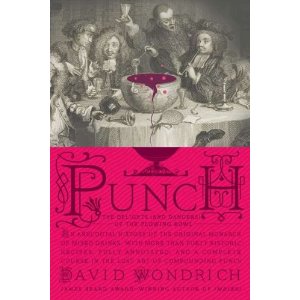
When cocktail historian and Esquire columnist David Wondrich speaks about drink, you listen — or read, as the case may be. His latest book Punch, debuts Nov. 2, the first of its kind on the glories and history of the punch bowl. I had the privilege of speaking with Dave over the phone from his New York home. The question at hand: why punch? Or to quote from the book, what makes punch “necessary”?

Wondrich stands by his punch bowl. He tells me it’s “the greatest social beverage of all time,” that “now more than ever we need beverages that promote friendship.” He calls punch “more gentle than cocktails”, its preparation “easy and utterly pleasurable.” The punch bowl is communal, ideal for a group or festive gathering, less laborious than individual cocktails, and a hell of a lot more fun. As Dave states in the book’s preface: “most of punch’s stories are of warm fellowship, and conviviality, and high-spirited gatherings afloat on oceans of witty talk” — not to mention a few “battles and brawls.”

We’re not talking about “frat juice” here. We’re talking honest-to-God punch: boozy yet delicious, layered with citrus, raw sugar, and varying spirits. The book starts with a comprehensive history — who drank punch and where. Wondrich says the book started as a big chunk cut out of his first book Imbibe.

The convivial punch houses of antiquity that feature in Punch sound so appealing that I ask Dave if he envisions their return. “I certainly hope so,” he replies. Besides Rickhouse here in SF, some of his favorite bars for punch around the globe include Hix in London, Brooklyn’s Clover Club (which lies a dangerously close distance from his present location), and Manhattan’s Death & Co. He’s also a fan of Savoy Cocktail Night at SF’s own Alembic (hear, hear!)

Like most classic concoctions, the name of punch’s first mixologist has been lost to the sands of time — though there are countless early references to the drink. One of Wondrich’s strongest sources is Google Books, where he digs up old newspapers, pamphlets, and rare books before he cross references them in the libraries of New York and London. Another research source?  “I am trained as an academic so I have a lot of 1600s books,” he says. “I start with a lot of blank space and start to fill that in using every kind of source possible… I’ll track down the original source, and don’t settle for first mention.”

I asked if he’d ever write the book he wishes existed, a dream mentioned on page six of Punch, which is a detailed source on distilling, the drink’s origins, its history, and importance. He says it’s a project “too big for any one person to bite off, unless they have all the time in the world and know multiple languages.” Wondrich says he “could tackle parts of it.” He estimates that it would take at least three co-writers: someone fluent in Dutch, German, Chinese, and Indian.

What we’re more likely to see Wondrich write about next is how the American style of drinking — particularly our contributions in cocktails and spirits — went global. He’s already done “tons of research” for past presentations on the subject. Spots of particular interest for him include our country’s legendary World’s Fair cocktail showcases and the way the techniques they highlighted spread across the rest of the globe. 

Wondrich expects the section called Book II of his recently released Punch will be limited to “total mixology geeks.” But I found Book II a useful, necessary account of the ingredients, tools, and proper measurements needed for the drink, particularly his recommendations for spirits in the “Ingredients” chapter.

A good half of Punch is recipes, ranging from Milk Punch to American Fancy Punch. When asked which ones he makes the most, Wondrich named the bracing Chatham Artillery punch on page 248 (a Savannah original, a poorly-crafted version of which I’ve imbibed whilst walking down the city’s streets). Back in the day, a local paper described this punch thusly: “as a vanquisher of men its equal has never been found.” Dave says the recipe in this book (there’s yet another included in Imbibe!) “claims to be the original, and very well might be,” though when it comes to  traditional recipes “they get passed down like a game of telephone,” each iteration evolving from the last.

One of his biggest crowd-pleasers — which he says people consume in “shocking amounts” — is his own recipe of Royal Hibernian punch (p. 269):

Prepare an oleo-saccharum with the peel of three lemons and six ounces of white sugar. Add six ounces strained lemon juice and stir until the sugar has dissolved. Add to this 12 ounces Sandeman Rainwater Madeira, stir and pour the Madeira shrub into a clean 750-milliliter bottle. Add enough water to the bottle to fill it, seal and refrigerate. Fill another clean 750-milliliter bottle with filtered water and refrigerate that too.

To serve, pour the bottle of the shrub, the bottle of water, and one 750-milliliter bottle of Jameson 12 or Redbreast Irish whiskey into a gallon Punch bowl, add a 1 1/2 quart block of ice and grate nutmeg over the top.

Yield: 9 1/2 cups.


Subscribe to Virgina’s twice monthly newsletter, The Perfect Spot


Flash: I won’t be throwing out the first pitch today to open the World Series

0

Amazing.  Peter Hartlaub nominated me Tuesday (Oct. 26) in his Chronicle pop culture column to throw out the first pitch to open the World Series game in San Francisco. 

In the spirit of  “getting the rest of the country into the swing of things” in San Francisco,  he also nominated actor Sean Penn, Rep. Barbara Lee, and Assemblyman Tom Ammiano. And he suggested Lawrence Ferlinghetti read the national anthem, that Tony Hall sing the national anthem,  that the Sisters of Perpetual Indulgence become the new ball dudes, and that a slow-moving  flotilla of Critical Mass kayaks make the other boats late for the game in McCovey Cove.  

Hartlaub had the right approach. “There are definitely advantages to having the rest of the country develop the false impression that your region is filled with nothing but crackpots,” he wrote. “It seems to motivate the team. And in a roundabout way the weird looks from the rest of the country help preserve our culture.” 

Well,  I’m available and I’m happy to report that I’m actually qualified to toss out the first pitch and get the ball to homeplate.

I was a left-handed pitcher back in my playing days in summer playground and the Junior Legion baseball  in my hometown of  Rock Rapids, Iowa. I had a blazing fastball and a wicked curve and a drop ball that I couldn’t control. Nobody ever hit a homerun off of me. 

Alas, I’m sad to report, PG&E opposes my appearance. It’s getting late. And I suspect I won’t get an invitation. 

I guess I’ll soon be off to Blooms or the Connecticut Yankee bars to watch the game and drink Potrero Hill martinis. b3

Epic Bush crawl, part one

5

ruggy@yelp.com

SUPER EGO Marke B.’s off getting hitched to Hunky Beau, so we asked the raffishly cute Ruggy, senior community manager at Yelp.com, to fill in as nightlife correspondent. Part two comes out Nov. 3.

What does your average Friday night look like? Does it involve catching up with old college friends over a 2007 Chateau Montelena Bordeaux blend? Maybe you’d rather snuggle up next to your boo on an EQ3 chaise longue with the remote in one hand and a Shake Weight in the other.

If you’re anything like me and my ragtag group of degenerate colleagues, nothing quite spells F-U-N like a bar crawl spanning seven different locations in less than five hours, complete with gratuitous heavy petting, nacho cheese Doritos, and warm Miller High Life. Now, what if I told you there was an unheralded bar route in the city that’s chock-full of sticky floors, intoxicated curmudgeons, and more bottom shelf liquor than you can shake a Polaroid at?

The stretch of self-reproach I reference is Bush Street between Stockton and Taylor. But beware — this challenge isn’t for the faint of heart. Being the altruist I am, I decided to document this fantastic, drunken journey on your behalf, to ensure you avoid a colossal case of bottle flu the following morning. You can thank me later.

Tunnel Top (601 Bush): From Union Square, take the stairs north at the entrance to the Stockton Tunnel (after a salacious afternoon romp at the Green Door if you want to up the ante), turn about face, and gallop roughly 10 paces west. Perfect for guest registration on a Bush Street crawl, since the T-Top offers a nifty happy hour with $3 drafts and $2.75 bottled beers as well as a slew of aging hipsters and law school dropouts (a.k.a. real estate brokers) enjoying glasses of Chimay and a hip playlist. Plenty of complicated haircuts at 6:30 p.m., but not a single raccoon tail in sight.

Chelsea Place (641 Bush): If you’re expecting skyline views of Manhattan and metrosexuals out the wazoo, you most certainly have the wrong Chelsea in mind. This is a cozy nook for true alcoholics, where one drink is too many, and 1,000 is never enough. A tiny push through the saloon-style wooden doors grants you access to the Emerald City of unglamorous horizons. One of the few bars in San Francisco that will still let you smoke inside (but the first of many we encountered this Friday night), the immediate rush of second-hand smoke is enough to give you flashbacks to the first time you choked on a Marlboro Red in your junior high bathroom stall. If you’re sensitive to environmental tobacco, you’ll just have to suck it up and enjoy those delightful, toxic fumes.

As is usually the case with these sorts of establishments, the bar was packed with nothing but men over 50 (plus us) cooing over the female Asian staff, who all looked like they were auditioning for a Britney Spears music video. Laissez-faire seems to be in full effect: cigars, graffiti, dice games, whiskey shots out of plastic bottles that just say “whiskey” on the label, cheap beer, snuff pipes, and free bags of Orville Redenbacher. ‘Nuff said.

RJ’s Sports Bar (701 Geary): Korean women behind the bar (it seems to be Bush corridor de rigueur) who speak excellent Spanish and have incredible dance moves (don’t ask me how I know, but this was the biggest surprise of all). Another bar that allows indoor smoking, despite a sticker, in plain sight, that contradicts such actions. A man came in and requested that the bartender fill up his empty Gatorade bottle with Anchor Steam for $5, and without a second thought, that call was answered.

High Tide Lounge (600 Geary): Free food ranging from kimchi, chicken wings, and sushi rolls to stuffed peppers, pad Thai, chow mein, and something that resembled an egg roll but looked more like a snuffed out cigar. I didn’t ask questions. In the midst of our revels, we happened upon a petite woman taking a little catnap in the corner of the bar. Despite sleeping on a cold linoleum floor, she looked quite peaceful. Definitely not dead, though … we checked her pulse.

Whiskeyfest 2010 highlights, part two

0

Earlier on sfbg.com, Virginia Miller turned WhiskyFest into Whisky Week, meeting with seven different distillers who’d come to attend the Fest from such far-flung booze berths as Kentucky and Scotland. Here’s part one of her scotch-heavy Whisky Week highlights. Read on for part two: conversations with bourbon and rye distillers.

10/8 COFFEE WITH JIMMY RUSSELL OF WILD TURKEY – The morning before WhiskyFest I learned about a company that’s been a Kentucky mainstay since 1855, and met with its master-distiller since 1954. Jimmy Russell comes from a family of distillers: grandad, dad — who worked for him at Wild Turkey in the early years — and now Russell is distilling with his son, Eddie. Jimmy could not be more charming. An older Southern gentleman, he’s soft-spoken, with an adorable sense of humor that I discovered as we chatted over coffee.

Russell makes Wild Turkey bourbons and ryes “the old-fashioned way” and says he doesn’t even tell his son all of his distilling secrets. They use barrels charred four times and made of white oak mainly from Missouri, Kentucky and the Ozarks of Arkansas. Their basic bourbons are a blend of six, eight and ten year-aged, with a lower proof than some bourbons, generally 108-110 proof. He explains lower proof is actually more costly as there is more water added to dilute higher proof bourbons. 

The distiller’s yarns about his town of Lawrenceburg, KY are fascinating, particularly because it’s in a mostly dry county where no drinks are allowed in restaurants and bars do not exist. “We’re not dry, we’re moist”, he says, as there are a few limited options to purchase drink in the area. It was only a couple years ago they secured a souvenir liquor license, one of many complicated hoops to jump through to in order to allow tastings in their actual distillery. Russell says he adheres to the Southern Baptist tradition that one only drinks hard liquor for medicinal purposes. He qualifies in a gentle, Southern drawl, “I keep a cough pretty much most of the time”.

10/7 SIPPIN’ WHEATED BOURBON WITH PARKER BEAM – Amidst the annoying happy hour din at Bloodhound last Thursday night, distilling legend Parker Beam was hanging out with the Heaven Hill crew and a few of their whiskeys. They pulled out a bottle of brand new Parker’s Heritage Wheated Bourbon, an earthy, wood-laced wheat beauty whose mix blends in corn and malted barley.

Parker raised a glass as we attempted to chat above the din. Hearing took some effort as the delightful Parker speaks in a slow, Southern drawl that lulls one into a real enjoyment of the moment. His passion for distilling shines in his calm demeanor. He’s distilled for decades, both with father, Earl and son, Craig. And yes, he’s related to “that” Beam. His grandfather and namesake, Park Beam’s, brother was the storied Jim Beam (aka James Beauregard Beam). Parker is part of a royal distilling heritage. I asked if his son had any children who might next enter the fray. “My son has five daughters, so no,” he surmised. “But who knows? Maybe we’ll have the first female bourbon distiller someday.” It wouldn’t be the first noteworthy accomplishment in the Beam family’s rich history.

10/10 BACON BRUNCH WITH KEITH KERKHOFF OF TEMPLETON RYE – Setting: Reza Esmaili’s Long Bar. Food: delectable spread from chef Erik Hopfinger. Heaping bacon piles of Eden Farms Berkshire Pork — And don’t forget the rye. Templeton Rye from Templeton, Iowa, to be exact. The brunch was in celebration of this delightful rye — previously restricted for sale to Illinois and Iowa — finally becoming available in San Francisco.

Templeton is so small batch that you won’t find it in any Bay Area shops outside of SF, where our usual suspects, like Cask, Jug Shop, and K&L all stock the brand. Assistant master-distiller Keith Kerkhoff (I wrote about a Whiskies of the World seminar with their president, Scott Bush earlier this year) and brand manager Michael Killmer hosted us for a relaxed, festive brunch where the coffees were spiked with the rye and topped with Fernet whipped cream. Welcome to SF, Templeton.

Waxing poetic with Maker’s Mark at The Alembic

10/10 DIPPING WAX WITH KEVIN SMITH OF MAKER’S MARK — At The Alembic, Kevin Smith, the master distiller of Maker’s Mark, spent a couple hours with a small group, tasting through various ages of the bourbon from white dog to pours that were years older than the finished Maker’s product, so that we could get an idea of when a spirit is ready. From a somewhat neutral base cut down to 90 proof, the bourbon gained most of its flavor from barrel aging, and we sampled a woody 12-year version that came off astringent and tannic, though not unpleasant. Smith used the two to highlight their choice of the smoother, rounder balance of the fully matured final product which is aged roughly years.

We finished with Maker’s 46, their first new product in 50 years. I’ve had it a few times and it makes sense Kevin said the inspiration was rye whiskey with advanced spicing, toasty oak and that “cinnamon bite.” It’s certainly my preferred Makers. Thanks to The Alembic for serving us a gorgeous, bright Maker’s 46 cocktail: sweet vermouth, absinthe, maraschino and a mint garnish. But the session wasn’t over until we had hand-dipped glasses in Maker’s signature red wax, a tradition established from the chemist wife of Bill Samuels, Sr. (Maker’s original owner). She loved brandy and wanted the bottle shape and wax to imbue Maker’s with a brandy elegance.

Interestingly, California just surpassed Kentucky as Maker’s number one-selling US market. Raise a glass, shall we, to the pioneers and tastemakers who brought love of spirits to share during this past whirlwind week of whisky.

Subscribe to Virgina’s twice monthly newsletter, The Perfect Spot

Waiting to inhale

0

news@sfbg.com

Much of the controversy around Proposition 19, which would legalize marijuana in California for even nonmedical uses, involves speculation about what comes next. Hash bars on Market Street? Packs of joints next to the cigarettes in Mission District bodegas? Bags of green buds available with the bongs for sale on Haight Street? They are questions that have yet to get serious consideration in the city where the medical marijuana movement was launched.

The measure would give local governments almost complete control over how to regulate recreational-use cannabis sales in much the same way that cities set their own standards for medical marijuana dispensaries, a realm in which San Francisco has shown real leadership and created a well-functioning, successful, and legitimate industry (see “Marijuana goes mainstream,” Jan. 27).

But San Franciscans have been slow to prepare for the post-Prop. 19 world, with some other Bay Area cities leaving it in the dust on these issues. Oakland City Council Member Rebecca Kaplan, who is now running for mayor, not only spearheaded that city’s ballot measures on taxing recreational pot sales and permitting large scale growing operations, she’s actively talking using the Amsterdam model to revitalize the city’s downtown business district.

“[Hash bars] absolutely potentially would be part of the mix,” Kaplan told us when we asked about the issue during her mayoral endorsement interview, seeing it as part of a multipronged economic development strategy.

When asked if Oakland should have places where people could go to blaze legally, something Oakland doesn’t allow in its medical marijuana dispensaries, Kaplan said, “Yes. Oh yeah, we’re definitely gonna have those. The only question is gonna be whether the consumption facilities are separate from [those for] sales,” or if they’re under the same roof.

Kaplan thinks this will be part of the winning strategy that takes cannabis use off street corners while acknowledging its appeal to visitors and “synergy with the restaurants. When I talk about wanting to replicate the Amsterdam model in Oakland … it doesn’t just mean that you have … a regulated cannabis facility. You also have restaurants, shops, pedestrian safety, nice lighting, patio dining, musicians, artists.”

She points out that although an Oakland-regulated cannabis industry may use current alcohol regulation as a template, the two substances would not be sold alongside each other. “Frankly, ABC [California Department of Alcoholic Beverage Control) will freak out.” That means, at least in Oakland, you won’t be able to purchase cannabis at bars, liquor, or grocery stores.

On this side of the bay, Sup. Ross Mirkarimi — who wrote the regulations on the city’s medical marijuana facilities — says it is “extremely premature” to contemplate Amsterdam-esque hash bars. “That would have to occur within a strong regulatory framework,” he said, one the Board of Supervisors has yet to envision. San Francisco attorney David Owen, who has helped advise some medical marijuana purveyors, said some dispensaries currently allow on-site medication, and San Francisco might legislate to extend the practice to bars.

Meanwhile other California cities such as Berkeley and Oakland are anticipating Prop. 19’s passage much more proactively. Berkeley’s Measure S would tax cannabis businesses, applying different rates to for profit med-use cannabis businesses, nonprofit med-use businesses, and rec-use businesses (which won’t exist unless Prop 19 passes). The measure would secure medical-use cannabis for low-income patients and tighten regulations on Berkeley’s current med-use dispensaries and cultivators regardless of how Prop. 19 fares. There’s also a Measure T on the ballot that would establish a new committee that, in the event that Prop. 19 passes, would advise city officials on how to implement it.

Berkeley City Council Member Kriss Worthington said planning for the post-Prop. 19 world is smart to “synchronize a forward movement on the state and local level” and to “hit the ground running,” a sentiment that Kaplan also voiced for Oakland and one shared by other cities.

Stockton’s Measure I would tax rec-use cannabis businesses at a higher rate than med-use businesses. Sacramento’s Measure C is similar, containing a provision for a rec-use tax range if Prop. 19 passes. Richmond’s Measure V would tax 5 percent of gross sales of cannabis, and could apply to rec-use businesses too. Oakland’s Measure V would add a 5 percent tax to other taxes already on med-use cannabis, and put a 10 percent sales tax on rec-use cannabis. Measure H, on Rancho Cordova’s ballot, would tax personal cultivation at a higher tax on any square footage beyond the 25 square feet that Prop 19 specifies. Long Beach’s Measure B would establish a business license tax on the city’s potential recreational cannabis businesses. Even Albany, which has no dispensaries, would tax for-profit and nonprofit dispensaries differently through its Measure Q.

But Mirkarimi said he would like to tax marijuana cultivation, and has even voiced support for med-use cannabis dispensaries working directly with SF General Hospital to provide to patients, “thereby segregating a special use” and keeping cannabis prices low or nonexistent based on patient needs.

So if Prop. 19 passes, where will San Franciscans be able to purchase rec-use cannabis? Current med-use dispensaries may be a logical choice. “We already have the infrastructure,” said SF dispensary Medithrive co-owner Daniel Bornstein.

Whereas alcohol purveyors are accustomed to providing one barrier to purchase (when they card the buyer), dispensaries such as Medithrive offer many. “We already card and only accept patronage from those with a valid doctor recommendation. We also require he/she become a member of the dispensary and limit to one visit per day.”

When he contemplates whether Medithrive might provide rec-use cannabis in the future, Bornstein says “If [the city adopts] a responsible statute that’s fair, we would welcome the opportunity to offer a broadened service to more people.”

That avenue troubles Mirkarimi. “I don’t know how that works,” he said. Rec-use cannabis purchase would require no doctor’s notes and could occur within a for-profit business model. How would dispensaries legally reconcile making money under their nonprofit status? “I don’t want to put that burden on them,” Mirkarimi said.

Prop. 19 offers other potential implementation conundrums. For example, the measure will only give local governments the option to legalize the limited cultivation/sale of cannabis. Legalization won’t be compulsory. Therefore, it is likely that a post-Prop. 19-approved California will become a patchwork of alternating “dry” and “wet” municipalities.

So let’s say you’re on a road trip and you pass through many cities that all treat cannabis differently. Bornstein and his Medithrive partner Misha Breyburg worry about such a “patchwork of legal complexity.” But Prop. 19 provides for the legal transport of cannabis through cities that prohibit its sale, and California Assemblymember Tom Ammiano has already proposed legislation to smooth out the rough spots in Prop. 19 and answer open questions.

So for now, everyone is just waiting to see what state voters do.


Civil Sidewalks, Lewis Lapham, and the struggle for the soul of cities

114

Cities often get vilified as the cauldrons of all that’s wrong in the world – greed, vice, pollution, and all manner of social ills – but they are also the incubators of ideas that are humankind’s last best shot at solving the social and environmental problems that threaten our long-term stability and prosperity. So ruminating on the indispensable role of cities, as Lapham’s Quarterly does with its fall issue, is more than just an academic exercise or interesting read.

“The Census Bureau counts 232,581,397 Americans, 82.6 percent of the population, living in the nation’s cities, but if our moralists and intelligence services are to be believed, they do so at no small risk to the safety of their persons and the security of their souls,” editor Lewis Lapham, who ran the venerable Harper’s Magazine before stepping down to start LQ, writes in the opening essay of an issue entitled simply “The City.”

Lapham goes on to note the contradiction of how rural areas and suburbs get celebrated as somehow housing the more noble values of the common folk, raising the questions, “If the city is the sewer of vice and a slough of despond, why do so many people choose to live there? On what toxic landfill does the city stand as the embodiment of its ennobling cognate, civilization?”

In an interview with the Bay Guardian, Lapham puts the increasingly important role of cities even more succinctly: “The future is urban.” As the population grows and natural resources become more scarce – and as sea levels rise – the population of cities will swell and the imperative of solving our long neglected problems will grow. And where else but the cities will new ideas find their laboratories?

But in San Francisco and other big cities, many still struggle with what it means to be a city, with all the tolerance for messy urban realities that entails. Witness Prop. L on SF’s fall ballot, which actually seeks to outlaw the simple act of sitting on a sidewalk, or as its proponents call it (in an ironic testament to their desire for order above all things), the Civil Sidewalks Law.

Lapham told me this fear of the great unwashed masses (“The rich are afraid of the poor”), an emotion that has fueled the growth of the suburbs and the massive waste of resources that entailed, has hindered the ability and willingness of city leaders to advocate for common values and define the lead role that cities should be playing in this troubled country.

“We don’t have an idea of the city as a great, good place, and we have to start with that,” Lapham told us. “We have to decide what is a city, what work does it do, what is the value, and how do we promote that value.”

This issue of Lapham’s Quarterly is a good place to start that debate. As always, the journal includes the writings of great thinkers throughout time, from Thucydides writing about Athens in 430 BC to Frederick Kaufman writing about New York City in 2008. Celebrated urbanist Jane Jacobs does a great job of capturing the allure of cities – that special something that seems to escape the fearful promoters of Civil Sidewalks – in an essay she wrote about NYC in 1961.

“Reformers have long observed city people loitering on busy corners, hanging around in candy stores and bars and drinking soda pop on stoops, and having passed a judgment, the gist of which is, ‘This is deplorable! If these people had decent homes and a more private or bosky outdoor place, they wouldn’t be on the street!’ This judgment represents a profound misunderstanding of cities. It makes no more sense than to drop in at a testimonial banquet in a hotel and conclude that if these people had wives who could cook, they would give their parties at home,” she writes. “The point of both the testimonial banquet and the social life of city sidewalks is precisely that they are public. They bring people together who do not know each other in an intimate, private social fashion – and in most cases do not care to know each other in that fashion. Nobody can keep an open house in a great city. Nobody wants to. And yet if interesting, useful, and significant contacts among people are confined to acquaintances suitable for private life, the city becomes stultified.”

Indeed, that was the observation that journalist H.L Mencken wrote about many East Coast as he penned an essay in 1920 celebrating San Francisco as “an American city that somehow managed to hold itself above pollution by the national philistinism and craze for standardization, the appalling progress of 100 percent Americanism, the sordid and pathetic dream of unimaginative, timorous, and inferior men.”

Mencken says he can’t quite put a finger on what makes San Francisco so special, touching on our international influences and the fortitude developed by braving fog, steep hills, and messy urban realities, which he says have given us a unique appreciation for life. “The San Franciscans have learned how to bear it. They are stupendously alive while they are in motion, but they knock off betimes. The town is rich in loafing places: restaurants, theaters, parks. No one seems to work very hard. The desperate, consuming industry of the East is quite unknown. One could not imagine a sweatshop in the town. Puffs of Oriental air come with the fog. There is nothing European about the way life is lived; the color is all Asiatic.”

A decidedly different portrait of San Francisco comes in the journal’s only other entry on this city, written in 1849 by Gen. William Tecumseh Sherman, who helped establish an important military base in a city that had only recently changed its name from Yerba Buena and which was about the explode with the discovery of gold in the Sierras.

“All the town lay along Montgomery Street, from Sacramento to Jackson, and about the plaza. Gambling was the chief occupation of the people. While they were waiting for the cessation of the rainy season, and the beginning of spring, all sorts of house were being put up, but of the most flimsy kind, and all were stores, restaurants, or gambling saloons,” wrote the military man, who didn’t much care for the city.

Yet for those who appreciate the role of cities as generators of culture and incubators of ideas, there’s no question that our future is urban, although even Lapham has his doubts that the great solutions will come from the cities, preferring to see the Internet and its virtual communities as usurping from cities the role of intellectual hubs.

“The intellectual engine of the Bay Area is centered in the Silicon Valley world rather than on Montgomery Street in San Francisco,” he told us, noting how little the financial firms that dominate downtown San Francisco or Wall Street in his home city of New York have to do with addressing the real problems the world faces.

He’s right, of course, but that’s also why the struggles for the soul of cities are so important and consequential, and why the the Bay Guardian has spilled so much ink fighting downtown over our 44-year history. Because to give in to the bankers and Civil Sidewalks crowd is to give up on the city.

It’s not a new struggle, as Friedrich Engels wrote about London in 1844: “Everywhere one finds on the one hand the most barbarous indifference and selfish egotism and on the other the most distressing scenes of misery and poverty. Signs of social conflict are to be found everywhere. Everyone turns his house into a fortress to defend himself – under the protection of the law – form the depredations of his neighbors. Class warfare is so open and shameless that is has to be seen to be believed. The observer of such as appalling state of affairs must shudder at the consequences of such feverish activity and can only marvel that so crazy a social and economic structure should survive at all.”

Four years later, Engels wrote “The Communist Manifesto” with Karl Marx, diagnosing the problems of capitalism and laying out solutions that came awfully close to taking root around the world before they were defeated by Western military and economic powers. Yet the problems persist to this day, manifested most visibly in cities around the world.

Lapham does admit that cities will be the laboratories and incubators of the ideas that are developed. Given the political dysfunction on the state and federal levels, he also agrees with the contention of Guardian Executive Editor Tim Redmond that the age of he Nation-State as the preeminent political authority is passing, and that its likely replacement is the City-State.

“To make democracy work, it needs to be relatively small,” Lapham said, agreeing that localism is the model that is being widely discussed as the answer to many of our political, environmental, and economic problems. And that all comes back to the cities, provided we can seize the opportunity to define ourselves, or as Lapham said, “One of the things we’re missing is the idea of a glorious future of some kind.”

Hot sexy events Oct 6-12

0

It’s about that time, cats and kittens. Time to start fantasizing — Halloween is just around the corner. And though everyone and their mother is going to be Stephen Colbert’s Muslim vampire this year, many will seize the autumnal juncture as an opportunity to whore it up and out – in a good way! 

After all, who doesn’t love the sexy nurses, kitties, police officers, and Snookies that stalk the city bars each year on the 31st? Look, the point is that on this day of days society indulges those that follow their dreams. May as well make it a wet dream, no? Sexy Muslim vampire it is! Oh, and here are some sexy events that’ll wet your whistle this week, with an emphasis on finding that alluring inner equilibrium.

Bawdy Storytelling

Two events this week to get you hooked into what’s happening in Dixie De La Tour’s recurring sexcapade storytelling series: one, a best-of edition featuring writers and comedians from around town (Wed/6) and two, a back alley Lit Crawl edition of Bawdy that’ll have Clarion Alley echoing with the retelling of disastrous dates and tales of unconventional canoodling.  

Bawdy Storytelling: Graphic Confessions

Wed/6 8 p.m., $10

The Blue Macaw

2565 Mission, SF

www.bawdystorytelling.com


Bawdy in the Alley

Sat/9 8:30-9:30 p.m., free

Clarion Alley between 17th and 18th St., SF

www.bawdystorytelling.com


Declaring Our Erotic

Jen Cross knows that erotic writing isn’t just a pleasure to read – for some, the act of writing down passions can be a cathartic, even therapeutic event. That’s why she’s offering this eight-week class for survivors of LGBT sexual trauma. The syllabus promises a safe space to reconnect with your body’s desires and memories. And of course, a chance to write some hot, dirty smut. 

First class Thu/7 6:30-9 p.m., $225-250

email jennifer@writingourselveswhole.com for details


Urge

Put the Citadel’s 5,400 square feet of devious dungeon to use to use for the whipping, slapping, burning, and loving of young loins – hot young male whippersnappers will be the only ones invited to this get together of BDSM blowout. 

Fri/8 9 p.m.- 1:30 a.m., $25

SF Citadel

1277 Mission, SF

(415) 626-1746

www.sfcitadel.org


Steven Saylor

Love, sex, and intrigue in the palace! But this ain’t no corset-buster. No, Steven Saylor’s new book Empire is a males-only play space – the plotline follows Emperor Nero’s eunuch lover Sporus, who becomes the hottest piece of tranny ass on the Forum. Let Saylor woo you into a new love of history at this talk about his latest historical tome of carnal knowledge.

Mon/11 7:30 p.m., free

A Different Light Bookstore

489 Castro, SF

(415) 431 0891 

www.adl-books.blogspot.com


Grizzly’s Bullwhips by the Bay

Don’t worry baby, they got loaner whips. Put your lusted one’s mind at ease by polishing up your whipping skills at this bimonthly peer skill share class by the sea. It’s about safety, kids! After all, when the singletails start flying, you can’t always guarantee that Grizzly, the organizer of the get-togethers, will be there with spare protective goggles to guard those bedroom eyes.

Sun/10 11:30 a.m.- 1 p.m., free

Southeast of the Golden Gate Park Polo Fields, SF

www.laughingbear.org


Body Love for Better Sex

How would you spread your legs if you weren’t worried about chunky inner thighs? Body anxiety can be the nemesis of good sex –  but Virgie Tovar, fat positive sex educator, is here to help you titter about Miss Body Anxiety until she drops out of school due to social anxiety. Which is to say, help you feel as pretty as you are. Aww. No more naked nervousness, bam.

Mon/11 6-8 p.m., $20-25

Good Vibrations

1620 Polk, SF

(415) 345-0500

www.goodvibes.com


Capp’s Corner

0

paulr@sfbg.com

My first experience of Capp’s Corner was long ago, in college, a melancholy dinner on a damp winter night with my first love. By “long ago,” I mean so long ago that I decline to say how long. By “first love” I mean unrequited love; is there any other kind of first love? I suppose the possibility exists. But for the moony-eyed young, the most real sort of love is the hopeless, thwarted kind, the impossible dream. In that sense, I had won the love lottery at age 20. Lucky me.

It does seem odd, lo these decades later, to associate Capp’s Corner with any form of melancholy. Now, as then, the restaurant is not only a North Beach institution but the very picture of cheerfulness. Its checkertop tablecloths are just like the kind you see in Moonstruck, a not-bad movie about lovelornness, with wonderful glimpses of New York’s Little Italy. There is also a certain saloon feel at Capp’s, lent by the large bar near the entrance; unlike many so-called bars in many of our newer, fancier, and more effete places that seem to have been installed largely for show, this one is the real deal, a working bar where people actually sit and drink.

Elsewhere in the large dining room, people are eating as well as drinking, sometimes in groups of two, often in larger arrays. The restaurant is just down the block from Club Fugazi, longtime home of Beach Blanket Babylon. That’s a show people often attend in sizable groups, and often after having eaten dinner. Capp’s Corner is just the (meal) ticket for these folks; it’s convenient, spacious, practiced in dealing with bigger parties, and it serves many dishes family-style, no matter what kind of family you’re a part of.

The main twist in the family-style service is that the minestrone is presented in a big white earthenware tureen, so you get to serve yourself. This does raise the slop factor, particularly if I happen to be sitting at your table, but it also contributes to festivity. The soup itself was rich in cabbage and cannellini beans, a little lighter on tomato than is usual, and had a savory-sweetness I associate with slow-cooked onion. Our tureen produced eight or nine servings — not a bad yield for a table of six.

Throw in a continually replenished basket of bread and butter, and you have the makings of a small feast. Beyond that was a salad of chopped, chilled lettuces scattered with chickpeas and kidney beans and dressed with what the menu calls a “creamy vinaigrette” — I might call it Thousand Island, Russian, or something similar on the ground that its pinkish-red color implied the presence of tomato in some form.

The family-style dinners are offered at two prices: $18 (for pastas) and $20.50 (for pretty much everything else, including veal and petrale sole). You can get a pair of fleshier dinners (steak and osso buco) for $25.50, and if you don’t want family-style, $15.50 buys you pasta, soup, and salad.

If you like your pasta served in gargantuan portions, you will be happy here — and you’ll be even happier if you like tomato sauces. These, whether marinara or bolognese, are hard to avoid, although a white-wine sauce does pop up here and there. The spaghetti with meatballs was probably typical, though: a huge clump of pasta (cooked a bit past al dente but not mushy) finished with a heavy ladling of bolognese sauce and two orbs of chopped meat the size of a baby’s fist. The meat seemed a bit dry to me, but given all that sauce, it didn’t much matter.

The veal tortellini were better: less daunting in scale, nicely bite-sized, and given a sun-dried tomato cream sauce that was finer than the bolognese. Also satisfying: slices of breaded eggplant baked with mozzarella and marinara and béchamel (or, in Italian, besciamella) sauces. The bitterness of the eggplant had been expertly leached out, and the dish as a whole had a faux-meatiness that might have convinced an omnivore — or at least an omnivore distracted, perhaps, by a value-priced glass, or three, of Chianti ($3.50). I wouldn’t call Chianti my first love, wine-wise, but it tends to be solid. Anyway, it’s the only sort of wine you could drink with a clear conscience in a place like this, with a lovers’ moon peeking through the windows and BBB — the greatest hat show on earth — just a few steps away.

CAPP’S CORNER

Dinner: Mon.-Fri., 4:30–10:30 p.m.;

Sat.–Sun., 4-11 p.m.

Lunch: daily, 11:30 a.m.–2:30 p.m.

1600 Powell, SF

(415) 989-2589

www.cappscorner.com

Full bar

AE/CB/DC/MC/V

Noisy but bearable

Wheelchair accessible


Endorsements 2010: San Francisco candidates

53

SUPERVISOR, DISTRICT 2


JANET REILLY


Frankly, we were a little surprised by the Janet Reilly who came in to give us her pitch as a District 2 supervisorial candidate. The last time we met with her, she was a strong progressive running for state Assembly as an advocate of single-payer health care. She was challenging Fiona Ma from the left, and easily won our endorsement.


Now she’s become a fiscal conservative — somewhat more in synch with her district, perhaps, but not an encouraging sign. Reilly seems to realize that there’s a $500 million budget deficit looming, but she won’t support any of the tax measures on the ballot. She’s against the hotel tax. She’s against the real estate transfer tax on high-end properties. She’s against the local car tax. She opposed Sup. David Chiu’s business tax plan that would have shifted the burden from small to larger businesses (even though it was clear from our interview that she didn’t understand it).


She talked about merging some of the nonprofits that get city money, about consolidating departments, and better management — solutions that might stem a tiny fraction of the red ink. But she wouldn’t even admit that the limited tax burden on the very rich was part of San Francisco’s budget problem.


Her main proposal for creating jobs is more tax credits for biotech, life sciences, and digital media and more public-private partnerships.


It’s too bad, because Reilly’s smart, and she’s far, far better than Mark Farrell, the candidate that the current incumbent, Michela Alioto-Pier, is backing. We wish she’d be realistic about the fiscal nightmare she would inherit as a supervisor.


On the positive side, she’s a strong supporter of public power and she has good connections to the progressive community. Unlike Alioto-Pier, she’d be accessible, open-minded, and willing to work with the progressive majority on the board. That would be a dramatic change, so we’ll give her the nod.


We were also impressed with Abraham Simmons, a federal prosecutor who has spent time researching city finance on the Civil Grand Jury. But he supports sit-lie, Prop. B and Prop. S, and opposes most new tax proposals and needs more political seasoning.


DISTRICT 4


NO ENDORSEMENT


We’ve always wanted to like Carmen Chu. She’s friendly, personable, intelligent, and well-spoken. But on the issues, she’s just awful. Indeed, we can’t think of a single significant vote on which she’s been anything but a call-up loyalist for Mayor Newsom. She even opposed the public power measure, Prop. H, that had the support of just about everyone in town except hardcore PG&E allies.


She’s running unopposed, and will be reelected. But we can’t endorse her.


DISTRICT 6


1. DEBRA WALKER


2. JANE KIM


3. GLENDON “ANNA CONDA” HYDE


CORRECTION: In our original version of this endorsement, we said that Jim Meko supports the sit-lie ordinance. That was an error, and it’s corrected below.


A year ago, this race was artist and activist Debra Walker’s to lose. Most of the progressive community was united behind her candidacy; she’d been working on district issues for a couple of decades, fighting the loft developers during the dot-com boom years and serving on the Building Inspection Commission. Then School Board member Jane Kim decided to enter the race, leaving the left divided, splitting resources that might have gone to other critical district races — and potentially helping to put the most pro-business downtown candidate, Theresa Sparks, in a better position to win.


Now we’ve got something of a mess — a fragmented and sometimes needlessly divisive progressive base in a district that’s key to holding progressive control of the board. And while neither of the two top progressive candidates is actively pursuing a credible ranked-choice voting strategy (Kim has, unbelievably, endorsed James Keys instead of Walker, and Walker has declined to endorse anyone else), we’re setting aside our concern over Kim’s ill-advised move and suggesting a strategy that is most likely to keep the seat Chris Daly has held for the past 10 years from falling to downtown control.


Walker is far and away our first choice. She understands land use and housing — the clear central issues in the district — and has well thought-out positions and proposals. She says that the current system of inclusionary housing — pressing market-rate developers to include a few units of below-market-rate housing with their high-end condos — simply doesn’t work. She supports an immediate affordable housing bond act and a long-term real estate transfer tax high enough to fund a steady supply of housing for the city’s workforce. She told us the city ought to be looking at planning issues from the perspective of what San Francisco needs, not what developers want to build. She’s in favor of progressive taxes and a push for local hiring. We’re happy to give her our first-place ranking.


Jane Kim has been a great SF School Board member and has always been part of the progressive community. But she only moved into District 6 a year and a half ago — about when she started talking about running for supervisor (and she told us in her endorsement interview that “D6 is a district you can run in without having lived there a long time.”) She still hasn’t been able to explain why she parachuted in to challenge an experienced progressive leader she has no substantive policy disagreements with.


That said, on the issues, Kim is consistently good. She is in favor of indexing affordable housing to market-rate housing and halting new condo development if the mix gets out of line. She’s for an affordable housing bond. She supports all the tax measures on this ballot. She’s a little softer on congestion pricing and extending parking-meter hours, but she’s open to the ideas. She supports police foot patrols not just as a law-enforcement strategy, but to encourage small businesses. She’d be a fine vote on the board. And while we’re sympathetic to the Walker supporters who would prefer that we not give Kim the credibility and exposure of an endorsement, the reality is that she’s one of two leading progressives and would be better on the board than the remaining candidates.


Hyde, a dynamic young drag queen performer, isn’t going to win. But he’s offered some great ideas and injected some fun and energy into the race. Hyde talks about creating safe injection sites for IV drug users to reduce the risk of overdoses and the spread of disease. He points out that a lot of young people age out of the foster-care system and wind up on the streets, and he’s for continuum housing that would let these young people transition to jobs or higher education. He talks about starting a co-op grocery in the Tenderloin. He proposes bus-only lanes throughout the district and wants to charge large vehicles a fee to come into the city. He’s a big advocate of nightlife and the arts. He lacks experience and needs more political seasoning, but we’re giving him the third-place nod to encourage his future involvement.


Progressives are concerned about Theresa Sparks, a transgender activist and former business executive who now runs the city’s Human Rights Commission. She did a (mostly) good job on the Police Commission. She’s experienced in city government and has good financial sense. But she’s just too conservative for what remains a very progressive district. Sparks isn’t a big fan of seeking new revenue for the city telling us that “I disagree that we’ve made all the cuts that we can” — even after four years of brutal, bloody, all-cuts budgets. She doesn’t support the hotel tax and said she couldn’t support Sup. David Chiu’s progressive business tax because it would lead to “replacing private sector jobs with public sector jobs” — even though the city’s own economic analysis shows that’s just not true. She supports Newsom’s sit-lie law.


Sparks is the candidate of the mayor and downtown, and would substantially shift the balance of power on the board. She’s also going to have huge amounts of money behind her. It’s important she be defeated.


Jim Meko, a longtime neighborhood and community activist, has good credentials and some solid ideas. He was a key player in the western SoMa planning project and helped come up with a truly progressive land-use program for the neighborhood. But he supports Prop. B and is awfully cranky about local bars and nightlife.


James Keys, who has the support of Sup. Chris Daly and was an intern in Daly’s office, has some intriguing (if not terribly practical) ideas, like combining the Sheriff’s Department and the Police Department and making Muni free). But in his interview, he demonstrated a lack of understanding of the issues facing the district and the city.


So we’re going with a ranked-choice strategy: Walker first, Kim second, Hyde third. And we hope Kim’s supporters ignore their candidate’s endorsement of Keys, put Walker as their second choice, and ensure that they don’t help elect Sparks.


DISTRICT 8


RAFAEL MANDELMAN


This is by far the clearest and most obvious choice on the local ballot. And it’s a critical one, a chance for progressives to reclaim the seat that once belonged to Harvey Milk and Harry Britt.


Mandelman, a former president of the Milk Club, is running as more than a queer candidate. He’s a supporter of tenants rights, immigrants’ rights, and economic and social justice. He also told us he believes “local government matters” — and that there are a lot of problems San Francisco can (and has to) solve on its own, without simply ducking and blaming Sacramento and Washington.


Mandelman argues that the public sector has been starved for years and needs more money. He agrees that there’s still a fair amount of bloat in the city budget — particularly management positions — but that even after cleaning out the waste, the city will still be far short of the money it needs to continue providing pubic services. He’s calling for a top-to-bottom review of how the city gets revenue, with the idea of creating a more progressive tax structure.


He’s an opponent of sit-lie and a supporter of the sanctuary city ordinance. He supports tenants rights and eviction protection. He’s had considerable experience (as a member of the Building Inspection Commission and Board of Appeals and as a lawyer who advises local government agencies) and would make an excellent supervisor.


Neither of the other two contenders make our endorsement cut. Rebecca Prozan is a deputy city attorney who told us she would be able to bring the warring factions on the board together. She has some interesting ideas — she’d like to see the city take over foreclosed properties and turn them into housing for teachers, cops, and firefighters — and she’s opposed to sit-lie. But she’s weak on tenant issues (she told us there’s nothing anyone can do to stop the conversion of rental housing into tenancies-in-common), doesn’t seem to grasp the need for substantial new revenues to prevent service cuts, and doesn’t support splitting the appointments to key commissions between the mayor and the supervisors.


Scott Wiener, a deputy city attorney, is a personable guy who always takes our phone calls and is honest and responsive. He’s done a lot of good work in the district. But he’s on the wrong side of many issues, and on some things would be to the right of the incumbent, Sup. Bevan Dufty.


He doesn’t support public power (which Dufty does). He says that a lot of the city’s budget problems can’t be solved until the state gets its own house in order (“we can’t tax our way out of this”) and favors a budget balanced largely by further cuts. In direct contrast to Mandelman, Wiener said San Franciscans “need to lower our expectations for government.” He wants broad-based reductions in almost all city agencies except Muni, “core” public health services, and public safety. He doesn’t support any further restrictions on condo conversions or TICs. And he has the support of the Small Property Owners Association — perhaps the most virulently anti-tenant and anti-rent control group in town.


This district once gave rise to queer political leaders who saw themselves and their struggles as part of a larger progressive movement. That’s drifted away of late — and with Mandelman, there’s a chance to bring it back.


DISTRICT 10


1. TONY KELLY


2. DEWITT LACY


3. CHRIS JACKSON


District 10 is the epicenter of new development in San Francisco, the place where city planners want to site as many as 40,000 new housing units, most of them high-end condos, at a cost of thousands of blue-collar jobs. The developers are salivating at the land-rush opportunities here — and the next supervisor not only needs to be an expert in land-use and development politics, but someone with the background and experience to thwart the bad ideas and direct and encourage the good ones.


There’s no shortage of candidates — 22 people are on the ballot, and at least half a dozen are serious contenders. Two — Steve Moss and Lynette Sweet — are very bad news. And one of the key priorities for progressives is defeating the big-money effort that downtown, the police, and the forces behind the Van Ness Avenue megahospital proposal are dumping into the district to elect Moss.


Our first choice is Tony Kelly, who operates Thick Description Theater and who for more than a decade has been directly involved in all the major neighborhood issues. He has a deep understanding of what the district is facing: 4,100 of the 5,300 acres in D10 have been rezoned or put under the Redevelopment Agency in the past 10 years. Planners envision as many as 100,000 new residents in the next 10 years. And the fees paid by developers will not even begin to cover the cost of the infrastructure and services needed to handle that growth.


And Kelly has solutions: The public sector will have to play a huge role in affordable housing and infrastructure, and that money should come from higher development fees — and from places like the University of California, which has a huge operation in the district and pays no property taxes. Kelly wants to set up a trigger so that if goals for affordable housing aren’t met by a set date, the market-rate development stops. He supports the revenue measures on the ballot but thinks we should go further. He opposes the pension-reform measure, Prop. B, but notes that 75 percent of the city’s pension problems come from police, fire, and management employees. He wants the supervisors to take over the Redevelopment Agency. He’s calling for a major expansion of open space and parkland in the district. And he thinks the city should direct some of the $3 billion in short-term accounts (now all with the Bank of America) to local credit unions or new municipal bank that could invest in affordable housing and small business. He’s a perfect fit for the job.


DeWitt Lacy is a civil-rights lawyer and a relative newcomer to neighborhood politics. He speaks passionately about the need for D10 to get its fair share of the city’s services and about a commitment to working-class people.


Lacy is calling for an immediate pilot program with police foot patrols in the high-crime areas of the district. He’s for increasing the requirements for developers to build affordable housing and wants to cut the payroll tax for local businesses that hire district residents.


Lacy’s vision for the future includes development that has mixed-use commuter hubs with shopping and grocery stores as well as housing. He supports the tax measures on the ballot and would be willing to extend parking meter hours — but not parking fines, which he calls an undue burden on low-income people.


He’s an outspoken foe of sit-lie and of gang injunctions, and with his background handling police abuse lawsuits, he would have a clear understanding of how to approach better law-enforcement without intimidating the community. He lacks Kelly’s history, experience, and knowledge in neighborhood issues, but he’s eminently qualified and would make a fine supervisor.


Chris Jackson, who worked at the San Francisco Labor Council and serves on the Community College Board, is our third choice. While it’s a bit unfortunate that Jackson is running for higher office only two years after getting elected to the college board, he’s got a track record and good positions on the issues. He talks of making sure that blue-collar jobs don’t get pushed out by housing, and suggested that the shipyard be used for ship repair. He wants to see the city mandate that landlords rent to people with Section 8 housing vouchers. He supports the tax measures on the ballot, but also argues that the city has 60 percent more managers than it had in 2000 and wants to bring that number down. He thinks the supervisors should take over Redevelopment, which should become “just a financing agency for affordable housing.” He wants to relocate the stinky sewage treatment plant near Third Street and Evans Avenue onto one of the piers and use the area for a transit hub. He’s still relatively unseasoned, but he has a bright political future.


Eric Smith, a biodiesel activist, is an impressive candidate too. But while his environmental credentials are good, he lacks the breadth of knowledge that our top three choices offer. But we’re glad he’s in the race and hope he stays active in community politics.


Malia Cohen has raised a lot of money and (to our astonishment) was endorsed No. 2 by the Democratic Party, but she’s by no means a progressive, particularly on tenant issues — she told us that limiting condo conversions is an infringement of property rights. And she’s way too vague on other issues.


Moss is the candidate of the big developers and the landlords, and the Chamber of Commerce is dumping tens of thousands of dollars into getting him elected. He’s got some good environmental and energy ideas — he argues that all major new developments should have their own energy distribution systems — but on the major issues, he’s either on the wrong side or (more often) can’t seem to take a stand. He said he is “still mulling over” his stand on sit-lie. He supports Sanctuary City in theory, but not the actual measure Sup. David Campos was pushing to make the policy work. He’s not sure if he likes gang injunctions or not. He only moved back to the district when he decided to run for supervisor. He’s way too conservative for the district and would be terrible on the board.


Lynette Sweet, a BART Board member, has tax problems (and problems explaining them) and wouldn’t even come to our office for an endorsement interview. The last thing D10 needs is a supervisor who’s not accountable and unwilling to talk to constituents and the press.


So we’re going with Kelly, Lacy, and Jackson as the best hope to keep D10 from becoming a district represented by a downtown landlord candidate.


SAN FRANCISCO BOARD OF EDUCATION


MARGARET BRODKIN


KIM-SHREE MAUFAS


HYDRA MENDOZA


Three seats are up on the School Board, and three people will get elected. And it’s a contested race, and in situations like that, we always try to endorse a full slate.


This fall, it was, to put it mildly, a challenge.


It’s disturbing that we don’t have three strong progressive candidates with experience and qualifications to oversee the San Francisco Unified School District. But it seems to be increasingly difficult to find people who want to — and can afford to — devote the time to what’s really a 40-hour-a-week position that pays $500 a month. The part-time school board is an anachronism, a creature of a very different economic and social era. With the future of the next generation of San Franciscans at stake, it’s time to make the School Board a full-time job and pay the members a decent salary so that more parents and progressive education advocates can get involved in one of the most important political jobs in the city.


That said, we’ve chosen the best of the available candidates. It’s a mixed group, made up of people who don’t support each other and aren’t part of anyone’s slate. But on balance, they offer the best choices for the job.


This is not a time when the board needs radical change. Under Superintendent Carlos Garcia, the local public schools are making huge strides. Test scores are up, enrollment is increasing, and San Francisco is, by any rational measure, the best big-city public school district in California. We give considerable credit for that to the progressives on the board who got rid of the irascible, secretive, and hostile former Superintendent Arlene Ackerman and replaced her with Garcia. He’s brought stability and improvement to the district, and is implementing a long-term plan to bring all the schools up to the highest levels and go after the stubborn achievement gap.


Yet any superintendent and any public agency needs effective oversight. One of the problems with the district under Ackerman was the blind support she got from school board members who hired her; it was almost as if her allies on the board were unable to see the damage she was doing and unable to hold her accountable.


Our choices reflect the need for stability — and independence. We are under no illusions — none of our candidates are perfect. But as a group, we believe they can work to preserve what the district is doing right and improve on policies that aren’t working.


Kim-Shree Maufas has been a staunch progressive on the board. She got into a little trouble last year when the San Francisco Chronicle reported that she’d been using a school district credit card for personal expenses. That’s not a great move, but she never actually took public money since she paid back the district. Maufas said she thought she could use the card as long as she reimbursed the district for her own expenses; the rules are now clear and she’s had no problems since. We don’t consider this a significant enough failure in judgment to prevent her from continuing to do what she’s been doing: serving as an advocate on the board for low-income kids and teachers.


Maufas is a big supporter of restorative justice and is working for ways to reduce suspensions and expulsions. She wants to make sure advanced placement and honors classes are open to anyone who can handle the coursework. She supports the new school assignment process (as do all the major candidates), although she acknowledges that there are some potential problems. She told us she thinks the district should go back to the voters for a parcel tax to supplement existing funding for the schools.


Margaret Brodkin is a lightening rod. In fact, much of the discussion around this election seems to focus on Brodkin. Since she entered the race, she’s eclipsed all the other issues, and there’s been a nasty whisper campaign designed to keep her off the board.


We’ve had our issues with Brodkin. When she worked for Mayor Newsom, she was part of a project that brought private nonprofits into city recreation centers to provide services — at a time when unionized public employees of the Recreation and Parks Department were losing their jobs. It struck us as a clear privatization effort by the Newsom administration, and it raised a flag that’s going to become increasingly important in the school district: there’s a coming clash between people who think private nonprofits can provide more services to the schools and union leaders who fear that low-paid nonprofit workers will wind up doing jobs now performed by unionized district staff. And Brodkin’s role in the Newsom administration — and her background in the nonprofit world — is certainly ground for some concern.


But Brodkin is also by far the most qualified person to run for San Francisco school board in years, maybe decades. She’s a political legend in the city, the person who is most responsible for making issues of children and youth a centerpiece of the progressive agenda. In her years as director of Coleman Advocates for Children and Youth, she tirelessly worked to make sure children weren’t overlooked in the budget process and was one of the authors of the initiative that created the Children’s Fund. She’s run a nonprofit, run a city department, and is now working on education issues.


She’s a feisty person who can be brusque and isn’t always conciliatory — but those characteristics aren’t always bad. Sup. Chris Daly used his anger and passion to push for social justice on the Board of Supervisors and, despite some drawbacks, he’s been an effective public official.


And Brodkin is full of good ideas. She talks about framing what a 21st century education looks like, about creating community schools, about aligning after-school and summer programs with the academic curriculum. She wants the next school bond act to include a central kitchen, so local kids can get locally produced meals (the current lunch fare is shipped in frozen from out of state).


Brodkin needs to remember that there’s a difference between being a bare-knuckles advocate and a member of a functioning school board. But given her skills, experience, and lifetime in progressive causes, we’re willing to give her a chance.


We also struggled over endorsing Hydra Mendoza. She works for Mayor Newsom as an education advisor — and that’s an out-front conflict of interest. She’s a fan of Obama’s Education Secretary, Arne Duncan, whose policies are regressive and dangerous.


On the other hand, she cares deeply about kids and public education. She’s not a big supporter of charter schools (“I’ve yet to see a charter school that offers anything we can’t do ourselves,” she told us) and while she was on the wrong side of a lot of issues (like JROTC) early in her tenure, over the past two years she’s been a good School Board member.


There are several other candidates worth mentioning. Bill Barnes, an aide to Michela Alioto-Pier, is a good guy, a decent progressive — but has no experience in or direct connection to the public schools. Natasha Hoehn is in the education nonprofit world and speaks with all the jargon of the educrat, but her proposals and her stands on issues are vague. Emily Murase is a strong parent advocate with some good ideas, but she struck us as a bit too conservative (particularly on JROTC and charter schools.) Jamie Wolfe teaches at a private school but lacks any real constituency or experience in local politics and the education community.


So given a weak field with limited alternatives, we’re going with Maufas, Brodkin and Mendoza.


SAN FRANCISCO COMMUNITY COLLEGE BOARD


JOHN RIZZO


The San Francisco Community College District has been a mess for years, and it’s only now starting to get back on track. That’s the result of the election of a few progressive reformers — Milton Marks, Chris Jackson, and John Rizzo, who now have enough clout on the seven-member board to drag along a fourth vote when they need it.


But the litany of disasters they’ve had to clean up is almost endless. A chancellor (who other incumbent board members supported until the end) is now under indictment. Public money that was supposed to go to the district wound up in a political campaign. An out-of-control semiprivate college foundation has been hiding its finances from the public. The college shifted bond money earmarked for an arts center into a gigantic, expensive gym with a pool that the college can’t even pay to operate, so it’s leased out to a private high school across the street.


And the tragedy is that all three incumbents — two of whom should have stepped down years ago — are running unopposed.


With all the attention on the School Board and district elections, not one progressive — in fact, not one candidate of any sort — has stepped forward to challenge Anita Grier and Lawrence Wong. So they’ll get another term, and the reformers will have to continue to struggle.


We’re endorsing only Rizzo, a Sierra Club staffer who has been in the lead in the reform bloc. He needs to end up as the top vote-getter, which would put him in position to be the board president. Rizzo has worked to get the district’s finances and foundation under control and he richly deserves reelection.


BART BOARD OF DIRECTORS, DISTRICT 8


BERT HILL


It’s about time somebody mounted a serious challenge to James Fang, the only elected Republican in San Francisco and a member of one of the most dysfunctional public agencies in California. The BART Board is a mess, spending a fortune on lines that are hardly ever used and unable to work effectively with other transit agencies or control a police force that has a history of brutality and senseless killing.


Fang supports the suburban extensions and Oakland Airport connector, which make no fiscal or transportation sense. He’s ignored problems with the BART Police for 20 years. It’s time for him to leave office.


Bert Hill is a strong challenger. A professional cost-management executive, he understands that BART is operating on an old paradigm of carrying people from the suburbs into the city. “Before we go on building any more extensions,” he told us, “we should take care of San Francisco.” He wants the agency to work closely with Muni and agrees there’s a need for a BART sunshine policy to make the notoriously secretive agency more open to public scrutiny. We strongly endorse him.


ASSESSOR-RECORDER


PHIL TING


San Francisco needs an aggressive assessor who looks for every last penny that big corporations are trying to duck paying — but this is also a job that presents an opportunity for challenging the current property tax laws. Phil Ting’s doing pretty well with the first part — and unlike past assessors, is actually stepping up to the plate on the second. He’s been pushing a statewide coalition to reform Prop. 13 — and while it’s an uphill battle, it’s good to see a tax assessor taking it on. Ting has little opposition and will be reelected easily.


PUBLIC DEFENDER


JEFF ADACHI


Adachi’s done a great job of running the office that represents indigent criminal defendants. He’s been outspoken on criminal justice issues. Until this year, he was often mentioned as a potential progressive candidate for mayor.


That’s over now. Because Adachi decided (for reasons we still can’t comprehend) to join the national attack on public employees and put Prop. B on the ballot, he’s lost any hope of getting support for higher office from the left. And since the moderate and conservative forces will never be comfortable with a public defender moving up in the political world, Adachi’s not going anywhere anytime soon.


Which is fine. He’s doing well at his day job. We wish he’d stuck to it and not taken on a divisive, expensive, and ill-conceived crusade to cut health care benefits for city employees.


SAN FRANCISCO SUPERIOR COURT


SEAT 15


MICHAEL NAVA


To hear some of the brahmins of the local bench and bar tell it, the stakes in this election are immense — the independence of the judiciary hangs in the balance. If a sitting judge who is considered eminently qualified for the job and has committed no ethical or legal breaches can be challenged by an outsider who is seeking more diversity on the bench, it will open the floodgates to partisan hacks taking on good judges — and force judicial candidates to raise money from lawyers and special interests, thus undermining the credibility of the judiciary.


We are well aware of the problems of judicial elections around the country. In some states, big corporations that want to influence judges raise and spend vast sums on trial and appellate court races — and typically get their way. In Iowa, three judges who were willing to stand on principle and Constitutional law and declare same-sex marriage legal are facing what amounts to a well-funded recall effort. California is not immune — in more conservative counties, liberal judges face getting knocked off the bench by law-and-order types.


It’s a serious issue. It’s worth a series of hearings in the state Legislature, and it might be worth Constitutional change. Maybe trial-court elections should be eliminated. Maybe all judicial elections should have public campaign financing. But right now, it’s an elected office — at least in theory.


In practice, the vast majority of the judicial slots in California are filled by appointment. Judges serve for four-year terms but tend to retire or step down in midterm, allowing the governor to fill the vacancy. Unless someone files specifically to challenge an incumbent, typically appointed judge, that race never even appears on the ballot.


The electoral process is messy and political, and raising money is unseemly for a judicial officer. But the appointment process is hardly pure, either — and governors in California have, over the past 30 years, appointed the vast majority of the judges from the ranks of big corporate law firms and district attorney’s offices.


There are, of course, exceptions, and Gov. Arnold Schwarzenegger has been better than his predecessor, Democrat Gray Davis. But overall, public interest lawyers, public defenders, and people with small community practices (and, of course, people who have no political strings to pull in Sacramento) have been frustrated. And it’s no surprise that some have sought to run against incumbents.


That’s what’s happening here. Michael Nava, a gay Latino who has been working as a research attorney for California Supreme Court Justice Carlos Moreno, was going to run for a rare open seat this year, but the field quickly got crowded. So Nava challenged Richard Ulmer, a corporate lawyer appointed by Schwarzenegger who has been on the bench a little more than a year.


We will stipulate, as the lawyers say: Ulmer has done nothing wrong. From all accounts, he’s a fine judge (and before taking the bench, he did some stellar pro bono work fighting for reforms in the juvenile detention system). So there are two questions here: Should Nava have even filed to run against Ulmer? And since he did, who is the better candidate?


It’s important to understand this isn’t a case of special interests and that big money wanting to oust a judge because of his politics or rulings. Nava isn’t backed by any wealthy interest. There’s no clear parallel to the situations in other areas and other states where the judiciary is being compromised by electoral politics. Nava had every right to run — and has mounted an honest campaign that discusses the need for diversity on the bench.


Ulmer’s supporters note — correctly — that the San Francisco courts have more ethnic and gender diversity than any county in the state. And we’re not going to try to come to a conclusion here about how much diversity is enough.


But we will say that life experience matters, and judges bring to the bench what they’ve lived. Nava, who is the grandson of Mexican immigrants and the first person in his family to go to college, may have a different perspective on how low-income people of color are treated in the courts than a former Republican who spent his professional career in big law firms.


We were impressed by Nava’s background and knowledge — and by his interest in opening up the courts. He supports cameras in the courtrooms and allowing reporters to record court proceedings. He told us the meetings judges hold on court administration should be open to the public.


We’re willing to discuss whether judicial elections make sense. Meanwhile, judges who don’t like the idea of challenges should encourage their colleagues not to retire in midterm. If all the judges left at the end of a four-year term, there would be plenty of open seats and fewer challenges. But for now, there’s nothing in this particular election that makes us fear for the independence of the courts. Vote for Nava.


>>BACK TO ENDORSEMENTS 2010

Endorsements 2010: State ballot measures

25

PROP. 19

LEGALIZE MARIJUANA

YES, YES, YES

The most surprising thing about Prop. 19 is how it has divided those who say they support the legalization of marijuana. Critics within the cannabis community say decriminalization should occur at the federal level or with uniform statewide standards rather that letting cities and counties set their own regulations, as the measure does. Sure, fully legalizing marijuana on a large scale and regulating its use like tobacco and alcohol would be better — but that’s just not going to happen anytime soon. As we learned with the legalization of marijuana for medical uses through Prop. 215 in 1996, there are still regional differences in the acceptance of marijuana, so cities and counties should be allowed to treat its use differently based on local values. Maybe San Francisco wants full-blown Amsterdam-style hash bars while Fresno would prefer far more limited distribution options — and that’s fine.

Other opponents from within marijuana movement are simply worried about losing market share or triggering federal scrutiny of a system that seems to be working well for many. But those are selfish reasons to oppose the long-overdue next step in legalizing adult use of cannabis, a step we need to take even if there is some uncertainty about what comes next. By continuing with prohibition Californians and their demand for pot are empowering the Mexican drug cartels and their violence and political corruption; perpetuating a drug war mentality that is ruining lives, wasting resources, and corrupting police agencies that share in the take from drug-related property seizures; and depriving state and local governments of tax revenue from the California’s number one cash crop.

Bottom line: if there are small problems with this measure, they can be corrected with state legislation that Assemblymember Tom Ammiano has already pledged to carry and that Prop. 19 explicitly allows. But this is the moment and the measure we need to seize to continue making progress in our approach to marijuana in California. Vote yes on Prop. 19.


PROP. 20

CONGRESSIONAL DISTRICT REAPPORTIONMENT

NO

Prop. 20 seeks to transfer the power to draw congressional districts from elected officials to the 14-member California Citizens Redistricting Commission, the state agency created in 2008 to draw boundary lines for California state legislative districts and Board of Equalization districts.

Supporters argue that Prop. 20, (which is backed by Charles Munger Jr., the heir to an investment fortune) would create more competitive elections and holds politicians accountable. And indeed, there’s been some funky gerrymandering going on the the state for decades.

But the commission is hardly a fair body — it has the same number of Republicans as Democrats in a state where there are far more Democrats than Republicans. And most states still draw lines the old-fashioned way, so Prop. 20 could give the GOP an advantage in a Democratic state. States like Texas and Florida, notorious for pro-Republican gerrymandering, aren’t planning to change how they do their districts.

That’s why former state Assemblymember John Laird (D-Santa Cruz), who lost his recent bid for the State Senate thanks to gerrymandering and an August special election, calls Prop. 20 “the unilateral disarmament of California.”

It could also create a political mess in San Francisco, Laird said. “An independent commission could end up dividing the city north/south, not east/west. Or it could throw Sen. Mark Leno and Leland Yee into the same district.” Vote no.


PROP. 21

VEHICLE LICENSE FEE FOR PARKS

YES

Part of the reason California is in the fiscal crisis it is now facing — underfunding schools, slashing services, and considering selling off state parks — is because Gov. Arnold Schwarzenegger ran for office on a pandering pledge to deeply cut the vehicle license fee, costing the state tens of billions of dollars since then. It was the opposite of what this state should have been doing if it was serious about addressing global warming and other environmental imperatives, not to mention encouraging car drivers to come closer to paying for their full societal impacts, which study after study shows they don’t now do. This measure doesn’t fully correct that mistake, but it’s a start.

Prop. 21 would charge an $18 annual fee on vehicle license registrations and reserve at least half of the $500 million it would generate for state park maintenance and wildlife conservation programs. As an added incentive, the measure would also give cars free entrance to the state parks, a $50 million perk. Of the remaining $450 million, $200 million could be used to back-fill state general fund revenue now going to these functions, which means most of this money would go to parks and wildlife.

We’d rather see funds derived from private car use go to mass transit and other alternatives to the automobile, but we’re not going to quibble with the details on this one. California desperately needs the money, and it’s time for drivers to start giving back some of the money they shouldn’t have been given in the first place.


PROP. 22

LOCAL REDEVELOPMENT FUNDS

NO

This one sounds good, on the surface: Prop. 22 would prevent the state from taking money from city redevelopment agencies to balance the budget in Sacramento. But it’s not so simple: Sometimes it actually makes sense to use redevelopment money to fund, say, education — and only the state can do that. Besides, this particular bill only protects cities, not counties — so San Francisco will take even more of a hit in tough times. Vote no.


PROP. 23

SUSPENDING AIR POLLUTION CONTROL LAWS

NO, NO, NO

Think of Prop. 23 as a band of right-wing extremists orchestrating a sneak attack on the one hope this country has for removing its head from the tarball-sticky sand and actually doing something, for real this time, about global warming. Assembly Bill 32, California’s Global Warming Solutions Act, imposes enforceable limits on greenhouse gas emissions by 2012 — and now, Big Oil is drilling deep into its pockets in an effort to blow up those limits.

Funded by Texas oil companies Tesoro Corporation and Valero Energy Corporation in conjunction with the Koch brothers, billionaires who have been called the financial backbone of the Tea Party, Prop. 23 would reverse a hard-fought victory by suspending AB32 until unemployment drops to 5.5 percent for four consecutive quarters — not likely to happen anytime soon. In truly sleazy fashion, proponents have dubbed Prop. 23 the “California jobs initiative.”

The environmental arguments for rejecting Prop. 23 are obvious, but this time there’s a twist — even the business community doesn’t like it. Take it from Rob Black of the San Francisco Chamber of Commerce, which is actively opposing Prop. 23. “There is a fear that clean energy policy is a communist plot,” Black explained. “We actually think it’s a good capitalist strategy.” To most business leaders, AB32 is like the goose that laid the golden egg — it encourages investment in green technology, which is probably California’s best future economic hope. Vote no on 23.


PROP. 24

BUSINESS TAXES

YES

Prop. 24 repeals some special-interest tax breaks that the Legislature had to accept as part of the latest budget deal. In essence, it restores about $1.7 billion worth of taxes on corporations, particularly larger ones that hide income among various affiliates. Vote yes.


PROP. 25

SIMPLE MAJORITY BUDGET PASSAGE

YES, YES, YES

Prop. 25 would be a step toward ending the budget madness that defines California politics every year. It would allow the state Legislature to pass a budget and budget-related legislation can be passed with a simple majority vote.

It’s not a full solution — a two-thirds vote would still be required to pass taxes. But at least it would allow the majority party to approve a blueprint for state spending and help end the gridlock caused by a small number of Republicans. Vote yes.


PROP. 26

TWO-THIRDS VOTE FOR FEES

NO, NO, NO.

Prop. 26 would require a two-thirds supermajority vote in the Legislature and at the ballot box in local communities to pass fees, levies, charges and tax revenue allocations that under existing rules can be enacted by a simple majority vote

It’s supported by the Chamber of Commerce, Chevron, Occidental Petroleum, the Wine Institute, and Aera Energy.

Opponents argue that Prop. 26 should be called the “Polluter Protection Act” because it would make it harder to impose fees on corporations that cause environmental or public health problems. For example, it would be harder to impose so-called “pollution fees” on corporations that discharge toxics into the air or water. It would also make it nearly impossible for San Francisco to impose revenue measures like the Alcohol Fee sponsored by Sup. John Avalos. It’s another in a long line of attempts at the state level to block local government from raising money. Vote no.


PROP. 27

ELIMINATING REDISTRICTING COMMISSION

YES

We opposed the 2008 ballot measure creating the redistricting commission, arguing that, while allowing the state Legislature to draw its own seats is a problem, the solution would make things worse. The panel isn’t at all representative of the state (it has an equal number of Republicans and Democrats) and could be insensitive to the political demographics of California cities (it makes sense, for example, to have Senate and Assembly lines in San Francisco divide the city into east and west sides because that’s how the politics of the city tend to break).

This measure abolishes that panel and would allow the Legislature to draw new lines for both state and federal offices after the 2010 census. We don’t love having the Legislature handle that task — but we like the existing, unaccountable, unrepresentative agency even less. Vote yes.


>>BACK TO ENDORSEMENTS 2010

Getting out the in-jail vote

1

Sheriff’s Department spokesperson Eileen Hirst reminded me today that 75-80 percent of the people behind bars at the San Francisco County Jail are still in the pre-trial stage. Hirst first shared that stastic with me earlier this year, when the jail got dumped from the list of buildings that will be earthquake retrofitted, if voters approve Proposition A this fall.

And today the percentage resurfaced in the context of efforts to get out the vote. Because if your case is pre-trial, this means that you have not yet been found guilty and so are still eligible to vote—provided that you are not on parole for a felony conviction. And with several races and measures still in play on the ballot, this means that in-jail voters could be of pivotal importance this November. 

Either way, Hirst tells me that the Department of Elections and the Sheriff’s Department are  working hard to educate inmates about their voting rights.

“We have an office called Prisoners Legal Services, where they do voter education and facilitate applications for absentee ballots,” Hirst said. “We work closely with the Department of Elections to make sure prisoners are aware of their rights, and we carry applications and absentee ballots back and forth, between Elections and the jail.”

According to the Department of Elections’ Voting Guide for Ex-Offenders, a person who has been convicted of a felony can still register and vote if they have completed their prison term for a felony, including any period of parole or supervised release.

are on federal or state probation; and/or are incarcerated in county jail as a condition of felony probation or as a result of a misdemeanor sentence.

“If you have been convicted of a misdemeanor, you can register and vote, even while on probation, supervised release, or incarcerated in county jail,” the Elections Department brochure states.

“To restore your right to vote if you have been convicted of a felony, you only need to complete and return a voter registration form,” the brochure continues. “No other documentation is required.”

Hirst estimated that on any given day, there are 1800-1825 prisoners at the county jail, but she did not have up-to-date information on which districts these prisoners are from.

“Years and years ago, we did a pin map by hand, and we found that they came from every district in town, but were concentrated in the Bayview, the Western Addition and the Mission,” Hirst recalled.

She noted that the county jail population is 50-55 percent African American, 25-30 percent Latino, and the remainder is “white, Asians and other”—statistics that suggest that the D10 and D6 races will likely be the most impacted by the in-prison vote.

She also noted that C.L.A.E.R. executive director Sharen Hewitt has been one of the leading figures in San Francisco in terms of getting out the in-jail vote.

“Sharen really made it a priority and educated a lot of prisoners,” Hirst said.