Barack Obama

Family’s deportation illustrates why Campos’ amendment is needed

7

The case of MUNI bus driver Charles Washington, whose wife Tracey and her 13-year old son face deportation on Friday after the boy tried to take 46 cents from another kid, helps illustrate why Sup. David Campos spent over a year working with local immigration experts to figure out a way to amend the city’s sanctuary policy. Under the Campos amendment, which Mayor Gavin Newsom has refused to implement, kids like Charles Washington’s 13-year-old stepson would only be referred to US immigration and Customs Enforcement after a juvenile justice determined that they were actually guilty of a felony.

Unfortunately, the city’s juvenile probation department, under Mayor Gavin Newsom’s orders, and running scared of rightwing nuts who have unsuccesfully tried to sue the city, has refused to implement Campos amendment. Campos, who spent over a year working with immigration experts to develop a measured and legally defensible amendment, has called a hearing to determine why juvenile probation is refusing to implement his amendment, which a super majority of the Board supported last year,thereby overriding Newsom’s mayoral veto.

And now, with the face of the Washingtons all over the local media, city officials are either rushing to clarify their positions, or avoiding reporters altogether, as the Washingtons fight to keep their family intact–and in San Francisco.

Sgt Tomioka of the San Francisco police Department left me a message this morning to clarify that the SFPD doesn’t refer immigrant youth to US Immigration and Customs Enforcement (ICE).

“That is not a function of the SFPD,” Tomioka said in a voice message.
And she’s right. That job is left to the city’s probation officers. But the city’s probation officers are required, under Newsom’s policy, to refer kids to ICE if the arresting SFPD officer charges them with a felony. So, in that sense the SFPD is involved in the ICE referral process, albeit indirectly.

As the SFPD’s Sgt. Wilfred Williams explained, SFPD officers make the arrests, write up the charges and transport suspected juvenile felons to the Juvenile Justice Center.

And it’s at the Juvenile Justice Center that members of the city’s Juvenile Probation Department are required, under Newsom’s orders, to pick up the phone and refer kids to US Immigration and Customs Enforcement (ICE) when kids they suspect of being undocumented are booked with felony charges.

In the case of Charles Washington’s skinny 13-year-old stepson, the kid was arrested by the SFPD on Jan. 25 and charged with felony assault, extortion and robbery. I haven’t seen a police report of the incident, yet. But Washington said it was based on what the other kid’s family told the police, and that there were no witnesses to the incident. And felony charges are all that’s needed, under Newsom’s current policy to require a probation officer to refer a kid to ICE.

And once juveniles are in the hands of ICE, a nightmarish Catch 22 kicks in, in which local protections no longer apply, and ICE’s deportation orders can trump any legal immigration application, including green card applications.

In the case of the Washingtons, the family was applying for green cards–applications that cost thousands of dollars. And US Citizenship and Immigration Services had agreed to review their case. But then came their son’s arrest by the SFPD who charged him with three felonies and transported him to Juvenile Probation, whose officers were required to refer him to ICE. And ICE, according to Washington, then used his son “as bait” to get his wife to show up at their office, where they slapped an electronic monitoring device on her ankle and gave her and her son their deportation marching orders.

Angela Chan, staff attorney at the Asian Law Caucus, and the lawyer helping the Washingtons’ negogiate their way through this immigration nightmare, clarified that USCIS isn’t refusing to consider their case, because of the stepson’s referral.
Instead, the problem is that USCIS  won’t be able to finish that process before Friday, when the Washingtons are due to be deported.

“Unfortunately, the mother and her child will be deported by ICE well before their greencard application can be processed by USCIS, which can take months,” Chan said.

Further compounding the Washingtons’ legal problems is the fact that their 13-year-old is supposed to appear before a juvenile justice on Monday (March 8) to review the charges against him.Chan said it’s likely that a juvenile justice would review the boy’s case and reduce the charges, probably requiring him to do six months informal probation. In other words, the felony charges that led to his referral to ICE likely wouldn’t be upheld in court.

Now, under the amendment that Sup. Campos authored and the Board approved last fall, but Newsom is refusing to implement, the boy’s probation oficer would not be required to refer him to ICE if the felony charges aren’t upheld. In which case, the boy would go free, his parents could continue applying for green cards, and the family could remain intact

But since ICE want to deport Washington’s stepson before his March 8 hearing, the boy won’t have his day in court. Even worse, he will likely be slapped with a bench warrant by the juvenile justice department–the kind of Catch 22 detail that will play havoc with future attempts to apply for green cards from outside the US.

I asked Lori Haley of US ICE what’s the big hurry to deport the Washingtons by Friday.
“They overstayed their visas,” was all Haley would say, along with the comment that “We don’t confirm when someone is going to be deported.”

Asked who was responsible for telling the Washingtons that they needn’t rush to apply for green cards, which is what Charles Washington said happened, Haley referred me to UC CIS, whose spokesperson Sharon Rummery said it was impossible to ascertain if a contractor with the US government misinformed the family.

‘I can’t say that it’s true or not, because it was a private conversation between one of the operators who works on our customer service line,” Rummery said. “Our operators are highly trained and are backed up by our trained officers,” Rummery continued, confirming that the operators are contractors, not US CIS staff.

Rummery offered that folks who are deported to their native country can file for a waiver of deportation and also a waiver of a ban on reentering the country.

“They have to demonstrate that an immediate relative, who has legal status, in this case the husband, will suffer severe hardship,” Rummery said. “When they are sent away, then they can apply for a waiver and return with a green card.”

But Rummery said she could not provide a reliable time estimate as to how long all this would take, nor did she know how the stepson’s felony charges and possible bench warrant would impact the family’s chances of getting a green card through this process.

So, I called Sens. Barbara Boxer, Dianne Feinstein, Speaker of the House Nancy Pelosi, and President Barack Obama’s press office to see if any of them are aware of this case and whether they would consider a private bill. As the Asian Law Caucus’ Chan explained to me, earlier today, “A private bill is when a bill is passed to grant immigration relief for an individual.  It doesn’t change SF’s policy or the way the feds are bullying us, but it may help this family.
  
No one in Boxer, Feinstein, Pelosi or Obama’s press offices was aware of this case when I called, but they all said they’d look into it,and the folks in Feinstein’s office sounded horrified that a kid could be deported thanks to a schoolyard fight over 46 cents. So, maybe there is hope after all.

To date, Mayor Gavin Newsom’s new media spokesperson Tony Winnicker hasn’t returned my calls.

But I did read that Winnicker had told the Chronicle that it was “‘an unfortunate situation for the family, and we’re sympathetic to it.”

“But [Winnicker] said the mayor is actually protecting ‘hard-working, law-abiding residents of this city, including undocumented residents’ by reporting youths after felony arrests,” the Chronicle continued.

Somehow, I don’t think that Charles Washington, a hard-working law-abiding resident of San Francisco, would agree that anybody is protecting him by deporting his wife and her two kids. Especially since the 13-year old hasn’t even had his day in court to determine if he is even guilty as charged.

And while the Chron wrote that Washington “hopes to visit them in Australia,” the Chron’s reporter must have left the press conference by the time Washington explained  how often he is likely to get to visit Australia. As Washington noted,  if you are deported, you typically have to wait 3-10 years to visit the US again.
“So, if it’s a 10-year ban, I’ll get to visit them 3 times, and if it’s a 3-year ban, I’ll get to visit them once,” Washington, who drives a MUNI bus, said.

“I refer to them as my sons, because I’m still going to be their dad,” continued Washington, who is praying for a miracle.

In the meantime, Sup. David Campos is holding a March 4 hearing before the Board’s rules committee to explore why the City’s Juvenile Probation Department has refused to implement Campos’ amendment to Newsom’s sanctuary policy. Up unitl now, Newsom’s office has claimed that taking this extra precaution would violate the US Constitution. I wonder how many families like the Washingtons are going to have to be destroyed before someone in the Mayor’s Office decides that it’s time to revaluate their position and prevent local families from get ripped apart, simply because their kids, green cards or not, insist on acting like kids.



SF leaders condemn SEIU tactics

104

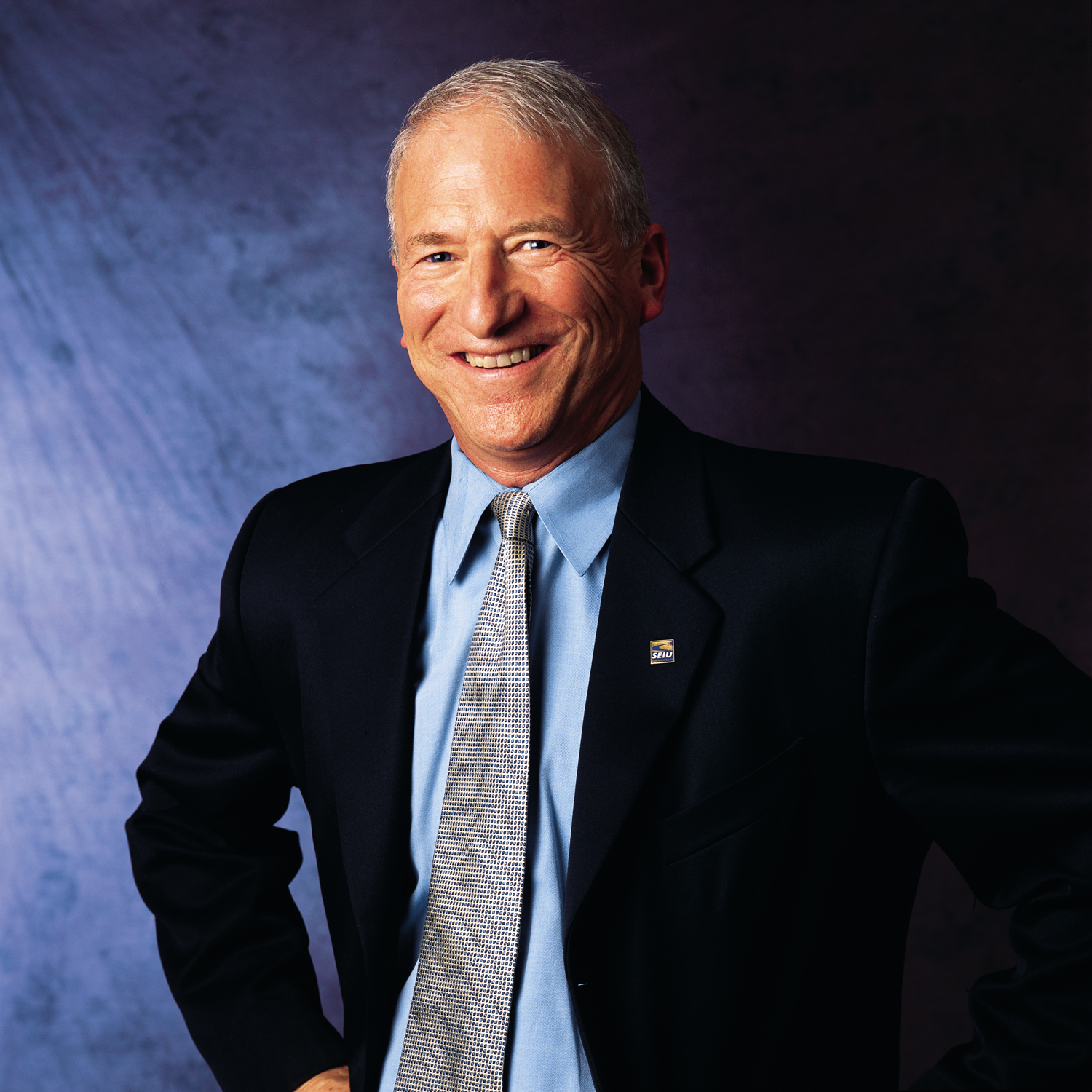
San Franciscans seem to be turning against Service Employee International Union and its national President Andy Stern this week, first with the vote by SEIU Local 1021 members to oust Stern’s leadership team, and now with a letter signed by a broad array of top political officials condemning SEIU tactics against the National Union of Healthcare Workers.

As the Guardian reported last year, NUHW President Sal Rosselli and his management team broke away from SEIU’s United Healthcare Workers after a protracted conflict that culminated in a hostile SEIU takeover of the local, placing it under a Stern-controlled trusteeship. NUHW had criticized Stern’s autocratic leadership style and undemocratic methods while SEIU accused Rosselli of using union funds to undermine Stern’s decisions.

Since then, a majority of SEIU-UHW workers statewide has filed petitions asking to decertify with SEIU-UHW and affiliate with NUHW, which has won seven of the nine elections that have been held so far. So SEIU filed various complaints with the National Labor Relations Board to try to block those elections, while NUHW has complained of worker harassment and ballot meddling by SEIU.

Earlier today, SEIU-UHW sent out a press release touting an NLRB ruling that clears the way for elections at 51 facilities around the state covering 6,845 voters, blaming NUHW for “violating members’ democratic rights” in opposing those elections.

But NUHW leaders say SEIU-UHW has been “cherry-picking” selected sites where they think their chances of winning are good and keeping their NLRB complaints in place to block other sites, often dividing up bargaining units in the process to raise fears in workers that they might lose bargaining clout if they switch unions. NUHW is a relatively small organization compared to the massive SEIU.

NUHW leaders say they want a fair, up-or-down vote among all of the SEIU-UHW members statewide who have asked for elections, and they’ve asked SEIU to sign a Fair Election Agreement to prevent harassment and intimidation, something that SEIU often asks employers to sign.

Supporting that request is an open letter signed by 116 San Francisco political leaders from across the spectrum, including every member of the Board of Supervisors except Sup. Carmen Chu, Assembly members Tom Ammiano and Fiona Ma, Sen. Mark Leno, Democrat Party chair Aaron Peskin and nine other members of the DCCC, all four major candidates for the Dist. 8 Board of Supervisors seat, United Educators of San Francisco President Dennis Kelly, and representatives from a board array of unions and grassroots organizations, including UNITE-HERE, POWER, Young Workers United, Chinese Progressive Association, Coleman Advocates, and many others.

Interestingly, in addition to his critics on the left within the labor movement, Stern is also being criticized by conservatives right now after President Barack Obama appointed him to his National Commission on Fiscal Responsibility and Reform.

The Guardian has forwarded the letter and allegations to SEIU-UHW officials and is awaiting a response, which I’ll post in the comments section when I hear back.


The letter reads:

WE, THE UNDERSIGNED community leaders of San Francisco, are deeply troubled by allegations that the Service Employees International Union (SEIU) committed multiple, serious violations of state labor law during the union representation election between SEIU United Healthcare Workers – West (SEIU-UHW) and the National Union of Healthcare Workers (NUHW) for 10,000 Fresno County homecare workers this June.

These allegations, made in sworn testimony before the California Public Employment Relations Board, include that SEIU officials directed staff to open, mark, and alter workers’ ballots; threaten the deportation of immigrants; and tell workers they would suffer the loss of wages, benefits and hours to scare them into voting for SEIU. The complaint alleges further that SEIU organizers physically removed ballots from workers’ mailboxes and homes.

Caregivers in San Francisco have complained of similar intimidation and harassment at the hands of SEIU officials trying to block union representation elections requested by them and tens of thousands of other California healthcare workers who have petitioned to join NUHW.

Over the next year, as thousands of San Francisco homecare workers, private sector nursing home workers, and private sector hospital workers make their choice for union representation between SEIUUHW and NUHW, we are committed to see that these workers can make their decision democratically, without intimidation, harassment, threats or coercion of any kind, from any party.

NUHW officials have communicated to us their willingness to enter into Fair Election Agreements, which are common in California’s healthcare industry, and which SEIU officials have long championed throughout the nation, to govern their campaign conduct and protect caregivers’ freedom of choice in their upcoming union representation elections.

Therefore, we are asking that you and San Francisco’s healthcare employers join NUHW in negotiating Fair Election Agreements to establish ground rules for these elections and guarantee that workers can choose their representatives for themselves. Please know that regardless of your decision, we will stand united to ensure that San Francisco’s healthcare workers have the fair elections they deserve.

Robert Skidelsky: The big bank fix

4

If reformers are to win, they must be prepared to fight the world/s most powerful vested interest

By Robert Skidelsky 

Robert Skidelsky, a member of the British House of Lords, is Professor emeritus of political economy at Warwick University, author of a prize-winning biography of the economist John Maynard Keynes, and a board member of the Moscow School of Political Studies.

LONDON – Two alternative approaches dominate current discussions about banking reform: break-up and regulation. The debate goes back to the early days of US President Franklin D. Roosevelt’s “New Deal,” which pitted “trust-busters” against regulators. 


In banking, the trust-busters won the day with the Glass-Steagall Act of 1933, which divorced commercial banking from investment banking and guaranteed bank deposits. With the gradual dismantling of Glass-Steagall, and its final repeal in 1999, bankers triumphed over both the busters and the regulators, while maintaining deposit insurance for the commercial banks. It was this largely unregulated system that came crashing down in 2008, with global repercussions.

At the core of preventing another banking crash is solving the problem of moral hazard – the likelihood that a risk-taker who is insured against loss will take more risks. In most countries, if a bank in which I place my money goes bust, the government, not the bank, compensates me. Additionally, the central bank acts as “lender of last resort” to commercial banks considered “too big to fail.” As a result, banks enjoying deposit insurance and access to central bank funds are free to gamble with their depositors’ money; they are “banks with casinos attached to them” in the words of John Kay.

The danger unleashed by sweeping away the Glass-Steagall barrier to moral hazard became clear after Lehman Brothers was allowed to fail in September 2008. Bail-out facilities were then extended ad hoc to investment banks, mortgage providers, and big insurers like AIG, protecting managers, creditors, and stock-holders against loss. (Goldman Sachs became eligible for subsidized Fed loans by turning itself into a holding company). The main part of the banking system was able to take risks without having to foot the bill for failure. Public anger apart, such a system is untenable.

Premature rejection of bank nationalization has left us with the same two alternatives as in 1933: break-up or regulation. Taking his cue from Paul Volcker, a former chairman of the US Federal Reserve, President Barack Obama has proposed a modern form of Glass-Steagall.

Under the Obama-Volcker proposals, commercial banks would be forbidden to engage in proprietary trading – trading on their own account – and from owning hedge funds and private-equity firms. Moreover, they would be limited in their holding of derivative instruments, and Obama has suggested that no commercial bank should hold more than 10% of national deposits. The main idea is to reduce the risks that can be taken by any financial institution that is backed by the federal government.

The alternative regulatory approach, promoted by Nobel Laureate Paul Krugman and the chairman of Britain’s Financial Service Authority, Adair Turner, seeks to use regulation to limit risk-taking without changing the structure of the banking system. A new portfolio of regulations would increase banks’ capital requirements, limit the debt that they could take on, and establish a Consumer Financial Protection Agency to protect naïve borrowers against predatory lending.

This is not an either-or matter. In testimony to the Senate Banking Committee in early February, MIT’s Simon Johnson endorsed the Volcker approach, but also favored strengthening commercial banks’ capital ratios “dramatically” – from about 7% to 25% – and improving bankruptcy procedures through a “living will,” which would freeze some assets, but not others.

Many details of the Obama package are unlikely to survive (if, indeed, the plan itself does). But there are powerful arguments against the principles of his approach. Critics point out that “plain old bad lending” by the commercial banks accounted for 90% of banks’ losses. The classic case is Britain’s Royal Bank of Scotland, which is not an investment bank.

The commercial banks’ main losses were incurred in the residential and commercial housing market. The remedy here is not to break up the banks, but to limit bank loans to this sector – say, by forcing them to hold a certain proportion of mortgages on their books, and by increasing the capital that needs to be held against loans for commercial real estate.

Moreover, many countries with integrated banking systems did not have to bail out any of their financial institutions. Canada’s banks were not too big to fail – just too boring to fail. There is nothing in Canada to rival the power of Wall Street or the City of London.  This enabled the government to swim against the tide of financial innovation and de-regulation. It is countries like the US and Britain, with politically dominant financial sectors competing to take over financial leadership of the world, that suffered the heaviest losses.

This is the point that the well-intentioned regulators miss. At root, the battle between the two approaches is a question of power, not of technical financial economics. As Johnson pointed out in his Congressional testimony, “solutions that depend on smarter, better regulatory supervision and corrective action ignore the political constraint on regulation and the political power of big banks.”

Such proposed solutions assume that regulators will be able to identify excess risks, prevent banks from manipulating the regulations, resist political pressure to leave the banks alone, and impose controversial corrective measures “that will be too complicated to defend in public.” They also assume that governments will have to the courage to back them as their opponents accuse them of socialism and crimes against freedom, innovation, dynamism, and so on. In fact, this chorus of abuse has already started, led by Goldman Sachs Chairman Lloyd Blankfein.

There is another interesting parallel with the New Deal. Roosevelt got the Glass-Steagall Act through Congress within a hundred days of his inauguration. Obama has waited over a year to suggest his bank reform, and it is unlikely to pass. This is not just because the banking crisis in 1933 was greater than today’s crisis; it is because much more powerful financial lobbies now stand between pen and policy. If reformers are to win, they must be prepared to fight the world’s most powerful vested interest.

Robert Skidelsky, a member of the British House of Lords, is Professor emeritus of political economy at Warwick University, author of a prize-winning biography of the economist John Maynard Keynes, and a board member of the Moscow School of Political Studies.

Copyright: Project Syndicate, 2010.
www.project-syndicate.org

The “jobs” shell game

0

Written with Nima Maghame

news@sfbg.com

While many San Francisco city officials have been trying to figure out how to close a projected budget deficit of more than $520 million, Mayor Gavin Newsom has spent the last month trying to make that spending gap even larger by aggressively pushing a variety of business tax cuts that economists say will do little to improve the local economy and could actually make it worse.

Newsom first proposed his so-called “local economic stimulus package” a year ago during his ill-fated run for governor, just as President Barack Obama was pushing his own economic stimulus plan. But unlike the federal government’s $787 billion plan, about a third of which involved tax cuts demanded by conservatives, Newsom proposed to cut local business taxes while also deeply slashing local government spending and laying off hundreds of city workers.

Most economists say that’s a terrible idea. In fact, a report issued at the time by Moody’s Investor Services made it clear that every dollar of direct government spending adds about $1.60 into the economy (or $1.73 if it’s on food stamps, the most stimulative spending government can make), whereas business tax cuts add only about $1 to the economy for every dollar spent.

We clashed with the Mayor’s Office at the time on our Politics blog (see “Mayor Newsom doesn’t understand economics,” 2/13/09), with Newsom’s spokesperson telling us the mayor was relying on the input of City Economist Ted Egan. But when we interviewed Egan about the issue, he agreed that it’s a bad idea to slash government spending to pay for tax cuts.

“We were in no way saying you should cut taxes to stimulate the economy, particularly if it means reducing government spending,” Egan told us then. And when we asked directly whether it’s better for San Francisco’s economy for the city to directly spend a dollar on payroll or to give that dollar away in a private sector tax break, he told us, “The consensus among economists is that most of the time government spending stimulates the economy more.”

The Board of Supervisors basically ignored Newsom’s proposal. But he revived it last month, expanding the proposals with even more private sector subsidies and making them the centerpiece of his Jan. 13 State of the City speech, publicly pushing it since then with a series of public events at businesses located in the city.

And this time — with the local economy still slow, projected city budget deficits bigger than ever, and little serious talk about how the city can bring in more money — it appears the proposals will be the subject of a series of hearings before Board of Supervisors’ committees in the coming weeks.

Newsom’s tax cut proposals include a proposal to waive the 1.5 percent payroll tax (the city’s main business tax) for all new hires; extend and expand the payroll tax exemption for biotech companies (see “Biotech’s bonanza,” p. 12); give small businesses tax credits for their spending on health plans; and allow developers to pass one-third of their affordable housing in-lieu fees onto future homeowners.

Newsom and his Press Secretary Tony Winnicker have spoken euphorically about the proposals, saying they’re desperately needed to spur the local economy. “We believe that enacting these tax incentives, particularly the payroll tax credit for new hires, is one of the single biggest things we can do for economic growth,” Winnicker said.

Despite repeated questions about the economists’ concerns over financing tax cuts with government spending cuts, we couldn’t get them to address the tradeoff directly. “The mayor will support critical public services,” was all Winnicker would say about the deep cuts that Newsom is expected to announce in his June 1 budget.

Sup. John Avalos, who chairs the Board of Supervisors Budget and Finance Committee, expressed more skepticism about the mayor’s proposals. “Do tax breaks have the intended effect of stimulating the economy? As we underfund government services, are we getting a net gain or are we getting something taken away? For the very small businesses in my district, it’s going to be trickle-down economics. It’s very unrelated and unmeasurable in benefit,” he told us.

David Noyola, board aide to President David Chiu, said his boss is supporting the biotech tax credit but reserving judgment on the rest. “It’s going to be a cost-benefit analysis,” Noyola said. “When we’re talking about jobs, we’re talking about public and private sector jobs, always.”

While Egan’s economic analysis predicts tax cuts will encourage some economic growth, even he is circumspect about the good it will do, particularly without finding a way to avoid deep cuts in city spending. “The truth of the matter is that our stimulus efforts are small because the city has relatively small power to affect the local economy,” Egan told us.

That’s the consensus economic opinion. Huge federal spending can help a national economy a little bit, but local economies are just different animals that local governments are largely powerless to really alter, particularly through tax cuts.

“I agree with Egan: city government has little power over the local economy,” Mike Potepan, an urban development economist at San Francisco State University, told the Guardian.

Both economists agree that tying tax cuts to job creation or development stimulus is better than general tax cuts, but that neither is good if it means laying off more city workers.

“Research shows that by cutting taxes you have more business activity where studies show it is likely to effect employment,” Potepan said. “On the other side, you have to think about revenue. Cities are going to have to balance their budgets, which could mean a cut in services.”

Author Greg LeRoy expresses a more critical perspective in his book The Great American Jobs Scam: Corporate Tax Dodging and the Myth of Job Creation (1995, Berrett-Koehler), amassing evidence from economic studies and CEO surveys that corporate tax breaks, even those tied to new job creation, have almost no effect on private companies’ decisions about where to locate and whether to hire.

“How can companies get away with this? Because the system is rigged. Corporations have it down to a science. They have learned how to chant ‘jobs, jobs, jobs’ to win huge corporate tax breaks — and still do whatever they wanted all along,” LeRoy writes. “That’s the Great American Jobs Scam: an intentionally constructed system that enables corporations to exact huge taxpayer subsidies by promising quality jobs — and lets them fail to deliver. The other benefit often promised — higher tax revenues — often proves false as well.”

While proposing to forgo collecting millions of dollars in payroll taxes (the Controller’s Office is still working on a projected total for the tax cut package), the Mayor’s Office also wants to spur development of new housing with a proposal that would delay collection of needed affordable housing money by more than a decade.

After hearing mostly from a large crowd of desperate developers and construction workers during a Jan. 21 hearing on the proposal, the Planning Commission approved the package on a 4-3 vote, with the mayor’s appointees in agreement and the board’s appointees in dissent. It will be considered by the Board of Supervisors Land Use Committee sometime after Feb. 12.

The most controversial part of the fee reform package involves reducing the fee developers pay to support affordable housing by 33 percent, then charging a 1 percent transfer tax to subsequent buyers of those homes. Egan estimates developers would save almost $20,000 per housing unit, and that it would take an average of 16 years for the city to recover that money. But for high-rise luxury condos, the city would eventually recover about $27,000 per unit.

“It’s a classic make-an-investment-now-to-get-more-later strategy,” Michael Yarne, who crafted the policy for the Mayor’s Office of Economic and Workforce Development at Newsom’s direction, told the Guardian.

“If it makes it feasible for projects to be started, then it is worth passing,” Tim Colen, a representative of San Francisco Housing Action, said at the Planning Commission hearing, expressing hope that it will help create desperately needed construction jobs and new market rate housing.

But affordable housing advocates and some progressives criticize the policy as completely backward, saying that affordable housing development is desperately needed now, during these tough economic times, rather than a policy that encourages more market rate housing and bails out bad investments made at the height of the real estate bubble.

“What the city needs to do is directly build affordable housing, for which there is a demand,” affordable housing activist Calvin Welch told us. “The problem is that the banks don’t want to lend these guys money because they know nobody can afford to buy houses at the prices that these guys are demanding.”

Debra Walker, who is running for supervisor from District 6 and voted against the proposal when it came before the Building Inspection Commission (the sole vote on a commission dominated by mayoral appointees), agrees.

“The whole argument is that it stimulates development, but it doesn’t,” Walker said, arguing that the incremental gains (about 25 housing units per year, Egan estimates) will be offset by delayed affordable housing construction. “There would be more economic stimulus by using the fee to build more affordable housing.”

Instead, it simply shifts resources to favored entities: from home owners to developers, in the case of the affordable housing fees, or in the case of the tax credits, from the public to the private sector. But Newsom’s office just doesn’t see it that way.

“The Guardian believes in protecting public sector employees over private sector employees,” was how Winnicker formulated our understanding of what the economists are saying. “Most people don’t work for the city, and if we can support private sector jobs, that adds to sales tax revenues and benefits the economy. Despite a short-term impact of the tax credit, that’s a benefit.”

Adam Lesser contributed to this report


Joseph Stiglitz: Muddling Out of Freefall

0

Here is our monthly installment of Joseph E. Stiglitz’s Unconventional Economic Wisdom column from the Project Syndicate news series. Stiglitz is University Professor at Columbia University and the winner of the 2001 Nobel Prize in economics. His new book is Freefall.

NEW YORK – Defeat in the Massachusetts senatorial election has deprived America’s Democrats of the 60 votes needed to pass health-care reform and other legislation, and it has changed American politics – at least for the moment. But what does that vote say about American voters and the economy?

It does not herald a shift to the right, as some pundits suggest. Rather, the message it sends is the same as that sent by voters to President Bill Clinton 17 years ago: “It’s the economy, stupid!” and “Jobs, jobs, jobs.” Indeed, on the other side of the United States from Massachusetts, voters in Oregon passed a referendum supporting a tax increase.

The US economy is in a mess – even if growth has resumed, and bankers are once again receiving huge bonuses. More than one out of six Americans who would like a full-time job cannot get one; and 40% of the unemployed have been out of a job for more than six months.

As Europe learned long ago, hardship increases with the length of unemployment, as job skills and prospects deteriorate and savings gets wiped out. The 2.5-3.5 million foreclosures expected this year will exceed those of 2009, and the year began with what is expected to be the first of many large commercial real-estate bankruptcies. Even the Congressional Budget Office is predicting that it will be the middle of the decade before unemployment returns to more normal levels, as America experiences its own version of “Japanese malaise.” 

As I wrote in my new book Freefall, President Barack Obama took a big gamble at the start of his administration. Instead of the marked change that his campaign had promised, he kept many of the same officials and maintained the same “trickle down” strategy to confront the financial crisis. Providing enough money to the banks was, his team seemed to say, the best way to help ordinary homeowners and workers.

When America reformed its welfare programs for the poor under Clinton, it put conditions on recipients: they had to look for a job or enroll in training programs. But when the banks received welfare benefits, no conditions were imposed on them. Had Obama’s attempt at muddling through worked, it would have avoided some big philosophical battles. But it didn’t work, and it has been a long time since popular antipathy to banks has been so great.

Obama wanted to bridge the divides among Americans that George W. Bush had opened. But now those divides are wider. His attempts to please everyone, so evident in the last few weeks, are likely to mollify no one.

Deficit hawks – especially among the bankers who laid low during the government bailout of their institutions, but who have now come back with a vengeance – use worries about the growing deficit to justify cutbacks in spending. But these views on how to run the economy are no better than the bankers’ approach to running their own institutions.

Cutting spending now will weaken the economy. So long as spending goes to investments yielding a modest return of 6%, the long-term debt will be reduced, even as the short-term deficit increases, owing to the higher tax revenues generated by the larger output in the short run and the more rapid growth in the long run.

Trying to “square the circle” between the need to stimulate the economy and please the deficit hawks, Obama has proposed deficit reductions that, while alienating liberal democrats, were too small to please the hawks. Other gestures to help struggling middle-class Americans may show where his heart is, but are too small to make a meaningful difference.

Three things can make a difference: a second stimulus, stemming the tide of housing foreclosures by addressing the roughly 25% of mortgages that are worth more than the value the house, and reshaping our financial system to rein in the banks.

There was a moment a year ago when Obama, with his enormous political capital, might have been able to achieve this ambitious agenda, and, building on these successes, go on to deal with America’s other problems. But anger about the bailout, confusion between the bailout (which didn’t restart lending, as it was supposed to do) and the stimulus (which did what it was supposed to do, but was too small), and disappointment about mounting job losses, has vastly circumscribed his room for maneuver.

Indeed, there is even skepticism about whether Obama will be able to push through his welcome and long overdue efforts to curtail the too-big-to-fail banks and their reckless risk-taking. And, without that, more likely than not, the economy will face another crisis in the not-too-distant future.

Most Americans, however, are focused on today’s downturn, not tomorrow’s. Growth over the next two years is expected to be so anemic that it will barely be able to create enough jobs for new entrants to the labor force, let alone to return unemployment to an acceptable level.

Unfettered markets may have caused this calamity, and markets by themselves won’t get us out, at least any time soon. Government action is needed, and that will require effective and forceful political leadership.

Joseph E. Stiglitz, winner of the 2001 Nobel Prize in economics, served as Chairman of the Council of Economic Advisers from 1995 to 1997. He is the author of the recently published bestseller, Freefall: America, Free Markets, and the Sinking of the World Economy.

Copyright: Project Syndicate, 2010.
www.project-syndicate.org
For a podcast of this commentary in English, please use this link: http://media.blubrry.com/ps/media.libsyn.com/media/ps/stiglitz122.mp3


Big Brother Obama

0

The Federal Bureau of Investigation illegally collected thousands of telephone records between 2002 and 2006, a Jan. 20 Justice Department report revealed. Senate Judiciary Committee Chairman Patrick Leahy (D-Vt.) publicly scolded FBI Director Robert Mueller for the transgression, but the practice of secretly spying on Americans’ international communications has become standard practice, even under the new presidential administration.

In late 2005, The New York Times exposed how the George W. Bush administration authorized the National Security Agency (NSA) to spy on Americans’ e-mails and phone calls without then-required court orders. The scoop prompted retired AT&T technician Mark Klein to reveal the existence of a NSA-controlled secret room at a San Francisco AT&T facility, providing undisputed proof of this public-private spy operation and the extensive amount of personal data that is collected.

Not only was no one held accountable, but the Democrat-controlled Congress legalized the operation after the fact by passing the Foreign Intelligence Surveillance Amendments Act (FISA Amendments Act) in 2008. Klein responded last year with the self-published book Wiring Up the Big Brother Machine … And Fighting It to narrate his version of the civil liberties and privacy battle.

The creeping intrusion on Americans’ privacy continues unabated under the Obama administration, according to government watchdog groups and media pundits. “Things have changed slightly — for the worse,” said Rebecca Jeschke from the Electronic Frontier Foundation (EFF).

Barack Obama, while still a Senator, hinted what his later inclination might be when he voted for the FISA Amendments Act, arguing that it was needed to foil terrorist plots (after having previously stated his intention to oppose the bill). Now that the legislation is law, his administration is using the same rationale as its predecessor to fend off attempts to repeal it, namely that it is crucial to national security.

Yet the EFF and the American Civil Liberties Union (ACLU) deem the practice and the legislation that authorized it to be unconstitutional. They’re challenging it in courts but having a difficult time in light of executive branch opposition and national security claims.

The 1978 Foreign Intelligence Surveillance Act (FISA) was originally crafted to constrain and oversee the government’s spying activities on Americans after the Nixon administration abused its power to eavesdrop on Vietnam War protesters and political adversaries.

FISA required officials to obtain from a judge individual warrants with specific named individuals or specific phone numbers before it wiretapped phone calls or read e-mails in the U.S. Outside the borders, spying remained unrestricted. The FISA Amendments Act subtly blurs those lines and leaves loopholes whereby the government can intercept U.S. residents’ communications without having to notify the FISA court.

Under the new protocols, the FISA court can authorize NSA to conduct surveillance on U.S. soil as long as the target isn’t American and is “reasonably believed” to be located abroad, no matter who the interlocutor may be, foreigner or American. When information is incidentally collected on American citizens, “minimization procedures” are designed to prevent the unnecessary retention or dissemination of such information.

“Now under the new law, the FISA court is looking at bulk surveillance under which the government doesn’t specify who it’s going to wiretap, which phone numbers it’s going to monitor, or which e-mail addresses it’s going to surveil. All the government has to say to the court is that the targets of its surveillance are overseas. Once the government has said that, the court just checks a box and grants permission. So insofar as Americans engage in international communications, this is a law that gives the government carte blanche to monitor those communications,” explained ACLU National Security Project Director Jameel Jaffer.

Civil liberties advocates say this unchecked eavesdropping power violates the Fourth Amendment, which protects against unreasonable searches and seizures. Yet the Obama administration is “aggressively defending the FISA Amendments Act,” Jaffer said. It is arguing that the courts don’t even have a role in evaluating the constitutionality of the government’s surveillance activities.

A brief filed by the Justice Department in January 2009 maintains that the FAA “strikes a reasonable balance between the critical intelligence it serves and the privacy interests of Americans it indirectly affects,” and that “plaintiffs’ arguments from the start have rested on speculation and surmise.” In short: trust in the government’s good faith for not abusing its power.

Another worrisome aspect of the FISA Amendments Act is the immunity from liability it retroactively granted to telecommunications carriers that assisted the government in carrying out its warrantless wiretapping program before Congress consented to it.

In January 2006, Klein gave EFF critical engineering documents proving that AT&T, his former employer, let NSA access its 611 Folsom St. office building to tap into its Internet data flow to duplicate it and send it to a secret room the agency controlled. That included e-mails, Web browsing, voice-over Internet Protocol (VoIP) phone calls, pictures, and streaming video, be they international or domestic.

Thanks to this installation, anything transmitted on the AT&T network was swept by the NSA. And there were clues that the San Francisco secret room was just one in a series set up all over the country. In his book, available on Amazon, Klein gives an account of his personal protest and involvement in the case spearheaded by EFF against AT&T.

Klein tells how he figured out what the San Francisco room was about, how he struggled to get the story out, and how he tried in vain to inform Congress. But following approval of the FISA Amendments Act, the lawsuit was dismissed in June 2009, along with 32 other similar cases brought by customers against their telecommunications service providers.

“The surveillance system now approved by Congress provides the physical apparatus for the government to collect and store a huge database on virtually the entire population, available for data mining whenever the government wants to target its political opponents at any given moment — all in the hands of an unrestrained executive power. It is the infrastructure for a police state,” he wrote. According to his sources, the equipment is still in place. Security even has been beefed up at the Folsom Street building where he used to work: the entrance to the entire floor where the diversion device is inserted is now restricted.

EFF is appealing the dismissal of the AT&T lawsuit, arguing that the communications companies’ amnesty is unconstitutional in that it grants to the president broad discretion to block the courts from considering the core constitutional privacy claims of millions of Americans. Officials with the Justice Department told us they wouldn’t comment because of the ongoing litigation.

In the meantime, the current judicial and legal gridlock is barring the public from reviewing what took place under the Bush administration and what is going on right now. Can our communications channels be trusted? Klein says he won’t be appeased unless the equipment is torn out.

Obama to base: “Continue to fight”

0

Tosca in North Beach was packed last night for the State of the Union watch party that was thrown by Organizing for America, President Barack Obama’s grassroots organizing operation, and the crowd was predictably supportive of the president despite his political difficulties and declining popularity.

Karen Buchanan — who volunteered on Obama’s presidential campaign and has continued to do so since then, including phone banking to support his health care reform effort – responded positively to the speech’s call for renewed activism, even though she was less than thrilled with some of Obama’s policy prescriptions.

“I don’t agree with him 100 percent, but I’m not going to join the circular firing squad. I continue to support him,” Buchanan said. “He had a nice tone of optimism and we needed that.”

That may be true. Obama’s poignant call for the country’s political, corporate, and media institutions to make strong, good faith efforts to regain the public’s trust was the emotional high point of this speech. But unfortunately, Obama’s muddled and often contradictory policy priorities are frustrating to progressives who have been turning away from this president.

Saving ocean ecosystems

0

GREEN CITY In the spring and summer months, pacific leatherback sea turtles arrive just outside the Golden Gate to feast on jellyfish. The turtles, which can weigh up to 1,200 pounds and live as long as a century, are some of the oldest reptiles in existence.

In a single year, a leatherback may swim 6,200 miles as it encircles the Pacific Ocean, migrating from nesting grounds as far away as Indonesia to feed off the coasts of California, Oregon, and Washington. The leatherback was listed as a federally endangered species in 1970, and scientists now worry that the turtles could go extinct in as little as 10 years.

The ancient reptile may be rare, but its vanishing act is becoming common for marine creatures. Jackie Dragon, a campaign organizer with Pacific Environment, told us large fish populations, including bluefin tuna, Atlantic cod, marlin, and certain sharks, have declined by 90 percent since the advent of industrialized fishing in the 1950s. Meanwhile, ocean acidification due to rising carbon dioxide levels has imperiled key species, threatening to alter the food web with potentially drastic implications.

Recently, San Francisco’s ocean conservationists have displayed rare optimism, however, as historic new protections for ocean ecosystems and the leatherback seem within reach.

A coalition of local environmental organizations staged a Jan. 13 event at City Hall to rally for the creation of a new, comprehensive ocean-protection policy at the federal level. Dubbed Wear Blue for Oceans Day, the event drew a crowd of around 75 who donned blue in support of the federal policy, put forth by President Barack Obama last June.

Under the current regulatory system, there are 140 different laws relating to ocean management, and more than 20 disparate agencies, according to Dragon. “They have varying purposes and often conflicting mandates,” she explained. “Right now, it’s inconsistent with a healthy future for the ocean to have a piecemeal approach. And it’s absolutely necessary to appreciate that ecosystems in the ocean depend on a kind of management that takes into consideration the fact that these habitats … need to be looked at from a broader perspective.”

According to an interim report drafted by a 23-member task force convened by Obama to make suggestions for crafting a federal policy, the new approach would place ecosystem protection at the heart of regulatory decisions. Environmentalists hope it will improve the overall health of oceans.

The task force is scheduled to submit its final recommendations to Obama in early February, and the president is expected to announce the creation of the new policy shortly afterward. “The importance of ocean, coastal, and Great Lakes ecosystems cannot be overstated,” the report notes. “Simply put, we need them to survive.” Climate change and ocean acidification are named as top priorities.

A second regulatory victory seems imminent for the Sea Turtle Restoration Project, a San Francisco-based environmental organization that joined Oceana, the Center for Biological Diversity, and the Turtle Island Restoration Network in pressing for expanded critical habitat designation for the pacific leatherback turtles in 2007.

The groups sued the National Marine Fisheries Service, a division of the National Oceanic and Atmospheric Administration, for failing to take action for two years. Following a settlement, the agency finally submitted its proposal Jan. 5 for a new protection zone. The critical habitat area would span some 70,000 square miles of open waters along the West Coast.

Chris Pincetich, a campaign organizer with the Sea Turtle Restoration Project, called the designation “a long overdue action by federal agencies.” However, the proposal doesn’t limit commercial fishing, which Pincetich notes is one of the greatest threats to the leatherbacks, because they can become ensnared in gillnets. Nor does it cover habitat areas in Southern California, where turtles have been known to migrate, Pincetich said. NMFS will accept public comments on the proposal until March 8.

Although it’s a major step forward, changes won’t be implemented until January 2011 at the earliest.

For the leatherback, with about a decade to fight for survival, time is of the essence.

State of the immigration crisis rally

0

Text by Sarah Phelan

sfilen.jpg

As President Barack Obama prepares to make his annual State of the Union address, local immigrant advocates are calling on Obama to mention the need for national immigration reform in his address and to uphold campaign promises to pass comprehensive immigration reform.

Describing themselves in a press release as “a diverse group of African, Asian, European, and Latino immigrants” the organizers of today’s protest rally, (from 4-6 p.m at the Federal Building at 7th and Mission Street, thunder and lightning notwithstanding) promised to urge Obama, Speaker of the House Nancy Pelosi and Sen. Feinstein and Boxer to make immigration reform a priority because of local crises in the immigrant communities.

“The time for reform is now,” Eric Quezada, Executive Director of Dolores Street Community Services, said in a press release. ” The President promised immigration reform on the campaign trail and we are here today to make sure that he keeps his word,”

Quezada noted that Obama pledged on his 2008 campaign campaign trail to pass humane changes to US immigration laws if he were elected President, including a legalization program for undocumented immigrants.
“Immigrants are part of the fabric of our communities, and we need to fix our immigration system so everyone who lives here can contribute as full members of society,” said Biniam Fantay with the African Advocacy Network.

Today’s demonstration is part of “100 days of action” campaign for immigration reform that began in December and is led locally by the SF Immigrant Legal and Education Network and the San Francisco Organizing Project.

Editor’s Notes

0

A year ago, we were dancing in the streets celebrating Barack Obama’s election. Now we’re marching in the streets protesting his escalation of the war in Afghanistan — and a lot of us are calling for the defeat of his signature legislation. That’s a failure that goes well beyond a couple of bad policy decisions, and it threatens more than just the next few years of Obama’s presidency.

The late philosopher Herbert Marcuse used to say that the worst disaster of the Vietnam War was the division it created between the baby boomers and their parents, the generational distrust that would last well beyond the final artillery fire. And I fear that the worst legacy of Afghanistan and the mess that is health care reform will be another deep blow to whatever fragile faith remains among young Americans that a well-meaning president and his party can make a difference, the faith that government can accomplish something worthwhile — and that the public sector is worth the fight it takes to save it from a well-organized and lavishly funded effort to continue the privatization of the United States.

The fight over the public option in the health care bill wasn’t just about containing costs, or preventing tax hikes, or mandating fair competition. The insurance industry knew that from the start.

One of the reasons the radical right has always hated Social Security is that it’s a government program that helps people, one that tens of millions of citizens rely on and support. When the government sends you a check every month, you tend to think of the folks in Washington as something other than crooks, liars, and villains.

And if the government offered health insurance that cost less than the private companies, covered more, and was less of a hassle to use, then millions more American voters would begin to realize that the public sector can do some things very well — much better than private industry. And that would be a social transformation on the scale of the New Deal.

So that’s why the insurers and their toadies wouldn’t allow it to happen — and why, in the wake of the Afghanistan fiasco, Obama’s failure to force the issue is such a momentous disappointment.

Just look around the streets of San Francisco at any antiwar demonstration and you see the problem. We’re mad at the president, not at the insurance industry. Nobody’s marching in front of the headquarters of the handful of big companies that have — as a matter of course and intentional policy — destroyed the health care system in America. We figure: hey, they’re just big businesses, doing what they do.

So instead, we’re going to be pissed off for a long time at the man who — maybe for just a moment, one bright shining moment — had the ability to turn around about 50 years of cynicism and distrust that has poisoned American politics. And we should be pissed, because he let us down. He promised us hope. Now he’s giving up, without even putting up much of a fight.

Choosing fear over kids

0

As a global treaty designed to protect children around the world celebrated its 20th anniversary last month, the United States found itself in the sole company of Somalia as one of just two countries that still has not implemented the most widely ratified human rights treaty in recorded history.

The United Nations Convention on the Rights of the Child (CRC), available for adoption since 1989, has now been ratified by 193 nations around the world and is seen as a universal guide to helping governments ensure that the basic needs of children are met. Although the Reagan administration played a major role in drafting the convention, experts say it has now been “intentionally misinterpreted” by conservative groups, which claim implementation would threaten American sovereignty and diminish family values.

The convention is set out in 54 Articles and two Optional Protocols and covers four main objectives: nondiscrimination; devotion to the best interests of the child; the right to life, survival and development; and respect for the views of the child. During last year’s presidential campaign, Barack Obama promised to review the treaty, saying: “It is embarrassing to find ourselves in the company of Somalia, a lawless land. It is important that the U.S. return to its position as a respected global leader and promoter of human rights.”

Yet since Obama has been in office, there has been little movement toward ratifying the convention, which sets international standards in the provision of children’s health care, education, and legal, civil, and social services. For children’s rights advocates, this failure of the U.S. to legitimize the rights of the child has resulted in the country’s loss of credibility in the international community.

“It just undermines us internationally as a leader of children’s issues,” said Jo Becker, Advocacy Director for the Children’s Rights division at Human Rights Watch, one of more than 200 organizations partnered to the volunteer-run Campaign for U.S. Ratification of the CRC. “The U.S. is a country that claims to care a lot about children, both nationally and internationally, but it hasn’t ratified a treaty endorsed by virtually every government in the world. It doesn’t make any sense at all.”

But while Meg Gardiner, current chair of the Campaign for U.S. Ratification, acknowledged that the U.S. customarily takes a long time to consider and ratify a treaty of any sort, she noted that implementing the convention is also being delayed by frequently misdirected and misguided concerns from various individuals and organizations.

The CRC is a legally binding treaty, and once the U.S. ratifies the agreement — by getting two-thirds of the Senate to approve it — it is committed to undertake actions and policies to reach the standards it advises. The government must submit a detailed report to the U.N. Committee on the Rights of the Child, which is made up of 18 members from different countries and legal systems, within two years of ratification and every five years thereafter.

The committee reviews the progress of each country’s government, then sends recommendations back to the country in question. Although U.N. officials claim that this is a collaborative process, not one that is antagonistic in form, opposition groups view this as a risk to U.S. self-governance.

“A forum for dialogue is fine, but we absolutely do not support the notion of world government,” John Schlafly, a lawyer at Eagle Forum, a conservative interest group that is campaigning against U.S ratification of the CRC, told the Guardian. “We think America is a self-governing country and that we should make our own laws. Our courts and officials should not be subject to decisions and viewpoints of those in other countries, but remember that our Constitution is our supreme law.”

Quoting Article 6 of the U.S. Constitution — which says that all treaties made under the authority of the United States shall be “the supreme law of the land” — Schlafly said if the CRC is ratified then the U.S will sign away any authority it has over children’s rights, with federal laws being changed to meet the criteria in the CRC.

But Jonathan Todres, an associate professor of law at Georgia State University and coeditor of a book on the CRC and the possible implications of its ratification, told us that’s a “misunderstanding” of the process involved. He said the CRC would almost certainly be ratified as a “non-self-executing treaty.” That means that although the U.S will have to comply with international law, it would not take effect domestically until the U.S. adopts legislation to fulfill treaty obligations.

He added that the United States also has the right to add reservations to the treaty if there are any articles that might conflict with U.S. law. For example, Article 37 of the CRC indicates that no “life imprisonment without possibility of release shall be imposed for offenses committed by persons below 18 years of age,” something that certain states in the U.S still impose.

Despite supporters’ desire for a “magic bullet” that will improve the lives of children in the U.S., they said the treaty will operate as a template for the government to assess how well U.S. law protects children. While Article 24 decrees that “states parties shall strive to ensure that no child is deprived of his or her right of access to … health care services,” ratification will not mean an immediate implementation of universal health care for the 8 million to 9 million children who do not have access to it, campaigners say.

“It in itself can’t change law. It is a road map that informs a dialogue around the way we treat children,” said Vienna Colucci, managing director and senior advisor for policy for Amnesty International. “It is a set of principles for the well-being of children, to help inform national discussions about what they really need to thrive. But any implementation of laws go through the same process any bill would.”

The U.S already has ratified the two Optional Protocols of the Children’s Convention, including the protocol on the sexual exploitation of children and enlisting children as soldiers, strengthening the exploitation protocol by adopting the U.S. Trafficking Victims Protection Act. Todres said this should be used as an example of what ratifying the entire CRC could do.

Many who oppose the CRC fear it will diminish the rights of the parent, such as when it comes to disciplining children. Article 9, which says children can be separated from their parents against their will when “competent authorities subject to judicial review” determine it is in their best interest, is often cited as a loss of parental freedom.

In March of this year Rep. Pete Hoekstra (R-Mich.) put forward a brief Parental Rights Amendment to the CRC, asserting that “the liberty of parents to direct the upbringing and education of their children is a fundamental right,” and deauthorizing the ratification of a treaty that would infringe on such rights.

According to Michael Ramey, spokesman at Parentalrights.org — an organization that claims to “protect children by empowering parents” and an affiliate of the Home School Legal Defense Association — the amendment currently only has six cosponsors in the Senate, a far cry from the two-thirds majority it would need to pass.

“This really is not a question of whether the CRC is all that bad or kind of bad. It is whether it is an improvement for us on what we have now,” he told us. “We already have laws in place against child abuse and neglect in all 50 states and we don’t gain anything by ratifying. None of the good parts of the convention are missing from U.S law.”

However, Todres said the U.S still has child laborers, citing a current bill in Congress that is seeking to strengthen child labor provision related to the agriculture sector. He also reminded opponents that the U.S has a relatively large high school dropout rate, with some U.S children going hungry and hundreds of thousands at risk of sexual exploitation each year.

“Ultimately if one is concerned about the loss of parental authority, then one should look at the text of the CRC itself,” he said, highlighting 19 provisions in the text that stress the role of the parent in the child’s life. “Drafters understood, when ensuring the rights of children, they would be most successful when ensuring the rights of the family too.”

Although there are other articles in the convention that conflict with American law — it prohibits corporal punishment, for example — Linda Elrod, a law professor at Washburn University and supporter of the Campaign for Ratification, said she had not experienced countries receiving “report cards” from the U.N. Committee in the 20 years it had been operating.

“My reason for supporting it is that it is basically a bill of rights for children that says they are people,” she said, stressing how Article 12 in particular gives the child a voice and a way to express it. “We helped draft the U.N. convention and got the rest of the world to adopt that standard. Yes, it gives children rights, but I don’t think this takes away from anyone else’s rights. It just adds a balance.”

Editor’s Notes

0

A year ago, we were dancing in the streets celebrating Barack Obama’s election. Now we’re marching in the streets protesting his escalation of the war in Afghanistan — and a lot of us are calling for the defeat of his signature legislation. That’s a failure that goes well beyond a couple of bad policy decisions, and it threatens more than just the next few years of Obama’s presidency.

The late philosopher Herbert Marcuse used to say that the worst disaster of the Vietnam War was the division it created between the baby boomers and their parents, the generational distrust that would last well beyond the final artillery fire. And I fear that the worst legacy of Afghanistan and the mess that is health care reform will be another deep blow to whatever fragile faith remains among young Americans that a well-meaning president and his party can make a difference, the faith that government can accomplish something worthwhile — and that the public sector is worth the fight it takes to save it from a well-organized and lavishly funded effort to continue the privatization of the United States.

The fight over the public option in the health care bill wasn’t just about containing costs, or preventing tax hikes, or mandating fair competition. The insurance industry knew that from the start.

One of the reasons the radical right has always hated Social Security is that it’s a government program that helps people, one that tens of millions of citizens rely on and support. When the government sends you a check every month, you tend to think of the folks in Washington as something other than crooks, liars, and villains.

And if the government offered health insurance that cost less than the private companies, covered more, and was less of a hassle to use, then millions more American voters would begin to realize that the public sector can do some things very well — much better than private industry. And that would be a social transformation on the scale of the New Deal.

So that’s why the insurers and their toadies wouldn’t allow it to happen — and why, in the wake of the Afghanistan fiasco, Obama’s failure to force the issue is such a momentous disappointment.

Just look around the streets of San Francisco at any antiwar demonstration and you see the problem. We’re mad at the president, not at the insurance industry. Nobody’s marching in front of the headquarters of the handful of big companies that have — as a matter of course and intentional policy — destroyed the health care system in America. We figure: hey, they’re just big businesses, doing what they do.

So instead, we’re going to be pissed off for a long time at the man who — maybe for just a moment, one bright shining moment — had the ability to turn around about 50 years of cynicism and distrust that has poisoned American politics. And we should be pissed, because he let us down. He promised us hope. Now he’s giving up, without even putting up much of a fight.

8, 9 … 2010

0

1. SF garage rock goes pop This year saw Bay Area garage rock go pop in style and impact without losing its soul. I’m thinking of the Fresh and Onlys, and of Ty Segall’s second solo effort Lemons (Goner), a lovely one. I’m thinking of Girls’ Album (True Panther/Matador), which threw down the crossover-move gauntlet with no shame in its game: Christopher Owens’ interviews were as entertaining as his music and brasher — his real talk about sex and drugs made good headline fodder for the excitable British press, but contained the kind of truth that honors life over rules or boring definitions. The secret keeper, though, was the Mantles’ self-titled debut on Siltbreeze. Drew Cramer’s lead guitar and Michael Oliveras’ vocals were even better live, the mark of a band in bloom.

2. The AfroSurreal In May, D. Scot Miller helped put together a special AfroSurreal issue of the Guardian, a collection of words and visions journeying beyond the potential of Barack Obama’s presidency. The Kehinde Wiley piece on the cover wasn’t the only AfroSurreal image on this paper’s front pages — just last week, Conrad Ruiz’s Godzilla-size Yes We Can stomped around the city. Musically, AfroSurrealism manifested in the mind- and mirror-bending quality Dam-Funk’s Toeachizown (Stones Throw) and the rehab hallucinations and Dante-like funeral marches of Chelonis R. Jones’s Chatterton (Systematic). It floated in through cracks in the time warp as well: the ghetto opera of 24 Carat Black’s Gone: The Promises of Yesterday (Numero Group); the proto-punk of Death’s For the World to See (Drag City), especially “Politicians in My Eyes”; and weirdest of all, the gothic funk and skronk of Wicked Witch’s Chaos: 1978-1986 (E.M.).

3. 21st century goth From blackness to deathly whiteface — something gothic this way came in 2009, thanks to Cold Cave’s Cremations (Hospital Productions) and Love Comes Close (Matador). Both staked a claim that the genre is as applicable as death metal to a post-Bush presidency globe. But while those albums notched acclaim and attention, the similar yet more audacious Cure and Cabaret Volatire moves of Jones’ months-earlier Chatterton went ignored and unappreciated. Evidence of racism, proof that German techno only gets appreciated years after the fact, or both?

4. Hauntological mutations In 2009’s sonic mansion, ghosts haunted the hallways leading to and from the gothic banquet hall, and hauntology — a Derrida term applied to music by the critic Simon Reynolds — continued to morph, just as any self-respecting specter should, well beyond dubstep. The maze-like passages of Rooj’s The Transactional Dharma of Rooj (Ghost Box) and Broadcast and the Focus Group’s Broadcast and the Focus Group Investigate Witch Cults of the Radio Age (Warp) both suggested that spirits have short attention spans, while Demdike Stare’s Symbiosis (Modern Love) traded seances on wet afternoons for retro-futurist meetings with medieval wicked witches.

5. Library music For evidence that the past resides in and fuels the present, go to the library. Specifically, to the abundant compilations and Web sites dedicated to library music — the scores of incidental music produced and recorded for soundtrack use on film, television, and radio. In the wake of his gorgeous book The Music Library (Fuel Publishing), Jonny Trunk released more albums devoted to library labels. The Parisian DJs Alexis Le-Tan and Jess put out a pair of Space Oddities library collections — one electronic, one psychedelic — on Permanent Vacation. Wax Poetics published a lengthy piece to the subject. In an interview, Trunk noted that his Scrapbook (Trunk) shares the same fast-change aesthetics of Broadcast and the Focus Group’s hauntological recordings, just one example of how library music of the past forms the music of now.

6. The new ambient The new ambient is not afraid of extreme melancholy, or long compositions — no longer only Kompact, it can be epic. One of the form’s peak representatives is San Francisco’s Brock Van Wey, whose White Clouds Drift On and On (Echospace) bravely strived for, and sometimes reached, sublime solitude. Another was Klimek, whose Movies is Magic (Anticipate), on which a track such as “pathetic and dangerous” lives up to its death-knell title. The last was Leyland Kirby. His three-CD contribution sums up the current moment in both its title and the name of its label: Sadly, the Future is No Longer What it Was (History Always Favours the Winners).

7. 2009=1989, synthpop and shoegaze I explored this theme in last week’s Decade in Music issue. See: Atlas Siund (in particular “Shelia,”), Crocodiles, Fuck Buttons, Loop, Night Control, Pains of Being Pure at Heart, Washed Out (responsible for two of this year’s most gorgeous tracks, “Belong” and “Hold Out”), Wavves, and the xx.

8. How old is now? As the music industry continues to fracture, reissues or uncovered old sounds were as vital and revelatory as new releases. In San Francisco, this meant new rereleases by San Francisco Express, the Units, and most excitingly, Honey Soundsystem’s work on behalf of Patrick Cowley and Jorge Socarras’ Catholic project. Beyond SF, it meant a one-of-a-kind treasure like Connie Converse’s How Sad, How Lovely (Lau derette): one woman, one guitar, one tape recorder, and perhaps the best music of this sad, lovely year.

FAIR: The 2009 P.U.-Litzer Awards

0

FAIR, the national media watch group, has been offering well-documented criticism of media bias and censorship since 1986.

The 2009 P.U.-Litzer Awards

For 17 years our colleagues Jeff Cohen and Norman Solomon have worked with FAIR to present the P.U.-Litzers, a year-end review of some of the stinkiest examples of corporate media malfeasance, spin and just plain outrageousness.

Starting this year, FAIR has the somewhat dubious honor of reviewing the nominees and selecting the winners. It’s a dirty job, but someone has to do it. So, without further ado, we present the 2009 P.U.-Litzers.

–The Remembering Reagan Award
WINNER: Joe Klein, Time

Time columnist Joe Klein (12/3/09), not altogether impressed by Obama’s announcement of a troop escalation in Afghanistan, wrote that a president “must lead the charge–passionately and, yes, with a touch of anger.”

He described the better way to do this:

Ronald Reagan would have done it differently. He would have told a story. It might not have been a true story, but it would have had resonance. He might have found, or created, a grieving spouse–a young investment banker whose wife had died in the World Trade Center–who enlisted immediately after the attacks…and then gave his life, heroically, defending a school for girls in Kandahar. Reagan would have inspired tears, outrage, passion, a rush to recruiting centers across the nation.

Ah, Reagan–now there was a president who could inspire people to fight and die based on lies.

–The Cheney 2012 Award
WINNER: Jon Meacham, Newsweek

Newsweek editor Jon Meacham declared (12/7/09) that Dick Cheney running for president in 2012 would be “good for the Republicans and good for the country.” He explained that “Cheney is a man of conviction, has a record on which he can be judged, and whatever the result, there could be no ambiguity about the will of the people…. A campaign would also give us an occasion that history denied us in 2008: an opportunity to adjudicate the George W. Bush years in a direct way.”

While the 2008 election might have seemed a sufficient judgment of the Bush years, it’s worth pointing out that at beginning of the year (1/19/09), Meacham was adamantly opposed to re-hashing Cheney’s record, calling it “the rough equivalent of pornography–briefly engaging, perhaps, but utterly predictable and finally repetitive.” The difference? That was in response to the idea that Cheney should be held accountable for lawbreaking. Apparently a few months later, the same record is grounds for a White House run.

–The Them Not Us Award
WINNER: Martin Fackler, New York Times

The New York Times (11/21/09) describes the severe problems with Japan’s elite media–a horror show where “reporters from major news media outlets are stationed inside government offices and enjoy close, constant access to officials. The system has long been criticized as antidemocratic by both foreign and Japanese analysts, who charge that it has produced a relatively spineless press that feels more accountable to its official sources than to the public. In their apparent reluctance to criticize the government, the critics say, the news media fail to serve as an effective check on authority.”

The mind reels.

–The Thin-Skinned Pundits Award
WINNER: Dana Milbank, Washington Post

Washington Post reporters Dana Milbank and Chris Cilizza got into trouble when, in an episode of their “Mouthpiece Theater” web video series, they suggested brands of beer that would be appropriate for various politicians. What would Hillary Clinton drink? Apparently something called “Mad Bitch.” The video, unsurprisingly, was roundly criticized, and was pulled from the Post site. So what lesson was learned? Milbank complained (8/6/09) that “it’s a brutal world out there in the blogosphere…. I’m often surprised by the ferocity out there, but I probably shouldn’t be.”

Yes, the problem with calling someone a “bitch” is the “ferocity” of your critics.

–The Sheer O’Reillyness Award
WINNER: Bill O’Reilly, Fox News Channel–TWICE!

1) Asked by a Canadian viewer, “Has anyone noticed that life expectancy in Canada under our health system is higher than the USA?,” Fox’s O’Reilly (7/27/09) responded: “Well, that’s to be expected, Peter, because we have 10 times as many people as you do. That translates to 10 times as many accidents, crimes, down the line.”

2) Drumming up fear of Democrats’ tax plans: “Nancy Pelosi and her far-left crew want to raise the top federal tax rate to 45 percent. That’s not capitalism. That’s Fidel Castro stuff, confiscating wages that people honestly earn.”

Perhaps Castro was president of the United States in 1982-86, when the top rate was 50 percent. Or maybe all of the 1970s, when it was 70 percent. Or from 1950-63, when it was 91 percent.

–The Less Talk, More Bombs Award
WINNER: David Broder, Washington Post

Post columnist Broder expressed the conventional wisdom on Barack Obama’s deliberations on the Afghanistan War, writing under the headline “Enough Afghan Debate” (11/15/09):

It is evident from the length of this deliberative process and from the flood of leaks that have emerged from Kabul and Washington that the perfect course of action does not exist. Given that reality, the urgent necessity is to make a decision–whether or not it is right.

–The Racism Is Dead Award
WINNER: Richard Cohen, Washington Post

Post columnist Richard Cohen wrote (5/5/09): “The justification for affirmative action gets weaker and weaker. Maybe once it was possible to argue that some innocent people had to suffer in the name of progress, but a glance at the White House strongly suggests that things have changed. For most Americans, race has become supremely irrelevant. Everyone knows this. Every poll shows this.”

For the record, “every poll” does not actually show this; the vast majority of Americans continues to recognize that racism is still a problem. Cohen went on to write months later–still presumably living in his racism-free world–that he did not believe Iran’s claims about its nuclear program, because “these Persians lie like a rug.”

–The When in Doubt, Talk to the Boss Award
WINNER: Matt Lauer, NBC News

Today show host Lauer announced a special guest on April 15: “If you really want to know how the economy is affecting the average American, he’s the guy to talk to.” Who was Lauer talking about? Wal-Mart CEO Mike Duke. The ensuing interview touched on the Employee Free Choice Act, which Lauer noted was supported by many unions but opposed by some large corporations–leading him to ask Duke, “What’s the truth?” Yes, look for “the truth” about a proposed pro-labor bill from the new CEO of an adamantly anti-labor corporation.

–The Socialist Menace Award
WINNER: Michael Freedman, Newsweek

Newsweek’s “We Are All Socialists Now” cover (2/16/09) certainly turned heads, but one of the stories inside explained in more detail the real threat. As senior editor Michael Freedman asked: “Have you noticed that Barack Obama sounds more like the president of France every day?”

The real problem, though, is what that’s going to do to us Americans, says Freedman: “If job numbers continue to look dismal, or get even worse, an ever-greater number of people will start looking to the government for support…. It’s very easy to imagine a chorus of former American individualists demanding cushy French-style pensions and free British-style healthcare if their private stock funds fail to recover and unemployment inches upward toward 10 percent and remains there.”

Pensions and healthcare for all–this is worse than we thought!

–The Iraq All Over Again Award
WINNER: Too Many to Name

After the invasion of Iraq, countless journalists who had treated allegations about Iraq’s weapons of mass destruction as facts were embarrassed when there were no such weapons to be found. So you’d think they’d be more careful about thinly sourced claims that Iran is seeking nuclear weapons. But in 2009, many journalists are still willing to treat such allegations as facts.

-NBC’s Chris Matthews (10/4/09): “As if Afghanistan were not enough, now there’s Iran’s move to get nuclear weapons.”

-NBC’s David Gregory (10/4/09). “Iran–will talks push that country to give up its nuclear weapons program?”

-Fox News Channel’s Bill O’Reilly (9/25/09): “All hell breaking loose as a new nuclear weapons facility is discovered in Iran, proving the mullahs have been lying for years…. Iran’s nuclear weapons program has now reached critical mass. And worldwide conflict is very possible. Friday, President Obama, British Prime Minister Brown and French President Sarkozy revealed a secret nuclear weapons facility located inside Iran.”

Some even went further, turning allegations of a nuclear weapons program into the discovery of actual nuclear weapons:

-ABC’s Good Morning America host Bill Weir (9/26/09): “President Obama and a united front of world leaders charge Iran with secretly building nuclear weapons.”

–The Talking Like a Terrorist Award
WINNER: Thomas Friedman, New York Times

In a January 14 column, New York Times superstar pundit Tom Friedman explained Israel’s war on Lebanon as an attempt to “educate” the enemy by killing civilians: The Israeli strategy was to “inflict substantial property damage and collateral casualties on Lebanon at large. It was not pretty, but it was logical.” Friedman added, “The only long-term source of deterrence was to exact enough pain on the civilians–the families and employers of the militants–to restrain Hezbollah in the future.” That strategy of targeting civilians to advance a political agenda is usually known as terrorism; Osama bin Laden couldn’t have explained it much better.

–The It Only Bothers Us Now Award
WINNER: Wall Street Journal editorial page

When Barack Obama only called on journalists from a list during a press conference, the Wall Street Journal did not like the new protocol (2/12/09):”We doubt that President Bush, who was notorious for being parsimonious with follow-ups, would have gotten away with prescreening his interlocutors.”

Actually, Bush was famous for calling only on reporters on an approved list; as he joked at a press conference on the eve of the Iraq War (3/6/03), “This is scripted.”

–The No Comment Award
WINNERS: MSNBC’s Mika Brzezinski and Rush Limbaugh

When asked by Politico (10/16/09) to name her favorite guest, MSNBC host Mika Brzezinski named arch-conservative Pat Buchanan “because he says what we are all thinking.”

Rush Limbaugh on Obama (Fox News Channel, 1/21/09): “We are being told that we have to hope he succeeds, that we have to bend over, grab the ankles…because his father was black.”

We’re all in this together

0

Text by Sarah Phelan

“The disaster is already in progress, but we have it in our power to end this injustice,”
Desmond Tutu, COP15

So begins the email that Green for All’s Phaedra Ellis-Lamkins sent from Copenhagen at 3 a.m–a message that sums up the climate change-driven disaster that everyone is facing, even if they haven’t admitted it, yet.

“This city is filled with people who face the consequences of global warming every day,” she continues. “Families who watched their homes fall into the water, farmers who can no longer harvest because of drought, and those whose peaceful countries are now preparing for unrest because they are losing their natural resources. These are the victims of global warming; debating whether the crisis is “real” denies their human experience, and that of millions of people like them around the world.”

“We elected Barack Obama, who promised a clean-energy economy that would restore our economic power and affirm our place as part of a global community,” she observes, as she urges folks to get off the fence and ask Obama to sign a strong climate agreement in Copenhagen.. “He left no doubt that global warming was real and was a threat to our existence, and he vowed to lead the charge to solve it.”

“A year later, we are again at a crossroads,” she concludes.” Last year’s election was not the end of the mission. We will reach the end only when we have translated our values and promise into action. Hope is not enough. It must become change.”

I like the sentiment–and it reminds me that I have to stop getting annoyed with the folks who want to blame Obama for everything, and start refocusing on doing whatever I can to make change happen. And the good news is…there is so much that I can do.

To see how climate change stands to impact the local community click here.

Losing hope

0

news@sfbg.com

In the back room of Tommy’s Joynt, more than a dozen members of the antiwar group Code Pink gathered Dec. 1 to watch television coverage of President Barack Obama’s speech announcing that 30,000 more U.S. troops would be sent to fight in Afghanistan, his second major escalation of that war this year.

“This is not the hope you voted for!” read a flyer distributed at the event.

Yet even among Code Pink’s militant members, reactions ranged from feeling disappointed and betrayed to feeling validated in never believing Obama was the agent of change that he pretended to be.

Jennifer Teguia seemed an example of former, while Cecile Pineda embodied the latter. “Right down the line, it’s been the corporate line,” Pineda told us, citing as examples Obama’s support for Wall Street bailouts and insiders and his abandonment of single-payer health reform in favor of an insurance-based system. “For serious politicos, hope is a fantasy.”

Throughout the speech, Pineda let out audible groans at Obama lines such as “We did not ask for this fight” and “A place that had known decades of fear now has reason to hope.” When the president promised a quick exit date, Pineda labeled it “the old in and out.” And when Obama made one too many references to 9/11, she blurted out, “Ha! 9/11!” and “He sounds just like Bush!”

But Teguia just looked saddened by the speech, and maybe a little weary that after nearly eight years of fruitlessly fighting Bush’s wars, the movement will now need to reignite to resist Obama’s escalation, which will put more U.S. troops in Iraq and Afghanistan than Bush ever deployed.

“People are feeling tired and overwhelmed. We’ve been doing this year after year, and it’s endless. People are feeling dispirited,” Teguia told me just before the speech began.

She and other Obama supporters were willing to be patient and hopeful that Obama would eventually make good on his progressive campaign rhetoric. “But people are starting to feel like this window is closing,” Teguia said. “Now it’s at the tipping point.”

Obama has always tried to walk a fine line between his progressive ideals and his more pragmatic, centrist governing style. But in a conservative and often jingoistic country, Obama’s “center” isn’t where the antiwar movement thinks it ought to be.

“Obama is trying to unite the establishment instead of uniting the people against the establishment,” Teguia said.

That grim perspective was voiced by everyone in the room.

“Not only is he not clearing up the mess in Iraq, he’s escautf8g in Afghanistan,” said Rae Abileah, a Code Pink staff member who coordinates local campaigns. “I think people are outraged and frustrated and they’ve had enough.”

Perhaps, but the antiwar movement just isn’t what it was in 2003, when it shut down San Francisco on the first full day of war in Iraq. And the fact that Obama is a Democrat who opposed the Iraq War presents a real challenge for those who don’t support his Afghanistan policy and fear that it will be a disaster.

Democratic dilemma

Obama’s announcement — more then anything Bush ever said or did — is dividing the Democratic Party establishment, and the epicenter of that division is in San Francisco.

Rep. Nancy Pelosi is the Speaker of the House, second in command of the Democratic Party, essentially the person most responsible for the success or failure of a Democratic president’s agenda in Congress. She also represents a city where antiwar sentiment is among the strongest in the nation — and many of her Bay Area Democratic colleagues have already spoken out strongly against the Afghanistan troop surge.

Lynn Woolsey, the Marin Democrat who chairs the Progressive Caucus, issued a statement immediately following Obama’s speech in which she minced no words: “I remain opposed to sending more combat troops because I just don’t see that there is a military solution to the situation in Afghanistan,” she said, adding that “This is no surprise to me at all. I knew [Obama] was a moderate politician. I’ve known it all along.”

Woolsey told the Contra Costa Times that she thinks a majority of Democrats will oppose funding the troop increase — and that it will pass the House only because Republicans will vote for it.

Barbara Lee, (D-Oakland), the only member of Congress to vote against sending troops to Afghanistan eight years ago, has already introduced a bill, HR 3699, that would cut off funding for any expanded military presence there.

George Miller, (D-Martinez), has been harsh in his criticism. “We need an honest national government in Afghanistan,” Miller said in a statement. “We don’t have one. We need substantial help from our allies in the region, like Russia, China, India, and Iran. We are not getting it. We need Pakistan to be a credible ally in our efforts. It is not. We need a substantial commitment of resources and troops from NATO and our allies. While NATO is expected to add a small number of new troops, other troops have announced they are leaving. We need a large Afghan police force and army that is trained and ready to defend their country. We don’t have it.”

So where’s Pelosi? Hard to tell. At this point, she’s refused to say whether she supports the president’s plan. We called her office and were referred to her only formal statement on the issue, which says: “Tonight, the president articulated a way out of this war with the mission of defeating Al Qaeda and preventing terrorists from using Afghanistan and Pakistan as safe havens to again launch attacks against the United States and our allies. The president has offered President Karzai a chance to prove that he is a reliable partner. The American people and the Congress will now have an opportunity to fully examine this strategy.”

That sounds a lot like the position of someone who is prepared to support Obama. And that might not play well in her hometown.

The San Francisco Democratic County Central Committee has been vocal about criticizing the wars in Iraq and Afghanistan, and on July 22, 2009, the committee passed a resolution demanding an Afghanistan exit strategy. There’s a good chance someone on the committee will submit a resolution urging Pelosi to join Woolsey, Lee, and Miller in opposition to the Obama surge. “I’ve been thinking about it,” committee member Michael Goldstein, who authored the July resolution, told us.

That sort of thing tends to infuriate Pelosi, who doesn’t like getting pushed from the left. And since there are already the beginnings of an organized effort by centrist Democrats and downtown forces to run a slate that would challenge progressive control of the local Democratic Party, offending Pelosi (and encouraging her to put money into the downtown slate) would be risky.

Still, Goldstein said, “she’ll probably do that anyway.”

And it would leave the more moderate Democrats on the Central Committee — who typically support Pelosi — in a bind. Will they vote against a measure calling for a withdrawal from Afghanistan? Could that be an issue in the DCCC campaign in June 2010 — and potentially, in the supervisors’ races in the fall?

In at least one key supervisorial district — eight — the role of the DCCC and the record of its members will be relevant, since three of the leading candidates in that district — Rafael Mandleman, Scott Wiener, and Laura Spanjian — are all committee members.

Tom Gallagher, president of the Bernal Heights Democratic Club and author of past antiwar resolutions at the DCCC, acknowledged what an uphill battle antiwar Democrats face.

“The antiwar movement today is a bunch of beleaguered people, half of whom have very bad judgment,” he said. “I’m afraid a lot of people have just given up.”

On the streets

The day after Obama’s speech, Code Pink, the ANSWER Coalition, and four other antiwar groups sponsored a San Francisco rally opposing the Afghanistan decision — the first indication of whether Bay Area residents were motivated to march against Obama.

ANSWER’s regional director Richard Becker told us the day before, “I think we’re going to get a big turnout. The tension has really been building. We may see a revival.”

But on the streets, there wasn’t much sign of an antiwar revival, at least not yet. Only about 100 people were gathered at the intersection of Market and Powell streets when the rally begun, and that built up to maybe a few hundred by the time they marched.

“I’m wondering about the despair people are feeling,” Barry Hermanson, who has run for Congress and other offices as a member of the Green Party, told us at the event. He considered Obama’s decision “a betrayal,” adding that “it’s not going to stop me from working for peace. There is no other alternative.”

As Becker led the crowd in a half-hearted chant, “Occupation is a crime, Afghanistan to Palestine,” Frank Scafani carried a sign that read, “Democrats and Republicans. Same shit, different assholes.”

He called Obama a “smooth-talking flim-flam man” not worthy of progressive hopes, but acknowledged that it will be difficult to get people back into the streets, even though polls show most Americans oppose the Afghanistan escalation.

“I just think people are burned out after nine years of this. Nobody in Washington listens,” Scafani said. “Why walk around in circles on a Saturday or Sunday? It doesn’t do anything.”

Yet he and others were still out there.

“I think people are a little apathetic now. Their focus in on the economy,” said Frank Briones, an unemployed former property manager. He voted for Obama and still supports him in many areas, “but this war is a bad idea,” he said.

Yet he said people are demoralized after opposing the preventable war in Iraq and having their bleak predictions about its prospects proven true. “Our frustration was that government ignored us,” he said. “And they’ll probably do the same thing now.”

But antiwar activists say they just need to keep fighting and hope the movement comes alive again.

“We don’t really know what it is ahead of time that motivates large numbers of people to change their lives and become politically active,” Becker told us after the march, citing as examples the massive mobilizations against the Iraq War in 2003, in favor of immigrants rights in 2006, and against Prop. 8 in 2008. “So we’re not discouraged. We don’t have control over all the factors here, and neither do those in power.”

Antiwar groups will be holding an organizing meeting Dec. 9 at 7 p.m. at Centro del Pueblo, 474 Valencia, SF. Among the topics is planning a large rally for March 20, the anniversary of the Iraq War. All are welcome.

Sprinting toward Babylon

0

VISUAL ART I remember the first time I heard about Conrad Ruiz. I was standing by the fire on the patio of the Eagle, a spot that for me is a site of great tidings. A pair of talented San Francisco artists told me with enthusiasm about this young painter whose large-scale works depicted things like a man riding the nose of a killer whale as it burst forth from a pool, or a coach getting a golden shower of Gatorade from his triumphant team. According to their accounts, Ruiz magnified and entwined the absurdity and ecstasy of his subject matter. I had some cathartic laughs just imagining his paintings.

109-cover2.jpg
Detail from Overload. Challenger explosion not pictured.

When I first “saw” Ruiz’s art, online, it exceeded my expectations. In particular, I was blown away by Overload [2009], which among other things deserves consideration as the best piece of “Barack Obama art” to date. Panoramic and vibrant even when shrunk 25 times in size, Ruiz’s watercolor works on paper and canvas once again incited a convulsive reaction. I laughed my ass off upon seeing works such as New Fall Lineup [2009] for the first time. But the longer I looked, the more caught up in wonder I became about their myriad tiny details and teeming — at times disturbing subtextual currents.

What goes on in Ruiz’s imagination? On the eve of his first solo show, at San Francisco’s Silverman Gallery, I caught up with him as he navigated the social conflagration of Art Basel Miami, the megafair where at least one magazine tipped him as the leader of a “new generation of art stars.” Whatever one makes of that claim, Ruiz — who is also plotting some collective artistic efforts with friends — is the splashiest crest of an exciting new wave of young California painters.

SFBG How are you doing?
Conrad Ruiz I’m alright. I’m just sitting on South Beach. I wanted to find a place to gather my thoughts, and I’m watching this guy tan himself. I can’t believe he’s doing that. He’s got these great stomach muscles. [Curator and Berkeley Art Museum director] Larry Rinder and I were talking about doing sit-ups before we came here, but we both just got busy — we never did it.

Miami’s fun. I kind of wish I could take my shirt off everywhere, but I feel a little bit squishy.

SFBG It seems like your art would look good in Miami.
CR The colors are finding a home here. There are a lot of bright red and yellow bikinis around. This couple nearby are either arguing or also tanning themselves. They just sit and look at the sun, kinda like lizards.

SFBG What do you think of the Tiger Woods news frenzy right now? I wondered about your take on him. In a way, I thought he might not fit along with some of the athletic figures you depict, because golf isn’t so much about dynamism.
CR But you always hear comedians say, “Just leave it to a black American to dominate another sport.” Chris Rock essentially says, “Wait till we get on ice skates, man, we’re going to take over hockey.”

Tiger Woods has been developed into this brand, aligned with Nike. It’s a very intelligent campaign. It’s not Obama, but he’s been this person who can do no wrong. That’s the personality that has developed through whoever is handling his marketing. It’s more than his being an excellent golfer, he’s also been displayed as this great human. We don’t know that much about him, and then something like [the car accident and ensuing scandal] happens. It’s all we get, and it’s kind of sketchy, and it happened to fall on this awesome Thanksgiving weekend. I thought, “All must be right in the world if the only thing we have to talk about is Tiger Woods getting hit with a golf club by his wife.” If that’s what actually happened.

SFBG People are already Photoshopping and digitally animating visions of that.
CR That’s my job — to look up all that stuff.

109-cover1.jpg

SFBG Does 1970s cinema have any place in your mind’s eye? The Jaws [1975] shark in your painting Rough Riders [2008] and the disaster film or Towering Inferno-like [1974] quality of works like New Fall Lineup made me wonder. I could see that I might be wrong about the latter, since a flaming, exploding skyscraper has other obvious connotations.
CR My work really started with that time period and in painting advertising from that era. The colors were a lot more primary. When I was painting those advertisements, the work was more sarcastic. That beginning body of work was about developing this snarky character that evolved into what I’m making now.

It is about going back and catching some of the ridiculousness of what was so popular at one time. When you watch a disaster film now, you know the history of those celebrities. It’s hard for me to relate to that period of time, but it’s easy for me to relate to early 1990s movies like the Naked Gun franchise — O.J. Simpson was in those — and the Terminator flicks. Those are ridiculous and fun. I like them, and of course [lowers voice], that’s my Governor.

Everyone says “I hate that guy,” but even though I think [Schwarzenegger]’s doing a terrible job, I don’t want my politicians to be these people I don’t know — I’d rather have them be these celebrities I hate. If I’m going to hate who’s in office, I’d rather have it be Sylvester Stallone or somebody.

SFBG When you make work that has a contemporary element, there’s always a danger of it becoming instantly dated. But I think some of your work is both timely and ahead of its time. Overload, for example, just becomes more and more evocative.

The NASA element of the piece, with the Challenger exploding, is taking on new facets as Obama is increasingly identified with the military and space program. I saw a show at Altman Siegel Gallery by Matt Keegan earlier this year that utilized a New York Times front page photo of Obama boarding Air Force One for the first time. That’s a more direct example of what I’m talking about. Six months ago, that image had a different connotation.
CR I was really hoping Obama would get elected, because I started Overload before the election.

SFBG I have to ask about the Challenger’s presence in Overload. I was talking with the artist Colter Jacobsen recently about the fact that I’d like to put together a show of Challenger-related art. Within the art world, there are at least a dozen or so people who have incorporated the Challenger one way or another into work. That’s not even counting how it has manifested as band and album names and jokes in popular culture.
CR For me, it would be great to ask the artist about the original idea behind making a Challenger painting. Everyone has a different a point of view about what’s going on. I always feel like I’m casting with my paintings. There are these scenarios that have never happened, and since I get to decide what’s happening, I also decide who is the star —whether it’s someone from a B movie, an unsung celebrity, a friend who I’m giving a big break, or someone from a blockbuster, like Eddie Murphy and David Alan Grier.

109-cover3.jpg

Overload is a blockbuster sort of painting. I cast that [Challenger] explosion because I thought it was a very unique, amazing explosion. Once I began painting it, people began talking about its relevance, because it says something different when Obama is flying towards it, possibly causing it or stopping it.

To be very honest, I didn’t initially know it was the Challenger exploding. My Mom told me. She’s a teacher, so to her it was a terrible thing, and she asked me to really consider what I was doing. I told her, “That’s perfect.” Because to me the painting is about Obama coming to the rescue and shitting these energy projections — either he’s going to stop the war, or he causing some trouble of his own.

A few paintings later [in New Fall Lineup] I painted the Twin Towers exploding for a similar reason. I was casting this unique explosion and trying to create a different scenario with it.

SFBG I don’t often self-identify in generational terms, but when I was talking about the Challenger explosion with Colter [Jacobsen], he was saying that he had referred to it while teaching a class, and that it wasn’t even a memory for many students. Whereas for he and I, there was the teacher element, and also the fact that everyone was watching the Challenger at school that day. So as a disastrous event, it was similar to 9/11 in that the day just stopped.
CR The Challenger explosion has a lot to do with failed promise, doesn’t it? There was tremendous hope about what was about to happen, and it all fell apart in one second.

There’s an element of comedy that I’ve kind of borrowed from Richard Pryor. As I watch his stuff, it’s more like performance art. What he talked about wasn’t funny at all, it was actually horrible. He was an interesting character in that he talked about things that were definitely not right, but did so in a way that everyone would be laughing. Comedy is a way of passing serious information without being worried about the consequences. That makes it kind of a new territory. Dave Chappelle was able to say some unique and terrible things in this fun format.

SFBG It’s interesting that you bring up Chappelle, because after he hit his sort of Challenger moment on the pop culture stage and went away, Block Party [a.k.a. Dave Chappelle’s Block Party, 2006] came out.
CR That’s a beautiful movie.

SFBG It was released during the final stretch of all the jockeying for Academy Awards in Hollywood. All these talking heads were going on about which movies were important, and I remember thinking that Block Party was more important or vital and connected to the world than any of them.
CR/strong> His stuff is always about pointing out differences, and bringing together ideas of social class hierarchy. In a roundabout way, that’s what he did [in em>Block Party]. He brought together a lot of high-end artists and gave a free show. It was about giving to the people or the neighborhood. The idea of a barbecue, a barbecue block party, also has an ethnic connotation to it.

SFBG There is a lot of athletic imagery in your art, and I don’t want to reduce it to masculinity or sexuality, but I do want to ask about being drawn to those kinds of visuals, or wanting to render them.

Veronica De Jesus does some sports-oriented work that’s quite different from yours, but also has a terrific sense of humor. Sports are quite iconic — moments like an Olympic runner tumbling or Zidane’s headbutt become part of the collective consciousness. But beyond that, there’s an ecstatic, colorful, lively quality to your sports imagery.
CR Sports have always been a part of my life. My mom and dad were very athletic at one time, and they encouraged my brother and me to take part in sports. The alternative was for us to be on our own, and they knew we had a lot of Latino friends, so of course I was just going to get into trouble. So I was enrolled in soccer and taekwando. I was a sprinter in high school, and I was on the football team.

[The paintings] are a culmination of all the things you’re talking about. The outfits these athletes wear are designed to be eye-catching, with these primary colors. The Denver Broncos have that awesome dark blue with orange …

SFBG I love that combo. I just put together a sports cinema program with a film curator at Yerba Buena Center for the Arts, and when I’d introduce a movie from the 1970s, I’d always mention the athletic fashions.
CR Everything is designed to be the most freaking amazing thing possible, because these people are performing acts that no one else can do — they’re leaping through the air catching a ball thrown from very far away while wearing purple and yellow. The performance and exertion is incredible, and at the same time, what can make it even greater is being in a stadium where everyone is screaming their lungs out at the same time. Whether it’s an epic win or colossal failure, it’s still that climax. The climax doesn’t mean that it’s good — it’s a peak of performance.

When I’d meet with advisors at CCA [California College of the Arts], we’d really break it down, and they could easily talk me out of making my work. When you get down to it, what I’m doing is a little ineffective, and what would be more effective, to really get my idea across, would be to just play soccer with a group. I’d be performing, I’d be creating these intimate male relationships. I could actually be slapping some guy’s butt instead of painting around it. Joining a soccer team would be more efficient.

SFBG Maybe you and Luke [Butler, a fellow Silverman Gallery artist whose work engages with masculinity] should join a soccer team.
CR [Laughs] Yeah.

SFBG There is some commonality between your work, and also some major differences.
CR I think it’s because I’m the boy and Luke is the dashing man. I’m looking to be a man and trying to figure out what a man is, while Luke is a dashing man looking sideways.

CONRAD RUIZ: COLD, HARD AND WET
Fri/11 through Jan. 30, 2010
Silverman Gallery
804 Sutter, SF
(415) 255-9508
www.silverman-gallery.com

Resnick and the Light Brown Apple Moth (LBAM)

3

Text by Sarah Phelan

adultLBAMoth2.jpg

When I read Lance Williams’ article about a corporate farmer who used his political connections to try and influence the Delta water wars debate, the corporate farmer’s name sounded familiar. So, I checked– and sure enough, Stewart Resnick’s name popped up, only this time in an article that I wrote about the contentious, controversial and ongoing fight about how best to control the Light Brown Apple Moth--and whether the aerial spraying of urban areas with a moth pheromone was ever really necessary.

As the Guardian article about the LBAM debate noted, “Critics of the state’s pheromone spraying program observe that Suterra LLC, which manufactured the spray used over Santa Cruz and Monterey counties, refused to release the full ingredients until it was sued — and Gov. Arnold Schwarzenegger demanded immediate full disclosure.”

The article also observed that, “These same critics also note that Schwarzenegger, who continues to support CDFA’s LBAM-eradication program, received $144,600 in campaign contributions from Los Angeles–based Roll International owners Stewart and Lynda Resnick (my bold), who control Suterra, Fiji Water, Paramount Agribusiness, and the Franklin Mint.”

“Records show the Resnicks donate broadly, mostly to Democrats — including the gubernatorial campaigns of Steve Westly and Phil Angelides, and US Sens. Hillary Clinton, John Edwards, and Barack Obama — with a lesser-size donation to Republican presidential front-runner John McCain, proving they play both sides of the fence,” the Guardian’s article concludes.

And as William’s recent article notes, “Underpinning [the Resnicks’] fortune is agribusiness – 70,000 acres of pistachios and almonds, 48,000 acres of citrus and pomegranates – most of it in Kern County at the south end of the San Joaquin Valley, and all requiring irrigation to survive.”

In other words, the Resnicks’ agribusiness empire could be negatively impacted if other countries refused to import their produce, because of LBAM-related fears, even if those fears were unfounded.. Conversely, the Resnicks’ business interests stood to gain if the state mandated the widespread aerial spraying of a synthetic pheromone by a company (Suterra) that the Resnicks controlled.

I’m not saying that’s why the state ended up pushing its controversial aerial spraying plan, until public pressure stopped that plan in its tracks, but it sure is an interesting question

Resist the Afghanistan escalation

1

By Steven T. Jones

President Barack Obama has reportedly made the decision to send at least 30,000 more US troops to Afghanistan, a move he will explain to the American people in a speech tomorrow evening. I’ll be curious to hear how he justifies an escalation that many experts say will only make things worse, as well as what his exit strategy and financing mechanism will be, which the White House says he’ll announce during the speech.

The escalation is being opposed by everyone from progressive political leaders to soldiers, as well as Afghanistan experts such as Rory Stewart, who was a guest on Bill Moyers Journal in September. You can read or listen to that fascinating broadcast here. Stewart said the escalation will be terrible for both the US and Afghanistan, and that we need to be more realistic and smart about our goals.

“My message is: focus on what we can do. We don’t have a moral obligation to do what we can’t,” Stewart said. But he also correctly predicted that Obama would ignore his advice and escalate anyway: “I’d say President Obama has no choice. If he’s not going to send the troops, he should have stopped the General from sending in the report. He’s now completely boxed in.”

The problem is how Obama framed the decision as a presidential candidate, and one he has compounded as president by not fully repudiating the former regime’s imperial designs. So now is the time for progressives and other opponents of war to redefine this country’s role in the world and put the brakes on a policy that is likely to prove disastrous – to, in essence, save Obama from himself.

DeLong: Why Are Good Policies Bad Politics?

1

J. Bradford DeLong is Professor of Economics at the University of California at Berkeley and a Research Associate at the National Bureau of Economic Research. This column is from the Project Syndicate news series.

Why Are Good Policies Bad Politics?

By J. Bradford DeLong

BERKELEY – From the day after the collapse of Lehman Brothers last year, the policies followed by the United States Treasury, the US Federal Reserve, and the administrations of Presidents George W. Bush and Barack Obama have been sound and helpful. The alternative – standing back and letting the markets handle things – would have brought America and the world higher unemployment than now exists. Credit easing and support of the banking system helped significantly by preventing much worse.

The fact that investment bankers did not go bankrupt last December and are profiting immensely this year is a side issue. Every extra percentage point of unemployment lasting for two years costs $400 billion. A recession twice as deep as the one we have had would have cost the US roughly $2 trillion – and cost the world as a whole four times as much.

The 448’s war

0

news@sfbg.com

The Green Room of the San Francisco Veterans Building has been taken over for the night by the Sisters of Perpetual Indulgence, a charity organization that mashes Catholic imagery and drag, perhaps San Francisco’s most iconic gay group. But among the drag queens and leather daddies are military veterans in garrison caps and vests decorated with medals.

This is the Sister’s bingo night, an event to raise money for the various nonprofit organizations the order supports. Above the stage hangs the banner of the Sisters’ partner in the event: American Legion Post 448, also known as the Alexander Hamilton post.

It may seem like a strange partnership — drag nuns joining forces with the American Legion, the country’s largest veterans’ organization with 14,000 posts worldwide. The goals of the Legion are traditionally conservative: uphold the constitution, make national security the top priority, demand loyalty to the union, and "foster and perpetuate a 100 percent Americanism," according to its preamble. It even maintains a pseudo-military rank structure among its members.

But the partnership isn’t so strange. The 448 is the only Legion post in the nation for gays and lesbians who once served in the military. Its relationship with the Sisters is a "good partnership," as Assistant Sergeant-at-Arms Morningstar Vancil puts it, and a "win-win situation." The post runs the outside bar since city bingo rules don’t allow liquor during the game and the Sisters get the room at the vets’ reduced rental rate.

The bingo proceeds go to the Sisters’ charities while the proceeds from the bar go to Post’s causes, particularly its ongoing push to repeal the military’s long-standing ban preventing homosexuals from serving openly. Today, that cause seems more hopeful than ever considering that the current presidential administration has promised to bring the ban to an end.

"We should not be punishing patriotic Americans who have stepped forward to serve this country. We should be celebrating their willingness to show such courage and selflessness on behalf of their fellow citizens, especially when we’re fighting two wars," President Barack Obama said in his speech to the San Francisco Human Rights Commission on Oct. 10.

However, some of the post members are only cautiously optimistic about Obama’s promise after the long, tough climb just to establish a gay post in San Francisco.

EARLY DAYS


Noted gay rights activist and veteran Dr. Paul D. Hardman formed the post in 1984, naming it after Alexander Hamilton, who wrote affectionate letters to Continental Army Capt. John Laurens. A quote from one letter appears on the post’s Web site: "I wish, my dear Laurens, that it might be in my power, by action, rather than words, to convince you that I love you." Hardman and some historians have speculated on a homosexual relationship between the two.

Hardman needed at least 15 gay veterans to form the post and he got 18, including the late Marcus Hernandez, former leather columnist for the LGBT newspaper Bay Area Reporter. But acceptance was hard to get in the early days.

According to Arch Wilson, World War II vet and the oldest living founding member at 85, the post had a difficult time getting approved. During the approval process, the Legion stalled, losing applications and paperwork, which Wilson attributes to old-guard homophobia.

"They absolutely had no tolerance for homosexuals in their midst," Wilson said

At first, the 448 wasn’t even allowed in the Veterans Building. But they had a powerful weapon: the city’s nondiscrimination ordinances. Since the building was city property, the American Legion had to abide by the ordinances. The threat of a lawsuit was leverage enough to allow the Alexander Hamilton Post an office and its charter, but not a seat on the War Memorial Commission that ran the building. The 448 got a seat on the commission after taking the Legion to court in 1987.

According to Commander John Forrett, one of his predecessors had once been asked at a national Legion convention, "Oh, you’re from San Francisco. You’ve got that queer post, don’t cha?" And when a gay slur was uttered at a delegate meeting, the post again took the Legion to court. "Following that they haven’t dared mouth off any kind of venom about queers," Wilson said.

And while acceptance is more readily found today, there is still some resentment. "It shows through sometimes," Wilson said. "If you were a black man, you’d know when you were getting a subtle brush-off by a white who didn’t like you and wouldn’t dare say so."

Forrett agrees. "The clash still exists but it’s the old guard — the older veterans as well as older active duty members."

When called for comment, the national American Legion office said it didn’t even know a gay post existed. However, the American Legion’s Department of California — the state headquarters, which is located in San Francisco — told us that the 448’s sexual orientation just isn’t even an issue nowadays.

DON’T ASK, DON’T TELL


When Congress approved 10 United States Code, Section 654, commonly known as "Don’t Ask, Don’t Tell" (DADT) — the Alexander Hamilton Post had a new fight. Signed in 1993 by President Bill Clinton, DADT is the policy that allows homosexuals to serve as long as they stay in the closet. Since its inception, the 448 has fought aggressively to get it overturned.

The history of DADT is "kind of the history of the post," according to Forrett, who was a reserve Army officer living in the closet during the first Gulf War. Fortunately, his sexuality never came into question, but he eventually resigned his commission because of the unfortunate changes he saw in the military as a result of DADT.

"DADT, with the best of intentions, didn’t go far enough to protect and left a huge window of opportunity for predators and harassers," Forrett said.

Forrett has met two of the most prominent casualties of DADT: Lt. Dan Choi, who has since become a post member, and former sailor Joseph Rocha, who wrote an Oct. 11 Washington Post op-ed piece outlining the brutal harassment he received because of his sexuality. He wrote that his chief forced him to simulate oral sex with another sailor, and was once tied up in a dog kennel.

Since the mid-1990s, the 448 has sought to build support for repealing DADT. Hardman and others testified in Congress in 1996 on the damaging impact of the policy. He also pushed for the belated release of what he called the "long-suppressed" 1993 Rand Corporation study on gays in the military. The study’s conclusion was that sexual orientation wasn’t germane when deciding who can and cannot effectively serve in the military

The report spearheaded the post’s partnership with the Servicemembers Legal Defense Network (SLDN), a nonprofit organization helping those harassed under DADT. "The Alexander Hamilton Legion has been a longtime committed partner," Aubrey Sarvis, SLDN Executive Director wrote in an e-mail to the Guardian.

Post members attend SLDN’s Lobby Day, where supporters gather on Capitol Hill asking politicians to take action. And they continue to work with SLDN on getting the Military Readiness Enhancement Act — a bill that would repeal DADT — pushed through Congress.

But other post members are getting impatient. "Get on with it," Service Officer Robert C. Potter told us. "As my mother would say, ‘Either shit or get off the pot.’"

"Before Obama gets out of office, I want this changed," Sergeant-at-Arms Jimmy McConnell said. "And it’s not just for me. I want it for every person who feels that they are gay, bi, transgender, whatever."

However, Forrett is confident the president will make good on his promise. He feels that the president is going about it the right way by waiting for the next Congress. "Come on, man, 2010 isn’t that far," he said. "We’ve been suffering this long."

A NEW MISSION


When DADT is repealed, the post will work toward building a LGBT veterans’ memorial honoring those brave gay soldiers who gave their lives protecting their country. "For those who were before us, for those who are with us, and those who will come," Forrett said. "That’s kind of the concept. We want it to be an ongoing tribute."

In the meantime, the post continues to fight for veterans’ rights as well as LGBT rights, even bringing care packages to the wounded soldiers at the Fort Miley V.A. Hospital. "When we go to the V.A. hospital we don’t focus on LGBT, we focus on veterans," Forrett said.

And they’ll continue working with the Sisters of Perpetual Indulgence and marching in the Pride Parade because Forrett believes that everything the post does comes back to DADT. "It keeps us out in front of everybody and that’s what’s important."

Listen to the community

0

news@sfbg.com

The HIV/AIDS support community celebrated when President Barack Obama recently lifted the 22-year long U.S. travel ban against people infected with HIV. But officials say the federal government is still deaf to local needs and not making the best use of scarce resources.

The U.S. Conference on AIDS, held Oct. 29-31 at the Hilton San Francisco Hotel, attracted more than 3,000 AIDS treatment and prevention professionals and emphasized the unmet needs of the most at-risk communities.

"By extending the Ryan White Care Program and by lifting the ban, Obama has made a lot of people very happy," said Ravinia Hayes-Cozier, director of government relations and public policy for the National Minority AIDS Council, which sponsored the conference. "But we have to continue to do things differently here, to do things better, and to let the rest of the country know about the epidemic that is in all of our communities."

According to the Centers for Disease Control and Prevention (CDC), more than 56,000 Americans become infected with HIV each year — one every nine-and-a-half minutes — and more than 1 million people living with HIV in the U.S.

Despite these figures, community workers said little movement has been seen on the domestic side in the last eight years and that federal funding often fails to fund the full range of services people need.

"The CDC wants to see deliverable results in the fight against AIDS, which is understandable," said Alfred Forbes, a holistic consultant who led a workshop at the conference on how support and quality of life services have been neglected. "But I believe it has come to the point where we have missed our missions. A lot of organizations are more in touch with the federal funding in their pockets than their own communities."

While Obama’s 2010 budget request includes an estimated $25.8 billion for HIV/AIDS activities, only 4 percent of that is allocated toward domestic HIV prevention, thanks to the emphasis on more traditional care services.

"In the early days of epidemic, most of the work was done by the community, and we would try everything," said Karl Knapper, a program manager at the SF-based nonprofit Shanti. "But while it’s easy to look at results for providing care for people with HIV and AIDS, preventing it is very hard to prove — it’s like trying to prove a negative."

An organization that understands this problem well is the San Francisco AIDS Foundation, an agency that offers one of the oldest syringe exchange services in the country, a program banned from receiving federal funds.

"There is proof this program is saving lives. Before these services were available, 16 to 19 percent of new HIV-infections were caused by sharing syringes. But now in San Francisco, less than 1 percent of new infections are caused this way," said interim vice president of programs and services Keith Hocking.

Of the 28,114 cumulative AIDS cases in San Francisco at the end of 2008, 94 percent were male, 4 percent were female, and 1 percent were transgender persons. Seventy percent of male AIDS cases were among men who have sex with men.

Yet when a San Francisco group working to prevent HIV transmission among all gay and bisexual men created what it thought was a powerful publicity campaign five years ago, it got vilified in Congress and lost its federal funding. "We produced materials that we thought were appropriate for our constituents, and it was a disaster," said Kyriell Noon, executive director of the STOP AIDS Project. "They called it pornography and indecent. But to be perfectly honest, community norms when talking about sex are different in gay and bisexual communities.

"We have to meet the community if we are going to have any effect on the epidemic," Noon continued. "But there is a real disconnect between what we know is effective and what the government wants to fund."

The federally funded Ryan White Program, which covers underinsured individuals living with HIV/AIDS, got $2.3 billion this fiscal year, a $54 million increase over last year. While the CDC has increased funds for HIV prevention by the same amount, many community-based organizations must rely on the San Francisco Department of Public Health to fund less traditional services.

In July of this year, SFDPH allocated $11.5 million for HIV prevention, with $5 million coming from city and state funds. Dr. Grant Colfax, director of HIV Prevention and Research at SFPDH, said community partnership is crucial when tackling the disease.

"We work closely with the community planning council and base our priorities on what communities want and need," he said. "But I really do think it’s progressive to be able to hold ourselves accountable for the preventive methods we use. We do have to show it works."

"There are lots of different opportunities for funding, but we can’t afford to fund everyone," said CDC spokesperson Nikki Kay. "Community-based organizations must apply competitively."

Poor turnout

0

news@sfbg.com

The Guinness World Record for the largest mobilization of human beings was recently broken when 173 million people demanded that their governments eradicate extreme poverty around the world. But U.S. media barely noted the call and San Francisco’s event had low attendance, suggesting an uphill struggle for the cause in the world’s richest nation.

Millions gathered at more than 3,000 Stand Up, Take Action events in 120 countries Oct. 16-18 in an attempt to put pressure on governments to achieve the United Nations Millennium Development Goals, but less than 30 people gathered on the steps of San Francisco City Hall to support the movement.

Sup. John Avalos was one of the speakers at the event, organized by a coalition of local activist groups and student volunteers. Admitting that he was "expecting it to be a little bigger," Avalos said the event was just the start of what needed to be a much larger movement by the American people.

"There is a strange phenomenon occurring at the moment. It’s as if people are a little bit asleep about the need to be active," Avalos told the Guardian. "Because we have an administration they view as being more supportive of human rights and economic and social justice, people are being lulled into thinking things will just get better."

Standing just a short walk away from the birth place of the United Nations, Avalos bought attention in his speech to the rich history San Francisco has in mobilizing social change. "We do the best to live up to it, but we have a long way to go. Around the world this is the time to uproot poverty — we try to provide a safety net, but it could be stronger."

The Stand Up, Take Action, End Poverty Now! campaign is in its fourth year and is organized by the UN Millennium Campaign in an attempt to raise awareness of the Millennium Development Goals (MDGs), a series of benchmarks designed to eradicate global poverty.

At the United Nations Millennium Development Summit in 2000, 189 world leaders promised to "end poverty by 2015." The eight goals include eliminating extreme poverty and hunger, achieving universal primary education, and combating HIV/AIDS, malaria, and other diseases.

Rep. Barbara Lee (D-Oakland) has authored or coauthored every major piece of legislation dealing with global HIV/AIDS issues since she was elected to Congress. She told the Guardian that MDGs must be placed in context with poverty in America. "Sometimes people argue that we must look after our own first, but my position is that if you look at the eight Millennium goals, they all apply to our own country too," Lee said. "Look at the plight of people who are disproportionately affected by HIV/AIDS in our country — especially in African American and Latino communities.

"With the economic downturn, poverty rates in America are soaring, putting more people into circumstances the MDGs focus on outside of America," she continued. "I think it really is important to make those connections."

Lee compared the foreclosure crisis and lack of regulation in the financial markets over the last eight to 10 years to the "wild West" and calls America’s 47 million uninsured a "moral disgrace."

"It is about priorities and political will, and this will be determined by the voices of people saying it must be done," she said. "People have to push for these changes and remember that it didn’t just stop with the election. We have to raise awareness while at the same time working on changing policy. Otherwise we can get stuck debating issues and not doing the work that has to be done to change these very deplorable conditions."

Sup. David Campos was the only other supervisor to speak at the Civic Center event. He said he is committed to the fight against global poverty and wants to see the government represent the values San Francisco was founded on.

"We need to shed light and bring attention to one of the largest issues facing the world today — severe poverty," Campos said. "I really believe that as a city, as a state, and as a country, we not only need to make sure we push the U.S. to follow the lead of other countries, but actually become a leader in making these Millennium goals a reality."

After the event, Campos told the Guardian: "It doesn’t surprise me that more people didn’t show up to the event. But part of the task is to spread the word. San Francisco has been a leader in a number of these issues in the past, and I think we should play a key role in this one."

Campos said that one solution might be to put forward a resolution before the Board of Supervisors to support MDGs and have the city take a formal position on it.

"It is definitely something we are talking about to demonstrate San Francisco’s commitment to the issue," he said. "A lot of people don’t know about the goals, or the fact that the U.S. hasn’t really made them a priority. We need to spread the word and let people know this kind of a movement is only going to be a success if people take it upon themselves to play a leadership role."

Brian Webster, a volunteer who organized the SF event, drew attention to the large number of supporters for the MDGs in California. More than 250,000 people have signed up for the One Campaign, a global NGO that partnered with the U.N. Millennium Campaign in the events.

"For campaigners, it is now a matter of trying to join together and identify vast strategies to communicate what needs to be done," Webster said. "We will continue to educate communities, politicians, and civic leaders in what can be done this month, in the next six months, and ultimately, in the next six years."

While the Bush administration rarely mentioned MDGs while in office, many activists believe President Barack Obama’s public recognition of the goals at a recent U.N. summit demonstrates a change in American policy.

"In other countries, there has been more education and awareness about the goals. But here in America, it is almost like we are starting eight years late," said Anita Sharma, the North American director for the U.N. Millennium Campaign. "President Obama has said that the MDGs are American goals and has even talked about his plans for achieving them."

Also, despite the low numbers at the San Francisco event, Sharma says more than 190,000 people from North America participated in last weekend’s campaign, an increase of more than 70,000 from last year’s attempt.

"It’s not like Americans don’t care about global poverty — in fact we give more in charitable contributions than any other country in the world," she said. "It just takes quite a lot to get Americans into the streets and mobilized. There needs to be more education out there, that’s all."

Ananya Roy, a UC Berkeley professor of city and regional planning and education director of the Blum Center for Developing Economies, says she doesn’t think MDGs can be achieved worldwide by 2015. Even so, she stressed the important role they played in the framework of development.

Speaking at UC Berkeley’s Stand Up and Take Action Event, she said: "The goals are important because they are seen as a new global social contract that makes issues of poverty and inequality quite urgent. They also come with measurements and targets, which is meant to create accountability."

Roy placed particular emphasis on the eighth goal: building a global partnership for development. She noted that that increased awareness can change the ways the U.S. and European governments operate in terms of aid and trade.

"This multilateral contract requires more than simply the action and leadership of the U.S. and Western Europe," she said. "We need to think about poverty and inequality that is immediately around us, understand how we are involved in the production of depravity, and then we must act in solidarity.

"We need to be thinking about poverty as it exits here in the U.S. and not just as an abstract problem that belongs to someplace else," she added. "It is also our problem."

According to a 2009 U.N. report, progress toward achieving the MDGs has been slow in some cases and certain achievements have been reversed by the economic downturn. The report estimates that there will be 55 million to 90 million more people living in extreme poverty than anticipated before the crisis.

For Chandler Smith, media coordinator for the One Campaign — which campaigns for better development policies and more effective aid and trade reform — the Guinness certification marks progress toward achieving the MDGs. "That this year is breaking another world record speaks to the power of people to organize around the world, shows that we are a global community, and that there is a sustainability in the movement," he said.

"As for the North American aspect, we are always trying to educate people more about these issues. Our results show that a lot of our work has been done — but that we also have more work to do."

Park life — and 3,000 guitars

0

arts@sfbg.com

MUSIC Golden Gate Park has once again become a nexus for huge music concerts. The massive scope of events such as Outside Lands can’t help but evoke the legacy of San Francisco in the 1960s, when musical gatherings were not only abundant, but a definite inspiration behind concerts elsewhere — especially Woodstock. With West Fest, organizer Boots Hughston and an extensive lineup of musicians and participants are paying tribute to Woodstock’s 40th anniversary. But they’re also bringing a sense of living history to a place where new generations of music lovers — some of whom knowingly or unknowingly admire contemporary acts influenced by the Woodstock era — regularly congregate.

Politically speaking, it’s especially important to bridge a sense of then and now. One person who will be doing exactly that is David Hilliard, former chief of staff in the Black Panther Party, author of many books, and current-day teacher. "Our purpose was always to ensure that art was part of our revolutionary political process," says Hilliard. "I dispatched members of our chapter to Woodstock ’69 as a gesture of solidarity to the counterculture movement. We were the comrades of the hippies and yippies and Peace and Freedom Party. We had the support of people like John Lennon — that was our constituency. It makes sense that we should be included in a celebration of this momentous event."

Hilliard has no problem connecting his message to the present — especially because the present includes some tell-tale problems. "I have to talk about the contemporary issue of millions of people who have lost their homes to foreclosure," he says, when asked about the subjects of his West Fest speech. "And isn’t it ironic that universal health care is the chief issue of the day, because we were devoted to free health care — it was central to our program."

Hilliard isn’t especially inspired by contemporary hip-hop, aside from Talib Kweli and a few other conscious artists. When asked whether the music of the moment approaches the political intensity of hip-hop’s Public Enemy era, he answers with a "hell no" that is as strong as it is quick, adding, "The whole industry has been reduced to a few artists who make it because they come up with songs about the latest dance."

This doesn’t mean that Hilliard and his contemporaries don’t have a hand in politicizing popular culture and youth culture in ways big and small. Black Panther Minister of Culture Emory Douglas currently has a solo exhibition at the Museum of Contemporary Art in Los Angeles, and Hilliard takes part in projects like the South L.A. Road to College, which teaches South Central L.A. youth about the Panthers and their history while preparing them for college. HBO is developing a six-hour series on the Panthers based on Hilliard’s 1993 book This Side of Glory and Elaine Brown’s 1992 autobiography A Taste of Power: A Black Woman’s Story. "We are proud to be working with Carl Franklin," Hilliard says, referring to the series’ director, whose undersung 1992 classic One False Move renders in truly disturbing human terms the kind of drug violence that 1994’s Pulp Fiction treats as entertainment. "We need a year to tell this story [in a series], but we’ll take six hours and hope that it will inspire people to tell the story more often."

West Fest’s wildest musical element has to be an attempt to outdo the Guinness World Book of Records‘ current entry for Largest Guitar Ensemble via a 3,000-or-more-guitar rendition of Jimi Hendrix’s "Purple Haze." A chief force leading this effort, the producer and musician Narada Michael Walden, is also performing a set in honor of Hendrix later in the day. "Jimi Hendrix was the highest-paid performer at Woodstock, the most sought-after at the time," Walden points out from his base at Tarpan Studios in San Rafael. "A lot of the music he played at the festival — "Jam Back at the House," "Villanova Junction," "Isabella," "Fire" — is in obscurity because we only hear "Purple Haze" and "Foxy Lady." I wanted a chance to play some of the songs Jimi played at Woodstock that we don’t get to hear."

Moreover, working with musicians such as Vernon Ice Black, Hendrix’s bassist Billy Cox, and some special guests, Walden hopes to tap into the political subtext of Hendrix’s music at West Fest. "He didn’t just want white fans or black fans, he wanted to reach everybody," Walden says. "He tried his hardest by doing "The Star-Spangled Banner" in a way in which you heard the bombs exploding. He’d been a paratrooper jumping out of airplanes, and he wanted our nation to wake up to what we were doing, all the needless killing in Vietnam."

If anyone can corral 3,000-plus guitarists into making something musical, it’s the energetic Walden. He’s the producer behind the hits that made Whitney Houston and Mariah Carey into stars, and before that, the gorgeous pop R&B songs by teenage Stacey Lattisaw ("Let Me Be Your Angel," "My Love") that no doubt inspired those divas-to-be to work with him. "My first solo album [Garden of Love Light] in 1976 was produced with Tommy [Tom] Dowd," he remembers, when another legendary musical force who turned away from the U.S. military is mentioned. "I spent months and months recording with him and learned first-hand from him. He was really here to do what he did — only a few people understood how to compress music for radio in a way that it could still live and breathe. He knew how to take the queen of soul, Aretha, and give her a Southern sound with a vibrancy that allowed all people everywhere to feel it. That’s the genius — not just the musical side but the scientific side — of Tom Dowd."

The life stories of men such as Hendrix and Dowd — who abandoned atomic work on the Manhattan Project for the studios of Atlantic Records — are still applicable today. After all, this is an era in which Barack Obama calls for more troops in Afghanistan and wins the Nobel Peace Prize. Amid the potential and contradictions invoked by such a circumstance, Walden’s Hendrix-inspired endeavors and Hilliard’s speech at West Fest are worth hearing.

WEST FEST, 40TH ANNIVERSARY OF WOODSTOCK

Sun/25, 9 a.m.–6 p.m., free

Golden Gate Park, SF

www.2b1records.com/woodstock40sf