

SFBG Blogs
[SSEX BOXX] shoots up-skirt
Hey hey Monday! It wouldn’t be the start of the week without a totally inappropriate photo gallery!
We caught wind last week about the real life sexuality film project [SSEX BBOX]‘s fundraiser at El Rio and walked away with three words on our mind (well one hyphenated word and one more): up-skirt photobooth. We love. We hollered at the Internet film project’s Priscilla Bertucci, and she sent us the images you’ll see if you click below — the greatest hits of their particularly innovative event photography tactic. Read the background [SSEX BBOX] here — you wanna know how these genital glories came about, right?
Live Shots: Religious Girls, Part Time, and Born Gold
Last night at the Knockout, Religious Girls killed it. It was a homecoming show of sorts for the local band after its late summer tour, and the feeling was all warm and fuzzy — minus a drunken birthday boy fight in the crowd. The Knockout itself was crowded, but not that unbearable, sweat-running-down-the-walls packed it has been known to incur. The boys of Religious Girls, who we profiled earlier this week, played hard and tight; especially the drummer, who we’re giving MVP for the night.
After opening the show, Religious Girls were followed by another recent birthday boy, San Francisco’s 80s synth dreampopper Part Time, backed by a full band, then Canadian trio Born Gold (formerly Gobble Gobble).
All photos by Chris Stevens.
Heroes who did their jobs on 9/11
By Dick Meister
You know those public employees who are under seemingly constant attack? Who are being blamed for all sorts of governmental problems, financial and otherwise? Well, the 10th anniversary of the terrorist attacks on the World Trade Center is a good time to make clear how very important to the nation those unfairly maligned public employees have been for a long, long time.
I should think it would be very hard to argue against the pay and pensions negotiated by firefighters and police, for instance, given their often heroic and usually helpful acts in behalf of the people they serve.
Yes, they make demands for pay and benefit increases and better working conditions– and they should. Just as they should be able to bargain collectively through their unions to try to realize their demands. That’s called workplace democracy, and it should be their absolute right.
But anti-labor political leaders are looking for someone else to blame for the poor state of the economy that’s at least in part due to their own ineptness. And who do they blame? Public employees, who are characterized as greedy, overpaid and underworked members of much too economically and politically powerful unions. The employees are the cause of it all. Certainly it’s not the failed leadership and poor bargaining skills of the political leaders that’s at fault. Or their refusal to adequately tax the wealthy. Of course not.
We should know better. And the anniversary of the 911 attacks should remind us of the essential and sometimes courageous work done by the public employees who are so frequently used as political scapegoats. Don’t blame us, say too many politicians. Blame the firefighters, police, teachers and others who do so much of the actual work of government.
Consider what public employees did after that horrific day of September 11, 2001 in New York City when a hijacked plane crashed into the Twin Towers at the World Trade Center. More than 135,000 of the truly heroic firefighters, police and others who rushed to the crash scene were injured, some quite seriously. They rescued as many victims as they could find and cleared as much of the debris as they could at Ground Zero. Some had rushed to the scene from as far away as California and Oregon.
They were exposed to an extremely toxic mix of chemicals, jet fuel, asbestos, lead, glass fragments and other debris that caused a wide range of respiratory, intestinal and mental health problems, including lung diseases, rare cancers and other ailments.
An AFL-CIO report at the time focused on Vito Friscia, a Brooklyn homicide detective who was only a block away when the second of the Twin Towers fell. He rushed to the site through a dense cloud of toxins to seek – and to rescue – survivors. Friscia spent a week helping with the rescue and cleanup efforts, coming away with chronic sinus problems, shortness of breath and other lasting ailments.
“But I’m no hero,” Friscia insisted. “I was just doing my job.” Many others said pretty much the same thing – that they were just doing their jobs as police officers, firefighters or as other public service employees. Thousands of them are still suffering from their exposure at Ground Zero. Some are permanently disabled.
As one of those treating them noted, “Our patients are sick, and they will need ongoing care for the rest of their lives.”
More than 10,000 of those injured won settlements from New York and its contractors after filing lawsuits against the city. But most of the settlements were far short of providing adequate compensation to the injured, and came long after their injuries.
Sufficient federal aid has been a long time coming, in large part because of Republican opposition to the cost. It took nine years for Congress to finally pass an aid bill over the strong opposition of GOP House members. The measure, signed by President Obama just last January, will provide $7.4 billion in aid over the next 10 years. In a compromise that satisfied the GOP, it will be financed by a fee on foreign companies awarded procurement contracts from the federal government.
What we need now is a bill designating September 11, not only as a day to recall the horrors of 9/11 and its great impact on our lives, but also as a day to express our gratitude to the public employees who risked their lives to help victims of the terrorist attack and whose day-to-day work benefits us all in so many important ways.
Dick Meister, former labor editor of the SF Chronicle and KQED-TV Newsroom, has covered labor and politics for a half-century. Contact him through his website, www.dickmeister.com, which includes more than 350 of his columns.
How to create jobs
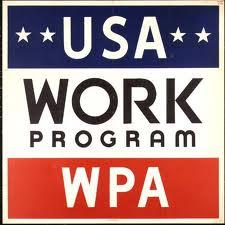
I listened to the Obama speech, and at least he showed some energy (although this bipartisan shit clearly doesn’t work and I don’t know when he’s going to give it up). But here’s what makes me crazy: The whole point of this $447 billion stimulus is to create jobs. Why not just, you know, create jobs?
I agree that a cut in the payroll tax (which, for a lot of working Americans, amounts to more money than the income tax) will put money in the pockets of people who are likely to spend it, and will stimulate, to some extent, consumer demand. That, of course, is the crux of the issue — unless there’s demand for goods and services, the economy’s not going to turn around.
Of course, some of that money will go to replenish savings and pay down debt — not a bad thing, but not what we need right now.
Cutting the payroll tax for businesses will also be a direct stimulus, particularly for smaller employers, who create most of the new jobs. But again, let’s be real: I just ran the numbers, and a company the size of the Guardian would get enough of a tax break to hire one part-time person at not much more than the city’s minimum wage. Sure, you spread that across millions of small businesses, and you’ll get some new job creation. But I wonder: Is this the most efficent way to achieve the objective?
Let’s see. An economist at Moody’s says the plan could create 1.9 million jobs. That, of course, includes not just the jobs created by the tax cuts, but the multiplier effect (you hire someone to dig a ditch, that person buys shoes so the shoestore needs more help, etc.) And the prediction is just that — a prediction. It assumes, for example, that most of the employers who get the tax break will use the extra money to hire more people. I’m not so sure about that. Businesses tend to hire not because they have spare cash (which might just as well end up in the owner’s pocket) but because they need more workers to meet growing demand for goods and services. If that demand isn’t there, the jobs won’t magically appear just because employers have more cash on hand. (In fact, some of the biggest employers in this country have plenty of cash on hand; they aren’t using it to hire anyone.)
How about we try it another way? Let’s assume that $50,000 a year is a decent wage in most parts of the country. (You want to make it $60,000? Whatever. It just changes the calculus a little bit).
For $1 million, you can hire 20 people at $50K. For $1billion, you can hire 20,000 people. For $400 billion, you can hire 800,000 people.
Why not just do that? Why not take that stimulus money and hire public employees — to teach in schools, to build roads and bridges, to repair the nation’s electricity infrastructure, to construct high-speed rail lines, to rebuild crumbling housing in inner cities …. there’s plenty to do.
Yeah, some of the money would go to the dreaded “bureacrats” who would oversee the hiring programs and fill out the forms. But the world needs accountants and managers, too — and the ranks of the unemployed include quite a few people with those skills.
Now: There’s lots of debate about the size of the multiplier; when it comes to job creations, I’ve heard numbers from 1.4 to 5.0, depending on the circumstances. But there’s no doubt that direct federal hiring — 800,000 new living-wage jobs — would have a direct impact on consumer demand and create a guaranteed need for more private-sector workers. I’d bet it’s about one for one — the 800,000 federal jobs would lead to another 800,000 private-sector jobs. That’s 1.6 million jobs — and unlike the current plan, those are jobs that are not dependent on what employers decide to do with their tax breaks.
Hell, we want to cut unemployment in half? For, say, $1.5 trillion, you could create 7 million jobs pretty easily. That’s just about the annual cost of the wars in Iraq and Afghanistan.
The government knows how to create jobs. Federal, state and local agencies hire people every day. The whole thing seems so silly; why give money to private employers and hope for the best when you can use the same money to hire people directly? Why waste time and money on the middleman?
The Chron’s war on nudity
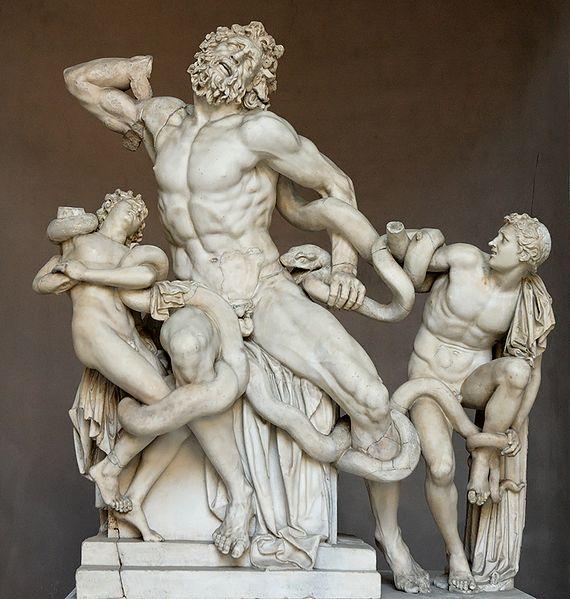
Poor Scott Wiener. He tries to do something practical — telling naked guys to sit on a towel or something when they occupy public benches — and all of a sudden the Chron launches a war on nudity. First there’s this shit from Chuck Nevius, who suggests that anyone who isn’t wearing clothes is some sort of a pervert:
Why? If these guys were opening a trench coat and exposing themselves to bystanders in a supermarket parking lot we’d call them creeps. But if they sit on public chairs and expose themselves to bystanders, they’re defenders of free speech. Here’s some free speech – when moms and dads walk their kids to school, they don’t want to see you naked. This isn’t a civil rights issue, it’s just obnoxious.
Actually, I’ve often walked my daughter to school along Castro Street, and I don’t care whether people are naked or not. Neither does she. My kids are San Francisco city kids; it’s all a big Whatever. And the naked guys in the Castro, mostly middle-aged men, aren’t “exposing themselves” in the way of a sex offender who gets off on it; they don’t confront anyone, or jump in front of anyone, or try to force anyone to look at them. They aren’t fucking in the streets. They’re just walking around (and sitting down) without clothes on.
Whatever.
But then the Chron decides this is all worth a scathing editorial:
Here’s an idea, San Franciscans: Keep your pants on – at least in public. Most people don’t want to see that much of you. And even in a city known for tolerance of unusual behavior, inflicting nudity on an unsuspecting public can scare youngsters and offend adults. … People who insist on walking down Market Street without clothes should be cited.
Now there’s going to be pressure on the cops to find a way to bust the nudists (some of whom will love the attention), and the city will either waste a lot of money prosecuting and defending them when there’s no actual law that’s been broken — or the supervisors will be under pressure to outlaw public nudity, which will create another big fuss and waste a lot of all of our time.
Besides, the Chron ought to love the Wiener law. If I ran that paper, I’d put a couple of new racks at Castro and Market. The guys who forget their towels are going to need something to sit on.
PS: If nudity doesn’t offend you, check out our hottest butt in SF contest here.
Social media is for lovers: TheIceBreak brings couples to the web

Even when you meet someone online, most people would agree that the reward is eventually being able to interact with that human in real life, face to face, parts to parts. So why then is TheIceBreak getting already established couples to turn back to their computers and join the Facebook-style network designed for lovers? The answer is communication. We’re all obsessed with typing, texting, and virtually sharing our feelings with our friends and family, so why not chat and share mushy-sexy-sweet-secrets with our partners over the Interwebs?
TheIceBreak is a month-old SF start-up aimed at helping couples dig deeper into their relationship on three levels: understanding, affection, and excitement. Users can participate in fun, flirty stuff like Seventeen-style “icebreaker” questions and post photos or comments to their significant other’s private wall. You can win points for playing along and posting bits and bobs. The game aspect could be a good way to brainwash your partner into signing up, but even if they refuse, people without a significant other on the site can still take part solo and send their lovesick posts through email.
TheIceBreak also has an analytical component, regularily posting charts and data for couples to not only track their own relationship stats, but compare them against the relationships of others — healthy in moderation, we guess. Among the site’s recent findings was the disappointing notion that San Franciscans may be less satisfied with their sex lives than those living in Mountain View, Palo Alto, and a host of other seemingly non-sexy cities. Maybe we need to lower our expectations.
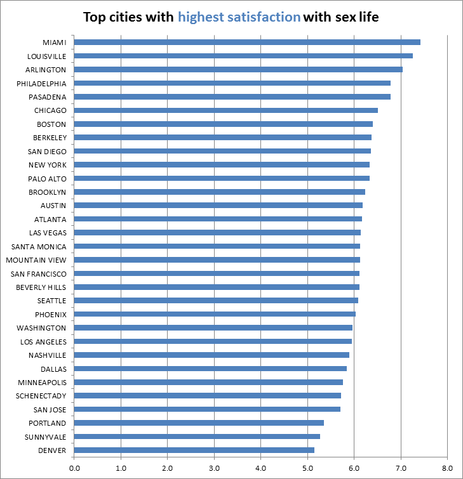
SF can’t get no satisfaction, according to TheIceBreak’s findings
Most of the questions and challenges currently up on the site are pretty tame and sweet, but TheIceBreak founders Christina A. Brodbeck and Dwipal Desai both agree there’s a whole lot of potential in sexual content. A popular icebreaker in the past month: “What piece of clothing do you find sexiest on your partner?” Answering questions about types of play, fantasies, BDSM, orgasm-inducers, and tricks could be super fun, especially while you’re killing time on the BART or avoiding work, and a fresh way for partners to be honest about bedroom needs and wants. Regardless of how sexy the questions will be, Brodbeck is firm about making sure these questions aim to tie partners together.
“Yes these are conversations you should be having face to face, but sometimes it’s difficult to think of some of these questions off the top of your head. This is just our way of pushing you to initially answer and discuss those questions,” Brodbeck says.
In the next couple of weeks the site will be available in app form and will make sharing while apart that much easier. While it still seems a little unnesessary that people would need so many options to poke and post pictures of puppies and hearts on their beau’s social media profiles, we’ve all blocked (or at least made fun of) the friends on Facebook who get into this kinda thing; those who irritatingly go overboard with updating the Internets about their “perfect” relationship and can’t seem to detach long enough to get a profile photo of just themselves…ever.
Social media PDA = puke. Get a room, lovebirds… or just sign up with TheIceBreak.
BART Police arrest journalists and protesters
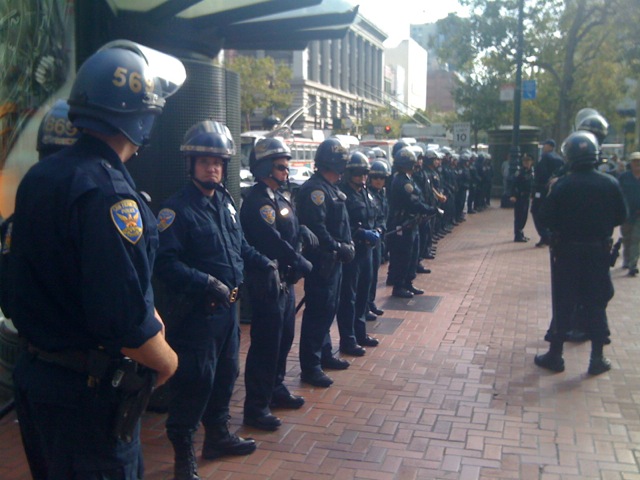
BART Police are cracking down hard on a peaceful protest in the Powell Street station, detaining a group of 30 to 40 people that includes almost a dozen journalists, including Guardian reporter Rebecca Bowe, who just called in with a report on the ongoing situation. (For Rebecca Bowe’s account of the BART protest and arrests, with video footage, click here.)
The scene is chaotic and details are unclear at this point, but we’ll report more on this blog post as the situation unfolds. This protest stems from shootings by BART Police, the transit agency’s ban on political speech on train platforms, and its decision last month to cut cell phone service in an effort to scuttle a police accountability protest that never materialized. Today’s protest, organized by the group Anonymous, stated an intention to exercise free speech rights without disrupting BART service.
But BART officials have apparently decided to deal harshly with the protesters and Bowe reports that the group has been detained for violation of Penal Code Section 369i, which makes it a crime to disrupt rail service, outlawing activities that “would interfere with, interrupt, or hinder the safe and efficient operation of any locomotive, railway car, or train.”
Yet an attorney working with the protesters notes that mere speech doesn’t hinder operations, noting that section C of that code section specifically “does not prohibit picketing in the immediately adjacent area of the property of any railroad or rail transit related property or any lawful activity by which the public is informed of the existence of an alleged labor dispute.”
While this protest may not involve a labor dispute, it does seem that the ongoing protests against BART are evolving into a test of the agency’s claims of the authority to ban all protest and political speech on its train platforms.
More to come…
UPDATE AT 6:07 PM: The professional journalists in the group have been released after being detained for about 30 minutes, and they’ve been shepherded into an area where they can no longer see the group of arrestees. But a group of three to five San Francisco State University journalism students who don’t have press credentials remain in custody, despite repeated appeals to the police by their faculty advisor Justin Beck.
Finally, sunshine at UC, CSU
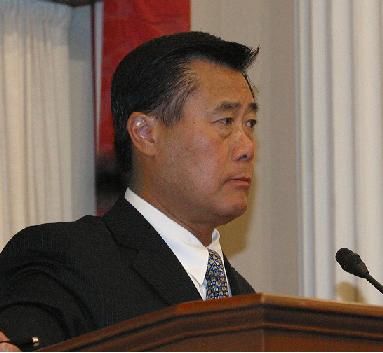
Finally, after three years, a bill that would open up the secret foundation records at University of California, Cal State University and community college campuses has been signed into law.
The bill, by Senator Leland Yee, ends a sorry chapter in the history of the state’s public higher-education system, culminating in the refusal of CSU Stanislaus to make public a lucrative speaking contact with Sarah Palin.
These little hands-off foundation fiefdoms can be hotbeds of problems — the City College Foundation was part of a scandal that has lead to criminal charges against the former chancellor, Philip Day. And at the heart of all of this is secrecy: These sorta, kinda, but not really official parts of the UC, CSU and community college systems have been operating without enough oversight for years — and they have insisted that they aren’t public institutions and thus are exempt from public records laws.
Yee has been trying to open up this sleaze pit since 2009, but the former governor, Arnold Schwarzenegger, vetoed two previous versions.
The law doesn’t actually take effect until January. The schools all ought to start opening their records today.
Burning Man enters a deliberative new phase
I didn’t see SF Sups. David Chiu and Jane Kim on their brief tour of Black Rock City last week, but I did get the chance to participate in a more authentic political awakening at Burning Man this year, one marked by an increasing number of well-attended public discussions about where this strange and vibrant culture is headed.
And they are discussions that will continue back here in the default world, at events ranging from those sponsored by the new Burning Man Project to the readings that I’m doing for my book, The Tribes of Burning Man, including tomorrow evening (Fri/9) at True Stories Lounge in the Makeout Room, where I’ll appear with writers Joyce Maynard, Adam Hochschild, Gary Kamiya, Alicia Erian, Tyche Hendricks, and moderator Evelyn Nieves.
I was invited onto four different stages (although I regretfully missed one gig due to a miscommunication) at Burning Man this year, and most had capacity crowds of engaged burners who were eager to discuss what’s next and offer their ideas, many of them very insightful and well-developed.
Frankly, I wasn’t sure whether people would want to take time out of their vacations in this fun-filled city to attend lectures and discussions, and the fact that so many did – in venues and stages that popped up all over the playa – shows just how much widespread interest there is in transforming Burning Man into more than just an annual party.
“We were overflowing and people would come back days later and say it was the best discussion we ever had out there,” says D’Andre of Revolution Camp, which hosted talks all week (including the one I missed, for which he said a crowd of about 50 people showed up, about the same size crowd that showed up for my talk on Sunday at Center Camp Stage – which I mistakenly had conflated with my Revolution Camp booking…again, my apologies).
Burning Man board member Marian Goodell said they had similarly great turnouts for the daily public availabilities of the 17 board members of the new Burning Man Project, the nonprofit that will shepherd this culture into its next phase. “There was quite a lively discussion and usually people waiting to talk to the board members,” she said. “It was super successful.”
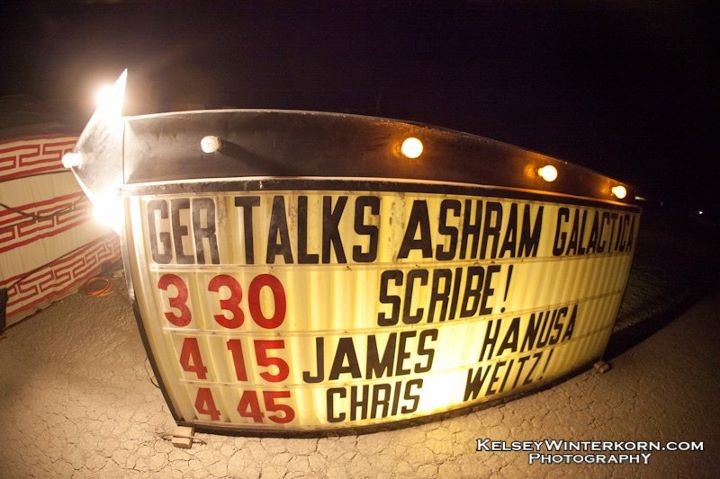
I had my own private session with new board member Chris Weitz (a longtime burner and film producer and director) in between the presentations that we each gave at the GER Talks, a speaker series hosted by the venerable theme camp Ashram Galactica, where he is the former head concierge.
I urged him to use this opportunity to create a more inclusive and representative governance structure for the 25-year-old Burning Man event, which has always been run by a handful of key players with little by way of checks-and-balances, belying the hyper-collaborative nature of this culture. It was the same message that I had for each of my crowds out there, there this is our culture and it’s up to us to determine its future direction and initiatives.
And if the interest and engagement levels that I saw on the playa this year are any indication, burners are finally ready, willing, and able to start taking this thing to the next level. Or as founder Larry Harvey said in my book, a quote from 2008 that I cited in each of my talks, “That city is connecting to itself faster than anyone knows. And if they can do that, they can connect to the world. That’s why for the last three years I’ve done these sociopolitical themes, so they know they can apply it. Because if it’s just a vacation, well, we’ve been on vacation long enough.”
SFBG Radio: should the West Coast secede?

Imagine if Rick Perry is elected president. It’s not impossible at all. And maybe his running mate is named Bachman. And it’s so bad that people in blue California and Oregon and Washington start to say: This isn’t our country any more — and maybe we’d be better off on our own.
Yeah, crazy fantasy. But let’s talk about it. Check out the discussion with Johnny and Tim after the jump.
Getting started with Sour Flour
Raise it up! SFBG videographer Ariel Soto-Suver drops in on a delectable bread-baking basics class with Danny Gabriner of La Victoria Bakery in the Mission.
The Performant: Space cadets
Cosmic San Francisco mainstays Audium and Planet Booty shoot us to the moon.
Some only-in-San-Francisco adventures are subtler than others — they’re you-have-to-know-they’re-there treasures, unencumbered by a surfeit of fanfare or weight of fickle expectation.
Audium, a continually-morphing collaboration in sound design between composer Stan Shaff and electronics “architect” Douglas McEachern, definitely counts as one of these.
Beginning in 1960 with a single performance involving eight speakers and a four-channel board, Shaff and McEachern have spent decades perfecting their singular brainchild—a custom-built performance space where the structural relationships of sound and space can be fully explored.
Walking into the intimate theatre is a small adventure in and of itself, feet shuffling along a path of illuminated glow tape arrows leading the opposite direction, as ripples of sound bounce along the barely lit passage. Beneath a mothership portal of speakers arranged in concentric circles, three fairy rings of chairs encircle a large multi-directional speaker positioned in the very center of the room. More speakers discreetly line the walls and crouch beneath chairs, 176 in all. Once all are seated, the lights fade from dim to black to the sounds of waves crashing along a sandy shore, and the immersive Audium experience begins.
As with any musical composition, there is a set order in which the vast catalogue of field recordings is played, but Shaff manipulates the trajectory and emphasis of each at every performance: both conductor and orchestra of one. In addition to water sounds of all varieties are numerous birdsongs, snatches of children’s voices, galloping horses, thunder, laughter, drumrolls, horns, strings, West African polyphony, a pipe organ, and synthesized electronica zinging from wall to wall, ceiling to floor, ear to ear. Without benefit of sight, the body’s capacity to trace the actual physical curve of each sound as it travels from speaker to speaker becomes enhanced, and the occasional rustling of listening bodies adds a subtle layer of improv to the piece, a connection that Shaff strives to enhance with every performance. Upon exiting, the sole visual component of the work—a video projection of flowing water—allows each visitor a brief moment to reintegrate sight and sound before heading off into the multi-dimensional night.
A completely different iteration of “Space” music landed Sunday on the Peace Pagoda of Japantown as part of the newly-established Convergence Fest, dedicated to alternative music and art. Planet Booty, a hyper-active ensemble of post-funkadelic bass lines and warp-speed retro remixes livened up the stage along with the theatrical antics of frontman Dylan Germick, whose self-assured commitment to booty-bouncing caused him to literally split his pants about a minute into the rollicking set. More dance moves courtesy of poker-faced Lady Emasita, rap vox and occasional trombone by Josh Cantero, drumming from Max Reed, and electronic manipulations by Nathan Germick rounded out the “stripped-down” festival day ensemble, who normally number eight. And though they couldn’t quite inspire the entire crowd of lazy-afternoon onlookers to bounce along, the good denizens of Planet Booty did fulfill their roles as ambassadors for their rump-shaking cause, which will undoubtedly be fully realized at their upcoming September 10 show at Bottom of the Hill.
Brown the columnist: How long can this go on?
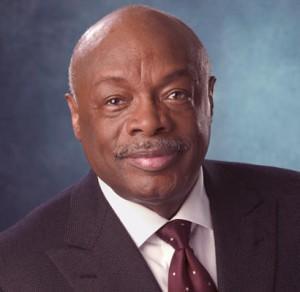
Well, the Chronicle didn’t have any problem when one of its columnists, Willie Brown, showed up at California Public Utilities Commission hearing representing PG&E. That was a stretch. Now Brown has hosted a fundraiser for the mayor — getting directly involved in an electoral campaign while writing about politics in a column in the daily paper.
And when an Examiner reporter asked for details about his fundraiser, Brown used his Chron job as an excuse to duck:
“I don’t talk to reporters. I am a reporter,” said Brown, now a columnist for the San Francisco Chronicle. “I write my own column. All right? Nothing personal.”
We’ve gone down this road before. Our position remains the same. Willie Brown is not a member of the Chronicle news staff. Our reporters continue to cover the former mayor as a newsmaker and he has been the subject of scrutiny in our editorials. Willie’s World is highly popular with our readers who are well aware of his background and long history of involvement in local and state politics.
Actually, I’m not sure how many readers are aware of all of his background. The Chron’s much happier with good ol’ avuncular Willie. I suppose I shouldn’t be surprised.
Lit love at Ourshelves, the Mission’s new lending library
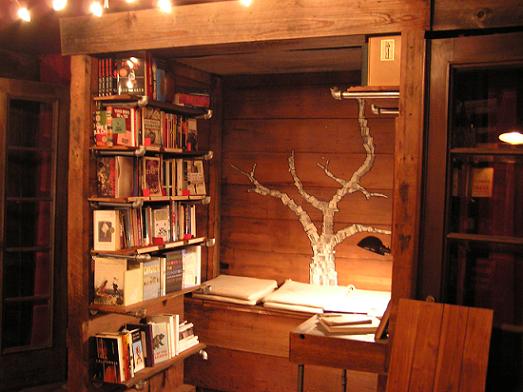
Perched on a wooden bench built into the salvaged redwood walls of the back room of Viracocha, surrounded by the Ourshelves lending library she’s created in the nook, the soft-spoken Kristina Kearns reads “literary heroine.” For Pete’s sake, she’s making literature that you can’t find at the library available to the masses in the heart of the Mission.
But also this: Kearns once worked in a small bookshop on the island of Santorini, Greece. She lived in the store, in fact, tending it while the owner was away during the off season. “That was when Greece started to fall apart,” she says. Political unrest made her stay untenable, so she flew back to the United States — with very little funds to nurture her bibliophilic nature.
Our heroine is a fan of hard-to-find European authors. She points me towards a slim volume by Hungarian author László Krasnahorkai entitled Animalinside and speaks reverently of Scottish poet W.S. Graham. “He’s not even in print here,” she tells me disbelievingly.
To go from literally living amongst her favorite tomes to not being able to afford to read them at all must have been fairly heartbreaking.
“It’s hard to find international books in the library,” says Kearns, who recently scratched a cornea and couldn’t see print for six days. During that time she “realized I don’t love reading. I need reading.” She invokes Vonnegut’s theory of reading as occidental meditation, saying “It makes me a happier person.”
Even sadder than Kearns’ empty wallet was the general sense of doom she discovered in the publishing world.
“It was difficult to come back to the States and hear from authors that publishing is dead. It’s not! The history of books is long. What if we just try? What if we don’t complain and just try? Jonathan let me try, and I think that’s awesome.”
She had this thought: “one of the things we can do is flex our idea of what a bookshop is. Why do people go to bookshops in the first place?” Many people, she thought, have to be led to a good book — and to be led, people have to trust their curator.
“Jonathan” is Johnathan Siegel, owner of Viracocha. Siegel and Kearns met and wound up talking about her dream to create a space dedicated to books, one that wasn’t a library or commercial bookstore. Kearns says she didn’t think much of the conversation, but one month later Siegel called to offer her a room at the back of his antiques and art store that was at the time being used, Kearns says, “for haircuts and storage.”
She had been working five part-time jobs to assemble the library necessary for the space, and had been contacting publishing houses and authors, asking anyone who would listen if they would donate books towards her nascent lending library. The San Francisco Public Library now donates five copies each time there is a new volume being read in the city’s “One City, One Book” book club. Michael Chabon offered up his home library. “We just kind of roamed through and took what we wanted,” says Kearns.
But there was still the matter of the space itself.
“I was naïve in the beginning — I thought I would magically start on June 1, like the shelves would magically appear,” Kearns says, remembering that it took three to four tries for her to properly install each shelf, made from wood and metal pipes. Others contributed elbow grease and artistic aptitudes and soon enough Kearns was hosting an opening party with a surprising crowd of 100 attendees.
Ourshelves as a physical space is somewhat transcendent. Kearns carefully arranges the books on the shelves, and the antique volumes of Alice and Wonderland and other classics on the table. There is a painted tree made of books that grows out from the bench seating in the back corner, and a whiskey bottle placed just so on an antique desk. She now has shelves “curated” by local authors, among them, Stephen Elliott, Tamin Ansary, and one-time editor of The Believer Andrew Leland. It’s hush is perfect for running a hand across the spines of the new and used novels and poetry volumes — and once one is selected it, reading it in view of its brothers and sisters.
Tucked away at the back of Viracocha, Kearns puts much truck in the experience of stumbling across Ourshelves. On the day I visited, a man had done just that and after speaking with Kearns for a comfortable spell, he donated money to the library without even checking out a book.
There are 62 members now, each paying $10 each month to check out as many books as they’d like. Their fees go towards rent, and towards the 20 to 40 titles a month that Kearns aims to bring in at members’ requests.
“Learn about the world, dammit!” Siegel interrupts a discussion Kearns and I are having about superlative fiction writers. He is, she tells me, going to be the space’s non-fiction curator.
“You can in fiction!” she retorts.
Certainly, Kearns has found a way to manifest her version of a better world through books with Ourshelves. The small room has become a place to honor the written world, a place where quiet conversations between strangers can start — and a place to discover that perhaps publishing is not so dead, after all.
“For people who love books,” Kearns smiles. “Being surrounded by books is nice feeling.”
Spontaneous Victorian combustion: “Jane Austen Unscripted” returns to the Bay Area
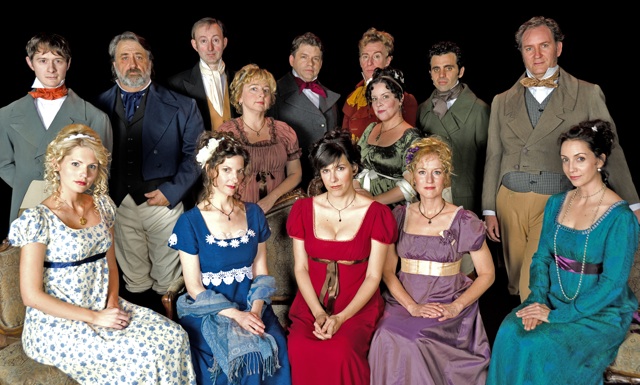
More signs of gentrification in the Bay Area, this time sanguine, as Los Angeles-based Impro Theatre’s acclaimed show, Jane Austen Unscripted, returns starting tonight (Wed/7) for gigs at 142 Throckmorton Theatre (Mill Valley) and BATS’ Bayfront Theater (SF). If you saw Jane Austen Unscripted in one of its two previous local engagements over the last few years, you already know the group sports some of the quickest wits in the Western canon. Jane Austen Unscripted is directed by BATS cofounder Dan O’Connor and comedian-writer Paul Rogan and features an amazing cast of improvisers, fully capable of creating a full-length play in the style of Jane Austen spontaneously each night, with a theme suggested by the audience. Improv fans, Austen fans, ceiling fans: this stuff is hot. A funnier, sharper assemblage of off-the-cuff maestros is hard to come by, especially in cuffs like these.
For those left hankering for more by Jane Austen Unscripted, know that one of its cast members, Stephen Kearin, returns to the Bayfront stage the following week as one-third of 3 For All, in its final two shows of the year. 3 For All is comprised of Kearin, Rafe Chase, and Tim Orr, but this trio contains multitudes. Pick your genre, call out a topic; these improv comedy veterans are always worth seeing: utterly distinctive and never the same. You can check out some recent insta-masterpieces here.
Jane Austen Unscripted
Wed/7-Thurs/8, 8 p.m., $25-30
142 Throckmorton Theatre
142 Throckmorton, Mill Valley
(415) 383-9600
www.142throckmortontheatre.org
Fri/8-Sat/10, 8 p.m.; Sun/11, 2 p.m., $20-30
Bayfront Theater
Fort Mason Center
Building B, Third Floor, SF
3 For All
Sept.16-17, 8 p.m., $25-28
Bayfront Theater
Sticky palms: check out our nug porn gallery
I touched base with some of the guys with the toughest job in the world this week in Herbwise, our month-old marijuana column. Yessir folks, meet your professional weed photographers — potographers, if you will. Danny Danko, senior cultivation editor at High Times — who included some indoor growhouse shots that he told me were the trickiest to get due to light wave vagaries — and Ryno Barela, who is in charge of photography and social media over at SF’s Vapor Room were kind enough to send over some of the shots they think best represent their profession. Point, click, pass.
Remembering Graham and George
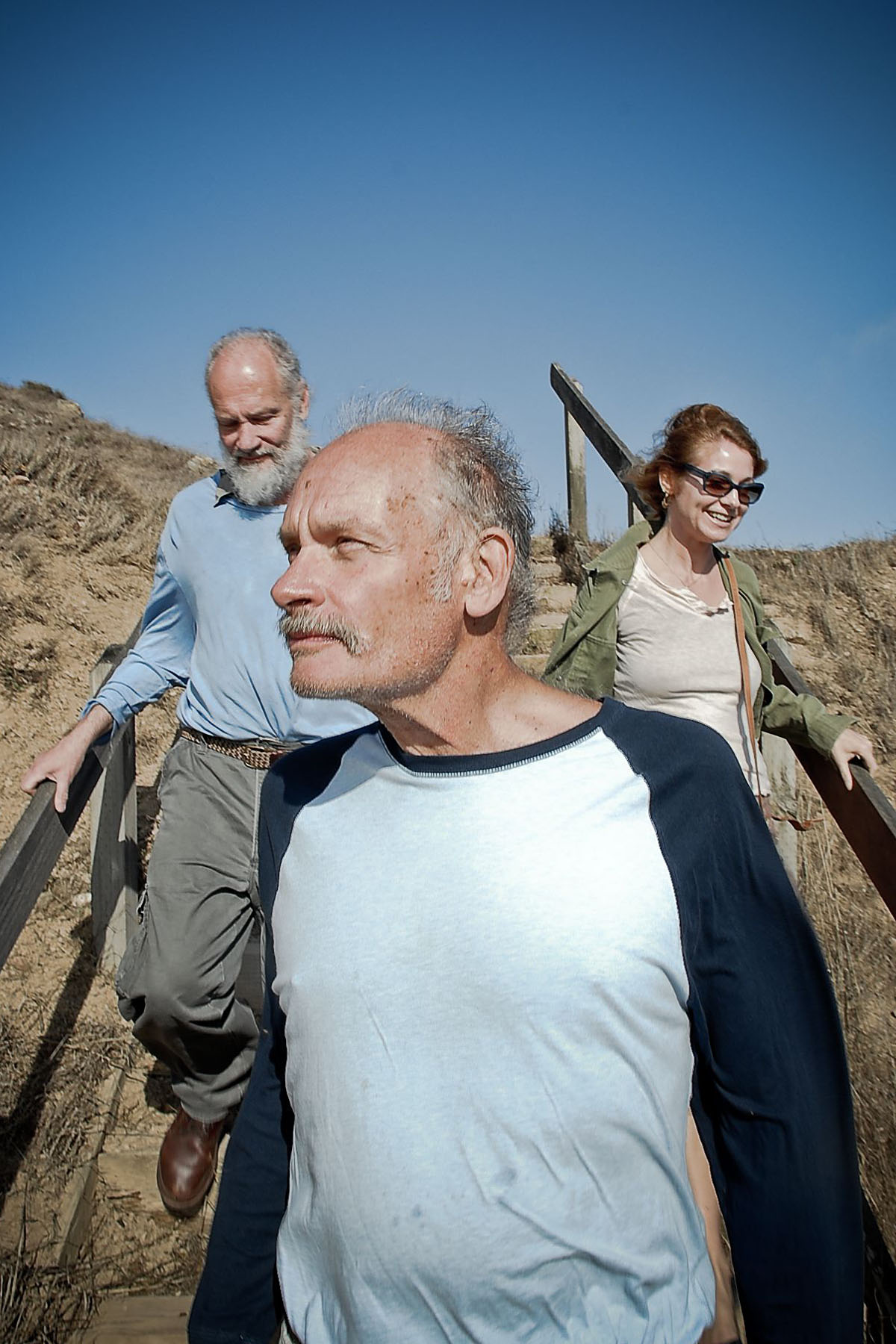
Bay Area film fans are still reeling from the loss of popular San Francisco Film Society executive director Graham Leggat, who passed away August 25 at age 51 after an 18-month cancer battle. (In a statement, SFFS board of directors president Pat McBaine called Leggat’s tenure “the best years in the life of the Film Society.”)
Today comes another blow, from multiple social media and blog reports, of yesterday’s passing of George Kuchar, beloved underground filmmaker extraordinaire. By himself and with his twin brother, Mike, George Kuchar — who influenced innumerable young artists while teaching at the San Francisco Art Institute — directed over 200 films, as wild and creative as they were low-budget, and almost always boasting titillating titles: Color Me Shameless (1967), Hold Me While I’m Naked (1966), The Devil’s Cleavage (1973). He also wrote the screenplay for 1975 horror-porn-turned-midnight-classic, Thundercrack!
George and Mike Kuchar have been a favorite subject in the Guardian’s pages over the years (recent stories here, here, and here). The uninitiated can get a jump start on celebrating George’s glorious legacy by first checking out Jennifer Kroot’s 2000 documentary, It Came from Kuchar; a wide selection of Kuchar films can be found at Canyon Cinema and, for those of us without film projectors, on YouTube. (Also recommended: the brothers’ Reflections from a Cinematic Cesspool, with an intro by John Waters.)
RIP.
Appetite: 3 new gins from St. George’s

Consistently, St. George Spirits (also Hangar One) wears the crown for renegade inventiveness. As I wrote last year, Lance Winters, master distiller, and distillers Dave Smith and Chris Jordan, lead the way in out-of-the-box creativity. Never have I seen the like of their test tube apothecary of experimentation where they’ll try anything, from foie gras and beef jerky, to carrots and fresh Dungeness crab, to see what works as a spirit.
So it is no surprise that they are releasing not one, but three gins, each a diverse expression never before replicated. This would be of no use if taste wasn’t paramount… and it is. Terroir-inspired with locally foraged ingredients that Winters and crew foraged themselves from the likes of Mt. Tam in Marin and along Highway 1, each manifests noteworthy attributes, expressing the Bay Area in ingredients and attitude, with elegant, Old World labels and artwork.
BOTANIVORE GIN
Made from 18 botanicals, including caraway, ginger, California bay laurel, wild fennel, dill, celery seed, coriander, Botanivore reflects the heaviest juniper notes of the three, and thus is most similar to a more traditional London dry gin (or as traditional as St. George gets). A clean gin & tonic showcases its citrus, herbal, floral notes, while the juniper stands firm.
DRY RYE GIN
Pot-distilled with a rye base? You already know it’s going to be interesting. Rye grain delivers spice, while caraway and black pepper notes add woody, earthy nuance to juniper-properties. St. George calls it a gin for whiskey lovers, though I find it almost more a sophisticated white whiskey with gin undertones. Grapefruit and lime peel add brightness to its malty depth.
TERROIR- MT. TAM GIN
A true Golden State tribute, this gin reflects the glories of Northern California. Made from hand-harvested juniper berries, Douglas fir (from Mt. Tam), coastal sage, fennel, California bay laurel, cinnamon, cardamom, lemon, to name a few, a portion of sales go to support California wilderness, preserving our mighty state’s nature as the gin reflects its diversity. To me, this is the most special and striking of the three. Though there is much to love in each, Terroir is such a unique expression, unlike any other spirit out there.
In limited release initially (approx. 500 cases each), will be released September 9 (if not earlier this week) in California, New York, Colorado, Texas, Florida and Chicago, at $35 for 750ml bottle; $12 for 200ml). Purchase online at www.stgeorgespirits.com.
— Subscribe to Virgina’s twice monthly newsletter, The Perfect Spot
The Fillmore’s facelift: Independent Artists Week fills the street
Bayview native Meaghan Mitchell first started working in the neighborhood as a hostess at 1300 on Fillmore. Not anymore – now she co-owns a pop-up neighborhood art gallery across the street from the restaurant and is organizing an entire week of events geared towards filling the historic neighborhood’s streets again (Independent Artists Week, now through Sun/11).
The Fillmore’s the kind of neighborhood that inspires creative growth, famous for its days as a cultural hub where African Americans celebrated the arts, succeeded in the business arena, and solidified community. This week’s lineup of IAW events hopes to highlight that legacy, with speed networking for creative types, free art walks, and more.
Because right now, the area definitely needs some shine.
“We’re struggling with the identity of the Fillmore right now,” says Mitchell, who sits in her small gallery space surrounded by paintings and sculptures done by local artists during her interview with the Guardian. Sisters Melorra and Melonie Green co-own the space, and Mitchell gives us a tour of the neighborhood art the three have filled their gallery with, from elaborate metal wall sculptures to small drawings by local grade-schoolers. The Greens are the other two lead organizers of Independent Artists Week.
Mitchell gestures to the towering condo and apartment buildings visible through the gallery’s front windows. “Look at all those apartment buildings. Where do those people go?”
Despite its history of locally-owned businesses, Fillmore is far from bustling during the daytime, when the street’s renowned jazz clubs are closed. There’s a handful of black-owned businesses (including New Chicago Barbershop, which we profiled earlier this summer) that are still standing, but you see a lot of empty storefronts when you walk down the sidewalk.

Mitchell and her partners would like to reverse that trend. “There’s so much potential for African American people to take back our neighborhood,” she says. “Facilitating our own events is a part of that.”
She should know – she learned from an event-planner extraordinaire. Mitchell says she owes her organizing skills to Ave Montague, the woman who was in charge of public relations at 1300 when Mitchell was first hired on.
“She made this neighborhood poppin’,” remembers Mitchell. Montague organized the Black Film Festival, and took Mitchell under her wing, training her to help coordinate a slew of other events that were important to the Fillmore community – and the country. Montague passed away shortly after she threw the official West Coast inauguration party for Barack Obama in 2008.
“When she died, this neighborhood was in a different place,” says Mitchell. “It was grey.”
There was some question about who would take up Montague’s crusade to make Fillmore Street a vibrant center of black Bay Area culture once again. But not for long – soon Mitchell and the other neighborhood business-owners and advocates from the Fillmore Community Benefit District were back in talks with the Mayor’s Office, which is now once again subsidizing their event-planning efforts.
Of course, Mitchell says, there are challenges to this kind of city government-funded community organizing in a neighborhood that was gutted by “redevelopment” campaigns in the past. Long-time residents are less than thrilled to put the future of the neighborhood in the hands of organizations responsible for driving out black families in the first place. She’s attended CBD meetings that ended in shouting and finger-pointing over who did and didn’t deserve a piece of the $800,000 the Mayor’s Office had contributed to their work.
“You’ve got to check in with folks.” Mitchell says that even though she is a San Francisco native, she’s still a newcomer to the Fillmore scene – and that a big part of her work is involving the long-time movers and shakers in the area. She now holds monthly merchant meetings that started out with three and now generally attract 11 participants.
But it’s worth it to become a part of a neighborhood this unique. “[Working in] the Fillmore, it was the first time I worked in a place where I really felt appreciated,” she says. “I met all these prestigious African American people who helped me and who I could look up to.”
Hopefully this week’s events will provide similar opportunities for other up-and-comers – check out the schedule below to see what’s on offer for artists, art lovers, wannabe yogis, and anyone who is into the idea of a new, brighter Fillmore.
Photo above right: Mitchell has joined Fillmore’s entrepreneurs with a gallery space of her own on the strip. Photo by Caitlin Donohue
“Opportunity Knocks” speed-networking event
Local music scenesters, public relations experts, and other sources of knowledge on making a living off of art in the Bay Area will be available to chat with artists on those topics and more.
Tues/6 7-9 p.m., $15. Yoshi’s, 1330 Fillmore, SF.
Sustainable fashion fair-clothing swap
Trade in your clothes for other people’s hand-me-downs – style on a budget (and with a low carbon profile, hell yeah).
Wed/7 7-10 p.m. African American Cultural Arts Center, 762 Fulton, SF.
Thank You Awards
Honorees will include filmmaker Kevin Epps, Sup. Ross Mirkarimi, and other supporters of the local arts community.
Thu/8 7-9 p.m., $15. African American Cultural Arts Center.
Fillmore Art Walk
Art in the streets! Tour the neighborhood’s galleries and businesses (including Mitchell’s space at
Fri/9 6 p.m.-midnight, free. Fillmore between Post and McAllister, SF.
Healing arts demonstration
The perfect, low-commitment intro to tai chi, yoga, acupuncture, meditation, and more. Swing through to ask about body and soul woes with experienced practitioners in the sunshine.
Sat/10 9 a.m.-1 p.m., free. Fillmore Center Plaza, Fillmore and O’Farrell, SF.
Western Addition Sunday Streets
A huge swath of Fillmore, Divisadero, and the Panhandle will be blessed with a free roller disco, break dancing lessons, free bike repair and rental, and of course lots of car-free asphalt for walking, biking, boarding, and blading community members.
Sun/11 11 a.m.-4 p.m., free. Various streets in Western Addition, SF. www.sundaystreetssf.com
Abolish write-in space on ballots?
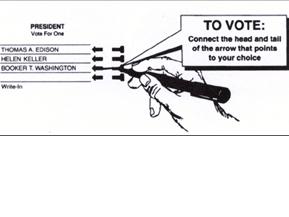
A bill quietly making its way through the Legislature would eliminate write-in space for some state and federal offices. It’s tucked down near the end of a bill that is supposed to clean up some language in the elections code. You have to scroll through a lot of dense stuff, but check out sections 49 and 54.
I don’t see any need for getting rid of write-in space. I mean, it doesn’t do any harm — and in some cases, write-in campaigns have been a huge deal. Witness Tom Ammiano’s 1999 campaign against Willie Brown — a miraculous, landmark effort that existed only as a write-in. I realize this bill wouldn’t affect local races, but the principle is the same. Why take away the rights of voters to choose a candidate who didn’t get a party nomination?
Central subway becomes issue in mayor’s race
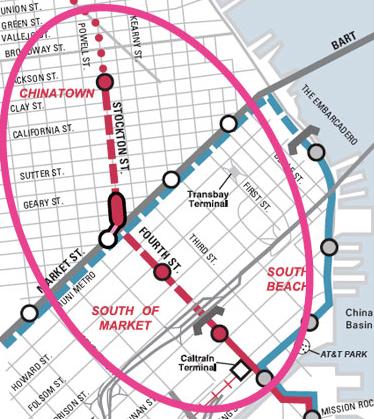
The central subway — for years, one of those San Francisco projects that almost everyone in local politics supported — has suddenly become a major issue in the mayor’s race.
After a blistering civil grand jury report (PDF) saying that the project has become too expensive and will take cash away from Muni’s other priorities, some city officials and transit activists, including those who once were backers of the subway, are now saying it’s time to call the whole thing off.
City Attorney Dennis Herrera was the first major candidate out of the box to denounce the project, telling the Chronicle that the subway has “ceased to be a prudent investment” and that it’s time to pull the plug. It’s likely that Herrera will continue to push Mayor Ed Lee on the cost of the project and its transit value, and the other candidates will have to figure out where to go.
There’s no question — this is an expensive proposition, $1.6 billion for a 1.7-mile line. Most of the financing is also federal and state money, meaning San Francisco’s only on the hook for a little more than $100 million — as long as the construction comes in at or under budget.
And powerful players like AECOM stand to make huge amounts of money off the deal.
At the same time, almost all of Chinatown is united behind it. “The community has been working on this for a long time. It’s the first thing we’ve all worked on together,” Rev. Norman Fong, who is about to take over as director of the Chinatown Community Development Center, told me. Supporters of the subway started some 20 years ago, and collected 20,000 signatures supporting a new transit option in a community where the vast majority of residents are transit-reliant. A delegation of seniors and tenant leaders went to Washington, D.C. to lobby for it. “And everyone in town signed off on it in 2008, when the cost was $1.2 billion,” Fong said.
It makes for strange politics — most of the same people who are really pushing the central subway are trying to stop state Sen. Leland Yee from becoming mayor — but Yee is also a strong proponent of the subway. David Chiu is, also, telling me that the grand jury just “rehashed arguments that we’ve heard before” and that there’s “enormous funding from the federal government.”
I have yet to hear from John Avalos, but this one is not going away.