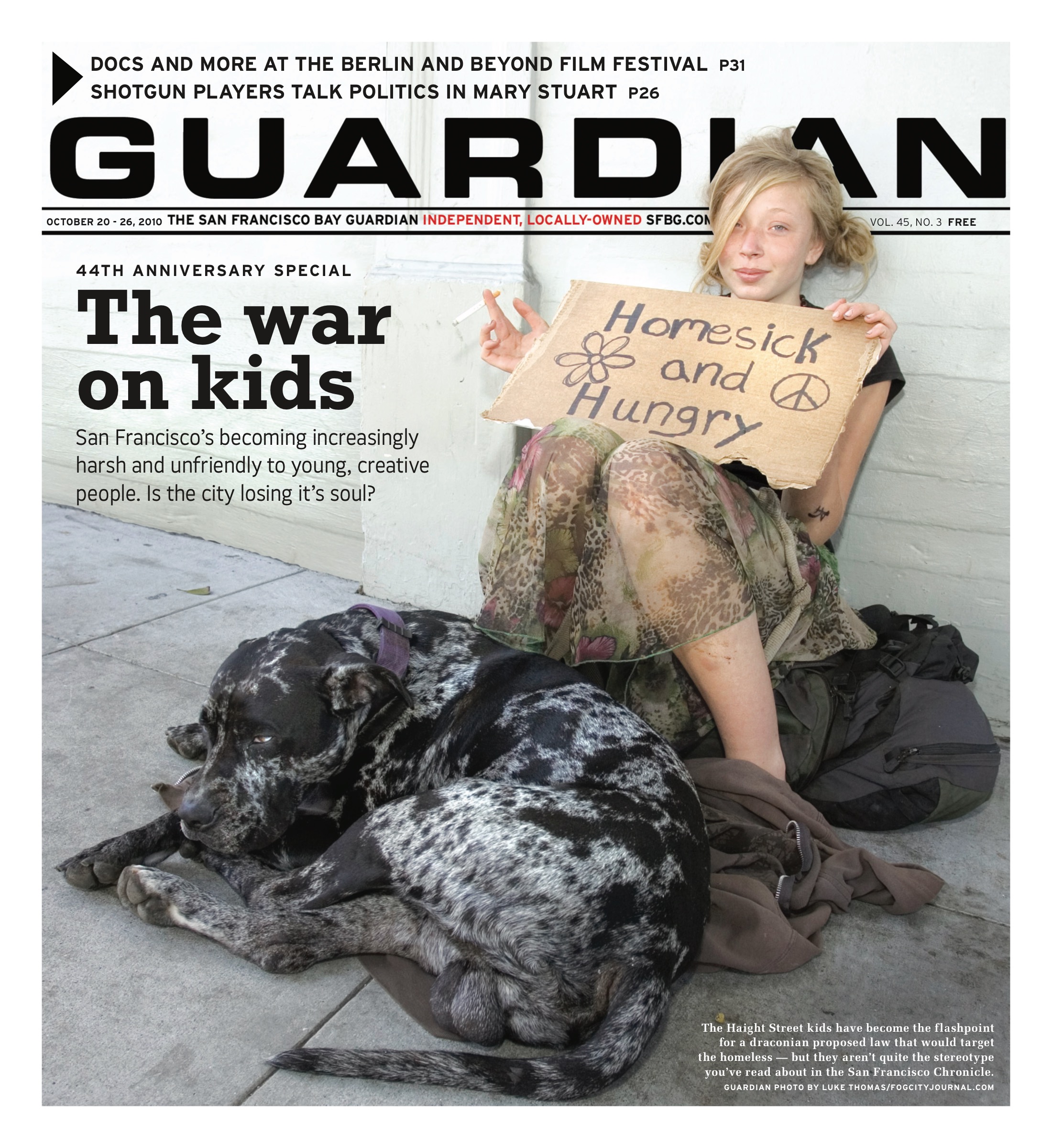
Print sections as they appeared in the early 2010s

To find articles by keyword or author, you may want to use our Search function.

Print Sections

Addicted to the beat

0

arts@sfbg.com

MUSIC I’m bugging out. The evening has somehow melted into the early hours of the purple morning. Civilization II has sucked me into an imperialist warp zone on the buzzing computer screen. Pizza boxes litter the room. I’ve just started high school in Los Angeles and discovered the psychedelic powers of a magical herb that grew in Ziploc bags. My little spatio-temporal world has shifted.

On the radio, J.Rocc mixes Mos Def’s “Universal Magnetic” into Quasimoto’s “Come On Feet,” an otherworldly meditation on paranoia and the endlessly running human spirit. Come on feet/Cruise for me, wheezes a disembodied voice from Planet Helium. On the screen, my Egyptian chariots slaughter the Greeks. I don’t yet know that Madlib’s hypnotic sample for the Quas cut comes from the score of René Laloux’s 1973 animated film, Le Planete Sauvage — a story about tiny, heartfelt humanoids who wage a revolution against an oppressive, hyperrational alien species. The vocals trace back to 1971, when Melvin Van Peebles shattered sterile genre lines with his film Sweet Sweetback’s Baadasssss Song, in which a charismatic black male protagonist tries to escape from the forces of parasitic white authority. History reinvents itself. I feel dizzy. One of my chariots lost in battle; I click undo. J.Rocc blurts out: The World Famous Beat Junkiiiiieeees. Was everyone some sort of addict gone ballistic?

“The radio programs Friday Night Flavas and the Wake Up Show were influenced by KDAY,” Rhettmatic — one of the original members of the Junkies — tells me 10 years later, over the phone. “They were the ancestors of KDAY.” During the mid-1980s, Los Angeles youth (perhaps adults too), across the far reaches of the monstrous city, would climb their roofs and position radio antennas to catch the fuzzy frequency of 1580AM. It was the only dial on the West Coast championing hip-hop. The KDAY mixmasters, from Dr. Dre to Joe Cooley, would get down for extended traffic jam mixes, showing off their skills by scratching and blending poly-percussive electro jams with vintage soul and new school raps. A new generation of multilayered street style and consciousness was born.

By the late ’80s AM radio gave way to the stronger frequency modulation (FM), and the MC slowly pushed the DJ into the background. KDAY disappeared and N.W.A. introduced the world to a hyperbolic Compton. “When KDAY went off the air and the mixmasters disbanded, there was no all-star DJ crew,” says Rhettmatic. “J.Rocc wanted a crew of all-star cats, and we were all already friends, so that’s how it came about.” The year was 1992, and the World Famous Beat Junkies, not so famous yet, emerged from the backwaters of Orange County, the fairy tale hotbed of conservatism, known to most for Disneyland and surfing more so than the avant-garde.

For the next decade, the Junkies combined forces with Bay Area mix wizards, giving the group more members to push the craft of DJing over and beyond. They competed on the battle circuit and helped carve out the aesthetics of turntablism, the technical art of DJ battling. “We combined styles,” Rhettmatic says. “The East Coast’s X-Ecutioners had a funky style with beat juggles and body tricks. San Francisco, with the Invisibl Skratch Piklz, was doing crazy fast scratches. We took both of them and created our own hybrid style.” The Junkies also pivoted the DJ back to the center of the hip-hop group: Rhettmatic DJed and produced head-nodding beats for the Visionaries, while Babu anchored Dilated Peoples. Sales of Ziploc bags skyrocketed. And the Junkies helped shape, in turn, a unique underground style of California hip-hop, where street smarts did windmills around a surreal tableau of cosmic imagery.

Every Californian obsessed with hip-hop of the age remembers when the three volumes of Beat Junkie mixes dropped in the late ’90s. Minds were blown. Heads got knocked. Boomboxes short-circuited. And so on. Each volume mirrors a radio show, influenced by KDAY programming as much as New York Mister Magic broadcasts and Red Alert tapes. “The mixes were done on analog cassette four-tracks,” Rhettmatic says. “They have that pop and hiss feel.” The radio program format glued together the off-the-cuff style of the underground to a decidedly patchwork narrative structure. Dirty drums carried spontaneous flows while blunted bass pushed intoxicating rhyme schemes. When the lyrics faded away, the beat would kill it.

The Junkies took on the role of hosts as much as curators — placing new artists like Slum Village and Jurassic 5 within the momentum of the tradition. All the while, they stamped the mixes with individuating styles, and reconfigured the tradition through a cipher approach to blending and scratching records, samples, vocals cuts, and loops. “We come from a generation where you have to be original and stand out,” Rhettmatic says. What emerged was frenetic and unbounded, both a testament to the creativity of the collage and the groundwork for the instrumental hip-hop, and its mutated progeny, popularized today.

The Junkies have since focused on numerous individual projects — from Rhettmatic’s duo record with Michigan-based MC Buff1 to J.Rocc’s much-anticipated solo debut on Stones Throw — which make the opportunity to see them collaborate together on six turntables and four mixers this Saturday at Mighty a truly rare one. “A lot of people know us as turntablists, but we are all around DJs,” Rhemttmatic says. “For us, DJs had to do everything.” You can call DJ love a habit. But I’ll leave it to Lord Zen from the Visionaries to close with a verse from “Blessings”: You can’t get this dope without a prescription/Over-the-counter versions fell prey to addiction. 

FREQUENCY: A BEAT JUNKIE TAKEOVER

Rhettmatic, J.Rocc, Babu, and Shortkut with Mr. E

Sat/23, 10 p.m., $10

Mighty

119 Utah, SF

(415) 762-0151

www.mighty119.com

On the margins

3

Sarah@sfbg.com

Franklin is a 20-something computer programmer who shares an apartment with 10 other people around his age, an arrangement that helps him and his housemates come up with $3,500 each month for rent in the Mission, a rapidly gentrifying part of town.

“Everyone is pretty much working, but they are in and out at different times so the house isn’t ever really empty. But there’s usually only three or four of us at a time, ” Franklin told the Guardian, speaking on his cell phone as he rode his bike to work.

But how does an apartment that officially has only one bedroom sleep 10 people? Franklin said there are other rooms in the house — including a dining room and a double parlor that splits into two with sliding doors — and that each of these spaces has a couple sleeping in it. “And there is one person sleeping in a closet and another sleeping in a space atop the bathroom.”

While overcrowding has been a problem in immigrant communities in San Francisco, it’s reaching a new area: young people who have for generations flocked to the city to escape uncomfortable home lives, find a supportive community, and make a new start in life.

Ted Gullicksen, director of the San Francisco Tenants Union, said at least 1,250 housing units annually were lost to condominium and tenancy-in-common conversions in the dot.com and housing bubble years, a loss rate that has slowed only slightly since then.

“Right now, it’s about 1,000 units a year,” he said.

It’s become more common for young people to struggle to pay rent in a town where well-paying jobs are scarce and educational programs have been cut — a triple whammy that means youth with additional challenges are at risk of becoming homeless and getting trapped in vicious cycle of abuse and incarceration.

COMPOUNDING THE PROBLEM

Sherilyn Adams, executive director of Larkin Street Youth Services, which provides housing, medical, social, and educational services to at-risk homeless and runaway youth, says all young people in San Francisco face the same basic challenges.

“And if, in addition, these youth are part of a group like LGBTQ youth, or are youth of color, or immigrant youth, documented or not, then the circumstances and barriers are much more exacerbated,” she said.

Adams said San Francisco has done a lot to add resources for transitional age youth, a group that traditionally has been defined as ages 12 to 24. “But there is still a significant gap in resources, especially for the more disenfranchised groups, because the longer you’ve been on the street, the more complex your issues in terms of substance abuse and mental health.”

Civic leaders, including California Assembly member Tom Ammiano, recently held a rally and candlelight march to raise awareness of the tragic rise in homelessness and suicides among LGBTQ youth. Shortly after, Adams told us, “Youth who came here escaping homophobia in their family or city then face the harsh reality of San Francisco.”

Adams understands that some people see Proposition L, legislation on the November ballot to criminalize sitting or lying on city sidewalks, as a way to address disruptive and aggressive behavior on the streets. “But it becomes part of the larger divide, because youth who come here and are on the street are mostly there because they have no other place. So penalizing them in the absence of services, housing, and education is ineffective at best and really harmful at worst,” Adams said.

Many young people on the brink of homelessness are “somewhat invisible,” and therefore at high risk, she said. “Youth will double, triple up. They will couch surf as a way to be off the streets. And we hear the stories where youth are faced with a Sophie’s choice: Do you sleep on the street, or do you barter with what you have available so as to get shelter? And LGBTQ youth are at particular risk because the more disenfranchised and disconnected you are, the more you have to make impossible choices to survive.”

Jodi Schwartz, executive director at Lyric, an SF nonprofit that focuses on building community and inspiring change in LGBTQ youth, said the group serves 500 youth and reaches out to 800 to 1,000 more each year. “We go into classrooms and talk about hate speech, putting it in the context of racism and other forms of oppression,” she said.

“There’s a misconception that because we live in San Francisco and have a lot more dialogue and interaction with the LGBTQ community, that young people’s experience here is so much better. It may be different, but I wouldn’t say it’s better,” Schwartz said, noting that harassment levels, especially for transgendered youth in local schools, are very high.

HELPING THOSE IN NEED

Young women are another at-risk group, especially if they are pregnant, have kids, or are in the foster or juvenile justice system.

As executive director of the Center for Young Women’s Development in San Francisco’s gritty SoMa district, Marlene Sanchez tries to stabilize at-risk young women, then engage them in policy work so they can advocate for other young people they know.

“We work with young women who are involved in the underground street economies, doing prostitution, drug sales, and selling stolen goods like clothes,” Sanchez said. “We try to reach them on the streets and inside Juvenile Hall, so we take an inside-outside approach.”

Leajay Harper, who coordinates CYWD’s Young Mothers United program, works with young pregnant women inside Juvenile Hall.

“We have all experienced poverty, parents on drugs, and having to take care of younger siblings,” Harper said. “When young moms get incarcerated, they are at risk of having their children taken away at much higher rates. So we started parenting classes that are age and culturally relevant.”

City records show that while only about 12 percent of Juvenile Hall detainees are female, they are twice as likely as their male counterparts to land back in custody for probation violations.

“There are lots of young women with felonies struggling to pay their bills and feed their kids who look out the window and see they can sell drugs. And that often seems like the only option,” Sanchez explained.

City statistics also show that of the overwhelmingly male population at Juvenile Hall, almost half is African American, and that many are inside for what appear to be gang-related offenses.

Easop Winston, a 35-year-old local musician, church pastor, and member of the Visitacion Valley Peacekeepers, regularly visits young men inside Juvenile Hall, where gangs are a topic of discussion every week.

“The same guys that they have been fighting with, they are now incarcerated with,” Winston observed. “So one of the approaches I try to take is rehabilitating how they think about their neighbor. You are killing/fighting with someone who lives one block over. It’s plain genocide”

He credits the juvenile justice system for doing its best, but worries that it fails to rehabilitate youthful offenders with jobs skills, education, and counseling before sending them back into society.

He blames the churches for not doing a better job of making youth feel welcome. “Churches are part of the fabric of our community,” he said. “They need to do more outreach and not have so many rules. They need to accept youth as they are, with their tattoos, piercings, and styles of clothing.”

Winston believes politicians need to do a better job of making sure community-based organizations deliver on their promises to help working class communities of color. At the same time, as he acknowledges, “We can’t cure the world in one day.”

“Over the last five to 10 years, the African American population in SF has shrunk,” he observed. “Everybody is moving to Antioch and Fairfield because people can’t afford to live here. People are losing their jobs. And San Francisco has almost become impossible to live in unless you have a college degree. A lot of what I hear from youth is about economics. They want jobs. They want to be trained.”

PUSHING THEM OUT

Political disputes over the city’s sanctuary city policies on undocumented immigrants — which have left in limbo the question of whether arrested immigrants will get their days in court before being turned over to the federal government for possible deportation — have also been a source of instability for immigrant teens, many of whom are homeless and/or LGBTQ.

Police Commissioner Angela Chan, a staff attorney with the Asian Law Caucus, decried Mayor Gavin Newsom for refusing to implement Sup. David Campos’ due process legislation, which the board approved in November 2009.

“It’s been a little bit upsetting for the many groups that took the democratic process seriously. But these groups are still very committed to these kids,” Chan said. “We are hoping to work with the new U.S. Attorney Melinda Haag to clarify this issue and explain that the top priority of the Obama administration is not to deport undocumented youth.”

Other so-called tough-on-crime initiatives also threaten local at-risk young people. In September, City Attorney Dennis Herrera secured an injunction against 41 alleged gang members in Visitacion Valley, a strategy that progressives fear will accelerate the ongoing displacement of the African American community.

Court documents show that 66 percent of the men named in the injunction are 18 to 25 years old and that many have children in public housing, where lease holders are predominantly women of color.

San Francisco City College Trustee Chris Jackson, 27, is running for the District 10 seat on the Board of Supervisors. Noting that the southeast SF district has some of the highest numbers of poor people and children citywide, Jackson said that youth issues are similar to challenges that other voters face.

“But the context is different,” said Jackson, who previously served on the San Francisco Youth Commission. “Young people care about safe streets because it’s us or our friends who are on them. We care about schools because we are in them and want to go to college. And we are concerned about the future of employment because how do you tell folks to go to school if there are no jobs?”

Jackson notes that in the Bayview-Hunters Point, home to the city’s largest remaining African American community, kids don’t come back if they leave for college. “We see a brain drain. It’s really difficult to retain young people, so it’s important to first make sure that youth’s housing needs are met. And they also need access to careers so that when they graduate, they know there is a job in the city. But right now, youth can’t even find a summer job because of the recession.”

He called for city policies that are based on the needs of current city residents rather than developers’ profits or the desires of well-off outsiders to move here.

“San Francisco is more of an opportunity for Silicon Valley residents than for youth who were born and raised here. And part of the problem is city policies, ineffective programs, and a failure to provide job opportunities for youth,” he said. “Everything for youth has been gutted.”

And those evaporating opportunities are compounded by punitive policies like Prop. L, Jackson said, further alienating young people. “It comes down to how much money you have,” Jackson observes. “If you are rich, you can enjoy the parks, the clubs, the transit. But if you are low-income, especially low-income youth of color, it’s very hard to take advantage of everything the city has to offer.”

Noting that both City College and the San Francisco Unified School District canceled their summer school program, Jackson said, “it doesn’t look like youth are prioritized.”

Jackson was recently at Double Rock (a.k.a. the Alice Griffith Public Housing Project) and he saw four kids under 10 who were at home while their parents were at work. “Why aren’t they in school or in child care? And don’t give me the line that these are hard to serve communities. We have to serve them.”

N’tanya Lee, executive director of Coleman Advocates, agrees that while all young people are struggling in the city, African American children and youth are having one of the worst times.

“We don’t need 5,000 different strategies and initiatives when 90 percent of these kids live in extreme poverty, mostly concentrated in public housing, and you could fit the city’s entire black high school student population into one auditorium,” Lee said.

She wants the city to create a database of these youth and develop specific strategies to help this population before it’s too late.

“No one in city government feels accountable for the outcomes for black children and youth,” she said. “Instead you have one group who are about young people and another who are about economic development — and they have nothing to do with each other. Meanwhile, we’ve lost half of all black families with children in this city in the past 20 years.”

Our 44th Anniversary Issue also includes stories by Rebecca Bowe on ageing out of the foster care system, Caitlin Donohue’s account of the Haight street kids, and Tim Redmond’s editorial on the issues facing our rising generation

The soul of the city

23

tredmond@sfbg.com

44th ANNIVERSARY SPECIAL We all arrived in San Francisco broke: Paulo and me in the ’73 Capri, crawling over Donner Pass with a blown valve and three cylinders firing; Tracy and Craig in the back of a VW van, behind in the payments and on the run from the repo men; Tom and Sharon hitching across the Southwest after Tom, who could bullshit with the best, talked himself out a jail cell in New Orleans. Moak showed up in a rusty Datsun with the wheels falling off. Jane and Danny came on the old hippie bus, the Green Tortoise, $69 across the country.

But we all had a friend who knew a friend where you could crash for a little while. And in the early 1980s you got food stamps the first day and it only took a couple of weeks to get a job waiting tables or canvassing or selling trinkets on the Wharf. And once you’d scraped together a couple hundred dollars — maybe two weeks’ work — you could get a place to live. My first room in a flat in the Western Addition was $120 a month.

We did art and politics and writing and music. After a while, some of us went to law school, some of us became journalists, some of us went into government and education. A few of us fled, and Paulo died in the plague (dammit). But in the end, a lot of us were — and are — San Franciscans, part of a city that welcomed us and gave us a chance.

It was a very different time to be young in San Francisco.

I’m not here to get all nostalgic, really I’m not. There were serious problems in 1982 — raging gentrification was creating clashes in the Mission and the Haight and south of Market that were more violent than anything going on today. And frankly, broke as we were, most of my friends were from middle class homes and were college educated and had a leg up. We weren’t going to starve; we didn’t have to make really ugly choices to eat.

Most of the stories in this special anniversary issue are about marginalized youth — young people trying to survive and make their way against all odds in an increasingly hostile city and a bitter, harsh economy.

But there’s an important difference about San Francisco today, something earlier generations of immigrants didn’t face. The cost of housing, always high, has so outstripped the entry-level and nonprofit wage scale that it’s almost impossible for young people to survive in this town — much less have the time to add to its artistic and creative culture.

I met the 21-year-old daughter of a college friend the other day. She’s as idealistic as we all were. She wants to move to San Francisco for the same reasons we did and you did — except maybe she won’t. Because she felt as if she had to come visit first, to use her dad’s network, see if she could line up a job and figure out if her likely earnings would cover the cost of living. When I mentioned that I’d just up and left the East Coast and headed west, planning to figure it out when I got here, she gave me a look that was part amazement and part sadness. You just can’t do that anymore.

The odds are pretty good that San Francisco won’t get her — her talent and energy will go somewhere else, somewhere that’s not so harsh on young people. I wondered, as I do every once in a while when I’m feeling halfway between an angry political writer and an old curmudgeon: would I come to San Francisco today?

Would Harvey Milk? Would Jello Biafra? Would Dave Eggers? Would you?

If you were born here, would you stay?

Are we squandering this city’s greatest resource — its ability to attract and retain creative people?

The two people who started the Bay Guardian 44 years ago were young arrivals from the Midwest. Bruce Brugmann looked around the city room at the Milwaukee Journal, where he worked as a reporter, and realized there wasn’t any job he wanted there in 10 years. With two young kids and a dream of starting a weekly newspaper in one of the world’s most exciting cities, Bruce and his wife, Jean Dibble, settled in a $130-a-month flat. The Guardian’s first office was a desk in the printers shop. When they paper could finally afford its own space, Bruce and Jean moved the staff into a $60-a-month four-room place on Ninth and Bryant streets.

From the start, the paper was a “preservationist” publication — both in terms of environmental issues like saving the bay and in the larger political sense. The San Francisco Bay Guardian was out to save San Francisco.

The city was under assault — by the developers who were making fast money tossing high-rises into downtown; the speculators making fast money flipping property, ducking taxes, and driving up rents; the unscrupulous landlords who were letting their buildings fall apart while they charged ever higher rent. For the Guardian, fighting this urbicide meant protecting San Francisco values, preserving the best of the city from what Bruce liked to call “the radicals at the Chamber of Commerce.”

For the Guardian, progress wasn’t measured in the number of new buildings constructed, but in the ability of the city to remain a place where artists and writers and community organizers and hell-raisers — and the young people who were always bringing new life to the city — could survive. We supported rent control, and growth limits, and affordable housing policies, and limits on condo conversions, and minimum-wage and sanctuary city laws — and a long list of other things that together amounted to a progressive agenda.

And in 2010, the assault on the young, the poor, the nonconformists, the immigrants, is still on, at full force. The mayor and his allies are pushing a ballot measure that would make it illegal just to sit on the sidewalk. He’s also turning the local juvenile authorities into immigration cops, breaking up families in the process. He’s cut funding for youth services, and wants to make it easier for speculators to evict tenants, take affordable rental housing (especially the flats that young people share to save money) off the market, and create high-priced condos. Virtually all of the new housing he’s pushing is for rich people. He’s shutting down parties and arresting DJs and, in effect, declaring a War on Fun.

What he’s doing — and what the downtown forces want — is the transformation of San Francisco from a welcoming city where the weird is the normal, where the young and the crazy and the brilliant and the broke can be part of (or even drivers of) the culture, to one where profit and property values are all that matter. And that’s a recipe for urban doom.

Richard Florida’s 2004 bestseller The Rise of the Creative Class shook up political thinking by pointing out that cities thrive with iconoclasts, not organization people. Everyone likes to talk about that now, even Mayor Gavin Newsom. But the missing piece, from a policy perspective, is that the creative class — particularly the young people who are going to be the next generation of the creative class — needs space to grow. And that means the most important thing a creative city can do is nurture the very people Newsom and his allies want to drive away.

If Prop. L, the “sit-lie” law, passes, if the rental flats in the Mission that have been home to several generations of young artists, writers, musicians and future civic leaders vanish in the name of condo conversions, if 85 percent of all the new housing in San Francisco is affordable only to millionaires, if the money that helps foster kids and runaways and at-risk youth dries up because this rich city won’t raise taxes, if nightlife becomes an annoyance to be stifled…then we’re in danger of losing San Francisco.

Our 44th Anniversary Issue also includes stories by Sarah Phelan on SF’s disadvantaged youth, Caitlin Donohue’s account of the Haight street kids, and Rebecca Bowe’s look at ageing out of the foster care system

How they’re sitting

182

caitlin@sfbg.com

I’ve been hanging out with the Haight Street kids. Over the course of a week or so, I smoked weed, drank malt liquor, witnessed nasty run-ins with police officers — all events that anyone who has walked down the sidewalks of that legendary street would expect. But I also met people who’d give away their last dollar to a friend, people who know a thing or two about community, and people who don’t see sidewalks only as thoroughfares to commerce.

Ironically, though the homeless kids on Haight are the explicit inspiration for Proposition L, the sit-lie measure on the Nov. 2 ballot, their voices have been significantly absent from the vitriolic debate on its merits and faults. Ironic because of all people, it’s these young men and women — and the citizens of San Francisco who interact humanely with them — who could teach us the most about what public space in San Francisco could be.

I didn’t just stand with a notebook, fire questions, and walk away. I took a seat and spent time with the kids, to see for myself whether its true that they’re harassing people, letting their dogs run amok, and generally ruining everyone’s lives as much as sit-lie supporters say they are. That it turned out to be uplifting was an added bonus. I got to see what many don’t on their way to shop for souvenir bongs, retro dresses, and designer skateboards — the reason young people from around the country come to the neighborhood.

It doesn’t have anything to do with fancy Victorians and boutiques, which may explain the disconnect between the street kids and their detractors. They come for the legacy of individuals brave enough to slough off social mores that Haight-Ashbury residents are so ostensibly proud of — not to mention the companionship of others who are comfortable with their rejection of and by society. They come to share stories and pipes and encouragement, and it was cool to watch a streetscape in San Francisco that wasn’t geared solely to commerce.

And while the young people I talked to told me how much they liked to travel, to live free of convention and without ties to the workday world, after a while most acknowledged that they had left behind families who couldn’t or didn’t care for them, home situations that were uncomfortable enough to make life on the streets seem like a better alternative.

Although violent incidents, uncivil behavior, and threatening dogs are well-documented by other news sources, I didn’t see any of that when I was hanging out on Haight. That doesn’t mean that these things don’t exist — but it might suggest that some of the strident supporters of Prop. L are seeing what they want to see.

SPANGING

Steven, who asked us not to use his full name, is 20 and homeless. He grew up in Stockton, became a welder after high school, then decided he “didn’t want the hassle” of staying put for a wage job. His fingernails play host to an ungodly amount of dirt, but his tight blonde curls, pretty golden eyes (“they look like a lion’s!” says one friend in amazement) and mellow, generous demeanor make him a popular hub among his homeless peers.

It doesn’t hurt that he sells weed, small amounts at a time to passing tourists and acquaintances. He silently passes a pipe around to his companions with the slightest provocation. Steven approached me on the street before he knew I was a journalist, a fact that seemed to make little difference to him.

He says he came to the Haight “for the people,” for the area’s reputation of open souls and unconventional artists that originated in the glory days of Janis Joplin and the Grateful Dead. Like most of the kids I talked to, he eschewed the often dangerous shelter scene to sleep in Golden Gate Park or nearby Buena Vista Park despite the police surveillance that could result in spendy fines for park camping.

Although Steven’s worldly possessions fit into the large camping backpack he carries with him 24 hours a day, and even though he’s been living on Haight less than nine months — broken by a jaunt to Eugene, Ore., where he found it “too rainy” to join the town’s expansive street kid community — he doesn’t plan on being homeless forever. It’s just that nothing about this economic climate inspires him to sell his freedom for a paycheck. He plans to go to a four-year college eventually. He sees an education as the only way to get a “real” job. “But until then, why not do this?” he asks. I’m not sure if he’s waiting for my answer.

“This” is sit on Haight Street and “spange,” the term used for “flying a sign” and asking shoppers and neighbors walking by for money, often in a creative way. Of the many crimes street kids are guilty of in the eyes of supporters, spanging is the only one Prop. L would effect.

If Francisco voters approve it, anyone who sits or reclines on the sidewalk (with exceptions for the handicapped and those with permits — but not for the tired, workers on breaks, or people waiting for buses) will be subject to a fine of $50 to $100 for the first offense and $300 to $500, or a maximum of 10 days in jail, for someone found guilty twice within 24 hours of unduly supporting his or her body on the sidewalk between 7 a.m. and 11 p.m. Similar laws can be found up and down the West Coast — although Portland’s was pulled from the books last year after being found unconstitutional because it targeted the homeless.

I ask street kid after street kid why they’ve chosen this lifestyle. Many wouldn’t have it any other way. “Why do people want us off the street?” says Oz, a 21 year old from upstate New York who deals alongside Steven. “Probably because they can’t do this themselves.”

Though I’m skeptical at first, after a while I see why the unconventional group of “travelers” on Haight choose to spend their time spanging. Conversations get struck up with the most unusual people — the old hippie who bought a new Mad Hatter cap for the weekend, the suburban woman who might or might not like to buy some weed (she can’t decide). When a few businesses ask us to move so they can sweep the sidewalk or clear a doorway, the street kids I’m watching relocate with little protest. Many who walk past Steven seemed to find humor in his sign, which that day reads “Are you one paycheck away from having this be your job too?” He says he likes to switch his message daily. “Keep it fresh.”

By hanging out with the spangers, I get to see a Haight Street with human interaction at its core. People walk by, often dropping off surprisingly generous gifts: a ex-Grateful Dead roadie with a massive beard who lives in Fairfax and stopped by the neighborhood for a quick lunch with his daughter parks in front of Steven’s group and approaches them. “You kids hungry? You look like you could use a pizza.”

He emerges a half-hour later with a large cheese pie and drives away after chatting for a few minutes about the old days, to the glee of the group (many of the street kids are Dead Heads). The kids eat their fill, then start handing out the remaining pizza to people walking by, a comic role reversal. “I like to support the community — they get back all the money they get sucked out of them,” Steven tells me.

“NARCOTIC FUELED, ANTISOCIAL THUGS”

The campaign to put a sit-lie ordinance into effect in San Francisco kicked into gear with a Saturday morning stroll. As San Francisco Chronicle columnist C.W. Nevius — who regularly publicizes complaints against the Haight street kid culture — reported Feb. 27, Mayor Gavin Newsom recently relocated to the neighborhood and saw evidence of drug use on the main stretch of Haight where he was walking with his infant daughter. “As God as my witness, there’s a guy on the sidewalk smoking crack,” Newsom reportedly said.

The mayor threw his support behind a sentiment already being voiced by the Haight Ashbury Improvement Association, a resident-merchant alliance in the area. HAIA sees the street kids as disruptive outsiders. “These are not the flower children of the 1960s. It’s narcotic fueled, antisocial thugs who act like a quasi-gang,” Ted Loewenberg, president of the association, was quoted as saying in Business Week.

Adds the Prop L website: ” … the Haight-Ashbury district — once synonymous with peace and love — this corridor is now a hot spot for street bullies, pit bulls, and drug abuse.” It’s a deft cultural lobotomy that dissociates drugs from the Summer of Love, and a devious one that implies that street kids weren’t major players in that social revolution.

As for the bullies, I didn’t see any violence from the street kids in the days and nights I spent out on Haight Street.

I couldn’t get cops to talk to me about it, either. There were two police officers on foot traversing Haight’s main strip and I introduced myself when they stood chatting with a coffee shop owner in the afternoon sunshine and asked them about the sort of neighborhood complaints they regularly received about the street kids.

“No comment,” Cop No. 1 told me. Okay, Cop No. 2, your thoughts? “I don’t speak English.”

To my requests that they share their view of crime on Haight, I could get one response: “It’s complicated.” Later, when I returned to write down their badge numbers, they were standing silently, staring at a lone young man sitting against a wall next to his skateboard. The kid was looking at the ground. Eventually they handcuffed him and put him in a police car while he pleaded meekly about it “only being a little bit of weed — and I was only skateboarding on the sidewalk.”

The most aggression I witnessed from any party took place while I was tapping my feet to a group of traveling bluegrass musicians performing around 10 p.m. on a Thursday. Their cover of Del Shannon’s “Runaway” had inspired an older homeless man to strike up a curiously graceful stomp dance on the sidewalk. He was so drunk and fully immersed in the music that the bottle of Jim Beam in his flailing hand didn’t even register when the police officer approached him and asked, “What do you think you’re doing?”

The musicians began to pack up. “I could have told you this would happen 20 minutes ago,” one tells me, nodding toward the old man. “Don’t say a word or I’ll fucking take you in,” said the cop, who poured out the half-full bottle and wrote a ticket for the older man, who had made a few feeble protests that ended abruptly with the cop’s obscenity.

The officer said he’d received a complaint about the music, a line I heard from each cop I came into contact with on Haight — including one officer who cautioned a family with a toddler to pack up the bracelets they were selling to pay the towing charges on their van. “People don’t like to see people with kids out here, you better move it along,” the cop said.

“I’ve seen aggression because people start shit,” Steven tells me when I ask him about his experience with street violence. A man has just walked by chanting “dirty, dirty” in Steven’s and his friends’ faces. “They don’t like to see people sit on the ground.”

“There are people who come down here just to make themselves look better,” chimes in Oz. “Like ‘ha ha ha, I have air conditioning.’ All kinds of people start shit”

I asked if they knew they were the focus of a massive political debate in San Francisco. “No, what debate?” asked Steven.

“You mean sit-lie?” Oz asks. “It probably has to do with tourism. I don’t see why else they would do that.”

Even the most well-known recent case of Haight Street violence — which was reported June 11 by New York Times reporter Scott James as having “inspired a grass roots movement” that propelled Prop. L, seems to be a question of mutual aggression on the two sides of the street kids issue.

The story goes that a man named Thomas was hosing down the sidewalk in front of his house — a practice that is growing more common in the Haight to make property inhospitable to the homeless. He found himself “surrounded and engaged in a heated confrontation,” as James reports. Thomas reportedly shouted “Do you want a piece of me?” and a scuffle erupted between him and Chad Potter, a 26-year old homeless man, culminating with Potter being arrested and set free the next day. Thomas says Potter and friends continued to harass him after the incident.

James Orr, 24, is busking with his flute when I meet him sitting by a store that sells flowing hippie skirts and bumper stickers that command future tailgaters to “Coexist.” He’s looking to trade his wind instrument for a banjo, which he plays in addition to guitar. A rolling stone, Orr is in town for the Hardly Strictly Bluegrass festival that weekend — he travels the country going to festivals, and even scored a job recently at upstate New York’s Mountain Jam for the event’s blog site, taking photos with a borrowed camera of performances by (ex-member of The Band) Levon Helm and Michael Franti.

Orr’s quite erudite and eager to “say something articulate” about the situation of the street kids and travelers on Haight. He tells me that yeah, he’s seen aggression go down here on occasion. But he resents those situations leading to laws against sitting on the street.

“It’s another example of the few that do mess up casting a bad light on everyone else. Most of us just want to make some money, put a smile on someone’s face.” As a busker, he finds it baffling that people who are against the presence of the homeless would want him to stop plying his trade by making sitting illegal. “You should point out also that it’s how we make money!” he exclaims.

THE PIT BULLS

Snarling ruffians on frayed rope leashes stalking the city streets! As evidenced by the Civil Sidewalks campaign, dogs — specifically pit bulls — are another source of controversy on the pavement. Last December, SFist identified a C.W. Nevius tirade against the breed as example of its ongoing feature “Pit Bull Hate Watch.” The paper has pointed out that the demonized dogs can make great members of society and are often the subject of a media smear campaign.

But for many homeless youth, their dogs aren’t the means of imposing chaos on the gentry. They keep them for the same reasons we do: friendship, protection, love — and during the days I spent on Haight, it was a pleasure to pat the doggies while interviewing their owners. Most were as gentle and laid back as the kids they sprawled next to, a reasonably expected result from the 24 hours a day of socialization with humans that the homeless lifestyle affords.

Smiley is an inveterate street kid unlikely to go indoors anytime soon. “I don’t know how to do anything else,” she tells me. Now in her early 20s with a shock of magenta, purple, and dirty blonde hair and fanciful purple ear plugs that pierce her lobes before spiraling nearly to her shoulders, she’s been traveling since she was 12 — “a Bohemian by blood,” as she puts it. Not only did her parents move their household regularly throughout her childhood, but their heritage is Romani, from the traveling tribes of Eastern Europe.

For Smiley, travel outside the bounds of business trips and weekend vacations is her life’s norm, and Haight Street’s legacy resounds in her nomadic soul. “Most of the people that travelers idolize were here,” she tells me.

Smiley has a year-old behemoth black mutt with droopy eyes. He obliges her as she leans into him holding her spanging sign, which tells the world the pup needs Benadryl for an upcoming van ride to Southern California. “He’s carsick,” she tells me sheepishly. She admits that the dog can limit her mobility on public transportation, but his benefits outweigh his cost. He keeps her warm at night — and, more important for a young woman who is often on her own, he protects her. For a moment breaking out of tough girl mode, she tell me, “oh yeah, I don’t have to worry about anything when he’s around.”

We talk about the perceived threat of dogs on Haight Street. “They want us to leash them, which I guess I understand — but look at that!” A well-dressed woman in her 40s has her Chihuahua off its leash and it has run into the busy street, with her in hot pursuit. “That dog’s out of control,” Smiley smiles.

PISS

Sitting against a mural on a wall where Haight meets Clayton, I watch Piss, an outgoing, gangly guy in his early 20s with a curly blonde mohawk in a growing-out stage. I ask him where he got his unusual moniker. “I like to get drunk and piss on things,” he says.

Well. Originally from Billings, Mont., Piss has been traveling since his mid-teens. “Let’s just say me and my family don’t get along,” he tells me.

His answers to my questions about why he’s on the streets follow a path I see with many of the younger homeless youth: they insist that the lure of the open road was too hard to ignore, but eventually reveal that their parents kicked them out or were unable to care for them at a young age. Many, like Juju, another small-time weed dealer I met, bounced from family member to family member until frictions with them and their significant others left no recourse but the street.

Piss says he’s been to every state in the country, plus Canada and Mexico. With so many years on the road, he is, as they say, letting his freak flag fly. Piss has a blue, vaguely tribal tattoo that curls around his right eye. He’s wearing white tube socks on the dirty pavement. At first glance, he could be crazy — and maybe he is. Whatever his motivation for travel, it’s not to blend in with the locals.

Piss is also actively spanging passersby in a manner that oscillates between off-putting and charming. “You got some money for some crack and ice cream?” he inquires of a passing trio of young women. They shake their head, but before they’re gone completely he continues “I’m just kidding! I don’t like ice cream! Hey miss, you have a nice ass … day!”

Over the course of the hour that I watch him a stand up routine emerges. Beneath the grime, he’s a charismatic kid with an enviable sense of comedic timing.

As he ranges up and down a 20-foot stretch of sidewalk, belly laughs are elicited from a few targets, dollars surfacing here and there. One man carrying an accordion and wearing an expensive-looking pair of leather Chaco sandals donates a handful of strawberries to Piss and to those of us acting as his entourage.

But Piss’ play is a little rough — like a big puppy — and he’s alienating the people who don’t crack up over crack. A couple of people walk away quickly from his petitions shaking their heads over one of the zingers, their suspicions confirmed about those rowdy Haight Street kids.

He’s not doing anything more than what young travelers do all over the world. Thousands of families bid see you later to young adults en route to Prague, Peru, and Perth each year, where they lug their dirty backpacks through the world’s most wondrous towns.

Of course, these kids aren’t sleeping in the public parks of Cuzco — but in countries with plenty of cheap travelers’ hostels, you don’t have to. And though international flights cost more than the van rides and freight train hops that brought in most of the Haight Street kids, backpackers abroad do the same things: take fewer showers and flaunt social norms — not because they want to cause a problem for the natives of the lands they pass through, but because they are young, and discovering themselves for the first time, and can’t see much past that. Piss isn’t being violent, but he has lost the language to deal with “normies” and he’s seen as unpredictable to the not-traveling, not-disenfranchised around him. Which to those who see public space as a place that should be predictable, mean he’s a threat.

The clash between the settled and transient in the Haight is not new. Indeed, it’s what made the neighborhood famous. As far back as the mid-1960s, officials have been simultaneously fighting and publicizing the Haight’s worldwide reputation as a traveler’s meeting place, a place with a culture of loosened societal moorings and enlightenment through free love, drugs, and art.

Businesses claim that the omnipresent homeless drive away paying customers from Haight Street. It a curious claim in an area where the vagrant hippie culture made the place the tourist attraction it is today, and one that is belied by the entry of Whole Foods, which plans to open a branch this year at a lot at Haight and Stanyan vacant since 2006. When contrasted with the Tenderloin — another neighborhood with a visible street community — and its chronic problems attracting a grocery store, the Haight street kids’ effect on local commerce doesn’t seem to be all that grave.

They certainly aren’t making the place any less desirable of a neighborhood to live in for the wealthy. Real estate website Trulia.com puts the median listing price for homes in the Haight-Ashbury neighborhood at $962,264.

The Haight Street kids I spoke could all too easily see what sit-lie would mean for San Francisco. When you control public space, you control who is in public space — and they have no illusions about whether or not they’re included in the perfect world of those who push the measure. If it’s enacted, the subculture that made Haight famous — part of which still survives today in a different form — would be gone, leaving it sterile and safe for the head shops and clothing boutiques, an even less authentic version of the ’60s love fest their patrons come to the street for. One wonders if a scrubbed-clean Haight is even what the residents and business owners who have thrown their lot behind sit-lie truly want, or if they’ve been duped into sit-lie’s efficacy by the same forces that on a national level have convinced us that curtailing civil liberties will lead to freedom for the real Americans. It comes down to this: What do we want Haight Street to be? Do we want to capitalize and benefit from the accepting, messy, wildly creative legacy the 20th century endowed our streets, or do we want a clean, friendly, outdoor mall? The powers of homogenization and gentrification can demonize the little heathens on Haight Street all they want, but they’ve miscalculated if they think that they don’t belong in San Francisco — after all, Haight created them, not the other way around.

Our 44th Anniversary Issue also includes stories by Sarah Phelan on SF’s disadvantaged youth, Rebecca Bowe’s look at ageing out of the foster care system, and Tim Redmond’s editorial on the issues facing our rising generation

On the edge

0

rebeccab@sfbg.com

It’s a strange and daunting time for anyone just starting out, but youth who age out of foster care are up against particularly harsh challenges.

In July, the national unemployment rate for 16- to 24-year-olds reached a staggering 51 percent, according to the Bureau of Labor Statistics. A recent article in The New York Times Magazine described how, in the face of a bleak job market, 20-somethings today are far more likely than those in past generations to go back to school, travel, volunteer, or complete unpaid internships — extending a phase of impermanence and financial dependency for years beyond what used to be considered the norm. Studies show that nearly half of youth between ages 18 and 25 move back home with their parents at least once.

But young people aging out of the foster care system typically have to face this world of churning uncertainty without the benefit of a safety net. Many post-foster care youth don’t have the luxury of “failing to launch,” embarking on an early career path without pay, or landing back home if nothing else pans out. Foster youth lose their support base at 18, when the state ceases to be their legal guardian. For these young people, who are often the least equipped to achieve financial self-sufficiency, becoming emancipated as a legal adult is no cause for celebration; rather, it’s a source of anxiety.

Most foster youth lack the skills, connections, and resources they would need to transition to independence at age 18 — a prospect that would be difficult even for youth with greater access to resources and no major family history problems. Studies measuring the outcomes for this population paint a grim picture: many wind up homeless, incarcerated, or at risk of losing children of their own by the time they reach their early 20s.

There’s a growing awareness that many of the approximately 5,000 youth who age out of foster care in California every year are slipping through the cracks. Local and state programs have been initiated to improve their chances of achieving independence, but efforts on both fronts have run up against obstacles.

In Sacramento, Assembly Bill 12 — which extends key services for foster youth to age 21 — was signed into law several weeks ago, but the intentions behind it were undermined when Gov. Arnold Schwarzenegger issued a line-item veto of $80 million in funding for child welfare programs. In San Francisco, a housing facility designed for youth at risk of homelessness seems to hold promise as an effective model, yet it has encountered resistance from local neighborhood organizations.

The plight of these young people is both a measure of our compassion and potentially a harbinger of larger societal problems to come.

HIGH STAKES

Kirsten Johnson-Bell is an emancipated youth who turned 18 in January. She has six siblings still in foster care in the East Bay, and she says she has been in more than 20 foster care placements since 2007.

Johnson-Bell told the Guardian that she has housing assistance that will last for 18 months — but she’s already beginning to wonder what will happen after that. “Where am I supposed to go?” Johnson-Bell wondered. If the experience of her peers who’ve exited the system is any indication, her concern is well founded.

Nationwide, nearly 40 percent of post-foster-care youth have been homeless at some point by the time they turn 24, according to survey results released by the University of Chicago and Partners for Our Children at the University of Washington. Just 6 percent had completed college degrees by that age, and only 48 percent were working — mostly in low-wage jobs. More than half of the young men had been convicted of crimes, and roughly three-quarters of the young women had received government benefits to meet basic needs. Teen pregnancy is statistically higher among young women exiting foster care.

Most youth in foster care aren’t housed continuously with a single caregiver, but bounce from place to place, making it tough to form long-lasting relationships. “It’s a fairly rare experience that youth stay in one home, and that means moving schools and moving friends,” notes Rachel Antrobus, executive director of Transitional Age Youth San Francisco (TAY SF), a city-funded nonprofit. Many foster kids take medication for behavioral problems, and it’s common for them to experience emotional upheaval.

“It’s practically inevitable that they’re going to have long-term emotional impacts,” Antrobus said, noting many bear the long-term scars of abuse, neglect, or forced separation from their families for some other reason. “It’s a much longer road, and they have to do it with deeper wounds. Even the kids that are the most together … will likely experience some really dark places in their 20s.”

In San Francisco, there are 1,400 young people in the foster care system, and all but about 500 are in placements outside the city. Lynette Davis, who turned 18 this year, moved from San Francisco to Oakland when she first entered foster care in the eighth grade. Davis acknowledges that she was one of the lucky ones. Rather than move in with a stranger, she went to live with her godmother and remained there until her 18th birthday.

Davis is now living with her boyfriend and his family in Oakland — and the household was in the process of moving when the Guardian spoke with her. Her godmother offered to continue housing her after she turned 18, Davis noted. “But she’s got her own kids. I felt like I should be able to go off and do my own thing.” The requirement in either housing situation is that she must work, go to school, or both, Davis said. She’s attending classes at Oakland’s Merritt College. In the meantime, she’s mired in the frustrating exercise of applying for job after job.

“It’s been pretty ridiculous,” Davis said of her fruitless job hunt. “Sometimes it makes me want to stop and give up. But as long as you’ve got people around you who care about you, it’s okay.”

Many foster kids who didn’t have the support network that Davis did are up against alarmingly high stakes as they age out. “Some people are mothers and they have to pay rent and are looking for more than two jobs,” she said. Asked what she thought were the greatest challenges facing foster youth in San Francisco, she mentioned poverty, gangs, and a lack of job opportunities.

“To be successful, you have to be financially stable,” she said. “With some youth, that’s hard. They don’t have jobs, or they can’t get jobs. They want to find an easy way out.” That’s when they become more susceptible to gangs or drugs, she said. Davis says she was a “rebellious youth” at a younger age, but now she’s focused on her goal of obtaining a degree in psychology so that one day she can go into counseling. When she became a member of California Youth Connections, which aids youth with transitional support, she met other foster youth and realized she could really have an impact.

HELP OR HARM?

The difference between ages 18 and 21 can be critical, so foster youth advocates throughout the state cheered Sept. 30 when AB12, California’s Fostering Connections to Success Act, was signed into law. It allows California to make use of federal matching funds to provide transitional support for qualifying foster youth until age 21. It also authorizes the state to take advantage of a federal subsidy for an existing guardianship program for relatives of foster youth who want to become caregivers. Many foster youth advocates have thrown support behind the kin caregiver model — it can be less traumatic for youth to move in with a grandparent than being suddenly dropped into a strange place.

A major sponsor of A 12 was the John Burton Foundation for Children Without Homes, and policy director Amy Lemley hailed its passage as “the biggest child-welfare improvement in 20 years.” Studies show that youth who receive support beyond 18 are 200 percent more likely to be working toward completion of a high school diploma, 65 percent less likely to have been arrested, and 54 percent less likely to have been incarcerated than those who exit with no support. The benefits could also generate savings by reducing the number of people in prison, on welfare, or in need of publicly funded health and human services. The law will be implemented in 2012.

The law also will provide new housing options. The federal government will chip in to cover more placements in the Transitional Housing Program Plus — nearly axed during the last budget cycle — which offers supervised transitional housing for emancipated youth. Youth may also receive a rent subsidy that could apply in a dorm, a shared-living situation, or another arrangement that fits the youth’s needs. This flexibility is a positive change, Lemley noted. “We’re not telling young people ‘it’s our way or the highway,'<0x2009>” she said.

“If a state like California can do this in the context of its current fiscal deficit, it sends a strong signal to other states,” Lemley said. However, an unexpected line-item veto put a damper on the landmark achievement. Schwarzenegger dealt a blow to the child-welfare system by cutting $80 million in funding for programs the California Legislature had restored, which actually amounts to more like $133 million due to the loss of federal matching funds.

“It’s really just a schizophrenic policy on the governor’s part,” Lemley said. “We were hoping he would have a legacy of the foster care governor, but now it doesn’t seem as if he will have that legacy at all.”

While the deep budget cut isn’t aimed at AB12 directly, Lemley said, it erodes funding for child-welfare workers and forces counties to make painful funding cuts. The overarching effect is that abuse and neglect may go undetected more often, and youth in the system will have fewer available resources once they’re placed.

ANOTHER CHANCE

Of all the challenges facing foster youth who age out of the system, housing is among the most critical, particularly in San Francisco. A partnership between the city, Larkin Street Youth Services, and nonprofit developer Community Housing Partnership (CHP) aims to address this by providing a space for transitional-age youth who wouldn’t otherwise be able to afford housing in the city. Located at the King Edward II Inn near Cow Hollow and the Marina district, the facility would house 24 young people, ages 18 to 24, who are at risk of homelessness.

“By definition, that includes youth aging out of foster care,” explains David Schnur of CHP. The nonprofits are working in tandem with the city’s Human Services Agency and Mayor’s Office of Housing.

Youth housed at Edward II would have access to physical and mental health care, substance abuse and HIV-related services, education and job training, coaching in basic life skills such as budgeting and personal hygiene, and case management, Schnur said. They would be required to contribute a portion of their income, whatever the amount, toward rent.

However, an organized force of opposition has already surfaced from the surrounding community, which comprises one of San Francisco’s wealthiest neighborhoods. “I think people are just nervous about what it means to have a building of this type in the neighborhood,” Schnur noted. To assuage neighborhood concerns, the nonprofits have set up a project advisory committee in hopes of talking it out and bringing everyone on board.

Patricia Vaughey, with the Marina-Cow Hollow Neighbors, is actively opposed to the project but insists that it isn’t out of NIMBY (Not In My Backyard) concerns. “We are not NIMBYs,” she told the Guardian. “We want to find a location that’s suitable. We want to make sure those kids are safe.” She said that criminal activity in the neighborhood made the inn a poor choice. Yet advocates insist that for the youth, the program could mean the difference between a lifetime of hardship and a chance to get their lives on track at a crucial age. “The safety net for these young people is so thin,” Lemley noted. “You might have one person, you might have another. But then the winds of change blow and suddenly the bloom falls off the rose.”

Our 44th Anniversary Issue also includes stories by Sarah Phelan on SF’s disadvantaged youth, Caitlin Donohue’s account of the Haight street kids, and Tim Redmond’s editorial on the issues facing our rising generation

Rep clock

0

Schedules are for Wed/20–Tues/26 except where noted. Director and year are given when available. Double and triple features are marked with a •. All times are p.m. unless otherwise specified.

ARTISTS’ TELEVISION ACCESS 992 Valencia, SF; www.atasite.org. $6-10. “Fifth ATA Film and Video Festival: Human Nature,” Thurs, 8; “Lo-Fi Future,” Fri, 8. “PXL This 19,” toy camera film festival, Sat, 8:30. For related events visit www.laughtears.com/PXL-THIS-19.html. “ATA and Alternative Tentactles Present:” •The Widower (1999) and Terminal City Richochet (1990), DVD and CD release double feature, Sun, 7.

CASTRO 429 Castro, SF; (415) 621-6120, www.castrotheatre.com. $7.50-10. I Am Love (Guadagnino, 2009), Wed, 2, 4:30, 7, 9:20. The Kids Are All Right (Cholodenko, 2010), Thurs, 2:30, 4:45, 7, 9:10. “15th Berlin and Beyond Film Festival,” Oct 22-28. Visit www.berlinbeyond.com for complete schedule and tickets ($10-11.50).

CHRISTOPHER B. SMITH RAFAEL FILM CENTER 1118 Fourth St, San Rafael; (415) 454-1222, www.cafilm.org. $6.50-10.25. 36 (Marchal, 2005), Wed-Thurs, 6:30, 9. Inside Job (Ferguson, 2010), Oct 22-28, call for times. My Dog Tulip (Fierlinger and Fierlinger, 2009), Oct 22-28, call for times.

HUMANIST HALL 390 27th St, Oakl; www.humanisthall.org. $5. The Whale Warrior: Pirate for the Sea (Colby, 2009), Wed, 7:30.

MECHANICS’ INSTITUTE 57 Post, SF; (415) 393-0100 (reservations required). $10. “CinemaLit: Apocalypse Noir:” Dead of Night (Cavalcanti, Crichton, Dearden, and Hamer, 1945), Fri, 6.

PACIFIC FILM ARCHIVE 2575 Bancroft, Berk; (510) 642-5249, www.bampfa.berkeley.edu. $5.50-9.50. “Radical Light: Alternative Film and Video in the San Francisco Bay Area:” “1969-79,” Wed, 7:30. “Elegant Perversions: The Cinema of João César Monteiro:” Come and Go (2003), Thurs, 7; The Hips of J.W. (1997), Sun, 7. “Days of Glory: Revisiting Italian Neorealism:” The Bicycle Thief (De Sica, 1948), Fri, 7 and Sat, 6:30; Bitter Rice (De Santis, 1949), Fri, 9. “Shakespeare on Screen:” King Lear (Kozintsev, 1970), Sat, 8:30; Antony and Cleopatra (Heston, 1972), Sun, 4.

RED VIC 1727 Haight, SF; (415) 668-3994. $6-10. Stingray Sam (McAbee, 2009), Wed, 2, 7:15, 9:15. Winter’s Bone (Granik, 2010), Thurs-Sat, 7:15, 9:25 (also Sat, 2). The Girl Who Played With Fire (Alfredson, 2010), Sun, 2, 5, 8 and Mon-Tues, 7:30.

ROXIE 3117 and 3125 16th St, SF; (415) 863-1087, www.roxie.com. $5-9.75. “SF DocFest,” through Oct 28. Program information at www.sfindie.com.

SAN FRANCISCO MUSEUM OF MODERN ART 151 Third St, SF; www.sfmoma.org. $5. “San Francisco Cinematheque Presents:” “Private Lives: Beth Custer Ensemble and the Films of Alexander Hammid,” Thurs, 7; My Grandmother (Mikaberidze, 1929), with the Beth Custer Ensemble, Thurs, 9.

VICTORIA THEATER 2961 16th St, SF; www.peacheschrist.com. $20. “The Peaches Christ Experience in 4D:” All About Evil (Grannell, 2010), Thurs-Sun, 8. With the Midnight Mass Players.

VIZ CINEMA New People, 1746 Post, SF; www.vizcinema.com. $10. “Ozu and His Muse: Setsuko Hara,” Late Spring (1949), Wed, 4:30; Early Summer (1954), Wed, 7:15 and Thurs, 4:30; Tokyo Twilight (1947), Thurs, 7:15. “Taiwan Film Days:” Monga (Doze, 2010), Fri, 6:15 and 9:40; Let’s Fall In Love (Wu, 2009), Sat, 1:30 and Sun, 4:10; Seven Days in Heaven (Liu and Wang, 2009), Sat, 4 and Sun, 9:10; Hear Me (Cheng, 2009), Sat, 6:40; Tears (Chen, 2009), Sat, 9:30 ansd Sun, 6:40; No Puedo Vivir Sin Ti (Dai, 2009), Sun, 2.

YERBA BUENA CENTER FOR THE ARTS 701 Mission, SF; (415) 978-2787, www.ybca.org. $6-8. “Sing! The Music of Sesame Street,” Thurs, 7:30; Sun, 2. “San Francisco Jewish Film Festival Presents: Tough Guys: Images of Jewish Gangsters in Film:” Straight is the Way (Sloane, 1934), Sun, 2.

Psychic Dream Astrology

0

October 20-26

ARIES

March 21-April 19

It’s not about what’s happening, it’s about how you deal with it, Aries. Take a moment of repose to assess how you’re choosing to deal with the events of your life. Take responsibility by being present.

TAURUS

April 20-May 20

Enjoy your riches without feeling entitled to them. The Universe wants you to be happy, but not to attach yourself to the things or situations that inspire those feelings. Blocks to joy can be used as tools to creating more of it.

GEMINI

May 21-June 21

In order to pull off the growth spurt you’re supposed to be engaged in you have to be willing to actually change, Gem. Sounds fine from a distance, but once you get to it, it can be stressful. Expect the unexpected in your heart.

CANCER

June 22-July 22

If you stubbornly refuse to let go of what needs to go, things aren’t likely to get better, Moon(Mister)Sister. Stop focusing on what others are or aren’t doing and keep your eyes on your own work. Change your part this week.

LEO

July 23-Aug. 22

Don’t keep waiting for your circumstances push you to actively deal with stuff. It’s far better to make a mistake in your efforts to improve things than to be a passive participant in your own life.

VIRGO

Aug. 23-Sept. 22

Plant the seeds of your best intentions, Virgo. As you struggle with your worries, make a realistic best-case scenario list. Affix your ruminations on two positive thoughts for every bummer you’re tripping out on.

LIBRA

Sept. 23-Oct. 22

Fake it till you make it is a great approach sometimes, but this ain’t that time. If you feel scared or uncertain, be upfront about it. Don’t compensate by acting all tough! Defensiveness is Libra’s enemy No. 1 this week.

SCORPIO

Oct. 23-Nov. 21

What are you missing, Scorpio? Look deeper at yourself and your situation because you’re seeing what’s right in front of your face. Escapism has its value and its time, but it isn’t here and now. Deal head-on with life.

SAGITTARIUS

Nov. 22-Dec. 21

It’s time to develop tools for dealing with frustration and overwhelemedness. Focus on the things you value or are most committed to and put everything else in the backseat for now.

CAPRICORN

Dec. 22-Jan. 19

Be on the lookout for new insights into the fine art of taking care of your rusty heart. Pursue a fine balance between going with the flow and setting clear boundaries based on your stellar self-knowledge.

AQUARIUS

Jan. 20-Feb. 18

Your ego is a sports car in a Canadian winter. It’s hot, others are impressed, but it won’t take you everywhere you wanna go and is likely to break down from the conditions. Use your humility and courage instead.

PISCES

Feb. 19-March 20

The time is ripe to take some risks! Pursue emotional growth by opening to ideas or actions you haven’t done before. A little discomfort today is worth it if you’re creating a more awesome tomorrow.

Jessica Lanyadoo has been a Psychic Dreamer for 16 years. Check out her website at www.lovelanyadoo.com or contact her for an astrology or intuitive reading at (415) 336-8354 or dreamyastrology@gmail.com.

On the cheap listings

0

Events listings are compiled by Caitlin Donohue. Submit items for the listings at listings@sfbg.com.

WEDNESDAY 20

hell strung and crooked Release Party The Beat Museum, 540 Broadway, SF; www.thebeatmuseum.com. 6pm, free. The Beat Museum helps to present a night of intensely creative bards from the world over in anticipation of the release of their new poetry tome.

Smack Dab Open Mic Magnet, 4122 18th St., SF; wwwmagnetsf.org. 8pm, free. All ages and genders are welcome to this open mic, which sets a medley of musicians and poets onstage to the tune of five minutes a piece. No open mic traumas here, people.

THURSDAY 21

Art Attack One Year Anniversary supperclub, 657 Harrison, SF; www.visualsby3.com. 9:30 pm, $8. The flopsy, floozy art performance group celebrates its first 365 days on this earth with a burlesque-off featuring Alotta Boutté, Scotty the Blue Bunny, and more local A-listers from the world of tassels and tease.

"Graphic Details: Confessional Comics by Jewish Women" Cartoon Art Museum, 655 Mission, SF; (415) CAR-TOON, www.cartoonart.org. 7pm, $5. Beyond the kvetch and kibitz, female Jewish cartoonists have proven themselves adept at a stark, honest rendering of life in the 21st century. Hear them discuss their art at this panel discussion.

Jo Scott-Coe Books Inc., 2275 Market, SF; (415) 864-6777, www.booksinc.net. 7:30 pm, free. An ex-public school teacher exposes the subtle and overt forms of violence in the education system in her latest book, which she’ll discuss at this bookstore klatch.

BAY AREA

Homeless Connect Health Fair Multi Service Center, 2362 Bancroft, Berk; (510) 809-8516, www.sites.google.com/site/bfhphealth. Noon, free. Vision screenings, STD tests, flu shots, therapist and addiction referrals, haircuts, and more at this gathering of service providers for the homeless.

FRIDAY 22

UN-65 Muir Woods Walking Tour Cathedral UN Grove, Muir Woods, Sausalito; (415) 267-1866; www.una-sf.org. 11am, free. Advance registration requested. Mark 65 years of the United Nations’ brand of global collaboration with this trek through the redwoods, a cup of tea, and some Qi Gong — a path braved by UN founders in 1945.

Fog City Necropolis 354 5th St., SF; (415) 606-2503. 7pm, 10pm. Take a tour through SF’s interactive haunted house, whose theme this year is a truly scary trope: eviction! Evade the undead grasp of Jack Kerouac, Frida Kahlo, the crazy cat man of the Presidio, and more so that you can live to pay rent again.

BAY AREA

"Analysis of the Tea Party Movement" UC Berkeley Alumni House, Bancroft and Telegraph, Berk; www.ccsrwm.berkeley.edu/conferences. 8:30am-5:30am, free. Political scientists and sociologists take a look at America’s most grating political movement: are the Tea Partiers part of a grass roots campaign, a media-driven construction, or something in between?

SATURDAY 23

Actors Theatre Season Kick-Off Actors Theatre, 855 Bush, SF; (415) 345-1287; www.actorstheatresf.org. 7 pm, $10. A cabaret to celebrate the new stage season, featuring the psychedelic tropes of comedian Wil Franken, and the world premiere of William Blake Sings the Blues, penned by the theater’s own company member.

Bernal Yoga Literacy Series Bernal Yoga, 461 Cortland, SF; (4125) 643-9007, www.bernalyoga.com. 8pm, $5 suggested donation. Tsering Wangmo Dhopma and Stephen O’Connor, writers both, will fill the chakras of this neighborhood ayurvedic space with readings from their recent publications.

Bring Your Own Queer Festival Music Concourse, Golden Gate Park, SF; www.byoq.org. Noon-6pm, free. Pack a gay in your rucksack for this community collaboration of art, performance, and music, featuring DJ collectives Honey Soundsystem and Hard French, the Bay Area Derby Girls, and a rescue dog fashion show.

Drag Racing Day Velma’s, 2246 Jerrold, SF; (415) 824-4606. Noon, by donation. A Bayview family needs help raising funds for their drag racing team. They make their own motors and transmissions! Grab a bite at this neighborhood restaurant while you watch racing footage and dad Mike Henery’s presentation to interested young people.

Potrero Hill History Night International Studies Academy, 655 De Haro, SF; (415) 863-0784. 5:30 pm barbeque, $6; 7 pm historical program, free. A movie on Potrero Hill public housing, urban gardening in the neighborhood, and hood tales from 50-year residents like "Goat Hill Phil."

Seismic Safety Fair San Francisco General Hospital, 1001 Potrero, SF; www.sfdph.org/dph/rebuildsfgh. 9am, free. Feeling a little shaky? SF General’s setting aside a day to explain the base-isolated design of its new earthquake retrofitting. It’s meant to be the most seismically-resistant plan available today, so go on and get grounded.

BAY AREA

Cal Science and Engineering Festival Haas Pavilion, Bancroft, Berk; (510) 642-0352, www.scienceatcal.berkeley.edu/festival. 10am, free. Kids been clamoring to touch a real human brain? Bring ’em to this hands-on extravaganza of natural science — for free.

Fantastic Fountain Thistle Recovery Work Party Highway 92-W and I-280-N, San Mateo. 9am, free with RSVP. Remove invasive pampas grass and Australian tea tree so that our small bristly friend the fountain thistle can continue to live long and prosper in the Bay Area.

SUNDAY 24

Sunday Streets: Civic Center and Tenderloin Civic Center Plaza, SF; www.sundaystreetssf.com. 10 am- 3pm, free. The last Sunday Streets car-free community event takes the action to the heart of downtown, with clear biking and walking from a roller disco outside the Asian Art Museum to the Tenderloin National Forest.

Tricycle Music Fest West Various libraries and times, SF; www.sfpl.org/tricycle. Free. Three wheel from library to library or plunk the kiddies in front of a show of their choosing for this day of kids’ music, that effervescent establisher of early literary skills.

Stage listings

0

Stage listings are compiled by Guardian staff. Performance times may change; call venues to confirm. Reviewers are Robert Avila, Rita Felciano, and Nicole Gluckstern. Submit items for the listings at listings@sfbg.com.

THEATER

OPENING

Dracula’s School for Vampires Young Performers Theatre, Fort Mason Center, Bldg C, Third Floor, Room 300; 346-5550, www.ypt.org. $7-10. Opens Sat/23, 1pm. Runs Sat, 1 pm; Sun, 1 and 3:30pm. Through Nov 14. Young Performers Theatre presents a Dracula comedy by Dr. Leonard Wolf.

BAY AREA

Dracula Center REPertory Company, 1601 Civic, Walnut Creek; (925) 943-SHOW, www.centerrep.org. $36-42. Previews Fri/22-Sat/23, 8pm; Sun/24, 2:30pm. Opens Tues/26, 7:30 pm. Runs Wed, 7:30pm; Thurs-Sat, 8pm; Sun, 2:30pm (also Nov 20, 8pm). Through Nov 20. Eugene Brancoveanu stars as the Count in a production directed by Michael Butler.

The Great Game: Afghanistan Roda Theatre, 201 Addison, Berk; (510) 647-2949, www.berkeleyrep.org. $17-73. Call for times. Through Nov 7. Berkeley Rep presents the West Coast premiere of a three-part show about Afghanistan.

Winter’s Tale Live Oak Theatre, 1301 Shattuck, Berk; (510) 649-5999, www.aeofberkeley.org. $12-15. Opens Fri/22, 8pm. Fri-Sat, 8pm (also Oct 31, Nov, 7, and Nov 14, 2pm; Nov 18, 8pm). Through Nov 20. Actor’s Ensemble of Berkeley presents the rarely-performed Shakespeare play.


ONGOING

Absolutely San Francisco Phoenix Theatre, Stage 2, 414 Mason; 433-1235, www.absolutelysanfrancisco.com. $20-25. Fri-Sat, 8pm. Through Sat/23. A one-woman musical starring Karen Hirst, with book and music by Anne Doherty.

Anita Bryant Died For Your Sins New Conservatory Theatre Center, 25 Van Ness; 861-8972, www.nctcsf.org. $24-40. Wed-Sat, 8pm; Sun, 2pm. Through Sun/24. New Conservatory Theatre Center presents a show by Brian Christopher Williams.

Cat on a Hot Tin Roof Actors Theatre, 855 Bush; 345-1287, www.actorstheatresf.org. $26-38. Wed-Sat, 8pm. Through Fri/22. Actors Theatre presents Tennessee Williams’ sultry, sweltering tale of a Mississippi family, directed by Keith Phillips.

Christian Cagigal’s Obscura: A Magic Show EXIT Cafe, 156 Eddy; (800) 838-3006, www.brownpapertickets.com. $15-25. Thurs-Sat, 8pm. Through Dec 18. Magician Christian Cagigal presents a mix of magic, fairy tales, and dark fables.

A Funny Thing Happened on the Way to the Forum Eureka Theatre, 215 Jackson; 255-8207, www.42ndstmoon.org. Wed, 7pm; Thurs-Fri, 8pm; Sat, 6pm; Sun, 3pm (also Sat/16, 1pm). Through Sat/ 24. Although a little slow and awkward at the start, not long into 42nd Street Moon’s staging of Stephen Sondheim classic and classical (being inspired by the farces of Plautus) musical comedy (with book by Burt Shevelove and Larry Gelbart) you feel it’s making up in enthusiasm and grit what it lacks in Broadway-sized budgets. It helps that artistic director Greg MacKellan has assembled an able cast, especially in the principal roles. It can’t be easy to follow in the cavorting footsteps of Zero Mostel and Nathan Lane, but Megan Cavanagh has absolutely no trouble wooing the audience in the central role of Pseudolus, the clever slave bargaining and scheming for his freedom. Strong performances come too from Michael Rhone as fellow slave Hysterium (a name that speaks for itself), Bob Greene as horny paterfamilias Senex, and Rob Hatzenbeller as the self-loving captain Miles Gloriosus. Nice costuming (by Louise Jarmilowicz), a hint of Roman architecture (courtesy of set designer Jon Wai-keung Lowe), generally spiffy choreography (by Tom Segal) and jaunty musical accompaniment from musical director Dave Dobrusky and horn player Nick Di Scala all add lift to a gradual charmer of a show. (Avila)

Futurestyle ’79 Off-Market Theater, Studio 250, 965 Mission; (800) 838-3006, www.brownpapertickets.com. $15-20. Wed, 8pm. Through Oct 27. A fully improvised episodic comedy played against the backdrop of SF in 1979.

Habibi Intersection for the Arts, 446 Valencia; 626-2787, www.theintersection.org. $15-25. Thurs-Sun, 8pm. Through Nov 7. Intersection for the Arts and Campo Santo present the world premiere of a play by Sharif Abu-Hamdeh.

*Hamlet Alcatraz Island; 547-0189, www.weplayers.org. By donation. Sat-Sun, times vary. Through Nov 21. Outside of an actual castle, it would hard to say what could serve as a more appropriate stand-in for Kronborg castle of Helsingør—also known as Elsinore—than the isolated fortress of Alcatraz Island, where WE Players are presenting Hamlet in all its tragic majesty. As audience members tramp along stony paths and through prison corridors from one scene to the next, the brooding tension the site alone creates is palpable, and the very walls impart a sense of character, as opposed to window-dressing. Deftly leaping around rubble and rock, a hardy troupe of thespians and musicians execute the three-hour production with neat precision, guiding the audience to parts of the island and prison edifice that aren’t usually part of the standard Alcatraz tour package. Incorporating movement, mime, live music, and carefully-engineered use of space, the Players turn Alcatraz into Denmark, as their physical bodies meld into Alcatraz. Casting actress Andrus Nichols as the discontent prince of Denmark is an incongruity that works, her passions’ sharp as her swordplay, the close-knit family unit of Laertes, Ophelia, and Polonius are emphatically human (Benjamin Stowe, Misti Boettiger, Jack Halton), and Scott D. Phillips plays the appropriately militaristic and ego-driven Claudius with a cold steel edge. (Gluckstern)

Last Days of Judas Iscariot Gough Street Playhouse, 1620 Gough; (510) 207-5774, www.CustomMade.org. $10-30. Thurs-Sat, 8pm; Sun, 7pm. Through Oct 30. Custom Made Theatre Company presents the 2005 play by New York’s Stephen Adly Guirgis (Our Lady of 121st Street, Jesus Hopped the A Train), which places purgatorial Judas (Kristoffer Alberto Barrera) on trial to determine his deserved fate for dropping a dime on Jesus and all that jazz. Flamboyant, sycophantic and horny prosecutor El-Fayoumy (Ben Ortega) and defense attorney Loretta (Amelia Avila) call between them a series of brow-raising witnesses—including Mother Teresa (Brandy Leggett), Sigmund Freud (Catz Forsman), and Satan (Richard Wenzel)—as Judas (seated on the upper tier of Sarah Phykitt’s suitably imposing split-level set) stares stoically in relative silence or appears in a series of childhood flashbacks. Characteristically funny and streetwise, as well as versed in the Catholic rigmarole as filtered through a NYC-boroughs sensibility, Guirgis’s play is also unusually tedious in its jokey, poky unfolding since—offering not much more than a cipher in the largely mute Iscariot—the proceedings lack a strong sense of dramatic stakes. It feels more like a revue than a play, or like an unnecessarily long-winded excuse for the final, well-turned concluding monologue by a heretofore marginal character (a speech delivered with admirable understatement by director Brian Katz). (Avila)

Love Song Exit Theatre, 156 Eddy; (800) 838-3006, www.brownpapertickets.com. $20. Thurs-Fri, 8pm; Sat, 3 and 8pm. Through Sat/23. An offbeat comedy by John Kolvenbach, directed by Loretta Janca.

Mary Stuart The Ashby Stage, 1901 Ashby, Berk; (510) 841-6500, www.shotgunplayers.org. $15-30. Thurs-Sat, 8pm; Sun, 5pm. (also Wed/20, Oct 27, Nov 3; 7pm). Through Nov 7. Shotgun Players presents Friedrich Schiller’s historical drama, directed by Mark Jackson.

Nina and the Monsters Shotwell Studios, 3252A 19th; 509-8656, 509-8656. $10-15. Fri-Sat, 8pm (also Sun/24, 2pm). Ninjaz of Drama with Footloose present a modern-day fairy tale.

*Pearls Over Shanghai Thrillpeddlers’ Hypnodrome, 575 10th St; (8008) 838-3006, www.brownpapertickets.com. $30-69. Sat, 8pm. Through Dec 19. Thrillpeddlers’ acclaimed production of the Cockettes musical continues its successful run.

Proof Exit Stage Left Theatre, 156 Eddy; www.belljartheatre.com. $20. Fri-Sat, 8pm. Through Oct 30. Bell Jar Theatre presents David Auburn’s award-winning play.

*The Real Americans The Marsh MainStage, 1062 Valencia; (800) 838-3006; www.themarsh.org. $20-50. Wed-Fri, 8pm; Sun, 5pm. Through Nov 6. The fifth extension of Dan Hoyle’s acclaimed show, directed by Charlie Varon.

*Scapin American Conservatory Theatre, 415 Geary; 749-2228, www.act-sf.org. $10-90. Tues-Sun, times vary. Through Sat/23. Bill Irwin, the innovative former Pickle Family clown and neo-vaudevillian turned Broadway star, makes a San Francisco return at the helm—and in the title role—of American Conservatory Theater’s production of Moliere’s classic farce. It’s an excuse for some arch meta-theatrical high jinx as well as expert clowning, a love fest really, with many fine moments amid a general font of fun whose heady purity seems like it should fall under some FDA regulation or other—clearly, somebody has paid someone to look the other way, and for once the corruption is unreservedly welcome. Joining the fun is Irwin’s old comrade-in-arms and, here, sacks, Geoff Hoyle, as miserly and dyspeptic daddy Geronte. Other ACT regulars and veterans flesh out a winning cast, among them the ever versatile and inimitable Gregory Wallace as Octave, a flouncing Steven Anthony Jones as put-out patriarch Argante, René Augesen as boisterously unlikely “virgin” Zerbinette, and a wonderfully adept and scene-stealing Judd Williford in the role of Scapin sidekick Sylvestre. As for Irwin, his comedic sensibility shows itself scrupulously apt and timeless at once, and his sure, lithesome performance intoxicating and age-defying. As a director, moreover, he gives as generously to each of his fellow performers as he does to his adoring, lovingly tousled audience. (Avila)

The Shining: Live The Dark Room, 2263 Mission; 401-7891, www.darkroomsf.com. $7-10. Fri-Sat, 8pm. Through Sat/23. The Dark Room becomes the Overlook Hotel in this stage production of the horror classic.

*SHIToberfest Off-Market Theaters, 965 Mission; (800) 838-3006, www.brownpapertickets.com. $20. Fri-Sat, 8pm. Through Oct 30. This special October run of PianoFight’s bowel-loosening comedy series, the S.H.I.T. Show (for acronym fans, that’s the Stop Hating Imagination Time Show), revolves dizzyingly around the subject of beer, Germans and, perhaps less explicably, flatulent dolphins, among much else in the wide open seas of poor taste. Is it hilarious? It is. And you don’t even need to smuggle in a forty to make it so, though it certainly doesn’t hurt. Fine comic acting throughout a charismatic cast (including writer-director-producers Alex Boyd, Zach Cahn, Jed Goldstein, Ray Hobbs, Devin McNulty, Evan Winchester and Duncan Wold, with help from Nicole Hammersla, Gabrielle Patacsil, Rob Ready, Derricka Smith, Andy Strong, Jacque Vavroch and Dan Williams) combines here with generally solid to exceptional sketch work, video and song. Add in a permeating spirit of revelry, debauchery and irreverence and the evening becomes a diversion of the first order, culminating in an utterly sacrilicious sketch about a bunch of toasted beer-brewing monks treated to a papal visit—one of the best venial sins for your buck. When it comes to Octoberfesting this year, “Bavaria” is just S.H.I.T.–faced for Bay Area. (Avila)

Shocktoberfest!! 2010: Kiss of Blood Hypnodrome Theatre, 575 10th; (800) 838-3006, www.brownpapertickets.com. $25-35. Thurs-Fri, 8pm (Thurs/21, Fri/22, Oct 28, Oct 29, Oct 30, and Oct 31 include performances of The Forsaken Laboratory by the Brazilian Grand Guignol group Vigor Mortis). Through Nov 19. Thrillpeddlers’ seasonal slice of eyeball is comprised of three playlets variously splattered with platelets, all directed by Russell Blackwood and bridged by a rousing burst of bawdy song from the full cast. Rob Keefe’s Lips of the Damned (after La Veuve by Eugene Heros and Leon Abric) takes place in a rat-infested museum of atrocities just before the fumigating starts, as an adulterous couple—comprised of a kinky married lady (a vivacious Kara Emry) and a naïve hunk from the loading dock (Daniel Bakken)—get their kicks around the guillotine display, and their comeuppance from the jilted proprietor (Flynn DeMarco). Keefe’s delightfully off-the-wall if also somewhat off-kilter Empress of Colma posits three druggy queens in grandma’s basement, where they practice and primp for their chance at drag greatness, and where newly crowned Crystal (a gloriously beaming Blackwood) lords it over resentful and suspicious first-runner-up Patty Himst (Eric Tyson Wertz) and obliviously cheerful, non-sequiturial Sunny (Birdie-Bob Watt). When fag hag Marcie (Emry) arrives with a little sodium pentothal snatched from dental school, the truth will out every tiny closeted secret, and at least one big hairy one. Kiss of Blood, the 1929 Grand Guignol classic, wraps things up with botched brain surgery and a nicely mysterious tale of a haunted and agonized man (Wertz) desperate to have Paris’s preeminent surgeon (DeMarco) cut off the seemingly normal finger driving him into paroxysms of pain and panic. Well-acted in the preposterously melodramatic style of the gory genre, the play (among one or two other things) comes off in a most satisfying fashion. (Avila)

Sunset Limited SF Playhouse, 533 Sutter; 677-9596, www.sfplayhouse.org. $40-50. Tues-Wed, 7pm; Thurs-Fri, 8pm; Sat, 3 and 8pm. Through Nov 6. This 2006 play by Cormac McCarthy exhibits some of the best and worst of the celebrated author, but significantly more of the latter. It sets an aging white academic and failed suicide (Charles Dean) in a room with his rescuer and would-be savior, a poor black social worker (Carl Lumbly), who has just snatched him from a railway platform ahead of a tête-à-tête with a train called the Sunset Limited. Both characters remain nameless, emphasizing the abstract pseudo-Socratic dimensions attendant on the dialogue-driven realism here (staged with a knowing wink in director Bill English’s scenic design, a partially walled wood-framed shack with see-through slits between the thin horizontal planking). The black man is a born-again Christian and ex-con convinced Jesus has just given him a major assignment. His dogmatic certainty is matched by the white man’s nihilism and despair. “I believe in the primacy of the intellect,” the miserable prof tells his host, who’s locked the door on his self-destructive guest in an effort to buy time to change his mind. Leaving aside the historically clichéd, problematic and baggage-heavy dynamic of a poor black American devoted to the welfare of a rich white one, neither man moves from his respective position one inch (at least until perhaps and partially at the very end), which constrains the dramatic development. Moreover, both sides argue feebly, mainly by gainsaying whatever it is the other one says, making this not a great intellectual debate either. SF Playhouse’s production sets two fine actors at this heavy-handed twofer, but little can be done to redeem so static and arid an exercise. (Avila)

Susie Butler Sings the Sarah Vaughan Songbook Exit Theater Cafe, 156 Eddy; (510) 860-0997, www.brownpapertickets.com. $15-20. Sat, 8:30pm. Through Nov 20. Local actress and singer Susie Butler takes on the Sassy songbook.

Zombie Town Stage Werx Theatre, 533 Sutter; www.stagewerx.org. (800) 838-3006, www.brownpapertickets.com. $24. Thurs-Sat, 8pm (also Oct 31, 5pm). Through Oct 31. Catharsis Theatre Collective presents a documentary play about zombie attacks in Texas.

BAY AREA

*Compulsion Berkeley Repertory Theatre, Thrust Stage, 2025 Addison; (510) 647-2949, www.berkeleyrep.org. $29-85. Dates and times vary. Through Oct 31. Director Oscar Eustis of New York’s Public Theater marks a Bay Area return with an imaginatively layered staging of Rinne Groff’s stimulating new play. Compulsion locates the momentous yet dauntingly complex cultural-political outcomes of the Holocaust in the career of a provocative Jewish American character, Sid Silver, driven by real horror, sometimes-specious paranoia, and unbounded ego in his battle for control over the staging of Anne Frank’s Diary. A commandingly intense and fascinatingly nuanced Mandy Patinkin plays the brash, litigious Silver, based on real-life writer Meyer Levin, a best-selling author who obsessively pursued rights to stage his own version of Anne Frank’s story. The forces competing for ownership of, and identification with, Anne Frank and her hugely influential diary extend far beyond her father Otto, Silver, or the diary’s publishers at Doubleday (represented here by a smooth Matte Osian in a variety of parts; and a vital Hannah Cabell, who doubles as Silver’s increasingly alarmed and alienated French wife). But the power of Groff’s play lies in grounding the deeply convoluted and compromised history of that text and, by extension, the memory and meanings of the Holocaust itself, in a small set of forceful characters—augmented by astute use of marionettes (designed by Matt Acheson) and the words of Anne Frank herself (partially projected in Jeff Sugg’s impressive video design). The productive dramatic tension doesn’t let up, even after the seeming grace of the last-line, which relieves Silver of worldly burdens but leaves us brooding on their shifting meanings and ends. (Avila)

*East 14th: True Tales of a Reluctant Player Marsh Berkeley, 2120 Allston, Berk; www.themarsh.org. $20-50. Dates and times vary. Through Nov 21. Don Reed’s solo play, making its Oakland debut after an acclaimed New York run, is truly a welcome homecoming twice over. (Avila)

*Loveland The Marsh Berkeley, 2120 Allston Way; (800) 838-3006, www.brownpapertickets.com. $20-50. Fri, 7pm; Sat, 5pm. Through Nov 13. Ann Randolph’s acclaimed one-woman comic show about grief returns for its sixth sold-out extension.

Superior Donuts TheatreWorks at the Mountain View Center for the Performing Arts, 500 Castro; (650) 463-1960, www.theatreworks.org. $19-67. Tues-Wed, 7:30pm; Thurs-Fri, 8pm; Sat, 2 and 8pm; Sun, 2 and 7pm. Through Oct 31. This latest from Tracy Letts (August: Osage County, Killer Joe) starts out as a delicious treat but a hollowness in the center of it all leaves one less than fully satisfied. Director Leslie Martinson’s cast shines, however, as the action unfolds in crisp, engaging scenes set in the titular run-down donut shop in Chicago’s slowly gentrifying Uptown neighborhood. Owner-operator Arthur Przybyszewski (Howard Swain) is an aging baby boomer and second-generation Polish immigrant who fled to Canada to avoid the Vietnam draft and returned years later to take over his parents shop, alienated and hesitant, though well liked by his regulars. At least most: As the play opens his shop has been vandalized. Two beat cops are on the scene, James (Michael J. Asberry) and Randy (Julia Brothers), the latter eventually displaying a visible crush on an oblivious, then discombobulated Arthur. When an impressive young African American man named Franco (Lance Gardner) comes in and charms his way into a job, Arthur gradually finds himself drawn out of his shell and faced with the challenge of valuing another human being more than his own hide—a challenge underscored by Arthur’s several monologues, in which his personal history comes to the fore. The play feels pat and a little lazy-sentimental in the end, but there’s no denying the entertainment afforded here, especially by the magnetic pairing of leads Swain and Gardner. (Avila)

Music listings

0

Music listings are compiled by Paula Connelly and Cheryl Eddy. Since club life is unpredictable, it’s a good idea to call ahead to confirm bookings and hours. Prices are listed when provided to us. Submit items for the listings at listings@sfbg.com.

WEDNESDAY 20

ROCK/BLUES/HIP-HOP

Aerosols, Montra, Skystone Hemlock Tavern. 9pm, $6.

Pryor Baird and the Deacons Biscuits and Blues. 8 and 10pm, $15.

Blood and Sunshine, Callow, Shauna Regan Red Devil Lounge. 8pm, $6.

Deer Tick, J. Roddy Walston and the Business Regency Ballroom. 8pm, $17.

Ennen Enne, Winebirds, Zoo Elbo Room. 9pm, $7.

Four Year Strong, Wonder Years, American Fangs Slim’s. 8pm, $17.

Hedley, Gold Motel, Chairman Wow Café Du Nord. 8pm, $12.

Hesta Prynn, Kenan Bell, 40Love Rickshaw Stop. 8pm, $12.

Scout Niblett, Esben and the Witch, Excuses for Skipping Bottom of the Hill. 9pm, $12.

Suicidal Tendences, (hed)p.e. Fillmore. 8pm, $26.50.

UK Subs, Total Chaos, Sore Thumbs, Final Summation Thee Parkside. 8pm, $10-12.

Vaselines, Dum Dum Girls Great American Music Hall. 8pm, $23.

Hawksley Workman, Joe Firstman, Aimee Francis, Trey Lockerbie Hotel Utah. 7:30pm, $10.

DANCE CLUBS

Booty Call Q-Bar, 456 Castro, SF; www.bootycallwednesdays.com. 9pm. Juanita Moore hosts this dance party, featuring DJ Robot Hustle.

Breezin Koko Cocktails, 1060 Geary, SF; (415) 885-4788. 9:30pm, free. With DJs Amy A and Brynnie Mac spinning yacht rock od smooth 70s.

Hands Down! Bar on Church. 9pm, free. With DJs Claksaarb, Mykill, and guests spinning indie, electro, house, and bangers.

Jam Fresh Wednesdays Vessel, 85 Campton, SF; (415) 433-8585. 9:30pm, free. With DJs Slick D, Chris Clouse, Rich Era, Don Lynch, and more spinning top40, mashups, hip hop, and remixes.

Mary-Go-Round Lookout, 3600 16th St, SF; (415) 431-0306. 10pm, $5. A weekly drag show with hosts Cookie Dough, Pollo Del Mar, and Suppositori Spelling.

RedWine Social Dalva. 9pm-2am, free. DJ TophOne and guests spin outernational funk and get drunk.

Respect Wednesdays End Up. 10pm, $5. Rotating DJs Daddy Rolo, Young Fyah, Irie Dole, I-Vier, Sake One, Serg, and more spinning reggae, dancehall, roots, lovers rock, and mash ups.

Synchronize Il Pirata, 2007 16th St, SF; (415) 626-2626. 10pm, free. Psychedelic dance music with DJs Helios, Gatto Matto, Psy Lotus, Intergalactoid, and guests.

THURSDAY 21

ROCK/BLUES/HIP-HOP

Ancestors, Pins of Light, Fucking Wrath Hemlock Tavern. 9pm, $7.

Atreyu, Bless the Fall, Chiodos, Architects, Endless Hallway Regency Ballroom. 6:30pm, $23.

Bell X1 Swedish American Hall (upstairs from Café Du Nord). 8pm, $18.

Company Car, Pebble Theory, Farewell Typewriter El Rio. 9pm, $6.

Stan Erhart with Garth Webber Biscuits and Blues. 8 and 10pm, $15.

Harry and the Hitmen, Hypnotist Collectors, Jugtown Pirates Rickshaw Stop. 8pm, $10.

Dave Mason Yoshi’s San Francisco. 8pm, $36.

Joey McIntyre, Emanuel Kiriakou Great American Music Hall. 8pm, $34.

Mischka, White Buffalo, Chris Velan Independent. 8pm, $15.

Old Man Markley, Whisky Richards, West Nile Ramblers Bottom of the Hill. 9pm, $10.

Recoil: A Strange Hour, Alan Wilder and Paul Kendall, Architect, Conjure One Mezzanine. 8pm, $25.

*Saviours, Kowloon Walled City Thee Parkside. 9pm, free.

Scrams, Airfix Kits, Dirty Cupcakes, Bad Backs Knockout. 9:30pm.

DANCE CLUBS

Afrolicious Elbo Room. 9:30pm, $10. DJs Pleasuremaker and Señor Oz and guest Choco Mann spin Afrobeat, tropicália, electro, samba, and funk.

Caribbean Connection Little Baobab, 3388 19th St, SF; (415) 643-3558. 10pm, $3. DJ Stevie B and guests spin reggae, soca, zouk, reggaetón, and more.

Club Jammies Edinburgh Castle. 10pm, free. DJs EBERrad and White Mice spinning reggae, punk, dub, and post punk.

John Digweed Ruby Skye. 9pm, $30.

Drop the Pressure Underground SF. 6-10pm, free. Electro, house, and datafunk highlight this weekly happy hour.

Electric Feel Lookout, 3600 16th St, SF; (415) 431-0306. 9pm, $2. With DJs subOctave and Blondie K spinning indie music videos.

Good Foot Som., 2925 16th St, SF; (415) 558-8521. 10pm, free. With DJs spinning R&B, Hip hop, classics, and soul.

Jivin’ Dirty Disco Butter, 354 11th St., SF; (415) 863-5964. 8pm, free. With DJs spinning disco, funk, and classics.

Koko Puffs Koko Cocktails, 1060 Geary, SF; (415) 885-4788. 10pm, free. Dubby roots reggae and Jamaican funk from rotating DJs.

Mestiza Bollywood Café, 3376 19th St, SF; (415) 970-0362. 10pm, free. Showcasing progressive Latin and global beats with DJ Juan Data.

Nightvision Harlot, 46 Minna, SF; (415) 777-1077. 9:30pm, $10. DJs Danny Daze, Franky Boissy, and more spinning house, electro, hip hop, funk, and more.

Peaches Skylark, 10pm, free. With an all female DJ line up featuring Deeandroid, Lady Fingaz, That Girl, and Umami spinning hip hop.

Popscene 330 Rich. 10pm, $10. Rotating DJs spinning indie, Britpop, electro, new wave, and post-punk.

FRIDAY 22

ROCK/BLUES/HIP-HOP

Born Ruffians, Meligrove Band Slim’s. 9pm, $16.

Fleeting Trance, Wish Inflicted, Jeremy Serwer Hotel Utah. 9pm, $8.

Jon B. Yoshi’s San Francisco. 10:30pm, $25.

Lyrics Born, Chali 2na, Rakaa Independent. 9pm, $25.

Never Shout Never, Maine, I Can Make a Mess Like Nobody’s Business, Carter Hulsey Warfield. 6:30pm, $20.

Jack O and the Tearjerkers, Roy Loney, East Bay Grease, Wrong Words, Scrams Thee Parkside. 8:30pm, $10. Part of Budget Rock 9.

Mississippi Man, Silent Comedy, Michael Beach Hemlock Tavern. 9:30pm, $8.

Pierced Arrows, Bare Wires, Burnt Ones Rickshaw Stop. 8:30pm, $12.

Lavay Smith and Her Red Hot Skillet Lickers Biscuits and Blues. 8 and 10pm, $20.

Starfucker, Octopus Project, Strength Great American Music Hall. 9pm, $14.

Stone Foxes, Soft White Sixties, Real Nasty Bottom of the Hill. 10pm, $12.

JAZZ/NEW MUSIC

*Yusef Lateef Grace Cathedral, 1100 California, SF; www.sfjazz.org. 8pm, $30-50.

Gretchen Parlato Swedish American Hall (upstairs from Café Du Nord). 8pm, $30.

Marlena Teich Savanna Jazz. 7:30pm, $8.

FOLK/WORLD/COUNTRY

Boca do Rio Coda. 10pm, $10.

Marina Lavalle Brava Theater, 2781 24th St., SF; www.brownpapertickets.com. 8pm, $22.

DANCE CLUBS

Afrobeat Lab Elbo Room. 10pm, $10. Featuring a live performance by ALBINO! with DJs Señor Oz and guests.

Alcoholocaust Presents Riptide Tavern. 9pm, free. DJ What’s His Fuck spins old-school punk rock and other gems.

Club Dragon Club Eight, 1151 Folsom, SF; www.eightsf.com. 9pm, $8. A gay Asian paradise. Featuring two dance floors playing dance and hip hop, smoking patio, and 2 for 1 drinks before 10pm.

Duniya Dancehall Blue Macaw, 2565 Mission, SF; (415) 920-0577. 10pm, $10. With live performances by Duniya Drum and Dance Co. and DJs dub Snakr and Juan Data spinning bhangra, bollywood, dancehall, African, and more.

Exhale, Fridays Project One Gallery, 251 Rhode Island, SF; (415) 465-2129. 5pm, $5. Happy hour with art, fine food, and music with Vin Sol, King Most, DJ Centipede, and Shane King.

Fat Stack Fridays Koko Cocktails, 1060 Geary, SF; (415) 885-4788. 10pm, free. With rotating DJs B-Cause, Vinnie Esparza, Mr. Robinson, Toph One, and Slopoke.

Fubar Fridays Butter, 354 11th St., SF; (415) 863-5964. 6pm, $5. With DJs spinning retro mashup remixes.

Good Life Fridays Apartment 24, 440 Broadway, SF; (415) 989-3434. 10pm, $10. With DJ Brian spinning hip hop, mashups, and top 40.

Hot Chocolate Milk. 9pm, $5. With DJs Big Fat Frog, Chardmo, DuseRock, and more spinning old and new school funk.

House of Voodoo Medici Lounge, 299 9th St., SF; (415) 501-9162. 9pm, $5. With DJ Purgatory and Stiletto spinning goth, industrial, deathrock, glam, darkwave, and eighties.

Psychedelic Radio Club Six. 9pm, $7. With DJs Kial, Tom No Thing, Megalodon, and Zapruderpedro spinning dubstep, reggae, and electro.

Queens are Wild Mezzanine. 8pm, $25-$500. A benefit casino night costume party with host Juanita More and DJs Gemini Disco.

Rockabilly Fridays Jay N Bee Club, 2736 20th St, SF; (415) 824-4190. 9pm, free. With DJs Rockin’ Raul, Oakie Oran, Sergio Iglesias, and Tanoa "Samoa Boy" spinning 50s and 60s Doo Wop, Rockabilly, Bop, Jive, and more.

Scientist with Roots Radics Rock-it Room. 9pm, $17.

Some Thing The Stud. 10pm, $7. VivvyAnne Forevermore, Glamamore, and DJ Down-E give you fierce drag shows and afterhours dancing.

Soul in the Machine DNA Lounge. 8pm, $20. Techno and industrial with Dyloot, Taj, and more.

$3 Dance Party Knockout. 10pm, $3. Eclectic tunes with DJs Paul Paul, dX the Funky Gran Paw, and Deadbeat.

SATURDAY 23

ROCK/BLUES/HIP-HOP

Laurie Anderson Yoshi’s San Francisco. 8pm, $55.

Bilal Ameoba, 1855 Haight, SF; www.amoeba.com. 2pm, free. 2pm, free.

Chuck Alvarez Band Biscuits and Blues. 8:30pm, $15.

Crosstops, Sassy Bender’s, 800 S. Van Ness, SF; www.bendersbar.com. 10pm, $5.

Electric Six, Constellations, Ghost Robot Independent. 9pm, $16.

Frail, Savage Resurrection El Rio. 9pm, donations to Rocket Dog Rescue accepted.

Giovenco Project Coda. 10pm, $10.

JP, Chrissie and the Fairground Boys, Amy Correia Bimbo’s 365 Club. 9pm, $33.

Oblivians, Icky Boyfriends, Wounded Lion, Wild Thing Bottom of the Hill. 9pm, $20.

Rubinoos Great American Music Hall. 9pm, $18. Part of Budget Rock 9.

*Skipper, Shannon and the Clams, C’Mon Everybody, Tropical Sleep, Larry and the Angriest Generation, Midnite Snaxx Thee Parkside. 2pm, $7. Part of Budget Rock 9.

Trashcan Sinatras Swedish American Hall (upstairs from Café Du Nord). 8pm, $20.

Triptykon, 1349, Yakuza Slim’s. 9pm, $23.

Women, French Miami, Manchild Hemlock Tavern. 9:30pm, $10.

JAZZ/NEW MUSIC

Bill Frisell and the 858 Quartet Noe Valley Ministry, 1021 Sanchez, SF; www.noevalleymusicseries.com. 7:30 and 9:30pm, $25.

JFJO, Con Brio, Evarusnik Café Du Nord. 9:30pm, $15.

Will Sellenraad Coda. 7pm, $7.

Suzanna Smith Savanna Jazz. 7:30pm, $8.

FOLK/WORLD/COUNTRY

Ashwin Batish and friends of Sitar Power Red Poppy Art House. 7pm, $25. With dance artist Rasa Vitalia.

Greensky Bluegrass Boom Boom Room. 8pm, $15.

Ten Sorrowful Songs and a Crane San Francisco Community Music Center, 544 Capp, SF; (415) 647-6015. 8pm, free.

Craig Ventresco and Meredith Axelrod Atlas Café. 4pm, free.

DANCE CLUBS

Bar on Church 9pm. Rotating DJs Foxxee, Joseph Lee, Zhaldee, Mark Andrus, and Nuxx.

Barracuda 111 Minna. 9pm, $10. Eclectic 80s music with DJs Damon and Phillie Ocean plus 80s cult video projections, a laser light show, prom balloons, and 80s inspired fashion.

Bootie DNA Lounge. 9pm, $6-12. Mash-ups with guest VJ Faroff and more.

Derrick Carter Ruby Skye. 9pm, $15.

Cockblock Rickshaw Stop. 10pm. Queer dance party with DJ Nuxx and friends.

David J. Cat Club. 9:30pm, $10-12. Music from the dark side.

Debaser Knockout. 9pm, $5. Hip-hop hits of the 90s with DJs Jamie Jams, EmDee, and Stab Master Arson.

4OneFunktion Elbo Room. 10pm, $5-10.

Go Bang! Deco Lounge, 510 Larkin, SF; (415) 346 – 2025. 9pm, $5. Recreating the diversity and freedom of the 70’s/ 80’s disco nightlife with DJs Steve Fabus, Tres Lingerie, Sergio, and more.

HYP Club Eight, 1151 Folsom, SF; www.eightsf.com. 10pm, free. Gay and lesbian hip hop party, featuring DJs spinning the newest in the top 40s hip hop and hyphy.

Icee Hot 222 Hyde, SF; www.iceehotmartyn.eventbrite.com. 10pm. With Dutch drum and bass veteran and producer Martyn.

Reggae Gold Club Six. 9pm, $15. With DJs Daddy Rolo, Polo Mo’qz, Tesfa, Serg, and Fuze spinning dancehall and reggae.

Rock City Butter, 354 11th St., SF; (415) 863-5964. 6pm, $5 after 10pm. With DJs spinning party rock.

Spirit Fingers Sessions 330 Ritch. 9pm, free. With DJ Morse Code and live guest performances.

SUNDAY 24

ROCK/BLUES/HIP-HOP

Laurie Anderson Yoshi’s San Francisco. 8pm, $55.

Azure Ray, Whispertown, Tim Fite Independent. 8pm, $15.

"Battle of the Bands" DNA Lounge. 5:30pm, $12. With House of Clouds, Twisted Blues, and more.

Happy Body Slow Brain, Please Do Not Fight, Bird by Bird, Girlfriend Season Rickshaw Stop. 7pm, $10.

Making Dinner Café Du Nord. 8pm, $10.

Muskrats, Tee’n’Dee Explosion, Outdoorsmen, Spencey Dude and the Doodles, Angora Debs, Skkkumby Thee Parkside. 1pm, $7. Part of Budget Rock 9.

Lucky Peterson Biscuits and Blues. 8 and 10pm, $20.

Reigning Sound, Flakes, Ty Segall, Touch-Me-Nots Bottom of the Hill. 9pm, $15. Part of Budget Rock 9.

Safes, Cellar Doors, Dead Westerns Hemlock Tavern. 8pm, $7.

JAZZ/NEW MUSIC

Anthony Brown and friends Koret Auditorium, de Young Museum, Golden Gate Park, 50 Hagiwara Tea Garden Dr, SF; www.theintersection.org. 2pm, free.

Bill Frisell Ameoba, 1855 Haight, SF; www.amoeba.com. 2pm, free.

Bill Frisell and the 858 Quartet Noe Valley Ministry, 1021 Sanchez, SF; www.noevalleymusicseries.com. 7:30pm, $25.

FOLK/WORLD/COUNTRY

Kenny Barron Trio with David Sanchez Herbst Theatre, 401 Van Ness, SF; www.sfjazz.org. 7pm, $25-65.

Big Tings Gravity, 3251 Scott, SF; (415) 776-1928. 5pm, free.

Jon Jang SF Conservatory of Music, 50 Oak, SF; www.sfjazz.org. 3pm, $30-50.

Barrington Levy Slim’s. 9pm, $30.

Orquesta America El Rio. 4pm, $8.

Josh Workman, Bryan Bowman, Ravi Abcarian Bliss Bar, 4026 24th St, SF; (415) 826-6200. 4:30pm, $10.

DANCE CLUBS

DiscoFunk Mashups Cat Club. 10pm, free. House and 70’s music.

Dub Mission Elbo Room. 9pm, $6. Dub, dubstep, roots, and dancehall with DJ Sep, Ludachris, and DJ Tomas.

Gloss Sundays Trigger, 2344 Market, SF; (415) 551-CLUB. 7pm. With DJ Hawthorne spinning house, funk, soul, retro, and disco.

Honey Soundsystem Paradise Lounge. 8pm-2am. "Dance floor for dancers – sound system for lovers." Got that?

Jock! Lookout, 3600 16th St, SF; (415) 431-0306. 3pm, $2. This high-energy party raises money for LGBT sports teams.

Kick It Bar on Church. 9pm. Hip-hop with DJ Zax.

Lowbrow Sunday Delirium. 1pm, free. DJ Roost Uno and guests spinning club hip hop, indie, and top 40s.

Pachanga Coda. 5pm, $10. Salsa with DJs Fab Fred, DJ Antonio, and Montuno Swing.

Religion Bar on Church. 3pm. With DJ Nikita.

Stag AsiaSF. 6pm, $5. Gay bachelor parties are the target demo of this weekly erotic tea dance.

Swing Out Sundays Rock-It Room. 7pm, free (dance lessons $15). DJ BeBop Burnie spins 20s through 50s swing, jive, and more.

MONDAY 25

ROCK/BLUES/HIP-HOP

Lights, Jeremy Fisher Slim’s. 8pm, $15.

Lucky Peterson Biscuits and Blues. 8 and 10pm, $20.

Russian Circles, Keelhaul, Call Me Lightning Bottom of the Hill. 9pm, $13.

Seabear, Grandchildren Independent. 8pm, $15.

Amanda Shires, Jesse Brewster, Heather Combs Elbo Room. 9pm, $7.

DANCE CLUBS

Black Gold Koko Cocktails, 1060 Geary, SF; (415) 885-4788. 10pm-2am, free. Senator Soul spins Detroit soul, Motown, New Orleans R&B, and more — all on 45!

Death Guild DNA Lounge. 9:30pm, $3-5. Gothic, industrial, and synthpop with DJs Decay, Joe Radio, and Melting Girl.

Krazy Mondays Beauty Bar. 10pm, free. With DJs Ant-1, $ir-Tipp, Ruby Red I, Lo, and Gelo spinning hip hop.

M.O.M. Madrone Art Bar. 6pm, free. With DJ Gordo Cabeza and guests playing all Motown every Monday.

Manic Mondays Bar on Church. 9pm. Drink 80-cent cosmos with Djs Mark Andrus and Dangerous Dan.

Musik for Your Teeth Revolution Café, 3248 22nd St., SF; (415) 642-0474. 5pm, free. Soul cookin’ happy hour tunes with DJ Antonino Musco.

Network Mondays Azul Lounge, One Tillman Pl, SF; www.inhousetalent.com. 9pm, $5. Hip-hop, R&B, and spoken word open mic, plus featured performers.

Skylarking Skylark. 10pm, free. With resident DJs I & I Vibration, Beatnok, and Mr. Lucky and weekly guest DJs.

TUESDAY 26

ROCK/BLUES/HIP-HOP

Best Coast, Sonny and the Sunsets Great American Music Hall. 8pm, $15.

Billy Nayer Show, Lee Vilensky Trio Café Du Nord. 8:30pm, $12.

Breathe Owl Breathe, Little Wings, Kacey Johansing Bottom of the Hill. 9pm, $10.

Ego Likeness, Chant, Slave Unit Elbo Room. 9pm, $10.

Mariah Larkin El Rio. 7pm, free.

DANCE CLUBS

Alcoholocaust Presents Argus Lounge. 9pm, free. "Stump the Wizard" with DJs What’s His Fuck and DJ Wizard.

Eclectic Company Skylark, 9pm, free. DJs Tones and Jaybee spin old school hip hop, bass, dub, glitch, and electro.

Rock Out Karaoke! Amnesia. 7:30pm. With Glenny Kravitz.

Share the Love Trigger, 2344 Market, SF; (415) 551-CLUB. 5pm, free. With DJ Pam Hubbuck spinning house.

Womanizer Bar on Church. 9pm. With DJ Nuxx.

Alerts

0

news@sfbg.com

WEDNESDAY, OCT. 20


Oakland candidates forum

The Alameda County Democratic Lawyers Club hosts at forum featuring the candidates for Oakland mayor and Alameda County Superior Court judge. With the Oakland mayor’s race between well-funded favorite Don Perata and progressive challengers Rebecca Kaplan and Jean Quan heating up as it comes into the home stretch, this could be a fun one.

5–7 p.m., $25 for members, $30 for nonmembers

Everett & Jones BBQ Restaurant

126 Broadway, Oakl.

510-836-7563

demlawyers.org/events

THURSDAY, OCT. 21


Save the Dolphins

Earth Island Institute presents “From Flipper to The Cove to Blood Dolphin$: A Conversation with Ric O’Barry,” a plea to save dolphins for being slaughtered in Taiji, Japan. O’Barry, star of the Oscar-winning documentary The Cove and the Animal Planet TV miniseries Blood Dolphin$, will update his campaign with information and video footage from his recent trip to Japan.

7 p.m., $5–$20 sliding scale

The David Brower Center

2150 Allston Way, Berk.

510-859-9100

www.eii.org/events/dolphin

FRIDAY, OCT. 23


Ports blocked for Oscar Grant

The International Longshore and Warehouse Union Local 10 has called for a shutdown of Bay Area ports to call for justice in the case of Oscar Grant, who was fatally shot by BART police officer Johannes Mehserle on an Oakland train platform on New Year’s Day 2009. “Bay Area ports will shut down that day to stand with the black community and others against the scourge of police brutality,” said Jack Heyman, an executive board member for the union. Mehserle was convicted of involuntary manslaughter in July and is scheduled to be sentenced Nov. 5.

All day, free

Ports through the Bay Area

www.ilwu10.org

jackheyman@comcast.net

SUNDAY, OCT. 24


Sunday Streets

The final Sunday Streets car-free event of the season will for the first time travel through the streets of the Tenderloin and Civic Center area. Bicyclists, pedestrians, and skaters travel a route that passes City Hall, Boedekker Park, Tenderloin Recreation Center, and the Tenderloin National Forest in Cohen Alley, off Ellis near Leavenworth, featuring live performances, the Funkytown Roller Disco, and free bike rental and repair stations. This event also coincides with the second annual Tricycle Music Festival, with live music from 11 a.m. to 2 p.m. on the steps of the Main Library.

10 a.m.–3 p.m., free

Civic Center/Tenderloin

sundaystreets@gmail.com

415-344-0489. ext. 2

www.sundaystreetssf.com

MONDAY, OCT. 25


Earth-a-llujah Revival

Reverend Billy and the Church of Life After Shopping Choir returns to San Francisco as part of their Earth-a-llujah, Earth-a-llujah Revival Tour, bringing the environmentalist and anti-consumerist gospel to the Mission District. Fresh off of a run for the mayor of New York City and successful campaign to get Chase Manhattan Bank to disinvest in mountaintop removal coal mining, Rev. Billy (a.k.a. performance artist Billy Talen, who got his start here in SF) and his flock will fill you with the Holy Spirit and exorcise you of your credit cards. Hallelujah!

7 p.m., $12

Victoria Theater

2961 16th St., SF

(415) 863-7576

www.revbilly.com/events/cali-tour

www.brownpapertickets.com/event/133698

Whiskeyfest 2010 highlights, part two

0

Earlier on sfbg.com, Virginia Miller turned WhiskyFest into Whisky Week, meeting with seven different distillers who’d come to attend the Fest from such far-flung booze berths as Kentucky and Scotland. Here’s part one of her scotch-heavy Whisky Week highlights. Read on for part two: conversations with bourbon and rye distillers.

10/8 COFFEE WITH JIMMY RUSSELL OF WILD TURKEY – The morning before WhiskyFest I learned about a company that’s been a Kentucky mainstay since 1855, and met with its master-distiller since 1954. Jimmy Russell comes from a family of distillers: grandad, dad — who worked for him at Wild Turkey in the early years — and now Russell is distilling with his son, Eddie. Jimmy could not be more charming. An older Southern gentleman, he’s soft-spoken, with an adorable sense of humor that I discovered as we chatted over coffee.

Russell makes Wild Turkey bourbons and ryes “the old-fashioned way” and says he doesn’t even tell his son all of his distilling secrets. They use barrels charred four times and made of white oak mainly from Missouri, Kentucky and the Ozarks of Arkansas. Their basic bourbons are a blend of six, eight and ten year-aged, with a lower proof than some bourbons, generally 108-110 proof. He explains lower proof is actually more costly as there is more water added to dilute higher proof bourbons. 

The distiller’s yarns about his town of Lawrenceburg, KY are fascinating, particularly because it’s in a mostly dry county where no drinks are allowed in restaurants and bars do not exist. “We’re not dry, we’re moist”, he says, as there are a few limited options to purchase drink in the area. It was only a couple years ago they secured a souvenir liquor license, one of many complicated hoops to jump through to in order to allow tastings in their actual distillery. Russell says he adheres to the Southern Baptist tradition that one only drinks hard liquor for medicinal purposes. He qualifies in a gentle, Southern drawl, “I keep a cough pretty much most of the time”.

10/7 SIPPIN’ WHEATED BOURBON WITH PARKER BEAM – Amidst the annoying happy hour din at Bloodhound last Thursday night, distilling legend Parker Beam was hanging out with the Heaven Hill crew and a few of their whiskeys. They pulled out a bottle of brand new Parker’s Heritage Wheated Bourbon, an earthy, wood-laced wheat beauty whose mix blends in corn and malted barley.

Parker raised a glass as we attempted to chat above the din. Hearing took some effort as the delightful Parker speaks in a slow, Southern drawl that lulls one into a real enjoyment of the moment. His passion for distilling shines in his calm demeanor. He’s distilled for decades, both with father, Earl and son, Craig. And yes, he’s related to “that” Beam. His grandfather and namesake, Park Beam’s, brother was the storied Jim Beam (aka James Beauregard Beam). Parker is part of a royal distilling heritage. I asked if his son had any children who might next enter the fray. “My son has five daughters, so no,” he surmised. “But who knows? Maybe we’ll have the first female bourbon distiller someday.” It wouldn’t be the first noteworthy accomplishment in the Beam family’s rich history.

10/10 BACON BRUNCH WITH KEITH KERKHOFF OF TEMPLETON RYE – Setting: Reza Esmaili’s Long Bar. Food: delectable spread from chef Erik Hopfinger. Heaping bacon piles of Eden Farms Berkshire Pork — And don’t forget the rye. Templeton Rye from Templeton, Iowa, to be exact. The brunch was in celebration of this delightful rye — previously restricted for sale to Illinois and Iowa — finally becoming available in San Francisco.

Templeton is so small batch that you won’t find it in any Bay Area shops outside of SF, where our usual suspects, like Cask, Jug Shop, and K&L all stock the brand. Assistant master-distiller Keith Kerkhoff (I wrote about a Whiskies of the World seminar with their president, Scott Bush earlier this year) and brand manager Michael Killmer hosted us for a relaxed, festive brunch where the coffees were spiked with the rye and topped with Fernet whipped cream. Welcome to SF, Templeton.

Waxing poetic with Maker’s Mark at The Alembic

10/10 DIPPING WAX WITH KEVIN SMITH OF MAKER’S MARK — At The Alembic, Kevin Smith, the master distiller of Maker’s Mark, spent a couple hours with a small group, tasting through various ages of the bourbon from white dog to pours that were years older than the finished Maker’s product, so that we could get an idea of when a spirit is ready. From a somewhat neutral base cut down to 90 proof, the bourbon gained most of its flavor from barrel aging, and we sampled a woody 12-year version that came off astringent and tannic, though not unpleasant. Smith used the two to highlight their choice of the smoother, rounder balance of the fully matured final product which is aged roughly years.

We finished with Maker’s 46, their first new product in 50 years. I’ve had it a few times and it makes sense Kevin said the inspiration was rye whiskey with advanced spicing, toasty oak and that “cinnamon bite.” It’s certainly my preferred Makers. Thanks to The Alembic for serving us a gorgeous, bright Maker’s 46 cocktail: sweet vermouth, absinthe, maraschino and a mint garnish. But the session wasn’t over until we had hand-dipped glasses in Maker’s signature red wax, a tradition established from the chemist wife of Bill Samuels, Sr. (Maker’s original owner). She loved brandy and wanted the bottle shape and wax to imbue Maker’s with a brandy elegance.

Interestingly, California just surpassed Kentucky as Maker’s number one-selling US market. Raise a glass, shall we, to the pioneers and tastemakers who brought love of spirits to share during this past whirlwind week of whisky.

Subscribe to Virgina’s twice monthly newsletter, The Perfect Spot

From here, cinema

0

I saw my first movie when I was four or five: it was a revival of 101 Dalmations (1961), and I liked it enough to ask my mother if we could sit through it a second time (we did). I saw my second first movie when I was 19: it was a nine-minute short by Bruce Baillie titled Valentin de las Sierras (1967), and after seeing it I knew film history must be full of secrets. It was only after moving to Berkeley a few years later that I began to contextualize Baillie’s tactile daydream of a Mexican village — a singular vision, to be sure, but one emblematic of a regional avant-garde as difficult to survey as San Francisco itself.

Here’s to trying: “Radical Light”‘s ambitious ecology of alternative film and video in the Bay Area encompasses an invaluable anthology of firsthand accounts, secondhand appreciations, and historical overviews; a film series with many artists-in-attendance and restored prints (through the winter at the Pacific Film Archive and various SF Cinematheque affiliates); and a gallery show of ephemera at the Berkeley Art Museum.

To first address the question underlying the whole series: why here? Some of the book’s contributors offer fanciful conjectures: it must be the ghost of Muybridge, an island ecology, a city that won’t hold a straight line, the quality of light, or, more realistically, the influence of the Beats’ vow of poverty. While I’m attracted to environmental speculations like these, it seems important not to let them overshadow the essential evidence of hard work without promise of financial compensation or art world status. This is clearest in the Bay Area’s rich tradition of artist-run, self-reliant screenings: museum takeovers, backyard hoedowns, and basement salons.

It would be difficult to overstate the importance of Frank Stauffacher’s post-World War II “Art in Cinema” series at the San Francisco Museum of Art (before it became “modern”) in establishing this climate of creative investment. Handsome as hell and himself a fine filmmaker, Stauffacher audaciously placed cinema in an art context, colliding European avant-gardes, Hollywood outliers, and homegrown talent in a museum setting a few decades ahead of schedule. In essence, he prepared the audience for what became known as independent filmmaking (before that term was commoditized). Which is more remarkable: that Stauffacher showed Christopher Maclaine’s still incendiary The End (1953), precipitating a chair-clearing uproar, or that he fronted Maclaine (a bagpipe-playing speed freak known as North Beach’s Antonin Artaud when there was plenty of competition) the funds to make this unsellable thing? Most of “Art in Cinema”‘s audience wasn’t ready for The End, but one young spectator found it a revelation: his name was Stan Brakhage.

Less than 10 years later, after Stauffacher’s tragic death in 1955, Baillie and his Canyon Cinema collaborators (notably, Chick Strand and Ernest Callenbach) came down from the hills over Oakland and expanded their bohemian screenings to include public production equipment, a journal, and the distribution co-op that is today run by filmmaker Dominic Angerame. The early Canyon group’s ambitions were local, but nonetheless represented an alternative cinema practice as profoundly liberating as that of their Nouvelle Vague contemporaries — one taken up by the dozen or so major series (e.g. No Nothing Cinema, Total Mobile Home, Other Cinema) and college film departments (especially San Francisco Art Institute and San Francisco State University) detailed in “Radical Light.”

Though wildly eclectic in form and content, the “Radical Light” films cohere around a widespread distrust of moral authority, whether political or aesthetic, as well as an abiding interest in the bending truths of portraiture, documentary, ethnography, and found footage. The anarchic and mystical are preferred modes, though not mutually exclusive ones. There is a long tradition of collaboration between filmmakers and, perhaps more strikingly, with poets, painters, and musicians. To cite but a few examples: Larry Jordan’s Visions of a City (1979, begun 1957) is drawn from material shot to accompany readings by Michael McClure and Philip Lamantia; Bruce Conner did lightshows at the old Avalon Ballroom before making music videos for Devo and documenting the Mabuhay Gardens punk scene; and Brakhage made In Between (1955) while living with Robert Duncan and Jess (and set the film to a John Cage composition). Early “Art in Cinema” habitués like Jordan Belson, Harry Smith, and James Broughton all approached film from different mediums, and later artists like Nathaniel Dorsky, Warren Sonbert, and Konrad Steiner explored the poetic or musical resonances of moving images. It runs the other way too — unsurprisingly, it takes someone like poet Bill Berkson to get Dorsky’s films in a (parenthetical) nutshell: “(Without being stupid about it, Dorsky really seems to put every conscious instant up against the growth chart of Eternity.)”

Indeed, all these films burn brightly as you watch. Witness all the different ways in which the makers seek to alter the cinematic experience, turning it into a Zen monastery (Dorsky), paranoid classroom (Craig Baldwin), troubled innerspace (Gunvor Nelson), innocent grindhouse (George and Mike Kuchar), confessional (Lynn Hershman Leeson), firing squad (Maclaine), astral plain (Belson), cross-examination (Trinh T. Minh-ha), beat street (Dion Vigne), all-night roadhouse (Conner), “unguided playground” (how Ernie Gehr described the images in his 1991 film, Side/Walk/Shuttle, two weeks ago), and on and on. If “Radical Light”‘s chronologically-based film programs serve an informative purpose similar to the well-labeled sectioning of a botanical garden, the thematic programs come off more as a noisy farmers market where the full variety of produce jams a narrow aisle. As always, the fruit tastes best when you know where it came from.

RADICAL LIGHT: ALTERNATIVE FILM AND VIDEO IN THE SAN FRANCISCO BAY AREA

Through April 30, 2011, $5.50–$10

(Book launch Fri/15, 7:30 p.m.)

Pacific Film Archive

2575 Bancroft, Berk.

Berkeley Art Museum

2626 Bancroft, Berk.

(510) 642-0808

bampfa.berkeley.edu/visit

Spread ’em

0

The city has its fair share of microclimates, microbreweries, microlocal eateries, and even microtrannies. Also: micronightlife. The wobbly stilettos of North Beach on Fridays, the indie electro tang of Mondays in the Castro (served especially kinky at DJ Richie Panic and Key&Kite’s packed “nutter-butter” Wanted weekly — Mondays, 9 pm, free, QBar, 456 Castro, www.sfwanted.com), the late night surf-rock bar crawls out near Ocean Beach … It’s easy to stereotype some of our heirloom hotspots — or get locked into them — but, um, you’re the one who brings the party, so spread it around a tad.

Here are some off-the-blackout-path watering holes I’ve recently had the pleasure of stumbling out of, none too pricey: The Republic (3213 Scott, SF. www.republicsf.com) in the Marina is, yes, a fancy sports bar, but it’s a chill place to meet friends and mingle with a shockingly snob-free and diverse crowd. Glittery lodge Swank (488 Presidio, SF. 415-346-7431) in Laurel Heights didn’t destroy my credit rating, and its cozy fireplace is perfect for the rainy nights ahead. Cole Valley’s EOS (901 Cole, SF. www.eossf.com) is perf for sipping a spot of primo vino and N Judah people-watching. Bloom’s Saloon (1318 18th St., SF. 415- 552-6707) in Potrero Hill still has the best beer-guzzling view of the city, even if it recently had to rope off the patio due to complaints, boo. And tony new SoMa resto Heaven’s Dog (1148 Mission, SF., www.heavensdog.com) has a gangbusters bar, with nom-nom pre-Prohibition concoctions like the gingered Monk Buck and kicky Daisy de Santiago, surely some Chilean child’s drag handle.

If you missed the bonkers opening weeks of the civic-minded Public Works (161 Erie, SF. www.publicsf.com), you’ll soon be hooked by the late-night club and gallery’s crazy-canny programming, like the one-off return of gloriously debaucherous shindig Fag Fridays (Fri/15, 9 p.m.-4 a.m., $10), with DJs David Harness, Rolo, and Juanita More and the future dub power of Surefire Sound (Sat/16, 9 p.m.-4 a.m., $15), with Bristol steppers Pinch and Gemmy. Public Works was launched by a who’s who of local nightlife talent, including longtime invisible hand of the SF club scene Pete Glikshtern, who’s also behind the neato new Jones (620 Jones, SF. www.620-jones.com), which rightly focuses on its enormous outdoor terrace and downtown-glamour feel.

One of the zazzliest transformations on the scene, however, has to be that of 11th Street Corridor mainstay Holy Cow (1535 Folsom, SF. www.theholycow.com) which just got a knockout steampunky makeover by artist Dara Young. Fear not, “woo!” girls and bro-bros, your chartered party limos will still drop you off to top-40 bliss Thursday through Saturday. But owner Bill Herrmann is expanding the Cow’s party palate, by giving the homo-futurist Honey Soundsystem’s weekly Honey Sundays (Sundays, 9 p.m., $3) a new home, now that Paradise Lounge has bit the dust. (Holy Cow was the original site of the Stud in the 1960s, so edgy queer nightlife comes full circle.) And there are more pleasant shocks on the way. Herrmann’s a guy I can’t help but adore — a slick Burner with a head-turning look, he genuinely enjoys hosting parties, whether the clientele is gelled-up meatmarketeers or post-techno fairies. Expanding definitions!


MERCURY SOUL

Techno meets classical when composer Mason Bates and conductor Benjamin Schwartz thread live orchestral performances through thumping DJ sets at this roving party (www.mercurysoul.org). It’ll give you auditory shivers on the dance floor.

Thu/14, 9 p.m., $8–$10. The New Parrish, 579 18th St., Oakl. www.thenewparrish.com and Fri/15, 5 p.m.–9 p.m., $5, 111 Minna, SF. www.111minnagallery.com


ELECTRIC WIRE HUSTLE

Electronic soul outfit from New Zealand that manages the neat trick of combining D’Angelo steaminess, Avalanches effects, and DJ Shadow atmospherics. With smoothie singer Jesse Boykins III.

Fri/15, 10 p.m., $10. SOM, 2925 16th St., SF. www.som-bar.com


GASLAMP KILLER

L.A. future bass slammer always gets heads banging with his special brand of experimental fuzz. I’m living for the stoner cosmic-laptop kids this year. With Daedelus, 12th Planet, and Teebs.

Fri/15, 10 p.m.–4 a.m., $15. 103 Harriet, SF. www.1015.com 


Treasure Island Music Fest preview, take one

0

Cords. Pedals. Buttons. Plugs and pieces. What is electronic music but a soundtrack of electricity flowing from one plastic part to another; a collection of volts humming and vibrating in an ironically harmonious fashion that somehow manages to tantalize our organic bones and flesh? Treasure Island’s Saturday lineup is dedicated to the electronic elements of today’s sound waves, but the event’s artist grouping distorts the genre’s seemingly obvious definition to one that is tattered with new sound bytes and unlikely additions.

Out goes the assumption that “electronic music” equals tranquilized club kids, and in come the offshoots of chill wave, electro-pop, electro-rock, folktronica, dance rock, and all kinds of made-up names. From the dance-party infiltrators, LCD Soundsystem, to the “next level shit” of Die Antwoord, each of the 13 acts playing Saturday’s Island stage hold unique qualities. DeadMau5 and Kruder and Dorfmeister remain strictly digital; Little Dragon and Holy Fuck incorporate traditional instruments; French duo Jamaica bans synth completely, while Miike Snow and Wallpaper might consider their vintage plug-in pianos family members. When it comes to defining today’s electronic scene, DJs and professional remixers definitely count, but the full set of rules is still TBD.

Music is what frees us from our overloaded lives, cutting through our webbed-out existence with sounds that take us “away from it all,” yet electronic music seems to work as both an escape and a reminder. Aren’t we tired of hearing our computers bleep? How about those ridiculously catchy videogame noises and horrid ringtones that rot the brain? Electronically-inclined musicians are adding such sounds to their repertoire, disguising them with mustaches and wigs, tangling them with bass and dreamy melodies then handing them back in a totally rad new package.

It’s a streamlined recycling process, melting, molding, and converting junk sounds into something that injects new movement into our robot routines. No, not everything has been thought of before — here is one area where fresh sounds are being discovered.

In fact, things are so new and up in the air that some bands included in the electronic half of this weekend don’t even consider themselves part of the genre. Sarah Barthel, half of the newest blog sensation Phantogram, is one example, though she and bandmate Josh Carter use a fair amount of outlet-powered instruments like samplers, synths, beat machines, and loop machines. “Sound has so many options today. It’s mind boggling and amazing,” she says while riding in a tour van to Atlanta.

Phantogram’s mysterious electro-rock doesn’t necessarily call out “brand new” when it spins, mostly due to its throwbacks to ’90s trip-hop. But similar to a fair portion of Saturday’s bill, the duo is living somewhere off the classic genre map.

“People will ask, ‘Where’s your drummer? Why don’t you have one?” and I just tell them, ‘We don’t want one,'” Barthel says with a laugh, remembering that just moments prior she had expressed her excitement over Phantogram’s newest addition to the tour family— a real drummer to replace their box with buttons. “In general, we’re just trying to go for a different aesthetic. And typically, more traditional elements like a live drummer wouldn’t fit that. But right now, it’s totally working.”

Electronic music today is full of contradictions — as many loopholes as loops. Anything goes and nothing fits quite right, which is why Antoine Hilarie of Jamaica doesn’t even know how to answer the question, What is electronic music?

“I don’t have the slightest idea, to be honest,” he says, before taking it a philosophical step farther and questioning the point of my question altogether. “Genre-defining is a bit obsolete in my opinion. These days I only listen to bands I like, whether they’re rap, electronic music, rock, or folk.”

It’s a genre that can incorporate all genres, meaning it’s own definition is completely lost for words. But none of the bands on Saturday will be playing unplugged. And if the power does disconnect any of our electric artists, we’ll have a very quiet island. 

TREASURE ISLAND MUSIC FESTIVAL

Sat/16, noon–11 p.m.; Sun/17, noon–10:30 p.m.;

$67.50–$475

Treasure Island, SF

www.treasureislandfestival.com


Treasure Island Music Fest preview, take two

0

Don’t make Gollum come over here. Is 2010 the year that Treasure Island’s indie rock programming skews “precious, precious,” playing to our staider, more subdued selves, in search of sure things and still uncertain that we’ve recovered from that doozy of a Great Recession hangover?

How else would Ms. Indieface Snap-Judgement — always a tough critic — size up a day crowned by the excellent, seldom-seen, but never-too-outta-hand Belle and Sebastian? A day studded with such dutiful students of well-behaved melodicism as She and Him (whose “Home,” off Volume 2 [Merge], is either ironic or one of the most overly-sugared numbers this year) and the National, deep-throating dryly and eloquently about masculine banalities via Matt Berninger’s well-used baritone?

Down, girl — no blubbering, land-lubber. Listen to the still-raging, feisty Superchunk, navigating its own frothing white-water distortion. Behold a different breed of rock-out madness in the crowd-control maestros of Monotonix and the passionate school-band kids of Ra Ra Riot. You know there’s no way to dismiss Treasure Island’s rock seafarers as simply too-cute weak geeks and stubborn post-punk freaks.

Nay, matey, if anything unites the washed and unwashed swept ashore Sunday at Treasure Island fest, it’s the conceit that indie is completely fractured in 2010: a broken social scene, for sure, encapsulated by no one sound. This year’s rock labels skew toward the other coast — more Matador/4AD and Merge than Sub Pop — and the bands trend older rather than younger, tending toward the proven rather than the unknown. A few common themes thread through disparate bands’ songs in ways that might amuse followers of the collective unconscious — whether it’s the ghosts that float through Belle and Sebastian and the National’s latest discs, or the way Superchunk hollers, “I stopped swimming/ Learned to surf” on, of course, “Learned to Surf,” while Surfer Blood, natch, warbles, “If you move out west, you better learn how to surf” in “Floating Vibe.”

Catholic tastes, classical gases come out to play, although nothing is ever clear-cut. In fact, Belle and Sebastian appear to be making moves toward Saturday’s electronics with Write About Love (Matador), as subtle synthesizers shimmer along the surfaces of “I Didn’t See It Coming,” and guest vocalist Norah Jones slathers buttery soul over the mannered Dusty-goes-to-Memphis-Sunday-service of “Little Lou, Ugly Jack, Prophet John.” Picture B&S dragging itself — via Northern soul and brassy, oh-so-forward grooves — into, gulp, the 1970s and even ’80s. Not that Stuart Murdoch is going easily into middle age: tracks such as “Calculating Bimbo” hinge on barbed jabs. Are B&S feeling sinister and bitter to be woken from a twee dream, one that the Pains of Being Pure at Heart and the Crystal Stilts seemed to be taking for their own last year?

There’s no need to retreat to precious twee when bands like the National are brooding so prettily and anthemically. On High Violet (4AD), the blandly, grandiosely monikered combo sounds like ‘burb-bound Ian Curtises wandering betwixt the sadlands of Bruce Springsteen and the cushy enclaves of Coldplay. Ms. Snap wonders how the group can reproduce the recording’s plush, simultaneously warm and coolly detached production in concert. It’s as much a character as any of the dour, pathetic, and somewhat mean-spirited men populating High Violet.

Better still are groups like Broken Social Scene, which keep you guessing while lobbing one wobbly, janky curveball after another on Forgiveness Rock Record (Arts and Crafts), dipping toes into puddles of foghorn-like electronics (“World Sick”), toying with dynamic highs and lows while embracing the rock-out (“Meet Me in the Basement”) and the close-up (“Sentimental X’s”). You forgot that indie rock could still do it, but songs like “Forced to Love” and “Sweetest Kill” jolt you out of cozy complacency.

TREASURE ISLAND MUSIC FESTIVAL

Sat/16, noon–11 p.m.; Sun/17, noon–10:30 p.m.;

$67.50–$475

Treasure Island, SF

www.treasureislandfestival.com


Appetite: WhiskyFest 2010 highlights, part one

0

“[Whisky] feels appropriately intellectual: a drink you can wrestle with, linger over, and appreciate with all its nooks and crannies.” – Victoria Moore, How to Drink

WhiskyFest turns into Whisky Week with many of the world’s great master distillers and brand ambassadors in town from the reaches of Scotland and Kentucky for a tasting event of nearly 300 whiskies. I had the privilege of meeting with seven different distillers – some met with me over coffee or lunch, others at intimate gatherings. Impressed by the wide range of approaches, styles and personalities, I could easily write an article about each one and their respective distilleries. I will share highlights, this time with Scotch master, Richard Paterson, from a Charbay whiskey dinner, and tastes from the event. Part two will be conversations with bourbon and rye distillers.

10/8 LUNCH WITH RICHARD PATERSONRichard Paterson, known as “the nose” for his impeccable nose and taste, has been Whyte & Mackay’s master blender for decades. He’s one of the world’s leading scotch experts, author of the book Goodness Nose (which I savored as “homework” all through Whisky Week). To be part of one his seminars (such as at WhiskyFest Friday night), is to be bombarded with dates, history, uproarious expertise, irreverence, drama, laughter. When one lucky member of the class samples Dalmore Sirius (which has sold at up to $60,000 a bottle!), Paterson sets off a mini-rocket filled with confetti. Fireworks. Revelation. Kind of like tasting it myself…

I had the privilege of an intimate three hour lunch over food and the Dalmore line with Paterson at Wayfare Tavern. We covered the range from 12 year to King Alexander III scotches (which I first had at Whiskies of the World). The chocolate, marzipan, tropical fruit of King Alexander III remains a Dalmore highlight for me. It’s the only single malt in the world finished in six different woods (Port, Bordeaux Cabernet Sauvignon, Marsala, Madeira, Matusalem sherry, small batch Knob Creek bourbon barrels). Dalmore’s Gran Reserva stood out more the second and third time I sampled it with spiced marmalade, crushed almonds, and sherry notes from the 60% Oloroso sherry casks it’s aged in.

Get Richard started on wood and he says, “The wood is, as far as I’m concerned, the be all, end all.” With a devotion to fine sherry casks (like Gonzales Byass), a key source of Dalmore’s elegant taste profile, they also use a generous amount of American white oak, bourbon casks from Heaven Hill and Jim Beam, which enriches the profile further.

A favorite, which I would happily sip on its own, isn’t bottled: the unaged distillate or, whisky base. It’s amazing how much you can tell of a spirit’s quality by its foundation. I was pleasantly assaulted with an array of tastes from spice and earth to lemongrass in the clear, strong distillate. I finished every drop.

Certainly a pinnacle is reached with the Sirius. The rare opportunity to sample highly aged spirits just a handful times (like two 1800s cognacs in New Orleans or Highland Park’s 40 and 42 year scotches) has opened doors of flavor I could not dream up – this scotch transported me to regions beyond. There are only 12 bottles of Sirius in existence, a ’51 vintage with a blend of Dalmore scotches from 1868, 1878, 1926, 1939. History courses through each drop, while Paterson’s expert blending skills are illuminated here. Rich chocolate earth gives way to licorice and a bonfire smokiness. I count myself lucky.

To drink with Paterson is to learn how to properly nose a glass, how to hold whisky in your mouth for maximum taste (from many seconds, up to 2-3 minutes). One learns how the dreaded phylloxera aphid (which wreaks havoc on vines) inadvertently aided whisky’s growth by making dominant cognac in short supply, creating demand for other drink (read chapter seven in Paterson’s book). But he doesn’t just talk aphids, he brings visuals: big, plastic bugs to illustrate whisky’s unexpected “friend”.

Quirky and colorful, whisky comes to life through Paterson’s interpretation. Intelligent and challenging though the whisky world can be, Paterson retains the intellect but makes it approachable, fun. A Paterson course in whisky education should be mandatory for all would-be and already-avid drinkers.

TASTES – As usual, VIP hour is the time for the rare, the old, the latest, though it was more packed than ever with a mad rush waiting at the door at opening time.  This meant less opportunity to chat with distillers and hear about what you were tasting. A lot can happen in a year and the number of whiskies I’ve had since the last WhiskyFest meant this year was a lot of re-tasting and confirming favorites. Of the whiskies I had not tried, there weren’t a slew of stand-outs.

One that jumped out was a special unlisted, under-the-table pour of George T. Stagg bourbon. Toasty, charred oak warms, rounded out by a raisin-vanilla sweetness. Out of many over-hyped whiskies in the 20-40 year range during VIP hour, Bowmore’s 25 year stood out with a robust profile of salty brine and baked pear sweetness. Glenfarclas 40 year made a statement with tobacco, elegant tannins, orange. But it was many of my usual favorites that remained at the top, including Highland Park’s 30 year, Pappy Van Winkle’s 20 and 23 year bourbons, Parker’s Heritage 27 year bourbon, and Charbay’s incomparable Release II 1999 Pilsner whiskey. It was good to see Wes and Lincoln Henderson (of Woodford Reserve fame) with their new, port barrel-finished Angel’s Envy bourbon – I sampled an early version from Wes way back in December. Also on the non-whisky tip, I was happy as ever to sip a couple Germain-Robin beauties, including their complex Varietal Grappa, and oaky Coast Road Reserve brandy.

10/6 CHARBAY SPIRITED DINNERWith a magnificent sunset from atop the Marriott’s View Lounge as our backdrop, Marko and Jenni Karakasevic of Charbay hold an intimate spirited dinner annually. With plenty of time to hang out with the Karakasevics and meet fervent food and drink lovers at the two tables, the highlight was, of course, drinking Charbay’s incomparable spirits. Starting off with refreshing Green Tea Aperitif paired with Kumamoto oysters on the half shell, we then moved to one of the stand-out white whiskeys in existence: Doubled & Twisted Light Whiskey.

We moved on to what qualifies as one of the best things I ever tasted in my life (now, and every time I taste it): Release II of Charbay Whiskey. This was the best food match of the night, paired with slow-smoked Berkshire Farms Pork Belly and a mini-tamale in Lagunitas chili mole. Surprise whiskey barrel tastings followed: the Release II, but aged 12 years instead of the 6 years of the current release. At a higher proof, it’s superb, complex, rich.

A Meyer Lemon Vodka  ice intermezzo was a refreshing palate cleanser over basil ice, imbuing tart lemon with almost absinthe-like notes. Dessert was paired with their Black Walnut liqueur. As with most Charbay spirits, it’s a stunning standard-setter in its genre.

-Subscribe to Virgina’s twice monthly newsletter, The Perfect Spot

Nan on Jean

0

arts@sfbg.com

WRITERS ISSUE So this is my very first book review ever (!) unless you count the book review I had to do in school on The Yearling, so bear with me because I’m a beginner. But anyway the title of the book is A Book of Jean’s Own (St. Martin’s Griffin, 288 pages, $14.99) and the author is Jean Teasdale who lives in an apartment somewhere with her husband Rick and her two cats, one was named Garfield which I’m guessing she took from the comic strip and I forget the name of her other cat. You’ll find out if you read her book!

Now I liked this book very much and someone told me it was supposed to be “satiric” but to me it just felt like meeting an old friend and sharing a little “wit and wisdom.” I must say I got quite a few chuckles from Jean’s stories and now that I’m writing this I remember from The Yearling that the hard part of writing a book review is that you’re not allowed to say exactly what’s in the book because that would spoil it for everyone else so I can’t actually tell you the stories here. Sorry!

I have to tell you one thing because I just can’t resist and it’s that Jean shaved off all her hair one day by accident even “down there” and I had to laugh out loud when I read that. Can you imagine?

Now I don’t know about the guys, but I suspect a lot of the gals that read this book might have a few pieces of advice for Jean.

For one thing, Jean has Type 2 diabetes and still eats rich chocolate desserts and I looked that up on the Internet and found out that it’s a very serious disease and that people who have that should not be eating sweets at all (which is what I thought before I even checked). For heaven’s sake Jean put a few recipes in her book and the “Oooey gooey choco-cocoa-mocha cupcakes with raspberry filling and coconut-cream-cheese-cola frosting” has tons of sugar! Jean even insists that you make the frosting with real cola instead of diet even though I think Coke Zero tastes just as good as Coke and I even like it better than Diet Coke and either one would be a fine substitute although I think Diet Pepsi has a nasty aftertaste and I wouldn’t use that.

And I also thought that Jean could be bit more strict with Rick because he seems to get drunk and stay out after work quite a bit and I gather from Jean that he’s not exactly the romantic type, but girls! You know we’ve got to work on our husbands now and then to get them to “shape up” and I know when Doug seems distracted I have a few tricks up my sleeve like a certain pout that isn’t obvious and it’s kind of hard to do but after 28 years I’ve “got it down” as the kids say and it works!

Anyway Jean’s a doll and I’m planning on reading her book all over again from Page One because sometimes I don’t “get” everything there is to “get” in a book the first time around and it’s helpful to read it twice. And there was one part where Jean was wondering if writing the book was worth it and if she really had anything important to say and my heart went out to her and I wanted to scream through the book into her ear and tell her that she was doing a great job and that you don’t have to have something “important” to say in order for it to be well worth saying! 

It’s not easy being an arrogant know-it-all

0

arts@sfbg.com

WRITERS ISSUE Having to constantly suffer the company of the ignorant, it’s difficult to suppress my condescension. After all, I know about obscure music and books that few others know of and this makes me superior.

For that matter, I must also tolerate the naive with regard to politics and current events. It is a constant struggle to maintain a civil façade, to avoid an outburst. After all, the polite response to the uninformed is not to point out their glaring faults but to gently correct their errors in a subtle, guiding way. Maintaining patience is not easy.

I was talking the other day to an acquaintance (it’s hard for people to actually be friends with one as superior as me) and I was shocked to find he’d never heard of Sainkho Namtchylak. Come on, what rock do you have to be living under to not know of the Tuvan throat-singing virtuoso — a singer who makes Diamanda Galas sound like Whitney Houston — who collaborates with free-jazzers like saxophonist Evan Parker? I tried not to be too disdainful as I informed him of her numerous releases on the British record label, Leo. It’s just so difficult not to get sarcastic when faced with that sort of colossal ignorance and cultural complacency.

Do these people just take whatever is offered them on MTV, instead of digging deeper? I have to laugh at the people who think they’re hip just because they listen to something they consider obscure, like Borbetomagus. Come on, they’ve been around forever. Even some grunge-listening moron who hasn’t picked up a magazine since Forced Exposure turned into a mail-order company knows that.

How did I become as I am: namely, one of the most hip people on the planet, endowed with a broad cultural knowledge? Obscurantists are made, not born. To tell the wounding truth, my strength came from weakness. In high school, I was a geek, woefully ignorant of popular culture and rock music in particular. My reading was predominantly in the genre of science fiction. I listened to the folk and classical music my parents preferred and, for exoticism’s sake, enjoyed the synthesizer stylings of Wendy Carlos and Tomita. Children have no taste. We’re shaped (or should I say twisted?) by our environment.

Once I discovered punk rock, I shot up like a late bloomer whose delayed pubescence doesn’t preclude his growth to a height greater than six feet. I devoured the Trouser Press Record Guide, listened to lots of music from the collections of friends. I started reading obscure magazines that reviewed music none of my friends listened to and I was an early adopter of the Internet: I had email in college in 1984 and my Usenet newsgroup posts archived on Google Groups date back that far, before the 1987 Great Renaming, which reorganized online discussion forums. I was an invited member of a secret e-mail music list called “Music-flamers” in 1986.

Let’s face it, it’s too easy to put someone down for being a fan of Korn or Britney Spears (what’s the difference, really?). I prefer to insult people for being so obvious as to be fans of virtually mainstream 1970s British psyche-folk group Caravan instead of Everyone Involved or fill-in-the-blank with your favorite ultra-obscure, private pressing, un-reissued psyche-folk LP of the early ’70s.

Why should music be something that we have in common, something that might bring us together, when it can be a soapbox to stand on to put us above other people? Why settle for the pleasure of turning on someone to good music when you can use it to put them down? If you can tell me, I’ll let you listen to my copy of Jim French and Galas’ If Looks Could Kill or Orchid Spangiafora’s Flee Past’s Ape Elf

Excerpted from The International Homosexual Conspiracy (Manic D Press, 224 pages, $14.95).


Moving portraits

0

cheryl@sfbg.com

WRITERS ISSUE The Metreon is handy if you require 10 different Inception showtimes. But watching a movie there is not same as seeing one — even the same one — at a circa-1922 palace like the Castro Theatre, a space lovingly dedicated to the specific pleasure of Going To The Movies. Edited by Julie Lindow (a former Castro employee), the brand-new Left in the Dark: Portraits of San Francisco Movie Theatres (Charta Art Books, $39.95) compiles essays from Bay Area film advocates, paying homage to San Francisco’s dwindling population of theaters. The book is illustrated by photographer R.A. McBride’s colorful, often haunting images of spaces robust (the Roxie) and ravaged (the New Mission).

Cinephiles will recognize most of the contributors, including San Francisco International Asian American Film Festival director Chi-hui Yang (topic: Chinatown cinemas); Landmark Theatre cofounder and current Balboa Theatre proprietor Gary Meyer (a personal timeline of his life as an exhibitor); and Guardian writer D. Scot Miller (a look at theaters in the onetime “Harlem of the West,” the Fillmore), among others. There’s also an interview with author Rebecca Solnit, who points out that the shared-experience aspect of movie-going is lost in a multiplex environment. Buying a ticket in a theater inside a mall, she writes, “you don’t have that funny sudden spiritual bond that this person next to you in line, who looks so different, also wants to see cowboys.”

Even before they met, Lindow and McBride had a mutual interest in local theaters. “I had been thinking about doing a book to help the movie theaters. At a party that Melinda Stone [another of Left in the Dark‘s essayists] had, I met Rebecca [McBride] and she had started her series of [theater] photographs. So we thought, that might make a great book if we combine these two things together. And then she handled the photos, and I handled the text.” The collaborative spirit continued to the selection of contributors. Lindow says making a connection with one author would lead to her to another; she describes the writing process as a true community effort.

By contrast, McBride found that accessing every venue she wanted to document wasn’t easy (she was flatly denied access to Cow Hollow’s Metro shortly before it closed). She also made some surprising discoveries (a toilet in the projection booth at the Clay, for example).

“There were over 100 theaters at one point in the San Francisco Bay Area — and I’ve only photographed 19 of them,” McBride says, with a certain amount of wistfulness. “One my favorites was the Coronet, which is now gone.”

LEFT IN THE DARK: PORTRAITS OF SAN FRANCISCO MOVIE THEATRES

Wed/13, 5:30 p.m. reception;

7 p.m., slideshow with R.A. McBride

SF Camerawork

657 Mission, second floor, SF

www.sfcamerawork.org

More events at www.leftinthedark.info


Tick tock

0

arts@sfbg.com

HAIRY EYEBALL In a characteristically poetic passage within 1980’s Camera Lucida, Roland Barthes describes early cameras, given their cabinet-like appearance and precise mechanical innards, as “clocks for seeing.” I couldn’t shake the phrase while taking in Will Rogan’s “Stay Home,” an ambiguous smile of a solo show composed of photographs and three-dimensional photographic collages at Altman Siegel.

Taking the measure of time is very much on Rogan’s mind, as it was on Barthes’ some 40 years ago. A photograph is but an imperfect means of forestalling time’s onward march: it offers the present a momentary record of an instant long gone. So too has photography, at least in the nondigital form that Barthes was writing about, become an index of a past medium, and in our current age of Photoshop, an object for nostalgic longing (see the Hipstamatic iPhone app).

Rogan skirts this sand trap even though his practice deliberately engages with 1970s printed matter and evokes a range of photographers from that decade and later, most notably Lee Friedlander and Daido Moriyama’s social landscapes, and to a lesser extent, Sherrie Levine’s appropriations. The three small sculptural collages of cropped images affixed to painted wood pieces with beeswax even look as if they are from another time. Indeed, it’s easy to get distracted by Rogan’s mode of address (“hey guys, here are some cool books I found at a yard sale, and look what I came upon while walking to the corner store”), by his work’s muted cleverness and calculated arrangement of happenstance, that it can be easy to overlook the substance of what he’s saying.

Viewing the Past As it Happens takes its title from a passage in a picture book on astronomy that is itself the subject of the photograph. The book lies open; a picture of a galaxy on the right page. A description on the adjacent page details that what we are looking at, that what astronomers gaze at through their telescopes night after night, is in fact millions of years old. Of course, this also functions as a gloss (as does the photograph’s title) on the act of taking a picture: in that moment when we look into the viewfinder, our fingers poised to capture what we see before us, we are in a sense seeing what will become the past.

Two other photographs of educational books, The Elusive Nature of Time and Man Versus Clock: The Unequal Struggle, drive the point home that the photographer’s relationship to time is a Sisyphean one, even as the lifted bathos of their titles sends up the self-seriousness inherent to such postulating. Rogan seems to say, “Don’t freak out, too much,” while simultaneously holding up evidence to the contrary. The detritus that catches Rogan’s eye in other pictures — reflective glass shards, a gutter-lodged beer can, a taped-together window, an abandoned sneaker — are corollaries to the amazing sign on the paper shredding business captured in Shredder that reads, “DOCUMENT DESTRUCTION — While You Watch,” in light of which “document” starts to read more as a verb than a noun.

With Busts, a series of six magazine pages (covers perhaps?) that have been altered so that only the ghostly white silhouettes of unknown seated subjects remain, Rogan moves from documenting destruction to participating in it. It’s hard to tell whether or not the outlines are formed from erasing a prior image or painting over unrelated text, some of which is visible underneath the white. Regardless, the message is still clear: time is on no one’s side.


THAT JOKE ISN’T FUNNY ANYMORE

Time will certainly not be on the side of Hugh Brown, who demonstrates in his solo show “Allegedly” at Robert Koch that no amount of skilled workmanship or flawless execution can make up for a paucity of ideas. Indeed, he has but one, and truly, it is more a gimmick than a concept: to remake iconic works of art in his own image.

And how does the artist picture himself? As a chainsaw-wielding bad boy, cutting through the canon and art world pretensions with the power phallus of choice for exploitation filmmakers and ice sculptors. Brown’s smash and grab tour through art history includes Diane Arbus (here, the child clenched in rage holds a toy saw instead of a grenade), John Baldessari, Henri Matisse, Barbara Kruger (“I saw therefore I am”), and Roy Lichtenstein, among many others.

Granted, Brown’s art is well made and it exhibits a careful attention to the material details of the work it parodies. A “Bruce Nauman” is actually done in neon (surprise, it’s a chainsaw). Each work is also credited to the original artist, a parenthetical “allegedly” following their name, as if the dubiousness of what we we’re looking at weren’t apparent already.

Appropriation is by no means a new game, and many of the artists hijacked by Brown made poaching and quotation central to their own practices. But the art in “Allegedly” lacks any real critical force. It says nothing about the works being pillaged and everything about Brown’s estimation of himself. The show is apiece with those postcards that put sunglasses on the Mona Lisa or banana hammocks on Michelangelo’s David.

How Brown has managed to convince gallerists otherwise is a mystery that “Allegedly” leaves unsolved. *

WILL ROGAN: STAY HOME

Through No. 6

Altman Siegel Gallery S/F

49 Geary, Fourth floor, SF

(415) 576-9300

www.altmansiegel.com

HUGH BROWN: ALLEGEDLY

Through Oct. 30

Robert Koch Gallery

49 Geary, SF

(415) 421-0122

www.kochgallery.com