

Print sections as they appeared in the early 2010s

To find articles by keyword or author, you may want to use our Search function.

Print Sections

Music Listings

0

Music listings are compiled by Cheryl Eddy. Since club life is unpredictable, it’s a good idea to call ahead to confirm bookings and hours. Prices are listed when provided to us. Submit items for the listings at listings@sfbg.com. For further information on how to submit items for the listings, see Picks.

WEDNESDAY 3

ROCK/BLUES/HIP-HOP

Hudson Bell, Winechuggers Café Du Nord. 9:30pm, $10.

Aloe Blacc with the Grand Scheme, Maya Jupiter, DJ Matthew Africa Rickshaw Stop. 8pm, $14.

Caldecott, Spooky Flowers, Guns for San Sebastian, Ansel Bottom of the Hill. 9pm, $8.

Paula Cole Yoshi’s San Francisco. 8pm, $26.

Dr. Dog Fillmore. 8pm, $25.

Lila Downs Herbst Theatre, 401 Van Ness, SF; www.sfjazz.org. 7:30pm, $25-65.

Elsinore, Dot Punto, Elissa P, Ash Reiter Elbo Room. 9pm, free.

Sean Hayes, Arann Harris and the Farm Band Independent. 8pm, $17.

Hypnotist Collectors, Sweet Bones, Starfish in the Clouds Milk Bar, 1840 Haight, SF; www.milksf.com. 9pm.

Candye Kane Biscuits and Blues. 8pm, $18.

No Joy, La Sera, Wax Idols Hemlock Tavern. 9pm, $7.

Eliza Rickman, Chris Trapper, Jason Adamo Hotel Utah. 8pm, $10.

Ryuichi Sakamoto Regency Ballroom. 8pm, $30-37.50.

DANCE CLUBS

Booty Call Q-Bar, 456 Castro, SF; www.bootycallwednesdays.com. 9pm. Juanita Moore hosts this dance party, featuring DJ Robot Hustle.

Hands Down! Bar on Church. 9pm, free. With DJs Claksaarb, Mykill, and guests spinning indie, electro, house, and bangers.

Jam Fresh Wednesdays Vessel, 85 Campton, SF; (415) 433-8585. 9:30pm, free. With DJs Slick D, Chris Clouse, Rich Era, Don Lynch, and more spinning top40, mashups, hip hop, and remixes.

Mary-Go-Round Lookout, 3600 16th St, SF; (415) 431-0306. 10pm, $5. A weekly drag show with hosts Cookie Dough, Pollo Del Mar, and Suppositori Spelling.

RedWine Social Dalva. 9pm-2am, free. DJ TophOne and guests spin outernational funk and get drunk.

Respect Wednesdays End Up. 10pm, $5. Rotating DJs Daddy Rolo, Young Fyah, Irie Dole, I-Vier, Sake One, Serg, and more spinning reggae, dancehall, roots, lovers rock, and mash ups.

Synchronize Il Pirata, 2007 16th St, SF; (415) 626-2626. 10pm, free. Psychedelic dance music with DJs Helios, Gatto Matto, Psy Lotus, Intergalactoid, and guests.

THURSDAY 4

ROCK/BLUES/HIP-HOP

Natacha Atlas Herbst Theatre, 401 Van Ness, SF; www.sfjazz.org. 7:30pm, $25-65.

Bayside, Senses Fail, Title Fight, Balance and Composure Regency Ballroom. 7:30pm, $18.

Avi Buffalo, AB and the Sea, Colleen Green Bottom of the Hill. 9pm, $14.

Roger Clyne and the Peacemakers, High Five Revival Café Du Nord. 8:30pm, $16.

Djavan Warfield. 8pm, $37.50-62.50.

Dr. Dog Fillmore. 8pm, $25.

Foxtail Somersault, Tomihira, Vir, Tracing Figures Rickshaw Stop. 8pm, $10.

Grand Nationals, Good Luck Jimmy, Uncle Frank and the Co-Defendants, Ash Gray Hotel Utah. 8pm, $8.

Mean Jeans, Shannon and the Clams, Margaret Doll Rod, Therapists, Skumby Thee Parkside. 9pm, $8.

Monarch, Trees, Al Qaeda Hemlock Tavern. 9pm, $7.

Two Door Cinema Club, Generationals, Funeral Party Slim’s. 8pm, $17.

Joe Louis Walker Biscuits and Blues. 8pm, $20.

Wild Thing, SF Blows Knockout. 9:30pm, $5.

DANCE CLUBS

Afrolicious Elbo Room. 9:30pm, $10. DJs Pleasuremaker and Señor Oz spin Afrobeat, tropicália, electro, samba, and funk.

Caribbean Connection Little Baobab, 3388 19th St, SF; (415) 643-3558. 10pm, $3. DJ Stevie B and guests spin reggae, soca, zouk, reggaetón, and more.

Club Jammies Edinburgh Castle. 10pm, free. DJs EBERrad and White Mice spinning reggae, punk, dub, and post punk.

Drop the Pressure Underground SF. 6-10pm, free. Electro, house, and datafunk highlight this weekly happy hour.

Electric Feel Lookout, 3600 16th St, SF; (415) 431-0306. 9pm, free. With DJs subOctave and Blondie K spinning indie music videos.

Good Foot Som., 2925 16th St, SF; (415) 558-8521. 10pm, free. With DJs spinning R&B, Hip hop, classics, and soul.

Holy Thursday Underground SF. 10pm, $5. Bay Area electronic hip hop producers showcase their cutting edge styles monthly.

Jivin’ Dirty Disco Butter, 354 11th St., SF; (415) 863-5964. 8pm, free. With DJs spinning disco, funk, and classics.

Koko Puffs Koko Cocktails, 1060 Geary, SF; (415) 885-4788. 10pm, free. Dubby roots reggae and Jamaican funk from rotating DJs.

Lacquer Beauty Bar. 10pm-2am, free. DJs Mario Muse and Miss Margo bring the electro.

Mestiza Bollywood Café, 3376 19th St, SF; (415) 970-0362. 10pm, free. Showcasing progressive Latin and global beats with DJ Juan Data.

Peaches Skylark, 10pm, free. With an all female DJ line up featuring Deeandroid, Lady Fingaz, That Girl, and Umami spinning hip hop.

FRIDAY 5

ROCK/BLUES/HIP-HOP

Bear in Heaven, Lower Dens, Sun Airway Independent. 9pm, $14.

Darondo Café Du Nord. 9pm, $15.

Rick Estrin and the Night Cats Biscuits and Blues. 8pm, $20.

Funk Revival Orchestra, Karyn Page Boom Boom Room. 9:30pm, $10.

Mark Growden a.Muse Gallery, 614 Alabama, SF; www.brownpapertickets.com. 7:30pm, $20-90.

Hillstomp, McDougall Thee Parkside. 9pm, $8.

I The Mighty, Of Shape and Sound, 5606, Hometown Bottom of the Hill. 9pm, $12.

Ray Manzarek and Roy Rogers Yoshi’s San Francisco. 8 and 10pm, $18-25.

Moanin’ Dove, Goldenhearts with Kaboom String Band, Linda Perry, Soft White Sixties Cellspace, 2050 Bryant, SF; www.tiny.cc/3uvwz. 8pm, $12.

Patsychords, Coyote Grace, Alessi’s Ark, Kelli Scarr Hotel Utah. 8pm, $8.

La Plebe, Lenny Lashley’s Gang of MDC, Classics of Love, Nino Zombi Slim’s. 8:30pm, $15.

Roche, Sex Worker, Bookworms Li Po Lounge. 8pm.

Walken, Lesbian, Grayceon Hemlock Tavern. 9:30pm, $8.

JAZZ/NEW MUSIC

Francis Wong Old First Church, 1751 Sacramento, SF; (415) 474-1608. 8pm.

FOLK/WORLD/COUNTRY

Afrofunk Experience Coda. 10pm, $10.

Heather Ambler and Jim Goodkind Mercury Café, 201 Octavia, SF; (415) 753-7855. 7:30pm, free.

Brass Tax Amnesia. 10pm, $5.

SambaDa Great American Music Hall. 9pm, $16.

DANCE CLUBS

Bearracuda DNA Lounge. 9pm, $10. House music dance party for bears and other wildlife, with live performances by Christeene, Smash-Up Derby, and more.

Braza! Som.10pm, $10. One-year anniversary celebration with DJ Spinna, plus residents Kento, Vanka, and Elan and live batucada with Fogo Na Ropa.

Club Dragon Club Eight, 1151 Folsom, SF; www.eightsf.com. 9pm, $8. A gay Asian paradise. Featuring two dance floors playing dance and hip hop, smoking patio, and 2 for 1 drinks before 10pm.

Deeper 222 Hyde, 222 Hyde, SF; (415) 345-8222. 9pm, $10. With rotating DJs spinning dubstep and techno.

Dirty Rotten Dance Party Madrone Art Bar. 9pm, $5. With DJs Morale, Kap10 Harris, and Shane King spinning electro, bootybass, crunk, swampy breaks, hyphy, rap, and party classics. Exhale, Fridays Project One Gallery, 251 Rhode Island, SF; (415) 465-2129. 5pm, $5. Happy hour with art, fine food, and music with Vin Sol, King Most, DJ Centipede, and Shane King.

Family Vibes Elbo Room. 10pm, $8-10. Dub, bhangra, and Latin with Non Stop Bhangra, Locura, and Surya Dub,

Fat Stack Fridays Koko Cocktails, 1060 Geary, SF; (415) 885-4788. 10pm, free. With rotating DJs B-Cause, Vinnie Esparza, Mr. Robinson, Toph One, and Slopoke.

Fubar Fridays Butter, 354 11th St., SF; (415) 863-5964. 6pm, $5. With DJs spinning retro mashup remixes.

Good Life Fridays Apartment 24, 440 Broadway, SF; (415) 989-3434. 10pm, $10. With DJ Brian spinning hip hop, mashups, and top 40.

Hot Chocolate Milk. 9pm, $5. With DJs Big Fat Frog, Chardmo, DuseRock, and more spinning old and new school funk.

Oldies Night Knockout. 9pm, $2-4. Doo-wop, one-hit wonders, and more with DJs Primo, Daniel, and Lost Cat.

Rick Preston, Michelle Sanz, Christian Intrigue Triple Crown. 9pm. Spinning house to raise money for the American Red Cross to help victims of the San Bruno disaster.

Popscene vs. Loaded Rickshaw Stop. 10pm, $10. With Young the Giant, Geographer, DJ Aaron Axelson, and DJ Omar.

Rockabilly Fridays Jay N Bee Club, 2736 20th St, SF; (415) 824-4190. 9pm, free. With DJs Rockin’ Raul, Oakie Oran, Sergio Iglesias, and Tanoa “Samoa Boy” spinning 50s and 60s Doo Wop, Rockabilly, Bop, Jive, and more.

Some Thing The Stud. 10pm, $7. VivvyAnne Forevermore, Glamamore, and DJ Down-E give you fierce drag shows and afterhours dancing.

Strangelove Cat Club, 1190 Folsom, SF; (415) 703-8965. 9:30pm, $6. With DJs Tomas Diablo, Joe Radio, Fact 50, and Prince Charming spinning goth and industrial.

SATURDAY 6

ROCK/BLUES/HIP-HOP

Big Light, Big Universe, Scraping for Change, Distorted Harmony, Lost Cosmonauts, Body or Brain Great American Music Hall. 7pm, $15.

Browntown West, Okie Rosette, Starr King Pops Bottom of the Hill. 2:15-5:15pm, $15. Starr King Elementary School benefit.

Colour Revolt, Cast of Thousands, Polaris at Noon Bottom of the Hill. 9:30pm, $10.

David J with Jill Tracy, Oddbird, Five Beats One Café Du Nord. 9:30pm, $15.

Evolution: The Ultimate Tribute to Journey, La Ventana Slim’s. 9pm, $16.

Ruth Gerson Hotel Utah. 8pm, $10.

Mark Growden a.Muse Gallery, 614 Alabama, SF; www.brownpapertickets.com. 7:30pm, $20-90.

Laurie Morvan Band Biscuits and Blues. 8pm, $20.

Ledisi Palace of Fine Arts, 3301 Lyon, SF; www.sfjazz.org. $30-75.

Left Alone, Rocketz, Howlers, Bum City Saints Thee Parkside. 9pm, $8-10.

Magic Leaves, Moccretro, Spurm Hemlock Tavern. 9:30pm, $6.

Mondo Drag, Your Cannons, Rachel Fannan Fivepoints Arthouse, 72 Tehama, SF; (415) 989-1166. 8pm, $5.

Pepper, Fishbone, Pour Habit Warfield. 8pm, $28.

Small Black, Class Actress, Young Prisms Independent. 9pm, $14.

Mavis Staples and Billy Bragg Fillmore. 8pm, $36.50.

Chelsea TK and the Tzigane Society, Love Dimension, Moon Balloons Hotel Utah. 9:30pm, $6.

Trans Am, Nice Nice, Jonas Reinhardt, Beat Broker Rickshaw Stop. 8:30pm, $15.

Jody Watley Yoshi’s San Francisco. 8 and 10pm, $28-36.

JAZZ/NEW MUSIC

Roy Haynes and the Fountain of Youth Band Herbst Theatre, 401 Van Ness, SF; www.sfjazz.org. 8pm, $25-65.

“Switchboard Music Festival Preview” Porto Franco Records Art Parlor, 953 Valencia, SF; (650) 678-8020. 8pm, $15. With Telepathy and Happy Hour Jazz Quintet.

Zachary James Watkins, Kenneth Atchley Li Po Lounge. 9pm, $5. With films by John Reily with soundtracks by Lars Hidde and Charles Kremenak.

FOLK/WORLD/COUNTRY

Africa Rising feat. DJ Jerimiah Coda. 10pm, $10.

Magic System, Les Twins Mezzanine. 8pm, $30.

Tango No. 9 Noe Valley Ministry, 1021 Sanchez, SF; www.noevalleymusicseries.com. 8:15pm, $17.

DANCE CLUBS

Bar on Church 9pm. Rotating DJs Foxxee, Joseph Lee, Zhaldee, Mark Andrus, and Nuxx.

Debaser Knockout. 9pm, $5. Nineties alternative with DJ Jamie Jams and Emdee.

Everlasting Bass 330 Ritch. 10pm, $5-10. Bay Area Sistah Sound presents this party, with DJs Zita and Pam the Funkstress spinning hip-hop, soul, funk, reggae, dancehall, and club classics. Fire Corner Koko Cocktails, 1060 Geary, SF; (415) 885-4788. 9:30pm, free. Rare and outrageous ska, rocksteady, and reggae vinyl with Revival Sound System and guests.

Foundation Som., 2925 16th St., SF; (415) 558-8521. 10pm.

Gemini Disco Underground SF. 10pm, $5. Disco with DJ Derrick Love and Nicky B. spinning deep disco.

HYP Club Eight, 1151 Folsom, SF; www.eightsf.com. 10pm, free. Gay and lesbian hip hop party, featuring DJs spinning the newest in the top 40s hip hop and hyphy.

Kontrol Endup. 10pm, $20. With resident DJs Alland Byallo, Craig Kuna, Sammy D, and Nikola Baytala spinning minimal techno and avant house.

Leisure Paradise Lounge. 10pm, $7. DJs Omar, Aaron, and Jet Set James spinning classic britpop, mod, 60s soul, and 90s indie.

New Wave City: Duran Duran Tribute DNA Lounge. 9pm, $7-12. With DJs Skip and Shindog.

Rock City Butter, 354 11th St., SF; (415) 863-5964. 6pm, $5 after 10pm. With DJs spinning party rock.

Saturday Night Soul Party Elbo Room. 10pm, $10. Sixties soul with DJs Lucky, Phengren Oswald, and Paul Paul.

Souf Club Six. 9pm, $7. With DJs Jeanine Da Feen, Motive, and Bozak spinning southern crunk, bounce, hip hop, and reggaeton.

Soundscape Vortex Room, 1082 Howard, SF; www.myspace.com/thevortexroom. With DJs C3PLOS, Brighton Russ, and Nick Waterhouse spinning Soul jazz, boogaloo, hammond grooves, and more.

Spirit Fingers Sessions 330 Ritch. 9pm, free. With DJ Morse Code and live guest performances.

SUNDAY 7

ROCK/BLUES/HIP-HOP

Terry Adams Yoshi’s San Francisco. 8pm, $25.

Azalea Snail, Werewolves, Art of Shooting, Technicolor Yawn Hemlock Tavern. 5pm, $7.

Circa Survive, Dredg, Codeseven, Animals As Leaders Regency Ballroom. 7pm, $20.

A Decent Animal, Manatee, Graham Patzner Hotel Utah. 8pm, $7.

George Glass, Grimoon, Silent Pictures Knockout. 9pm, $7.

Johnny Flynn, Cheyenne Marie Mize, Goh Nakamura Rickshaw Stop. 8pm, $12.

Kegels, Penny Dreadfuls, Dead Panic Bottom of the Hill. 9pm, $10.

Rubbersidedown, Burn River Burn, Dead Neck Café Du Nord. 8pm, $10.

JAZZ/NEW MUSIC

Kally Price with Old Blues and Jazz Band, Emperor Norton’s Jazz Band Amnesia. 9pm, $7-10.

FOLK/WORLD/COUNTRY

José James and Jef Neve Florence Gould Theatre, Legion of Honor, 100 Legion of Honor Dr, SF; www.sjfazz.org. 2pm, $30.

Yellowjackets: The Jeff Lorber Fusion feat. Randy Brecker and Eric Marienthal Palace of Fine Arts, 3301 Lyon, SF; www.sfjazz.org. 7pm, $25-65.

DANCE CLUBS

Afterglow Nickies, 466 Haight, SF; (415) 255-0300. An evening of mellow electronics with resident DJs Matt Wilder, Mike Perry, Greg Bird, and guests.

Call In Sick Skylark. 9pm, free. DJs Animal and I Will spin danceable hip-hop.

Dance Social Knockout. 5pm, free. Northern soul, Motown, rocksteady, and more with DJs Dr. Scott and Revival Sound System.

DiscoFunk Mashups Cat Club. 10pm, free. House and 70’s music.

DJ Anthony Atlas Hemlock Tavern. 9pm, free.

Dub Mission Elbo Room. 9pm, $6. Dub, dubstep, roots, and dancehall with DJ Sep, Vinnie Esparza, and guest Antiserum.

Gloss Sundays Trigger, 2344 Market, SF; (415) 551-CLUB. 7pm. With DJ Hawthorne spinning house, funk, soul, retro, and disco.

Honey Soundsystem Paradise Lounge. 8pm-2am. “Dance floor for dancers – sound system for lovers.” Got that?

Kick It Bar on Church. 9pm. Hip-hop with DJ Zax.

Pachanga Coda. 5pm, $10. Salsa with DJs Fab Fred and Antonio with Jesus Diaz y su QBA.

Swing Out Sundays Rock-It Room. 7pm, free (dance lessons $15). DJ BeBop Burnie spins 20s through 50s swing, jive, and more.

MONDAY 8

ROCK/BLUES/HIP-HOP

Average White Band Yoshi’s San Francisco. 8pm, $25.

Marc Cohn, Sahara Smith Palace of Fine Arts, 3301 Lyon, SF; www.ticketmaster.com. 8pm, $38.50.

Combichrist, Aesthetic Perfection, (iVardensphere), God Module, DJ Decay Slim’s. 7:30pm, $24.

Heavy Independent. 8pm, $14.

Lucabrazzi, Vatos Locos, Spawn Atomic, Bckup Razor Elbo Room. 9pm, $5.

Supervillains, Ballyhoo!, Agent Deadlies Bottom of the Hill. 8:30pm, $10.

KT Tunstall, Hurricane Bells Warfield. 8pm, $30-40.

DANCE CLUBS

Black Gold Koko Cocktails, 1060 Geary, SF; (415) 885-4788. 10pm-2am, free. Senator Soul spins Detroit soul, Motown, New Orleans R&B, and more — all on 45!

Death Guild DNA Lounge. 9:30pm, $3-5. Gothic, industrial, and synthpop with DJs Decay, Joe Radio, and Melting Girl.

Krazy Mondays Beauty Bar. 10pm, free. With DJs Ant-1, $ir-Tipp, Ruby Red I, Lo, and Gelo spinning hip hop.

M.O.M. Madrone Art Bar. 6pm, free. With DJ Gordo Cabeza and guests playing all Motown every Monday.

Manic Mondays Bar on Church. 9pm. Drink 80-cent cosmos with Djs Mark Andrus and Dangerous Dan.

Musik for Your Teeth Revolution Café, 3248 22nd St., SF; (415) 642-0474. 5pm, free. Soul cookin’ happy hour tunes with DJ Antonino Musco.

Network Mondays Azul Lounge, One Tillman Pl, SF; www.inhousetalent.com. 9pm, $5. Hip-hop, R&B, and spoken word open mic, plus featured performers.

Skylarking Skylark. 10pm, free. With resident DJs I & I Vibration, Beatnok, and Mr. Lucky and weekly guest DJs.

TUESDAY 9

ROCK/BLUES/HIP-HOP

Average White Band Yoshi’s San Francisco. 8 and 10pm, $16-25.

Brookhaven Amnesia. 9pm.

Nectarine Pie, TRMRS, Apache Hemlock Tavern. 9pm, $6.

OK Sweetheart, Parlor Hawk, Desert Noises, Sean Barnett Hotel Utah. 8pm, $10.

Pains of Being Pure at Heart, Weekend, Grave Babies Independent. 8pm, $15.

Kurt Vile and the Violators, Soft Pack, Purling Hiss Rickshaw Stop. 8pm, $12.

DANCE CLUBS

Eclectic Company Skylark, 9pm, free. DJs Tones and Jaybee spin old school hip hop, bass, dub, glitch, and electro.

Share the Love Trigger, 2344 Market, SF; (415) 551-CLUB. 5pm, free. With DJ Pam Hubbuck spinning house.

Womanizer Bar on Church. 9pm. With DJ Nuxx.
Film Listings

0

Film listings are edited by Cheryl Eddy. Reviewers are Kimberly Chun, Michelle Devereaux, Peter Galvin, Max Goldberg, Dennis Harvey, Johnny Ray Huston, Louis Peitzman, Lynn Rapoport, Ben Richardson, and Matt Sussman. The film intern is Ryan Prendiville. For rep house showtimes, see Rep Clock. For first-run showtimes, see Movie Guide at www.sfbg.com. For complete film listings, see www.sfbg.com.

OPENING

The Blue Tower Smita Bhide’s debut film, The Blue Tower, part of the 3rd I South Asian International Film Fest, begins with Mohan (Abhin Galeya) in the sort of loveless marriage that has become a standard cliché. It’s unnecessary to give any reason why the relationship is failing; as a viewer I accept it just as easily as I realize that with the introduction of Judy (Alice O’Connell), a young white nurse working for Mohan’s overbearing Auntie, Mohan will have an affair. However, this predictable fare, like a straight version of My Beautiful Laundrette (1985), takes a dark turn about halfway through, as every character and plot point emerges as more nefarious and twisted than originally imagined, and Mohan finds himself in a situation full of Lynchian perversion and Kafkaesque disorientation. The boldness and speed at which developments occur shifts the deadpan, suburban drama into a black-humored, grotesque ride — the sort you half want to stop, and you half want to see where it’s going. (1:25) Castro. (Prendiville)

*Brutal Beauty: Tales of the Rose City Rollers Focusing on Portland-based league Rose City Rollers, Chip Mabry’s Brutal Beauty offers some insights into the recent roller derby revival. The documentary follows the league travel team’s attempt to make it to Nationals over the course of the 2009 season. Ultimately though, the narrative really isn’t all that exciting (spoiler alert: they don’t make it very far). The real heart of the movie lies in the backgrounds and interviews of the tatted-up, foul-mouthed, dyed-haired derby girls from teams like the Break Neck Betties and Guns ‘N’ Rollers. Their personalities and stories of how derby helped shatter their ideas of self-expression and traditional gender norms helps keep the majority of the film’s 80-minute running time interesting, even when the action is not. (1:20) Red Vic. (Landon Moblad)

Butte, America: The Saga of a Hard Rock Mining Town This documentary follows the life and death of a great American mining town, following Butte, Montana’s rise as a mining town through to its inevitable environmental collapse. Once home to one of the world’s largest (and most dangerous) copper mines, Butte saw an influx of immigrants drawn to “the richest hill on earth.” Its story is definitely rich in terms of subject matter, particularly with the town’s role in the labor struggle; it could easily be the background for great early 20th century stories (as is the case with Atlantic City in HBO’s current Boardwalk Empire). But Butte, America is decidedly not cinematic, despite the voice-over narration by Gabriel Byrne, and is better suited to PBS than the big screen. (1:06) Victoria. (Prendiville)

Carlos Carlos, Olivier Assayas’s biopic of Ilich Ramírez Sánchez, a.k.a. Carlos the Jackal, begins with a warning, that while the film is the subject of historical and journalistic research, “relations with other characters have been fictionalized.” In other words: there be contradictions ahead. But I suppose that’s the least you can expect when you’re watching a 330 minute theatrical miniseries that gives the rock ‘n’ roll biopic treatment to a terrorist who, under an alias, professes “the pleasure of doing one’s duty in silence.” Much of this is intentional, questioning the convictions of extremists. One particularly well-shot scene involves Carlos (Édgar Ramírez) sexually dominating a cell member, only moments after she admits to being a German feminist. After about four hours, though, the intellectual irony begins to feel more like a filmmaker attempting to cover his bases. Carlos is an idealist, but also a sellout. An egalitarian revolutionary, but also a sexist bigot. (And so vain.) Still, the film, full of actors speaking a bevy of languages and propelled by a international punk rock soundtrack, manages to be engaging. Keep in mind, though, that the miniseries was originally aired in three parts, and viewing Carlos in one sitting should be left to the cinemasochists. (5:30) Sundance Kabuki. (Prendiville)

Due Date Robert Downey Jr. and Zach Galifianakis star in this Todd Phillips-directed road trip movie. (1:35) Four Star, Presidio, Shattuck, Sundance Kabuki.

*Fair Game Doug Liman’s film effectively dramatizes yet another disgraceful chapter from the last Presidential administration: how CIA agent Valerie Plame (Naomi Watts), who’d headed the Joint Task Force on Iraq investigating whether Saddam Hussein had WMDs, was identified by name in the Washington Post as a covert agent — thus ending her intelligence career and placing many of her subordinates and sources around the world in danger. This info was leaked to the press, it turned out, by highest-level White House officials as “punishment” for the New York Times editorial former ambassador Joe Wilson (Sean Penn) — Plame’s husband — wrote condemning their insistence on those WMDs to justify the Iraq invasion by then already well in progress. (The CIA task force had also found zero evidence of mass-destruction weapons, but Bush and co. chose to come up with their own bogus “facts” to sway US public opinion.) Purportedly, Karl Rove clucked to CNN’s Chris Matthews that Wilson’s awkwardly-timed dose of sobering truth rendered his spouse “fair game” for exposure. Unfortunately opening here several days after it might theoretically have done some election-day good — not that many Republican voters would likely be queuing up — Fair Game may be a familiar story to many. But its gist and details remain quite enough to make the blood boil. While the political aspects are expertly handled in thriller terms, the personal ones are a tad less successful. That’s partly because we never quite glimpse what brought these two very busy, business-first people together; but largely, alas, because so many of Wilson’s diatribes come off all too much as things that might be said by Sean Penn, Rabble-Rouser and Humanitarian. This is perhaps a case of casting so perfect it becomes a distracting fault. (1:46) Embarcadero, Sundance Kabuki. (Harvey)

For Colored Girls Sprinkling many tears and Janet Jackson’s blue steel throughout his high-camp, muy melodramatic adaptation of Ntzoke Shange’s For Colored Girls Who Have Considered Suicide When the Rainbow Is Enuf, Tyler Perry deserves at least an E for effort in attempting to bring Shange’s choreopoem masterpiece to the screen. The result is a free-floating, somewhat tortured contemporary collection of vignettes centered on a clutch of African American women residing in an Harlem apartment building — a structure that remotely evokes an early Wong Kar-Wai omnibus like Days of Being Wild (1991), sans the narrative ambiguity and sublime cinematography — with its “colored girls,” each representing a hue in Shange’s rainbow, occasionally pouring out the poet’s original verse. Crystal (Kimberly Elise) appears to have it the hardest, burdened with an abusive baby daddy (Michael Ealy), a veteran dealing with Post Traumatic Stress Disorder. Dance teacher Yasmine (Anika Noni Rose) is the beacon of positivity who finds her trust horribly betrayed. Tangie (Thandie Newton) is the saucy slut, baby sister Nyla (Tessa Thompson) is the good girl with a secret, and their mother Alice (Whoopi Goldberg) is the building’s extremely annoying holy roller. Overseeing all is the apartments’ de facto matriarch Gilda (Phylicia Rashad), safe sex activist Juanita (Loretta Devine), and social worker Kelly (Kerry Washington). Oh, yes, and there’s Miss Jackson, who plays the leather-tough, magazine-editing devil wearing Prada, and spends most of her time looking wrecked about possibly ruining her makeup with an actual facial expression. Yes, they will survive, hey, hey, and though Perry may not have been the best moviemaker to adapt Shange’s groundbreaking work, a few of his players, particularly Newton and Elise, rise above the rainbow with wrenching, scene-stealing performances. (2:00) (Chun)

Honest Man: The Life of R. Budd Dwyer Everyone of a certain age or with morbid curiosities has heard of R. Budd Dwyer, thanks to the very public way he died — by committing suicide at a televised-live press conference. The 1987 footage, of a portly middle-aged man with anguish in his eyes and a finger on the trigger, has been recycled in a number of contexts; thanks to the internet, it’s now freely viewable for shock value more than anything else (the incident created a controversy as to how much should be shown during news replays — when Dwyer takes out the gun? When he sticks it in his mouth?) Along the way, who Dwyer was, and why he shot himself, have kind of been lost by the general public. However, as director James Dirschberger discovers, the Pennsylvania politician’s widow, children, colleagues, and even the man whose testimony lead to a conviction in Dwyer’s corruption trial have never forgotten him. Honest Man suggests that Dwyer was actually innocent, but decided in despair to end his life before he’d been removed from office, thus allowing his family to collect full benefits. The full story will probably never be known, but Honest Man‘s attempts to show the man behind the gruesome film clip are sincere, if couched in the understanding that he’ll always be first associated with his infamous, well-documented death. (1:16) Red Vic. (Eddy)

*Megamind Be careful what you wish for, especially if you’re a blue meanie with a Conehead noggin and a knack for mispronunciation and mayhem. Holding up hilariously against such animated efforts as The Incredibles (2004) and Monsters, Inc. (2001), Megamind uses that nugget of wisdom as its narrative springboard and takes off where most superhero-vs.-supervillain yarns end: the feud between baddie Megamind (voiced by Will Farrell) and goody-two-shoes Metro Man (Brad Pitt) goes waaay back, to the ankle-biter years. They’ve battled so often over intrepid girl reporter Roxanne Ritchi (Tina Fay) that she’s beyond bored by every nefarious torture device and disco crocodile the Blue Man throws at her. When Mega finally, unexpectedly vanquishes his foe, he finds himself with a bad case of the blues. With the help of his loyal Minion (David Cross), he decides to change the game and create his own worthy opponent, who just happens to be Roxanne’s schlubby cameraman (Jonah Hill). Chortles ensue, thanks to the sarcastic sass emanating from the Will and Tina show, although the 3-D effects seem beside the point. The resemblance to this year’s Despicable Me is more than a little passing, from the bad guy on the moral turnaround to the adorable underlings, but Megamind‘s smart satire of comic hero conventions, its voice actor’s right-on riffs, and the rock and pop licks on the soundtrack make it the nice and nasty winner. (1:36) Presidio, Sundance Kabuki. (Chun)

*Monsters After a NASA space pod bearing samples of extraterrestrial life crashes in northern Mexico, a large swath of the now massively walled-off U.S. border area becomes an “Infected Zone,” with frequent unpleasant contact between humans and giant octopus-like creatures. Photographer Andrew (Scoot McNairy) is reluctantly charged with delivering his publisher’s daughter Sam (Whitney Able) to safety. Unfortunately, things do not go as planned. The duo find themselves making a dangerous journey northward straight through the Zone, right at the start of an annual “migration season” that always makes the critters especially ornery. Just as 2009’s District 9 commented obliquely on Apartheid, Gareth Edwards’ feature similarly riffs on our own illegal-alien debate. But there’s no need to look for deep meanings here. Taken as a slow build (sometimes a little too slow) toward the inevitable perils, Monsters is a successfully low-key, lower-budget spin on aspects of The War of the Worlds, Cloverfield (2008), The Mist (2007), etc. Those looking for lots of graphic horror-fantasy content may be frustrated, but on its own terms the film is creepy and credible enough. (1:33) California, Lumiere. (Harvey)

*36 Quai des Orfèvres It’s taken six years for this major French policier to get a proper U.S. release, which is a little strange considering its genre appeal and lack of conflict with an English-language remake (Martin Campbell, director of 2006’s Casino Royal, might make one within the next couple years). Leaving for another post, Paris’ Chief of Police (Andre Dussolier) wants to wrap things up tidily before he goes, and that means nailing the violent gang that’s been robbing armored trucks and killing their guards. Though he’d prefer his post be inherited by the honorable Leo Vrinks (Daniel Auteil) rather than the latter’s ex-friend, shamelessly ambitious and underhanded Denis Klein (Gerard Depardieu), internal politics necessitate he give it to whichever man and his team end this crime spree. When a con (Roschdy Zem) gives Vrinks a tip — albeit under seriously compromising, blackmail-ready circumstances — it seems the murderous gang will be caught under his supervision. Drunk and raging with envy, Klein pulls a stunt that has catastrophic consequences. Yet a chance windfall allows him to turn things to his advantage, and greatly against Vrinks. To a point the story is very loosely inspired by events that actually occurred in the mid-1980s, when director-writer Olivier Marchal was a Parisian cop. His script (penned in collaboration with three others) is intricate and dramatic, with some startling twists of fate; the casting, which includes a number of other leading French actors, is impeccable. 36 has been called a Gallic Heat — though it lacks the visually and thematically epic, larger-than-life qualities Michael Mann provided that film. Which leaves it a very good story competently executed, but not the great movie it could have been. (1:51) Roxie. (Harvey)

Tibet in Song It’s often a bad sign when directors are subjects in their own documentaries. With Tibet in Song, Ngawang Choephel has good cause to disprove this theory. In 1995, he returned to Tibet for the first time since fleeing with his mother as a child. An ethnomusicologist and Fulbright scholar, he wanted to record traditional Tibetan music. Instead he was arrested, lost half his footage, and charged with spying, eventually serving six years in jail. Tibet in Song is the completion of his original project, and although the director does give due attention to the circumstances of his own story, it’s always within the larger context of the music, as a culture is being held captive by Chinese pop and propaganda. As Choephel argues that the traditional Tibetan music has been manipulated to change the country’s identity generation by generation, we don’t just hear the music, but understand what it means. (1:26) Lumiere, Shattuck. (Prendiville)

ONGOING

Cairo Time (1:29) Opera Plaza.

Conviction (1:47) Empire, Piedmont, SF Center.

*Easy A (1:30) Shattuck.

Enter the Void (2:17) Lumiere.

*The Girl Who Kicked the Hornet’s Nest If you enjoyed the first two films in the Millennium trilogy — 2009’sThe Girl With the Dragon Tattoo and The Girl Who Played With Fire — there’s a good chance you’ll also like The Girl Who Kicked the Hornet’s Nest. Based on the final book in Stieg Larsson’s series, the film begins shortly after the violent events at the conclusion of the second movie. There are brief flashes of what happened — the cinematic equivalent of TV’s “previously on&ldots;” — but it’s likely an indecipherable jumble to Girl first-timers. Hornet’s Nest presents the trial of Lisbeth Salander (Noomi Rapace), the much-abused, much-misunderstood, entirely kick-ass protagonist of the series. With the help of journalist Mikael Blomkvist (Michael Nyqvist) and his sister Annika (Annika Hallin) as her lawyer, Lisbeth finally gets her day in court. The conspiracy that drives the story is somewhat convoluted, and while it all comes together in the end, Hornet’s Nest isn’t an easy film to digest. Still, it’s a well-made and satisfying conclusion to the trilogy — as long as you caught the beginning and middle, too. (2:28) Bridge, Embarcadero, Piedmont, Shattuck, Smith Rafael. (Peitzman)

Hereafter (2:09) Empire, Marina, 1000 Van Ness, SF Center, Shattuck, Sundance Kabuki.

Inside Job (2:00) Embarcadero, Shattuck, Sundance Kabuki.

It’s Kind of a Funny Story (1:51) 1000 Van Ness, Shattuck.

*Jackass 3D (1:30) 1000 Van Ness.

*The Kids Are All Right (1:47) Red Vic.

*Leaving Few beauties — French, English, French-English, or otherwise — have managed the transformation Kristin Scott Thomas has, in using her considerable beauty to convey unfathomable hunger. In this romantic thriller with a touch of Madame Bovary and more than a dab of noir, Scott Thomas is Suzanne, the efficient if somewhat taken-for-granted wife of a doctor (Yvan Attal, director of 2001’s My Wife Is an Actress and Charlotte Gainsbourg’s partner), whose marriage resembles a business arrangement more than a love match. The couple enlist Catalan ex-con Ivan (Sergi Lopez) to build an office for her budding physical therapy practice, and after a minor car accident, Ivan falls into Suzanne’s care, and as she grows to care more deeply about him, an affair begins. Director Catherine Corsini’s tough-eyed look at what follows — concerning the economics of marriage and the price of one woman’s individuation and passionate choices — calls to mind women’s melodramas of the ’40s and ’50s, though Corsini renders her oft-told tale of awakening with considerably less heavy-handedness and minimal condescension. That approach and Scott Thomas’ performance — the movie almost turns on the motionless, slowly evolving look in Suzanne’s eyes when she realizes what she must do — makes Leaving a departure from your average coming-of-liberation romance. (1:30) Albany, Clay. (Chun)

Let Me In (1:55) Four Star.

Life as We Know It (1:52) 1000 Van Ness.

*Mademoiselle Chambon (1:41) Opera Plaza.

My Dog Tulip (1:22) Smith Rafael.

Never Let Me Go (1:43) Four Star, Lumiere.

*Nowhere Boy (1:37) Opera Plaza, Shattuck.

Paranormal Activity 2 (1:45) California, 1000 Van Ness.

Red (1:51) 1000 Van Ness, SF Center, Sundance Kabuki.

Saw 3D (1:31) 1000 Van Ness.

*Secretariat (1:56) 1000 Van Ness, SF Center.

*The Social Network (2:00) Empire, Marina, 1000 Van Ness, Sundance Kabuki.

Stone (1:45) Opera Plaza.

The Town (2:10) 1000 Van Ness, Presidio, SF Center, Shattuck.

*Waiting for “Superman” (1:51) Piedmont, SF Center, Shattuck.

Wall Street: Money Never Sleeps (2:13) Presidio.

You Will Meet a Tall Dark Stranger (1:38) Albany, Opera Plaza, Presidio.

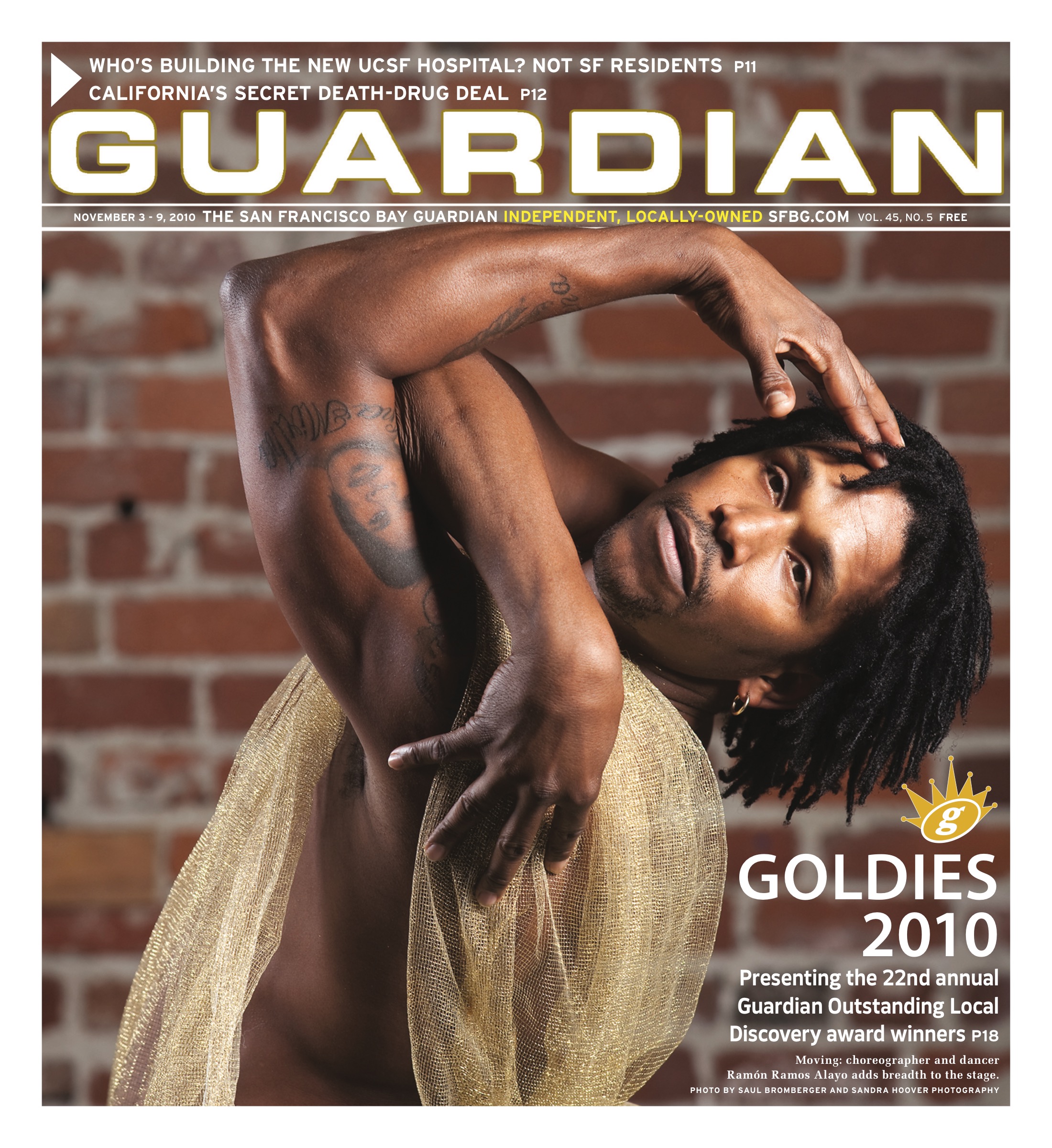
GOLDIES 2010 LIFETIME ACHIEVEMENT: Slumberland Records

0

Look at the key critically acclaimed and popular indie (or subsidiary) releases of the past few years, and certain label names recur: Captured Tracks, Mexican Summer, Sincerely Yours, True Panther, Slumberland. Most of these names belong to new kids on the block, but Mike Schulman has been at the helm of Slumberland for more than 20 years. If anything, his label, a home for perfect guitar pop, is stronger than ever, with bands such as Pains of Being Pure at Heart and Crystal Stilts on the roster. Slumberland has outlived many of the legendary indie labels — from Postcard to Creation to Rough Trade — that inspired it. Sometimes dedication reaps rewards.

In 1989, when Slumberland began in Washington, D.C., indie rock was a postal affair. The foundation of an international pop underground was being forged through letters and records and zines sent among fans and small record stores. From the beginning, Schulman was uniquely out of step, focusing on melodicism when the D.C. scene was known for punk abrasion. When Slumberland relocated to the Bay Area a few years later, releases by Stereolab, Henry’s Dress, Aisler’s Set, and the unjustly obscure Rocketship had nothing to do with grunge mania. “I felt painted into a corner,” Schulman, who was working at the Berkeley record store Mod Lang, remembers. “It seemed like there weren’t a lot of opportunities to get stuff heard, unless you took bigger deals. It was a craven time.”

Slumberland endured, and Schulman’s deep and abiding love of music is a major reason. One can argue that the label is more refined or restrictive in terms of sound than most — simply put, it offers the true wild heart of what has been more calculatedly and generically marketed as noise pop. But Schulman’s musical taste runs deep and wide. In the mid-1990s he started an electronic label, Drop Beat, and today he DJs at Oakland’s Actual Cafe, spinning rock steady, ’60s hard bop, Blue Note classics, and ’70s soul, funk, and reggae.

Schulman draws from a deep library — he has 30,000 records in his basement. “It’s out of control,” he admits with a smile. “I don’t sell anything. I buy new records every week: dubstep, soul and jazz reissues, and more indie than I have in the recent past. But currently it’s hard for me to listen to new stuff because I’m spending so much time listening to [Slumberland] test pressings.”

For Schulman, the process of assembling an album is one of the greatest pleasures of running a label. “I was really happy when they started sending me mixes,” he says when asked about the newest Slumberland release, Sports by the Bay Area trio Weekend, an album that promises future greatness and mass appeal. “The only reason I do this is to help bands get their music out there. I’ve been doing it long enough that I can give advice to a young band doing their first record. It’s gratifying talking to a band, listening to demos, and hearing an album come to fruition.”

Another gratifying moment for Schulman was Slumberland’s 20th anniversary mini-tour, when new bands and older bands — including his own, Black Tambourine — united for shows on both coasts. “The SF show was crazy,” he says. “There were so many people I hadn’t seen since the Aisler’s Set broke up [in the late ’90s]. So many people came to see Henry’s Dress.” Contrary to what one might assume from Slumberland’s music, Schulman is the opposite of a sentimentalist, but in this instance, he’s unabashedly romantic: “It was magical. It was kind of heartwarming. When I started doing a label I was so into music and supporting labels and I wanted to contribute. There was something about those shows that made me feel like, oh, maybe I did.”

He did — and he’s still contributing, with support and inspiration from his wife Nomi and son Theo. Through well-timed and still-strong acts of fidelity, Slumberland has forged its own community of friends who now have a shared history. The label’s present — 2010 brought powerful debut albums by Weekend and Frankie Rose and the Outs — is vital. Its future looks even livelier. Schulman is excited about upcoming releases by Brown Recluse and Emitt Rhodes-like baroque pop troubadour Devon Williams, and he drops some big name hints regarding the next Pains of Being Young at Heart album. For Slumberland, the pains of being young at heart have matured into the rewards of being true.

www.slumberlandrecords.com

>>MORE GOLDIES 2010

GOLDIES 2010: Amy Seiwert

0

As a kid in Cincinnati, Amy Seiwert didn’t want to be a ballet dancer. She strove to become a gymnast, just like her adored older sister. But, she says, “I was a scrawny little thing.” And when she tried walking on her head because her arms couldn’t support her, her parents suggested that ballet might help her gymnastics. “I didn’t want to do it,” she explains. “Ballet was ‘girly’ stuff and I was a tomboy.” Gymnastics’ loss, however, became ballet’s gain.

At 10, Seiwert got hooked on ballet — not the polite, princess/sylph/fairytale type, but the kind that let her soar, jump, turn, and “dance, dance, dance.” For her, the big attraction was ballet’s physicality. “I have always been fascinated with the geometry inside and outside the body. What you are drawing in three-dimensional space is based on physics. Ninety-eight percent of ballet makes perfect sense of what you want to do physically.” She even took a year’s training in Pilates to understand the body’s mechanics from a different perspective.

Seiwert became a good dancer, but she has the potential to become a great choreographer. She quite possibly is the Bay Area’s most original dance thinker, taking what some consider a dead language and using it as a 21st century lingo to tell us something about who we are. Monopoly took on the corporate glass ceiling. It’s Not a Cry looked at the difficulty of letting go even though a relationship has died. Static explored our tendencies to accentuate differences instead of seeing underlying commonalities.

As a choreographer, Seiwert credits much of her development to the late Michael Smuin, in whose Smuin Ballet she performed for nine years, even though his choreography could not have been more different from her own. Current Smuin Artistic Director Celia Fushille appointed Seiwert as choreographer in residence for exactly that reason. With Smuin Ballet, she will face her biggest challenge yet: choreographing Mozart’s Requiem in D Minor, which premieres next spring at Yerba Buena Center for the Arts.

But it’s for her own pick-up company, Im’ij-jre, that Seiwert is creating her most experimental work. It’s there that she works toward overcoming her fear of creating “the same ballet over and over.” In Relying on Fragmentation, she worked with controlled improvisation. In Light Essays, her dancers collaborated with set and light designer Marc Morozumi. Her most daring sharing of responsibility occurred in last year’s White Noise, with Berlin-based software artist Frieder Weiss.

Seiwert comes from a long family line of piano teachers, so perhaps it’s not surprising that she often lets music influence the kind of ballet she chooses to make. She doesn’t eschew the classics, but favors the music of our own day. She draws on a variety of sources, from Kevin Volans to Otis Redding, Steve Reich to Leonard Cohen, Zoe Keating to Morton Feldman.

Three years ago, while working with the Margaret Jenkins Dance Company’s CHIME mentoring program, Seiwert met poet-performer (and 2003 Goldie winner) Marc Bamuthi Joseph and used some of his work within Double Consciousness, a solo for her former colleague Charlie Neshyba-Hodges. “I just so much regretted that I couldn’t have Marc on stage,” she remembers. Next May, Seiwert will get her wish. Atlanta Ballet recently commissioned a new work from her; Bamuthi Joseph will help bring it to life when it premieres. (Rita Felciano)

www.amyseiwert.com

>>MORE GOLDIES 2010

GOLDIES 2010 LIFETIME ACHIEVEMENT: Rick and Megan Prelinger

0

“Juxtaposition,” “serendipity,” “appropriation,” and “collaboration” are all words that come up frequently when you talk to Rick and Megan Prelinger about the Prelinger Library.

Tucked above a SoMa carpet store, the space (“a free offering, an installation, a workshop, and an extension of our living room,” according to the handout given to visitors) is stuffed floor-to-ceiling with books, maps, magazines, and other ephemera. It is a place where artists, students, teachers, architects, T-shirt makers — basically anyone with a curious, creative mind — can seek information and inspiration. Visitors are encouraged to photograph, copy, and scan materials for future use in their own projects.

“This is a completely unconventional library,” Rick says. “It’s much more a place where serendipity rules.”

A certain magic comes courtesy of the library’s unconventional shelving system, designed by Megan to maximize what she calls “browsing-based discoveries.” It’s based on a continuum of ideas and interests, not Dewey Decimals. In a section dedicated to the American South, for example, a dusty government tome about Georgia’s river system might nestle next to a paperback copy of Deliverance.

“[Library visitors] tend to start going where they think they’re headed,” Megan said. “Then they find something they’d never seen before, and they just go in a different direction. They come out going, “Wow! I thought I was looking for this, but I found this.'<0x2009>”

Opened to the public in June 2004, the Prelinger is tailored to its current location. Though the fit is snug, Prelingers have no plans to upsize. “The collection is composed in such a way that there’s a relationship between the aisles,” Rick explains.

But the collection is anything but static. In addition to what they call the “user-based chaos” that arises when visitors remove and replace books on the shelves, the Prelingers are constantly adding to, and editing, their highly selective inventory. Subjects range from transportation and land-use to media studies and political history (they joke that the stacks harbor “98 percent bad ideas”). “[The library is] specific to what we’re interested in,” Rick says. “But we’re interested in a lot of things.”

The Prelinger also boasts an online component composed of thousands of digital books that may be downloaded for free. Though this represents only a fraction of the physical collection, it’s a useful tool for those who can’t visit the library in person. As it is, the place has limited hours, and both Prelingers support it with other endeavors.

Megan is also a historian, a wild-bird rehabilitator, and an author; her 2010 release, Another Science Fiction: Advertising the Space Race 1957-62 (Blast Books), is a gorgeous, hefty volume that culls and contextualizes imagery from magazines like Missiles and Rockets, bound editions of which can be admired in the library. Rick is widely known for the Prelinger Archives, a groundbreaking moving image archive he founded in 1983. It eventually grew to include more than 60,000 works — all originally made by amateurs or earmarked for industrial, educational, and advertising use. Much of it was acquired by the Library of Congress in 2002 and 2003 (some 2,500 titles are also available online). The archive inspired Rick’s 2004 collage film, Panorama Ephemera, as well as his popular “Lost Landscapes” presentations, which meld lively discussions about history with found footage.

Along those lines, the Prelingers have a new-old passion: home movies. “Megan and I now run a really fast-growing and exciting home movie collection,” Rick says. “Home movies — that’s the only cinema that matters for me. Each one is unique. We think we understand home movies, but they’re shallow and deep at the same time.”

Rick’s latest film (“slowly in the works”) will be based on this burgeoning collection. “One of the things that we say we’re trying to do — it’s a little grandiose, but it’s actually true — is putting together a complete ethnographic portrait of 20th century North America through home movies,” Rick says. Looking at what they’ve accomplished so far, it’s not hard to conclude that if anyone can pull off such a feat, it’ll be the Prelingers.

www.archive.org/details/prelinger; www.prelingerlibrary.org

>>MORE GOLDIES 2010

GOLDIES 2010: Jennifer Locke

0

In her pieces, Jennifer Locke has, variously, jumped rope for 30 minutes in a full-body latex suit (cutting out a hole in the bottom afterward to drain out her accumulated sweat and urine); wrestled with a partner at the Berkeley Art Museum smeared in stage blood; covered herself in Elmer’s glue, let it dry into a second skin, and then peeled it off; received a lap dance from a male stripper; and branded a fellow participant.

Granted, reducing Locke’s art to such a titillating laundry list is a superficial move. But the immediate visceral spectacle her work repeatedly presents is undeniably seductive — albeit in a punk rock kind of way. It’s hard not to be pulled in by the grappling, athletic bodies, the donning and shedding of second skins, all frequently soundtracked by the amplified breath of the participants themselves, even if it sometimes causes one to flinch.

Locke, who has spent considerable time working as a pro dom and is herself a champion submission wrestler, is keenly aware of her art’s initial draws. “Yeah,” she laughs over the phone, “athletic bodies are inherently sexy. It’s in our nature as human beings to want to look. But I want there to be a barrier between the audience and the image of the body.”

In Locke’s work, which she describes as a sculptural hybrid of live studio actions and video, the camera often provides that layer (or more often, layers) of mediation. Locke strategically uses video within her pieces to alter the on-site audience’s expectations and perceptions of what’s occurring in front of them, as well as those of viewers encountering the pieces as video documents after the fact.

Whatever erotic or transgressive charge a viewer may have invested in the actions being performed becomes rewired through the camera set-up, or is short-circuited entirely. As critic Daniel Coffeen has noted of Locke’s work: “She does not dabble in human affect but in human mechanics.”

In the aforementioned BAM piece, Red/White (Fake Blood), Locke and her wrestling partner sparred in the museum’s loading bay, their actions relayed to the audience via a live video feed that, due to technical difficulties, wound up being projected in black and white. The door to the dock, however, was left slightly ajar so anyone who wanted to see the “real event,” and the piece’s “true colors,” could — although no one was ever specifically directed to.

In Black/White, a three-day piece done as part of the opening of the San Francisco offices of the Marina Abramovic Institute of Performance Art, Locke placed the camera filming a live feed of her actions so that it encompassed those viewing her as well, then projected that image on a rear wall so the audience could observe either Locke’s action or the projection of themselves watching Locke’s action, but not see both simultaneously.

“I used to talk a lot in my artist statement about power dynamics, but then I realized over time that I’m more interested in how meaning gets produced,” she says. “Power is a means to talk about that, but I want to know how those hierarchies actually shift around in reality: Who’s in control? Am I? Is the camera? Is the audience? My work is like a three-card monte.”

www.jenniferlocke.net

>>MORE GOLDIES 2010

GOLDIES 2010: Ruth Laskey

1

One thing that Bay Area art has no shortage of is color. Whether it be Albers-informed theory, Op-influenced repetitious patterns, Mission muralismo, or mural-like Mission School paintings, in general, local color has been primary, if not outright garish. Ruth Laskey’s palette stands apart — confident enough to be low-key or even muted in comparison. “Color is kind of it for me,” Laskey says, in the middle of a sleepy afternoon at a Mission cafe. “It’s where a piece gets its emotion.”

You could say that there’s a quality of quiet intensity to Laskey’s work, and the artist herself is soft-spoken. She’s also strong, clear, and candid in terms of viewpoint. “My relationship to color is not very systematic,” she says, when the topic of Albers references in relation to her work is broached. “It’s more intuitive. I already see things from a painter’s perspective. When you’re a painter making color, there’s an evolution that happens.”

In Laskey’s case, this evolution is ongoing — and it isn’t taking place within traditional painting. Both “7 Weavings,” her first solo exhibition at Ratio 3 in 2008, and a self-titled show at the same space this year are taken from her larger “Twill Series,” a growing group of “investigations” that she began in 2005, years after taking a weaving class in between undergraduate and graduate studies at California College of the Arts. “Twilling is basic, the first pattern weave you learn,” she says. “The loom I’ve been using from the beginning is basic. I was thinking about my understanding of weaving, and I was interested in how twill creates shape on its own. It kind of clicked one day that I could use twill, but insert the thread in the same way I would with tapestry.”

That moment kick started Laskey’s unique use of dye and weft and warp to create color forms in which minimalism and materiality intersect. Her “Twill Series” has generated a cover story critical appraisal in Artforum and many responses locally — in some ways, the discourse about her growing body of work (including my own 2008 piece for this publication, which focused on geometric elements) reveals as much about the writers as it does about the art itself, which invites contemplation and allows open interpretation. It’s a mistake to assume this openness is cool detachment, though. “It’s fabric,” she says. “It’s inherently warm.”

At the moment, Laskey’s studio is in the garage of her apartment in Glen Park, a neighborhood that has housed some artists of renowned dedication, like Bruce Conner. Her day job at California College of the Arts’ Oakland library is one source of inspiration and perspective. Music could be another. When I ask her what sounds might make apt accompaniment for an audiovisual presentation of her art, her choice is Sun Ra. Thinking of her work as what Ra would call an “art form of dimensions tomorrow” adds another a playful element to its fabric. She uses blankness around an image as he uses the silence that surrounds sound. Space is the place.

As for Laskey’s “Twill Series,” at the moment it’s hard to gauge how large it will grow, but there is no doubt her deployment of dye and geometric shape is subtly shifting. “It’s an issue that artists have to deal with all the time,” she reflects. “I might still be interested in what the work is doing, but is it still engaging for everyone else? There’s always that tiny figure on your shoulder saying, ‘Maybe you need to move on.’ But I feel like it’s taking me on this journey. It might be a really slow journey. It might have small steps. But I’m enjoying that. For me, it’s fruitful.” 

www.ratio3.org; www.ruthlaskey.com

>>MORE GOLDIES 2010

GOLDIES 2010: Christopher Kuckenbaker

0

In September, the San Francisco Fringe Festival offered patrons an off-Beat gem, The Burroughs and Kookie Show. A deftly performed blend of homage and intimate psychic excavation, the play imagines William S. Burroughs (actor-playwright Christopher Kuckenbaker) as talk show host, opposite a deadpan, laconic musician named Loubis the Pubis (Louis Libert), and a missing cohost, “Kookie,” symbolized in absentia by a small, empty chair. Tonight’s guest? An unsuspecting actor named Chris Baker (Christopher Kuckenbaker again). At once mood-alteringly dreamy and piquant, shrewdly funny and unexpectedly poignant, the show deservedly scampered off with “Best of Fringe” honors.

Kuckenbaker is a sharp, versatile actor who’s plied the more vibrant fringes of Bay Area theater since the 1990s. He and his now ex-wife moved away in 2001 to pursue professional careers as actors in Chicago and Boulder, but Kuckenbaker returned in 2007. The timing was auspicious. A month later, he was memorably cast as real mama’s monster Grendel in Banana Bag & Bodice’s bicoastal hit, Beowulf: A Thousand Years of Baggage. Next up, Kuckenbaker appears at Z Space opposite 2009 Goldie winner Beth Wilmurt in The Companion Piece, directed by Mark Jackson.

Kuckenbacker came to acting while at Santa Barbara City College. This followed a scattered upbringing in California towns like Hollister and Salinas, and far-flung lands like Australia. He credits all the moving around with seeding his actor’s outgoing personality. “It maybe forced me to be a little more gregarious than other people,” he suggests.

Arriving in San Francisco in 1993, Kuckenbaker received a degree from San Francisco State’s prolific theater department in 1997. Since then, his graceful work and alternately intense and quirky looks have made him a unique presence onstage. He’s also an astute and generous ensemble player who’s worked repeatedly with leading smaller companies like Art Street and the Shotgun Players; been part of a now defunct sketch comedy troupe called Old Man McGinty; and appeared repeatedly in Playground’s popular stagings of contest-generated short plays.

His own shift to playwriting, meanwhile, is more than a lark. He and Burroughs go way back. They first met in the Interzone of the imagination around the time Kuckenbaker left Santa Barbara with some Beat-obsessed cohorts for Bellingham, Wash., in the early 1990s. He stayed only a year in the Pacific Northwest rain, but something had happened to him up there, some inter-era nod, some afflatus. A mind-meld with old Bill.

“When I first moved to Bellingham, I’d go to the grocery store and pick up CDs of him reading his own works. That turned me on. There was something about his voice that triggered something in my brain, released some kind of new chemical in my head, and it just made sense.”

After gestating for nearly two decades, that initial inspiration has become a Möbius strip seamlessly joining in one actor two complex identities: Burroughs and the actor alter ego called on to process the painful end of a marriage. In giving a compelling dramatic shape to the voices in his head, Kuckenbaker says he’s found new definition in a still-unfolding career.

“When I look back, it seems to me I was just going from one show to the next, never really seeing myself any further along than the next show. Now, after giving birth to something in a very personal way, I want with all my power for it to grow and be seen, to spread itself out across the world. I have some big ideas about where I want to take the next iteration of The Burroughs and Kookie Show, making it a much larger and richer piece.” 

www.kuckenbakery.com

>>MORE GOLDIES 2010

GOLDIES 2010: Hunx and his Punx

0

It should come as no surprise that a gay 30-year-old male living in the Bay Area who borrows elements of his fashion-forward look from Freddie Mercury is putting out the “gayest music ever.” He’s a Pisces who rocks a switchblade comb and blends leather daddy duds with a 1950s-meets-1980s juvenile delinquent touch.

Seth Bogart, a.k.a. Hunx, has been devoted to rock and trash pop culture for years. He made zines as a teen in Arizona when riot grrrl was happening, and has essentially created a life from his variety of enthusiasms.

“I do it for myself, to have fun. It makes me feel better being constantly creative. As cheesy as it sounds, happiness is doing what you want to do,” says the rather butch-looking Bogart over tortas at a 24th Street restaurant. His eyes are piercing, he’s wearing a torn biker jacket, and he’s sporting a few days more than a five o’clock shadow.

Probably tired from having just gotten back from New York City, where he spent eight days recording the next Hunx and His Punx album for Sub Pop’s subsidiary label Hardly Art, Bogart appears happy to be home. After years living in Oakland, he currently resides in the Bayview District.

Thematically, Bogart describes the first proper Hunx and His Punx album as being similar to this year’s compilation Gay Singles (True Panther) in that it deals with love and teenage heartbreak. “It sounds like a dream,” he exclaims. But the upcoming album delves deeper into a sadness he said he’s never really written about before. His father committed suicide when he was just a teen, and with his mom left “out of it and depressed” in the immediate aftermath, it’s no wonder he grew up fast and was on his own by 17.

Bogart found catharsis in freedom of expression. As the tale goes, after his previous group Gravy Train!!! disbanded, friends such as Nobunny and Christopher McVicker helped pen some of the early Hunx and His Punx songs. On the new album, Bogart more fully takes the reins, writing half the album’s tracks himself, with his bold bassist and bandmate Shannon Shaw also contributing a few numbers. As for Hunx’s flirty and quick-witted onstage candor, Bogart attributes some of his brazen confidence to old pal and former roadie Nobunny, who instilled in him that you only have one chance in life. This attitude has led to a colorful album insert of Hunx in the buff, as well as an awkward moment when his Internet-browsing mom unexpectedly saw his boner in a Girls music video.

If you think Bogart’s skills to pay the bills begin and end with music, guess again. He happens to co-own Down at Lulu’s, a popular Oakland vintage boutique and salon, with Tina Lucchesi (of Trashwomen, Bobbyteens, and now Midnite SnaXXX). The shop has been open four years, and Bogart, a licensed cosmetologist, cuts hair there three days a week. He and his friend Brande Baugh are also developing a TV talk show.

Although owning his own shop and contributing to the local music scene are two obvious ways Bogart serves the Bay Area community, it’s what he stands for on a larger scale as a unique gay personality in the still hetero male-dominated genre of punk — and broader realm of rock — that makes him bold and noteworthy. You can call him bubblegum and outrageous, but the fact remains that Hunx exudes an image of strength and confidence. He fills a void in garage rock that isn’t quite clean enough for the Castro and maybe too queer for some fans of harder sounds. He blurs the lines, breaks down boring boundaries, and stays true to himself all the while. 

www.myspace.com/hunxsolo; www.myspace.com/gayestmusicever

>>MORE GOLDIES 2010

GOLDIES 2010 LIFETIME ACHIEVEMENT: Marc Huestis

0

“What a swimmer is Dracula’s daughter!,” exclaims John “the Cool Ghoul” Zacherle, as “Dinner With Drac” blares from the speakers in Marc Huestis’ Redstone Labor Temple office. ‘Tis the season for Huestis’ tribute to Poltergeist‘s Jobeth Williams, and the activist, filmmaker, and camp impresario is in the final stretches of preparing for the big night.

What hasn’t Marc Huestis done? As a youngster, he arrived in San Francisco from Long Island, New York, unafraid to recite poetry while sporting a pompadour that would make any Elvis impersonator feel size envy. Soon you could see him singing in drag or writhing around on stage in a dirty diaper in Angels of Light productions. But from the very beginning, film was at the heart of Huestis’s life. His father was an editor who worked on the ’60s teen music TV show Hullabaloo, while his mother was a showgirl. “I have a little bit of both in me,” he jokes, and it’s the truth — a Marc Huestis extravaganza involves informed editing and explosive creative freedom.

One of Huestis’ first notable celebrations was the San Francisco Gay Film Festival, now known as the Frameline fest, which he and his non-biological twin-of-sorts Daniel Nicoletta (born just three days apart from him) began with other like minds in 1976. “It was fun, a bunch of kooky hippie kids who wanted to get their movies shown,” he remembers. “There was no pretense, and the group of us were able to get together to do it. It’s great to see what it has evolved into, and feel a bit like a patron saint. Some people will always hate you, but at this age” — Huestis is 55 — “you get to the point where some people respect you. And you respect yourself.”

In 1982, after making some short films, Huestis wrote and directed Whatever Happened to Susan Jane?, his distinctly San Francisco answer to the kinds of antic comedies John Waters was making on the East Coast. In recent years, the movie has found a new audience amongst music lovers devoted to San Francisco’s new wave heyday — one of its strongest aspects is its documentation of wild performances from Tuxedo Moon and other groups of the day. “It was a great combination of gay culture and punk culture,” Huestis says of the era. “There’s a kindness to it, and it was very smart.”

Huestis’s next feature-length movie, 1993’s Sex Is… is very much a film of its time. A direct look at and discussion of the experience of gay sex and intimacy amid the AIDS crisis, it was also a do-it-yourself, many-year labor of love, with DIY aesthetics one common thread throughout Huestis’s creative life. “It’s very heartfelt,” he says of the film. “It was an important film when it came out because no one was talking about sex, and if they were, it was really hypocritically. The high point of my life was to be at the Berlin Film Festival for the world premiere, and then several days later, be at the awards presentation with Billy Wilder sitting nearby. For me, having HIV, and not thinking I was going to live, that moment was a gift.”

One year later, Huestis moved into his office in the Labor Temple, a treasure trove of film memorabilia where the walls are lined with autographed photos, and VHS tapes, DVDs, VCRs and DVD players are stacked on top of each other — in a well-organized fashion. The site is his base for the celebrity events that he puts on at the Castro Theatre, theatrical and cinematic programs that have blazed a trail for another generation of movie mayhem purveyors such as Jesse Hawthorne Ficks and this year’s Goldie winner Joshua Grannell, a.k.a. Peaches Christ.

Old media surrounds us as we talk, but there is little doubt that Huestis, experienced at putting together political and community fundraisers, is always focused on the present and future as well. “I love new media,” he says. “I could not do what I do if I didn’t have knowledge. I design the posters, I do the clip reels, I get the music together, I do the PR. I would sell the popcorn if I could. I love it. I never get tired of movies.”

It’s fitting, then, that Huestis gets to call one of this country’s oldest and most beautiful movie palaces, the Castro Theatre, home. “One of the first shows I put on there was when the Republicans took control of Congress, so everything comes around,” he says. “The best thing is seeing someone go there for the first time. To me it’s like the town barn, but it’s an amazing, beautiful place.”

If star power can me measured in size, some of the players that Huestis has brought to the Castro over the years — Debbie Reynolds, Jane Russell, Tony Curtis, Piper Laurie, Patty Duke — rival the size of the fabled venue. He’s also given eccentric talents such as Sylvia Miles and Karen Black the type of spotlight they deserve. In the end, it’s about gratitude, on his part, on behalf of the audience, and hopefully, from the subjects of his tributes. Huestis’ night for Tony Curtis resulted in him being hired by the actor to create a clip retrospective that ultimately wound up being shown at Curtis’s funeral. “I had a great fondness for and connection with him,” he says. “I love it when they’re thankful, because no one shows gratitude, the world is so entitled. After the [Castro] show, he [Curtis] held my hand really hard, looked me straight in the eyes, and said, ‘Thank you.'”

Thank you, Marc Huestis.

www.myspace.com/marchuestispro  www.youtube.com/user/hostesshue

>>MORE GOLDIES 2010

GOLDIES 2010: Jesse Hewit/Strong Behavior

2

Most shows start with a request to turn off your cell phones. Tell Them That You Saw Me begins with an implicit request to leave your virtual mind outside. As the lights come up in this latest work from Jesse Hewit/Strong Behavior (which premiered after a residency at CounterPULSE in August), five utterly gobsmacked women, sprawled in enervated postures on floor and furniture, stare back at the audience for a very long time. The audience is still, but maybe still not seeing everything in front of them, as a micro-choreography of breath and saliva and eyelash unfolds amid a glacial volley of questions and answers. The real seeing takes time and patience and something like courage, things that feel in short supply these days — unless you attend this piece, which requires as well as rewards “attending.”

“It’s a study in focus,” says Hewit, “and it’s a study in what we’re looking at and why, and how we deal with each other for long periods of time.” The piece, he says, made him conscious of a concern he’s had with duration as a condition of social life and a strategy for art. Like an aikido master, Hewit uses the sheer weight of time to unsettle our usual, predictable, and tyrannical rhythms. In doing so he advances an invigorating and revelatory body of work exploring our myriad personal and social identities.

For his part, the 30-year-old choreographer and theater maker is both a unique artist and part of a tight-knit milieu making serious waves across the Bay Area’s performance scene. Much of this network of young, bold, savvy, and mostly queer artists gathers under the banner of The Off Center, an ongoing artist-run performance initiative originally formed around recently-shuttered queer performance incubator Mama Calizo’s Voice Factory. (The group includes close colleague Laura Arrington, the other CounterPULSE summer residency artist, whose Hot Wings shared the bill with Tell Them.)

From ages 8 to 13, Hewit studied ballet in Montreal. But dance went by the wayside as his family kept pulling up stakes and moving, since in most places “it wasn’t cool to be a boy who was a dancer.” He got back into dance while at New York University in Tisch’s Experimental Theater Wing. Then, unexpectedly, he headed to a psychology program in central Florida: “I don’t know what the deal was, but something didn’t agree with me in New York anymore.” After a year-and-a-half, Hewit found San Francisco State’s graduate program in sexuality studies. “I thought I was going to be a sociologist,” he admits. “[But] my mode of expression while in graduate school kept coming back to mounting performances or looking at bodies and posturings, so I realized, ‘Oh, okay, I have to go back and do dance stuff.'”

The theoretical rigor explicitly informs Hewit’s work, but he’s also inspired by an international discourse among dance/theater makers. He recently trained with choreographer Meg Stuart and names among other significant influences New York–based choreographer Miguel Gutierrez, Bulgarian-born physical theater artist Ivo Dimchev, North Carolina–raised feminist choreographer-provocateur Ann Liv Young, and New York’s Big Art Group. Locally Hewit cites people like Erika Chong Shuch, Jess Curtis/Gravity, and Sara Kraft.

Hewit particularly credits Keith Hennessy, a friend and mentor, with drawing his work into an international context. He brings up Hennessy’s balancing of two boards on his head in his Bessie Award–winning show Crotch. “It’s really relentless and impossible and it takes way too long,” he recounts with satisfaction. “It’s nice. It’s always these little sites of resistance — just how quickly do we think things are supposed to happen?” 

www.jessehewit.com

>>MORE GOLDIES 2010

GOLDIES 2010: Joshua Grannell

1

Whether he’s all dolled up as Peaches Christ or wearing his everyday attire, Joshua Grannell is a cinematic force to be reckoned with. He turned a love of cult film into a modest empire, with a memorable drag character, a popular midnight movie series, and All About Evil, his first full-length feature film.

But back in 1998 when Grannell was working for Landmark Theatres, Midnight Mass was a tough sell. “Midnight movies had really died in San Francisco,” he recalls. “It was sort of a thing that was considered passé and relegated to the suburbs.”

To Landmark’s credit, Grannell did get the go-ahead to create Midnight Mass, which he hosted as his alter ego Peaches Christ. He screened camp classics like Showgirls (1995), Female Trouble (1974), and Beyond the Valley of the Dolls (1970). The stage show was led by Peaches, who Grannell describes as “a character born out of the world of cult movies.”

“I’m not just programming a movie,” he explains. “I’m also creating an entire environment and a whole show to go along with it.”

While Grannell still produces Midnight Mass sporadically, he no longer maintains it as a regular series. And who can blame him? He has plenty on his plate as a filmmaker, the role he’s wanted to play since childhood.

“I went through a period where I started to freak out and think, oh my God, what have I done?” he admits. “I’m best known for being a clown named after Jesus. And I was proud of that … but I really did start to think that no one was ever going to invest any money in me or my filmmaking.”

But it was his Peaches Christ fame and the popularity of Midnight Mass that gave Grannell an audience who understood and appreciated his vision. He was able to use that when he wrote and directed All About Evil, in which he also cameos — as Peaches, natch.

The film is Grannell’s ode to his idols, an homage to the schlocky gore of Herschell Gordon Lewis and the charming perversity of John Waters. It’s also an impressive achievement, the work of a filmmaker who is accomplished in his own right.

But he hasn’t let the success go to his head. As Peaches, Grannell remains a snarky fan, noting that part of her appeal is her unwavering silliness.

“Peaches is a bit of a goofball, and I certainly don’t take Peaches too seriously,” he notes. “The minute I do, go ahead and put a bullet in my head, because that would ruin everything.”

To Grannell, the fannish aspect is essential to the Peaches Christ brand. In a way, it mirrors his own passion — he’s just as excited to share the stage with his cult heroes as we are to see them.

“I’ve built a whole career centered around worshiping my idols,” Grannell says. “I’ve gotten to meet them and I’ve gotten to work with them. But even though I would say that I consider John Waters to be a friend, I don’t know that he’s a friend to me without my obsession still being there and being a fan.”

Grannell’s humility isn’t an affectation. Despite his considerable successes, he’s still driven by simple goals.

“I make crowd-pleasers,” he says. “I’m an entertainer. There’s a sort of art to what we do, certainly, and an aesthetic, but first and foremost, I get off on making people laugh or puke or scream. That’s always been the thing I’m most interested in.”

www.allaboutevilthemovie.com; www.peacheschrist.com

>>MORE GOLDIES 2010

GOLDIES 2010: Amanda Curreri

0

Five minutes into talking with Amanda Curreri over a slice and coffee at Mission Pie, I’ve agreed to take part in a piece she’s working on as part of Shadowshop, the in-gallery artists’ marketplace Stephanie Syjuco is organizing for SFMOMA’s upcoming survey of work made in the past decade.

“It’s called Afghanistan Insert,” Curreri explains, speaking in the measured fashion of someone who carefully considers her words. “I’m trying to insert Afghanistan into SFMOMA and into San Francisco’s art community.”

Curreri’s commitment to getting the local arts scene to engage with what has become commonly dubbed by the mainstream news media as “the forgotten war” is not just politically motivated. It’s also personal. Her husband has been working in Afghanistan for the past five months as a security contractor, during which he has sent her snapshots of local graffiti. They are documents of his ground truth.

Curreri plans on physically inserting herself and her husband’s images into Shadowshop, much in the same way she holds one of his pictures in the portrait accompanying this feature. Indeed, the photo, this profile, Curreri’s new status within the local arts community as a Goldie winner, and the conversations this increased attention might encourage will all become part of the discourse surrounding Insert Afghanistan and contributing to its impact.

All this is consonant with Curreri’s view of herself as more of an instigator than an artist. “I’m trying to make art that crosses out of the art world,” she says, echoing Joseph Beuys’ notion of social sculpture. Her projects thrive on participation, using the exhibition space as a kind of social laboratory in which she arranges shared cultural touchstones and institutions — campfire songs, the judicial process, family recipes — as prompts for personal reflection and shared conversation on the “big subjects” that undergird them: history, politics, memory, and in the case of Afghanistan Insert, their intersection within a seemingly endless and fruitless foreign occupation thousands of miles away.

Engaging with Curreri’s art often entails an extended encounter with the artist herself (given how unexpectedly my interview at Mission Pie has turned out, the reverse seems true as well). The last conversation I had with Curreri was this past July, when she videotaped my extemporaneous responses to her off-camera questioning about the topic of last words. My interview was to be incorporated into her concurrent exhibit “Occupy the Empty,” for which she transformed Ping Pong Gallery via hand-sculpted “props” into a courtroom in which various associates, friends, and strangers, such as myself, volunteered their time and testimony.

As with Insert Afghanistan, the inspiration for “Occupy the Empty” was also personal: after participating in a court hearing concerning her late father, Curreri found out it had been held in the same Massachusetts courthouse in which Italian-American anarchists Sacco and Vanzetti were sentenced to death in the early 20th century. Curreri, also of Italian-American descent, saw the coincidence as a chance to connect to that history and, in the process, build a community around a larger discussion of remembrance. Curreri recalls one participant for whom the show served an almost therapeutic function.

“I want to create art that has an interpersonal function, in real-time,” she says. “I want my work to set a specific frame around our inherent connectivity.” 

www.amandacurreri.com

>>MORE GOLDIES 2010

GOLDIES 2010: DJ Bus Station John

0

“Listening to records is really the closest thing we have to a time machine,” says DJ Bus Station John. “Rest the needle in the groove, close your eyes, and the sensory experience can take you right back to 1979 — if you’re lucky enough to be that old, ha ha!”

Perhaps the most important DJ on the San Francisco gay scene in the past decade, Bus Station John has been the musical conduit for a huge cultural reawakening among younger homos. Called “the godfather of bathhouse disco,” he’s revered throughout the dance music world for his fastidious attention to party detail and his inimitable blend of extremely rare 1970s and early ’80s soul, boogie, garage, funk, Italo disco, Hi-NRG, and NYC no-wave.

But his influence goes far beyond helping to inspire the underground disco revival that has displaced techno as the music of choice on many of the world’s sophisticated dance floors. Believe it or not, disco and Hi-NRG used to be verboten in most gay clubs in the ’90s and early ’00s, sonic reminders of the early AIDS crisis that were trampled beneath pounding circuit music beats and generic diva screams. Imagine queers being ashamed of disco!

The arrival of life-extending protease inhibitors for HIV-positive men in the late ’90s opened the door for a not-so-painful appreciation of the recent gay past, and the time was ripe for a DJ to reprise the fantastic sounds of a generation tragically swallowed by disease — sounds that San Francisco had a huge hand in creating through the likes of producer Patrick Cowley, singer Sylvester, and dozens of other integral analog musicmakers.

Enter DJ Bus Station John in 2000, tastefully flaunting his dedication to the hot and heavy bathhouse and backroom days of yore. (The city, still gripped by AIDS panic, continues to outlaw these queer sexual venues.) Although the music is central to his mission, his parties are a complete package. From Xeroxed flyers of hand-made Gluesticked collages featuring Grace Jones or Joan Crawford in a spiky forest of exaggerated phalluses to his notorious “no cell phone” policy on the dance floor, he conjures the heady lust of gay history before social networking and the Internet replaced genuine human contact. “I work without a net, as it were,” he says. “There’s still a sense of discovery when you walk into my parties — no pretedermined list of ‘friends’ who are going. It’s a fresh and spontaneous mix.”

Bus Station John parties have also fostered the discovery of new spaces for homos to get down — past gigs have brought Deco Lounge, the Gangway, and the old Transfer to light as viable venues. His current regular parties include the disco-drenched Tubesteak Connection (Thursdays, 10 p.m., $4. Aunt Charlie’s Lounge, 133 Turk, SF. www.auntcharlieslounge.com) and the wonderfully named Le Perle Degli Squallor (first Saturdays of the month, 10 p.m., $5. The Hotspot, 1414 Market, SF.).

Musically, Bus Station John’s most meaty contribution to clubs, besides fostering the rediscovery of past genius, may be the renewal of classic disco song structure. His selections bring back the notion of dancing as erotic hold-release, an embarkment on a series of expertly crafted journeys. As a DJ, it’s OK (heroic, even) to let people’s attentions wander when a new track is abruptly introduced, then have them relax into an ultra-melodic verse-chorus-verse format as they freshen their drinks and eye a hottie or two. Because when the hypnotic extended outro hits and the red lights kick in, everything falls into place and it’s pure sexytime on the dance floor.

For more information, contact Bus Station John at djbusstationjohn@gmail.com.

>>MORE GOLDIES 2010

GOLDIES 2010: Ramón Ramos Alayo

1

Whoever coined the phrase “jack of all trades, master of none” didn’t foresee an artist like Ramón Ramos Alayo, who is a stunning dancer, a socially committed choreographer, a passionate advocate of Afro-Caribbean culture, scholar of Yoruba spirituality, and an inspiring teacher of modern dance and salsa.

With his tall, powerfully built frame, Ramos Alayo is a mesmerizing presence whether he dances the West African Warrior God Ogun, the Tibetan Lord of Death, the son in La Madre — his tribute to family — or a prisoner trying to shed his shackles. Most recently he assumed Bob Hope’s mantle — unusual even for an open-minded artist like him — by spending a month entertaining American troupes stationed in Europe. “It was a good experience,” the Cuban-born dancer explains. “It was needed. These people have no entertainment. All they do is walk around with guns all day.”

Ramos Alayo regularly returns to Cuba. Next year he’ll go to choreograph and, even more important, to take classes. “The training in Cuba is very strict. There is no choice — you have to go to class,” he says. At 11, he began studying modern and folklórico. He still remembers that unless you met established standards, you couldn’t move to the next level. That kind of discipline paid off. Locally, he has danced with ensembles and choreographers as diverse as Robert Moses’ Kin, Zaccho Dance Theater, Sara Shelton Mann, and Krissy Keefer.

Ramos Alayo has two other passions: choreography and spreading the word about Caribbean culture.

For his Alayo Dance Company, he uses song, music, visuals, and narration to create theatrically potent works that include Afro-Cuban, modern, folkloric, and popular dance styles. Structurally these pieces can be rough, but they have an intoxicating quality — and often a no-holds-barred political perspective — that can prove irresistible. “Mixing things the way he does comes to him by nature and training,” Deborah Valoma, textile artist and costume designer for some of the choreography, explains. “The results are vibrantly alive pieces, approached from an unusually broad set of disciplines.”

After Rain looks at destruction and regeneration from an individual and social perspective. Blood and Sugar traces the passage of slavery through history and geography. A Piece of White Cloth metaphorically explores the movement of culture from Africa via Cuba to the Bay Area. These are big-themed endeavors, but Ramos Alayo also embraces athletic intimacy in works such as Wrong Way and last year’s Grace Notes. Still, Keefer, who first met Ramos Alayo when she took over Dance Mission Theater in 1999, appreciates him above all as a storyteller. “There are so few choreographers in modern dance who create narratives,” she explains.

The Cuba Caribe Festival, which Ramos Alayo founded in 2003, has become a mini ethnic dance festival, showcasing groups from the Cuban diaspora on the first weekend and Ramos Alayo’s ensemble on the second. The festival is always a rollicking, joyous affair. If sometimes there is a friendly rivalry between ensembles, it’s all in good spirit.

In the past, most of Cuba Caribe’s participating groups have been grounded in folklórico traditions. Lately, however, reflecting both the changes taking place within that community and Ramos Alayo’s personal interests, modern dance groups like Paco Gomes and Dancers and Liberation Dance Theater have made successful appearances. Master classes, workshops, and lectures augment the offerings.

Just how successfully Ramos Alayo will be in helping the Caribbean diaspora deepen its roots in the Bay Area remains to be seen. He has two daughters. “One of them is a dancer, the other a soccer player.”

www.alayodance.org; www.cubacaribe.org

>>MORE GOLDIES 2010

GOLDIES 2010: Said Adelekan

2

One of the joys of house music in this century is that it doesn’t exist. Or rather, its influence is so ubiquitous, its borders so gleamingly porous, that to call a dance track (or indie song, or laptop experiment, or even symphonic composition) “house” is to engage in the laughably vague. And while the expansion of the genre has produced its fair share of unlistenable clutter, it’s also given rise to exciting new standards of quality and adventurousness. Many of the new house standard bearers are located in the Bay Area, and among the most invigorating is Said Adelekan, known as DJ Said.

A Nigerian native who discovered his love for music through his family’s record collection, Said became a young disciple of Fela Kuti, the outspoken legend who shared his political message through Afrobeat, which combined a plethora of African styles into popping, hypnotic grooves featuring chiming guitars and swelling brass and organ chords. After promoting one of Kuti’s clubs in Lagos, Said moved to England to study and absorb the underground London club scene. Soon after, he found himself drawn to “the beautiful and very open” Bay Area in the 1990s, hosting parties like the wonderful, storied Atmosfere, which combined soulful house grooves with live instrumentation and Afrobeat spirit.

As his party reputation grew, Said felt the need to expand and launched the topnotch Fatsouls record label in 2007. “After a decade of successful event production, I realized that throwing parties isn’t all there is, and that creating music is equally important,” he says. “Dance music at the time had gotten so dark and aggressive, I wanted to counter that with something organic, refreshing. Something that celebrated the soul — the soul of the Bay Area, the soul of Africa, the soul of dance music — to bring that to the world.”

With his parties, Said had already attracted global attention to the Bay’s burgeoning Afrohouse scene, and his Fatsouls releases — featuring sparkling live instrumentation, heavy bass-driven grooves, and collaborations with soulful house giants like Alton Miller, Jerome Sydenham, Hideo Kobayashi, and Mr. Raoul K. — repped the Bay abroad as well. (The world dance music community also has been rediscovering house music’s black and African roots, celebrating complex rhythms and Chicago-style funkiness.) “The vast majority of people that download and buy Fatsouls vinyl are from Europe, Japan, South Africa, and Canada.” Said says. “I wanted to create and bring music to the very same people that had been attending my parties and keeping the spirit alive.”

Fatsouls’ first release, “Bad Belle (Remix),” a sublime, slow-burning slice of Afrohouse by Said overlaid with a ethno-ecological spoken word lament by Nigerian poet Ikwunga, was one of the best dance music releases of the past decade, and the seven Fatsouls releases since have shown an astonishing devotion to quality production and expanding scope. (Said plans to release a Fatsouls compilation soon.)

Said hasn’t stopped throwing parties either. “We & the Music” (first Fridays of the month, 9 p.m., $10. 222 Hyde, SF. www.222hyde.com ) is a fantastic and necessary monthly get-down in San Francisco that showcases the deep and lovely grooves being produced here — especially those coming from Oakland’s thriving soulful and Afro-influenced house scenes. East Bay players like Stephen Ringmaiden, Aybee and the Deepblak crew, and parties like The People, Top Ten Social, and Ra Rah are also contributing to the Bay’s liveliness, and Said is an invaluable supporter of their efforts.

“With the everchanging demographic of new partygoers here and so many promoters willing to cash in on faceless trends, I feel there’s a danger of the true San Francisco nightlife essence — diverse in its range but consistent in its dedication to soulfulness and intimacy — being compromised,” Said says. “With my parties and releases, I strongly wish to preserve that here and transmit it to the world.” 

www.fatsouls.com

>>MORE GOLDIES 2010

Epic Bush crawl, part 2

0

ruggy@yelp.com

SUPER EGO Marke B. is off getting hitched to Hunky Beau (finally!) so we asked scruffy lad-about-town Ruggy Joesten, senior community manager at Yelp.com, to fill in as nightlife correspondent. This is the second part of his SF Bush Corridor bar blitz. You can read all about part one here.

Summer Place Cocktail Lounge (801 Bush): Once we adjusted to the optical shock of entering this dark bar, we were treated to red accents throughout, Festivus lights along the low ceiling, and a new-school jukebox flashing every color of the rainbow and begging for our hard-earned dollars. We were clearly no regulars, but if looks could kill, we’d have all been assassinated by the three locals bellied up to the bar. I get it, though. Here we were, a bunch of young knuckleheads on an ironic bar crawl, interrupting their usually quiet evening with jovial intrigue and obnoxious requests for shots that should only be consumed on 21st birthdays. Clearly we deserved the hesitated acceptance. The standoff between us and the barflies became so contentious that when I asked the bartender for a flyer to help spread the good word about the joint’s 12-year anniversary party, one of the seasoned veterans retorted, “How about this for a flyer: use your fucking mouth and tell people yourself.”

I actually appreciated his candor and offered him a shot. As expected, tequila helped bury the hatchet. Then I learned that every alcoholic beverage purchased comes complete with a free bowl of Doritos! I don’t know if that’s usual policy, since I also noticed a rice cooker and a bottle of mustard on the counter behind the bar. Meanwhile, with cheese-stained fingers and a solid buzz, my posse fixated on a young couple engaging in some serious heavy petting in the corner of the room. And by heavy petting, I mean, I’m almost certain we collectively became pregnant just by watching them. (I named my newly formed zygote Darius, since I’ve always wanted a boy.) Were we slugging moonshine in the Tenderloin, or watching a live sex show with Roman Polanski in Amsterdam? After bidding adieu to the two lovebirds, I thanked my lucky stars that I’d opted for denim instead of sweatpants, and we hightailed it to our next stop.

21 Club (98 Turk): Five warm PBRs for $12.50. Faint smell of Brylcreem, urine, and failure. Esquire magazine’s proclamation that this bar was one of the country’s finest in 2008, proudly framed on the far corner of the facade. Good times for all.

Yong San (895 Bush): Yet another Bush hole-in-the-wall with extremely good-looking Korean women at the helm, and yet another bar where smoking was not only tolerated, but also borderline encouraged. I’m not a smoker, but when in Rome and you find yourself with a lit match in your grill and wandering brown eyes anticipating a long, fiery drag, it almost makes you wish you had a Virginia Slim at the ready. Sadly in this instance, I didn’t have a fag within arm’s reach, but I’ll be better equipped the next time.

Minutes after indulging in complimentary Doritos at Summer Place, I was just as impressed with the honorary eats Yong San had to offer: Cheetos Puffs! I would have been just fine with an ashtray full of Snyder’s or some Beer Nuts. But it’s that kind of outside-the-box thinking that keeps me intrigued. From there, and with another round of shots consumed and more High Life entering my bloodstream than runoff after a winter storm, we sadly waved farewell to Bush Corridor … but I did hold onto a few bullet-pointed observations.

BUSH CRAWL BY THE NUMBERS

7: number of bars visited in one evening

13: number of drinks consumed (belch)

5: hours in which this was accomplished

6: number of sext messages sent with much regret the following morning

8: number of miles walked

16: number of hours needed to fight the herculean hangover.

(415) 674-1821: number for the San Francisco chapter of Alcoholics Anonymous

Up, up, down, down, left, right, left, right, B, A: Konami Code. How this is relevant is beyond me, but somehow, it just seems appropriate.

Another Monkey

6

paulr@sfbg.com

DINE The restaurant formerly known as Conduit was so strikingly designed inside that when, earlier this year, it morphed into a Thai spot, another of those with “monkey” in the name — Another Monkey — I winced, and only in part because the word “monkey” makes me think of ol’ Dubya, now in exile in the Dallas suburb of Elba. The indecorous neon beer sign glowing in the front window seemed to be a particularly glum portent. It said: come in and slam a few! And eat pad Thai with your fingers while you watch ESPN.

As fate would have it, Another Monkey does offer pad Thai, and the flat-panel television mounted over the bar probably does show ESPN on occasion, but otherwise, the ruin I inferred from the infernal neon sign is nowhere to be seen. The restaurant’s high-style interior is intact, while the food is electrifying. The only physical change I noticed in the space was the screening-off of what had been an exhibition kitchen at the rear of the dining room; the counter and stools are still there, but the view now consists of a long eyeful of frosted glass instead of a tableau of busy chefs.

Conduit had been, in its brief heyday, a scene reminiscent of the early days of Foreign Cinema — limousines double-parked on the street and swarms of hipster-geeks in various shades of black jamming the doorway — so Another Monkey’s more relaxed state is easier to live with. When a place becomes over-popular, everything is put at risk, from the quality of the food and service to the ambience itself. Another Monkey shows no signs of becoming a Conduit-style scene, but it is distinctive and gracious enough to draw a steady crowd. It has a neighborly feel, yet for those farther afield it’s worth seeking out, both for its distinctive setting and the sharpness of its cooking.

Chef Aom Phanthong’s menu is, like a bar stool (!), sturdily balanced on three legs: familiar standards, innovative dishes, and items for hard-core (or, in menu-speak, “experienced”) connoisseurs of Thai cuisine. In this last category we find the dip-relishes, whose odors and flavors are “very strong,” according to the menu card’s minatory phrasing. Suspicious people might flee in the direction of the pad Thai, or the excellent fish cakes ($7.50 for four) with an enlivening sweet-sour sauce on the side, along with threads of red and green cabbage.

In the alternative, they might turn toward the mix-and-match department. You can get tom yum shrimp ($9.95), served in little heaps atop crisped triangles of flour tortilla. The menu calls this “nacho style,” and it was quite good, though the frying left the tortillas with an oily aroma, and why flour tortillas instead of the tastier (and healthier, not to mention more authentic) kind made from masa?

The appeal of duck has long eluded me. Like goose, it resembles (for me) slightly gamier, richer chicken — the chicken, interestingly, being native to Southeast Asia. So subbing duck for chicken in a red curry ($15) wasn’t a complete Californication, and maybe, in its exponential richness (rich meat amplified by rich sauce) it wasn’t California at all. The portion size turned out to be just right, though, and with a pineapple slice for a subfloor and some fresh basil over the top, the dish’s richness remained under control.

Richness also briefly threatened the northern Thai hung le curry of pork belly ($13), mostly because of the nature of the meat. Our exquisitely polite server asked if we would be comfortable with “visible fat.” As an American, I have lived most of my life amid visible fat, so this prospect did not deter. And the dish itself turned out to be marvelous, a kind of gingery stew served in a handsome little pot, the meat stringy but tender and a scattering of fresh peanuts for textural counterpoint.

Another Monkey maintains an extensive wine list, which on the one hand is a reassuring line of continuity from Conduit and on the other is paradoxical. Thailand is not wine country, and Thai cuisine (like Indian and Mexican cuisine, to name two other large examples) didn’t evolve with wine. But wine geeks must love a challenge, because the carefully bound list is presented with almost biblical reverence. Beer is still preferable, in my view, but not the almost undrinkably bitter Duvel, the only Belgian beer I’ve ever had that I didn’t like. That’s not the beer proclaimed by the window sign, by the way.

ANOTHER MONKEY

Dinner: Sun.–Thurs., 5–10 p.m.

Lunch: Mon.–Fri., 11:30 a.m.–2:30 p.m.

280 Valencia, SF

(415) 241-0288

www.anothermonkeythai.com

Full bar

MC/V

Some noise, but not bad

Wheelchair accessible

Pork in a storm

0

le.chicken.farmer@gmail.com

CHEAP EATS Kayday came here from Seattle. She tenor guitars my band and, being the opposite of a Luddite, helps me think about the future in terms of publishing, recording, and having things. Her car isn’t just red. It’s a Honda Fit. What else: she looks cute in a raincoat, which is important if you come from Seattle.

It was raining so hard in the Mission, we decided to go to the Outer Sunset to eat. A “double down,” she called it. I call it fighting water with water.

In spite of her rain gear couture, Kayday does not like precipitation. Every time it rains two days in a row, I get nervous she’s going to move to Baja and I’m going to have to find a new tenor guitar player with a red Fit.

“How you holding out?” I asked her in the car, on our way to food.

“I think I reached my lifetime rain quota while I was in Seattle,” she said. “But I don’t know what to do. I don’t want to move to Arizona.”

“Nor am I suggesting that you should,” I said. “It’s just that Tucson is not, in my opinion, all that half-bad of a city.”

She told me about the botched Biosphere 2 experiment conducted near there in the early 1990s, and I started to cry because I thought about how the people living in that bubble for two years were not likely to have had access to really good dim sum, let alone Dim Sum.

Then again, a lot of people, including most of my very own relatives, live in Ohio and, as such, don’t even know what dim sum is.

Anyway, the place we were aiming for was somewhere Kayday had heard and heard about, and had tried several times to go there, but: closed. So this time she called first and they said, “Open! Until 2:30!”

We arrived at 1:30, many hours late for brunch, on a rainy rainy Sunday, and they were closed — not closed because they were closed, but closed because the wait for a table was longer than an hour.

At least I got to sneak a look at their food, which did look pretty good and fluffy, and the atmosphere, which was so nice and wooden and cozy, I almost passed out. Does anyone know the name of this place? I can’t remember, and anyway it wasn’t where we ate.

We decided to cross the park to go to Shanghai Dumpling Something on Balboa Street, but then, 1/32 of the way there, I realized that Kingdom of Dumpling was on the Sunset side of the park, and therefore closer.

Did I mention how hungry I was? Pretty damn.

I still keep chicken farmerly hours, see, whereas Kayday is of course a rock ‘n’ roller, so her brunch is my late lunch.

And wouldn’t you know it, there was a line out the door of Kingdom of, too. We stood in it for a little too long, because there was only one group ahead of us, and the smells and warmth coming out the doorway were just too good to leave.

Then I poked my head inside, realized it was a tiny, tiny place, that four of the dozen or so tables had just gotten their menus, and that no one else looked even close to finished, and still — it looked and smelled so good, and the warmth in there was so warm compared to the rain and wind on the sidewalk — we waited a couple minutes longer before Kayday pulled me away to T-28 down on the corner.

We ordered mackerel fried rice, chicken steak noodle soup, green onion pancakes, and (my favorite name ever for a thing) Pork Chop Porky Bun.

What a rip! It was just a regular old bun, only with a pork chop in it. Like a Vietnamese sandwich only without all the fun stuff, and even the pork chop was thin and dry.

There are 10 of these Macau-style “porky buns” listed, including peanut butter, Spam, and spicy sardine. Not for me.

The soup was boring. I never thought I’d see the day when a Chinese meal was saved by fried rice and green onion pancakes. Well, this was that day.

T-28 BAKER & CAFE

Daily: 7:30 a.m.–midnight

1753-1757 Taraval, SF

(415) 682-8200

Cash only

No alcohol

alt.sex.column: Waiting for ….

0

andrea@altsexcolumn.com

Dear Readers:

I was at the San Francisco Sex Information conference recently, where once again there wasn’t enough time to cover the intriguing (and frustratingly unavailable) new methods of male contraception lurking, not unlike unejaculated spermatozoa, in the great urethra of scientific research and development.

I’d run out of space myself with the “If we can put a man on the moon, why can’t we … ?” argument, but in brief, yes, scientific understanding of male fertility in general lags its female counterpart. The other explanation for the paucity of male contraceptives is that men’s reproductive systems are just too, I dunno, male, to tame. It sounds reasonable enough to say it’s far easier to aim at one target — an ovum — than it is at 100 million new squirmy little targets a day. But the NIH’s repro-health branch, the National Institutes of Child Health and Human Development, blames “social and economic/commercial restraints,” and I’m always up for blaming those too.

If we somehow cleared those pesky socials and economics out of our path (Big Pharma has to step up; there’s only so much university researchers can do), would we see an explosion of safe and acceptable male birth control options? Pretty soon, probably, yes. And study after study suggests that men are ready and even eager to take over some of the hassle and responsibility. Women might just be ready for that too.

Despite the many “Whither the male pill?” articles you see, the new products and procedures likely won’t come in pill form: shots, implants, and even nasal sprays are the front-runners so far. On the kind-of-freaky front, there’s a “dry orgasm” nostrum, a so-far-nonexistent combination of a well-known blood pressure med with a discontinued antipsychotic that has unexpected effects on smooth muscle tissue.

RISUG, for reversible inhibition of sperm under guidance, is far better studied and far more promising. It’s a long-lasting injection of a sludgy compound that both blocks the vasa deferentia and messes with the enzymes a sperm needs to penetrate the egg.

Other researchers are looking into chemically blocking necessary tubage. A couple new male versions currently under study, though, are at least somewhat reversible, if not as instantly (and cheaply!) so as the RESUG, with its bi-carb and tingly massage.

Possibly my favorite unorthodox method is so low-tech and un-patentable that it’s hard to see where any major research money is ever going to come from. It’s plain old heat, applied via very-tighty-whities (called suspensories, these undies mimic undescended testicles by nearly pushing your balls — painlessly! — back up the inquinal canal) or hot bath.

As for the tech-ier and more expensive methods, remember those “social and economic/commercial restraints? That means the big money isn’t getting thrown at male contraception because the big money people don’t believe there’s a huge and eager market. If you beg to differ, you can go to MaleContraceptives.org and fill out their survey, which goes out quarterly to policy makers and pharmaceutical bigwigs. Put your mouth where the money is!

Love,

Andrea


Calls for justice

0

rebeccab@sfbg.com

Since the fatal shooting of Oscar Grant III on New Year’s Day in 2009, a photograph of the 22-year-old African American man from Hayward has become iconic. The picture shows Grant’s smiling face, and the black ski cap and a hooded sweatshirt he was wearing the day it was taken.

It has been copied onto posters and displayed like wallpaper in downtown Oakland cafes and along city blocks, manipulated with different hues and accents to produce scores of flyers, banners, hip-hop album jackets, T-shirts, and even masks. An expansive mural in Oakland displays Grant’s image on a larger-than-life scale, framed with roses.

The ubiquitous pictures of Grant, the victim of a shooting by police, are a constant reminder that his life was taken suddenly when BART cop Johannes Mehserle shot him in the back on the Fruitvale train platform. At the time, Grant was unarmed and physically restrained, having been arrested following reports of a fight.

Cell phone camera footage of the shooting went viral, and the case drew national attention. The defense argued that it was all a tragic accident, saying Mehserle had mistakenly drawn his firearm when he meant to draw his Taser.

Mehserle was convicted of involuntary manslaughter and his sentencing is expected Nov. 5. With all the attention surrounding the case, this final determination has taken on the proportions of a moment of truth.

Mehserle could be sent to prison for as long as 14 years, or merely be placed on probation. For many Grant supporters, it’s a question of whether the justice system will incarcerate a police officer for killing a young person of color, after so many other youths have been slain in police shootings that never went to trial. For Mehserle’s supporters, the outcome will signify something else entirely.


RIVAL NARRATIVES

Mehserle, a white Napa native in his late 20s who resigned from BART after the shooting, was tried on a murder charge. But a jury in Los Angeles (where the trial was moved because of the publicity here) found him guilty of involuntary manslaughter on July 8. Protesters, decrying the verdict as too lenient, converged in downtown Oakland for a street rally directly afterward that later gave way to bursts of rioting and looting.

The grassroots community leaders who urged supporters into the streets aren’t the only people now mobilizing around the sentencing. In the months following the verdict, the law enforcement community rallied in support of Mehserle, whose conviction for on-duty police conduct stood out as a rarity.

The former cop’s supporters have set up websites, hosted vigils, and arranged media interviews for Mehserle and his allies. A website called Justice4Johannes.com decries his conviction, denouncing the justice system as biased against police. “Do not let our officers fall victim to a spineless system,” the website urges, “who would rather protect criminals than protect our law enforcement officers who daily put their lives on the line for you!”

As the date of the sentencing approaches, each side has demonstrated that they are as active as ever. When the Giants played in AT&T Park in October, Mehserle’s father, Todd, made an appearance in McCovey Cove on a stately sailboat with “Free Johannes Mehserle” banners ruffling on its tall masts. But a smaller wooden ketch with activist Jared Aldrich at the helm, hoisted banners that read “Justice for Oscar Grant” and, on another occasion, “Jail Killer Cops.”

On Oct. 23, the International Longshore and Warehouse Union (ILWU) Local 10 shut down Bay Area ports, using a stop-work day to hold a rally at the Port of Oakland calling for the maximum sentence for Mehserle.

“The litany of police killings of innocent young black and Latino men has evoked a public outcry in California,” Jack Heyman, a co-organizer of the rally, wrote in an article in CounterPunch. “Yet when it comes to killer cops, especially around election time, with both the Democratic and Republican parties espousing law and order, the mainstream media either expunges or whitewashes the issue.”

Heyman told the Guardian that he had visited Oakland high school classes to speak about the issue and found that in some classes, every single student raised a hand when asked if they knew the name Oscar Grant. “They happen to be sensitive to the issue of police brutality,” he noted. “A number of them had had problems with police.”


PRISON OR PROBATION?

On Oct. 26, opposing briefs on the sentencing were filed in Los Angeles County Superior Court. Defense Attorney Michael Rains submitted a 126-page memo urging the judge to drop the gun-enhancement charge and place Mehserle on probation, which would keep him out of prison. Meanwhile, prosecutors with the Alameda County District Attorney filed a 20-page memo indicating that Mehserle should be sent to prison, but stopped short of advocating for the maximum sentence.

Rains’ motion goes into great detail, quoting from letters sent to the court in Mehserle’s defense, in which the former transit officer is said to be “a gentle giant.” It even goes so far as to suggest that Mehserle’s infant son (born New Year’s Day, 2009) could suffer psychological difficulties later in life if he is separated from his father.

Grant, too, was a father — his daughter, Tatiana, is six — but the prosecution’s motion doesn’t mention how she may be psychologically affected later in life by her loss. Grant supporters sent some 2,000 letters to the judge, according to a posting on civil rights attorney John Burris’ website, but none were referenced in the briefing.

The DA argues that Mehserle intentionally shot Grant, implying that the Taser argument was a fabrication. In the moments following the shooting, the document notes, Mehserle told his fellow officer that he thought Grant was going for a gun. “If the sentence in this case is to serve any purpose whatsoever,” it notes, “it must serve as punishment.”


INSIDE THE POLICE LOBBY

The Peace Officers Research Association of California (PORAC) covered the cost of Mehserle’s defense. The 85,000-member, politically powerful police organization maintains a legal defense fund for officers facing legal troubles.

Technically, Mehserle wasn’t entitled to the financial assistance. According to PORAC’s website, an officer who voluntarily resigns may be ineligible for benefits, and Mehserle quit shortly after the shooting. Still, PORAC stepped up and put itself on the hook for millions in legal fees to ensure he had the best possible defense. PORAC was a driver behind the Peace Officers’ Bill of Rights, which established a unique set of protections for law enforcement officers under investigation for misconduct.

PORAC president Ron Cottingham acknowledged that its decision to fund Mehserle’s defense was discretionary, but declined to say more. It’s possible that PORAC was interested in preventing Mehserle’s trial from setting a precedent for other cases involving officers who use deadly force against unarmed suspects.

PORAC also played a role in the BART civilian oversight structure that was ultimately approved by the California Legislature. The transit agency’s lack of civilian oversight became a flashpoint in the wake of the shooting, prompting Assemblymember Tom Ammiano to draft legislation that would have created an Office of Citizen Complaints (OCC) for BART patterned after the system in place in San Francisco. PORAC fought it and the effort was stymied.

“PORAC … will actively oppose your bill as it is written,” Jesse Sekhon, president of the BART Police Officers’ Association, wrote in a letter to Ammiano’s office. “They also said that they will have every law enforcement agency in the state oppose the bill.” Ammiano’s bill would have prevented police officers from serving in oversight roles and would have granted more power to the OCC.

The bill that went forward instead, Assembly Bill 1586, was crafted by BART, supported by PORAC, and introduced by Assemblymember Sandre Swanson (D-Oakland). Under this system, the oversight process begins with a police auditor selected by the BART Board of Directors, and a citizen board — which may include police officers.

According to Lynette Sweet, a member of the BART Board who spoke about the bill during a community meeting in Oakland in August 2009, PORAC opposed Ammiano’s bill because it would have allowed the state to direct municipalities throughout California to create civilian-oversight offices. “PORAC doesn’t want to see that happen. So we’ve now become the lesser of two evils for them,” she said.

On Oct. 29, BART held a dedication ceremony for the new police auditor office and honored Swanson for bringing the legislation forward. The transit agency has initiated a search to fill the civilian-oversight positions. But the rifts in the community over this shooting are far from healed.

On one side, a politically powerful and financially robust police lobby is actively influencing civilian-oversight legislation and spending top dollar trying to keep Mehserle out of prison. On the other, a grassroots community movement furious about police brutality against black and Latino youth is gaining momentum.

Only Judge Robert Perry knows what his own personal interpretation of justice is, and he alone will determine if or for how long Mehserle will spend time behind bars. If he is spared from prison, the community will be outraged. If he is incarcerated, Mehserle supporters will be outraged. But regardless of the decision, Mehserle’s life will go on.

Train tangle

1

The California High-Speed Rail Authority Board of Directors is scheduled to meet Nov. 4 in Sacramento to approve criteria for selecting which of four sections of track will be built first — but the federal government appeared to predetermine that outcome Oct. 28 by awarding the project $715 million in economic stimulus funds that can only be used in the Central Valley.

A classic north-south political battle has been brewing for months as advocates for the San Francisco-to-San Jose section and those for the Anaheim-to-Los Angeles section each sought to get their project going first. But with both sections mired in political and design problems, the feds decided that only the Merced-to-Fresno or Fresno-to-Bakersfield sections could break ground quickly enough to qualify for the funds.

However, San Francisco will still see $16 million of that money, which was allocated to the current Caltrain Station at Fourth and King streets, a station that will also serve the high-speed rail project and the proposed Transbay Terminal downtown.

CHSRA board member Quentin Kopp, who helped create the project as a San Francisco-based state legislator back in the 1990s, had been engaged in a behind-the-scenes conflict with current chairman Curt Pringle, the outgoing mayor of Anaheim, whose dual roles seem to violate state conflict-of-interest rules. But Attorney General Jerry Brown has been dragging his feet on issuing an opinion in the matter while running for governor.

The southern California section is more expensive that the Bay Area one, and there are significant right-of-way issues in Los Angeles County, as well as problems with choosing a site for the station in Anaheim. By contrast, the Bay Area line would use the existing right-of-way for Caltrain, which has been pursuing electrification of its track to improve service and mesh with high-speed rail.

“This is the only section in which the right-of-way is owned by a public entity,” Kopp told the Guardian, although he was careful not to state a preference to avoid improperly predetermining his vote.

But the Bay Area section is also the target of a lawsuit by the cities of Palo Alto, Atherton, Brisbane, Menlo Park, and other jurisdictions that have complained about the fast-moving trains and challenged the project’s environmental impact report. There are also looming issues in San Francisco, where the impending release of this section’s EIR is also raising controversial design issues.

For example, city officials have complained about plans that call for the intersection of 16th and Seventh streets and other streets along the current Caltrain corridor to be grade-separated from the rail line, essentially lowering the streets into sunken culverts. “It seems like that issue is going to come to a head at some point,” Joshua Switzky, a city planner who has worked on it, told the Guardian.

CHSRA spokesperson Rachel Wall called the Central Valley earmark “a game changer. They have predetermined that it could only be used in the Central Valley.” But she also said the allocation was just the beginning of the $17–$19 billion the project hopes to get in federal funding.

“That’s what the private investors are looking for — is the federal government committed?” Wall said, noting that California voters stepped up last year by approving a $10 billion bond measure that will go toward the $40 billion project.

Plans call for the entire Anaheim to San Francisco project to be completed by 2020, with trains traveling at up to 220 mph and making the SF-to-L.A. trip in two hours and 40 minutes.

Kopp said he wasn’t too disappointed that the feds restricted the initial funds to the Central Valley. “It wouldn’t offend me if that is our ultimate decision,” Kopp said. “The Central Valley loves high-speed rail.”

The attack on Latinos

0

OPINION The San Francisco-based Ninth Circuit Court of Appeals heard oral arguments on Monday for United States v. State of Arizona. Latinos in California were watching closely.

The case addresses the constitutionality of Arizona’s SB1070 law. SB1070 is one of the broadest and strictest immigration enforcement measures ever enacted by any state in the nation. The court’s decision will send a strong signal not just to Arizona, but to the 13 other states considering similar laws. As an immigration lawyer and a first-generation Mexican American from Orange County, laws like SB1070 remind me of how much history repeats itself.

Every day I see families face deportation due to minor encounters with the law. When a broken tail light is used as a reason to stop, overcharge, and deport an individual, then something is seriously wrong with our law enforcement priorities, our laws, and even our morals.

After the Great Depression, Operation Wetback, a strategy enforced by the INS, expedited the deportation of 80,000 “Mexican-looking” Americans, including many Mexicans and Latinos born in the United States — and some Native Americans.

The movement by states to enact immigration laws and scapegoat Latinos started in California with Proposition 187. Passed in November 1994, Prop. 187 sought, among other things, to require police, health care professionals, and teachers to verify and report the immigration status of all individuals, including children. Well-funded anti-immigrant groups like FAIR created a blueprint for states and cities to become immigration law enforcement agents. In light of the discrimination that ensued — even though Prop. 187 was ultimately found unconstitutional — many view this period as one of the worst moments for Latinos in recent California history.

In the wake of SB1070, other states are attempting to pass similar or more extreme laws at an alarming rate. Republican state legislator Randy Terrill, who coauthored Oklahoma’s strict 2007 immigration bill (HB1804), has promised to pursue an even stricter second-generation version of the bill that he has called an “Arizona-plus” law. He is undeterred by the fact that key provisions of HB1804 were ruled unconstitutional by the U.S. Tenth Circuit Court of Appeals.

Arizona’s Republican state Sen. Russell Pearce recently announced that state legislators will propose a bill to deny U.S. citizenship to children born of undocumented immigrants. Even though many, if not all, of these bills will be struck down as unconstitutional, they testify to the current anti-immigrant — and anti-Latino — climate.

There is little political will for immigration reform. Both the Democratic and Republican parties see Latinos largely as a source of votes, but show scant interest in ensuring that the law treats our community fairly. Even President Obama, who during his race for the presidency promised to bring change we can believe in and co-opted the United Farm Workers’ slogan “Yes We Can!,” has turned his back on us. Obama has earned the label “deportation czar.” Under his watch, more immigrants have been deported than at any time since Operation Wetback.

As long as the nation lacks comprehensive immigration reform, laws similar to SB1070 will continue to be introduced in states across the country. Right now it is up to our judicial branch to uphold the Constitution. We, Latinos who are able to vote, must vote for those candidates whose track records show a commitment to fairness for our community — regardless of party affiliation.

Laura Sanchez is staff attorney for the Central American Resource Center (CARECEN) in San Francisco.

Locals for hire

2

sarah@sfbg.com

It’s no secret that San Francisco’s construction industry is going through hard times, a situation that translates into lost opportunities for working class San Franciscans. But that bad situation is being made worse by contractors on local projects hiring workers from outside the city.

Recent studies reveal that under the city’s First Source program, which requires contractors to make “good faith efforts” to reach the goal of hiring 50 percent of their workers from within the city, San Francisco has failed to meet its goals on publicly funded projects.

Sup. John Avalos has introduced legislation that seeks to address this shortfall by requiring contractors to meet the city’s hiring goals or face fines. But some union leaders whose members don’t live in San Francisco are grumbling that the proposal is not workable.

Local unemployed workers are expressing support for the Avalos legislation, as they step up efforts to get UC San Francisco to commit to local hiring plans at its $1.5 billon Mission Bay hospital construction site, which lies a Muni T-Third ride away from some of the city’s most economically distressed neighborhoods.

And now everyone is anxiously wondering where Mayor Gavin Newsom will land on the legislation and on UCSF’s hiring goals in what may be his last weeks as chief executive of San Francisco.

As of press time, Newsom was running neck-to-neck with Abel Maldonaldo in the lieutenant governor’s race, leaving voters uncertain whether Newsom will be mayor in January or second-in-command statewide — a promotion that would land him a seat on the UC Board of Regents but shift his primary allegiance from the City and County of San Francisco to the entire state of California.

When Avalos stood outside City Hall last month and announced his proposal to mandate local hiring on publicly-funded construction projects, he was joined by Sups. Sophie Maxwell and David Campos, Board President David Chiu, community advocates, construction contractors, neighborhood leaders, and union members.

“My legislation will ensure that San Franciscans have a guaranteed shot to work on the city’s public works projects and that the local dollars invested in public infrastructure will be recycled back into San Francisco’s economy and local communities,” Avalos said.

Avalos’ legislation came in the wake of two reports confirming that local construction workers were having a hard time getting work. A report that Chinese Affirmative Action and Brightline Defense released in August estimated that only 24 percent of workers on publicly funded sites are local residents.

And a report released by L. Luster and Associates in mid-October, at the behest of the Redevelopment Agency and Office of Economic and Workforce Development, found that only 20 percent of workers hired at 29 publicly funded construction projects in the past year were local residents.

Avalos’ legislation would mandate assessment of liquidated damages against contractors and subcontractors who fail to meet minimum local hiring requirements and establish monitoring, enforcement, and administrative procedures in support of this policy. It would phase in these requirements over three years, starting at 30 percent the first year.

Avalos noted that his legislation was developed through a series of meetings with city agencies, the Mayor’s Office, labor and building trade unions, the environmental community, neighborhood advocates, contractors, local hiring advocates, and unemployed workers. And he vowed to keep the roundtable approach.

Patrick Mulligan, financial secretary of Carpenters Local 22, told the Guardian that his union, whose members are specific to San Francisco, generally supports local hiring. “But there are some general concerns with the legislation,” said Mulligan, who has lived his whole life in San Francisco and got his first job through a local hiring program. “We have standing contractual agreements with contractors, so whatever legislation gets passed, it will have to be meshed with the existing situation. If these were boom times, people might see it differently. But it’s hard times at the union hall.”

Mulligan also lamented the lack of process for the community to vet whether UC has a local hiring plan at construction projects that impact their neighborhood. “But contractors want the best workforce they can get. And in lean times, they can afford to be more selective and don’t necessarily want to include training time on the job,” he said. “But we feel that it’s inappropriate for contractors to bring their entire crew from outside of town.”

Michael Theriault, secretary-treasurer of the San Francisco Building and Construction Trades Council, told the Guardian that Avalos’ legislation was unworkable because construction workers cannot afford housing in San Francisco and too few qualified workers live in the city.

“We take workers from San Francisco into our apprenticeship program constantly, but they get to a certain point in their careers and find that the city builds well on the low-end and the high-end, but doesn’t build workforce housing. So they end up in Antioch, Vallejo, Fairfield, and Modesto, and commute back in,” Theriault said. “That problem has not been addressed by the city, and it’s at the root of why local hiring programs aren’t working.”

Newsom spokesperson Tony Winnicker said the mayor “supports stronger local hire requirements” even as he expressed concerns with Avalos’ proposal. “We’ll continue to work with the supervisors, the building trade unions and the community on legislation that achieves both realistic and legally enforceable local job guarantees for city projects,” he said.

Winnicker noted that the city already supports local hiring through CityBuild and the San Francisco Public Utilities Commission. “But we believe we can do better,” he added.

Avalos, whose legislation is scheduled for a Nov. 8 hearing of the board’s Land Use and Economic Development Committee, said he sees his proposal as a starting point. “We’ll see where it ends up,” Avalos told the Guardian. “We could pass legislation that wants 50 percent local hiring next year, and it would probably get vetoed and it wouldn’t be realistic. So we have to phase it in and make sure we are creating a system that is going to push the trades to be more inclusive of local residents.”

Meanwhile, unemployed workers — some in unions, others not — continue to protest the lack of a local hire plan at UCSF’s $1.5 billion Mission Bay hospital project, which is funded through debt financing, philanthropic gifts, and university reserves.

“We want to make sure folks get trained and everything that’s necessary, so there is no dispute,” Aboriginal Blacks United member Alex Prince said at an Oct. 27 protest at the Mission Bay site. The protest came one month after Newsom wrote to UCSF Chancellor Susan Desmond-Hellmann noting that the hospital was breaking ground “just as continuing high unemployment rates were devastating the city’s most distressed communities,including neighborhoods impacted by the Mission Bay expansion.”

“There are estimates that up to 40 percent of the members of our local construction trade unions are currently out-of-work,” Newsom wrote. “It would be helpful if you could share the commitments that UCSF has made on the issue of local hiring, particularly around employing residents of San Francisco’s most distressed communities in southeast San Francisco, and the results of those efforts to date.” Winnicker said UCSF has not yet responded.

Barbara French, UCSF’s vice chancellor for university relations, told the Guardian that UCSF is working to evaluate hiring needs for phase of the project, talking to the unions, and intends to make its findings public in December.

“We have had a voluntary local hiring policy since 1993,” French said, confirming that in the past 17 years, the university has reached a 12 percent local hire rate on average. “Sometimes it was 7 percent, sometimes it was 24 percent … Our [goal] is to reach a number that is beyond what we reached before but which is realistic.”

Recently French told community-based organizations that UCSF hadn’t signed a contract with the contractor at its Mission Bay hospital project, didn’t have the permits yet, and that the recent community celebrations didn’t mark the start of active construction at the site.

French said general hiring at Mission Bay will begin in December. “We don’t get any city funds at this site, so our commitment is voluntary. But we feel very strongly that we have to reach out,” she said.

Avalos acknowledged that UC is not under San Francisco’s jurisdiction and can’t be compelled to do more local hiring. “But we know that they are doing a critical amount of building and investing taxpayer dollars, and that this land use impacts the surrounding community. So it makes sense that we have local hire legislation and access to serious end-use jobs at the hospital.”