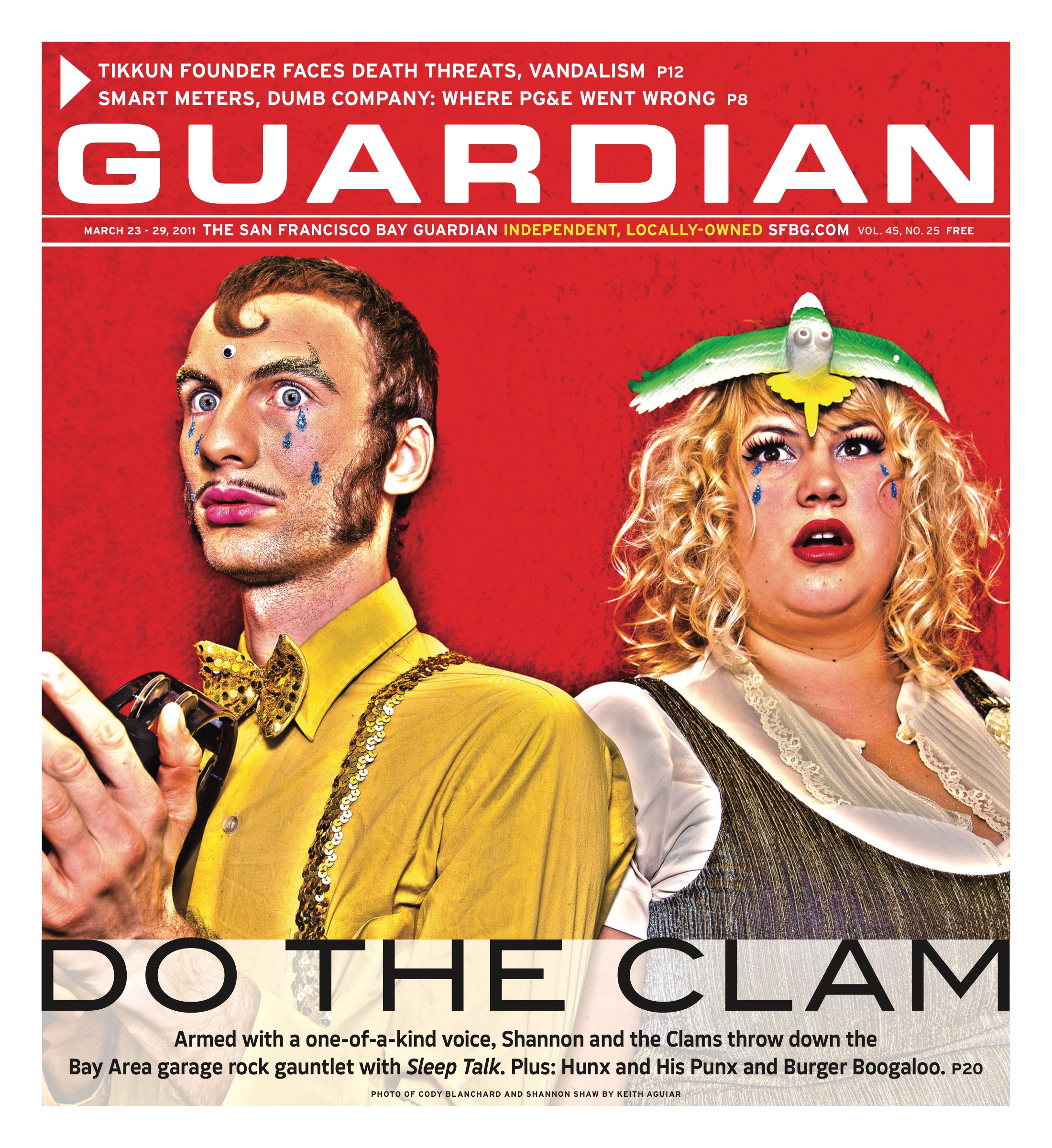
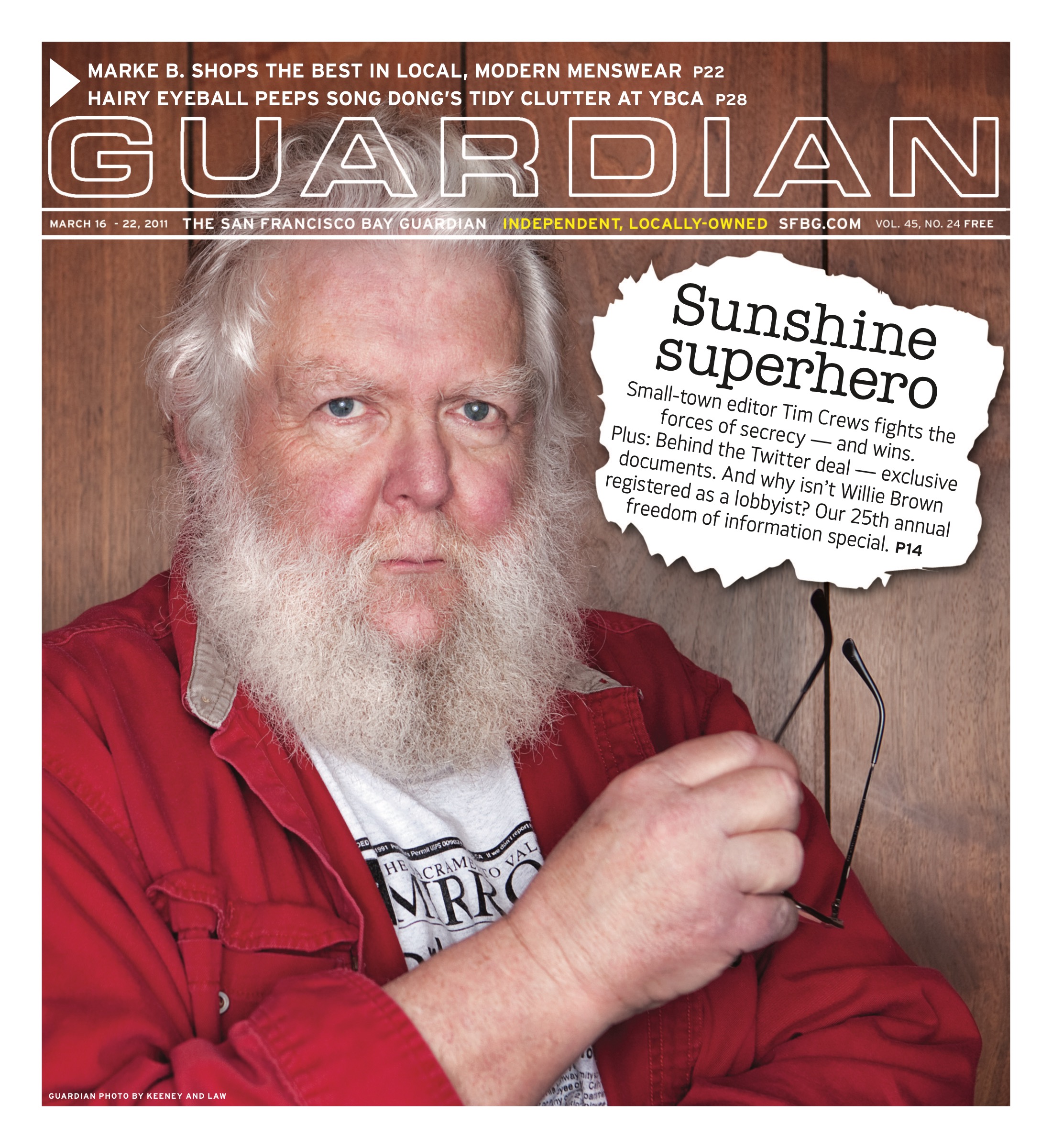
Print sections as they appeared in the early 2010s

To find articles by keyword or author, you may want to use our Search function.

Print Sections

King of the spook house

0

BRAZILIAN CULT HORROR English-language horror cinema has had its share of actors identified with playing one particular role over and over, from Bela Lugosi’s Dracula to Robert Englund’s Freddy Krueger. But we’ve never had anything quite like José Mojica Marins and his infamous Zé do Caixão (José of the Grave). Known to cult movie fans worldwide as Coffin Joe, this top-hatted, cape-flaring, bearded undertaker with extra-long curved fingernails and a mile-wide sadistic streak has been a sort of folk hero in Brazil for nearly 50 years.

His vehicles are unique fever dreams — alternately silly, shocking, or surreal, when not all three at once — that take great pleasure thumbing nose at traditional morality and any institutional authority, whether state or (especially) church. “Destroy me, I believe in nothing!” he dared God while desecrating graves in his first film, 1963’s At Midnight I’ll Take Your Soul. God demurred, perhaps intimidated.

This week sees the U.S. release (in Synapse’s Blu-ray/DVD combo pack) of 2008’s Embodiment of Evil. It’s Marins’ return to the role after a long layoff, and to the director’s seat after a longer one — apparently since 1987’s 48 Hours of Hallucinatory Sex, last among the porn movies he was reduced to during an extended career lull. (Those films are said to be stubbornly, grotesquely anti-erotic, which would be entirely in character.) It’s an official conclusion to the “Coffin Joe Trilogy” left off in 1967’s This Night I’ll Possess Your Corpse, which was advertised promising “200 Snakes! 300 Spiders! 1,000 Extras! The most terrifying film in the world!” and certainly gave sensation-seeking patrons their money’s worth with a prolonged color climax depicting the torments of a papier-mâché hell.

That makes Embodiment perhaps the longest-delayed end to a horror trilogy, kicking Dario Argento’s ass — you will recall his “Three Witches” triptych of 1977’s amazing Suspiria, 1980’s incoherent but picturesque Inferno, and 2007’s daft Mother of Tears. Perhaps Embodiment‘s biggest shock arrives when it opens with the 20th Century Fox logo — clearly somebody is still very big in Brazil. Otherwise it’s back to blaspheming basics for our antihero, who after many years is being released from prison, despite having apparently “killed nearly 30 guys just in jail.” (Never a paragon of political correctitude, Marins has the warden reluctantly “letting the beast loose” and telling his terrified guards: “Any of you turns chicken on me, I’ll get you to stand watch at the queers ward!”)

Once out, Coffin Joe resumes his lifelong quest to find a “perfect woman” capable of bearing a child “higher than God, lower than Satan,” thus allowing our “visionary of the superior bloodline” to achieve immortality. This he’ll do “even if it means imploding the entire cosmos!” For all his hubris, however, this archvillain is still scared shitless whenever his past victims appear as accusatory apparitions.

As ever, auditioning mates (most screaming kidnapees) involves “testing” for fear and resilience in ways they’re unlikely to survive. En route he also acquires lots of new enemies and is happy to orchestrate their grotesque demises too. If Coffin Joe is a sort of spook house incarnation of ideas from Nietzsche and Sade — he’s a mortal superman imposing his will on those haplessly constrained by the societal conventions he scorns — his horrors are hardly grandiose; instead they are manic plunges into the realm of ick.

One unfortunate’s face meets a bucket o’ bugs; another is coated with hot cheese, followed by hungry rats. While CJ evinces disgust at how the world has changed during his long absence (favela kids sniffing glue, etc.), his new adventure takes advantage of some new cultural norms, including goth-punk henchmen, seemingly real body piercings, and a young priest who enjoys applying electric nipple clamps at the altar. (None of this is as memorable as one “terrifying” vision in 1970’s LSD-themed Awakening of the Beast: mooning butts with cartoon faces painted on, several clutching plastic “noses” ‘tween cheeks. Run for your lives!)

Far from the best Coffin Joe movie, Embodiment nonetheless brings the crazy with Marins’ distinctive zeal for outrageous offense. His once frequently-banned works now look loopy and quaint, yet there’s still a subversive edge. Then again, he’s also a lot like the snickering older brother at the Halloween party who thrusts blindfolded kids’ hands into cold wet spaghetti, crowing “WORMS!”

Music Listings

0

Music listings are compiled by Cheryl Eddy. Since club life is unpredictable, it’s a good idea to call ahead to confirm bookings and hours. Prices are listed when provided to us. Submit items for the listings at listings@sfbg.com. For further information on how to submit items for the listings, see Picks.

WEDNESDAY 23

ROCK/BLUES/HIP-HOP

Antonionian, Doseone, Jel Rickshaw Stop. 8pm, $10.

Burmese, Vaz, Rabbits Knockout. 9pm, $6.

Esben and the Witch, Julianna Barwick, Hungry Kids of Hungary Bottom of the Hill. 9pm, $10.

Otis Heat, Diamond Light, Caldecott Hotel Utah. 9pm, $8.

Theophilus London, Alexander Spit, The 87 Stick Up Kids, C Plus and Duckworth 330 Ritch. 9pm, $17.

Tecumseh, Derek Moneypenny, Opera Mort, Caldera Lakes Hemlock Tavern. 9pm, $7.

Wakey! Wakey!, All Smiles Café Du Nord. 8:30pm, $12.

JAZZ/NEW MUSIC

Alfredo Rodriguez Trio Yoshi’s San Francisco. 8 and 10pm, $10-18.

Cat’s Corner with Christine and Nathan Savanna Jazz. 9pm, $10.

Cosmo Alleycats Le Colonial, 20 Cosmo, SF; www.lecolonialsf.com. 7pm.

Dink Dink Dink, Gaucho, Michael Abraham Amnesia. 7pm, free.

Ben Marcato and the Mondo Combo Top of the Mark. 7:30pm, $10.

FOLK/WORLD/COUNTRY

Green, Through the Roots, Thrive Great American Music Hall. 9pm, $13.

Matt Turk Revolution Café, 3248 22nd St, SF; (415) 642-0474. 8:30pm, free.

DANCE CLUBS

Booty Call Q-Bar, 456 Castro, SF; www.bootycallwednesdays.com. 9pm. Juanita Moore hosts this dance party, featuring DJ Robot Hustle.

Buena Onda Little Baobab, 3388 19th St., SF; (415) 643-3558. 10pm, $3. Soul, funk, swing, and rare grooves with residents Dr. Musco, DJB.

Cannonball Beauty Bar. 10pm, free. Rock, indie, and nu-disco with DJ White Mike.

Club Shutter Elbo Room. 9pm, $5. Goth with DJs Nako, Omar, and Justin.

Jam Fresh Wednesdays Vessel, 85 Campton, SF; (415) 433-8585. 9:30pm, free. With DJs Slick D, Chris Clouse, Rich Era, Don Lynch, and more spinning top40, mashups, hip hop, and remixes.

Mary-Go-Round Lookout, 3600 16th St, SF; (415) 431-0306. 10pm, $5. A weekly drag show with hosts Cookie Dough, Pollo Del Mar, and Suppositori Spelling.

No Room For Squares Som., 2925 16th St, SF; (415) 558-8521. 6-10pm, free. DJ Afrodite Shake spins jazz for happy hour.

Respect Wednesdays End Up. 10pm, $5. Rotating DJs Daddy Rolo, Young Fyah, Irie Dole, I-Vier, Sake One, Serg, and more spinning reggae, dancehall, roots, lovers rock, and mash ups.

Synchronize Il Pirata, 2007 16th St, SF; (415) 626-2626. 10pm, free. Psychedelic dance music with DJs Helios, Gatto Matto, Psy Lotus, Intergalactoid, and guests.

THURSDAY 24

ROCK/BLUES/HIP-HOP

Acid Mothers Temple & The Melting Paraiso U.F.O., Shilpa Ray & Her Happy Hookers Bottom of the Hill. 9:30pm, $12.

Blind Willies Blue Macaw, 2565 Mission, SF; (415) 920-0577. 8pm.

Curious Mystery, Greg Ashley, Zoobombs Knockout. 9:30pm, $6.

Quinn Deveaux Amnesia. 9pm, $5.

Dispirit, Atriarch, Alaric El Rio. 8pm, $8.

Shane Dwight Biscuits and Blues. 8 and 10pm, $15.

Liam Finn, Luyas Independent. 8pm, $15.

Flexx Bronco, Spittin’ Cobras, Hewhocannotbenamed, Crawler Thee Parkside. 9pm, $8.

Kids of 88, Art vs. Science Rickshaw Stop. 9pm, $10-20.

Music for Animals, Foreign Resort, Matinees Hemlock Tavern. 9pm, $7.

Naughty By Nature Yoshi’s San Francisco. 8pm, $38.

Sky Parade, Grand Atlantic, Parties, Modern Day Sunshine Hotel Utah. 8pm, $8.

Soul Man Revolution Café, 3248 22nd St, SF; (415) 642-0474. 8:30pm, free.

Toro Y Moi, Braids, Cloud Nothings Great American Music Hall. 7:30pm, $15.

JAZZ/NEW MUSIC

Derek Smith Latin Jazz Band and director Dee Spencer SFSU Jazz Bands Savanna Jazz. 7:30pm, $10.

Jane Monheit SF Conservatory of Music, 50 Oak, SF; www.sfjazz.org. 7:30pm, $30-50.

Organsm featuring Jim Gunderson and “Tender” Tim Shea Bollyhood Café. 6:30-9pm, free.

Paul Drescher Ensemble 25th Anniversary Z Space, 450 Florida, SF; www.brownpapertickets.org. 7pm, $20.

Stompy Jones Top of the Mark. 7:30pm, $10.

FOLK/WORLD/COUNTRY

Kris Delmhorst Café Du Nord. 8pm, $18.

JimBo Trout and the Fishpeople Atlas Café. 8-10pm, free.

“Twang! Honky Tonk” Fiddler’s Green, 1330 Columbus, SF; www.twanghonkytonk.com. 5pm.

DANCE CLUBS

Afrolicious Elbo Room. 9:30pm, $5. DJs Pleasuremaker and Señor Oz spin Afrobeat, tropicália, electro, samba, and funk.

Caribbean Connection Little Baobab, 3388 19th St, SF; (415) 643-3558. 10pm, $3. DJ Stevie B and guests spin reggae, soca, zouk, reggaetón, and more.

Drop the Pressure Underground SF. 6-10pm, free. Electro, house, and datafunk highlight this weekly happy hour.

80s Night Cat Club. 9pm, $6 (free before 9:30pm). Two dance floors bumpin’ with the best of 80s mainstream and underground with Dangerous Dan, Skip, Low Life, and guests.

Gigantic Beauty Bar. 9pm, free. With DJs Eli Glad, Greg J, and White Mike spinning indie, rock, disco, and soul.

Guilty Pleasures Gestalt, 3159 16th St, SF; (415) 560-0137. 9:30pm, free. DJ TophZilla, Rob Metal, DJ Stef, and Disco-D spin punk, metal, electro-funk, and 80s.

Jivin’ Dirty Disco Butter, 354 11th St., SF; (415) 863-5964. 8pm, free. With DJs spinning disco, funk, and classics.

Mestiza Bollywood Café, 3376 19th St, SF; (415) 970-0362. 10pm, free. Showcasing progressive Latin and global beats with DJ Juan Data.

1984 Mighty. 9pm, $2. The long-running New Wave and 80s party has a new venue, featuring video DJs Mark Andrus, Don Lynch, and celebrity guests.

Peaches Skylark, 10pm, free. With an all female DJ line up featuring Deeandroid, Lady Fingaz, That Girl, and Umami spinning hip hop.

Thursday Special Tralala Revolution Café, 3248 22nd St, SF; (415) 642-0474. 5pm, free. Downtempo, hip-hop, and freestyle beats by Dr. Musco and Unbroken Circle MCs.

FRIDAY 25

ROCK/BLUES/HIP-HOP

Beats Antique Fillmore. 9pm, $20.

Bruises, Hold Me Luke Allen, Eighteen Individual Eyes El Rio. 9pm, $5.

Elle Nino, Club Crasherz, Double Duchess Hotel Utah. 9pm, $8.

Good Charlotte, This Century Regency Ballroom. 8pm, $28.

Hot Panda, Twinks, Watch It Sparkle Hemlock Tavern. 9:30pm, $7.

Candye Kane Biscuits and Blues. 8 and 10pm, $20.

King Tuff, Personal and the Pizzas, Rantouls, Wrong Words, King Lollipop Thee Parkside. 9pm, $10.

Ed Kowalczyk Yoshi’s San Francisco. 8pm, $30.

James Lanman and the Good Hurt, Mark Sexton Band, Dylan Cannon Café Du Nord. 9pm, $10.

Men, Lady Tragik, Katastrophe Rickshaw Stop. 8:30pm, $12.

Saw Doctors, AM Taxi Slim’s. 8pm, $24.

Smoking Popes, New Trust, Hot Toddies Great American Music Hall. 9pm, $15.

Taj Mahal, Lady Bianca Independent. 9pm, $40.

Wye Oak, Callers, Sands Bottom of the Hill. 10pm, $12.

JAZZ/NEW MUSIC

Black Market Jazz Orchestra Top of the Mark. 9pm, $10.

Lacemaking: Katy Stephan with the Nice Guy Trio Red Poppy Art House. 8pm, $12-20.

Paul Drescher Ensemble 25th Anniversary Z Space, 450 Florida, SF; www.brownpapertickets.org. 8pm, $20.

Marlina Teich Savanna Jazz. 7:30pm, $8.

Adam Theis and the Jazz Mafia String Quartet Swedish American Hall (upstairs from Café Du Nord). 8pm, $25.

Tin Cup Serenade Revolution Café, 3248 22nd St, SF; (415) 642-0474. 9pm, free.

FOLK/WORLD/COUNTRY

Albino!, Mark Edwards, DJ Spincycle Elbo Roon. 10pm, $10.

Baxtalo Drom Amnesia. 9pm, $7-10.

DANCE CLUBS

Afro Bao Little Baobab, 3388 19th St, SF; (415) 643-3558. 10pm, $5. Afro and world music with rotating DJs including Stepwise, Steve, Claude, Santero, and Elembe.

Cityfox Showcase Public Works, 161 Erie, SF; www.cityfox.eventbrite.com. 9pm. With Digitaline, Lee Jones, James What?, and more spinning deep house and techno.

Debaser 111 Minna. 9pm, $5. The 90s party celebrates its third anniversary with a Fugazi cover band and DJs Jamie Jams, Emdee, and Stab Master Arson.

Duniya Dancehall Blue Macaw, 2565 Mission, SF; (415) 920-0577. 10pm, $10. With live performances by Duniya Drum and Dance Co. and DJs dub Snakr and Juan Data spinning bhangra, bollywood, dancehall, African, and more.

Exhale, Fridays Project One Gallery, 251 Rhode Island, SF; (415) 465-2129. 5pm, $5. Happy hour with art, fine food, and music with Vin Sol, King Most, DJ Centipede, and Shane King.

Fubar Fridays Butter, 354 11th St., SF; (415) 863-5964. 6pm, $5. With DJs spinning retro mashup remixes.

Good Life Fridays Apartment 24, 440 Broadway, SF; (415) 989-3434. 10pm, $10. With DJ Brian spinning hip hop, mashups, and top 40.

Hot Chocolate Milk. 9pm, $5. With DJs Big Fat Frog, Chardmo, DuseRock, and more spinning old and new school funk.

Hubba Hubba Revue: The 90s Show DNA Lounge. 9pm, $10-15. Burlesque plus DJs spinning 90s jams.

Psychedelic Radio Club Six. 9pm, $7. With DJs Kial, Tom No Thing, Megalodon, and Zapruderpedro spinning dubstep, reggae, and electro.

Rockabilly Fridays Jay N Bee Club, 2736 20th St, SF; (415) 824-4190. 9pm, free. With DJs Rockin’ Raul, Oakie Oran, Sergio Iglesias, and Tanoa “Samoa Boy” spinning 50s and 60s Doo Wop, Rockabilly, Bop, Jive, and more.

Some Thing Stud. 10pm, $7. VivvyAnne Forevermore, Glamamore, and DJ Down-E give you fierce drag shows and afterhours dancing.

Soul Rebel Koko Cocktails, 1060 Geary, SF; www.kokococktails.com. 10pm, free.

Spindig Happy Hour Knockout. 6-9pm, free. With Ryan Poulsen, Joe Bank$, and Stef playing rap, punk, and everything in between.

Teenage Dance Craze: The Number One Twisting Party in the Universe Knockout. 10pm, $4. Surf, garage, soul, and more with Russell Quan and dX the Funky Granpaw.

Vintage Orson, 508 Fourth St, SF; (415) 777-1508. 5:30-11pm, free. DJ TophOne and guest spin jazzy beats for cocktalians.

SATURDAY 26

ROCK/BLUES/HIP-HOP

Appleseed Cast, Muscle Worship Great American Music Hall. 9pm, $15.

Beautiful Losers Café Royale, 800 Post, SF; (415) 641-6033. 8pm, free.

Blue Roan Filly, Pie Crust Promises, Steel Hotcakes El Rio. 9pm, $7.

Davila 666, Mean Jeans, Biters, Booze Thee Parkside. 9pm, $10.

Ha Ha Tonka, Hoots and Hellmouth, Devil’s Own Hotel Utah. 9pm, $10.

“Jason Becker’s Not Dead Yet Festival” Slim’s. 9pm, $25. With Joe Satriani, Richie Kotzen, Steve Lukather, Kehoe Nation, Flametal, Vinnie Moore, and Michael Lee Firkins.

Lost Coves, Bambi Killers, Chapter 24 Hemlock Tavern. 5pm, $6.

Narooma, Aimless Never Miss, We Be the Echo, Form and Fate Submission, 2183 Mission, SF; www.sf-submission.com. 7:30pm, $6.

O’Death, Arann Harris and the Farm Band, Helado Negro Independent. 9pm, $12.

Parson Red Heads, Jean Marie, Laguna Hemlock Tavern. 9:30pm, $8.

Say Hi!, Yellow Ostrich, Blair Bottom of the Hill. 10pm, $14.

Sheila E. Yoshi’s San Francisco. 8 and 10pm, $35.

Earl Thomas Biscuits and Blues. 8 and 10pm, $22.

Totally Enormous Extinct Dinosaurs, Beni Rickshaw Stop. 9pm, $12.50.

Traditional Fools, Audacity, Culture Kids, Underground Railroad to Candyland, Skumby and the Disney Dads, Shrouds Thee Parkside. 2pm, $10.

Voodoo Fix, Sara Payah, Con Brio Amnesia. 8pm, $7-10.

JAZZ/NEW MUSIC

Gina Harris and Torbie Phillips Savanna Jazz. 7:30pm, $8.

Paul Drescher Ensemble 25th Anniversary Z Space, 450 Florida, SF; www.brownpapertickets.org. 2 and 8pm, $20.

Alex Pinto Revolution Café, 3248 22nd St, SF; (415) 642-0474. 9pm, free.

Jake Shimabukuro Herbst Theatre, 401 Van Ness, SF; www.sfjazz.org. 7 and 9pm, $30-75.

Lavay Smith and Her Red Hot Skillet Lickers Red Poppy Art House. 7:30 and 9pm, $12-20.

FOLK/WORLD/COUNTRY

Mijo de la Palma Mission Cultural Center Theater, 2868 Mission, SF; www.missionculturalcenter.org. 7:30pm, $12-15.

Mucho Axé 50 Mason Social House, 50 Mason, SF; www.50masonsocialhouse.com. 9:30pm.

Nada Brahma Music Ensemble Om Shan Tea, 233 14th St., SF; 1-888-747-8327. 7pm, $10-20.

Corey Allen Porter, Seth Augustus, Handlebars and Kindle Make-Out Room. 7:30pm, $7.

Craig Ventresco and Meredith Axelrod Atlas Café. 4pm, free.

DANCE CLUBS

Afro Bao Little Baobab, 3388 19th St, SF; (415) 643-3558. 10pm, $5. Afro and world music with rotating DJs including Stepwise, Steve, Claude, Santero, and Elembe.

Bootie SF: Titus Jones DNA Lounge. 9pm, $8-15. Mash-ups.

4OneFunktion Elbo Room. 10pm, $8-10. Hip-hop and funk with DJ Numark, F.A.M.E., and DJs Platurn, J. Boogie, and B. Cause.

Go Bang! Deco Lounge, 510 Larkin, SF; www.gobangsf.com. 9pm, $5. Atomic dancefloor disco action with special guest Tim Zawada, plus residents Steve Fabus, Stanley Frank, Tres Lingerie, and Sergio.

HYP Club Eight, 1151 Folsom, SF; www.eightsf.com. 10pm, free. Gay and lesbian hip-hop party, featuring DJs spinning the newest in the top 40s hip hop and hyphy.

Lonely Teardrops Knockout. 10pm. Rockabilly with Daniel and dX theFunky Gran Paw.

Open Forum Madrone Art Bar. 9pm, $5. Pam the Funkstress and DJ BackSide spin 80s, 90s, hip-hop, funk, and more.

Reggae Gold Club Six. 9pm, $15. With DJs Daddy Rolo, Polo Mo’qz, Tesfa, Serg, and Fuze spinning dancehall and reggae.

Rock City Butter, 354 11th St., SF; (415) 863-5964. 6pm, $5 after 10pm. With DJs spinning party rock.

Temptation Cat Club. 9:30pm, $7. Video dance explosion with DJs Dangerous Dan, Skip, Ryan B spinning 80s and new wave, and guests Blondie K and subOctave spinning indie.

SUNDAY 27

ROCK/BLUES/HIP-HOP

“AP Tour” Regency Ballroom. 5:30pm, $18. With Black Veil Brides, Destroy Rebuild Until God Shows, I See Stars, VersaEmerge, and Conditions.

David Dondero, Franz Nicolay, Boats Hemlock Tavern. 9pm, $8.

Lloyd Gregory Biscuits and Blues. 8 and 10pm, $15.

Jeff Jones Band Boom Boom Room. 9:30pm, free.

Miniature Tigers, Pepper Rabbit, Cannons and Clouds Rickshaw Stop. 8pm, $10.

Mo’Some Tonebender, Lolita No. 18, Zukunashi, Hystoic Vein, Josy Independent. 8pm, $15.

Jay Nash, Joey Ryan and Kenneth Pattengale Café Du Nord. 8pm, $10.

Nobunny, Apache, Wild Thing, Midnite Snaxxx, Egg Tooth Thee Parkside. 8pm, $10.

Ready Set, Allstar Weekend, Downtown Fiction, We Are the In Slim’s. 6:30pm, $16.

Rotting Christ, Melechesh, Hate, Abigail Williams, Lecherous Nocture DNA Lounge. 7:30pm, $25.

She Rides, Bully, Dcoi Submission, 2183 Mission, SF; www.sf-submission.com. 7:30pm, $5.

Sharon Van Etten, Little Scream, Colossal Yes Bottom of the Hill. 9pm, $12.

Erica Von Vokyrie vs. Honey Mahogany Martuni’s, 4 Valencia, SF; www.dragatmartunis.com. 7pm, $5.

JAZZ/NEW MUSIC

Frank Jackson, Larry Vuckovich, Al Obidinski Bliss Bar, 4026 24th St., SF; www.blissbarsf.com. 4:30pm, $10.

Little Brown Brother Band Savanna Jazz. 7:30pm, $5.

Paul Drescher Ensemble 25th Anniversary Z Space, 450 Florida, SF; www.brownpapertickets.org. 2 and 7pm, $20.

Swing-out Sundays Milk Bar. 9pm, $3-15. With beginner swing lessons.

Irma Thomas Palace of Fine Arts, 3301 Lyon, SF; www.sfjazz.org. 7pm, $25-60.

Tom Lander Duo Medjool, 2522 Mission, SF; www.medjoolsf.com. 6-9pm, free.

FOLK/WORLD/COUNTRY

Beyond the Pale, Orkestar Sali Amnesia. 9pm, $10.

Family Folk Explosion Revolution Café, 3248 22nd St, SF; (415) 642-0474. 8pm, free.

Ray Martinez and Salsa Jazz Project El Rio. 4-8pm, $8.

Old Man Markley, Filthy Thieving Bastards, Cooper McBean Thee Parkside. 3pm, $10.

Abigail Washburn Yoshi’s San Francisco. 7pm, $18.

DANCE CLUBS

Batcave Cat Club. 10pm, $5. Death rock, goth, and post-punk with Steeplerot Necromos and c_death.

Dub Mission Elbo Room. 9pm, $6. Dub, roots, and classic dancehall with DJ Sep, Vinnie Esparza, and guest DJG.

45 Club: 100 Years of Funky Soul Records Knockout. 10pm, free. With English Steve and dX the Funky Gran Paw.

Gloss Sundays Trigger, 2344 Market, SF; (415) 551-CLUB. 7pm. With DJ Hawthorne spinning house, funk, soul, retro, and disco.

Honey Soundsystem Paradise Lounge. 8pm-2am. “Dance floor for dancers – sound system for lovers.” Got that?

La Pachanga Blue Macaw, 2565 Mission, SF; www.thebluemacawsf.com. 6pm, $10. Salsa dance party with live Afro-Cuban salsa bands.

MONDAY 28

ROCK/BLUES/HIP-HOP

B and Not B, She’s, I Hate You Just Kidding Knockout. 9pm, $7.

Crosby and Nash Warfield. 8pm, $43.50-60.50.

Endroit, Mahgeetah, Add Moss Elbo Room. 9pm, $5.

Le Mutant, Tank Attack, Arms N Legs, Black Stool El Rio. 7pm, $5.

Royskopp, Jon Hopkins Regency Ballroom. 8pm, $32.

She Wants Revenge, Californian Independent. 8pm, $25.

“Under Raps” Showdown, 10 Sixth St., SF; www.bposmusic.us. 9pm. Hip-hop open mic hosted by Mantis One and Big Shawn.

JAZZ/NEW MUSIC

“Earplay: Sound Tangents” Herbst Theater, 401 Van Ness, SF; (415) 392-4400. 7:30pm, $10-20. Works by John Cage, Elliott Carter, and more.

Lisa Mezzacappa’s Bait and Switch Yoshi’s San Francisco. 8pm, $15.

Lavay Smith Orbit Room, 1900 Market, SF; (415) 252-9525. 7-10pm, free.

DANCE CLUBS

Death Guild DNA Lounge. 9:30pm, $3-5. Gothic, industrial, and synthpop with Joe Radio, Decay, and Melting Girl.

Krazy Mondays Beauty Bar. 10pm, free. With DJs Ant-1, $ir-Tipp, Ruby Red I, Lo, and Gelo spinning hip hop.

M.O.M. Madrone Art Bar. 6pm, free. With DJ Gordo Cabeza and guests playing all Motown every Monday.

Network Mondays Azul Lounge, One Tillman Pl, SF; www.inhousetalent.com. 9pm, $5. Hip-hop, R&B, and spoken word open mic, plus featured performers.

Sausage Party Rosamunde Sausage Grill, 2832 Mission, SF; (415) 970-9015. 6:30-9:30pm, free. DJ Dandy Dixon spins vintage rock, R&B, global beats, funk, and disco at this happy hour sausage-shack gig.

Skylarking Skylark. 10pm, free. With resident DJs I & I Vibration, Beatnok, and Mr. Lucky and weekly guest DJs.

TUESDAY 29

ROCK/BLUES/HIP-HOP

Endemics, Uzi Rash, American Splits, Broken Water Knockout. 9pm, $5.

Greenflash El Rio. 7pm, free.

Guitar vs. Gravity, Control-R, Cleve-Land, DJ Culture Shizzam Elbo Room. 9pm, free.

Katchafire, Tomorrows Bad Seeds Independent. 8:30pm, $20.

Mallard, Sugar Sugar Sugar, Will Ivy Hemlock Tavern. 9pm, $6.

Parlotones, Imagine Dragons, Ivan and Alyosha Bottom of the Hill. 9pm, $10.

Rebecca Roudman Café Royale, 800 Post, SF; (415) 641-6033. 8pm, free.

Uh Huh Her, Diamonds Under Fire Great American Music Hall. 8pm, $21.

Mary Wilson Yoshi’s San Francisco. 8pm, $35.

DANCE CLUBS

Boomtown Little Baobab, 3388 19th St, SF; (415) 643-3558. 9pm, free. DJ Mundi spins roots, ragga, dancehall, and more.

Eclectic Company Skylark, 9pm, free. DJs Tones and Jaybee spin old school hip hop, bass, dub, glitch, and electro.

Share the Love Trigger, 2344 Market, SF; (415) 551-CLUB. 5pm, free. With DJ Pam Hubbuck spinning house.<\! * *


 

Stage Listings

0

Stage listings are compiled by Guardian staff. Performance times may change; call venues to confirm. Reviewers are Robert Avila, Rita Felciano, and Nicole Gluckstern. Submit items for the listings at listings@sfbg.com. For further information on how to submit items for the listings, see Picks. 

THEATER

OPENING

*Geezer Marsh, 1062 Valencia; (800) 838-3006, www.themarsh.org. $20-50. Previews Thurs, 8pm; Sat, 5pm; Sun, 3pm (through March 27). Opens March 31. Thurs, 8pm; Sat, 5pm; Sun, 3pm. Through May 1. The Marsh presents a new solo show about aging and mortality by Geoff Hoyle.

ONGOING

As Always Eureka Theatre, 215 Jackson; www.AsAlwaysTickets.com. $25. Thurs-Sun, 8pm. Through March 27. Tracy Ward directs a new musical by Peter W. Tucker.

*Caliente Pier 29, The Embarcadero; 438-2668, www.love.zinzanni.org. $117-145. Wed-Sat, 6pm; Sun, 5pm. Open-ended. Teatro Zinzanni presents a new production conceived in San Francisco.

*40 Pounds in 12 Weeks: A Love Story The Marsh, 1062 Valencia; 1-800-838-3006, www.themarsh.org. $15-35. Fri, 8pm; Sat, 8:30pm. Through Sat/26. “I hate assumptions,” says Pidge Meade. In fact, her new solo show, about her experience as a young woman of size on a brutal crash diet, goes a long way toward unsettling more than one. Developed and directed by Charlie Varon (Rush Limbaugh in Night School, Rabbi Sam), Meade’s multi-character monologue eschews easy sentiment for a sharply performed, consistently funny and genuine engagement with her younger, bigger self. Framed by a 20-year college reunion during which she suffers an unwanted conversation with an old roommate about her intervening dramatic weight loss, Meade recounts trying to lose 40 unwanted pounds to please her devoted but “harsh” father, an Olympic-level gymnastics coach shocked and appalled by her weight gain while at school. The father-daughter story comes interlarded with a few other encounters and characters measuring the variety of attitudes and approaches to weight among women in her Midwestern milieu. Meanwhile, Meade’s problematic relationship with her demanding if ultimately responsive father finds an unexpected echo in her former roommate’s pushy inquisitiveness (which, we learn, stems from her own desperate concern over a beloved but obese teen nephew). It’s in quietly mingling awkwardness, fear, and love that Meade’s piece can really surprise, and reaffirm that whatever else follows, it’s the usual assumptions that need shedding first. (Avila)

The Homecoming American Conservatory Theater, 415 Geary; 749-2228, www.act-sf.org. Call for times and prices. Through Sun/27. North London in the mid-1960s served Harold Pinter well as an apt location for an enduring vision of familial nightmare, namely a jockeying tribe of self-interested working-class men bent on embracing as much as destroying one another. Into this testy household returns for a visit, unannounced and in the wee hours, one of their own: social climber Teddy (Anthony Fusco) back from America with wife Ruth (René Augesen). What happens next still has real force, even if it’s sometimes missing in American Conservatory Theater’s current revival. A family unit of vipers and sadists and weirdoes is still a family unit, but real connections between the actors are few here. Augesen’s Ruth—startlingly set free from deadening domestic harmony by the braying barnyard she soon comes to dominate—is the riveting center of attention, but the tension overall remains diffuse and inconsistent despite her gravitational pull. As the pugnacious patriarch, Max, slipping mercilessly from his historic spot at the top of the dog pile, Jack Willis is a bit all over the place, sometimes physically—director Carey Perloff has him well across the room in the opening scene’s vital first confrontation, instead of up in the grill of coiled son Lenny (Andrew Polk)—but in tone and register too. Kenneth Welsh’s fine performance as Max’s superficially calm brother Sam goes some way toward grounding the proceedings, but the other performances remain more dutiful than distinguished and the production never quite attains the pressure and threat it should. (Avila)

James Bond: Lady Killer Dark Room Theater, 2263 Mission; 732-9592, www.brownpapertickets.com. $20. Fri-Sat, 8pm. Through Sat/26. Dark Room Theater presents an all-new James Bond adventure.

Lady Grey (in ever lower light) EXIT on Taylor, 277 Taylor; (800) 838-3006, www.brownpapertickets.com. $15-50. Thurs-Sat, 8pm; Sun, 5pm. Through April 10. Cutting Ball Theater presents the Bay Area premiere of three short plays by Will Eno.

*Loveland Marsh, 1062 Valencia; 1-800-838-3006, www.themarsh.org. $20-50. Fri, 8pm; Sat, 8:30pm. Through Sat/26. Ann Randolph’s one-woman show extends its run.

M. Butterfly Gough Street Playhouse, 1620 Gough; (510) 207-5774, www.custommade.org. $20-28. Thurs-Sat, 8pm (also April 3 and 10, 7pm). Through April 16. Custom Made Theatre presents David Henry Hwang’s award-winning play.

*Obscura: A Magic Play Exit Studio, 156 Eddy; 673-3847, www.sffringe.org. $20-25. Fri-Sat, 8pm. Through April 16. Christian Cagigal is back with the magical. Over the last several years, the popular Bay Area writer/performer has developed a series of dramatically structured magic shows (the most recent being the autobiographical Now and at the Hour), each a different attempt at blending expert prestidigitation with elements of narrative theater. Tightly focused and deliberately small-scale, Obscura is in some ways his most successful foray yet. In the Exit Theater’s new studio space, Cagigal (with occasional help from his audience) unfolds a series of sly Gothic stories combined with extremely clever, sometimes dementedly playful card and coin tricks—the majority a collection of favorite pieces from other magicians—all played out on a delicately managed little table augmented by overhead projection (a set-up that offers various visual opportunities, including use of title cards). Rapid-fire narration (occasionally indistinct but generally articulate) and a laid back, slightly mischievous demeanor combine here with consummate skill in an intimate and very enjoyable evening of crafty little tales. If there’s an overarching theme, it probably has something to do with human folly, the persistence of mystery, and the devil, but then any good fable involving a deck of cards probably should. (Avila)

The Oldest Profession Brava Theater, 2781 24th St; 647-2822, www.brava.org. $10-25. Brava Theater presents a play by Paula Vogel, directed by Evren Odcikin.

Out of Sight Marsh, 1062 Valencia; 1-800-838-3006, www.themarsh.org. $15-50. Thurs and Sat, 8pm; Sun, 3pm. Through Sun/27. Sara Felder’s one-woman show extends its run.

Party of 2 — The New Mating Musical Shelton Theater, 533 Sutter; 1-800-838-3006, www.partyof2themusical.com. $27-29. Fri, 9pm. Open-ended. A musical about relationships by Shopping! The Musical author Morris Bobrow.

*Pearls Over Shanghai Thrillpeddlers’ Hypnodrome, 575 Tenth St; 1-800-838-3006, www.brownpapertickets.com. $30-69. Sat, 8pm. Through April 9. Thrillpeddlers’ acclaimed production of the Cockettes musical continues its successful run.

Regrets Only New Conservatory Theatre Center, 25 Van Ness; 861-8972, www.nctcsf.org. $24-40. Wed-Sat, 8pm; Sun, 2pm. Through April 3. New Conservatory Theatre presents a play by Paul Rudnick, directed by Andrew Nance.

7 Sins…One More Time! EXIT Theatre, 156 Eddy; (800) 838-3006, www.brownpapertickets.com. $25-40. Fri-Sat, 8pm. Through April 10. James Judd’s long-running comedy hit has a return engagement.

Sex and Death: A Night with Harold Pinter Phoenix Theatre, Suite 601, 414 Mason; 1-800-838-3006, www.offbroadwaywest.org. $35. Thurs-Sat, 8pm. Through Sat/26. The thing with Harold Pinter is you never know for certain whether he means for something to be funny or not. Take his most celebrated one-act, The Dumb Waiter, a rather tense dialogue between two hit-men waiting for their mark to show which veers into disarmingly surrealist territory once they start receiving mysterious lunch orders via a creaky dumbwaiter, despite not having any food, or indeed any gas to cook food on. Is this Pinter’s attempt to lighten the mood in an otherwise joyless examination of two minor functionaries in the criminal underworld, or is it a way for him to interject more unease into their already intractable situation? In Off-Broadway West’s staging they opt mainly for the latter interpretation, neither Gus (Conor Hamill) nor Ben (Shane Fahy) play up much of the sly humor tucked into their lines, and when the “surprise” twist arrives, it feels like a foregone conclusion. More deftly nuanced, the second one-act on the bill, The Lover milks the sex lives of the petty bourgeoisie for all the hidden wit and complicated innuendo that could possibly be excavated. Morphing from chilly society marrieds to shameless afternoon fling and “common garden slut” Chad Stender and Nicole Helfer play out a tightly-wound sexual fantasy with a cool edge, a satisfying end to a low-key revival. (Gluckstern)

Shopping! The Musical Shelton Theater, 533 Sutter; (800) 838-3006, www.shoppingthemusical.com. $27-29. Sat, 8pm. Open-ended. A musical comedy revue about shopping by Morris Bobrow.

Tenth Annual Bay One-Acts Festival Boxcar Theatre, 505 Natoma; 891-7235, www.bayoneacts.org. $20-32. Wed-Fri, 8pm; Sat, 3 and 8pm; Sun, 3pm. Through Sat/26. Three Wise Monkeys Theatre Company presents the tenth incarnation of the curated festival.

BAY AREA

Free Range Thinking Marsh Berkeley, TheaterStage, 2120 Allston, Berk; 1-800-838-3006, www.themarsh.org. $15-50. Fri, 8pm; Sat, 5pm. Through April 9. The Marsh Berkeley presents a new comedic solo show by Robert Dubac.

The Iliad Berkeley City Club, 1802 Fairview, Berk; (510) 698-4030. $12-24. Thurs-Sat, 8pm; Sun, 2pm. Through April 3. Inferno Theatre Company presents an adaptation of Homer’s ancient tale.

Narnia: The Lion, the Witch, and the Wardrobe Berkeley Playhouse, 2640 College; (510) 845-8542, www.berkeleyplayhouse.org. $15-33. Call for dates and times. Through April 3. Berkeley Playhouse presents a musical fantasy based on the C.S. Lewis story.

The North Pool TheatreWorks at Lucie Stern Theater, 1305 Middlefiled, Palo Alto; (650) 463-1960, www.theatreworks.org. $24-67. Tues-Wed, 7:30pm; Thurs-Fri, 8pm; Sat, 2 and 8pm; Sun, 2 and 7pm. Through April 3. TheatreWorks presents a psychological thriller by Rajiv Joseph.

Not a Genuine Black Man The Marsh Berkeley, TheaterStage, 2120 Allston Way, Berk; 826-5750, www.themarsh.org. $20-35. Thurs, 7:30pm. Through March 31. Brian Copeland’s one-man show returns to the stage.

Romeo and Juliet La Val’s Subterranean, 1834 Euclid, Berk; www.impacttheatre.com. $10-20. Thurs-Sat, 8pm. Through Sat/26. Bet you thought Romeo and Juliet was just a sappy love story at its beating heart. But as Impact Theatre’s artistic director Melissa Hillman, fight director Dave Meier, and production “blood technician” Tunuviel Luv manage to remind us, R&J is known as a tragedy for good reason—full of escalating violence and a bodycount almost as high as Hamlet’s. Before they snuff it though, Romeo (Michael Garret McDonald) and Juliet (Luisa Frasconi) fall in love in a meet-cute, after-school special way: Frasconi exhibiting the coltish excitability of a very young teenager, and doofy McDonald egged on by a pack of uncouth youth (Seth Thygesen as Benvolio, Marilet Martinez as Mercutio, Miyuki Bierlein as Balthasar) who pretty much steal the show with their crass deconstruction of Romeo’s woes. Unfortunately, the Russian mafia angle is less fully fleshed out than the teen romance portion of the show. Yes, the mobsters all sport some great tattoos, carry mean-looking pistols, and occasionally deliver their lines in Russian thanks to language consultant Helen Nesteruk, but setting the show in the ex-pat Russian community “in the Bay Area” dilutes the extreme feudalism that setting the show in Moscow would imply, and allows the production to rely a little too heavily on familiar California-isms—phrases, behaviors, and fashions— rather than committing fully to exploring the vastly different world of the Russkaya Mafiya. (Gluckstern)

*Ruined Berkeley Repertory Theatre, Roda Theatre, 2015 Addison, Berk; (510) 647-2949, www.berkeleyrep.org. $29-73. Call for dates and times. Through April 10. Berkeley Rep presents Lynn Nottage’s Pulitzer-winning play about the lives of women in Africa.

Singing at the Edge of the World The Cabaret at The Marsh Berkeley, 2120 Allston Way, Berk; (800) 838-3006, www.brownpapertickets.com. $15-35. Thurs-Fri, 8pm; Sat, 5pm. Through April 16. The Marsh presents a one-man show by Randy Rutherford.

World’s Funniest Bubble Show The Marsh Berkeley, 2120 Allston Way, Berk; 1-800-838-3006, www.themarsh.org. $8-11. Sun, 11am. Through April 3. The Amazing Bubble Man extends the bubble-making celebration.

PERFORMANCE/DANCE

Marga’s Funny Mondays Cabaret at Marsh Berkeley, 2120 Allston, Berk.; 1-800-838-3006, www.themarsh.org. Mon/28, 8pm. $10. Marga Gomez hosts a Monday night comedy series. *


Film Listings

0

Film listings are edited by Cheryl Eddy. Reviewers are Kimberly Chun, Michelle Devereaux, Peter Galvin, Max Goldberg, Dennis Harvey, Johnny Ray Huston, Louis Peitzman, Lynn Rapoport, Ben Richardson, and Matt Sussman. For rep house showtimes, see Rep Clock. For first-run showtimes, see Movie Guide.

OPENING

The Beaver Jodie Foster directs and co-stars in this film about a man (Mel Gibson) who communicates using a hand puppet. No word if said hand puppet calls anyone “sugar tits.” (1:30)

*Carancho What Psycho (1960) did for showers this equally masterful, if far more bloody, neo-noir is bound to do for crossing the street at night. Argentine director Pablo Trapero has spun his country’s grim traffic statistics (the film’s opening text informs us that more than 8,000 people die every year in road accidents at a daily average of 22) into a Jim Thompson-worthy drama of human ugliness and squandered chances. Sosa (Ricardo Darín of 2009’s The Secret in Their Eyes) is the titular “carancho,” or buzzard, a disbarred lawyer-turned-ambulance chaser who swoops down on those injured in road accidents on behalf of a shady foundation that fixes personal injury lawsuits. It’s only a matter of time before he crosses paths with and falls for Lujan (a wonderful Martina Gusman, also of Trapero’s 2008 Lion’s Den), a young ambulance medic battling her own demons and a grueling work schedule. A May-December affair begins to percolate until Sosa botches a job and incurs the wrath of the foundation, kicking off a chain reaction that only leads to further tragedy for him and his newfound love. Trapero keeps a steady hand at the wheel throughout, deftly guiding his film through intimate scenes that lay bare Lujan’s quiet desperation and Sosa’s moral ambivalence as well as genuinely shocking moments of violence. The Academy passed over Carancho as one of this year’s nominees for Best Foreign Language Film, but Hollywood would do well to learn from talent like Trapero’s. (1:47) Lumiere, Shattuck. (Sussman)

Desert Flower Based on the best-selling “model memoir,” Desert Flower spins the remarkable tale of Waris Dirie, who fled across the Somalian desert as a young teen to escape an arranged marriage. The marriage was not the most cruel tradition to be imposed on the girl, however — as a toddler, she’d been circumcised, and the crude operation (designed to keep her “pure” until marriage) caused her pain for years after. Waris (played as an adult by Ethiopian supermodel Liya Kebede) eventually makes her way to London, where she’s discovered by a top photographer (Timothy Spall) while mopping floors at a fast-food restaurant. Part culture-clash drama, part girl-power success story (Waris befriends a spunky Topshop clerk, played by Sally Hawkins), Desert Flower is directed (by Sherry Hormann) with the heavy-handedness of a TV movie. But the film does a powerful job drawing attention to a subject not often discussed — despite the efforts of activists like the real-life Dirie, female circumcision still affects some 6,000 girls a day — and for that it cannot be faulted. (2:00) (Eddy)

Diary of a Wimpy Kid: Rodrick Rules Sequel to last year’s hit comedy based on the best-selling YA books by Jeff Kinney. (1:36)

Kill the Irishman If you enjoy 1970s-set Mafia movies featuring characters with luxurious facial hair zooming around in Cadillacs, flossing leather blazers, and outwitting cops and each other — you could do a lot worse than Kill the Irishman, which busts no genre boundaries but delivers enjoyable retro-gangsta cool nonetheless. Adapted from the acclaimed true crime book by a former Cleveland police lieutenant, the film details the rise and fall of Danny Greene, a colorful and notorious Irish-American mobster who both served and ran afoul of the big bosses in his Ohio hometown. During one particularly conflict-ridden period, the city weathered nearly 40 bombings — buildings, mailboxes, and mostly cars, to the point where the number of automobiles going sky-high is almost comical (you’d think these guys would’ve considered taking the bus). The director of the 2004 Punisher, Jonathan Hensleigh, teams up with the star of 2008’s Punisher: War Zone, Ray Stevenson, who turns in a magnetic performance as Greene; it’s easy to see how his combination of book- and street smarts (with a healthy dash of ruthlessness) buoyed him nearly to the top of the underworld. The rest of the cast is equally impressive, with Vincent D’Onofrio, Val Kilmer, Christopher Walken, and Linda Cardellini turning in supporting roles, plus a host of dudes who look freshly defrosted from post-Sopranos storage. (1:46) (Eddy)

*Queen of the Sun: What Are the Bees Telling Us? There are plenty of docs out there detailing the slow decline of the human race — self-inflicted decline, that is, thanks to our disregard for long-term environmental damage caused by our greedy, polluting ways. But unlike the recent Carbon Nation (2010), for example, which took a broad look at renewable energy, Queen of the Sun studies a far more specific issue. A tiny one, in fact: the size of a honeybee. Of course, as the movie points out, this honeybee-sized disaster is actually a global disaster in the making. The latest from Taggart Siegel, director of 2005’s The Real Dirt on Farmer John, investigates the global bee crisis, talking to numerous beekeepers and scientists to discover why bees are disappearing, how their mass-vanishing act affects the food chain, and what (if anything) can be done before it’s too late. Creative animation and quite a few characters (including a shirtless French guy who tickles his hive with his graying mustache) keep Queen of the Bees from feeling too much like a lecture; in fact, it’s quite an eye-opener. You’ll think twice before ever swatting another bee. (1:23) Roxie. (Eddy)

Sucker Punch From what I can tell, Sucker Punch is Zach Snyder’s remake of his 300 (2006), except with jailbait instead of Spartans. (2:00) Presidio.

*Win Win See “#Winning.” (1:46) Bridge.

Winter in Wartime A 13-year-old boy joins the resistance movement in 1945 Nazi-occupied Holland. (1:43) Embarcadero, Shattuck, Smith Rafael.

ONGOING

The Adjustment Bureau As far as sci-fi romantic thrillers go, The Adjustment Bureau is pretty standard. But since that’s not an altogether common genre mash-up, I guess the film deserves some points for creativity. Based on a short story by Philip K. Dick, The Adjustment Bureau takes place in a world where all of our fates are predetermined. Political hotshot David Norris (Matt Damon) is destined for greatness — but not if he lets a romantic dalliance with dancer Elise (Emily Blunt) take precedence. And in order to make sure he stays on track, the titular Adjustment Bureau (including Anthony Mackie and Mad Men‘s John Slattery) are there to push him in the right direction. While the film’s concept is intriguing, the execution is sloppy. The Adjustment Bureau suffers from flaws in internal logic, allowing the story to skip over crucial plot points with heavy exposition and a deus ex machina you’ve got to see to believe. Couldn’t the screenwriter have planned ahead? (1:39) Marina, 1000 Van Ness, Piedmont, SF Center, Shattuck, Sundance Kabuki. (Peitzman)

*Battle: Los Angeles Michael Bay is likely writhing with envy over Battle: Los Angeles; his Transformers flicks take a more, erm, nuanced view of alien-on-human violence. But they’re not all such bad guys after all; these days, as District 9 (2009) demonstrated, alien invasions are more hazardous to the brothers and sisters from another planet than those trigger-happy humanoids ready to defend terra firma. So Battle arrives like an anomaly — a war-is-good action movie aimed at faceless space invaders who resemble the Alien (1979) mother more than the wide-eyed lost souls of District 9. Still reeling from his last tour of duty, Staff Sergeant Nantz (Aaron Eckhart) is ready to retire, until he’s pulled back in by a world invasion, staged by thirsty aliens. In approximating D-Day off the beach of Santa Monica, director Jonathan Liebesman manages to combine the visceral force of Saving Private Ryan (1998) with the what-the-fuck hand-held verite rush of Cloverfield (2008) while crafting tiny portraits of all his Marines, including Michelle Rodriguez, Ne-Yo, and True Blood‘s Jim Parrack. A few moments of requisite flag-waving are your only distractions from the almost nonstop white-knuckle tension fueling Battle: Los Angeles. (1:57) California. (Chun)

Biutiful Uxbal (Javier Bardem) has problems. To name but a few: he is raising two young children alone in a poor, crime-beset Barcelona hood. He is making occasional attempts to rope back in their bipolar, substance-abusive mother (Maricel Álvarez), a mission without much hope. He is trying to stay afloat by various not-quite legal means while hopefully doing the right thing by the illegals — African street drug dealers and Chinese sweatshop workers — he acts as middleman to, standing between them and much less sympathetically-inclined bossmen. He’s got a ne’er-do-well brother (Eduard Fernandez) to cope with. Needless to say, with all this going on (and more), he isn’t getting much rest. But when he wearily checks in with a doc, the proverbial last straw is stacked on his camelback: surprise, you have terminal cancer. With umpteen odds already stacked against him in everyday life, Uxbal must now put all affairs in order before he is no longer part of the equation. This is Alejandro González Iñárritu’s first feature since an acrimonious creative split with scenarist Guillermo Arriaga. Their films together (2006’s Babel, 2003’s 21 Grams, 2000’s Amores Perros) have been criticized for arbitrarily slamming together separate baleful storylines in an attempt at universal profundity. But they worked better than Biutiful, which takes the opposite tact of trying to fit several stand-alone stories’ worth of hardship into one continuous narrative — worse, onto the bowed shoulders of one character. Bardem is excellent as usual, but for all their assured craftsmanship and intense moments, these two and a half hours collapse from the weight of so much contrived suffering. Rather than making a universal statement about humanity in crisis, Iñárritu has made a high-end soap opera teetering on the verge of empathy porn. (2:18) Shattuck. (Harvey)

*Black Swan “Lose yourself,” ballet company head Thomas (Vincent Cassel) whispers to his leading lady, Nina (Natalie Portman), moments before she takes the stage. But Nina is already consumed with trying to find herself, and rarely has a journey of self-discovery been so unsettling. Set in New York City’s catty, competitive ballet world, Black Swan samples from earlier dance films (notably 1948’s The Red Shoes, but also 1977’s Suspiria, with a smidgen of 1995’s Showgirls), though director Darren Aronofsky is nothing if not his own visionary. Black Swan resembles his 2008 The Wrestler somewhat thematically, with its focus on the anguish of an athlete under ten tons of pressure, but it’s a stylistic 180. Gone is the gritty, stripped-down aesthetic used to depict a sad-sack strongman. Like Dario Argento’s 1977 horror fantasy, the gory, elegantly choreographed Black Swan is set in a hyper-constructed world, with stabbingly obvious color palettes (literally, white = good; black = evil) and dozens of mirrors emphasizing (over and over again) the film’s doppelgänger obsession. As Nina, Portman gives her most dynamic performance to date. In addition to the thespian fireworks required while playing a goin’-batshit character, she also nails the role’s considerable athletic demands. (1:50) Shattuck. (Eddy)

*Cedar Rapids What if The 40 Year Old Virgin (2005) got so Parks and Rec‘d at The Office party that he ended up with a killer Hangover (2009)? Just maybe the morning-after baby would be Cedar Rapids. Director Miguel Arteta (2009’s Youth in Revolt) wrings sweet-natured chuckles from his banal, intensely beige wall-to-wall convention center biosphere, spurring such ponderings as, should John C. Reilly snatch comedy’s real-guy MVP tiara away from Seth Rogen? Consider Tim Lippe (Ed Helms of The Hangover), the polar opposite of George Clooney’s ultracompetent, complacent ax-wielder in Up in the Air (2009). He’s the naive manchild-cum-corporate wannabe who never quite graduated from Timmyville into adulthood. But it’s up to Lippe to hold onto his firm’s coveted two-star rating at an annual convention in Cedar Rapids. Life conspires against him, however, and despite his heartfelt belief in insurance as a heroic profession, Lippe immediately gets sucked into the oh-so-distracting drama, stirred up by the dangerously subversive “Deanzie” Ziegler (John C. Reilly), whom our naif is warned against as a no-good poacher. Temptations lie around every PowerPoint and potato skin; as Deanzie warns Lippe’s Candide, “I’ve got tiger scratches all over my back. If you want to survive in this business, you gotta daaance with the tiger.” How do you do that? Cue lewd, boozy undulations — a potbelly lightly bouncing in the air-conditioned breeze. “You’ve got to show him a little teat.” Fortunately Arteta shows us plenty of that, equipped with a script by Wisconsin native Phil Johnston, written for Helms — and the latter does not disappoint. (1:26) California, Empire, Sundance Kabuki. (Chun)

Certified Copy Abbas Kiarostami’s beguiling new feature signals “relationship movie” with every cobblestone step, but it’s manifestly a film of ideas — one in which disillusionment is as much a formal concern as a dramatic one. Typical of Kiarostami’s dialogic narratives, Certified Copy is both the name of the film and an entity within the film: a book written against the ideal of originality in art by James Miller (William Shimell), an English pedant fond of dissembling. After a lecture in Tuscany, he meets an apparent admirer (Juliette Binoche) in her antique shop. We watch them talk for several minutes in an unbroken two-shot. They gauge each other’s values using her sister as a test case — a woman who, according to the Binoche character, is the living embodiment of James’ book. Do their relative opinions of this off-screen cipher constitute characterization? Or are they themselves ciphers of the film’s recursive structure? Kiarostami makes us wonder. They begin to act as if they were married midway through the film, though the switch is not so out of the blue: Kiarostami’s narrative has already turned a few figure-eights. Several critics have already deemed Certified Copy derivative of many other elliptical romances; the strongest case for an “original” comes of Roberto Rossellini’s Voyage to Italy (1954). The real difference is that while Rossellini’s masterpiece realizes first-person feelings in a third-person approach, Kiarostami stays in the shadow of doubt to the end. (1:46) Clay, Shattuck, Smith Rafael. (Goldberg)

Even the Rain It feels wrong to criticize an “issues movie” — particularly when the issues addressed are long overdue for discussion. Even the Rain takes on the privatization of water in Bolivia, but it does so in such an obvious, artless way that the ultimate message is muddled. The film follows a crew shooting an on-location movie about Christopher Columbus. The film-within-a-film is a less-than-flattering portrait of the explorer: if you’ve guessed that the exploitation of the native people will play a role in both narratives, you’d be right. The problem here is that Even the Rain rests on our collective outrage, doing little to explain the situation or even develop the characters. Case in point: Sebastian (Gael García Bernal), who shifts allegiances at will throughout the film. There’s an interesting link to be made between the time of Columbus and current injustice, but it’s not properly drawn here, and in the end, the few poignant moments get lost in the shuffle. (1:44) Opera Plaza, Shattuck. (Peitzman)

*Heartbeats Twenty-one-year-old French Canadian Xavier Dolan — who wrote, directed, and starred in 2009’s I Killed My Mother — returns with the romantic farce Heartbeats, a film peppered with homages to the films, art, and literature that inspired it. While the story is simple — friends Francis (Dolan) and Marie (Monia Chokri) both fall for stunning stranger Nicolas (Niels Schneider) — Dolan’s visual references give his film weight. As with his first movie, he draws from his own life, though Heartbeats is more an amalgamation of stories than Dolan’s singular experience. (1:35) Lumiere. (Peitzman)

*The Human Resources Manager What happens when a nameless, faceless “human resource” begin to resolve into a palpably real being with hopes, fears, loved ones, a hometown, a past? The harried Human Resources Manager of a big Jerusalem bakery finds out when one of his employer’s foreign workers is killed in a suicide bombing. After her body remains unclaimed in a city morgue, his employer is tagged with callous indifference, and it’s up to the beleaguered HR Manager (Mark Ivanir) — already suffering from something of an existential crisis — to undertake damage control. That task turns out to be absurdly above and beyond the ordinary when he retraces his late charge’s footsteps and tracks down her family in Romania, dogged by a meddling reporter (Guri Alfi). Back in the bleak old country, “neither east nor west,” as he’s constantly reminded, the HR Manager encounters a suitably salty, strange array of characters — the earthy Consul (Rozina Cambos) and the deceased’s divorced husband (Reymond Amsalem) and her feral son (Noah Silver) — though who can actually claim the lady’s remains? The troublesome chore turns into a journey about reconnecting with the people the HR Manager stopped seeing as full-fledged, complicated beings. Working from A.B. Yehoshua’s 2006 novel, A Woman in Jerusalem, director Eran Riklis deigns to give his characters names, apart from the dead, and instead focuses on crafting a carefully balanced, altogether enjoyable and accessible black comedy, rendering it all with a delicate touch that Anton Chekhov might have approved of. (1:43) Opera Plaza. (Chun)

I Am File in the dusty back drawer of An Inconvenient Truth (2006) wannabes. The cringe-inducing, pretentious title is a giveaway — though the good intentions are in full effect — in this documentary by and about director Tom Shadyac’s search for answers to life’s big questions. After a catastrophic bike accident, the filmmaker finds his lavish lifestyle as a successful Hollywood director of such opuses as Bruce Almighty (2003) somewhat wanting. Thinkers and spiritual leaders such as Desmond Tutu, Howard Zinn, UC Berkeley psychology professor Dacher Keltner, and scientist David Suzuki provide some thought-provoking answers, although Shadyac’s thinking behind seeking out this specific collection of academics, writers, and activists remains somewhat unclear. I Am‘s shambling structure and perpetual return to its true subject — Shadyac, who resembles a wide-eyed Weird Al Yankovic — doesn’t help matters, leaving a viewer with mixed feelings, less about whether one man can work out his quest for meaning on film, than whether Shadyac complements his subjects and their ideas by framing them in such a random, if well-meaning, manner. And sorry, this film doesn’t make up for Ace Ventura: Pet Detective (1994). (1:16) Shattuck. (Chun)

*The Illusionist Now you see Jacques Tati and now you don’t. With The Illusionist, aficionados yearning for another gem from Tati will get a sweet, satisfying taste of the maestro’s sensibility, inextricably blended with the distinctively hand-drawn animation of Sylvain Chomet (2004’s The Triplets of Belleville). Tati wrote the script between 1956 and 1959 — a loving sendoff from a father to a daughter heading toward selfhood — and after reading it in 2003 Chomet decided to adapt it, bringing the essentially silent film to life with 2D animation that’s as old school as Tati’s ambivalent longing for bygone days. The title character should be familiar to fans of Monsieur Hulot: the illusionist is a bemused artifact of another age, soon to be phased out with the rise of rock ‘n’ rollers. He drags his ornery rabbit and worn bag of tricks from one ragged hall to another, each more far-flung than the last, until he meets a little cleaning girl on a remote Scottish island. Enthralled by his tricks and grateful for his kindness, she follows him to Edinburgh and keeps house while the magician works the local theater and takes on odd jobs in an attempt to keep her in pretty clothes, until she discovers life beyond their small circle of fading vaudevillians. Chomet hews closely to bittersweet tone of Tati’s films — and though some controversy has dogged the production (Tati’s illegitimate, estranged daughter Helga Marie-Jeanne Schiel claimed to be the true inspiration for The Illusionist, rather than daughter and cinematic collaborator Sophie Tatischeff) and Chomet neglects to fully detail a few plot turns, the dialogue-free script does add an intriguing ambiguity to the illusionist and his charge’s relationship — are they playing at being father and daughter or husband and wife? — and an otherwise straightforward, albeit poignant tale. (1:20) Opera Plaza. (Chun)

Inside Job Inside Job is director Charles Ferguson’s second investigative documentary after his 2007 analysis of the Iraq War, No End in Sight, but it feels more like the follow-up to Alex Gibney’s Enron: The Smartest Guys in the Room (2005). Keeping with the law of sequels, more shit blows up the second time around. As with No End in Sight, Ferguson adeptly packages a broad overview of complex events in two hours, respecting the audience’s intelligence while making sure to explain securities exchanges, derivatives, and leveraging laws in clear English (doubly important when so many Wall Street executives hide behind the intricacy of markets). The revolving door between banks, government, and academia is the key to Inside Job‘s account of financial deregulation. At times borrowing heist-film conventions (it is called Inside Job, after all), Ferguson keeps the primary players in view throughout his history so that the eventual meltdown seems anything but an accident. The filmmaker’s relentless focus on the insiders isn’t foolproof; tarring Ben Bernanke, Henry Paulson, and Timothy Geithner as “made” guys, for example, isn’t a substitute for evaluating their varied performances over the last two years. Inside Job makes it seem that the entire crisis was caused by the financial sector’s bad behavior, and this too is reductive. Furthermore, Ferguson does not come to terms with the politicized nature of the economic fallout. In Inside Job, there are only two kinds of people: those who get it and those who refuse to. The political reality is considerably more contentious. (2:00) Lumiere. (Goldberg)

*Jane Eyre Do we really need another adaptation of Jane Eyre? As long as they’re all as good as Cary Fukunaga’s stirring take on the gothic romance, keep ’em coming. Mia Wasikowska stars in the titular role, with the dreamy Michael Fassbender stepping into the high pants of Edward Rochester. The cast is rounded out by familiar faces like Judi Dench, Jamie Bell, and Sally Hawkins — all of whom breathe new life into the material. It helps that Fukunaga’s sensibilities are perfectly suited to the story: he stays true to the novel while maintaining an aesthetic certain to appeal to a modern audience. Even if you know Jane Eyre’s story — Mr. Rochester’s dark secret, the fate of their romance, etc. — there are still surprises to be had. Everyone tells the classics differently, and this adaptation is a thoroughly unique experience. And here’s hoping it pushes the engaging Wasikowska further in her ascent to stardom. (2:00) Albany, Embarcadero, Piedmont, Sundance Kabuki. (Peitzman)

The King’s Speech Films like The King’s Speech have filled a certain notion of “prestige” cinema since the 1910s: historical themes, fully-clothed romance, high dramatics, star turns, a little political intrigue, sumptuous dress, and a vicarious taste of how the fabulously rich, famous, and powerful once lived. At its best, this so-called Masterpiece Theatre moviemaking can transcend formula — at its less-than-best, however, these movies sell complacency, in both style and content. In The King’s Speech, Colin Firth plays King George VI, forced onto the throne his favored older brother Edward abandoned. This was especially traumatic because George’s severe stammer made public address tortuous. Enter matey Australian émigré Lionel Logue (Geoffrey Rush, mercifully controlled), a speech therapist whose unconventional methods include insisting his royal client treat him as an equal. This ultimately frees not only the king’s tongue, but his heart — you see, he’s never had anyone before to confide in that daddy (Michael Gambon as George V) didn’t love him enough. Aww. David Seidler’s conventionally inspirational script and BBC miniseries veteran Tom Hooper’s direction deliver the expected goods — dignity on wry, wee orgasms of aesthetic tastefulness, much stiff-upper-lippage — at a stately promenade pace. Firth, so good in the uneven A Single Man last year, is perfect in this rock-steadier vehicle. Yet he never surprises us; role, actor, and movie are on a leash tight enough to limit airflow. (1:58) Embarcadero, Empire, 1000 Van Ness, Piedmont, Shattuck, Sundance Kabuki. (Harvey)

*Last Lions It’s hard being a single mom. Particularly when you are a lioness in the Botswana wetlands, your territory invaded and mate killed by an invading pride forced out of their own by encroaching humanity. Add buffalo herds (tasty yes, but with sharp horns they’re not afraid to use) and crocodiles (no upside there), and our heroine is hard-pressed to keep herself alive, let alone her three small cubs. Derek Joubert’s spectacular nature documentary, narrated by Jeremy Irons (in plummiest Lion King vocal form) manages a mind-boggling intimacy observing all these predators. Shot over several years, while seeming to depict just a few weeks or months’ events, it no doubt fudges facts a bit to achieve a stronger narrative, but you’ll be too gripped to care. Warning: those kitties sure are cute, but this sometimes harsh depiction of life (and death) in the wild is not suitable for younger children. (1:28) Opera Plaza, Shattuck. (Harvey)

*Limitless An open letter to the makers of Limitless: please fire your marketing team because they are making your movie look terrible. The story of a deadbeat writer (Bradley Cooper) who acquires an unregulated drug that allows him to take advantage of 100 percent of his previously under-utilized brain, Limitless is silly, improbable and features a number of distracting comic-book-esque stylistic tics. But consumed with the comic book in mind, Limitless is also unpredictable, thrilling, and darkly funny. The aforementioned style, which includes many instances of the infinite regression effect that you get when you point two mirrors at each other, and a heavy blur to distort depth-of-field, only solidifies the film’s cartoonish intentions. Cooper learns foreign languages in hours, impresses women with his keen attention to detail, and sets his sights on Wall Street, a move that gets him noticed by businessman Carl Van Loon (Robert DeNiro in a glorified cameo) as well as some rather nasty drug dealers and hired guns looking to cash in on the drug. Limitless is regrettably titled and masquerades in TV spots as a Wall Street series spin-off, but in truth it sports the speedy pacing and tongue-in-cheek humor required of a good popcorn flick. (1:37) 1000 Van Ness, Presidio, SF Center. (Galvin)

*The Lincoln Lawyer Outfitted with gym’d-tanned-and-laundered manly blonde bombshells like Matthew McConaughey, Josh Lucas, and Ryan Phillippe, this adaptation of Michael Connelly’s LA crime novel almost cries out for an appearance by the Limitless Bradley Cooper — only then will our cabal of flaxen-haired bros-from-other-‘hos be complete. That said, Lincoln Lawyer‘s blast of morally challenged golden boys nearly detracts from the pleasingly gritty mise-en-scène and the snappy, almost-screwball dialogue that makes this movie a genre pleasure akin to a solid Elmore Leonard read. McConaughey’s criminal defense attorney Mickey Haller is accustomed to working all the angles — hence the title, a reference to a client who’s working off his debt by chauffeuring Haller around in his de-facto office: a Lincoln Town Car. Haller’s playa gets truly played when he becomes entangled with Louis Roulet (Phillippe), a pretty-boy old-money realtor accused of brutally attacking a call girl. Loved ones such as Haller’s ex Maggie (Marisa Tomei) and his investigator Frank (William H. Macy) are in jeopardy — and in danger of turning in some delightfully textured cameos — in this enjoyable walk on the sleazy side of the law, the contemporary courtroom counterpart to quick-witted potboilers like Sweet Smell of Success (1957). (1:59) Marina, 1000 Van Ness, SF Center, Sundance Kabuki. (Chun)

Mars Needs Moms (1:28) 1000 Van Ness, SF Center.

The Music Never Stopped Based on a Dr. Oliver Sacks case history, this neurological wild-ride focuses on the generation gap in extremis: after a ’60s teenage son rebels against his parents, staying incommunicado in the interim, he resurfaces over two decades later as a disoriented, possibly homeless patient they’re called to identify at a hospital. He’s had a benign brain tumor removed — yet it had grown so large before surgery that it damaged gray-matter areas including those handling recent memory. As a result, Gabriel (Lou Taylor Pucci) relates to Mr. (J.K. Simmons) and Mrs. Sawyer (a terrific but underutilized Cara Seymour) as if they were still his upstate NY domestic keepers. A radiant Julia Ormond plays the music therapist who convinces them Gabe might respond to music, which had helped serially glue and sever the father-son bond decades earlier. This is an inherently fascinating psychological study. But director Jim Kohlberg and his scenarists render it placidly inspirational, with too little character nuance, scant period atmosphere (somewhat due to budgetary limitations), and weak homage to the Grateful Dead (ditto) rendering an unusual narrative oddly formulaic. (1:45) Shattuck, Sundance Kabuki. (Harvey)

*Of Gods and Men It’s the mid-1990s, and we’re in Tibhirine, a small Algerian village based around a Trappist monastery. There, eight French-born monks pray and work alongside their Muslim neighbors, tending to the sick and tilling the land. An emboldened Islamist rebel movement threatens this delicate peace, and the monks must decide whether to risk the danger of becoming pawns in the Algerian Civil War. On paper, Of Gods and Men sounds like the sort of high-minded exploitation picture the Academy swoons over: based on a true story, with high marks for timeliness and authenticity. What a pleasant surprise then that Xavier Beauvois’s Cannes Grand Prix winner turns out to be such a tightly focused moral drama. Significantly, the film is more concerned with the power vacuum left by colonialism than a “clash of civilizations.” When Brother Christian (Lambert Wilson) turns away an Islamist commander by appealing to their overlapping scriptures, it’s at the cost of the Algerian army’s suspicion. Etienne Comar’s perceptive script does not rush to assign meaning to the monks’ decision to stay in Tibhirine, but rather works to imagine the foundation and struggle for their eventual consensus. Beauvois occasionally lapses into telegraphing the monks’ grave dilemma — there are far too many shots of Christian looking up to the heavens — but at other points he’s brilliant in staging the living complexity of Tibrihine’s collective structure of responsibility. The actors do a fine job too: it’s primarily thanks to them that by the end of the film each of the monks seems a sharply defined conscience. (2:00) Albany, Embarcadero. (Goldberg)

Paul Across the aisle from the alien-shoot-em-up Battle: Los Angeles is its amiable, nerdy opposite: Paul, with its sweet geeks Graeme (Simon Pegg) and Clive (Nick Frost), off on a post-Comic-Con pilgrimage to all the US sites of alien visitation. Naturally the buddies get a close encounter of their very own, with a very down-to-earth every-dude of a schwa named Paul (voiced by Seth Rogen), given to scratching his balls, spreading galactic wisdom, utilizing Christ-like healing powers, and cracking wise when the situation calls for it (as when fear of anal probes escalates). Despite a Pegg-and-Frost-penned script riddled with allusions to Hollywood’s biggest extraterrestrial flicks and much 12-year-old-level humor concerning testicles and farts, the humor onslaught usually attached to the two lead actors — considered Lewis and Martin for pop-smart Anglophiles — seems to have lost some of its steam, and teeth, with the absence of former director and co-writer Edgar Wright (who took last year’s Scott Pilgrim vs. the World to the next level instead). Call it a “soft R” for language and an alien sans pants. (1:44) California, Four Star, 1000 Van Ness, Presidio. (Chun)

*Phil Ochs: There But For Fortune When Phil Ochs was at his peak, he was one of the finest polemical folksingers to come out of the ’60s, and when he tumbled from those heights, the fall was terrible: he lost more than friends and fame — he appeared to completely lose himself, to substance abuse and mental illness. Director Kenneth Bowser does the singer-songwriter justice with this documentary, threading to-the-ramparts tunes like “Hazard, Kentucky,” questioning numbers a la “Love Me, I’m a Liberal,” and achingly beautiful songs such as “Jim Dean of Indiana” throughout political events of the day, scenes from a protest movement that were inextricably entangled with Ochs’ oeuvre. Along with the many clips of Ochs in performance are interviews with the artist’s many friends, cohorts, and fans including Van Dyke Parks (who is becoming a Thurston Moore-like go-to for a generation’s damaged voices), brother (and music archivist) Michael Ochs, Joan Baez, Tom Hayden, Peter Yarrow, Billy Bragg, daughter Meegan Ochs, and Ed Sanders. Expect an education in Ochs’ art, but also, perhaps more importantly (to the singer-songwriter), a glimpse into a time and place that both fed, fueled and bestowed meaning on his songs. Bowser succeeds in paints the portrait of a performer that was both idealistic and careerist, driven to fight injustice yet also propelled to explore new creative avenues (like recording with local musicians in Africa). Did Ochs fall — by way of drink, drugs, and mental illness — or was he pushed, as the artist claimed when he accused CIA thugs of destroying his vocal chords? The filmmaker steps back respectfully, allowing us to draw our own conclusion about this life lived fully. (1:38) Smith Rafael. (Chun)

Rango (1:47) Empire, Presidio, 1000 Van Ness, Sundance Kabuki.

Red Riding Hood In order to appreciate a movie like Red Riding Hood, you have to be familiar with the teen supernatural romance genre. Catherine Hardwicke’s sexy reinterpretation of the fairy tale is not high art: the script is often laughable, the acting flat, and the werewolf CGI embarrassing. But there’s something undeniably enjoyable about Red Riding Hood, especially in the wake of the duller, more sexually repressed Twilight series. Amanda Seyfried stars as Valerie, a young woman living in a village of werewolf cannon fodder. She’s torn between love and duty — or, more accurately, Peter (Shiloh Fernandez) and Henry (Max Irons). Meanwhile, a vicious werewolf hunter (Gary Oldman) has arrived to overact his way into killing the beast. It’s a silly story with plenty of hamfisted references to the original fairy tale, but if you can embrace the camp factor and the striking visuals, Red Riding Hood is actually quite fun. Though, to be fair, it might help if you suffer through Beastly first. (1:38) 1000 Van Ness, Shattuck, SF Center. (Peitzman)

*True Grit Jeff Bridges fans, resist the urge to see your Dude in computer-trippy 3D and make True Grit your holiday movie of choice. Directors Ethan and Joel Coen revisit (with characteristic oddball touches) the 1968 Charles Portis novel that already spawned a now-classic 1969 film, which earned John Wayne an Oscar for his turn as gruff U.S. Marshall Rooster Cogburn. (The all-star cast also included Dennis Hopper, Glen Campbell, Robert Duvall, and Strother Martin.) Into Wayne’s ten-gallon shoes steps an exceptionally crusty Bridges, whose banter with rival bounty hunter La Boeuf (a spot-on Matt Damon) and relationship with young Mattie Ross (poised newcomer Hailee Steinfeld) — who hires him to find the man who killed her father — likely won’t win the recently Oscar’d actor another statuette, but that doesn’t mean True Grit isn’t thoroughly entertaining. Josh Brolin and a barely-recognizable Barry Pepper round out a cast that’s fully committed to honoring two timeless American genres: Western and Coen. (1:50) Shattuck. (Eddy)

Unknown Everything is blue skies as Dr. Martin Harris (Liam Neeson) flies to Germany for a biotech conference, accompanied by lovely wife Elizabeth (January Jones in full Betty Draper mode). Landing in Berlin things quickly become grey, as he’s separated from his wife and ends up in a coma. Waking in a hospital room, Harris experiences memory loss, but like Harrison Ford he’s getting frantic with an urgent need to find his wife. Luckily she’s at the hotel. Unluckily, so is another man, who she and everyone else claims is the real Dr. Harris. What follows is a by-the-numbers thriller, with car chases and fist fights, that manages to entertain as long as the existential question is unanswered. Once it’s revealed to be a knock-off of a successful franchise, the details of Unknown‘s dated Cold War plot don’t quite make sense. On the heels of 2008’s Taken, Neeson again proves capable in action-star mode. Bruno Ganz amuses briefly as an ex-Stasi detective, but the vacant parsing by bad actress Jones, appropriate for her role on Mad Men, only frustrates here. (1:49) 1000 Van Ness, SF Center. (Ryan Prendiville)

You Won’t Miss Me Look at this fucking hipster: dour, aimless Shelly (Stella Schnabel, daughter of Julian) has her own New York City apartment (plus access to a country home, the ability to travel to Atlantic City on a whim, etc.) despite having no apparent source of income. Shelly drifts, going on auditions to further her as-yet unsuccessful acting career; leaving monotone voice mails for her mother; visiting her therapist; hooking up with assorted unwashed dudes; and hanging out with her insipid friends, one of whom helps our hapless 21st century protagonist set up her very first email account. That Shelly is depressed is a given; why anyone would choose to watch this drag of a film is a mystery. Director Ry Russo-Young aims to break up the angst by deploying an array of formats — from Super 8 to Flip — but no amount of artsy quirks (or cameos recognizable only to mumblecore enthusiasts) can make up for You Won’t Miss Me‘s uninvolving plot and unsympathetic characters. For a less painful (though by no means pain-free) experience, seek out last year’s similar Tiny Furniture instead. (1:21) Roxie. (Eddy)

REP PICKS

Dimension 5 and ESPY The Vortex Room March series of vintage espionage obscurities continues with this double bill of two particularly off-radar relics. First up is a 1966 U.S. B-flick that was one of a gazillion cheap James Bond imitations flooding the market at the time. It stars Jeffrey Hunter — a fading late 50s movie star who this same year made the mistake of surrendering Star Trek‘s Kirk role to William Shatner. He’s Justin Power, a big swingin’ dick type who works for “Espionage, Inc.,” surrounded by a bevy of pantingly available female assistants. He discovers a “fantastic Red plot” to “destroy Los Angeles unless all Allied forces are withdrawn from Southeast Asia” being executed by Bond villain Harold “Oddjob” Sakata, who shows off his wrestling physique in a wheelchair and barks things (obviously dubbed by another actor) like “You?! Attack me?! Your superior?!?!” Our hero is thrown a “horizontal curve” by the “curious cat” Kitty (France Nguyen of 1958’s South Pacific and 1993’s Joy Luck Club), an ally with her own hidden agenda. The cheesy big gimmick is Power’s use of a “time travel belt,” but the main attraction today is the film’s occasionally jaw-dropping sexist and racist condescensions. More overtly fantasy-oriented is 1974’s Japanese ESPY from director Jun Fukuda, a veteran of Toho Godzilla epics. Gifted with telekinetic powers, racecar driver Miki (handsome ex-model Masao Kusakari, still active in movies and TV) is drafted into a organization of similar extra-normal abilities to avert international crisis — unknown forces are assassinating world leaders attempting to negotiate peace in various trouble spots. Turns out “superhumans” living among us want to winnow the “weak” human race. It’s good mutants vs. these bad mutants in a globe-trotting adventure that anticipates elements of X-Men (2000), The Fury (1978), Scanners (1981), and even Team America: World Police (2004) while hovering on the borders of spy, kung fu, disaster flick, and (briefly but memorably) sexploitation … with a very groovy 70s soundtrack to boot. Vortex Room. (Harvey)<\!s>2


Psychic Dream Astrology

0

March 23-29

ARIES

March 21-April 19

No matter how much you feel that you deserve to get what you want, you don’t deserve anything more than the next fella. Work on your emotions for best results this week instead of pushing hard to get your will satisfied.

TAURUS

April 20-May 20

No matter how excited you are or how pressing your circumstances, make sure you pace yourself. You run the risk of moving too fast, getting overwhelmed, and shutting down. Adopt a pace you can sustain.

GEMINI

May 21-June 21

Passion, daring, and adventure are on the menu for you, Twin Star! Only trouble is, you have to discern where the creative potential lies in those thing versus straight-up drama. Follow and care for your heart.

CANCER

June 22-July 22

You really need to make some changes, Cancer. The best bet for you is to focus on changing yourself and on shifting your attitudes as much as your actions. Your life is ready to integrate transformation — bring it.

LEO

July 23-Aug. 22

There are always going to be troubles in intimate relationships, because they are like mirrors reflecting your issues back to you. Accept the problems in your interactions so you can deal with them directly and start healing.

VIRGO

Aug. 23-Sept. 22

You seem to believe that you need something or someone you really don’t need, Virgo. Trust your own virility instead of placing that confidence outside yourself all the time. Find strength within.

LIBRA

Sept. 23-Oct. 22

No matter how revved up you are, there is no road for your souped-up Libramobile that doesn’t require gas in the tank. If you don’t have confidence, your energy won’t last. Priority one: replenish your insides.

SCORPIO

Oct. 23-Nov. 21

Open your perceptions as wide as you can. The universe wants you to see things as they really are instead of through the dizzying haze of your emotions. Be willing to see old things in new ways this week.

SAGITTARIUS

Nov. 22-Dec. 21

Hopeful thinking is tops, a real gift-giver! But it would be a mistake to confuse positive thoughts with the promise of an ideal reality. Prepare for all outcomes — just in case, Sagittarius.

CAPRICORN

Dec. 22-Jan. 19

Fretful thinking and worried projections can’t replace the wisdom of an open heart, Capricorn. Know your mental shenanigans and the games they play. If there’s no mortal danger, don’t duck for cover.

AQUARIUS

Jan. 20-Feb. 18

You need to change some pretty deep stuff inside you, and it requires introspection and a willingness to work. The worst thing you can do this week is create a self-fulfilling prophecy of failure by overwhelming yourself.

PISCES

Feb. 19-March 20

Patience and perseverance are the keys that will unlock the door to your next phase. Be willing to see how your own choices and actions have brought you where you are. Change is yours — if you’re willing to make it. *

Jessica Lanyadoo has been a psychic dreamer for 16 years. Check out her website at www.lovelanyadoo.com or contact her for an astrology or intuitive reading at (415) 336-8354 or dreamyastrology@gmail.com.


Rep Clock

0

Schedules are for Wed/23–Tues/29 except where noted. Director and year are given when available. Double and triple features are marked with a •. All times are p.m. unless otherwise specified.

ARTISTS’ TELEVISION ACCESS 992 Valencia, SF; www.atasite.org. $6. Sweet Crude (Cioffi), Wed, 7:30. With special guest Emem Okon, a women’s rights activist and advocate from Nigeria. “Free Form Film Series: TransCosmic Geometry,” Thurs, 8. “Re-Imagining Gaza: Screenings of Short Films,” Fri, 8. “Other Cinema:” Rachel (Bitton, 2009), plus more films about Israel and Palestine, Sat, 8:30.

CASTRO 429 Castro, SF; (415) 621-6120, www.castrotheatre.com. $7.50-10. •Kuroneko (Shindo, 1968), Wed, 3:10, 7, and House (Obayashi, 1977), Wed, 5:05, 9. “Disposable Film Festival,” short films made on cell phones and other “everyday devices,” Thurs, 8. This event, $12; advance tickets at www.brownpapertickets.com. “Sing-a-long:” The Wizard of Oz (Fleming, 1939), March 25-31, 7 (also Sat and Wed, 2).

CHRISTOPHER B. SMITH RAFAEL FILM CENTER 1118 Fourth St, San Rafael; (415) 454-1222, www.cafilm.org. $6.50-15. Certified Copy (Kiarostami, 2010), Wed-Thurs, call for times. Phil Ochs: There But For Fortune (Bowser, 2010) Wed-Thurs, call for times. Winter in Wartime (Koolhoven, 2009), March 25-31, call for times.

DELANCEY SCREENING ROOM 600 Embarcadero, SF; www.thackarystime.com. Free (seating limited; please RSVP to bstrebel@sbcglobal.net). Thackary’s Time (Klausner and Strebel), Wed, 7.

HUMANIST HALL 390 27th St, Oakl; www.humanisthall.org. $5. Overdose: The Next Financial Crisis (Borgs, 2010), Wed, 7:30.

MECHANICS’ INSTITUTE 57 Post, SF; (415) 393-0100, rsvp@milibrary.org. $10. “CinemaLit Film Series: Heros and Misfits: The Films of Stephen Frears:” Dirty Pretty Things (2002), Fri, 6.

NINTH STREET INDEPENDENT FILM CENTER 145 Ninth St, SF; www.sfdancefilmfest.org. $15. “San Francisco Dance Film Festival,” dance films from around the globe, Fri-Sat, 6pm.

PACIFIC FILM ARCHIVE 2575 Bancroft, Berk; (510) 642-5249, www.bampfa.berkeley.edu. $5.50-9.50. “Under the Skin: The Films of Claire Denis:” Nénette and Boni (Denis, 1996), Fri, 7; Beau travail (Denis, 1999), Fri, 9; Down By Law (Jarmusch, 1986), Sat, 8:30. “First Person Rural: The New Nonfiction:” La libertad (Alonso, 2001), Sat, 6:30; Agrarian Utopia (Raksasad, 2009), Sun, 3; The Sky Turns (Álvarez, 2004), Sat, 5:30.

RED VIC 1727 Haight, SF; (415) 668-3994; www.redvicmoviehouse.com. $6-10. Rushmore (Anderson, 1998), Wed, 2, 7:15, 9:15. “Regurgitated: A Multimedia Comedy Show About Food,” performance by Michael Capozzola, Thurs, 7:30, 9. Poison (Haynes, 1991), Fri-Sat, 7:15, 9:15 (also Sat, 2, 4). Somewhere (Coppola, 2010), Sun-Mon, 7:15, 9:20 (also Sun, 2, 4:15). The Mystery of Kaspar Hauser (Herzog, 1974), March 29-30, 7, 9:20 (also March 30, 2).

ROXIE 3117 and 3125 16th St, SF; (415) 863-1087, www.roxie.com. $5-9.75. You Won’t Miss Me (Russo-Young, 2009), Wed-Thurs, 7, 8:50. Queen of the Sun: What Are the Bees Telling Us? (Siegel, 2010), Fri-Mon, 7, 9 (also Sat-Sun, 1:45, 3:30, and 5:15); March 29-31, 7, 8:45.

VORTEX ROOM 1082 Howard, SF; www.myspace.com/thevortexroom. $5 donation. “Thursday Film Cult:” •Dimension 5 (Adreon, 1966), Thurs, 9, and ESPY (Komatsu, 1974), Thurs, 11. YERBA BUENA CENTER FOR THE ARTS 701 Mission, SF; (415) 978-2787, www.ybca.org. $6-8. “Volume 14: Middle East,” nine videos focusing on the Middle East compiled by ASPECT: The Chronicle of New Media Art, Thurs-Sat, noon-8; Sun, noon-6. “Human Rights Watch Film Festival:” Last Best Chance (Camerini and Robertson, 2010), Thurs, 7:30. “Iran Beyond Censorship:” Close-Up (Kiarostami), Fri-Sat, 7:30; Crimson Gold (Panahi, 2003), Sun, 2; White Meadows (Rasoulof, 2009), Sun, 4.

Appetite: Dark and lovely Weavers Coffee

0

Weaver’s Coffee: if you aren’t drinking it, you should be. Based in San Rafael, Weaver’s  has a chill, little shop serving and selling their coffee and teas. The shop fronts their roasting facility and offices, which I had the privilege of touring recently.

John Weaver, master roaster and founder, was Peet‘s master roaster for more than 20 years, working directly with the late Alfred Peet. He brings a masterful perfection to Weaver’s coffees and teas, with a refined eye and palate for sourcing the best beans internationally. He returns to his roots with Weaver’s (under his parent company, Wild Card Roasters), able to once again create small batch, individualized blends.

During my visit, I sifted through burlap bags of raw beans from many countries, witnessing the different look and feel of each. Watching the roasting process in a massive Probat machine, divine aromas encompass. Weaver and crew manually and continuously check the beans as they turn from light green/brown tones to a dark, chocolate-ly brown. Similar to craft distilling, they smell and examine beans through various stages to ascertain the exact moment when roasting is complete. It’s an art requiring expertise and timing.

There are many beans to recommend, from the rich, wine notes of Aged Mocha Java (also used in the current batch of St. George’s Firelit Liqueur, to the current special Astral Blend: smooth, sweet, earthy (bonus: purchasing this one supports breast cancer research).

I’ve been drinking Weaver’s since last Fall and it is the best new coffee I’ve had in awhile… as it begins to gain popularity, I’m proud to call it another local great.

**Purchase Weaver’s at Rainbow Grocery, to name just one local vendor. Here’s a full listing.

**Drink Weaver’s at Curbside Coffee‘s street cart, found at Off the Grid and parked weekdays in SoMa (they also specialize in Vietnamese coffee).

–Subscribe to Virgina’s twice monthly newsletter, The Perfect Spot

Looking glass love

0

FILM Abbas Kiarostami’s beguiling new feature signals “relationship movie” with every cobblestone step, but it’s manifestly a film of ideas — one in which disillusionment is as much a formal concern as a dramatic one. Typical of Kiarostami’s dialogic narratives, Certified Copy is both the name of the film and an entity within the film: a book written against the ideal of originality in art by James Miller (William Shimell), an English pedant fond of dissembling. After a lecture in Tuscany, he meets an apparent admirer (Juliette Binoche) in her antique shop. She remains nameless (and is referred to in the credits as “She”) even as she steers them toward their day in the country, though he doesn’t seem to notice.

Their dialogues really begin in the car (a prominent setting in many of Kiarostami’s films). We watch them talk for several minutes in an unbroken two-shot, amiably distracted by the windshield’s scrolling reflection of the street. They gauge each other’s values using her sister as a test case — a woman who, according to the Binoche character, is the living embodiment of James’ book. Do their relative opinions of this off-screen cipher constitute characterization? Or are they themselves ciphers of the film’s recursive structure? Kiarostami makes us wonder.

They begin to act as if they were married midway through the film, though the switch is not so out of the blue: Kiarostami’s narrative has already turned a few figure-eights, and the role-playing initially comes of a café matron’s unremarkable misunderstanding. What’s strange — and pointedly wearying — is how little this shift alters their quarrelsome dynamic. Experience bears this much out: in intimate conversation, hypothetical premises are no safeguard from genuine emotions; to the contrary, we often invent them precisely to uncap recrimination. If Certified Copy‘s game resembles an acting exercise, that makes sense too given that actors like Binoche are garlanded for channeling authentic-seeming emotions in contrived scenarios. The mismatched casting of Shimell (an opera singer, blocky as an actor) and Binoche (overreaching) underlines this reflective aspect of the film, as does Kiarostami’s deliberate compositional strategies (marked especially by recessional staging and doublings within the frame).

We’re not exempt from the character’s misconceptions, starting with the fact that Kiarostami plainly wants us to mistake Certified Copy for another kind of movie. Tellingly, two rare POV shots in the film turn on misperception and illusion. In the first, James watches a couple in a piazza. The husband appears to be shouting at his wife, but when he turns the cell phone is revealed. (After a brief introduction, the stranger, played by Buñuel regular Jean-Claude Carrière, tells James in confidence he thinks that all She really needs is a tender gesture — succinctly expressing our own desires as an audience). Later, She looks out the window of an empty trattoria on an idyllic wedding scene. Kiarostami cuts back to her brightened face, giving a little object lesson in romantic projection. (Earlier the café matron warns her, “It’d be stupid of us to ruin our lives for an ideal.”)

Taking Kiarostami’s bait, several critics have already deemed Certified Copy derivative of many other elliptical romances. The strongest case for an “original” comes of Roberto Rossellini’s Voyage to Italy (1954). Rossellini also makes use of his leads’ contrasting nationalities and acting styles; the car enclosure is similarly emphasized in both films; and Kiarostami cleverly plays on Ingrid Bergman’s emotionally resonant walks through museums and ruins throughout Certified Copy. Of course Voyage to Italy‘s premise is reversed — a married couple acts as if strangers — but the real difference is that while Rossellini’s masterpiece realizes first-person feelings in a third-person approach, Kiarostami stays in the shadow of doubt to the end.

CERTIFIED COPY opens Fri/18 in Bay Area theaters.


Fantastic fantasy

0

GAMER When they first announced a new game called Dragon Age: Origins, the prizewinning developers at BioWare were enjoying the success of Mass Effect, their wildly popular space opera, which had just introduced the public to the intergalactic potential of the studio’s imagination by creating an entire sci-fi universe from scratch. If Mass Effect was all about the future of role-playing games, Origins was all about their past. Almost defiantly traditional, even down to its title, the game embraced shopworn role-playing game tropes like dwarfs, elves, rogues, and locked chests with the tender respect of a closet-cleaning teenager encountering a childhood toy.

Set in a world of high fantasy that simultaneously revered and reinvented the genre’s many archetypes, the series also resurrected the company’s most popular play style: players control one hero and three companions, switching between them at will. The fighting can be paused at any time to better coordinate your party’s actions.

Despite having many virtues, Origins was marred by its imperfections. Its art directors woefully misinterpreted their retro mandate (the loading screen featured what was effectively a giant, rotating tribal tattoo). The scope of the game world, along with the geographic and interspecies conflicts that underpinned it, was unevenly developed. An overabundance of meaningless dialogue meant that the urgency of the plot was often lost amid the ramblings of boring NPCs. Most damningly, the combat felt strangely weightless — allies and adversaries seemed to stand there swinging mightily at each other until someone fell down.

Dragon Age II is as elaborately polished and stage-managed as its predecessor was rough-hewn and idiosyncratic. The game’s opening sequence drops you right onto the battlefield, showing off a redesigned game engine that makes combat at once visceral, gory, and kinetic. Even while playing as a mage, zapping enemies at range with your staff, you feel as if your avatar is breaking a sweat. The characters’ special abilities look legitimately powerful, sending foes flying or julienning them into a shower of immaculately rendered giblets.

The story follows a family of refugees called the Hawkes, whose flight from their homeland of Ferelden parallels the events of the first game. Arriving in the city of Kirkwall, they are quickly confronted with the game’s major theme: dystopia. Founded centuries ago by an unpleasant-sounding empire of slave-owning magicians, Kirkwall is marked by strife, xenophobia, and violence.

Much of the conflict centers around BioWare’s carefully crafted axes of enmity. The city’s human residents resent the influx of Fereldean refugees. The local elves are considered second-class citizens, and summarily abused. The series’ treatment of magic is particularly fascinating, pitting a self-righteous order of Templars (who think that the magic-adept are dangerous and should be controlled by force) against the mages themselves (who bridle at the Templar’s pious enthrallment).

Players will experience Kirkwall’s vicissitudes both through their own story and through their relationships with a fascinating cast of characters. Rich or poor, straight or gay, insouciant she-pirate or revenge-hungry ex-slave, the city’s inhabitants spring to vibrant life from the pen of BioWare’s inimitable writing team. The entire narrative is even structured around an ingenious frame story.

Try too hard to scratch beneath the game’s admittedly pretty surface, however, and you’ll be dealt a stinging rebuke. Though its appearance is universally stunning, Dragon Age II compensates for Origins’ excessive ambition by limiting itself to a narrow range of environments, enemy types, and mission structures. In 12 hours with the game, a player will clear out the same identical cave five or six times. Though the cut scene and conversation dialogue is excellent, game play is too often comprised of “travel here, travel there,” with the occasional ambush thrown in just to whet your appetite, your sword, and, thanks to the series’ distinctive blood-spatter graphical effect, pretty much everything else you have on.

If you can ignore some repetition (you want me to save another wayward, magic-addled youth?) and concentrate on the game’s positive qualities (there are many), Dragon Age II will provide some 40 hours of enjoyment. BioWare has taken an old role-playing dog and taught it a number of impressive number of new tricks. Unfortunately, “roll over” and “shake” are often overshadowed by “fetch,” and sometimes, “play dead.”

Dragon Age II

Bioware/Electronic Arts

(PC, Xbox 360, Playstation 3)

Songs of flesh and faith

1

arts@sfbg.com

MUSIC Some cowboy angels have been crying into their beer for salvation; meantime, some of us singing cowgirls who are also in struggle push onward to save ourselves. Texan-in-exile Josh T. Pearson’s new Last of the Country Gentlemen (Mute) is very much the answer record for that divide, its harrowing, beautiful 60 minutes transmuting into a sonic angel and devil’s advocate for both sides.

On hearing the disc’s seven songs — or, as when seeing Pearson live a few weeks past at Brooklyn’s Bell House, where he opened with the one-two punch of “Sweetheart I Ain’t Your Christ” and “Thou Art Loosed” — you might be inclined to label the work mere post-breakup bittersweets, or worse, sexist. Yet you would be woefully wrong, akin to those scene-making hipsters at the Bell House who refused to pocket their cell phones and thus did not respect the artist or the hush required to truly hear the songs. You would not be awake to the fact that Brother Pearson’s preaching the (female) listener toward empowerment. He fled Sam the Sham, crossing the pond for refuge, solace, and space, but did not find old world streets paved with gold, and ultimately he was stalked by heartache, firewater, and despair. No one else can love you into wholeness. Reckon I don’t know if Jesus saves; down here, it appears nobody can save your soul but you — savior self.

In my recent long seasons of darkness, this is the hardest life lesson I was forced to learn. And so the acute sadness of Josh T. Pearson the artist — once weighted with the spoils and pressures of one anointed as sonic savior, courtesy of his prior trio Lift to Experience and its lone apocalyptic recording The Texas-Jerusalem Crossroads (2001) — and his seven devastating accounts of love gone wrong, about the chains of dissipation and loss of mind and self, resonate with me in ways that cannot be reduced to printed matter nor speech. After a decade of inner turbulence and music’s collective loss of grace, here, at last, is a recording made by a grown-ass man.

With their length and delicate, unvarnished instrumentation — chiefly, Pearson’s voice and guitar, recorded over two days in Berlin with strings added a few months later — the songs of Last of the Country Gentlemen will doubtless cause some to resist, too cowardly to engage with pain. They need to recognize that Pearson is strong enough to balance (gallows) wit with generous depth and unflinching honesty. See “Honeymoon is Great, I Wish You Were Her,” or even the tortured meshes of “Sorry With A Song,” with its “Last time you left I got my drunk ass whupped in a fight/ My whole life’s been one clichéd country unfinished line after line after line after line.” On stage at the Bell House, he joked about expecting to see more beards in the Brooklyn crowd, and noted that the 10-year length of his own mirrored his “absence.” Awake, awake…know his embodiment of the divine.

The portrait Pearson is gentlemanly enough to present: a young Ugly American seeking detachment abroad, unraveling, and painstakingly slaying dragons to evolve and become a better human. Yes, there are ghost notes between his being the son of a Southern preacher man and myself being the granddaughter, niece, cousin of same; a shared lore of traditions and the Word communicates beneath the surface of this record (and I nigh passed out when he seamlessly recuperated the Melodians-minted “Rivers of Babylon” into his oeuvre live last week).

It matters not that Pearson focused on busking and drifting across western Europe and the isles, surfacing only once in the past decade with a (fitting) cover of Hank Williams’ “I’m So Lonesome I Could Cry” and continuing to sit on a trove of unreleased material. In fleeing the horrors of Bush America, he reconnected with the traditions of his own soil and kinfolk (as slyly/sadly limned on the single, “Country Dumb”) and went through them changes to fiercely mature as songcatcher and man. When he opens his record keening, crying that he is “off to save the world,” he may be earnest and he might be clowning himself. It could just be the bravado of wishful drinkin’, but it sho’nuff ain’t purty aesthetic insincerity. I am bone-weary of Pan’s musical sons capering in the glades, and the ever-cloning manchildren of indie-ana. Give me Brother Pearson’s testimony and its rare, precious ability to trigger the full spectrum of human feeling.

The inevitable forthcoming hooptedoodle that results from Pearson’s appearance at Austin’s annual South by Southwest festival next week will determine how much of his vault comes to light and whether or not the amorphous-but-fervent digital cult that enshrined Lift to Experience and has awaited any new music with bated breath expands to a mass. However, I neither require consensus nor further laurels determining its future reception to claim that Last of the Country Gentlemen is a masterpiece. Especially when it seems possible that Brother Pearson could well disappear into Texas, never to record again. Or feel beckoned anew by the boomtown Berlin of our master satirist Californian bard Stew, and Pearson’s fellow quester, the noted East Village African performance artist Krylon Superstar (a “breathaholic,” as we all should be). He could pull a Josephine-with-her-leopards rather than remain here to help rebuild America(na) from the ashes.

I, the Indian watching from the deep dark woods as the settlers clash and struggle to resurrect themselves and their ideals from the heaven/hell of Bush’s infinitely twisted New Jerusalem, am very grateful that Josh T. Pearson has boldly called himself out an American dreamer. He reminds me that I could be one, too, if I am brave enough to bleed. This is worth so much more than letter grades and lazy crit comparisons to this act or that, so expect none. Due to powers of inner vision and commitment, Pearson conjures the two other maverick artists who framed the past decade for me: my most-beloved white chocolate master, Lewis Taylor, from the United Kingdom, and still-undersung, Carolina-to-canyon folk visionary Jonathan Wilson. But he is virtually without peer. It takes a great deal now to summon me from the abyss. Truth alone.

Myself, still too blue to fly — yet there is great remedy and mystery to be gained from Josh the Revelator’s Wild West revolution of the mind. I know you have heard the sounds of red, white, and blue footsteps scrawling in fear. You know intimately the disintegration of this earth. If only you have the ears to hear both the low lonesome and glory of “Sweetheart I Ain’t Your Christ,” wherein Pearson wrenches out, through rippling guitar, “You don’t need a lover or a friend/ You need a savior/ And I am not him.” Don’t flinch when he sings from a land you’re stranger to. Do not escape into the sunset — the brother needs you to openly and humbly step up as his amen corner, and welcome holy breath. 

Josh T. Pearson will be making his solo debut at South by Southwest at three official performances — the first, Wed., March 16 at the Central Presbyterian Church in downtown Austin, should be the hot ticket

Dolphin double

0

arts@sfbg.com

MUSIC San Francisco’s Mi Ami was a trio when it released the spazz-punk albums Steal Watersports (2009) and Steal Your Face (2010) on Thrill Jockey. Then bassist Jacob Long announced that he was going to leave the group. After Long made that decision, Mi Ami played a few Bay Area shows at El Rio, Rickshaw Stop, and the Knockout. They were full-throttle performances — high in energy, as always. But they also revealed a ripping-at-the-seams that would soon be complete.

Mi Ami’s Daniel Martin-McCormick explains that he and remaining bandmate Damon Palermo believed that “the music we’d written as trio was specific to that dynamic.” Rather than recruit a new bassist, the remaining two Mi Ami members spent the past year experimenting with different arrangements to make the band work as a duo. “We tried different combinations with guitar and drum,” says Martin-McCormick. “Then we tried with me playing keyboards and Damon playing drums.” What they settled on — “Damon playing a drum machine and a sampler, and me doing stuff on top of it” — is even more surprising.

Dolphins, a 12-inch EP released on Thrill Jockey, is a first taste of the band’s new approach, which includes a vintage 707 drum machine, a sampler, keys, and of course Martin-McCormick’s trademark squall-vocals. In its new manifestation, Mi Ami ditches any resemblance to a traditional rock band. At the same time, the ideas behind the music are similar to those the band has always been traveling along. The influences are the same; then again, they’ve always been eclectic: post-punk to Italo-disco, dubstep to krautrock. The emphasis remains on being (and feeling) very live.

Mi Ami is bicoastal now that Martin-McCormick has relocated to New York City. But before the big move, the pair recorded Dolphins with Phil Manley. “We were puzzling over how to do the recording because the way we do it live is pretty bootleg,” Martin-McCormick says. “It’s pretty raw.” Manley suggested that Mi Ami just record the album live. So they did.

There are, of course, a few touch-ups. Even so, Dolphins is essentially a live performance, and one that encapsulates the quintessential give-and-take of the band’s music. “There’s a lot of interplay, and a lot of focus on creating, and jamming that out, and building on top of it,” Martin-McCormick said.

Mi Ami layers sounds, as on “Sunrise.” As the song emerges, there are undulating synth sounds and kraut beats. Next, steady keys slowly become awash with samples and the song transitions into jungle dub. Once the mood and atmosphere has evolved into a very different space, the track returns to the steady keys. Each song is given time to grow, build — even overflow — then fade away. And no two songs abide by the same rules. Each creates a unique evolution.

The EP’s opener, “Hard Up,” is chock-full of hypnotic beats and heavy bass, making it a perfect party starter. Its follow-up, “Dolphins,” begins where “Hard Up” leaves off — with dance-ready beats. As it unravels, however, it reveals something altogether different: ecstatic sounds turn into twisted grooves and anguished beats as Martin-McCormick’s apocalyptic cries create a juxtaposition of dolphins washing ashore while “Your wife in capris/ Drinking Hi-C and eating lima beans.” Through the sampler and keyboard, Martin-McCormick creates dying dolphin sounds, pushing his voice to an even higher register to sound dolphin-like. The track is a response, he explains, to “humanity’s assault on the environment.”

A final, poignant reinvention of the band is revealed on Dolphins‘ final song “Echo,” which has appeared in different forms and with slightly different titles (such as “Echoonoecho”) on two earlier releases. The sole through-line is Martin-McCormick’s vocal track. “We didn’t want to use Jacob Long’s bassline, but the vocal part could go over anything — it’s so repetitive,” he said.

Dolphins is proof that, although challenging, change isn’t always bad. In conjunction with the EP’s release, Palermo is traveling to New York to tour with Martin-McCormick as a duo for the first time. They’ll play a handful of shows in New York, moving on to the Midwest, and then to Europe. If we’re lucky, this journey will eventually include a return to the Bay Area.

Cult fiction

0

arts@sfbg.com


LIT I read a lot of thrillers. Mysteries, murder, international intrigue, weird pulp crime … I’ve been addicted since I was in high school and discovered John D. McDonald, Alistair McLean, and Trevanian. These days, I live by James Patterson, Michael Connolly, Robert B. Parker, Janet Evanovich, Lee Child, and John Lescroart.


And I just found the best new thriller writer, and the best new character, to come along since Mr. Child invented Jack Reacher. The writer’s name is Taylor Stevens, her character is Vanessa Michael Munroe, and the first book of what I hope will be a continuing series is called The Informationist (Crown, 307 pages, $23).


Buy it. It’s amazing. And when Stevens is as big as Patterson, you can say you helped discover her.


V. M. Munroe is an awesome protagonist. She ran away from her missionary parents as a teen to sign on with one of Africa’s most notorious gunrunners, and now she deals in information — secrets somebody wants but almost nobody can find.


The book’s set in Central Africa, where Munroe has been hired to find the kidnapped daughter of a Texas oil billionaire.


By the way: she’s skinny, slight, and a total fucking badass who rides a Ducati and effortlessly beats the shit out of the poor losers who try to accost her at a gas station. She speaks 22 languages. She’s the first trans thriller lead, too, a person who slips effortlessly from female to male. Of course, she’s got personal demons, and part of the back story is her battle to silence them. By the end of the second chapter, I had written this in my notes: “I love Vanessa already. Nobody else like her on the literary scene. Nobody.”


The plot is tight, the characters come alive, the sex is fun and intense sometimes but not overdone. The scene at the end involving a sniper, a knife fight, and a stunning decapitation (tell you more and I’ll ruin a gut-wrenching chapter) as good as anything I’ve read in years.


Unlike a lot of thriller authors, Stevens can write. Check it out:


The details of the case ran through her head, and with them came the memories. It was another life, another world, untamed and vast, where stretches of two-lane tarmac ran vein-like through sub-Saharan emptiness, and buses — old, rusting, belching black smoke — pumped the blood of humanity along the way.


And this from a woman who has a sixth-grade education.


Seriously. One of the most amazing things about Stevens is that she grew up in a cult in Central Africa, wasn’t allowed to go beyond basic education, and wasn’t allowed to read books.


I caught up with her in February; here are some excerpts from our talk.


SFBG Tell me a little about your background and how you came to write this book.


Taylor Stevens I was born into and raised in the Children of God, an apocalyptic religious cult. That’s the only world I knew. It was very secluded; all our interactions with what went on outside the community were accompanied by an adult cult member. We didn’t have access to TV; books were almost nonexistent; we didn’t listen to the radio. My entire world was framed within the context of the cult.


SFBG When did you get out?


TS I didn’t get out until I was in my late 20s. I was quite afraid to leave, not of what the cult would do to me, but of what God would do to me. My ex husband — then my husband — and I took a long time to plan how to get out because we didn’t want to end up like some other cult members who had left with no education, no money, no career, on the streets. We had a baby at the time. The group didn’t believe in education. The standard acceptance was sixth-grade education.


SFBG So where did you learn to write?


TS It’s a big mystery, huh? Like my main character, I guess, I absorb languages — at least I absorbed English. I had to teach myself.


The ultimate inspiration came from reading Robert Ludlum, one of the first authors I read, and it was quite by accident. After we made it to the United States, we were so broke, we were living — a family of four — on $13 an hour. I would buy books at garage sales because it was so cheap, then I would sell them again and use the money to buy more books. The first book I read was The Holcroft Covenant. It was so much beyond anything I’d seen before in reading, so I started reading Ludlum voraciously. I found The Bourne Identity and started reading it, and when I was reading The Bourne Ultimatum I was amazed by these places and people. I said to myself, “I wish I could write about all these exotic settings.” And then I thought, “Wait a minute, I’ve lived in places far more exotic than this.”


I’ve always wanted to write, but the cult would never let me write. I got in horrible trouble growing up and trying to write.


SFBG So did you just sit down and start working on The Informationist?


TS That was the first thing I wrote. I had dabbled when I was 15, but I had all my stuff taken and burned. I figured that if I’m going to write, I’d


better learn something about writing. So I bought a couple of used books on writing fiction and I learned from those.


SFBG In this genre of thriller fiction, there aren’t a lot of female protagonists. Was that something you were thinking about?


TS No, because I had no idea. I didn’t know what was out there at all. Even to this day, I’m not very widely read. I’ve read maybe 250 books. I just wrote what made sense to me.


SFBG One of the interesting things about Vanessa is that she has something of a trans element to her. Sometimes she’s Vanessa and sometimes she’s Michael. How did you come up with that?


TS When I first started writing this book, it didn’t have any plot. I just wanted to use Africa as my setting. Jason Bourne was my ideal because I wanted a character who was tormented — not the ideal good guy or good girl, because life doesn’t work like that. Right while I was reading the Ludlum books, I saw the Tomb Raider movies, back to back, and what I loved about Lara Croft was that, while she was a bit of a caricature, she was very sexual, very feminine on every level. I didn’t want my character to lose her femininity in her badassery.


As far as playing the role of a male, in my experience in having lived in some of these countries, it’s completely implausible that you would have a woman be able to go in there and root around and get what she needed. It wouldn’t happen. So the only way she could do it is if she could pull herself off as a man.


SFBG I’m not going to give away too much of the plot, but the subplot of her coming from of a background where she was living at 14 with a gunrunner, there is a certain parallel with you.


TS Her life and my life are not at all similar. But to understand her pain and the frustrations she went through — there’s no way to create that without living with it. I did draw on the sense of emotions my friends and I grew up with. We didn’t have a happy childhood, so it wasn’t difficult to conjure that emotional torment, because it’s very real.


SFBG They’re going to make a movie out of this book, and I’m thinking if they stay true to the scene at the end with the decapitation, you’re going to have a hard time getting even an R rating. I read a lot of thrillers, and I’ve rarely seen such a graphically brutal thing. It’s brilliant, and it’s gut-wrenching. Where did that come from?


TS It just made sense. This person already straddles a fine line between brilliance and insanity. And for her to lose the only one person who loves her for what she was, in such an arbitrary manner, there was no other way she could respond.


SFBG I hope there’s a sequel.


TS It’s already written. And I use my background in a more direct way — and there’s a third book I’m working on now. And if I’m given an opportunity, I hope there will be much more of Michael Munroe.

Touching from a distance

0

arts@sfbg.com

HAIRY EYEBALL “Art enables us to meet my parents again after they have departed,” the contemporary Chinese artist Song Dong says in a statement that introduces his current show at Yerba Buena Center of the Arts. “In my art, they have never been away, and will live with us forever. I think they might still be worrying about our children and us. I wanted to have an exhibition where we would bring them back to us and tell them, ‘Dad and Mom, don’t worry about us, we are all well.’ “

Taking its title from that final reassurance of filial piety, this deeply personal and truly monumental exhibit is a testimony to Song’s sincere belief in the power of art as a means to connect. And you will likely leave a believer too. Art, as Song elaborates in the two decades of work collected here along with accompanying explanatory texts commissioned for the exhibit, allowed him to rebuild his once-strained relationship with his parents while they were still alive. It also allowed him to create a record of their lives together as a family who weathered the worst years of the Cultural Revolution (1966-76), and to help himself and his young daughter connect to the stories and the struggles of his parents’ generation.

Making daily life the stuff of creative practice has its art historical precedents in conceptual art, a label that has often been attached to Song’s output. But such contextualization is largely beside the point in the face of the electric current of emotions — sadness, longing, remorse, gratitude — that it’s hard not to feel while watching the earlier video pieces Song made with and about his father, or surveying the massive installation piece, titled Waste Not, that he collaborated on with his mother.

The video works, the first pieces viewers encounter, offer variations on a simple yet effective technique: Song films himself or someone else sitting in front of a projection of an earlier recorded interview (usually with his father), continually having the person align their face with the face of whoever is speaking in the projected video. Sometimes it is Song aligning himself with his father; sometimes with his father and mother. And in one piece, a viewer can put himself in a Song family portrait via a similar process (the resulting snapshots are uploaded to YBCA’s Flickr account). The effect is ghostly, blurring the projected subject and the filmed subject into a new, purely virtual being.

The sprawling Waste Not is undoubtedly the heart of “Dad and Mom,” which displays the entire contents of the house Song’s mother lived in for 60 years, and where she married and raised Song and his younger sister. Here, organized into neat piles that fill up YBCA’s entire large gallery, are the contents of a life: clothes, kitchen utensils, toiletries, school supplies, shopping bags, toys, shoes, furniture. At the center of the space hang the remains of the house’s walls and room, a skeleton of beams that seems an impossible vessel given the sheer volume of its former contents.

Having grown up amid the lean years of the Great Leap Forward, Song’s mother subscribed to the belief that nothing should go to waste (from which the installation takes it title), so she recycled and saved everything she could, from plastic bottles and fabric scraps to gasoline canisters and balls of string. Song, in turn, saw creating the installation with her as a way to continue this practice. By turning her accumulated junk into a traveling archive, nothing would have to be discarded and everything would be meaningfully preserved.

Originally conceived by Song in 2005 as a way to help his mother cope with the grief over her husband’s sudden death three years earlier, the work has now become a memorial to her memory as well. SONG DONG: DAD AND MOM, DON’T WORRY ABOUT US, WE ARE ALL WELL

Through June 12 Yerba Buena Center for the Arts 701 Mission, SF

(415) 978-2787

ww.ybca.org

Xavier university

0

arts@sfbg.com

FILM “I’m not stupid.”

For most filmmakers, that goes without saying, but Xavier Dolan is careful to acknowledge both his talents and limitations. The 21-year-old French Canadian auteur, who wrote, directed, and starred in 2009’s I Killed My Mother, returns with the romantic farce Heartbeats. “I honestly did the film knowing that I would obviously not invent anything,” Dolan admits. “This is not revolutionary directing or writing.”

He is not, as he maintains, stupid: Dolan insists that only an ignorant filmmaker would write a story of unrequited love and label it unique. While the style of Heartbeats is very much Dolan’s creation, the film and its director are conscious of their influences.

“Everything in cinema, for me, has been done before the ’30s,” Dolan says. “And everything since has been repeated or recycled or renewed in some way. I’m not going to pretend to invent anything.”

Rather than run from the comparisons, Dolan embraces them, peppering Heartbeats with homages to the films, art, and literature that have inspired him. While the story is simple — friends Francis (Dolan) and Marie (Monia Chokri) both fall for stunning stranger Nicolas (Niels Schneider) — Dolan’s visual references give his film weight. As with his first movie, he draws from personal experience. But Heartbeats is more an amalgamation of stories than Dolan’s singular experience.

I Killed My Mother is, like, 97 percent autobiographical,” he notes. “The three percent is just to please my mother, because she doesn’t want me to say it’s 100 percent true. Heartbeats is not as autobiographical in the sense that it’s inspired from various love stories that I have recycled for the film.”

In some ways, Heartbeats is familiar territory — and not only because Dolan once again takes on writing, directing, and acting duties. The filmmaker made sure it was different enough to show his progress but still within his sensibilities.

“I didn’t want to go over this mother-and-son-bond-thing again, so that people would say I was repeating myself,” Dolan explains. “But I still had the feeling that I had to stay close to my skin in order to interest people and not look like I was talking about shit I didn’t know.”

As for taking on multiple roles, Dolan concedes a love of creative control, but he also notes that Canadian cinema is more open to a singular vision than America’s collaborative model. Though he is quick to commend those who helped him on Heartbeats, the end result is the film he wanted to make.

Sometimes, multitasking is a matter of necessity. “It’s a pleasure for me to act,” Dolan says. “It’s my first job and my first passion, but I’m not acting anymore. People won’t employ me. I’m the only person who will give myself a job as an actor.”

In talking to Dolan, one finds a fascinating blend of humility and ego, both linked by his sincerity. The filmmaker speaks with a rare openness, an honesty that infuses his films and elevates them past typical reflections of 20-something angst. I’d argue that the success of Dolan’s efforts is thanks, in part, to his persistent self-awareness.

“People are saying that any other student could do as well with an HD cam, and yeah, sure, I guess they could,” he says. “What can I do? My goal in life is not to convince and seduce and be loved by everyone — I’m not a fascist. I just want to do my films, and if people follow, I will be pleased.”

Which is not to say Dolan suffers from a lack of pride or ambition. “I’m a very narcissistic person,” he continues, “and I think that even if everybody hated my films, I would keep doing them.” * HEARTBEATS opens Fri/18 in Bay Area theaters.

Frances

0

paulr@sfbg.com

DINE What is the difference between Frances, Melissa Perello’s wonderful, 15-month-old restaurant in the Castro, and Palencia, whose place it took? The interior design? This seems to have changed little, if at all. Frances’ food is different, of course, an expertly sown patchwork quilt of influences and ingredients, whereas Palencia had given a stylish bistro treatment to the underrepresented and, to me, underappreciated foods of the Philippines.

But the most obvious difference is that Frances exists — and is packed — while Palencia is no more, and this has to do, I believe, with Perello herself. She brought her star power to a faceless block of 17th Street, and in so doing, she managed to put this handsome little space on the map. People had heard her name and the gilded words associated with it — Fifth Floor, Ron Siegel, Michael Mina, Charles Nob Hill — and this reputation has been enough, apparently, to induce patrons to seek a restaurant where they wouldn’t necessarily expect to find one, on a residential, tree-lined stretch of pavement far from other restaurants and, for that matter, other businesses.

When you step into Frances, from the lonely street into the lively dining room, long and narrow with lots of wood and cream tones, you have stepped from black to white, chilly to warm, and you are reminded of how commercial establishments tend to huddle together. It’s unusual to find a business isolated in this way; it’s like a secret, a great private party no one knows about, except that everyone seems to know about it. Thankfully, they’ve left their stretch limos at home.

If good things come in threes, then Frances completes a trifecta that also includes Firefly (opened 1993) and Delfina (1998). Three of the best restaurants in the city are neighborhood spots within walking distance of one another. They’re also run by pedigreed chefs who’ve chosen (wisely) to invest themselves in ventures of a manageable, human scale, where details small and large can be controlled and the restaurant can actually be what the chef means it to be.

But our trifecta is more of an isosceles triangle, because — at least food-wise — Frances is nearer Firefly than Delfina: a wonderful Californian arabesque of this and that, with a deep root in a rustic Franco-Italian tradition. The menu shows few to no Asian influences, and it also suggests that Perello loves smoky, earthy effects, as in the beignets ($6.50), crisp doughnut balls flavored with applewood-smoked bacon and easy to dip in maple crème fraiche, though they didn’t need to be dipped in anything.

Other whispers of smoke turned up in a soup ($10) of puréed white beans and roasted fennel root with caramelized garlic, shreds of Tuscan kale, and chunks of chicken confit, and in the ragout of toasted farro accompanying the grilled bavette steak ($25). As the steak aficionado put it, “the beef is fine” — a gorgeous rosy color that made up for its not-quite-tenderness, which we’d been advised of beforehand — “but this stuff is great!” Meaning the farro, enhanced by maitake mushrooms and baby fava microgreens; it was practically a meal in itself.

A proper seasonal menu for winter would naturally include mushrooms and citrus, and so we found black trumpet mushrooms contributing to a bowl of spugnole pasta ($13) along with long coins of cotechino sausage and plenty of pecorino cheese: a marvelous little quartet of tang and earth. Citrus, meanwhile, assumed the form of Meyer lemon, whose juice electrified a salad of lovingly tender grilled calamari ($6.50) on a bed of wild arugula, shaved fennel, and radish. It also appeared as bits of satsuma mandarin orange in a salad of little-gems spears ($12) laden with Dungeness crab meat and dressed with a tarragon vinaigrette.

The panisses ($6.50) were extraordinary, and only in part because you rarely find them offered. They are a slight pain to make, but Frances’ were beautifully formed and expertly fried to produce a good knobbly crust around a creamy interior. These, too, like the beignets, needed no dipping condiment, but the condiment presented with them, an aioli of calabrese peppers, was good enough (with a definite garlic-acid kick) to be taken straight up. This I did, discreetly I hope, with a spoon. And if the duck leg ($23), braised in red wine and served atop a medley of butter beans, escarole, and pitted Sicilian olives, seemed slightly less extraordinary — less smokin’ — that was only because there was more of it.

FRANCES

Dinner: Sun., Tues.–Thurs., 5–10 p.m.;

Fri.–Sat., 5–10:30 p.m.

3870 17th St., SF

(415) 621-3870

www.frances-sf.com

Wine and beer

AE/MC/V

Moderately noisy

Wheelchair accessible

Body talk

0

arts@sfbg.com

DANCE Forty is the time when the midlife crisis is supposed to hit, but there’s no sign that ODC is even close. At its short but sweet gala performance on March 11, which opened this year’s three-week “Dance That Matters” program, the artists looked stunning, the choreography fresh and fun, and the audience thoroughly pleased. What more would you want? A home that is paid for? ODC has it. Some money in the bank? ODC has enough to stay alive. Plans for the future? Yes: more dance, and something called the ODC Campus that might include housing for dancers and perhaps even college degrees.

The gala featured new works by Brenda Way and Kimi Okada. (KT Nelson’s Listening Last, a collaboration with Shinichi Iova-Koga, premieres this week.) For the celebratory yet pensive Speaking Volumes: Architecture of Light II, Way reworked the installation piece that ODC’s company reopened its theater with last year. Speaking is linear and therefore allows for a different trajectory. Way takes stock of a dancer’s life, from the working individual to the end of a career that gets absorbed into a mass of humanity. Thirty-five current, former, and recreational dancers flooded the stage for a communal celebration of dance. Along the way, they regaled us with aphorisms along the lines of “Art gives shape to life,” and “Don’t be afraid of people seeing your ideas.” Their energetic optimism is characteristic of Way.

Speaking opened with Jeremy Smith following a voice-over instruction for a new piece. (For example: “Make a triangle with your arm … stick your head through it.”) His responses, sometimes literal, other times imagistic, were fascinating. Then flashlights began to search, a little too long, for potent ideas among dancers half-hidden in the dark.

The lights found, among other treasures, a quintet that reminded me of frolicking dogs and a fluidly stretched give-and-take trio for Dennis Adams, Quilet Rarang, and Vanessa Thiessen that allowed sparks to fly between friendly moments of repose. Fierceness and volatility without rancor propelled Elizabeth Farotte Heenan and Daniel Santos’s duet. At the end of Speaking, they embraced. (Farotte Heenan is retiring.)

Associate choreographer Okada runs ODC’s school and its mentorship program, so she choreographs little these days. That’s why I look vacantly at the Pacific … though regret — a humorous look at misunderstandings, erroneous assumptions, and long-held behavioral patterns — was so welcome. Good intentions won’t keep you from making faux pas in a world that values “diversity.” Yet Okada’s take is so witty and good-natured that it would take a real curmudgeon of political correctness to take offense at this light-hearted consideration of a serious subject.

Look moves speedily through awkward encounters; it presents a world that’s a merry-go-round from which there is no escape. Anne Zivolich, hair flying, skipped through the chaos. The English language can yield rich images, and Okada’s choreography also presents more than a few. Two men literally bite the bullet; Yayoi Kambara points a Medusa finger and everyone freezes. Jerky, fragmented movement illustrates the topsy-turvy results of linguistic maneuvering to oft-comic effect.

But there is more to the piece, namely its navigation of culture gaps. In a smartly-timed encounter, two couples try to greet each other. One bows, the other outstretches hands. Each attempt to connect only drives them further apart. During one of Look‘s funniest moments, Jay Cloidt introduces a section of Japanese classical music. The dancers freeze in terror and embarrassment. Rubbery-limbed Santos, clad in a business suit, tries to toe the line — here we go with an image — but falls all over himself. He had my sympathy. *

ODC/DANCE DOWNTOWN: A FORCE AT 40

Through March 27; $20

Yerba Buena Center for the Arts, Novellus Theater

701 Mission, SF

(415) 978-2787

www.ybca.org


Holy paint rollers

0

caitlin@sfbg.com

CULTURE In the Mission there are few things more — and less — sacred than a mural. Every day in the neighborhood a communion is performed: new street art is produced, and in exchange, other street art is mangled, marred by tags scrawled by unimpressed or jealous (depends on who you ask) hands. But some wall pieces in this storied land of concrete canvases are holy in more than just the figurative sense. Two neighborhood mural projects in particular fit this frame, one blessed by priests and one possessing clues about the earliest days of the Mission Dolores.

Caledonia Alley runs alongside St. John the Evangelist’s Episcopal Church. Jesus looks down on the narrow street, which was once so thoroughly covered in needles that Elaine Lew, who was born and raised in a house on Caledonia, says, “You couldn’t drive your car down it because you’d pop your tires.” Every Sunday, families lined up for the free food the church distributed, sharing the space with people openly selling and using drugs.

But since Jesus came to the alley, things have been different. Street artist Dan Plasma happened upon Caledonia looking for fresh wall space to paint, and proposed to the church that he cover their heavily-tagged alley wall with something space-specific. St. John’s acquiesced, so Plasma and his friends, respected artists Mike Giant and Mark Bode, went to work on a spray paint tableau of the crucifixion, with St. John and other biblical figures in supporting roles.

“It really made a big difference in the alley,” says Lew, who notes that the blatant drug activity has subsided in the year since the crew completed the piece. The church recognized the change, and the rector let Plasma know that it would be officially blessing the mural in a ceremony. “I called up Mark and Mike and told them, ‘It’s going to get sprinkled with holy water. We gotta put on some clean shirts,’ ” says Plasma. A year later, the wall is still utterly free of the tags that go on so many other works.

Funds allowing, a miracle of a different sort will soon be watching over the neighborhood’s only weekly farmers market. Artist Ben Wood has made a habit of finding our city’s little-known historical perspectives and presenting them to the San Francisco of today. In 2004, he spent the Fourth of July projecting images of the Ohlone onto Coit Tower and Andrew Galvan, Mission Dolores’ curator — and direct descendent of Ohlone who converted at the church — told Wood there was an original Ohlone mural hidden behind the mission’s central reredos, or altar.

“It’s been hidden for 200 years,” Wood says in a phone interview. “The possibility of recreating the mural for the public — it would allow people to ask questions about life back then.” He and a Presidio historian set to work documenting the piece, dropping a camera into the crawl space between mural and altar and eventually coming up with a composite image of a spiraling, curving design of purple lines and dagger-pierced hearts they hope to recreate on a wall of the historic Mission Market that abuts the relatively new, open-air Mission Community Market.

“The mural is really telling about the tradition of being a muralist in San Francisco,” says [CORRECTION: Jet Martinez clarifies that this is a misquote. The Guardian regrets the error.]

Jet Martinez, street artist and central figure in the Clarion Alley collective, was selected by Wood to work on the piece because of his mastery of intricate patterns in past murals of Oaxacan embroidery and prehistoric plant life. Their team created a Kickstarter account (www.kickstarter.com/profile/missiondoloresmural) for the project and hope to collect the majority of the $8,000 needed for the work by the end of the month. If they succeed, it will add another dimension to the canonization of street art in one of muralismo‘s most well-known neighborhood of galleries.

Man w/ parking

0

le.chicken.farmer@gmail.com

CHEAP EATS Dear Earl Butter,

Really??? Really, Earl? Really? Do you really think the source of your romantical problems is lack of parking? If so, by buying a motorcycle, a car, and a parking space, won’t you be setting yourself up for the opposite sort of problem: too much love.

As it is, almost every straight lady in San Francisco wants a piece of you, except for most of them. Still, that’s a good 10 or 12 good women who don’t need no parking spots or a motorcycle helmet to come see you, see?

So … and don’t forget, exactly one year ago the other day I myself proposed marriage to you in this very column because I thought it would make good copy. My being the consummate journalist aside, did I care if you had a parking spot, or wheels of any kind? No. I live downstairs.

Granted, not all women live downstairs from you. I’m just saying. The other night Hedgehog and me went out dancing to Cajun music. Technically, she didn’t dance; she played the washboard, and I danced.

In short, we had the time of our lives and in the process got what would best be described as drunk. I invited the 87-year-old man I was dancing with to come home with us, just in case his last remaining unfulfilled fantasy was to watch two highly carnivorous wimmins in bed together, but he just wanted to keep dancing.

Hedgehog and me went to a grocery store across the street and we bought, among other things we might like to later lick off of each other’s bodies, a bottle of wine. Being already sloppy, as soon as we got outside the store, I accidentally dropped the bag with the wine bottle in it. Her graceful little flower, Hedgehog calls me, mostly for throwing silverware around restaurants. Now this.

She wanted to just leave it, which is kind of a uniquely New Orleans approach to problem-solving. I hailed a cart collector and showed him the mess we’d made so at least they could clean up the glass. “No problem,” he said. “Go get another bottle.”

Not thinking enough to leave the soggy plastic bag there, I dripped purple back into the store to customer service. They said, “No problem. Go get another bottle.”

Never even checked the receipt. Hedgehog could have gotten something twice as expensive, while I stood there bathing in fluorescence watching the mopper mop up my mess and thinking: “What a unique approach to public drunkenness.”

But she didn’t.

Yours,

Me

Dear Mrs. Butter,

That is great. Mod and Kat said you guys tried to go to the Brown Sugar Kitchen before, but could not get in. The thing being that it is always so crowded. We had to wait a little while at noonish on a Tuesday. But then we did get in and got to eat.

Kat had the chicken and waffles ($15), Mod had the BBQ pork sandwich ($9.50) and I got the blackened catfish ($15). We all got the biscuit made with bacon, although I do not remember it being bacony, but it was good.

Kat was very excited about some football league she’s joined and says she’s never looked more forward to getting slaughtered on the field. She says she plays with gals who have never played football before, and it is the most fun she has ever had.

Mod learned how to do some weirdo therapy that brought all my knotted synapse packages to the fore before the food came. It also made my eyes tired and got me interested in the sidestep, like in gym class.

Kat thought the waffles were a little less than substantial, but I found them to be light and delightful. The pork sandwich seemed delicious, but Mod ho-hummed it a little. And I found the catfish to be very subtle, and in need of hot-sauce. We all agreed, good. But maybe not worth the wait.

Yers,

Earl

BROWN SUGAR KITCHEN

Tue.–Sat. 7 a.m.–3 p.m.; Sun. 8 a.m.–3 p.m.

2534 Mandela, Oakl.

(510) 839-7685

MC/V

Beer and wine

Anticlimax

1

Dear Andrea:

I’m living with my first “serious” girlfriend and everything is great except the sex. As far as I can tell, she is having orgasms but I’m not. When we have sex I have to finish myself off with my hand. I don’t think it’s supposed to go this way.

Love,

Disappointed

Dear Dis:

You don’t say whether you’ve ever had intercourse with anyone else before Serious, but I’m going to guess not.

So anyway. A little self-stim never hurt anyone. I don’t think that part is, in and of itself, a problem. Technically, it’s actually a solution. It could be a bit grim, though, to always have to rely on your own devices despite having gone to all the trouble to acquire and keep a partner.

Typically, anorgasmia and, uh, semi-orgasmia are usually a girl problem, with guy problems tending to run to the can’t-get-it-up, can’t-keep-it-up, and “whoops!” varieties. Or maybe you’re on SSRI antidepressants, which I’m kind of hoping you are, because that can be fixed.

No? And no blood pressure meds either, right? Or any scarring or neuropathy or … no, you’re like 20 years old. So it’s almost certainly not some physical thing. Probably you are entirely capable of reaching orgasm easily but you’re not letting yourself.

Do you think you might be going kind of out-of-body and are watching yourself perform instead of feeling yourself feel? Are you wondering if she really likes having sex with you or is just pretending? All this falls under the clunky-sounding rubric of “specatatoring,” and you can get out of the habit but it does take some work.

Are you anxious? Worried about keeping it up? Judging yourself? Raised to believe that sex is bad — or that premarital sex is bad? Or are you fine with sex but terribly worried you’ll get her pregnant and ruin everybody’s life?

Obviously that last one can be addressed with technology. And other anxieties can be salved through other technologies, be they drugs or meditation or talking to each other so you can stop wondering and worrying about what she might be thinking.

But maybe what’s wrong is the intercourse itself. An old instructor of mine used to teach that sex is nothing but fantasy plus friction, and if you’re OK in the fantasy department, maybe you need more friction. Move! Put her on top. Try it from behind. I don’t care, just try something else. And try more lube while you’re at it, and also, less.

Or maybe you are one of those men, not rare but rarely spoken of, who just don’t like intercourse much. You didn’t have this problem back while you were still letting yourselves have teenage sex before you moved in together. If this is the case, all you have to do is add back the stuff you like to the stuff she (presumably) likes and boom, everybody’s happy.

Final possibility? You two are not very good at this. This, too, is OK — lack of knowledge and lack of skill are entirely curable conditions.

Love,

Andrea

Got a question? Email Andrea at andrea@altsexcolumn.com

Seven for spring

1

marke@sfbg.com

FASHION/SHOPPING Everything seems so chill in men’s street wear lately, no? The harsh electro neons and jittery MySpace fabrics of the past few years have gone the way of shutter shades and full-print tees. Flashiness — on the dance floor, on the streets, online — is fading into a style of subtle sparks, complex yet unfussy, mixing high-tech winks with a comfy, endlessly expandable base. Menswear is going deep on us, and taking our sensibilities with it: if you’re still using irony to justify your outfit, then you need to back slowly away from your Tumblr and take a look around.

This makes it harder to binge shop for your wardrobe at thrift stores, of course, unless you’ve got a great connection to a super-hip tailor who won’t go overboard. And I fear that by jettisoning the devil-may-care attitude of WTF bricolage ensembles, we’re quaffing any sense of humor altogether. Still, the burst of, dare I say, modesty after a decade of gaudy attention-whoring comes as a relief. It feels like menswear in 2011 just totally deleted the comments section and moved on.

Another worry, though: how much does all this cost? It’s true that the new look and feel hearkens back to the old model of class, taste, and, yes, accounts. Fortunately, you can get by just fine matching neutral-leaning thrift and vintage finds — some holes or split seams, no problem — with newer touches. Yay for casual deconstruction! Lately San Francisco, previously by no means an oasis of menswear shopping, has opened up in the cool men’s streetwear department, adding to its handful of staples (Nomads, Upper Playground, Density, Unionmade, Azalea, Brooklyn Circus, etc.) a batch of new places and sites to search for spring inspiration. Below are some of my faves.


SUI GENERIS “ILLE”

This is the coolest place to vintage shop in the city right now. Castro men’s designer consignment boutique Sui Generis isn’t new, but it just moved, doubling its size as well as its offerings, and adding “Ille,” a Latin masculine declension, after its name. (Owners Miguel Lopez and Gabriel Yanez have turned the old location, at 2265 Market St., into “Illa,” a gorgeous upscale women’s consignment shop.) I’m far from a label whore, but I can appreciate when my friends gush over the selection of repriced Prada, etc. on offer here, all of it chosen with an excellent eye. Beyond the brand worship, you’ll find everything you need to construct a look here — just add your own futuristic flourishes — and the prices aren’t too shabby.

2265 Market, SF. (415) 437-2231, www.suigenerisconsignment.com


NICE COLLECTIVE MSU

Just down the street from Sui Generis is this rad pop-up shop from the boys at the fantastic local Nice Collective label, showcasing their particular genius for deconstructed clothing that radiates raffish gentility. (I’m living for their anarcho-utopian push-up cargo pants.) The tech details in most of their designs are fascinating, and the interior of this shop, with its disassembled drop ceiling, billowing canvas tunnel entrance, and digital projections, is a work of art in itself. Nice Collective is a real, big time design house, though, so expect related price points and quality.

2111 Market, SF. (415) 200-5322, www.nicecollective.com


HANGR 16

Go to this just-opened Mission District store if only to bask in the incredible friendliness, not pushiness, of the people who work there. As well as carrying unique items from local design wunderkinds Turk + Taylor — I’m still drooling over this one heavy felt Army jacket there — Hangr 16 offers an array of super-affordable button-ups, western shirts, plaid flannels, jeans, and nifty tees in its immaculate little white hangar of a space. More shopping options in the Mission? Oh yeah.

3128 16th St., SF. (415) 626-5522. www.faceboook.com/hangr16


BUSH + LEAVENWORTH

A smooth take on classic Americana from this online design house, founded by Neth Nom at his apartment guess where. Light plaid button-ups and some mouthwatering tee designs based on chess pieces (queen for me!) are highlights, as is the ultra-sporty nylon Fillmore windbreaker, combining Members Only stylishness with team jacket masculinity.

www.bushandleavenworth.com


MISSION WORKSHOP

Bike enthusiasts with chronic Chrome fatigue should fixie-fly to this hidden little warehouse outlet immediately. Beautifully crafted messenger bags and backpacks in unique styles are the draw, but the supplementary Quoc Pham, DZR, and house footwear, plus a good selection of outerwear, transcend utility to style bliss.

40 Rondel Place, SF. (415) 864-7225, www.missionworkshop.com


REVOLVER

I am crying, weeping with want, over this kickass pair of Yuketen Maine Guide OX Red shoes that look like Docksides on steroids. They are $440 at Revolver, a cute little joint that just opened in Lower Haight, and, alas, I sold my first-born for a baggie in the 1990s. But I am going to try them on with a pair of $199 Denham Mohawk chinos and a post-prepster $160 ecru Vassan 2-Tone jacket and yacht rock the fuck out for a few minutes.

136 Fillmore, SF. (415) 871-0665, www.revolversf.com


ALLSAINTS SPITALFIELDS

I really hate to recommend a chain, even one from Britain that’s just launching on these shores. But hey, I can’t afford anything here anyway (basic shirts start at around $140), so I’m going to tell you to go and check it out, if only because of the stunning interior that mixes steampunk accents with actual Victoriana. The clothes represent the complete yet fascinating gentrification of a certain postapocalyptic Burning Man aesthetic (the one without the sex clowns and fun fur). Everything is perfectly distressed — work boots, for instance, that gleam vermilion in certain slants of light.

140 Geary, SF. (415) 762-0702, www.allsaints.com