• No categories

Politics Blog

ICE’s one step forward, two steps (ass) backwards

2

It’s hard to find the logic in ICE’s announcement that it is going to use quotas, again, coming relatively so soon after that other announcement that it was ending quotas.

Especially in the wake of a spate of crazy stories about folks who were threatened with deportation even though they were hardly seasoned criminals.

No wonder that the ACLU is calling for transparency, due process and detention reform.

The whole sorry saga brings us back to the central question of who profits from our federal immigration policy?

A very special piece of fan mail

The Guardian recently received a hostile letter in response to last week’s cover story, The New War on Fun, which spotlighted the aggressive tactics of two undercover officers at the center of a crackdown on San Francisco nightlife.

Unable to verify the author’s identity, we’ve withheld his name. As champions of free speech, however, we decided to give this writer an opportunity to share his opinion not just with the writers he seeks to attack, but a wider audience of readers, who undoubtedly also hold strong opinions. While this letter might amount to hot air from one individual whose opinion holds about as much sway as any internet troll creeping across the blogosphere, airing it can perhaps shed some light on the mindset of someone who would position progressive values — not to mention fun in San Francisco — squarely in the crosshairs. And it’s kind of funny, too.

The other thing is that the far right has touched off a great deal of discussion as of late, with its bizarro streak on full public display. Receiving a letter crammed with hate-filled speech while witnessing pockets of far-right extremists grab headlines, we thought it best not to ignore it, but to call attention to it.

Without further ado, here is the colorful opinion of one pissed-off Guardian reader, in mostly raw form. 

Dear MR Jones and MRS Bowe
I am writing to you about your story in the SF Bay Guardian Titled The New War On Fun. I think it is in bad taste the way you are putting down fine
officers like Larry Bertrand from the San Francisco police Dept And officer Michelle Ott from the Alcohol Beverage and Control these two officers are doing what they are paid to do and that is to protect the citizens of the city and County of San Francisco. And if they have to CRACK A FEW SKULLS OPEN TO DO IT SO BE IT. I wish this city had a few dozen more OFFICERS like Bertrand and OTTS. Then this city would be a much safer place to live. I mean if these promoters of theses events obey by the laws then everything would be fine but in my opinion these parties should not be allowed in the first place. For where ever A large Group of people gather and there is Booze present there bound to be trouble. and if these promoters are to STUPID to realize that then i say to bad for them if POLICE OFFICERS LIKE BERTRAND AND OTT HAVE TO BUST UP THE PARTY AND START DOING SOME HEAD BUTTING AND ARRESTING ALL THOSE INVOLVED all I can say to that is OH WELL MORE POWER TO THESE FINE EXAMPLES OF POLICE OFFICERS . Even if it means confiscating every piece of equipment there. And making a few arrest even better.

For I know that a lot of the people that attend these after hour events are MINORS and way under the legal drinking age. I know this for a fact for I have a good friend that use to be a bartender in one of these after hour clubs and he told me he has seen more teenagers in these clubs getting loaded to the gills. he told me that some of the other bartenders never asked to see there id’s they just took there money and gave them there drinks. My friend got reprimanded several times from the promoters of the event as well as his boss for asking for there ID’S. Look these places will let any one in if they just look older. OR they slip the Doorman a few bucks and he looks the other way. And all i can say about the Promoter’S AND THE OWNERS OF THE PLACES WHERE THESE PARTIES TAKE PLACE THEY SHOULD KNOW THAT FINE OUTSTANDING OFFICES LIKE LARRY BERTRAND AND MICHAEL OTT show up knowing there record for doing so is TOO BAD FOR THEM..

But on the other hand what can i expect from a LIBERAL YELLOW JOURNALISTIC RAG LIKE THE SF BAY GUARDIAN TO RUN A ONE SIDED PIECE OF TRASH STORY AND MAKING THE COPS LOOK LIKE THE BAD GUYS. AND MAKING THESE POOR PROMOTERS AND CLUB OWNERS AND PARTY GOER’S INNOCENT VICTIMS OF CIRCUMSTANCES. HELL THESE CLUB OWNERS ARE BREAKING THE LAW BY SELLING BOOZE TO UNDER AGE MINORS THEN THESE GUYS GET DRUNK AND THEN TRY TO DRIVE HOME WHERE SOME OF THESE IDIOTS BLOOD ALCOHOL IS WAY ABOVE THE LEGAL LIMIT. SO THEN THEY EITHER KILL SOME INNOCENT PERSON OR KILL THEM SELVES. AND ITS LIBERAL REPORTERS LIKE YOURSELVES AND THE BOARD OF STUPID-VISORS IN THIS CITY THAT AGREE TO THESE EVENTS.

If I were Mayor of this City I would call a press conference with every major news paper TV And Radio and make EXCELLENT EXAMPLES OF THESE TWO FINE OFFICERS. And to give them each a certificate of Merit and Valor in going beyond there call and line of duty. MR JONES AND MRS BOWE I bet you would be singing a different tune if someone you know and love got hurt or killed by someone who left one of these after hours events loaded with BOOZE and tried to drive home and got in to a wreck and killed themselves or killed or crippled an innocent person and that person could be someone you know. And then again knowing liberals like i do you might say oh-well they were just in the wrong place at the wrong time.

I Emailed a copy of yourarticle To my Uncle who is a retired NY CITY Police OFFICER of 40 years. And he has several awards and medals for Valor and Bravery and for doing things beyond the CALL OF DUTY. He Said if these STUPID PROMOTERS tried that in HIS CITY not only would they be facing jail time and major fines. they might have a little accident on the way to the squad car and to the station-house. He did not say what kind of accident but knowing him it would be one they would not forget. For my uncle is also an ex UNITED STATES NAVY SEAL TRAINER. SO he knows how to inflect excruciating Paine on someone without leaving any signs of what happened. My Uncle hates these SOB’S who throw these types of parties for legal reasons and for personal reasons. and he got infuriated when he read your article. HE called your paper A PIECE of SHIT paper that he would not even let his bird CRAP ON.

but he said what do you expect from a STUPID CITY LIKE SAN FRANCISCO WHERE THE F—– PRACTICALLY RUN THE TOWN. AND WHERE MOST OF THE PEOPLE VOTED FOR THAT N—– OBAMA. AND THAT UGLY WITCH NANCY PELOSI. WELL IKE I SAID I HOPE THAT THESE
PROMOTERS AND CLUB OWNERS GET MORE THEN JUST A SLAP ON THE WRIST AND A FINE I SAY THAT THEY SHOULD BE TOSSED IN JAIL AND OR PRISON FOR WHAT THEY ARE DOING HOLDING THESE EVENTS AND LETTING MINORS IN TO THESE EVENTS AND LETTING THEM GET STONED. BUT THEN IF IT WERE NOT FOR LEFTIST MAGAZINES LIKE THE SAN FRANCISCO BAY GUARDIAN THEY WOULD NOT GET ANY PUBLICITY AT ALL. AND IF THESE STUPID PROMOTERS AND CLUB OWNERS DON’T LIKE BEING FORCED TO OBEY THE LAW THEN LET THESE STINKING PROMOTERS AND CLUB OWNERS FACE THE FULL WRATH OF THE LAW . .

SO ALL I CAN SAY ABOUT YOUR ARTICLE IS IT IS A LEFT WINGED PIECE OF YELLOW JOURNALISM. THE SAME TYPE OF LEFT WINGED COMMUNISTIC PROPAGANDA THEY USE TO PUT OUT IN THE 60’S SO TAKE CARE YOU TWO PINKO COMMY AND TO YOUR LEFT WINGED COMMY PAPER YOU WRITE FOR. NO WOUNDER IT’S FREE NO ONE WOULD WANT TO BY IT. AND YOU HAVE TO PAY FOR YOUR PAPER BY LETTING SICK PROMOTERS OF PERVERTED PORNOGRAPHY ADVERTISE IN IT AND THESE SO CALLED DOPE DESPNCERIES WHO I THINK SHOULD BE ALL SHUT DONE PERMANENTLY AND THE PEOPLE WHO OWN THEM BE THROWN IN TO A MAXIMUM FEDERAL PRISON FOR AT LEAST 40 YEARS WITH NO CHANCE OF PAROLE.

SINCERELY,

[name withheld]

Introducing Fossil Fools Day

0

“The fossil fools ain’t no joke – but that doesn’t mean we can’t fight them with one,” say activists at www.fossilfoolsdayofaction.org as they announce plans to pull pranks April 1.

Citing destabilization of the global climate, and the inconvenient truth that communities from Alaska to Alberta to Appalachia are being destroyed by dirty energy extraction and combustion, super hurricanes, droughts, Rising Tide North America charges that in December 2009, politicians in Copenhagen, “sold us out to the fossil fools, corporate lobbyists and big banks.”

“Now we’re left with ‘green capitalism,’ carbon market shenanigans and continued assaults on our communities and ecosystems,” Rising Tide states. ” If we’re going to stop climate change, the only real solution is to keep fossil fuels in the ground.”

They are promising to convert the usual April Fool’s Day jokery into Fossil Fool’s Day, by “pulling some pranks that pack a punch.”

In the Bay Area, some of these self-described clowns plan to pay a visit to Chevron “to send a message that fooling around with fossil fuels is fooling around with our future.”

Rising Tide North America spokesperson Sarah Hampton told the Guardian that interested parties are invited to meet at 6:45 am, April 1 at Ashby BART station in Berkeley “to make noise and theater and educate the local public about our demands to Chevron and the atrocities that Chevron is responsible for globally.”

“We are not announcing where we will be going,” Hampton clarified. “But if folks want to get involved, they are welcome to meet at Ashby BART station, dressed like clowns and bringing musical instruments, as long as they are not planning to be violent.”

Levada takes on the Times

7

Cardinal William Levada, former archbishop of San Francisco Catholic Archdiocese of San Francisco, has penned a caustic response to recent New York Times articles and editorials that were critical of how the church and Pope Benedict XVI have handled sexual abuse cases involving priests over the years, calling the coverage “deficient by any reasonable standards of fairness that Americans have every right and expectation to find in their major media reporting.”

This bold, Spiro Agnew-like counterattack on the press during a time of mounting evidence of a covered-up pedophilia epidemic in the church is all the more notable given that Levada is the Prefect of the Congregation for the Doctrine of the Faith, an office then-Cardinal Ratzinger held before becoming Pope Benedict XVI, helping to place that office in charge of all reports of pedophiliac priests, a move that critics have charged was made to shield the church from criticism.

“I ask the Times to reconsider its attack mode about Pope Benedict XVI and give the world a more balanced view of a leader it can and should count on,” Levada writes, giving a far more charitable view of the current pope than the general public is feeling right now.

Rather than these defensive counterattacks on the Times’ solid journalism and analysis, Levada should realize that this tactic is precisely the attitude that has people concerned about the church, which has yet to fully atone for its many sins, including those committed by the Pope.

Back home in San Francisco, the church continues to stiff the city for millions of dollars in real estate transfer taxes involving the deed transfers of hundreds of properties under Levada’s leadership, a strange move that many critics have speculated was done to shield church assets from the claims of sexual abuse victims.

To me, this seems deficient by any reasonable standards of morality and openness that Americans have every right and expectation to find in their major religious institutions, particularly one that aspires to leadership that we can and should count on.

Ross on the road: The great white north

1

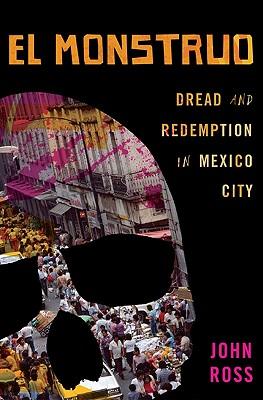
Editors note: Guardian correspondent John Ross is traveling across the nation pomoting his new book, El Monstruo — Dread & Redemption in Mexico City, and is sending us dispatches from the road. This week: Twin Cities, Madison and Northern Michigan.


 1. BLUE IGLOO


As I deplaned the Southwest Shuttle from Denver wrapped in my blue igloo, a puffed up garment that doubles my skeletal girth, a sudden spasm of panic punched me in the gut. Had I slept through my stop and disembarked in Fargo, North Dakota instead?
Minneapolis might just as well have been Fargo. The dead winter landscape lay frozen under week-old snowdrifts and the Twin Cities shivered in negative wind chill numbers beneath a leaden sky from which a cold hard rain would pelt down for a week. Fargo or Minneapolis? It didn’t much matter where I had landed – just don’t toss me into the wood chipper.


On my first evening in this desolate region, I was invited to dialogue with the Minnesota Immigrant Freedom Network at a community center in St. Paul. About 15 transplanted Mexicans, many of them related by marriage or friendship, pulled together in a circle in the gymnasium while the kids romped in the other room. Each called out his or hers’ “patria chica,” their home state or region or town. I talked about Mexico down on the ground today in the cheerless winter of 2010, the 100th anniversary of a distant revolution. How four out of every ten heads of households are out of work. 10,000 farmers and their families forced to abandon their milpas as millions of tons of NAFTA corn inundate the country. 19,000 dead in Felipe Calderon’s disastrous attempt to beat down the drug cartels. Who will be next?


Those in the circle leaned forward on their folding chairs, bending into my words as if I was a messenger bringing bad news from home. One woman began to weep and another rose to comfort her.


Later, I pulled out my book, El Monstruo – Dread & Redemption in Mexico City to show them what I had written. Families who would probably not eat meat for a week if they bought one snapped up three Monsters and asked me to sign them for their children — Alejandra, Yesica, Jeni, Alfonso, Jonaton — so that they could learn about the country they had been forced to abandon, in their new language.


As the session wound down, Mariano (not his real name) invited the families to a Jewish Seder the next week at a progressive Minneapolis schul. Then they would get on the buses and head for Washington D.C., a 150 hour round trip, to march for immigration reform on March 21st, the first day of spring. In the nooks and crannies of Obama’s America, Mexicans were beginning to come out of four years of social hibernation to rally for immigration reform, not a hot button issue in this economically strewn landscape.


I hung up with my old camarada Tomas Johnson, one of the apostles of fair trade Zapatista coffee — similar dispensaries like Just Coffee in Madison and Higher Grounds in Michigan are sprinkled over the frigid Midwest. Café has played a diminished role in the slender Zapatista economy ever since Muk’Vitz, a Tzotzil Indian cooperative, imploded when coffee prices soared — coyotes, bottom-feeder speculators, started showing up on the members’ doorsteps offering a few pesos more than the fair trade price.


Coffee is not an ideal resource upon which to build Zapatista autonomy — the price is set far away on commodity exchanges in London and New York and the product itself is destined for the jaded palettes of the connoisseur class in the cities of the north. Moreover, the coffee crop soaks up corn land and adds nothing to indigenous nutrition.


I marked my journey into my 73rd year at a house fiesta hosted by Tomas’s steady squeeze, an audiologist who gifted me with a hearing aid so that I might be able to decipher that questions hurled at me from the small audiences I address. This time last year, I was being wheeled into a green, antiseptic operating room for a round of chemotherapy that would k.o. the tumor that had taken over my liver. This birthday is the real gift.


I entertained privileged white students at several universities during my stay in the Twin Cities, got hopelessly lost in a frigid wasteland trying to find a Lutheran college, told tall tales to a handful of Raza at the U. of Minn, and attended a showing of the Benny More bio-pic at a jam-packed local theater. Benny’s scintillating calor radiating from the screen in waves of tropical heat juxtaposed oddly against the backdrop of the frozen north. Minneapolis-St Paul, with their new populations of color – Somalis, Ethiopians, Eritreans, Hmung, and Latinos – spice up this staid old state with exotic flavors. The music has changed: Reggaeton and Rancheros have replaced Spider John Koerner. I drink in the Albert Ayler-like contortions of a longhaired white boy at a jam session downstairs at the Clown Lounge.


Politics too are not as usual in this once-upon-a-time farmer-labor socialist paradise: Keith Ellison is the nation’s first Muslim congress person and a middle-of-the-road Democrat comedian stands small in the shoes of Paul Wellstone. In the other corner, the pit viper Michelle Bachman spits her venom into the black lagoons of Obamalandia.


II. TURKEY MOLE


I’m back on the Big Dog — there are plenty of Mexicans here but no Mexican bus. On the jump over to Madison, I chat with a well-seasoned black man during a smoke break. He wants to know where I’m headed. I’m on a low-rent book tour, I explain, I move from city to city to sell my books. “I’m on a book tour myself,” he laughs, “I get off where I want to and see if I like it or not. Hung up in Oswego for eight days but wasn’t anything there for me…”


There is a down-at-the-heels traveling class — the evicted and foreclosed, laid off and uprooted — rolling around the underbelly of this damaged country with no fixed destination in mind, looking for a place to light, some place that feels like home.


Norm Stockwell, who keeps WORT-FM, the Voice of Madison’s Voiceless, choogling, picks me up at the Greyhound depot, a furniture-less warehouse that resembles an immigrant detention center on the outskirts of town, and drives me over to the once-a-month Socialist pot-luck, but only scraps and few stained paper plates are left. A few hours earlier, the Madison P.D. visited the premises at the behest of the Wisconsin Socialist Party to remove a truculent member who had been abruptly expelled from its ranks, an astonishingly unpolitical resolution to a political dispute.


Madison is a city that doesn’t leave much up to chance. Cops are ever at the ready to surveil radical meetings. One cannot post a hand-scrawled street sign protesting injustice without first obtaining a permit from the city. No household is allowed to house more than three chickens (no roosters), a law that necessitates chicken inspectors and has given birth to the Chicken Liberation Front.


The State Capitol, a knock-off the Nation’s, is forever on the eyeline in Madison to remind one of the power of the State, I expect. The city is laid out on a grid so that all avenues spoke off from its monstrous dome – you have to move out of town to escape the radiation.


On Saturday, March 20th, a fistful of eternal protestors gathered at the foot of this granite beast to mark the start of the eighth year of the illegal invasion and occupation of Iraq and the decimation of millions of its people. As I trudged up State Street towards the Capitol, I flashed back to our feverish days as Human Shields in Baghdad in March 2003 and thought about Sasha for whom the war never goes home, climbing the hills of Amman, delivering collateral repair from dawn to dusk to the million Iraqi refugees that forgotten war has exiled to the Jordanian capitol.


Our presidents invade so many foreign countries that they can’t even remember the name of the last one they destroyed. Iraq has been erased from the North American mind screen in favor of Afghanistan, the Good War on Obama’s agenda. Last month, Sasha and Mary’s Collateral Repair Project took in just $50 in donations and CRP is in danger of folding. Send them some Yanqui shekels at (www.collateralrepairproject.org.)


The annual commemoration of the Iraqi genocide draws smaller and smaller knots of humanity each year — 80 or so souls in Madison, 500 in San Francisco, not 10,000 in Washington. But the next day, as Baracko’s Dems braved the racist jibes and hard fruit of the Teabaggers to enter the hallowed halls of Congress and narrowly vote up a phony health care reform bill that excludes immigrants from coverage and leaves the insurance congloms on top, 200,000 assembled outside to back up a proposed immigration reform that smells just as cheesy as Obamacare.


The rally proved to be the largest confluence of immigrant workers since that miraculous May 1st four years ago when millions came out of the shadows to shout “aqui estamos y no nos vamos.” After that milestone moment, the immigrant rights movement was driven into the underground by Bush’s ICE raids, Lou Dobbs, the Minutemen, real-time Mexico bashing with knives and bottles, Sheriff Joe’s Arizona storm troopers, good ol’ American-as-apple-pie racism, and the squeamish response of the official Latino leadership.


Now the indocumentados are taking their first baby steps back into the maelstrom of U.S. politics. Hundreds of grassroots groups like the Minnesota Immigration Freedom Network rented buses and drove off to Washington on the first day of spring and May 1st, the day on which immigrant workers first took to the streets of America 124 years ago in the battle for the eight hour day, now looms large on the calendar of resistance.


Lester Dore is a graphic artist who operates under the influence of the king of the calaveras Jose Guadalupe Posada, the brothers Flores Magon, and the breathtaking explosion of popular art that detonated on the walls of Oaxaca during the 2006 uprising in that southern city. Lester whips up a pair of prints to celebrate the publication of “El Monstruo” and the life after death of Praxides G. Guerrero, the first anarchist to fall in the 100 year-old-this-year Mexican revolution. He serves up a big pot of Mole de Guajalote (Turkey) and invites us over. Three compas from Toluca in Mexico State share the sumptuous repast and the conversation quickly slides into Mexican. I learn the origin of the Chilango-ismo “teparocha” (falling down drunk) but eschew the vino (the liver lives on.)


III. SANCTUARY IN THE HEARTLAND


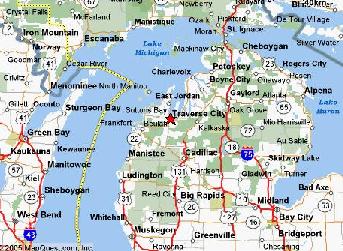
Driving the long route around Lake Superior into northern Michigan, the first tentative fingers of spring have brought a thawing to the land. The cherries that draw thousands of migrant workers to the Lower Peninsula are threatening to burst into bud. Gladys Munoz (her real name) directs Migrant Health Services for seven northern Michigan counties. She is based in Traverse City, a comfortable upper crust enclave — the billion buck mansions out on the peninsula are in the El Chapo Guzman category of ostentation (Michael Moore is rumored to be in residence in the environs ensconced in a lavish log cabin roughly the size of downtown Flint.)


Gladys knows where the bodies are buried. We ply the backroads to the labor camps hidden away down in the dank gullies. Guatemalans and Mexicans stream into this region each spring to do the stoop labor no gringo will do and pick the Maraschinos that top off the parfaits of the few upwardly mobile Americans left in the wake of the ravaged economy (Michigan unemployment clocks in around 15%.) Gladys tells me about three babies born without brains — she suspects pesticides. She speaks about a man from Chiapas who hung himself when he found out that he had contacted AIDS — a priest was called upon to perform an exorcism at the house where he expired. And a young Triqui Indian mother from Oaxaca picking cucumbers for a Vlasic pickle contractor who was stranded in a country that doesn’t recognize her language after her husband went fishing for supper without a license and Fish & Game turned him over to the Migra.


We visit with Liliana (not her real name) from the drug war-riddled hot lands of Guerrero state. The patron is a kindly old farmer who has installed cable TV for the workers and we watch Barack Obama extol the wonders of his tarnished health care bill. Liliana’s husband is picking oranges in Florida but will soon return to work the cherry. She says he doesn’t much believe that an immigration reform measure will make it out of congress – “just some more blahblahblah…” But Liliana will march this May 1st if she can get a ride — undocumented workers are not permitted drivers’ licenses in the state of Michigan.


Traverse City is good to me. I perform at a local organic coffee roaster for a roomful of social change agents. The next morning, Jody T. who gave up her life to drive this garrulous old gaffer around the bioregion, steers the Viva into a trepidatious triangle. Cadillac was once the home base for Timothy McVeigh and the Michigan Militia, a recent flashback on the Ten O’clock News after a Christian posse purportedly targeted cops for blood sacrifice in preparation for the appearance of the Anti-Christ. To the west, small towns with Dutch-inflected names like Holland and Zeeland and Vreland dot the lakeside.


White clapboard outposts of the Dutch Reform Church, the architect of South African apartheid, their steeples spiring piously into the spring breeze, hug the highway. The Dutch Reform Church is the spiritual home of the Prinz family whose most celebrated spawn, Eric, is the go to guy at Blackwater. Further south we slide into Grand Rapids where the similarly affiliated DeVos dynasty’s Amway holds sway. The Prinzes and the DeVoses (a good reason not to root for the Orlando Magic) finance such repositories of right-wing fanaticism as Focus On The Family and Operation Rescue. The largesse of Dick DeVos rivaled the Mormon Church in putting California’s homophobic Proposition 8 over the top.


Grand Rapids, once the furniture capitol of the known universe and now the home of the Gerald Ford Museum of Presidential Imbeciles, is a good boxing town (Buster Mathis and Roger Mayweather have gyms here) and a swelling Latino population has changed the complexion of the city. Despite the downturn, Grand Rapids is trying to upgrade its downtown but the further one gets from the core of the city, the seedier things look.


Koinonia House is a sanctuary near the old demolished heart of Grand Rapids — in fact, it is the only structure left standing on its block. Established by disaffected seminarians like Jeff Smith in the early 1980s when the U.S. waged war on Central America, K House became a station on the underground railroad built by the Sanctuary Movement. The first refugees were Guatemalan Indians fleeing the scorched earth genocide of Efrain Rios Montt. In recent years, K House has taken in Mexicans fleeing that “desgraciada pobreza” back home, like Carlos and Alynn (their real names) who have brought their remarkable art with them to El Norte.


Jeff kicks back and reminisces about the fates of former tenants. The big-bellied wood stove belches out waves of warmth on a chill late March morning. The big arms of the fluffy old lounger envelop a weary traveler and hold him close. K House remains a sanctuary deep in the heart of a wounded land.


Stay tuned. Chicago, St Louis, Jackson Mississippi – there is still a whole lot of traveling to do as the Monstruo tour moves eastwards.               


FIN


John Ross and “El Monstruo – Dread & Redemption in Mexico City” will visit St. Louis April 4th-7th, and Millsaps College Jackson Mississippi April 9th for a symposium on Mexico City – he will tour Baltimore, Washington, New York, and Boston April 19th through May 1st. For details write johnross@igc.org.


The state budget isn’t growing

11

I heard a great show on NPR the other day about the new rules on compensation for executives whose banks got federal bailout money. The feds have cracked down (a bit), and some of those massive salaries have been cut and top bankers are now accepting much less pay, and stock that can’t be sold for three years.


And guess what: More than 80 percent of these people are still hard at work at their desks, including almost all of the most senior folks. Very few have left. It puts the lie to this notion that extreme salaries are needed to attract and retail the top talent; even after those salaries have been cut by more than half, the “talent” doesn’t flee.


There’s a new study by the California Budget Project (PDF) that says makes the same kinds of points. Jean Ross, the director of the nonprofit, nonpartisan group, says that urban legends die hard, so she’s chosen the top ten myths about the state budget and demonstrated how utterly inaccurate they are.


For example, the anti-tax folks love to crow about the massive growth in state spending and how the budget is “out of control.” Truth:


Current year spending is $16.9 billion below 2007-2008 levels and proposed 2010-2011 spending is $20.1 billion below  2007-2008 levels.


2009-2010 spending is $21.5 billion below the baseline levels projected by the Legislative Analysts Office in 2004.


As a share of the state’s economy, state spending is at its lowest levels since the early 1970s.


And it’s not just the recession:


State spending as a share of personal income has declined significantly in recent years.


And guess what: taxes aren’t driving businesses out of the state — or hampering personal wealth creation.


The number of millionaire taxpayers has increased more rapidly than the number of taxpayers as a whole since the passage of Prop. 63, which imposed an additional tax on high-income individuals.


And guess what, you bureaucracy bashers:


California ranks 41s [among the 50 states] with respect to the number of state and local government employees per 10,000 population.


So no, California doesn’t have a spending problem. The state has a revenue problem.

Yee’s two-fer: Bashing Palin while promoting sunshine

5

Sen. Leland Yee scored a two-fer yesterday when he blasted a California State University organization for hiding how much it’s playing Sarah Palin for a speaking gig, raising an important sunshine issue and knocking Palin’s populism-for-pay schtick in the process. And at the heart of the issue is how public education institutions increasingly use foundations to avoid accountability.

That issue was recently raised in San Francisco, when City College Foundation sought to keep its financial dealings secret. The Guardian sounded the alarm last month, and City College Trustee John Rizzo, who led the fight for more sunshine, negotiated a more open arrangement that the Board of Trustees unanimously approved last week.

“We got most of what we wanted,” Rizzo told us. “Most of the things are open and they have to give us a quarterly report on donations.”

Yee – who the Society of Professional Journalist-NorCal recently honored with a James Madison Award for his struggles to promote greater government transparency and protections for journalists – has long been fighting for more sunshine in the CSU and UC systems, which is particularly important as they make deep cuts to higher education spending. For example, Yee’s Senate Bill 330 would explicitly require those systems to adhere to the California Public Records Act.    

“These are public institutions that should embrace transparency and accountability,” Yee said yesterday in a press release announcing his request that CSU-Stanislaus’s foundation disclose how much it is paying Palin for a $500 per head speech on June 25. The press release triggered a front-page story in today’s San Francisco Chronicle, with CSU and foundation officials rebuffing Yee’s request.

So now, Yee gets to bash Palin and make an important stand for sunshine, both of which will likely help his nascent campaign to be elected mayor of San Francisco next year.

As Yee wrote in a letter to campus President Hamid Shirvani, who also serves as the chair of the foundation: “The sensational nature of former Governor Palin’s political commentary, coupled with an ongoing book tour, has allowed her to charge top dollar for speaking engagements. As was reported in the media, her speaking appearances typically command $100,000 per event. To that end, I request the foundation to respond to the following issues: 1. Is the former governor being compensated by the CSUS Foundation in any form for her participation in the event on June 25th?  If so, please describe the amount and nature of the compensation being awarded to the former governor.  2. Please disclose any contracts between the former governor and the CSUS Foundation involving the June 25 speaking engagement.”

Later in the press release, he added: “The CSU should immediately disclose how much money is being diverted from students to pay Sarah Palin’s exorbitant speaking fees. At a time when students are struggling to afford an education at CSU, I would hope that spending potentially hundreds of thousands of dollars on a guest speaker for a black-tie gala would be low on the priority list.  Money that is spent on bringing an out-of-touch former politician to campus could be spent on scholarships and other financial assistance during these challenging budget times.”

Win or lose, this is the right fight for Yee, both morally and politically. Go git ‘er!

Study: Cuts to health programs a bad plan for state economy

It doesn’t take a Ph.D. to understand that people who earn less shell out a greater percentage of their income from month to month than those occupying more elite ranks. Anyone fortunate enough to be holding down even a low-paying gig in a state where unemployment stands at 12.5 percent knows that basic living expenses can quickly consume a paycheck in San Francisco.

A study released by the Center for Labor and Research Education at the University of California at Berkeley has found that cutting relatively low-paying jobs in the state’s health and human services sector would deal a harsher blow to California’s financial health than alternative budget-balancing measures, like raising taxes on the wealthiest residents. Gov. Arnold Schwarzenegger has proposed cutting $6.4 billion from California’s health and human services budget, part of his solution for closing a roughly $20 billion budget gap.

“The budget proposals that the governor is making would … significantly worsen the economic crisis in the state, rather than pull us out,” said Ken Jacobs, chair of the Labor Center at UC Berkeley.

The report highlights “multiplier” effects of hypothetical cuts to statewide health and human services programs. The study examined the impacts of cutting $1 billion each from Medi-Cal, Healthy Families, and CalWORKS – state programs that assist low-income families – and found that the resulting losses would total 98,600 jobs for all three combined. The worst impacts from cuts to those programs would come from indirect consequences, according to Jacobs. Since those programs are funded in part from federal dollars, a loss in federal funding matched for every dollar the state invests also takes a toll.

A $1 billion cut to state funding for In-Home Supportive Services (IHSS), which aids disabled and elderly people who want to remain in their homes, would result in a statewide loss of 215,900 jobs, the report found.

Meanwhile, generating that same $1 billion through taxes from households in the highest income bracket in California would result in a comparatively lower job loss of 6,400, the research group estimated.

Health Access, a nonprofit consumer advocacy group, used the study’s findings in its own report to predict ramifications of the actual proposals in Schwarzenegger’s budget. According to Health Access, a minimum of 42,384 jobs would be lost as a result of proposed health cuts to Healthy Families and Medi-Cal, with more than $2.7 billion lost in business activity. It predicted 370,000 jobs would be wiped out if IHSS were eliminated altogether.

In a tumultuous economic downturn like the one facing California right now, “the best stimulus is funds in the pockets of low-income families,” according to Jacobs. Cutting these health and human service programs, which employ low-income workers and serve residents living near the poverty line, would do just the opposite.

Speaking of multipliers, Jacobs noted that corporate tax cuts produce the absolute worst bang for the buck out of any other schemes to fix the economy.

Deadline looms for San Francisco’s green power program

Negotiations between city government and Power Choice LLC, a contractor selected to implement San Francisco’s Community Choice Aggregation (CCA) program, began Feb. 9. Almost seven weeks later, there’s still no end in sight — but if a deal isn’t secured soon, San Francisco could risk losing an opportunity to implement a cutting-edge green power program that would significantly reduce the city’s reliance on fossil fuels and give customers an alternative electricity provider.

About a half-decade of studies, debate, public meetings, and input from all sides have brought San Francisco’s CCA to the threshold of finally becoming a reality. The program would offer an energy mix comprised of 51 percent renewable power by 2017 for those who opted in.  

Assuming the program can operate successfully without an adverse impact to customers’ wallets, San Francisco could become a shining example of how to transition to a more sustainable energy model. It could represent giant step — rather than an inch-by-inch crawl — toward carbon-free power generation serving the needs of a major U.S. city.

As the negations drag on and a serious deadline looms closer and closer, some observers are growing anxious. No one can tell for sure what’s happening behind closed doors, but one thing is certain: PG&E is spending millions to try and torpedo CCA through a sophisticated public relations campaign, and it would have a much easier time derailing the project if it met with delays. PG&E would lose some of its customer base if the CCA program were a success.

PG&E has, intentionally or not, imposed a critical deadline on San Francisco’s CCA program implementation by introducing Proposition 16 — a ballot initiative that could slam shut this window of opportunity. Prop 16 would require a two-thirds majority vote before any CCA statewide could get off the ground, making it almost impossible to move forward.

If San Francisco’s CCA program hasn’t gotten underway by June, when Californians will vote on Prop 16, years of effort could be rendered futile if the initiative passes.

As SFPUC General Manager Ed Harrington told the Guardian, “We will get a contract as soon as we can possibly get a contract — but I can’t tell you the date.”

Several things would have to happen before the June deadline in order to guarantee that the city’s CCA would not be affected by the outcome of Prop 16. The program contract would have to be approved by the SFPUC, signed off on by the Board of Supervisors, and a 60-day opt-out period would need to be initiated before the start of service.

With so much to do in such little time, some observers are worried that the whole thing could fall apart. “Something seems to be awry,” noted John Rizzo of the Sierra Club, noting, “The PUC has historically fought and delayed CCA.”

The program is the product the joint efforts of two city bodies, the SFPUC and the Local Agency Formation Commission (LAFCo), which is chaired by Sup. Ross Mirkarimi. Historically, LAFCo and the SFPUC have not worked well together, with Mirkarimi trying to prod the power-and-water agency forward, and publicly bemoaning its recalcitrance.

Mayor Gavin Newsom — who has forged partnerships with PG&E in the past, received several campaign contributions from high-ranking PG&E employees, and traveled to Mexico on the utility’s dime — appoints commissioners to the SFPUC. The mayor’s apparent alliance with PG&E combined with his sway over the SFPUC has led program advocates to voice suspicion over the years that its progress was being hampered by something more than ordinary bureaucracy.

Harrington, who heads up the SFPUC, said everyone sitting at the negotiating table is well aware of the Prop 16 deadline.

“The hope is to do it, obviously, as fast as possible,” he said. “I think that we are doing well in terms of rate discussion [and] renewable discussion, they’re very much with us in terms of getting renewables as fast as possible, and meeting the goals that the Board [of Supervisors] and everybody else has set for years now.”

“But the real discussion at this point is risk,” he said. “And trying to figure out how that risk is done in a way that protects our customers and the city is a big deal.” A key program goal since the beginning has been to meet or beat PG&E rates, which will climb by some 30 percent in the next few years if its current rate-hike proposals are approved by state regulatory bodies.

“The other part is just how do you implement this?” Harrington continued. “You’re going to have to contract with people who will in turn contract with generators. What if one of them went under, what if there are price hikes? How do we step in for them?”

At the same time, Harrington acknowledged that in the long-term, this program has the capacity to shift the city’s electric and economic outlook by offering more stability, and minimizing risk.

“In general, the kinds of renewable power that we’re talking about are much, much more stable than natural gas, oil, those kinds of things,” he said. “And so while at the very first day of this we’re not going to own anything … as you start to have ownership interest in power supplies that are sustainable, renewable power, that price fluctuation should be a whole lot less, and our customers should be exposed to a whole lot less price fluctuation and risk than people who still have big things that are in natural gas and those areas.”

Harrington said he believed the CCA program would be attractive to San Franciscans because of its environmental edge. “I think people here want to take care of the world, they want to do things that are right. They probably don’t want to spend a lot of money to do it — and I don’t think they have to,” he said. “That’s the part that makes me crazy: If we can provide greener power for equal to or less than PG&E … why wouldn’t we try to do that for the city?”

The pot initiative’s going to win

9

It seems pretty clear to me that, with polls showing widespread support and money pouring in for the campaign, the initiative to legalize pot in California is going to pass. So why are all of the candidates for governor, even Jerry Brown (who may have smoked a joint or two in his time) coming out so strongly against it?


Jerry knows that legal pot isn’t going to create new law-enforcement problems; quite the contrary. It’s going to save huge amounts of money that the state and local governments now waste enforcing a silly law that nobody respects, will cut down on the jail population and discourage the environmentally damaging (and sometimes violent) gangs of rogue growers who plant on public land.


And he ought to know that this kind of a stand isn’t going to help him get elected. Once you take the hard-core Republicans who would never vote for Brown anyway out of the equation and look at the universe of potential Brown voters, legalizing pot probably gets more than 60 percent approval.


If you asked me back in 1978 whether I could imagine a day when Jerry Brown would oppose a marijuana legalization measure that was polling at 60 percent, I would have said: Whoa, man, no way. But then, I inhaled.

Us and the Weekly: It wasn’t personal

4

I really liked The Stranger’s article a couple of weeks ago about our battle with SF Weekly and it’s corporate parent, Village Voice Media. Eli Sanders is a good reporter, and he got most of it right.


But he did the same thing that a lot of people covering this legal battle have done, and it’s starting to get annoying. Everyone seems to want to play this as a battle of egos between Guardian Editor and Publisher Bruce Brugmann and VVM Executive Editor Mike Lacey. It’s as if we filed suit against them — and endured years of litigation and now collection efforts — just out of spite. It’s as if we were willing to go through all this just because Bruce didn’t like Mike Lacey.


Here’s Sanders’ spin:


These two men have hated each other for decades, but with increasing venom since 1995, when Lacey showed up in San Francisco in cowboy boots to announce that he and his partners had just purchased the tiny SF Weekly and planned to make a huge success of it.


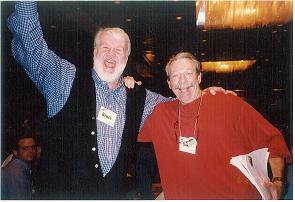
The thing is, Bruce and Mike haven’t hated each other for decades. They weren’t terribly close, but they got along fine — and sometimes, they were political allies. In 1997, three years AFTER Lacey’s company bought our competitor, SF Weekly, the two joined forces at an Association of Alternative Newsweeklies convention in Montreal to help push a bylaws measure that kept daily newspapers out of our trade association. And as the picture above shows, they were almost, sorta, kinda pals. At least for a few minutes.


The last thing we wanted to do was sue these guys. It wasn’t personal; we had no choice. Sure, the Guardian and VVM have very different approaches to journalism and politics, but we’d have been happy to compete with them — the way newspapers with different viewpoints should, on a level playing field. And for all the rhetoric on all sides, the legal animosity only started when the Weekly actively tried to put us out of business by selling ads below cost.


I dunno; the VVM people have been awfully rude to me of late, and I guess they like this mano-a-mano shit, but the reality is: We sued to stop illegal conduct that was threatening our business. That’s the real story.


Could he be — the worst pope ever?

15

In The Decline and Fall of the Roman Empire, Gibbons reports on the trial of Pope John XXIII in 1415, during which “the most scandalous charges were suppressed: The Vicar of Christ was accused only of piracy, murder, rape, sodomy and incest.”

And he wasn’t even the worst of them. Jesus, there have been some bad popes over the years. Even in modern times, we’ve had a few serious losers; Pius XII, by many accounts, was way too friendly with Adolf Hitler.

So it’s pretty hard to call the current occupant of the Throne of St. Peter the worst pope ever; there’s plenty of competition.

But folks, the former Cardinal Ratzinger is turning out to be so awful that he’s going to go down in history as one of the all time horrible leaders of a crumbling Catholic Church. This guy was actively involved in covering up child abuse scandals. He knew what was going on, and he not only ignored it — he ordered the bishops to report the crimes only to Rome, and not to civil authorities. He’s guilty not only of protecting the worst kind of criminals — authority figures who prey on children — but of actively seeking to prevent them from facing the consequences of their crimes.

If Bill Clinton was charged with obstruction of justice for lying about a (consensual) blow job (involving two adults), then Pope Benedict XVI ought to be indicted in every country that has similar statutes, starting with the United States. All it takes is one district attorney, one grand jury. The evidence is pretty clear. Then Interpol can put out a warrant for his arrest.

Of course, all that would do is keep the guy holed up in his nice, big house in Rome; the Vatican is its own sovereign nation, with its own laws and rules — and I don’t think Canon Law provides for obstruction charges (or any charges) against the head of state.

See, that’s the thing: Nobody can touch the pope (bad metaphor). There’s no procedure for impeachment. He’s the least accountable head of state in the world; even military juntas and dictators can be overthrown by force, but I don’t see any revolutionary cadre of young Cardinals rising up and turning the Swiss guards on Il Papa. Too bad: A nice middle-ages-style coup in the Vatican might be just the thing to shake up that moribund institution and remind its leaders that the rest of the world will only take so much abuse. 

Lawsuit could expose SFPD-ABC collaboration

43

Imminent legal actions against San Francisco, its Police Department, and the California Department of Alcohol Beverage Control could reveal whether a pair of undercover agents went rogue in harassing nightclubs and aggressively busting parties or whether they were acting at the direction of top officials.

Attorney Mark Webb – whose work on a racketeering lawsuit against the policing agencies was the subject of cover stories in the Guardian and the SF Weekly – told us that on Monday, he plans to file that racketeering claim against the city (which will then become a lawsuit if the city rejects it, as it routinely does) and a related lawsuit in Superior Court involving the rough, unnecessary arrest of bartender Javier Magallon and harassment of Mike Quan, owner of The Room, Playbar, and Mist. Narrated surveillance video associated with the case was posted on YouTube yesterday.

Central figures in the lawsuit are SFPD Officer Larry Bertrand and ABC agent Michelle Ott, plain-clothes partners in an aggressive crackdown on nightlife over the last year. Webb said he plans to immediately seek police records and communications and to depose Bertrand and Ott to try to determine who ordered the crackdown, why, and when higher-ups became aware of their aggressive tactics.

“I would like to know if Bertrand is being sent places or if he’s just a lone wolf, and the CADs will show that,” Webb said, referring to computer-assisted dispatch reports that track activities and communications involving individual officers. Those and other records that Webb can access through the court-ordered discovery process could finally shed light on what’s behind the crackdown.

Webb had sought to have Mayor Gavin Newsom mediate this dispute before the cases were filed, saying the racketeering lawsuit will be expensive and divisive, and all the nightlife community really wants is an end to the harassment and assurance that it wouldn’t restart once the media attention passes. And Webb did have conversations with top Newsom aide Mike Farrah and with Nicolas King, Newsom’s liaison to the SFPD, but neither indicated that Newsom was willing to get personally involved. Newsom spokesperson Tony Winnicker also told us Newsom preferred to let Police Chief George Gascon handle the matter.

So Webb said he now plans to move forward with litigation. “If they’re not answering the call at City Hall, let’s get into the arena,” Webb told us.

Webb is an experienced litigator who has won multi-million judgments and who started his career in New York City helping prosecute Racketeer Influenced and Corrupt Organizations (RICO) Act cases against the mob, and now he plans to use RICO laws against what he says is a city-state enterprise to interfere with lawful nightlife activities in San Francisco.

“Webb gets it. It’s a weird mentality, the really good trial attorneys, and Webb is that,” said attorney Mark Rennie, who has spent decades working with the city’s entertainment industry and has helped advise Webb on the case.

Among the parties involved in the RICO claim are those involved in Webb’s other lawsuit against the city, as well as Club Caliente, its owner Maurice Salinas, Azul, its owner John Bauer, New York nightclub owners Phillipe Rieser and David Brinkley, Vessel, and Siobhan Hefferman, who was arrested by Bertrand and Ott at a private party. Others may be added soon.

Great American Music Hall, Slims, and DNA Lounge also claim to have been harassed by the ABC and have been involved in several meetings that led up to Webb’s lawsuit, but they’re not taking part in the lawsuit yet, partially because they fear retribution from the ABC.

“I probably would have jumped in, but I don’t want to walk into a hearing suing the ABC,” Slims and GAMH general manager Dawn Holliday told us, referring to Slims’ April 1 appeals hearing stemming from noise complaint citations triggered by one particularly cranky neighbor.

DNA Lounge, which has regularly documented the harassment campaign on its blog, decided to wait with the other two clubs before joining the suit. “We thought it was important to stand as a community and there were too many venues that were worried about retribution from the police or ABC if they joined the suit,” DNA general manager Barry Synoground told us. 

But Synoground said he’s anxious to see what Webb’s suit unearths, noting that Bertrand and Ott haven’t been visible in recent weeks as complaints against them went public, and saying he thinks Commander James Dudley and other top SFPD brass are really driving this crackdown: “We may have taken one of his tools off the street, but he’ll find another.”

Synoground said most SFPD officers are very professional and they have no problem working with them, but Bertrand and Ott have unnecessarily and aggressively interfered with their business. Holliday goes even further in praising the SFPD, saying she has a good relationship with Bertrand and everyone in Southern Station, blaming her clubs’ troubles on the ABC and the unwillingness of top city officials to stand up for them.

So the internal SFPD communications, and those between the city and the ABC, could prove revealing. “On April 17, I can send out subpoenas to the cops and I can take Bertrand’s deposition 30 days from Monday,” Webb said, citing statutory response periods.  

Webb expressed confidence in his case and said the police shakedowns and harassment fit well with the RICO statute, which has been used against a wide variety of enterprises over the years, including government agencies.

In fact, an American Bar Association book, “Civil RICO: A definitive guide,” by Gregory P. Joseph, seems to support Webb’s confidence. “Any person injured in his business or property by reason of a violation of Section 1962 of this chapter may sue therefore in any appropriate United States district court and shall recover threefold the damages he sustains and the costs of the suit, including reasonable attorney fees.’ This simple sentence has generated an avalanche of litigation,” the book begins.

It makes clear the intent of Congress that RICO laws “shall be liberally construed to effectuate the remedial purposes” of targeted individual seeking protection from harassment. A 1981 U.S. Supreme Court ruling (U.S. vs. Turkette) made clear even legitimate enterprises such as government agencies could be sued, and a 1994 ruling (NOW vs. Scheidler) settled a long dispute over whether the racketeering needed to be economically motivated, finding that it doesn’t.

Racketeering was defined by Congress as simply committing any of a long list of “predicate acts,” which include violence or the threat of violence, kidnapping (including false arrest), extortion, physical interference with business, malicious prosecution, and abuse of authority, all of which Webb says apply in his case. He is also reviewing the Guardian’s Death of Fun coverage from the last four years to find more examples of predicate acts involving the SFPD.

The hardest part of proving his case could be to show that it interfered with interstate commerce, although Webb said that’s met by efforts by Bertrand and Ott to prevent Rieser and Brinkley from transferring a liquor license from New York. But “Civil RICO” also said caselaw has established that “RICO requires no more than a slight effect upon interstate commerce,” citing the 1989 case U.S. vs. Doherty.

Like many who have had run-ins with Bertrand and Ott, Webb said he’s anxious to see what he finds in discovery: “What’s fascinating about this is you can uncover the whole system.”

Workers rally against Newsom’s layoff scheme

8

By Jobert Poblete

Dozens of workers at San Francisco General Hospital rallied March 25 to protest layoffs there and throughout the city as ordered by Mayor Gavin Newsom. More than 17,000 city workers received layoff notices in the last few weeks, including hundreds at the hospital. The protest was organized by SEIU Local 1021, which represents around 12,000 city employees, 9,000 of whom have received pink slips. 

Many of these workers are expected to be re-hired as part-time employees, working 37.5 hours a week or less. The move is expected to shave $50 million from a more than $500 million budget deficit. The Mayor’s Office is calling this a “reorganization” that will minimize the impact on services and maintain employment. But the plan, which was proposed by Newsom last month without first consulting with the city’s unions, has met fierce resistance from employees and their labor representatives and is now the subject of negotiations between the mayor and 41 city employee unions.

SEIU acknowledged the city’s fiscal troubles but is upset about what it calls a unilateral change in its members’ wages and benefits. “Essentially what they’re doing is unilaterally cutting wages and benefits without negotiating it,” SEIU organizer Gabriel Haaland told us. “It’s not a question of whether we’re willing to sacrifice, but that choice has been taken away.”

Hospital workers, carrying signs that read “Patient Care is Not Part Time,” also raised concerns about the layoff-rehire scheme’s potential effects on the quality of services at the hospital. “It can’t work in the emergency room and it can’t work in the rest of the hospital,” said Ed Kinchley, a social worker who works in the hospital’s emergency room.

Shari Zinn, an X-ray technician in the hospital, said her department already runs below minimum staffing levels, forcing patients to wait two to four hours for X-rays. Since X-ray technicians are hard to retain, she is not being laid off, but clerks and aids in her department are. “If there isn’t a clerk or aid,” Zinn said, “then an X-ray tech has to stop what they’re doing. Fewer patients can be served.”

Hospital officials would not comment on the layoffs.

At the rally, speakers called on the city to come up with revenue measures and other ways to balance the budget. “The city has really pushed us too far,” Sin Yee Poon, SEIU’s chief elected officer, told the assembled workers. “They’re balancing they’re budget on us, just us.”

Judicial candidate interviews: Michael Nava

0

There are two contested races for judge in San Francisco — one open seat, and one incumbent who’s facing a direct challenge. We’ll be interviewing the candidates over the next few weeks, and posting the interview tapes so you can listen in. The first interview: Michael Nava, who’s running for Seat 15, challenging incumbent Judge Richard Ulmer. Daniel Dean is also in that race. We asked Nava to explain why he’s challenging a sitting judge (not a common practice, although Nava thinks perhaps it should be more common) and how his background as an openly gay Latino man would bring a different perspective to the bench.

Taking with Nava were Tim Redmond, Bruce Brugmann and Steven T. Jones.

You can listen to the interview here:

Michael Nava for judge endorsement interview by SFBG

A great sit-lie debate

24

KPFA’s morning show had a great debate this morning around the sit-lie law, featuring Gabriel Haaland, a longtime Haight resident, and Ted Lowenberg, president of the Haight Ashbury Improvement Association. You can listen to it here.


In the discussion — nicely moderated by Brian Edwards-Tiekert — you could see the essential problem with the law emerging.


Haaland pointed out that blocking or obstructing the sidewalk is already illegal; so is aggressive panhandling, assault and all of the other behaviors Lowenberg complained about. Lowenberg’s response: Yes, that’s true, but it’s hard to arrest someone on those charges; you have to fill out paperwork. What we need is to give the police more discretion to use their judgment to make arrests when they think that’s what’s needed.


“The police need the immediate ability to respond without paperwork,” he said.


And that’s precisely what bothers a lot of us about this law.


The San Francisco police have a long history of abusing their “judgment” in cases involving marginalized populations. A lot of us don’t believe that arrests will be limited to violent bad actors — and we have many, many years of evidence to back us up.


Haaland pointed out that the last time a sit-lie law was enforced, in the 1970s when the cops wanted to crack down on the hippies on Haight Street, it wound up being used against gay men in the Castro. This time, it could be any of a wide range of people who wind up sitting on the sidewalks, for a lot of reasons.


Lowenberg kept talking about “street thugs” and complaining that the district attorney hasn’t prosecuted them when they’ve attacked people — in one case, gouging someone’s eyes and biting him. But attacking someone on the street is already illegal; does anyone really think that the D.A., and the law-enforcement model, will be any more effective with the new law in place?


It won’t — but that’s not the point. I think what Lowenberg and his allies want is to give the police more power, to let them “clean up the streets” as they see fit. It’s not about courts and prosecution; it’s about curbside justice. And that’s never worked well in San Francisco.


Obama nominates Melinda Haag

0

President Obama has nominated veteran attorney Melinda Haag to serve as the U.S. Attorney for the Northern District of California, which stretches from the Monterey Coast to California’s northern border with Oregon and from the Pacific Ocean nearly to Sacramento, an area that more than 7.3 million people call home. Obama also nominated Jerry E. Martin as U.S Attorney for the Middle District of Tennessee, and James A. Lewis as U.S. Attorney for Central District of Illinois.

“I am so pleased the President has nominated veteran attorney Melinda Haag to serve as the top federal prosecutor in San Francisco,” said U.S. Sen. Barbara Boxer, who recommended Haag for the post. “She is well respected in the California legal community and will bring more than two decades of experience handling white collar crime cases to the U.S. Attorney’s Office.”

Boxer likely isn’t the only one pleased by this nomination: San Francisco’s embattled immigrant community has been hoping that Obama would replace the current top federal prosecutor Joseph Russoniello, an ardent opponent of sanctuary legislation.

According to a press release issued by Boxer’s office, Haag has been a partner since 2003 at San Francisco-based Orrick, Herrington & Sutcliffe in the white collar criminal defense and corporate investigations group, which handles cases involving fraud, antitrust violations, environmental crimes, health care fraud and other corporate matters. 

Before that, former U.S. Attorney and current FBI Director Robert Mueller recruited Haag to serve in the San Francisco U.S. Attorney’s Office, where she headed the White Collar Crime Unit and was the deputy chief of the General Crimes Unit. Haag also has experience as a prosecutor in the Los Angeles U.S. Attorney’s Office.

Haag received her bachelor’s degree from the University of California San Diego and she earned her law degree at UC Berkeley.

Sit, lie, stand and fight

14

A version of the following op-ed by Ben Rosenfeld ran in this week’s Guardian, edited for space reasons, and it’s generating quite a lively discussion here. He has asked us to post this extended dance mix of his piece, which offers more political context and gets into some of the issues raised in this weeks’ cover story, which is also generating heated debate. So here it is:

            This is a call out to creative, fun-loving San Franciscans: The mayor, the police chief, and their downtown cronies have declared war on our grassroots arts culture, and they are coming for your actual and conceptual space next. All that stands between the town you love and their vision of San Francisco as one big mercantile zone is a single vote progressive majority on the Board of Supervisors. But come November, they see the chance to take that away. The future they promise is already manifest in their many recent attacks on public and private gatherings, and their efforts to wrest the commons from the commoners.

            On Halloween 2009, the San Francisco Police, under their new chief, Los Angeles transplant George Gascón, shut down the Take Back Halloween Flashdance in front of the Ferry Building before DJ Amandeep “Deep” Jawa even arrived. Then they shut down several smaller street parties. (SFBG, 11/2/09) Their official reason—that organizers lacked permits—is what Bill Clinton famously termed an explanation, but not an excuse. The SFPD has a long history not only of tolerating unpermitted gatherings, but of re-routing traffic around and even escorting them. They are fully empowered to grant the equivalent of on-the-fly permits, a concept recognized in federal parks regulations. Applying for an actual permit is cumbersome, costly, anti-spontaneous, and reinforces the government’s view of itself as censor.

            Since Halloween, Chief Gascón’s force has been striking a mighty blow against crime by writing scores of open container citations to revelers in Dolores Park; fining or forcing the closure of SOMA clubs and bars for failing to conform to every fickle letter of the law; and sending undercover officers into warehouse and studio parties to bust them from within, sometimes violently, and without warrants. Their alpha party-crasher is a twitchy undercover cop named Larry Bertrand. He reportedly makes a habit of gratuitously attacking partygoers and vandalizing property, especially DJ equipment. One DJ wrote on a confidential email list: “I have been telling every DJ I know to run with their gear when your party gets busted [by Bertrand].” Not only has the chief failed to rein in Bertrand, but he wants to put a Taser in his hand, and in the hands of a rotten core of approximately 100 other officers whom the Chron found in 2006 are responsible for most citizen complaints, but whom the Department and this chief have systematically failed to discipline.

            Perhaps the most un-San Franciscan of all of Gascón’s initiatives is his demand for an anti-sit/lie ordinance, which would literally criminalize the very act of sitting or lying on certain public sidewalks at certain times. Never mind the fact that most violent crime is committed by people standing up and in striking range. Gascón appears to share the mayor’s philosophy that homelessness is just an aesthetic problem the rest of us should hose off our sidewalks. Not only is the idea just plain mean, it is anathema to San Francisco’s culture of compassion and broadmindedness, and its affirmative celebration of vibrant street culture. The danger is not that the police will arrest everyone who dares to take a load off or sit and sip a Snapple against the side of a building, but that they will enforce the law selectively according to their own purity tests, while robbing the rest of us of a diverse street scene that makes us all richer.

            To be sure, essential San Francisco has reasserted itself in the teeth of earlier culture wars, if in ever wealthier iterations. When Willie Brown stood in front of Critical Mass in 1997 and declared it illegal, riders blew by him like he was a grand prix flagman, and ridership surged from one or two thousand to five to seven thousand. What’s different this time are the demographics. San Francisco is richer than ever before, even at the height of the dot.com boom. Rents are through the roof. Everywhere, industrial warehouses and studios are drying up and concept industrial restaurants and bars are sprouting up. A new wave of young, hip residents has arrived seeking Dionysus, but they want no part of the political machinations under his robe. They are liberal, but they are not active. At least not yet. The mayor, the chief, and the norm core they serve are counting on our collective non-engagement. If we don’t band together—hipsters, activists, artists, and fun-loving folk all—we will watch the San Francisco we cherish slip away.

            On March 27, reclaim public space. Sit and lie on the public sidewalk. March and sing in the public street. Picnic on the pavement. Pop open a beer in Dolores Park. Do it without a permit. The Constitution is your permit. San Francisco’s heritage of artistic experimentation is your permit. Hell, the people telling you to get a permit flocked here because people like you marched around them in the first place and made this City a model of art and innovation for the world. Do it for them too. This is a defining moment. They are playing for keeps and so must we. Let’s bask in San Francisco’s ongoing heyday, not in quaint stories of the good times that used to be.

Bay Bridge’s new S-bend gets fence. Finally.

1

Ever since the driver of a truck laden with Asian pears flew off the Bay Bridge’s new S-curve and plummeted to his death last November, the California Highway Patrol has been policing the speed limit and Caltrans has added striping, signs, rumble strips and other features. Those efforts have helped reduce the curve’s initially high accident rate.

And yesterday, I noticed that Caltrans has installed a fence (visible in this clip that I posted, at risk of the usual snipes about my radio-listening and car- driving choices, though I work at the bike-hugging Guardian) along that fatal section.

I’m not sure the fence is intended to stop vehicles that have gone airborne. But it sure helps alert folks to the fact that there is nothing between them and the deep blue sea, if they have the misfortune to plunge over this concrete edge.  (And that’s before we even get to the possibility that Yerba Island, where the pear truck landed, is haunted by the spirits of native people whose graves were disturbed.) But I can’t help wondering why it took until March to install this fence.

Can Newsom save SF parties?

11

Why won’t Mayor Gavin Newsom save San Francisco’s nightlife and culture? That question was raised toward the end of this week’s cover story on party-crashing cops, but it’s worth highlighting here because Newsom seem uniquely suited to the task of mediating this damaging dispute.

Newsom owned a restaurant and bar before being elected mayor with the strong support of the San Francisco Police Officers Association. The business community is one of his key constituencies, and he constantly talking about the need to promote tourism, which relies on our cultural vitality. He’s the most natural, logical bridge for this divide.

That’s why attorney Mark Webb, who represents several clubs and individuals who have been harassed by SFPD Officer Larry Bertrand, has explicitly been calling for Newsom to get involved.

“I really believe his involvement could help us get to a place of calm,” Webb said. “We have to stop this petty infighting and we have to embrace the cause, which is to make San Francisco’s nightlife an inviting environment.”

DNA Lounge, which is not part of Webb’s lawsuit but has been fighting against harassment by Bertrand and the ABC, also wants to see Newsom broker some peace talks. 

“Absolutely, Gavin certainly has the juice to deal with this problem and we would welcome his involvement,” DNA general manager Barry Synoground told us. “We don’t know why there is such vehemence against nightlife and entertainment…What kills me is we have a large group of responsible purveyors, but we’re not being treated as such. We’re being treated like criminals.”

But Newsom has resisted the call, with his press secretary Tony Winnicker telling us, “I wouldn’t rule it out, but the mayor has department heads for that reason,” saying he preferred for Police Chief George Gascon to tell with it. But the problem is this isn’t a police issue, it’s a political one.

DNA Lounge (which has reguarly blogged the crackdown) has highlighted how SFPD Commander James Dudley sees nightlife in the city: as a nuisance to be abated, rather than an important culture to be embraced and celebrated. Winnicker claims that Newsom understands this: “The mayor understands the importance of a vibrant nightlife.”

But that understanding hasn’t translated into official city policy. Attorney Mark Rennie, who handles permitting and compliance issues for about 40 nightlife and culture clients, said that San Francisco has become notorious for making life difficult for club owners and other purveyors of fun. 

“The city has always had this love-hate relationship with nightclubs. But it’s really bad now,” Rennie said, noting how welcoming other local cities are toward nightclubs, which are important economic drivers. “Berkeley gets it. Oakland gets it. I don’t know why San Francisco doesn’t get it.”

Which is strange because, of all people, Newsom should get it. He should understand the natural tension between certain elements of both the police and nightlife communities and, valuing them both, try to find a way to solve this problem. So whatdaya say, Gavin? After you’re done try to clean up the mess you created with the labor unions, how about stepping in to address a problem that is closer to your sweet spot?


Image by Luke Thomas/Fog City Journal

When do we get to vote on PG&E’s latest rate hike?

The Chronicle’s David Baker reported today that Pacific Gas & Electric Co. has proposed a new fee structure that would raise the average residential customer bill by $10.73 more each month, bringing it to a total of $88.13.

This new rate-hike proposal comes as the utility prepares to spend $35 million on Proposition 16, a ballot initiative that would essentially lock in its monopoly against competition by requiring a two-thirds vote before local governments could set up alternative power providers. John Geesman, former executive director of the California Energy Commission, called PG&E’s current rates “excessive” when he blasted Prop 16 before a joint hearing of the California Legislature. Geesman commented that the California Public Utilities Commission (CPUC) doesn’t set rates “at a level calculated to provide a $35 million slush fund for sole-sponsored political adventurism.”

“PG&E says it will spend up to $35 million, and insists all of that money will come from its shareholders,” he noted. “You and I know that every nickel that passes through PG&E’s books comes from its captive customers — its regulated utility is the only business PG&E has!  It ought to be illegal to take ratepayer money and use it politically against ratepayer interests.  If PG&E’s making an excessive return, it ought to give the money back.”

PG&E has sent out mailers claiming that San Francisco’s own community choice aggregation effort would drive up the cost of monthly utility bills. Yet the track record for existing municipal utilities shows that historically, PG&E rates have been higher.

Dan Berman, an energy expert who has worked as an analyst for the CPUC, highlighted this point when speaking before the CPUC March 17. In 2008, PG&E charged an average of 13.6 cents per kilowatt-hour, while the Sacramento Municipal Utility District (SMUD) charged 10.7 cents, he noted. “That means PG&E charged 27.3 percent more than SMUD, the largest publicly owned utility in Northern California,” Berman said.

On March 20, the San Jose Mercury News published an editorial shooting down Prop 16. Here’s an excerpt:

“If [PG&E CEO Peter Darbee] is looking for a cheaper way to hold onto his customers, here’s a suggestion: Instead of spending tens of millions of ratepayer dollars on political campaigns, PG&E could use that money to lower rates and find more sources of renewable energy — the main reasons cities consider breaking away in the first place.

“But don’t hold your breath. And don’t miss the opportunity to send PG&E an unequivocal message by ignoring the barrage of misleading advertising and voting no on Proposition 16. The constitution of the state of California should not be for sale.”

Hank Plante’s exit interview

2

Hank Plante ends a three-decade run as a political journalist with tonight’s (March 24) broadcast of the CBS 5 Eyewitness News, where he has worked since 1986 after starting his career with newspapers in Washington DC. So we took the occasion to talk politics with him, learning that his loyalties lie downtown.

Plante agreed that politics has become ugly these days. “It’s just so much more acrimonious, that’s one thing that’s changed. The other is just the money that’s involved,” Plante told us, marveling at Meg Whitman’s plans to spend $40 million of her own money to run for governor and the $1 million per day that corporations spent lobbying against the health reform bill signed by President Obama.

But the changes haven’t gotten Plante down, as they have many political junkies, who decry the crippling of government’s ability to combat corporate power and address real social and economic problems. “I’ve never become a cynic, and I think that’s one thing that sets me apart from many political journalists,” he said, adding, “I still think politicians can make a difference.”

Yet like many political journalists, when I ask who his favorite politicians have been, he rates them based on whether they’ve made good stories, not whether they good for the people. For journalists, bad is often good, whether it be natural disasters or disgraceful politicians.

“Arnold is a great story. Willie Brown was a great story. Gray Davis was a dull story until he got recalled, then he was a good story,” Plante said.

What about Mayor Gavin Newsom, who has often given Plante exclusive access (including Newsom’s first extended interview after his 2007 sex scandal), but who has also angrily walked out in the middle of an interview with Plante. 

“Personally, I like the mayor. But I have to ask him tough questions, so he can be mercurial. Right now, he’s running for office again, so he’s charming,” Plante said.

In fact, for a journalist, Plante makes clear his preference for Newsom over the progressive majority on the Board of Supervisors, joking, “If I had a month to live, I’d spend it with the Board of Supervisors because it would seem like five years.”

Plante also said that he opposes district elections — which he said have prevented the emergence of big-stature political figures like Dianne Feinstein and Quintin Kopp — and Plante said he doesn’t see the value of district elections in counteracting the political power of downtown corporations. “I’m a capitalist and I have no problem with people making money,” he said.

Yet Plante acknowledges the divide between downtown and progressives is San Francisco’s dominant political dynamic, noting, “You see how afraid downtown is of the Board of Supervisors appointing the new mayor.”

While Plante said he believes in the importance of politics, he does decry how political science and public relations have been manipulated in recent years.

“They’re taken a page out of the Karl Rove playbook to talk over the journalists right at the public,” Plante said, noting how many politicians no longer feel the need to be accessible to journalists or honestly and directly answer their questions. “They really want to control the message, so the accessibility is diminished.”

Nonetheless, Plante said he regularly emphasizes the importance of political engagement: “In a place like the Bay Area, where people are inundated with lots of information sources, you have to keep saying it over and over again.” 

Plante, 63, is retiring and moving to his home in Palm Springs with his partner, Roger. Among the many awards and accolades he earned during his career are several Emmys and a prestigious Peabody Award. His station sent out a press release praising Plante, including this comment by anchor Dana King: “There is an entire population of politicians breathing a sigh of relief at the news of Hank’s retirement. Hank was the consummate professional, never combative but he did his homework and asked tough, pointed questions. Politicians, love him or hate him, respected and answered them, every single time. Our newsroom will suffer a huge intellectual void when he leaves.”

John Ross: The damaged spine of America

2


I am on a low-rent book tour with my new cult classic El Monstruo – Dread & Redemption In Mexico City.  For the next three months, I will stumble across this land from sea to stinking sea probing the underbelly of Obama’s America.  The findings will be posted on these pages.


LAS CRUCES N.M. — The snow was already dusting the Organ Mountains fringing this high desert town, promising a hard winter further up the spine of Obama’s America. I ride the Mexican bus (officially doing business as the El Paso-L.A, Limousine Express) when I ply the back roads of the southwest. Greyhound, with its stern rules and regulations and surly drivers who threaten their cargos with summary expulsion for minor infractions, doesn’t much inspire me these days.  


With notable exceptions, Greyhound passengers are a harried and haunted bunch, riding the Big Dog from trouble to trouble, often with all their possessions stuffed into plastic garbage bags. In the cruelest of gestures, the Greyhound management has recently banned garbage bags as an instrument of luggage.  Zombie passengers on the Big Dog stare out at the distant horizon submerged in their worries or stab music into their ears to sever all human communication. No one talks to their fellow travelers anymore.

By way of contrast, the Mexican bus bubbles with chatter.  “Platicame!” (“Talk to me!”) my seatmates insist. The chitchat often gravitates towards work — where they have recently toiled, the job towards which they are headed. Wistful nostalgia for their families and pueblos down in Mexico are common ground. Rancheros belch from the speakers and the taste of tamales flavors the ride. It feels like going home.

Bus rides are an opportunity to reinvent oneself. I am usually the only gabacho on these long hauls through the rugged mountains and barren deserts of the southwest, but I speak colloquial, unaccented Mexican and who I really am excites curiosities. These days, my kuffiyah wrapped around my scrawny neck, I pass myself as an Arab from Mexico City hawking books from tank town to tank town, a plausible story — back home, Arabs are often stereotyped as itinerant peddlers.

North of Las Cruces, the Mexican bus is pulled into a Migra shed and the conversation modulates real quick. A blonde woman agent jumps on board and demands to see everyone’s documents. She studies the passports and green cards under the glare of her flashlight and then shines it into the eyes of the passengers to see who will blink first. One young man — he looks like a university student – is pulled off the bus and is never seen again. When the Mexican bus slides out of the shed, the chatter resumes — but with one less voice in the mix.

Clayton, a young Wobbly who used to run a bookshop down by the rail yards in Albuquerque that was mostly frequented by hobos looking for a little warmth in a cold winter world, is now teaching at a troubled middle school. Patrol cars are often parked out front and half the kids – 99.99% of who are “Hispanics” (read Mexicans) – have juvenile police records. Clayton asks me in to talk to the students, who have never seen a real author in the flesh.  

We hunker down in the library and I step into my Grandpa persona and tell tales of the Mexican revolution while Clayton projects portraits of the Great Zapata and Pancho Villa on the audio-visual screen. I recount how the two men met in a rural schoolhouse in Xochimilco, now a borough of Mexico City, in December 1914. For an hour the two sat in frozen silence until Zapata, unable to contain his bitterness, declares that Carranza, their rival, is “un hijo de puta!” The kids fall off their little library chairs in gales of Mexican mirth. Clayton frets for his job but the librarian apparently doesn’t understand Spanish.  

I show the kids my books. Helen, a boisterous tweener, grabs “Iraqigirl” from Clayton’s hand and announces she is taking it home. The next day, she returns it with a review: “this is the best book I have ever read.” Two boys sit at the round reading table with copies of “El Monstruo — Dread & Redemption In Mexico City” and “Murdered by Capitalism — 150 Years of Life & Death on the American Left” spread before them. They pour over the subversive pages all through the lunch hour. When we prompt them that we have to leave, they hide the books under their hoodies.

 “I don’t have it — check me out!” Salvador (not his real name) challenges. The librarian rushes over and promises the boys that she has just ordered the books on line for them. They will be here Monday morning.  “But this is only Thursday,” protests Manuel (not his real name.)  

Garfield middle school is the best stop so far on this monstrous book tour.

Attendance at public events in Albuquerque is sparse. A vegan spread at the Catholic Worker House drums up a dozen hungry souls, a presentation of “Iraqigirl” at the Peace & Justice Center eight, including an Iraqi woman who leaves early. I show “Corazon del Tiempo” (“Heart of Time”), the new Zapatista movie (it was previewed at Sundance) in a small room at the university – Weather veterano Mark Rudd and the remarkable investigator Nelson Valdez and a handful of starry-eyed students (“Corazon” is a love story) show up.  


I sorely miss my old pal Tilda Sosaya who fought doggedly for prisoners’ rights in the nearly wholly privatized New Mexico prison system for decades after her son was imprisoned for ten years for some dumb teenage caper. Last March, I wrote Tilda that I had been diagnosed with liver cancer and she wrote back that she had it too. The cancer took her quickly and now she is gone and her son is back in prison. We fight for justice but life in this lane is not very just.

I catch the day train up to Santa Fe to visit with the writer Chellis Glendinning. Chellis has lived for the past 18 years on a tiny plot in Chimayo, the land of miraculous dirt and a key distribution point for black tar heroin from Sinaloa and Nayarit — see her “Chiva – How One New Mexican Town Took On The Global Heroin Trade.” Now she is pulling up stakes and throwing in with Evo Morales. Her jeep flies a Bolivian flag and she is rushing to be in Cochabamba for the tenth anniversary of the landmark struggle against the privatization of that city’s water supply by the Bechtel Corporation. Adios companera — la lucha sigue y sigue y sigue!

I am back on the Mexican bus heading towards Denver. The riders get off at whistlestops like Las Vegas and Durango and Colorado Springs where they will do the dirty work of this country — walloping pots, washing cars, cleaning motel rooms, milking cows, shoveling their manure, keeping Obama’s America spic and span for the next paying customer at minimum wages if indeed they are not cheated out of them by unscrupulous contractors.  

When the guy across the aisle gets curious, I revive my new identity as an Arab peddler. “Donde esta tu mujer?” he asks (“Where is your wife?”) and I lie that she is in Iraq taking care of her people. “The Yanquis invaded her country and bombed her neighborhood…”  “Pobre gente,” he sympathizes.  Santiago (is that his real name?) is from Hidalgo de Parral, Chihuahua and says he is on his way to work the Colorado ski resorts where so many Mexicans slave for Senor Charlie these days. He knows all about exile.  

I am invited to deliver a pair of lectures at Denver University, Condoleezza Rice’s alma mater (her father was provost.)  Doug Vaughn, also a DU grad who went left at an early age, notices that I will be speaking at the same time as Cindy Courville, Condi’s roommate who followed her to the National Security Council and then became U.S. emissary to the African Union.

My talks are programmed for the Josef Korbel Center for International Studies. Josef Korbel was Madeline Albright’s father, to give you some assessment of my chances of winning converts here. Indeed, the students are polite and well-groomed, models of future CIA assets — in tracking down the announcement of Courville’s talk on a Korbel Center bulletin board, Doug encounters a CIA recruitment leaflet. The grad students have been forewarned they will be visited by a representative of the lunatic fringe and busy themselves with their e-mail under the pretext of taking notes.  

Academic acrimony flourishes in the Denver- Boulder axis.  Everywhere else in this land where my father croaked, the trials and tribulations of Ward Churchill and his ill-timed assault on the “little Eichmans” deconstructed in the Twin Towers conflagration went out with the fish wrap the next morning — but here in mile-high city, mention of Ward and Colorado AIM can still start a prairie fire. Although such Churchill accusers as the governor and the Colorado U president have long since resigned due, in fact, to other scandals after successfully silencing Ward, his detractors’ thirst for blood remains unsatiated.

Infused with the venom of the dearly departed Bellencourts (who Churchill once dissed as “Nebraska wigmakers”), Ernesto B. Vigil, author of an action-packed bio of Corky Gonzalez, the Denver-based Xicano founder of the Nation of Aztlan, is still brandishing the long knives. Ward Churchill is a fake Indian, Ernesto obsesses, a white guy whose claim to indigenousness is backed up by white people because white people only listen to white people.  White people think they know everything, he scoffs in a heated e-mail in which he disparages my whiteness a dozen times in as many lines.

Actually, I don’t give a rat’s ass if Ward Churchill is one/sixteenth Cherokee or not (the tribal government recently expelled all its black members) — Churchill remains the most lucid writer on American genocide in this benighted country.

Boulder is said to be the most over-regulated city in North America although white liberal enclaves like Madison Wisconsin and Arcata California could give Boulder a run for its money.  I accompany Joe Richey, a local alternative radio sleuth, to the Boulder dog pound to bail out his black lab “Yanqui” (as in “Yanqui! Go home!) “Yanqui” has been adjudged guilty of illicit dog-like behavior i.e. nuzzling a neighborhood garbage can.  

After Joe pays off the authorities and the mutt is released to his custody and properly admonished, we drive past a local dog park.  In a paroxysm of charitable intent, the Boulder City Council permits the homeless to encamp at night amidst the dog turds but they must be gone by daybreak when the pooches of the city’s housed residents take possession or risk a $100 fine. How the homeless, forced to bed down in dog shit nightly, can afford this astronomical sum is unclear. Such is what passes for compassion on the underbelly of Obama’s Amerikkka.


On my final day in Denver, Hank Lamport, a local schoolteacher who favorably reviewed “El Monstruo” for the Post, today the only daily in this formerly two-newspaper town, drives me out to the Rocky Mountain Arsenal National Wildlife Rehabilitation Area. Until a few years ago, the Rocky Mountain Arsenal manufactured and stored deadly nerve gas, chiefly Serin — an occasional lost canister still spooks the wildlife.  The displays at the Visitors’ Center feature photos of workers filling “Honest John” missiles with the stuff. Napalm was also cooked up here. I study the glazed eyes of taxidermied foxes and coyotes and bald eagles and hastily bid adieu.

On the way out of town, we stop to worship the victuals in an Aurora, Colorado taco shop. Hank laments that when he first became a devotee of “Tacos y Salsas,” the clientele, uniformly Mexicanos, would greet him with a “buen provecho” (“good appetite” — a universal courtesy in the Spanish-speaking world) but now the customers have become so gringo-ized that the salutation is a lost art. Nonetheless, when we polish off our orders and head for the door, two working stiffs at the next table wish us each “buen provecho.”
  
It warms the cockles of my contused heart to know that such cultural resistance still percolates out here on the damaged spine of Obamalandia.

Next stop: the frozen, melancholy flatlands of the Great Midwest.  

John Ross and “El Monstruo – Dread & Redemption in Mexico City” (“gritty and pulsating” – NY Post) will be visiting Traverse City and Grand Rapids Michigan in the final week of March. You can catch them at the Headland Café in Chicago’s Rogers Park March 31st, Toronto’s Hoggtown April 1st-4th, and St. Louis Mo. April 7th.  


Poll: 73 percent in favor of simple majority vote for budget legislation

By Nima Maghame

A new poll by David Binder of DB-Research, conducted on behalf of Californians For Democracy, shows that 73 percent of California voters support a simple majority vote for revenue and budget legislation. Voters were asked to weigh this proposal: “All legislation on revenue and budget must be determined by a majority vote. Would you vote for it?” In response, 73 percent said yes, and 22 percent said no.

The findings are being hailed as a ringing endorsement for the California Democracy Act, a November 2010 ballot initiative authored by UC Berkeley Professor George Lakoff that would change the California Constitution from requiring a two-thirds vote of the Legislature to approve budget and tax proposals to a simple majority rule. Californians for Democracy is in the process of gathering signatures for the initiative.

800 respondents were questioned for the poll. When respondents were asked, “In a democracy, a majority of legislators should be able to pass everyday legislation,” 71 percent said yes, they agreed. When asked, “In a democracy, a minority of legislators should be able to block everyday legislation,” 68 percent said no, they disagreed. Tax worries were addressed as well – 62 percent of respondents agreed they would support a proposal “solving the budget crisis by closing tax loopholes on corporations and charging oil companies an extraction fee without raising taxes on the lower and middle income Californians.”

Since a large amount of state legislation is required to be part of the budget, the initiative could have a far-reaching impact. Californians For Democracy has stated that a 37 percent minority blocks a 63 percent majority on everyday legislation.

“We made sure to ask the right-wing questions and our questions,” Lakoff told the Guardian, noting that most polls only present one side. “Republican questions get Republican answers,” he said. “We finally asked the question on both sides, and the answer is clear.”