Noise

Five stars for the doom metal miracles of Pentagram

0

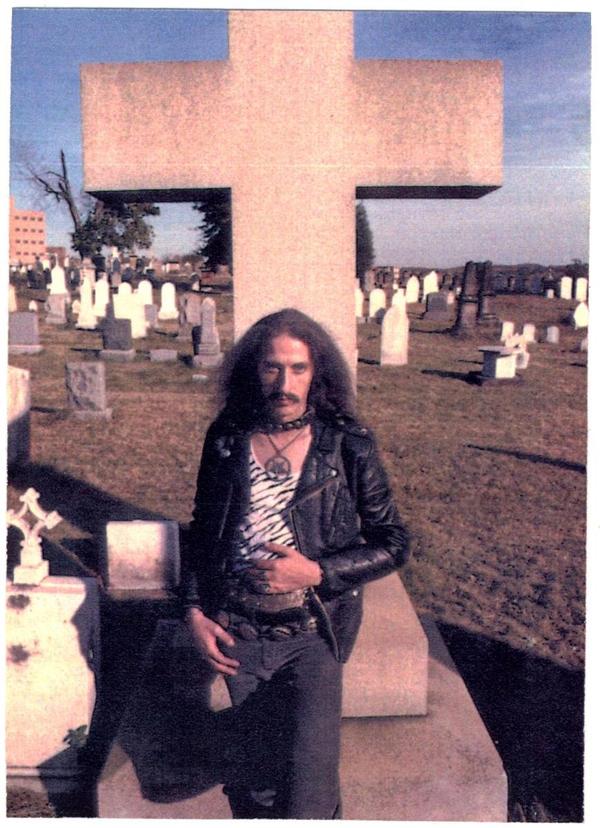
Given Pentagram singer Bobby Liebling’s gargantuan drug intake over the last forty years, the fact that the diminutive, goggle-eyed rocker continues to croon cult doom metal hits onstage — Pentagram will be at DNA Lounge on Wed/24 — is nothing short of a miracle.

Finally clean at 56, Liebling is back on the road with a talented new incarnation of the band he founded in Arlington, VA in 1971, brandishing a surprisingly intact larynx.

The muscular, down-tuned hard rock hasn’t changed either, not that anyone would want it to. Last fall’s Pentagram show at DNA sold out – don’t sleep on this one!

PENTAGRAM
With Ludicra, Slough Feg, Orchid
Wed/24, 8:30pm, $22
DNA Lounge
375 11 th St., SF
(415) 626-1409
www.dnalounge.com

Following a Metric conversion — into metal?

1

By Peter Galvin

The rise of Emily Haines, vocalist for Metric (who’ll be performing Wed/24 at the Fox), as an indie-rock diva is one of the more deserved success stories in recent years.

The Canadian band has toured relentlessly since the release of 2003’s Old World Underground, Where Are You Now,  and Haines never fails to steal the spotlight with her superhuman vitality and anxious dance moves, daring the crowd to keep up. Despite their new wave beginnings, Metric in 2010 embraces a guitar-driven sound that inspires a head bob more than all-out dancing. But at this point Haines’ fans are willing to follow whatever direction the band chooses. Though you can probably still expect a lot of double takes if Metric follows through on rumors that their next album is going metal.

METRIC

With Codeine Velvet Club and Nico Vega

Wed/24, 8:00 p.m., $25

Fox Theatre

1807 Telegraph, Oakland

(510) 548-3010

www.thefoxoakland.com/

Snap Sounds: YACHT

0

YACHT

The Afterlife

(DFA)

YACHT is to the river as an Oreo cookie is to a tall glass of milk– fully dunked and soggy. The newly released video for “The Afterlife” is alllll about the Portland electro-pop duo gettin’ baptized and cleansed. River baptisms, bathtub renditions, slow-mo and even reverse baptisms. Were they naughty?

I always thought this religious endeavor was all about regaining purity, but they look so innocent in their draping white robes, complete with fancy gold accents, water dripping down their thin noses. According to my trusty ol’ friend, Wikipedia, “Lutherans confess that baptism “works forgiveness of sins, delivers from death and the devil, and gives eternal salvation.” Regardless of what you think remains to be discovered in the afterlife, know that these two are soaked in preparation. 


Mutaytor records album in iconic SF house

2

Recently in San Francisco, a unique and iconic band recorded an album in a unique and iconic house, and the two entities seemed to resonate beautifully.

Mutaytor might be the ultimate Burning Man tribe, an eclectic group of Los Angeles-based performers who came together in the event’s Black Rock City more than a decade ago, forming into a band that’s like a traveling circus that evangelizes the burner ethos and culture everywhere they go, just by being who they are: sexy, scruffy, wild, warm, colorful denizens of the counterculture. 

Mutaytor is perhaps the most popular and emblematic musical act to emerge from Burning Man, a group whose spirited performances on and off the playa reflected and helped to shape and define the culture that birthed them. And if that’s not enough cultural cred, many of the two dozen members work for Burning Man in various capacities, from building Black Rock City with the Department of Public Works to forming the backbone of event’s regional network in Los Angeles. 

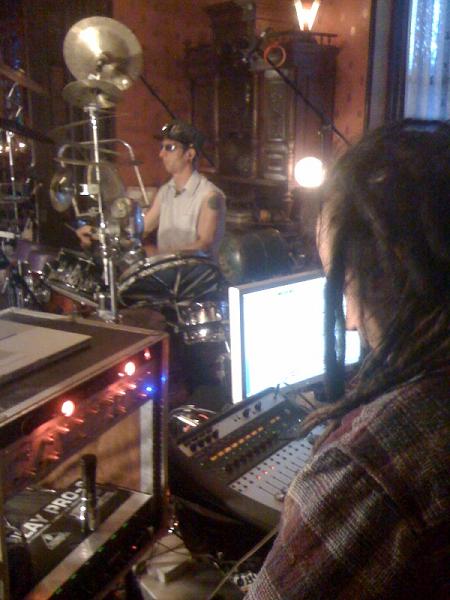
My path has crossed Mutaytor’s many times, from watching them play at my first Burning Man in 2001 to joining them on the burner-dominated Xingolati cruise ship in 2005 to being invited on the weekend of March 13, 2010 to watch them record their fourth album, “Unconditional Love” in the sprawling Westerfeld House, a Victorian mansion on San Francisco’s Alamo Square that is the legendary former home to such countercultural figures as Satanist Anton LaVey and members of the Manson family to noted ‘60s promoter Chet Helms’ Family Dog Productions and the band Big Brother and the Holding Company.

Today, the house is owned by Jim Siegel, a longtime Haight Street head shop owner and housing preservationist who did a masterful job at restoring this place, showing a striking attention to detail. Siegel owns the Distractions store on Haight Street, one of the few walk-in outlets for buying Burning Man tickets, and became a friend of the Mutaytor family in 2004.

“It all started with a guy crush that I had on someone in the band,” Siegel said, noting how that evolved into a real friendship with the whole band, which he’s hosted many times in his sprawling, 28-room house with the colorful history. Although the dancers and other women who perform with Mutaytor weren’t at this recording – Siegel said they usually prance around the house topless and lend a debaucherous energy to Siegel’s house – he still loves the energy that the band brings when they invade his house: “It reminds me of my hippie days living in communes.”Jim Siegel (left), Buck Down (center), and bassist John Avila (right) take a break.

Jim Siegel (from left), Buck Down, and bassist John Avila (formerly of Oingo Boingo) take a break.

Buck A.E. Down – a key band member, singing and playing guitar, as well as producing and arranging their songs – said the album and accompanying documentary film is Mutaytor trying to build on a career that began as basically a pickup group of musicians and performers on the playa.

“We’re a total product of that environment,” Buck said of Mutaytor’s musicians, dancers, acrobats, fire spinners, aerialists, hoopers, thespians, producers, culture mavens, and facilitators of the arts. While there were nine musicians that played on the latest album they recorded in San Francisco, their full crew is more than triple that number.

“We’ve been underground for 10 years and have a voluminous body of work,” Buck said, talking about the decision to take their three albums worth of songs and other material they’ve developed in live shows and put it all into a new album before adding wryly, “You can’t really call it a greatest hits if you’ve never really had a hit, can you?”

But the band itself has been a huge hit everywhere it’s gone, particularly cities where Burning Man is popular. Buck said that around 2002, rock bands were starting to die out in the Los Angeles area, but the rave scene was still going strong, with DJs packing people into big venues, both underground and clubs. So the members of Mutaytor started to plug into that scene, which was already drawing energy from Burning Man, the event they know so well.

“We knew that the first band that could penetrate the rave scene was going to make it,” Buck said, noting that the tactic worked, with the ravers drawn to their mix of electronica-infused music and performance art. “So, between that and Burning Man, we developed just a ravenous following.”

With this built-in fan base of burners and ravers, Mutaytors was able to start getting gigs in the clubs of Hollywood, San Francisco, and other cities that had significant numbers of people who attended Burning Man.

“We became a very recognizable and tangible part of that culture,” Buck said, noting that burners sought out Mutaytor to plug into the vibe of Black Rock City, if only for a night in their cities. “What we were able to do is provide that vibe.”

Christine “Crunchy” Nash, Mutaytor’s tour manager and self-described “den mother,” said that Burning Man founder Larry Harvey has been very encouraging and supportive of Mutaytor, urging them to essentially be musical ambassadors of the event and its culture. “That’s one thing Larry said to us is I want to do this year round and that’s what we’re doing in LA,” Crunchy said. “Most of the people in the band have been going to Burning Man for more than 10 years.”

Buck added, “We’re like the Jews, the wandering Jews,” which totally cracked up the group, but I understood what he meant, particularly as he went on to explain how the burner tribes are scattered through the world, but they retain that essential cultural connection.

Particularly down in Los Angeles, where the Mutaytor crew regularly works and plays with other Burning Man camps, from the Cirque Berserk performers and carnies to longtime members of my own camp, Garage Mahal, Crunchy said their extended tribe really is a year-round, active community of burners.

“It really is like we are there in LA and we just pick up and move to the playa,” she said.

Crunchy said they have family-like connections in San Francisco – to such businessman-burners as Jim Siegel and JD Petras, who both have sprawling homes where the band can stay – and in cities around the country that have big, established Burning Man tribes, from New York City to Portland, Oregon.

“It’s the movers and shakers of the San Francisco community and others that have allowed us to survive as we’ve tried to make it,” Crunchy said. “It’s made traveling so much easier because we have places to stay at many places we play.”

Buck said that was essential to their survival: “You take that kind of culture away from Burning Man and we would have broke up a long time ago, or we wouldn’t have even formed.” Just as Mutaytor is rooted on the playa, its members also wanted to root this album in a special place and immediately thought of the Westerfeld House.

“There are just places where stuff happens, just certain environments that are special places,” Buck said, citing of the house’s notable past residents, from rock stars to Satanists. “What’s interesting here is the particular blend of eclectic thinking.”

Buck said Mutaytor is made up of musical professionals – from session players to sound guys at venues like the Roxie and for concert tours — and they have three recording studios at their disposal among them, but they chose to do the recording here because it felt magical and personal to them.

“We had an epiphany on the road and decided we just had to record it here,” Buck said, adding how well the decision has worked out acoustically. “Rather than just recording the band, we want to record the house. That’s how we’ve been miking it up.”

Each room on the group floor was filled with musical instruments and recording equipment, and Buck said excitedly that they have been resonating with this 120-year-old building: “We’re getting some of the best tones.”

Mutaytor is trying to carry over into a new era just as Siegel is closing a chapter on an old one. He was one of the original head shop owners on Haight Street, but he says that he’s unhappy with the combination of commercialism and NIMBYism that have overtaken his neighborhood so much so that he’s choosing to close up shop.

“The Haight is dead now, it’s over,” said Siegel, who plans to close Distractions at the end of August, right before Burning Man, and reopen a new business in the thriving, culturally rich Mission District. “I’ve run that store since 1976, so it’ll be a big change in my life.”


A blind date with Mama Lion

8

Mama Lion had all the characteristics my ears had been searching for: a jaw full of sharp guitars, a soft, Patti Smith-like growl, and a wardrobe of psychedelic, ‘70s melodies. It took only a second, but after our first audio introduction on the ol’ Web, I knew I needed to hear her again. Typing up an email or two, I mustered up the courage and asked Mama Lion— who’ll be performing Mon/22 at El Rio and Tues/23 at Retox Lounge— out to dinner— all three of them. 

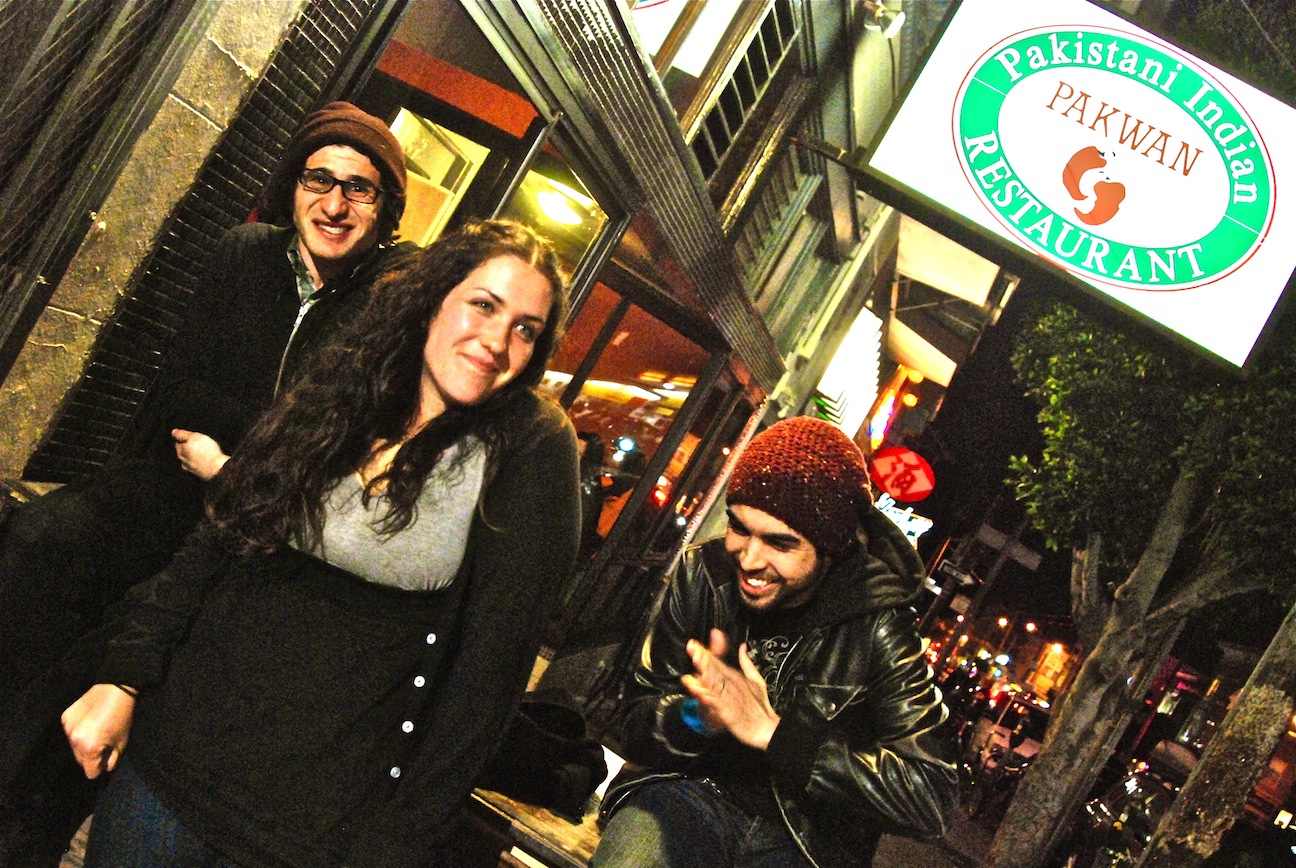
I showed up at the restaurant, Pakwan, a Pakistani Indian joint in the Mission, promptly at six-thirty, still a little sweaty from my bike ride there. Mama Lion members, Hannah Frances Healy, Victor Mitrani and Gabe Gipe, met me by the counter a few moments later and we all ordered our chosen items for the anticipated feast. I went for the spinach and lentil combo and Mama Lion picked out an assortment of steamy mushy items that looked strange and smelled amazing. 


During the hour that followed, conversation flowed without effort, the nan was devoured, we laughed, I cried (only a little on the inside as I fought off the spiciness of my meal) and when the bowls were left in a stain of reds and browns, not only was my stomach satisfied, but the four of us had really managed to have a successful first date. Even without the goodbye kiss or a promise to call, Mama Lion and I covered all first date bases.


The Past

The members of Mama Lion all grew up in the same San Diego school district and Mitrani and Frances Healy started a band together in high school. The three of them went to different colleges, but when they all relocated to San Francisco, the band was born. 


Careers

Frances Healy (vocals, guitar) is a dog walker, or as I see it, a canine chauffer/soccer mom combo. She drives around the city, picking up dogs in a van and takes them to Golden Gate Park. Mitrani (guitar) went to school for accounting but is totally not down for a nine-to-five in the profession, so he’s been doing maintenance work. Gipe (drums) is still a student, dreaming about one day becoming a history teacher, currently feeding the bank account with PT jobs at Apple and Starbucks. 


Personality

Mama Lion thinks it’s pretentious to say their sound is ‘unclassifiable’, but they’re also not comfortable with pinpointing a specific genre. Somewhere under the indie-blanket, the band takes direction from their old school influences: strong guitar attitude from Sonic Youth and the Pixies and more mellow tones from Cat Stevens and Simon and Garfunkel. 


Childhood

When Mama Lion was young, the band took on whatever gig they could find, meaning they ended up in some odd, very quiet spaces. A performance at the former Green Earth Café turned out to be the opening act for a group of belly dancers, shocking the crowd of little old ladies drinking tea. 


Confessions

Mitrani is a “Riot Grrrl at heart—a riot boi?” While writing his guitar parts, Mitrani imagine he’s pissed off, hanging out in a parking lot with a bunch of feisty ladies. Frances Healy was an anthropology major and likes to analyze people and situations in her lyrics. Gipe gets angry before putting together his drum part and puts himself in the mood to hurt something, like overly picky Starbucks customers. 


Looking for a new musical love interest yourself? Mama Lion plays two intimate shows this week.


Mama Lion

Mon/22, 7pm, $8

El Rio
3158 Mission, SF

www.elriosf.com


Tues/23, 8pm

Retox Lounge

628 20th St, SF

www.retoxsf.com


Bless up, Sebastopol!

0

The Hopmonk Tavern’s dance floor is packed in front of the DJ tables onstage. Reggae beats, dub tracks — the guy scratching gleefully up there even throws in a funk/soul number for good measure. Irie people groove, and couples grind to the sounds, which mingle with the smoke in the air. At the other end of the venue, the Hopmonk’s home brewed ales are poured and there’s an entrance to an expansive patio, where greenery of all stripes sets the scene. This is Monday Night Edutainment with DJ Jacques and DJ Guacamole. And this is Sebastopol?

Maybe I’m the only to be surprised by this- that a town with a population just under eight thousand that’s better known for its apple orchards and vineyards, has been having its Monday nights taken over by a reggae party for nine years straight. But Jacques and Guac’s brainchild, Monday Night Edutainment, is not just a small town scene. The party pulls in its share of guest stars like Sister Carol, Norris Man, Mega Banton- even Pam the Funkstress has been known to pass through the joint on occasion. Jacques and Guac recently threw a get-down for International Women’s Day featuring an all female lineup, and have an upcoming 4/20 eve blowout featuring British artists Mad Professor, Chukki Starr and Gappy Ranks (April 19).

But when the two DJs, who operate as the WBLK Dancehall Massive, first started scratching on Mondays, the music’s ascendency in town wasn’t quite as evident. “Reggae shows would sometimes come through the Mystic Theatre in Petaluma, or the Last Day Saloon in Santa Rosa, but there was never really a reggae presence in Sebastopol,” says DJ Jacques, whose gigs have taken him as far as High Times’ Cannabis Cup in Amsterdam.

That began to change when the duo met each other, initially as jam band percussionists, at local drum circles and shows. Jacques was a transplant from Boston, Guacamole a native Californian- but their musical tastes were complimentary enough that the two started looking into collaborative efforts. “We have different lists of favorites. There’s definitely crossover between us- but that makes it more fun,” explains Jacques.

Eventually, they started a weekly reggae/dancehall night, originally at Irish pub Jasper O’Farrell’s, that would feature a type of performance they dubbed a ‘DJ set,’ where guest artists would sing over the ‘version,’ beats selected by the DJ. When unaccompanied by a vocalist, Guac and Jacques would play sets, occasionally trying to one-up each other to see who could throw down the nicest flow. “That makes for a dope session where we’re constantly trying new things,” says Jacques.

The sets garnered a reputation that started attracting heads from beyond Sebastopol’s farm fields and sleepily upscale boho downtown. “We have folks that come through every week from all over the Bay area,” says Jacques. “Many of our crowd are musicians or people who work in the service industry that have Monday nights off. The night of the party often attracts artists in the area for big name weekend shows. They drop into the Hopmonk, Jacques says, “to hang out and enjoy the vibes” as well as perform. Nowadays, Sebastopol reggae parties are increasing in popularity, perhaps an inevitable progression for an area heavy in ganja culture.

Even as they helped to expand the area’s musical horizons, for the WBLK Dancehall Massive duo the mission continues- not only to play reggae’s best new jams, but to bring freshness to the Sebastopol music scene. “As the person who introduces music to the masses, we have a responsibility to seek new songs, artist and styles,” philosophizes Jacques. “In the immortal words of George Clinton, ‘free your mind and your ass will follow.’” All the way up to Sonoma County? As the prime minister of funk commands, so shall it be.


Monday Night Edutainment w/ Jacques & Guac

9 p.m. every Monday, $5

Hopmonk Tavern

230 Petaluma, Sebastopol

(707) 829-7300

www.hopmonk.com

Mom was a mess (and then she rubbed all up on me)

0

Going in to Thee Parkside on Fri/5, I didn’t know what to expect from the show’s openers. Considering Mom’s antics, it’s probably best that I didn’t do any pre-show research. In a nutshell, Mom was a mess.

Mom slithered and writhed around on- and offstage (mostly off). She wore a red dress that ended up beer-soaked, while she sort of sang into a microphone with heavily distorted cartoonish effects. It was like a demonic version of Minnie Mouse (she had the ears and everything). The whole experience was surreal. Maybe nightmarish is a better word. Mom’s trashed red dress would slide up over her waist, exposing all of her, since she wore no panties. Her one ruby red slipper slid around the floor while the other foot remained bare and got all gunked up from cement during some staggered dance moves.

If shock value was what Mom was going for…then mission accomplished. Just when I thought the spectacle was winding down, I went to the smoking patio to answer my brother’s phone call. I figured I’d chat him up about my parents’ upcoming visit from the Midwest. Immersed in conversation, I was suddenly interrupted by a sweaty, messy Mom, who accosted me and began to rub herself on me as I laughed and backed away while onlookers got an eyeful. Considering that the ‘Loin is now my home base, it didn’t phase me much. I continued talking on the phone, giving my brother the play-by-play. Mom quickly lost interest and stumbled away. I have a feeling real Mom wouldn’t approve.

After the onslaught, I hung out a bit longer on the patio. I was offered some sympathy by a certain unmasked someone who may or may not have been the show’s headliner. He asked if Mom had gotten any blood on me. I replied “No,” adding that I actually had gotten egged. Apparently she threw one at the ceiling and got some yolk and shell on me. Another audience member initially thought it was the sound of breaking glass.

Act two was traditional by comparison, considering it involved drum, bass and guitar. I didn’t think I had seen them before, based on their name, but once I went back inside to check them out I recognized the front man of the Outdoorsmen. They had improved. They did Misfits covers and it was sort of endearing how the lead singer/ guitarist would crack bad jokes into the mike. He mostly cracked himself up. The highlight of their set was a Standells-sounding number dedicated to “cock suckers of the middle of the night”. He was referring to cops.

The outstanding performance of the night came from Indiana’s TV Ghost. The Midwest was represented well here when they took to the stage. Their lanky lead man twitched about with great presence; his guitar in tow and a Dwyer-esque oral fixation with his microphone (inserts into mouth). I guess it sounded like Link Wray meets post-punk, or maybe the Cramps in surf style. In any event it was good to see them again. The first time I witnessed their live act was at the Hemlock, where they played to a nearly empty hall, but they had performed as if they the bar was at capacity or like it was for a televised performance. Such showmanship.

Last but not least, Nobunny seemed to have a stash of new material and it was stage antics and comical-shtick as usual when the costumed “boys and squirrels” played rock and roll that had the crowd eating it up with a spoon. All in all it was a good night — even if Mom took me by surprise.

SXSW: See me! Hear me!

0

The days tend to blur here at SXSW. The festival’s sponsors and participants are pouring information and alcohol in you everywhere you go. You forget that you are an autonomous being, not just a receptacle for emails and fliers and Sobe in small plastic cups and little goo bars that taste like chocolate stuck in carpet that are thrown — literally thrown — at you on every street corner.

Yesterday (Wed/17), however, was met with a distinct shift: awkward blue jeans and collared short sleeves were exchanged for tight black jeans and tattoo sleeves. Yes, music has come to town, which sends home the silicon boys (and a few girls), and officially ends the “interactive” portion of the festival. Austin’s Convention Center is no longer busy with necks stretched over tech, but with eyes scanning fashion and badges in order to discern the music artists from the look-a-likes. No longer am I getting stares for having an outdated laptop; rather, quick judgement looks assessing my dress and doppelgänger effect.

But this all comes with the territory of a major tech/film/music festival; everyone is trying to be seen and heard. Some more than others.


Snap Sounds: The Consulate General

0

THE CONSULATE GENERAL

Person Number

(Circle Into Square)

We loved him when he was creating music under the moniker Boy In Static and I think a few tears may have been shed when Alexander Chen left the Bay and unpacked his instruments in Gothenburg, Sweden. Like anyone who has ever taken residency in that beautiful country, Chen’s creativity has flourished and his new solo project, The Consulate General, is a breath of fresh Nordic air. 


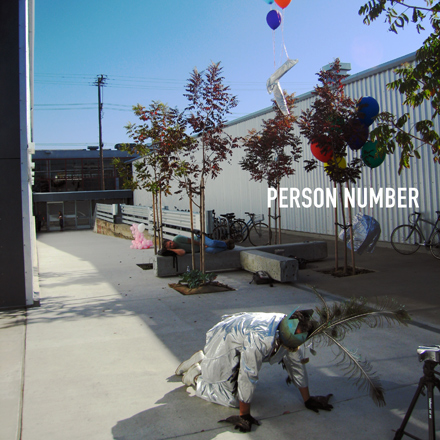
The debut album, Person Number, is set to release April 6, so until then, Chen is offering up track one, “What Time Is It Now,” as a beautiful teaser to what’s in store. Cheery and pleasant, this track makes me feel all nice about life, even when a hundred things around me are swirling out of place. Airy, ambient electronics mix and mingle with chimes and bells, while the harmonizing male vocals from Chen and guest vocalist Antoine Bedard (Montag) offer the perfect calm, brushing your hair and tickling your back— that or whatever else puts you at ease.

The Consulate General, “What Time Is It Now” by SFBG

Besides music, Chen has also been showing his interactive sound art in galleries around the world and to stop us from biting our lips until April, Chen has made a special musical toy for our screens. The playful piece was built using samples from the Person Number track, “On the Run” and is great for afternoons spent hiding under your desk. Just roll your mouse over the pigeons and play away at www.theconsulategeneral.com


Snap Sounds (and Q&A): Art Museums

0

THE ART MUSEUMS

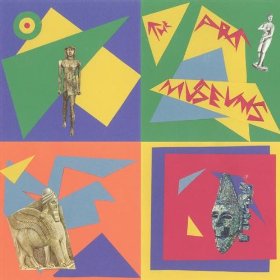
Rough Frame

(Woodsist)

San Francisco’s Josh Alper and Glenn Donaldson lightly place these love songs within comic frameworks. The opening track describes a shy, lovelorn music fan too shy to twist and shout, peppering the scenario with observations such as, “He’s worn his pants like that / For a very long time.” It also mentions a Buggles record, but Television Personalities and Guided By Voices are better reference points to the Art Museums’ sound. In their world, a sculpture garden is a good place to discuss cinema. The Bay Area fey pop tradition carried on by Slumberland bands gets a wry twist here with couplets like “What’s this rain inside my eye / She’s always been a better man than me.” Want to know more? Donaldson was gracious enough to answer some questions about the Art Museums’ aesthetic.

SFBG What are some of your favorite museums? What do you like about them?
ART MUSEUMS Record stores. The records.

SF What sculpture gardens do you like? If you could design one, what would be in it?
AM I prefer arboretums.

SFBG You’re at a Paris cafe — what would you order, and what would you want to do there?
AM After cappuccino, I would take the train to Barcelona.

SFBG If you could bring only one book of poetry to the cafe, what would it be?
AM Anything by Johnny Rogan.

SFBG What are your favorite films about mods? Who do you enjoy discussing cinema with?
AM The Style Council — Far East and Far Out. Girls who wear glasses.

SFBG When the Art Museums hits the road, what do you pack in your suitcases?
AM Corduroy pants, vintage guitars, Roland electronic drums and Walgreens sunglasses.


Joyful noise

0

Even if Music by Prudence’s recent Oscar win for Best Documentary Short is currently garnering more blog pixels for its producer’s Kanye-like acceptance speech takedown, African music is experiencing an upsurge in attention these days. We could all use some uplift every now and again, and artists from the developing world, many of them singing through years of conflict and soul crushing poverty, somehow make that missed bus- even that found pink slip- seem like less of an end game.

Plus, some of them sing with the conviction and force of angels.

I’d like to introduce you to the Soweto Gospel Choir. A 26 singer strong troupe of some of the best singers in South Africa, the Grammy award winning Choir performs in big bright dashikis an interesting blend of traditional Zulu songs and “Many Rivers to Cross,” a combination that when stirred together in an exuberant pot yields African gospel. They’re coming to the Paramount Theater (Sat/27), and the show should be great. Their music gets soaring, it gets heartfelt, it gets jazzy- it’s an epic listening experience that recalls what it means when the people you’re watching onstage are singing to carry out their mission on earth.

So what is that mission? Well, besides to have what looks to be a grand old time dancing and singing with their bandmates in front of audiences that have included Nelson Mandela, Archbishop Desmond Tutu (the group’s “patron”) and Oprah, the aim of the Soweto Gospel Choir is to give back to the community that birthed them.

Children in South Africa nosh down thanks to Soweto Gospel Choir

South Africa has the highest amount of children left without parents from AIDS in Africa- 1.4 million by 2007 estimates- a cloudy future for the country’s next generation. Every performance by the Soweto Gospel Choir sends 50% of their net earnings towards helping these overlooked victims of the AIDS epidemic.

In 2003, the group created Nkosi’s Haven Vukani, a long term residential care center that provides safe shelter for infected mothers and their children, shelter that remains available to the children in the event that the mother passes away. So far, the group’s ecstatic sounds have garnered over $3 million for Nkosi’s- helping to feed over 9,000 kids.

Which means that watching the troupe rock and roll through their soul clapping renditions of “Amazing Grace” and “O Nkosi Yam” might get a ‘hallejuah’ out of even the nonbelievers in the stands. 

Soweto Gospel Choir

8 p.m., $25-$65

Paramount Theatre

2025 Broadway, Oakland

(415) 575-6100

www.ciis.edu

Thrifting for the the perfect song with tUnE-yArDs

0

The deep piles of used goods can be a bit daunting at some of the best thrift stores, but when you find that shimmering prize, the fuzzy feeling is relative to winning a race or seeing your worst enemy trip into a puddle. For the sole member of tUnE-yArDs, musician Merrill Garbus— playing Sat/20 at Bottom of the Hill— her ultimate find was a white purse with row after row of luscious beads.

“I was in high school, living in Connecticut and we’d take trips into New York City to shop at thrift stores,” she recalls, talking to me over the phone while walking in her Oakland neighborhood. “I used to collect purses, even though I never used them.”
Recently she bought up a desk and an entire wardrobe of tour clothes, all without spending more than 20 bucks. Garbus says she uses thrift stores as a way to try on different personalities and I’m guessing she finds a little inspiration in there, too.

Plainly stated, Garbus’ music is lo-fi, indie-folk, but beneath the glorious yodeling and ukulele strumming are lyrical melodies, strong heart beats and interesting percussion made from banging and clanking on found objects. Her latest album, BiRd-BrAiNs (Marriage, 2009) was recorded through a hand-held voice recorder and mixed on her laptop— total DIY style.

http://www.youtube.com/watch?v=AwDEQWaSiEU

Dig through her multitude of songs and you’ll find outside sounds, children talking about fruit and all sorts of one-of-a-kind clips that wear just like your favorite Goodwill-adopted sweatshirt. She’s a one-woman version of Yeasayer and you can hear Garbus’ love of African music, more specifically notes borrowed from her visit to Swahili.

As I talked to her, Garbus was getting ready for the launch of the tour— the car needed an oil change and she needed to get rid of a nasty cold.

“I’m struggling with being human right now— sick, tired and overworked,” she said with a cough. “But I think I’ll be fine and remarkably, my singing voice comes from a different place.”

Still thinking about thrifting and the old white purse, I wondered if Garbus had ever thought about who was the bag’s previous owner. I like to imagine who bought the item new and I always hope to channel some sort of energy through the garment– to see if I can stake out any secrets from its past life. I asked Garbus if she puts subliminal messages into her music for a similar effect.

“I don’t think so,” she laughs. “But maybe a really cheesy message of love? These songs take time and sort of fold and unfold, exposing miniature worlds inside each of them. They’re a labor of love and I guess that’s the message. Yes, love…. Sorry to cheese out.”

tUne-yArDs w/Xiu Xiu
Sat/20, 8:30pm, $12
Bottom of the Hill
1233 17th Street, SF
www.bottomofthehill.com

Closer edits: An interview with classic DJ dynamo Greg Wilson

0

In this week’s issue of the Guardian, I finally got the total fanboy pleasure of writing about, and talking to, one of my true DJ inspirations, electro-funk originator and dance edit king Greg Wilson. (He’ll be performing at Triple Crown on Fri/19). Kicking his career off in 1975, the man has the kind of stamina and skills most spinners can only dream about. (And I didn’t even get into the fact that he was the first professional DJ hired for a regular gig at the hugely influential Hacienda club in Manchester.) In the late ’70s and early ’80s, Wilson provided a crucial link between the often segregated black soul and white dance scenes — he was known as a “black music specialist,” eek — and his panoramic edits were the fruitful results of his colorblind cross-pollination. Here’s our email chat in full, his replies coming after a “brilliant night in Melbourne,” Australia.

http://www.youtube.com/watch?v=zY-EgzcN6_k

SFBG: It’s such perfect timing to have you come to SF for the tour. We’re finally getting an edit fan scene going here, as well as our usual host of groove revivalists and analogue equipment fetishists. As to the US edit scene in general, I’m wondering if you’ve heard and what you think of some of the newer acts and labels like Wolf + Lamb, Soul Clap, Tensnake, and SF’s own King & Hound. I’m also curious as to your thoughts on more established soul re-editors like Moodymann. Are there any other Americans you particularly admire? I’d like to try to tease out some of the influence you’ve had here in the past 20 years.
Greg Wilson: I suppose it’s been more the other way around, with me editing or mixing tracks by US artists. On [recently released compilation] Credit To The Edit Vol 2, a third of the album is made up of US tracks — “Don’t Turn it Off” by 40 Thieves, “Starlight” By Escort, “Oh Snap!” by Nick Chacona & Anthony Mansfield and ‘One Life Time To Live’ by Gary Davis. I’ve obviously picked up on some of the US edits, via Prince Language, Rong, Rvng Of The Nrds etc, but there’s probably loads of good stuff I’m missing out on.

http://www.youtube.com/watch?v=AWiKEBuFiNY

SFBG: Can you tell me the story of your relationship with [musician, DJ, and Green Gorilla crewmember] Anthony Mansfield? You talk about it a bit in the liner notes for Credit to the Edit Vol 2. I’m hoping you can expand upon that a bit, since he’s such an integral part of the scene here.
GW: Anthony introduced me to a lot of the people on the San Francisco scene when I was last over. The remix I did of ‘Oh Snap!’ was a big tune for me, and we’ve become friends as a result. When I came over in 2008 he took me to Haight-Ashbury, which, being a ’60s obsessive, was the first place on my to go to list. He also took me across the Golden Gate bridge and right up to where you look out over the Pacific. The fog was rolling in and it felt like we were at the edge of the world, which I suppose we were in a sense. It really was one of the most incredible sights I’ve ever seen.

Greg in one of his 1984 electro promos

SFBG: Obviously and strangely for the US, it was the excellent BBC Essential Mix that reintroduced you to many of the heads here, even though you’d been active again for years before that. Of course, the only way we heard that mix was over the Internet, which brings me to my question. One of the differences from when you were DJing before your retirement period has got to be the ways in which DJs and  music-makers distribute music and promote themselves. I know you’re open to using the latest technology to make tracks. How do you feel about the current digital distribution era, and can you talk a bit about what it was like in the past? It seems a far cry from the record pool and radio days.
GW: Yes, two very different times — back in the 70s and early 80s, I received promo copies from all the UK companies, and bought US imports from a shop called Spin Inn in Manchester, which was the only place in the North to shop if you wanted to be taken seriously as a black music specialist. It was these two sources that kept me ahead of the game back then. During the Electro era I also began receiving promos from a few New York labels, which gave me exclusives on a few tracks like ‘E.T Boogie’ by the Extra T’s and Indeep’s ‘Last Night A DJ Saved My Life’.

Nowadays most of the stuff I pick up on is sent directly to me online. I still buy stuff from places like Juno and Piccadilly, and have records and CDs posted to me, but the majority of newer tracks I play come to me via online contacts. The Internet is key to everything I do, without it I could never have returned to deejaying in the way I have, and certainly not toured around the world.

I think it’s an exciting time. Some people pine for the old days, but, as great as they were, I don’t like to dwell on the past too much in a nostalgic way, but use it to inform the future. I like the way younger people, who didn’t have direct experience of the original disco era are drawing influence from it and re-shaping from their own perspective here and now. For me, music, not matter how old it might be, is always alive and evolving, so I’m all for bringing it into a new context.

My Essential Mix illustrated this, balancing the past with the present. This is what I always strive for — connecting back, but moving on. I was shocked at the overwhelming positivity response to the Essential Mix. I’d expected it to appeal to some, but not to others, but it was almost totally positive. I also hadn’t taken into account that within days of it being broadcast in England, it would be uploaded onto blogs worldwide. I had no idea that it would have global impact.

Greg in 1976

SFBG: One of the reasons I think the edit scene is so hot in the US right now is not just because editing technology is so readily available, but because edits are a slight technological tweak to classics that serve to introduce these songs to a new generation in a relatable way. They’re not the exhaustive distortions of techno dance remixes, but neither are they the technophobic “rare grooves” Holy Grails of the purists. The sound seems to be a perfect balance of creative manipulation and relaxed classicism, which seems right for the times. Am I just pissing on myself theoretically?     
GW: For me, it’s as simple as putting together a version of a track to play out yourself. This may be a straightforward edit, or a little bit more involved, bringing in outside elements. It might be a simple extension, or it could be a track you love everything about, but for one part, which you can now cut out. It gives older music a contemporary twist, which I’m all for if it’s done with love and respect for the original.

http://www.youtube.com/watch?v=PMhnX0En9eQ

SFBG: About that wonderful Revox B77 of yours. Can you get a bit wonky  about it — what’s the model, how do you store it and transport it, and how do you keep it up? Fanboys are dying to know!
GW: I have my own B77s (flight-cased) for UK gigs and we hire them in when I play overseas (Revox R99’s also work for me). I used to take my own on the flights around Europe, but it could be steep on the XS. It can give the promoters a bit of a headache tracking them down, but everyone has managed to find a unit somewhere. People would be disappointed if I turned up without one, as it’s an essential part of what I do – spinning sounds, samples, and textures over the tracks I play, and creating dub fx. It’s become my trademark and on the rare occasions when I do DJ without it I feel really weird. I don’t know where to put my hands!

Bay Area black metal: Ludicra’s gripping new “Tenant”

0

It’s hard to believe, but black metal is around 20 years old. During its second decade, the music has been gradually subsumed into the metal mainstream, cannibalized, recombined, and reinvented. Pulled in one direction by the commercialization of bands like Dimmu Borgir, and in the other direction by the hermetic inaccessibility of solo studio acts like San Francisco’s Leviathan, fans and metal taxonomers have circled the wagons around arbitrary criteria, judging bands on whether or not they use a keyboard, or whether or not they’re from Scandinavia.

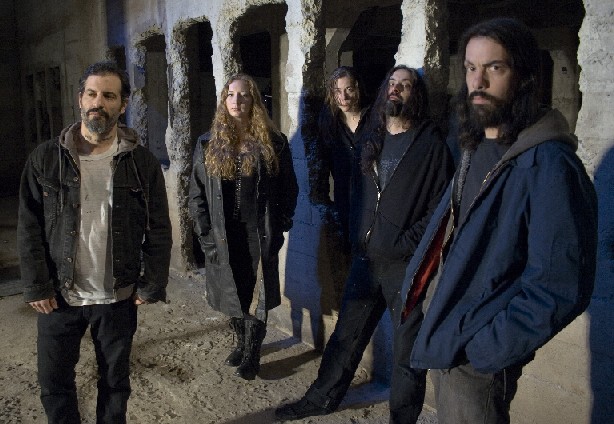
Thankfully, in the Bay Area, we’ve got a black metal band who couldn’t care less what the guarantors of kvlt (sic) purity have to say. San Francisco’s Ludicra hit stores with their fourth full-length today, and Tenant (Profound Lore Records) showcases an act at the height of their considerable powers, churning out organic-sounding, progressive black metal mixed with affecting, punk-rock humility. In place of frozen Norwegian rivers or blood-soaked Vikings, the album derives its themes from the eerie, uncanny, and horrifying aspects of urban living, as its title eloquently suggests.

Guitarists John Cobbett (also of Hammers of Misfortune) and Christy Cather favor warmer guitar tones of the type that won Wolves in the Throne Room so much critical aplomb, and they’re buttressed in this choice by the throat-shredding vocals of Laurie Sue Shanaman, which give the music a visceral, catharctic potency. Drummer Aesop Dekker is nimble if understated, and brings a welcome humanity to a genre that is generally so chops- and blast-beat-heavy.

The scything 6/8 riff that begins album opener “Stagnant Pond” is a harbinger of things to come, ascending into meditative chaos before giving way to the stately, mid-tempo blast that opens “A Larger Silence.” “In Stable” is the LP’s barn-burner, with its pulsing, black ‘n’ roll verse and massive ending build.

All of the album’s seven tracks are longer than five minutes, and two top nine, so it’s a testament to the Ludicra’s arranging talent that the songs breeze by as fast as they often do. Whether it’s a stop-on-a-dime meter shift or a clever bit of pagan-folk filigree, its hard not to be impressed by the band’s songwriting acumen. “Clean White Void” displays a notable NWOBHM influence, a stark contrast to the relentless blast beats on “Truth Won’t Set You Free” and the meditative chanting in the album-closing title track “Tenant.” Taken as a whole, the album is a gripping evocation of anger, fear, and sadness – what’s more black metal than that?

Oakland’s Camaron Ochs may inspire folk-pop Barbie

1

Big blonde hair, rosy cheeks, and an adorable little frame … folk-pop songstress Camaron Ochs — who’ll be performing Wed/17 at Cafe Du Nord — is a doll. Coincidentally, she is also being stalked by one— the Oakland singer-songwriter has seen quite a lot of Barbie in the past year, the long plastic limbs have been spotted at two East Bay venues where Ochs took the stage: the Stork Club, where the bar is decorated with stacks of cased holiday Barbies and Mama Buzz, the coffee shop/art gallery that hosted an art exhibit of the dolls in adult-style dioramas.


“There’s a Bat Girl Barbie at the Stork Club and I want it,” she says with a warm smile. “And I really liked the Barbie on the unicorn at Mama Buzz.”

Besides the constant grin, Ochs has nothing in common with her 11.5-inch stalker. An extensive travel record and a day job as a lab manager for emotion research means this pretty lady’s personality is far from plastic. Ochs’ brand of folk-pop is light and sweet, with genuine lyrics that ask listeners to live with their “heartforward”; a term Ochs coins as her philosophy on life and the title of her debut album. 


“I came up with the term when I was living in Nepal. I was learning all about the seven chakras— the heart is the fourth,” she explains at a coffee shop in her sunny Temescal neighborhood. Skipping a few details, Ochs summarizes that being ‘heart forward’ literally means setting yourself up to take in the endless possibilities that surround us. “It’s about putting yourself out there, not just in a romantic sense, but in a life-sense.”


Bright guitar strums and a beautiful, rich voice flutter throughout Ochs’ songs, lyrics exploring relationships and offering insightful snapshots into lessons she’s learned while visiting cities around the world. Inspiration stems from other indie-folk blends, like The Weepies and yet also carry a more country tone, like that of her other favorite artist, Patsy Cline. There’s an audible optimistic bliss in her music and an honest indication that the woman behind the strings is a solid, well-rounded being. 


Born a California girl, Ochs grew up with an interest in music, taking notes from her grandparent’s love of classic country and learning to sing in multiple languages. In college Ochs started her own A Cappella group, but it wasn’t until her study abroad experience in the Netherlands that she picked up a guitar. 


“I decided to do the college thing— get a guitar. But I wasn’t any good at it. I would play on the streets of Amsterdam and then I even tried to sell it on the street, but no one wanted it.”


Eventually she gave it to a boyfriend and headed back home. A few months later, Ochs realized she missed her box of strings. 


“So I borrowed a backpacker, basically just the neck of a guitar without the body, and brought it with me into the mountains of Nepal.” The trip included a flight over Kathmandu, a six-hour bus ride, five hours in a taxi and a ten-hour walk straight up into the mountain to where she would take residency for the next six weeks. 


A girl on her own in a foreign land, Ochs had no choice but to keep an open mind and her ‘heartforward.’


“The first two weeks, I cried and cried. All I could focus on was how much different everything was there,” she says recalling the trip. “And then I realized that when you strip away everything you’ve ever had in your entire life, that’s when you see what you really are and who you really want to be.”


She met a couple of traveling Canadians and together they would play music, battling the inconsistent electricity with late night guitar parties. Building on that experience and developing her own relationship with the instrument once she returned home, Ochs is now playing confidently and taking on stages across the Bay with a full band. She couldn’t have been happier when her CD release party sold out. 


“I think I’m really lucky. But I’m working really hard, so I guess it’s really not luck afterall.”


Camaron Ochs

Wed/17, 8:30pm, $12

Café Du Nord

2170 Market, SF

www.cafedunord.com


Music for all those left behind by SXSW

0

The rapture that is South By Southwest has taken all that’s good and pure to Texas for Austin’s week of non-stop music, showcasing bands that have descended from the heavens themselves. Reading this post means you too have been left behind, your friends, family, music store clerks and critics disappeared over the weekend and didn’t even bother to leave you a mix-tape. Thou shall not fear, my friends. Austin may be wining and dining some of your favorite bands this week, or maybe each and every goddamned one, but thank the Lord San Francisco has your best interests at heart with plentiful options for entertainment.


Cheer up, my child and in the name of SXSW, expand your horizons and enjoy a new genre each night of this week. Amen.

MON/15
Get Hustle
Passionately chaotic, Portland’s Get Hustle lets their guitars run wild, tearing up the neighborhood with sharp, scissor-like vocals, psychedelic keys and erratic percussion. They are slightly scary, possibly foaming from the mouth, and definitely ready to bite. 9pm, $10, Elbo Room

TUES/16
Shotgun Wedding Quintet
This week’s Jazz Mafia night at Coda features The Shotgun Wedding Quintet, a 5-piece blend of jazz and rap that pays homage to the art of improvisation and the days when San Francisco was Mob-run and wild. 9pm, $7, Coda

WED/ 17
Madam and the Ants
The night is intended to be a salute to Irish Bands of the ‘80s and this San Francisco Adam and the Ants tribute band will bring you right back to the new-wave, post-punk era with a sassy front woman and band of fury. 7:30, $5, Make-Out Room

THUR/18
My Barbarian
Somehow this L.A.-based band promises a rock opera of choreographed dances and finely tuned numbers about cross-dressing sailors, mermen, pagan rites in the desert, and all kinds of politics with flamboyant flair. 9pm, free with museum admission, SFMOMA

FRI/19
Groove Armada
An electronic music duo that isn’t afraid to mix in a little funk. It’s been over a decade for the UK DJs and they’re still hard set on making you dance in slow-motion form. 9pm, $30, Fillmore

SAT/20
Rosin Coven
Rosin Coven are the ‘World’s Premier Pagan Lounge Ensemble” hailing from Oakland with a small string orchestra, a few horns, lots of hats, great mustaches, and feather embellishments. A carnival full of kink. 9pm, $15, Café Du Nord

SUN/21
Marabelle Phoenix
Marabelle Phoenix strums light and sets the perfect Sunday night mood with rusty tones and porch-friendly lyrics. 9pm, Bluesix Acoustic Room

Rapera rules everything around her: Ana Tijoux rising

8

As ever and ever the divide grows between what we hear on the radio versus what’s truly fly in hip hop these days, Ana Tijoux plots her coming to America. Born to Chilean parents who fled from the brutal reign of Augusto Pinochet, the MC’s life reads as the manifesto for the counterculture universality of hip hop. How to express the feelings stirred up by moving across the world at 14? How about coming to a country whose democratically elected president was slaughtered, replaced by a dissident-torturing dictator, that happens to be where your parents grew up? Tijoux found her anger reflected in the rhymes of the American rappers of the early ’90s- and shortly after, used their “force” to raise her own voice. She’s been a player on the South American hip hop scene ever since, and is releasing her second solo album, 1977, which may be her most personal project yet, looping scenes from a remarkable life story with her direct, staccato flows. Here in the Bay, we’re getting a chance to catch her beats live (Thurs/25, La Peña Cultural Center), not too long after her debut among the gringos at South by Southwest. She wanted me to tell you that if you were born in 1977, you get into the Berkeley show for free. Read on to our telephone chat with Tijoux, an awesome conversation tweaked but a little by the intricacies of chatting with a translator and my own gradually stiffening Spanish.

San Francisco Bay Guardian: Your family fled Chile to escape Pinochet’s dictatorship. How old were you when your family moved back to? What led them to move back at that time?

Ana Tijoux: I was born in Peru, but after the coup my parents moved to France. I was 14, and it was 1990 when we moved back to Chile. It was always our plan that when we could come back to Chile, we would come back as a family. My childhood was fantastic, but all I knew of Chile were the stories my parents had told me. I had an image of the country, but when I got back, it was very different. There was another way for everything, another way to go to school. Now that I’m older, though, I can see that [adjusting to my new life] was one the things that made me strong.

SFBG: Tell me about how you got involved in hip hop.

AT: I began to rhyme in Chile, but when we lived in France my mother used to work with [homeless teenagers], who loved to listen to hip hop. I used to go with mother to her work and listen to NWA and other hip hop groups from France. I began to listen to hip hop thanks to my mother! In Chile I found the way to say everything that I was feeling through rhyming. I began to rhyme when I was 18 or 19.


Dig Tijoux’s life, animated- and the sexiest Public Enemy tee ever- on the video from 1977’s title track


SFBG: What was the hip hop scene like in Chile back in those days?

AT: What happened with Chile in hip hop, the scene is very strong in relation to the rest of Latin America. It was very strong then, but it’s even bigger now.


SFBG: What, if any, challenges did being a rapera in a budding hip hop scene bring?

AT: There were none. I always felt the support of my friends. I never felt different because I was a female. Maybe there was more respect, they wouldn’t say bad words in front of me. My colleagues were proud there was a woman on stage.


SFBG: Your upcoming tour will be the first time you’ve performed in the United States. What are your feelings on bringing your music up here?

AT: I’m happy and more anxious than nervous, because whenever I travel to another country there’s a new energy. I’ve toured in France, Spain, Switzerland, Argentina, Venezuela, Cuba, Mexico- all over.


SFBG: Is hip hop culture different here in the States?

AT: Of course it will be different- different and similar. But it will be the same music and the same energy.


SFBG: You mentioned in one article I read that you wanted to bring back the hip hop of ’92-’95- what is it about that era that you like?

AT: I feel that hip hop was more simple then, more to the point. It was more personal, the golden age of hip hop. For me, all the albums from that time are classic. I like the force and anger. I’m sure it’s nostalgic too- those were the years I learned I could make something, say what I was thinking. One of my favorite albums is Enter the Wu Tang (36 Chambers), but there are so many good ones.


SFBG: What shows will you be checking out when you’re not performing at South by Southwest?

AT: Flying Lotus.


SFBG: Why’d you name your album 1977— I know that’s the year of your birth, what were you trying to say by invoking that time?

AT: That’s also the name of a song on the album. I wanted to make a number in the album.


ANA TIJOUX

Thur/25 8 p.m., $12-15

La Peña Cultural Center

3105 Shattuck, Berkeley

(510) 849-2568

www.lapena.org

Snap Sounds: Bassekou Kouyate and Ngoni Ba

0

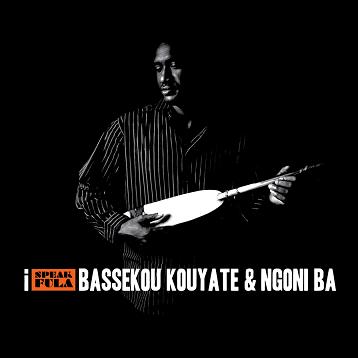
Four ngonis — that’s a lot of ngonis! Bassekou Kouyate — Malian maestro of the stringed instrument which not only calls up the resounding Middle Eastern oud, the plucky Appalachian banjo, and the freewheelin’ Greek zither — has built a legendary sound around a quartet of ngonis (not as dirty as it sounds, but quite sexy), and has just released a bumptious and beguiling album, I Speak Fula (Sub Pop). He’ll be bringing his multitudinous band and joyfully haunting sound to Slim’s on Thu/11.

Expect high-spirited fingerplay and duelling ngonis aplenty, as Kouyate calls up visions of his Motherland and shows off the bonafide chops he’s honed while jamming with Bela Fleck, Bonnie Raitt, Vieux Farka Toure, and Bono.

For me, though, it’s the absolutely wondrous voice of his wife, Amy Sacko, that really tugs me by the ear into this music. Her bright tones sheer off into rasps or soar into rebellious calls at heart-stopping moments. What’s the word for wanting to smile through tears? That’s the word I’d describe her with, and yes I’m totally crushed out. Several times on the new album Kouyate and Sacko’s voices mesh in a playful interplay that shimmers with broad calm, the calm of true partners. Live, real sparks should fly, ngonis or no.

Bassekou Kouyate and Ngoni Ba
Thu/18, 7:30pm, $20 advance/$25
Slim’s
333 11th St., SF.
www.slims-sf.com

Elusive finger-picker Ed Masuga reappears with five shows

2

By Chloe Roth

For the past four years, Ed Masuga has consistently delivered pure folk music. His dichotomously sharp finger-picking guitar and soft melodies make for easy, pleasing listening, and if you close your eyes you might find yourself transported to a Dust Bowl-era railway car. Steeped heavily in the folk tradition, his songs are simultaneously old-fashioned, timeless, and timely. With the bare minimum of Internet presence, the elusive San Francisco-based songster, though he can’t be called a Bay Area “native,” maintains a mysterious backwoodsman identity. The almost literary stories of his youth seem to come straight out of a Dickens novel. I caught up with Mr. Masuga (that has a nice ring to it!) to ask him how his itinerant childhood has informed his work.

The youngest of 10 children, Masuga lived a rootless childhood, constantly drifting with his large family from shack to motel to forest to casino, usually around the San Bernadino Mountains and Big Bear Lake. Returning from the hospital with a birth tag on his wrist that read “Boy Masuga,” and for lack of a chosen name, his family referred to him as “Boy” for the first few years of his life. “When people started calling me Danny, my actual name,” Masuga says, “I refused, preferring to go by my middle name Eddie, after the ’70s country singer Eddie Rabbit.” Masuga grew up around music, his folks and family always singing together wherever they went. Masuga says that his father, who came from a polka-singing Polish family, “has always seemed somehow to know every song out there,” which probably helped him win a trip to Puerto Rico on an episode of “Name That Tune” when Ed was “just a tyke.” And his mother’s traveling occupation, as a cook in bar kitchens, exposed him to a whole world of juke box country music.

Out of all the places Masuga has lived over the years (the East Coast, Alaska, Ohio, Oregon, Colorado, Arizona, and Montana), he says that the Bay Area, especially the trees and hills of the East Bay, “has something special that always brings me back.” Of Berkeley in particular, where he has lived sporadically since 1999, Masuga says “it’s kind of like a second home for me in a way. Or a third or fourth.”

Both his 2006 self-titled debut and his 2008 sophomore record Lonely Dog consisted solely of Masuga’s unadorned voice and guitar. His new record, Let Me Tune My Heartstrings, breaks away from the sparseness of the first two albums. Female vocal harmonies by Ed’s “longtime best friend-extraordinaire Kate Grindlay” meld flawlessly with his voice to create a new fullness, rich and soulful. Flying solo in the past, his live performance has recently evolved into a group project with Grindlay on accompanying vocals, Ethan Lee on bass, and Mike Carreira on drums.

If you check his MySpace page every now and again like I do, hoping to see a local show listed, you’ll oft be disappointed. But Ed Masuga has made a sudden reappearance in the Bay Area, with five shows scheduled over the next two months in San Francisco, Berkeley, Oakland, and Bolinas. Jump on the bandwagon quickly, for with Ed’s wandering ways, who knows when you’ll catch him in the Bay again.

Snap Sounds: Rollercoaster Project

0

ROLLERCOASTER PROJECT
Revenge
(Absolutely Kosher)

A Dickens quote culled from A Child’s History of England and the note, “All songs made with careful horror and loving attention” accompany the second album, Revenge, by The Rollercoaster Project (ne Johnny White). Spectral, spooked, and downright epic in its use of tweaked audio, cassette tapes, samples, synthesizers, and piano, it gently tags the film score work by Popul Vuh, sending a listener off on mind travel, far from petty retribution.

http://www.youtube.com/watch?v=yg9JZLaVLCk

Then, just when you’re settling into a meditative reverie, it starts to rage — a splatter of vokills is tossed artfully across the silken tundra of synths — with faint echos of the White Zombie and Sepultura that play into its musician’s makeup, along with Black Flag, whose classic hardcore number partly inspired RP’s project. White claims that the Rollercoaster Project is “a vain attempt to make an audio version of the film Manhunter. ”Sans the “In-A-Gadda-Da-Vida,” one presumes — and genre labels like post-rock or post-hardcore. Revenge or no, Rollercoaster Project wins.

Snap Sounds: Yeasayer

0

YEASAYER
Odd Blood
(Secretly Canadian)

A creepy terminator-type robot dude rolls up to the hottest party in a cage you’ve never even been privileged enough to attend. Damn, I wish I could stumble upon a get-down like Yeasayer throws — swimming ninjas, neon martinis, laser orgies, and magical board games would definitely be something I could get into on a regular weekend basis.

It’s hard to remember you’re listening to “O.N.E.,” a track off the Brooklyn psychedelic band’s second release Odd Blood, put out earlier this year; the video is just that good. Odd Blood is lined with crazy beats, a melting pot of genres — “O.N.E.” is no different. African, disco, electro-tropix will squeeze your inner parts and beg you to groove alongside the web of lasers and glowing windbreakers featured in this stellar video.

http://vimeo.com/10044003

Yeasayer
Sat., April 17, 9pm
The Fillmore
1805 Geary, SF
www.thefillmore.com

How’d you get so fly, SambaDa?

0

Pop quiz! 

Q. A woman with the mic croons the bloco afro riddims of her childhood growing up in Salvador. Around her, percussion reigns king and it’s possible that a capoeira or samba dancer has snuck onstage to accentuate the party energy. Your body jumps to the beat. SambaDa has you in its grasp. But from whence does this musical group hail?

A. (Choose one)

-Rio de Janeiro, Brazil

-Santa Cruz, California


If you picked Santa Cruz, you owe yourself a pat on the back and a spangled samba getup. The crew, a hometown fave, is steeped well in the legacies of reggae, Brazilian worship of sun and sand, and Cali funk. SambaDa got its start as a capoeira group and with the arrival of lead vocalist Dandha de Hora from her home town of Salvador, Brazil, have become a celebration of surf culture and the wonder of the natural world. They’re celebrating the release of their fourth album, Gente!, a tribute to the community that has sponsored their musical success.

Sambada tears it down, Carnival style. Shows attract a multi-generational crowd, and inspire foot stomping, hip swaying and a healthy, hearty dose of dance. The best place to watch this music performed is on a beach, feet stomping some white sand… but until the Outer Sunset gains a beach bar and 40 degrees, the stage at the Independent (Sat/13) will more than do for this weekend. 


Sat/13 9 p.m., $13-15

The Independent

628 Divisadero, SF

(415) 771-1421

www.theindependentsf.com

Mark Growden hits with a “Judas” kiss

0

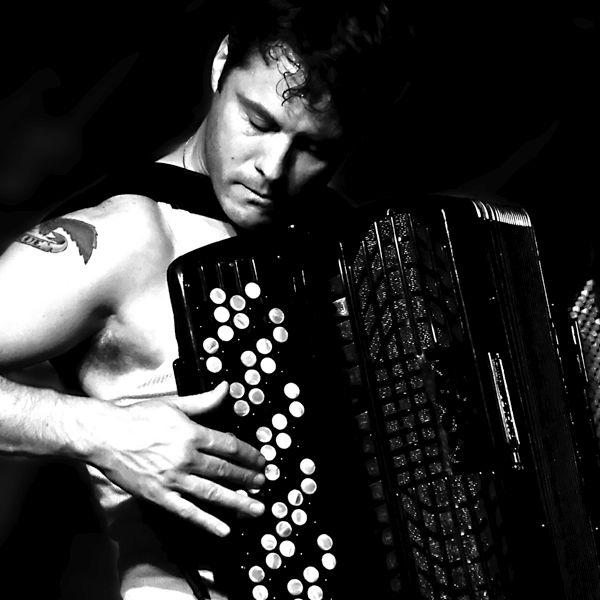
It’s been eight years since Mark Growden, local bad boy of the accordion (and the bicycle handlebars), last recorded a studio album, and the weathering of not a few storms layers his lyrics with a weight typically reserved for bellowers of dust-bowl ballads and feverish Appalachia-born hymns. But though Growden — who’ll be performing Wed/11-Sun/14 at the Porto Franco Art Parlor — captures the sorrow and sincerity of a high lonesome crooner, his unique instrumental blend of Dixieland, Frontierland, and gypsy caravan band inhabits a genre all its own, especially on the new Saint Judas (Porto Franco).

Part chamber music, part High Noon, the atmospheric moan of songs such as “Coyote” and the first half of “The Gates/Take me to the Water,” tug low in the gut, while a touch of bitterly rollicking bar band via cabaret lane creeps into tunes such as the title track, “Take me to the Water,” and “Been in the Storm so Long”. Perhaps destined to be remembered as Growden’s finest drinking song, “Saint Judas” in particular distills the dark joviality of the sort of shambolic dive bar frequented by off-duty cab drivers, ex-junkies, and toothless pensioners, while toasting the “saint of the sinners” for taking the blame, “’cause somebody had to.”

But for an album so intimately acquainted with woe, the real connective thread throughout is not one of pain, but one of love. Hurt love hopeful love, dashed love, and eternal love, each facet of the ever-abiding emotion has its own moment to shine in the flickering glow of the Mark Growden ensemble’s warm strings, hot licks, and sizzling horns. There’s an ode to love the undertaker (“Undertaker”), love the temptress (“Delilah”), and love the hidden (“Inside Every Bird”). A melancholy, lounge-y cover of Leonard Cohen’s “I’m Your Man,” and the lonely dirge to a fallen companion “Coyote,” dissect heartbreak while the banjo-infused jam piece, “Everybody Holds a Piece of the Sun,” and the tenderly wistful rendition of “All the Pretty Little Horses,” remind of hope.

Growden’s music has never been the kind that compels the body without first engaging the mind, and Saint Judas is full of the kinds of compositional layers and technical surprises that keep music geeks happy while still providing enough oompah and oomph for the kinesthetic enjoyment of the masses. It’s a homegrown affair all the way through, released by Mission-based family label Porto Franco records, with cover art by local muralist Mona Caron, and championed by various luminaries of the San Francisco underground. And yet, meticulously designed and arranged, this album has obviously been crafted with a high trajectory in mind, and time will tell if this bid to escape the gilded cage of regionalism will take.

Mark Growden
Thu/11-Sun/14, 8pm, $20
Porto Franco Art Parlor
953 Valencia, SF.
www.portofrancoart.com
www.markgrowden.org

Snap Sounds: Etienne Jaumet

0

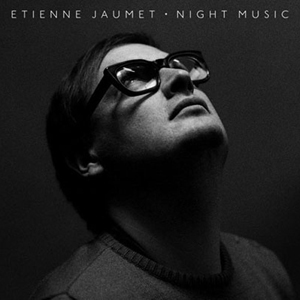
ETIENNE JAUMET
Night Music
(Domino)

The idea of nocturnal sound is circulating at the moment, though maybe it always does where electronic music intersects with clubland. Overseen by none other than Carl Craig, Jaumet‘s trip into the dark has a smart structure.

Comprising the first half, the 20-minute “For Falling Asleep” escorts the listener to dreamland through seduction rather than boredom — its slinky synth melodies coil around one another like snakes moving forward at the speed of trains, before the music winds down into languorous sax, Goblin-like ominous throbbing sound waves and delicate acoustic melodies. Shorter and comparatively stripped down, the four tracks that follow either suggest or approximate different unconscious states.