Noise

Through the lens of hip-hop

1

Photographer/filmmaker Brian Cross charts a musical map of the African diaspora in the Americas — and opens new Summit Peek Gallery show tonight (6/2), “If It Fits in the Backpack: 10 Years on the Road with Mochilla”

Last year, Los Angeles-based production group Mochilla released Timeless,a trilogy film series documenting three concerts performed in L.A., early 2009. For these concerts, the photographer/filmmaker/DJ duo behind Mochilla, Brian Cross and Eric Coleman, shined light on three composers who have helped influence and shape hip-hop in different ways: the originator of Ethio-jazz, Mulatu Astatke; leftfield Brazilian arranger, Arthur Verocai; and a gutsy rendition of J Dilla’s beats crafted by Miguel Atwood-Ferguson with 60-piece orchestra. The films paint intimate portraits of musical exchange and live performance while paying tribute to some of the overlooked giants of the sprawling African musical diaspora.

In many ways Timeless is a culmination of themes explored in Mochilla’s films from the past decade. Their first project, Keepintime: Talking Drums and Whispering Vinyl (2001), and the follow-up live recording and DVD release in 2004, captured improvisational collaboration between L.A. hiphop producers and DJs, such as Madlib and J.Rocc, among others, with some of the powerhouse session drummers who inspired their sample-based work. Brasilintime: Batucada Com Discos (2007) also navigated the dynamic tension between an older generation of drummers, this time including legendary Brazilian percussionists, and the new school of analog producer/turntablists.


But not only did Mochilla depict creative partnership between these two forms of percussionists, they also translated the cut-up aesthetic of the DJ and rhythmic momentum of the drummer to the inner workings of the films themselves. A pastiche of words, music, and imagery composed of still shots and footage drive forward the fragmented stories, and striking moments of reconciliation, which unfold on screen.

More recently, Cross (known more familiarly as B+) set off to Columbia to document the Petronio Alvarez music festival as well as collaborative work between Will Holland (a.k.a. Quantic) and Ernesto “Fruko” Estrada, who could be credited with forging the rootsy, Afro-Columbian take on salsa. Mochilla also shot a good deal of the footage for Banksy’s street art disaster film from last year, Exit Through the Gift Shop, caught wayward rapper Jay Electronica at the Pyramids in Egypt and recording in South Africa, and documented Nas and Damian Marley on tour. To put it short, the dudes put in work.

“I look more for the off-handed moments that can be sustained as photos in themselves,” Cross tells me over the phone, while working in the dark room basement of his home in Los Angeles. He says that he’s excited to see how the large hand-printed photos will look in the upcoming Mochilla showcase at the new Peek Gallery in the Mission, this Thursday. “I’m trying to be iconic, but at the same time I don’t want to make publicity photos for record companies,” Cross says. “The videos, in a way, can be much more interesting because the fluidity allows for a certain kind of candidness.”

Cross, 44, has quite a history with such candidness in his work. Born in Limerick, Ireland, Cross moved to San Francisco’s Mission district in 1990 before attending CalArts in Southern California to study photography. While still completing his degree, Cross started writing what would become a landmark book on the emergence and socio-political implications of hiphop in L.A., It’s Not About a Salary: Rap, Race, and Resistance in Los Angeles (Verso Books, 1993). He is responsible for a number of iconic album covers of underground hiphop acts, from Freestyle Fellowship to Ras Kass and Mos Def. And Cross also made headway with more than a few magazine photo spreads and music videos throughout the past couple decades, notably including an arresting multi-textured piece for DJ Shadow’s “Midnight in a Perfect World” off Entroducing….. (Mo’ Wax Records, 1996).


Looking over Cross’ ever-growing body of work, some primary themes consistently arise: Through the lens of hiphop, Cross orients a number of conversations, multi-generational interchanges, rhythmic confluences, and resistant divergences that weave through the diaspora of African musical traditions in the Americas. “There’s an anthropological side as well as an ethnomusicologist side to it—an attempt to make a map of the diaspora in terms of the music set by the present,” Cross explains. “The goal is ultimately to document in a way that is not strictly historical, but to let the past speak to now rather than the other way round.”

SFBG I find an interesting dynamic in your film work and the documented live performances. On the one hand, you’ll take hiphop producers and DJs and pair them with percussionists, so as to put the contemporary in tension with the recent past that informed those contemporaries. On the other hand, there’s another element of featuring the music of those composers themselves. In what way do you think the past speaks to the present, as you put it, in both those approaches?

Brian Cross The idea is that somehow you don’t want to frame it off. In other words, for Keepintime, we didn’t want to get Paul Humphrey or Earl Palmer involved in something and frame off the dialogue in terms of, ‘Ok Paul, we want you to play the classic break on “One Man Band (Plays all Alone),” and now we’re going to layer something on top of it and develop a routine.’ But that’s not what’s interesting about Paul Humphrey. Yeah, it’s amazing he did that, and that’s why we’re choosing to work with him. But Paul Humphrey is somebody living and breathing; he’s our past, but he’s also our present. We want to open up a space of dialogue that is open to this series of works but isn’t limited to it.

For the Brasilintime project, we could have gone to Brazil and found obscure musicians who made amazing recordings and complete the narrative in the way that normal Eurocentric or Western versions of the story go: We bring them to Carnegie Hall, we do a concert, venerate them, and show them that Carnegie Hall is in fact the best venue in the world and is the most important place to see music. Whoa whoa whoa, back it up, we’re not going to do that. We’re going to go to there and engage, and try to actually build a bridge to the music. Let’s not have this as a one-sided sentence that leads in a single direction. Generally, what we try to do is to de-center, to find ways in which we can open up, because, invariably, when you do these things, that’s when you make discoveries. Oh, Mamao and Wilson das Neves played on the Jose Mauro record, he died before the record came out, and then Dilla sampled it … that’s when you make these discoveries.

You know I don’t mind the Buena Vista Social Club [1997] record. Ry Cooder is a great producer and a great musician, but the film is fucking awful. It’s so fucking wrongheaded. And that director, Wim Wenders, is smarter than that, man. We’re people of the left, he knows better than that. Of course, everybody got involved and was super happy that these guys were finally discovered, and we can fully appreciate how beautiful their music is and the contributions they’ve made. But then Carnegie Hall is put into the equation; we don’t need to reaffirm the same set of cultural values. We don’t need that. Maybe that’s kind of a trite example, but I’m interested in trying to forge ways to talk about music, or to explore possibilities of music, that don’t fall into the same set of traps that most writing and television and documentaries about music fall into.

SFBG Yeah, there are standard methods for placing outsider music, or the marginal narratives of musical traditions and musicianship, into the mainstream narrative, one of validation internal to our own frameworks of understanding. As a photography and filmmaker, how do you approach a sense of the outsider, or the musician who is resistant, or peripheral to the grand narratives? What techniques do you take up in order to engage these musicians and traditions and make them visible for a broader audience?

BC Well, when it comes to Brazilian music, I’m pretty serious about my shit. I do my research thoroughly. I try to put my best foot into it. But other than that, it’s pure human relationships, man. For me, here’s my pet peeve: Too much of the stuff happening right now is done without real social engagement. It’s through the Internet, whether it’s digital digging, or people paying 800 dollars for an obscure record from Ethiopia or Angola, when you could buy a ticket to go there for the same amount. You should be going. That’s the responsibility. The responsibility is to go there, actually experience it, and see what works on the ground.

To go back to Ry Cooder, when he went to Cuba to make Buena Vista, that wasn’t the music people were listening to in Cuba. People were listening to Timba, and Timba is a completely different thing. I just think there’s a lot more to be gained from actually going to say, Baranquilla, and spending time there in the town—meeting people, buying records, meeting musicians—than there is from surfing the Internet and finding the latest hot cumbia re-groove from Argentina or whatever. If you’re serious about your shit you have to go there, engage on the ground, and see what makes sense. You like Wu-Tang? Go to Staten Island. Go for a walk around the projects. Go visit P.L.O. Liquors where all those songs came from. That’s the kind of compliment you need to be paying people. And there’s ways to do this that aren’t touristic. You can go and feel the vibe there. It might seem obvious, but it gets lost in these discussions.

SFBG Do you see that as your primary motivational force? That your projects are prefaced on this desire to travel, meet these musicians that inspire you where they live and make music; find out what they’re doing, why they’re doing it, and be a part of it?

BC Well, the two things are kind of contingent. It’s cyclical somehow. I’m there, experiencing, helping to build bridges as best as I can, and I’m also thinking about photographs because that’s what I do.

SFBG How do you think this approach fits back into your earlier photo work in Los Angeles and your book, ‘It’s Not about a Salary?’

BC It’s an extension of it, really. You know the book is a very primitive thing, if you actually sit there and read it from cover to cover, which I did for a project a couple years ago, and I was highly embarrassed (laughs). But there was no model. It’s not like Can’t Stop Won’t Stop [Picador, 2005] existed, and someone had put that work down. I was 26, I had been into hiphop since I was 17, and I gave it a stab. And, of course, I put myself into a cultural debate that I didn’t know much about, for my own peril.

Ostensibly, the work isn’t much different. In that book, yeah, it’s about hiphop in Los Angeles, but I also managed to talk to Roy Porter, The Watts Prophets, Kamau Daaoood, Horace Tapscott, and a whole slew of other people who didn’t straightforwardly have anything to do with hiphop in Los Angeles. But in another way, they had everything to do with it. What has always been interesting for me with hiphop is that it has this historical reach. That’s what I tried to bring into the book. There’s definitely things which I don’t agree with now, and suppositions that I made or thought what would happen which didn’t. But it was a critical moment, right before The Chronic [Death Row, 1992], which I think was really a world changer.

The amazing thing about the golden era of hiphop, as they call it now, that era up to ‘95 or ’96, is that it was incredibly inclusive music. There was Japanese Koto, all sorts of rhythms from the Caribbean, rock, jazz, funk, you name it. That sourced people into record stores in different ways. The categories didn’t make sense as they did previously. That’s the magnetic lure of it. Somehow, hiphop allowed this extraordinary ability to look at previously recorded things and make them work in the present. For me, that was a critical modernist moment, or as the prevailing discourse has it a post-modernist moment—the collage and montage.

SFBG That brings up another interesting point in your work in the idea that when listening to hiphop not only is the origin of the break or the sample concealed, but also the artist’s background is concealed. The identity of the artist is mystified. Would you say that your projects aim towards making visible the musician as a person rooted in an environment or social setting?

BC The two-sided sword of the invention of youth culture is that it posits a kind of energy and dynamism to what we call youth. The problem is that the way it’s commodified is made contingent on the exclusion of anything outside youthful values or youthful thinking. I don’t agree with that. And if you look at the music of the diaspora, it’s not there. These kind of generational fishers don’t exist in other traditions of music: not in Latin, not in African-oriented music, and in my understanding of European folk traditions, they’re not there either.

While I find aspects of youth admirable, it shouldn’t ever be considered an exclusive category. For instance, David Axelrod is in his late 70s, and he has as much to contribute, and as many interesting things to say now as he did when he was 30. The thing is we’ve consigned him off to a category as if he doesn’t exist. And that seems ridiculous to me. I mean James Gadson still has fire now as a drummer just as he did when he played with Bill Withers. Why would we decide that he no longer has importance? It’s not like people have stopped listening to Bill Withers. But that’s how our music culture works. We fetishize the appearance of youth, but we’re not entirely clear on the implications of that. So, I like the idea of putting the person in the room if I can. For inclusivity, it has to be that.

And we have to get past the old ways of thinking, too. When I was first doing this, it was all super secretive. No one was supposed to know what your samples were or where your drums came from, because that was your tool kit, and if everyone had the same tool kit, it wouldn’t be interesting anymore. But I don’t buy that. In the end, there’s a deluge of information out there, it’s what you do with it that’s important. Your understanding and ability to manipulate the history is what’s important.

SFBG Even when you put out ‘Keepintime,’ I imagine that people worried that you would unveil the alchemic creative process, otherwise covered up, behind a hiphop record.

BC It goes back even before that. Take the video I did for DJ Shadow’s “Midnight In A Perfect World.” It plots out a series of concerns that I’m still interested in. You know, Earl Palmer is in there, and the sample is from a David Axelrod record. And they didn’t clear the sample. Shadow was terrified that Earl was going to recognize the song. But Earl didn’t even remember David Axelrod the person, let alone the record (laughs). They weren’t hits! Earl wasn’t sitting around listening to Axelrod records. But if you’re going to be too scared to talk to him, we’ll never learn anything from the guy. And then he shows up, and we’re transported to a whole different world: New Orleans before World War II.

You could say rock n’ roll came from the soles of Earl Palmer’s shoes. He was a child vaudeville performer, a tap dancer, and he battled against Sammy Davis Junior, and a lot of cats from that era. But he was never the best dude, and he was always interested in drums, so he taught himself how to play drums. So, that shuffle beat, that swamp beat as they call it, which became the foundation of rock n’ roll drumming, came from a guy who’s a tap dancer in black vaudeville as a child, who figured out a way to transform his tap dancing onto a drum kit. Think of the multi-billion dollar industry that rock n’ roll has become, and we still don’t know these things. We have to sit down and talk to these guys to find out these stories.

If It Fits in the Backpack: 10 Years on the Road with Mochilla
Opening photo exhibition w/ film screenings and Q&A
With Brian Cross and Eric Coleman
Thurs./02, 7p.m.-11p.m., free (thru 06/30)
Peek Gallery (Summit SF)
780 Valencia Ave. @19th St., SF
(415) 861-5330
www.thesummit-sf.com/peekgallery.html

Snap Sounds: Richie Cunning

2

Listening to local SF rapper Richie Cunning’s new song Pure Imagination has proven to be terribly infectious, as I haven’t been able to get it out of my head.

A quote from A Bronx Tale about talent sets the stage as Richie takes you on a journey of his dreams and doubts in the rap game. I never thought a sample from 1971’s Willy Wonka & the Chocolate Factory could be made into a rap song, but with a breakbeat layered on top it has a nice relaxing vibe. This is definitely a track to chill out to while thinking about one’s dreams.

Download the free song here


American Idol: Whoa, Scotty!

0

Before we finish off this season of surprises, I would like everyone to give it up for my stunning record of predictions — I was wrong nearly every single week. And very wrong about the finale. I was sure poor Scotty was toast; not enough bubble-gum pop in his voice, not enough dancing, way too country. But whadya know — Americans decided they’d pick the one with the actual talent.


And I must admit, I was surprised by the show. Two hours to handle a 30-second announcement (that didn’t even happen until five minutes after 10, delaying the 10 O’Clock News — but hey, what’s more important?) and I figured it would be a deadly rancid soup of old photos and emotional messaging.


But no: It was, I have to say, one of the best episodes of American Idol ever. They brought back the top 11 and mixed them up with some surprising stars, and the results were too much to believe.


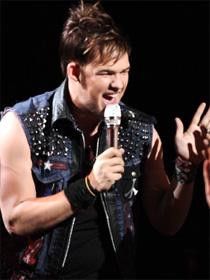
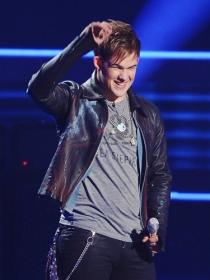
Out comes James to sing with Judas Priest. Rob Halford is showing some hard years, but still: A metal god. And James sang him under the fucking table. A final chance for us all to see who the real star of this year’s show was.


Casey gets to sing  “Fat Bottom Girls” with the always-amazing Jack Black. Haley does a crooner piece with … Tony Bennett. Yeah, he’s still around. Yeah, he can barely sing anymore. But still: Tony Bennett. Didn’t expect THAT on American Idol.


Scotty got to sing with Tim McGraw — and I have to say, held his own with a country legend. A bunch of the guys sing a Tom Jones medley, then out comes …. Tom Jones. It’s not unusual (but yes it is) and the guy still has the pipes.


Lady Gago does a death-defying leap off an artificial cliff. Spiderman swings above the audience while Bono and The Edge sing the Spiderman broadway theme song. Mark Anthony does a rockin’ spanish number and J-Lo joins him and dances. Can anything top all that?


Actually, Yes. At the very end, My Man Steven Tyler gets up on stage, sits down at the piano and plays and sings “Deam On.” Complete with the high notes at the end. I didn’t think he could do that anymore. I’m not sure he did, either.


Scotty’s first single (“I love you this big”) sucks, but it hardly matters. The kid who worked in a grocery story is now a certified star, and will have a long career in country music. Lauren Alaina is young; she’ll be fine. James will have a recording contract by next week, if he doesn’t already. Casey’s such a character that something good will happen to him. Jacob may even make some money on the gospel circuit. Too bad about Pia. Too bay about Haley. Life goes on.


And so does the show. We’ll see you next year.

American Idol: Mom, God and Lauren

3

I think it’s all over. Scotty did the best he could with three weak, uninteresting songs, proving that he’ll have a fine career as a country singer once he’s out from under the iron grip of the Idol contracts. But Lauren Alaina is poised to become the least talented singer ever to win American Idol, largely because she’s got the votes of all those people who have nothing better to do than sit around for four hours after the show ends and send thousands of text votes on their phones.


Oh: and because of Mom.


Lauren’s final song — the one that will be released as a single if she wins — was all about Mom. Oh, and God. She prays like her mom does, la, la, la. In the middle of singing she went and hugged her mom in the audience.


Look: Scotty’s got a mom, too. And he loves Jesus as much as any country crooner. But his final song didn’t make anyone in the audience weep, and this the the Year of the Weep, so I think he’s done.


Too bad. He was never my first choice, but he’s at least good at what he does.  


Just one more night and I can go back to watching baseball. Go Giants.

Yelle at the Regency Ballroom, 5/19/11

0

Major props to any super-hot French pop star who starts her set wearing a full body mop. That’s just what Yelle‘s lead-singer, Julie Budet, did last night at the Regency Ballroom — but it was to be expected since the group is consistently donning edgy threads in their eccentric music videos.

Budet has true star energy which fires her fans into hours-long dance fests at her concerts, despite the fact that probably the majority of them have no idea what her French lyrics are on about. 

But little matter — it’s not just about the music.

It’s also about the spunky ’80s dance moves and her too-cute white Keds. And I love the fact that even though Yelle has a very electro pop sound, the group is actually two band mates tinkering on the keyboard and drumming away on a kit, which infinitely surpasses hitting play on a Mac Book. The beats last night were infectious and gave off that essential French coolness that everyone was trying to absorb just a little bit of, even if they couldn’t quite sing along.


American Idol: The weeping edition

12

Six weeks ago, who could have imagined — the American Idol final is Scotty and Lauren? Please. So many talented people gone, so little talent left ….


I like Scotty, I really do, despite the religion and the aw-shucks sheepishness. I think he’s a sincere kid who will have a great career as a country music singer. But AI is supposed to showcase broad-based talent, and that’s not him.


Lauren is also a nice kid, and the scene with her crying as she viewed the flood wreckage was way, way over the top, but sincere. (In fact, there was an awful lot of weeping this week. Scotty wept all the way home. The only one who didn’t seem overcome by emotion was Haley, who was also the best performer. But I guess it’s all about the televised tears. You cry and you love God and you get a recording contract. What a great country.)


A few noteworthy moments in the penultimate week:


Ryan reports 95 million votes. Somebody’s got an app out there.


Steven once again has gold glittery pants. It goes with the feathers in his hair, I guess.


Shameless huckerism just gets worse: The three finalists get to go to the special showing of “Super 8” — followed immediately by an ad for “Super 8.” The kids all look miserable doing their final Ford music video.


Then on comes — ready? — Il Volo, a group of three young Italian opera singers who sing “O Sole Mio” in Italian. They’re totally talented, no complaints, but it’s really odd and the three finalists are kind of dumbfounded.


There’s a six-second appearance by 50 Cent, who looks as if he’d rather be anywhere else in the world.


The videos of the carefully orchestrated “home visits” are long, dumb and about as sappy as it gets. Lauren’s bodyguard is gigantic. Then we go on to the results — and it’s clear that the voters have been so wrong for so long that the show is becoming a farce. Good people gone? Pia. Casey. James. Now Haley. Any of them could have been legitimate finalists. But it’s all about the cuteness and the emotion, and I’m over it.


Final prediction: Viv wants Lauren, because she says (and it’s a good point) that Scotty and James will wind up with great careers anyway, but if Lauren finishes second and doesn’t get the Idol contracts, she’s never going anywhere on her own. But come on — it has to be Scotty. It’s not even a choice. At least he’s good at something.

American Idol: Boooring

0

We’re now into the post-James endgame, and as I predicted, things have gone way downhill. Frankly, none of the three finalists deserves to win. At this point, the whole thing is a sham. But we soldier on, slogging through a two-hour special featuring Steven in some sort of tight gold pants and Beyonce’s new music video. Beyonce also gets cameo shot hugging each contestant. (I could live with that. Beyonce’s way hotter than J-Lo. Just is. Just saying.)


On to the action, such as it was. Three songs apiece — the contestant picks one, Jimmy picks one and the judges pick one. Scotty goes with “Amazed.” Easy song for him, nothing to it. Lauren does Faith Hill; whatever. She looked like Glynda the Good Witch of the North in a light blue dress.


But Haley — man, Led Zeppelin on Idol? A tough song, too. And she actually pulled it off. And her dad played guitar, and the guy can play. Hit of the night.


Jimmy’s picks? Meah. All easy, all right in the lumberyard. I kinda liked Haley doing Fleetwood Mac, but what’s up with the artificial breeze blowing on her face? (Oh, right — “Rhiannon” has a line about “taken by the wind.” So they have to have wind. Along with, once again, artificial smoke on the ground. This is a huge enterprise with hundreds of millions of dollars involved; is that the best production these folks can do?


The judges asked Scotty to do “She Believes in Me,” and they all loved it, but I cringed when he tried to hit the notes in the chorus. Not his thing. Sounded like Bob Dylan on roofies. Lauren? “I Hope You Dance?” Sure, she can sing like a 16-year-old at a high school graduation, and she’s got some talent, but a national stage? Nope.


Haley. Alanis Morissette. Nice choice for her, good job, she’s actually peaking at the right moment.


It’s odd — Haley got rejected the first time she tried out, was in the bottom three a couple of times — and now is the only contestant who might even a little tiny bit be worthy of the title. I’ve never particularly liked her, but she’s at least showing up in the final days.


Viv and Michael think Lauren makes the final. I think it’s Haley and Scotty. Scotty’s the only guy left, he’s cute, he’s country (although that’s all he is), he loves Jesus … America’s not sending him home.


And I hate to say it, but I’ll be glad when this is over and I can get back to watching the Giants games on Wednesday night.   

Idol: We hate America

5

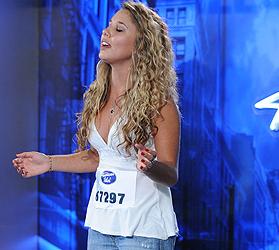
Agghh! Gakk! Sputter! Those howls you hear (and the tears in the background) are the Redmond household at 8:55, when Ryan Seacrest announced that James Durbin had been voted off and was going home. James was a wreck; he didn’t expect this, and neither did anyone else. Certainly not our readers.


What the fuck? How could the most talented person on the show — and one of the most talented ever to appear on Idol — get kicked off in favor of two half-rate singers and a guy who can’t get beyond country? I mean, Lauren and Haley aren’t anywhere near up to the level of previous Idol finalists. I love Scotty, but he’s really a one-trick pony.


James? James is the bomb. James can sing anything. He’s got stage presence to die for. He takes risks, he generates energy … he’s the rightful American Idol, 2011.


The only thing I can think of (and it makes me sick) is that he’s just too, well, un-American for Idol. Scotty did an atrocious song this week about Jesus (I don’t know anything about Iraq, but I know Jesus … Jesus. So we celebrate religious morons?) But the Jesus thing seems to work. And Lauren talked about the floods in the south. And somebody must like the bubblegum-teeny-torch-song-I’m-smiling-till-my-face-breaks shit that is Haley.


Even Vivian, who generally only likes girl singers, was shocked when it happened. “America has spoken,” says Seacrest, and Viv looks over at me and says, “I hate America.”


I think I’m done. I don’t think I’m going to watch any more. What a stupid show. What a stupid country.


Live Shots: TV on the Radio, The Independent, 5/10/11

0

Playing small quarters for their immeasurably large sound, TV on the Radio enthralled a sold out Independent audience for the second of two nights on Tuesday, May 10. Hard to define and even harder to resist, the band dipped heavily into the material from their latest release Nine Types of Light, while also letting loose with stirring versions of old favorites such as “Satellite,” “The Wrong Way,” and “Staring at the Sun.”


Setlist:

Halfway Home

Caffeinated Consciousness

The Wrong Way

Blues From Down Here

Will Do

Province

Red Dress

Crying

Young Liars

Staring at the Sun

Repetition

Wolf Like Me


Encore:

Forgotten

A Method

DLZ

Satellite


A Weekend homecoming

0

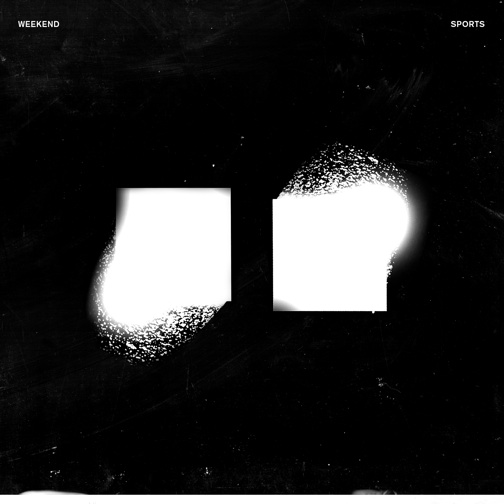
San Francisco’s Weekend is scheduled to hit up The Independent next Thurs/19, after a spell touring with the legendary post-punk band Wire. With fuzzed-out reverb-laden guitars, pounding rhythms, haunting vocals, and bass melodies that would make Peter Hook blush, this band has been all over the indie radar, drawing praises from every corner of the blogosphere. Pitchfork rated the trio’s 2010 Slumberland release Sports an 8.2/10, to which friends the Young Prisms twatted — excuse me, tweeted — in response, “Weekend was robbed. Should’ve been an 18.2.” Can we get an Amen?

Here’s a little taste of what’s in store for your eardrums:

http://www.youtube.com/watch?v=HNNdOPOTndI

http://www.youtube.com/watch?v=VJk41jsE_YQ

WEEKEND

With Clipd Beaks and Jealousy
Thurs./19 8 p.m., $12
Independent
2170 Market, SF
(415) 771-1421
www.independentsf.com


American Idol poll: Who goes home May 12?

6

Four people left. All of them good. mostly solid performances. Very odd to say Lady Gaga, full-out costume and makeup, sitting backstage “mentoring” the final four. Funny to see her grab James’ ass and try to make him shake it like Elvis.


I missed the early part of the show, but Vivian was taking excellent notes, to wit:


James does “Don’t Stop Believing” (the Journey version, not the Giants version) and even reminds Randy that he knows that song (easy to forget that Randy once played bass for Journey). Second song is “Love Potion Number 9,” a great oldie, and he rocked it. Strong renditions, he’s solid for the final. Haley’s first act (“Earthsong”) is pretty weak, but she comes back strongly with “I Who Have Nothing.” Scotty plays guitar, which is unusual, and sings “Where Were You, which is predictable Scotty, as is his “Young blood.” Lauren talks about the fllods and does “Anyway,” nice vocals, and “Trouble” impresses the judges.


Other than Haley’s first, nobody had a bad night. It’s going to be tough, America; how you votin?


Free polls from Go2poll.com

Let ’em know, Vieux Farka Touré

0

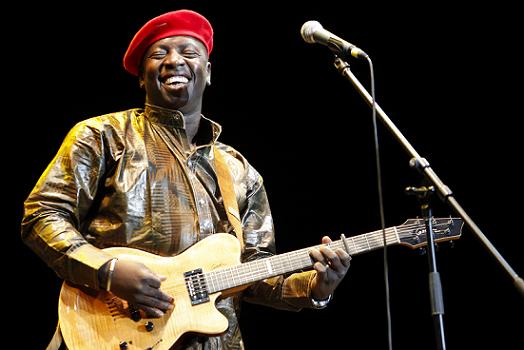
Sunny, fresh spring days like these make me want to grab my Nishiki and ride out to — screw work — dappled country roads. For this kind of idyllic impetuousity, one could ask for no better soundtrack than the thoroughly African, thoroughly rock ‘n’ roll riffs of Vieux Farka Touré, heir apparent to the dad Ali Farka Touré’s indigo Malian blues throne.

To mark the release of The Secret, a recent relase featuring traditional African instruments like the n’goni and vocal stylings by — Dave Matthews? (He is — South — African, after all, and Touré calls his voice “diabolical,” which we hope is a good thing.) Touré is making a much-anticipated voyage to the Bay Area that will kick off this weekend with a concert at the Independent (Sun/15). But perhaps most exciting of all, he’ll be teaching an African blues guitar master class the next day at St. Cyprian’s Church. Crib some of his skills and you can be on the guest list for my next backroads cruise (does your six string fit in your pannier?). 

We caught him via electronic mail for a chat about teaching, and having a kickass dad. 

San Francisco Bay Guardian: I’m interested in this guitar class you’re giving next week. What can you really teach someone in a single day about playing an instrument?  

Vieux Farka Touré: Of course I can’t teach more than the basic idioms of playing Malian blues. But I can show some basic styles and methods that open up the guitar to African style improvisation. There are several differences, technical and mental, between playing African music and Western music. So we’ll explore those difference and I’ll offer a few “secrets.”   


SFBG: Have you taught many other classes? Why do you spend time teaching?  

VFT: I have students in Mali a lot, including Americans. In life, one must always be a student and a teacher. It does good for humanity.   


SFBG: Was your dad your teacher growing up? What was that like learning from a musical legend? 

VFT: I was not aware of my father’s international fame until I traveled with him to France when I was a teenager. Of course, I knew how he was respected in Mali. But anyways, I didnt really learn guitar from him (though I learned so many other lessons about life from him). It was my uncle Afel Bocoum who brought me into music in niafunke when I was young, and then I studied at the Arts Institute in Bamako. Then both Toumani Diabate and my father began teaching me things. I am very lucky to have had these mentors. They hold wisdom of hundreds of years in their fingers.   


SFBG: At this point in your career, what are you still learning about on the guitar? 

VFT: I am always learning. I’m learning different styles, different scales and modes, and above all control. You can never have 100 percent control of your instrument, but you can also get closer to 100 percent.   


SFBG: You’re getting the chance to share your music all over the world — and learn from the rest of the world in return. How is that opportunity affecting your music? 

VFT: I think you can hear that in my albums and in my live show. There is a consistent base, like the base of a soup, but thrown in are rock, funk, reggae, Arabic styles, even hip-hop sometimes. All together they make my personal sound and make me a new branch on the tree of Malian music.


Guitar master class with Vieux Farka Touré

Mon/16 7 p.m., $40

St. Cyprian’s Church

2097 Turk, SF

(415) 259-1658

www.brownpapertickets.com/event/171012


Upcoming concerts:  

Sun/15 8 p.m., $15

The Independent

628 Divisadero, SF

(415) 771-1421

www.theindependentsf.com


Tues/17 8 p.m., $21

Mystic Theatre

23 Petaluma Blvd. North, Petaluma

(707) 765-9211

www.mystictheatre.com

Live Shots: Kinna Grannis at the Swedish American Hall, 5/10/11-5/11/11

0

It’s rare these days to go to a concert and feel like you really saw something truly wholesome. It’s more likely you leave smelling of booze, covered in dance-floor sweat, and with the beat of the drums still pounding in your ears. Luckily, there are still musicians like Kinna Grannis making beautiful, simple songs that can make an audience just sit in total silence as gentle guitar chords wave over them. Grannis is performing at the Swedish American Hall for two nights this week (last night and tonight, Weds/11).

The first of these gigs left people standing out in the horribly cold wind, staring at the sold-out sign plastered to the door. Grannis, who has become famous mostly through the powers of Youtube, shared the stage with her equally talented sisters, Misa and Emi. Lots of her songs have to do with love and happy moments, which will just make you smile, and on her Youtube channel she’s explored all sorts of covers, from Tracy Chapman to Britney, bringing a bit of her own folksy twist to all of them.

Imaginary Friend started out the evening with melancholy ballads, just the thing you’d want to play when you’re all alone with that special someone.

There was something so pleasantly innocent and precious about the whole night — maybe if you’re lucky enough to get a seat, tonight you can go experience that wholesomeness for yourself.


Kinna Grannis:


Imaginary Friend:


Pure pop bliss: Beach Fossils, Craft Spells, and Melted Toys at Slim’s

0

A lot of bands these days have been resurrecting the C86-like pop music sensibilities of the jangly guitar heroes from the 1980s and early ’90s, either sounding familiar and welcome to some, or new and au courant to others, as in the past. Captured Tracks, a small label out of Brooklyn, New York, has a few such bands under its wing, two of which played energetic, danceable sets at Slim’s last Thurs/5 – Brooklyn’s Beach Fossils and Seattle’s Craft Spells. San Francisco’s Melted Toys completed the trifecta, opening the night with pure pop bliss.

The Beach Fossils headlined, transforming a breezy, surf-tinged recorded sound into an aggressively upbeat and kinetic live performance, turning Slim’s into an all-out dance party. Now playing with bass, dueling guitars, and a full kit of drums, Dustin Payseur and company sounded full and lush, keeping things interesting while on the last leg of their U.S. tour. 

The Craft Spells’ performance was a bit of a homecoming for singer-guitarist-songwriter and Stockton native Justin Vallesteros, whose family was in the audience. Backed by sparkly dream-pop melodies, his somber baritone invoked the spirit of Factory Records, yet was more inspired and less derivative than one might think.

Melted Toys also rely heavily on the ’80s pop revival, yet stand apart from the bandwagon with a mellower, slightly more drugged-out sounding post-punk set than the show’s headliners. They do “dreamy” without shoving it it your face, with a subtle and assured nod to their musical influences, creating perfect lazy day music.


American Idol: Hell’s Kitchen edition

0

It’s Gimmicks R Us Idol, and in between the Ford videos, another Fox production, Hell’s Kitchen, got its own special promo. Chef Ramsay (who is way more of an asshole than Simon was and his shows really suck, too) forced the Idol contestants to make omlettes. The results all looked awful and he made fun of them. Then they had to blind-taste-test tofu, and Jacob had to spit it out because he thought it was gross. At least the last part was funny.


I’ve already heard J-Lo sing “On The Floor,” and with all the hunkorama male dancers it was interesting enough, but not anything profound or dramatic. The constestants were more entertaining singing The Turtles’ “So Happy Together.” (THIS JUST IN: The “live” J-Lo performance was a fake, and there’s a disappearing ass brace to prove it. Is nothing sacred anymore?)


And then, Oh The Drama! James has to go to one side of the stage, Lauren has to go to the other, then Haley joins James and Jacob joins Lauren and we all know what’s going to happen. Jacob’s clearly done. But we have to wait a full 30 minutes to figure that out — and finally, Scotty, alone on the couch, gets called up, told he’s safe and asked to go join the group that he thinks is moving forward. A horrible, awkward moment; what moron thought THAT up? Scotty, of course, won’t go, so Ryan Fucking Seacrest has to push him over next to James and Haley before he drops the bomb on poor Jacob while Lauren bursts into tears.


I guess this shit drives ratings. It drove me to the liquor cabinet.


Too bad about Jacob; although I was never a big fan, he was a good kid and did his best. But for once, America made the right choice.


Next week Lauren goes home, then Haley, and it’s a Scotty/James final, as it should be. Unless Haley pulls off another amazing night and beats out Scotty. They’re  both too cute for words, but I don’t see it. It’s the two boys at the end.


Place your bets. I’m finally starting to get this right.

American Idol: The Final Five

2

It’s getting down to the end, and as Randy says, this is where you figure out who’s in it to win. And last night, with the possible exceptions of Jacob and Lauren, they all were.


The theme: One classic song and one modern song. Each of the five remaining contestants gets to sing twice. J-Lo has a flower in her hair. Steven has some kind of crazy red coat. The mentor of the week: Sheryl Crow, who looks fabulous at 49.


First up: James, “Closer to the Edge.” Not his best performance (that was later), not a great song, but he’s a rock god. (ivian is convinced he’s going to the final no matter what, since Steven Tyler promised to sing with him on stage in the final performance and nobody wants to give up those ratings.) Jacob: “No Air.” Viv says it’s “terrible.” I just thing it’s the wrong song for him (trying to do both parts of a duet is a bad idea) and the judges agree. After the first round, he’s not looking good.


Lauren: “Flat on the Floor.” She rocks it. Good song choice, nice upbeat performance. Nothing stellar, but fine. Scotty: “Gone.” A different side of him. Steven is thrilled: “You danced with the devil.”


Haley takes a huge risk and sings an unreleased Lady Gaga song, which sucks. But she sings it well, as well as she’s done all year. the problem: Nobody’s ever heard the song before. Nobody wants to hear it again.


Now Round Two, the classics. and all I can say is, Wow.


James: “Without You.” Epic. Over-emotional sap about his family, and he didn’t hit all the notes perfectly, but damn he’s a performer. He had the audience spellbound. He is, I think, the next Idol.


Jacob: “Love Hurts.” I’m not a big fan of Jacob, and there were some screachy moments here, but again: He had the audience. Great performance. Not enought to save him tonight, but great.


Lauren: Whoa, who chooses her outfits? Some sort of blue-striped dress that’s a cross of cowgirl at the state fair, hospital volunteer and antebellum pajamas. “Unchained Melody.” Boring song, but she can belt it out. J-lo: “Nothing to judge.” I agree. Nothing much.


Scotty: Elvis, of course. “Always on my Mind.” Perfect for him. A little slow, but the audience loved it.


Haley: Holy shit. I’ve never seen “House of the Rising Sun” done like that. For once, she’s actually sexy and not goofy; the teeny-bopper smile is gone, replaced with a New Orleans bluesy-edgy voice and look that counts as a verifiable Idol Moment. She just saved herself. Performance of the night, maybe of the month.


Tonight: James, Scotty and Haley are clearly safe. Jacob and Lauren are in the bottom, and Jacob goes home. Finally. But don’t believe me; I’m never right.

Nick Waterhouse and the Tarots: New music for old souls

0

Nick Waterhouse knows what he likes, and as the old adage goes: “If it ain’t broke don’t fix it.” Recording entirely in analog on vintage equipment — including an original Muscle Shoals mixer — and performing with beautiful tube amps and old guitars, his attention to detail and historical accuracy pays off. The result is a classic R&B sound that at times is gritty and raw and at others smooth and viscous as warm molasses.

He is a sharp-dressed man, that Waterhouse, adorned in suits and ties, with an angel face framed by horn-rimmed glasses. I imagine he gets constant cliché comparisons to Buddy Holly, but when he and his new group, the Tarots, stepped out on stage for a sold-out show at the Knockout last Saturday, April 30, my first impression of him was of one of those characters in a Daniel Clowes Eightball comic who collects old jazz and soul records — on vinyl. He probably listens to NPR on a Bakelite radio, I thought, albeit a bit snarkily in retrospect. My apologies, Nick.

The vinyl-collecting part is not far from the truth, it turns out. A DJ and regular at any of the many soul parties in San Francisco, like The Make-Out Room’s Lost and Found or the O.G. 1964 at the Edinbugh Castle, Waterhouse clearly knows his stuff, and it should come as no surprise that his uber-knowlege and ear for sound should translate so nicely to his live sets — the music sounds authentic, yet somehow fresh and not dated — backed by a horn-driven band and three beautiful “divas” (that a little bit of Googling identified as The Naturelles) who belt it better than any cheeseball of the same self-declaration ever could.

His debut release, the 45 rpm “Some Place”  — performed and recorded with the Turn-Keys, which includes the legendary Ira Raibon on sax — is currently available from Waterhouse’s own Pres Records. You can catch him tonight, Wed/5, performing with his new lineup for live sets, the Tarots, at the Asterisk Magazine anniversary party (see events listings).

Nick Waterhouse, “Some Place”:

Zola Jesus rises from the dust of the rural Midwest

Rural Wisconsin is full of freaks. I can attest to this because I grew up one state west and interacted with similarly entertaining crazies on a pretty regular basis. This brand of strange usually keeps to small town shenanigans, but Nika Roza Danilova translated her weirdness into artistic independence and rose to become Zola Jesus.

As a young child and teen, Danilova became comfortable with the isolation of her surroundings and learned early on that one must seek their own stimulation. She became obsessed with learning to sing opera, but only in the confines of her own home. She listened to instructional tapes, practiced songwriting on her parents’ piano and decided to separate herself from the world before it decided to do so first. As a self-proclaimed freak, Danilova was free to revel in her uniqueness without guilt or remorse. In high school she took on the moniker Zola Jesus, which she called a conscious effort to alienate her peers. 

As a student of French and Philosophy at the University of Wisconsin-Madison, Zola Jesus officially released her first full-length record, The Spoils [Sacred Bones, 2009], earning instant comparisons to rock legends like Siouxsie and placement in the goth rock genre. Her songs are gorgeously epic, ballads of dark rock that haven’t lost their soft parts. Backed by a roaring synth choir, Danilova sings with fierce confidence in an unpretentious, humanized manner. I could write terrible letters to past lovers with Zola Jesus as my muse, or I could happily entwine myself in optimistic dreams with the same soundtrack.

As of late 2010, Zola Jesus had put out four records and played 97 shows. She’s playing her music around the world and getting just as much attention for her songs as her wardrobe. She’s being portrayed as a gothic hottie, getting mentions in Vogue and fashion magazines for her bewitching look. Yet she’s still totally reveling in her bizarre foundations. My favorite Zola Jesus quote to date, as said during an interview with The Quietus

Everyone’s a goth now. It blows my mind. I don’t like to comment on this whole trend because I’ve come to resent myself being associated with it. If goth is trendy then I’m buying fucking polo shirts. They’ll still be black, though.

If only all the Midwest townies could became wonderful creeps like Zola.

ZOLA JESUS

w/Naked on the Vague

Fri/6, 9:00 p.m., $14

Rickshaw Stop

155 Fell, SF

www.RickshawStop.com


Steady rollin’ once again: Two Gallants return at Bottom of the Hill

1

The San Francisco pop-folk duo Two Gallants played to a sold-out crowd on April 23, at its familiar stomping grounds, Bottom of The Hill. It was a reunion show of sorts. Two and a half years had passed since Adam Stephens (lead vocals/guitar/harmonica) and Tyson Vogel (drums/vocals) played together. In the interim, Stephens went by his full name, Adam Haworth Stephens, when gigging solo, and Vogel played guitar under the moniker Devotionals. While those endeavors were undoubtedly strong, they didn’t match Stephens’ and Vogel’s musical synergy as a duo.

Following Portland, Ore.’s The Bad Backs and Los Angeles’ Rumspringa, Stephens and Vogel took the stage to chants of “Two Gallants!  Two Gallants!” and roaring applause. The duo both sported new ‘dos: a longer, feathered look for Stephens, and shorter locks for Vogel.

As Stephens began to play, a (possibly drunk) woman got on stage, standing with her back to the crowd, and danced to the first measures of “Dyin’ Crapshooter’s Blues.” Thankfully, she was escorted off by security seconds later. During this song, and throughout the show, Stephens turned to Vogel in between verses and got down on his knees while playing his cherry-red electric guitar. The set list was written on the top of his left hand in black Sharpie ink. Vogel’s chin-length hair became drenched in sweat during his frenetic yet controlled drumming over the course of the night.

Two Gallants, “Steady Rollin'”:

Stephens’ voice was as gorgeously sandpaper-coarse as ever as he rasped, replete with torment, “You must have seen me ‘neath the pool hall lights/ Well, baby I go back each night/ If you got a throat/ I got a knife…Death’s comin’/ I’m still runnin’.” Nearly all of the crowd knew “Steady Rollin’” by heart, singing along to the point of almost drowning out Stephens’ amplified vocals.

Two Gallants played songs from its entire catalog, from its self-titled 2007 album on Saddle Creek to its first proper release, 2004’s The Throes. Its second and last encore song, “My Baby’s Gone,” seemed very fitting for the concert’s end. “Now my wave breaks down on me/ Whole world seems out to sound me,” Stephens sang. “I’ll drown, no one to show me/ Can’t swim, I lost my floaty.”

American Idol: Casey was robbed!

4

Damn, did America ever get it wrong this week. Casey’s the best all-around musician on the show. He’s got a great voice, performs well on stage, and was saved by the judges the first time the texting morons voted him off. And yet, after a solid performance April 28 — one of the best of a shaky lot — he was sent home last night. Bogus. Who the hell are these 53 million Americans who voted, anyway?

See, the problem is that Casey’s not a pop singer, not even a rock ‘n’ roller. He’s really a jazz guy who loves to play the upright bass. Not sexy enough, I guess.

At any rate, this is the biggest mistake since Pia (even bigger; Pia should have stayed longer, but she was leaving eventually). Casey was in my final three. And Jacob, Haley and Lauren, who just aren’t in the same league, get to stay another week. Damn.

Oh well, the show.

A couple of good musical interludes. Crystal Bowersox rocks. I like Bruno Mars. I have to love any song about doing nothing all day and not answering the phone. (“I’m gonna kick up my feet then stare at the fan/ Turn on the TV throw my hand in my pants …”) Party on, Bruno.

But the individual segments are getting longer and longer as the number of contestants dwindles and Ryan still has an hour to fill. In a couple of weeks, we’ll be hearing how everyone did in fifth grade. This time, the audience got to submit dumb questions for the contestants, who had generally dumb answers.

And the drama! Pull them up on stage, tell them America has voted, then …. send them back to sit down and wait. Duh, Ryan, America has voted; that’s why we’re putting up with all the Ford commercials. Get to the point.

And the point was wrong.

People! Americans with sense and taste! You’re not voting! The last time you did that a guy named Bush became president! Get with the program! If Scotty and James don’t make the final two, I’m moving to Canada. 


American Idol: Carole King edition

4

I wasn’t sure about this one. I’m not a big Carole King fan — too much pop, not enough edge — and I didn’t see how my favorites, Scotty and James, were going to pull it off. I expected schmaltz and ’70s-teenybopper drooling (and trust me, the ’70s teenyboppers are getting plenty old enough to drool.)

It started out just as I feared: Jacob did “Oh No, Not My Baby,” and while he gets points for his spankin’ bow tie, and the judges liked it, I got bored halfway through. Ugh. Sap. Time for another drink; this is going to be a long night.

And just to make things worse, out comes (yep!) Miley Cyrus, the queen of teen sugar pop, to help “coach” Lauren through “Where You Lead.” A good song for her, not a good song for me, probably enough to keep her alive one more week. That’s about it, though.

And then a break for a Haley and Casey duet of “I Feel the Earth Move.” It’s a little tricky doing these songs when both of the two remaining girls are 16 years old; I think even Casey was a bit unnerved singing about orgasms with a high-school kid. But they did fine, I guess.

Then Scotty. “You Got A Friend.” He’s still a country guy and it’s hard for him to get out of his element, but he’s so far above most of the rest of the class that he shines at almost anything. He did that song as well as it can be done.

And at last, James. Didn’t know you could turn “Will You Still Love Me Tomorrow” into an awesome rock anthem. Amazing. (Steven Tyler: “That was the first song I ever made out with a girl to. In a bowling alley. And no, Jennifer, I didn’t strike out.”) The only really stunning performance of the night. I’m starting to think we’ve found our finalist; nobody else right now is even close.

Scotty and Lauren did a duet of “Up On the Roof,” kind of a snooze. Casey hit it hard with “Hi-De-Ho” and the jazzy blues thing suits him well. Very cool, good entertainment. (Steven: “That made my scalp itch, it was so good.”)  Haley closed out with “Beautiful,” and yeah, she’s got a great voice, but she’s just not ready for the big time. Not yet.

We’re down to the end here, and the final three are going to be James, Casey, and Scotty. Jacob goes home tonight. Nice guy, nice run, he’s given it all he has. But it’s over. James Durbin is the next American Idol. You read it here first.  

Snap Sounds: PJ Harvey

0

PJ HARVEY
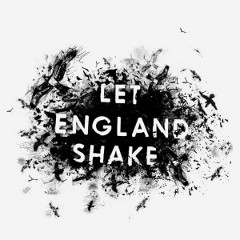
Let England Shake
(Vagrant)

It’s not really a subtle couplet, “Weighted down with silent dead/ I fear our blood won’t rise again,” but with it the title track for PJ Harvey’s newest offering Let England Shake sets the stage for the songs to come. A surprisingly melodic exploration of the still reverberating effects of World War I on England’s shores and English mores, Let England Shake is both a call to arms and a plea to lay them down again. And despite its deliberate focus on atrocities past, the album can’t help but to implicate all current and future wars within its narrow rifle scope.

At the core of every song in the collection lies a degraded yet determined Britannia, plowed with “tanks and feet,” shot down, blown apart, bitter, bloodied, and bowed. Yet despite the ignominy, it’s a land that inspires almost absurd loyalty -— in the singer as well as the soldier. “I live and die through England,” Harevey confesses on the song “England,” as if she can’t quite believe it herself, “to you…I cling.” It’s hard to imagine an American rock star pledging allegiance to any state on that soul-baring level, and it’s part of what makes Let England Shake a fascination for an American listener. Its uniquely British nationalism, built on a foundation of grief, defies direct translation.

The instrumentation is a melancholic mélange of spare, driving percussion with plenty of cymbals, reined-in, jangling guitar riffs, an autoharp, subtle layers of piano, occasionally awkward brass, and a cornucopia of extras: a xylophone here, a zither there. On the album’s third song, “The Glorious Land,” the clarion call of a war bugle insinuates itself into the otherwise stripped-down drum and guitar track while Harvey’s clear voice swoops through, a flock of startled birds surrounded by the muck of war.

Harvey stretches her register to its upper limit on track six, “On Battleship Hill,” leaving all traces of her trademark low gravel behind with a clarion call of her own. On songs such as “The Last Living Rose” and “In the Dark Places,” Harvey drapes herself not only in her flag but in soldier’s drag, evoking the hopeless trenches and “damned mountains” as if observing them first-hand. The album is not without flaws, a seemingly random sampling of Niney the Observer’s roots-reggae jam “Blood and Fire” on “Written on the Forehead” does the original no justice, and the sing-song quality of “England” jars somewhat after the considerably more powerful “On Battleship Hill,” but overall, Let England Shake stands out as a cohesive ode to a complicated love.

PJ Harvey, “Let England Shake” (from Let England Shake):

In the gutter with King Baldwin: Bowling with Alexander Eccles and Gabe Turow

0

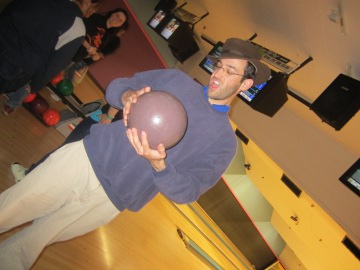
“It’s $40 for one game with shoes. Or, $38 for one hour and shoes,” says the Serra Bowl cashier with mild frustration while he Lysols a pair of freshly-worn bowling shoes at the counter. Gabe Turow, percussion, keys, and back-up vocals for the chamber pop-turned-funk duo King Baldwin, turns to me, perplexed. Which is the better deal? Off to the side, Alexander Eccles, lead vocalist of the San Francisco-based duo, sits comfortably in a plastic chair, wearing his brown “bowling hat” slightly askew. Turow and I deliberate. We opt for the hourly rate.

As I tie the frayed green laces of my black-and-red, slightly damp rented bowling shoes, I begin to wish that King Baldwin and I had chit-chatted about the self-released LP Music For Unsafe Sex over coffee.

It’s off to lane five. I’m the first to bowl. My pink eight-pound bowling ball ricochets off the lane’s side rail and knocks down one pin. Eccles is next up, so I turn to Turow to ask how King Baldwin got its moniker.

“Alex is King Baldwin. The persona is captured in many, many YouTube videos at this point. Some of them of which, I mean, he takes his shirt off in some of them,” says Turow, laughing. “Each track [on Music for Unsafe Sex] is written from a different person’s point of view, but it’s all clearly King Baldwin fantasizing about what it would be like to actually have a life.”

Music With Unsafe Sex begins with “Ron Jeremy,” named after the iconic porn star. On this track, Eccles sings, “When I come to town/ All the horses scream/ With envy/ I don’t care baby I just do/ I’m Ron Jeremy,” against a sleazy funk groove.

“Every song on the album is encouraging sex in some way or another. It’s either foreplay or, like, decent doing it,” Turow explains as he approaches the lane.

It’s the end of the second frame. The score: Jen, 14; Alex, 9; Gabe, 11.

Completely written, recorded, and produced by Turow and Eccles, Music For Unsafe Sex is a departure from King Baldwin’s five-song 2009 debut, and its six-song 2010 release, Castle of Love. In the group’s previous recordings, Eccles, a classically trained pianist, took more of a Talking Heads/David Bowie approach to the songs he composed. “Musically, there were a couple of things I had written that had come off as romantic or more feminine. Let’s just put it this way — not very cool in any kind of rock way. So [Turow] sort of helped get a sense of groove in there,” he says.

After five frames, the score is: Jen, 34; Alex, 24; Gabe, 24.

“[Music for Unsafe Sex] was the first time I’d ever revised lyrics and done so with anyone else,“ Eccles recalls, bending his knees as he readies himself to bowl.

“These songs are like narratives, which is nice, because before they were about nothing,” he adds with sarcasm.

As the ’80s hit “Forever Young” by one-hit-wonder Alphaville blares in the background, Eccles gets a running start while he approaches the lane. Turow and I notice he’s using his left hand. He assures us that he is ambidextrous. The ball travels down the lane at roughly 8 mph. Gutter ball.

Before Turow takes his turn, he talks about Music for Unsafe Sex’s funk influence. “There are a lot of grooves. When they are grooves, they put you in a certain place and then try to hold you there.” As is the case with “Secretary,” where Eccles sings, “You don’t need protection cuz the market’s up/ And we know what happens next/ Oh my secretary! Get away from it all/ I have a wife and family/ I also have my secretary.”

In between turns, Turow finds a magenta-colored ball with five finger holes, seemingly engineered for an alien species with seven digits.”There’s something wrong with this ball! There is something really wrong with this ball,” he blurts out.

By the ninth frame, none of us have broken 100.

Music for Unsafe Sex‘s last track, “Muse,” is a melancholic slow jam of disillusionment — far different from the preceding songs of male hypersexuality. “All of that masculinity and sexuality that we were sort of playing with in the first eight [songs] is basically tongue-in-cheek, and at the end of the day I am not the most masculine or sexy person. I’m just not,” Eccles says with seriousness. “Gabe and I both knew that, so we figured it’s sort of a reveal at the end.”

By the tenth frame, Eccles, who is a part-time golf coach, knocks down nine pins with one ball. “I know how to do it now. You stand there. You roll your arm back and forth like a golf swing, then you make the golf swing. No running. No running.” 

American Idol: Too bad, Stefano

3

“O.M.G.! Katy Perry! O.M.G.!” That’s Vivian, dancing and cartwheeling around the living room when the special guests for the April 21 show were announced.

Yep: Katy Perry. Yep: More entertainment to fill in a full hour so that Ryan Seacrest can stretch a five-minute process (sending one contestant home) into 60 minutes with plenty of Ford ads. And she wasn’t bad; Viv and Jean liked the new song, “Extraterrestrial,” but I’m getting sick of the same old over-costumed dangers rolling around in smoke on the floor. Can the high-tech world of Idol find a new special effect?

Not a whole lot of drama remaining. We all knew Stefano and one of the two girls would hit the bottom three; I wasn’t surprised to see Jacob there, too. Haley’s better than Lauren, but Lauren somehow seems to have the teenage-girl vote, so she’s got a few more rounds to go.

Stefano? Well, he put it right, and with some class: “It’s all about giving your absolute best.” That’s what he did — his absolute best. And it just wasn’t as good as the other guys.

Next week: the songs of Carole King. How the hell is James going to rock that shit?