SF

Tale of two cities

25

Interesting piece in the LA Times a few days ago, Our new mayor, Eric Garcetti, wants to bring raves back to Los Angeles. After the death of a 15 year old that snuck into the Electric Daisy Carnival event at the Coliseum, the raves have gone to Vegas, where they’re pulling in 100K in attendance. The mayor sees dollar signs in those numbers, not to mention OT for city employees that have been hurting the last five years from budget cuts. A sensible idea.

It got me to thinking, as these things do, about a more general policy of bringing lucrative businesses and events to LA. After all, downtown business rents are cheaper than New York or Tokyo and there is far more space here as well. The city’s soon to be highest high rise will be a Korean owned hotel, so LA has already demonstrated a cooperation with Asian interests that cannot be matched. Not by New York or any other American city, even those on the West Coast. Like Seattle, Portland or erm, San Francisco.

If Garcetti and the city council decided to offer up better deals for high-tech than exist 390 miles to the Northwest, there is precious little Mayor Lee could do to match. LA has a lot more money and of greater importance, much more space. 49 square miles cannot compete with 480 square miles. And with the Internet making high tech jobs doable anywhere, why wouldn’t tech start ups decide to opt for LA?

Let’s face it, San Francisco has priced itself right off the grid. For all of Mayor Lee’s tax incentives, the city is incredibly expensive to rent or buy in. It is still possible to find a decent 1 BR in Silver Lake or Eagle Rock or Highland Park for under 1200 a month–where is that in SF, Bayview (if at all)? And no 82K parking spaces or multi million dollar Manhattan sized condos either–for 3 million bucks, you can buy a reasonable property in the West Side’s swankest hoods–what does that get you in Pacific Heights?

LA is a very expensive city to live in by dint of car ownership as necessity and driving distances. It’s also nowhere near as pretty as San Francisco is. But as SF approaches Tokyo-like exclusivity, it would take very little to pry high tech firms south–where it’s always warm, the beaches and ski resorts both near and best of all–the entertainment business and its attendant pleasures and power are nearby. 

Let’s face it, SF has screwed up–their biggest business for eons is tourism and that would never change were the city not so insistant on wrecking same with crack downs on clubs and “1984”-like scare tactics. Los Angeles–with its money and power can offer incentives that Mr. Lee and his cromies could only dream of–and with a forward thinker like Garcetti at the wheel, this may be inevitable.


Crapitalism

35

Happy Father’s Day! Be good to your dad (assuming he’s alive/you know who he is) and enjoy your kids (assuming you have any/know who they are).

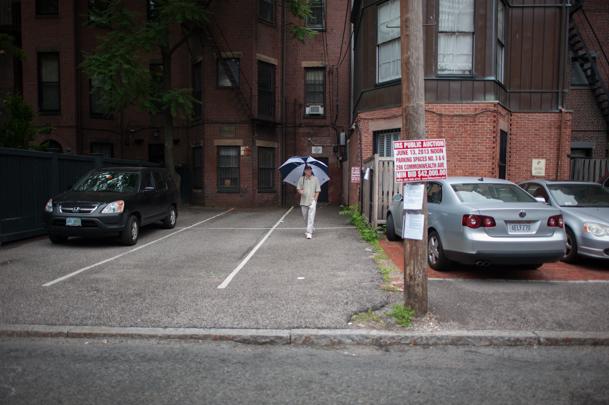
A remarkable story crossed my monitor this week. From back in the sacred Motherland of Massachusetts. Apparently, a pair of tandem parking spaces were auctioned off behind a toney Commonwealth Ave (Boston) condo for a whopping 560K–they’re shown in the photo. That’s over a half a million dollars in prime real estate yer gazing at.

Bid up from a sort of reasonable 42K and sold to a party that allegedly owns three spaces there already, this is the kind of story that makes one’s eyes glaze over in amazement. As primo as the location is, that tiny and stained bit of asphalt you’re looking at is not worth that price under any circumstances.

As that part of Boston is tightly zoned, it isn’t like it was bought to expand a brownstone. Nope, this is conspicuous consumption run completely amok or as a friend of mine back there put it, ”this could only have happened to people for whom money has no meaning”. (I suspect that the purchase was made as a “business expense” for a corporation, more to be revealed).

For 560 grand, you can still buy a modest home in Boston’s most desirable suburbs (all of which have better public schools than Boston and are cleaner and not plagued with unbearable traffic). And the property is but ten minutes on foot from downtown and the business district, cabs and car services are plentiful, therefore, why bother? As a possible long term investment? (Not a great idea as you will see).

This neighborhood, the Back Bay, was the first place I had my own digs. Adjusted for inflation, that apartment should go for about 420.00. It is now a million dollar and up condo and what was it? One gigantic room, likely the dining room of a three story home back in the 1800’s. And I still have friends in that neighborhood. Tellingly, all of them have been there at least 25 years and they could never afford it now.

By pricing all but the top of the top out of what once was an artist friendly neighborhood, the same neighborhood has the ripple effect of driving real estate values in adjacent neighborhoods past reason. Boston and San Francisco–joined at the hip by being the satellite cities to America’s twin powerhouses–are now unaffordable. 

A piece in the same paper that ran this story last year said it all. People aged 35-54 –which used to be an enormous demographic in Boston–no longer live there in large numbers. After university they just up and go because first jobs don’t pay enough to raise the scratch for a down payment. When a slab of concrete not even big enough to be a bedroom in a rooming house goes for 560K, it says that “what the market will bear” is not applicable.

This isn’t “free market capitalism”, it’s “crapitalism”. The laws of supply and demand have been so perverted by so few having so much, they almost don’t apply anymore. And my beautiful hometown–once a funky seaport with the best local music scene outside CB’s/Max’s–is now an overly exclusive playpen for folks that have brought back the Brahmin Age, only on ‘roids. Same as in SF—two small peninsulas whose essential character is being clobbered by venal plutocrats. Crapitalism couldn’t exist without tacit aid from the government–in SF, it’s in the form of tax breaks, in Boston, tax free academia is swallowing their city whole, reducing the amount of living units and artificially raising land value. That isn’t “supply and demand”.

The utlimate irony of this ridiculous transaction is that the Back Bay, like the Marina, is atop a landfill. The Charles River already overflows its banks and floods the basements of these expensive edifices more than it used to–so the parking spaces in question may be useless a fair amount of the time (of course, crapitalism being what it is, MA taxpayers will surely be stuck for the bill of seawalls and the like).

Bailouts, cronyism, loopholes–instead of an economic boom, we have Marie Antoinette style madness in our major cities. Pretty pitiful.


Jerry Garcia Street

19

This spring, me and the missus brought our kids up to the City from LA for the first time, via Big Sur, Monterey and Santa Cruz. It was our best family trip ever–wild turkeys and great hikes in the Sur, hanging on the boardwalk in Cruz and finally, SF. Stayed a few nights in Japantown, climbed Mt Tam, watched the fog envelope the Golden Gate–touristy stuff (I passed on the cable cars, however–they loved them).

Naturally, we had to show our children where we once lived and as we’d been up to Twin Peaks already, the Haight was nice and easy. Plus, I had to make a stop at Amoeba to consign some music.

Our old neighborhood has changed since the middle 90’s, but mostly in subtle ways. Still a bunch of panhandlers about (carrying banjos and ukes now as opposed to guitars), the wonderful Pork Store and the panhandle itself. The biggest change is the proliferation of parents–I don’t recall many strollers back in the Clinton era, but there was much pram pushing down Haight Street (sorry, Mick) all the same. Saw lots of that in SoMa parks, too–kiddie city.

When I was dropping off the discs at Amoeba, me and the counterman started jawing about the changes underway and he shocked me by saying that a great deal of the shop’s foot traffic was tourist based. People that came up to that neck of the woods solely for the history. And I got to thinking and I wondered–why is there almost nothing named after the area’s most famous export and certainly its magnet, John Jerome “Jerry” Garcia?

The Dead and their compatriots made this little corner of SF the most famous place in the world for a spell and yet very little commemorates the fact. That they carried on for 28 years past the “summer of love” spreading their loping groove around the world means that the rest of the world (a lot of it) comes to SF to try and absorb a little of that long gone good feeling. In other words, more tourism and more business.

I wonder, wouldn’t it be something if upper Haight Street–from Divisidero to the terminus at Golden Gate Park (I would say Cala Foods, but that too is gone) be renamed “Jerry Garcia Boulevard?” If Army Street can become Cesar Chavez, why not? 

And please spare me the incoming crapola about “honoring junkies”. Garcia’s personal habits have nothing to do with his work and the idea that he represented the “corruption of youth” gives someone that eschewed being a role model way too much power. 

There’s already a “Joey Ramone Place” in the Bowery in NYC. As there should be. It’s high time (no pun) that San Francisco did the same for the creator of its underground scene as well. 


A statement about the Guardian

Today I named veteran Bay Area journalist Stephen Buel publisher of the San Francisco Bay Guardian.

And following the resignation of Editor and Publisher Tim Redmond, I named longtime Bay Guardian editor Marke Bieschke interim editor of the paper.


Buel, editorial vice president of the San Francisco Newspaper Company, will bolster the paper’s fortunes while upholding its long tradition of investigative journalism, progressive values and cultural coverage. Bieschke, the paper’s managing editor, nightlife columnist and long-time San Francisco resident and activist will help provide vision and leadership on the print and digital editions of the Guardian.

“The Guardian has been losing money, and we were forced to contemplate some editorial layoffs,” Buel said. “Tim decided to resign rather than follow through with what we were discussing. I am dedicated to reversing the Guardian’s fortunes and helping it grow again.

“While we will all miss Tim’s skills as a journalist, I would like to assure the Guardian faithful that it will remain the progressive newspaper of record in San Francisco. I suspect there will be some skepticism about that, but over time, I am confident that readers will not be disappointed.”

— Todd Vogt, president and publisher of the San Francisco Newspaper Company, parent company of the Guardian, SF Weekly and The San Francisco Examiner.

Holding out for a hero…or an antihero…or the Antichrist: this week’s new movies!

0

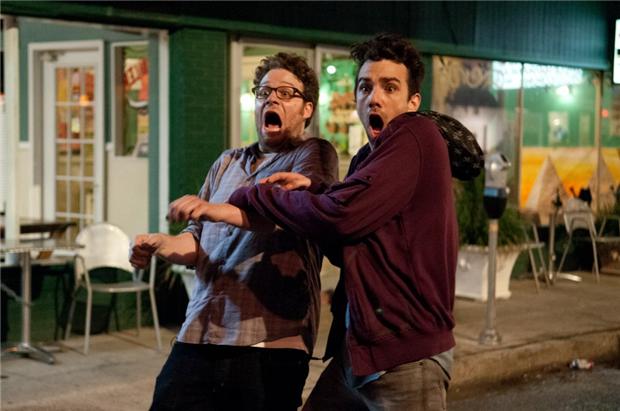
Already in theaters, Seth Rogen and his bro posse take on doomsday in This Is the End. I got the chance to talk with Mr. Rogen, his co-director and co-writer Evan Goldberg, and co-star Craig Robinson when they visited San Francisco a few days back. (Fun fact: Rogen really does laugh like that in real life.) Check the interview here!

In rep news, this weekend at the Castro Theatre heralds the San Francisco Silent Film Festival‘s “Hitchcock 9” event, spotlighting nine silent films by the guy who would later claim the title “Master of Suspense,” direct some of the greatest thrillers of all time, etc. You can’t go wrong with any of the films, but just for kicks, here’s my take on the series here. And at the Yerba Buena Center for the Arts, Austrian director Ulrich Seidl’s dark Paradise Trilogy continues its bummer-summer run this weekend; Dennis Harvey breaks ’em down here.

Plus! That Superman movie you’ve been hearing a thing or two about, and the rest of the week’s new offerings, after the jump.

http://www.youtube.com/watch?v=Sq6ffF8QLsQ

Becoming Traviata Philippe Béziat’s backstage doc offers an absorbing look at a particularly innovative production of Verdi’s La Traviata, directed by Jean-François Sivadier and starring the luminous Natalie Dessay (currently appearing in SF Opera‘s production of Tales of Hoffman). Béziat eschews narration or interviews; instead, his camera simply tracks artists at work, moving from rehearsal room to stage as Sivadier and Dessay (along with her co-stars) block scenes, make suggestions, practice gestures, and engage in the hit-and-miss experimentation that defines the creative process. The film is edited so that La Traviata progresses chronologically, with the earliest scenes unfolding on a spartan set (Dessay’s practice attire: yoga clothes), and the tragic climax taking place onstage, with an orchestra in the pit and sparkly make-up in full effect. Dessay will appear in person at San Francisco screenings Sat/15 at 7pm and Sun/16 at 2pm. (1:53) (Cheryl Eddy)

http://www.youtube.com/watch?v=CWnrk35qYMs

Dirty Wars Subtitled “the world is a battlefield,” this doc follows author and Nation magazine writer Jeremy Scahill as he probes the disturbing underbelly of America’s ongoing counterterrorism campaign. After he gets wind of a deadly nighttime raid on a home in rural Afghanistan, Scahill does his best to investigate what really happened, though what he hears from eyewitnesses doesn’t line up with the military explanation — and nobody from the official side of things cares to discuss it any further, thank you very much. With its talk of cover-ups and covert military units, and interviewees who appear in silhouette with their voices disguised, Dirty Wars plays like a thriller until Osama bin Laden’s death shifts certain (but not all) elements of the story Scahill’s chasing into the mainstream-news spotlight. The journalist makes valid points about how an utter lack of accountability or regard for consequences (that will reverberate for generations to come) means the “war on terror” will never end, but Dirty Wars suffers a bit from too much voice-over. Even the film’s gorgeous cinematography — director Rick Rowley won a prize for it at Sundance earlier this year — can’t alleviate the sensation that Dirty Wars is mostly an illustrated-lecture version of Scahill’s source-material book. Still, it’s a compelling lecture. (1:26) (Cheryl Eddy)

The Guillotines Why yes, that is Jimmy Wang Yu, director and star of 1976 cult classic Master of the Flying Guillotine, in a small but pivotal role commanding a team of assassins who specialize in dispatching heads with airborne versions of you-know-which weapon. Unfortunately, this latest from Andrew Lau (best-known stateside for 2002’s Infernal Affairs, remade into Martin Scorsese’s 2006 Oscar-winner The Departed) doesn’t have nearly as much fun as it should; dudes be chopping heads off in a flurry of CG’d-up steampunky whirlygigs, but The Guillotines‘ tone is possibly even more deadly, as in deadly serious. When a rebellious prophet-folk hero known as Wolf (Xiaoming Huang) runs afoul of the Emperor’s top-secret Guillotine brotherhood, led in the field by Leng (Ethan Juan), the squad travels in disguise to a rural, smallpox-afflicted village to track him down. Along for the journey is the Emperor’s top operative, ruthless Agent Du (Shawn Yue), a boyhood friend of Leng’s. Leng and Du share a dark secret: the Guillotines have been deemed expendable — yep, in the Stallone sense — and the Emperor has decided to kill them off and replace them with armies toting guns and cannons in the name of progress. Lau is no stranger to tales of men grappling with betrayals, misplaced loyalties, and hidden personal agendas — and as historical martial-arts fantasies go, The Guillotines has higher production values than most, with sweeping, luscious photography. Too bad all the action scenes are punctuated by episodes of moody brooding — replete with slo-mo gazing off into the distance, dramatically falling tears, solemn heart-to-hearts, swelling strings, and the occasional howl of anguish. (1:53) (Cheryl Eddy)

http://www.youtube.com/watch?v=T6DJcgm3wNY

Man of Steel As beloved as he is, Superman is a tough superhero to crack — or otherwise bend into anything resembling a modern character. Director Zack Snyder and writer David S. Goyer, working with producer Christopher Nolan on the initial story, do their best to nuance this reboot, which focuses primarily on Supe’s alien origins and takes its zoom-happy space battles from Battlestar Galactica. The story begins with Kal-El’s birth on a Krypton that’s rapidly going into the shitter: the exploited planet is about to explode and wayward General Zod (Michael Shannon) is staging a coup, killing Kal-El’s father, Jor-El (Russell Crowe), the Kryptonians’ lead scientist, and being conveniently put on ice in order to battle yet another day. That day comes as Kal-El, now a 20-something earthling named Clark Kent (Henry Cavill) — resigned to his status as an outsider, a role dreamed up by his protective adoptive dad (Kevin Costner) — has turned into a bit of a (dharma) bum, looking like a buff Jack Kerouac, working Deadliest Catch-style rigs, and rescuing people along the way to finding himself. Spunky Lois Lane (Amy Adams) is the key to his, erm, coming-out party, necessitated by a certain special someone looking to reboot the Kryptonian race on earth. The greatest danger here lies in the fact that all the leached-of-color quasi-sepia tone action can turn into a bit of a Kryptonian-US Army demolition derby, making for a mess of rubble and tricky-to-parse fight sequences that, of course, will satisfy the fanboys and -girls, but will likely glaze the eyes of many others. Nevertheless, the effort Snyder and crew pack into this lengthy artifact — with its chronology-scrambling flashbacks and multiple platforms for Shannon, Diane Lane, Christopher Meloni, Laurence Fishburne, and the like — pays off on the level of sheer scale, adding up to what feels like the best Superman on film or TV to date — though that bar seems pretty easy to leap over in a single bound. (2:23) (Kimberly Chun)

http://www.youtube.com/watch?v=4V1E2IgXeuI

Pandora’s Promise Filmmaker Robert Stone has traveled far from his first film, 1988’s Oscar-nominated anti-nuke Radio Bikini, to today, with the release of Pandora’s Promise, a detailed and guaranteed-to-be-controversial examination of nuclear power and the environmentalists who have transitioned from fervently anti- to pro-nuclear. Interviewing activists and authors like Stewart Brand, Gwyneth Cravens, Mark Lynas, and Michael Shellenberger, among others, Stone eloquently visualizes all angles of their discussion with media, industrial, and newly shot footage, starting with a visit to the largest nuclear disaster of recent years, Fukushima, which he visits with the hazmat-suited environmental activist and journalist Lynas and continuing to Chernobyl and its current denizens. Couching the debate in cultural and political context going back to World War II, Stone builds a case for nuclear energy as a viable method to provide clean, safe power for planet in the throes of climate change that will nonetheless need double or triple the current amount of energy by 2050, as billions in the developing world emerge from poverty. In a practical sense, as The Death of Environmentalism author Shellenberger asserts, “The idea that we’re going to replace oil and coal with solar and wind and nothing else is a hallucinatory delusion.” Stone and his subjects put together an enticing argument to turn to nuclear as a way forward from coal, made compelling by the idea that designs for safer alternative reactors that produce less waste are out there. (1:27) (Kimberly Chun)

Projection

26

One of the more hilarious aspects of the back and forth in “Mr Redmond’s Cyber Playpen” is the inevitable scream from Redmond’s adversaries of “envy” every time Redmond posts anything critical of SF’s moneyed class. Imputing motive into why someone says something as a way of derailing a discussion is old hat as is. Who cares why something is written, it’s there, debate its merits. But the automatic assumption that Redmond’s bitterness over his failure in business leads him to muck-rake isn’t even asinine, it’s borderline demented.

As Redmond (and I) came from a relatively privileged background and yet voluntarily chose a profession where getting rich isn’t part of the reward at all, why would we envy those whose ranks we could easily have joined? Journalism, even when print media was thriving, isn’t lucrative. Neither is music/radio work. I can’t speak for him, but as someone that actually turned down a career in brokerage to play rock and roll, accumulating money didn’t seem anywhere near as gratifying. As Earl Butz pointed out many years ago, there are more important things in life.

An investigative reporter in any major city is gonna find lots and lots of sweetheart deals between City Hall and developers or landlords or any business interest. And would be remiss to not report them. It’s part of the gig they love. And lordy be, giving voice to people that don’t have one is satisfying if not fiscally rewarding. Claiming that Redmond must be envious of people he has nothing in common with is like claiming a gay man would envy the straight guy with the beautiful woman on his arm–she isn’t something he’d ever want, so it would never occur to him to be envious.

No, trollsky’s, the “envy of the rich” doesn’t come from Tim, Marke, Steve or I–but from you. All day every day planted on the lefty website hurling puerile broadsides like a cafeteria food fight–the idea that the rich and their government enablers are skeevy enrages you, because you wish so desperately to be part of a group of people that have no need for you (and recognizing that you’re a peon is too painful to accept). How dare anyone knock the people that are living YOUR dream? 

Hate to say it, but this is classic projection, or in layman’s terms “if you spot it, you got it”. Screaming “you’re jealous” at someone else when the big green globs of same are rolling off your brow like algae-laden sweat. It can be sort of funny in a pitiful manner at first but it’s gotten tedious–the hand that has the finger pointing outward has four pointing back at you. Next time you feel the urge to project, take four quarters off mama’s dresser and buy a lottery ticket. It’s healthier. 

Everyone but Mayor Lee sees SF’s worsening “housing affordability crisis”

43

There was a clear theme that ran through yesterday’s Board of Supervisors meeting from beginning to end, something understood equally by renters, homeowners, and politicians from across the political spectrum: San Francisco has a crisis of housing affordability that is forcing people from the city.

And the only person who doesn’t seem to understand or care about that is the person with the most power to deal with the situation, Mayor Ed Lee, who opened the meeting by essentially dismissing both short- and long-term gentrification forces and claiming “our city has some of the toughest anti-displacement laws in the country.”

It was a claim that Lee made twice, first in response to a question by Sup. Eric Mar about Plan Bay Area and the massive displacement of current San Franciscans that it would create by 2040. And it was also how he answered a question by Sup. John Avalos about rents that are now skyrocketing beyond what most San Franciscans can afford.

I followed Mayor Lee back to his office, asking him to explain his claim, and he cited the city’s “elaborate” rent control laws and the Rent Board recently hiring new personnel as he briskly retreated toward his office. But surely he’s aware that displacement is already happening and getting worse, I told him, citing Rent Board figures showing that evictions are now at a 12-year high.

Lee looked at me dubiously and said, “I’ll have to check the figures on that.” I followed up today with Press Secretary Christine Falvey to ask whether Lee did check those figures — which show 1,757 evictions in the last year, up from 1,395 the previous, both numbers representing returns to the mass displacement of the last dot-com boom — and I’ll update this post if/when I hear back.

“It shows he’s out of touch with what’s happening in San Francisco,” Avalos told me in response to the mayor’s remarks.

Lee seemed to bristle at the suggestion that his aggressive economic development policies might have a downside that he’s going to have to deal with at some point. He touts the 44,000 jobs the city has added during his mayoral tenure, even deflecting criticism that he’s too focused on the technology industry by citing estimates that every tech job creates at least four other jobs (seemingly oblivious to the fact that most of these are low-wage service sector jobs, the very people who are being forced from the city).

“I’m just hoping you’re not blaming the 44,000 jobs we helped created,” Lee told Avalos, saying that he understands the concern about the rising cost of living, “but those are 44,000 people drawing a paycheck and taking care of their families.”

Yes, Mr. Mayor, but those paychecks are having an increasingly tough time paying for housing in San Francisco. That concern animated the condo conversion debate that took place later in the meeting, voiced by those focused on the lack of affordable homeownership opportunities and those focused on reducing the city’s rental stock to create those opportunities.

“I don’t think saying ‘it’s good that we have a growing economy’ is enough to address the issue,” Sup. David Campos said during the condo debate, referring to Lee’s earlier remarks.

Speaking near the end that discussion, Campos summarized the concerns expressed by both sides and sought to put the legislation into perspective: while important, the condo deal is a drop in the anti-displacement bucket. “We are only dealing with the issue of affordability in San Francisco on the margins,” he said, later adding, “I don’t think we’re doing enough to deal with the fundamental issue of who gets to live in San Francisco.”

The debate on the condo conversion began with its original author — Sup. Mark Farrell, who represents District 2, the wealthiest and most conservative in the city — explaining his desire to help middle class people who want to own homes remain in the San Francisco.

“This is the most affordable form of home ownership in San Francisco today,” Farrell said of tenancies-in-common, the fiscally and legally precarious middle step between an apartment and condominium. Later, he said, “We need more affordable homeownership opportunities and not less.”

Farrell argued that “this didn’t need to be a zero sum game,” but that’s exactly what the stock of rent-controlled apartments is in San Francisco, where only housing built before 1979 is protected from the market forces that can drive rents up to whatever a landlord demands.

“We have a fixed rent control stock. Every apartment that converts to a a condo is one less unit,” said Board President David Chiu, who worked with Sups. Jane Kim and Norman Yee and tenant group to amend Farrell’s legislation to help both renters and homeowners.  

“These units were once the homes of tenants who were displaced,” Kim said, objecting to the notion that one person’s apartment should be another person’s affordable homeownership opportunity and arguing that the city should be building more condos for first-time homebuyers instead of cannabalizing the homes of the nearly two-thirds of city residents who rent.

Like Chiu and Kim, Yee said that he wanted to help the TIC owners of today without simply clearing out of the backlog and letting the condo lottery continue unabated, which would green-light even more conversion of apartments. “We want to curb the speculation,” Yee said.

That idea that the city should help people who live in the city, without simply feeding the speculative investors who profiteer off of housing in San Francisco, was a strong theme among critics of condo conversion.

A pro-tenant crowd packed the Board Chambers. Although barred by board rules from addressing the condo legislation directly (that occurred at the committee level), one commenter said, “Giving any more power to the real estate market in San Francisco should be considered a crime.”

To help ward off real estate speculators once the annual condo conversion lottery resumes in 2024, the legisation also limited future conversions to buildings of less than four units, instead of the current cap of six units, a change that Farrell resisted.

“This is not an academic exercise anymore,” Farrell said of the condo conversion restrictions that were added to the legislation. “This will negatively impact thousands of TIC owners in the city.”

Farrell’s original co-sponsor, Sup. Scott Wiener, had a more pro-tenant point-of-view, objecting to the changes that Chiu inserted on more narrow grounds. In his comments, he noted how close the two sides were and how they share the same basic goal: preventing displacement of current city residents.  

“The one thing we can all agree with is we have a housing affordability crisis,” Wiener said, praising the city’s rent control and tenant protection laws, but adding, “TIC owners are also part of this city.”

The price of dealing with the rapid growth in the city — whether it comes to infrastructure or housing affordability — was also a point that Wiener made earlier in the meeting as the board approved the term sheet for a massive office and residential development project proposed at Pier 70.

“We are not doing what we need to do to support the public transportation needed for those projects,” Wiener said, also referring to other projects along the waterfront (the Warrior Arena at Pier 30 and the Giants/Anchor Steam project at Pier 46) and in the southeastern part of the city. “We don’t have the transit infrastructure to support our current population, let alone new growth.”

It’s about striking a balance, as Chiu said he did with the condo legislation, and not just a balance between renters and TIC owners. It’s about striking a balance between how to protect the San Francisco of today while planning for the San Francisco of tomorrow.

Yes, that means working with market rate housing developers, and it also means diverting some of their would-be profits into the city’s affordable housing fund and its infrastructure needs. Yes, it means private-sector job creation, but it also means more public sector jobs and providing a safety net for people without jobs or who work as artists or social workers or other professions that are being driven from the city. And it means beefing up our public housing and turning around the exodus of African-Americans, concerns raised at the meeting by Sup. Malia Cohen.

We at the Guardian last year looked at how Oakland has become cooler than San Francisco, largely because of the displacement from here. And now, even many people within the tech community have begun to decry the gentrifiction that is being driven by Mayor Lee’s narrow economic development vision.

“Plan Bay Area is an opportunity to think regionally and strategically about planned growth,” Lee said when addressing Mar’s question, sidestepping the direct answer that Mar sought on a set of specific proposals for mitigating some of the displacement planned for San Francisco and maintaining this city’s diversity.

Yes, we do have an opportunity to think strategically about the city we’re becoming and who gets to live in it, but only if we don’t think “jobs” is the answer to every question.

In his footsteps

0

arts@sfbg.com

DANCE If you are even tangentially connected to San Francisco’s dance community, one name will pop up again and again: Ed Mock. He was part of San Francisco’s awakening as a center for arts on the edge before his death from an AIDS-related illness in 1986.

African American and gay, the performer-choreographer was, above all, a free spirit throughout the two decades he lived in SF. During that time, he influenced and shaped a generation of young artists. For dancers like Wayne Hazzard, Victoria Mata, Shakiri, Joanna Haigood, and Pearl Ubungen, he was crucial to who they became. Mock also collaborated with the young Rhodessa Jones; Ntozake Shange’s For Colored Girls Who Have Considered Suicide When the Rainbow Is Enuf premiered in his studio.

One of the dancers whom Mock profoundly marked is Amara Tabor-Smith. To honor him, she created the multi-venue He Moved Swiftly But Gently Down the Not Too Crowded Street: Ed Mock and Other True Tales in a City That Once Was. The piece will wander through the city Sat/15 and June 21-23.

The SF-born Tabor-Smith encountered Mock when, at 14, she tagged along with a friend who had been told that classes with Mock were a must. She joined his Ed Mock Dance Company at 17 and stopped dancing for a year when he died. Eventually, she joined New York’s Urban Bush Women for a decade before returning to her much-changed hometown in 2006.

Talking with her after a rehearsal in early June, it quickly becomes clear that she not only mourns the passing of a pioneering artist but also a period when San Francisco was place for experimentation, openness, and a sense of the possible. The Beats and the hippies may have put their own stamp on the city, but in the 1970s the gay pride movement filled the air with champagne-like effervescence and expectations — until the AIDS epidemic cut it down. Lately, the tech boom has had a negative effect on SF’s artist population.

“Ed was the most fearless person I ever knew,” Tabor-Smith says, “He was the embodiment of freedom, courage, and mischief. I loved the way he embraced the risk of failure and the way he could create on the spot because the spirit moved him. He knew who he was and where he came from. He was an old soul, and he walked with the ancestors.”

Mock left his primary legacy through his classes, teaching wherever he could find studio space. Tabor-Smith remembers them as always packed with all sizes, colors, body shapes, and orientations — unusual for a time when teaching was much more compartmentalized than it is today.

He choreographed for his company, but as a dancer he improvised — a pioneering act in itself. Unfortunately, little documentation has survived. A YouTube search does turn up a video of Possum Slim, an astounding solo from 1979 performed by a naked and body-painted Mock.

Tabor-Smith (in collaboration with Ellen Sebastian Young) conceived of He Moved — part of Dancers’ Group ONSITE Series — as 11 site-specific performances that journey through Mock’s life. Among others, she is working with Jose Navarette on a section about memory; Jesse Hewitt and Laura Arrington will perform “acts of disruption” for Valencia Street’s 24/7 connected crowd.

Hayes Valley’s Salle Pianos and Events — where Tabor-Smith is rehearsing He Moved‘s “A Room of Black Men” section — happens to be next door to one of the studios in Mock’s peripatetic teaching career. She sees its funky elegance, with crystal chandeliers hanging over metal folding chairs, as “an Ed kind of place.” In stark contrast to the traffic roaring by on Market Street, the nine dancers bring a statuesque dignity and stillness to what is a tribute to black manhood. But they also explode into individual solos and help each other find community. At one point the dance becomes what looks like a ceremonial blessing around a seated elder, whose eloquence emanates simply from his presence.

Tabor-Smith also likes the Salle space because it’s located across the alley from Zuni Café, where her piece’s “Window Seat” section will be shown. Appropriately, “Ed was a fixture there. The people who ran it were wonderful. He never paid for a meal. Or a bottle of wine.” *

HE MOVED SWIFTLY BUT GENTLY DOWN THE NOT TOO CROWDED STREET: ED MOCK AND OTHER TRUE TALES IN A CITY THAT ONCE WAS…

Sat/15 and June 21-23, 3:30-8:30pm, free

Various locations (starts at 32 Page), SF

www.dancersgroup.org


Selector: June 12-17, 2013

0

WEDNESDAY 12

The Trashies

What would you get if you paired those slimy Garbage Pail Kids with primal 1960s garage rock band the Monks? It’d probably turn in to something like the Trashies. A few weeks back, the Bay Guardian premiered a new video from the sloppy Seattle-and-East Bay act, featuring the band writhing in the mud at the Albany Bulb, screeching and freaking out psychedelically on guitars, and yelping “I’m a worm!/watch me squirm.” If it all sounds a bit familiar, this beach squelch shimmy, it’s because Uzi Rash frontperson Max Nordile also has a hand in Trashies, lending his particular style to the band’s intoxicating sounds. (Emily Savage)

With Buffalo Tooth, Scrapers

8:30pm, $7

Hemlock Tavern

1131 Polk, SF

(415) 923-0923

www.hemlocktavern.com


FRIDAY 14

Queer Women of Color Film Festival

Five vibrant screening programs, 57 short films, and a particular focus — “Bridge To Truth: Queer SWANA/AMEMSA Communities” — on the feminist threads weaving through recent revolutions in Southwest Asian, North African/Arab, Middle Eastern, Muslim, and South Asian communities: if this year’s festival doesn’t open your eyes to some amazing things happening in the world of queer women of color, well, here’s a loaf of Wonderbread, go nuts. “From the intoxicating first kiss to candlelit prayer rugs, from transmen of color dating to Navajo beauty pageants, to the ebb and flow between parents and children, this festival is awash with films that fill our spirits,” QWOCMAP, the great local arts institution that produces the fest, promises. Three days of flicks culminate in a party, 9pm on Sun/16 at Slate Bar, with DJs Wepa and AlmiuX and a host of friendly faces. (Marke B.)

Through June 16

Various prices and times Brava Theater

2789 24th St., SF

www.qwocmap.org


Date Palms

There’s this sense of impending doom ever-present in any given Date Palm piece. The instrumental band — which once described its sound to me as “psychedelic minimalism with Eastern tinged melodies driven by cyclical, distorted bass patterns” — has thriller cinematic appeal. Without the distraction of vocals, the mind is left to wander in these unsettling patterns, wobbling toward the deep unknown, creating eerie visions. In this way, it’s the soundtrack to the mini movies fluttering through your brain. This is never more apt than in single “Dusted Down,” off new album, Dusted Sessions, out this week on Thrill Jockey. And yet, one needn’t conjure a mind-flick for that particular track. There’s already a video, and it’s as trippy as deserved, with blurry visions of the band, analog video feedback, and a looping rainbow of madness. (Savage)

With Jackie O-Motherfucker, Soft Shells, Lady Free Mountain

9pm, $7

Night Light

311 Broadway, Oakl.

www.thenightlightoakland.com


The Bats

New Zealand rockers the Bats got their start 30 years ago, and have stayed together all this time, with all four original members still in the fold, an almost unheard of feat these days. The cult Kiwi favorites released their latest album, Free All The Monsters (Flying Nun Records) in 2011, imbued with an almost ethereal sound and feel, which could be partly due to the fact that it was recorded in a former lunatic asylum. The video for the single “Simpletons” shows haunting scenes of the aftermath of the major earthquake that struck the Bats hometown of Christchurch that year — but like their fellow countrymen, the band is as resilient as ever. (Sean McCourt)

With the Mantles, Legs

9pm, $15–$17-

Rickshaw Stop

155 Fell, SF

(415) 861-2011

www.rickshawstop.com


Monster Drawing Rally 2013

There will be no Grave Digger, no Bigfoot, no Mean Green Machine. There will be no Mud Tractor Pull (pull … pull …pull …) — or mud for that matter, either. But you never know what else will arise from the annual, hugely popular Monster Drawing Rally at Southern Exposure Gallery. A honkin’ 120 artists rev their creative engines in one hour shifts of 30 artists each to produce spectacular works, instantly available for sale at $60 each. Meanwhile, spectators can egg these MONSTER ARTISTS on while enjoying the inspirationally arty yet danceable sounds of DJs Juan Luna-Avin and Joshua Pieper and food from select street trucks. It all takes place at underground-feeling Mission design warehouse the NWBLCK, and proceeds go to Southern Exposure’s community art programs. Gentledrawers, start your engines. (Marke B.)

6pm-11pm, $15

1999 Bryant, SF

(415) 863-2141

www.soex.org


SATURDAY 15

Papa Bear and the Easy Love

Papa Bear and the Easy Love create a river of music and then go for a swim inside it. Some artists wear their music like accessories, a backdrop to their eccentric selves. Some become one with it, creating a pleasant unity on stage. Others stomp on top of the sound, trying to resuscitate the riffs and beats as they plunge from the speakers to the ground. With Papa Bear and the Easy Love, beautiful harmonies and soft finger-picking acoustics become the mantra on stage — and it is beautiful to watch. It makes the crowd wish to go for a dip as well. (Hillary Smith)

With Big Tree, Song Preservation Society, City Tribe

9pm, $17

Great American Music Hall

859 O’Farrell, SF

(415) 885-0750

www.slimspresents.com


SUNDAY 16

StyleWOW

Dear San Francisco Art Institute,

You’re forgiven for the questionable taste shown in the naming of your annual student fashion show because I anticipate that its runway lewks will be fantastic. We are known as a fabulous city to live in (if one — or one’s parents — can afford it), but not to launch a high fashion career. The walls of your institution have long been a holding container for bright style stars who light out after graduation for more apace fashion worlds. And so: while the SF style scene continues to grow, your event remains one of the year’s more exciting chances to see high fashion here in the city. I for one am excited. Sincerely, (Caitlin Donohue)

7pm, $20–$50

San Francisco Design Center

101 Henry Adams, SF

stylewow.brownpapertickets.com


Lady Lamb the Beekeeper

Everything about the story of Aly Spaltro’s transformation into Lady Lamb and the Beekeeper seems old and out of time. In the Maine town where she went to high school, she practiced in the basement of that bygone establishment, a video store, and produced her first recordings through another, an independent record store. Then there’s her alter ego, the name of a Victorian woman who came to her in a dream (for real), which maybe that explains the biggest leap of time: Spaltro performs far beyond her 22 years. With her preternatural understanding of human feeling and her unique ability to sing about it, the very old and young Lady Lamb should not be missed. (Laura Kerry)

With Torres, Paige and the Thousand

8pm, $10

Rickshaw Stop

155 Fell, SF

(415) 861-2011

www.rickshawstop.com


Tracy Morgan

Getting his first major mainstream exposure on the TV show Martin in the mid-1990s, Tracy Morgan quickly went on to join the cast of Saturday Night Live based on the strengths of his hilarious comedic talents. On SNL, he created classic characters such as animal expert “Brian Fellows” and the moonshine-swilling “Uncle Jemima” and performed a host of side-splitting celebrity impersonations. Now that 30 Rock — where he poked fun at his own celebrity in the guise of “Tracy Jordan” — has ended its cult hit run, Morgan is hitting the stage for a series of live gigs ahead of his new TV project, Death Pact, which is slated to air on FX.

(McCourt)

8pm, $35.50

Palace of Fine Arts

3301 Lyon, SF

(800) 745-3000

www.palaceoffinearts.org


The Front Bottoms

The Front Bottoms’ shows are usually teeming with fans who are just as excited as them — we’re talking double rainbow excited. The New Jersey indie-punk group’s sarcastic and humorous lyrics guarantee a sing-along show. “And you’re so confident, but I hear you cry in your sleeping bag,” scream the die-hards along with the Front Bottoms. Though the Ludo-esque vocals sound great and the songs are quite catchy, a good part of the energy comes from the party atmosphere provided on stage. Going to a Front Bottoms concert is like going to a house show, but with an above average band playing the gig. You still get to go bat-shit and get weird, just to good music instead. (Smith)

With Weatherbox, Night Riots

8pm, $12

Brick and Mortar Music Hall

1710 Mission, SF

(415) 800-8782

www.brickandmortarmusic.com


“A Radio Silence Live Tribute to Buddy Holly”

With all legend surrounding his untimely death, one tends to forget the most important thing about Buddy Holly: the bespectacled kid (age 22) had a serious knack for songwriting. He was a prolific musician who wrote a bunch of timeless rockabilly-blues blended rock’n’roll juke classics in his relatively short career. (“That’ll Be The Day,” “Peggy Sue,” “True Love Ways,” “Crying, Waiting, Hoping,” “Everyday.”) As a small gesture to correct the collective direction of remembrance — and to prove the music didn’t really die that day on the “Winter Dance Party” tour — local lit mag Radio Silence presents a tribute night to the songs of Holly. There’ll be Greil Marcus, an icon of rock journalism, reading from his as-yet-unpublished new book, plus conversations with and performances by Eleanor Friedberger of Fiery Furnaces, Van Pierszalowski of Port O’Brien and WATERS, and singer-songwriter Thao Nguyen. As with any proper SF event, there’ll be DJs and food trucks as well. (Savage)

7pm, $20

Public Works 161 Erie, SF (415) 779-6757

www.publicsf.com


TUESDAY 18

Brooke D.

Brooke D. is a solo artist — but unless you’ve seen her live you wouldn’t have a clue. The San Francisco native’s loops of soft hums and harmonies alongside simple beats offer a full backdrop (not that it’s needed) to her gentle, poignant vocals. And yet, the subtle empty spaces in D.’s tracks lend a withholding quality that is altogether alluring. The result is a refreshingly captivating performance. Worth seeing for the a capella novelty alone, D.’s show is also impressive because of her freestyle harmonies in which she flawlessly reaches high notes unattainable to most. She delivers a unique and skilled three-person performance for the price of one. (Smith)

With Sea Lioness, Doncat, Tendrils

9pm, $8

Bottom of the Hill

1233 17th St., SF

(415) 626-4455

www.bottomofthehill.com


The Guardian listings deadline is two weeks prior to our Wednesday publication date. To submit an item for consideration, please include the title of the event, a brief description of the event, date and time, venue name, street address (listing cross streets only isn’t sufficient), city, telephone number readers can call for more information, telephone number for media, and admission costs. Send information to Listings, the Guardian, 225 Bush, 17th Flr., SF, CA 94105; or e-mail (paste press release into e-mail body — no attachments, please) to listings@sfbg.com. Digital photos may be submitted in jpeg format; the image must be at least 240 dpi and four inches by six inches in size. We regret we cannot accept listings over the phone.

Stage listings

0

Stage listings are compiled by Guardian staff. Performance times may change; call venues to confirm. Reviewers are Robert Avila, Rita Felciano, and Nicole Gluckstern. Submit items for the listings at listings@sfbg.com.

THEATER

OPENING

Can You Dig It? Back Down East 14th — the 60s and Beyond Marsh San Francisco, 1062 Valencia, SF; www.themarsh.org. $15-50. Opens Sat/15, 8pm. Runs Sat, 8:30pm; Sun, 7pm. Through Aug 25. Solo performer Don Reed returns with a prequel to his autobiographical coming-of-age hits, East 14th and The Kipling Hotel.

Darling, A New Musical Children’s Creativity Museum, 221 Fourth St, SF; www.act-sf.org. $20. Opens Fri/14, 7:30pm. Runs Wed-Sat, 7:30pm (also Sat, 2pm); Sun, 2pm. Through June 29. American Conservatory Theater’s Young Conservatory performs Ryan Scott Oliver and Brett Ryback’s jazz-age musical.

BAY AREA

This Is How It Goes Aurora Theatre, 2081 Addison, Berk; www.auroratheatre.org. $32-60. Previews Fri/14-Sat/15 and June 19, 8pm; Sun/16, 2pm; Tue/18, 7pm. Opens June 20, 8pm. Runs Tue and Sun, 7pm (also Sun, 2pm); Wed-Sat, 8pm. Through July 21. Aurora Theatre Company performs the Bay Area premiere of Neil LaBute’s edgy comedy about an interracial couple.

ONGOING

Arcadia ACT’s Geary Theater, 415 Geary, SF; www.act-sf.org. $20-95. Wed/12-Sat/15, 8pm (also Sat/15, 2pm); Sun/16, 2pm. In Tom Stoppard’s now 20-year-old master work Arcadia, sex and science, and poetry and pastoralism crowd the otherwise uncluttered stage (designed by Douglas W. Schmidt), as two sets of characters separated by 200 years demonstrate themselves to be far more connected then even their immediate descendents suspect. As two modern academics (Gretchen Egolf and Andy Murray) vie over the contents of a country estate library in order to verify their own pet theories about the past occupants — including, briefly, Lord Byron — a 19th-century intellectual prodigy (Rebekah Brockman) discovers the principles of chaos theory more than a hundred years ahead of her time, impressing her raffish tutor (Jack Cutmore-Scott) while the rest of the household busies itself with the mundane intrigues that better typify their aristocratic caste. Although at times the pacing of the nearly three-hour play feels sluggish, the slow unfurling of key plot points and character reveals suits the intricacies of the text, while still allowing for much of Stoppard’s wry humor to shine, if not crackle, through the layers. The delightfully antagonistic chemistry between Egolf and Murray, and the more delicately cerebral connection between Brockman and Cutmore-Scott alone make this a production worth seeing, to say nothing of the rigorous crash course in Latin, landscaping, physics, and Romanticism. (Gluckstern)

Birds of a Feather New Conservatory Theatre Center, 25 Van Ness, SF; www.nctcsf.org. $25-45. Fri-Sat, 8pm (also Sat, 2pm); Sun, 2pm. Through June 29. New Conservatory Theatre Center performs the San Francisco premiere of Marc Acito’s tale inspired by two gay penguins at the Central Park Zoo.

Black Watch Drill Court, Armory Community Center, 333 14th St, SF; www.act-sf.org. $100. Wed/12-Sat/15, 8pm (also Wed/12 and Sat/15, 2pm); Sun/16, 2pm. American Conservatory Theater presents the National Theatre of Scotland’s internationally acclaimed performance about Scottish soldiers serving in Iraq.

The Divine Sister New Conservatory Theatre Center, 25 Van Ness, SF; www.nctcsf.org. $25-45. Fri-Sat, 8pm; Sun, 2pm. Through June 29. Charles Busch’s latest comedy pays tribute to Hollywood films involving nuns.

Drunk Enough to Say I Love You? Costume Shop, 1117 Market, SF; www.therhino.org. $15-30. Wed/12-Sat/15, 8pm; Sun/16, 3pm. Theatre Rhinoceros performs Caryl Churchill’s play that asks, “Do countries really behave like gay men?” Included in the program are two one-act plays: Churchill’s Seven Jewish Children: A Play for Gaza and Deborah S. Margolin’s Seven Palestinian Children.

Foodies! The Musical Shelton Theater, 533 Sutter, SF; www.foodiesthemusical.com. $30-34. Fri-Sat, 8pm. Open-ended. AWAT Productions presents Morris Bobrow’s musical comedy revue all about food.

410[GONE] Thick House, 1695 18th St, SF; www.crowdedfire.org. $10-35. Wed-Sat, 8pm. Through June 29. Crowded Fire Theater presents the world premiere of Frances Ya-Chu Cowhig’s fanciful, Chinese folklore-inspired look at the underworld.

Frisco Fred’s Magic and More Alcove Theater, 414 Mason, Ste 502, SF; www.thealcovetheater.com. $35-50. Thu-Sat, 7pm. Through June 29. Performer Fred Anderson presents his latest family-friendly show, complete with magic, juggling, and “crazy stunts.”

Hedwig and the Angry Inch Boxcar Theatre, 505 Natoma, SF; www.boxcartheatre.org. $27-43. Thu-Sat, 8pm. Open-ended. John Cameron Mitchell’s cult musical comes to life with director Nick A. Olivero’s ever-rotating cast.

Into the Woods Eureka Theatre, 215 Jackson, SF; www.rayoflighttheatre.com. $25-36. Thu-Sat, 8pm (check website for matinee schedule). Through June 29. Ray of Light Theatre performs Stephen Sondheim’s fairy-tale mash-up.

Krispy Kritters in the Scarlett Night Exit on Taylor, 277 Taylor, SF; www.cuttingball.com. $10-50. Extended run: Thu, 7:30pm; Fri-Sat, 8pm (also Sat, 2pm); Sun, 5pm. Through June 23. For patrons of last year’s production of Annie Elias’ documentary theater piece Tenderloin, walking into Cutting Ball’s take on Andrew Saito’s Krispy Kritters in the Scarlett Night brings about a slight sensation of déjà vu. It’s not so much that the cast actually resembles that of Tenderloin (save the familiar face of Cutting Ball associate artist David Sinaiko), but there’s a similar atmosphere of decay and powerlessness that roils beneath a surface of surrealistic flash. Framed by Michael Locher’s versatile, split-level set, clad in Meg Neville’s savvy costumes, the trampled-upon characters hurl poetic invective around the stage, delight in fish heads and petrified gerbils, plot to torture, seduce, and murder, and form clumsy, temporary alliances in order to accomplish the above. David Sinaiko’s crass, legless patriarch Pap Pap and Marjorie Crump-Shears’ deceptively fragile-looking brothel proprietor Gran Ma Ma preside over the inexorable decline of their insular households while their immediate kin, the cheerfully morbid Drumhead (Wiley Naman Strasser) and the irresistible temptress, Scarlett (Felicia Benefield), desperately seek to break free of their overbearing elders and the stifling routines that chain them to their circumstances. Much like the fish heads beloved by the characters as food, the play isn’t easy to digest, and there are gaps left in the narrative that even heavy abstraction can’t explain away, but Saito’s topsy-turvy world is nonetheless one worth visiting, and inaugurates his three-year playwriting residency at Cutting Ball with a weird and wonderful flourish. (Gluckstern)

Oleanna Exit’s Studio Theater, 156 Eddy, SF; www.theexit.org. $18-25. Fri/14-Sat/15, 8pm (also Sat/15, 2pm); Sun/16, 4pm. True to the mission implied in its name, Spare Stage offers dramatic purity en lieu of flashy stage concepts in this beautifully calibrated, consistently stimulating production of David Mamet’s 1992 two-hander, about a university professor (Aaron Murphy) and the female undergrad (Frannie Morrison) who accuses him of sexual misconduct. The action takes place exclusively inside the small office where John, on the verge of gaining tenure and simultaneously closing a deal on a new house, meets with his failing student Carol, a young woman who, ironically enough, seems lost by the concepts her professor deploys in his lectures on the social underpinnings of higher education (insights he recycles from his recently minted book, which is naturally the assigned reading). What begins as a condescending tutorial by the distracted prof soon turns into a vaguely prurient extracurricular exercise and, then, a table-turning power struggle as the initially introverted and stumbling Frannie returns with serious and highly articulate charges of impropriety throwing John’s tenure and world into jeopardy. Now it’s his turn to try to explain and justify himself. The power struggle throughout is grippingly played by the remarkably potent team of Murphy and Morrison, who, under the shrewd direction of Stephen Drewes, lock into a dynamic battle of wills where minute changes in posture can say as much about the cloaked, institutionalized nature of power as anything in Mamet’s precise and heightened dialogue. (Avila)

Sex and the City: LIVE! Rebel, 1760 Market, SF; trannyshack.com/sexandthecity. $25. Wed, 7 and 9pm. Open-ended. It seems a no-brainer. Not just the HBO series itself — that’s definitely missing some gray matter — but putting it onstage as a drag show. Mais naturellement! Why was Sex and the City not conceived of as a drag show in the first place? Making the sordid not exactly palatable but somehow, I don’t know, friendlier (and the canned a little cannier), Velvet Rage Productions mounts two verbatim episodes from the widely adored cable show, with Trannyshack’s Heklina in a smashing portrayal of SJP’s Carrie; D’Arcy Drollinger stealing much of the show as ever-randy Samantha (already more or less a gay man trapped in a woman’s body); Lady Bear as an endearingly out-to-lunch Miranda; and ever assured, quick-witted Trixxie Carr as pent-up Charlotte. There’s also a solid and enjoyable supporting cast courtesy of Cookie Dough, Jordan Wheeler, and Leigh Crow (as Mr. Big). That’s some heavyweight talent trodding the straining boards of bar Rebel’s tiny stage. The show’s still two-dimensional, even in 3D, but noticeably bigger than your 50″ plasma flat panel. Update: new episodes began May 15. (Avila)

Steve Seabrook: Better Than You Marsh San Francisco, 1062 Valencia, SF; www.themarsh.org. $15-50. Thu, 8pm; Sat, 8:30pm. Extended through June 29. Self-awareness, self-actualization, self-aggrandizement — for these things we turn to the professionals: the self-empowerment coaches, the self-help authors and motivational speakers. What’s the good of having a “self” unless someone shows you how to use it? Writer-performer Kurt Bodden’s Steve Seabrook wants to sell you on a better you, but his “Better Than You” weekend seminar (and tie-in book series, assorted CDs, and other paraphernalia) belies a certain divided loyalty in its own self-flattering title. The bitter fruit of the personal growth industry may sound overly ripe for the picking, but Bodden’s deftly executed “seminar” and its behind-the-scenes reveals, directed by Mark Kenward, explore the terrain with panache, cool wit, and shrewd characterization. As both writer and performer, Bodden keeps his Steve Seabrook just this side of overly sensational or maudlin, a believable figure, finally, whose all-too-ordinary life ends up something of a modest model of its own. (Avila)

Sylvia Fort Mason Theater, Fort Mason Center, Bldg C, Rm 300, Marina at Laguna, SF; sylvia.brownpapertickets.com. $20-45. Thu-Sat, 8pm; Sun, 7pm. Through June 30. Independent Cabaret Productions and Shakespeare at Stinton present AR Gurney’s midlife-crisis comedy.

Talk Radio Actors Theatre of San Francisco, 855 Bush, SF; www.actorstheatresf.org. $26-38. Wed/12-Sat/15, 8pm. Actors Theatre of San Francisco performs Eric Bogosian’s breakthrough 1987 drama.

Tinsel Tarts in a Hot Coma: The Next Cockettes Musical Hypnodrome, 575 10th St, SF; www.thrillpeddlers.com. $30-35. Thu-Sat, 8pm. Extended through June 29. Thrillpeddlers and director Russell Blackwood continue their Theatre of the Ridiculous series with this 1971 musical from San Francisco’s famed glitter-bearded acid queens, the Cockettes, revamped with a slew of new musical material by original member Scrumbly Koldewyn, and a freshly re-minted book co-written by Koldewyn and “Sweet Pam” Tent — both of whom join the large rotating cast of Thrillpeddler favorites alongside a third original Cockette, Rumi Missabu (playing diner waitress Brenda Breakfast like a deliciously unhinged scramble of Lucille Ball and Bette Davis). This is Thrillpeddlers’ third Cockettes revival, a winning streak that started with Pearls Over Shanghai. While not quite as frisky or imaginative as the production of Pearls, it easily charms with its fine songs, nifty routines, exquisite costumes, steady flashes of wit, less consistent flashes of flesh, and de rigueur irreverence. The plot may not be very easy to follow, but then, except perhaps for the bubbly accounting of the notorious New York flop of the same show 42 years ago by Tent (as poisoned-pen gossip columnist Vedda Viper), it hardly matters. (Avila)

Vital Signs: The Pulse of an American Nurse Marsh San Francisco, 1062 Valencia, SF; www.themarsh.org. $15-50. Sun/16, 7pm. Registered nurse Alison Whittaker returns to the Marsh with her behind-the-scenes show about working in a hospital.

The World’s Funniest Bubble Show Marsh San Francisco, 1062 Valencia, SF; www.themarsh.org. $8-50. Sun, 11am. Through July 21. Louis “The Amazing Bubble Man” Pearl returns after a month-long hiatus with his popular, kid-friendly bubble show.

BAY AREA

The Beauty Queen of Leenane Marin Theatre Company, 397 Miller, Mill Valley; www.marintheatre.org. $36-52. Wed/12, 7:30pm; Thu/13-Sat/15, 8pm (also Sat/15, 2pm); Sun/16, 2 and 7pm. Martin McDonagh wrote a rash of plays in the mid-1990s (six in all) that have had worldwide traction ever since, though I suspect it’s due less to any thematic depth or aesthetic polish than to the cool charm of McDonagh’s gritty and hilariously broad riffs on rural Irish life — a scene the London-born playwright (now filmmaker) gleaned from a distance, during vacations to County Galway as a child, and which serves as a ready vessel for all the pettiness, naiveté, cruelty, extreme violence, and loneliness of contemporary life in general. Of course, there’s usually a little passing tenderness along the way. All of these traits are on display in The Beauty Queen of Leenane, the first of McDonagh’s plays to win production (in 1996) and accolades in the UK and on Broadway. Marin Theatre Company offers a well acted if muted production of this bleakly humorous little drama about the bottled-up home life of a 40-year-old spinster, Maureen (Beth Wilmurt), and her manipulative semi-invalid mother, Mag (Joy Carlin). The sadomasochism inherent in Maureen and Mag’s daily battle of wits and wills over the porridge and the pee in the sink comes to a cringing climax eventually, but most of the drama sustains itself on the passive aggressive dialogue along the way, with buoying interjections from dim and sniping neighbor Ray (an amusingly snarky Joseph Salazar) and his brother Pato (a winningly bemused yet gallant Rod Gnapp), the latter presenting himself as the unlikely knight who might rescue Maureen from her mirthless seclusion. Wilmurt’s shy and desperate, vaguely unhinged Maureen and Carlin’s unassumingly treacherous Mag, carried helplessly away by the logic of her dependency, are nicely wrought and affecting in director Mark Jackson’s careful staging. However, the violence is oddly muffled as played, as is the claustrophobia that should be almost unbearable in the unchanging setting of the women’s dingy kitchen. As is, on MTC’s large stage and designer Nina Ball’s open set (which does away with the walls and front door en lieu of a larger expanse of gray), the actors are rarely right up against each other and the tension and sense of visceral disgust is accordingly too dispersed. (Avila)

Bubbles for Grown-Ups Marsh Berkeley, 2120 Allston, Berk; www.themarsh.org. $15-50. Wed, 8pm. Through June 19. Louis “The Amazing Bubble Man” Pearl presents a show aimed at adults.

By & By Ashby Stage, 1901 Ashby, Berk; www.shotgunplayers.org. $20-30. Wed-Thu, 7pm; Fri-Sat, 8pm; Sun, 5pm. Through June 23. Shotgun Players presents a new sci-fi thriller by Lauren Gunderson.

Dear Elizabeth Berkeley Rep’s Roda Theatre, 2015 Addison, Berk; www.berkeleyrep.org. $24-77. Wed and Sun, 7pm (also Sun and July 3, 2pm); Thu-Sat, 8pm (also Sat and Thu/6, 2pm; no show July 4). Through July 7. Berkeley Rep performs Sarah Ruhl’s play written in the form of letters between Elizabeth Bishop and Robert Lowell.

George Gershwin Alone Berkeley Repertory Theatre, Thrust Stage, 2025 Addison, Berk; www.berkeleyrep.org. $29-77. Tue and Thu-Sat, 8pm (also Sat, 2pm); Wed and Sun, 7pm (also Sun, 2pm). Through June 23. Hershey Felder stars in his celebration of the music and life of composer George Gershwin.

The Medea Hypothesis Berkeley City Club, 2315 Durant, Berk; www.centralworks.org. $15-28. Thu-Sat, 8pm; Sun, 3pm. Through June 23. Medea is perhaps one of the most problematic tragic protagonists in theater history, as even the most flexibly sympathetic viewpoint is severely challenged when faced with a filicidal mother. But at Central Works, rather than just updating an old tale of bloody vengeance, The Medea Hypothesis further takes a page from the pop science book of the same name written by Peter Ward, in which he speculates on the latent suicidal and self-destructive tendencies of the planetary superorganism. As the brittle, middle-aged Em, Jan Zvaifler dominates the stage, holding herself and her glamorous career in fashion together as her husband leaves her for a woman with a “perfect neck” and her daughter Sweetie (Dakota Dry), who appears only as a video projection, becomes contested property in an angry custody battle. Relentlessly egged on by her Mephistophelian flunky Ian (Cory Censoprano), and enraged by the interference of her ex-husband’s prospective father-in-law (Joe Estlack), Em does lash out at the happy couple in the Euripides-approved manner (though with flunky-provided “Plutonium 210” instead of plain old poison) but when it comes to the expected act of ultimate violence playwright Marian Berges provides a surprising twist to the familiar Grecian formula, giving Em a shot at a redemption never allowed the Euripidean matriarch. It’s still undeniably a tragedy, but concurrently, also a triumph. Kind of like the continued presence of multicellular life on earth. (Gluckstern)

Wild With Happy TheatreWorks at the Mountain View Center for the Performing Arts, 500 Castro, Mtn View; www.theatreworks.org. $23-73. Tue-Wed, 7:30pm; Thu-Sat, 8pm (also Sat, 2pm); Sun, 2 and 7pm. Through June 30. TheatreWorks presents the West Coast premiere of Colman Domingo’s new comedy, starring the playwright himself.

PERFORMANCE/DANCE

“Bitter Queen” Garage, 715 Bryant, SF; www.brownpapertickets.com. Fri/14-Sat/15, 8pm; Sun/16, 2pm. $15. The Garage’s AIRspace residency program and the National Queer Arts Festival present this physical theater installation and contemporary dance performance.

Caroline Lugo and Carolé Acuña’s Ballet Flamenco Peña Pachamama, 1630 Powell, SF; www.carolinalugo.com. Sat/16, June 22, 30, July 13, 21, and 27, 6:15pm. $15-19. Flamenco performance by the mother-daughter dance company, featuring live musicians.

“Dream Queens” Aunt Charlie’s Lounge, 133 Turk, SF; www.dreamqueensrevue.com. Wed/12, 9:30pm. Free. Drag with Collette LeGrande, Diva LaFever, Sophilya Leggz, and more.

“Laughs at the Lookout” Lookout, 3600 16th St, SF; www.lookoutsf.com. Thu/13, 10pm. $5. Stand-up with host Valerie Branch and guests Charlie Ballard, Eloisa Bravo, Ronn Vigh, Shanti Charan, and Justin Lucas.

“Love and Light” Joe Goode Annex, Project Artaud, 401 Alabama #150, SF; www.brownpapertickets.com. Thu/13-Fri/14, 7:30pm. $10-18. Leigh Fitzjames performs her solo play about a yoga teacher who has a one-night stand with a famous guru.

“ImShift” CounterPULSE, 1310 Mission, SF; www.counterpulse.org. Fri/14-Sat/15, 8pm. $8-20. Victoria Mata’s performance investigates what identity means for a Latin American in the diaspora.

LEVYdance Heron Street, off 8th St between Folsom and Harrison, SF; www.levydance.org. Wed/13, 7pm (opening night celebration); Fri/14-Sun/16, 8:30pm. $20-200. “Spring Season at Home” features favorite works from the company’s first ten years, presented on custom-built outdoor stages and catwalks.

“Mission Position Live” Cinecave, 1034 Valencia, SF; www.missionpositionlive.com. Thu, 8pm. Ongoing. $10. Stand-up comedy with rotating performers.

“Mortified SF” DNA Lounge, 375 11th St, SF; www.getmortified.com. Fri/14, 7:30pm. $21. Outrageous and awkward true tales, told by those who lived them.

“ODC Dance presents Global Dance Passport Showcase” ODC Theater, 3153 17th St, SF; www.odctheater.org. Fri/14-Sat/15, 8pm (also Sat/15, 5:30pm). $10. A sampler of dance styles from around the world.

“Randy Roberts: Live!” Alcove Theater, 414 Mason, Ste 502, SF; www.thealcovetheater.com. Fri-Sat through June 29 and July 9, 16, and 23, 9pm. $30. The famed female impersonator takes on Cher, Better Midler, and other stars.

Red Hots Burlesque El Rio, 3158 Mission, SF; www.redhotsburlesque.com. Wed, 7:30-9pm. Ongoing. $5-10. Come for the burlesque show, stay for OMG! Karaoke starting at 8pm (no cover for karaoke).

“San Francisco Ethnic Dance Festival: Weekend Two” Yerba Buena Center for the Arts, Lam Research Theater, 700 Howard, SF; www.sfethnicdancefestival.org. Sat/15-Sun/16, 2pm (also Sat/15, 3pm). $18-58. With Colective Anqari, Chaksam-Pa, Parangal Dance Company, and more.

“San Francisco Magic Parlor” Chancellor Hotel Union Square, 433 Powell, SF; www.sfmagicparlor.com. Thu-Sat, 8pm. Ongoing. $40. Magic vignettes with conjurer and storyteller Walt Anthony.

Amara Tabor-Smith Various locations (starts at 32 Page), SF; www.dancersgroup.org. Sat/15 and June 21-23, 3:30-8:30pm. Free. Dancers’ Group’s ONSITE Series presents the performer’s site-specific work, He Moved Swiftly But Gently Down the Not Too Crowded Street: Ed Mock and Other True Tales in a City That Once Was…

“Union Square Live” Union Square, between Post, Geary, Powell, and Stockton, SF; www.unionsquarelive.org. Through Oct 9. Free. Music, dance, circus arts, film, and more; dates and times vary, so check website for the latest.

“Yerba Buena Gardens Festival” Yerba Buena Gardens, Mission between 3rd and 4th Sts, SF; www.ybgfestival.org. Through Oct 15. Free. This week: Na Lei Hulu I Ke Wekiu (Sat/15, 1-2:30pm).

BAY AREA

“Bloomsday in Berkeley” Garden Gate Creative Center, 2911 Claremont, Berk; www.wildeirish.org. Sat/15, 7pm; Sun/16, 2pm. $25. Staged readings from James Joyce’s Ulysses and other works.

“Ojai North!” Zellerbach Hall, UC Berkeley, Bancroft at Telegraph, Berk; www.calperformances.org. Wed/12-Sat/15, times vary. $20-110. The Ojai Music Festival makes a NorCal visit with performances that include the world premiere of Mark Morris Dance Group’s Stravinsky/The Rite of Spring.

“Swearing in English: Tall Tales at Shotgun” Ashby Stage, 1901 Ashby, Berk; www.shotgunplayers.org. Mon/17, 8pm. $15. Shotgun Cabaret presents John Mercer in a series of three stranger-than-fiction dramatic readings.

“Te’s Harmony” El Cerrito Performing Arts Center, 540 Ashbury, El Cerrito; tesharmonyencore.eventbrite.com. Fri/14-Sat/15, 6-9pm. $8-45. Spoken word theater written and performed by Richmond youth.

Film listings

0

Film listings are edited by Cheryl Eddy. Reviewers are Kimberly Chun, Dennis Harvey, Lynn Rapoport, and Sara Maria Vizcarrondo. For rep house showtimes, see Rep Clock.

OPENING

Becoming Traviata Philippe Béziat’s backstage doc offers an absorbing look at a particularly innovative production of Verdi’s La Traviata, directed by Jean-François Sivadier and starring the luminous Natalie Dessay (currently appearing in SF Opera’s production of Tales of Hoffman). Béziat eschews narration or interviews; instead, his camera simply tracks artists at work, moving from rehearsal room to stage as Sivadier and Dessay (along with her co-stars) block scenes, make suggestions, practice gestures, and engage in the hit-and-miss experimentation that defines the creative process. The film is edited so that La Traviata progresses chronologically, with the earliest scenes unfolding on a spartan set (Dessay’s practice attire: yoga clothes), and the tragic climax taking place onstage, with an orchestra in the pit and sparkly make-up in full effect. Dessay will appear in person at San Francisco screenings Sat/15 at 7pm and Sun/16 at 2pm. (1:53) Opera Plaza, Shattuck, Smith Rafael. (Eddy)

Dirty Wars Subtitled "the world is a battlefield," this doc follows author and Nation magazine writer Jeremy Scahill as he probes the disturbing underbelly of America’s ongoing counterterrorism campaign. After he gets wind of a deadly nighttime raid on a home in rural Afghanistan, Scahill does his best to investigate what really happened, though what he hears from eyewitnesses doesn’t line up with the military explanation — and nobody from the official side of things cares to discuss it any further, thank you very much. With its talk of cover-ups and covert military units, and interviewees who appear in silhouette with their voices disguised, Dirty Wars plays like a thriller until Osama bin Laden’s death shifts certain (but not all) elements of the story Scahill’s chasing into the mainstream-news spotlight. The journalist makes valid points about how an utter lack of accountability or regard for consequences (that will reverberate for generations to come) means the "war on terror" will never end, but Dirty Wars suffers a bit from too much voice-over. Even the film’s gorgeous cinematography — director Rick Rowley won a prize for it at Sundance earlier this year — can’t alleviate the sensation that Dirty Wars is mostly an illustrated-lecture version of Scahill’s source-material book. Still, it’s a compelling lecture. (1:26) Embarcadero, Shattuck. (Eddy)

The Guillotines Why yes, that is Jimmy Wang Yu, director and star of 1976 cult classic Master of the Flying Guillotine, in a small but pivotal role commanding a team of assassins who specialize in dispatching heads with airborne versions of you-know-which weapon. Unfortunately, this latest from Andrew Lau (best-known stateside for 2002’s Infernal Affairs, remade into Martin Scorsese’s 2006 Oscar-winner The Departed) doesn’t have nearly as much fun as it should; dudes be chopping heads off in a flurry of CG’d-up steampunky whirlygigs, but The Guillotines‘ tone is possibly even more deadly, as in deadly serious. When a rebellious prophet-folk hero known as Wolf (Xiaoming Huang) runs afoul of the Emperor’s top-secret Guillotine brotherhood, led in the field by Leng (Ethan Juan), the squad travels in disguise to a rural, smallpox-afflicted village to track him down. Along for the journey is the Emperor’s top operative, ruthless Agent Du (Shawn Yue), a boyhood friend of Leng’s. Leng and Du share a dark secret: the Guillotines have been deemed expendable — yep, in the Stallone sense — and the Emperor has decided to kill them off and replace them with armies toting guns and cannons in the name of progress. Lau is no stranger to tales of men grappling with betrayals, misplaced loyalties, and hidden personal agendas — and as historical martial-arts fantasies go, The Guillotines has higher production values than most, with sweeping, luscious photography. Too bad all the action scenes are punctuated by episodes of moody brooding — replete with slo-mo gazing off into the distance, dramatically falling tears, solemn heart-to-hearts, swelling strings, and the occasional howl of anguish. (1:53) Presidio. (Eddy)

Man of Steel As beloved as he is, Superman is a tough superhero to crack — or otherwise bend into anything resembling a modern character. Director Zack Snyder and writer David S. Goyer, working with producer Christopher Nolan on the initial story, do their best to nuance this reboot, which focuses primarily on Supe’s alien origins and takes its zoom-happy space battles from Battlestar Galactica. The story begins with Kal-El’s birth on a Krypton that’s rapidly going into the shitter: the exploited planet is about to explode and wayward General Zod (Michael Shannon) is staging a coup, killing Kal-El’s father, Jor-El (Russell Crowe), the Kryptonians’ lead scientist, and being conveniently put on ice in order to battle yet another day. That day comes as Kal-El, now a 20-something earthling named Clark Kent (Henry Cavill) — resigned to his status as an outsider, a role dreamed up by his protective adoptive dad (Kevin Costner) — has turned into a bit of a (dharma) bum, looking like a buff Jack Kerouac, working Deadliest Catch-style rigs, and rescuing people along the way to finding himself. Spunky Lois Lane (Amy Adams) is the key to his, erm, coming-out party, necessitated by a certain special someone looking to reboot the Kryptonian race on earth. The greatest danger here lies in the fact that all the leached-of-color quasi-sepia tone action can turn into a bit of a Kryptonian-US Army demolition derby, making for a mess of rubble and tricky-to-parse fight sequences that, of course, will satisfy the fanboys and -girls, but will likely glaze the eyes of many others. Nevertheless, the effort Snyder and crew pack into this lengthy artifact — with its chronology-scrambling flashbacks and multiple platforms for Shannon, Diane Lane, Christopher Meloni, Laurence Fishburne, and the like — pays off on the level of sheer scale, adding up to what feels like the best Superman on film or TV to date — though that bar seems pretty easy to leap over in a single bound. (2:23) Balboa, Marina. (Chun)

Pandora’s Promise Filmmaker Robert Stone has traveled far from his first film, 1988’s Oscar-nominated anti-nuke Radio Bikini, to today, with the release of Pandora’s Promise, a detailed and guaranteed-to-be-controversial examination of nuclear power and the environmentalists who have transitioned from fervently anti- to pro-nuclear. Interviewing activists and authors like Stewart Brand, Gwyneth Cravens, Mark Lynas, and Michael Shellenberger, among others, Stone eloquently visualizes all angles of their discussion with media, industrial, and newly shot footage, starting with a visit to the largest nuclear disaster of recent years, Fukushima, which he visits with the hazmat-suited environmental activist and journalist Lynas and continuing to Chernobyl and its current denizens. Couching the debate in cultural and political context going back to World War II, Stone builds a case for nuclear energy as a viable method to provide clean, safe power for planet in the throes of climate change that will nonetheless need double or triple the current amount of energy by 2050, as billions in the developing world emerge from poverty. In a practical sense, as The Death of Environmentalism author Shellenberger asserts, "The idea that we’re going to replace oil and coal with solar and wind and nothing else is a hallucinatory delusion." Stone and his subjects put together an enticing argument to turn to nuclear as a way forward from coal, made compelling by the idea that designs for safer alternative reactors that produce less waste are out there. (1:27) Embarcadero, Shattuck. (Chun)

This Is the End See "Hell Boys." (1:46) Four Star, Presidio, Shattuck.

ONGOING

After Earth In around a century, we’ll board penitentiary-style ships and evacuate Earth for a sexier planet. Let’s call it a middle-aged migration — we all saw this coming. It’ll be dour, and we’ll feel temporary guilt for all the trees we leveled, bombs we dropped, and oil refineries we taped for 1960s industrial films. Like any body post-divorce, our planet will develop defenses against its ex — us humans — so when Will Smith and son Jaden crash land on the crater it’s toxic to them, full of glorious beasts and free as the Amazon (because it was partly filmed there). Critically wounded General Raige (Will) has to direct physically incredible Kitai (Jaden) through the future’s most dangerous Ironman triathalon. It’s more than a Hollywood king guiding his prince through a life-or-death career obstacle course, it’s a too-aggressive metaphor for adolescence — something real-world Jaden may forfeit to work with dad. Call that the tragedy beneath After Earth: it makes you wonder why the family didn’t make a movie more like 1994’s The Lion King — they had to know that was an option. Director M. Night Shyamalan again courts the Last Airbender (2010) crowd with crazy CG fights and affecting father-son dynamics, but for once, Shyamalan is basically a hired gun here. The story comes straight from Papa Smith, and one gets the feeling the movie exists primarily to elevate Jaden’s rising star. (1:40) 1000 Van Ness, SF Center, Sundance Kabuki. (Vizcarrondo)

Before Midnight Proving (again) that not all sequels are autonomic responses to a marketplace that rewards the overfamiliar, director Richard Linklater and his cowriters Julie Delpy and Ethan Hawke reconnect with the characters Céline and Jesse, whom we first encountered nearly 20 years ago on a train and trailed around Vienna for a night in Before Sunrise, then met again nine years later in Before Sunset. It’s been nine more years since we left them alone in a Paris apartment, Céline adorably dancing to Nina Simone and telling Jesse he’s going to miss his plane. And it looks like he did. The third film finds the two together, yes, and vacationing in Greece’s southern Peloponnese, where the expansive, meandering pace of their interactions — the only mode we’ve ever seen them in — is presented as an unaccustomed luxury amid a span of busy years filled with complications professional and personal. Over the course of a day and an evening, alone together and among friends, the two reveal both the quotidian intimacies of a shared life and the cracks and elisions in their love story. (1:48) Embarcadero, Piedmont, Shattuck, Sundance Kabuki. (Rapoport)

The East In Zal Batmanglij and Brit Marling’s powerful second film collaboration (Batmanglij directs, and the pair co-wrote the screenplay, as in 2011’s Sound of My Voice), Marling plays Sarah, an intelligence agent working for a private firm whose client list consists mainly of havoc-wreaking multinationals. Sarah, presented as quietly ambitious and conservative, is tasked by the firm’s director (Patricia Clarkson) with infiltrating the East, an off-the-grid activist collective whose members, including Benji (Alexander Skarsgård), Izzy (Ellen Page), and Doc (Toby Kebbell), bring an eye-for-an-eye sensibility to their YouTube-publicized "jams." Targeting an oil company responsible for a BP-style catastrophe, they engineer their own spill in the gated-community habitat of the company’s CEO, posting a video that juxtaposes grisly images of oil-coated shorebirds and the unsettling sight of gallons of crude seeping through the air-conditioning vents of a tidy McMansion. A newspaper headline offers a facile framework for understanding their activities, posing the alternatives as "Pranksters or Eco-Terrorists?" But as Sarah examines the gut-wrenching consequences of so-called white-collar crime and immerses herself in the day-to-day practices of the group, drawn in particular to the charismatic Benji, the film raises more complex questions. Much of its rhetorical force flows from Izzy, whom Page invests with a raw, anguished outrage, drawing our sympathies toward the group and its mission of laying bare what should be unbearable. (1:56) California, Embarcadero, Piedmont, Sundance Kabuki. (Rapoport)

Elemental Even those suffering from environmental-doc fatigue (a very real condition, particularly in the eco-obsessed Bay Area) will find much to praise about Elemental, co-directed by Gayatri Roshan and NorCal native Emmanuel Vaughan-Lee (who also co-composed the film’s score). This elegantly shot and edited film approaches the issues via three "eco-warriors," who despite working on different causes on various corners of the planet encounter similar roadblocks, and display like-minded determination, along the way: Rajendra Singh, on a mission to heal India’s heavily polluted Ganges River; Jay Harman, whose ingenious inventions are based on "nature’s blueprints"; and Eriel Deranger, who fights for her indigenous Canadian community in the face of Big Oil. Deranger cuts a particularly inspiring figure: a young, tattooed mother who juggles protests, her moody tween (while prepping for a new baby), and the more bureaucratic aspects of being a professional activist — from defending her grassroots methods when questioned by her skeptical employer, to deflecting a drunk, patronizing Robert F. Kennedy Jr. at a big-ticket fundraiser — with a calm, steely sense of purpose. (1:33) Smith Rafael. (Eddy)

Epic (1:42) Metreon, 1000 Van Ness, Presidio.

Fast and Furious 6 Forget the fast (that’s understood by now, anyway) — part six in this popcorny series is heavy on the "furious," with constant near-death stunts that zoom past irrational and slam into batshit crazy. Agent Hobbs (Dwayne Johnson) lures the gang out of sunny retirement to bust a fast driver with a knack for strategy and an eye on world domination. Sure, Ludacris jokes their London locale doesn’t mean they’re in a Bond movie, but give cold-blooded Luke Evans some time and he’ll work his way up to antagonizing 007. Shaw (Evans) is smaller than our hero Toretto (Vin Diesel), but he’s convincing, throwing his King’s English at a man whose murky dialect is always delivered with a devilish baritone. If Shaw’s code is all business, Toretto’s is all family: that’s what holds together this cast, cobbled from five Fast and Furious installments shot all over the world. Hottie Gal Gadot (playing Sung Kang’s love interest) reassures Han (Kang) mid-crisis: "This is what we are." It’s not for nothing the gang’s main weapon is a harpoon gun that, once shot, leaves an umbilicus from the shooter to whatever’s in the crosshairs. That’s Torreto for you. Meanwhile, the villain’s weapon is a car with a spatula-like front end, that flips cars like pancakes. The climactic battle on a cargo plane has to give a face time to every member of the eight-person team, so naturally they shot it on the world’s longest runway. Of course the parade features less car porn than previous editions but it’s got a wider reach now — it’s officially international intrigue, not just fun for gearheads. For my money, it’s some of the best action in theaters today. Stick around for the inevitable sequel-suggesting coda during the credits. (2:10) Metreon, 1000 Van Ness. (Vizcarrondo)

Fill the Void Respectfully rendered and beautifully shot in warm hues, Fill the Void admirably fills the absence on many screens of stories from what might be considered a closed world: the Orthodox Hasidic community in Israel, where a complex web of family ties, duty, and obligation entangles pretty, accordion-playing Shira (Hada Yaron). An obedient daughter, she’s about to agree to an arranged marriage to a young suitor when her much-loved sister (Renana Raz) dies in childbirth. When Shira’s mother (Irit Sheleg) learns the widower Yochay (Yiftach Klein) might marry a woman abroad and take her only grandchild far away, she starts to make noises about fixing Shira up with her son-in-law. The journey the two must take, in possibly going from in-laws to newlyweds, is one that’s simultaneously infuriating, understandable, and touching, made all the more intimate given director Rama Burshtein’s preference for searching close-ups. Her affinity for the Orthodox world is obvious with each loving shot, ultimately infusing her debut feature with a beating heart of humanity. (1:30) Albany, Clay, Smith Rafael. (Chun)

Frances Ha Noah Baumbach isn’t exactly known for romance and bright-eyed optimism. Co-writing 2009’s Fantastic Mr. Fox with director Wes Anderson is maybe the closest to "whimsy" as he’s ever come; his own features (2010’s Greenberg, 2007’s Margot at the Wedding, 2005’s The Squid and the Whale, 1997’s Mr. Jealousy, and 1995’s Kicking and Screaming) tend to veer into grumpier, more intellectual realms. You might say his films are an acquired taste. But haters beware. Frances Ha — the black-and-white tale of a New York City hipster (Baumbach’s real-life squeeze, Greta Gerwig, who co-write the script with him) blundering her way into adulthood — is probably the least Baumbach-ian Baumbach movie ever. Owing stylistic debts to both vintage Woody Allen and the French New Wave, Frances Ha relies heavily on Gerwig’s adorable-disaster title character to propel its plot, which is little more than a timeline of Frances’ neverending micro-adventures: pursuing her nascent modern-dance career, bouncing from address to address, taking an impromptu trip to Paris, visiting her parents (portrayed by the Sacramento-raised Gerwig’s real-life parents), "breaking up" with her best friend. It’s so charming, poignant, and quotable ("Don’t treat me like a three-hour brunch friend!") that even those who claim to be allergic to Baumbach just might find themselves succumbing to it. (1:26) Embarcadero, Piedmont, Shattuck, Smith Rafael, Sundance Kabuki. (Eddy)

The Great Gatsby Every bit as flashy and in-your-face as you’d expect the combo of "Baz Luhrmann," "Jazz Age," and "3D" to be, this misguided interpretation of F. Scott Fitzgerald’s classic tale is, at least, overstuffed with visual delights. For that reason only, all the fashion-mag fawning over leading lady Carey Mulligan’s gowns and diamonds, and the opulent production design that surrounds them, seems warranted. And in scenes where spectacle is appropriate — Gatsby’s legendary parties; Tom Buchanan’s wild New York romp with his mistress — Luhrmann delivers in spades. The trade-off is that the subtler aspects of Fitzgerald’s novel are either pushed to the side or shouted from the rooftops. Leonardo DiCaprio, last seen cutting loose in last year’s Django Unchained, makes for a stiff, fumbling Gatsby, laying on the "Old Sports" as thickly as his pancake make-up. There’s nothing here so startlingly memorable as the actor and director’s 1996 prior collaboration, Romeo + Juliet — a more successful (if still lavish and self-consciously audacious) take on an oft-adapted, much-beloved literary work. (2:22) California, 1000 Van Ness, Presidio, SF Center, Sundance Kabuki. (Eddy)

The Hangover Part III Even the friendliest little blackout bacchanal can get tiresome the third time around. The poster depicting Bradley Cooper, Ed Helms, and Zach Galifianakis — stern in suits and ties — says it all: it’s grim men’s business, the care and maintenance of this Hangover franchise, this orgy of good times gone bad. Once a bad-taste love letter to male-bonding, Hangover Part III is ready for a chance, primed to sever some of those misbegotten ties. This time around, the unlikely troika — with the always dispensable normal-dude figurehead Doug (Justin Bartha) in tow — are captured by random sketchy figure Marshall (John Goodman, whose every utterance of the offensive "Chinaman" should bring back Big Lebowski warm-and-fuzzies). He holds Doug hostage in exchange for the amoral, cockfighting, coke-wallowing, whore-hiring, leather-wearing Leslie Chow (Ken Jeong), who stole his gold, and it turns out Alan (Galifianakis) might be his only chum. Jeong, who continues to bring the hammy glee, is still the best thing here, even as the conscience-free instigator; he’s the dark counterpart to tweaked man-child Alan, who meets cute with mean-ass pawn-star soulmate Cassie (Melissa McCarthy). Meanwhile, Cooper and Helms look on, puzzled, no doubt pondering the prestige projects on their plates and wondering what they’re still doing here. (1:40) 1000 Van Ness, SF Center, Shattuck. (Chun)

The Internship The dirty little secret of the new economy continues to be the gerbil cycle of free/cheap labor labeled "internships" that propels so many companies — be they corporate or indie, digital or print media. But gee, who’s going to see an intern comedy titled The Exploitation, besides me and my local union rep? Instead, spinning off a Vince Vaughn story idea and a co-writing credit, The Internship looks at that now-mandatory time-suck for so many college students through the filter of two older, not-quite-wiser salesmen Billy (Vaughn) and Nick (Owen Wilson) hoping to make that working guy’s quantum leap from watch sales to Google’s Mountain View campus, which director Shawn Levy casts as a bright and shiny workers wonderland with its free spring rolls and lattes, bikes, and napping pods. Departing from reality: the debugging/coding/game-playing/app-making competition that forces Billy and Nick to bond with their team of castoffs (Dylan O’Brien, Tiya Sircar, Tobit Raphael), led by noob manager Lyle (Josh Brener), in order to win a full-time job. Part of the key, naturally, turns out to be a Swingers-like visit to a strip club, to release those deeply repressed nerd sexualities — nothing like a little retrograde sexism to bring a group together. Still, the moment is offset by the generally genial, upbeat attitude brought to The Internship by its lead actors: Nick and Billy may be flubs at physics and clueless when it comes to geek culture, but most working stiffs who have suffered the slings and arrows of layoffs and dream of stable employment can probably get behind the all-American ideals of self-reinvention and optimism about the future peddled in The Internship, which easily slips in alongside The Great Gatsby among this year’s Great Recession narratives. Blink too fast and you might miss the microcameo by Google co-founder Sergey Brin. (1:59) Four Star, Marina, Metreon, 1000 Van Ness, Vogue. (Chun)

Iron Man 3 Neither a sinister terrorist dubbed "the Mandarin" (Ben Kingsley) nor a spray-tanned mad scientist (Guy Pearce) are as formidable an enemy to Tony Stark (Robert Downey, Jr.) as Tony Stark himself, the mega-rich playboy last seen in 2012’s Avengers donning his Iron Man suit and thwarting alien destruction. It’s been rough since his big New York minute; he’s been suffering panic attacks and burying himself in his workshop, shutting out his live-in love (Gwyneth Paltrow) in favor of tinkering on an ever-expanding array of manned and un-manned supersuits. But duty, and personal growth, beckon when the above-mentioned villains start behaving very badly. With some help (but not much) from Don Cheadle’s War Machine — now known as "Iron Patriot" thanks to a much-mocked PR campaign — Stark does his saving-the-world routine again. If the plot fails to hit many fresh beats (a few delicious twists aside), the 3D special effects are suitably dazzling, the direction (by series newcomer Shane Black) is appropriately snappy, and Downey, Jr. again makes Stark one of the most charismatic superheros to ever grace the big screen. For now, at least, the continuing Avengers spin-off extravaganza seems justified. (2:06) Metreon, 1000 Van Ness. (Eddy)

Kings of Summer Ah, the easy-to-pluck, easy-to-love low-hanging fruit of summer — and a coming of age. Who can blame director Jordan Vogt-Roberts and writer Chris Galletta, both TV vets, for thinking that a juicy, molasses-thick application of hee-hee-larious TV comedy actors to a Stand by Me-like boyish bildungsroman could only make matters that much more fun? When it comes to this wannabe-feral Frankenteen love child of Terrence Malick and Parks and Recreation, you certainly don’t want to fault them for original thinking, though you can understand why they keep lurching back to familiar, reliably entertaining turf, especially when it comes in the form of Nick Offerman of the aforementioned P&R, who gets to twist his Victorian doll features into new frustrated shapes alongside real-life spouse Megan Mullally. Joe (Nick Robinson) is tired of his single dad (Offerman) stepping on his emerging game, so he runs off with neurotic wrestling pal Patrick (Gabriel Basso) and stereotypically "weirdo foreign" kid Biaggio (Moises Arias) to a patch of woods. There, from scrap, they build a cool-looking house that resembles a Carmel boho shack and attempt to live off the land, which means mostly buying chicken from a Boston Market across a freeway. Pipes are pummeled, swimming holes are swum, a pathetically wispy mustachio is cultivated — read: real burly stuff, until the rising tide of testosterone threatens to poison the woodland well. Vogt-Roberts certainly captures the humid sensuality and ripe potential of a Midwestern summer — though some of the details, like the supposedly wild rabbit that looks like it came straight from Petco, look a bit canned — and who can gripe when, say, Portlandia‘s Kumail Nanjiani materializes to deliver monster wontons? You just accept it, though the effect of bouncing back and forth between the somewhat serious world of young men and the surprisingly playful world of adults, both equally unreal, grows jarring. Kings of Summer isn’t quite the stuff of genius that marketing would have you believe, but it might give the "weirdo foreign" art house crowd and TV comedy addicts something they can both stand by. (1:33) Shattuck, Sundance Kabuki. (Chun)

Kon-Tiki In 1947 Norwegian explorer and anthropologist Thor Heyderdahl arranged an expedition on a homemade raft across the Pacific, recreating what he believed was a route by which South Americans traveled to Polynesia in pre-Columbian times. (Although this theory is now disputed.) The six-man crew (plus parrot) survived numerous perils to complete their 101-day, 4300-mile journey intact — winning enormous global attention, particularly through Heyderdahl’s subsequent book and documentary feature. Co-directors Joachim Roenning and Espen Sandberg’s dramatization is a big, impressive physical adventure most arresting for its handsome use of numerous far-flung locations. Where it’s less successful is in stirring much emotional involvement, with the character dynamics underwhelming despite a decent cast led by Pal Sverr Hagen as Thor (who, incredibly, was pretty much a non-swimmer). Nonetheless, this new Kon-Tiki offers all the pleasures of armchair travel, letting you vicariously experience a high-risk voyage few could ever hope (or want) to make in real life. (1:58) Opera Plaza. (Harvey)

Midnight’s Children Deepa Mehta (2005’s Water) directs and co-adapts with Salman Rushdie the author’s Booker Prize-winning 1981 novel, which mixes history (India’s 1947 independence, and the subsequent division of India and Pakistan) with magical elements — suggested from its fairy-tale-esque first lines: "I was born in the city of Bombay, once upon a time." This droll voice-over (read by Rushdie) comes courtesy of Saleem Sinai, born to a poor street musician and his wife (who dies in childbirth; dad is actually an advantage-taking Brit played by Charles "Tywin Lannister" Dance) but switched (for vaguely revolutionary reasons) with Shiva, born at the same moment to rich parents who unknowingly raise the wrong son. Rich or poor, it seems all children born at the instant of India’s independence have shared psychic powers; over the years, they gather for "meetings" whenever Saleem summons them. And that’s just the 45 minutes or so of story. Though gorgeously shot, Midnight’s Children suffers from page-to-screen-itis; the source material is complex in both plot and theme, and it’s doubtful any film — even one as long as this — could translate its nuances and more fanciful elements ("I can smell feelings!," Saleem insists) into a consistently compelling narrative. Last-act sentimentality doesn’t help, though it’s consistent with the fairy-tale vibe, I suppose. (2:20) Smith Rafael. (Eddy)

Much Ado About Nothing Joss Whedon (last year’s The Avengers) shifts focus for a minute to stage an adaptation of the Shakespeare comedy, drawing his players from 15 years’ worth of awesome fantasy/horror/sci-fi TV and film projects. When the Spanish prince Don Pedro (Reed Diamond) pays a post-battle visit to the home of Leonato (Clark Gregg) with his officers Claudio (Fran Kranz) and Benedick (Alexis Denisof), Claudio falls for Leonato’s daughter, Hero (Jillian Morgese), while Benedick falls to verbal blows with Hero’s cousin Beatrice (Amy Acker). Preserving the original language of the play while setting his production in the age of the iPhone and the random hookup, Whedon makes clever, inventive use of the juxtaposition, teasing out fresh sources of visual comedy as well as bringing forward the play’s oddities and darker elements. These shadows fall on Beatrice and Benedick, whose sparring — before they succumb to a playfully devious setup at the hands of their friends — has an ugly, resentful heat to it, as well as on Hero and Claudio, whose filmy romance is unsettlingly easy for their enemies, the malevolent Don John (Sean Maher) and his cohorts, to sabotage. Some of Acker and Denisof’s broader clowning doesn’t offer enough comic payoff for the hammy energy expenditure, but Nathan Fillion, heading up local law enforcement as the constable Dogberry, delivers a gleeful depiction of blundering idiocy, and the film as a whole has a warm, approachable humor while lightly exposing "all’s well that ends well"’s wacky, dysfunctional side. (1:49) Albany, SF Center. (Rapoport)

Mud (2:18) Balboa, Opera Plaza, Shattuck.

Now You See Me Cheese can be a tough factor to quantify, but you get close to the levels Now You See Me strives for when you picture the hopelessly goofy, tragically coiffed Doug Henning lisping, "It’s magic!" somewhere between Bob "Happy Little Tree" Ross and a rainbow sprinkled with Care Bears. Now You See Me, however, is much less likely to be dusted off and adored by a Bronies-style cult. Four seemingly savvy street and stage magicians (Jesse Eisenberg, Woody Harrelson, Isla Fisher, and Dave Franco) are brought together by tarot card invite by a mysterious host. What follows is a series of corny performances by the crew, now dubbed the Four Horseman, that are linked to a series of Robin Hood-like, or not, thefts. Nipping at their heels are a loudly flustered FBI agent (Mark Ruffalo, working an overcooked Columbo impression), a waifish Interpol detective (Mélanie Laurent, as if slouching through a Sorbonne semester), and a professional debunker (Morgan Freeman, maintaining amusement). In the course of the investigation, the Horsemen’s way-too-elaborate and far-from-apocalyptic illusions are taken apart and at least one vigorously theatrical fight scene takes place — all of which sounds more riveting than what actually transpires under the action-by-the-book watch of director Louis Leterrier, who never succeeds in making the smug, besuited puppets, I mean Horsemen, who strut around like they’re in Ocean’s Eighteen 4D, anything remotely resembling cool. Or even characters we might give a magical rabbit’s ass about. For all its seemingly knowing pokes at the truth behind the curtain, Now You See Me lacks much of the smarts and wit of loving deconstructionists like Penn and Teller —glimmers of which can only be made out in the smirk of Harrelson and the knowing twinkle of Freeman — or even the tacky machismo of Criss Angel, as well as a will to get to a truth behind the mystery. Or is the mystery behind the truth? (1:56) California, 1000 Van Ness, Presidio, SF Center, Sundance Kabuki. (Chun)

Oblivion Spoiler alert: the great alien invasion of 2017 does absolutely zilch to eliminate, or at least ameliorate, the problem of sci-fi movie plot holes. However, puny humans willing to shut down the logic-demanding portions of their brains just might enjoy Oblivion, which is set 60 years after that fateful date and imagines that Earth has been rendered uninhabitable by said invasion. Tom Cruise plays Jack, a repairman who zips down from his sterile housing pod (shared with comely companion Andrea Riseborough) to keep a fleet of drones — dispatched to guard the planet’s remaining resources from alien squatters — in working order. But Something is Not Quite Right; Jack’s been having nostalgia-drenched memories of a bustling, pre-war New York City, and the déjà vu gets worse when a beautiful astronaut (Olga Kurylenko) literally crash-lands into his life. After an inaugural gig helming 2010’s stinky Tron: Legacy, director Joseph Kosinski shows promise, if not perfection, bringing his original tale to the screen. (He does, however, borrow heavily from 1968’s 2001: A Space Odyssey, 1996’s Independence Day, and 2008’s Wall-E, among others.) Still, Oblivion boasts sleek production design, a certain creative flair, and some surprisingly effective plot twists — though also, alas, an overlong running time. (2:05) Metreon. (Eddy)

1 Mile Above When his brother dies suddenly, sheltered Taiwanese student Shuhao takes possession of the older boy’s "riding diaries," determined to complete his sibling’s dream of biking to the highest point in Tibet. It’d be a perilous journey even for an experienced cyclist — but Shuhao’s got gutsy determination that (almost) makes up for his wobbly wheels. Fortunately, nearly everyone he meets en route to Lhasa is a kind-hearted soul, including a food-obsessed fellow traveler who doles out advice on how to avoid government checkpoints, prevent "crotch trouble" (from all that riding), and woo women, among other topics. (The cruel weather, steep inclines, and hostile wild dogs he faces, however, aren’t as welcoming.) Jiayi Du’s based-on-true-events drama doesn’t innovate much on similar adventure tales — spoiler alert: it’s the journey, not the destination, that counts — but it admirably avoids melodrama for the most part, and the gorgeous location photography is something to behold. (1:29) Metreon. (Eddy)

The Purge Writer-director James DeMonaco founds his dystopian-near-future tale on the possibly suspect premise that the United States could achieve one percent unemployment, heavily reduced crime rates, and a virtually carb-free society if only it were to sanction an annual night of national mayhem unconstrained by statutory law — up to and including those discouraging the act of homicide. Set in 2022, The Purge visits the household of home security salesman James Sandin (Ethan Hawke), wife Mary (Lena Headey), and their children, Charlie (Max Burkholder) and Zoey (Adelaide Kane), as the annual festivities are about to begin, and the film keeps us trapped in the house with them for the next 12 hours of bloodletting sans emergency services. While they show zero interest in adding to the carnage, James and Mary seem to be largely on board with what a news commentator describes as "a lawful outlet for American rage," not giving too much credence to detractors’ observations that the purge is a de facto culling of the underclass. Clearly, though, the whole family is about to learn a valuable lesson. It comes when Charlie, in an act of baseline humanity, draws the ire of a gang of purgers running around in bathrobes, prep school jackets, and creepy masks, led by a gleaming-eyed alpha-sociopath whom DeMonaco (whose other screenplay credits include 2005’s Assault on Precinct 13 remake) tasks with wielding the film’s blunt-object message alongside his semi-automatic weaponry. (1:25) Metreon, 1000 Van Ness, Shattuck. (Rapoport)

Rebels with a Cause The huge string of parklands that have made Marin County a jewel of preserved California coastline might easily have become wall-to-wall development — just like the Peninsula — if not for the stubborn conservationists whose efforts are profiled in Nancy Kelly’s documentary. From Congressman Clem Miller — who died in a plane crash just after his Point Reyes National Seashore bill became a reality — to housewife Amy Meyer, who began championing the Golden Gate National Recreation Area because she "needed a project" to keep busy once her kids entered school, they’re testaments to the ability of citizen activism to arrest the seemingly unstoppable forces of money, power and political influence. Theirs is a hidden history of the Bay Area, and of what didn’t come to pass — numerous marinas, subdivisions, and other developments that would have made San Francisco and its surrounds into another Los Angeles. (1:12) Smith Rafael. (Harvey)

Renoir The gorgeous, sun-dappled French Riviera setting is the high point of this otherwise low-key drama about the temperamental women (Christa Theret) who was the final muse to elderly painter Auguste Renoir (Michel Bouquet), and who encouraged the filmmaking urges in his son, future cinema great Jean (Vincent Rottiers). Cinematographer Mark Ping Bin Lee (who’s worked with Hou Hsiao-hsein and Wong Kar Wai) lenses Renoir’s leafy, ramshackle estate to maximize its resemblance to the paintings it helped inspire; though her character, Dédée, could kindly be described as "conniving," Theret could not have been better physically cast, with tumbling red curls and pale skin she’s none too shy about showing off. Though the specter of World War I looms in the background, the biggest conflicts in Gilles Bourdos’ film are contained within the household, as Jean frets about his future, Dédée faces the reality of her precarious position in the household (which is staffed by aging models-turned-maids), and Auguste battles ill health by continuing to paint, though he’s in a wheelchair and must have his brushes taped to his hands. Though not much really happens, Renoir is a pleasant, easy-on-the-eyes experience. (1:51) Smith Rafael. (Eddy)

Shadow Dancer Watching the emotions flicker across the exquisitely smooth, pale plane of Andrea Riseborough’s face is one of the central pleasures of Shadow Dancer. Likely the surest step Madonna made in making 2011’s W.E. was choosing the actress as her Wallis Simpson — her features fall together with the sweet symmetry of a, well, Madonna, and even when words, or the script, fail her, the play of thoughts and feelings rippling across her brow can fill out a movie’s, or a character’s, failings admirably. The otherwise graceful, good-looking Shadow Dancer fumbles over a few in the course of resurrecting the Troubles tearing apart Belfast in the 1990s. After feeling responsible for the death of a younger brother who got caught in the crossfire, Collette (Riseborough) finds herself a single mom in league with the IRA. Caught after a scuttled bombing, the petite would-be terrorist is turned by Mac (Clive Owen) to become an informant for the MI5, though after getting quickly dragged into an attempted assassination, Collette appears to be way over her head and must be pulled out — something Mac’s boss (Gillian Anderson) won’t allow. Director James Marsh (2008’s Man on Wire) brings a keen attention to the machinations and tested loyalties among both the MI5 and IRA, an interest evident in his Red Riding: In the Year of Our Lord 1980 (2009), and even imbues otherwise blanked-out, non-picturesque sites like hotel suites and gray coastal walks with a stark beauty. Unfortunately the funereal pacing and gaps in plotting, however eased by the focus on Riseborough’s responses, send the mind into the shadows. (1:44) Opera Plaza. (Chun)

Star Trek Into Darkness Do you remember 1982? There are more than a few echoes of Star Trek II: The Wrath of Khan in J. J. Abrams’ second film retooling the classic sci-fi property’s characters and adventures. Darkness retains the 2009 cast, including standouts Zachary Quinto as Spock and Simon Pegg as comic-relief Scotty, and brings in Benedict "Sherlock" Cumberbatch to play the villain (I think you can guess which one). The plot mostly pinballs between revenge and preventing/circumventing the destruction of the USS Enterprise, with added post-9/11, post-Dark Knight (2008) terrorism connotations that are de rigueur for all superhero or fantasy-type blockbusters these days. But Darkness isn’t totally, uh, dark: there’s quite a bit of fan service at work here (speak Klingon? You’re in luck). Abrams knows what audiences want, and he’s more than happy to give it to ’em, sometimes opening up massive plot holes in the process — but never veering from his own Prime Directive: providing an enjoyable ride. (2:07) Metreon, 1000 Van Ness, Sundance Kabuki. (Eddy)

Stories We Tell Actor and director Sarah Polley (2011’s Take This Waltz) turns the camera on herself and her family for this poignant, moving, inventive, and expectation-upending blend of documentary and narrative. Her father, actor Michael Polley, provides the narration; our first hint that this film will take an unconventional form comes when we see Sarah directing Michael’s performance in a recording-studio booth, asking him to repeat certain phrases for emphasis. On one level, Stories We Tell is about Sarah’s own history, as she sets out to explore longstanding family rumors that Michael is not her biological father. The missing piece: her mother, actress Diane Polley (who died of cancer just days after Sarah’s 11th birthday), a vivacious character remembered by Sarah’s siblings and those who knew and loved her. Stories We Tell‘s deeper meaning emerges as the film becomes ever more meta, retooling the audience’s understanding of what they’re seeing via convincingly doc-like reenactments. To say more would lessen the power of Stories We Tell‘s multi-layered revelations. Just know that this is an impressively unique film — about family, memories, love, and (obviously) storytelling — and offers further proof of Polley’s tremendous talent. (1:48) Smith Rafael. (Eddy)

Violet and Daisy The 1990s revival has already infiltrated fashion and music; Violet and Daisy, the directorial debut of Oscar-winning Precious (2009) screenwriter Geoffrey Fletcher, suggests that cinema may be next. Unfortunately, not enough time has passed since the first wave of Pulp Fiction (1994) knockoffs to make the genre feel particularly interesting again. And yet here comes a pair of assassins dressed as nuns, cracking long-winded jokes before unloading on their targets with guns they’ve concealed in pizza boxes … as an AM radio hit ("Angel of the Morning") swells in the background, and Danny Trejo stops by for a cameo. At least this Tarantino-lite exploration of crime and daddy issues has an appealing cast; besides Trejo, Alexis Bledel (sporting Mia Wallace bangs) and Saoirse Ronan play the jailbait titular killers, and James Gandolfini pops in as a sad-sack who manages to evade their bullets because, like, he’s nice and stuff. Despite their efforts, the over-stylized Violet and Daisy comes off like a plate of leftovers reheated too long after the fact. (1:28) Metreon. (Eddy)

What Maisie Knew In Scott McGehee and David Siegel’s adaptation of the 1897 Henry James novel, the story of a little girl caught between warring, self-involved parents is transported forward to modern-day New York City, with Julianne Moore and Steve Coogan as the ill-suited pair responsible, in theory, for the care and upbringing of the title character, played by Onata Aprile. Moore’s Susanna is a rock singer making a slow, halting descent from some apex of stardom, as we gather from the snide comments of her partner in dysfunctionality, Beale (Coogan). As their relationship implodes and they move on to custody battle tactics, each takes on a new, inappropriate companion — Beale marrying in haste Maisie’s pretty young nanny, Margo (Joanna Vanderham), and Susanna just as precipitously latching on to a handsome bartender named Lincoln (True Blood‘s Alexander Skarsgård). The film mostly tracks the chaotic action — Susanna’s strung-out tantrums, both parents’ impulsive entrances and exits, Margo and Lincoln’s ambivalent acceptance of responsibility — from Maisie’s silent vantage, as details large and small convey, at least to us, the deficits of her caretakers, who shield her from none of the emotional shrapnel flying through the air and rarely bother to present an appropriate, comprehensible explanation. Yet Maisie understands plenty — though longtime writing-and-directing team McGehee and Siegel (2001’s The Deep End, 2005’s Bee Season, 2008’s Uncertainty) have taken pains in their script and their casting to present Maisie as a lovely, watchful child, not the precocious creep often favored in the picture shows. So we watch too, with a grinding anxiety, as she’s passed from hand to hand, forced to draw her own unvoiced conclusions. (1:38) Opera Plaza. (Rapoport)