Newsom

Dufty the swing vote — and talking to Newsom

5

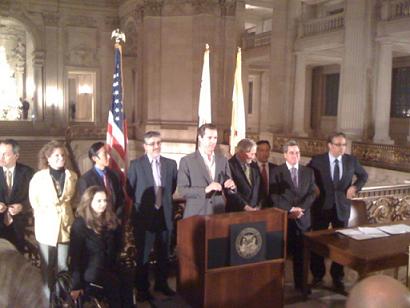
The Board of Supervisors has gone into recess with a split vote on either Ed Lee or Mike Hennessey as interim mayor. One supervisors have voted no on both nominees — and now holds the power to decide who the next mayor will be.

And Bevan Dufty, the wing vote, along with Sophie Maxwell, was just seen walking into the mayor’s office.

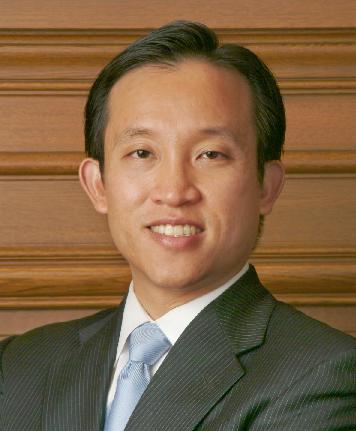
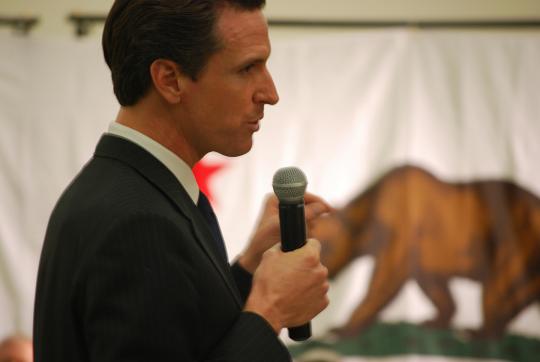
Not the way anyone thought this would come down; David Chiu wasn’t even nominated, and Art Agnos, who at one point looked close to the magic number of 6, only got 3 votes. It’s going to be close, with all the conservative supervisors voting for Lee and all the progressives except Chiu voting for Hennessey. It’s entirely possible that we’ll have at least a prospective new mayor tonight — that is, if Newsom ever decides to leave town.


Alerts

0

Alerts are compiled by Nicole Dial and Jackie Andrews

alert@sfbg.com

FRIDAY, JAN. 7


Noam Chomsky interview

Pick the brain of linguist and author Noam Chomsky as Wild Wild West Radio hosts an interactive cyber-convo with the influential professor and political dissident. Listeners may phone in questions or chat with Chomsky online for a unique, collective experience.

3 p.m., free

Wild Wild Left Radio

www.wildwildleft.com


San Francisco Bike Party

The new year brings a new kind of mass bicycle ride, one a bit more civilized than Critical Mass. Join the inaugural San Francisco Bike Party, a new monthly ride that begins at AT&T Park and follows a planned route through the city, obeying most traffic laws along the way. But it will still be a rolling party, complete with a mobile sound system and three party stops for dancing and socializing along the way.

7:30 p.m., free

Giants Stadium, Willie Mays Gate

www.sfbikeparty.org

SATURDAY, JAN 8


Board of Supervisors swearing-in

Members of the newly elected Board of Supervisors take their oath of office, followed immediately by the election of a new board president, who could also become acting mayor once Gavin Newsom is sworn in as California’s new lieutenant governor. Or if Newsom resigns by then, the board could also directly select a new interim mayor. It promises to be high political drama under the dome.

Noon, free

Room 250, City Hall

1 Dr. Carlton B. Goodlett Dr., SF

www.sfbos.org


Writers with Drinks

Writers with Drinks mixes genres and authors and throws in a dash of alcohol. It’s more than just a reading series, it’s also a celebration of performers, intellectuals, and writers from all over. This month it features writers Jane Wiedlin, Ethan Watters, Jesús Ángel García, and Blake Charlton. More good news: proceeds benefit the Center for Sex and Culture. 7:30 p.m.; doors open at 6:30 p.m.

$5 to $10, sliding scale The Make Out Room 3225 22nd St., SF www.writerswithdrinks.com

SUNDAY, JAN. 9


Found the Free University of SF

Matt Gonzalez, Alan Kaufman, and others are forming the new Free University of San Francisco, and they want public input. Organizers ranging from political activists to poet laureates will put on a public meeting to discuss plans for the university. The Free U aims to promote free higher level education for anyone who wants it. Future plans include a weekend-long teach-in Feb. 5–-6. Come down and help promote and organize free education. 10 a.m., free Viracocha 998 Valencia, SF 415-573-5766


Guantánamo Means Torture

Attend a public planning meeting for the national demonstration scheduled for Jan. 11 against the continuation of Guantánamo Bay’s detention facility. World Can’t Wait hosts the meeting here in San Francisco, and then travels to Washington, D.C., with Witness Against Torture, the Center for Constitutional Rights, and other activists to demand an end to the horrors of Guantánamo. 2:30 p.m., free Mechanics Library 57 Post, 415 864 5153

sf@worldcantwait.org

Jerry Brown wants to eliminate Redevelopment

10

Calitics reveals today that newly sworn-in Gov. Jerry Brown told the Sacramento Bee that he’s proposing to eliminate local redevelopment agencies as part of a set of austerity measures that he is proposing in a purported effort to shock folks into approving new revenues

Brown’s shocking proposal got me calling tenants rights activist Calvin Welch and Arc Ecology executive director Saul Bloom, who both have strong and well- informed views on what’s up with local redevelopment agencies and how they could be improved. And interestingly neither Bloom nor Welch was in favor of eliminating redevelopment.

Welch, who hadn’t yet had time to read the article when I called him, actually laughed when I outlined Brown’s basic idea, which admittedly is big on shock value and thin on explanations, at least at this point.
‘That would be very interesting, but the devil’s in the details.” Welch observed, noting that voters just approved Prop. 22 in Nov. 2010 to prevent the state from taking city redevelopment money to balance the budget in Sacramento. (Unfortunately, Prop. 22’s passage still doesn’t protect San Francisco from having its budget raided by the state, since it’s defined as both a city and a county.)

“That’s an astounding idea,” Welch added, trying to wrap his mind around Brown’s out-of-the-blue proposal. “Because in San Francisco, there are redevelopment areas, including Bayview Hunters Point, Mission Bay and the Transbay Terminal, that have already been authorized for another 25-30 years.”

“Perhaps the language would be ‘no new redevelopment’ but I don’t know how you would do that,” Welch added, noting that Brown has not only been governor before, but was also mayor of Oakland. (During his term as mayor, Brown was credited with starting the revitalization of Oakland but was also accused of being more interested in downtown redevelopment and economic growth than political ideology.)

Welch noted that San Francisco was fortunate in being able to reshape its Redevelopment financing arrangements in 1990 under then mayor Art Agnos.

“It was probably the most progressive and long standing reform of Art Agnos’ administration—and no one understands it,” Welch said. As Welch tells it, when Agnos came into office, he inherited a city that had been bankrupted by a decade of mayor Dianne Feinstein’s business-friendly policies, much like how San Francisco has been milked in the past decade by Newsom’s business-friendly policies.

“Redevelopment doesn’t pay its way in the post Prop. 13 world,” Welch stated. “Under Mayor Gavin Newsom, we’ve had the most market rate housing produced and the biggest deficits in what was a real estate collapse, as part of the collapse of the economic markets. And under Mayor Feinstein’s 10-year rule, we saw massive amounts of commercial office space built that never paid its way, leaving Agnos with a $103 million deficit.”

Welch notes that Agnos also inherited a huge homeless crisis (something Welch says Feinstein was in denial over) and that Agnos sought to reform Redevelopment in large part as a way to address the city’s growing lack of affordable housing. “Art basically said, let’s take a look at tax increment financing,” Welch said, referring to a tax financing arrangement, under which a municipality can a) do an assessed value of an area before redevelopment takes place, b) estimate what that same area’s local taxes would be after redevelopment, and c) borrow money against the incremental difference between a) and b).

“Art said, ‘I want to do that and I want to use the hundreds of millions of dollars available through redevelopment for affordable housing,’” Welch recalled. He noted that Agnos succeeded in his mission by shifting the San Francisco Redevelopment Agency’s mission from ‘urban renewal’ (which had negative connotations following the displacement of African American and other low-income communities from the Fillmore in the 1960s) to ‘community development,’ making Redevelopment subject to the same budgetary process as other departments, and insisting that 20 percent of tax increment financing dollars be devoted to affordable housing.
“But we said, ‘no, 50 percent has to be devoted to affordable housing and Art agreed, and that’s been the case since 1990,” Welch recalled. “And since then our Redevelopment Agency has been the principal source of affordable housing revenue in San Francisco.”

So, in another words, the San Francisco Redevelopment Agency is pretty much alone in the state, in terms of devoting half its tax increment financing revenues to affordable housing. But by the same token, San Francisco’s Redevelopment Agency is pretty much alone in the state in terms of not being governed directly by a city council or a county Board of Supervisors. Instead, it’s governed by a Commission, whose members are appointed solely by the mayor . And therein lies the problem, Welch says.
‘It would only take six votes on the Board of Supervisors, or eight votes to override a mayoral veto, to change that,” Welch observed.

But to date there haven’t been eight votes to do that, even with a progressive Board.
Welch believes the problem is that supervisors, who currently each only have two legislative aides, fear swampage from Redevelopment responsibilities.
“To contemplate taking over a multibillion dollar agencies and taking on the likes of Catellus with only two staffers, well it’s a recipe for disaster,” Welch said, acknowledging that additional reforms, including splitting appointments on the Redevelopment Commission between the mayor and the Board, or allowing the Board to hire additional legislative staff to work on redevelopment issues, could solve the problem.

Bloom, who recently sued after the Redevelopment Commission threw his non-profit under the bus, said his non-profit’s recent experience perfectly illustrates why and how Redevelopment should be reformed, rather than completely eliminated.
“Redevelopment is a process that has been much abused, so it’s easy to say, let’s get rid of it, but I’m not there, ”Bloom said, noting that his beef has been with the way his non-profit was treated by Redevelopment Commissioners, rather than Redevelopment staff.
“But I do believe there needs to be a modification of the process, in which redevelopment is put in the hands of an entity that is answerable to the public.”

Bloom believes this modification could be achieved by making the Board of Supervisors the governing body of the Redevelopment Agency, which is already the case in almost all municipalities in California.
“Give that role to the Board of Supervisors because you can fire your supervisor,” Bloom said, noting that currently there are no limits on how long individuals, who are appointed by the mayor, can serve on the Redevelopment Commission. ‘If you give that role to the supervisors, they will be able to utilize more staff to become better Board members. So, this is an opportunity to increase people’s participation in the process.”

Meanwhile, it’s possible that Brown’s threat to eliminate Redevelopment will be like the time Warren Buffett, who’d just been announced as then newly elected Gov. Arnold Schwarzenegger’s financial adviser, caused a brou-haha when he threatened to reform that even holier of cows, Prop. 13.


2010 Offies!

0

tredmond@sfbg.com

When a major conservative political movement starts using a name that typically refers to the act of scrotal fellatio, you know it’s morning again in America. In 2010, the teabaggers came home. They nominated candidates who think masturbation is selfish and wonder why monkeys aren’t still evolving into humans. They held rallies urging the government to “get out of my Medicare,” which happens to be a government program. Their leaders praised dictators and urged women who had been raped to look at the bright side of things.

And those were just the headlines.

It’s hard to imagine a year that could be worse than 2010 — but it was a great vintage for the Offies.

Presenting the Off Guard awards for the silliest, most insane, and absolute worst of the year that was.

AND SHE FIGURES IF WE ARREST EVERYONE WITH BROWN SKIN, WE CAN FINALLY GET THIS SORT OF BEHAVIOR UNDER CONTROL

Arizona Governor Jan Brewer told reporters that illegal immigration resulted in beheadings in the desert.

BUT AS LONG AS YOU DON’T TOUCH YOURSELF WHEN YOU THINK OF THE DEVIL, IT’S GOING TO BE OKAY

Christine O’Donnell, the Republican candidate for Senate in Delaware who decried masturbation as a “selfish act,” said she only dabbled in witchcraft and had just one date on a satanic altar.

EXCEPT THAT WE ALREADY ARE, AND WE ALREADY ARE

Jerry Brown said he opposed the state’s marijuana legalization measure because “we can’t compete with China if we’re all stoned.”

LOOK BUSY

A Pew Research Center poll showed that 41 percent of Americans think Jesus will return in the next 40 years.

HEY, IF WE’D JUST CREATED THE WORST ENVIRONMENTAL DISASTER OF THE DECADE, WE’D WANT A LITTLE BREAK, TOO

A few days after the worst oil spill in U.S. history, BP Chief Executive Tony Hayward complained that he wanted his life back.

BUT HE SWEARS HE’LL STOP AT BEHEADINGS

Insurance Commissioner Steve Poizner said if he were governor he’d give the National Guard live ammunition to shoot at immigrants on the border.

AFTER ALL, IF THEY’RE NOT IN AN AIRPLANE, THEY CAN’T DO ANY DAMAGE

GOP Senate candidate Carly Fiorina said that people on the federal no-fly list should have the right to own guns.

OOH, WHEN YOU TALK TOUGH LIKE THAT YOU ALMOST SOUND LIKE SOMEONE WHO COULD STAND UP TO THE REPUBLICANS. OR MAYBE NOT

President Obama asked whose ass he should kick at BP.

IT’S OKAY, THOUGH, AS LONG AS THEY WEREN’T ENGAGING IN ANY SELFISH ACTS

Staffers at the Securities and Exchange Commission got caught spending as much as eight hours a day downloading porn at the office.

AND SOMETIMES GOP CANDIDATES ARE NITWITS

Nevada GOP Senate candidate Sharron Angle praised Chilean dictator Augusto Pinochet for his efforts to privatize that country’s retirement system, saying “sometimes dictators have good ideas.”

YEAH, COME ON, WHY CAN’T YOU LOOK AT THE BRIGHT SIDE OF THINGS?

Sharron Angle said that women who have become pregnant as the result of rape or incest should “turn lemons into lemonade.”

DAMN GUMMINT TRYING TO INTERFERE WITH PRIVATE BIDNESS

GOP Congressman Joe Barton of Texas apologized to BP for a White House “shakedown.”

YES, AS A MATTER OF FACT I DO OWN THE WHOLE GODDAM SCHOOL

Meg Whitman’s son threw softball equipment over a fence to kick a group of computer science and physics students off the Princeton rugby field.

NICE, SINCE THOSE GROUPS ALL GOT ALONG SO WELL

GOP Senate candidate Chuck DeVore compared Palestinian activists to Nazis, Fascists, and Communists.

AND OF COURSE, THAT WORKS SO WELL WITH MODERN MANAGED CARE

Nevada banned chicken costumes from the polls after Nevada Senate candidate Sue Lowden said that people should barter with doctors for health care the way “our grandparents would bring a chicken to the doctor.”

ANOTHER GREAT MOMENT IN THEOLOGY FROM THE MAN WHO BROUGHT YOU THE PEDOPHILE PRIEST COVER UP

Pope Benedict said it was okay for male prostitutes to wear condoms.

SO HE’S GOT THAT GOING FOR HIM. WHICH IS NICE

Formerly classified State Department cables revealed that the premier of Korea is still an excellent drinker.

ACTUALLY, THEY TOOK ONE LOOK AT THE TEA PARTY AND DECIDED THEY WERE BETTER OFF AS THEY ARE

Senate candidate Christine O’Donnell said that evolution was a myth; after all, she wondered, “why aren’t monkeys still evolving into humans?”

THE CHURCH HAS ALWAYS BEEN KNOWN FOR ITS SENSE OF PERSPECTIVE

The Vatican announced that the ordination of women and the abuse of children were both “grave crimes.”

THAT’S OKAY, IT WILL LOOK GOOD ON HIS RESUME

Gavin Newsom decided to run for lieutenant governor after saying he didn’t know what the job was.

YOUR TAX DOLLARS AT WORK, CIA EDITION

The United States held high-level negotiations with a supposedly senior Taliban operative who turned out to be a Pakistani shopkeeper.

BUT WAIT — HOW WILL WE KNOW IF WE’RE SUPPOSED TO WORRY OR NOT?

The Department of Homeland Security abandoned color-coded safety alerts.

THE INTELLIGENCE AND CULTURAL TASTE OF THE AMERICAN PEOPLE IS SIMPLY STAGGERING

Sarah Palin’s daughter, Bristol, made it to the final round of Dancing with the Stars.

WHICH MAKES HIM ENTIRELY QUALIFIED TO SERVE AS A REPUBLICAN POLITICIAN

Dan Quayle’s son ran for Congress in Arizona and admitted that he had been posting on “dirty Scottsdale” under the name of Brock Landers, a sidekick to porn star Dirk Diggler.

IS HE ONE OF THE NAZI FASCIST COMMUNISTS, TOO?

Rand Paul said Obama’s criticism of BP was “un-American.”

WAIT — WAS THAT A BROWN ALERT?

The California Highway Patrol shut down its South Lake Tahoe office after officers found an anal vibrator and thought it was a bomb.

HONESTY IS JUST PART OF THE PROCESS OF RECOVERY

Tiger Woods admitted that he sucked.

EXCEPT THAT IT MOSTLY BENEFITS THE INSURANCE INDUSTRY

Vice President Joe Biden called the health reform bill “a big fucking deal.”

IT’S THOSE CUTE WOODEN SHOES, YOU SEE

NATO Commander John Sheehan said Dutch soldiers were too gay.

DAMN, AND HE’S SUCH AN ATTRACTIVE MAN. I’M SURE THE TSA FOLKS WERE REALLY LOOKING FORWARD TO IT

John Tyner told Transportation Security Administration officials in San Diego that if “you touch my junk, I’ll have you arrested.”

AND HE WASN’T EVEN TALKING ABOUT HER

Sarah Palin demanded that Rahm Emanuel apologize for using the term “fucking retarded.”


SINCE WE ALL KNOW THOSE PEOPLE DON’T KNOW HOW TO SPEAK IN PUBLIC

MSNBC Host Chris Matthews was so excited by an Obama speech that he said he “forgot he was black.”

THE CUSTOMER IS ALWAYS RIGHT

Pacific Gas & Electric Co. spent $50 million on a ballot initiative to stop public power, and lost after getting soundly defeated in every county where the utility has customers.

YOU MAY BE PART OF THE FAMILY, BUT WHEN IT COMES TO MY POLITICAL CAREER, HONEY, YOU’RE OUT THE DOOR

Meg Whitman fired her housekeeper when she found out she was in the country illegally.

BUT THEY’RE ALIKE ANYWAY, RIGHT?

Sharron Angle defended a campaign ad depicting menacing-looking Hispanic men by telling members of the Hispanic Student Union at the University of Nevada, Las Vegas that many of the members looked Asian.

OF COURSE, SHE SKIPPED THE FIRST FEW AMENDMENTS — BOOORING!

Christine O’Donnell said she couldn’t find anything about the separation of church and state in the Constitution.

BECAUSE IN A FIREFIGHT, THE FIRST THING ANYONE WOULD BE THINKING ABOUT IS HIS SERGEANT’S CUTE ASS

Sen. John McCain said he opposed ending “don’t ask, don’t tell,” talked about all the soldiers and Marines who lost limbs, and said that “when your life is on the line, you don’t want anything distracting.”

SINCE WE ALL KNOW THAT HEALTH INSURANCE MAKES YOUR PEE SMELL FUNNY

Federal judge Henry Hudson asked Obama administration officials whether the new health care plan was similar to forcing all Americans to eat asparagus.

SO IT’S JUST AS WELL THOSE PEOPLE ON THE NO-FLY LIST HAVE THE RIGHT TO KEEP AND BEAR ARMS

Sharron Angle said that the Obama administration’s policies might require “Second Amendment solutions.”

IT’S PERFECTLY FINE FOR HOMOSEXUALS TO ATTEND MARRIAGE CEREMONIES, AS LONG AS THEY’RE JUST THE HIRED HELP

Sir Elton John played at Rush Limbaugh’s wedding.

SURE, GREAT FUN. JUST LIKE SHOOTING YOUR FRIENDS WITH A HUNTING RIFLE

Dick Cheney said he had been a “big supporter of water boarding.”

DAMN, SUPERVISOR, THE OFFIES WILL MISS YOU

Chris Daly vowed to say “fuck” at every single board meeting in 2010.

Backroom meetings precede today’s mayoral succession vote

12

There’s been a flurry of political speculation and backroom discussions leading up to today’s final meeting of the current Board of Supervisors, which is scheduled to consider appointment of a successor mayor to Gavin Newsom starting at 3 p.m., despite Newsom’s refusal to vacate the office and assume the duties of lieutenant governor as he was supposed to yesterday.

After Kamala Harris took her oath of office as attorney general yesterday, Newsom now has the power to appoint a new district attorney, which he’s likely to wrap into his efforts to thwart progressive supervisors from appointing an interim mayor of their liking. So all eyes are on Newsom, as well as Board President David Chiu, and sources tell the Guardian that the two men met this morning behind closed doors.

Could Newsom appoint Chiu as the new DA in exchange for his support on naming a moderate as caretaker mayor? That possibility has progressives bristling with anger and privately threatening to aggressively go after Chiu if he cuts that kind of deal. The other way that Chiu might earn the progressive wrath is if he cuts a deal to become interim mayor that involves lots of support from the moderates.

But it’s also possible that most board progressives would back Chiu for interim mayor, although Sup. David Campos has so far been the most reluctant among progressives to support Chiu, who generally votes with progressives but who has cut a few high-profile deals with Newsom. Sup. Chris Daly told us that he will nominate Aaron Peskin for interim mayor today and Sup. Ross Mirkarimi is backing Art Agnos, who appears to have five votes but probably not six. The moderates are likely to push for Sheriff Michael Hennessey, although Newsom’s stated hope that the board consider his Chief of Staff Steve Kawa is a fantasy that only Newsom is seriously entertaining.

So far, Chiu and his people have been playing their cards fairly close to their vests, so it will be high drama going into today’s meeting. But what happens today is anyone’s guess, with the possibilities ranging from a deal to name a new mayor and DA to another anticlimactic punt of the decision on to the next board, which will be sworn in this Saturday.

Stay tuned.

Progressive supervisors block mayoral appointments

15

UPDATED: Progressives on the Board of Supervisors have finally started to push back on Mayor Gavin Newsom for his petulant refusal to vacate Room 200 unless his conditions for choosing a successor mayor are met, with the Rules Committee today blocking nine [UPDATE: seven] of 10 of the mayor’s committee and commission appointments.

Led by Sups. David Campos and Eric Mar, the three-member committee has been voting to continue consideration of the appointees to a future date at the discretion of Chairman Campos, even those who they voice support for. But they are trying to force a more equitable approach to governing the city during this transition period. The meeting is ongoing at this writing and can be viewed live here.

The one exception so far has been San Francisco Public Utilities Commission appointee Vince Courtney, with Mar and Campos voicing the urgency of filling the appointment on a body that is now moving forward Clean Power SF and other important initiatives. But they have blocked the appointment of Andrew Wolfram, Richard Johns, and Karl Kasz to the Historic Preservation Commission, Harry Kim and Herb Cohn to the Relocation Appeals Board, Florence Kong to the City Hall Preservation Advisory Board, Leona Bridges to the Municipal Transportation Agency Board of Directors, and Michael Kim and Leslie Katz to the Port Commission.

Former Sup. Amos Brown lashed out at the move, telling the committee, “I’m appalled to witness what’s happening here.”

But progressives have been equally appalled at Newsom for delaying today’s scheduled swearing in as lieutenant governor, reportedly to Jan. 10 after the new board is sworn in, and for demanding that the supervisors guarantee him that they will only support one of his preferred moderate caretakers for the interim mayor position. Newsom’s office did not return a Guardian call for comment on today’s meeting.

UPDATE 1:25 PM: After hearing more than an hour’s worth of testimony in support of Bridges, the committee unanimously voted to recommend her nomination to the MTA, citing that agency’s urgent need for a nominee from the African-American community who has a strong financial management background. The full board will consider her nomination tomorrow.

UPDATE 2:20 PM: Shortly before adjourning, the committee also unanimously recommended Katz be appointed to the Port Commission, saying that agency urgently needs another good appointee, although Mar indicated he didn’t think Kim was right for the position and that nomination was continued.

All candidates duck; mayoral forum cancelled

15

I was all excited about moderating a Harvey Milk Club discussion tonight on the next mayor, and getting a chance to ask the candidates who want to fill out Gavin Newsom’s term a little about what they might do in the next 11 months. It’s kind of important; you’d think the folks who want the job would be willing to give us a little clue about why they think they should have it.


But guess what? Not a single potential candidate was willing to show up. Art Agnos, Mike Hennessey, Ed Harrington … they all either declined or said they couldn’t make it.


That, my friends, is really lame — and not a good sign for San Francisco.


At any rate, the forum would have been open to the public, has been cancelled.

Out with the old

6

On the chilly morning of Dec. 21, a crowd of prominent local and state figures huddled in an industrial parking lot overlooking the brick smokestack of the Potrero power plant, which has been in operation for more than 40 years. It was the winter solstice, the morning after a lunar eclipse, and an historic environmental moment for San Francisco.

A longstanding battle to shut down the aging, polluting power plant was finally coming to an end, and it would be effectively shuttered as the calendar flipped to the new year. Although the past decade had been marked by political infighting and a relentless push to persuade the California Independent System Operator (CAISO) to shut it down sooner, the tone that day was buoyant as people made the rounds, embracing one another and offering congratulations and thanks.

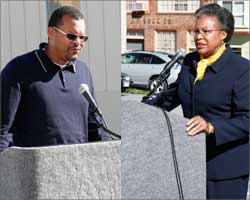
Among those who lined up before the media were Mayor Gavin Newsom, who will be sworn in as lieutenant governor in early 2011; Sup. Sophie Maxwell, whose 10 years on the Board of Supervisors is coming to a close; City Attorney Dennis Herrera, who’s thrown his hat into the mayoral race; and San Francisco Public Utilities Commission General Manager Ed Harrington, whose name has been floated as a contender for interim mayor.

Each of these local politicians played a role in the contentious battle to close the plant, and each candidly admitted that shouting matches on the subject had erupted over the years. Yet they all expressed thanks to one another and to community members in the Potrero Hill, Dogpatch, and Bayview/Hunters Point neighborhoods, where residents were most directly affected by the noxious air pollution generated by the plant.

“They say it takes a village to raise a child. Well, it takes a state and a city to close this power plant,” said Maxwell, whose District 10 includes the neighborhoods affected by the power plant. “I started working on these plants when I took office, and now the plants are leaving with me.” Maxwell was credited with displaying dogged persistence and playing an instrumental role in pushing for the shutdown the plant.

“There were a lot of phone calls, there were a lot of arguments, there were a lot of disputes. But the fact of the matter is that everybody was focused on the same goal — and that was getting this plant shut down,” said Herrera, who has also been a key player in the decade-long fight to shut down the plant.

Newsom sounded a similar note. “I want to compliment everybody for their steadfastness and their devotion to this process,” the mayor said. “We didn’t always necessarily agree.”

Joshua Arce, who worked with community members to shut down the plant as part of his work with the Brightline Defense Project, was clearly pleased by the announcement. “It’s a fantastic day. We’re at last going to see the billowing smokestack come down, and for good,” Arce said.

The shutdown finally came to pass because the CalISO, which regulates the state power grid, was willing to accept new energy system upgrades as sufficiently reliable. For years, despite the community’s insistence that the plant was having an unacceptable impact on public health and disproportionately affected low-income communities of color, CalISO refused to terminate a contract requiring the plant to stay in operation for grid-reliability purposes.

However, new pieces to the city’s energy puzzle were recently fitted into place. The Trans Bay Cable, a 53-mile submarine power line that can transmit 400 megawatts of electricity from a Pittsburg generating station to San Francisco, became fully operational Nov. 23, months behind schedule. Meanwhile, a Pacific Gas & Electric Co. re-cabling project deemed important to San Francisco’s electricity reliability was completed Dec. 5.

“This plant has been part of the reliable supply for San Francisco … for a long time. And more recently, it actually provided the security for San Francisco should anything happen outside of San Francisco,” Yakout Mansour, president and CEO of the CalISO said during the shutdown ceremony. “But the time is here to replace the plant with an alternative to make the city more secure and reliable with much less polluting options.”

The CalISO issued a letter to the plant owner, which recently merged with another company and changed its name from Mirant to GenOn, stating that the must-run agreement would be terminated effective Jan. 1. The date of the final termination is Feb. 28, pending approval from the Federal Energy Regulatory Commission (FERC).

Now the major question is what will become of the power plant site, a vast strip of industrial real estate wedged between Illinois Street and the waterfront. “Many ideas have been thrown out there. People have come to us and said everything from office and industrial and research and development, to wind turbines,” noted Sam Lauter, a local spokesperson for GenOn. Lauter noted that community meetings would be held soon to discuss the future site use.

The site was previously owned by PG&E, and the utility is responsible for cleaning up lingering toxic residue including lampblack, a byproduct of coal processing, left behind when PG&E sold the site. Because of the pollution, residential units cannot legally be constructed on the site, even after cleanup.

There is one unfortunate consequence to shuttering the plant. According to plant manager Mike Montany, five or six of the 28 employees of the plant will lose their jobs. The rest will either retire or go to work at a new facility, he said.

While San Francisco will be poised to ring in the new year with improved air quality thanks to the elimination of its last polluting energy facility, residents of the area where the city’s power will now be sourced from won’t be so lucky. They are faced with the construction of two new power plants. The undersea Trans Bay Cable will run from the PG&E’s substation in San Francisco — a humming network of cables and transformers located beside the power plant that will stay put after the shutdown — to a generating station in Pittsburg, located in the delta near the confluence of the Sacramento and San Joaquin rivers.

GenOn owns the Pittsburg power plant, and it recently held a groundbreaking ceremony for a new power plant in neighboring Antioch, called Marsh Landing. At the same time, the California Public Utilities Commission (CPUC) recently gave the green light for another new power plant in that area. The $1.5 billion PG&E facility would be located in Oakley, which borders Antioch. It won commission approval Dec. 16, despite an earlier decision rejecting the proposal.

The plans for new power plants were approved just after the conclusion of an important United Nations convention on Climate Change in Cancún, Mexico, and amid news reports highlighting scientists’ conclusion that polar bears have a shot at survival only if serious efforts are taken to reduce greenhouse gas emissions. While the cheerful ceremony to shut down the Potrero power plant was a satisfying conclusion to a long battle, there’s a long road yet ahead in the overarching struggle against climate change.

Alerts

0

steve@sfbg.com

FRIDAY, DEC. 31


Critical Mass

Pedal your way toward a strong finish of 2010 by taking part in Critical Mass, a monthly San Francisco tradition for more than 15 years. As always, this leaderless group bicycle ride follows no set route and obeys no traffic laws or authorities, except yielding to pedestrians and emergency vehicles. This month, a group of anarchists (marked with black flags or other variations on that theme) plans to end up in the Mission District liberating a public space for a DIY New Year’s Eve celebration, so look out for that if that’s your bag.

6 p.m., free

departs from Justin Herman Plaza

Market and Embarcadero, SF

www.sfcriticalmass.org

MONDAY, JAN. 3


The next mayor?

In order to finally facilitate a public discussion of who San Francisco’s next mayor should be and how the prospective nominees would run the city, the Harvey Milk LGBT Democratic Club is sponsoring a forum for mayoral hopefuls. Club members have been concerned about the lack of public process for replacing Mayor Gavin Newsom (see “Mayoral dynamics,” Dec. 22), so they’ve invited the top candidates — including former Mayor Art Agnos, Sheriff Michael Hennessey, SFPUC head Ed Harrington, and others — to share their vision for 2011 and beyond. The event is cosponsored by SEIU Local 1021 and moderated by Guardian Executive Editor Tim Redmond.

6 p.m., free

SF LGBT Center

1800 Market, SF

www.milkclub.org

TUESDAY, JAN. 4


Newsom’s last stand

Join the outgoing San Francisco Board of Supervisors for its final scheduled meeting — and the final opportunity for the current board to select Mayor Gavin Newsom’s successor before the newly elected board takes over Jan. 8. At press time, Newsom was still threatening to delay his Jan. 3 swearing-in as California’s new lieutenant governor to prevent the current board from replacing him, so come see how that drama plays out and weigh in with your thoughts.

2 p.m., free

Room 250, City Hall

1 Dr. Carlton B. Goodlett Dr., SF

www.sfbos.org

WED. JAN. 5


Chris Daly Roast

We don’t usually list events for the following week’s paper, but this is one that lovers and haters of outgoing Sup. Chris Daly — which pretty much describes most San Franciscans — will want to mark on their calendars. The classic roast features John Burton, Aaron Peskin, Carolyn Tyler, and Dan Noyes, with Mistresses of Ceremonies Melissa Griffin and Beth Spotswood.

8 p.m., $20 (benefits St. James Infirmary ), or $5 after 10 p.m.

The Independent

628 Divisadero, SF.

Mail items for Alerts to the Guardian Building, 135 Mississippi St., SF, CA 94107; fax to (415) 437-3658; or e-mail alert@sfbg.com. Please include a contact telephone number. Items must be received at least one week prior to the publication date.


Editor’s Notes

0

tredmond@sfbg.com

Art Agnos spent six terms in the California Assembly and four years as mayor; he doesn’t need my political advice. But I gave it to him anyway the last time I saw him, when he expressed an interest in serving out the remainder of Gavin Newsom’s term.

Agnos and I were not close when he was running San Francisco; the Guardian supported him strongly for the job, but we were quickly disillusioned, not just by his nearly instant sellout to Pacific Gas and Electric Co., but by his apparent disdain for public process. But now he’s retired, and living on Potrero Hill near the Guardian office, and I see him on the streets when I’m going to buy lunch at Hazel’s and he’s walking his dog, and we have pleasant chats about politics. He’s mellowed. At 72, he seems to have a bit more perspective on what he did right — and wrong.

At any rate, when he told me that he’d be willing to serve as a caretaker mayor — and I got a sense that he’d actually like to do it — I told him this: you can’t just talk to me and a few supervisors. You want to be mayor of San Francisco, even for 11 months, you have to go out and talk to the people who spend their lives trying to make this a better place. The same goes for Ed Harrington, Mike Hennessey, and anyone else who wants the job.

Here’s the odd thing about the next mayor: For better or for worse, the person who takes over whenever Newsom finally decides to go to Sacramento will be directly accountable only six supervisors (or seven or eight, in the unlikely event that anyone gets that kind of majority). If the interim mayor is really a caretaker and never seeks reelection, it’s possible that the voters and the activist groups that define San Francisco won’t be part of the next administration’s political calculus.

And that would be a mistake.

The progressive movement in San Francisco is much stronger and more organized than it was when Agnos first ran for mayor in 1987. And if the progressive majority on the board chooses a mayor, there will be high expectations — not just for policy, but for openness and inclusiveness. After being shut out for seven years, a whole lot of people are going to want to be able to walk into the Mayor’s Office and feel welcome.

And that process starts now.

There are all kinds of arcane state laws that limit the ability of the current or incoming supervisors to campaign for the mayor’s job. But we already know who they are — they’ve been campaigning and meeting with groups and constituents regularly over the past couple of years. Not so with the outside candidates.

What mix of new revenue and cuts would Harrington seek to balance the budget? How would Hennessey address pension reform? Where’s Agnos on implementing community choice aggregation? I’m not the only one who wants to know.

There’s this ethos among these guys that it’s unseemly to be trying too hard to get the job, that it’s better to sit back and be asked — and part of that is the reality that it’s going to suck trying to balance the city’s books, and it won’t be a fun 11 months, and some of them would just as soon not bother. But there’s no shame in wanting to be mayor, or interim mayor. If you want it, say so — and tell us all what you’d do.

I’m moderating a Harvey Milk Club panel discussion Jan. 3 and all the prospective candidates are invited. The least any potential mayor can do is show up and answer questions.

Get out of the way, Mr. Mayor

4

EDITORIAL Let us begin with the obvious: Mayor Gavin Newsom has absolutely no business deciding who should replace him. His petulant statements suggesting that he will delay taking office as lieutenant governor until the supervisors pick a candidate he likes are an embarrassment to the city. If he actually refuses to take the oath of office Jan. 3, when his term in Sacramento begins, it will damage his reputation and political career.

Newsom knew when he decided to seek higher office that he’d be leaving the city early if he won. He knew that under the City Charter, the Board of Supervisors would choose a new mayor. He knew that a progressive majority on the board was likely to elect someone whose political views differ from his. If he didn’t want that to happen, he should have stayed in town and finished his term.

Instead, his ambition and ego drove him to Sacramento, and he needs to accept that he is now out of the process. He should publicly agree to follow the state Constitution and join Governor-elect Jerry Brown for a timely swearing-in ceremony. Meanwhile, the supervisors need to make it very clear that they won’t accept this sort of political blackmail and will choose the next mayor on their own terms.

There’s only one more regularly scheduled meeting of the current board, on Tuesday, Jan. 4, the day after Newsom’s term as lieutenant governor begins. It’s unfortunate that the progressive majority on the board hasn’t been able to find a consensus candidate, and it’s appearing more and more likely that the next mayor will be a short-termer, a caretaker who agrees to fill out Newsom’s term. We’ve consistently argued that Newsom’s successor ought to be someone who can run for a full term in November, but there’s certainly a case to be made for the right person to take on the job for just 11 months. A progressive caretaker could fire all the failed managers left over (at high salaries) from Newsom’s tenure and make cuts to sacred cows like the police and fire departments without worrying about reelection. We’d still rather see a candidate with the courage and skill to make the tough choices and run in November on that record. But if that’s not possible, it’s important that an interim mayor be chosen carefully.

It’s also important that the progressive supervisors consider the long-term implications of their choice: If the next mayor only serves out Newsom’s remaining time, who’s going to run in November — and what will the interim mayor do to promote the prospects of a progressive candidate?

A number of names are floating around as possible caretakers, and several would do at least an adequate and perhaps an exceptional job. Former Board President Aaron Peskin has brilliant political instincts and knows how to run the city; he’s let us down on a few votes, but would work well with the progressive board majority. Sheriff Mike Hennessey is popular with the voters and has good progressive credentials (other than the move to privatize jail health services, which makes him somewhat unpalatable to labor), but he’s never faced anything resembling the political nightmare of the city’s current fiscal crisis. Sup. Ross Mirkarimi has a great legislative record and has hinted that he’d consider the job, but he still has two years to go as supervisor and would have to give up his seat and put his political career on hold. Former Mayor Art Agnos is the only one on the list who’s actually run the city at a time of crisis and would certainly be willing to make the tough decisions. If he could run an open office and listen to a diverse constituency, he might make up for the mistakes he made his first time in the job.

None of these candidates could do the job alone — and if they want to serve a short term as mayor, they need to start talking openly about it, explaining what their plans would be and give San Franciscans (and not just six supervisors) a reason to support them.

EDITORIAL: Get out of the way, Mr. Mayor

36

 Let us begin with the obvious: Mayor Gavin Newsom has absolutely no business deciding who should replace him. His petulant statements suggesting that he will delay taking office as lieutenant governor until the supervisors pick a candidate he likes are an embarrassment to the city. If he actually refuses to take the oath of office Jan. 3, when his term in Sacramento begins, it will damage his reputation and political career.

Newsom knew when he decided to seek higher office that he’d be leaving the city early if he won. He knew that under the City Charter, the Board of Supervisors would choose a new mayor. He knew that a progressive majority on the board was likely to elect someone whose political views differ from his. If he didn’t want that to happen, he should have stayed in town and finished his term.

Instead, his ambition and ego drove him to Sacramento, and he needs to accept that he is now out of the process. He should publicly agree to follow the state Constitution and join Governor-elect Jerry Brown for a timely swearing-in ceremony. Meanwhile, the supervisors need to make it very clear that they won’t accept this sort of political blackmail and will choose the next mayor on their own terms.

There’s only one more regularly scheduled meeting of the current board, on Tuesday, Jan. 4, the day after Newsom’s term as lieutenant governor begins. It’s unfortunate that the progressive majority on the board hasn’t been able to find a consensus candidate, and it’s appearing more and more likely that the next mayor will be a short-termer, a caretaker who agrees to fill out Newsom’s term. We’ve consistently argued that Newsom’s successor ought to be someone who can run for a full term in November, but there’s certainly a case to be made for the right person to take on the job for just 11 months. A progressive caretaker could fire all the failed managers left over (at high salaries) from Newsom’s tenure and make cuts to sacred cows like the police and fire departments without worrying about reelection. We’d still rather see a candidate with the courage and skill to make the tough choices and run in November on that record. But if that’s not possible, it’s important that an interim mayor be chosen carefully.

It’s also important that the progressive supervisors consider the long-term implications of their choice: If the next mayor only serves out Newsom’s remaining time, who’s going to run in November and what will the interim mayor do to promote the prospects of a progressive candidate?

A number of names are floating around as possible caretakers, and several would do at least an adequate and perhaps an exceptional job. Former Board President Aaron Peskin has brilliant political instincts and knows how to run the city; he’s let us down on a few votes, but would work well with the progressive board majority. Sheriff Mike Hennessey is popular with the voters and has good progressive credentials (other than the move to privatize jail health services, which makes him somewhat unpalatable to labor), but he’s never faced anything resembling the political nightmare of the city’s current fiscal crisis. Sup. Ross Mirkarimi has a great legislative record and has hinted that he’d consider the job, but he still has two years to go as supervisor and would have to give up his seat and put his political career on hold. Former Mayor Art Agnos is the only one on the list who’s actually run the city at a time of crisis and would certainly be willing to make the tough decisions. If he could run an open office and listen to a diverse constituency, he might make up for the mistakes he made his first time in the job.

None of these candidates could do the job alone and if they want to serve a short term as mayor, they need to start talking openly about it, explaining what their plans would be and give San Franciscans (and not just six supervisors) a reason to support them. 


Spoiled mayor wants to get his way

10

I guess it’s no surprise that Gavin Newsom takes his political cues from the San Francisco Chronicle editorial board. But this spoiled-kid choose-a-mayor-I-like-or-I-won’t-leave attitude isn’t pretty. Newsom has chosen a new office; it’s no longer his business who the folks he left behind want to put in Room 200.


And here’s what’s silly: If he wants a caretaker mayor, he’s not helping things with this approach. I actually think the incoming board is less likely to pick a caretaker. And the overall political leaning of the new board isn’t that different than the current board.


Newsom even seemed to acknowledge that: “I wonder what the big difference is now the more I work through the math.”


So why exactly is he doing this? Just to make the Chron folks feel important? Just to leave us with one last show of petulance? Or has he cut some sort of deal with the incoming supervisors? And which candidate does he want, anyway? because if it’s Ed Harrington, I hope he’s worked through the math — there’s no way Harrington gets six votes on the new board, unless either David Chiu or Jane Kim goes totally south and decides to support a pro-PG&E candidate who will only continue the worst of Newsom’s policies.


Frankly, I don’t see it happening.


Gavin: You’re done. You can’t choose the next mayor; you don’t have the votes. So quit whining and move on.


Year in Music: Jesse Kivel of Kisses’ Top 10 Albums of 2010

0

Beach House, Teen Dream
CEO, White Magic
Nite Jewel, Am I Real?
El Guincho, Pop Negro
Owen Pallett, Heartland
The National, High Violet
Joanna Newsom, Have One On Me
Ra Ra Riot, The Orchard
Delorean, Subiza
Ariel Pink’s Haunted Graffiti, Before Today

Kisses, “Bermuda”:

Does Mayor Newsom represent SF workers or San Mateo politicians?

2

“Does Newsom represent local workers or San Mateo politicians?” That’s the question being asked  at City Hall today. And it’s threatening to deliver an unwelcome kick to Mayor Gavin Newsom on his way out of City Hall’s revolving doors, as dozens of unemployed construction workers deliver 1,000 Christmas cards that residents of Bayview Hunters Point, Chinatown, the Mission, the Tenderloin and South of Market have signed. The cards urge Mayor Gavin Newsom to “put the Merry into Christmas and the Happy back into New Year” and sign local hire law that the Board passed a week ago.

This special holiday season delivery has been in the works since Dec. 14, when Bayview-based job advocates Aboriginal Blackmen United (ABU) tried to meet with Newsom and get his signature on legislation that a super-majority on the Board support.

But after Newsom was a no-show and his chief of staff Steve Kawa refused to give ABU any assurances, community advocates Brightline Defense Project printed up a thousand of the cards urging Newsom to “put the Merry into Christmas”. And Brightline, ABU, Chinese for Affirmative Action, PODER, and the A. Philip Randolph Institute then asked unemployed workers, activists, and concerned citizens to sign this unusual set of greeting cards.

The move comes a day after the San Mateo County Board of Supervisors voted unanimously to urge Newsom to veto Avalos local hire policy. Local hire advocates suspect this counter-move was orchestrated to give Newsom political cover, should he choose to make the seemingly Scrooge-like move of vetoing, just before the holiday season, legislation that would help San Francisco residents secure work on billions of dollars worth of local tax-payer funded construction projects .

But the San Mateo supervisors claim that San Francisco’s plan, which would mandate that 50 percent of workers on city-funded projects are local residents, threatens to hurt an already sluggish regional economy.

“This is not the time to put isolation around a community,” San Mateo Sup. Carole Groom reportedly said at a hastily convened Dec. 21 special session.
 “If this is rejected, it would be time for all of us to sit down and talk about this,” fellow San Mateo County Sup. Adrienne Tissier reportedly said.

Newsom has until Christmas Eve to either sign or veto the law, though the Board can still override his veto, provided Avalos still has eight votes in the New Year. And if Newsom doesn’t sign or veto the law by week’s end, it will go into effect in 60 days.


San Mateo officials are arguing that the local hire legislation particularly impacts their county, because the law contains a “70-mile” clause that includes the San Francisco Airport, the Hetch Hetchy water system and the San Bruno jail.

Sup. John Avalos previously told the Guardian that project labor agreements protect workers at the airport and working on projects that the San Francisco Public Utilities Commission funds. But Tissier reportedly claimed that San Francisco’s local hire policy would kick in, once new contracts are negotiated.

Reached by phone, Avalos said it’s not clear if the San Mateo supervisors have actually read his legislation
‘If they had, they’d see a lot of ways that is supports San Mateo workers,” Avalos said.

San Francisco’s local hire legislation, which is the nation’s strongest, requires that 20 percent of workers within each construction trade be local residents starting in 2011. That number increases 5 percent annually for seven years, as local workers join trades where community representation is lacking, before reaching 50 percent. In other words, 80 percent of the workforce could be non-city residents in 2011, and even at 50 percent local hire, half of the jobs will still be available to workers who don’t live in San Francisco.
 
“That’s hardly an exclusion especially when you consider that San Francisco taxpayers are making the investments on these projects,” Avalos stated.
He believes that the San Mateo County Building Trades Council pressured the San Mateo Board to pass their Dec. 21 resolution urging a veto on his measure. Either way,  Victor Torreano, vice president of the San Mateo County Building Trades Council was quoted in media coverage of the Dec. 21 vote, saying, “the need for housing in San Francisco and the Peninsula make it impossible for many blue collar workers from sinking family roots in the area.”

Avalos acknowledges that San Francisco International Airport is in San Mateo County, and its workers understandably wants jobs there,
“San Mateo County has to put up with the sound of the airport, and its residents deserve to have jobs there, but this is much ado about nothing,” Avalos said. “But it’s the Building Trades that are uncomfortable with changing slightly their practices.”

Mike Theriault, Secretary-Treasurer of the San Francisco Building Trades Council, acknowledged that his group has never been pleased with Avalos’ legislation.

“But we are resigned to seeing how it plays out,” Theriault told the Guardian. “We think there are better things they could have done to guarantee access of San Francisco residents to careers in our trades.”

Theriault believes that Avalos may not understand the project labor agreement are of limited duration.
“So, they will require an extension of the existing labor agreement,” Theriault said,  noting the legislation states that future extensions would have to comply with the new law.

But Theriault acknowledged that with or without Newsom, Avalos’ legislation still has a chance to move forward.
“If he vetoes it, I understand that the Board will have another crack at it, Jan. 4,” THeriault said, referring to the current Board’s last meeting in January.
 
The Bay Area Council has also announced its opposition to Avalos’ legislation,
 “This troubling trend of intra-county battles being started by the San Francisco Board of Supervisors needs to stop,: Bay Area Council President and CEO Jim Wunderman said in a Dec. 21 statement. “The Bay Area is one regional economy, not nine island states. We need to focus on nurturing the fragile economic recovery in our region, not setting bad policies that pit county against county.  The Bay Area Council urges Mayor Newsom to veto this foolhardy piece of legislation.  Right now, we do not need any more incentives for businesses to leave any county, the Bay Area, or California.”

But advocates for the legislation note that the San Francisco Controller recently estimated that the law will pump $270 million into the local economy over the next 10 years. They hope Newsom will emerge from his warren-like office today and sign the law, delivering a historic Christmas present to the city’s growing ranks of unemployed workers.


But even if he doesn’t, Avalos isn’t sweating it.


“Newsom probably won’t sign it, and he’ll write a letter saying he’s opposed to it,” Avalos predicted. “And even if the new mayor is [SFPUC director] Ed Harrington, he’s been supportive of the measure. So Newsom has to answer his own conscience and ask himself, if he’s going to represent local residents or San Mateo politicians.”


According to Brightline’s Joshua Arce, ABU led about 30 to 40 workers from Bayview, Chinatown, and the Mission up to Room 200 today to drop off 1,000 signed  cards from residents in every neighborhood asking the Mayor to sign the community’s local hiring law by Christmas.
 
“Room 200 was locked, but we kept knocking,” Arce told the Guardian. “Eventually the doors opened and out came [Mayor Gavin Newsom’s chief of staff] Steve Kawa. We showed him all of the Christmas cards that we had for his boss and he thanked us. Ashley Rhodes of ABU explained that since we heard how much the Mayor liked the ABU holiday card last week, we printed up 1,000 more and got them signed by people from every community in San Francisco.”
 
“We asked where the Mayor was in terms of making his decision, he said that the Mayor was still studying all of the issues,” Arce continued. “He brought up the opposition from the San Mateo County Board of Supervisors, so we asked him to tell the Mayor to support us, the thousands of unemployed and job-hungry San Franciscans, over four San Mateo politicians.”
 
“Steve Kawa said that they will be working around the clock to make sure all concerns are addressed, and we showed Steve a card signed by Sup. Bevan Dufty just moments before we came upstairs,” Arce addded. “Sups. John Avalos and Eric Mar also signed Christmas cards to the Mayor.”

According to Arce, ABU left the two huge Santa bags full of cards with Kawa, who picked them up, commenting “These bags are awfully heavy.” 

“I asked him to make sure to tell his boss that the cards were printed on 100% recycled paper,” Arce concluded. “Let’s hope that Mayor Newsom puts the Merry into Christmas and the Happy back into New Year!”

Newsom’s delay tactic would create a legal mess

22

In this week’s Guardian, I lay out the latest political dynamics surrounding who will become San Francisco’s next mayor. But in reporting out that story, I stumbled across some interesting potential implications to Mayor Gavin Newsom’s petulant promise to delay his swearing in as lieutenant governor.

There is little precedent and scant caselaw on the legality of Newsom’s gambit, as most lawyers and political observers have said, so Newsom would be taking the city and state into uncharted territory just the deny his nemesis, Sup. Chris Daly, a chance to vote on the successor mayor. And it could backfire on Newsom.

For example, what if the excitement of returning to the governor’s office gives Jerry Brown, 72, a fatal heart attack after he and the rest of the state constitutional officers (except Newsom) are sworn in on Jan. 3? If Newsom had taken the oath of office as he was supposed to, he would realize his dream of becoming governor.

Instead, here’s what California Government Code 12058 says would then happen: “In case of vacancy in the office of Governor and in the office of Lieutenant Governor, the last duly elected President pro Tempore of the Senate shall become Governor for the residue of the term,” so Darrell Steinberg would become governor. Having covered Steinberg when I worked in Sacramento, I think he’d make a far better governor anyway, so this is probably a good outcome.

Here’s another unlikely scenario I like even better: what if Gov. Jerry Brown suddenly remembers all the nasty things that Newsom said about him while running for the Democratic Party gubernatorial nomination and declares the lieutenant governor’s office vacant because of Newsom’s no-show at the constitutionally mandated swearing-in ceremony and decides to appoint a grown-up to the office.

Newsom’s stand also carries risks for San Francisco, beyond just the sudden transfer of power that Newsom and moderate supervisors have already created. The City Charter calls for the newly elected Board of Supervisors to be sworn into office at noon on Jan. 8. But, as I’ve learned in interviews with officials in the Clerk the Board of Supervisors Office, there’s a strange quirk in the charter that makes it unclear who the president of the board is between when the new supervisors are sworn in and when they elect a new president, which is their first order of business.

After all, oftentimes the outgoing president isn’t even a supervisor anymore, as was the case two years ago when Aaron Peskin yielded his D3 supervisorial seat to David Chiu. This year, the Clerk’s Office says Chiu will preside over the Jan. 8 meeting for ceremonial reasons until a new president is elected (which could take minutes, hours, or days depending on a nominee’s ability to get six votes).

Now, under normal circumstances, the city would have a duly elected or appointed mayor during that transition period, so it’s not terribly important that there is a gap in who serves as president of the board. Even when the mayor moves on to higher office, as is the case this year, the City Charter calls for the president to serve as acting mayor until the board can appoint an interim mayor.

But because of Newsom’s extralegal meddling in city affairs after his scheduled departure, Chiu doesn’t become acting mayor as he should for those five days. So what happens if Brown has his sudden heart attack at 12:05 pm on Jan. 8 and Newsom, seeing that his stunt may cost him the chance to be governor, rushed to Sacramento to take his oath of office before Brown flatlines?

In that circumstance, the Mayor’s Office would be vacant and so would the board presidency, leaving San Francisco leaderless until the board can come up with six votes each for a new mayor and board president.

Now, is any of this likely? No, but this and lots of other hypothetical possibilities illustrate just how selfish and irresponsible that Newsom and the downtown-based instigators of this drama are being, despite their hypocritical public claims to caring about the city and trying to prevent political games.

But as Sacramento Bee columnist Dan Walters recently wrote: “It’s impossible to predict how Newsom’s power play will turn out. It’s a stormy beginning for his new career in state politics – but given the irrelevance of his new office, it may also be the high point.”

The caretaker hypocrites

0

Isn’t it interesting that so many of the people who are demanding a “caretaker” mayor — someone who will accept the appointment but not run again — are politicians who were originally appointed to their jobs, and then ran again?


Dianne Feinstein: Appointed mayor by the supervisors. Ran again, even though she had said she wouldn’t.


Gavin Newsom: Appointed supervisor by Willie Brown. Ran for re-election then for mayor.


Sean Elsebernd: Appointed by Gavin Newsom. Ran for re-election.


Michela Alioto-Pier: Appointed by Gavin Newsom. Ran for re-election.


It is, DCCC Chair Aaron Peskin told me, “more than a bit ironic.”


I have to admit, there’s also something a bit un-democratic about the caretaker idea. What if the supervisors appoint a “caretaker” — and round about July or so, we all realize he or she is doing a great job. Why can’t we, the voters, decide to keep that person in office? And if the person the supes appoint is doing a crappy job, we can vote for somebody else.


I get that someone who isn’t spending the entire interim period running for re-election might have some advantages. But in the end, the “caretaker” is a bit like term limits. Shouldn’t the voters be the ones to decide that?

Homelessness: Newsom’s real legacy

4

OPINION His voice tinged with modest pride, Gavin Newsom recently announced that he has housed 12,000 people since becoming mayor. This is an absurdly high number, four times larger then any street count of homeless people since he has been in office, but it’s been accepted by the media and public.

Homelessness has been a key issue for Newsom. He first got elected in large part by taking it on, and has been celebrated in some quarters as a champion for homeless people.

But digging behind the veneer, removing bus tickets out of town, permanent housing his predecessor, Willie Brown, created, and temporary stays and duplication, there are 1,395 permanently affordable housing units that Newsom can truly take credit for. More frequently his administration has housed people (fewer then 2,000) by leasing residential hotel rooms from slumlords and charging homeless people unaffordable rents to live there.

Only 14 percent of the units have been for families, although they make up 40 percent of the homeless population.

Newsom put three different initiatives on the ballot that have spurred hatred against homeless people. His signature operation was mixing kindness with punishment. This way, he wooed conservatives who saw through the camouflage, and liberals who did not.

Care Not Cash was the first measure. That campaign focused on accusing homeless welfare recipients of spending all their money on booze and drugs. The proponents claimed they would take public assistance away, in return for housing and treatment. The treatment part never came to fruition, and of course proponents never mentioned they were counting shelter as housing.

Care Not Cash catapulted Newsom into the limelight. His self-deprecating charm conveyed the message: “The status quo simply isn’t working.” In the end, benefits were slashed and perpetual shelter vacancies were created while shelter-seekers were turned away. Food lines exploded.

Newsom could have used his power to raise the money to house people — without stealing it from other destitute people. He chose not to.

The next year Newsom ran for mayor and simultaneously put an anti aggressive panhandling initiative on the ballot. In classic Newsom strategy, the proposition loosely defined the term “aggressive” and bizarrely required, but did not fund, substance abuse treatment for perpetrators.

It was the meanest campaign in three decades. Several violent acts were wrongly attributed to homeless people. The Golden Gate Restaurant Association put out billboards claiming homeless people spread venereal disease. Once implemented, the initiative made no visible impact on the number of panhandlers in San Francisco.

Most recently, Newsom introduced Proposition L, an ordinance that could put people in jail for 30 days on a second offense just for sitting or lying on the sidewalk. It passed, and set the parameters for very nasty dialogue about poor people once again in San Francisco.

All three of these votes took place very strictly along class lines — affluent people supported them and poor people did not.

Homelessness is not a lifestyle choice; it’s a symptom of poverty. Yet Newsom’s legacy of hatred against homeless people has made it difficult to amass the public support needed to create true solutions. Overstating his accomplishments and spreading myths about homeless people sets us back. It gives San Franciscans the impression homeless people have the help they need but simply choose to remain out on the cold hard pavement.

In a city filled with thousands of destitute people, it is now illegal to sleep unsheltered. After Newsom’s plaster media façade crumbles, this will be his lasting legacy. *

Jennifer Freedenbach is executive director of the Coalition on Homelessness.


Mayoral dynamics

5

steve@sfbg.com

Despite the best efforts of Sup. Chris Daly and some of his progressive colleagues to create an orderly transfer of authority in the city’s most powerful office, the selection of a successor to Mayor Gavin Newsom will come down to a frantic, unpredictable, last-minute drama starting a few days into the new year.

The board has convened to hear public testimony and consider choosing a new mayor three times, each time delaying the decision with little discussion by any supervisor except Daly, who pleaded with his colleagues on Dec. 14 to “Say something, the people deserve it,” and asking, “Are we going to take our charge?”

The current board will get one more crack at making the decision Jan. 4, a day after the California Constitution calls for Newsom to assume his duties as lieutenant governor — although Newsom has threatened to delay his swearing-in so Daly and company don’t get to the make the decision.

“I can’t just walk away and see everything blow up. And there are a few politicians in this town that want to serve an ideological agenda,” Newsom told KCBS radio reporter Barbara Taylor on Dec. 16, two days after praising the board for its “leadership and stewardship” in revising and unanimously approving the city’s bid to host the America’s Cup.

Newsom and his fiscally conservative political base fear that the board’s progressive majority will nominate one of its own as mayor, whereas Newsom told Taylor, “The board should pick a caretaker and not a politician — that’s my criteria.”

Some board members strongly disagree. “It’s not his to decide. Besides, what’s not ideological? That doesn’t make sense. Everyone’s ideological,” Sup. John Avalos told the Guardian, a point echoed by other progressives on the board and even many political moderates in town, who privately complain that Newsom’s stand is hypocritical, petty, and not in the city’s best interests.

The Guardian has interviewed a majority of members of the Board of Supervisors about the mayoral succession question, and all expect the board to finally start discussing mayoral succession and making nominations on Jan. 4.

But whether the current board, or the newly elected board that is sworn in on Jan. 8, ultimately chooses the new mayor is anyone’s guess. And at Guardian press time, who that new mayor will be (and what conditions that person will agree to) was still a matter of wild speculation, elaborate conspiracy theories, and backroom deal making.


GETTING TO SIX

A majority of supervisors say there’s a simple reason why the board hasn’t seriously discussed mayoral succession since it unanimously approved the procedures for doing so Nov. 23 (see “The process begins,” Nov. 30). Everyone seems to know that nobody has the required six votes.

Avalos said he thinks the current board is better situated to choose the new mayor because of its experience, even though he voted for the delay on Dec. 14 (in an 8-3 vote, with Daly and Sups. Ross Mirkarimi and David Campos in dissent). “I supported the delay because we were not closer to having a real discussion about it than we were the week before,” Avalos told us, noting that those who were pushing for Campos “didn’t do enough to broaden the coalition to support David Campos.”

For his part, Campos agreed that “the progressive majority has not figured out what it wants to do yet,” a point echoed by Mirkarimi: “I don’t think there’s a plan.” Sup. Sophie Maxwell, who made both the successful motions to delay the vote, told us, “There’s a lot more thinking that people need to do.”

“We do not yet have consensus,” Chiu said of his reasons for supporting the delay, noting that state conflict-of-interest and open government laws also make it difficult for the board to have a frank discussion about who the new mayor should be.

For example, Chiu is barred from even declaring publicly that he wants the job and describing how he might lead, although he is widely known to be in the running.

The board can’t officially name a new mayor until the office is vacant. Sup. Bevan Dufty, who is already running for mayor, told us the board should wait for Newsom to act. “I felt the resignation should be in effect before the board makes a move,” Dufty said.

Sups. Sean Elsbernd, Carmen Chu, Michela Alioto-Pier, and Eric Mar did not return the Guardian’s calls for comment.


PIECES OF THE PUZZLE

Adding to the drama of the mayoral succession decision will be the new Board of Supervisors’ inaugural meeting on Jan. 8, when the first order of business will be the vote for a new board president, who will also immediately become acting mayor if the office has been vacated by then and the previous board hasn’t chosen a new mayor.

While Newsom and his downtown allies are clearly banking on the hope that the new board will select a politically moderate caretaker mayor, something that three of the four new supervisors say they want (see “Class of 2010,” Dec. 8), the reality is that the new board will have the same basic ideological breakdown as the current board and some personal relationships that could benefit progressives Chiu and Avalos.

Daly said downtown is probably correct that the current board is more likely than the new one to directly elect a progressive mayor who might run for the office in the fall, such as Campos or former board President Aaron Peskin. But he thinks the new board is likely to elect a progressive as president, probably Campos, Chiu, or Avalos, and that person could end up lingering as acting mayor indefinitely.

“They really haven’t thought through Jan. 8. Downtown doesn’t like to gamble, and I think it’s a gamble,” Daly said. “There’s a decent chance that we’ll get a more progressive mayor out of the leadership vote for board president.”

Avalos said it “would be a disaster” for the board president to linger as acting mayor for a long time, complicating the balance of power at City Hall. But he wouldn’t mind holding the board gavel. “I think I would do a good job as board president, but I’m not going to scratch and claw my way to be board president,” Avalos said. “I’d be just as happy to be chair of the Budget Committee again.”

Avalos said he thinks it’s important to have a mayor who is willing to work closely with board progressives and to support new revenues as part of the budget solution, which is why he would be willing to support Chiu, Campos, or Mirkarimi for mayor, saying “All of them could do a good job.”

Given the progressive majority on the board, it’s also possible that there will be a lingering standoff between supporters for Chiu, a swing vote in budget and other battles who has yet to win the full confidence of all the progressive supervisors, and former Mayor Art Agnos, who has offered to serve as a caretaker. Some see Agnos as more progressive than the other alternatives pushed by moderates, including Sheriff Michael Hennessey and San Francisco Public Utilities Commission head Ed Harrington.

Moderates like Dufty are hopeful that a couple of progressives might break off to support Hennessey (“From the first minute, he knows everything you’d need to know in an emergency situation,” Dufty said) or Harrington (“I could see him stepping in and closing the budget deficit and finding a good compromise on pension reform,” Dufty said) after a few rounds of voting.

Mirkarimi is openly backing Agnos. “He has evolved, as I’ve known him, in the days since being mayor,” Mirkarimi said. “I think we’ve spent too much time on finding the progressive guy to be mayor than on setting up what a progressive caretaker administration would look like.” And then there are the wild cards, like state Sen. Mark Leno and City Attorney Dennis Herrera. Herrera’s a declared candidate and Leno has made it clear that he’d take the job if it were offered to him.

Given the fact that supervisors can’t vote for themselves, it’s difficult for any of them to win. “I don’t think it’s likely that a member of the Board of Supervisors will get enough votes to be mayor,” Avalos told us, although he said that Chiu is the one possible exception.

But to get to six votes, Chiu would have to have most of the progressive supervisors supporting him and some moderates, such as D10 Supervisor-elect Malia Cohen (whom Chiu endorsed), D8’s Scott Wiener, and/or Chu (who might be persuaded to help elect the city’s first Chinese American mayor).

That would be a delicate dance, although it’s as likely as any of the other foreseeable scenarios.

The next district attorney

34

sarah@sfbg.com

By the time District Attorney Kamala Harris declared victory in the razor-close California attorney general race, two candidates had already filed to replace her. And their candidacies further complicate the delicate process of appointing a new district attorney when Harris gets sworn in Jan. 3 as the first woman and racial minority to become attorney general of California.

David Onek, a senior fellow at the Berkeley Center for Criminal Justice and a former police commissioner, filed in July and has raised $130,000 and collected 1,000 signatures.

Paul Henderson, a veteran prosecutor whom Harris tapped in 2007 as her chief administrator, filed Nov. 22 when his boss’ victory in the attorney general’s race looked assured.

And now Alameda County Assistant D.A. Sharmin Bock, a human trafficking expert, is reportedly mulling a bid.

Mayor Gavin Newsom has said that if Harris resigns before him, he’ll heed her recommendation for her successor. But whoever Newsom, or his successor, appoints will have a major advantage as the incumbent if he or she runs in November 2011.

Unlike the interim mayor, who will have to make unpopular cuts to balance the budget, the person who fills out Harris’ term will have a strong presumption of holding onto the office.

So far Harris has been silent on the topic of a replacement to the post she held since 2003, when she defeated two-term incumbent District Attorney Terence Hallinan.

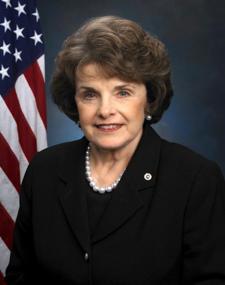
A possible reason for Harris’ silence is that until recently San Francisco Superior Court Presiding Judge Katherine Feinstein, the only daughter of U.S. Sen. Dianne Feinstein, was thought to be a front-runner for the post. This perception was based on the assumption that Sen. Feinstein wanted her daughter appointed, that Newsom would obey the senator’s wishes, and that no one in Democratic circles would dare to challenge Judge Feinstein in November given her mother’s political influence.

But it turns out that Feinstein, 53, whose peers unanimously elected her to succeed James J. McBride for a two-year term effective Jan. 1, 2011 as the Superior Court’s presiding judge, couldn’t legally accept an appointment anyway and would have to run in the November race.

And Superior Court spokeswoman Ann Donlan told the Guardian that Feinstein does not intend to give up her position as presiding judge. “Judge Feinstein has told court employees and her judicial colleagues that she has no intention of relinquishing her judicial duties in San Francisco,” Donlan stated.


THE HEIR APPARENT

That leaves Henderson as Harris’ presumptive heir; Onek, who is married to the daughter of Michael Dukakis, is a political force to be reckoned with; and former prosecutor Bill Fazio and police commissioner and former prosecutor Jim Hammer are possible appointments.

District Attorney’s Office spokesperson Erica Derryck would say nothing on the record about the appointment other than that it’s the mayor’s decision to make. But former D.A. Office spokesperson Debbie Mesloh noted that Harris has outlined the qualities she is seeking.

“Kamala has mentioned publicly that she is looking for someone with integrity who understands how the office works and will take over in such a way that allows people to continue their work,” Mesloh said. “That may sound like small potatoes, but it’s a big deal given how many folks work in the D.A.’s Office.”

Public Defender Jeff Adachi told us he finds it interesting that neither Harris nor Newsom has issued an endorsement in favor of anyone. “The silence is deafening,” Adachi said, “But what’s absolutely missing is a process to select a new district attorney. The D.A’s job involves major responsibilities in terms of running and managing a large law office, so I think there should be some kind of process.”

Adachi said the most important qualification is an understanding of how the D.A.’s Office operates and the respect of line staff. “That’s where trial experience comes in. You want someone with experience of homicide trials and serious cases. You’re overseeing a staff of trial attorneys, investigators, and their support staff — who are all litigators.”

Adachi warns that having a caretaker in that office for 11 months would create havoc. “The best choice would be someone who would allow for a smooth transition and have the qualifications and interest in running for office,” he said.

Sup. David Chiu, who became the first Chinese-American Board of Supervisors president in January 2008 and previously worked as a criminal prosecutor in the D.A.’s Office, has often been mentioned as a candidate. He told the Guardian that he enjoyed his time as a prosecutor but wants to stay put, for now.

“Kamala Harris did a good job in terms of her prosecutorial approach, and I understand she is anxious to make sure her legacy is not repealed,” Chiu said. “I’m happy to serve wherever to further the public interest, and the board is in a fragile and unstable place.”


IT WON’T BE SUP. ELSBERND

Former D.A. Terence Hallinan, who served two terms as a supervisor before being elected D.A., thinks it’s a big advantage to come from the board. “I knew how to use the budget process to get what I needed,” he said. “I held the key to that door.”

But a city insider who asked to remain anonymous said that if Chiu is thinking D.A., he’d be setting his sights too low. “The brass ring is right there for Chiu as mayor,” the source said.

According to the city charter, the D.A. must be a San Francisco resident who has been licensed to practice law in all California courts for at least five years. Sup. Sean Elsbernd, who qualified for the bar in 2000, has been mentioned in some circles. But Elsbernd told us that the rumors that Newsom would appoint him as D.A. and Newsom’s Chief of Staff Steve Kawa as D7 supervisor are baseless.

“They are just saying that because I’m an attorney,” said Elsbernd, who worked as a law clerk with Nielsen, Merksamer, Parinello, Mueller, & Naylor and with the D.A.’s Office prior to his August 2004 appointment to the board by Newsom and his November 2004 election.

So now the money remains on Newsom to appoint Henderson, who is a gay African American. “It’s important to take the diversity of the city into account,” our City Hall source said. “And Henderson can do the job. He’s extremely capable; the lawyer types like him; he reaches out to all groups and political factions; and his appointment would be a signal to the Democratic Party that whoever appoints him takes diversity seriously.”

Hallinan said he thinks Henderson will get the nod. “I think Kamala wants to keep a hand in that office,” Hallinan said. “And Paul is a nice guy, very competent, a good administrator — though not real experienced at trying cases.”

The D.A. doesn’t have time to try cases because there are administrative matters to deal with every day, Hallinan noted. “But trial experience is good because, although the job is administrative, you are selecting who should try what case,” he said. “So unless you have experience, it’s hard to judge what resources you have to be devoted.”

Fazio, who lost to Hallinan in the D.A.’s race in the 1990s, says he wants Henderson to get the appointment. “Henderson has been a loyal deputy. Onek has never been in a courtroom, and he doesn’t even work in San Francisco,” Fazio said.

Fazio doesn’t think Henderson’s bid will be hampered by ongoing crime lab and prosecutorial scandals in the D.A.’s Office since he wasn’t directly involved in the crime lab and police misconduct cases. “The biggest challenge for Paul will be turning all that around and running for office,” Fazio said. Insiders agreed that unless something highly unusual happens, an incumbent Henderson would get widespread political support in November.

But Onek sounds like he’s in the race for the duration, and he downplayed his lack of trial experience. “The bottom line is that I’m not going to be the chief trial attorney,” Onek said. “The role of the D.A. is to set policy, have a vision for the office, manage the office, work collaboratively with the community and law enforcement agencies, and finally, bring resources in from outside.”

“I’m spending my time building a criminal justice movement and not focusing on the politics of it all,” he added. “It’s speculation and the winds change every day.”

Onek observed that his entire career has been about criminal justice reform. “Kamala Harris did a great job of starting on that reform, and we need someone who can step in and continue the reform.”

Chiu, the mayor and the next board

12

Matier and Ross today ran a piece saying exactly what everybody who follows local politics already knew: Board president David Chiu will have considerable influence over the choice of the next mayor. The thing is, Chiu has to make a decision, soon: Does he want to be interim mayor (thus giving up his board seat and risking losing in November) or go for the district attorney job (thus giving Newsom a swing-vote appointment to the board and pissing off the progressive constituency that got him elected and will be critical to his political future) or move to keep his position as board president (which means working some deals with the incoming board)?


He has to decide pretty soon, too.


Chiu can almost guarantee that the current board doesn’t choose a mayor. that will take six votes, and without Chiu, neither the progressives nor the moderates can count to six. That would put his fate (both as a potential mayor and board president) in the hands of the new board.


And while everyone at the Chron seems to accept at face value the notion that the new board will be more centrist, I don’t think we know that yet. The only way this board moves to the center is if Jane Kim, a former Green Party member  who replaces Chris Daly, starts to abondon her progressive principles. If that doesn’t happen, then all this talk of a more centrist new board is bunk.


Remember: D2, Farrell replaces Alioto-Pier — a wash. D4: carmen Chu re-elected. D6: Kim replaces Daly. D8: Wiener replaces Dufty — a wash. D 10: Cohen replaces Maxwell — probably a wash, since Maxwell was never part of the progressive majority.


The only twist is that Chiu supported Kim and they’re close, so she would back him for mayor. But Daly might, too.


The bottom line: Chiu has to decide pretty soon what he wants to do, and let the rest of us know.

Newsom tries to defy City Charter

31

Gavin Newsom knew that if he got elected lieutenant governor, the supervisors would be able to choose his replacement. That was part of the deal. Now he wants to game the system, and delay his swearing in until the new board takes over. The claim: “The board should pick a caretaker, not a politician.”


A politician? In the mayor’s office? Um, dude: What are you?


This is not only annoying and dubiously legal, but stupid. Does Newsom really think the incoming board is more likely to choose a caretaker? No such luck. The incoming board is likely to choose David Chiu — a politician who will likely run in November.


Besides, the state Constitution says the lite guv takes office Jan. 3rd. So if Newsom refuses to take the oath of office, one could certainly argue that he has vacated that position, meaning the governor, Jerry Brown, could appoint a replacement. I think if Newsom carries through with his lame threat that Jerry should do exactly that.


PS: Newsom also said he “can’t just walk away and see everything blow up and there are a few politicians in this town that want to serve on ideological agenda.” Let’s be clear here: Newsom also has an ideological agenda. He thinks same-sex marriage should be legal and taxes should be low. He thinks it should be illegal to sit on the sidewalk. He’s got plenty of ideology.


He just doesn’t want a mayor whose ideology he disagrees with. Too late, Gav: You decided to leave the city. Now leave the rest of us alone to deal with the consequences. 


Holy high whoreiday

0

caitlin@sfbg.com

SEX It started with a serial killer. Porn star-feminist Annie Sprinkle was reading about mass murderer Gary Ridgeway slaughter of, on his count, 71 prostitutes in the 1980s and ’90s. She came across this in Ridgway’s explanation of his choice of victims: “I picked prostitutes because they were easy to pick up without being noticed. I knew they … might never be reported missing. I thought I could kill as many of them as I wanted without getting caught.”

It was a wake-up call for Sprinkle. “We don’t have equal protection,” says the busty self-termed “ecosexual,” who was a sex worker for 20 years and now serves as a role model to many in the radical sex community. Sprinkle reacted by organizing the first International Day to End Violence Against Sex Workers on Dec. 17, 2003. It’s an event that is now recognized in cities around the world.

In San Francisco, Sprinkle’s “whore holy high holiday” will be marked by a City Hall vigil for all the sex workers affected by discrimination and violence this year and performance art, followed by a march to the Center for Sex and Culture (sexandculture.org). All the events are free and open to anyone who wants to stand up for those that get paid to lay down.

This year, event organizers have a dangerously prude city policy in their sights: the toxic San Francisco Police Department practice of checking suspected prostitutes’ pockets for condoms to serve as proof of intent to have sex for money. It’s a policy that Mayor Gavin Newsom and the state’s first Latina attorney general, Kamala Harris, support. Sprinkle finds it completely at odds with the mission of promoting safe sex among anyone who could be walking down the street with a rubber in their pocket, as well as dangerous to sex workers. “It’s nasty, and really stupid, and so counterproductive — is that the message that we want to be sending?”

Which is not to say that Friday will be devoid of sweet, sexy joy entirely. After all, where would be the fun in gathering up SF’s sex-positive community if no one got naked? Later that evening, the Center for Sex and Culture will host a special edition of the national literary series Naked Girls Reading showcasing — yep — naked girls reading literature written by those who spread their legs to make their living.

“It’s a great opportunity for feminism and art,” says event organizer Lady Monster, who heard about Miss Erotic World 2005 Michelle L’amour’s original Naked Girl Chicago series and thought it a perfect fit for our pervy-intellectual burg. She held the first event in April and “it took off like wild blazes,” packing venues across town.

An ex phone sex operator who dabbled in private peep shows in her home state of Ohio without being told that the work was illegal, Lady Monster notes that the poor economy and demise of Craigslist escort ads in response to outside pressure has introduced even greater risks to sex workers, pressure that can lead them to accept unsafe working conditions. She feels that the nationwide observance of Dec. 17 “is a way to give people an opportunity to celebrate sex workers’ rights.”

On stage, her reading event will celebrate their contribution to arts and literature. Sexologist Dr. Carol Queen will be leafing through a book at the night’s nudie show; as well as burlesque star Dottie Lux; sex worker activist Robyn Few; Lady Monster herself (who’ll be reading from Some Girls, the memoir of Jillian Lauren, the American who lived and worked in a Brunei harem); and Sprinkle, among others. Lady Monster says the requirements needed to be onstage fall into three categories: readers must be accomplished writers, have public speaking experience, and — perhaps the most obvious — they’ve got be down to make the scene in the all together.

“Three hundred and sixty-four days a year we talk about how much we like our work, and one day a year we take time to realize that there are real victims out there,” Sprinkle says. It may be the oldest profession, but even in Gomorrah by the Bay, sex work is still a far cry from society’s respected elder.

INTERNATIONAL DAY TO END VIOLENCE AGAINST SEX WORKERS

Fri., Dec. 17

4 p.m., free

City Hall

Civic Center, SF

www.swopusa.org

NAKED GIRLS READING

9 p.m., $15–$20

Center for Sex and Culture

1519 Mission, SF

(415) 552-7399

www.nakedgirlsreading.com/sanfrancisco


A funny thing happened on the way to the airport

4

After Steve Kawa, Mayor Gavin Newsom’s chief of staff, started making noises about local hire’s impact on folks who work at San Francisco Airport, since technically it’s in Millbrae, I asked Sup. John Avalos, the legislation’s chief sponsor, to clarify this point.

“Project labor agreements trump this legislation,” Avalos said.

Avalos’ straightforward answer, coming on the heels of Kawa’s grumblings, Sparks claims about the program’s costs, and the striking absence of any analysis of the economic benefits of local hire (especially compared to the recent hooplah around the Americas Cup) made me wonder about the connection between the airport , Human Rights Commission director Theresa Sparks and the Mayor’s Office, since criticism of Avalos’ local hire legislation mainly seems to be coming from these three sources, these days.