News

Understanding radiation

41

The Bradbury Science Museum in Los Alamos, New Mexico contains a bunch of exhibits about the history of Los Alamos National Laboratory and its science and research work. And with alarm bells continuing to sound around the world in light of Japan’s troubled efforts to contain a nuclear contamination crisis at its Fukushima Daiichi plant, (and folks on the West Coast and beyond stockpiling potassium iodide for fear of exposure to drift) I found myself drawn to the “Understanding Radiation” display during a recent visit to the museum, which includes a chart to help folks calculate their annual radiation dose (scroll down to the end of this post to figure out your own personal annual dose.)

The display notes that the three main sources of radiation for folks in the United States are from outer space, fallout from past nuclear testing and nuclear power plants.

“Exposure doesn’t make you radioactive but can cause biological harm measured in units called rems,” the display stated, noting that our exposure to ionizing radiation is measured by a unit called a rem.
“On average, each of us receives a total dose of about one-third of a rem (362 millirem) per year, from all sources,” the display notes.

The average American receives about 360 millirems in one year, according to the Bradbury Science Museum, and the display includes a pie chart that shows that the biggest slice of our annual dose comes from natural sources, starting with radon gas, which is present in most rocks and soil and building materials, is produced in small amounts in buildings, and can build up indoors, especially in basements and tightly sealed buildings.

The second highest source is a combination of natural cosmic radiation (the dose you receive from the sun and outer space) and terrestrial radiation (the dose you receive from the ground).

The third largest dose comes from medical and dental procedures, including X-rays.

That’s followed by internal radiation (what comes from our bodies), consumer products, other sources, and lastly, an average annual but very small dose from Los Alamos National laboratory activities.

UPDATE: A spokesperson for the Los Alamos National Laboratory clarified that the small dose from the lab’s activities opnly applies to folks living in the immediate area. “Our exhibit notes that Laboratory activities contribute about 1/10 millirem to the public – to a person who lives in Los Alamos year-round,” they clarified. “ It doesn’t apply to someone living in say, the Bay Area, let alone a person who lives in the Bay Area and doesn’t visit Los Alamos (or the nearby Lawrence Livermore National Laboratory for that matter).” [So, my apologies for my misinterpretation, and thanks for the clarification!]

Now, maybe, like me, you did not pay attention/or did not retain the information from your chemistry classes on nuclear fission, fusion and fallout. If so, what follows could be of interest to you.

And if you did pay attention, rest assured that I’m trying to figure out if folks will need to start factoring in a new annual dose level related to leaks from the Fukushima Daiichi plant. (Today’s news is all about how marine life faces a threat from the runoff: high levels of radioactive cesium have been detected in seawater near the damaged nuclear reactors, and this is raising the disturbing prospect that radiation could enter the food chain. Cesium 137 levels have been detected at 20 times the normal level at 1,000 ft from the effluent at the plant. These levels are far less than the iodine 131, which has been found spilling from the plant at concentrations of more than 1,150 times the maximum allowable levels. But the problem is that unlike iodine 131 which degrades relatively quickly, (it becomes half as potent every 8 days), cesium 137 has a half life of 30 years and is absorbed by marine plants, which are eaten by fish, and tends to bioaccumulate (become more concentrated) as it moves up the food chain (as big fish eat smaller fish).

Anyways, I’ll update this post, when we get more information about the size and nature of the leaks, which are thought to have occurred when seawater was dumped on the overheating reactors. (The idea is that the seawater picked up the radiation before it washed back out to sea, but other sources are also thought to be possible).

In the meantime, read on if you want to brush up your understanding of radiation/or better understand the sources of your annual personal radiation dose:

“Radiation is energy in the form of waves or particles,” the BSM display observes. “Radiation is energy traveling at the speed of light. It makes up familiar parts of our world, such as visible light, ultraviolet light and infrared light, radio and television waves, X-rays and microwaves.”

That said, the display goes on to explain that the problem is with ionizing radiation.

“Is radiation harmful?” the display asks. “Most radiation is not, but some radiation carries enough energy to separate molecules or remove electrons from atoms and this can damage living tissue. This type of radiation is called ionizing radiation. It includes particles and energy emitted from radioactive elements and the X-rays used in medicine or at airports. A less energetic form of radiation, ultraviolet rays from the sun, can burn our skin.”

So, how can we protect ourselves from ionizing radiation?
“We can protect ourselves from the effect of ionizing radiation by applying three principles: time, distance and shielding,” the display states.

“We use time to allow a radioactive material to decay and thus decrease its radioactivity. Or we limit the amount of time we are exposed to the source of radiation.”

“We use distance between us and the source to decrease the likelihood it will reach us.”

“We use shielding between us and the source of radiation to absorb or stop radiation before it reaches us.”

“We can protect ourselves from the effects of ionizing radiation from internal hazards (inhaling or ingesting radioactive material) through the use of engineered controls (like containment and ventilation) and personal protective equipment (like anti-contamination clothing and respirators).

Ionizing radiation comes in two forms: a) Waves or rays and b) particles.

One type is similar to visible light and occurs as waves or rays, e.g. gamma rays, X-rays. And, as the museum explains, gamma radiation and X-rays can easily penetrate our bodies and so are external hazards. They can be stopped by dense material such as lead, concrete and steel. Examples of gamma-emitting radionuclides are cesium-137 and cobalt-60, uranium-235 and plutonium-239, in addition to being alpha-emitters, also emit gamma radiation.

The other type of ionizing radiation is known as alpha, beta and neutron radiation and is produced by energetically charged particles.

Alpha radiation
Alpha particles (two protons and two neutrons) can be stopped by a single sheet of paper and cannot penetrate clothing or the outer layer of skin. So externally, alpha radiation is not a hazard. But if alpha particles enter your body by breathing and eating, then they can be an internal hazard. [Examples of alpha-emitting radionuclides are Uranium-235 and plutonium-239. And as recent reports from Japan have explained, plutonium has been found at the Fukushima Daiichi plant. While the source is currently not clear, the reactors could be a source, as could tests of tests of nuclear weapons in the atmosphere, because even though these ended in 1980, they left trace amounts of plutonium around the world. This is worrying because Plutonium-239 has a half-life of 24,000 years and can cause healthy tissue to turn cancerous if it gets deep inside the body.)

Beta radiation:
Most beta particles are negatively charged and have a short range in air and cannot penetrate other substances very deeply. But if beta radiation has enough energy, it can penetrate your skin, so it’s considered an external hazard. It can be stopped by plastic, aluminum, wood, and clothing. Examples are phosphorous-32 and hydrogen-3 (tritium) which is deemed to be a very low hazard.

Neutron radiation
Neutrons are neutrally charged, subatomic particles emitted during a nuclear reaction in radiation-generating devices like accelerators and nuclear power plants.
They are also emitted by special radionuclides like californium-252 or by ionization of materials like plutonium plus berrylium. Highly penetrating, water, concrete and hydrogen-rich materials make effective shields.”

How to measure your exposure
Our exposure to ionizing radiation is measured by a unit called a rem.
“On average, each of us receives a total dose of about one-third of a rem (362 millirem) per year, from all sources,” the museum display notes.

How to calculate your personal annual radiation dose.

1.    Calculate your Cosmic radiation level
The level of cosmic radiation depends on your altitude:
If you live at sea level, you receive 26 millirem, a year.
If you live at 0-1,000 ft above sea level, it’s 28 millirem.
If you live at 1,001-2,000 ft, it’s 31 millirem.
If you live at 2,001-3000 ft,  it’s 35 millirem.
If you live at 3,001-4,000 ft, it’s 41 millirem.
If you live at 4,001-5,000 ft, it’s 47 millirem.
If you live at 5,001-6,000 ft, it’s 52 millirem.
If you live at 6,001-7,000 ft, it’s 66 millirem.
If you live at 7,001-8.000 ft, it’s 79 millirem.
If you live at 8,001 ft and plus, it’s 96 millirem.

2.    Now add the terrestrial radiation, the dose you receive from the ground:
If you live closest to the Atlantic Coast, add 23 mrem.
If you live closest to the Gulf of Mexico, add 23 mrem.
If you live closest to Colorado Plateau (AZ, Utah, Colorado, New Mexico) add 90 mrem.
If you live closest to the MidWest, add 46 mrem.
If you live closest to the Pacific Coast, add 46 mrem.
If you live closest to Alaska, add 46 mrem.
If you live closest to Hawaii, add 46 mrem.

3.    Add your radon gas dose
Add 200 mrem (the U.S. Average) for radon gas we breathe.

4.    Add natural radiation dose for food and water
Add 40 mrem for average natural radiation from food we eat and water we drink.

5.    Fallout from past atmospheric testing of nuclear devices
Add 0.5 mrem for fallout from past atmospheric testing of nuclear devices.

6.    Occupational exposure
Add 44 mrem if you work at the Los Alamos National Laboratory as a radiation worker, or your occupational dose from your job.

7.    Radiation from different medical treatments
If you have X-rays of the arm, hand, foot, or leg, add 1 mrem.
If you have Xrays of the chest, add 6 mrem.
If you have X-rays of the pelvis/hip, add 65 mrem.
If you have X-rays of the skull/neck, add 20 mrem.
If you have barium enemas, add 405 mrem.
If you have upper gastrointestinal tract radiography,    add 245 mrem.
If you have dental X-rays, add 2 mrem.
If you have CT (computed tomography) scans, add 110 mrem.
If you have a plutonium-powered pacemaker, add 100 mrem.
If you have a thyroid scan, add 14 mrem.
If you have porcelain crowns or false teeth, add 0.07 mrem.

8.    Depending on your lifestyle, place of residence, here are more factors to add:

If you travel by air plane, add 0.5 mrem per hour in air.
If your luggage is inspected, add 0.002 mrem.
If you live within 50 miles of a coal-fired electric utility plant, add 0.03 mrem.
If you live within 50 miles of a nuclear reactor, add 0.01 mrem (not counting Japan).
If you smoke 1/2 pack of cigarettes per day, add 500 mrem.
If you smoke 1 pack of cigarettes per day, add 1,000 mrem.
If you smoke 11/2 packs per day, add 1,500 mrem.
If you smoke 2 packs per day, add 2,000 mrem.
If you have a smoke detector, add 0.008 mrem.
If you live in a stone, adobe, brick, or concrete building, add 7 mrem.
If you wear a luminous wristwatch, add 0.06 mrem.
If you use a gas compression lantern, add 6.2 mrem.

9.    Average annual dose from the Los Alamos National Laboratory, add O.1 mrem.
 
The museum notes that this dose is, “a small fraction of the amount the public receives from some consumer products and our natural environment.” And it clarifies that a mrem, or millirem, is one thousandth of a rem.

So, you’ve added up your annual dose, but what does this mean in terms of health?

“Radioactive materials give off ionizing radiation that can alter the chemical makeup of human tissue,” the museum display notes. ‘The amount of damage depends  on the amount of radioactivity.” (And the time, distance and shielding involved, see above).

‘It’s clear that very high exposures such as those experienced at Chernobyl can be fatal,” the display continues, noting that 31 people died within the first few weeks at Chernobyl after receiving radiation doses in excess of 1,000 rems, and that many others, who were exposed to doses of 100 rems, have a 1 in 100 chance of developing cancer.

“It’s very difficult to determine at exactly what level exposure to radioactivity becomes dangerous,” the display states, noting that worldwide the number of fatalities over the next 50 years were estimated to be as high as 17,000. (Again, this was before the March 2011 triple disaster in Japan.)

The display observes that a 1991 study by the International Atomic Energy Agency measured no increase in any radiation-related illnesses in villages near the site.
“But the study did not look at the highest-risk populations closest to the site,” the display added, noting that there were no fatalities in 1979 at Three Mile Island, when reactor failure allowed “small amounts of radioactive water and steam to be released from the containment structure.”

“Exposure levels to folks nearby were less than 100 millirem per year, which is about one third of the normal background yearly dose,” the display observed.

It also noted that strontium and radium are biologically active, which means they can migrate to bone tissue and stay there a long time. And that radioactive iodine can replace the stable iodine which is very important to human health. “Radioactive iodine is taken up by the thyroid and can pose a significant health risk.” (Hence the rush on potassium iodine, even though radioactive iodine degrades fairly fast, and the radioactive risk can be combated by banning fishing and the consumption of seafood for a period of time as Japan is already doing.)

The display clarifies that exposure doesn’t make you radioactive, but it can cause biological harm, and that medical X-rays are by far the largest artificial source of radiation for the average American.

For more information, you can also check this chart from the Public Domain here

5 Things: March 28, 2011

0

>>AS IF WE WEREN’T ALREADY DISTURBED BY THE TIME WE SPEND WATCHING ANIMAL VIDEOS News broke last week that the slow loris is being poorly served indeed by its onslaught of Youtube celebrity. The poor little guys, native to Southeast and South Asia, are being illegally trafficked due to their increasing popularity as pets, leading to infection-causing teeth removals and other forms of abuse. Sickeningly enough, some of the web’s fave videos (like this one and this one) are actually shown to be footage of hurt animals. Ugh.

>>GETTING CHASED Divisadero neighbors and anti-bankists (or at least anti-other people’s bankists)  are still down on the idea of Chase Bank locating a branch at the corner of Divisadero and Oak streets. Banktivists showed up at an Appeals Board meeting March 16 to air their gripes, along with a contingent of neighbors and others who would rather see a bank branch than the grubby-window eyesore that has reined since Martini Cleaners vacated almost four years ago.  The two businesses everyone liked – Country Cheese and Five Star Truffles (now in the Castro) – are already gone, which leaves one looming question about what Chase will bring: will the Wells Fargo ATM at the back of the building have to go, or do financiers of a feather flock together? 

>>GOT PLANS TOMORROW NIGHT? You can meet us at the Lex for penny shots (yes, that means shots of liquor for one red cent) from 8:45-9 p.m., just like every other Tuesday. From 9-10 p.m. it’s two-for-one beers and mixed drinks. Penny shots: the perfect time to get wasted and talk about Abe Lincoln.

>>BARGAIN UP P-Kok on Haight Street is closing. But wait — P-Kok on Haight Street is not closing. And — P-Kok on Haight Street is opening! All true truths. Let us explain. P-Kok No. 1, at 791 Haight Street, is indeed closing, but P-Kok No. 2, the one across the street with the sauna and wild spa nights at 776 Haight, is staying open. And P-Kok No. 3, is moving uptown (well, the Upper Haight, anyway) to Haight and Masonic. So don’t worry. But do get over to 791 for some remarkable deals. The store slashed prices 50 percent to 70 percent and P-Kok’s  clothes, jewelry, stockings, scarves, hats, boas, etc. have always been high on the fun-and-sexy-o-meter. Together, we can clean the place.

>>KILLING US We’re already begun sensei training with neo-soulman Aloe Blacc – gotta pick up those rubber-limbed dance moves – but only because the kid in this video was unavailable.


Preaching Tikkun

93

Michael Lerner recently endured death threats, attacks on his house, and a cyber attack that shut down the website of his beloved magazine Tikkun. But it’s nothing new for an outspoken outsider whom infamous former FBI director J. Edgar Hoover once dubbed “one of the most dangerous criminals in America.”

The 68-year-old rabbi jokes that his middle name is chutzpah (Yiddish for audacity, good or bad) and says he has been a magnet for controversy his entire life. But that doesn’t make the recent threats from Zionists and other strong advocates for Israel any less scary.

The latest controversy comes on the heels of Tikkun’s silver anniversary celebration, held March 14, when the progressive Jewish publication honored human rights advocate Judge Richard Goldstone, whose report condemning Israeli war crimes in Gaza was strongly criticized by Jewish leaders. The day after the Tikkun event, vandals plastered posters outside Lerner’s Berkeley home depicting him as a Nazi cooperating with an Islamic extremist to destroy Israel. Previously vandals broke into his home, wreaking havoc inside and leaving graffiti to communicate their message.

After all these years, Lerner bears the threats and accusations with eternal optimism and resilience, preaching the still-radical message of “peace, justice, nonviolence, generosity, caring, love, and compassion.” The message has been at center of the Berkeley-based magazine’s mission for 25 years.

Aside from being a vibrant spiritual community based on traditional Jewish and other humanistic values, Tikkun has deeply influenced the discourse in the wider Jewish community. It has challenged the Jewish community’s automatic support for Israel and Zionism and started a spirited debate, triggering an angry backlash in the process.

As its readership has diversified across religions, so has its mission, leading Lerner to found the Network of Spiritual Progressives in 2005. Dismayed by how conservatives use the notion of family values, Lerner has sought to create a progressive framework to address the human need for spiritual meaning.

“Tikkun is the major thing I did with my life,” Lerner tells us.

The recent celebration included an award ceremony for those Lerner’s team deems most “Tikkunish.” The title of the magazine comes from the old Hebrew phrase tikkun olam, a principle of shared responsibility to “heal, repair, and transform the world.” Previous winners include poet Allen Ginsberg and historian Howard Zinn.

Goldstone is known for helping to dismantle apartheid in South Africa and prosecuting war crimes in the former Yugoslavia and Rwanda. Most recently, Goldstone headed a U.N.-sponsored investigation into Israel’s attack on Gaza two years ago. The investigation concluded that indiscriminate bombing in densely populated areas by Israeli forces amounts to war crimes.

Israel and many Jewish leaders have harshly criticized Goldstone’s report on the Gaza attack for its purported biases, saying it unjustly jeopardizes Israel’s international standing and reputation. But at Tikkun’s award ceremony, Goldstone reaffirmed the findings of his investigation and said that he was compelled to act because he believes in the “right of civilians to be protected even in war.”

Lerner sees Goldstone’s actions as important and deeply Jewish, calling him “a person who takes seriously a central command of Torah: ‘Justice, justice shalt thou pursue.'” The two men have had a relationship since Lerner reached out to Goldstone a year ago. At the time, Goldstone was facing so much backlash that some members of South Africa’s Jewish community sought to bar him from attending his son’s bar mitzvah. That was when the first attack to Lerner’s home occurred.

Berkeley Police Department spokesperson Sgt. Mary Kusmiss said the police have “no leads or identified suspects.” She went on to say that the latest incident may be classified as a hate crime.

“When people start coming to attack your house, you don’t feel safe,” Lerner said. “You don’t know what these crazy people will do next.” But he insists he does not want to make a big deal out of the threats, saying extremists have never altered his actions or politics.

Lerner has always tried to challenge the American Jewish establishment, a term for organizations with an array of religious, cultural, and political concerns but a common hawkish stance on Israel and American foreign policy.

“Israel has been turned into God,” he explains. “You can walk into any synagogue in America and you can tell them ‘I don’t believe in God, I don’t like the Torah, and I’m not following the Ten Commandments’ and be welcomed. But if you go into that same synagogue and say, ‘I don’t support Israel,’ you are kicked out. People are worshiping Israel and God has been abandoned.”

But Lerner notes shifting public opinion, especially among younger Jews. Many are experiencing ethical dissonance between the righteous and heroic Israel commonly portrayed in the Jewish community and the increasingly visible reality of Israel’s military occupation of Palestinian lands, human rights abuses, and violations of international law.

While criticism of Israel coming from non-Jews is often dismissed as anti-Semitism, Jews who express dissent often get called “self-hating.” But Lerner said the illogical conclusion that Israel is the same thing as the Jewish people, and that if you criticize Israel you hate yourself has become less effective in silencing dissent. “It simply isn’t true that people are angry at Israel because of some internal psychological deformation,” Lerner said. “[Increasingly] people are saying ‘If being ethical is the same as being a self-hating Jew, then I choose to be ethical.’ “

But Lerner comes under fierce criticism from Jewish hardliners for his views. Attorney Alan Dershowitz, an outspoken supporter of Israel’s government, famously wrote a 2006 commentary in j., the Jewish news weekly of Northern California detailing Lerner’s “offense against decency and the Jewish people,” concluding that Lerner is a “rabbi for Hamas.” According to Dershowitz, “Tikkun is quickly becoming the most virulently anti-Israel screed ever published under Jewish auspices.”

But Lerner isn’t really on the radical edge in criticizing Israel. Although Tikkun courted controversy in 1988 by denouncing Israel’s occupation of Palestinian territories, the magazine today doesn’t support the movement that is pushing a policy of boycott, divestment, and sanctions of Israel initiated by Palestinian activists in 2005 as a nonviolent tactic to pressure Israel to change its policies. But Lerner still seeks to foster debate on the topic, as he did in the July/August 2010 issue, which featured Rebecca Vilkomerson of Jewish Voice for Peace arguing for at least a partial support of the tactic.

Lerner’s ire has always been directed at powerful institutions, from the military to the white Southern power structure. As a college student, Lerner directly engaged in the nonviolent protests of the 1960s. While working toward his first PhD (philosophy) at UC Berkeley, Lerner was president of Students for a Democratic Society. Later, while working on his second PhD (psychology) in Seattle, Lerner was arrested and found guilty of instigating a riot during a protest against the Vietnam War. The conviction was later overturned, but his reputation as a dangerous radical was solidified in the minds of Hoover and other establishment figures.

Lerner never abandoned his belief in the validity and power of protest. “I would like to see young Jews confront the Jewish institutions,” he said. “I want to see sit-ins and demonstrations to challenge those who are willing to give support to the right-wing governments of Israel.”

Yet he has also grown skeptical of many leftist groups. “As spiritual progressives, we are critical of progressives,” Lerner explains. Although he agrees that a major redistribution of political and economic power is necessary, he argues that something is missing on the left, with its focus on secular ideas and neglect of real spiritual needs.

Lerner says the left’s shortcoming has allowed the right to tap into popular discontent and win support by championing church and family.

While working toward his PhD in psychology, Lerner was part of a team that interviewed thousands of working Americans. “What we discovered was there was a spiritual crisis in peoples lives. There was a deep hunger for a framework of meaning and purpose to life that would transcend the individualism, selfishness, and materialism that people are working all day long in the workplaces,” he said. “People don’t like the message of the work world that the bottom line is to maximize money and power, and to do that you must look out for No. 1 and not care about others.”

His response was to found Tikkun, whose message can attract even agnostics. Alana Price does not describe herself as religious, but she has recently been promoted to be the co-managing editor of the magazine. “I knew Tikkun built a bridge between the religious left and the secular left, so I was excited about that,” Price said. “What drew me was the deeply humane quality of Tikkun.”

Shut down Diablo Canyon

1

EDITORIAL The six-unit Fukushima Dai-ichi nuclear power plant was designed to withstand the strongest earthquake that geologists said could reasonably be predicted for the region near northern Japan. It was designed to withstand the largest tsunami that the experts expected. It had triple backups to keep the reactor cores cool in the event of a natural disaster.

But, as is often the case with spectacular catastrophes, nothing went according to plan. The earthquake was far stronger than anyone figured was possible. The combination of the flooding and the shaking overwhelmed all of the emergency systems. The radiation releases are already severe enough to cause significant causalities — in the best case scenario, the danger already far exceeds that of the Three Mile Island fiasco. In a wide array of worst outcomes, large geographical areas could be uninhabitable for hundreds of years — and 39 million people living in and around Tokyo could be at risk.

The news comes just as Pacific Gas and Electric Co. has been asking state and federal regulators for permission to renew its operating licenses for the two reactors at the Diablo Canyon plant. The licenses expire in 2024 and 2025, but the utility wants to front-load the process and get approval quickly to operate the plant for another 20 years.

That’s a bad idea on so many levels it’s hard to know where to start.

The plant sits almost on top of the Hosgri Fault, which has the same dangerous characteristics as the fault outside of Sendai, Japan. And geologists just discovered another fault running 300 yards from the plant gates. PG&E says the plant is designed to handle a 7.5-level earthquake, which is the greatest tremor anyone can foresee for those faults. Remember: nobody thought the 9.0 Japan quake was possible either. The truth is, even the best experts are only making guesses.

Then there’s the fact that Diablo continues to generate, and accumulate, highly radioactive waste — and there’s no place to put it. So spent fuel rods containing plutonium (among the most toxic substances on earth) sit in the bottom of a glorified swimming pool — which, the utility’s experts tell us, is perfectly safe. (Remember: executives at the Tokyo Electric Power Company said the same thing about the waste material at Fukushima Dai-ichi.)

The reactors were designed to last 30 years; the relicense would push their lifespan far beyond that, increasing the likelihood of an accident. And the company has a long history of safety problems, human error, and outright lies. (Remember: these are the same folks who said the pipelines under San Bruno were safe.)

Let’s face it: there’s no possible way for anyone to be certain that the plant isn’t vulnerable to an unexpectedly strong earthquake. And the damage that of a serious accident to a nuclear plant 150 miles north of Los Angeles could cause is incalculable.

PG&E has asked the California Public Utilities Commission to allow it to charge ratepayers $85 million for relicensing studies. State Sen. Sam Blakeslee (R-San Luis Obispo), a research geophysicist with a doctorate in earthquake studies, wants PG&E to conduct extensive tests on the new fault before applying for new licenses. That’s a start, but it’s nowhere near enough.

This plant should never have been built, and California is lucky that it’s survived so far. The quake in Japan is a harsh reminder of how inherently dangerous nuclear power is — particularly in densely populated areas. The CPUC should refuse to allocate a penny for anything except a study on how quickly the plant can be shut down, for good.

Smart meters, stupid company

9

news@sfbg.com

Smart meters seemed like a good idea at first glance — a little wireless device that, unlike it’s dumb analogous predecessor, would track precise readings of household energy usage in real time, identifying wasteful activities and helping consumers make informed choices about conservation and consumption.

Considered a crucial first step in enabling a smart grid that would modernize the existing power grid for the information age, the technology was touted as offering potential benefits such as cheaper service, fewer new power plants and transmission lines, cleaner air, and more reliable services.

But Pacific Gas & Electric Co.’s $2.2 billion program for installing smart meters has now become the subject of caustic criticism by thousands of customers and activists as the culprit for skyrocketing rates, adverse health effects, and threats to privacy.

Since deployment began in California in 2009, consumers have mobilized to halt the spread of the devices, demanding further studies of the technology and options for those who don’t want to join the rush toward a wireless world. Thirty-three local governments have called for moratoriums on the installation of the devices.

The California Public Utilities Commission, which in 2006 authorized the state’s investor-owned utility companies to install more than 10 million meters in California, has done little to quell the storm of protests and concerns. But that began to change March 10 when CPUC President Michael Peevey announced that the agency would require PG&E to develop an opt-out proposal for consumers within two weeks.

Prefacing the decision with an observation that almost every speaker against smart meters the CPUC heard from was a PG&E customer, Peevey called out Northern California residents as the main opponents to the program.

“I am directing PG&E to prepare a proposal for our consideration that will allow some form of opt-out for customers who object to these devices, at a reasonable cost to be paid by the customers who choose to opt-out,” Peevey said at the hearing. “Obviously I cannot prejudge how this commission will evaluate any such proposal by PG&E, nor can I predict what PG&E itself will propose. But I think it’s clear the time has come for some kind of movement in the direction of customer opt-outs.”

But the announcement did little to quell the opposition by the scores of customers, local governments, health professionals, and advocacy groups that claim it undercuts the true concerns while simultaneously opening another avenue the utility behemoth could profit from.

“Admitting to the problem is the first step to resolving it,” says Joshua Hart, executive director of grassroots organization Stop Smart Meters!, which has been at the forefront of the rebellion. “But we obviously think a ton of things were left out of this.”

The makeup of the meter haters spans interests and ideals, from Tea Party conservatives to liberal environmentalists. Their unifying trenchant criticism of Peevey, who was president of Edison International and Southern California Edison Company until 1995, has only increased with each meter installed. PG&E has already replaced 74 percent of its analog electrical meters and 83 percent of its gas meters.

Resolutions critical of PG&E’s smart meter deployment have been passed by many Bay Area cities and the counties of Santa Cruz and San Luis Obispo. Assemblymember Jared Huffman (D-San Rafael) introduced a bill in December 2010 that would create a statewide system for opting out.

Although PG&E officials didn’t return repeated Guardian calls about the controversy, they have told other media outlets that the meters are completely safe and installation is continuing as scheduled, despite the growing furor.


BABY STEPS

A total of 670,000 meters are planned for San Francisco, and installation has already begun in the Marina and Richmond districts, much to the dismay of many residents. During a series of public meetings at the CPUC since 2010, dozens of people regularly line up to ask for alternative options and conclusive, third-party studies on the technology.

Speakers mainly consist of those claiming to suffer from exposure to electromagnetic fields, a condition known as electrohypersensitivity (EHS) that causes headaches, nausea, fatigue, and ringing in the ears. Sufferers liken themselves to canaries in coal mines and say smart meters are just one aspect of larger problem: understudied, overhyped wireless technology.

“The bottom line is it’s a debacle that been rolled out without any public input, without any long-term study,” Hart said. “This is the wireless technology industry being too greedy and going too far.”

Smart meters emit less powerful electromagnetic fields than many smart phones, but activists worry about the effects, both cumulative and on those with EHS, a condition recognized by the Swedish government. But here in the United States, few experts outside of holistic and alternative health circles take it seriously as a health threat.

Hart pointed to the recent publication of a study by the National Institutes of Health finding cell phone emissions affect brain activity, calling it the “smoking gun.” But most scientists found the report inconclusive about how that stimulation affects the brain.

Yet the activists have held regular protests lambasting PG&E for endangering their health and invading their privacy. “This is forced installation of untested devices on an unwilling public,” Carol Page of Marin County told us at a large Feb. 24 protest outside the CPUC meeting in San Francisco. “It’s time this commission stopped enabling and started regulating.”

CPUC officials have said there was no need for additional analysis of the program, arguing that the meters are safe and that installation is a routine procedure allowed under existing utility contracts.

But the venerable consumer watchdog The Utility Reform Network (TURN) has long-opposed the program, focusing primarily on its cost and privacy threats from the data that is being transmitted. Hundreds of customers have contacted TURN to complain about the meters, and the group says Peevey’s policy change misses the mark.

“It’s certainly a step in the right direction, but the devil is going to be in the details,” TURN spokesperson Mindy Spatt told us. “We would review any proposal to charge customers very carefully. We don’t want to see them have pay again.”

She said PG&E’s consumer outreach efforts have been “abysmal,” and TURN supports a moratorium on smart meter installation.

“We are not hearing from any people who are benefiting from it,” Spatt said. “We are hearing from people who are upset about it, and we remain unconvinced that these meters offer any benefits commensurate with their costs.”

TURN’s website offers a flyer that reads “Do Not Install,” which customers can print and place on their analog meter. Wellington Energy, the company performing installations, has respected the signs, Spatt said.

“The flyer is still getting tons and tons of play,” Spatt said. “PG&E has done nothing to address customers who say that the smart meter is unwanted and unwelcome. We are very anxious to see what sort of an opt-out they can offer.”

Although the flyer conveyed a direct message to utilities, some chose the more radical route of blocking installation physically. In January, two women, one a grandmother, were arrested in Rohnert Park for blocking a Wellington truck carrying a load of smart meters.

Sandi Maurer, founder of the EMF Safety Network, believes the movement from the CPUC falls short of taking real action addressing the threat of harmful electromagnetic frequencies to the environment and human health.

“We really need a moratorium while we study the health impacts and have evidentiary hearings where we could determine whether they are safe,” she said. In December 2010, the EMF Safety Network’s request for the CPUC to open an investigation into smart meters was denied.


CUSTOMER DISSERVICE

One smart meter claim the CPUC did investigate was the allegation that the new meters weren’t accurate, following up on more than 600 complaints from customers that their energy bills shot up after the new meters were installed.

The Structure Group, a Houston-based consulting company, tested 750 smart meters and 147 electromechanical meters and concluded that they worked fine. But the study also found that PG&E didn’t properly handle the complaints.

“PG&E’s process did not address the customer concerns associated with the new equipment and usage changes,” the report said. “Some customers interviewed during this assessment did not consider their complaint resolved, despite indications from PG&E and the CPUC that the customer agreed with the resolution.”

As a demonstration of how the program could have been rolled out differently, one needs only to look up the road to Sacramento. The publicly owned Sacramento Municipal Utilities District has installed 184,000 meters and encountered little opposition.

“I’ve seen what’s happening in the Bay Area and we haven’t seen anything like that whatsoever,” SMUD spokesperson Chris Capra said. “I’m amazed at the difference in our customers compared with customers around the country. “

Capra credits the relative embrace of the meters to the method SMUD used to mobilize them. Before installing any meters, SMUD build its wireless network. Then SMUD installed 78,000 trial meters in two separate areas — one in close-quartered downtown and one in suburban areas — to see how the meters behaved under topographical and proximity challenges. Then it led the meters through automated trials doubled with traditional manual reads and found that they were 99 percent accurate.

“We wanted to be certain before we began with full deployment,” Capra said. “We had estimated reads, manual reads, and made sure everything is functional. “

But some problems go beyond customer service. Along with health and safety concerns, critics remain unconvinced that the smart meters live up to their purported benefits to consumers, even though they’re the ones paying for the program.

“If I wanted to monitor my usage, I could go buy an in-home electricity monitor myself and just plug it in,” Maurer said. “For utilities to say we absolutely need this technology to reduce energy costs is false.”

Privacy advocates warn the meters could erode the privacy of daily life unless regulators limit data collection and disclosure. In a joint filing in March 2010, the Center for Democracy and Technology and the Electronic Frontier Foundation urged the CPUC to adopt rules to protect consumer’s energy usage information.

“Smart meters generate more information in formats easier to share and analyze, which is part of the future of energy utilization,” said Jim Dempsey, vice president of public policy at CDT. “That being said, some significant questions remain.”

Smart meters collect 750 to 3,000 data points a month per household. This detailed energy usage data can indicate whether someone is at home or out, how many people are in the house, and if they are using particular appliances. In effort to stave off data mining by marketers or hackers, CDT and EFF urged the CPUC to adopt comprehensive privacy standards for the collection, retention, use and disclosure of consumers’ household energy data.

Smart meters represent a worst case scenario in terms of security, Dempsey warned. Not only do they lack sufficient power to execute strong security software, they are easily accessible and installed in numbers large enough that a few may not be missed if they are stolen. The safest way to protect cyber security is to assume from the outset that they will be attacked.

“You are not going to stop technology and the benefits,” said Dempsey. “It’s hard to say we should not take advantage of something that gives us more information, but you need corresponding security. It’s not too late to adopt the privacy rules, and we certainly hope that the commission will do that soon.”

CDT and EFF say that utilities collecting the data from smart meters must set rules specifying in advance how data will be used. Disclosing information to marketers and government agencies should be restricted.

“Smart meters really do penetrate into the ways we live in ways that no other technology is doing now,” said Lee Tien, senior staff attorney at EFF. “It’s a special circumstance because there isn’t anything else like this that is in everyone’s home.”


STUDYING METERS

As opposition increased along with the installations, further requests for investigation into the program were filed. In July 2010, Huffman asked the California Center for Science and Technology to analyze whether the federal safety standards were sufficiently protective of public health, a move that was supported by fellow Assemblymember Bill Monning (D-Carmel) and the City of Mill Valley.

In December, Huffman also introduced Assembly Bill 37, directing the CPUC to offer an opt out alternative to customers who did not want smart meters and to disclose important information to the public. However, like the ordinances passed throughout the state, the move was largely symbolic and wouldn’t be implemented until the time most installations would have been completed in 2012.

The report released by the CCST in January analyzed the threat posed by smart meters, concluding that additional research was needed to accurately gauge the potential threat and had found “no clear evidence that additional standards were needed to protect the public from smart meters or other common household devices.”

The report has since served as a reference point for both PG&E and the CPUC as evidence of safety of the meters. Nevertheless, consumer groups dispute the findings.

“We need investigations from a truly independent third party, not an industry-promoting group hired by PG&E,” Maurer said. “We need evidentiary hearings on the health impacts of microwave facilities. Every time someone buys a new wireless router on a cell phone, it’s a drop in the bucket of more wireless technology. But [with smart meters] we’re talking about a massive increase of the density of these wireless emissions.”

The CPUC’s Division of Ratepayer Advocates was also unconvinced by the CCST’s conclusion. It noticed that the report did not fully explore issues related to cumulative exposure or from multiple co-located meters, as would be the case on apartment buildings and close quarters typical in San Francisco.

A California Senate bill imposing restrictions and revisions on utilities regarding their handling of smart meter information passed in February 2010, and in June the CPUC announced it had adopted a framework requiring utilities to modernize security standards, but details on upgrades have not appeared.

For now, protesters remain focused on pressuring regulators to stop the installation and they plan to keep up the fight for as long as needed.

“It is shock and awe to get the meters installed before people figure out that they are being scammed,” Hart said. “Until there is a moratorium called, we are urging people to resist. Stopping smart meters is just one part of the battle against the telecommunications companies.”

5 Things: March 22, 2011

0

>>SUPERMOON SUPERSOUND Miss the GIANT SUPERMOON this weekend? Hell, we all did – it  was storming cats and dogs (interestingly enough, Polish soulful techno DJ duo Catz ‘n Dogz were here this weekend as well, and they were magnificent, as always.) In any case, in memoriam and fantasy, here’s a special electronic “Supermoon Mix” by DJ Deevice, voted Best Radio DJ in our 2010 Best of the Bay Readers Poll:

DJ Deevice “Super Moon” mix by DJ Deevice

>>IN OTHER NATURE NEWS Octopi are storming the Embaracadero – and ready your barbed wire trucks, because they’re here to stop you from skateboarding. We don’t know how long these lovingly crafted, yet grind-deterring metal starfish, sea tortises, and eight-legged have been adorning the lips of concrete benches over by Waterbar and the Raygun Gothic Spaceship, but the fun police has arrived, and it is packing tentacles.

This week on octopus fun police… 

>>CAUTION: ANOTHER THING TO WASTE YOUR TIME ON THE INTERNET In a city that knows how to toe the line between fun and just plain foolish, it’s good to know that we have resources available to help keep safety, if not at the forefront, then at least in the marginalized auxilIary regions of everyone’s mind. So whether you’re planning on unleashing live bison at your next warehouse rager, upgrading your upcoming Critical Mass ride to include a contingent of flame-throwing robotic rhinoceroses, or setting up a road-side stand for DIY weld-on chastity belts, just remember: there’s a sign for that.

>>WHITE LINES FOR YOU AND FOR ME Two wags of our handlebars for the new Potrero Hill 17th street bike lanes! The Bike Coalition explains this was all part of their nefarious plan for 30 miles of (relatively) worry-free bike glory.

>>SADDLE UP YOUR BAY MARE … and ride out for an upcoming exploration of our outer neighborhood’s high-steppin’ pony days — the adorably monikered Woody LaBounty of the Western Neighborhood’s Association, purveyor of amazing snippets from San Franciscos past like the book about the Sunset’s boho gypsy street car roots, will be sharing the story of the neighborhood that’s the midway point between City College and SF State. His yarn takes place Tuesday, March 28 and will involve horsies, a turf rivalry with Bayview, and what it all said about the country’s developement at the time… go here for info. 

Beats the K-Ingleside any day


But he’s got talent: Withered Hand overcomes visa problems to reach SF

0

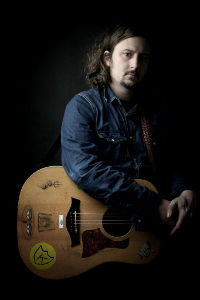
On Sunday, March 20, Dan Willson, mastermind behind the Scottish outfit Withered Hand, took the stage with his acoustic guitar at SF’s Hemlock Tavern. Only weeks prior, however, the show was teetering on the precipice of being canceled. Despite being submitted months in advance with an expedite fee, Willson’s visa application was flagged a week before his flight by an U.S. Immigration official that demanded more proof of Willson’s “extraordinary talent,” his achievement of “significant recognition,” and performances at “events that have a distinguished reputation.”

“We ended up pulling together letters from various sources – managers, folks at our distributor, other artists – to prove [Willson] was of ‘extraordinary ability’,”  says Maren Wenzel, director of marketing and publicity at Willson’s home record label, Absolutely Kosher Records. Like fellow Scots Belle and Sebastian and Snow Patrol, Withered Hand was funded by the Scottish Arts Council while making its debut album, the just-released Good News.

Fortunately, nearly everything worked out. “Through my amazing visa agency Tamizdat and the graciousness of Creative Scotland, I received a great deal of support and advice, and with their assistance and that of U.S. officials, we managed to get everything in place to be able to secure my visa,” explains Willson. “Whilst there was a lot of stress and delays, we only had to cancel one show, and I was able to get my original flight.”

Withered Hand on They Shoot Music:

http://www.youtube.com/watch?v=G-bJSOrFFY4

Editorial: Shut down PG&E’s Diablo Canyon nuclear power plant

24

 The six-unit Fukushima Dai-ichi nuclear power plant was designed to withstand the strongest earthquake that geologists said could reasonably be predicted for the region near northern Japan. It was designed to withstand the largest tsunami that the experts expected. It had triple backups to keep the reactor cores cool in the event of a natural disaster.

But, as is often the case with spectacular catastrophes, nothing went according to plan. The earthquake was far stronger than anyone figured was possible. The combination of the flooding and the shaking overwhelmed all of the emergency systems. The radiation releases are already severe enough to cause significant causalities — in the best case scenario, the danger already far exceeds that of the Three Mile Island fiasco. In a wide array of worst outcomes, large geographical areas could be uninhabitable for hundreds of years — and 39 million people living in and around Tokyo could be at risk

The news comes just as Pacific Gas and Electric Co. has been asking state and federal regulators for permission to renew its operating licenses for the two reactors at the Diablo Canyon plant. The licenses expire in 2024 and 2025, but the utility wants to front-load the process and get approval quickly to operate the plant for another 20 years.

That’s a bad idea on so many levels it’s hard to know where to start.

The plant sits almost on top of the Hosgri Fault, which has the same dangerous characteristics as the fault outside of Sendai, Japan. And geologists just discovered another fault running 300 yards from the plant gates. PG&E says the plant is designed to handle a 7.5-level earthquake, which is the greatest tremor anyone can foresee for those faults. Remember: nobody thought the 9.0 Japan quake was possible either. The truth is, even the best experts are only making guesses.

Then there’s the fact that Diablo continues to generate, and accumulate, highly radioactive waste — and there’s no place to put it. So spent fuel rods containing plutonium (among the most toxic substances on earth) sit in the bottom of a glorified swimming pool — which, the utility’s experts tell us, is perfectly safe. (Remember: executives at the Tokyo Electric Power Company said the same thing about the waste material at Fukushima Dai-ichi.)

The reactors were designed to last 30 years; the relicense would push their lifespan far beyond that, increasing the likelihood of an accident. And the company has a long history of safety problems, human error, and outright lies. (Remember: these are the same folks who said the pipelines under San Bruno were safe.)

Let’s face it: there’s no possible way for anyone to be certain that the plant isn’t vulnerable to an unexpectedly strong earthquake. And the damage that of a serious accident to a nuclear plant 150 miles north of Los Angeles could cause is incalculable.

PG&E has asked the California Public Utilities Commission to allow it to charge ratepayers $85 million for relicensing studies. State Sen. Sam Blakeslee (R-San Luis Obispo), a research geophysicist with a doctorate in earthquake studies, wants PG&E to conduct extensive tests on the new fault before applying for new licenses. That’s a start, but it’s nowhere near enough.

This plant should never have been built, and California is lucky that it’s survived so far. The quake in Japan is a harsh reminder of how inherently dangerous nuclear power is — particularly in densely populated areas. The CPUC should refuse to allocate a penny for anything except a study on how quickly the plant can be shut down, for good.


EcoTuesday goes Free Range

0

If you’re one of the 12 million people whose enviro-mind was blown by the online video “The Story of Stuff,” you may have the opportunity to ask the film’s executive producer, Erica Priggen, for more insights into communicating the damage of global consumerism via viral animation.


Priggen will speak at tomorrow’s (3/22) San Francisco EcoTuesday event, a networking opportunity for sustainable business leaders held the fourth Tuesday of every month in nine cities across the nation – including communities like SF that have long been on the sustainability forefront, and cities like Cleveland and Detroit that are expanding their green horizons. The Tuesday talks supplement a website chock full of interesting news and blog posts, and speakers can be anyone with a new take on sustainable business.

http://www.youtube.com/watch?v=9GorqroigqM

Priggen is the executive producer at Free Range Studios in Berkeley, and oversees the company’s video and entertainment media department for clients such as 350.org and the Alliance for Climate Education. The creators of the award winning Story of Stuff series company’s mission is to “empower individuals to tranform society through the innovative use of digital media, storytelling, graphic design and strategy,” which is great. And their stuff is just plain amusing, which is also pretty nice.

San Francisco EcoTuesday
Tues/22, 6 p.m., $5 with online registration, $10 at the door
601 Townsend, SF
www.meetup.com/San-Francisco-EcoTuesday


Imagine evacuating New York

2

My brother lives a few miles upwind (usually) of the Indian Point nuclear plant on the Hudson River, north of New York City. He called me this morning to ask if we were worried about radiation hitting the West Coast, which all of the government isn’t anything to worry about. Of course, if it were something to worry about, we’d be hearing the same thing anyway.


Truth is, I’m only a little nervous right now. One really cool chart of prevailing winds shows some of a possible plume hitting right smack into the San Francisco area, although by that point it should be sufficiently dispersed that the concentration won’t be high enough to cause any immediate human health impacts. That, of course, assumes that the reactors are brought under control before the plutonium in the core and the spent fuel rods catches fire, explodes or otherwise becomes airborne. Plutonium’s an alpha-emitter with a half life of 24,500 years, and you only need to inhale a tiny speck before it becomes fatally toxic.


Still, let’s not forget: When you release significant amounts of radioactivity into the atmosphere, there are human health consequences — and not just in the immediate area. There’s no doubt in my mind (and in the minds of many experts) that above-ground nuclear testing in the 1950s and 1960s contributed to cancer rates world wide. You can’t prove that any individual got cancer because of exposure to the specific fallout from a specific explosion on a specific date; you can prove that the likelihood of increased cancer risk in large populations increases with almost any measurable increase in background radiation.


That said: My worries are pretty minor compared to the folks in Japan. The head of the company that ran the nukes now admits that the radiation released over the past few days will kill people. And if the situation deteriorates any further, the risk is going to ge beyond a few miles.


The heartbreaker: There’s not a lot anyone can do. You can’t evacuate Tokyo. Where would the people go?


Ralph Nader send out a press release today warning about the problem the United States would face if one of its nuclear plants — say, Indian Point — had a similar accident:


Imagine evacuating the long-troubled Indian Point plants 26 miles north of New York City. Workers in that region have a hard enough time evacuating their places of employment during 5 pm rush hour. That’s one reason Secretary of State Clinton (in her time as Senator of New York) and Governor Andrew Cuomo called for the shutdown of Indian Point.


You can’t evacuate New York. My brother’s on the edge of the official evacuation zone for Indian Point (which is a creaky, leaky old nuke); the roads aren’t wide enough to handle the traffic where he is — and he’s a fair ways upstate from NYC.


The New York Daily News headline talks about the handful or workers still trying (at the risk of their own lives) to get the troubled nukes under control: “The Whole World Is Depending On Them.” And if they somehow prevent disaster, we can all take a deep breath — and start working to shut down the old, past-their-prime, unsafe power plants that are near populated areas.


Oh: that’s almost all of them.

SFBG Radio: Good news from Wisconsin — maybe

0

A judge in Wisconsin has tossed out the governor’s anti-labor law — but does that just mean the Republicans are going to go back and do it again? And what’s going on in Michigan, where the governor wants to get rid of labor contracts by taking control of local government? Check out our discussion after  the jump.


sfbgradio3182011 by endorsements2010

American Idol: First bad vote

1

What’s the matter — nobody but Steven Tyler celebrates St. Patrick’s day? Jennifer must have some sort of green outfit she could wear.


But no: Other than Steven’s little green necklace, it’s as if there’s no holiday. And that’s not the only thing that went wrong.


First the good news: the Born to Be Wild/ Baby I Was Born This Way medley could have been awful, but it was really cool. The “field trip” to the Ford music video studio was shameless. The “something about you” clips were funny,a nd I’m glad to hear that Paul has a 14-year-old wiener dog that smells bad.


Naima gets the best line of the night for telling Randy she has “a passionate hatred for the word ‘pitchy.'”


For the most part, the voting was predictable — until the end. I almost had it right — Naima and Haley were in the bottom three. But so was Karen — and that was just wrong. She’s great; I love her personality, her story, and what S. Tyler calls here “ethnic what it is-ness.” And her mom is soooo cute.


I figured it was Naima’s last night; she’s by far the weakest of the performers, and isn’t going to last another week. But no: the American voters kicked off …. Karen! 


Awful, wrong, indescribable injustice. She’s far better than the other two — and here last-ditch rendition of “Hero” was stunning. J-Lo wanted to save her, but the other judges wouldn’t go for it.


So for the first time this spring, a really bad result. Ick.  

Hip-hop heroes

3

I’m rolling with the big timers: the executive director and founder of a community circus arts program, an after-school program b-boy teacher, the most beautiful family in Bay Area hip-hop, and my boyfriend, who is snapping photos on his Nikon of the rest of us. We’re standing under the high ceiling of Acrosports, in a room filled with trapezes, a balancing beam, an over-sized trampoline, and the contorting, jack-knifing bodies of young, aspiring circus professionals. The people assembled (minus me and my man) are using the power of hip-hop to bring a cultural skill swap to underprivileged youth in Zanzibar.

It’s a feel good moment, particularly because it comes during a week that hosted some of the darkest days in the past century of the labor movement, the start of unimaginable hardship in Japan, and disheartening scenes from our nation’s leaders’ announced Muslim witch hunt. But enough of that for now, Zumbi’s talking:

“This is the first time we’ve done a tour that benefited charities, which is cool… but it’s like, why has this taken so long to do? Why don’t more people do this?”

The emcee from Zion I is makes uplifting Bay Area hip-hop without major label representation, and now it’s been announced that his, DJ Amp Live, and the Grouch’s upcoming tour will be benefiting local community organizations at each of its 36 gigs on its “Healing of the Nation” tour — which is named after the artists’ second collaboration album, Heroes in the Healing of the Nation.

In the Acrosport’s basement, breakdancing students get their new skills battle-ready. Photo by Erik Anderson

“This album, it’s more focused, it’s about communities, families, self. It’s needed! These days, you’ve got Charlie Sheen occupying more time onscreen than the Middle East. Everybody’s all caught up on tiger blood,” Zumbi tells me. It’s positive music, much like the first Zion I-grouch collab, 2006’s Heroes in the City of Dope, but it’s far from Public Enemy-style protest rap. 

Track eight on the new album is entitled “Be A Father To Your Child,” in the chorus of track two the Grouch asserts “I’m a leader/I don’t want to be a follower,” pledging allegiance to self-motivation. There’s a song called “I Used to Be Vegan” on the album that I find particularly resonant given my own struggles with evading cheese. The message is: be a positive force, don’t get swept up in the forces that try to disempower you and make you sad. It’s conscious music, but conscious music meant to have a good time to.

Today we also meet Zumbi’s beautiful partner Tiffany and their three-month old prince, Kodi Shaddai. They pose prettily by the catapulting acrobats behind them and Zumbi tells me that Kodi may well make a cameo appearance in the album’s upcoming music video. He tells me he used to do capoeira himself and jokes about his bad knees with B-Boy Black, a.k.a. Ed Johnson, Acrosports’ outreach director and breakdance teacher who will be one of the leaders on the Zanzibar trip.

Acrosports’ professional track performers practice across the street from Kezar Stadium. Photo by Erik Anderson

Is Zion I’s hip-hop philanthropy new? Certainly not, but what is novel is the group’s maturing image. Zumbi says that Heroes in the City of Dope was “more commentary, more getting fresh.” Heroes in the Healing of the Nation focuses more on creating positive space — reflective of the three men’s new roles as fathers and, gulp, role models. Looking into the future (though he’s far from hanging up his touring hat), Zion I’s emcee tells me that he sees his role in hip-hop as that of mentor to youngsters coming up in the ranks. 

My star-struckedness aside, I should probably be spending more of this article talking about Acrosports and its planned trip to Africa. You wanna see bringing uplift to the people? The place is pretty incredible, offering classes in breakdancing, capoeira, tumbling, and parkour to community members from 10 months of age and up. They run after-school programs in over 20 school, YMCAs, and Boys & Girls Clubs whose philosophy is to empower kids through positive motivation and access to non-traditional sports. 

Community activist Dorrie Huntington founded the place 20 years ago when she realized the building she lived next door to was sitting empty after years as a high school, and then a homeless shelter. Some unemployed members of the Moscow Circus proposed that they start teaching tumbling classes. Soon the team was repurposing sleeping mats from the homeless shelter and donated paint to create the center, all with very little resources. “It took a lot of sweat equity,” Huntington smiles. But that was 20 years ago and the perspiration paid off – now the city has a place where people of all ages and levels of fitness can come to learn how to move their bodies in joyous, creative ways. 

In 2009, Huntington went to Africa to volunteer in a Tanzanian orphanage, and on a vacation ran into some kids flipping out on a beach in Zanzibar. “Their skills were so amazing. They had this truck tire wedged in the sand and they were doing flips off of it.” She struck up a friendship with the amateur acrobats and vowed to return with teachers that could help the kids develop their performance skills. 

It’s a mission that resonates with her staff. “Growing up in a black community,” says Johnson, “going to Africa was seen as learning about your roots. I want to go out there and meet these amazing artists.” I ask him how he felt when he learned that Zion I and the Grouch were dipping into ticket sales to help him and his team realize the dream and he gets a little bashful. “I had to keep my composure,” he tells the group, and turns to Zumbi. “I have the vinyl record of The Bay! I don’t even have a record player, I was just like, I got to have that album!”

Inspiring people creating space for each other to make great things happen. Like a little feedback loop of positivity, it was. And a real good break from the heartache of the news channels.


Zion I and the Grouch

Sat/19 9 p.m., $25

The Fillmore 

1805 Geary, SF

www.zioniandthegrouch.com


Lit: A Slow Death: 83 Days of Radiation Sickness

3

This review originally appeared in the Jan. 7-13, 2009 issue of the Bay Guardian:

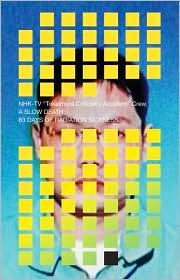
John Gall’s art for A Slow Death: 83 Days of Radiation Sickness (Vertical 160 pages $19.95) is unique in a gaze-snatching fashion. It combines hues of yellow and green, block patterns, and a news photo backdrop into an attractive, enigmatic, and faintly disturbing image that makes a browser wonder, “What exactly is inside this book?”

The answer is an account of a nuclear plant worker’s gradual demise after he was accidentally exposed to 20,000 times the maximum tolerable amount of neutron beam radiation. As some alleged environmentalists (including figureheads such as Al Gore) have begun touting the benefits of “non-carbon sources” of energy — an evasive way of saying “atomic power” — Hisashi Ouchi’s death comes across as an extreme cautionary tale.

Credited to NHK-TV “Tokaimura Criticality Accident Crew” and constructed from a television documentary about the nuclear accident, A Slow Death bluntly but compassionately renders Ouchi’s physical symptoms, which included massive skin loss, and the emotional impact his plight had on the doctors and nurses who treated him. The last extraordinary aspect of Ouchi’s story involves his heart, which persevered and remained relatively healthy while the rest of him demonstrated the impact of radiation. As the book puts it, “it continued living amidst the destruction of virtually every other cell in his body.” 

Alerts

0

WEDNESDAY 16

Anarchist salon and potluck

Get together with other anticapitalist and establishment-challenging folk at this month’s anarchist salon, a monthly gathering and conversation followed by a potluck social. This month’s focus is on radical mental health and wellness.

7–-9:30 p.m., $2–$5 suggested donation

Station 40

3030B 16th St., SF


Screening plus potluck

Enjoy a special screening of A Crude Awakening: The Oil Crash, an alarming documentary about the pervasiveness of crude oil in our everyday lives — from the products we buy to the food we eat.

7:30–9:30 p.m., $5 suggested donation

Humanist Hall

390 27th St., Berk.

www.humanisthall.org


THURSDAY 17

International media conference opener

The UC Berkeley two-day conference “Crossing Boundaries” looks at new media and the shape of international news in this age of Internet and cell phone reporting. Speakers include Alan McClain of WikiLeaks, Joaquin Alvarado of American Public Media, and many more. Conference continues on March 18. Check the website for schedule.

9 a.m.–7 p.m., $150–$250

Sutardja Hall

UC Campus, Berk.

www.crossongboundaries2011.org


FRIDAY 18

Amnesty International conference opener

Celebrate 50 years of high-impact activism by Amnesty International with an all-weekend event featuring an array of notable guests including Joan Baez, Steve Earle, Christy Turlington Burns, Jahi, and many more — and that’s just day one. Conference continues March 19 and 20. Check the website for schedule.

8 a.m.–5 p.m., $40–$125

Fairmont Hotel

950 Mason, SF

(202) 509-8194

www.amnestyusa.org


SATURDAY 19

Girls rock!

Join Bay Area Girls Rock Camp, a nonprofit dedicated to empowering girls through music, and its after-school program participants for a rockin’ recital spotlighting the culmination of 10 weeks’ worth of hard work. Fifty-five gals in 12 bands showcase their original songs written at the camp. Enter the drawing for an extra $5 for a chance to win sweet new ax — a cherry red Gretsch Electromatic guitar. Proceeds go to ensure that the after school program continues to rock on.

1–3 p.m., $10 suggested donation

Malonga Casquelourd Center for the Arts

1428 Alice, Oakl.

www.bayareagirlsrockcamp.org


Antiwar demonstration

Protest the war in Iraq on the eighth anniversary of the occupation. Gather at the U.N. Plaza with your signs and radical spirit, then march to two boycotted hotels and demand an end to the “war” on working people.

Noon– 4 p.m., free

UN Plaza

Seventh and Market, SF

www.answersf.org

Facebook: National Day of Action Against the Wars


MONDAY 21

World Water Day

Wise up, get down, and take action — learn more about local and global water issues with live music, live painting, dance performances, spoken word, and more. Proceeds benefit water projects in the Bay Area and Kenya.

6:30–9:30 p.m., $10–$15

The New Parish

579 18th St., Oakl.

www.baylaurelproductions.com

Mail items for Alerts to the Guardian Building, 135 Mississippi St., SF, CA 94107; fax to (415) 437-3658; or e-mail alert@sfbg.com. Please include a contact telephone number. Items must be received at least one week prior to the publication date.

SF health food stores selling out of potassium iodide **UPDATED**

***UPDATE***

OK, we’ve got some new information here, which is different from what the California Department of Public Health told us a little while ago: U.S. Surgeon General Regina Benjamin told media she supports the idea of buying potassium iodide as a “precaution.”

Here’s a quote from an NBC Bay Area news story: “Dr. Benjamin said although she wasn’t aware of people stocking up, she did not think that would be an overreaction. She said it was right to be prepared.”

Here’s the original story:

Evidently, folks in the Bay Area are worried that the ongoing nuclear problem in Japan could cause a health hazard in San Francisco, which lies about 5,000 miles across the Pacific Ocean from Japan’s damaged Fukushima Daiichi nuclear plant. We phoned several Whole Foods stores in San Francisco to find out if potassium iodide was flying off the shelves, and sure enough, it was the same story at every location.

“We’re all sold out,” one customer service representative said. “Too many people are asking me about this stuff,” said another. Three Whole Foods locations were out of the product, and a fourth didn’t carry it but was all out of kelp, which is also believed to protect the thyroid against radiation exposure.

Our rather unscientific poll seems to reflect the situation in other locations — several national news reports noted that drugstore sales of potassium iodide had increased dramatically.

Are people overreacting? Health officials seem to think so, particularly if they’re ingesting it. “Potassium iodide tablets are not recommended at this time,” said California Department of Public Health spokesperson Ken August. The United States Nuclear Regulatory Commission recently issued a statement indicating that at present, Japan’s nuclear emergency presents no risk to California. “Because there is no indication of any type of radiation exposure as a result of the nuclear power plant problem in Japan, people would be ill-advised to take potassium iodide,” August said.

According to the Centers for Disease Control, potassium iodide is a salt of stable (not radioactive) iodine, a chemical that the body uses to make thyroid hormones. If radioactive iodine is inhaled or ingested into the body following a nuclear emergency, the thyroid absorbs it, which can lead to serious health problems such as cancer in the long-term. Potassium iodide can block radioactive iodine from entering the thyroid, according to the CDC, but it cannot prevent radioactive material from entering the body.

August noted that taking potassium iodide could cause health problems for people with allergies to iodine or shellfish, or for people with thyroid problems. “They could have an undiagnosed health condition,” he added. The CDC also notes that taking it can cause side effects such as intestinal upset and rashes, and that it could pose risks to people with certain kinds of skin disorders. Ingesting very high dosages of the stuff can kill you, the CDC warns.

So there you have the risks. For people who are going to take it anyway, it’s probably a good idea to read up on it.

And if a worst-case scenario ever did come to pass? August said that evacuation was the first step that officials would take if there were a serious risk of radiation exposure, and he noted that opting to stay put and take potassium iodide in that scenario would increase health risks, since it only guards against injury to the thyroid gland. The state’s Department of Public Health website notes that California does keep a supply of potassium iodide tablets for emergencies — but only for the area around the San Onofre nuclear power plant in Southern California.

August said air monitoring is conducted in 10 locations throughout California to determine atmospheric levels of radiation, on a weekly basis. He said monitoring of food, water, and ambient radiation is also conducted, on a monthly basis.

Appetite: 2 intriguing new food memoirs

0

Just released in early March, here are two new reads I’d recommend not only for foodies but for fans of the absorbing, well-crafted memoir.

>>Life, On the Line by Grant Achatz & Nick Kokonas: When Alinea’s chef genius Grant Achatz writes a memoir, it’s destined to get buzz among foodies. When this visionary chef was diagnosed with stage four tongue cancer, threatened to lose his tongue and taste buds (something devastating to anyone, much less a celebrated chef), it was news well beyond the food world.

Achatz’s first memoir, written with his business partner, Nick Kokonas, is much more than a cancer survival story. It is also more than a chef memoir. Appropriately titled, Life, On the Line, it may not be the most literary of food memoirs, but it is gripping. I couldn’t stop reading of Achatz’s humble Michigan roots, his rise as a chef under Charlie Trotter and Thomas Keller, and particularly the incessant drive that led him to opening his own, widely acclaimed restaurant just as he entered his thirtieth decade.

Life, On the Line is raw, honest, with a straightforwardness that is refreshing. A bittersweet tone underlies this impressive success story. I love Alinea as much as most who’ve had the privilege of eating there, and this book certainly acquaints me in a real, unsentimental way with the minds behind it.

I’m already plotting how I can get to Chicago after his unparalleled concepts of Aviary and Next open…

>>Blood, Bones & Butter by Gabrielle Hamilton: Who knew chef of NY’s beloved Prune, in the East Village, was first and foremost a writer? Early word on the street was that her book was, as Anthony Bourdain himself said, “the best memoir by a chef ever.”

I find the hype a bit high, but do think cooks and food lovers will find much to savor in Blood, Bones and Butter. Though I found it not as compelling as Achatz’s Life, On the Line, Hamilton shines in her mastery of the English language, making it a more pleasurable read.  From idyllic, dreamy parties her parents threw at her rural Pennsylvania childhood home, to the devastation of their divorce that led Hamilton to support herself in restaurant jobs from teen years on, her choice of words creates vivid pictures of each era of her life.

Amidst dish-washing and butchery, she describes her move back to school at “the Harvard of the Midwest” (University of Michigan), where she gets an MFA in fiction writing. It’s an intriguing journey from writing to unexpectedly running her own restaurant. You can’t help but feel writing is her first calling.

As she describes the lamb roasts of her youth, you clearly envision it, and acutely wish you were there: “… the lambs on their spits were hoisted off the pit onto the shoulders of men, like in a funeral procession, and set down on the makeshift plywood-on-sawhorse tables to be carved. Then the sun started to set and we lit the paper bag luminaria, which burned soft glowing amber, punctuating the meadow and the night, and the lamb was crisp-skinned and sticky from slow roasting, and the root beer was frigid and it caught, like an emotion, in the back of my throat.”

** Catch Gabrielle this week in SF at Camino in Oakland (3/11), Omnivore Books (3/12).

–Subscribe to Virgina’s twice monthly newsletter, The Perfect Spot


The craziest local tsunami video you’re likely to see

2

So that duffel bag you packed at five this morning when your aunt from Maryland woke you up heaving with the news from Japan ended up staying in your vestibule. Man, does San Francisco love a good tsunami warning – so much so that we drop everything and head to the beach to watch for chance of impending watery doom! But things did get a little crazy around the Santa Cruz marina, and lucky for us rubber neckers video artist Allen David was there to catch the mast slammery (what’s up with the piano trill at 1:16, AD?):

Sorry ’bout your boat man

What has happened to America?

13

I’m serious. I listened to the news this morning on the radio, and I started to wonder if I hadn’t gone through some kind of a time warp, back to the 1950s. The House Homeland Security Committee is actually holding hearings on whether members of a certain religion have become too radical — and what the U.S. government can do about it.


Richard Nixon used to say that the Jews were part of the Commie Radical Conspiracy, and J. Edgar Hoover thought that black religious leaders, including the Rev. Marting Luther King, Jr, were linked to the Communist Party, but it’s been a while since the U.S. government officially investigated an entire religion on the grounds that it might contain radical elements.


Of course, as Rep. Loretta Sanchez (D-Calif.) notes:


Yet, since September 11, 2001, there have been at least 78 terrorist attacks around the world which did not involve Muslim perpetrators. During the same period, there were 45 incidents connected to Islamic radicals.


Same thing in the United States. Timothy McVeigh? Not a Muslim.


Here’s Rep. Dan Lundgren (R-Calif.) telling us all about this particular scare:


I think moderate voices in this country are intimidated by the radicals. If we hide this and pretend that it doesn’t exist, we’re ignoring reality.


It’s funny — I could make that same argument about the Republican Party. The moderates (if any are left) are intimidated by the Tea Party and anti-tax radicals. Now we have a HUAC-style investigation of the Muslims.


And then in Wisconsin, one of the birthplaces of the modern labor movement in America, the state Legislature is stripping public employees of almost all collective bargaining rights. Forget wages and benefits, which the unions have already agreed to open up for discussion. This is about the most central tenet of organized labor — the right to collective bargaining. It’s as if all the victories we’ve won in the past half century (or more) are going away. With a Democrat in the White House.


It’s funny: I was drinking beer with my neighbor the other night and talking about tax policy (you wonder why I have so many friends) and he told me he’d  given up any thoughts of socialist revolution or radical change: “I’d just take the 1950s,” he said.


Because in the 1950s, the rich people paid taxes.


So now we’ve got the worst of both worlds: We have 50s-era witch hunts and union busting — and we don’t even have 50s-era taxes. What the fuck?   


Is David Crane just another Kochhead?

24

This week the Chronicle majorly attacked State Sen. Leland Yee, claiming Yee tried “to distort the words” of billionaire investment banker and UC Regent David Crane on collective bargaining.

The Chron’s attack came on the heels of Yee’s attempt to block Crane’s UC Regents confirmation. And Yee’s attempt to block Crane came in response to an op-ed Crane wrote for the Chron titled “Should public employees have collective bargaining rights?”

In its counter-counter attack editorial this week, the Chronicle accused Yee of falsely claiming that Crane had “called for an end to collective bargaining rights for California teachers, nurses, firefighters, university employees and other public sector worker.”

“What the former adviser to Gov.Arnold Schwarzenegger did was present a history of collective bargaining in California and explain how a 1977 law had changed the balance of power by giving public employees power over their compensation and benefits,” the Chronicle stated. “Crane did assert that extending collective bargaining to employees who already have civil service protections ‘serves to reduce benefits for citizens and to raise costs for taxpayers. Anyone who would argue with that fact has not been paying attention to what is happening with state and local budgets lately.”

The Chronicle finished by praising Crane, who is currently a lecturer on Public Policy at Stanford University and is reportedly working with former Fed Chairman Paul Volcker to form a task force to examine current state budget practices. Crane, the Chron asserted, has “long been widely respected as a teller of inconvenient truths about the rising costs of public-employee pensions and benefits. He should not be silenced – or misquoted by opportunistic politicians. The Senate should vote to confirm him as regent.”

Now, when Schwarzenegger appointed Crane as a UC Regent in December 2010 as one of his last acts as Governor, the Sacramento Bee described Crane as Schwarzenegger’s “chief public employee pension critic.” But here in San Francisco, the Chron didn’t bother to flesh out Crane’s history of employment, campaign contributions, prior statements on collective bargaining, and financial investments.

Maybe it was because these public records reveal Crane to be less a dyed-in-the-wool Democrat and more of a Bushocrat, an ultra-rich investor who supported G.W. Bush through two elections, and repeatedly frames the collective bargaining rights of government employees as an obstacle standing in the way of pension reform and budget balancing.

Campaign finance records show that in March 1999, when Democrats were trying to hang onto the White House in the wake of Clinton’s sex scandals, Crane gave $1,000 to Bush. And in June 2003, just three months after Bush invaded Iraq on a false pretext, Crane saw fit to give Bush another $2,000.

The good news? Crane didn’t support Sarah Palin and John McCain in 2008. But he did donate $7,200 to Republican Tom Campbell’s unsuccessful 2010 bid for US Sen. Barbara Boxer’s seat. And here in San Francisco, Crane was one of several billionaires who wrote big fat checks last fall in support of Measure B, which sought to curb the pension and health benefits of city workers, most of whom will make a fraction in their lifetime of what Crane rakes in each year from his widely diversified financial portfolio.

Crane’s 2009 statement of economic interest shows he has over $1 million invested in Farallon Capital Partners, one of the world’s largest hedge funds, many of whose investors include top university endowments.

Crane also has over $1 million invested in Acacia Partners, over $1 million in Bislett Partners, over $1 million in Kensico Partners, over $1 million in Semper Vic Partners, over $1 million in Berkshire Hathaway, whose CEO is Warren Buffet, over $1 million in the HCP Absolute Return Fund, whose Board includes Warren Hellman, and up to $1 million in Hall Capital Management, whose Board includes Hellman and Gap heir John Fisher. Crane also owns several million dollars stake in real estate investments, and has sizeable stock in Wells Fargo, Chesapeake Energy, Microsoft, Google, Pangloss Oil, Whole Foods Market, M&T Bank Corp., IBM, American Express, WalMart and Exxon.

And he gets income from Acacia Partners and Babcock & Brown, where he was a former partner from 1979 to 2003. While at Babcock, Crane reportedly brokered a controversial jet-lease deal between Arnold Schwarzenegger and Singapore Airlines that allowed Schwarzenegger to defer taxes on millions of dollars. And in 2004, Crane went to work for then Republican Gov. Schwarzenegger as special advisor for Jobs and Economic Growth. The Terminator returned the favor by appointing Crane to the California Commission in Economic Development and the California High Speed Rail Authority. But Crane was rejected in Senate confirmation proceedings for a position on the board of California State Teachers Retirement System.

Now, clearly it’s not a crime to be a billionaire, even though the way some folks make their billions is criminal. But you have to wonder if UC really needs another ultra-rich Regent on its Board. You also have to wonder why the wealthy Crane sought reimbursements of $2,812 from UC in 2009, if he cares about saving the state money.

And Crane has made plenty of statements about collective bargaining rights and pension reform in recent months that seem to frame government employees as the bogey men, not just in California, but across the entire nation.

Take his April 2010 comments to the Los Angeles Times: “State legislators are afraid even to utter the words ‘pension reform’ for fear of alienating what has become — since passage of the Dills Act in 1978, which endowed state public employees with collective bargaining rights on top of their civil service protections — the single most politically influential constituency in our state: government employees,” Crane said.

Or what he said in August 2010 to the Fox Business Network: “Even if you took care of every one of these spiked above the iceberg level pensions in California, you would not take care of the pension problem in California, which is true of virtually every state in the country, at least those where, you know, government employees have collective bargaining rights,” Crane said

In December 2010, he told the L.A. Times that the year 1978, ”wasn’t notable just because of Proposition 13. That was also the year public employees gained a power Franklin D. Roosevelt had warned against: collective bargaining rights.”

“California hasn’t been the same since,” Crane continued. “Public workers have gained at the expense of private workers as government spending was redirected from infrastructure and education to higher salaries, pensions and other benefits.”

And in his Feb. 27 Chronicle op-ed, Crane claimed that, “The battle in Wisconsin is not over collective bargaining rights generally but rather the appropriateness of those rights in the public sector ”

“Collective bargaining is a good thing when it’s needed to equalize power, but when public employees already have that equality because of civil service protections, collective bargaining in the public sector serves to reduce benefits for citizens and to raise costs for taxpayers,” Crane continued. “Citizens and taxpayers should consider this as they watch events unfold in Madison.”

As of today, letters are circulating in Sacramento opposing Crane’s confirmation. And Sen. Ted W. Lieu (D-Torrance), Chair of the Labor and Industrial Relations Committee in Sacramento, has already signaled his opposition.

“I cannot support someone for the powerful post of UC Regent who continues to perpetuate the myth that collective bargaining caused our state economic crisis and has a fundamental misunderstanding of how our state budget operates,” Lieu said in a statement. He noted that in the Chron op-ed Crane claimed that because of collective bargaining, “general fund spending on higher education, parks and environmental protection was flat or lower.” 
“As a matter of historical fact, that is false,” Lieu countered. “ Our general fund spending generally declined because of a national economic recession.  The recession was not caused by collective bargaining or public sector unions, but by private sector, out of control Wall Street firms at the time.”

“The specific reason our general fund spending sharply declined was because the person Mr. Crane advised, former Gov. Arnold Schwarzenegger, reduced the Vehicle License Fee and replaced it with . . . nothing,” Lieu continued. “As a result, the state general fund lost over $5 to $6 billion in revenues per year for every year Mr. Schwarzenegger was in office.  The VLF reduction has resulted in a total loss of over $30 billion to the state, an amount in excess of the current California budgetary shortfall.  How conveniently Mr. Crane forgot to mention that critical fact when it doesn’t suit his ideological assault on public sector unions.”

“Now that Mr. Crane senses his confirmation may be in jeopardy, he attempts to marginalize his own Op-Ed by releasing a new statement saying he really didn’t mean to attack all public sector unions, just those who happen to have statutory civil service protections,” Lieu added. “For those in Ivory Towers that distinction may have some academic meaning, but for everyone else in the real world that is a distinction without a difference. Civil Service protections do not prevent employees from being terminated or laid off, they provide standards for government to follow when firing or disciplining employees. Such protections do not guarantee appropriate wages or benefits, nor address a plethora of other issues, such as workforce safety issues.”
 
“Mr. Crane’s Op-Ed also discusses political spending by public sector unions, “Lieu concluded. “In his world view, political spending by the California Teachers Association is inappropriate, but the massive political spending by the Koch Brothers would presumably be acceptable. I cannot, and will not, support someone for the post of UC Regent who blames public sector employees, such as teachers, for somehow being responsible for our economic crisis or the resulting decline in general fund spending.  We need UC Regents who are interested in solving problems, not those who twist historical facts to suit an ideological agenda.”

So, as I wait for Crane to return my call, I’ll leave you with something reporter Peter Byrne, who authored the award-winning investigative series ‘Investor’s Club” How the Regents of the University of California spin public funds into private profit,” said to me yesterday when I asked him about the wisdom of putting investment bankers on the UC Regents Board. “Putting investment bankers in front of a plate of $63 billion is like putting a pound of hamburger in front of a bunch of feral cats. They are going to eat it. It’s in their nature.”

So, would confirming Crane be like adding another feral cat to the mix? Is he just another Kochhead? Or is he just maligned and misunderstood, as the Chron vehemently implies?

More than 80 percent of Americans want to tax the rich

9

Senator Bernie Sanders (I-VT) is calling for an emergency surtax on millionaires as a way to combat the deficit. Which, of course, is a great idea. His colleague Chuck Schumer (D-NY) is on the same page. And the polls show that most of the country agrees with the concept; in fact, a Wall Street Journal/NBC News poll says that a staggering 81 percent of Americans think it’s basically a good idea to increase taxes on incomes of more than $1 million a year.


I imagine that the population of San Francisco is somewhat more liberal on the issue of taxes than the nation as a whole, which leads me to believe that a very substantial percentage of the city’s residents (including some of the very rich ones) was support increased local taxes that would require the wealthy to pay more to preserve city services.


There are, I’m sure, plenty of creative ways to do that. But it doesn’t seem to be at the top of the budget discussion at City Hall.


I realize that it would require a two-thirds vote in November for any tax hikes — unless the supervisors declared a financial emergency. And it certainly seems as if we’re in a state of emergency — and if the governor can’t find a couple of Republicans to vote for his budget package, it’s going to get much worse, very quickly.


If we can’t do that, and we have to wait a year and do it next fall, we still ought to be starting now — and the supervisors ought to be telling every community that’s facing cuts that there won’t be any more reductions without at least a plan for new revenue.


…And gaming for all

0

GAMER For a second there, the mighty PR machine seemed poised to devour the Game Developers Conference. The communal, feel-good GDC was built on sharing ideas, and in recent years the modest think tank had grown exponentially, as established game developers and publicity houses descended on downtown San Francisco with glossy preview events and headline-stealing announcements that previewed things to come at the summer E3 expo. However, this year the most talked-about events weren’t the off-site previews, but the conference-organized developer sessions, a phenomenon that marked a return to the sentiments that inspired the conference in the first place.

Big-name developers like Peter Molyneux, head of Lionhead games and lead developer of Fable; Cliff Bleszinski, design director of Epic games and spokesman for the Gears of War franchise; The Sims creator Will Wright; Doom honcho John Romero; and outspoken French impresario David Cage were just a few of the draws in the “classroom” area of Moscone Center. While these industry giants lectured about their experiences in the industry and gave postmortems on their classic games, the notion was that they were speaking directly to a generation of developers who might one day become successors — or even competitors.

Inspirational stories were the highlight of the conference, but a handful of games were happy to share the spotlight. And one game set out to draw maximum attention to its upcoming release by staging a controversial rally in Yerba Buena Gardens and releasing hundreds of red balloons over the downtown area. With its near-future shooter Homefront releasing in just a week, publisher THQ embarked on the biggest media push so far this year. In addition to the balloons and the rally (themed like an anti-North Korea rally, complete with posters of Kim Jong Il, a diagonal line through his face and the words “Game Over North Korea”), THQ shuffled press into a themed event with barbed wire, smoke machines, and stony-faced Korean soldiers. With publicity like that, it’s almost beside the point how the game plays, but let’s say it’s largely familiar.

Other attempts to stay relevant came in the form of Uncharted 3, whose developers showed the previously-seen “burning chateau level,” this time showcasing the game’s 3-D feature and an additional story-driven animatic that promises the game will be as blockbuster an experience as its predecessors. Battlefield 3 held an impressive “reveal event,” though the game had been partially revealed weeks earlier in Game Informer magazine. The game has wonderfully realistic animations, but the event itself was designed to draw attention to its Battlefield Play4free online shooter, which offers free FPS gameplay if you don’t mind a microtransaction or two.

With most of the game previews having been seen before, it was nice to see a few publishers making their debuts at the conference, such as The Darkness II, which proved that interactive storytelling has a place, even in a post-Heavy Rain marketplace. With musician Mike Patton returning for vocal duties, the sequel mixes gunplay with gruesome “quad-wielding” tentacle murder and an original, hand painted graphics style. Also making a gameplay debut was Batman: Arkham City, which looks to improve on Arkham Asylum‘s successes in nearly every category and with an attention to detail sure to please gamers and comic aficionados alike.

The conference buzzed with goodwill for the industry shift toward indie and mobile gaming, a revolution that meant a much larger contingent of attendees were likely to already identify as genuine developers. In the conference keynote, Nintendo president Satoru Iwata explicitly noted the shift, in the midst of a surprisingly defensive presentation that attempted to downplay the success of casual game developers and situate Nintendo’s place in the past and present of social gaming. If there’s one thing to take away from the keynote, and the 2011 conference as a whole, it’s the industry shift from conglomerate to individual. Nintendo’s threatened stance, and Microsoft’s noticeable absence, indicates a move toward dividing the industry just as gaming stands to enjoy unprecedented appeal in the form of casual gaming. In a world where anyone with a good idea can make a successful game, we might be looking at a return to the exciting, anything-goes Wild West atmosphere that marked gaming’s birth in the 1970s and ’80s. For an industry that could use a few paradigms shifted, it’s the best news yet.