Music

Our Weekly Picks: October 31-November 6

0

WEDNESDAY 31

Halloween at Thee Parkside

There was a pretty sizable chunk of paper last week dedicated to the eye-popping range of spooky/trashy/candy-coated Halloween events out there for you to dig into. Though on this night, this favorite holiday of many, I throw my vote to the tribute band. It’s just fun to see local bands dressed as other bands, rocking a catalogue they likely researched on Wikipedia and/or Youtube. That’s why I doff my cat-eared hat to Thee Parkside’s linup: Glitter Wizard as the Seeds, Twin Steps and the Cramps, Meat Market as G.G. and the Jabbers, and the Parmesans as the Kinks. Plus, some monster mashups via DJ Dahmer, MOM’s spook booth, tarot card readings, and (creepy?) silent film projections. (Emily Savage)

8pm, $8

Thee Parkside

1600 17th St., SF

(415) 252-1330

www.theeparkside.com


THURSDAY 1

Mr. Kind

Less than a year old, Oakland foursome Mr. Kind is still in its infancy. But when the band formed in March, it hit the ground running, releasing its first EP OK just a few months in. Now, three months later, Mr. Kind is taking on another ambitious project by playing Wilco’s Yankee Hotel Foxtrot in its entirety. The 2002 best-selling, alt-country masterpiece celebrated its 10th anniversary this year. When the band discussed which album they wanted to honor with a tribute show, Yankee Hotel Foxtrot was the unanimous choice, described in the group’s press release as “a classic album that has played a big part in influencing the members of Mr. Kind.” To top off the celebration, Mr. Kind will be joined onstage by various Bay Area musicians, including members of Please Do Not Fight and Finish Ticket. And one more thing: be sure to keep wearing your costume, Halloween’s not over yet. (Haley Zaremba)

With River Shiver, Marquiss

9pm, $10

Bottom of the Hill

1233 17th St, SF

(415) 626-4455

www.bottomofthehill.com


When We Were Young and Dumb: the Stranger vs. Believer

You’re currently reading the San Francisco Bay Guardian (thanks!), but if you lived in Seattle, you would probably be scanning Dan Savage’s home paper, the Stranger. As comrades in free-thinking liberal media, we can’t help but support their appearance in a face-off with another great publication, the Believer. One of Dave Eggers many projects, the literary journal lets writers do what they do best: ramble. It started by publishing only rejects from other literary journals and now specialize in longer form interviews and original work. Writers from both publications will be speaking of their younger days, including some key cornerstones: Jesus, LSD, and virginity. (Molly Champlin)

6pm, free

Makeout Room

3225 22 St., SF

(415) 647-2888

www.makeoutroom.com


Kirk Von Hammett Presents: Day of the Dead Bash

That guy from Metallica? Stringy-haired lead shredder Kirk (Von) Hammett? He’s also way into horror paraphernalia, and has packed his home with a collection of monster-movie memorabilia, including Bela Lugosi’s Dracula script and original Frankenstein posters. He’s got so much stuff, that he compiled an entire 224-page coffee table book on the subject — Too Much Horror Business — and will fête said tome’s release with zombies, Day of the Dead burlesque by Hubba Hubba Revue, and live performances by veteran Concord metal band Death Angel, and local string-metal trio Judgement Day tonight at Public Works. (Savage)

9pm, $13.99

Public Works

161 Eerie, SF

(415) 932-0955

www.publicsf.com


FRIDAY 2

“Private Life Studies”

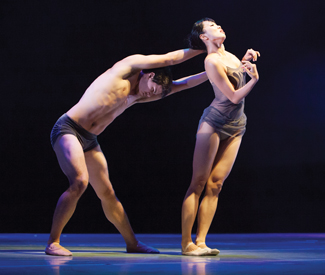
Being a soldier and an artist is not a natural fit. But think about it. For both you need dedication, discipline, a willingness to submit your ego to something bigger than yourself and, for dancers, an ability to work with others. So, perhaps, it should be no surprise that Private Freeman, one of ODC/Dance’s most generous, witty, and focused dancers, managed to successfully integrate these two, seemingly contradictory impulses. Deborah Slater’s work-in-progress Private Life Studies is exploring some of these issues as a series of “dance stories”, based on strategies from Sun Tzu’ “The Art of War.” Sun was just one of some of history’s most brilliant minds writing about war; Machiavelli and von Clausewitz were others. Odd, isn’t it? (Rita Felciano)

Also Sat/3, 8pm; Sun/4, 2pm, $15–$25

CounterPULSE

1310 Mission St. SF

(877) 297-6805

privatelife-eorg.eventbrite.com


Day of the Dead altars and procession

Although the changing nature of the crowd at the Mission’s annual night of remembrance for those who’ve passed has earned it the affectionate nickname “Dia de los Dead Gringos,” there’s no denying that the community-led, candle-lit procession and park full of homemade altars can be breathtakingly lovely. Arrive early at Garfield Park to tiptoe around meticulously, sometimes even extravagantly decorated tributes to dead family members and public figures. Add a note of your own to the interactive exhibits, and await the arrival of the costumed procession, whose inevitable approximations of La Catrina are a distinctly San Franciscan way of celebrating the holiday. (Caitlin Donohue)

Procession: 6-7pm, free

Starts at Bryant and 22nd St., SF

Festival of Altars: 6-11pm, free

Garfield Park

Harrison and 26th St., SF

www.dayofthedeadsf.org


Chilly Gonzales

It’s not hard to come up with a list of catchy things about Chilly Gonzales to entice you to go to his show. And he knows it. While his strongest talents lie in piano, he has made quite a scene on Youtube, adapting his skills to popular demand with his genuine love of rap (and bongos, hula hoops, and pink suits). He has provided compositions for Feist, Drake, and Steve Jobs and then turned the tables to rap with the BBC Philharmonic Orchestra. Now though, like a true artist, he’s returning from his pop adventures and getting serious with his latest work, “Piano Solo II,” which is mostly short piano pieces showcasing serious skill in a still modern, easily digestible format. (Champlin)

8pm, $20

Swedish American Hall

2170 Market, SF

(415) 861-5016

www.cafedunord.com


SATURDAY 3

Informant

No documentary subject in recent memory is as infuriating as Brandon Darby — the radical activist turned FBI informant turned Tea Party chucklehead at the center of Informant, local documentary filmmaker Jamie Meltzer’s most recent work. (Prior to this, Meltzer was probably best-known for 2003’s wonderfully bizarre Off the Charts: The Song-Poem Story.) Scream at the screen (you will want to) at Other Cinema tonight, Informant’s first local showing since its San Francisco International Film Festival bow earlier this year. (Cheryl Eddy)

8:30pm, $6

Artists’ Television Access

992 Valencia, SF

www.othercinema.com


SF Symphony Dia de los Muertos community concert

Is a skeleton a xylophone or a marimba? You can bet your sweet sugar skull there’ll be an ocean of chromatic bones, dancing akimbo, at the vibrant annual celebration of the afterlife. The family favorite boasts performances from the SF Symphony Youth Orchestra (playing Aaron Copland’s El Salón México and Jose Pablom Moncayo’s Huapango), dance company Los Lupeños de San José, Mariachi Nuevo Tecalitlán, and more, all narrated by the twinkling Luis Valdez, “father of Chicano theater.” Face painting, paper flower-making, tons of colorful art, and a pre-show by the Mixcoatl Anahuac Aztec dancers, the 30th Street Chorus, and the Solera singers boost the fun — but really they had us at cinnamon-infused Mexican hot chocolate and pan de muerto. (Marke B.)

2pm, $17.50–$68

Davies Symphony Hall

401 Van Ness, SF.

(415) 864-1000

www.sfsymphony.org


AU

In my younger and more vulnerable years, certain music videos left definitive scars on my brain. Faith No More’s “Epic” — seemingly an over-the-top ode by Mike Patton to drowning fish and exploding pianos — taught me the meaning of the word in a way that no amount of Greek literature could. Things have largely remained that way until listening to the latest adventurous pop album from Portland’s AU, which opens with another “Epic” — an instrumental soundscape where technical, Hella-tight drumming is joined by impossibly high rising GY!BE guitars as part of a larger Tim-Riggins-winning-the-big-game-triumphant structure. The lexographically challenging track is only the first surprise on the record, and demands a live rendition. (Ryan Prendiville)

With Zammuto

9pm, $15

Independent

628 Divisadero, SF

(415) 771-1421

 www.theindependentsf.com


SUNDAY 4

Kid Koala

It’s been a big year for Eric San, the Montreal turntablist better known as Kid Koala. Not only did he contribute to the revival of Deltron 3030 after a decade-long hiatus; he’s also managed to release 12 Bit Blues, his first solo record in six years. Conceptually inspired and determined, the album utilizes a clunky, old-school sampler, à la Public Enemy, to reconstruct blues music from the ground up, resulting in a man vs. machine sort of tension that makes for a constantly engaging listen. Luckily, for those fans hesitant to watch a dude spin records for two hours, Kid Koala’s “Vinyl Vaudeville Tour” is loaded with bells and whistles to keep things interesting: Puppets! Dancing girls! Parlor games! Robots! If only more electronic acts were bold enough to co-opt these kooky antics of the Flaming Lips variety. (Taylor Kaplan)

With Adira Amram and the Experience

9pm, $20

Independent

628 Divisadero, SF

(415) 771-1421

www.theindependentsf.com


MONDAY 5

Jens Lekman

“Hey do you want to go see a band? No I hate bands. It’s always packed with men spooning their girlfriends, clutching their hands, as if they let go their feet would lift off the ground and ascend,” Swedish pop master Jens Lekman sings on I Know What Love Isn’t, his first full-length since 2007’s classic Night Falls Over Kortedala. Gone are the enraptured recollections of romantic highs — this is the ever autobiographically charming Lekman, soberly looking at relationships from the outside. But on this “break-up” album, Lekman’s observations on past failures and limitations break through to a melancholic optimism for the future. Recreating the album’s full palette of ’80s balladry, Lekman will be performing with a full band. (Prendiville)

With Taken By Trees, Big Search

8pm, $25–$35

Fillmore

1850 Geary, SF

(415) 346-6000

 www.thefillmore.com


TUESDAY 6

Reverend Peyton’s Big Damn Band

Reverend Peyton’s Big Damn Band must be exhausted. Not only does the trio have to live up to its highfalutin’ damn big title, it found time this year to release its eighth full-length album while maintaining its ridiculous, awe-inspiring average of 250 shows per year. The Indiana-based Americana blues band consists of a Reverend Peyton on guitar and vocals, his wife Breezy on washboard, and Peyton’s cousin, Aaron “Cuz” Persinger on drums. For the band’s newest effort Between the Ditches, the Rev. and company slowed down enough to get into a studio and lay out the record instrument by instrument, track by track, instead of recording it live all in one big, enthusiastic rush as usual. The result is a beautifully recorded bit of nostalgia that transports the listener to a big wraparound porch in the Southern summer. And trust me, it’s exactly where you want to be. (Zaremba)

With The Gypsy Moonlight Band, Anju’s Pale Blue Eyes

9pm, $10

Bottom of the Hill

1233 17th St, SF

(415) 626-4455

www.bottomofthehill.com

The Guardian listings deadline is two weeks prior to our Wednesday publication date. To submit an item for consideration, please include the title of the event, a brief description of the event, date and time, venue name, street address (listing cross streets only isn’t sufficient), city, telephone number readers can call for more information, telephone number for media, and admission costs. Send information to Listings, the Guardian, 225 Bush, 17th Flr., SF, CA 94105; or e-mail (paste press release into e-mail body — no attachments, please) to listings@sfbg.com. Digital photos may be submitted in jpeg format; the image must be at least 240 dpi and four inches by six inches in size. We regret we cannot accept listings over the phone.
Lightning strikes twice

0

emilysavage@sfbg.com

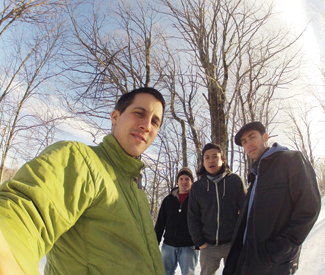
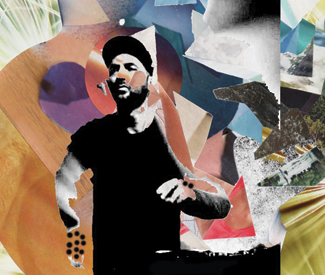
TOFU AND WHISKEY If experimental artist Nick Zammuto was pulling from a storied sample library after all those years with beloved former band the Books, he’s now building from scratch with his new band, Zammuto. The first Zammuto record sprang from a more angsty place, a fear of the unknown after the breakup of the Books. Skyping from a McDonald’s in Springfield, Mass., a humble Zammuto admits to fears about “lightning striking twice,” regarding his musical evolution.

His fears are unwarranted; the Zammuto self-titled debut (Temporary Residence, 2012) is as invigorating as it is multifaceted; mixing classic pop sensibilities with digital burps, buzzy electronics, sampled found objects, and still a more traditional band set-up than the Books, the artist has again found his own creative niche: the mad scientist family man, digging through crates of toys and creating emotional connections with the sounds he squeezes out of them. And he’s kept his humor in tact, with tracks titled “Zebra Butt,” “Groan Man, Don’t Cry,” and “FU C-3PO.”

Zammuto, the band, travels to the Independent this week (Sat/3, 9pm, $15. 628 Divisadero, SF. www.theindependentsf.com) but it’s been to SF once before. It came out west this spring to open for Explosions in the Sky at the Palace of Fine Arts. And after that show, Zammuto met some young Australian rockers. I’ll let him tell the story:

Nick Zammuto I was at the merch table, and this group of Australians comes up and buys everything on the table. I’m like, ‘you guys look like you’re in a band or something.’ And they’re like, ‘oh yeah, we’re Gotye.’ And I’m like, ‘cool, I’ve never heard of you, I’ll check it out.’ Literally, in that moment, they had the number one single in like, eight countries. I felt like a moron. Two weeks later I got a call from Wally [De Backer] to come tour with them, so we ended up playing seven shows with them. I live under a rock, I don’t have time for anything except working in my studio, and playing with my kids.

San Francisco Bay Guardian Has having children has affected your music?

NZ I have all boys, three sons, who are six, three, and one, you can’t help but live vicariously through them, because they experience life in such directness. I think it’s tuned me in to a simpler way of looking at things, and to be around that kind of innocence is inspiring. Just the sense of wonder they have is infectious.

SFBG How has your approach to songwriting shifted with Zammuto, as compared to the Books?

NZ I’ve never really been part of a band, I sort of came to that realization when we started rehearsing the [Zammuto] material. The Books was really a meta-band in a lot of ways, and at the end I was starting to think of it as a sort of glorified karaoke; we’d get up on stage and have all these electronic rhythms going on and we would just kind of play along with it. With the new project I really wanted to make something that was meant to be played live.

Key to that was finding a great drummer, and I think I found just an amazing drummer [in Sean Dixon]. Having a live time keeper on stage has been the biggest difference between the new project and the Books. And for me it’s been the most fun, to play with him, and see what he does. We really connected over this idea of polyrhythms. He helps me find these grooves that are really unusual. And I think the reason why I shied away from drums for so long is that it’s a very kind of genre-fying instrument. It’s hard to do anything out of the ordinary because it all sounds too ubiquitous. But Sean’s the kind of guy who sounds like nobody else. It’s a real balance with Sean between precision and heart.

I have [Dixon, Gene Back, and brother Mike Zammuto] up for sessions and we record things in a very loose way and then I go through those recordings later and pull out the parts that can go beyond expectation and build from those elements, rather than the sample library that the Books were drawing from.

SFBG But you’re still creating your own instruments out of found objects.

NZ It’s such a weird habit, and it’s something I’ve been doing a long time. My interest in music came out of recording these sculptures back in college…I started to make these sculptures that had this sound component, and I needed a way to record those sculptures. So it’s kind of been in the backdrop of everything I’ve done for a long time.

One of the first things I started doing was cutting into vinyl, cutting patterns into the circle at the end of each side of a record, and using that as a percussion. That sound sounds like clicks and pops, but if you take those impulses and put them through various environments you get amazing sounds, so playing them through PVC pipes or through filing cabinets with subwoofers installed in them you get these really strange but kind of naturalistic sounds at the same time, where you can’t put your finger immediately on what they are, and I think that’s why I’m interested in them. They have this mysterious quality.

SFBG What about the thematic elements, lyrically, on the record, it seems like it’s coming from a lot of new beginnings, new experiences, “The Shape of Things to Come” and so forth?

NZ The end of the Books was a harrowing experience, it took a very long time for it to go through its death throes. Lots of frustrations, then finally giving up and being like, ‘OK, what the hell do I do now?’ I’m asking lightning to strike twice, starting another band at this point in my life, so the lyrics are coming out of a very angsty place on this record. And I think I’m getting out of it, finally. Now that the band has come together in such an amazing way. I’m not in such a dark mood anymore [laughs].

I think I was writing about my own experiences, but in the frame of something more universal, for somebody who is frustrated out of their minds and in need of a new beginning. Just a general expression of having this need to move forward, but also going into unexplored territory.

ENDLESS SUMMER

San Francisco’s own Future Twin (soundcloud.com/futuretwin) released the second of its Summer Single series tracks last week. Angular “Sara” is tethered by a driving guitar line, and singer Jean Yaste’s caramel-coated vocals. Lyrically, it’s a testament to Yaste’s personal female heroes, and a call to action to all women to question the status quo and explore alternative experiences.

WOODKID (CANCELLED DUE TO TRAVEL CONDITIONS AFTER THE STORM)

French composer-artist Woodkid (a.k.a Yoann Lemoine) creates sounds that bloom like live-action role-playing background music. Or, video game music using entirely classical orchestration, strings, and Lemoine’s low octave, accented pipes. (You could easily picture Link chasing after Zelda during “Iron.”) Each track builds like a sassy, page-turning epic, which make his two EPs feel like brief odysseys. That’s right, he’s yet to release a full-length, but that record — The Golden Age — is coming. Though you might have seen his stylish videos for Agyness Deyn-featuring “Iron” or “Run Boy Run.” Or hell, you may know him from his other life as a music video director: Katy Perry’s “Teenage Dream,” anyone? With Pacific Air.

Fri/2, 9pm, $20

Bimbo’s

1025 Columbus, SF

www.bimbos365club.com

Film Listings

0

Film listings are edited by Cheryl Eddy. Reviewers are Kimberly Chun, Dennis Harvey, Lynn Rapoport, and Sara Vizcarrondo. For rep house showtimes, see Rep Clock.

OPENING

Amber Alert An audition tape for The Amazing Race quickly turns into an epic chase in this low-budget "found footage" drama. Arizona BFFs Nate (Chris Hill) and Sam (Summer Bellessa, wife of director Kerry Bellessa) — and Sam’s teenage brother, shaky-cam operator Caleb (Caleb Thompson) — notice they’re driving behind the very Honda that’s being sought by an Amber Alert. "Following at a safe distance," as advised when they call the cops, leads to high-decibel arguments about how to handle the situation — and for the next hour-plus, the viewer is trapped in a car with two people communicating only in nails-on-chalkboard tones. Amber Alert‘s nonstop bickerfest is so tiresome that it’s actually a relief when the child molester character starts taking an active role in the story. Not a good sign. (1:20) Rohnert Park 16. (Eddy)

The Bay Top-quality (i.e., realistically repulsive) special effects highlight this otherwise unremarkable disaster movie that’s yet another "found footage" concoction, albeit maybe the first one from an Oscar-winning director. But it’s been a long time since 1988’s Rain Man, and the Baltimore-adjacent setting is the only Barry Levinson signature you’ll find here. Instead, parasites-gnaw-apart-a-coastal-town drama The Bay — positioned as a collection of suppressed material coming to light on "Govleaks.org" — is a relentlessly familiar affair, further hampered by a narrator (Kether Donohue) with a supremely grating voice. Rising star Christopher Denham (Argo) has a small part as an oceanographer whose warnings about the impending waterborne catastrophe are brushed aside by a mayor who is (spoiler alert!) more concerned with tourist dollars than safety. (1:25) (Eddy)

"Don’t Shoot the Player Piano: The Music of Conlon Nancarrow" The late Texarkana-born composer’s birth centenary is celebrated in this two-part (Fri/2 and Sun/4) program of films examining his unique contribution to 20th century music. Frustrated early on by the inability of standard musicians to play his incredibly complicated scores, he turned to composing for player pianos, with their greatly heightened capacity for producing density of notes and rhythms. A member of the American Communist Party, he returned from fighting fascists in the Spanish Civil War to discover the U.S. government had revoked the passports of many citizens with similar political convictions. As a result, in 1940 he moved to Mexico, where he remained until his death 57 years later — his reputation remaining an underground musicologists’ secret until the early 1980s, in large part due to his disinterest in fame and dislike of crowds (he’d always avoided any gathering of over five people). But in his last years he became much more widely known, thanks in large part to fans like fellow composer Gyorgy Ligeti, who in one documentary here calls him "the most important composer of our time," comparing him to Beethoven and saying "his work is completely, totally different from [his contemporaries]." Among the movies screening are Uli Aumuller and Hanne Kaisik’s 1993 German Music for 1,000 Fingers, in which the reclusive, elderly subject allows us into his studio to explain his (still somewhat inexplicable) methodologies. The brand-new, hour-long Conlon Nancarrow: Virtuoso of the Player Piano offers a posthumous appreciation of his life, music and influence. It’s a first film from James Greeson, a professor of music at the University of Arkansas who knew the man himself. Also featured are several international shorts that provide interpretive visual complements to Nancarrow pieces. His widow and daughter, as well as kinetic sculptor Trimpin and composer-former KPFA music director Charles Amirkhanian will appear at both PFA programs. Pacific Film Archive. (Harvey)

The Flat See "Past Lives." (1:37) Albany, Embarcadero.

Flight Robert Zemeckis directs Denzel Washington as an airline pilot whose act of heroism brings to light his secret drinking problem. (2:18) Presidio.

A Late Quartet Philip Seymour Hoffman and Christopher Walken head up a star-spangled cast in this drama about a famous string quartet. (1:45) Embarcadero.

A Liar’s Autobiography: The Untrue Story of Monty Python’s Graham Chapman Blessed with recordings made by Monty Python member Graham Chapman (King Arthur in 1975’s Monty Python and the Holy Grail; Brian in 1979’s Life of Brian) before his death in 1989 from cancer, filmmakers Bill Jones, Jeff Simpson, and Ben Timlett recruited 14 different animation studios to piece together Chapman’s darkly humorous (and often just plain dark) life story. He was gay, he was an alcoholic, he co-wrote (with John Cleese) the legendary "Dead Parrot Sketch." A Liar’s Autobiography starts slowly — even with fellow Monty Python members Cleese, Terry Jones, Terry Gilliam, and Michael Palin lending their voices, much of the bone-dry humor falls disappointingly flat. "This is not a Monty Python film," the filmmakers insist, and viewers hoping for such will be disappointed. Stick with it, though, and the film eventually finds its footing as an offbeat biopic, with the pick-a-mix animation gimmick at its most effective when illustrating Chapman’s booze-fueled hallucinations. In addition to opening theatrically, the film also debuts Fri/2 on premium cable channel Epix. (1:22) Smith Rafael, Sundance Kabuki. (Eddy)

The Loneliest Planet Travel broadens, they say — and has a way of foregrounding anxiety and desire. So the little tells take on a larger, much more loaded significance in The Loneliest Planet when contextualized by the devastatingly beautiful Caucasus Mountains in Georgia. In this film by Russian American director and video artist Julia Loktev, adventuring, engaged Westerners Nica (an ethereal Hani Furstenberg) and Alex (Gael García Bernal) hire a local guide and war veteran (Bidzina Gujabidze) to lead them on a camping trip through the wilderness. They’re globe-trotting blithe spirits, throwing themselves into new languages and new experiences, though the harsh, hazardous, and glorious Georgian peaks and crevasses have a way of making them seem even smaller while magnifying their weaknesses and naiveté. One small, critical stumble on their journey is all it takes for the pair to question their relationship, their roles, and the solid ground of their love. Working with minimal dialogue (and no handlebar subtitles) from a Tom Bissell short story, Loktev shows a deliberate hand and thoughtful eye in her use of the space, as well as her way of allowing the silences to speak louder than dialogue: she turns the outdoor expanses into a quietly awe-inspiring, albeit frightening mirror for the distances between, and emptiness within, her wanderers, uncertain about how to quite find their way home. (1:53) Clay, Shattuck. (Chun)

The Man With The Iron Fists Erstwhile Wu Tang-er RZA directs (and co-wrote, with Eli Roth) this over-the-top homage to classic martial arts films. (1:36)

Miami Connection See "Black-Belt Sabbath." (1:23) Roxie.

The Other Son The plot of ABC Family’s Switched at Birth gets a politically-minded makeover in Lorraine Lévy’s The Other Son, in which the mixed-up teens represent both sides of the Israel-Palestine conflict. When mop-topped wannabe rocker Joseph (Jules Sitruk) dutifully signs up for Israeli military duty, the required blood test reveals he’s not the biological son of his parents. Understandably freaked out, his French-Israeli mother (Emmanuelle Devos) finds out that a hospital error during a Gulf War-era evacuation meant she and husband Alon (Pascal Elbé) went home with the wrong infant — and their child, aspiring doctor Yacine (Medhi Dehbi), was raised instead by a Palestinian couple (Areen Omari, Khalifia Natour). It’s a highly-charged situation on many levels ("Am I still Jewish?", a tearful Joseph asks; "Have fun with the occupying forces?", Yacine’s bitter brother inquires after his family visits Joseph in Tel Aviv), and potential for melodrama is sky-high. Fortunately, director and co-writer Levy handles the subject with admirable sensitivity, and the film is further buoyed by strong performances. (1:53) Opera Plaza, Shattuck, Smith Rafael. (Eddy)

A Simple Life When elderly Ah Tao (Deanie Ip), the housekeeper who’s served his family for decades, has a stroke, producer Roger (Andy Lau) pays for her to enter a nursing home. No longer tasked with caring for Roger, Ah Tao faces life in the cramped, often depressing facility with resigned calm, making friends with other residents (some of whom are played by nonprofessional actors) and enjoying Roger’s frequent visits. Based on Roger Lee’s story (inspired by his own life), Ann Hui’s film is well-served by its performances; Ip picked up multiple Best Actress awards for her role, Lau is reliably solid, and Anthony Wong pops up as the nursing home’s eye patch-wearing owner. Wong’s over-the-top cameo doesn’t quite fit in with the movie’s otherwise low-key vibe, but he’s a welcome distraction in a film that can be too quiet at times — a situation not helped by its washed-out palette of gray, beige, and more gray. (1:58) Four Star. (Eddy)

Wreck-It Ralph Wreck-It Ralph cribs directly from the Toy Story series: when the lights go off in the arcade, video game characters gather to eat, drink, and endure existential crises. John C. Reilly is likable and idiosyncratic as Ralph, the hulking, ham-fisted villain of a game called Fix-It-Felix. Fed up with being the bad guy, Ralph sneaks into gritty combat sim Hero’s Duty under the nose of Sergeant Calhoun (Jane Lynch), a blond space marine who mixes Mass Effect‘s Commander Shepard with a PG-rated R. Lee Ermey. Things go quickly awry, and soon Ralph is marooned in cart-racing candyland Sugar Rush, helping Vanellope Von Schweetz (a manic Sarah Silverman), with Calhoun and opposite number Felix (Jack McBrayer) hot on his heels. Though often aggressively childish, the humor will amuse kids, parents, and occasionally gamers, and the Disney-approved message about acceptance is moving without being maudlin. The animation, limber enough to portray 30 years of changing video game graphics, deserves special praise. (1:34) Balboa, Presidio, Shattuck. (Ben Richardson)

The Zen of Bennett Landing somewhere between a glorified album making-of and a more depthed exploration, this documentary about famed crooner Tony of "I Left My Heart in San Francisco" fame shows him recording last year’s all-standards Duets II disc. His vocal collaborators are an eclectic — to say the least — mix of mostly much younger artists including Norah Jones, John Mayer, Carrie Underwood, Willie Nelson, and Andrea Bocelli. Some pairings are clearly a matter of commerce over chemistry, while others surprise — Lady Gaga is better than you might expect, while Aretha Franklin is certainly worse. Most touching as well as disturbing is his session with the late Amy Winehouse, whose nervous, possibly hopped-up appearance occasions his most gentlemanly behavior, as well as genuine admiration for her talent. (Others on the record, including Mariah Carey and k.d. lang, do not appear here.) Unjoo Moon’s rather mannered direction includes little displays of temperament from the octogenarian star, and glimpses of his family life (which extends well into his work life, since they all seem to be on the payroll), but just enough to tease — not enough to provide actual insight. Still, fans will find this less than-definitive portrait quite satisfying enough on its own limited terms. (1:24) Vogue. (Harvey)

ONGOING

Alex Cross (1:41) 1000 Van Ness, SF Center.

Argo If you didn’t know the particulars of the 1979 Iranian Revolution, you won’t be an expert after Argo, but the film does a good job of capturing America’s fearful reaction to the events that followed it — particularly the hostage crisis at the US embassy in Tehran. Argo zeroes in on the fate of six embassy staffers who managed to escape the building and flee to the home of the sympathetic Canadian ambassador (Victor Garber). Back in Washington, short-tempered CIA agents (including a top-notch Bryan Cranston) cast about for ways to rescue them. Enter Tony Mendez (Ben Affleck, who also directs), exfil specialist and father to a youngster wrapped up in the era’s sci-fi craze. While watching 1973’s Battle for the Planet of the Apes, Tony comes up with what Cranston’s character calls "the best bad idea we have:" the CIA will fund a phony Canadian movie production (corny, intergalactic, and titled Argo) and pretend the six are part of the crew, visiting Iran for a few days on a location shoot. Tony will sneak in, deliver the necessary fake-ID documents, and escort them out. Neither his superiors, nor the six in hiding, have much faith in the idea. ("Is this the part where we say, ‘It’s so crazy it just might work?’" someone asks, beating the cliché to the punch.) Argo never lets you forget that lives are at stake; every painstakingly forged form, every bluff past a checkpoint official increases the anxiety (to the point of being laid on a bit thick by the end). But though Affleck builds the needed suspense with gusto, Argo comes alive in its Hollywood scenes. As the show-biz veterans who mull over Tony’s plan with a mix of Tinseltown cynicism and patiotic duty, John Goodman and Alan Arkin practically burst with in-joke brio. I could have watched an entire movie just about those two. (2:00) Four Star, Marina, 1000 Van Ness, SF Center, Sundance Kabuki. (Eddy)

Beasts of the Southern Wild Six months after winning the Grand Jury Prize at Sundance (and a Cannes Camera d’Or), Beasts of the Southern Wild proves capable of enduring a second or third viewing with its originality and strangeness fully intact. Magical realism is a primarily literary device that isn’t attempted very often in U.S. cinema, and succeeds very rarely. But this intersection between Faulkner and fairy tale, a fable about — improbably — Hurricane Katrina, is mysterious and unruly and enchanting. Benh Zeitlin’s film is wildly cinematic from the outset, as voiceover narration from six-year-old Hushpuppy (Quvenzhané Wallis) offers simple commentary on her rather fantastical life. She abides in the Bathtub, an imaginary chunk of bayou country south of New Orleans whose residents live closer to nature, amid the detritus of civilization. Seemingly everything is some alchemical combination of scrap heap, flesh, and soil. But not all is well: when "the storm" floods the land, the holdouts are forced at federal gunpoint to evacuate. With its elements of magic, mythological exodus, and evolutionary biology, Beasts goes way out on a conceptual limb; you could argue it achieves many (if not more) of the same goals Terrence Malick’s 2011 The Tree of Life did at a fraction of that film’s cost and length. (1:31) Shattuck. (Harvey)

Chasing Mavericks Sidestepping the potential surf-porn impact of influential docs like The Endless Summer (1966) and Step Into Liquid (2003), Chasing Mavericks directors Curtis Hanson and Michael Apted instead focus on the coming-of-age back story of Santa Cruz surf legend Jay Moriarity, who landed on the cover of Surfer magazine at the very unripe age of 16 while attempting the way-challenging waves at Half Moon Bay’s Mavericks. How did the teenager manage to tackle the mythically massive, highly dangerous 25- to 80-plus-foot waves that have killed far more seasoned surfers? It all started at an early age, a starting point that’s perhaps a nod to Apted’s lifetime-spanning Up documentaries, as Moriarity (Jonny Weston) learned to gauge the size of the waves on his own and grew up idolizing neighbor and surfing kahuna Frosty Hesson (Gerard Butler). After tailing Hesson on a Mavericks surfing jaunt, Moriarity becomes enthralled with the idea of tackling those killer waves — an obsession that could kill the kid, Hesson realizes with the help of his wife Brenda (Abigail Spencer). So the elder puts him through a makeshift big-wave rider academy, developing him physically by having the teen, say, paddle from SC to Monterey and mentally by putting him through a series of discipline-building challenges. The result is a riptide of inspiration that even Moriarity’s damaged mom (Elisabeth Shue) can appreciate, that is if the directors hadn’t succumbed to an all-too-predictable story arc, complete with random bullying and an on-again-off-again love interest (Leven Rambin), plus the depthless performance of a too-cute, cherubic Weston. Too bad Butler, who tasted the ocean’s wrath when he got injured during the production, aged out of the Moriarity role: he brings the fire — and the fury that fuels a drive to do the physically unthinkable — that would have given Moriarity’s story new life. (1:45) Metreon, 1000 Van Ness. (Chun)

Cloud Atlas Cramming the six busy storylines of David Mitchell’s wildly ambitious novel into just three hours — the average reader might have thought at least 12 would be required — this impressive adaptation directed (in separate parts) by Tom Twyker (1998’s Run Lola Run) and Matrix siblings Lana and Andy Wachowski has a whole lot of narrative to get through, stretching around the globe and over centuries. In the mid 19th century, Jim Sturgess’ sickly American notory endures a long sea voyage as reluctant protector of a runaway-slave stowaway from the Chatham Islands (David Gyasi). In 1931 Belgium, a talented but criminally minded British musician (Ben Whishaw) wheedles his way into the household of a famous but long-inactive composer (Jim Broadbent). A chance encounter sets 1970s San Francisco journalist Luisa (Halle Berry) on the path of a massive cover-up conspiracy, swiftly putting her life in danger. Circa now, a reprobate London publisher’s (Broadbent) huge windfall turns into bad luck that gets even worse when he seeks help from his brother (Hugh Grant). In the not-so-distant future, a disposable "fabricant" server to the "consumer" classes (Doona Bae) finds herself plucked from her cog-like life for a rebellious higher purpose. Finally, in an indeterminately distant future after "the Fall," an island tribesman (Tom Hanks) forms a highly ambivalent relationship toward a visitor (Berry) from a more advanced but dying civilization. Mitchell’s book was divided into huge novella-sized blocks, with each thread split in two; the film wastes very little time establishing its individual stories before beginning to rapidly intercut between them. That may result in a sense of information (and eventually action) overload, particularly for non-readers, even as it clarifies the connective tissues running throughout. Compression robs some episodes of the cumulative impact they had on the page; the starry multicasting (which in addition to the above mentioned finds many uses for Hugo Weaving, Keith David, James D’Arcy, and Susan Sarandon) can be a distraction; and there’s too much uplift forced on the six tales’ summation. Simply put, not everything here works; like the very different Watchmen, this is a rather brilliant "impossible adaptation" screenplay (by the directors) than nonetheless can’t help but be a bit too much. But so much does work — in alternating currents of satire, melodrama, pulp thriller, dystopian sci-fi, adventure, and so on — that Cloud Atlas must be forgiven for being imperfect. If it were perfect, it couldn’t possibly sprawl as imaginatively and challengingly as it does, and as mainstream movies very seldom do. (2:52) Balboa, California, 1000 Van Ness, Presidio, SF Center, Sundance Kabuki. (Harvey)

The Dark Knight Rises Early reviews that called out The Dark Knight Rises‘ flaws were greeted with the kind of vicious rage that only anonymous internet commentators can dish out. And maybe this is yet another critic-proof movie, albeit not one based on a best-selling YA book series. Of course, it is based on a comic book, though Christopher Nolan’s sophisticated filmmaking and Christian Bale’s tortured lead performance tend to make that easy to forget. In this third and "final" installment in Nolan’s trilogy, Bruce Wayne has gone into seclusion, skulking around his mansion and bemoaning his broken body and shattered reputation. He’s lured back into the Batcave after a series of unfortunate events, during which The Dark Knight Rises takes some jabs at contemporary class warfare (with problematic mixed results), introduces a villain with pecs of steel and an at-times distractingly muffled voice (Tom Hardy), and unveils a potentially dangerous device that produces sustainable energy (paging Tony Stark). Make no mistake: this is an exciting, appropriately moody conclusion to a superior superhero series, with some nice turns by supporting players Gary Oldman and Joseph Gordon-Levitt. But in trying to cram in so many characters and plot threads and themes (so many prisons in this thing, literal and figural), The Dark Knight Rises is ultimately done in by its sprawl. Without a focal point — like Heath Ledger’s menacing, iconic Joker in 2008’s The Dark Knight — the stakes aren’t as high, and the end result feels more like a superior summer blockbuster than one for the ages. (2:44) Metreon. (Eddy)

Diana Vreeland: The Eye Has to Travel The life of legendary fashion editor Diana Vreeland is colorfully recounted in Diana Vreeland: The Eye Has to Travel, a doc directed by her granddaughter-in-law, Lisa Immordino Vreeland. The family connection meant seemingly unlimited access to material featuring the unconventionally glamorous (and highly quotable) Vreeland herself, plus the striking images that remain from her work at Harper’s Bazaar, Vogue, and the Costume Institute of the Metropolitan Museum of Art. "Narrated" from interview transcripts by an actor approximating the late Vreeland’s husky, posh tones, the film allows for some criticism (her employees often trembled at the sight of her; her sons felt neglected; her grasp of historical accuracy while working at the museum was sometimes lacking) among the praise, which is lavish and delivered by A-listers like Anjelica Huston, who remembers "She had a taste for the extraordinary and the extreme," and Manolo Blahnik, who squeals, "She had the vision!" (1:26) Opera Plaza. (Eddy)

Frankenweenie Tim Burton’s feature-length Frankenweenie expands his 1984 short of the same name (canned by Disney back in the day for being too scary), and is the first black and white film to receive the 3D IMAX treatment. A stop-motion homage to every monster movie Burton ever loved, Frankenweenie is also a revival of the Frankenstein story cute-ified for kids; it takes the showy elements of Mary Shelley’s novel and morphs them to fit Burton’s hyperbolic aesthetic. Elementary-school science wiz Victor takes his disinterred dog from bull terrier to gentle abomination (when the thirsty Sparky drinks, he shoots water out of the seams holding his body parts together). Victor’s competitor in the school science fair, Edgar E. Gore, finds out about Sparky and ropes in classmates to scrape up their dead pets from the town’s eerily utilized pet cemetery and harness the town’s lightning surplus. The film’s answer to Boris Karloff (lisp intact) resurrects a mummified hamster, while a surrogate for Japanese Godzilla maker Ishiro Honda, revives his pet turtle Shelley (get it?) into Gamera. As these experiments aren’t borne of love, they don’t go as well at Victor’s. If you love Burton, Frankenweenie feels like the at-last presentation of a story he’s been dying to tell for years. If you don’t love him, you might wonder why it took him so long to get it out. When Victor’s science teacher leaves the school, he tells Victor an experiment conducted without love is different from one conducted with it: love, he implies, is a variable. If that’s the variable that separates 2003’s Big Fish (heartbreaking) from 2010’s Alice In Wonderland (atrocious), it’s a large one indeed. The love was there for 29 minutes in 1984, but I can’t say it endures when stretched to 87 minutes 22 years later. (1:27) Metreon, 1000 Van Ness. (Vizcarrondo)

Fun Size (1:45) Metreon, 1000 Van Ness, Shattuck.

Here Comes the Boom The makers of September’s Won’t Back Down might quibble with this statement, but the rest of us can probably agree that nothing (with the possible exception of Trapper Keepers) says "back to school" like competitive steel-cage mixed martial arts — particularly if the proceeds from the matches go toward saving extracurriculars at a down-at-the-heels public high school. Kevin James plays Scott Voss, a 42-year-old biology teacher at the aforementioned school, whose lack of vocational enthusiasm is manifested by poor attendance and classroom observations about how none of what the students are learning matters. He’s jolted from this criminally subpar performance of his academic duties, however, when budget cuts threaten the school’s arts programs, including the job of an earnest and enthusiastic music teacher (Henry Winkler) whose dedication Scott lazily admires. It seems less than inevitable that this state of affairs would lead to Scott’s donning his college wrestling singlet and trundling into the ring to get pummeled and mauled for cash, but it seems to work better than a bake sale. Less effective and equally unconvincing are Scott’s whiplash arc from bad apple to teacher-of-the-year; a percolating romance between him and the school nurse, played by Salma Hayek; and the script’s tortuous parade of rousing statements celebrating the power of the human spirit, seemingly cribbed from a page-a-day calendar of inspirational quotes. (1:45) SF Center. (Rapoport)

Hotel Transylvania (1:32) Metreon, 1000 Van Ness, Shattuck.

The House I Live In Much like he did in 2005’s Why We Fight, filmmaker Eugene Jarecki identifies a Big Issue (in that film, the Iraq War) and strips it down, tracing all of the history leading up to the current crisis point. Here, he takes on America’s "war on drugs," which I put quotes around not just because it was a phrase spoken by Nixon and Reagan, but also because — as The House I Live In ruthlessly exposes — it’s been a failure, a sham, since its origins in the late 1960s. Framing his investigation with the personal story of his family’s housekeeper — whose dedication to the Jarecki family meant that she was absent when her own son turned to drugs — and enfolding a diverse array of interviews (a sympathetic prison guard, addicts and their families, The Wire‘s David Simon) and locations (New York City, Sioux City), Jarecki has created an eye-opening film. Particularly well-explained are segments on how drug laws correlate directly to race and class, and how the prison-industrial complex has played a part in making sure those laws remain as strict as possible. (1:48) Sundance Kabuki. (Eddy)

Looper It’s 2044 and, thanks to a lengthy bout of exposition by our protagonist, Joe (Joseph Gordon-Levitt), here’s what we know: Time travel, an invention 30 years away, will be used by criminals to transport their soon-to-be homicide victims backward, where a class of gunmen called loopers, Joe among them, are employed to "do the necessaries." More deftly revealed in Brick writer-director Rian Johnson’s new film is the joylessness of the world in which Joe amorally makes his way, where gangsters from the future control the present (under the supervision of Jeff Daniels), their hit men live large but badly (Joe is addicted to some eyeball-administered narcotic), and the remainder of the urban populace suffers below-subsistence-level poverty. The latest downside for guys like Joe is that a new crime boss has begun sending back a steady stream of aging loopers for termination, or "closing the loop"; soon enough, Joe is staring down a gun barrel at himself plus 30 years. Being played by Bruce Willis, old Joe is not one to peaceably abide by a death warrant, and young Joe must set off in search of himself so that—with the help of a woman named Sara (Emily Blunt) and her creepy-cute son Cid (Pierce Gagnon)—he can blow his own (future) head off. Having seen the evocatively horrific fate of another escaped looper, we can’t totally blame him. Parsing the daft mechanics of time travel as envisioned here is rough going, but the film’s brisk pacing and talented cast distract, and as one Joe tersely explains to another, if they start talking about it, "we’re gonna be here all day making diagrams with straws" —in other words, some loops just weren’t meant to be closed. (1:58) 1000 Van Ness, Piedmont, SF Center, Sundance Kabuki. (Rapoport)

Masquerade (2:11) Metreon.

The Master Paul Thomas Anderson’s much-hyped likely Best Picture contender lives up: it’s easily the best film of 2012 so far. Philip Seymour Hoffman stars as Lancaster Dodd, the L. Ron Hubbard-ish head of a Scientology-esque movement. "The Cause" attracts Freddie Quell (Joaquin Phoenix, in a welcome return from the faux-deep end), less for its pseudo-religious psychobabble and bizarre personal-growth exercises, and more because it supplies the aimless, alcoholic veteran — a drifter in every sense of the word — with a sense of community he yearns for, yet resists submitting to. As with There Will Be Blood (2007), Anderson focuses on the tension between the two main characters: an older, established figure and his upstart challenger. But there’s less cut-and-dried antagonism here; while their relationship is complex, and it does lead to dark, troubled places, there are also moments of levity and weird hilarity — which might have something to do with Freddie’s paint-thinner moonshine. (2:17) Albany, Sundance Kabuki. (Eddy)

Middle of Nowhere All the reasons why movie publicist turned filmmaker Ava DuVernay scored the best director award at the Sundance Film Festival are up here on the screen. Taking on the emotionally charged yet rarely attempted challenge of picturing the life of the loved one left behind by the incarcerated, DuVernay furthers the cause of telling African American stories — she founded AaFFRM (African-American Film Festival Releasing Movement) and made her directorial debut with 2008 LA hip-hop doc This Is The Life — with Middle of Nowhere. Medical student Ruby (the compelling Emayatzy Corinealdi) appears to have a bright future ahead of her, when her husband Derek (Omari Hardwick) makes some bad choices and is tossed into maximum security prison for eight long years. She swears she’ll wait for him, putting her dreams aside, making the long bus ride out to visit him regularly, and settling for any nursing shift she can. How will she scrape the money together to pay the lawyer for Derek’s parole hearing, cope with the grinding disapproval of her mother (Lorraine Toussaint), support the increasingly hardened and altered Derek, and most importantly, discover a new path for herself? All are handled with rare empathy and compassion by DuVernay, who is rewarded for her care by her cast’s powerful performances. Our reward might be found amid the everyday poetry of Ruby’s life, while she wraps her hair for bed, watches Ali: Fear Eats the Soul (1974), and fantasizes about love in a life interrupted. (1:41) Stonestown. (Chun)

Paranormal Activity 4 (1:21) Metreon, 1000 Van Ness.

The Perks of Being a Wallflower Move over, Diary of a Wimpy Kid series — there’s a new shrinking-violet social outcast in town. These days, life might not suck quite so hard for 90-pound weaklings in every age category, what with so many films and TV shows exposing, and sometimes even celebrating, the many miseries of childhood and adolescence for all to see. In this case, Perks author Stephen Chbosky takes on the directorial duties — both a good and bad thing, much like the teen years. Smart, shy Charlie is starting high school with a host of issues: he’s painfully awkward and very alone in the brutal throng, his only friend just committed suicide, and his only simpatico family member was killed in a car accident. Charlie’s English teacher Mr. Andersen (Paul Rudd) appears to be his only connection, until the freshman strikes up a conversation with feline, charismatic, shop-class jester Patrick (Ezra Miller) and his magnetic, music- and fun-loving stepsister Sam (Emma Watson). Who needs the popular kids? The witty duo head up their gang of coolly uncool outcasts their own, the Wallflowers (not to be confused with the deeply uncool Jakob Dylan combo), and with them, Charlie appears to have found his tribe. Only a few small secrets put a damper on matters: Patrick happens to be gay and involved with football player Brad (Johnny Simmons), who’s saddled with a violently conservative father, and Charlie is in love with the already-hooked-up Sam and is frightened that his fragile equilibrium will be destroyed when his new besties graduate and slip out of his life. Displaying empathy and a devotion to emotional truth, Chbosky takes good care of his characters, preserving the complexity and ungainly quirks of their not-so-cartoonish suburbia, though his limitations as a director come to the fore in the murkiness and choppily handled climax that reveals how damaged Charlie truly is. (1:43) Embarcadero, Piedmont, Presidio, Shattuck, Sundance Kabuki. (Chun)

Pitch Perfect As an all-female college a cappella group known as the Barden Bellas launches into Ace of Base’s "The Sign" during the prologue of Pitch Perfect, you can hear the Glee-meets-Bring It On elevator pitch. Which is fine, since Bring It On-meets-anything is clearly worth a shot. In this attempt, Anna Kendrick stars as withdrawn and disaffected college freshman Beca, who dreams of producing music in L.A. but is begrudgingly getting a free ride at Barden University via her comp lit professor father. Clearly his goal is not making sure she receives a liberal arts education, as Barden’s academic jungle extends to the edges of the campus’s competitive a cappella scene, and the closest thing to an intellectual challenge occurs during a "riff-off" between a cappella gangs at the bottom of a mysteriously drained swimming pool. When Beca reluctantly joins the Bellas, she finds herself caring enough about the group’s fate to push for an Ace of Base moratorium and radical steps like performing mashups. Much as 2000’s Bring It On coined terms like "cheerocracy" and "having cheer-sex," Pitch Perfect gives us the infinitely applicable prefix "a ca-" and descriptives like "getting Treble-boned," a reference to forbidden sexual relations with the Bellas’ cocky rivals, the Treblemakers. The gags get funnier, dirtier, and weirder, arguably reaching their climax in projectile-vomit snow angels, with Elizabeth Banks and John Michael Higgins as grin-panning competition commentators offering a string of loopily inappropriate observations. (1:52) Metreon, 1000 Van Ness. (Rapoport)

Samsara Samsara is the latest sumptuous, wordless offering from director Ron Fricke, who helped develop this style of dialogue- and context-free travelogue with Koyaanisqatsi (1982) and Baraka (1992). Spanning five years and shooting on 70mm film to capture glimmers of life in 25 countries on five continents, Samsara, which spins off the Sanskrit word for the "ever-turning wheel of life," is nothing if not good-looking, aspiring to be a kind of visual symphony boosted by music by the Dead Can Dance’s Lisa Gerrard and composers Michael Stearns and Marcello De Francisci. Images of natural beauty, baptisms, and an African woman and her babe give way to the madness of modern civilization — from jam-packed subways to the horrors of mechanized factory farming to a bizarre montage of go-go dancers, sex dolls, trash, toxic discarded technology, guns, and at least one gun-shaped coffin. After such dread, the opening and closing scenes of Buddhist spirituality seem almost like afterthoughts. The unmistakable overriding message is: humanity, you dazzle in all your glorious and inglorious dimensions — even at your most inhumane. Sullying this hand wringing, selective meditation is Fricke’s reliance on easy stereotypes: the predictable connections the filmmaker makes between Africa and an innocent, earthy naturalism, and Asia and a vaguely threatening, mechanistic efficiency, come off as facile and naive, while his sonic overlay of robot sounds over, for instance, an Asian woman blinking her eyes comes off as simply offensive. At such points, Fricke’s global leap-frogging begins to eclipse the beauty of his images and foregrounds his own biases. (1:39) Opera Plaza, Shattuck. (Chun)

Searching for Sugar Man The tale of the lost, and increasingly found, artist known as Rodriguez seems to have it all: the mystery and drama of myth, beginning with the singer-songwriter’s stunning 1970 debut, Cold Fact, a neglected folk rock-psychedelic masterwork. (The record never sold in the states, but somehow became a beloved, canonical LP in South Africa.) The story goes on to parse the cold, hard facts of vanished hopes and unpaid royalties, all too familiar in pop tragedies. In Searching for Sugar Man, Swedish documentarian Malik Bendjelloul lays out the ballad of Rodriguez as a rock’n’roll detective story, with two South African music lovers in hot pursuit of the elusive musician — long-rumored to have died onstage by either self-immolation or gunshot, and whose music spoke to a generation of white activists struggling to overturn apartheid. By the time Rodriguez himself enters the narrative, the film has taken on a fairy-tale trajectory; the end result speaks volumes about the power and longevity of great songwriting. (1:25) Opera Plaza, Shattuck. (Chun)

The Sessions Polio has long since paralyzed the body of Berkeley poet Mark O’Brien (John Hawkes) from the neck down. Of course his mind is free to roam — but it often roams south of the personal equator, where he hasn’t had the same opportunities as able-bodied people. Thus he enlists the services of Cheryl (Helen Hunt), a professional sex surrogate, to lose his virginity at last. Based on the real-life figures’ experiences, this drama by Australian polio survivor Ben Lewin was a big hit at Sundance this year (then titled The Surrogate), and it’s not hard to see why: this is one of those rare inspirational feel-good stories that doesn’t pander and earns its tears with honest emotional toil. Hawkes is always arresting, but Hunt hasn’t been this good in a long time, and William H. Macy is pure pleasure as a sympathetic priest put in numerous awkward positions with the Lord by Mark’s very down-to-earth questions and confessions. (1:35) California, Embarcadero, Sundance Kabuki. (Harvey)

Seven Psychopaths Those nostalgic for 1990s-style chatty assassins will find much to love in the broadly sketched Seven Psychopaths. Director-writer Martin McDonough already dipped a pen into Tarantino’s blood-splattered ink well with his 2008 debut feature, In Bruges, and Seven Psychopaths reads as larkier and more off-the-cuff, as the award-winning Irish playwright continues to try to find his own discomfiting, teasing balance between goofy Grand Guignol yuks and meta-minded storytelling. Structured, sort of, with the certified lucidity of a thrill killer, Seven Psychopaths opens on Boardwalk Empire heavies Michael Pitt and Michael Stuhlbarg bantering about the terrors of getting shot in the eyeball, while waiting to "kill a chick." The talky twosome don’t seem capable of harming a fat hen, in the face of the Jack of Spades serial killer, who happens to be Psychopath No. One and a serial destroyer of hired guns. The key to the rest of the psychopathic gang is locked in the noggin of screenwriter Marty (Colin Farrell), who’s grappling with a major block and attempting the seeming impossible task of creating a peace-loving, Buddhist killer. Looking on are his girlfriend Kaya (Abbie Cornish) and actor best friend Billy (Sam Rockwell), who has a lucrative side gig as a dog kidnapper — and reward snatcher — with the dapper Hans (Christopher Walken). A teensy bit too enthusiastic about Marty’s screenplay, Billy displays a talent for stumbling over psychos, reeling in Zachariah (Tom Waits) and, on his doggie-grabbing adventures, Shih Tzu-loving gangster Charlie (Woody Harrelson). Unrest assured, leitmotifs from McDonough plays — like a preoccupation with fiction-making (The Pillowman) and the coupling of pet-loving sentimentality and primal violence (The Lieutenant of Inishmore) — crop up in Seven Psychopaths, though in rougher, less refined form, and sprinkled with a nervous, bromantic anxiety that barely skirts homophobia. Best to bask in the cute, dumb pleasures of a saucer-eyed lap dog and the considerably more mental joys of this cast, headed up by dear dog hunter Walken, who can still stir terror with just a withering gaze and a voice that can peel the finish off a watch. (1:45) Marina, Metreon, 1000 Van Ness, Piedmont, Sundance Kabuki. (Chun)

Silent Hill: Revelation 3D The husband and adopted daughter of Rosa (Radha Mitchell, star of the 2006 first film and seen briefly here), Harry (Sean Bean) and Heather (Adelaide Clemens) have been on the run from both police and ghouls since mom vanished into the titular nether land some years ago. When dad is abducted, Heather must follow him to you-know-where, accompanied by cute-boy-with-a-secret Vincent (Kit Harington). There she runs screaming from the usual faceless knife-wielding nuns and other nightmare nemeses while attempting to rescue Pa and puzzle out her place in resolving the curse placed on the ghost town. The original 2006 film adaptation of the video game was a mixed bag but, like the game, had splendid visuals; this cut rate sequel lacks even that, despite the addition of 3D (if you’re willing to pay for a premium ticket). It’s pure cheese with no real scares, much-diminished atmosphere, and laughable stretches of mythological mumbo-jumbo recited by embarrassed good actors (Martin Donovan, Deborah Kara Unger, Carrie-Anne Moss, a punishingly hammy Malcolm McDowell). There is one cool monster — a many-faced "tarantula" assembled from mannequin parts — but its couple minutes aren’t worth ponying up for the rest of a movie that severely disappoints already low expectations. (1:34) Metreon, 1000 Van Ness. (Harvey)

Sinister True-crime author Ellison Oswalt (Ethan Hawke) hasn’t had a successful book in a decade. So he uproots wife (Juliet Rylance) and kids (Michael Hall D’Addario, Clare Foley) for yet another research project, not telling them that they’re actually moving into the recent scene of a ghastly unsolved murder in which an entire family — save one still-missing child — was hanged from a backyard tree. He finds a box in the attic that somehow escaped police attention, its contents being several reels of Super 8 home movies stretching back decades — all of families similarly wiped out in one cruel act. Smelling best-sellerdom, Ellison keeps this evidence of a serial slayer to himself. It’s disturbing when his son re-commences sleepwalking night terrors. It’s really disturbing when dad begins to spy a demonic looking figure lurking in the background of the films. It’s really, really disturbing when the projector starts turning itself on, in the middle of the night, in his locked office. A considerable bounce-back from his bloated 2008 Day the Earth Stood Still remake, Scott Derrickson’s film takes the opposite tact — it’s very small in both physical scope and narrative focus, almost never leaving the Oswalt’s modest house in fact. He takes the time to let pure creepiness build rather than feeling the need to goose our nads with a false scare or goresplat every five minutes. As a result, Sinister is definitely one of the year’s better horrors, even if (perhaps inevitably) the denouement can’t fully meet the expectations raised by that very long, unsettling buildup. (1:50) Metreon, 1000 Van Ness. (Harvey)

Tai Chi Zero A little boy dubbed "the Freak" for the curious, horn-like growth on his forehead grows up to be Lu Chan (Jaydan Yuan), who becomes a near-supernatural martial arts machine when the horn is punched, panic-button style. But activating the "Three Blossoms of the Crown," as it’s called, takes a toll on the boy’s health, so he’s sent to the isolated Chen Village to learn their signature moves, though he’s repeatedly told "Chen-style kung fu is not taught to outsiders!" Stephen Fung’s lighthearted direction (characters are introduced with bios about the actors who play them, even the split-second cameos: "Andrew Lau, director of the Infernal Affairs trilogy"), affinity for steampunk and whimsy, engagement of Sammo Hung as action director, and embracing of the absurd (the film’s most-repeated line: "What the hell?") all bring interest to this otherwise pretty predictable kung-fu tale, with its old-ways-versus-Western-ways conflict and misfit hero. Still, there’s something to be said for batshit insanity. (Be warned, though: Tai Chi Zero is the first in a series, which means one thing: it ends on a cliffhanger. Argh.) (1:34) Metreon. (Eddy)

Taken 2 Surprise hit Taken (2008) was a soap opera produced by French action master Luc Besson and designed for export. The divorced-dad-saves-daughter-from-sex-slavery plot may have nagged at some universal parenting anxieties, but it was a Movie of the Week melodrama made on a major movie budget. Taken 2 begins immediately after the last, with sweet teen Kim (Maggie Grace) talking about normalizing after she was drugged and bought for booty. Papa Neeson sees Kim’s mom (Famke Janssen) losing her grip on husband number two and invites them both to holiday in Istanbul following one of his high-stakes security gigs. When the assistant with the money slinks him a fat envelope, Neeson chuckles at his haul. This is the point when women in the audience choose which Neeson they’re watching: the understated super-provider or the warrior-dad whose sense of duty can meet no match. For family men, this is the breeziest bit of vicarious living available; Neeson’s character is a tireless daddy duelist, a man as diligent as he is organized. (This is guy who screams "Victory loves preparation!") As head-splitting, disorienting, and generally exhausting as the action direction is, Neeson saves his ex-wife and the show in a stream of unclear shootouts. Taken 2 is best suited for the small screen, but whatever the size, no one can stop an international slave trade (or wolves, or Batman) like 21st century Liam. Swoon. (1:31) Metreon, 1000 Van Ness. (Vizcarrondo)

The Waiting Room Twenty-four hours in the uneasy limbo of an ER waiting room sounds like a grueling, maddening experience, and that’s certainly a theme in this day-in-the-life film. But local documentarian Peter Nicks has crafted an absorbing portrait of emergency public health care, as experienced by patients and their families at Oakland’s Highland Hospital and as practiced by the staff there. Other themes: no insurance, no primary care physician, and an emergency room being used as a medical facility of first, last, and only resort. Nicks has found a rich array of subjects to tell this complicated story: An anxious, unemployed father sits at his little girl’s bedside. Staffers stare at a computer screen, tracking a flood of admissions and the scarce commodity of available beds. A doctor contemplates the ethics of discharging a homeless addict for the sake of freeing up one of them. And a humorous, ultra-competent triage nurse fields an endless queue of arrivals with humanity and steady nerves. (1:21) Shattuck, Sundance Kabuki. (Rapoport)

Music Listings

0

Since club life is unpredictable, it’s a good idea to call ahead or check the venue’s website to confirm bookings and hours. Prices are listed when provided to us. Visit www.sfbg.com/venue-guide for venue information. Submit items for the listings at listings@sfbg.com. For further information on how to submit items for the listings, see Picks.

WEDNESDAY 31

ROCK/BLUES/HIP-HOP

Astrozombies Hemlock Tavern. 8:30pm, $5.

Bob Saggeth Amnesia. 10pm, $7-$10.

Boys Like Girls, All American Rejects, Parachute Regency Ballroom. 7:30pm, $27.

Tia Carroll Biscuits and Blues. 8 and 10pm, $15.

First Church of the Sacred Silversexual Boxcar Theatre, 125A Hyde, SF; www.sacredsilversexual.com. 9pm, $7.

Glitter Wizard, Twin Steps, Meat Market, Parmesans Thee Parkside. 8pm, $8.

Greensky Bluegrass, Arann Harris and the Farm Band Independent. 9pm, $17.

Liz O Halloween Show 50 Mason Social House, SF; www.50masonsocialhouse.com 8pm.

"Monster Mash Halloween Party" Rite Spot Cafe. 9pm, free. With the Barneys.

Joel Nelson vs Jason Marion Johnny Foley’s Dueling Pianos. 9:30pm.

Nobunny, Shannon and the Clams, POW!, Eeries Brick and Mortar Music Hall. 9pm, $7-$10.

Planet Booty, Double Duchess Cafe Du Nord. 9pm, $15.

Terry Savastano Johnny Foley’s. 9pm, free.

Skeleton Television, Hate Crime El Rio. 9pm, $8.

Tartufi, Battlehooch Knockout. 10pm, $5.

Trainwreck Riders, Tiny Television, Rare Animals Bottom of the Hill. 9pm, $10.

JAZZ/NEW MUSIC

Cat’s Corner with Nathan Dias Savanna Jazz. 9pm, $10.

Dink Dink Dink, Gaucho, Eric Garland’s Jazz Session Amnesia. 7pm, free.

Nguyen Le feat. Charged Particles, Vanessa Vo Yoshi’s SF. 8pm, $18.

Ricardo Scales Top of the Mark, 999 California, SF; www.topofthemark.com. 6:30pm, $5.

DANCE CLUBS

All Hallows Eve DNA Lounge. 9pm, $13, 18+. Pop, new wave, dark electronica, gothic, and industrial.

Booty Call Q-Bar, 456 Castro, SF; www.bootycallwednesdays.com. 9pm. Juanita MORE! and Joshua J host this dance party.

Coo-Yah! Slate Bar, 2925 16th St, SF; www.slate-sf.com. 10pm, free. With Vinyl Ambassador, DJ Silverback, DJs Green B and Daneekah.

Dead Celebrities Wish, 1539 Folsom, SF; www.wishsf.com. 9pm, free. With DJ Shorkut, Carey Kopp, and Fran Boogie.

Full-Step! Tunnel Top. 10pm, free. Hip-hop, reggae, soul, and funk with DJs Kung Fu Chris and Bizzi Wonda.

Icee Hot Elbo Room. 10pm, $5-$10. Halloween edition with Jackmaster, Ghosts on Tape, Shawn Reynaldo, and Rollie Fingers.

Mad Hatters Ball 103 Harriet, SF; www.1015.com. 10pm. With Flosstradamus, Pantha Du Prince, Ana Sia, and more.

Obey the Kitty vs Base: Halloween Special Vessel, 85 Campton Place, SF; www.vesselsf.com. 10pm, $7-$15. With Heidi, Justin Milla.

THURSDAY 1

ROCK/BLUES/HIP-HOP.

Bowerbirds, Strand of Oaks Great American Music Hall. 8pm, $17-$19.

Groundation, Trevor Hall Independent. 9pm, $25.

John Lawton Trio Johnny Foley’s. 9pm, free.

Mochipet Mezzanine. 9pm, $25.

Mr. Kind, River Shiver, Marqiss Bottom of the Hill. 9pm, $10.

New Cassettes, Apollo Run, Amusia Amnesia. 8pm, $10.

Nova Albion, Hyena, Trims, popscene DJs Rickshaw Stop. 9pm, $7-$9.

Prize, Bring the Tiger, Collective W, Comet Empire Rockit Room. 8pm, $7.

Rare Monk, Horrorscopes, Coast Jumper, Roosevelt Radio Brick and Mortar Music Hall. 9pm, $5-$8.

Titan Ups, JL Stiles, Prairie Dog, Nightgown Cafe Du Nord. 7:30pm, $10-$12.

Rags Tuttle vs Jason Marion Johnny Foley’s Dueling Pianos. 9:30pm.

Violent Change, Pandiscordian Necrogenesis, Love Devotion Hemlock Tavern. 8:30pm, $6.

Wacka Flocka Flame, Wooh Da Kid Fillmore. 8pm, $29.50.

Matt Werz Swedish American Hall. 7:30pm, $18-$20.

JAZZ/NEW MUSIC

"A Soulful Night of Keys" Yoshi’s SF. 8pm, $28. With Lonnie Liston Smith, Mark Adams, and Brian Jackson.

Stompy Jones Top of the Mark, 999 California, SF; www.topofthemark.com. 7:30pm, $10.

FOLK/WORLD/COUNTRY

Shareef Ali and the Radical Folksonomy Red Poppy Art House. 6:30pm, $10.

Twang! Honky Tonk Fiddler’s Green, 1330 Columbus, SF; www.twanghonkytonk.com. 5pm. Live country music.

DANCE CLUBS

Afrolicious Elbo Room. 9:30pm, $5-$7. With DJ-host Pleasuremaker, and DJ Hannick.

All 80s Thursday Cat Club. 9pm, $6 (free before 9:30pm). The best of ’80s mainstream and underground.

Supersonic Lookout, 3600 16th St., SF; www.lookoutsf.com. 9pm. Global beats paired with food from around the world by Tasty. Resident DJs Jaybee, B-Haul, amd Diagnosis.

Tropicana Madrone Art Bar. 9pm, free. Salsa, cumbia, reggaeton, and more with DJs Don Bustamante, Apocolypto, Sr. Saen, Santero, and Mr. E.

FRIDAY 2

ROCK/BLUES/HIP-HOP

Rome Balestrieri, Randy, Jason Marion Johnny Foley’s Dueling Pianos. 9pm.

Big Mittens, Command Control, When the Broken Bow, Rural Hemlock Tavern. 9pm, $7.

Mark Eitzel, Paula Frazer, Goldring and Thomson Bottom of the Hill. 9:30pm, $15.

Chilly Gonzales Swedish American Hall. 8pm, $17-$20.

Good Gravy, Dead Winter Carpenters Amnesia. 6pm.

Heartsounds, Anchors, Jason Cruz and Howl, Backmaster Thee Parkside. 9pm, $7.

Human Animation Lab, Thieves of Malta, Scarlet Stonic, Hollowell Rockit Room. 8pm, $6.

Kinto Sol Elbo Room.10pm, $25. With Reporte Ilega, DJ Juan Data.

Nneka, Raw-G, Earth Amplified Brick and Mortar Music Hall. 9pm, $12-$15.

Prok and Fitch Vessel, 85 Campton Place, SF; www.vesselsf.com. 10pm, $20-$30.

Saint Etienne Fillmore. 9pm, $29.50.

Soft White Sixties, Strange Vine, Taxes Slim’s. 9pm, $13-$15.

Stone Foxes, Silent Comedy, Mahgeetah Great American Music Hall. 8pm, $15.

White Fence, Twerps, Mallard Rickshaw Stop. 9pm, $10.

Woodkid, Pacific Air Bimbo’s. 9pm, $20.

X-Static Johnny Foley’s. 9pm, free.

JAZZ/NEW MUSIC

"A Soulful Night of Keys" Yoshi’s SF. 8pm, $28; 10pm, $22. With Lonnie Liston Smith, Mark Adams, and Brian Jackson.

Audium 1616 Bush, SF; www.audium.org. 8:30pm, $20. Theater of sound-sculptured space.

Black Jazz Orchestra Top of the Mark, 999 California, SF; www.topofthemark.com. 9pm, $10.

FOLK/WORLD/COUNTRY

Canyon Johnson Plough and Stars. 9pm, free.

Mike James St. Cyperian’s Episcopal Church, 2097 Turk, SF; www.cyperianscenter.org. 7pm, $6.

La Quilombera, Manicato, DJ Stepwise Rockit Room. 9pm, $12.

Eddy Navia, Chuchito Valdes Pena Pachamama, 1630 Powell, SF; www.penapachamama.com. 7:30 and 9pm, $20.

DANCE CLUBS

Anti-Halloween DNA Lounge. 9pm, $15. Masquerade ball with Russian Solution, DJ Wizard, Henry Pollux, and more.

DJ Harvey Public Works. 10pm, $10-$15.

Joe Lookout, 3600 16th St.,SF; www.lookoutsf.com. 9pm. Eight rotating DJs.

Nickie’s Flashback featuring Cheb i Sabbah Bissap Baobab Village, 3372 19th St, SF; (415) 826-9287. 10pm, $10-$20.

Old School JAMZ El Rio. 9pm. Fruit Stand DJs spinning old school funk, hip-hop, and R&B.

Paris to Dakar Little Baobab, 3388 19th St, SF; (415) 643-3558. 10pm, $5. Afro and world music with rotating DJs including Stepwise, Steve, Claude, Santero, and Elembe.

SATURDAY 3

ROCK/BLUES/HIP-HOP

Big Blu Soul Revue Giordano Bros, 303 Columbus, SF; (415) 397-2767. 9pm, free.

Big Eyes, Switftumz, Bad Liar, Courtney and the Crushers Knockout. 8pm, $7.

Dance Gavin Dance, A Lot Like Birds, I, the Mighty, Orphan, Poet Fillmore. 6:30pm, $20.

Dark Dark Dark, Emily Wells, Little Teeth Bottom of the Hill. 9:30pm, $15.

Donna the Buffalo, David Gans Slim’s. 9pm, $18.

Evolution: Tribute to Journey Regency Ballroom. 9pm, $27.

Guverment, Run Amok, Rocha Thee Parkside. 3pm, free.

Jason Marion, Rome Balestrieri, Guido Johnny Foley’s Dueling Pianos. pm.

Maus Haus, Sister Crayon, Radiation City Rickshaw Stop. 8pm, $10-$12.

Sex with No Hands 50 Mason Social House, SF; www.50masonsocialhouse.com. 8pm, $10.

Sila, Boca Do Rio Brick and Mortar Music Hall. 9:30pm, $7-$10.

Thee Merry Widows Riptide Tavern. 9:30pm, free.

Ticket to Ride Johnny Foley’s. 9pm, free.

Walken, Asada Messiah, Fear the Fiasco Hemlock Tavern. 9:30pm, $7.

Fred Wesley and the New JBs, Lyrics Born Mezzanine. 9pm.

Zammuto, AU Independent. 9pm, $15.

JAZZ/NEW MUSIC

Audium 1616 Bush, SF; www.audium.org. 8:30pm, $20. Theater of sound-sculptured space.

Kindred the Family Soul Yoshi’s SF. 8pm, $32; 10pm, $24.

FOLK/WORLD/COUNTRY

Beth Custer Ensemble Red Poppy Art House. 8pm, $12-$20.

DANCE CLUBS

Bootie SF DNA Lounge. 9pm, $15. Masquerade ball with Russian Solution, DJ Wizard, Henry Pollux, and more.

Cockfight Underground SF, 424 Haight, SF; (415) 864-7386. 9pm, $7. Rowdy dance night for gay boys .

Foundation Som., 2925 16th St, SF; (415) 558-8521. 10pm, $5-$10. DJs Shortkut, Apollo, Mr. E, Fran Boogie spin Hip-Hop, Dancehall, Funk, Salsa.

Go Bang Stud. 9pm, $7; free before 10pm. Atomic dancefloor disco action with Lester Temple, Glenn Rivera, Steve Fabus, and Sergio Fedasz.

Haceteria Deco Lounge, 510 Larkin, SF; www.decosf.com. 9pm, free before 11pm, $3 after.

Mighty Real Mighty. 10pm. With Timmy Regisford and David Harness.

Paris to Dakar Little Baobab, 3388 19th St, SF; (415) 643-3558. 10pm, $5. Afro and world music with rotating DJs.

Saturday Night Soul Party Elbo Room. 10pm, $5-$10. With DJs Lucky, Paul Paul, and Phengren Oswald.

Session Victim (live) Public Works Loft. 10pm, $13-$15.

Swank Vessel, 85 Campton Place, SF; www.vesselsf.com. 10pm, $20-$30. With Pheeko Dubfunk, Kada, Lorentzo, and David Paul.

West City Three-Year Anniversary Qi Ultralounge, 917 Folsom, SF; westcity3.eventbrite.com. 9pm, $15-$20. With J Paul Ghetto.

SUNDAY 4

ROCK/BLUES/HIP-HOP

Butlers and Cyril Jordan, Overwhelming Colorfast, Field Trip Bottom of the Hill. 3pm, $10.

Con Bro Chill Cafe Du Nord. 8:30pm, $10.

Deiphago, Ritual Combat, Black Fucking Cancer, Old Coven, Rotten Funeral DNA Lounge. 8pm, $13, all ages.

Devil Makes Three Fillmore. 8pm, $22.50.

Fake Your Own Death, Trims, Spanish Cannons Hemlock Tavern. 6pm, 6.

Justice Warfield. 8pm, $40-$50.

Kid Koala 12 Bit Blues Vinyl Vaudeville, Adira Amram and the Experience Independent. 9pm, $20.

Lecrae, Trip Lee, Tedashii, KB, Pro, Andy Mineo Regency Ballroom. 7:30pm, $23.

Terry Savastano Johnny Foley’s. 9pm, free.

Themes, Not To Reason Why, Survival Guide, Sim Castro Thee Parkside. 8pm, $7.

JAZZ/NEW MUSIC

Ken Berman and Kai Eckhardt Bliss Bar, 4026 24th St, SF; www.blissbarsf.com. 4:30pm, $10.

Kally Price Old Blues and Jazz Band Amnesia. 8pm, $5.

Dwight Trible Yoshi’s SF. 7pm, $18.

FOLK/WORLD/COUNTRY

David Broza Kanbar Hall, JCCSF, 3200 California, SF; www.jccsf.org. 4pm, $30-$50.

"Twang Sunday" Thee Parkside. 3pm, free. With Country Casanovas.

DANCE CLUBS

Dub Mission Elbo Room. 9pm, $6. With DJ Sep, Ludichris, J. Boogie.

Jock Lookout, 3600 16th St, SF; www.lookoutsf.com. 3pm, $2.

MONDAY 5

ROCK/BLUES/HIP-HOP

Damir Johnny Foley’s. 9pm, free.

Dunwells Cafe Du Nord. 7:30pm, $10.

Jens Lekman, Taken By Trees Fillmore. 8pm, $25.

Metz, Tiger High, One Hundred Percent Bottom of the Hill. 9pm, $12.

MV and EE, Vestals Hemlock Tavern. 7pm, $6.

Sea Wolf, Hey Marseilles, Amys Independent. 8pm, $15.

Luke Sweeney and Wet Dreams, Dry Magic, Sea Dramas, Betsy and Beau Brick and Mortar Music Hall. 9pm, $7-$10.

JAZZ/NEW MUSIC

"Hope Uncorked: Lorca Hart Trio and Group Falso Baiano" Yoshi’s SF. 7pm, $55-$65.

FOLK/WORLD/COUNTRY

Belle Monroe and Her Brewglass Boys Amnesia. 9pm.

DANCE CLUBS

Crazy Mondays Beauty Bar, 2299 Mission, SF; www.thebeautybar.com. 10pm, free. Hip-hop and other stuff.

Dub Face Elbo Room. 9pm, $12. With Sleazemore, Ryury.

Death Guild DNA Lounge. 9:30pm, $3-$5. Gothic, industrial, and synthpop.

M.O.M. Madrone Art Bar. 6pm, free. DJs Timoteo Gigante, Gordo Cabeza, and Chris Phlek playing all Motown every Monday.

Soul Cafe John Colins Lounge, 138 Minna, SF; www.johncolins.com. 9pm. R&B, Hip-Hop, Neosoul, reggae, dancehall, and more with DJ Jerry Ross.

Vibes’N’Stuff El Amigo Bar, 3355 Mission, SF; (415) 852-0092. 10pm, free. Conscious jazz and hip-hop with DJs Luce Lucy, Vinnie Esparza, and more.

TUESDAY 6

ROCK/BLUES/HIP-HOP

Belgrado, Bellicose Minds, Ruleta Rusa, Die Hard Knockout. 9:30pm, $8.

Brother Pacific, Wilser Maker, BIrdseye Hemlock Tavern. 8:30pm, $6.

Coles Whalen, Mental 99, Bang Bang El Rio. 7pm.

Mr. Gnome, Eighteen Individual Eyes, Bruises Thee Parkside. 8pm, $8.

Murzik, James Apollo and His Sweet Unknown Hotel Utah. 9pm, $8.

Reverend Peyton’s Big Damn Band, Gypsy Moonlight Band, Anju’s Pale Blue Eyes Bottom of the Hill. 9pm, $10.

Stan Erhart Band Johnny Foley’s. 9pm, free.

Kelley Stoltz Amnesia. 9pm, $7-$10.

On the Cheap Listings

0

Submit items for the listings at listings@sfbg.com. For further information on how to submit items for the listings, see Picks.

WEDNESDAY 31

Hacienda Halloween Peralta House Museum of History and Community, 2465 34th Ave., Oakl. (510) 532-9142, www.peraltahacienda.org. 5:30-7:30pm, free. Halloween events can be educational too! The Peralta House Museum would like to invite you to come brush up on your California history and learn how the early settlers of the Golden State celebrated Halloween. There will be snacks (from the on-site garden, no less!)

THURSDAY 1

“When We Were Young and Dumb” Make-Out Room, 3225 22nd St., SF. (415) 863-8688, www.booksmith.com. 6-9pm, free. Watch writers from the Believer and Seattle’s alt-weekly The Stranger get embroiled in a no-holds-barred reading ranging from religion to LSD to virginity. Buy Bethany Jean Clement, Christopher Frizzelle, and Lindy West’s latest book How to be a Person, and you’ll get a free drink. 

“Conversations With Artists” Contemporary Jewish Museum, 736 Mission, SF. (415) 655-7800, www.thecjm.org. 6:30-8:30pm, free–$5. The quest for social justice via documentation of the marginalized are at the heart of artist Rachel Schreiber’s and UCSC professor Martin Berger’s work. Both will be on hand to discuss their progressive-themed photo exhibits that document the crossroads of people and place in the Bay Area.

“Fluorescent Virgins: Contemporary Alters and Offerings for the Dead” The Art Gallery at the Cesar Chavez Student Center, SFSU, 1650 Holloway, SF. (415) 338-2580, www.sfsustudentcenter.com/artgallery. Through Nov/8. Reception: 5-8pm, free. Witness the rich cultural tradition steeped in Latino folklore that is this exhibit, which shows a broad display of vibrant and artful altars associated with Dia de los Muertos.

FRIDAY 2

“Entrippy” D-Structure, 520 Haight, SF. (718) 938-0678, www.drewmorrison.com. Through Dec/5. Opening reception: 6-10pm, free. Brooklyn artist Drew Morrison wants you to come get all metaphysical with him at his first West Coast exhibit. The paintings in this new exhibit delve in the perceptions of mass and tangible matter and shifting identity of elemental beings

Hendrix on Hendrix Diesel, A Bookstore, 5433 College, Oakl. (510) 653-9965, www.dieselbookstore.com. 7pm, free. If you fancy yourself a Jimi Hendrix enthusiast, then you should cancel whatever you have going on this Friday night and rush over to Diesel, A Bookstore where local author and all-around Hendrix maven Steven Roby will be promoting his new book Hendrix on Hendrix: Interviews and Encounters with Jimi Hendrix. Falling on what would have been Hendrix’s 70th birthday, at this event Roby will playing clips from interviews with the guitar great. Some are calling his book the closest thing we’ll get to a Hendrix autobiography, come see why.

Dia de los Muertos North Berkeley procession and altars Shattuck and Rose, Berk. Community altars: 5-7:30pm; candle-lit procession 7:45-9pm, free. Bay Area Day of the Dead: not just for the Mission anymore. This year, you can play La Catrina in the burgeoning restaurant district of North Berkeley — or, if you’re not just looking for an excuse to wear facepaint, view altars and mourn those who have recently passed with a candle and your community in the somber night-time processional.

SATURDAY 3

Potrero Hill History Night International Studies Academy, 655 De Haro, SF. (415) 863-0784. 5:30pm, free. A can’t-miss for a proud Potrero Hill dweller, or anyone who enjoys a good barbecue and live music. The Potrero Hill Archives project is producing this 13th installment of its annual Potrero Hill History night. In addition to eats and beats, take in stories from readers like Chronicle columnist Carl Nolte about growing up in this neighborhood.

“Birding for Everyone” Meet at SF Botanical Garden bookstore, Golden Gate Park, SF. (415) 387-9160, www.sfnature.org. 10am-noon, free–$10. In the mood for some flights of fancy? Join naturalists Nancy DeStefanis and Bill Milestone as they take you on a hike through the SF botanical garden, while educating you on the richly-colored avian flocks present in the garden.

“Slow it! Spread it! Sink it!” SFPUC Headquarters, 525 Golden Gate, SF. (415) 554-3289, www.sfwater.org. 1-4pm, free with RSVP to jwalsh@sfwater.org. For dwellers in a city that stays dry most of the year, it might come as a shock to hear that SF’s annual rainfall equals 9.5 billion gallons. For more interesting facts about the city’s infrastructure, join the San Francisco Public Utilities Commission for a tour of the city’s latest green infrastructure installations.

SUNDAY 4

Winter Art Festival San Francisco Art Institute, 800 Chestnut, SF. (415) 749-4508, www.sfai.edu/SFAIwinterartfest. 11am-4pm, free. A month and a half before the actual start of winter, the SFAI will preview the season with an exhibit and art sale of pieces from over 200 alumni and students. Rounding out this extravagant affair will be live music, interactive installations, and the omnipresent food trucks — this time, you’ll dine on Happa Ramen and Le Truc.

Live Shots: Rasputina at Great American Music Hall

11

Guardian music writer Haley Zaremba managed to snap a few shots of Rasputina during the stringed trio’s appearance at Great American Music Hall on Wednesday.

Win tickets to The Quickies presented by Good Vibrations

0

Check out Good Vibrations’ Erotic Short Film Competition at the haunted Castro Theatre with Peaches Christ and Dr. Carol Queen!

Your favorite adult toy store presents the hottest films of all flavors from around the world all in seven minutes or less. Funny, romantic, hardcore, straight, gay, lesbian, queer, or kinky, these international films go far beyond mainstream porn in a hilarious and stimulating presentation MC’d by your hosts Peaches Christ and Dr. Carol Queen.  Lube up for laughs at the pre-party in the Castro Theatre mezzanine featuring cocktails, nibbles, sexy prizes, live music and bawdy burlesque, followed by the screening where the audience chooses who gets $1,500 and glory! Spooky, sexy costumes encouraged!

Get more info here. Purchase tickets here. To win a pair of tickets, email your full name to sfbgpromos@sfbg.com with “quickies” in the subject. Winners will be chosen by 5pm on Wed/24.

Friday, October 26 at 7pm 8pm (7pm doors) @ Castro Theatre, 429 Castro, SF | $10

Skipping Bridge School: a happenstance Saturday in San Francisco

0

For me, things usually go better when the unexpected happens, like this past weekend when my half-assed plans to attend Saturday’s installment of Neil Young’s Bridge School Benefit Concert fell through. Instead of seeing Axl, as he reportedly flubbed the lyrics to “Welcome to the Jungle,” I stayed local to witness part of a San Francisco tradition and later, one of the more sensory provoking and delightfully weirdo art performances I’ve seen in a while. This surprise night out-on-the town turned out to be a success.

First, I headed to the 20th Annual Clarion Alley Block Party (much later than I had intended) after taking note that both Swiftumz and Apogee Sound Club had daytime sets. By the time I got there, it was nightfall. Most of the bands had already played and I missed the only acts I was familiar with.

In a rush to catch whatever I could, I whizzed by the famously muraled alley’s perimeter so I could enter from Valencia Street. I was surprised to hear what sounded like 1990s grunge leaking from the crevices between crammed houses; I entered the free event and joined the crowd for what was apparently an unannounced performance by Two Gallants.

People perched on a rooftop, much like the audience below, were treated to songs I recognized from their first album in five years, The Bloom and the Blight. I’ve been told their live shows are really good and after listening to them deliver a heavy, yet melodic set for my first time, I too was convinced. The guy standing next to me said it was cool for the duo to come back and play Clarion for free after blowing up, considering they’re both so symbolic of San Francisco.

This, however, would be a mere snack before the main course that was to come. Sure, I stopped off at Arinell’s for a slice, but that’s not even what I’m talking about. My next stop would be The Lab on 16th  Street for night two of San Diego performance project Cathedral X’s weekend residency. My only frame of reference was that I was in for some eerie frequencies and that there was the potential for nudity.

Since I was already in the Mission, I headed to the art space at 9:30 (that unfashionable time when it’s too early for people to go to a show). Right off the bat, I heard ESG rotating from a chic Lucite turntable stand and took it as a good sign of where the night would go. Next to the DJ was a young woman in what looked like a witches hat giving tarot readings. I had time to kill and the vibe was already awkward, so I figured, why the hell not?

I sat down and trusted that the oracle would have some kind of mystical wisdom for me. I ended up paying a hefty price (I didn’t see her $20 suggested donation sign until halfway through the reading) but definitely got some good feedback on how to look into my past in order to move forward. That may sound generic, but it’s because I’m sparing you the in-depth details of what virtually ended up being a therapy session.

Oakland’s Straight Crimes opened; both the drummer and guitarist did a fine job, but I couldn’t help but notice how out of place the duo seemed in such a sterile environment. They admitted it felt like being an art installment (in a sense they were) and said just the night before they’d played a squat in the East Bay; which I assumed matched their punk aesthetic far better.  But the night’s theme was experimentation and by stepping out of those pre-conceived constructs, the event pushed boundaries – and with Cathedral X, that’s exactly what we got.

The spirit of Yoko Ono records from some 40 years ago were recalled when jarring shrieks coming from a blindfolded woman entered the room. She was joined by her fellow blindfolded performers, a man and another woman, as they stumbled around the room while the audience politely moved out of harm’s way. Meanwhile, an unassuming man dressed quite plainly in jeans played drone synthesizer and aforementioned eerie tones from the sidelines.

It took me a while to get into it and I thought I was in for a night of performance art clichés, but once I noticed there was substance to the music and that the interpreters were more than just props going through the motions and were integral to the group’s overall sound, I started to enjoy myself.

Highlights included the climactic moment when two women emerged bare-chested, faces obscured by hoods, but connected by bondage. Music every bit as moody as Tangerine Dream’s soundtrack to Firestarter played in the background while they attempted to separate from one another silently, but the chains would not relent. Ultimately they failed and collapsed out of exhaustion accepting a fate of sensory deprivation and togetherness for what could be eternity.

If it takes a visit from a San Diego group to help keep San Francisco weird, then I’m all for supporting this. The audience seemed to like it too.

Candy apples and razor blades

20

emilysavage@sfbg.com

TOFU AND WHISKEY While I don’t miss living in Long Beach, Calif. too much (save for some particular pals and the endless flat biking roads), I do sorely yearn for the yearly costumed Halloween performance — at steak restaurant/dive bar the Prospector — of the Shitfits, a Misfits cover band made up of local musicians. Luckily, in San Francisco, there are numerous bands-costumed-as-other-bands shows in late October, including at least one Misfits tribute: Astrozombies, a full-time tribute act, which will do the horror-punk legends right at Hemlock Tavern (Oct. 31, 8:30pm, $7. 1131 Polk, SF; www.hemlocktavern.com).

“The band was essentially formed to be a Halloween act,” Astrozombies’ vocalist-guitarist Kevin Amann, a.ka. Doyle Vonn Danzig, tells me.

Because what is Halloween without a Danzig-alike howling “Hallow-e-e-e-e-en?” Prefaced by, “Bonfires burning bright/Pumpkin faces in the night/I remember Halloween.” Doesn’t that make you itchy to slick down your devil-lock, and paint your face like the quintessential skull?

I ask Amann if his band’s Misfits (and some Danzig/Samhain) repertoire is constraining, and he says, nope: “I think, because there is some pretty serious diversity within the Misfits catalog, it really doesn’t ever feel limiting. We can go from a lightening fast punk song like ‘Demonamania’ to a brooding slow tempo rock song like ‘London Dungeon’.”

An aside: The actual Misfits — or, their current incarnation, minus Danzig — are playing the Oakland Metro on Nov. 16, but that’s still a few weeks away.

http://www.youtube.com/watch?v=lpENY3nEAx8

Let’s get back to the Halloween tribute show in general. It’s often the peak of the year’s nights out, the pinnacle when one might revert to early show-going wonder and moshpittery. Everyone is feeling creepy, and the only true nerds are the kids who come in street clothes, or as something “ironic” or “thought-provoking.” This year, some friends and I hope to go out as Pussy Riot, as both a fun fashion choice, and in solidarity. Wait, is that thought-provoking? Well, my partner will be a bearded man in a hot dog suit, so it’s not all politics.

Along with the Astrozombies, another local year-round tribute act, Bob Saggeth, will play Halloween again: two Black Sabbath-ish nights at Amnesia (Oct. 30-31, 10pm, $7–$10. 853 Valencia, SF; www.amnesiathebar.com.).

Then there’s the kind of once-a-year special mashup tribute night I was blathering on about above at Thee Parkside (Oct. 31, 8pm, $8. 1600 17th St., SF; www.theeparkside.com), with Glitter Wizard “Pushin’ Too Hard” as the Seeds, Twin Steps as the Cramps, Meat Market as G.G. and the Jabbers, and excellent new local bluegrass band the Parmesans as the Kinks.

There’s also a few Total Trash Booking monster mashes, which are pretty much always guaranteed to be raucous, punkish blowouts. There’s the pre-party at the New Parish (Nobunny, Shannon and the Clams, who will also be the Misfits, Pangea, Audacity, Uzi Rash. Fri/26, 8pm, $12–$14. 579 18th St., Oakl.; www.thenewparish.com) and two totally exciting Coachwhips reunion shows.

Coachwhips of course being John Dwyer’s pre-Thee Oh Sees noise punk outfit. One of the reunion nights (Sat/27 at Verdi Club) is totally sold out, and you’re bummed because there’s going to be a haunted house inside the venue. I’m stoked because that’s where I’ll be Pussy Riot-ing.

The other (Sun/28, 7pm, $12. Lobot Gallery, 1800 Campbell, Oak.) espouses another epic blend of Total Trash and totally touring bands: the aforementioned Coachwhips, Pangea, Fidlar, Guantanamo Baywatch, and White Mystery. I can only imagine all the blood-soaked costumes and sweaty brows.

You can find tons more freak shows in the Halloween concerts and parties guide elsewhere in this issue. But for an entirely different kind of year-round showmanship (holidays be damned), there’s SSION, performing with House of Ladosha and DJs from High Fantasy at this freaky-colorful installment of Future | Perfect at Public Works (Thu/25, 9pm, $10-$15. Public Works, 161 Erie, SF; www.publicsf.com).

SSION, pronounced “shun,” is hard to take your eyes off of, a confetti-puke electro-art-pop party collective from Kansas City, Missouri, led sultry androgynous vocalist Cody Critcheloe, who now resides in Brooklyn, with the aesthetic of early John Waters oeuvre meets Pee-wee’s Playhouse. While the recorded music is often relegated to pre-party pump-ups, live is where SSION really shines, as some may have witnessed at DNA Lounge’s Blow Up night earlier this year.

CRYPTS

The people were weary at first of Seattle’s Crypts, a synth-based (specifically a rewired CR-8000) darkwave electro act led by Steve Snere. For Snere was already known and beloved as a former member of Kill Sadie and post-hardcore geniuses These Arms are Snakes, in an angular realm of post-punk proficiency. But Crypts is enticing in a new, much gloomier fashion, and yes, Snere still kills it, and it maintains a paranoid frenzy vibe. Check deep, dark, and ghoulish “Breathe,” off the band’s self-titled debut LP (Sargent House, Sept. 4). The band played SF this summer, but this time it’s much closer to Halloween, plus they’re opening for Omar Rodríguez-López, of At the Drive-In and Mars Volta fame.

Wed/24, 8pm, $15

New Parish

579 18th St., Oakl.

www.thenewparish.com

CONVERGE

If you had told me 15 years ago that I’d be almost 30 and still recommending Converge, I’d of called you a liar or a time jumping cheat. And yet, after a forceful return listen, suggested by a fellow music nerd, I too must admit it: new record All We Love We Leave Behind (Epitaph Records, Oct. 9) is the thinking person’s heavy metal album. It’s still the blistering axes of hardcore and heavy metal, with melodic guitar riffs, rapid-fire drums, and pained chants, but with a more grown up, complex sensibility — or maybe that’s just me?

With Torche, Nails, Kvelertak

Fri/26, 8pm, $18

Slim’s

33 11th St., SF www.slimspresents.com

HUNK OF BURNING LOVE

And then there’s Hunx, or H.U.N.X., of Hunx and His Punx. In the past few weeks, Seth Bogart released an insta-classic Halloween music video for his track “I Vant to Suck Your Cock” — full of gothy late night cable access details, sexy vampires, lime-green wigs, and tombstone booty thumping — and announced both a new variety show, Hollywood Nailz, and his own record label, Wacky Wacko Records, which is releasing “I Vant to Suck Your Cock” as a single. According to the release, the label will be “an outlet to release novelty records, children’s music, holiday themed hits, songs from…Hollywood Nailz, and other bizarre things that most labels wouldn’t bother with.” Bogart is currently living in LA (as his variety show moniker would suggest) but still visits his store in the Bay, Down at Lulu’s, often. He’s doesn’t have any local shows booked as of press time, but he knows we vant to see him.

www.wackywacko.com


Music Listings

0

Since club life is unpredictable, it’s a good idea to call ahead or check the venue’s website to confirm bookings and hours. Prices are listed when provided to us. Visit www.sfbg.com/venue-guide for venue information. Submit items for the listings at listings@sfbg.com. For further information on how to submit items for the listings, see Picks.

WEDNESDAY 24

ROCK/BLUES/HIP-HOP

Action Jackson, Megaflame Elbo Room. 9pm, $9.

Anadel, Sunrunners El Rio. 9pm, $8.

Cabin Project, Buster Blue, Goat and Feather Hotel Utah. 8pm.

Collie Buddz, New Kingston, Holdup, Los Rakas Fillmore. 8pm, $25.

Crime and the City Solution, Cairo Gang Slim’s. 7:30pm, $28.

Hunter Valentine, Queen Caveat, Echo Twins Cafe Du Nord. 8pm, $8-$10.

Jeff vs Todd Johnny Foley’s Dueling Pianos. 9:30pm.

Jukebox the Ghost, Now, Now Rickshaw Stop. 7:30pm, $12.

Keith Crossan Blues Showcase with Curtis Lawson Biscuits and Blues. 8pm, $15.

Lord Huran, Night Moves Independent. 8pm, $14.

Lost in the Trees, Midtown Dickens, Dana Buoy Bottom of the Hill. 8pm, $12.

Nathan and Rachel Johnny Foley’s. 9pm, free.

Rita Ora, Iggy Azalea, Havana Brown Regency Ballroom. 8pm, $30.

Perfume Genius Swedish American Hall. 7:30pm, $15.

Rasputina, Faun Fables Great American Music Hall. 8pm, $16.

White Arrows, Young Digerati, Trails and Ways, Miles the DJ Brick and Mortar Music Hall. 9pm, $10.53-$13.

White Manna, Midday Veil Hemlock Tavern. 8:30pm, $7.

JAZZ/NEW MUSIC

Cat’s Corner with Nathan Dias Savanna Jazz. 9pm, $10.

Dink Dink Dink, Gaucho, Eric Garland’s Jazz Session Amnesia. 7pm, free.

Shirley Jones Rrazz Room. 8pm, $40-$45.

Natalie Macmaster Yoshi’s SF. 8pm, $30; 10pm, $25.

Ricardo Scales Top of the Mark, 999 California, SF; www.topofthemark.com. 6:30pm, $5.

FOLK/WORLD/COUNTRY

Sofia Talvik Cafe Royale, 800 Post, SF; www.caferoyale-sf.com. 8:30pm, free.

DANCE CLUBS

Booty Call Q-Bar, 456 Castro, SF; www.bootycallwednesdays.com. 9pm. Juanita MORE! and Joshua J host this dance party.

Coo-Yah! Slate Bar, 2925 16th St, SF; www.slate-sf.com. 10pm, free. With Vinyl Ambassador, DJ Silverback, DJs Green B and Daneekah.

Full-Step! Tunnel Top. 10pm, free. Hip-hop, reggae, soul, and funk with DJs Kung Fu Chris and Bizzi Wonda.

Hardcore Humpday Happy Hour RKRL, 52 Sixth St, SF; (415) 658-5506. 6pm, $3.

Obey the Kitty: Justin Milla Vessel, 85 Campton Place, SF; www.vesselsf.com. 10pm. $5.

THURSDAY 25

ROCK/BLUES/HIP-HOP.

Apogee Sound Club, Bobby Joe Ebola and the Children McNuggits, Love Songs Hemlock Tavern. 8:30pm, $6.

Brother Ali, Blank Tape Beloved, Homeboy Sandman Fillmore. 8pm, $20.

Brother Pacific, Cool Ghouls, Troubadour Dali El Rio. 8pm, $6.

Chum Boom Boom Room. 8pm, $10.

Conspiracy of Beards, Beauty Operators String Band, Condorosa Brick and Mortar Music Hall. 9pm, $7-$10.

Crazy Squeeze, Re-Volts Thee Parkside. 9pm, $7.

Dig, French Cassettes, We Shared Milk, Wild Kindness Cafe Du Nord. 9pm, $10.

Hip Hatchet, Brendan Thomas, Brooke D, Alexis Stevens Amnesia. 9pm, $7-$10.

John Lawton Trio Johnny Foley’s. 9pm, free.

Light Asylum, popscene DJs Rickshaw Stop. 10pm, $13-$15.

Rolando Morales Biscuits and Blues. 8 and 10pm, $15.

Peelander-Z, Electric Eel Shock, Electric Sister Bottom of the Hill. 9pm, $10.

Public Image, Ltd. Regency Ballroom. 8:30pm, $42.

Leon Russell Yoshi’s SF. 8pm, $35.

Staff Benda Bilili Slim’s. 8pm, $16-$18.

Todd vs Jeff Johnny Foley’s Dueling Pianos. 9:30pm.

Z-Man, BPos, DJ Troubleman John Colins, 138 Minna, SF; www.johncolins.com. 9pm, $5 after 10pm.

JAZZ/NEW MUSIC

“John Cage Centennial Celebration” Yerba Buena Center for the Arts, 701 Mission, SF; www.ybca.org. 8pm, $10-$30. “Constructions” for percussion ensemble.

Michael McIntosh Rite Spot Cafe. 9pm, free.

Shirley Jones Rrazz Room. 8pm, $40-$45.

Stompy Jones Top of the Mark, 999 California, SF; www.topofthemark.com. 7:30pm, $10.

FOLK/WORLD/COUNTRY

Twang! Honky Tonk Fiddler’s Green, 1330 Columbus, SF; www.twanghonkytonk.com. 5pm. Live country music.

DANCE CLUBS

Afrolicious Elbo Room. 9:30pm, $5-$7. With DJ-hosts Pleasuremaker and Senor Oz.

All 80s Thursday Cat Club. 9pm, $6 (free before 9:30pm). The best of ’80s mainstream and underground.

Tropicana Madrone Art Bar. 9pm, free. Salsa, cumbia, reggaeton, and more with DJs Don Bustamante, Apocolypto, Sr. Saen, Santero, and Mr. E.

FRIDAY 26

ROCK/BLUES/HIP-HOP

Converge, Torche, Nails, Kvelertak Slim’s. 8pm, $16-$18.

Further Seems Forever, Chris Conley Bottom of the Hill. 9:30pm, $26.

Goodnight, Texas, Elliot Randall and the Deadmen, Jesse Thomas Cafe Du Nord. 9pm, $10-$12.

Lights, Arkells Great American Music Hall. 8pm, $20.

Lila Rose, Birdseye, Emily Moldy, BELI3VER Brick and Mortar Music Hall. 9pm, $12-$15.

Jason Marion, Todd, Jeff Johnny Foley’s Dueling Pianos. 9pm.

Mitchel and Manley, Head Boggle, Bad Bad, Abyss of Fathomless Light Bluxome Point, 63 Bluxome, SF; www.bluxomepoint.com. 9pm, $5.

Night of the Living Crreature Thee Parkside. 9pm, free.

Pickwick, Fox and Woman, Black Cobra Vipers Rickshaw Stop. 9pm, $13-$15.

Slough Feg, Skelator, Midnight Chaser Hemlock Tavern. 9:30pm, $10.

Toadies, Helmet, UME Independent. 9pm, $25.

Top Secret Band Johnny Foley’s. 9pm, free.

Von Goat, Dispirit, Atriach, Altar de Fey Elbo Room. 9pm, $10.

Glenn Walters and the Hoodoo Rhythm Devils Biscuits and Blues. 8Pm, $20.

Wooster Boom Boom Room. 8pm, $10.

JAZZ/NEW MUSIC

Audium 1616 Bush, SF; www.audium.org. 8:30pm, $20. Theater of sound-sculptured space.

Black Jazz Orchestra Top of the Mark, 999 California, SF; www.topofthemark.com. 9pm, $10.

Shirley Jones Rrazz Room. 8pm, $40-$45.

Allison Lovejoy Rite Spot Cafe. 9pm, free.

Wooden Fish Ensemble San Francisco Public Library, Main Branch, 100 Larkin, SF; (415) 557-4400. 3pm, free.

FOLK/WORLD/COUNTRY

Baxtolo Drom Amnesia. 9pm, $7-$10.

DANCE CLUBS

Fedorable Queer Dance Party El Rio. 9pm, free.

Flashback Fridays Mezzanine. 9pm, $30. Halloween 1980s party with Wonder Bread 5, and DJs Omar, Damon Boyle, and Billy Vidal.

Joe Lookout, 3600 16th St.,SF; www.lookoutsf.com. 9pm. Eight rotating DJs.

David Jones Vessel, 85 Campton Place, SF; www.vesselsf.com. 10pm. $20-$30.

Paris to Dakar Little Baobab, 3388 19th St, SF; (415) 643-3558. 10pm, $5. Afro and world music with rotating DJs including Stepwise, Steve, Claude, Santero, and Elembe.

Trannyshack: Halloween DNA Lounge. 9:30pm, $15. With Heklina, Peaches Christ, Exhibit Q, Elijah Minnelli, Raya Light, and more.

SATURDAY 27

ROCK/BLUES/HIP-HOP

Asteroids Galaxy Tour Fillmore. 9pm, $20.

Bay Area Heat Johnny Foley’s. 9pm, free.

Nicki Bluhm and the Gramblers, Brothers Comatose Independent. 9pm, $17.

Clamhawk Manorm My Parade Thee Parkside. 3pm, free.

Cult of Youth Hemlock Tavern. 8:30pm, $10.

Fast Times Maggie McGarry’s, 1353 Grant, SF; (415) 339-9020. 10pm, free.

Forrest Day, Ghost and the City, DJ Brother Grimm Rickshaw Stop. 9pm, $10-$12.

Foreverland’s Thriller Halloween Ball Bimbo’s. 9pm, $22.

Wolfgang Gartner, Pierce Fulton and Popeska Regency Ballroom. 9pm, $32-$38.

Here We Go Magic Preservation Hall West at the Chapel, 777 Valencia, SF; www.ticketfly.com. 9pm, $18.

Live Evil Riptide Tavern. 9pm, free.

Mister Loveless, Transfer, Hustle and Drone Thee Parkside. 9pm, $8.

Rod Piazza and the Mighty Flyers Biscuits and Blues. 8 and 10pm, $22.

Red Fang, Black Tusk, Lord Dying Slim’s. 9pm, $15.

Rin Tin Tiger, Doe Eye, Steelwells, Wes Lesley and His Deadly Medley Bottom of the Hill. 9pm, $10.

Todd, Jason Marion, Jeff Johnny Foley’s Dueling Pianos. 9pm.

JAZZ/NEW MUSIC

Audium 1616 Bush, SF; www.audium.org. 8:30pm, $20. Theater of sound-sculptured space.

Shirley Jones Rrazz Room. 8pm, $40-$45.

Mr. Lucky and the Cocktail Party Rite Spot Cafe. 9pm, free.

“Not in Our Name: Dia de los Muertos Concert” Brava Theatre, 2781 24 St., SF; www.brava.org. 8pm, $35. With John Santos Sextet.

FOLK/WORLD/COUNTRY

Jascha Hoffman sings Caetano Veloso Red Poppy Art House. 8pm, $10.

Will Magid’s World Wide Dance Party: Ethiopique Extravaganza! Cafe Du Nord. 9pm, $15.

Temple Bhajan Band Integral Yoga Institute, 770 Dolores, SF; (415) 821-1117. 6-8pm, $15.

DANCE CLUBS

Blow Up Halloween Special Vessel, 85 Campton Place, SF; www.vesselsf.com. 10pm. $5.

Club 1994 Halloween Bash Vessel, 85 Campton, SF; www.club1994.com. 10pm, $18.

Devil Made Me Do It: Drag, Devils, Dancing El Rio.10pm, $10; $5 with costume.

Halloween Boooootie DNA Lounge. 9pm. $30. A Plus D, Dada, Smash-Up Derby, with a midnight costume contest.

Mango El Rio. 3-8:30pm, $8-$10.

Paris to Dakar Little Baobab, 3388 19th St, SF; (415) 643-3558. 10pm, $5. Afro and world music with rotating DJs. With DJ Ness.

120 Minutes Elbo Room. 10pm.

Temptation vs Fringe Cat Club. 9:30pm, $5-$8. With DJs Blonde K, subOctave, and more.

Vinyl Boom Boom Room. 8pm, $15. With Sonnyboy, DJ K-os.

SUNDAY 28

ROCK/BLUES/HIP-HOP

Casy and Brian, Future Twin, Deep Teens Thee Parkside. 8pm, $7.

Earth, Fontanelle, Stebmo Great American Music Hall. 8pm, $16.

Godwaffle Noise Pancakes: Medicine Cabinet, Lycanthropic Legions of Noise, Arachnid Archade Lab, 2948 16 St, SF; www.thelab.org. noon, $5-$10.

“Golden Gate Blues Society Presents: IBC Challenge Final” Biscuits and Blues. 5pm, $20.

Harold Ray Dead in Concert, Gregors, Outlaw Hemlock Tavern. 6pm, $6.

Indubious Rockit Room. 9pm, $10.

John Lawton Trio Johnny Foley’s. 9pm, free.

SLIG Hotel Utah. 8pm, $6.

Timeflies Presents: One Night Tour, DJ Ev Slim’s. 8pm, $16-$18.

Mary Wilson Venetian Room at the Fairmont, 950 Mason, SF; www.bayareacabaret.org. 7pm, $40-$75.

JAZZ/NEW MUSIC

Lua Hadar and Francofonia Bliss Bar, 4026 24th St, SF; www.blissbarsf.com. 4:30pm, $10.

“John Cage Centennial Celebration” Yerba Buena Center for the Arts, 701 Mission, SF; www.ybca.org. 8pm. “Musicircus,” 40 Cage works.

Shirley Jones Rrazz Room. 5pm, $40-$45.

FOLK/WORLD/COUNTRY

Heel Draggers, West Nile Ramblers Amnesia. 8pm, $5-$10.

Brian Stevens Brainwash Cafe. 7pm, free.

“Twang Sunday” Thee Parkside. 4pm, free. With Bar Fight, Tough Brothers.

DANCE CLUBS

Dub Mission Elbo Room. 9pm, $6. With DJ Sep, Vinnie Esparza, and J. Boogie.

Jock Lookout, 3600 16th St, SF; www.lookoutsf.com. 3pm, $2.

MONDAY 29

ROCK/BLUES/HIP-HOP

Balmorhea, Young Moon Bottom of the Hill. 9:30pm, $10.

Cadence Weapon Brick and Mortar Music Hall. 9:30pm, $8-$10.

Damir Johnny Foley’s. 9pm, free.

Daughter, Choir of Young Believers Independent. 8pm, $12.

Jenni and the Jerks, Wicked Mercies, Whoa Nellies Elbo Room. 9pm, $8; $5 in costume.

One F, NVS, Mean Faces El Rio. 7pm, $5; $3 with costume.

“SFRMA.org performs Pink Floyd’s ‘Dark Side of the Moon’ and Portishead’s ‘Dummy'” Great American Music Hall. 8pm, $15.

JAZZ/NEW MUSIC

Mike Burns Rite Spot Cafe. 8:30pm, free.

FOLK/WORLD/COUNTRY

Front Country Amnesia. 8pm.

TUESDAY 30

ROCK/BLUES/HIP-HOP

All Time Low, Summer Set, Downtown Fiction, Hit the Lights Fillmore. 7pm, $25.

Sophie Barker Yoshi’s SF. 8pm, $14.

Disclosure, DJ Dials, Sleazemore Independent. 9pm, $20.

Dysrhythmia, Dog Shredder, Burmese, Dimesland Elbo Room. 9pm, $10.

Fat Tuesday Band Biscuits and Blues. 8 and 10pm, $15.

Hannah Georgas Cafe Du Nord. 7:30pm, $12.

New Spell, Treehouse Orchestra, St. Tropez Bottom of the Hill. 9pm, $10.

Other Lives, Indians Great American Music Hall. 8pm, $16.

Stan Erhart Band Johnny Foley’s. 9pm, free.

Sweat Lodge, No Bone, Standard Poodle Knockout. 9:30pm, $6.

Tiger High, Some Days, Flytraps Hemlock Tavern. 8:30pm, $7.

Wave Commission, Redwood Wires, Phone Sex Operators El Rio. 7pm, $3.

FOLK/WORLD/COUNTRY

Toshio Hirano Rite Spot Cafe. 9pm, free.

Sofia Talvik, Arcadio Amnesia. 9:30pm, $7.

Film Listings

0

Film listings are edited by Cheryl Eddy. Reviewers are Kimberly Chun, Dennis Harvey, Lynn Rapoport, and Sara Vizcarrondo. For rep house showtimes, see Rep Clock.

Opening

Chasing Mavericks The Bay Area’s big-wave spot hits the big screen, with Gerard Butler and Jonny Weston as real-life surfers Rick “Frosty” Hesson and Jay Moriarity. (1:45)

Cloud Atlas Cramming the six busy storylines of David Mitchell’s wildly ambitious novel into just three hours — the average reader might have thought at least 12 would be required — this impressive adaptation directed (in separate parts) by Tom Twyker (1998’s Run Lola Run) and Matrix siblings Lana and Andy Wachowski has a whole lot of narrative to get through, stretching around the globe and over centuries. In the mid 19th century, Jim Sturgess’ sickly American notory endures a long sea voyage as reluctant protector of a runaway-slave stowaway from the Chatham Islands (David Gyasi). In 1931 Belgium, a talented but criminally minded British musician (Ben Whishaw) wheedles his way into the household of a famous but long-inactive composer (Jim Broadbent). A chance encounter sets 1970s San Francisco journalist Luisa (Halle Berry) on the path of a massive cover-up conspiracy, swiftly putting her life in danger. Circa now, a reprobate London publisher’s (Broadbent) huge windfall turns into bad luck that gets even worse when he seeks help from his brother (Hugh Grant). In the not-so-distant future, a disposable “fabricant” server to the “consumer” classes (Doona Bae) finds herself plucked from her cog-like life for a rebellious higher purpose. Finally, in an indeterminately distant future after “the Fall,” an island tribesman (Tom Hanks) forms a highly ambivalent relationship toward a visitor (Berry) from a more advanced but dying civilization. Mitchell’s book was divided into huge novella-sized blocks, with each thread split in two; the film wastes very little time establishing its individual stories before beginning to rapidly intercut between them. That may result in a sense of information (and eventually action) overload, particularly for non-readers, even as it clarifies the connective tissues running throughout. Compression robs some episodes of the cumulative impact they had on the page; the starry multicasting (which in addition to the above mentioned finds many uses for Hugo Weaving, Keith David, James D’Arcy, and Susan Sarandon) can be a distraction; and there’s too much uplift forced on the six tales’ summation. Simply put, not everything here works; like the very different Watchmen, this is a rather brilliant “impossible adaptation” screenplay (by the directors) than nonetheless can’t help but be a bit too much. But so much does work — in alternating currents of satire, melodrama, pulp thriller, dystopian sci-fi, adventure, and so on — that Cloud Atlas must be forgiven for being imperfect. If it were perfect, it couldn’t possibly sprawl as imaginatively and challengingly as it does, and as mainstream movies very seldom do. (2:52) Balboa, California, Presidio. (Harvey)

Fun Size When a teen (Victoria Justice) is forced to baby-sit her brother the night of the social event of the Halloween season, PG-13 chaos ensues. (1:45) Shattuck.

Masquerade A king hires an actor from the local village (both portrayed by Korean megastar Byung-hun Lee) to be his body double in this historical drama. (2:11) Metreon.

Nobody Walks In Ry Russo-Young’s LA-set film, from a screenplay co-written with Lena Dunham, an alluring young woman named Martine (Olivia Thirlby) is welcomed into the Silver Lake home of psychotherapist Julie (Rosemarie DeWitt) and sound engineer Peter (John Krasinski), who has agreed to help Martine with the soundtrack for her film, destined for a gallery installation back in New York. While Martine’s film constructs a fiction around the fevered activities of the insect world, Russo-Young’s drifts quietly through the lives of its human household, offering glimpses of the romantic preoccupations of a teenage daughter (India Ennenga) and Julie’s interactions with one of her patients (Justin Kirk), and revealing a series of relationships hovering tensely on the border of unsanctioned behavior. The uncomfortable centerpiece is the intimacy that develops between Peter and Martine; tracking their progress through the family’s sprawling home as the two collect sounds for her project, the camera zooms in toward the sources, making the spaces the pair inhabit seem ominously small. Their eventual collision is unsurprising, but Peter hardly comes across as a besieged, frustrated family man. He tells Martine that “marriage is complicated,” but against the warm, appealing backdrop of his and Julie’s home life, it sounds like a pretty flimsy excuse for kissing a pretty, proximal 23-year-old. As for Martine, she seems not to need any rationale. But even factoring out the callousness of youth (or at least the genre of youth presented here), the film offhandedly suggests that the tipping point away from domestic happiness is depressingly easy to reach. (1:22) Bridge, Shattuck. (Rapoport)

Pusher A pusher has been pushed to the limit—this time around in a charm-free, deal-driven London. This remake of the Nicolas Winding Refn’s 1996 hit was given the seal of approval by the Drive (2011) auteur, who took a role here as an executive producer, with Luis Prieto in the director’s seat. Prieto does his best to keep the pressure on at all moments, as small-time heroin dealer Frank (Richard Coyle, resembling Dominic West in urban-hustler safari mode) undergoes the worst week of his life. He appears to have a tidy little existence with goofy, floppy-haired cohort Tony (Bronson Webb) by his side and delicately beautiful stripper Flo (Agyness Deyn) providing sexual healing and safe harbor for his dough. He has just hooked up drug mule Danaka (Daisy Lewis) to bring back a batch from Amsterdam when acquaintance Marlon (Neil Maskell) hits him up for a large order. Frank goes to his supplier Milo (Zlatko Buric, reprising his role in the original), an avuncular sort who pushes baklava in space sprinkled with wedding-cake-like gowns. Frank already owe him money and can’t cover the heroin’s cost, but this is a business built on trust, as fragile as it is, and Milo likes him, so he goes along, provided Frank returns the money immediately. Those tenuous ties of understanding are tested when cops bust Frank and Marlon and the former must dump the dope in a park pond. He refuses to give up his connections to the cops but finds that the loyalty of others is being tested when it comes to threats, cash, and even love. Prieto is a more self-consciously lyrical moviemaker than Refn, choosing to a vaguely Trainspotting-style cocktail of lite surrealism and slightly cheesy low-budg effects like vapor-trail headlights to replicate the highs and lows of Frank’s joyless clubland hustle. Still, he makes us feel Frank’s stress, amid the fatalistic undertow of the narrative, and his sense of betrayal when Pusher’s players turn, despite a smalltime pusher’s workman efforts to shore up against the odds. (1:29) Presidio. (Chun)

Question One Question One goes behind the scenes of the 2009 campaign concerning the referendum which reversed legislature granting same-sex couples the right to marry in Maine. The film investigates both sides of the story, including marriage dreams of queer families and confessions of regret from the appointed leader for the Yes on One Campaign, Marc Mutty. Though listening to preachers and activists devalue love between two men or two women might make you cringe, the inclusion of these moments creates an emotionally tense experience that will remind you how important it is to bounce back from defeat. It shows that the next step will have to be more than just rallying voters, it will require a change in ideology — an understanding that gays who wish to marry deserve equal rights, not religious salvation. As Darlene Huntress, the director of field operations for the No on One Campaign says, “I want to sit down and break bread with these people. I want to sit down and say get to know me — open your mind up enough to get to know me.” (1:53) Vogue. (Molly Champlin)

The Sessions Polio has long since paralyzed the body of Berkeley poet Mark O’Brien (John Hawkes) from the neck down. Of course his mind is free to roam — but it often roams south of the personal equator, where he hasn’t had the same opportunities as able-bodied people. Thus he enlists the services of Cheryl (Helen Hunt), a professional sex surrogate, to lose his virginity at last. Based on the real-life figures’ experiences, this drama by Australian polio survivor Ben Lewin was a big hit at Sundance this year (then titled The Surrogate), and it’s not hard to see why: this is one of those rare inspirational feel-good stories that doesn’t pander and earns its tears with honest emotional toil. Hawkes is always arresting, but Hunt hasn’t been this good in a long time, and William H. Macy is pure pleasure as a sympathetic priest put in numerous awkward positions with the Lord by Mark’s very down-to-earth questions and confessions. (1:35) Embarcadero. (Harvey)

Silent Hill: Revelation 3D Game of Thrones reunion! Sean Bean and Kit Harington both star in this video game adaptation, which may be its only bragging point. (1:34)

Wake in Fright See “Points Of No Return.” (1:54) Opera Plaza, Shattuck. 

Ongoing

Alex Cross (1:41) 1000 Van Ness, SF Center, Shattuck.

Argo If you didn’t know the particulars of the 1979 Iranian Revolution, you won’t be an expert after Argo, but the film does a good job of capturing America’s fearful reaction to the events that followed it — particularly the hostage crisis at the US embassy in Tehran. Argo zeroes in on the fate of six embassy staffers who managed to escape the building and flee to the home of the sympathetic Canadian ambassador (Victor Garber). Back in Washington, short-tempered CIA agents (including a top-notch Bryan Cranston) cast about for ways to rescue them. Enter Tony Mendez (Ben Affleck, who also directs), exfil specialist and father to a youngster wrapped up in the era’s sci-fi craze. While watching 1973’s Battle for the Planet of the Apes, Tony comes up with what Cranston’s character calls “the best bad idea we have:” the CIA will fund a phony Canadian movie production (corny, intergalactic, and titled Argo) and pretend the six are part of the crew, visiting Iran for a few days on a location shoot. Tony will sneak in, deliver the necessary fake-ID documents, and escort them out. Neither his superiors, nor the six in hiding, have much faith in the idea. (“Is this the part where we say, ‘It’s so crazy it just might work?'” someone asks, beating the cliché to the punch.) Argo never lets you forget that lives are at stake; every painstakingly forged form, every bluff past a checkpoint official increases the anxiety (to the point of being laid on a bit thick by the end). But though Affleck builds the needed suspense with gusto, Argo comes alive in its Hollywood scenes. As the show-biz veterans who mull over Tony’s plan with a mix of Tinseltown cynicism and patiotic duty, John Goodman and Alan Arkin practically burst with in-joke brio. I could have watched an entire movie just about those two. (2:00) Four Star, Marina, 1000 Van Ness, SF Center, Sundance Kabuki. (Eddy)

Beasts of the Southern Wild Six months after winning the Grand Jury Prize at Sundance (and a Cannes Camera d’Or), Beasts of the Southern Wild proves capable of enduring a second or third viewing with its originality and strangeness fully intact. Magical realism is a primarily literary device that isn’t attempted very often in U.S. cinema, and succeeds very rarely. But this intersection between Faulkner and fairy tale, a fable about — improbably — Hurricane Katrina, is mysterious and unruly and enchanting. Benh Zeitlin’s film is wildly cinematic from the outset, as voiceover narration from six-year-old Hushpuppy (Quvenzhané Wallis) offers simple commentary on her rather fantastical life. She abides in the Bathtub, an imaginary chunk of bayou country south of New Orleans whose residents live closer to nature, amid the detritus of civilization. Seemingly everything is some alchemical combination of scrap heap, flesh, and soil. But not all is well: when “the storm” floods the land, the holdouts are forced at federal gunpoint to evacuate. With its elements of magic, mythological exodus, and evolutionary biology, Beasts goes way out on a conceptual limb; you could argue it achieves many (if not more) of the same goals Terrence Malick’s 2011 The Tree of Life did at a fraction of that film’s cost and length. (1:31) Shattuck. (Harvey)

Bel Borba Aqui “The People’s Picasso” and “Brazil’s Pied Piper of Street Art” are both apt descriptions of veteran artist Bel Borba, who has spent decades bringing color and imagination to the streets of Salvador — his seaside hometown, and a place already graced with the nickname “Brazil’s Capital of Happiness.” It’s not a stretch to imagine that Borba’s commitment to public art (a giant Christmas tree made of plastic Coke bottles, a rhinoceros sculpture crafted from old boat planks, hundreds of large-scale mosaics, even a painted airplane) has done its share to lift spirits. Bel Borba Aqui isn’t the sort of doc to delve into its mustachioed subject’s history or personal life (despite a few angry cell phone conversations randomly captured along the way); instead, it’s much like Borba himself — freewheeling and spontaneous, and most alive when it’s showing art being created. Great soundtrack, too. (1:34) Roxie. (Eddy)

The Dark Knight Rises Early reviews that called out The Dark Knight Rises’ flaws were greeted with the kind of vicious rage that only anonymous internet commentators can dish out. And maybe this is yet another critic-proof movie, albeit not one based on a best-selling YA book series. Of course, it is based on a comic book, though Christopher Nolan’s sophisticated filmmaking and Christian Bale’s tortured lead performance tend to make that easy to forget. In this third and “final” installment in Nolan’s trilogy, Bruce Wayne has gone into seclusion, skulking around his mansion and bemoaning his broken body and shattered reputation. He’s lured back into the Batcave after a series of unfortunate events, during which The Dark Knight Rises takes some jabs at contemporary class warfare (with problematic mixed results), introduces a villain with pecs of steel and an at-times distractingly muffled voice (Tom Hardy), and unveils a potentially dangerous device that produces sustainable energy (paging Tony Stark). Make no mistake: this is an exciting, appropriately moody conclusion to a superior superhero series, with some nice turns by supporting players Gary Oldman and Joseph Gordon-Levitt. But in trying to cram in so many characters and plot threads and themes (so many prisons in this thing, literal and figural), The Dark Knight Rises is ultimately done in by its sprawl. Without a focal point — like Heath Ledger’s menacing, iconic Joker in 2008’s The Dark Knight — the stakes aren’t as high, and the end result feels more like a superior summer blockbuster than one for the ages. (2:44) Metreon. (Eddy)

Diana Vreeland: The Eye Has to Travel The life of legendary fashion editor Diana Vreeland is colorfully recounted in Diana Vreeland: The Eye Has to Travel, a doc directed by her granddaughter-in-law, Lisa Immordino Vreeland. The family connection meant seemingly unlimited access to material featuring the unconventionally glamorous (and highly quotable) Vreeland herself, plus the striking images that remain from her work at Harper’s Bazaar, Vogue, and the Costume Institute of the Metropolitan Museum of Art. “Narrated” from interview transcripts by an actor approximating the late Vreeland’s husky, posh tones, the film allows for some criticism (her employees often trembled at the sight of her; her sons felt neglected; her grasp of historical accuracy while working at the museum was sometimes lacking) among the praise, which is lavish and delivered by A-listers like Anjelica Huston, who remembers “She had a taste for the extraordinary and the extreme,” and Manolo Blahnik, who squeals, “She had the vision!” (1:26) Embarcadero. (Eddy)

End of Watch Buddy cop movies tend to go one of two ways: the action-comedy route (see: the Rush Hour series) or the action-drama route. End of Watch is firmly in the latter camp, despite some witty shit-talking between partners Taylor (a chrome-domed Jake Gyllenhaal) and Zavala (Michael Peña from 2004’s Crash) as they patrol the mean streets of Los Angeles. Writer-director David Ayer, who wrote 2001’s Training Day, aims for authenticity by piecing together much of (but, incongruously, not all of) the story through dashboard cameras, surveillance footage, and Officer Taylor’s own ever-present camera, which he claims to be carrying for a school project, though we never once see him attending classes or mentioning school otherwise. Gyllenhaal and Peña have an appealing rapport, but End of Watch’s adrenaline-seeking plot stretches credulity at times, with the duo stumbling across the same group of gangsters multiple times in a city of three million people. Natalie Martinez and Anna Kendrick do what they can in underwritten cop-wife roles, but End of Watch is ultimately too familiar (but not lawsuit-material familiar) to leave any lasting impression. Case in point: in the year 2012, do we really need yet another love scene set to Mazzy Star’s “Fade Into You”? (1:49) 1000 Van Ness, SF Center. (Eddy)

Fat Kid Rules the World It really does suck to be Troy (Jacob Wysocki from 2011’s Terri). An XXL-sized high schooler, he’s invisible to his peers, derided by his little brother (Dylan Arnold), and has lived in general domestic misery since the death of his beloved mother under the heavy-handed rule of his well-meaning but humorless ex-military dad (Billy Campbell). His only friends are online gamers, his only girlfriends the imaginary kind. But all that begins to change when chance throws him across the path of notorious local hellraiser Marcus (Matt O’Leary), who’s been expelled from school, has left the band he fronts, and is equal parts rebel hero to druggy, lyin’ mess. But he randomly decrees Troy is cool, and his new drummer. Even if he’s just being used, Troy’s world is headed for some big changes. Actor Matthew Lillard’s feature directorial debut, based on K.L. Going’s graphic novel, is familiar stuff in outline but a delight in execution, as it trades the usual teen-comedy crudities (a few gratuitous joke fantasy sequences aside) for something more heartfelt and restrained, while still funny. O’Leary from last year’s overlooked Natural Selection is flamboyantly terrific, while on the opposite end of the acting scale Campbell makes repressed emotion count for a lot — he has one wordless moment at a hospital that just might bring you to the tears his character refuses to spill. (1:38) Metreon, Smith Rafael. (Harvey)

Frankenweenie Tim Burton’s feature-length Frankenweenie expands his 1984 short of the same name (canned by Disney back in the day for being too scary), and is the first black and white film to receive the 3D IMAX treatment. A stop-motion homage to every monster movie Burton ever loved, Frankenweenie is also a revival of the Frankenstein story cute-ified for kids; it takes the showy elements of Mary Shelley’s novel and morphs them to fit Burton’s hyperbolic aesthetic. Elementary-school science wiz Victor takes his disinterred dog from bull terrier to gentle abomination (when the thirsty Sparky drinks, he shoots water out of the seams holding his body parts together). Victor’s competitor in the school science fair, Edgar E. Gore, finds out about Sparky and ropes in classmates to scrape up their dead pets from the town’s eerily utilized pet cemetery and harness the town’s lightning surplus. The film’s answer to Boris Karloff (lisp intact) resurrects a mummified hamster, while a surrogate for Japanese Godzilla maker Ishiro Honda, revives his pet turtle Shelley (get it?) into Gamera. As these experiments aren’t borne of love, they don’t go as well at Victor’s. If you love Burton, Frankenweenie feels like the at-last presentation of a story he’s been dying to tell for years. If you don’t love him, you might wonder why it took him so long to get it out. When Victor’s science teacher leaves the school, he tells Victor an experiment conducted without love is different from one conducted with it: love, he implies, is a variable. If that’s the variable that separates 2003’s Big Fish (heartbreaking) from 2010’s Alice In Wonderland (atrocious), it’s a large one indeed. The love was there for 29 minutes in 1984, but I can’t say it endures when stretched to 87 minutes 22 years later. (1:27) Balboa, Metreon, 1000 Van Ness. (Vizcarrondo)

Here Comes the Boom The makers of September’s Won’t Back Down might quibble with this statement, but the rest of us can probably agree that nothing (with the possible exception of Trapper Keepers) says “back to school” like competitive steel-cage mixed martial arts — particularly if the proceeds from the matches go toward saving extracurriculars at a down-at-the-heels public high school. Kevin James plays Scott Voss, a 42-year-old biology teacher at the aforementioned school, whose lack of vocational enthusiasm is manifested by poor attendance and classroom observations about how none of what the students are learning matters. He’s jolted from this criminally subpar performance of his academic duties, however, when budget cuts threaten the school’s arts programs, including the job of an earnest and enthusiastic music teacher (Henry Winkler) whose dedication Scott lazily admires. It seems less than inevitable that this state of affairs would lead to Scott’s donning his college wrestling singlet and trundling into the ring to get pummeled and mauled for cash, but it seems to work better than a bake sale. Less effective and equally unconvincing are Scott’s whiplash arc from bad apple to teacher-of-the-year; a percolating romance between him and the school nurse, played by Salma Hayek; and the script’s tortuous parade of rousing statements celebrating the power of the human spirit, seemingly cribbed from a page-a-day calendar of inspirational quotes. (1:45) 1000 Van Ness, SF Center. (Rapoport)

Hotel Transylvania (1:32) Metreon, 1000 Van Ness, Shattuck.

The House I Live In Much like he did in 2005’s Why We Fight, filmmaker Eugene Jarecki identifies a Big Issue (in that film, the Iraq War) and strips it down, tracing all of the history leading up to the current crisis point. Here, he takes on America’s “war on drugs,” which I put quotes around not just because it was a phrase spoken by Nixon and Reagan, but also because — as The House I Live In ruthlessly exposes — it’s been a failure, a sham, since its origins in the late 1960s. Framing his investigation with the personal story of his family’s housekeeper — whose dedication to the Jarecki family meant that she was absent when her own son turned to drugs — and enfolding a diverse array of interviews (a sympathetic prison guard, addicts and their families, The Wire’s David Simon) and locations (New York City, Sioux City), Jarecki has created an eye-opening film. Particularly well-explained are segments on how drug laws correlate directly to race and class, and how the prison-industrial complex has played a part in making sure those laws remain as strict as possible. (1:48) Shattuck, Sundance Kabuki. (Eddy)

Looper It’s 2044 and, thanks to a lengthy bout of exposition by our protagonist, Joe (Joseph Gordon-Levitt), here’s what we know: Time travel, an invention 30 years away, will be used by criminals to transport their soon-to-be homicide victims backward, where a class of gunmen called loopers, Joe among them, are employed to “do the necessaries.” More deftly revealed in Brick writer-director Rian Johnson’s new film is the joylessness of the world in which Joe amorally makes his way, where gangsters from the future control the present (under the supervision of Jeff Daniels), their hit men live large but badly (Joe is addicted to some eyeball-administered narcotic), and the remainder of the urban populace suffers below-subsistence-level poverty. The latest downside for guys like Joe is that a new crime boss has begun sending back a steady stream of aging loopers for termination, or “closing the loop”; soon enough, Joe is staring down a gun barrel at himself plus 30 years. Being played by Bruce Willis, old Joe is not one to peaceably abide by a death warrant, and young Joe must set off in search of himself so that—with the help of a woman named Sara (Emily Blunt) and her creepy-cute son Cid (Pierce Gagnon)—he can blow his own (future) head off. Having seen the evocatively horrific fate of another escaped looper, we can’t totally blame him. Parsing the daft mechanics of time travel as envisioned here is rough going, but the film’s brisk pacing and talented cast distract, and as one Joe tersely explains to another, if they start talking about it, “we’re gonna be here all day making diagrams with straws” —in other words, some loops just weren’t meant to be closed. (1:58) 1000 Van Ness, Piedmont, SF Center, Sundance Kabuki. (Rapoport)

The Master Paul Thomas Anderson’s much-hyped likely Best Picture contender lives up: it’s easily the best film of 2012 so far. Philip Seymour Hoffman stars as Lancaster Dodd, the L. Ron Hubbard-ish head of a Scientology-esque movement. “The Cause” attracts Freddie Quell (Joaquin Phoenix, in a welcome return from the faux-deep end), less for its pseudo-religious psychobabble and bizarre personal-growth exercises, and more because it supplies the aimless, alcoholic veteran — a drifter in every sense of the word — with a sense of community he yearns for, yet resists submitting to. As with There Will Be Blood (2007), Anderson focuses on the tension between the two main characters: an older, established figure and his upstart challenger. But there’s less cut-and-dried antagonism here; while their relationship is complex, and it does lead to dark, troubled places, there are also moments of levity and weird hilarity — which might have something to do with Freddie’s paint-thinner moonshine. (2:17) Albany, 1000 Van Ness, Sundance Kabuki. (Eddy)

Middle of Nowhere All the reasons why movie publicist turned filmmaker Ava DuVernay scored the best director award at the Sundance Film Festival are up here on the screen. Taking on the emotionally charged yet rarely attempted challenge of picturing the life of the loved one left behind by the incarcerated, DuVernay furthers the cause of telling African American stories — she founded AaFFRM (African-American Film Festival Releasing Movement) and made her directorial debut with 2008 LA hip-hop doc This Is The Life — with Middle of Nowhere. Medical student Ruby (the compelling Emayatzy Corinealdi) appears to have a bright future ahead of her, when her husband Derek (Omari Hardwick) makes some bad choices and is tossed into maximum security prison for eight long years. She swears she’ll wait for him, putting her dreams aside, making the long bus ride out to visit him regularly, and settling for any nursing shift she can. How will she scrape the money together to pay the lawyer for Derek’s parole hearing, cope with the grinding disapproval of her mother (Lorraine Toussaint), support the increasingly hardened and altered Derek, and most importantly, discover a new path for herself? All are handled with rare empathy and compassion by DuVernay, who is rewarded for her care by her cast’s powerful performances. Our reward might be found amid the everyday poetry of Ruby’s life, while she wraps her hair for bed, watches Ali: Fear Eats the Soul (1974), and fantasizes about love in a life interrupted. (1:41) Shattuck. (Chun)

Paranormal Activity 4 (1:21) Metreon, 1000 Van Ness, Presidio.

The Perks of Being a Wallflower Move over, Diary of a Wimpy Kid series — there’s a new shrinking-violet social outcast in town. These days, life might not suck quite so hard for 90-pound weaklings in every age category, what with so many films and TV shows exposing, and sometimes even celebrating, the many miseries of childhood and adolescence for all to see. In this case, Perks author Stephen Chbosky takes on the directorial duties — both a good and bad thing, much like the teen years. Smart, shy Charlie is starting high school with a host of issues: he’s painfully awkward and very alone in the brutal throng, his only friend just committed suicide, and his only simpatico family member was killed in a car accident. Charlie’s English teacher Mr. Andersen (Paul Rudd) appears to be his only connection, until the freshman strikes up a conversation with feline, charismatic, shop-class jester Patrick (Ezra Miller) and his magnetic, music- and fun-loving stepsister Sam (Emma Watson). Who needs the popular kids? The witty duo head up their gang of coolly uncool outcasts their own, the Wallflowers (not to be confused with the deeply uncool Jakob Dylan combo), and with them, Charlie appears to have found his tribe. Only a few small secrets put a damper on matters: Patrick happens to be gay and involved with football player Brad (Johnny Simmons), who’s saddled with a violently conservative father, and Charlie is in love with the already-hooked-up Sam and is frightened that his fragile equilibrium will be destroyed when his new besties graduate and slip out of his life. Displaying empathy and a devotion to emotional truth, Chbosky takes good care of his characters, preserving the complexity and ungainly quirks of their not-so-cartoonish suburbia, though his limitations as a director come to the fore in the murkiness and choppily handled climax that reveals how damaged Charlie truly is. (1:43) Balboa, California, Embarcadero, Piedmont, Presidio, Sundance Kabuki. (Chun)

Pitch Perfect As an all-female college a cappella group known as the Barden Bellas launches into Ace of Base’s “The Sign” during the prologue of Pitch Perfect, you can hear the Glee-meets-Bring It On elevator pitch. Which is fine, since Bring It On-meets-anything is clearly worth a shot. In this attempt, Anna Kendrick stars as withdrawn and disaffected college freshman Beca, who dreams of producing music in L.A. but is begrudgingly getting a free ride at Barden University via her comp lit professor father. Clearly his goal is not making sure she receives a liberal arts education, as Barden’s academic jungle extends to the edges of the campus’s competitive a cappella scene, and the closest thing to an intellectual challenge occurs during a “riff-off” between a cappella gangs at the bottom of a mysteriously drained swimming pool. When Beca reluctantly joins the Bellas, she finds herself caring enough about the group’s fate to push for an Ace of Base moratorium and radical steps like performing mashups. Much as 2000’s Bring It On coined terms like “cheerocracy” and “having cheer-sex,” Pitch Perfect gives us the infinitely applicable prefix “a ca-” and descriptives like “getting Treble-boned,” a reference to forbidden sexual relations with the Bellas’ cocky rivals, the Treblemakers. The gags get funnier, dirtier, and weirder, arguably reaching their climax in projectile-vomit snow angels, with Elizabeth Banks and John Michael Higgins as grin-panning competition commentators offering a string of loopily inappropriate observations. (1:52) Metreon, 1000 Van Ness. (Rapoport)

Samsara Samsara is the latest sumptuous, wordless offering from director Ron Fricke, who helped develop this style of dialogue- and context-free travelogue with Koyaanisqatsi (1982) and Baraka (1992). Spanning five years and shooting on 70mm film to capture glimmers of life in 25 countries on five continents, Samsara, which spins off the Sanskrit word for the “ever-turning wheel of life,” is nothing if not good-looking, aspiring to be a kind of visual symphony boosted by music by the Dead Can Dance’s Lisa Gerrard and composers Michael Stearns and Marcello De Francisci. Images of natural beauty, baptisms, and an African woman and her babe give way to the madness of modern civilization — from jam-packed subways to the horrors of mechanized factory farming to a bizarre montage of go-go dancers, sex dolls, trash, toxic discarded technology, guns, and at least one gun-shaped coffin. After such dread, the opening and closing scenes of Buddhist spirituality seem almost like afterthoughts. The unmistakable overriding message is: humanity, you dazzle in all your glorious and inglorious dimensions — even at your most inhumane. Sullying this hand wringing, selective meditation is Fricke’s reliance on easy stereotypes: the predictable connections the filmmaker makes between Africa and an innocent, earthy naturalism, and Asia and a vaguely threatening, mechanistic efficiency, come off as facile and naive, while his sonic overlay of robot sounds over, for instance, an Asian woman blinking her eyes comes off as simply offensive. At such points, Fricke’s global leap-frogging begins to eclipse the beauty of his images and foregrounds his own biases. (1:39) Opera Plaza, Shattuck. (Chun)

Searching for Sugar Man The tale of the lost, and increasingly found, artist known as Rodriguez seems to have it all: the mystery and drama of myth, beginning with the singer-songwriter’s stunning 1970 debut, Cold Fact, a neglected folk rock-psychedelic masterwork. (The record never sold in the states, but somehow became a beloved, canonical LP in South Africa.) The story goes on to parse the cold, hard facts of vanished hopes and unpaid royalties, all too familiar in pop tragedies. In Searching for Sugar Man, Swedish documentarian Malik Bendjelloul lays out the ballad of Rodriguez as a rock’n’roll detective story, with two South African music lovers in hot pursuit of the elusive musician — long-rumored to have died onstage by either self-immolation or gunshot, and whose music spoke to a generation of white activists struggling to overturn apartheid. By the time Rodriguez himself enters the narrative, the film has taken on a fairy-tale trajectory; the end result speaks volumes about the power and longevity of great songwriting. (1:25) Opera Plaza, Shattuck. (Chun)

Seven Psychopaths Those nostalgic for 1990s-style chatty assassins will find much to love in the broadly sketched Seven Psychopaths. Director-writer Martin McDonough already dipped a pen into Tarantino’s blood-splattered ink well with his 2008 debut feature, In Bruges, and Seven Psychopaths reads as larkier and more off-the-cuff, as the award-winning Irish playwright continues to try to find his own discomfiting, teasing balance between goofy Grand Guignol yuks and meta-minded storytelling. Structured, sort of, with the certified lucidity of a thrill killer, Seven Psychopaths opens on Boardwalk Empire heavies Michael Pitt and Michael Stuhlbarg bantering about the terrors of getting shot in the eyeball, while waiting to “kill a chick.” The talky twosome don’t seem capable of harming a fat hen, in the face of the Jack of Spades serial killer, who happens to be Psychopath No. One and a serial destroyer of hired guns. The key to the rest of the psychopathic gang is locked in the noggin of screenwriter Marty (Colin Farrell), who’s grappling with a major block and attempting the seeming impossible task of creating a peace-loving, Buddhist killer. Looking on are his girlfriend Kaya (Abbie Cornish) and actor best friend Billy (Sam Rockwell), who has a lucrative side gig as a dog kidnapper — and reward snatcher — with the dapper Hans (Christopher Walken). A teensy bit too enthusiastic about Marty’s screenplay, Billy displays a talent for stumbling over psychos, reeling in Zachariah (Tom Waits) and, on his doggie-grabbing adventures, Shih Tzu-loving gangster Charlie (Woody Harrelson). Unrest assured, leitmotifs from McDonough plays — like a preoccupation with fiction-making (The Pillowman) and the coupling of pet-loving sentimentality and primal violence (The Lieutenant of Inishmore) — crop up in Seven Psychopaths, though in rougher, less refined form, and sprinkled with a nervous, bromantic anxiety that barely skirts homophobia. Best to bask in the cute, dumb pleasures of a saucer-eyed lap dog and the considerably more mental joys of this cast, headed up by dear dog hunter Walken, who can still stir terror with just a withering gaze and a voice that can peel the finish off a watch. (1:45) Marina, Metreon, 1000 Van Ness, Piedmont, Sundance Kabuki. (Chun)

Simon and the Oaks Despite being gripping or heartwarming at times, Simon and the Oaks, based on the novel by Marianne Fredricksson, fails to cohere, serving as another reminder of the perennial dilemma of converting literature to film. It tells the story of Simon (Bill Skarsgard — son of Stellan, younger brother of Alexander), a boy coming of age in World War II Sweden. He befriends Isak, son of a Jewish bookkeeper who fled Nazi Germany, and their families become close when Isak’s father nurtures Simon’s love of books and Isak begins to heal his emotional scars by diving into carpentry work with Simon’s father. The moments of true human compassion between the two families begin to falter as the story jumps around to follow Simon’s search for love and identity. More missteps: Simon’s discovery of classical music is conveyed via a series of “artsy” montages, and his brief affair with a fiery Auschwitz victim — problematic, to say the least. (2:02) Albany, Clay. (Molly Champlin)

Sinister True-crime author Ellison Oswalt (Ethan Hawke) hasn’t had a successful book in a decade. So he uproots wife (Juliet Rylance) and kids (Michael Hall D’Addario, Clare Foley) for yet another research project, not telling them that they’re actually moving into the recent scene of a ghastly unsolved murder in which an entire family — save one still-missing child — was hanged from a backyard tree. He finds a box in the attic that somehow escaped police attention, its contents being several reels of Super 8 home movies stretching back decades — all of families similarly wiped out in one cruel act. Smelling best-sellerdom, Ellison keeps this evidence of a serial slayer to himself. It’s disturbing when his son re-commences sleepwalking night terrors. It’s really disturbing when dad begins to spy a demonic looking figure lurking in the background of the films. It’s really, really disturbing when the projector starts turning itself on, in the middle of the night, in his locked office. A considerable bounce-back from his bloated 2008 Day the Earth Stood Still remake, Scott Derrickson’s film takes the opposite tact — it’s very small in both physical scope and narrative focus, almost never leaving the Oswalt’s modest house in fact. He takes the time to let pure creepiness build rather than feeling the need to goose our nads with a false scare or goresplat every five minutes. As a result, Sinister is definitely one of the year’s better horrors, even if (perhaps inevitably) the denouement can’t fully meet the expectations raised by that very long, unsettling buildup. (1:50) Metreon, 1000 Van Ness. (Harvey)

Smashed A heartbreaking lead performance from Mary Elizabeth Winstead drives this tale of a marriage tested when one partner decides to get sober. And it’s time: after an epic night of boozing, first-grade teacher Kate (Winstead) pukes in front of her class, then lies and says she’s pregnant, not anticipating the pushy delight of the school’s principal (Megan Mullally). Plus, Kate’s gotten into the habit of waking up in strange, unsafe places, not really remembering how she stumbled there in the first place. Husband Charlie (Breaking Bad’s Aaron Paul) sees no reason to give up partying; he’s a music blogger whose “office” is the home his wealthy parents bought for the couple, and his problem isn’t quite as unmanageable as hers (at least, we never see him peeing in a convenience store). After Kate joins AA, she realizes she’ll have to face her problems rather than drinking them away — a potentially clichéd character arc that’s handled without flashy hysterics by director and co-writer (with Susan Burke) James Ponsoldt, and conveyed with grace and pain by Winstead —an actor probably best-known for playing Ramona Flowers in 2010’s Scott Pilgrim vs. the World, but just now revealing the scope of her talent. (1:25) Opera Plaza, Shattuck. (Eddy)

Tai Chi Zero A little boy dubbed “the Freak” for the curious, horn-like growth on his forehead grows up to be Lu Chan (Jaydan Yuan), who becomes a near-supernatural martial arts machine when the horn is punched, panic-button style. But activating the “Three Blossoms of the Crown,” as it’s called, takes a toll on the boy’s health, so he’s sent to the isolated Chen Village to learn their signature moves, though he’s repeatedly told “Chen-style kung fu is not taught to outsiders!” Stephen Fung’s lighthearted direction (characters are introduced with bios about the actors who play them, even the split-second cameos: “Andrew Lau, director of the Infernal Affairs trilogy”), affinity for steampunk and whimsy, engagement of Sammo Hung as action director, and embracing of the absurd (the film’s most-repeated line: “What the hell?”) all bring interest to this otherwise pretty predictable kung-fu tale, with its old-ways-versus-Western-ways conflict and misfit hero. Still, there’s something to be said for batshit insanity. (Be warned, though: Tai Chi Zero is the first in a series, which means one thing: it ends on a cliffhanger. Argh.) (1:34) Metreon. (Eddy)

Taken 2 Surprise hit Taken (2008) was a soap opera produced by French action master Luc Besson and designed for export. The divorced-dad-saves-daughter-from-sex-slavery plot may have nagged at some universal parenting anxieties, but it was a Movie of the Week melodrama made on a major movie budget. Taken 2 begins immediately after the last, with sweet teen Kim (Maggie Grace) talking about normalizing after she was drugged and bought for booty. Papa Neeson sees Kim’s mom (Famke Janssen) losing her grip on husband number two and invites them both to holiday in Istanbul following one of his high-stakes security gigs. When the assistant with the money slinks him a fat envelope, Neeson chuckles at his haul. This is the point when women in the audience choose which Neeson they’re watching: the understated super-provider or the warrior-dad whose sense of duty can meet no match. For family men, this is the breeziest bit of vicarious living available; Neeson’s character is a tireless daddy duelist, a man as diligent as he is organized. (This is guy who screams “Victory loves preparation!”) As head-splitting, disorienting, and generally exhausting as the action direction is, Neeson saves his ex-wife and the show in a stream of unclear shootouts. Taken 2 is best suited for the small screen, but whatever the size, no one can stop an international slave trade (or wolves, or Batman) like 21st century Liam. Swoon. (1:31) Metreon, 1000 Van Ness, Sundance Kabuki. (Vizcarrondo)

The Waiting Room Twenty-four hours in the uneasy limbo of an ER waiting room sounds like a grueling, maddening experience, and that’s certainly a theme in this day-in-the-life film. But local documentarian Peter Nicks has crafted an absorbing portrait of emergency public health care, as experienced by patients and their families at Oakland’s Highland Hospital and as practiced by the staff there. Other themes: no insurance, no primary care physician, and an emergency room being used as a medical facility of first, last, and only resort. Nicks has found a rich array of subjects to tell this complicated story: An anxious, unemployed father sits at his little girl’s bedside. Staffers stare at a computer screen, tracking a flood of admissions and the scarce commodity of available beds. A doctor contemplates the ethics of discharging a homeless addict for the sake of freeing up one of them. And a humorous, ultra-competent triage nurse fields an endless queue of arrivals with humanity and steady nerves. (1:21) Shattuck, Sundance Kabuki. (Rapoport) 


Twin stars

0

arts@sfbg.com

DANCE It doesn’t happen often, but when it does, it makes you wish that it could go on forever. Such was the case of a heartbreaking pas de deux toward the end of Alonzo King’s newest work, Constellation. Created by and for LINES Ballet’s senior ballerina Meredith Webster and Ricardo Zayas, and set to Handel’s plangent “Verdi prati,” the two dancers encircled each other, locked limbs, and pulled apart only to be drawn into each others’ spheres again. They struggled with each other and within themselves only to separate in the end. I kept thinking of Aristophanes’ definition of love as the attempt by the two halves of the original human, after having been split apart by a jealous God, to become one again.

Though this extraordinary duet was the high point of the evening-length work celebrating the company’s 30th anniversary, Constellation is a major achievement of King’s distinguished career of imaginative, thoughtful, and skilled dance making. The work abounds with mesmerizing small ensembles and rich imagery though the unisons for everyone are still problematic.

As is his want, King drew out of his dancers small-scale but resonating encounters that don’t necessarily add up — except in the way that a collector’s decisions impose coherence on treasures, whether they be Monets, pebbles, or martini shakers. Constellation, however, has more of a through line than I remember seeing in other King choreographies. Weaving through the piece was the figure of Webster, apparently on a search. She first appeared out of the dark, stepping through Jim Campbell’s curtain of light bulbs. Sitting on Ricardo Zayas’ foot, she valiantly tried to pull herself up on his leg; then, she broke up a duet between David Harvey and Michael Montgomery. In between she was carried and variously supported. Yet at the end, she was spent one, left on the floor. If Webster had a counterpart, it would be in the underused Keelan Whitmore, who often appeared an outside observer.

King plugged deeply into the individuality of these so different dancers who yet looked as if poured from one mold. The trio of Montgomery (who seems to have something of a comedian inside him), Zachary Tang, and Whitmore attacked a storm of staccato phrases as if they had hot coals under their feet. Though propelled by an impetus that seemed to suck Courtney Henry, Ashley Jackson, Yujin Kim, and Caroline Rocher upstage, their responses to the thrust could not have been more different.

In a hugely effective solo, Henry, dressed in a simple black leotard, stepped out of billowing fog (courtesy of lighting design Axel Morgenthaler), folding and stretching her limbs to the ends of the universe, until she gradually pulled the other dancers from the wings. In the many duets, the dancers seemed to morph into creatures sometimes outside themselves. At one point, I was pretty sure I had seen a multi-limbed something out of Hieronymus Bosch.

The first act ended with another stunner, a duet for LINES’ newest dancers, Kim and Tang. The exquisite Kim, long-limbed yet with a voracious appetite for space, slithered around Tang — muscular, yet highly expressive — and into his arms in what looked like a lover’s spat, perhaps inspired by Vivaldi’s “Sposa son disprezzata.”

Constellation is one of King’s most musically astute works. The collage of Baroque arias, Eastern chants, and original compositions worked exceptionally well. However, how Arvo Pärt’s over-exposed Für Alina made it into this distinguished selection remains something a puzzlement.

To have mezzo-soprano Maya Lahyani — in one of Colleen Quen’s theatrical concoctions and accompanied by her sensitive pianist Hadley McCarroll — perform was a special gift not just for the audience but also for the dancers, who responded with such hunger to the live music.

Constellation was inspired by Jim Campbell’s light sculpture Exploded Views, in which hundreds of flickering LED lights create a sense of stasis as well as life. Fascinating, it looked like television snow being animated by moving silhouettes. Unfortunately, Campbell’s translation of the concept to the stage didn’t quite work: black shapes, perhaps fluttering birds, behind the light curtain; rolling lit balls; light boards; and Wheelan wrapped in Joseph’s dreamcoat (of light bulbs). *

ALONZO KING LINES BALLET

Wed/24-Thu/25, 7:30pm; Fri/26-Sat/27, 8pm; Sun/28, 5pm, $30-65

Yerba Buena Center for the Arts Theater

700 Howard, SF

www.ybca.org


Intimate company

1

arts@sfbg.com

THEATER With the exception of an occasional Miss Julie, the plays of August Strindberg (and there are more than 60 of them) rarely find productions anymore. Yet the iconoclastic and prolific Swedish writer’s influence on modern drama — including such American playwrights as Eugene O’Neill, Tennessee Williams, and Edward Albee — is considered a given. This year marks 100 years since Strindberg’s death, and San Francisco’s Cutting Ball Theater has gone all out in satisfying a yen for a centennial embrace of this monumental (and definitely temperamental) artist who helped define the terms and concerns of modernism.

Capping a year of readings and discussions of the work and the man, Cutting Ball last week began an audacious program of five late “chamber plays,” to run in repertory through November 18. The project includes five new translations by Yale professor (and former American Conservatory Theater dramaturg) Paul Walsh, and the simultaneous publication of all five in a single volume by Exit Press.

Last week, The Ghost Sonata (1908) began stalking the stage of the Exit on Taylor as the opening gambit in Cutting Ball’s Strindberg Cycle. Its original premiere took place on a stage not too unlike this one, as artistic director Rob Melrose explains in a program note, being written (along with the other plays in the Cycle: Storm, Burned House, The Pelican, and The Black Glove) especially for the opening of Strindberg’s new Intimate Theater in Stockholm. This makes the chamber plays an especially apt choice for Cutting Ball’s stage. A pioneer of the chamber play form, Strindberg meant to foster an immersive experience for his audience with these deeply strange, poetical, dreamlike little plays he modeled on chamber music. The emphasis was thus on coziness, small casts in small houses, without the need for elaborate mise-en-scène. Moreover, a level of invention would dominate in these plays in which form would follow theme, rather than the other way around.

The Ghost Sonata is perhaps the best-known example among the playwright’s chamber works. It concerns a heroic and ambitious young poet named Arkenholz (Carl Holvick-Thomas) who, after saving some people from a burning building, finds himself seduced into the good graces of a fancy upper-class household of an aristo Colonel (Robert Parsons) by the machinations of a mysterious wheelchair-bound old man, Director Hummel (the formidable James Carpenter).

Hummel’s real motives become clearer as the play progresses through three short acts (the entire play runs only about 80 minutes without intermission). But the unfolding of all is like a dream, wherein Arkenholz confers unwittingly with the ghost of a Milkmaid (Ponder Goddard) that Hummel can’t see; pines for the beautiful girl (Caitlyn Louchard) in the fancy apartment building, confined to a sweet-smelling Hyacinth Room; and eventually finds his way into the social circle of the girl’s family, stunned old richies who are variously mad, morose, and generally not what they seem.

There’s an almost hilarious amount of exposition packed into the plot and its several reversals and revelations. But the chamber plays are works of a new era, and for a new era, and The Ghost Sonata — not unlike the naturalistic drama Ghosts by Strindberg’s hated contemporary and countryman Henrik Ibsen — seeks to cast a coruscating light on an older generation and its world, to expose and ridicule its corruption, bemoan its stultifying influence on the young, and generally bleed it out like a pus-filled old sore. As darkly shadowed as The Ghost Sonata is, its formal invention is full of air and light to remake the stage and the age.

That doesn’t mean it’s triumphal, or terribly optimistic. The uncertainties, ambiguities, and pitfalls of patrimony, a deep theme for Strindberg, snake through the surreal story like fissures in a crumbling wall. The Ghost Sonata has a quiet anguish running throughout — even in its touch of sardonic humor, as exemplified by the haughty butler, Bengtsson (played a little too broadly by David Sinaiko) — and it rages under all the delicate and sinister weirdness of its setting and action.

This trembling, contorted energy becomes incarnate, and altogether palpable, in Carpenter’s finely hewn and sensitive performance as Hummel, who even as a central demonic force is ultimately pathetic and even pitiable when his own reversal of fortune finally lands.

Carpenter is the best thing about this uneven if worthwhile production. If the play’s historical influence is one thing, its life on the stage is another, at least here. It does look very striking in the meticulous and persuasive design work of Michael Locher (set), York Kennedy (lighting), and Anna Oliver (costumes). The production also features a pervasive, ethereal score and soundscape by longtime Cutting Ball artistic associate Cliff Caruthers. The stage may be small, for instance, but Locher expertly creates a sense of a marble-cool expanse in which the play’s public street and inner chambers are seamlessly, miraculously evoked. A set of mobile dark-wood closets form a central edifice, first the outside wall of the apartment and then its inner parlor, with graceful economy. Oliver’s fine period costuming adds luxuriously to the dreamy world of the play, as does the vaguely macabre makeup on several characters.

Melrose, moreover, who helms each of the plays in the cycle, has assembled a strong cast, several of whom must carry the play with little or no dialogue and only minute gestures. But while individual performances show flashes of depth and charm, his actors rarely connect forcefully or convincingly. The ensemble may cohere further as the production continues in repertory. But it was plain enough on opening night that this vital element of so intimate and intense a play as this hovers somewhere just out of reach. *


“Strindberg Cycle: The Chamber Plays in Rep”

Through Nov. 18, $10-50 (festival pass, $75)

Exit on Taylor

277 Taylor, SF

www.cuttingball.com

CELLSpace becomes Inner Mission

1

steve@sfbg.com

For the last 17 years, CELLspace has been a hub for unique cultural, artistic, and community events in the heart of the Mission. The bad news is that CELLspace is losing its lease, but the good news is it’s being taken over by creative, resourceful people from its community who plan maintain and expand its mission.

In the process, CELLspace is undergoing a renovation and, beginning in early December, getting a new name: Inner Mission.

"We’re calling it an evolution, and we’re trying to hold to that because the CELLspace has an important history and community," says Eric Reid, one of the four new owners. "We’re drawing from a well that we didn’t dig, so we’re trying to keep the neighborhood involved."

So Inner Mission will continue to offer community-based classes such as tango, Aztec dance, and yoga; and evening gatherings by community groups. But along with its recently upgraded sound and lighting systems and well-done new bar, Inner Mission will draw from the creative projects of its new owners and become a nightclub available to host events by outside promoters.

Reid (who sometimes dons clown makeup as his alter ego Manaze) runs Mad Cap Productions, while co-owner Adrian Zelkski runs New Earth Music, co-owner Zach Carson directs the Sustainable Living Road Show, and co-owner Mike Gaines heads the Vau de Vire Society (see "Cue the clowns," 12/3/08), which has been rehearsing and performing at CELLspace in recent years.

"We want to be a constantly throbbing venue as far as the art is concerned, a place for people to explore their creativity," Gaines told us. "We’ve always had the intention of opening up a venue for ourselves, and we want to really accommodate the community as well."

They plan to activate the space for longer hours, including more active curation of the art gallery space in the front of the venue and adding a daytime smoothie and kombucha bar, while also making the overall venue a better nightclub with more regular events — including experimental dinner theater that Reid is excited about producing — rather than the isolated special events that CELLspace has generally done.

While Inner Mission won’t have the nonprofit designation that CELLspace does, the new owners have incorporated as a Certified B Corporation, or Benefit Corporation, a new designation that carries the expectation of greater environmental sustainability, stronger worker protections, and returning more profits and benefits to the community.

"We are going to be the first B Corporation nightclub in the country," Reid said. "We think this is the way things are going."

Gaines also cited the work that Carson does with Sustainable Living Road Show — entertainers and educators in an "old timey carnival road show" that tour in renewable fuel vehicles to teach sustainability — as a key part of their new ethos.

The stated mission of CELLspace is "to provide a safe and supportive public environment for the exploration of art, education, performance and community building. Through cooperative relationships, CELLspace encourages the celebration of intergenerational, cross-cultural collaborations and the promotion of social justice."

Reid and Gaines say they are committed to that same mission even as they seek to make the space more vibrant and accessible, and with a greater focus on the emerging new global consciousness.
Sup. David Campos, who represents the Mission, said CELLspace is an important community institution and he’s happy to hear the new owners plan to continue its current programming. "It sounds like it’s a positive thing, we’ll reach out to them and get more specifics and see how we can work with them."

The ‘heightened sensitivity’ blues

74

OPINION 

“No one can deny that there is presently a particular sensitivity around domestic violence issues, and this may have been a contributing factor in their decision in this instance. I want to emphasize that I respect this heightened sensitivity and I will not criticize those allies of mine that have chosen to withdraw support.”

– Oct. 17 press statement from District 5 candidate Julian Davis

This is not a Julian Davis hit piece. Just as much as any young progressive in this town, I know the guy. He’s not a bad guy.

He can be a boor. But to be fair, he’s only doing what he’s been taught to do in this era of the San Francisco City Hall progressive scene.

Lemme take it back to my first assignment covering politics for the Bay Guardian (indulge me.) I was a culture intern.

I was assigned to the Democratic County Central Committee election-night party at the Great American Music Hall. I had the early shift, because those hours of the evening are boring enough to entrust to an intern with little background knowledge of the San Francisco political scene. While I was there, gamely interviewing the only person I recognized from the newspapers (a man who I’ve been told ad nauseum is a leader of the San Francisco progressive movement), a shrill -– to appropriate a term usually coded for women and gays –- elderly, straight male blogger approached us and inquired loudly if I was the politician’s escort.

Now, I am pro-sex worker. But as a young woman who was performing an important task for the first time, when a dinosaur implies that you are at a stone-dull political happening to solicit sexual favors for money -– well I’m sorry, brothers and sisters, but I was there to interview people for a newspaper. I don’t think this man’s query, shouted as it was over the crowd, implied a high degree of sex-positivity.

The progressive leader seemed unfazed. Who knows, maybe it happens all the time. He briefly made introductions and ninja-moved into the social melée, leaving me with old blogger, who commenced interrogating me rudely, on camera, from a distance close enough that I could smell him. It wasn’t a superlative scent.

Perhaps Kay Vasilyeva felt similarly six years ago when she went to Bill Barnes, who was serving as campaign manager for Chris Daly, the San Francisco progressive deity at whose campaign event she says the most egregious incident with Davis took place.

Davis groped her, she told Barnes. He told her she could report the incident to the police, and when questioned about the incident by Fog City Journal last week, he said “my memories that are most clear about that campaign were the political side of what was going on, not about the interpersonal issues.”

I’ve told my election night story a couple times over the last week since it stands out clearly as the moment I knew, for sure, I would never get involved in San Francisco politics.

More than one of my friends told me I was asking for this humiliation, what with having identified myself as a Guardian reporter. I’ll admit, that perhaps I could have expected such diminutive behavior. The paper’s, like, “controversial.” All the same, I told those friends, as respectfully as possible, to fuck off.

In the wake of the Ross Mirkarimi and Julian Davis debacles, and in the wake of reaction to said debacles (decidedly the more catastrophic happenings, even compared with the acts themselves), many are realizing that the dominant face of SF progressivism is that of a self-absorbed, hierarchy-enforcing man.

Perhaps some are making the cognitive leap to wonder about why we’re not exactly overwhelmed with progressive females in elected office.

Could it be that through sloppily coded language like that used in Davis’s email, the Barnes response, and my election night incident, an environment is systematically being created that no intelligent young women would ever sanely choose to take part in?

Tell me I’m too soft for politics. Sure you’re right. Tell me it’s equal opportunity assholery. Probs. Tell me that’s just how it is.

I’ll tell you this: being progressive is about more than voting in favor of rent control and raising teacher’s wages. Being pro-choice is not the end of one’s involvement in women’s issues. You can have all the right politics on paper, but if you make those who are different from you feel like shit when you’re two cocktails into election night, take a seat, wrench your eyes from their tits, and let someone else take the lead, because you’re the reason why the progressive movement, the labor movement, et. al., are stale and worn.

Convince all the young women and other people who are not the face of power in this country that they have no place and they will find a different place, and your slate will be all the dumber for it.

Beware, boorish men, when you blame the current spate of sexual abuse unmaskings on “political climate” or “interpersonal issues.” Denigrate actual justice as a “trend” or “gossip” and you will most certainly find yourself fighting for something that you really, really don’t want — the increased infirmity of the movement you claim to hold so dear.

“Heightened sensitivity” getting you down? Hit up a pharmacy, I bet they have a cream for that.

Live Shots: Crystal Castles at the Fox

0

Arriving early to the Crystal Castles show Monday at the Fox Theater, discovering that one opener, HEALTH, had canceled its performance, and that the photo pit would be off limits for the other, Kontravoid, I was left with some unexpected time on my hands. Time that I spent trying to recall where I had seen the eerily familiar image hung over the stage, of a veiled figure cradling a fragile, vulnerable looking man in their arms.

Presented without context, it could be potentially tenderly romantic or gothically morbid, an ambiguity which seemed to typically invite the sort of let-me-Google-that mystery that recent bands have found so chic.*

But all that gets into a realm of meaning that is largely irrelevant here, because that’s not really what was on display at the Fox last night. Ask someone about a Crystal Castles show and they will mostly recount the spectacle. A woman walked out into the crowd supported by the hands of her fans, in a messianic rock move, or alternately crowd surfed in their arms.

All the while, she was performing with a near epileptic frenzy, mouth agape, spitting words that were largely drowned out by the barrage of beats produced onstage by her partner and a tour drummer. If singer Alice Glass were ever actually sent into a fit by the painful amount of strobes accompanying the show**, it is likely that her cries would go unnoticed.

The tradeoff with such pounding intensity is that there isn’t a whole lot of variety. The music drives and drives, largely due to the production of Ethan Kath, but rarely opens up (“Not in Love” a track featuring clear vocals from the Cure’s Robert Smith remains the exception in this regard) as Glass’s primary mode is a wrenching scream. New tracks, including one instrumental that had both of the main members at the controls, only seem to further the band’s hard, caustic edge.

I imagine that there are few casual Crystal Castles fans, and only two extreme ways to appreciate them: either in a drunken fury or with a finger twitching, phone tapping obsessiveness***. When I went home I immediately opened my laptop, to find that picture, and to look up the new songs.

* And perhaps Crystal Castles more than any other. It is after all – as anyone with a search engine could tell you – a band that emerged so rapidly from the internet underground that even the singer was late to find out about it.

** “Shoot between the beats,” the band’s handler told the photographers as he lead us to the side of the stage. “Otherwise you won’t get anything.” Quite helpful advice, really. He could be seen later in the show at the front of the pit, pulling Alice off of the audience, and he promised to give us a heads up if the singer was about to throw a mic stand in out general direction.

*** Remember watching Lost and then immediately going online to talk about the smoke monster or the map in the hatch? This is the musical equivalent of that.