Media

Against nostalgia

0

arts@sfbg.com

VISUAL ART/MUSIC Whether through the distorted visual crackle of old videotape or the gauzy gaze of a photograph, there is a class of artwork that challenges the spectator to engage with something not immediately present. It’s as if there is something floating behind the image at hand, which the mind is desperately hungry to grasp, but cannot perceive. This effect we call “haunting,” and often leave it at that. But 17 years ago, French philosopher Jacques Derrida developed a way of thinking about the concept of the ghost in terms of its symbolic relevance to our experience of history, and his “hauntological” approach continues to inform strains of art and music criticism as well as political philosophy.

Inspired by Derrida along with a recent spate of hauntologically inclined British electronic music, the Berkeley Art Museum’s “Hauntology” exhibit assembles an array of such unsettling works across several media. Curated by local artist/musician Scott Hewicker and BAM director Lawrence Rinder, the small but affecting gallery is composed mostly of selections from BAM’s collection that fit in one way or another into the rubric of hauntology.

Working, with a few exceptions, from within the museum’s existing collection was ultimately liberating, according to Hewicker. “I think we wanted to take it another step further in some other open direction, and kind of be very poetic about it, and not be in this defined realm that doesn’t really have a very strict … defined realm,” Hewicker laughingly explains, on the opening day of the exhibit.

Besides that circumstantial constraint, the idea of a hauntology show presents a couple other interesting conundrums. For one thing, hauntology is not a genre of art; it’s an I-know-it-when-I-see-it affair at best, more of a critical framework than a set of conventions. For another thing, there is no defined hauntological movement in visual art (though there is arguably one in music), now or at any point in the past.

What defines hauntological art is loosely derived from Derrida’s idea, as quoted in the exhibit’s manifesto, of “the persistence of a present past,” a past not immediately perceptible but always exerting itself on the present. Hewicker and Rinder interpret this in a number of ways through their selections. The 1820 painting by an unknown artist View of Providence, Rhode Island invites questions of context — who painted this? and why? — and its ominous black grids of windows necessitate a similar curiosity: what’s behind them? In Roger Ballen’s Twirling Wires (2001), on the other hand, the question has more to do with what is actually transpiring in the photograph of a blanket-swaddled man seemingly menaced by a floating mass of wires.

Besides Derrida’s foundational 1993 book Specters of Marx, the curators point to British music journalist Simon Reynolds’ writings on electronic musicians such as Burial and the various artists on the Ghost Box label. Reynolds seems to have opened up the field for discussing hauntological aesthetics in modern popular culture. Another acknowledged inspiration is Adam Harper’s blog, Rouge’s Foam (www.rougesfoam.blogspot.com), which treats music and visual art from a hauntological perspective. Hewicker elaborates: “He was sort of the motivation for the show in the sense that he called for kind of a nonstylistic approach to art in a hauntological sense — that it wasn’t just about spooky images, necessarily, but … these things that have these layered meanings beneath them.”

Perhaps the most exciting issue raised by the show is that of medium — what it communicates (i.e. artistic medium as spirit medium), and what it means to make the medium the subject of a piece. Much of the exhibit consists of two-dimensional visual art, but the few deviations stand out. On the inclusion of video, audio, and sculpture, Rinder muses over e-mail, “People don’t think in as clearly material or disciplinary categories as they used to. So it felt natural to select from this broad range of works.”

Despite the fundamental role music plays in the exhibit’s conception, only one audio piece was incorporated into the exhibit, Ivan Seal’s Stuttering Piano (2007). Seal has produced cover art for such releases as the 2008 reissue of Persistent Repetition of Phrases by hauntological ambient project the Caretaker, but none of his visual art was in the collection. His audio works often accompany his paintings, so the curators saw this as an intriguing “solution” to that unavailability.

Lutz Bacher’s video piece Olympiad (1997) is a silent stuttering image, the deteriorated quality of which makes it disorienting to watch; many works in the exhibit similarly hound the viewer via their chosen medium. Paul Sietsema’s 2009 diptych Ship Drawing, oriented as the gallery’s centerpiece, is as concerned with medium as any piece in the show. One side depicts a drawing of a ship — note, specifically a drawing of one, since the weathered paper it appears on is also rendered in ink. The other half simply shows a blank bit of the same paper. Thus, the medium becomes the subject. In this way, even the nature of their own production is part of the past that haunts these works.

So all this art, spanning centuries, cultures, and movements, brought together at BAM — why now? Hewicker cites “ghosts that people are not addressing” as evidenced by the “Tea Party movement, the sort of revisionist nostalgia, the rewriting of textbooks in Texas.” Derrida’s ideas are still relevant to today’s political world, and that resonates in how this art affects us, whether it was created in 1658 or 2008.

As one would hope from a thoughtfully curated show, motifs emerge among the included works. There are myriad obscured faces, indecipherable objects, and artworks within artworks, as well as subtler commonalities. This conspires to reinforce the sense of hauntedness in the exhibit, as if something has come down through the ages to inspire art that not only, as Rinder puts it, “[evokes] futuristic ruins, displaced subjectivities, and uncanny silences,” but more important, leaves us ill at ease.

HAUNTOLOGY

Through Dec. 5, $5–$8 (free for students and children)

Berkeley Art Museum

2626 Bancroft, Berk.

(510) 642-0808

www.bampfa.berkeley.edu

Quick Lit: July 21-July 27

0

Literary readings, book tours, and talks this week

Classic SF Noir, Cooking from the Farmer’s Market, sustaible design in the California Academy of Sciences, holistic tips for the  mind and home, Richard Walter, Yogiraj, and more.

Wednesday, July 21 

Cooking From the Farmer’s Market
Jodi Liano presents her book that helps home chefs identify, select, and prepare over 100 types of fruits and vegetables fresh from the market.
7 p.m., free
Books Inc. Berkeley
1760 4th St., Berk.
(510) 525-7777

Deep Medicine
Surgeon and holistic healer Dr. William Stewart explains how to tap into the mind’s power to heal the body.
7 p.m., free
Books Inc. Laurel Village
3515 California, SF
(415) 221-3666


Share This!

Deanna Zandt discusses the importance of social media as tools for change.
7:30 p.m., free
Books Inc. Marina
2251 Chestnut, SF
(415) 931-3633

Trust
Australian journalist and author Kate Veitch discusses her new novel about one woman’s journey to define what it means to her to be a “good woman,” balancing being a daughter, sister, wife, and mother.
7:30 p.m., free
The Booksmith
1644 Haight, SF
(415) 863-8688

Thursday, July 22

“A Roof Full of Wild Flowers”
As part of the Bone Room Presents natural history lecture series, California Academy of Sciences Senior Curator and Botanist Frank Alameda will talk about the living, growing, 2.5 acre roof on the new California Academy of Sciences building. Alameda will discuss the construction of the roof and the part that it plays in the sustainability of the museum as a whole.
7 p.m., free
Bone Room
1573 Solano, Berk.
(510)526-5252

“Down with Stereotypes”
Alison Owings will read from her two books, Hey, Waitress! The USA from the Other Side of the Tray and the forthcoming Indian Voices / Listening to Native Americans, and discuss how the tales of Beulah Compton, a waitress union leader in Seattle in the 1940’s and 1950’s, and Tom Phillips (Kiowa), a powwow emcee and drug counselor at the Friendship House American Indian Healing Center, have in common.
7 p.m., free
Modern Times Bookstore
888 Valencia, SF
www.mtbs.com

Essentials of Screenwriting
Veteran screenwriter and legendary professor at UCLA’s film school, Richard Walter will read from his new book filled with his tricks of the trade that have led to many award-winning films.
7 p.m., free
Borders
400 Post, SF
(415) 399-1633

Feng Shui Your Mind
Holistic healers Jill Lebeau and Maureen Raytis share their strategies for decluttering and destressing your life.
7 p.m., free
Books Inc. Berkeley
1760 4th St., Berk.
(510) 525-7777

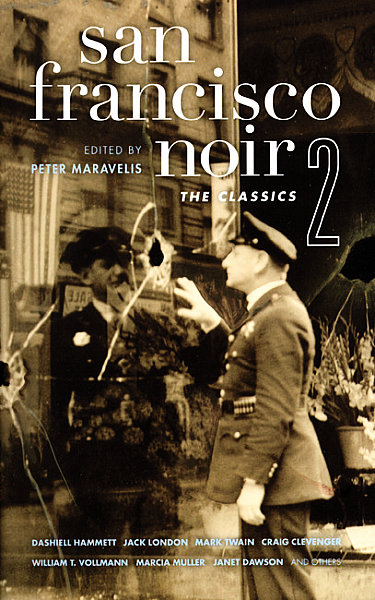
San Francisco Noir 2 vs. Los Angeles Noir 2
Hear from the editors of the lastest installments in the Noir series, San Francisco Nior 2 and Los Angeles Noir 2: the Classics. Featuring San Francisco Noir 2 editor Peter Maravelis, contributor Eddie Muller, and special guest Cara Black and Los Angeles Noir 2 editor Denise Hamilton.
7 p.m., free
Cantina
580 Sutter, SF
www.akashicbooks.com

The Thousand Autumns of Jocob de Zoet
David Mitchell brings us a new novel, set in coastal Japan in 1799, that follows a Dutch accountant that loses himself in a world of Japanese intrigue and danger.
7:30 p.m., free
The Booksmith
1644 Haight, SF
(415) 863-8688

Saturday, July 24

“The Bard in Bollywood”
Shakespearean scholar, Gitanjali Shahani, will explore the many adaptations, manifestations, and appropriations of Shakespeare in popular Hindi cinema using clips from Shakespeare Wallah, Maqbool, and Omkara to illustrate how Bollywood has re-imagined Shakespeare through the ages.
7 p.m., $8-$10 sliding scale
Artists’ Television Access
992 Valencia, SF
www.thirdi.org

 
“Fly Trap Theater”
This kid-friendly presentation by staffers from the Conservatory of Flowers offers an up close look at carnivorous plants and how they attack and eat bugs. There will even be a fly trap dissection, so onlookers can see the plants’ trapping mechanisms, followed by bug and plant puppet crafts.
2 p.m., free
Paxton Gate’s Curiosities For Kids
766 Valencia, SF
(415)252-9990

Himalayan Kriya Master Yogiraj SatGurunath Siddhanath
Attend this gathering where Yogiraj will discuss life from an enlightened viewpoint and share his mission of Earth peace through self peace.
7 p.m., $20 suggested donation
St. Gregory of Nyssa Episcopal Church
500 DeHaro, SF
1-866-YOGI-RAJ


Redstone Labor and Culture Walk

Learn about the history behind the murals in the lobby of the Redstone Building, a building that was the headquarters of the 1934 General Strike, followed by a guided walk through the vibrant surrounding neighborhood highlighting the Mission’s art, ethnic history, and class struggle.
1 p.m., free
Meet at Redstone Building
16th St. and Capp, SF
RSVP at (415) 841-1254

Sunday, July 25

Barak Obama and the Jim Crow Media
Author Ishmael Reed will read and discuss his new book, Barak Obama and the Jim Crow Media: The Return of the Nigger Breakers, about how Obama’s opponents use modern reincarnations of the ugly demons of slavery-era tactics to “break” black people.
2 p.m., free
Koret Auditorium
San Francisco Main Library
100 Larkin, SF
(415) 557-4400

Laborfest Book Fair and Poetry Reading
All day long, the Mission Cultural Center will feature multiple rooms where authors, activists, educators, and organizers will present labor themed panel discussions, book discussions, poetry readings, historical lectures, tabling, socializing, and more.
9:30am-5pm, free
Mission Cultural Center for Latino Arts
2868 Mission, SF
www.laborfest.net

Tuesday, July 27

Death is Not an Option
Suzanne Riveca’s new collection about girls and women in a world where sexuality and self-delusion collide.
7 p.m., free
Books Inc. Berkeley
1760 4th St., Berk.
(510) 525-7777

Found in Translation Book Group
Once a month, Scott Esposito of the Center for the Art of Translation and the Quarterly Conversation hand-selects fiction from around the world for a spirited discussion. Learn about the classic novel by Honoré de Balzac, Eugénie Grandet, and his epic 100- book series Comedie humaine which provides an immense panorama of post-Napoleon France.
7 p.m., free
The Booksmith
1644 Haight, SF
(415) 863-8688

“Jesse Schell: Visions of Gamepocalypse”
Hear game designer and CEO of Schell Games Jesse Schell discuss the social, cognitive, and technological trends in computer game design and use.
7:30 p.m., $10
Novellus Theater
YBCA
701 Mission, SF
(415) 978-2787

Repairing the initiative process – in CA and SF

6

OPINION I recently participated in a research trip to Switzerland to study the alpine nation’s system of direct democracy (initiative and referendum, or I&R). Its model offers fresh ideas about how to repair the dysfunctional initiative process in California and San Francisco.

In California, it takes approximately 750,000 signatures to put a constitutional amendment on the ballot — almost 3 percent of the statewide population — and about three-fifths that for a nonconstitutional statute. That’s an extremely high threshold, so in actual practice the only players able to qualify a ballot initiative are wealthy individuals or organizations that can pay an army of circulators about $3 per signature. It has been years since a statewide initiative has qualified through the work of volunteers.

Because of these dynamics, direct democracy in California has been captured by wealthy special interests. Proponents of Proposition 14, which was bankrolled by Gov. Arnold Schwarzenegger and big business, outspent opponents by 50:1 to pass a “top two” primary that is deform masked as reform. Even when Big Money’s measures lose — as PG&E’s Proposition 16 did — they force everyone else to play defense. Ironically, this dynamic is the opposite of that envisioned by California Gov. Hiram Johnson, who in 1911 created the initiative to allow the people to counter powerful special interests like railroad tycoons.

But in Switzerland, the political leaders have crafted an impressive practice that fosters a noisy collaboration between the people and their elected representatives. That nation has a proposal-counterproposal system. Once an initiative or referendum qualifies for the ballot, the government is given a chance either to pass that law itself or put a counterproposal on the ballot. Similarly, if the government passes a law, the people can put their own counterproposal on the ballot or try to overturn the law via a referendum.

This dynamic unleashes a process that is less polarizing and fosters a healthier debate. That in turn fosters more of an ongoing dialogue between the people and their elected representatives that, over time, forges a broader consensus on issues.

But a key reason this dynamic works is because the Swiss only require about 100,000 signatures for an initiative — a bit more than 1 percent of the population — and 50,000 for a referendum. The Swiss also allow a longer period of time for collecting those signatures, up to 18 months, compared to only five months in California. So non-wealthy interests can use the I&R process and signatures can be gathered with all-volunteer labor.

Gathering 1 percent is still a sizable undertaking; it would equal about 370,000 signatures in California for a constitutional amendment. But that’s low enough that serious efforts lacking deep pockets could still play in the game.

For example, look at the Jeff Adachi-led initiative over public pensions in San Francisco. Adachi has put his fingers on the pulse of an issue that needs addressing, but many progressives feel that the details in Adachi’s measure are too harsh and polarizing. But what if a counterproposal was put on the ballot, giving the public another choice? The subsequent multichoice campaign would be less polarizing and could help find the sweet spot of consensus.

The Swiss model isn’t perfect. Like California, when it comes to the actual I&R campaigns, Switzerland has inadequate campaign finance and transparency laws. With no public financing for underfunded campaigns, private money dominates and skews the public debate.

That’s why free media time should be provided for all significant viewpoints. And shared financing for all campaigns, pro and con, should be considered; all campaigns would be required to pay 15 percent of the amount they spend on their own campaign into a common fund that is distributed to the underfunded campaigns.

If I&R in California and San Francisco is designed correctly, it has the potential to reinvigorate this age-old invention of representative government. *

Steven Hill is author of the recently published Europe’s Promise: Why the European Way is the Best Hope in an Insecure Age.

Adachi and the real politics of pension reform

71

While downtown-oriented politicos and out-of-touch corporate columnists tout the political potential of targeting public employee unions with pay reductions and pension plan take-aways – and say the Public Defender Jeff Adachi may be mayoral material for doing so – they forget that electoral success requires coalitions, particularly in savvy San Francisco.

Unlike his cheerleaders, Adachi seems to understand this, downplaying the personal political upside when he talked to the Guardian and other media outlets. Sure, he might just be sandbagging, as his boosters hope he is, but there’s good reason to believe that this move could hurt Adachi’s chances of becoming mayor more than it helps it.

Much has been written and said about how Adachi’s move alienated labor unions and much of the progressive movement. “They urged me not to do it,” Adachi told the Guardian in the final days of his successful signature-gathering effort for a measure that would save the city about $167 million per year by taking that amount out of employees’ paychecks.

It’s not that pension reform isn’t needed. Indeed, San Francisco voters just approved a measure in June to increase the pension contributions for all new city employees, and politicians ranging from Sups. John Avalos and David Campos on the left to Sup. Sean Elsbernd and Mayor Gavin Newsom on the right all agree that more needs to be done, pledging to work with unions on the issue. And given the surly mood of the electorate, Adachi’s measure will probably pass.

But that still doesn’t make him mayoral material. Unlike Newsom, whose Care Not Cash initiative to take money from poor people helped propel him into Room 200, Adachi doesn’t have a strong constituency behind him, unlike the full strength of downtown and the Willie Brown machine that Newsom had behind him.

Downtown will never get behind a mayoral campaign for Adachi, a heavily tattooed defender of criminals who has a strong independent streak, even if they like the fact that he’s socking it to the public employee unions, an effort they helped fund. And progressives will now have a hard time ever trusting Adachi to work with them, seeing him now as someone hostile to political process and coalition-building, much like Newsom.

And even Newsom has come out against Adachi and his proposal, even though he loves the pension reform issue and shares some stylistic similarities with Adachi, including a certain political petulance. “Mayor Newsom has been clear that effective, long-term pension reform will come by doing it with our public employee unions, in partnership, not to and against them, in contrast to the Adachi measure,” Newsom Press Secretary Tony Winnicker wrote to the Guardian this week. It was a laughingly hypocritical statement from a mayor who has repeatedly demonized unions and refused to work cooperatively with them, but it’s a true statement nonetheless.

Finally, while socking it to public employees may be in vogue right now, during this moment of real economic uncertainty and political myopia, this sort of divisive politics might come to be seen more as opportunistic than courageous. And it’s hard to see how the approach that Adachi has taken will somehow add up to an effective political coalition capable of stealing the Mayor’s Office from wily politicians like Mark Leno, Leland Yee, or Aaron Peskin.

Consider the fact that even the Police Officers Association – the most conservative, downtown-oriented employee union in San Francisco – also opposes the Adachi measure and other efforts to blame the city’s fiscal problems on employees, rather than the large financial institutions that don’t even pay any kind of business tax to the city.

So I leave you with the words of POA President Gary Delagnes, writing in the May issue of the POA Journal, sounding a bit like a Guardian editorial writer on this politically sensitive issue: “Even more problematic is the rapidly developing notion that public employee pensions serve as the root of all evil, and are almost solely to blame for all of our economic woes.

“Opportunistic Wall Street insiders, politicians, and robber baron CEOs have manipulated and pilfered our country’s financial well-being. They have unconscionably – if not also illegally – lined their deep pockets with the hard-earned savings and pensions of the middle class working man and woman. Accountants from coast to coast have coached multi-millionaires on the art of avoiding paying their true tax obligations. Millions of people were allowed to qualify for mortgage loans by greedy bankers and mortgage brokers that led to trillions of dollars in bailout money. The result is a public incensed about fat cats taking advantage of them. Now, the backlash has set up public pensions and the unions that negotiated them as the scapegoats for his anger.

“Those of use who long ago made the decision to forgo large salaries in exchange for a life of public service, are now being portrayed as greedy and self-centered, taking unwarranted pensions and benefits after 30 years of service as firefighters, police officers, teachers, and nurses. These are shameful accusations, and utterly without merit.”

We couldn’t have said it better ourselves, but unlike one of our editorials, this is the perspective of cops and other unions and progressive constituencies that will shape their actions in elections to come.

Falling in love with the Foundry’s Please Love Me

0

After the SF-based dance company the Foundry (founded by Alex Ketley and Christian Burns in 1998) performed their most recent project, Please Love Me, July 7 at Theater Artaud, I overheard a woman ask her friend: “Well, what did you think?” After a minute of searching for just the right words, her friend replied, “I feel like I just had really intense, emotional sex. I need a second to process it.” While Please Love Me isn’t about sex, the woman’s answer seems fitting. Combining dance with original music and video projection by former Ballet Frankfurt media artist Les Stuck, Please Love Me is intense, beautiful and emotionally poignant.

The piece starts with dancer Malinda Lavelle slowly moving through a series of gestures and shapes as the Foundry’s four other dancers (Burns, Andrea Basile, Kara Davis and Joy Prendergast) sit in a line of chairs behind her. Our attention is immediately drawn to the relationship between performer and audience as we watch not only Lavelle, but also the other dancers watching Lavelle. In addition to this “audience” of four dancers, chairs occupied by regular audience members line both sides of the stage and add an element of up-close-and-personal intimacy to Theater Artaud while blurring the line between performer and observer.

Ketley’s interest in that blurry line, so to speak, is key to his innovative choreography. As Basile and Davis dance together in one of the pieces’ fast-paced duets, their movements build in speed and momentum to the point where it becomes difficult to tell whether their powerful intensity conveys a sense of fighting or loving. It is exactly these kinds of dichotomies (love and frustration, connection and disconnection, performer and observer) that Ketley captures so eloquently.

Later in the piece, Burns and Davis dance together as they voice stream-of-consciousness dialogue. Phrases like “all I ever do is this,” “more sex, more couples,” “movie rentals,” “a policeman shoots himself the neighbors’ backyard,” “I saw you twice, briefly, but never again,” and finally, “in the end, please love me” add a sense of loaded meaning to each action. While following no specific storyline, each piece of movement and phrase is relatable and random enough for open interpretation by the audience.

In their duet, Davis and Burns maintain a constant awareness of each other even when moving independently. We see this same awareness in a roantic duet between Burns and Basile. Always in the present movement and moment, they own each step with a sense of life-or-death urgency that gives the piece its characteristic realness and honesty.

It’s hard to pinpoint or describe what makes the Foundry dancers so amazing. Surely, they all have breathtaking technique, yet they also bring something more. They each possess a unique quality that refuses to be pinned down. My eye kept being drawn again and again to subtle nuances: the way Lavelle suggests a world of meaning and emotion through a single small gesture; the way Prendergast moves through a flurry of guttural movement and sound before striking a classical ballet arabesque; the way Davis walks away from Andrea Basile at the end of their duet, and then the way she returns. The way Basile leans her head on Burns’ chest during their duet. All these instances drew me in and left me feeling connected to the dancers in a profoundly moving, yet inexplicable way.

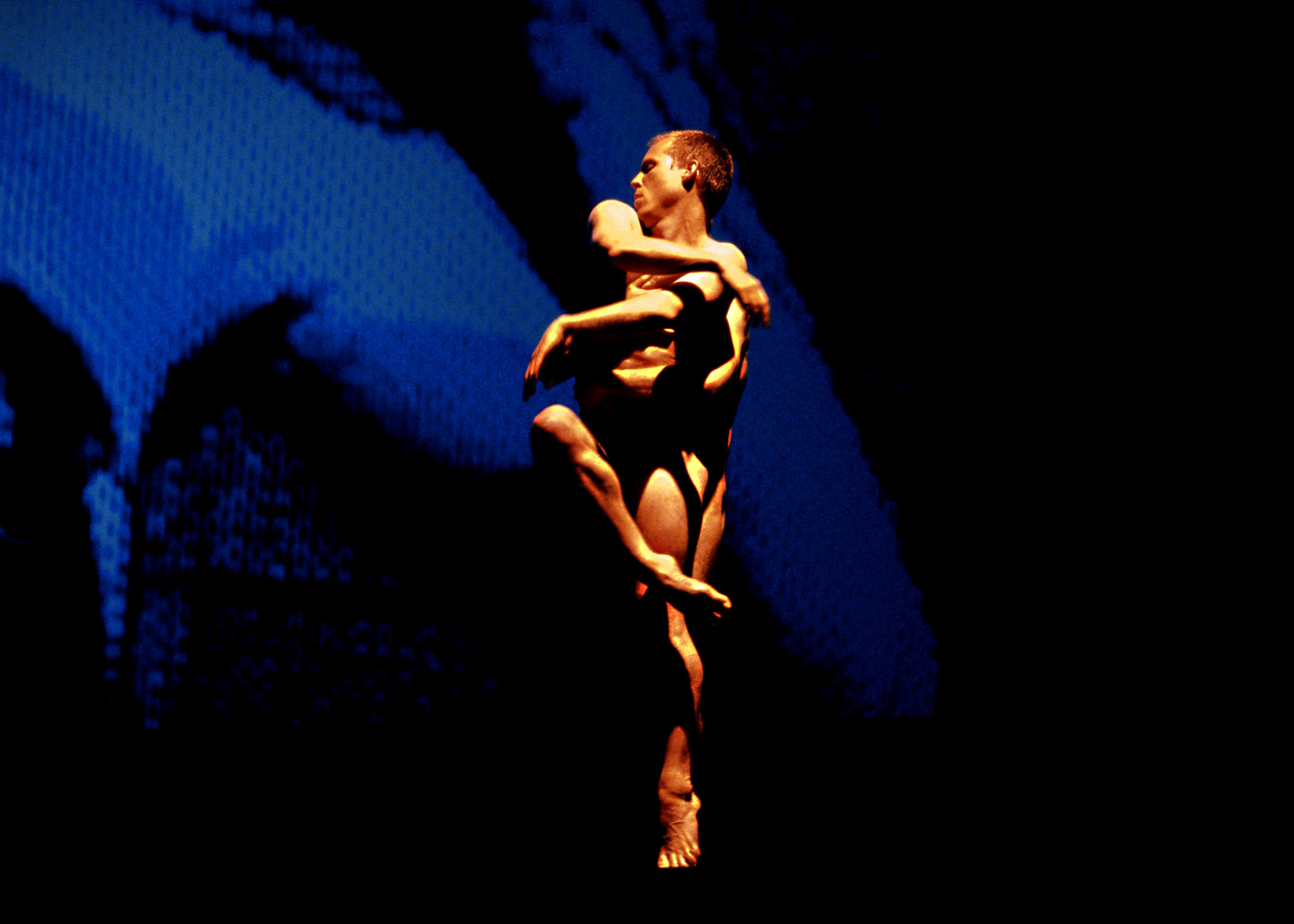
Kara Davis and Christian Burns dancing in Please Love Me:


Will the Thrill says good-bye (kinda) to movies — and hello to “Mermaid”

0

I received an email the other day with the terribly alarming subject line “FINAL. THRILLVILLES. EVER. No fooling.” Could Will “The Thrill” Viharo, a veteran host of cult movie nights around the Bay Area, be hanging up his fez and smoking jacket for good?

Well, not exactly. Fans already know he’s been scaling back his “Thrillville” events since the Parkway Theater closed and the Cerrito Theater changed ownership in 2009 (both East Bay venues, operated by Speakeasy Theaters, had hosted Viharo’s regularly-scheduled B-movie extravaganzas). Over the past year, Viharo’s taken his show — which includes his wife and assistant, Monica Tiki Goddess, and usually a pre-movie band or performing group — on the road, sprinkling a bit of sleaze, gore, trash, and monster mayhem on an assortment of Bay Area theaters.

Now, he explains in his (sorta) sign-off email, “I am giving up the Thrillville road show concept and sticking exclusively to my new home base at Forbidden Island in Alameda, where I’ll be hosting my mellower movie series ‘Forbidden Thrills’ one Monday a month, for as long as people show up. It’s a stripped down version of Thrillville — (mostly) public domain cult classics, cocktail specials, prizes, no cover, [and] free popcorn.” In other words, you can take the Thrill off the B-movie road, but you can’t take him out of the tiki bar. Or something.

Fear not, Viharo devotees: you have some excellent upcoming chances to support all he’s done for fans of obscure cult cinema over the years. First, he’s got two more movie-theater gigs in the works: “Thrillville’s Tribute to Bob Wilkins,” paying homage to the Creature Features legend with another legend, John Stanley, in person — that’s tonight at San Jose’s Camera 3 Cinema. The event also features a screening of The Creature Walks Among Us, the 1956 second sequel to The Creature From the Black Lagoon (1954).

Then next week, Viharo will show ’em how it’s done at the Another Hole in the Head Film Festival, presenting a Luchadore-sploitation double feature of 2007’s Mil Mascaras vs. The Aztec Mummy (did ever a more Thrillville-esque title exist?) and 2008’s Academy of Doom, both at San Francisco’s Roxie. Viharo dares to suggest that this event will be the last-ever appearance of the prize-giving Magic Tiki, so unless you’re a total square, or you happen to be Vincent Price in the Brady Bunch Hawaii episode, you should probably be there.

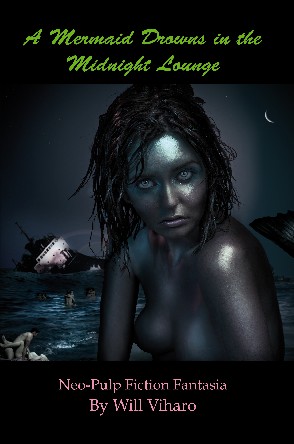
So with this phasing-out of larger-scale movie events, what’s next for the Thrill? Seems all this time he was programming movies, Viharo was also an author in disguise. His latest novel is entitled A Mermaid Drowns in the Midnight Lounge.

“When Speakeasy Theaters suddenly crashed and burned in mid-2009, my 12 year career as programmer-publicist suddenly ended as well, and my future, which I’d been taking for granted, was suddenly a big blank,” Viharo explains. “I kept my Thrillville show going as a road show, but I felt it too had run its course. For most of the general public, diehard fans aside, Thrillville in its ‘cult movie cabaret’ incarnation effectively died with Speakeasy, and I was determined to carve out a niche for myself unattached to that debacle. The show was no longer giving me any creative satisfaction and I never thought of myself as primarily a live entertainer, anyway.”

Being a writer was, it seems, a natural progression. “I’d seemingly shown every B movie ever made, except the one I really wanted to see: Mermaid is like the ultimate Thrillville movie as directed by David Lynch, but in literary form,” he says of his new book. “It is a sexy, stylized smorgasbord of hardcore exploitation elements — crime, horror, zombies, Elvis, and lots of gratuitous sex, which you don’t see enough of in cinema of any kind these days (though violence is not a taboo, which I find odd). Along with this you’ll find my characters musing on universal mysteries like loneliness, love, death and all that jazz as they’re swept away in this cross-dimensional whirlwind.”

As it turns out, Viharo began writing Mermaid soon after he started his Parkway gig (fun fact: Thrillville was originally called “The Midnight Lounge.”) He became so busy that he set Mermaid aside — but he always intended it to be a temporary break.

“Thrillville was a fun ride, but I’m happy to have returned to my original dream of being a novelist,” he says. “I feel like I was coasting on my lounge lizard laurels for too long, waiting for Christian Slater to finally make good on his perpetual optioning of my detective novel Love Stories Are Violent For Me, originally published by Wild Card Press back in 1996. It was time for me to get back to work.”

After giving it some thought, Viharo decided he’d release Mermaid himself. “As for why I decided to self-publish (via Lulu): I won’t mention names but I have several prominent author friends who privately expressed disgust and contempt for the current state of the publishing industry, which, in its desperation, is increasingly mid-listing or simply dropping established, professional novelists in search of that elusive mass-market commodity,” he explains. “I’ve always known my stuff would have “cult appeal” at best — more Harvey Pekar than Stephen King — so when I finished Mermaid, and suffered from the usual ‘post-novel depression,’ I thought to myself: why waste any more of my life and dreams awaiting mainstream acceptance and recognition, especially when I can’t relate to most popular media nowadays myself?”

Fortunately, as he points out, 21st century (if retro-leaning) hep cats have all the tools to get their work out to the public, the Man be damned.

“Unlike when I first began writing fiction over 30 years ago, I now have a platform and online resources that didn’t exist back then, enabling me to bypass corporate compromising or mainstream middlemen and take my stuff straight to the people,” he says. “Nobody but me really ‘gets’ my work, so who better than me to promote it, especially since PR has been my professional racket for the past dozen or so years? I am simply pooling my resources and re-channeling my promo skills into my literary ambitions. Mermaid is the first of many novels, past and future, I plan to roll out of ‘Thrillville Press’ in the months and years to come. I may not make a living at it, but the creative freedom and fulfillment it’s giving me already is priceless.”

Appropriately enough, Viharo’s having his book release party at Forbidden Island, in tandem with his Forbidden Thrills series. Even more appropriately, the double-feature deals in magical sea creatures: the Dennis Hopper-starring Night Tide (1961) and Mermaids of Tiburon (1962). Though the book itself may not be available by July 19, Viharo hopes to have copies of the book’s “soundtrack” (by Actual Rafiq) and, you know, just get people jazzed about his latest project. Mermaids? Zombies? Sex? Elvis? As Viharo himself likes to say, cheers!

“Thrillville’s Tribute to Bob Wilkins”
Wed/14, 8 p.m., $10
Camera 3 Cinema
288 S. Second St, San Jose
www.thrillville.net

A Mermaid Drowns in the Midnight Lounge release party
With screenings of Night Tide and Mermaids of Tiburon
Mon/19, 7:30 p.m., free
Forbidden Island Tiki Lounge
1304 Lincoln, Alameda
www.forbiddenislandalameda.com

Mil Mascaras vs. The Aztec Mummy and Academy of Doom
Thurs/22, 9 p.m., $15
Roxie, 3117 16th St, SF
www.sfindie.com

Half-remembered kaleidescopes: the Jewish Film Festival’s youngest storytellers

0

Could the past be a kaleidescope, a pattern of images that shift with each disturbance of a sudden breeze… and if the shift is everywhere, how would we know?

-Alan Lightman

If heritage remains constant, what changes is the inheritors. In a project that will live in interactive kiosks at the Jewish Film Festival (Sat/24), as well as in our own Internet devices, young artists are using websites to tell tales that only last year would have taken the shape of a movie. Modernity, man. Their theme? “Half Remembered Stories,” subject matter that lends itself to the nebulous, fragmentary nature of our online lives.

Zoe Pollak’s multimedia project “Memory Paths,” (which makes use of the above quote from Einstein’s Dreams (2004), explores this fluctuating notion of memory. Pollak set 12 videos from her tow-headed childhood to three different sounds ‘o thought – quotes from Einstein and other Jewish thinkers, nocturnes by Chopin, heady intellectual musings all of it – on a site that centers around the image of a clock. Her inspiration came from the sense of pending mortality that strikes most recent high school grads. 

“I’ve been getting nostalgic as it’s getting to be time for me to leave for college,” Pollak told me in a phone interview. “For my project, I wanted to look at individual memories I have, like the first day of preschool, and look at how my relationship to that memory has changed over time. Sometimes when I look back at that event, like when I have a lot of homework, I might be very nostalgic, but if I’m reading a very interesting article, I might notice how now I have the ability to process more complicated ideas.”

The project was organized through the New Jewish Filmmaking Project, which hosts documentary producers from Citizen Film helping 11 young digital bards to focus on gaps in recall. It segueways nicely with the panorama of stories invoked in the film festival as a whole, even if the divergent format seems to crown the young storytellers as the new generation.

Although the project did yield one bad ass reflection on the notion of zombie takedown, family history seems to have been a natural choice for many of the participants; a young uncle’s overseas death from Hepatitis C is explored, a grandfather’s gambling addiction, a great-grandmother that had refused to emigrate to the U.S. if it meant leaving her young lover. 

The latter was the vision of a NJFP participant from year’s past, Klaira Markenzon, who in 2004 directed a movie about her family’s prolonged stay in their native Ukraine, Leap of Fate. “Half Remembered Stories” sees Markenzon develop that film into an online choose your own adventure book. “I wanted it to be about how every decision can change the rest of your life,” says Markenzon. Elect to have Grandma take that long steerage boat ride to America in Markezon’s “game,” and players can find themselves sick, rejected at the gate of Ellis Island and forced to return to the Ukraine, or perhaps Palestine. Immense historical research went into the making of the project. 

“This format is outside of the tradition of beginning, middle, and end,” says Sophie Canstantinou, one of the project’s facilitators and co founder of Citizen Film. Her cohort, Sam Ball, told me that the new format of story not only gave young people the opportunity to create their own vision (in place of the collective product of years past), but that it also reflected the gyrations of information culture today. “What’s new this year is everything that’s going on in this online media, and that the population we’re working with spends so much on time engaging in stories – we wanted to see if we could harness that.”

But do the stories pack the same punch on our computer screens as they would have screened in a dark theater? Hard to say, really – but Ball is confident that they are indeed harbingers of a new kind of cultural experience. “Eighty years ago,” he told me “the only way you could see a movie was having a shared, communal experience in a theater. In this new medium you’re back to having a communal experience, but its a different one. It’s people sitting in environments of their own making, being able to communicate.” Perhaps the past is indeed a kaleidescope: one that calls up a different jewel tone image with each generation’s shake of it’s mirrors.


The New Jewish Filmmaking Project’s “Half Remembered Stories” 

Launch party Sat/24 (through Aug 9) 12:30 p.m., $12 (includes 1:30 p.m. screening of Te Extraño

Castro Theatre

429 Castro, SF

www.njfp.org


Our Weekly Picks: July 14-20, 2010

0

WEDNESDAY 14

MUSIC

Sean Bonnette

Sean Bonnette is the guitar player for Andrew Jackson Jihad, the band that proved punk rock sounds better unplugged. He’s been with the group since its inception in 2004, and along with his comrade-in-arms Ben Gallaty, has spent the last six years writing hilariously irreverent lyrics, cutting a swath through the country’s basements, parks, and concert halls, and slowly pushing folk-punk into the mainstream consciousness. Bonnette’s solo show promises to be a showcase of the loveliest, messiest, raggedy-ist tunes this side of Neutral Milk Hotel and a reminder that, 924 Gilman’s financial woes notwithstanding, DIY’s not dead. (Zach Ritter)

With Kepi Ghoulie and Gnarboots

9 p.m., $8

Bottom of the Hill

1233 17th St., SF

(414) 621-4455

www.bottomofthehill.com


MUSIC

Bardot A Go Go

In America, Bastille Day is the only day of the year where Francophiles, if they’re not storming a prison, can revel in their obsession en masse. With drink specials and a night of decadence that would make Louis XIV’s wife blush, the Rickshaw Stop offers its very own discotheque. If Austin Powers and Marie Antoinette put their wits together and threw a party, Bardot A Go Go would be it. With swinging ’60s pop — Serge Gainsbourg, France Gall, and the titular femme fatale, to name a few — and its very own go-go girls, this long-standing shindig stares hipsters in the face and dares to ask the unaskable: Parlez-vous francais? So put down your Balzac, put on a beret, and get the hell down to Fell. (Ryan Lattanzio)

8 p.m., $7

Rickshaw Stop

155 Fell, SF

(415) 861-2011

www.rickshawstop.com


THURSDAY 15

VISUAL ART

Japanese Art Kite Show

What could be better than a Matt Furie painting? Well, maybe a Matt Furie painting on a kite. Furie is one of 21 artists contributing sky-ready works to “Japanese Art Kite Show,” a group exhibition co-curated by Shoko Toma and Yukako Ezoe that brings together kites by 21 artists from Japan and the Bay Area. Bay Area residents from the Hamamatsu City prefecture in Japan have taken part in the Berkeley Kite Festival for the past five years, while Hamamatsu kites — created with washi and rice glue — date back at least 450 years. The kites here vary in size and utilize hemp for string. On Naoki Onodera’s kite, stars evoke another historical marker: the Kanrun Maru’s journey across the Pacific from Japan to the U.S. 150 years ago. (Johnny Ray Huston)

Through July 29

5:30 p.m., free

Chandler Fine Art and Framing

170 Minna, SF

(415) 546-1113

www.chandlersf.com


COMEDY

Zane Lamprey

Do you like to go out drinking? Me too! Oh, and so does Zane Lamprey, host of Three Sheets, a TV show that’s survived the move to three different channels as Lamprey travels the world exploring fine libations, drinking games, and hangover cures. With the future of the show uncertain — again — Zane has taken to the streets with the “Drinking Made Easy Comedy Tour,” a celebration of all things alcoholic. No one can fault you for not knowing about Three Sheets, it’s had a hell of a time staying on air. But show me a San Franciscan who doesn’t look happier with a drink in their hand, and I’ll show you a liar. (Peter Galvin)

8 p.m., $29.50

Fillmore

1805 Geary, SF

www.livenation.com


MUSIC

Mary Gauthier

The story of Mary Gauthier’s rise in the ranks of musicians — a career she chose at the ripe age of 35 after stints as a teenage runaway, substance abuser, philosophy major, café manager, and restaurant owner — is full of lucky breaks and an almost charmed trajectory. Yet her first year of life, spent in the charity wards of St. Vincent De Paul, was far removed from the good fortunes of her eventual transformation to masterfully frank folk lyricist and guileless performer. In The Foundling, her sixth album, Gauthier chronicles her own history from birth date to birthright, searching for answers and finding only more questions. Her Café Du Nord appearance, however, answers our question: When’s Mary Gauthier going to come back around? (Nicole Gluckstern)

With Peter Bradley Adams

8:30 p.m., $20

Café Du Nord

2174 Market, SF

(415) 861-5016

www.cafedunord.com


MUSIC

Sextreme Ball

It’s been 15 years since the Lords of Acid-My Life with the Thrill Kill Kult Sextacy Ball Tour stomped across the continent. But since sex, drugs, and mass murder have never really gone out of style, this summer’s reprise is far from feeling dated. Maybe it’s just the humidity, but there’s an almost palpable electric charge in the air — could it be the promise of a) tissue-throbbing, groin-grinding beats b) the cheerfully lewd lyrics of classics such as “Mr. Machoman” or creepier implications of “Sex on Wheels” or c) the prospect of catching latest Lords of Acid chanteuse Lacey Conner in a leather-clad catfight? I’m going with d) all of the above. (Gluckstern)

9 p.m., $23

DNA Lounge

375 11th St, SF

(415) 626-1409

www.dnalounge.com


FRIDAY 16

DANCE

Run for Your Life! and Gadung Kasturi

Run for Your Life! … it’s a dance company! and Gadung Kasturi Balinese Dance and Music are unlikely bedfellows, but trust Dudley Brooks — he knows how to make a match. After all, he is “sleeping” with both of them. Run for Your Life! is his long-running comedy-dance theater company; Gadung Kasturi is a classical Balinese dance company whose music Brooks has performed for more than 20 years. How he keeps the two identities apart is anybody’s guess. Stylization is what keeps him going. His comedy, often with puppets, is smart, hilarious, and musical. Included in this program are the LOL-worthy Les Sillyphides, Cirque du So Little, and Roaring ’20s, Mafioso-inspired The Soldier’s Tale. Gadung, with eight-year old Chandra Ayu Davies — who blew everyone away at this year’s Ethnic Dance Festival — offers the new Nyapuh Jagat. Watch for Brooks, he’ll be hammering away in the gamelan orchestra. (Rita Felciano)

Through Sat/17

8 p.m., $18

Dance Mission Theater

3316 24th St., SF

(415) 273-4633

www.brownpapertickets.com


MUSIC

Antibalas

Afrobeat keeps growing and mutating, revitalizing club music and giving indie rock a much-needed groove. Twelve years into since their summertime birth, Brooklyn’s Antibalas can be seen and heard as true veterans of the sound, with ties to two generations of the Kuti legacy. At the same time, afrobeat is the base from which the group — who worked with producer Tortoise’s John McEntire on 2007’s Security — reach deep into other genres. Antibalas plays out often enough to have seen the world and then some, and one of its most recent songs, “Rat Race,” suits the current socioeconomic moment. Prepare to dance. (Huston) With Sway Machinery

9 p.m., $23

Great American Music Hall

859 O’Farrell, SF

1-888-233-0449

www.gamhtickets.com


DANCE

Post: Ballet

Choreographer and dancer Robert Dekkers is making himself known in the dance world for seamlessly merging contemporary and classical movement styles. The name of his new SF-based contemporary ballet company, Post: Ballet, says it all. Much like his stylistic sensibility, the words Post: Ballet imply an affiliation with and departure from the conventions of classical ballet. The company’s inaugural performance, Concert One, features classically-trained, versatile ballet dancers in a series of innovative and thought-provoking works. Dekkers’ fierce choreography — along with live music by SF composers Daniel Berkman and Jacob Wolkenhauer, as well as the engaging music of Grizzly Bear, Steve Reich, and Department of Eagles (to name a few) — will keep those who ordinarily fall asleep at the ballet wide awake. (Katie Gaydos)

Through Sat/17

8 p.m., $25

Cowell Theater

Fort Mason Center

Marina at Laguna, SF

www.postballet.org


VISUAL ART

David Byrne and Dave Eggers

Former Talking Head David Byrne and McSweeney’s founder Dave Eggers are no strangers to other disciplines of art. Both have dabbled in screenwriting and visual art outside their respective fields of popular music and prose fiction. Now SF’s Electric Works is hosting simultaneous galleries by the two Renaissance men. Byrne’s exhibition shares the name “Arboretum” with his 2006 book of branching diagrams. Eggers’ “It Is Right To Draw Their Fur” treats more animate subjects — animals, to be exact. As it happens, Eggers studied art before switching to writing novels, so these grease pencil drawings are hardly the work of a naïf. Judging from their past works and unconventional worldviews, Byrne and Eggers ought to complement each other well. (Sam Stander)

Through Aug. 21

6 p.m., free

Electric Works

130 Eighth St., SF

(415) 626-5496

www.sfelectricworks.com

SATURDAY 17

FILM

Little Shop of Horrors

Midnight movies are alive and well in San Francisco, and the Landmark Theatres are active participants in the historic cult tradition. For the next month, the Bridge plays host to a “Rocksploitation”-themed midnight program, featuring local cinephile band Citizen Midnight playing pre-show music for a variety of rock-inspired flicks. This week the series features Frank Oz’s incredibly campy 1986 musical remake of Little Shop of Horrors starring Rick Moranis and Steve Martin. Check back in the coming weeks for Brian De Palma’s gothic rock opera Phantom of the Paradise (1974) and an uncut version of David Lynch’s 1990, Palme d’Or-winning, Elvis-fueled Wild at Heart. (Stander)

Midnight, $10

Bridge Theatre

3010 Geary, SF

(415) 668-6384

www.landmarkafterdark.com


FILM/MUSIC

Psycho with the San Francisco Symphony

The symphony’s probably the last thing you’d associate with a shower scene. (Although if we’re talking porn here, maybe you missed Wet ‘n Wagner or Rusty Tromboners 2: Spit Valves Under Spray Heads.) It’s definitely the last place you’d expect to hear the stabbing “EE! EE! EE! EE!” of the shower scene from Hitchcock’s Psycho (1960) to pop up — unless you’ve an ear for esoteric snatches of Webern. But Bernard Herrmann’s fiendishly clever orchestral score for this mother of all classic slashers is catnip for the adventurous San Francisco Symphony, which will be performing it in full as the 50-year-old flick unfurls above them in all its chocolate-syrup-spattered glory. Expect expert deployment of sinister ostinato and hair-curling counterpoint throughout. Don’t forget to invite Mom. (Marke B.)

8 p.m., $30–$70

Davies Symphony Hall

201 Van Ness, SF

(415) 864-6000

www.sfsymphony.org


SUNDAY 18

MUSIC

New Pornographers

Have you been craving propulsive choruses? Hunting for hummable harmonies? Longing for a variety of vocalists? Seek no further — Canada’s foremost power pop supergroup, the New Pornographers, is now touring on behalf of its fifth album, Together. Their continued togetherness is a bit unexpected, since members Neko Case and Dan Bejar (of Destroyer) have full-blown careers of their own. But the New Porn engine keeps chugging along, a full-fledged entity rather than a side project. The latest record is perhaps their most bombastic yet, but they haven’t sacrificed the diversity of lyrical voices that makes them consistently worthwhile. They’re supported at Oakland’s Fox Theater by local concern the Dodos as well as sometime-Yeah Yeah Yeahs member Imaad Wasif. (Stander)

With Dodos and Imaad Wasif

7:30 p.m., $27.50

Fox Theater

1807 Telegraph, Oakl.

www.thefoxoakland.com

The Guardian listings deadline is two weeks prior to our Wednesday publication date. To submit an item for consideration, please include the title of the event, a brief description of the event, date and time, venue name, street address (listing cross streets only isn’t sufficient), city, telephone number readers can call for more information, telephone number for media, and admission costs. Send information to Listings, the Guardian Building, 135 Mississippi St., SF, CA 94107; fax to (415) 487-2506; or e-mail (paste press release into e-mail body — no text attachments, please) to listings@sfbg.com. We cannot guarantee the return of photos, but enclosing an SASE helps. Digital photos may be submitted in jpeg format; the image must be at least 240 dpi and four inches by six inches in size. We regret we cannot accept listings over the phone.

The woman remembered

0

The changeover from silent to sound cinema revolutionized the world’s most popular entertainment form. As in most revolutions, some heads got lopped off. The industry saw this upheaval as a chance to clean house, getting rid of pricey or difficult talent by claiming they couldn’t make the transition. The public went along, suddenly hungry for all things talking, singing, dancing, and new, eager to dismiss yesterday’s favorites as old-fashioned.

Certainly stardom’s internationalism was largely over — those with heavy foreign or regional inflections were kaput. But myths persisted for decades about native-born stars like John Gilbert whose nasal, “light,” or otherwise unappealing voices purportedly derailed their careers. Heard today, Gilbert seems just fine — was MGM simply punishing him for being an expensive pain in the ass? If so, it worked: by 1936 he’d drank himself to death.

A similar aroma of failure hovers around Norma Talmadge, one of the biggest stars of the silent era yet largely forgotten now. Critics howled at her supposed vocal uncouthness in 1930’s Du Barry, Woman of Passion. Talmadge took equally famous, already retired sister Constance’s advice, quitting while she was still ahead — at least financially, thanks to mama’s trust fund setup. Yet clips from the era reveal nothing at all wrong with her voice. Was she a victim of simple out-with-the-old, in-with-the-new media frenzy? Perhaps an affair with actor Gilbert Roland ended the career support of her husband, powerful executive Joseph M. Schenck. Was she being punished?

She and Roland star in 1928’s The Woman Disputed, her last silent vehicle and one of many highlights in this weekend’s 15th San Francisco Silent Film Festival. She’s an Austrian prostitute — not exactly named as such, of course — who barely escapes a murder charge after a seeming john instead uses her flat to kill himself in. Two wealthy rescuers then become romantic rivals for this hooker-with-a-heart-of-gold, whom they help attain respectability. (The other man is Arnold Kent, an Italian actor fatally struck by a car after playing this final role.)

Directed by Henry King (an A-list Hollywood director through the 1950s), Woman moves from heavy tragedy to disarming romantic comedy and back again — then World War I intervenes. The fervency of its trio’s romantic friendship is very touching. No matter that the concept is typical Hollywood fantasy ignoring class-impasse reality: the film finesses its corn syrup via discreet handling and potent star power. Doing the most emotive heavy-lifting, Talmadge has moments that make her appeal very clear.

Thrust forward by a world-class stage mother, Talmadge was huge throughout the 1920s. According to screenwriter pal Anita Loos’ memoir, her screen retirement was addled by stupefying addiction to arthritis painkillers. It’s said she started the Hollywood Walk of Fame by accidentally stepping into wet cement. It’s also said she inspired the monstrous Norma Desmond in 1950’s Sunset Boulevard, as well as Jean Hagen’s Brooklynese-screeching imploding silent star in 1952’s Singin’ in the Rain. Yet again these may just be derogatory rumors that have had decades to harden into pseudo fact.

SAN FRANCISCO SILENT FILM FESTIVAL

July 15–18, free–$30

Castro Theatre

429 Castro, SF

(415) 621-6120

www.silentfilm.org

Minty fresh

0

DANCE/THEATER After rapidly selling out its two-week premiere in May 2009, the Joe Goode Performance Group returns to San Francisco’s lavish Old Mint for a luxurious one-month run of Traveling Light. JGPG’s haunted tour of SF’s oldest stone building, a monument to money power, unfolds as a series of made-up but history-laden vignettes scattered throughout the edifice, adding up to an inspired meditation on greed and desire, success and failure, the material and immaterial. On the eve of opening night, acclaimed Bay Area–based director-choreographer Joe Goode — who says the piece has changed only slightly since last year (“We’re filling up the space better and perhaps telling the story more clearly”) — spoke to SFBG from his East Bay home.

SFBG In addition to Traveling Light, you premiered another site-specific work last year, Fall Within, at the Ann Hamilton Tower in Geyserville. What’s the appeal with site-specific work? Do you approach such pieces very differently?

Joe Goode You have to in a way because there’s no front. People can see things from many different vantage points. Also some theatrical illusions are taken away from you. On the other hand, you have the personality, character, and history of the site, which is contributing enormous amounts of information to the moment. That is really exciting and delicious, and there’s a lot that you can do with it.

The way I work with performers—the way I elicit material from them so that it feels personal to them—[remains] similar. I’m interested in an intimate, close-up glimpse of a real human experience. Many site artists get involved with the contours of the architecture, the aural properties of the site. I’m interested in all that, too, but retain my interest in that personal narrative.

SFBG That personal aspect, though, intersects with the Mint , an edifice reverberating very strongly with a larger social crisis, namely the enormous, growing disparities in wealth.

JG That’s ultimately what the piece is all about. There’s a kind of grandeur to some of the interiors of the building, which is just a disgraceful, ostentatious display of wealth. You can’t help but feel it when you walk in there. This is the disparity that’s been present in this city since 1850! I tend to think of San Franciscans as this very egalitarian, alternative, radical, and thoughtful group of people, when in fact there’s an underpinning of those who have and those who don’t. Those who have make a lot of decisions about what happens in this city. Those who don’t, don’t have a voice particularly. [The Mint] reflects that for me.

SFBG How is that relation between social systems and personal narratives worked out in creating the performances?

JG A lot of it comes from my imagination. I spent a lot of time in those rooms. Some of the narratives don’t have anything particular to do with the history of the building, but there’s a gilded balcony or a particular corner that makes me think of a narrative—a particular time, a person, what they might have been going through. Then I begin to weave the characters, again working very intimately with the performers, asking them their stories and how they felt about this issue, what it brought to mind for them. And I go off and write it. That’s how it works.

SFBG You’ve used the term “felt performance” in referring to your work and your teaching method. Can you explain that term?

JG My theory is that I can’t make a resonant, rich, performative moment on onstage, or in a site, unless I’m having that experience. I can’t just package it. Really the job for the performer is constructing a road map, or an obstacle course even. You’re not working to create an experience for someone else; you’re working to create an experience for yourself. Human beings can share that. We have a very good authenticity meter in our hearts and minds. We [the audience] can get on the boat with you. But you have to be taking the ride as a performer; that’s what’s essential. If you’re not taking the ride, there’s no way we’re going to take it.

SFBG In your approach, dance-theater it’s sometimes called, you’ve been synthesizing forms, dialogue, movement, text, music, for over 30 years …

JG And I’m only 40! How does that work?

SFBG It’s a precocious body of work. But there must have been dance purists and theater purists who balked at the synthesis …

JG Well, there still are. Don’t suffer the illusion that those people have gone away. There are people who look at my work and say it’s not dance. There are certainly people who look at my work and say it’s not theater. It falls between the cracks; they’re unsettled by it and they don’t want any part of it. I think the contemporary viewer — I mean, we’re so much about the mashup; we’re so much about computer animation infiltrating live action. All these collisions are happening in media. For a younger audience to see dancers speak? They don’t care. “That’s cool, whatever, why wouldn’t they?” And that’s how I always felt.

There’s another element there too. When I started making this kind of work: I wanted to have some frank expression of myself as a gay man. Not in a silver jock strap waving a rainbow flag, but as a fully- dimensional human being. Not hiding that very essential part of my identity, but somehow bringing it in. I felt I needed my voice to do that. My body was going to get to an essential part of that, but there was another whole part that needed to be addressed. And pretty much from the beginning, there was a huge audience for it. I feel like I’ve definitely found my place with it. I don’t feel like there’s any going back, that’s for sure.

Beyond the rage

46

rebeccab@sfbg.com

Downtown Oakland became supercharged with emotion in the hours following the July 8 announcement of the verdict in the trial of former BART police officer Johannes Mehserle. And in the days that followed, the city remained electrified as residents struggled to make sense of the verdict, the rioting that occurred in its wake, and the historic significance of these developments.

But as the emotions dissipate, the issues behind the verdict and its aftermath remain — along with a series of questions that could determine whether this intensely scrutinized shooting of an unarmed man will lead to any changes in police practices or the justice system, as well as how the community will react if the judge imposes a light sentence.

After being moved out of the Bay Area because the publicity surrounding the case, a Los Angeles jury found Mehserle, a white officer, guilty of involuntary manslaughter for fatally shooting Oscar Grant, a 22-year-old unarmed black man who was detained on a BART train platform in Oakland on Jan. 1, 2009 following reports of a fight.

The verdict stood out as an almost unprecedented conviction of an officer in a case involving deadly use of force, and a departure from an all-too-familiar narrative in which tragedies resulting from police shootings bring no consequences for those responsible for pulling the trigger. However, in the wake of the verdict, Grant’s family members made it clear that they did not believe that justice had been served.

“This involuntary manslaughter verdict is not what we wanted, nor do we accept it,” Oscar Grant’s uncle, Cephus “Bobby” Johnson, said at a July 10 press conference at True Vine Ministries, a West Oakland church. “It’s been a long, hard road, but there are chapters in this war. The battle’s just getting started.”

To Grant’s relatives and a coalition of supporters who came together in response to the shooting, the trial is intrinsically linked to a long history of police brutality that occurs with impunity in cases involving youth of color. Meetings organized by clergy and community members have been held weekly in West Oakland over the past 19 months with the ultimate goal of bringing about greater oversight of the BART police and effective police reform on a broader scale.

On July 9, the U.S. Department of Justice announced that its Civil Rights Division, the U.S. Attorney’s Office, and the FBI have opened an investigation into the shooting and would determine whether prosecution at the federal level is warranted. Defense Attorney Michael Rains also made a motion to move Mehserle’s sentencing to a date later than Aug. 6, the date it was originally expected.

As the events of July 8 solidify into the Bay Area’s collective memory, attention is now shifting toward the next steps, and to lingering questions. Mehserle’s sentencing is key: will his sentence be light, reflecting the jury’s conclusion that he simply made a mistake — or will it include substantial prison time, reflecting the fact that he shot and killed an unarmed man without justification? Will he receive a lighter sentence than someone else without a criminal record found guilty of involuntary manslaughter simply because of his identity as a former officer with law enforcement organizations still in his corner? If Mehserle receives a long sentence, will it signify a shift in a justice system that many perceive as biased — or a stand-alone result of intense public scrutiny?

And as a result of all this, will the BART police finally get the type of training and serious civilian oversight they so badly need?


RAW REACTION

On the day the verdict was announced, thousands turned out for a peaceful rally near Oakland’s 12th Street BART Station and City Hall to hear speakers sound off about how their lives had been affected by police brutality.

As night fell, looting and rioting began to break out as the media covered scenes of rage set against small trash fires, causing anger and frustration for many Oakland residents who were dismayed and frightened by the chaos and disorder. More than 80 arrests were made, and dozens of stores including Sears, Whole Foods, Subway, Foot Locker, and numerous banks were damaged or looted. Police efforts to respond to the situation gave downtown city blocks the feeling of a war zone for several hours.

Reactions to the verdict, and the chaotic aftermath that followed, varied in the following days.

“The truth is that in American history, this is both a high point and a low point,” Olis Simmons, executive director of Youth UpRising — an Oakland nonprofit that works with youth of color — told the Guardian the following day. Speaking to the fact that an officer had been convicted in a case involving a wrongful death, she said: “I think it really is a signal that America is changing. This is the farthest we’ve ever gone.”

She said she hoped that people who were infuriated enough to react violently on the evening of July 8 would channel that energy toward constructive goals of pushing for a more satisfactory outcome. Before rallies and later rioting began that night, Youth UpRising sent people into the crowd to hand out glossy flyers proclaiming “violence isn’t justice.”

Davey D Cook, an independent radio journalist who extensively covered activity surrounding Grant’s death on a news site called Davey D’s Hip Hop Corner, said he thought the mainstream media was ready to have “a field day” with the riots, pointing out that they ran special coverage in the days leading up to verdict, building up anticipation of violent outbreaks. He also said that the scope of the rioting should be kept in perspective.

On his July 9 KPFA radio show, Hard Knock Radio, Cook added a salient point: “Broken windows can be replaced, and in two weeks, they will be. Stolen merchandise can be replaced, and it will be. But who’s going to replace this justice system that got looted? What insurance policy takes care of that?”

Just before the July 10 press conference, a town hall meeting was held inside True Vine Ministries. It was crammed full of supporters from Oakland, San Francisco, and beyond who listened as Minister Keith Muhammad — a representative of the Nation of Islam who has worked closely with the Grant family and traveled to Los Angeles to watch the trial — spoke at length. Muhammad was dressed immaculately in a suit and tie, and spoke with an air of fiery conviction.

“In the outcome of this case, there is surely more to be resolved that has yet to be addressed,” Muhammad said. He emphasized that “we’re not satisfied,” but added: “You should know that dissatisfaction is the foundation of all change.”

He raised a number of questions about the proceedings, asking why there was an absence of African Americans on the jury, and why the judge called an early recess when Grant’s teenage friend, Jamil Dewar, sobbed uncontrollably on the witness stand — but not when Mehserle sobbed on the stand. He noted that Grant’s friends were kept in handcuffs for six hours after witnessing Grant’s death.

In the days following July 8, much was also said about mainstream media coverage of the events, in particular the notion that “outside agitators” would come in and start trouble. “I do not like this divisive campaign to divide our community and protestors by calling people outsiders,” Oakland defense attorney Walter Riley wrote in a statement posted on Indybay.org. “This is a great metropolitan area … we expect people from all over the map to participate in Oakland. Calling people outsiders in this instance is a political attack on the movement. The subtext is that the outsiders are white and not connected to Oakland. From the days of the civil rights movement to now, the outsider labeling failed to address the underlying problems for which people came together. We must engage in respectful political struggle. I understand the frustration. I do not support destruction and looting as political protest.”


LOOKING FORWARD

Mehserle’s conviction suggests the jurors believed his defense that he meant to draw and fire his Taser instead of his gun. In legal terms, settling on involuntary manslaughter, rather than second-degree murder or voluntary manslaughter, means the jury was not convinced beyond a reasonable doubt that Mehserle had malice toward Grant. But the jury found that he was criminally negligent when he failed to notice that he had his gun instead of his Taser in the moments before he pulled the trigger.

“In California, and really in any state, it is extremely difficult for jurors to convict a police officer. There’s an extreme reluctance to do that,” Whitney Leigh, an attorney who formerly worked in the San Francisco Public Defender’s Office, told us.

“There are undoubtedly instances where things like this have happened at some time in the past in California, that weren’t videotaped,” Leigh continued. “But for the videotape, if you walked 10 witnesses in who said that what happened, happened, no one would believe them if the officer took the stand and said that’s not what happened. The only reason there’s a case at all is that there’s a videotape.”

Leigh said he thought that unless the public develops a better awareness that police misconduct regularly occurs, “individuals are going to continue to be victimized by a system that effectively encourages officers to believe that they can act with significant impunity.”

Asked whether he thought it was likely that the federal government would decide to step in after concluding its investigation, he said it was a tough call. “The Justice Department is highly selective in the cases it chooses to prosecute for these crimes,” he cautioned. “That said, the kinds of cases they choose are ones that tend to have a lot of public attention and concern, so this fits within that category. Since it’s such a public case, it can have more of a widespread impact.”

If Mehserle was prosecuted at the federal level, the case would invoke Criminal Code 18 U.S.C. Sec. 242, used when a government agent or an individual acting under the color of authority denies someone their civil rights through force, threats, or intimidation, based on their race, gender, or another protected category.

Then again, the federal government’s decision over whether or not to step in may be linked to the degree of severity of Mehserle’s sentence.

California Penal Code Section 193 specifies the mitigated, midterm, and aggravated sentences for involuntary manslaughter: two, three, or four years in state prison, respectively. Because Mehserle’s case involves his personal use of a firearm, a sentence enhancement of three, four, or 10 years can be added to his prison time under California Penal Code Section 12022.5.

The judge will weigh circumstances to determine Mehserle’s sentence, possibly including his record as a police officer, his criminal record, age, remorse, and other factors, explained Jim Hammer, a former prosecutor and current San Francisco Police Commission member. The judge could toss out the sentence enhancement for personal use of a gun — and there’s a possibility he would deem extreme circumstances, such as his police record, to warrant probation rather than prison time. But Hammer said he thought both of those outcomes are unlikely.

“The judge will want to appear more than fair, not giving special treatment,” Hammer said. “Judges have to stand [for] election too, and in the light of the fact that somebody’s dead, I think the chance of probation is incredibly slim.”

Even if Mehserle receives a light sentence and then faces prosecution at the federal level, there is a chance that information about his past record as an officer — which was not admitted as evidence, thanks to laws that afford protections for police officers in these kinds of cases — would continue to be shielded. The protection applies even though Mehserle resigned.

“The average person just wants courts to be fair,” Leigh said. “And there’s an inherent unfairness in a system that allows a government or a police department that has all the resources and records to … use against you while shielding what might be much more serious and relevant acts by police officers. That’s one change that would be great if that did happen.”

A key legal issue in the case and any possible federal case is reasonable doubt, Hammer said. “Reasonable doubt is everything, and no one talks about it. They just say, ‘Oh, he didn’t have intent.’ That’s not the issue. Can anybody really, honestly say that they don’t have some doubts about his intent?”

At the same time, Hammer tempered his legal analysis with some understanding of Grant’s mother’s pain in light of what happened to her son and as the verdict was reached.

“If the dictionary had three pictures of murder for a picture image, one would be shooting somebody in the back who is unarmed,” he told the Guardian. “What she’s saying is not outrageous. If it were my relative I would probably call it murder too. She’s not crazy.”

As things continue to unfold with Mehserle’s sentencing and the federal civil rights investigation, civil litigation is in the works too. Wrongful death civil lawsuits will likely be filed against BART by Oakland civil rights attorney John Burris on behalf of Grant’s mother, as well as another suit by five friends who were with Grant the night he was killed. BART settled a suit filed on behalf of Tatiana Grant, the slain man’s five-year-old daughter, in January. That total settlement should amount to more than $5.1 million, according to a media release on Burris’ website.

During an interview after the July 10 press conference, Johnson was asked how Grant’s young daughter was doing. He responded: “Tatiana is still struggling with the issue of when her daddy’s coming home. So it’s going to take time for her, when she does understand that he is not coming back home.”

Outside Grant’s family, many observers hope to see systemic change come out of this tragedy. Assembly Member Tom Ammiano introduced legislation to create civilian oversight of BART police after the shooting, but was unhappy to see how it was watered down during the legislative process. Now he wants to see stronger reforms.

“I think Oscar Grant’s death was inevitable based on the lack of caring about how those police were trained,” he told us. “If you’re going to have the kind of independent civilian oversight that’s going to prevent a repeat of what happened to Oscar Grant, you can’t have this namby-pamby law. The mantra has been, well, this is better than nothing. Unless they’re made to do it … it’s not going to happen the way we want.”

Film listings

0

Film listings are edited by Cheryl Eddy. Reviewers are Kimberly Chun, Michelle Devereaux, Max Goldberg, Dennis Harvey, Johnny Ray Huston, Erik Morse, Louis Peitzman, Lynn Rapoport, Ben Richardson, and Matt Sussman. For rep house showtimes, see Rep Clock. For first-run showtimes, see Movie Guide.

ANOTHER HOLE IN THE HEAD

The seventh Another Hole in the Head Film Festival runs July 8-29 at the Roxie, 3117 16th St, SF; and Viz Cinema, New People, 1746 Post, SF. For tickets (most shows $11) and schedule, visit www.sfindie.com.

OPENING

Inception Christopher Nolan takes a break from the Bat-Director’s Chair to helm this Leonardo DiCaprio thriller about futuristic mind crimes. (2:30) Marina, Presidio.

*Let It Rain Well-known feminist author Agathe Villanova (writer-director Agnès Jaoui) is taking a rare break from her busy Paris life, visiting her hometown to see family, vacation with boyfriend Antoine (Frédéric Pierrot), and do a little stumping for her nascent political career. But despite the ever-picturesque French countryside as background, all is not harmonious. Antoine complains Agathe’s workaholism (among other things) is killing their relationship, particularly once she agrees to be time-consumingly interviewed for film about "successful women" by shambling documentarian Michel (coscenarist Jean-Pierre Bacri) and local Karim (Jamel Debbouze). Her married-with-children sister Florence (Pascale Arbillot) is having a secret affair with Michel, but seems more focused on old resentments springing from Agathe being their late mother’s favorite. Karim — son of the family’s longtime housekeeper (Mimouna Hadji) — bears his own grudge against the clan and brusque, officious Agathe in particular. Being happily wed, he’s further bothered at his hotel day job by his attraction to co-worker Aurélie (Florence Loiret-Caille). These various conflicts simmer, then boil over as the documentary shooting goes from bumbling to disastrous. In 2004, Jaoui delivered a pretty near perfect Gallic ensemble seriocomedy in Look at Me. This isn’t quite that good. Still, her seemingly effortless skill at managing complex character dynamics, eliciting expert performances (including her own), and weaving it all together with insouciant panache makes this a real pleasure. The problem with Agnès Jaoui: she’s so good it chafes that (acting-only gigs aside) she’s made just three films in ten years. Pick it up, girl! (1:39) Opera Plaza. (Harvey)

*[Rec] 2 See "666-ZOMB." (1:24) Lumiere.

The Sorcerer’s Apprentice Socially awkward science nerd Dave (Jay Baruchel) toils away on his suspiciously elaborate NYU physics project, unaware that he’s about to have a Harry Potter-style moment of awakening. Enter Balthazar (Nicolas Cage), a centuries-old, steampunky sorcerer who believes Dave to be "the Prime Merlinian" — i.e., the greatest conjurer since Merlin himself. (Literally) rising from ashes to provide conflict are fellow sorcerers Horvath (Alfred Molina) and Morgana (Alice Krige); signing on for romantic-interest purposes are Monica Bellucci and newcomer Teresa Palmer. The Sorcerer’s Apprentice spins off Disney classic Fantasia (1940) in only the loosest sense, though there is a scene of dancing brooms. The bland Baruchel’s rise to fame continues to mystify, but at least Cage and Molina seem to be having a blast exchanging insults and zapping each other around. (1:43) (Eddy)

South of the Border After a prolific career of dramatic films steeped in political commentary, Oliver Stone drops the pretext. South of the Border is his Michael Moore moment, a chance for the filmmaker to make a direct and focused documentary in which his bias is readily apparent. Stone travels to South American nations and meets with their political leaders, men and women — including Hugo Chávez, Evo Morales, and Rafael Correa — who have long been considered enemies of the United States. His goal is to show that they are not ruthless dictators but rather democratically elected representatives of their country, cast in a negative light by a mainstream media with ulterior motives. Stone’s rapport with these politicians is intimate: at one point, he plays soccer with Morales. Even if you’re skeptical of his assertions, you can at least appreciate the unique perspective South of the Border offers. As a film, it’s somewhat slipshod, not nearly as glossy as a Moore production. But provided you’re willing to fill in the blanks, it’s a captivating and well-intentioned endeavor. (1:18) (Peitzman)

Spring Fever Shot surreptitiously and chock full of gay sex, Chinese director Lou Ye’s latest film isn’t likely to earn him any additional slack from Chinese government censors (his 2006 film, Summer Palace, got him banned from filmmaking for five years after he failed to preview it before it screened at Cannes). Using hand-held cameras, public settings, and natural lighting, Lou follows Wang Ping (Wu Wei), who’s been having a passionate, messy affair with travel agent Jiang Cheng (Qin Hao). Things get more complicated when the snoop Wang’s wife hires to follow her closeted husband winds up pursuing the two men in ways he never imagined. What Spring Fever lacks in continuity and psychological depth, it makes up for with sexual candor and a genuine frisson of risk, given the secretive conditions under which it was made. That thrill doesn’t quite last through the film’s duration, but as a document of defiance Spring Fever is commendable. (1:56) Four Star. (Sussman)

Standing Ovation Atlantic City teens form a song-and-dance troupe in this High School Musical-style family film. (1:48)

ONGOING

Beetle Queen Conquers Tokyo Opening with the humid buzz of crickets and the probings of bug aficionados in the thick of a forest, first-time documentarian Jessica Oreck puts Japan’s fascination with insects under the microscope. Preferring to let the images and interview subjects speak for themselves, she turns a lens to young children who clamor to buy sleek, shiny, obsidian beetles, as well as the giant big city gatherings of insect collectors — events that likely are less than familiar to western audiences. Oreck’s intent is to get at the ineffable attraction behind such astonishing sales as that of a single beetle for $90,000 not so long ago, and to that end, she weaves in looks at insect literature and art, visits to Buddhist temples, and historical factoids about, for instance, the first cricket-selling business in the early 1800s. (1:30) Sundance Kabuki. (Chun)

*City Island The Rizzo family of City Island, N.Y. — a tiny atoll associated historically with fishing and jurisdictionally with the Bronx — have reached a state where their primary interactions consist of sniping, yelling, and storming out of rooms. These storm clouds operate as cover for the secrets they’re all busy keeping from one another. Correctional officer Vince (Andy Garcia) pretends he’s got frequent poker nights so he can skulk off to his true shameful indulgence: a Manhattan acting class. Perpetually fuming spouse Joyce (Julianna Margulies) assumes he’s having an affair. Daughter Vivian (Dominik García-Lorido) has dropped out of school to work at a strip joint, while the world class-sarcasms of teenager Vinnie (Ezra Miller) deflect attention from his own hidden life as an aspiring chubby chaser. All this (plus everyone’s sneaky cigarette habit) is nothing, however, compared to Vince’s really big secret: he conceived and abandoned a "love child" before marrying, and said guilty issue has just turned up as a 24-year-old car thief on his cell block. Writer-director Raymond De Felitta made a couple other features in the last 15 years, none widely seen; if this latest is typical, we need more of him, more often. Perfectly cast, City Island is farcical without being cartoonish, howl-inducing without lowering your brain-cell count. It’s arguably a better, less self-conscious slice of dysfunctional family absurdism than Little Miss Sunshine (2006) — complete with an Alan Arkin more inspired in his one big scene here than in all of that film’s Oscar-winning performance. (1:40) Four Star. (Harvey)

Cyrus It’s tempting to label Mark and Jay Duplass’ Cyrus as "mumblecore goes mainstream." Yes, the mumblecore elements are all there: plentiful moments of awkward humiliation, characters fumbling verbally and sometimes physically in desperate attempts to establish emotional connections, and a meandering, character-driven plot, in the sense that the characters themselves possess precious little drive. The addition of bona fide indie movie stars John C. Reilly, Catherine Keener, and Marisa Tomei — not to mention Hollywood’s chubby-funny guy du jour, Jonah Hill — could lead some to believe that the DIY-loving Duplass brothers (2005’s The Puffy Chair, 2008’s Baghead) have gone from slacker disciples of John Cassavetes (informally known as "Slackavetes") to worshippers at the slickly profane (with a heart) altar of Judd Apatow. But despite the presence of Apatow protégé Hill (2007’s Superbad) in the title role, Cyrus steers clear of crowd-pleasing bombast, instead favoring small, relatively naturalistic moments. That is to say, not much actually happens. Mumblecore? More or less. Mainstream? Not exactly. Despite playing a character with some serious psychological issues, Hill comes off as likeable. Unfortunately the movie is neither as broadly comic nor as emotionally poignant as it needs to be — the two opposing forces seem to cancel each other out like acids and bases. (1:32) Empire, Sundance Kabuki. (Devereaux)

Despicable Me Judging from the adorable, booty-shaking, highly merchandisable charm of its sunny-yellow Percocet-like minions, Despicable Me‘s makers have more than a few fond memories of the California Raisins. That gives you an idea of the 30-second attention-span level at work here. Thanks to Pixar and company, our expectations for animated features are high, but despite the single lob at Lehman Brothers aimed toward the grown-ups, the humor here is pitched straight at the eight and younger crowd: from the mugging, child-like minions to the all-in-good-fun, slightly quease-inducing 3-D roller-coaster ride. Gru (Steve Carell) is Despicable‘s also-ran supervillain — a bit too old and too unoriginal for a game that’s been rigged in the favor of the youthful, annoyingly perky Vector (Jason Segel), who’s managed to swipe the Giza Pyramids and become the world’s number one bad dude. When Vector steals away the crucial shrink ray needed for Gru’s plot to thieve the moon, the latter pulls out the big guns: three adorable orphans who have managed to penetrate Vector’s defenses with their fund-raising cookie sales. It turns out kids have their own insidiously heart-warming way of wrecking havoc on one’s well-laid plans. Filmmakers Pierre Coffin and Chris Renaud do their best to exploit the 3-D medium, but Avatar (2009) this is not. Nor will many adults be able to withstand the onslaught of cute undertaken by all those raisins, I mean, minions. (1:35) 1000 Van Ness, Presidio, SF Center. (Chun)

*Exit Through the Gift Shop Exit Through the Gift Shop is not a film about the elusive graffiti-cum-conceptual artist and merry prankster known as Banksy, even though he takes up a good chunk of this sly and by-no-means impartial documentary and is listed as its director. Rather, as he informs us — voice electronically altered, face hidden in shadow — in the film’s opening minutes, the film’s real subject is one Thierry Guetta, a French expat living in LA whose hangdog eyes, squat stature, and propensity for mutton chops and polyester could pass him off as Ron Jeremy’s long lost twin. Unlike Jeremy, Guetta is not blessed with any prodigious natural talent to propel him to stardom, save for a compulsion to videotape every waking minute of his life (roughly 80 percent of the footage in Exit is Guetta’s) and a knack for being in the right place at the right time. When Guetta is introduced by his tagger cousin to a pre-Obamatized Shepard Fairey in 2007, he realizes his true calling: to make a documentary about the street art scene that was then only starting to get mainstream attention. Enter Banksy, who, at first, is Guetta’s ultimate quarry. Eventually, the two become chummy, with Guetta acting as lookout and documenter for the artist just as the art market starts clambering for its piece of, "the Scarlet Pimpernel of street art," as one headline dubs him. When, at about three quarters of the way in, Guetta, following Banksy’s casual suggestion, drops his camcorder and tries his hand at making street art, Exit becomes a very different beast. Guetta’s flashy debut as Mr. Brainwash is as obscenely successful as his "art" is terribly unimaginative — much to the chagrin of his former documentary subjects. But Guetta is no Eve Harrington and Banksy, who has the last laugh here, gives him plenty of rope with which to truss himself. Is Mr. Brainwash really the ridiculous and inevitable terminus of street art’s runaway mainstream success (which, it must be said, Banksy has handsomely profited from)? That question begs another: with friends like Banksy, who needs enemies? (1:27) Lumiere. (Sussman)

Get Him to the Greek At this point movie execs can throw producer Judd Apatow’s name on the marquee of a film and it’s a guaranteed blockbuster. It’s hard to say whether this Forgetting Sarah Marshall (2008) spin-off benefits from the Apatow sign of approval or if it would be better off standing on its own, but it definitely doesn’t benefit from comparisons to its predecessor. Russell Brand returns as the British rock star Aldous Snow, and Jonah Hill, playing a different character this time, is given the task of chaperoning the uncooperative Snow from London to LA in 48 hours. Despite a great cast, including a surprisingly animated P. Diddy, the story is pretty bland and can’t match the blend of drama and comedy that Marshall achieved. Of course, none of that matters because the movie execs are right: if you like Apatow’s brand of humor, you’re going to have a good time anyway. (1:49) Four Star, 1000 Van Ness, Presidio. (Peter Galvin)

*The Girl Who Played With Fire Lisbeth Salander is cooler than you are. The heroine of Stieg Larsson’s bestselling book series is fierce, mysterious, and utterly captivating: in the movie adaptations, she’s perfectly realized by Noomi Rapace, who has the power to transform Lisbeth from literary hero to film icon. Rapace first impressed audiences in The Girl With the Dragon Tattoo (2009), a faithful adaptation of Larsson’s premiere novel, and she returns as Lisbeth in The Girl Who Played With Fire. The sequel, as is often the case, isn’t quite on par with the original, but it’s still a page-to-screen success. And while the first film spent equal time on journalist Mikael Blomkvist (Michael Nyqvist), The Girl Who Played With Fire is almost entirely Lisbeth’s story. Sure, there’s more to the movie than the hacker-turned-sleuth — and the actor who plays her — but she carries the film. Rapace is Lisbeth; Lisbeth is Rapace. I’d watch both in anything. (2:09) Embarcadero, Smith Rafael. (Peitzman)

*The Girl With the Dragon Tattoo By the time the first of Stieg Larsson’s so-called "Millennium" books had been published anywhere, the series already had an unhappy ending: he died (in 2004). The following year, The Girl With the Dragon Tattoo became a Swedish, then eventually international sensation, its sequels following suit. The books are addicting, to say the least; despite their essential crime-mystery-thriller nature, they don’t require putting your ear for writing of some literary value on sleep mode. Now the first of three adaptive features shot back-to-back has reached U.S. screens. (Sorry to say, yes, a Hollywood remake is already in the works — but let’s hope that’s years away.) Even at two-and-a-half hours, this Girl With the Dragon Tattoo by necessity must do some major truncating to pack in the essentials of a very long, very plotty novel. Still, all but the nitpickingest fans will be fairly satisfied, while virgins will have the benefit of not knowing what’s going to happen and getting scared accordingly. Soon facing jail after losing a libel suit brought against him by a shady corporate tycoon, leftie journalist Mikael Blomkvist (Michael Nyqvist) gets a curious private offer to probe the disappearance 40 years earlier of a teenage girl. This entangles him with an eccentric wealthy family and their many closet skeletons (including Nazi sympathies) — as well as dragon-tattooed Lisbeth Salander (Noomi Rapace), androgynous loner, 24-year-old court ward, investigative researcher, and skillful hacker. Director Niels Arden Oplev and his scenarists do a workmanlike job — one more organizational than interpretive, a faithful transcription without much style or personality all its own. Nonetheless, Larsson’s narrative engine kicks in early and hauls you right along to the depot. (2:32) Four Star, Lumiere, Smith Rafael. (Harvey)

Grown Ups In order of star power, Grown Ups casts Adam Sandler, Kevin James, Chris Rock, Rob Schneider, and David Spade as five fortysomething friends who reunite to attend the funeral of their high school basketball coach, and play catch-up over a long weekend together at a cabin by the lake. If you’re expecting five of America’s biggest comedy stars to form like Voltron and make the most hilarious movie of the year, you’ve got a sad day coming. Grown Ups is never the sum of its parts, it’s about on par with Sandler’s other producing/starring affairs, and probably features a lot of the same jokes. People fall in poop and little kids say cute things designed to make audiences awww, but history has shown that’s exactly what a popcorn viewer is looking for. By these standards, Grown Ups is a perfectly summer-y movie. (1:42) 1000 Van Ness. (Galvin)

*I Am Love I Am Love opens in a chilly, Christmastime Milan and deliberately warms in tandem with its characters. Members of the blue-blood Recchi family are content hosting lavish parties and gossiping about one another, none more than the matriarch Emma (Tilda Swinton). But when prodigal son Edoardo befriends a local chef, Emma finds herself taken by both the chef’s food and his everyman personality, and is reminded of her poor Soviet upbringing. The courtship that follows is familiar on paper, but director Luca Guadagnino lenses with a strong style and small scenes acquire a distinct energy through careful editing and John Adams’ unpredictable score. Swinton portrays Emma’s unraveling with the same gritty gusto she brought to Julia (2008), and her commitment to the role recognizes few boundaries. You’ve probably seen this story before, but it has rarely been this powerful. (2:00) Embarcadero, Sundance Kabuki. (Galvin)

*Joan Rivers: A Piece of Work Whether you’re a fan of its subject or not, Ricki Stern and Annie Sundberg’s documentary is an absorbing look at the business of entertainment, a demanding treadmill that fame doesn’t really make any easier. At 75, comedian Rivers has four decades in the spotlight behind her. Yet despite a high Q rating she finds it difficult to get the top-ranked gigs, no matter that as a workaholic who’ll take anything she could scarcely be more available. Funny onstage (and a lot ruder than on TV), she’s very, very focused off-, dismissive of being called a "trailblazer" when she’s still actively competing with those whose women comics trail she blazed for today’s hot TV guest spot or whatever. Anyone seeking a thorough career overview will have to look elsewhere; this vérité year-in-the-life portrait is, like the lady herself, entertainingly and quite fiercely focused on the here-and-now. (1:24) Embarcadero. (Harvey)

John Rabe John Rabe (Ulrich Tukur) was the Oskar Schindler of Nanking: A man who, under discreetly opportunist pretenses, attempted to keep the Chinese in a safety zone from the Japanese in the late 30s. Steve Buscemi plays Robert Wilson, a surly American doctor. He’s to Tukur as Ben Kingsley was to Liam Neeson in 1993’s Schindler’s List, but without the nuance or iconic chemistry. Tukur is understated, bordering on uninteresting, and Buscemi is just over-the-top. Unlike Spielberg’s film, John Rabe grants us little access to the stories of civilians. The film is so preoccupied with people of power and those like Rabe, couched in a world of privilege, that the film lacks an emotional, human center. It’s impossible to feel much of anything because we’re never asked to feel, nor are we ever asked to endure any especially difficult scenes. Even the occasional rain of hellfire isn’t as wallop-packing as it ought to be. (2:14) Four Star, Presidio. (Ryan Lattanzio)

The Karate Kid The most baffling thing about The Karate Kid is its title: little Dre Parker (Jaden Smith) never actually learns karate. He practices kung-fu, an entirely different form of martial arts — you know, from a different country. There’s something obnoxious and absurd about the misnomer: the film seems to suggest that if you’ve seen one Asian culture, you’ve seen them all. That aside, it’s not a bad movie. Smith is mostly pretty likeable, and there’s a definite satisfaction to seeing him grow from bullied weakling to kung-fu star. And Jackie Chan gets to exercise his dramatic chops — he even gets a crying scene! But Karate Kid is a "reboot," the preferred term for the endless stream of unnecessary remakes Hollywood keeps churning out. You can’t help but think about the superior 1984 version. Jaden Smith is no Ralph Macchio, Jackie Chan is no Pat Morita, and kung-fu is no karate. Don’t even get me started on the "jacket on, jacket off" crap. Which, if you say it quickly, sounds a little adult for a PG movie. (2:20) 1000 Van Ness, SF Center. (Peitzman)

*The Kids Are All Right In many ways, The Kids Are All Right is a straightforward family dramedy: it’s about parents trying to do what’s best for their children and struggling to keep their relationship together. But it’s also a film in which Jules (Julianne Moore) goes down on Nic (Annette Bening) while they’re watching gay porn. Director Lisa Cholodenko (1998’s High Art) co-wrote the script (with Stuart Blumberg), and the film’s blend between mainstream and queer is part of what makes Kids such an important — not to mention enjoyable — film. Despite presenting issues that might be contentious to large portions of the country, the movie maintains an approachability that’s often lacking in queer cinema. Of course, being in the gay mecca of the Bay Area skews things significantly — most locals wouldn’t bat an eye at Kids, which has Nic and Jules’ children inviting their biological father ("the sperm donor," played by Mark Ruffalo) into their lives. But for those outside the liberal bubble, the idea of a nontraditional family might be more eye-opening. It’s not a message movie, but Kids may still change minds. And even if it doesn’t, the film is a success that works chiefly because it isn’t heavy-handed. It refuses to take itself too seriously. At its best, Kids is laugh-out-loud funny, handling the heaviest of issues with grace and humor. (1:47) Bridge, SF Center. (Peitzman)

*Knight and Day A Bourne-again Vanilla Sky (2001)? Considerably better than that embarrassingly silly stateside remake, though not quite as fulfilling as director James Mangold’s 3:10 to Yuma (2007) rework, this action caper played for yuks still isn’t the most original article in the cineplex. But coasting on the dazzling Cheshire grins of its stars, Tom Cruise and Cameron Diaz, reunited for the first time since Sky, you can just make out the birth of a beautiful new franchise. Everygirl June Havens (Diaz) is on her way to her sister’s wedding when she collides-cute at the airport with Roy Miller (Cruise). After killing the passengers and pilots on their plane, he literally sweeps her off her feet — thanks to some potent drugs. Picture a would-be Bond girl dragged against a spy-vs.-spy thriller semi-against-her-will — grappling with the subtextual anxiety rushing beneath all brief romantic encounters as well as some very justifiable survival fears. Can June overcome her trust issues? Is Roy the man of her dreams — or nightmares? Mangold and company miss a few opportunities to have more fun with those barely teased out ideas, and the polished, adult-yet-far-from-knowing charisma of the leads doesn’t quite live up to sophisticated interplay of Cary Grant and Grace Kelly, or even the down-home fun of Burt Reynolds and Sally Field, but it’s substantial enough for Knight and Day to coast on, for about 90 minutes tops. (2:10) 1000 Van Ness. (Chun)

The Last Airbender There must be some M. Night Shyamalan fans out there. How else does one explain the fact that he keeps making movies? And yet, most of his post-Sixth Sense (1999) work has ranged from forgettable to downright reviled. His latest disaster is sure to fall into the latter category: in The Last Airbender, he takes a much-loved Nickelodeon cartoon and transforms it into an awkwardly paced, poorly acted mess. Woefully miscast Noah Ringer stars as Aang, the avatar with the power to end the Fire Nation’s dominion. Along with his friends, siblings Sokka (Jackson Rathbone) and Katara (Nicola Peltz), Aang must — oh, just watch the damn show. For newcomers, the film is as confusing as Shyamalan’s equally self-indulgent Lady in the Water (2006). For fans of the TV show, The Last Airbender is nearly unbearable, condensing the entire first season into one film by removing the humor, the heart, and the complexity of the characters. There’s no twist here — we expect Shyamalan to disappoint, and he does. (1:34) 1000 Van Ness, SF Center, Sundance Kabuki. (Peitzman)

Micmacs An urge to baby-talk at the screen underlines what is wrong with Jean-Pierre Jeunet’s new film: it is like a precocious child all too aware how to work a room, reprising adorable past behaviors with pushy determination and no remaining spontaneity whatsoever. There will be cooing. There will be clucking. But there will also a few viewers rolling their eyes, thinking "This kid rides my last nerve." It’s easy to understand why Jeunet’s movies (including 2001’s Amélie) are so beloved, doubtless by many previously allergic to subtitles. (Of course, few filmmakers need dialogue less.) They are eye-candy, and brain-candy too: fantastical, hyper, exotic, appealing to the child within but with dark streaks, byzantine of plot yet requiring no close narrative attention at all. The artistry and craftsmanship are unmissable, no ingenious design or whimsical detail left unemphasized. In Micmacs, hero Bazil (Dany Boon) is a lovable misfit who lost his father to an Algerian landmine, then loses his own job and home when he’s brain-injured by a stray bullet. He falls in with a crazy coterie of lovable misfits who live underground, make wacky contraptions from junk, and each have their own special, not-quite-super "power." They help him wreak elaborate, fanciful revenge on the greedy arms manufacturers (André Dussollier, Nicolas Marié) behind his misfortunes, as well as various human rights-y global ones. So there’s a message here, couched in fun. But the effect is rather like a birthday clown begging funds for Darfur — or Robert Benigni’s dreaded Life is Beautiful (1997), good intentions coming off a bit hubristic, even distasteful. (1:44) Opera Plaza. (Harvey)

Predators Anyone who claims to be disappointed by Predators has clearly never seen parts one and two in the series; all three are straight B-movie affairs (though 1990’s Predator 2 takes everything oh-so-slightly over the top. Gary Busey’ll do that). And if you’ve seen either of the recent Predator-versus-Alien flicks, Predators should feel like a masterpiece. Nimród Antal directs under the banner of Robert Rodriguez’s production company, which explains the presence of Danny "Machete" Trejo in the cast. Adrien Brody stashes his Oscar in a safe place to star as Royce, a well-armed mercenary who awakes to find himself in free fall, plummeting into a strange jungle along with other elite-forces types (including Brazilian Alice Braga, playing an Israeli soldier). It doesn’t take long before Royce realizes that "this is a game preserve, and we’re the game." I wish Predators had allowed itself to have a little more fun with its uniquely skilled characters (the yakuza guy does have a nice, if culturally-stereotyped, swordplay scene); there’s also an underdeveloped "plot twist" involving the presence of the decidedly un-badass Topher Grace among the human prey. But all is forgiven when Laurence Fishburne turns up as Crazy Old Dude Who’s Been Hiding Out With Predators a Little Too Long. Fishburne’s presence also adds to the heart-of-darkness vibe the movie seems vaguely interested in conveying. (1:51) 1000 Van Ness. (Eddy)

*Restrepo Starting mid-’07, journalists-filmmakers Tim Hetherington and Sebastian Junger spent some 15 months off and on embedded with a U.S. Army platoon in Afghanistan’s Korengal Valley, a Taliban stronghold with steep, mountainous terrain that could hardly be more advantageous for snipers. Particularly once a second, even more isolated outpost is built, the soldiers’ days are fraught with tension, whether they’re ordered out into the open on a mission or staying put under frequent fire. Strictly vérité, with no political commentary overt or otherwise, the documentary could be (and has been) faulted for not having enough of a "narrative arc" — as if life often does, particularly under such extreme circumstances. But it’s harrowingly immediate (the filmmakers themselves often have to dive for cover) and revelatory as a glimpse not just of active warfare, but of the near-impossible challenges particular to foreign armed forces trying to make any kind of "progress" in Afghanistan. (1:33) Clay. (Harvey)

The Secret in Their Eyes (2:07) Opera Plaza, Red Vic.

*Stonewall Uprising On the night of June 28, 1969, police embarked on what they thought would be a routine raid on a gay bar in New York’s Greenwich Village, the sleazy, Mafia-run Stonewall Inn. The ensuing three days of rioting — during which mostly young men and drag queens accustomed to being marginalized and hauled off to jail stood their ground and fought back — became what historian Lillian Faderman has called "the shot heard round the world" for LGBT activism: a spontaneous expression of street-level outrage that fueled the birth of a movement. Kate Davis and David Heilbroner’s solid documentary Stonewall Uprising takes a "just the facts, ma’am" approach to this historic flashpoint that makes for an information-packed, if at times dry, 80 minutes. Working around the paucity of photographic documentation of the actual riots (itself a testament to the marginalization of homosexuality in the late 1960s), Davis and Heilbroner make extensive use of period news footage and photography, reenactments, and most important, the first-person testimonies of who those who witnessed and participated in what one interviewee terms "our Rosa Parks moment." The filmmakers’ contextual groundwork is as impressive for its archival research as it is repetitive in its message: pre-Stonewall life was hell. The documentary becomes more nuanced as it zeros in on reconstructing the first night of rioting via eyewitness accounts. (1:22) Lumiere. (Sussman)

Touching Home Hometown boys (Logan and Noah Miller) make good in this based-on-a-true-story tale of identical twins who must divide their time at home between training for major league baseball and looking after their alcoholic father. The brothers, who also wrote and directed the film, aim for David Gordon Green by way of Marin, but fall short of mastering that director’s knack for natural dialogue. Ed Harris is, unsurprisingly, compelling as the alcoholic father, but the actors in the film who are not named Ed Harris tend to contribute to the script’s distracting histrionics. Touching Home has some amazing NorCal cinematography, and I could see how family audiences might enjoy its "feel bad, then feel good" style of melodrama. But while it’s awkward to say that someone’s real-life experiences come off as trite, there are moments here that feel as clichéd as a Lifetime movie. (1:48) Smith Rafael. (Galvin)

*Toy Story 3 You’ve got a friend in Pixar. We all do. The animation studio just can’t seem to make a bad movie — even at its relative worst, a Pixar film is still worlds better than most of what Hollywood churns out. Luckily, Toy Story 3 is far from the worst: it’s actually one of Pixar’s most enjoyable and poignant films yet. Waiting 11 years after the release of Toy Story 2 was, in fact, a stroke of genius, in that it amplifies the nostalgia that runs through so many of the studio’s releases. The kids who were raised on Toy Story and its first sequel have now grown up, gone to college, and, presumably, abandoned their toys. For these twentysomethings, myself included, Toy Story 3 is a uniquely satisfying and heartbreaking experience. While the film itself may not be the instant classic that WALL-E (2008) was, it’s near flawless regardless of a viewer’s age. Warm, funny, and emotionally devastating—it’s Pixar as it should be. (1:49) Empire, Marina, 1000 Van Ness, Sundance Kabuki. (Peitzman)

The Twilight Saga: Eclipse The only person more bored by the Twilight franchise than I am is Kristen Stewart. In Eclipse, the third installment of the film series, she mopes her way through further adventures with creepily obsessive vampire Edward (Robert Pattinson). Look, you’re either sold on this star-crossed love story or you’re not, and it’s clear which camp I fall into. Besides, Eclipse is at least better than New Moon, the dreadful Twilight film that preceded it last year. But the story is still ponderous and predictable — Eclipse sets up a conflict and then quickly resolves it, just so it can spend more time on the Bella-Edward-Jacob love triangle. (As if we don’t know how that ends.) Then there’s the unfortunate anti-sex subtext: carnal relations are cast as dirty, wrong, and soul-destroying. I’m not saying we should be encouraging all teenagers to have sex, but that doesn’t mean we should make them feel ashamed of their desires. And what parent would approve of Eclipse‘s conclusion? Marrying your first boyfriend at 18 — not always the best move. (2:04) Empire, 1000 Van Ness, Sundance Kabuki. (Peitzman)

*Wild Grass The premise of Wild Grass, Alain Resnais’ loopy new film, could have come straight from Nancy Meyers: an older married man finds a single, middle-aged woman’s wallet. He returns it but can’t stop thinking about her. She, in turn, is intrigued by his attentions. Both are surprised by the connection they feel growing between them, one which they nevertheless have difficulty articulating. When they finally meet, sparks fly. That purloined wallet, along with the romcom set-up, aren’t the only MacGuffins in Resnais’ Wild ride, which uses Christian Gailly’s novel L’ Incindent as a rough guide for its careening tour of the irrational courses that desire can lead us down. The man and woman in question are Georges, an embittered writer with a possibly dark past, and flame-haired Marguerite, a dentist and part-time aviatrix, both played to neurotic perfection by longtime Resnais regulars André Dussollier and Sabine Azéma. Resnais’ attempt to translate what he has called the "musicality" of Gailly’s prose has resulted in a frenetic everything-but-the-kitchen-sink approach that tries to visually approximate Georges and Marguerites’ every internal monologue, fantasy, and increasingly risky instance of impulsive behavior, throwing in some knowing winks to classic Hollywood cinema for good measure. It’s a mess, to be sure (there are even two endings!). But like Mr. Magoo, the 87-year-old Resnais, as if by some unseen hand, steers clear of complete disaster. There hasn’t been a Gallic car crash this delightful to watch since Godard’s famous pile-up in 1967’s Week End. (1:44) Opera Plaza, Shattuck. (Sussman)

*Winter’s Bone Winter’s Bone has already won awards at the Berlin International Film Festival and the Sundance Film Festival, but it’s the kind of downbeat, low-key, quiet film that may elude larger audiences (and, as these things go, Oscar voters). Like Andrea Arnold’s recent Fish Tank, it tells the story of a teenage girl who draws on unlikely reserves of toughness to navigate an unstable family life amid less-than-ideal economic circumstances. And it’s also directed by a woman: Debra Granik, whose previous feature, 2004’s Down to the Bone, starred Vera Farmiga (2009’s Up in the Air) as a checkout clerk trying to balance two kids and a secret coke habit.

Drugs also figure into the plot of the harrowing Winter’s Bone, though its protagonist, Ree Dolly (Jennifer Lawrence), is faced with a different set of circumstances: her meth head father has jumped bail, leaving the family’s humble mountain home as collateral; the two kids at stake are her younger siblings. With no resources other than her own tenacity, Ree strikes out into her rural Missouri community, seeking information from relatives who clearly know where her father is — but ain’t sayin’ a word. It’s a journey fraught with menace, shot with an eye for near-documentary realism and an appreciation for slow-burn suspense; Lawrence anchors a solid cast with her own powerful performance. Who says American independent film is dead? (1:40) Embarcadero. (Eddy)

REP PICKS

*Beyond the Doors and Bigfoot This double bill in the middle of the Vortex Room’s conspiracy-focused schedule of Thursday screenings offers musings on some favorite 1970s subjects for paranoid speculation. "Our assignment: neutralize the three Pied Pipers of rock n’ roll music," recalls a government operative near the beginning of Larry Buchanan’s Beyond the Doors. Upset at Vietnam protests and drug culture, President Nixon hits on the logical solution: Jimi, Janis and Jim (Morrison) must die. Made in 1984, this late effort by Southern cheesebagger Buchanan followed three decades of such titles as Naughty Dallas (1964), Zontar: The Thing from Venus (1966), Mars Needs Women (1967), and The Loch Ness Horror (1981). Having achieved modest box-office success with his tabloid-tenored 1976 take on Marilyn Monroe, Goodbye Norma Jean, Buchanan applied the same delicate brushstrokes to this dramatized imagining of what really happened to acid rock’s martyred holy trinity. Actor "discoveries" Gregory Allen Chatman (Hendrix), Riba Meryl (Joplin), and Bryan Wolf (Morrison) were, not entirely surprisingly heard from again, though the various approximations of those musicians’ sounds could be worse. In the second half of the Vortex Room bill, John Carradine helps helps various bikers, rednecks, and cops investigate the abduction of underdressed white-meat babes which Bigfoot (or rather, several Bigfoots … or is that Bigfeet?) kidnaps to chain up in a cave so that they might squirm and scream in their bikini briefs. (The original ad line was "Breeds with anything.") Leading victim is 1950s starlet Joi Lansing, a Mormon-raised Monroe wannabe whose prior career highlights were a brief run on The Beverly Hillbillies, bits in studio features and leads in Z-grade films like the glorified ’67 country-music concert compendium Hillbillies in a Haunted House. This being a 1970 drive-in feature (by Robert F. Slatzer, who’d made the rather stupendously bad 1967 Hellcats), naturally a biker club rides to the eventual rescue, pitting one group of hairy primitives against another. Add Faster, Pussycat! Kill! Kill! (1965) star Haji, Elvis bodyguard Del "Sonny" West, some hoary Hollywood veterans, and lesser Mitchum family members, and you’ve got one weird time capsule. Thurs/15, 8 p.m., $5, Vortex Room, 1082 Howard, SF; www.myspace.com/thevortexroom. (Harvey)


Fix the BART police force – or disband it

4

18 months after a BART cop shot Oscar Grant, the transit agency still doesn’t have effective police oversight

EDITORIAL Who murdered Oscar Grant? Part of the equation is the years of neglect of the BART Police. — Assembly Member Tom Ammiano

We’re angry, too.

Angry that a police officer who shot and killed an unarmed man could wind up with little or no prison time. Angry that the news media whipped up such a fervor over the potential for a riot in Oakland that it almost guaranteed someone would show up and break a few windows. Angry that the jury who decided this case was 400 miles away and included no African Americans.

But mostly we’re angry that 18 months after a BART cop shot Oscar Grant, the transit agency still doesn’t have effective police oversight. And until the BART board recognizes that it still has 200 poorly trained, poorly supervised,* armed officers on the streets — and that this shooting wasn’t an anomaly, it was simply the latest in a series of criminal acts by BART police officers that led to the deaths of innocent people — and until the BART Board starts treating this like the emergency that it is, the problems are going to continue.

There are elements of this case that are historic — and very positive. This is the first time we can remember that a police officer in California has faced murder charges for an on-duty shooting. That alone sends a powerful message — and the Alameda County District Attorney deserves immense credit for taking the case to trial. And let’s not forget: Johannes Mehserle was, in fact, convicted. With the additional penalties for using a handgun, he could wind up with a sentence of more than 10 years.

Much of that is now in the hands of Los Angeles County Superior Court Judge Robert Perry, who will sentence Mehserle later this summer. The judge in an involuntary manslaughter case has considerable discretion; he could, conceivably, sentence Mehserle to probation, and the killer of an unarmed man could walk away with no jail time at all. Perry could sentence him to five years (of which the former officer would probably serve no more than three). He could also go as high as 14 years, which seems more reasonable.

Most of the protesters in Oakland were peaceful; most recognized that the verdict was mixed, that at least Mehserle was convicted, and that there’s still a chance justice will be done. It’s hard to imagine that the patience of the community will last long in the wake of an unacceptably short sentence.

But even if Perry issues a sentence that reflects the crime, there’s still the problem of the BART Police. This isn’t the first time a BART cop has killed an unarmed person; twice before, the subway system’s finest have committed crimes just as heinous as the one that put Johannes Mehserle in the dock. The difference is that the previous shootings — which we covered in depth and the mainstream media ignored — were never caught on video. BART never took either killing seriously, never changed police oversight procedures — and shouldn’t be surprised that nothing changed.

Now the agency, with much reluctance and gnashing of teeth, has created a modest civilian oversight program. But it’s not enough — and the reason is simple: The BART directors don’t want to spend the time it takes to monitor and control an armed police force. They’ve always happily delegated that job to someone else — a general manager, an assistant general manager, a police chief — and never done the job they were elected to do.

Now time’s up. The BART directors need to take direct control of the police, including holding hearings on disciplinary action and quickly acting on complaints against problem officers. Or they need to recognize that they can’t run a police force, disband the BART police, and let a professional law enforcement agency from one or more of the BART counties take over.

Fix the BART police force – or disband it

0

EDITORIAL Who murdered Oscar Grant? Part of the equation is the years of neglect of the BART Police. — Assembly Member Tom Ammiano

We’re angry, too.

Angry that a police officer who shot and killed an unarmed man could wind up with little or no prison time. Angry that the news media whipped up such a fervor over the potential for a riot in Oakland that it almost guaranteed someone would show up and break a few windows. Angry that the jury who decided this case was 400 miles away and included no African Americans.

But mostly we’re angry that 18 months after a BART cop shot Oscar Grant, the transit agency still doesn’t have effective police oversight. And until the BART board recognizes that it still has 200 poorly trained, poorly supervised,* armed officers on the streets — and that this shooting wasn’t an anomaly, it was simply the latest in a series of criminal acts by BART police officers that led to the deaths of innocent people — and until the BART Board starts treating this like the emergency that it is, the problems are going to continue.

There are elements of this case that are historic — and very positive. This is the first time we can remember that a police officer in California has faced murder charges for an on-duty shooting. That alone sends a powerful message — and the Alameda County District Attorney deserves immense credit for taking the case to trial. And let’s not forget: Johannes Mehserle was, in fact, convicted. With the additional penalties for using a handgun, he could wind up with a sentence of more than 10 years.

Much of that is now in the hands of Los Angeles County Superior Court Judge Robert Perry, who will sentence Mehserle later this summer. The judge in an involuntary manslaughter case has considerable discretion; he could, conceivably, sentence Mehserle to probation, and the killer of an unarmed man could walk away with no jail time at all. Perry could sentence him to five years (of which the former officer would probably serve no more than three). He could also go as high as 14 years, which seems more reasonable.

Most of the protesters in Oakland were peaceful; most recognized that the verdict was mixed, that at least Mehserle was convicted, and that there’s still a chance justice will be done. It’s hard to imagine that the patience of the community will last long in the wake of an unacceptably short sentence.

But even if Perry issues a sentence that reflects the crime, there’s still the problem of the BART Police. This isn’t the first time a BART cop has killed an unarmed person; twice before, the subway system’s finest have committed crimes just as heinous as the one that put Johannes Mehserle in the dock. The difference is that the previous shootings — which we covered in depth and the mainstream media ignored — were never caught on video. BART never took either killing seriously, never changed police oversight procedures — and shouldn’t be surprised that nothing changed.

Now the agency, with much reluctance and gnashing of teeth, has created a modest civilian oversight program. But it’s not enough — and the reason is simple: The BART directors don’t want to spend the time it takes to monitor and control an armed police force. They’ve always happily delegated that job to someone else — a general manager, an assistant general manager, a police chief — and never done the job they were elected to do.

Now time’s up. The BART directors need to take direct control of the police, including holding hearings on disciplinary action and quickly acting on complaints against problem officers. Or they need to recognize that they can’t run a police force, disband the BART police, and let a professional law enforcement agency from one or more of the BART counties take over.

Board votes on Candlestick-Shipyard project EIR appeal today

3

All images by Luke Thomas

The Chronicle’s suggestion that the city’s massive Candlestick-shipyard project may be facing smoother sailing seems like wishful thinking to those who attended a July 12 noontime rally that was organized by POWER (People Organized to Win Employment Rights) and featured two Louisiana-based advocates who protested the project’s EIR and shared many of the longstanding concerns about project cleanup, infrastructure and financing.

The Chronicle was of course referring to five amendments to the city’s massive redevelopment proposal that Board President David Chiu introduced during yesterday’s July 12 meeting of the Board’s Land Use committee. The Chron interpreted these amendments as a sign that Chiu plans to approve the project’s environmental impact report, which comes before the Board today, after several groups appealed the final EIR that the Planning Commission approved last month.

But while city officials fear the developer will walk, if the Board does not approve the final EIR, some environmental advocates hope a better plan could be reached.

At POWER’s July 12 rally, nationally acclaimed environmental scientist Wilma Subra called on the District Attorney’s environmental justice department to “step up.” Subra claimed that the project’s final EIR “failed to evaluate and assess the cumulative impacts of exposure to children, adults and the environment as a result of exposure to all of the chemicals at the site.”

Monique Harden, co-director and attorney for Advocates for Environmental Health Rights (AEHR) of New Orleans, Louisiana, pointed to “deep flaws in the environmental regulation system,” as a reason why low-income communities of color should be concerned about the proposed plan.
“Why in the middle of an environmental crisis caused by BP in the Gulf am I coming to San Francisco?” Harden asked. “Because San Francisco is providing unequal environmental protection to its residents. As a resident of New Orleans, I’m concerned that San Francisco is careening towards making a decision that can crush the future of Bayview Hunters Point,”

But as local Bayview resident Jose Luis Pavon began talking about seeing gentrification occur in his lifetime within San Francisco, he and others got shouted down by a group of yellow and green-shirted project supporters, who were led by a guy calling himself Bradley Bradley and Alice Griffith public housing resident Stormy Henry.
“This is the devil’s trick in the last hour,” Henry said of the POWER rally.

Henry shared her heartfelt belief that if the Board approves the project’s final EIR, she and other Alice Griffith residents will get desperately needed new housing units. even if it takes some years to build them. Others in her group were unable to answer media questions: they had difficulty speaking in English, but were clutching neatly written statements in support of the project that they later read aloud at the Board’s Land Use Committee hearing.

As these project supporters prepared to move inside to attend the Land Use Committee meeting and lobby supervisors for their suppor, D. 10 candidate Tony Kelly shared his concerns that the Navy has a demonstrated history of finding nasty things at the shipyard years after they say everything’s clean, and that this pattern could jeopardize the plan.

“This happened at Parcel A,” Kelly said, referring to the first and only parcel of land that the Navy transferred to the city for development in 2004. “Since then, Parcel A has gotten smaller and as they found stuff on sites they then renamed as new parcels, like UC-3, which has radiological contamination in a sewer line that goes into the Bayview. So, that means the contamination is now in the Bayview.”

Kelly is concerned that the city is trying push through EIR certification before the Navy completes an environmental impact statement (EIS) related to shipyard cleanup activities. “The EIS is supposed to go before the EIR, as far as I know,” Kelly said

At the Land Use Committee meeting, Sup. Sophie Maxwell, whose district includes Candlestick and the Shipyard,said, the project was about “revitalization and opportunity.”

She noted that the certification of the project’s final EIR has been appealed to full Board’s July 13 meeting. She further noted that she intends to introduce legislation next week to address concerns that Ohlone groups have expressed.

The next two hours were full of testimony from a bevy of city officials, beginning with Michael Cohen, Mayor Gavin Newsom’s top economic advisor in the Office of Workforce and Economic Development.

“Every single element [of this project] has been discussed and debated at countless meetings,” Cohen claimed, as he sought to quell fears that the community had not been properly consulted with over the plan. “As we get closer to a vote, all of a sudden pieces of paper start circulating, criticizing project and suggesting that community involvement just began,” he continued. ” That’s factually untrue.”

He also sought to reassure the supervisors that the Board will have a say-so as to whether the city accepts early transfer of shipyard parcels from the Navy.
“Neither the city nor the developer have any specific authority over the cleanup,” Cohen said, noting that the cleanup is governed by specific rules set out in CERCLA [Comprehensice Environmental Response, Compensation and Liability Act, aka Superfund].

“Regardless of what we do, CERCLA will continue to be the regulatory tool,” Cohen said. ” I urge you not to be confused by CEQA and CERCLA.”

So, how can the city implement Prop. P, which voters overwhelmingly supported in 2000, urging the Navy to clean up the shipyard to highest attainable standards.
“Prior to any transfer, US EPA and DTSR have to concur in writing that the shipyard is safe,” Cohen explained, noting that, thanks to Speaker of the House Nancy Pelosi, the Navy has already spent over $700 million on shipyard cleanup efforts.

“We have 250 artists at the shipyard….but not a shred of scientific evidence to say that the shipyard is not safe,” Cohen claimed. “It’s safe to develop the shipyard in precisely the manner we are proposing.”

When Sup. Eric Mar raised the question of radiological contamination on Parcel UC-3, Cohen downplayed Mar’s concerns.
“The exposure levels are lower than watching TV,” Cohen claimed. “The primary source is very low level radiation from glow-in-the-dark dials.”
Indicating a map that showed a network of old sewers (in blue) and old fuel lines (in red) under the entire development area, Cohen said, “The radiological contamination that has and will be addressed at the shipyard is quite low level. You have radiation, you get nervous. We asked EPA to come out and do a scan to deal with the issue.”

IBI Group’s David Thom, the lead architect and planner for the project said the plan is designed “to connect new development back into the Bayview.”
“And this plan connects the Bayview through to the water.”

Tiffany Bohee, Cohen’s deputy in the Mayor’s Office of Economic and Workforce Development, insisted that project’s proposed bridge is better than Arc Ecology’s proposed alternative route, which would not involve constructing a bridge over an environmentally sensitive slough.
“The non-bridge route increases the number of intersections,” Bohee said, seeking to turn an environmental question (the impact of bridge on wildlife and nature experience) into a public safety issue.”
She claimed the BRT route over bridge was 5-10 minutes faster than Arc’s proposed alternative, “because there are fewer turns, it can go at higher speeds.” But Arc’s studies suggest the BRT route over the bridge is only a minute faster, and would cost over $100 million.

Bohee noted that $50 million from the sale of 23 acres of parkland for condos at the Candlestick Point State Recreation Area (CPSRA) will be “set aside for the state, and won’t be able to be raided by the city,” with $40 million going to improvements, and $10 million to ongoing operation and maintenance costs.

She also cited additional benefits that the project would bring to the community, including thousands of construction job opportunities.

“We are working with City Build to make sure they are for local residents,” Bohee said.“And there is absolutely no displacement for the rebuild,” Bohee continued referring to proposal to place current Alice Griffith public housing iresidents n new units, on a 1-1 basis

Eric Mar said he was impressed by many elements of the plan, but continued to express reservations.
“I’m still concerned that is seems to serve newcomers as proposed to existing residents,” he said. “And I’m still not convinced that the bridge is the best for existing residents.”

Rhonda Simmons, who works in Cohen’s Office of Economic and Workforce Development,  tried to flesh out details of the project’s job creation promises.
“The most immediate workforce is related to the construction site, and as you know, this project goes over a 15-20 year span,” Simmons said, pointing to green tech and retail as job opportunities that will exist once the project is built.

Mar expressed concern that the jobs may not be at the level of D.10 residents
“How is this gonna bring their skill level up?” he asked.
“The idea is that training gives first level entry at a variety of building trades,” Simmons said, pointing to the project’s large solar component.

“What about women?” Sup. Maxwell asked
Simmons pointed to retail opportunities,
“The idea of the training is to give folks job readiness skills, like getting there and showing up on time,” she said

Mar wanted to know who would have oversight of monitoring and compliance.
“In the city we have a tapestry of folks who do contract compliance,” she said. “The oversight will come from a variety of places.”

After Kurt Fuchs of the Controller’s Office listed the estimated economic benefits of the project, Board President David Chiu observed that the city is “at a crossroads.”

“I do not plan to prejudge,” Chiu continued, as he introduced his five amendments to regulate the Parcel E-2 cleanup, the size of a proposed bridge over the Yosemite Slough, expand healthcare access in the Bayview, create a workforce development fund and lay the groundwork for bringing public power to the project.

During public comment, Bayview resident Fred Naranjo pleaded for project support.  

“Please don’t let the train leave the station,” Naranjo said. “If Lennar leaves, the Bayview will never be developed.”

And Tim Paulson, executive director of the San Francisco Labor Council expressed hope that an agreement was getting closer.
“There really is a path to getting this done,” Paulson said. “This really is a model project in many ways for the rest of the United States.”
But D. 10 resident Linda Shaffer with the Yerba Buena chapter of the California Native Plant society indicated the huge pressure exerted on folks to support the project
“I do not want to be classified as an opponent, but we have concerns,” Shaffer said, noting that her group has filed an appeal of the project’s final EIR.

And while the Sierra Club’s Arthur Feinstein thanked Chiu for proposing to reduce the size of the bridge, he pointed out that Chiu’s amendment wasn’t really a compromise.
“That’s because it’s still a bridge,” Feinstein said, as he explained how noisy the area surrounding the slough will become as traffic whizzes by.

Connie Ford of the Labor Council accused some project critics of being “disrespectful.”
Ford took particular issue with claims that the project will gentrify the area
“The neighborhood is changing,” she said. “Since 1990, African American families have been leaving the Bayview in huge numbers. I encourage you to see this project as a good plan.”

Gabe Metcalfe of SPUR expressed his unconditional support for the plan,
“This plan is being asked to fix a huge number of problems,” he said.
Noting that the bridge continues to be a sticking point, Metcalfe said he sees opposition to every transportation project these days.
“We seem to be in a moment when you can’t build anything without it being opposed.”

But other speakers from the Sierra Club reiterated their stance that there are better and viable options to the bridge, noting that it is too costly, and that the surrounding community and wildlife would be better off without it.”

All these competing viewpoints suggest that whatever decision the Board makes today, it will take some time and create plenty of uproar. So, here’s hoping the Board votes in a way that will truly benefit the D. 10 community, not career politicians, city officials and out-of-state developers. It’s about time.

Taming finance in an age of austerity

1

By Joseph E. Stiglitz

NEW YORK – It was not long ago that we could say, “We are all Keynesians now.” The financial sector and its free-market ideology had brought the world to the brink of ruin. Markets clearly were not self-correcting. Deregulation had proven to be a dismal failure.

The “innovations” unleashed by modern finance did not lead to higher long-term efficiency, faster growth, or more prosperity for all. Instead, they were designed to circumvent accounting standards and to evade and avoid taxes that are required to finance the public investments in infrastructure and technology – like the Internet – that underlie real growth, not the phantom growth promoted by the financial sector.

The financial sector pontificated not only about how to create a dynamic economy, but also about what to do in the event of a recession (which, according to their ideology, could be caused only by a failure of government, not of markets). Whenever an economy enters recession, revenues fall, and expenditures – say, for unemployment benefits – increase. So deficits grow.

Financial-sector deficit hawks said that governments should focus on eliminating deficits, preferably by cutting back on expenditures. The reduced deficits would restore confidence, which would restore investment – and thus growth. But, as plausible as this line of reasoning may sound, the historical evidence repeatedly refutes it.

When US President Herbert Hoover tried that recipe, it helped transform the 1929 stock-market crash into the Great Depression. When the International Monetary Fund tried the same formula in East Asia in 1997, downturns became recessions, and recessions became depressions.

The reasoning behind such episodes is based on a flawed analogy. A household that owes more money than it can easily repay needs to cut back on spending. But when a government does that, output and incomes decline, unemployment increases, and the ability to repay may actually decrease. What is true for a family is not true for a country.

More sophisticated advocates warn that government spending will drive up interest rates, thus “crowding out” private investment. When the economy is at full employment, this is a legitimate concern. But not now: given extraordinarily low long-term interest rates, no serious economist raises the “crowding out” issue nowadays.

In Europe, especially Germany, and in some quarters in the US, as government deficits and debt grow, so, too, do calls for increased austerity. If heeded, as appears to be the case in many countries, the results will be disastrous, especially given the fragility of the recovery. Growth will slow, with Europe and/or America possibly even slipping back into recession.

Stimulus spending, the deficit hawks’ favorite bogeyman, did not cause most of the increased deficits and debt, which are the result of “automatic stabilizers” – the tax cuts and spending increases that automatically accompany economic fluctuations. So, as austerity undermines growth, debt reduction will be marginal at best.

Keynesian economics worked: if not for stimulus measures and automatic stabilizers, the recession would have been far deeper and longer, and unemployment much higher. This does not mean that we should ignore the level of debt. But what matters is long-term debt.

There is a simple Keynesian recipe: First, shift spending away from unproductive uses – such as wars in Afghanistan and Iraq, or unconditional bank bailouts that do not revive lending – toward high-return investments. Second, encourage spending and promote equity and efficiency by raising taxes on corporations that don’t reinvest, for example, and lowering them on those that do, or by raising taxes on speculative capital gains (say, in real estate) and on carbon- and pollution-intensive energy, while cutting taxes for lower-income payers.

There are other measures that might help. For example, governments should help banks that lend to small- and medium-size enterprises, which are the main source of job creation – or establish new financial institutions that would do so – rather than supporting big banks that make their money from derivatives and abusive credit card practices.

Financial markets have worked hard to create a system that enforces their views: with free and open capital markets, a small country can be flooded with funds one moment, only to be charged high interest rates – or cut off completely – soon thereafter. In such circumstances, small countries seemingly have no choice: financial markets’ diktat on austerity, lest they be punished by withdrawal of financing.

But financial markets are a harsh and fickle taskmaster. The day after Spain announced its austerity package, its bonds were downgraded. The problem was not a lack of confidence that the Spanish government would fulfill its promises, but too much confidence that it would, and that this would reduce growth and increase unemployment from its already intolerable level of 20%. In short, having gotten the world into its current economic mess, financial markets are now saying to countries like Greece and Spain: damned if you don’t cut back on spending, but damned if you do as well.

Finance is a means to an end, not an end in itself. It is supposed to serve the interests of the rest of society, not the other way around. Taming financial markets will not be easy, but it can and must be done, through a combination of taxation and regulation – and, if necessary, government stepping in to fill some of the breaches (as it already does in the case of lending to small- and medium-size enterprises.)

Unsurprisingly, financial markets do not want to be tamed. They like the way things have been working, and why shouldn’t they? In countries with corrupt and imperfect democracies, they have the wherewithal to resist change. Fortunately, citizens in Europe and America have lost patience. The process of tempering and taming has begun. But there is far more yet to do.

Joseph E. Stiglitz is University Professor at Columbia University and a Nobel laureate in Economics. His latest book, Freefall: Free Markets and the Sinking of the Global Economy, is now available in French, German, Japanese, and Spanish.

Copyright: Project Syndicate, 2010.
www.project-syndicate.org
For a podcast of this commentary in English, please use this link:
http://media.blubrry.com/ps/media.libsyn.com/media/ps/stiglitz127.mp3

Snap Sounds: Wavves

0

WAVVES
King of the Beach
(Fat Possum)

With King of the Beach, Nathan Williams, Billy Hayes, and Stephen Pope have finally stopped adding “v”s to their name. After Wavves (2008) and Wavvves (2009) of unpolished lo-fi, these San Diego-based upstarts have elevated to a dreamier, more whimsical sound (re: “When Will You Come”). Yet Wavves also hearkens back to Blink-182, Sum 41, and the bygone days of summer in the ’90s. The new album’s delightful pastiche is thanks, in part, to Dennis Herring, who’s produced the likes of Counting Crows, Elvis Costello, Modest Mouse, and the Hives. Goodbye dissonant noise; hello pop punk!
Williams has been Pitchforked to on- or maybe even above-the-radar status, and the media frenzy brought to cold, hard light his alleged substance abuse issues. Druggy themes are present within the music (or at least the song titles), especially “Post Acid,” whose nasally croon and carbonated licks quite literally scream DeLonge, Hoppus, and Barker. “Green Eyes” displays a similar harum-scarum musical attitude, where Williams doesn’t care how derivative he sounds. The freewheeling “Convertible Balloon,” with its effervescent chorus and prickly percussive textures that just stick to you – as any fizzy-lifting-thing does – is pure PG-rated fun.

A reference to a Nintendo game in “Linus Spacehead” makes the heart grow even fonder for the ’90s. There’s an esoteric boyishness at large that makes King of the Beach, strangely, more precious than the band’s previous releases. The tinges of melancholy and nostalgia in a song like “Mickey Mouse,” along with some chilling vocal reverbs, reflect a band that’s still young, still having fun, and yet starting to grow up. Even if at the end of the beach, Wavves crash on an overproduced note (“Baby Say Goodbye”), Williams is among the least pretentious of a current breed of rockers who can be found on the corner of Indie and Internet.

http://www.youtube.com/watch?v=cjdfEvzBPz0

Sorting out the Adachi initiative

37

Lots of press on the Adachi pension-reform measure, a proposal that would amount to cutting the pay of city workers during a recession. It turns out even Gavin Newsom doesn’t like the plan:


The mayor also attacked Adachi’s pension plan, arguing that the public defender never discussed it with the employee unions, city officials or others affected by the measure and that it could have “unintended consequences” for the city.


And while I think it’s a bit of a stretch to say that the Adachi measure “could reshape national politics,” Randy Shaw makes a good point:


Adachi’s measure would join with Sean Elsbernd MUNI charter amendment to create a one-two punch against public employees on San Francisco’s November ballot. The national media will have a field day with the prospect of “liberal” San Francisco, and Nancy Pelosi’s home turf, voting to cut public employee compensation.

While this is not the message Adachi wants to send, it will likely be the one that is heard. It emerges at a time when the entire Republican Party and corporate Democrats are in a full-fledged media campaign to redirect public anger over the fiscal crisis toward excessively compensated public employees, and away from banks, oil companies, hedge fund managers, and an under taxed and poorly regulated private sector.


Shaw also says that the campaign will “bitterly divide progressives,” and I’m not sure it has to turn out that way. There’s always the danger that liberal voters who work in the private sector, and are struggling to keep their jobs and health insurance, will be seduced by the notion that public-sector employees are too well paid already. And the donwtown folks, who will soon be fully on board with the Adachi measure, will seek to divide the nonprofit sector and labor by arguing that nonprofit workers don’t get the same benefits as city employees — and city funding for nonprofits is threatened by the budget deficit. Both those things are true, but it’s also true that there’s a growing movement to challenge that approach. This battle will be a test for the city’s progressive movement, but I think the overwhleming majority of progressive leaders, activists and nonprofits will stick together and oppose Adachi.


The more important political impact will be felt in the tightly contested district-election contests, where city-employee pensions could join the sit-lie measure as wedge issues that the moderates will use against progressives. When Adachi came down to see us, I asked him if he was worried about that; he didn’t really seem to think it was important.


But there’s a reason we talk about a “progressive movement” (and don’t start on the “machine” stuff again, we had that debate over here). We all ought to be concerned about how one campaign affects the larger goal of building a better and more sustainable city. And while I hate to say it, I have to agree with Gavin Newsom: This thing could have “unintended consequences.”


Our Weekly Picks: July 7-13, 2010

0

WEDNESDAY 7

EVENT

The Butterfly Mosque reading

Journalist and author G. Willow Wilson is familiar to comics fans for her Vertigo-published modern fantasy series Air and graphic novel Cairo, both with artist M.K. Perker, as well as her work on various superhero properties. A woman in mainstream comics is unusual enough, but Wilson is also a Muslim. Her new prose memoir, The Butterfly Mosque: A Young American Woman’s Journey to Love and Islam, treats the experiences that led her from her home in Denver through Boston University to time spent teaching in Cairo. Much of her comics work deals with the collision of the West with the Middle East, often in fictionalized political contexts, and this reading and Q & A should include plenty of her uniquely positioned insights on this cultural dynamic. (Sam Stander)

7:30 p.m., free

Booksmith

1644 Haight, SF

(415) 863-8688

www.booksmith.com


DANCE

The Foundry

When words fail, a turn of a cheek or small shift in stance can signify a world of meaning. Choreographer, dancer, and director of the Foundry Alex Ketley is hyperconscious of the subtle secrets our bodies both hide and reveal. This consciousness allows him to deconstruct and reconstruct movement in such a way as to capture the emotional unknown that lies beyond words. Enlisting a cast of captivating dancers and former Ballet Frankfurt media artist Les Stuck, Ketley’s newest project, Please Love Me, explores how we relate to others and investigates the contradictory nature of love and relationships. (Katie Gaydos)

8 p.m., $20

Z Space at Theater Artaud

450 Florida, SF

www.conservatoryofdance.org


THURSDAY 8

FILM

Mulholland Dr.

Lucid dreams, fever dreams, wet dreams — what’s the difference in Mulholland Dr., David Lynch’s 2001 apocalyptic vision of Hollywood? Above all else, the film is a love story doomed from the very start as Rita (Laura Herring) stumbles out of a car wreck and into the arms of Betty (Naomi Watts, in a performance somewhere between Pollyanna and Patty Hearst). What follows is a Pandora’s box — and Rita’s got the key to a blue one of those you definitely shouldn’t open — of Bergmanesque female trouble, and some surrealist hell to boot: the jitterbug, Roy Orbison, and bite-size geriatrics, to name a few. In every dread-drenched scene, Lynch has our undivided attention even when we have no idea what the hell is going on. (Ryan Lattanzio)

2 and 7 p.m., $7.50–$10

Castro Theatre

429 Castro, SF

(415) 621-6120

www.castrotheatre.com


COMEDY

David Alan Grier

Although he got his start in acting by tackling serious roles and earning a master’s at the Yale School of Drama, David Alan Grier got his first taste of mainstream exposure and success as a cast member on the classic 1990s TV show In Living Color, where he brought to life hilarious characters such as Antoine from “Men on Film” and the crazy blues singer Calhoun Tubbs. In the years since, Grier has lent his considerable talents to several other projects, more recently Comedy Central’s show Chocolate News and his 2009 book Barack Like Me: The Chocolate Covered Truth. Here’s your chance to check out Grier live, uncensored, raw, and on stage. (Sean McCourt)

Through Sun/11

8 p.m. (also Fri/9-Sat/10, 10:15 p.m.)

$22.50–$23.50

Cobb’s Comedy Club

915 Columbus, SF

(415) 928-4320

www.cobbscomedyclub.com


EVENT

Cybernet Expo

It would seem like a no-brainer, filling a webmaster job at an adult Internet company. Geeks love porn, right? True as that may be, they still need a conference to link them up to the pervy, techie job of their dreams. Never fear, Cybernet Expo is here! The trade show has been linking sticky palms since 1997, and offers seminars, panel discussions, networking opportunities — and a convention-closing get down among the chains and whips of the SF Armory. “Oh yeah, it’s gonna be a fun party,” says Terry Mundell, business development manager of Kink.com, who will be organizing Saturday night’s after hours good times. Even better than a night on his website? (Caitlin Donohue)

Through Sat/10, $199

Golden Gateway Hotel (most events)

1500 Van Ness, SF

www.cybernetexpo.com


FRIDAY 9

DANCE

“Symbiosis: A Celebration of Dance and Music”

Kara Davis seems to be able to do it all. A trained ballet dancer, she has danced for the last 14 years with who’s who of modern dance in San Francisco. No matter the style and the challenge, she eats it up. Now she is also developing a strong, independent voice as a choreographer for her project agora company. This program, presented as part of Dance Mission Theater’s “Down and Dirty Series,” is half dance and half music. It reprises Davis’ two substantial ensemble pieces, A Softened Law and one Tuesday afternoon, first seen at ODC in December, and the gorgeous 2006 duet, Exit Wound, choreographed for herself and Nol Simonse. Exit‘s music was written by Sarah Jo Zaharako, whose Gojogo quartet, in the evening’s second half, will play more of Zaharako’s compositions. The lineup culminates in a premiere, Symbiosis, which features — no surprise here — Davis as a solo dancer. (Rita Felciano)

Through Sun/11

8 p.m., $20

Dance Mission Theater

3316 24th St., SF

www.dancemission.com


EVENT

Pantheon

The Temple is Burning Man’s sacred space. And this year, the Temple of Flux is really something special, among other reasons for its massive collaboration of various Bay Area tribes to build the biggest and most unusual and ambitious temple in the event’s long history (something I know from embedding myself with the project for an upcoming Guardian cover story). But to pull this off, the Temple crew has embarked on an equally aggressive and unprecedented fundraising campaign, the centerpiece of which is Pantheon, featuring Elite Force, Soul of Man, 21 of SF’s best DJs, transformative décor, and a slew of sexy gods and goddesses roaming the temple grounds. So don a toga or other Greek or Roman attire and join this bacchanalian celebration. (Steven T. Jones)

9 p.m.–5 a.m., $20–$25

103 Harriett, SF

www.pantheonsf.eventbrite.com

www.temple2010.org


SATURDAY 10

VISUAL ART

“Alien/ation”

A showcase of illustrators whose work has appeared in Hyphen magazine, “Alien/ation: An Illustration Show” will open at SPACE Gallery in SF with DJ sets by B-Haul and Gordon Gartrell and live painting from participating artists, in what is billed as “an art riot extravaganza.” Currently on its 20th issue, Hyphen is a San Francisco-based publication focusing on Asian American culture, and the crossover of its featured art into a gallery setting is a welcome development. Magazine illustration is generally frequented by talented cartoonists and fine artists, and the artists featured here are excellent and stylistically diverse enough to keep things interesting. Particularly exciting is the inclusion of oddball cartoonist Rob Sato, lush illustrator Kim Herbst, and distinctive portraitist Jon Stich. (Stander)

7 p.m. (artists’ reception, 5:30 p.m.), $5

SPACE Gallery

1141 Polk, SF

(415) 377-3325

www.spacegallerysf.com


SUNDAY 11

MUSIC

“Simcha! The Jewish Music Festival’s 25th Anniversary Party”

Rabbi Nachman, a 14th century Chassidic scholar, counted in his teachings the importance of displaying simcha (Hebrew for joy), like, all day every day so that you could effectively carry out God’s commandments. The translation for all you pagan sinners remains salient: you gotta be loose to enjoy the flow. Take simcha as your mantra when you head to the Jewish Music Festival’s 25th anniversary party, where tunes from Glenn Hartman and the Klezmer Playboys, the Red Hot Chacklas, Eprhyme, and oh so much more will trip happily through the Yerba Buena Gardens. Duck next door to the Yerba Buena Center for the Arts Sculpture Court (Third Street at Mission) to check out Jewlia Eisenberg and Charming Hostess’ “The Bowls Project: Secrets of the Apocalyptic Intimate,” an odd blending of sustainable architecture, the domestic sacred, and haunting evocations of secrets held and shared. (Donohue)

Noon–5 p.m., free

Yerba Buena Gardens

Mission at Fourth St., SF

(510) 848-0237, ext. 119

www.jewishmusicfestival.org


MUSIC

Gipsy Kings

It might seem ridiculous to argue that the Gipsy Kings are underrated, but bear with me. Sure, they’ve sold millions and millions of albums worldwide, and sure, they contributed a key cut to the iconic Big Lebowski (1998) soundtrack (their music is also featured in Toy Story 3). Despite this, or perhaps because of it, they still don’t seem to get much respect. The Gipsy Kings aren’t anyone’s favorite band. People rarely argue about the extent of their cultural influence or whether they’re “important.” This is a shame, really, because their covers reveal an unexpectedly sly, parodic impulse, while their standard flamenco tracks are actually relatively innovative in their merging of traditional Spanish dance with more modern pop influences. (Zach Ritter)

8 p.m., $85

Fillmore

1805 Geary, SF

(415) 346-3000

www.thefillmore.com


MUSIC

Weed Diamond

Though Weed Diamond hails from Denver, its conspicuous name alone suggests a sentiment we San Franciscans can relate to. Despite an insistently lo-fi, reverb-soaked gamut — like putting a beautiful indie rock seashell to the ears — these guys aren’t afraid of an infectious chorus. They also aren’t afraid of paying due respect to their influences, especially in the trippy shoegaze and heavy-on-the-feedback noise pop elements. Now on tour with Dash Jacket and Tan Dollar, Weed Diamond evolved from the solo project of Tim Perry to a full five-piece band and has since played SXSW and up and down the West. It’s like a psychoactive bonbon: delicious yet intoxicating. (Lattanzio)

With Tan Dollar and Dash Jacket

4 p.m., free

Milk Bar

1840 Haight, SF

www.milksf.com


MONDAY 12


PERFORMANCE

“What’s Cookin’ With Josh Kornbluth”

Monday special at the Contemporary Jewish Museum café: Josh Kornbluth on wry. Popular monologist Kornbluth, fresh from his latest solo flight, Andy Warhol: Good For the Jews?, is once again hanging out on the border of fine art and cultural critique, only this time there’s matzo ball soup and a Cobb salad option. It’s also more interactive. From noon to 2 p.m. (each Monday over the next five weeks) Kornbluth will be offering conversation to museum patrons bold or clueless enough to enter his well-appointed lair. It’s as simple as that. But then, if you know Kornbluth, nothing is ever that simple. (Robert Avila)

Through Aug. 9

Mondays, noon-2 p.m., free (museum admission not included)

Contemporary Jewish Museum

736 Mission, SF

(415) 655-7800

www.thecjm.org 

The Guardian listings deadline is two weeks prior to our Wednesday publication date. To submit an item for consideration, please include the title of the event, a brief description of the event, date and time, venue name, street address (listing cross streets only isn’t sufficient), city, telephone number readers can call for more information, telephone number for media, and admission costs. Send information to Listings, the Guardian Building, 135 Mississippi St., SF, CA 94107; fax to (415) 487-2506; or e-mail (paste press release into e-mail body — no text attachments, please) to listings@sfbg.com. We cannot guarantee the return of photos, but enclosing an SASE helps. Digital photos may be submitted in jpeg format; the image must be at least 240 dpi and four inches by six inches in size. We regret we cannot accept listings over the phone.

Dizzy dazzle

0

arts@sfbg.com

ART Let’s start with the obvious: the massive art collection of Gap Inc. founders Doris and the late Don Fisher is by far one of the largest and most significant windfalls SFMOMA has received in its 75-year history. More important, the collection — which had primarily been viewable throughout the Gap’s SF headquarters only by company employees and visiting tour groups — is finally being made accessible to the general public.

Gary Garrels, SFMOMA’s senior curator of painting and sculpture, has selected 160 works — a mere fraction of the 1,100 total — for “Calder to Warhol: Introducing the Fisher Collection,” a Fishers’ Greatest Hits that aims to provide an overview of the breadth of their holdings as well as highlight their in-depth focus on certain artists. During the exhibits media preview, Garrels mentioned that the Fishers acquired pieces without the help of advisers, jointly choosing works that “spoke to them.” Clearly, they had a taste for big game.

Primarily comprising paintings and sculpture, “Calder to Warhol” is, as its title indicates, a veritable who’s who of mid-to-late 20th century modern art that takes over the museum’s top two floors and spills out into the rooftop sculpture garden. I’m not being facetious when I say there’s something for everyone. Aside from extensive collections of Calder and Warhol, the show is chockablock with iconic pieces by Ellsworth Kelly, Gerhard Richter, Cy Twombly, Richard Serra, Roy Lichtenstein, Chuck Close … and the list goes on.

The range of artists and quality of the pieces assembled is dizzying. Take the fourth floor, for instance. The shock of several hideous, large-scale mixed media on aluminum DayGlo monstrosities by Frank Stella from the late 1970s and ’80s is largely soothed by the blushing, meaty pinks and reds of The Street, a remarkable 1956 Philip Guston abstract canvas in an adjoining gallery (Guston gets an additional gallery all to himself), which then leads to the downy embrace of Lee Krasner’s equally stunning 1961 oil Polar Stampede — a palimpsest of brown and gold hatch-marked feathers — and from there a gallery of four decades of Twombly’s looped scribbles.

Then there’s the small collection of Agnes Martin paintings, which by itself would be worth the price of admission. Martin is an artist who particularly suffers in reproduction: the delicate lines and gentle washes of color in her paintings get lost, and all one sees are their grid-like skeletons. Being able to study up close the subtle pop effect of the squares in Night Sea (1963) — the way in which the gold leaf underneath the oil causes the canvas’ tiny bluish squares to flash teal — is a revelation.

Or, starting from the floor’s north end, one encounters a crash course in Pop Art and its kin. The Lichtensteins and the Claes Oldenburg apple core are all well and good, but the Warhols are where it’s at: standouts are early 1960s silkscreens such as Tunafish Disaster and two of the handsome criminals in the “Most Wanted Men” series, and lesser-famous portraits of Joseph Beuys and Robert Mapplethorpe alongside Dolly and Jackie’s familiar visages. These aren’t the usual Factory hits.

Around another corner, past a room crowded with Close portraits, is another must-see: two enormous Sigmar Polke canvases from his alchemical 1988 series, “The Spirits That Lend Strength to the Invisible,” on which the German artist applied unconventional materials such as tellurium, chemical resin, and ground-up meteors. Their wild, particulate sprays evoke both the Hubble Telescope’s images of space, as well as the crude plumes currently floating off the Gulf Coast.

And I haven’t even started in on the fifth floor, with its showcases of Important Works by Calder, Kelly, Serra, Kiefer, Richter, and some particularly wonderful Lewitt wall drawings.

Yes, “Calder to Warhol” is dizzying. It is also frequently dazzling. But I can’t help but feel a little squeamish in the face of such a grand and copious cache; one that until recently had been displayed as an act of corporate largesse to those in the service of the empire that funded its acquisition.

Art collecting is a form of investment, capital put down toward ensuring the collector’s future legacy as much as it is a reflection of aesthetic tastes. The Fishers rarely sold pieces, and the equal attention they paid to collecting both figurative and abstract works — as well as an earlier failed bid to construct a private museum in the Presidio — suggests that the collection was developed increasingly with an eye toward creating the very sort of jaw-dropping endowment of which SFMOMA now finds itself the very fortunate recipient.

Certainly for SFMOMA, the benefits of this gift are clear. The museum’s profile has undoubtedly risen, and will continue to rise once the planned expansion set to house the remaining 90 percent of the collection’s holdings is complete. What remains less apparent throughout “Calder to Warhol” is a sense of the Fishers’ personal investment in the pieces they so assiduously acquired. To simply say that the art — so much amazing work, now finally on view — speaks for itself is only half true. As with any major private collection, it also speaks to a long campaign waged over the peaks and valleys of the art market.

Still, the Fishers aren’t merely the sum of their deep pockets. I wish the wall panels revealed when each piece had been bought, and whether Don or Doris had singled it out first (Imagine their dinner conversations: “Honey, would you like to buy a Dan Flavin?”). That information would put a different, perhaps more humanizing, spin on the story “Calder to Warhol” currently tells: a testament to the Fishers’ wide-reaching, frequently well-informed, and relatively safe taste for blue chip names.

CALDER TO WARHOL: INTRODUCING THE FISHER COLLECTION

Through Sept. 19, $9–$15

(children under 12 free; first Tuesday of every month free)

SFMOMA

151 Third St., SF

(415) 357-4000

www.sfmoma.org

On the cheap listings

0

On the Cheap listings are compiled by Paula Connelly. Submit items for the listings at listings@sfbg.com.

WEDNESDAY 7

“Misspelled” Robert Berman/E6 Gallery, 1632 Market, SF; (415) 558-9975. 7pm, free. Attend the opening reception for Victor Reyes’ public art installation turned gallery exhibition that explores Reyes’ unique approach to graffiti, by dissecting individual letters and exposing the anatomy and architecture found in the symbols we use to communicate. Inspired by San Francisco’s streets, these alphabets recontextualize abandoned city surfaces to raise questions about how we interpret these spaces and the content within them.

FRIDAY 9

Japanese Superheroes Viz Cinema, New People, 1746 Post, SF; (415) 525-8600. 7pm, $10. Join hosts Patrick Macias, August Ragone, and Tomohiro Machiyama for a new talk in the TokyoScope Talk Series about the fascinating history and origins of Japanese superheroes featuring rare film clips and images from numerous tokusatsu, sentai, and henshin hero productions including Ultra Seven, Kikaida, Space Sheriff Gavan, and more.

BAY AREA

Juggling and Unicycling Festival Berkeley High School, Jacket Gym, 1980 Allston, Berk.; www.berkeleyjuggling.org/festival. Fri. 3pm-Midnight, Sat. 9am-Midnight, Sun. 9am-5pm; free. Vaudeville style variety show Sat. 7:30pm, $15. Meet and watch some of the best jugglers and unicyclists on the West Coast and learn some tricks of the trade for all skill levels at juggling, unicycle, and circus arts workshops.

SATURDAY 10

Art Riot Space Gallery, 1141 Polk, SF; www.hyphenmagazine.com. 7pm; $5, or $15 including a one year subscription to Hyphen Magazine. Featuring an exhibit by illustrators and painters from across the country, live painting, music by DJs B-Haul and Gordon Gartrell, and vegan cupcakes by Black Orchid Bakery. Featured artists include Danny Neece, Eve Skyler, Jon Stich, Jorge Mascarenhas, and more.

“Borders” Root Division, 3175 17th St., SF; (415) 863-7668?. 7pm, free. This exhibit about lines and how we cross them will feature work by artists from 9 different states, representing 9 different ethnicities, that explores how we define and interact with the borders that surround us. Mediums to include interactive sculpture, video, photography, installation, performance, and new media.

Hayes Valley Community Picnic Patricia’s Green Park, Hayes at Octavia, SF; RSVP at (415) 240-2433. 1pm, free. Join members of your community for a picnic brought to you by the Dean Clark Store, where revelers will share food, soft drinks, play games, and exchange gifts.

Strike Reenactment Hyde Street Pier, Jefferson at Hyde, SF; www.laborfest.net. Noon and 3pm, free. See a live reenactment of the 1901 San Francisco Waterfront strike, when sailors, teamsters, and longshoremen went on strike for better pay and working conditions. Hear speeches and join the march to implore ships’ crews to join the ranks. Part of the 2010 LaborFest.

Summer Freedom School St. Francis Lutheran Church, 152 Church, SF; (415) 703-0465. Saturdays through Aug. 14; 10am, free. This six week seminar on the Civil Rights Movement (aka the Southern Freedom Movement) serves as a case study for how social movements happen and a tool for getting ready for the next one. Mornings will feature guest speakers, short films and discussions, followed by a pot luck lunch, and an afternoon portion of discussions and activities. For more information visit www.educationanddemocracy.org.

A Voice for Justice in Honduras Mission Cultural Center for Latino Arts Theater, 2868 Mission, SF; 415-643-5001. 7pm, donations encouraged. Hear Karla Lara sing from the classic “Nueva Trova” repertoire with added themes of love, motherhood, and human rights. Lara and other musicians formed Artists in Resistance, a group that performs to maintain an open public opposition to the de facto governments of Roberto Micheletti and Porfirio Lobo, which repress media and democracy. Proceeds benefit Artists in Resistencia in Honduras.

BAY AREA

Treasure Island Triathlon 533 California, Treasure Island, San Francisco Bay; www.tricalifornia.com. 5k-10k Run Race, Sat. 7am-Noon; Olympic Distance Triathlon, Sat. 7:30am-5pm; Sprint Distance Triathlon, Sun. 7am-Noon; Sports Expo, Sat. 7am-3pm, Sun. 7am-Noon. All events free for spectators. Enjoy views from the scenic looped course as you watch athletes compete, including 50 contestants from past seasons of the TV series The Biggest Losers. A Sports Expo will be going on all weekend featuring the latest triathlon gear, athlete services and food vendors.

SUNDAY 11

Big Umbrella Open Studios Big Umbrella Studios, 906.5 Divisadero, SF; (415) 359-9211. 3:30pm; free, suggested donation for use of supplies. Join Big Umbrella artists in art making, art being, or art gazing at this participatory workshop for adults and children. Bring supplies, found objects, and works in progress. Art making supplies will also be available. Collaboration encouraged.

Jewish Music Festival Party Yerba Buena Gardens, Mission at 3rd. St., SF; (510) 848-0237 ext. 119. Noon, free. Celebrate the 25th Anniversary of the Jewish Music Festival at this picnic and party featuring performances, instrumental jams, a parade, and an instrument petting zoo for all ages. Instruments encouraged. Artists to include Eprhyme, Glenn Hartman and the Klezmer Playboys, Peter Jacques, Elana Jagoda, and more.

World Cup Finals Civic Center Plaza, Polk between McAllister and Grove, SF; (415) 831-2782. 11:30 a.m., free. Join fellow San Francisco soccer fans for a big screen broadcast of the World Cup finals featuring soccer-related activities for youth, food vendors, and valet bike parking. No glass bottles or alcohol permitted.

MONDAY 12

“What’s Cookin’ with Josh Kornbluth” Contemporary Jewish Museum Café, 736 Mission, SF; (415) 655-7800. Noon, free. Liven up your Mondays with an interactive improvised lunch performance by monologist Josh Kornbluth, who will entertain and engage you with lively lunchtime banter all summer long. Every Monday through August 30.


To barflys

1

le.chicken.farmer@gmail.com

CHEAP EATS I went into the liquor store and bought a bottle of Extra Strength Excedrin, that was all.

“Bag?” the guy behind the counter said. Like the rest of the store, he was aflicker with fluorescence.

I was afraid to shake my head. “No thank you,” I said, very very softly.

He gave me a bag. I decided to look at it like this: I had a bag! I could fold it up and keep it in my purse, I could recycle it, write a poem on it, make a funny hand-puppet for the kids, pack a lunch … a small brown paper bag has many uses. I remembered my mother leaning forward in a soft chair in a darkened room, her eyes rimmed in red, breathing into just such a bag.

The rest of the family had found better things to do — playing outside, getting married — but I sat cross-legged on the living room carpet, a discreet distance away, watching my broken-down mother breathe into a paper bag, and learning loneliness.

Outside the fluorescent liquor store 30 years later was a bright, lovely day, and I knew I had to get out of it. I unhitched my bike, then rehitched it, walked five or six parking meters down the street, and ducked into a dark bar with two old guys and a bartender.

I sat between the two old guys. One was reading a newspaper, the other was just blinking.

“What can I get you, young lady?” the bartender asked, though my guess is I’m older than him.

“A Coke and a glass of water.” I smiled at the old man who wasn’t reading the newspaper, and he blinked. Maybe he was trying to focus. If so, we had that in common.

I opened my new bottle of pills, popped two, drank some water, drank half my Coke, and the bartender said, and I quote, “Headache?”

I nodded. I love bars. I wish I loved to drink, too. I would spend more time in bars, and then my life would be different. I met Crawdad de la Cooter in a bar, and a lot of great people in bars. People I didn’t meet in bars include: the German asshole, an Argentinean asshole, that Canadian one, and a whole lot of home-grown crap.

“I have a date for dinner,” I said, after we had discussed print media vs. electronics, children, the neighborhood, Proposition 8, and sports. I’m talking about me and the bartender. The newspaperman was only interested in his newspaper, and the man who blinked had left, his mood no doubt ruined by young women and Cokes and such.

“Oh yeah, where are you going?” the bartender said.

So then we got to talk about neighborhood restaurants. The neighborhood was Rockridge, but where we ended up eating was in Temescal, at the tapas place across the street from Pizzaiolo, which was closed.

And, no offense to the tapas, but I wish I had cancelled that date instead of curing my headache with a Coke and Excedrin beforehand. My mom, for example, doesn’t believe in Western medicine, not even aspirin. She thinks your body can take care of itself, and now I have to wonder if sometimes my headaches are trying to tell me something: “Stay in this bar, with these friendly and harmless people, and with at least 15 TVs to look at,” my headache was saying. “Eventually it will be tomorrow morning and soccer will come on.” Or: “Go home and go to sleep.”

Also, I remember now what I love about sports — fandom, I mean, in this case. It brings people together. In sports bars and stadiums and living rooms, where there are things to eat and drink.

At the Phoenix, where I managed to watch a lot of the soccer that I watched during this World Cup, I sometimes ran into people I knew, and sometimes sat and twitched or stood and cheered with people I didn’t. It was crowded in there, always. And people stood on the sidewalk on Valencia Street, looking in.

More important, bangers and mash: two big smoke-tinged sausages that were soft like butter inside, baked beans, smasheds, and a great Guinness gravy drenching everything. New favorite bar:

THE PHOENIX

Mon.–Fri. 11 a.m.–2 a.m.; Sat.–Sun. 10 a.m.–2 a.m.

811 Valencia, SF

(415) 695-1811

D/MC/V

Full bar