Live

Skipping Bridge School: a happenstance Saturday in San Francisco

0

For me, things usually go better when the unexpected happens, like this past weekend when my half-assed plans to attend Saturday’s installment of Neil Young’s Bridge School Benefit Concert fell through. Instead of seeing Axl, as he reportedly flubbed the lyrics to “Welcome to the Jungle,” I stayed local to witness part of a San Francisco tradition and later, one of the more sensory provoking and delightfully weirdo art performances I’ve seen in a while. This surprise night out-on-the town turned out to be a success.

First, I headed to the 20th Annual Clarion Alley Block Party (much later than I had intended) after taking note that both Swiftumz and Apogee Sound Club had daytime sets. By the time I got there, it was nightfall. Most of the bands had already played and I missed the only acts I was familiar with.

In a rush to catch whatever I could, I whizzed by the famously muraled alley’s perimeter so I could enter from Valencia Street. I was surprised to hear what sounded like 1990s grunge leaking from the crevices between crammed houses; I entered the free event and joined the crowd for what was apparently an unannounced performance by Two Gallants.

People perched on a rooftop, much like the audience below, were treated to songs I recognized from their first album in five years, The Bloom and the Blight. I’ve been told their live shows are really good and after listening to them deliver a heavy, yet melodic set for my first time, I too was convinced. The guy standing next to me said it was cool for the duo to come back and play Clarion for free after blowing up, considering they’re both so symbolic of San Francisco.

This, however, would be a mere snack before the main course that was to come. Sure, I stopped off at Arinell’s for a slice, but that’s not even what I’m talking about. My next stop would be The Lab on 16th  Street for night two of San Diego performance project Cathedral X’s weekend residency. My only frame of reference was that I was in for some eerie frequencies and that there was the potential for nudity.

Since I was already in the Mission, I headed to the art space at 9:30 (that unfashionable time when it’s too early for people to go to a show). Right off the bat, I heard ESG rotating from a chic Lucite turntable stand and took it as a good sign of where the night would go. Next to the DJ was a young woman in what looked like a witches hat giving tarot readings. I had time to kill and the vibe was already awkward, so I figured, why the hell not?

I sat down and trusted that the oracle would have some kind of mystical wisdom for me. I ended up paying a hefty price (I didn’t see her $20 suggested donation sign until halfway through the reading) but definitely got some good feedback on how to look into my past in order to move forward. That may sound generic, but it’s because I’m sparing you the in-depth details of what virtually ended up being a therapy session.

Oakland’s Straight Crimes opened; both the drummer and guitarist did a fine job, but I couldn’t help but notice how out of place the duo seemed in such a sterile environment. They admitted it felt like being an art installment (in a sense they were) and said just the night before they’d played a squat in the East Bay; which I assumed matched their punk aesthetic far better.  But the night’s theme was experimentation and by stepping out of those pre-conceived constructs, the event pushed boundaries – and with Cathedral X, that’s exactly what we got.

The spirit of Yoko Ono records from some 40 years ago were recalled when jarring shrieks coming from a blindfolded woman entered the room. She was joined by her fellow blindfolded performers, a man and another woman, as they stumbled around the room while the audience politely moved out of harm’s way. Meanwhile, an unassuming man dressed quite plainly in jeans played drone synthesizer and aforementioned eerie tones from the sidelines.

It took me a while to get into it and I thought I was in for a night of performance art clichés, but once I noticed there was substance to the music and that the interpreters were more than just props going through the motions and were integral to the group’s overall sound, I started to enjoy myself.

Highlights included the climactic moment when two women emerged bare-chested, faces obscured by hoods, but connected by bondage. Music every bit as moody as Tangerine Dream’s soundtrack to Firestarter played in the background while they attempted to separate from one another silently, but the chains would not relent. Ultimately they failed and collapsed out of exhaustion accepting a fate of sensory deprivation and togetherness for what could be eternity.

If it takes a visit from a San Diego group to help keep San Francisco weird, then I’m all for supporting this. The audience seemed to like it too.

Girl on wall

5

caitlin@sfbg.com

STREET SEEN Welcome welcome, friends, to my new column. You’ll wanna check back here for Bay Area style — clothes, weed, art, sex, y’know. But this week, international women’s studies: a Puerto Rican street artist on domestic violence, in her home town.

It may have been the moment of my recent trip to check out San Juan’s first street art festival.

Artist Sofia Maldonado was teaching no less than four high school females how to properly shade the middle fingers extending from two painted yellow fists. Lunchtime traffic whizzes past Maldonado’s mural in San Juan’s Santurce neighborhood, site of the 12-plus walls that would be painted as part of the week-long Los Muros Hablan. Small, wandering packs of street art fans stopped by intermittently, snapping photos, talking among themselves.

The 28-year old Maldonado’s mural is pretty dreamy for anyone overdosed on commercial, overly-testosteroned street art. It addresses domestic violence in Puerto Rico, showing a bashed-but-not-beaten beauty and those fists, which — once properly shaded — were lettered with “basta ya/enough already.” The work’s not soft, despite the bright colors she used to paint it.

Days earlier, when the moderator at a panel discussion at San Juan’s contemporary art museum that was part of the Los Muros Hablan programming asked the all-male panel of artists (Maldonado was south, painting a commission in the town of Ponce) to weigh in on female muralists, one responded that he was in favor. “They’re sexy,” he said, to a hearty laugh from the audience.

The domestic violence mural wasn’t the greatest piece of artwork that was created in San Juan that week. But then, Maldonado had a different intention than many of her male peers at Los Muros Hablan.

“Nowadays, I feel like doing murals is how to give back to the community.” It’s the afternoon and Maldonado and I are eating at a cafe a few blocks from her wall. “Especially for girls in Puerto Rico, it’s important to have a strong female representation.”

Maldonado grew up in San Juan, going to the same art school down the street that her eager assistants attend. She started painting walls with brushes when, inspired by the vivid street art on walls in France and Spain, she tired of the dull color palette available in aerosol on the island. She rolled with the boys, mainly. A few of them, from her San Juan crew, are painting alongside her at Los Muros Hablan.

After high school, she moved to New York City, got her MFA, found artistic success inside the studio too. She’s on the board of Cre8tive YouTH*nk, an organization that facilitates art projects that encourage critical thinking in at-risk youth. The week after Puerto Rico, she was at the Bronx Museum, doing a mural with the help of New York kids.

She’s the only female who had a wall at the festival. She’s also the only artist whose work is currently taking up an entire floor at the contemporary art museum. “She’s one of the best-known women these days, not only in urban art, but in visual art in Puerto Rico,” said Elizabeth Barreto, another San Juan street artist who painted in Los Muros Hablan’s all-female live painting and DJ event.

Along the museum’s open-air hallways, Maldonado’s controversial renderings of bra-less, heavily accessorized women of color are displayed. Google search “Sofia Maldonado 42nd Street mural” for the blowback she incurred when she erected them in Times Square. Maldonado tells me that the hurt the figures dredged up among people of color says more than the piece itself.

Her new canvas work also bears the language of graffiti, the strokes, the characters. But as a medium — her work’s not really about “getting up” anymore. She hasn’t rejected the bold artistic mark that you have to have if you paint in the streets, but you get a sense that Maldonado knows that audacity’s a tool, a microphone you use, not an end in itself.

She won’t really stand for all my editorializing. Actually, she kind of wanted me to shut up about her being a female role model. Her feminism is hard to describe in a 745-word article.

“You have to know it’s a male’s world, like any other profession,” she tells me, shrugging off all my questions about her take on the street art gender divide. “You gotta be strong.”

But one can’t help but read into her focus when it comes to education. “I don’t feel like I’m representing,” she concludes. “But I do feel like I need to set an example.”


Candy apples and razor blades

20

emilysavage@sfbg.com

TOFU AND WHISKEY While I don’t miss living in Long Beach, Calif. too much (save for some particular pals and the endless flat biking roads), I do sorely yearn for the yearly costumed Halloween performance — at steak restaurant/dive bar the Prospector — of the Shitfits, a Misfits cover band made up of local musicians. Luckily, in San Francisco, there are numerous bands-costumed-as-other-bands shows in late October, including at least one Misfits tribute: Astrozombies, a full-time tribute act, which will do the horror-punk legends right at Hemlock Tavern (Oct. 31, 8:30pm, $7. 1131 Polk, SF; www.hemlocktavern.com).

“The band was essentially formed to be a Halloween act,” Astrozombies’ vocalist-guitarist Kevin Amann, a.ka. Doyle Vonn Danzig, tells me.

Because what is Halloween without a Danzig-alike howling “Hallow-e-e-e-e-en?” Prefaced by, “Bonfires burning bright/Pumpkin faces in the night/I remember Halloween.” Doesn’t that make you itchy to slick down your devil-lock, and paint your face like the quintessential skull?

I ask Amann if his band’s Misfits (and some Danzig/Samhain) repertoire is constraining, and he says, nope: “I think, because there is some pretty serious diversity within the Misfits catalog, it really doesn’t ever feel limiting. We can go from a lightening fast punk song like ‘Demonamania’ to a brooding slow tempo rock song like ‘London Dungeon’.”

An aside: The actual Misfits — or, their current incarnation, minus Danzig — are playing the Oakland Metro on Nov. 16, but that’s still a few weeks away.

http://www.youtube.com/watch?v=lpENY3nEAx8

Let’s get back to the Halloween tribute show in general. It’s often the peak of the year’s nights out, the pinnacle when one might revert to early show-going wonder and moshpittery. Everyone is feeling creepy, and the only true nerds are the kids who come in street clothes, or as something “ironic” or “thought-provoking.” This year, some friends and I hope to go out as Pussy Riot, as both a fun fashion choice, and in solidarity. Wait, is that thought-provoking? Well, my partner will be a bearded man in a hot dog suit, so it’s not all politics.

Along with the Astrozombies, another local year-round tribute act, Bob Saggeth, will play Halloween again: two Black Sabbath-ish nights at Amnesia (Oct. 30-31, 10pm, $7–$10. 853 Valencia, SF; www.amnesiathebar.com.).

Then there’s the kind of once-a-year special mashup tribute night I was blathering on about above at Thee Parkside (Oct. 31, 8pm, $8. 1600 17th St., SF; www.theeparkside.com), with Glitter Wizard “Pushin’ Too Hard” as the Seeds, Twin Steps as the Cramps, Meat Market as G.G. and the Jabbers, and excellent new local bluegrass band the Parmesans as the Kinks.

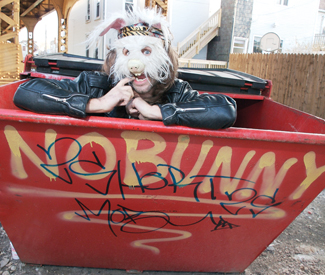
There’s also a few Total Trash Booking monster mashes, which are pretty much always guaranteed to be raucous, punkish blowouts. There’s the pre-party at the New Parish (Nobunny, Shannon and the Clams, who will also be the Misfits, Pangea, Audacity, Uzi Rash. Fri/26, 8pm, $12–$14. 579 18th St., Oakl.; www.thenewparish.com) and two totally exciting Coachwhips reunion shows.

Coachwhips of course being John Dwyer’s pre-Thee Oh Sees noise punk outfit. One of the reunion nights (Sat/27 at Verdi Club) is totally sold out, and you’re bummed because there’s going to be a haunted house inside the venue. I’m stoked because that’s where I’ll be Pussy Riot-ing.

The other (Sun/28, 7pm, $12. Lobot Gallery, 1800 Campbell, Oak.) espouses another epic blend of Total Trash and totally touring bands: the aforementioned Coachwhips, Pangea, Fidlar, Guantanamo Baywatch, and White Mystery. I can only imagine all the blood-soaked costumes and sweaty brows.

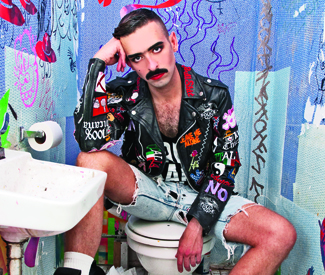
You can find tons more freak shows in the Halloween concerts and parties guide elsewhere in this issue. But for an entirely different kind of year-round showmanship (holidays be damned), there’s SSION, performing with House of Ladosha and DJs from High Fantasy at this freaky-colorful installment of Future | Perfect at Public Works (Thu/25, 9pm, $10-$15. Public Works, 161 Erie, SF; www.publicsf.com).

SSION, pronounced “shun,” is hard to take your eyes off of, a confetti-puke electro-art-pop party collective from Kansas City, Missouri, led sultry androgynous vocalist Cody Critcheloe, who now resides in Brooklyn, with the aesthetic of early John Waters oeuvre meets Pee-wee’s Playhouse. While the recorded music is often relegated to pre-party pump-ups, live is where SSION really shines, as some may have witnessed at DNA Lounge’s Blow Up night earlier this year.

CRYPTS

The people were weary at first of Seattle’s Crypts, a synth-based (specifically a rewired CR-8000) darkwave electro act led by Steve Snere. For Snere was already known and beloved as a former member of Kill Sadie and post-hardcore geniuses These Arms are Snakes, in an angular realm of post-punk proficiency. But Crypts is enticing in a new, much gloomier fashion, and yes, Snere still kills it, and it maintains a paranoid frenzy vibe. Check deep, dark, and ghoulish “Breathe,” off the band’s self-titled debut LP (Sargent House, Sept. 4). The band played SF this summer, but this time it’s much closer to Halloween, plus they’re opening for Omar Rodríguez-López, of At the Drive-In and Mars Volta fame.

Wed/24, 8pm, $15

New Parish

579 18th St., Oakl.

www.thenewparish.com

CONVERGE

If you had told me 15 years ago that I’d be almost 30 and still recommending Converge, I’d of called you a liar or a time jumping cheat. And yet, after a forceful return listen, suggested by a fellow music nerd, I too must admit it: new record All We Love We Leave Behind (Epitaph Records, Oct. 9) is the thinking person’s heavy metal album. It’s still the blistering axes of hardcore and heavy metal, with melodic guitar riffs, rapid-fire drums, and pained chants, but with a more grown up, complex sensibility — or maybe that’s just me?

With Torche, Nails, Kvelertak

Fri/26, 8pm, $18

Slim’s

33 11th St., SF www.slimspresents.com

HUNK OF BURNING LOVE

And then there’s Hunx, or H.U.N.X., of Hunx and His Punx. In the past few weeks, Seth Bogart released an insta-classic Halloween music video for his track “I Vant to Suck Your Cock” — full of gothy late night cable access details, sexy vampires, lime-green wigs, and tombstone booty thumping — and announced both a new variety show, Hollywood Nailz, and his own record label, Wacky Wacko Records, which is releasing “I Vant to Suck Your Cock” as a single. According to the release, the label will be “an outlet to release novelty records, children’s music, holiday themed hits, songs from…Hollywood Nailz, and other bizarre things that most labels wouldn’t bother with.” Bogart is currently living in LA (as his variety show moniker would suggest) but still visits his store in the Bay, Down at Lulu’s, often. He’s doesn’t have any local shows booked as of press time, but he knows we vant to see him.

www.wackywacko.com


Music Listings

0

Since club life is unpredictable, it’s a good idea to call ahead or check the venue’s website to confirm bookings and hours. Prices are listed when provided to us. Visit www.sfbg.com/venue-guide for venue information. Submit items for the listings at listings@sfbg.com. For further information on how to submit items for the listings, see Picks.

WEDNESDAY 24

ROCK/BLUES/HIP-HOP

Action Jackson, Megaflame Elbo Room. 9pm, $9.

Anadel, Sunrunners El Rio. 9pm, $8.

Cabin Project, Buster Blue, Goat and Feather Hotel Utah. 8pm.

Collie Buddz, New Kingston, Holdup, Los Rakas Fillmore. 8pm, $25.

Crime and the City Solution, Cairo Gang Slim’s. 7:30pm, $28.

Hunter Valentine, Queen Caveat, Echo Twins Cafe Du Nord. 8pm, $8-$10.

Jeff vs Todd Johnny Foley’s Dueling Pianos. 9:30pm.

Jukebox the Ghost, Now, Now Rickshaw Stop. 7:30pm, $12.

Keith Crossan Blues Showcase with Curtis Lawson Biscuits and Blues. 8pm, $15.

Lord Huran, Night Moves Independent. 8pm, $14.

Lost in the Trees, Midtown Dickens, Dana Buoy Bottom of the Hill. 8pm, $12.

Nathan and Rachel Johnny Foley’s. 9pm, free.

Rita Ora, Iggy Azalea, Havana Brown Regency Ballroom. 8pm, $30.

Perfume Genius Swedish American Hall. 7:30pm, $15.

Rasputina, Faun Fables Great American Music Hall. 8pm, $16.

White Arrows, Young Digerati, Trails and Ways, Miles the DJ Brick and Mortar Music Hall. 9pm, $10.53-$13.

White Manna, Midday Veil Hemlock Tavern. 8:30pm, $7.

JAZZ/NEW MUSIC

Cat’s Corner with Nathan Dias Savanna Jazz. 9pm, $10.

Dink Dink Dink, Gaucho, Eric Garland’s Jazz Session Amnesia. 7pm, free.

Shirley Jones Rrazz Room. 8pm, $40-$45.

Natalie Macmaster Yoshi’s SF. 8pm, $30; 10pm, $25.

Ricardo Scales Top of the Mark, 999 California, SF; www.topofthemark.com. 6:30pm, $5.

FOLK/WORLD/COUNTRY

Sofia Talvik Cafe Royale, 800 Post, SF; www.caferoyale-sf.com. 8:30pm, free.

DANCE CLUBS

Booty Call Q-Bar, 456 Castro, SF; www.bootycallwednesdays.com. 9pm. Juanita MORE! and Joshua J host this dance party.

Coo-Yah! Slate Bar, 2925 16th St, SF; www.slate-sf.com. 10pm, free. With Vinyl Ambassador, DJ Silverback, DJs Green B and Daneekah.

Full-Step! Tunnel Top. 10pm, free. Hip-hop, reggae, soul, and funk with DJs Kung Fu Chris and Bizzi Wonda.

Hardcore Humpday Happy Hour RKRL, 52 Sixth St, SF; (415) 658-5506. 6pm, $3.

Obey the Kitty: Justin Milla Vessel, 85 Campton Place, SF; www.vesselsf.com. 10pm. $5.

THURSDAY 25

ROCK/BLUES/HIP-HOP.

Apogee Sound Club, Bobby Joe Ebola and the Children McNuggits, Love Songs Hemlock Tavern. 8:30pm, $6.

Brother Ali, Blank Tape Beloved, Homeboy Sandman Fillmore. 8pm, $20.

Brother Pacific, Cool Ghouls, Troubadour Dali El Rio. 8pm, $6.

Chum Boom Boom Room. 8pm, $10.

Conspiracy of Beards, Beauty Operators String Band, Condorosa Brick and Mortar Music Hall. 9pm, $7-$10.

Crazy Squeeze, Re-Volts Thee Parkside. 9pm, $7.

Dig, French Cassettes, We Shared Milk, Wild Kindness Cafe Du Nord. 9pm, $10.

Hip Hatchet, Brendan Thomas, Brooke D, Alexis Stevens Amnesia. 9pm, $7-$10.

John Lawton Trio Johnny Foley’s. 9pm, free.

Light Asylum, popscene DJs Rickshaw Stop. 10pm, $13-$15.

Rolando Morales Biscuits and Blues. 8 and 10pm, $15.

Peelander-Z, Electric Eel Shock, Electric Sister Bottom of the Hill. 9pm, $10.

Public Image, Ltd. Regency Ballroom. 8:30pm, $42.

Leon Russell Yoshi’s SF. 8pm, $35.

Staff Benda Bilili Slim’s. 8pm, $16-$18.

Todd vs Jeff Johnny Foley’s Dueling Pianos. 9:30pm.

Z-Man, BPos, DJ Troubleman John Colins, 138 Minna, SF; www.johncolins.com. 9pm, $5 after 10pm.

JAZZ/NEW MUSIC

“John Cage Centennial Celebration” Yerba Buena Center for the Arts, 701 Mission, SF; www.ybca.org. 8pm, $10-$30. “Constructions” for percussion ensemble.

Michael McIntosh Rite Spot Cafe. 9pm, free.

Shirley Jones Rrazz Room. 8pm, $40-$45.

Stompy Jones Top of the Mark, 999 California, SF; www.topofthemark.com. 7:30pm, $10.

FOLK/WORLD/COUNTRY

Twang! Honky Tonk Fiddler’s Green, 1330 Columbus, SF; www.twanghonkytonk.com. 5pm. Live country music.

DANCE CLUBS

Afrolicious Elbo Room. 9:30pm, $5-$7. With DJ-hosts Pleasuremaker and Senor Oz.

All 80s Thursday Cat Club. 9pm, $6 (free before 9:30pm). The best of ’80s mainstream and underground.

Tropicana Madrone Art Bar. 9pm, free. Salsa, cumbia, reggaeton, and more with DJs Don Bustamante, Apocolypto, Sr. Saen, Santero, and Mr. E.

FRIDAY 26

ROCK/BLUES/HIP-HOP

Converge, Torche, Nails, Kvelertak Slim’s. 8pm, $16-$18.

Further Seems Forever, Chris Conley Bottom of the Hill. 9:30pm, $26.

Goodnight, Texas, Elliot Randall and the Deadmen, Jesse Thomas Cafe Du Nord. 9pm, $10-$12.

Lights, Arkells Great American Music Hall. 8pm, $20.

Lila Rose, Birdseye, Emily Moldy, BELI3VER Brick and Mortar Music Hall. 9pm, $12-$15.

Jason Marion, Todd, Jeff Johnny Foley’s Dueling Pianos. 9pm.

Mitchel and Manley, Head Boggle, Bad Bad, Abyss of Fathomless Light Bluxome Point, 63 Bluxome, SF; www.bluxomepoint.com. 9pm, $5.

Night of the Living Crreature Thee Parkside. 9pm, free.

Pickwick, Fox and Woman, Black Cobra Vipers Rickshaw Stop. 9pm, $13-$15.

Slough Feg, Skelator, Midnight Chaser Hemlock Tavern. 9:30pm, $10.

Toadies, Helmet, UME Independent. 9pm, $25.

Top Secret Band Johnny Foley’s. 9pm, free.

Von Goat, Dispirit, Atriach, Altar de Fey Elbo Room. 9pm, $10.

Glenn Walters and the Hoodoo Rhythm Devils Biscuits and Blues. 8Pm, $20.

Wooster Boom Boom Room. 8pm, $10.

JAZZ/NEW MUSIC

Audium 1616 Bush, SF; www.audium.org. 8:30pm, $20. Theater of sound-sculptured space.

Black Jazz Orchestra Top of the Mark, 999 California, SF; www.topofthemark.com. 9pm, $10.

Shirley Jones Rrazz Room. 8pm, $40-$45.

Allison Lovejoy Rite Spot Cafe. 9pm, free.

Wooden Fish Ensemble San Francisco Public Library, Main Branch, 100 Larkin, SF; (415) 557-4400. 3pm, free.

FOLK/WORLD/COUNTRY

Baxtolo Drom Amnesia. 9pm, $7-$10.

DANCE CLUBS

Fedorable Queer Dance Party El Rio. 9pm, free.

Flashback Fridays Mezzanine. 9pm, $30. Halloween 1980s party with Wonder Bread 5, and DJs Omar, Damon Boyle, and Billy Vidal.

Joe Lookout, 3600 16th St.,SF; www.lookoutsf.com. 9pm. Eight rotating DJs.

David Jones Vessel, 85 Campton Place, SF; www.vesselsf.com. 10pm. $20-$30.

Paris to Dakar Little Baobab, 3388 19th St, SF; (415) 643-3558. 10pm, $5. Afro and world music with rotating DJs including Stepwise, Steve, Claude, Santero, and Elembe.

Trannyshack: Halloween DNA Lounge. 9:30pm, $15. With Heklina, Peaches Christ, Exhibit Q, Elijah Minnelli, Raya Light, and more.

SATURDAY 27

ROCK/BLUES/HIP-HOP

Asteroids Galaxy Tour Fillmore. 9pm, $20.

Bay Area Heat Johnny Foley’s. 9pm, free.

Nicki Bluhm and the Gramblers, Brothers Comatose Independent. 9pm, $17.

Clamhawk Manorm My Parade Thee Parkside. 3pm, free.

Cult of Youth Hemlock Tavern. 8:30pm, $10.

Fast Times Maggie McGarry’s, 1353 Grant, SF; (415) 339-9020. 10pm, free.

Forrest Day, Ghost and the City, DJ Brother Grimm Rickshaw Stop. 9pm, $10-$12.

Foreverland’s Thriller Halloween Ball Bimbo’s. 9pm, $22.

Wolfgang Gartner, Pierce Fulton and Popeska Regency Ballroom. 9pm, $32-$38.

Here We Go Magic Preservation Hall West at the Chapel, 777 Valencia, SF; www.ticketfly.com. 9pm, $18.

Live Evil Riptide Tavern. 9pm, free.

Mister Loveless, Transfer, Hustle and Drone Thee Parkside. 9pm, $8.

Rod Piazza and the Mighty Flyers Biscuits and Blues. 8 and 10pm, $22.

Red Fang, Black Tusk, Lord Dying Slim’s. 9pm, $15.

Rin Tin Tiger, Doe Eye, Steelwells, Wes Lesley and His Deadly Medley Bottom of the Hill. 9pm, $10.

Todd, Jason Marion, Jeff Johnny Foley’s Dueling Pianos. 9pm.

JAZZ/NEW MUSIC

Audium 1616 Bush, SF; www.audium.org. 8:30pm, $20. Theater of sound-sculptured space.

Shirley Jones Rrazz Room. 8pm, $40-$45.

Mr. Lucky and the Cocktail Party Rite Spot Cafe. 9pm, free.

“Not in Our Name: Dia de los Muertos Concert” Brava Theatre, 2781 24 St., SF; www.brava.org. 8pm, $35. With John Santos Sextet.

FOLK/WORLD/COUNTRY

Jascha Hoffman sings Caetano Veloso Red Poppy Art House. 8pm, $10.

Will Magid’s World Wide Dance Party: Ethiopique Extravaganza! Cafe Du Nord. 9pm, $15.

Temple Bhajan Band Integral Yoga Institute, 770 Dolores, SF; (415) 821-1117. 6-8pm, $15.

DANCE CLUBS

Blow Up Halloween Special Vessel, 85 Campton Place, SF; www.vesselsf.com. 10pm. $5.

Club 1994 Halloween Bash Vessel, 85 Campton, SF; www.club1994.com. 10pm, $18.

Devil Made Me Do It: Drag, Devils, Dancing El Rio.10pm, $10; $5 with costume.

Halloween Boooootie DNA Lounge. 9pm. $30. A Plus D, Dada, Smash-Up Derby, with a midnight costume contest.

Mango El Rio. 3-8:30pm, $8-$10.

Paris to Dakar Little Baobab, 3388 19th St, SF; (415) 643-3558. 10pm, $5. Afro and world music with rotating DJs. With DJ Ness.

120 Minutes Elbo Room. 10pm.

Temptation vs Fringe Cat Club. 9:30pm, $5-$8. With DJs Blonde K, subOctave, and more.

Vinyl Boom Boom Room. 8pm, $15. With Sonnyboy, DJ K-os.

SUNDAY 28

ROCK/BLUES/HIP-HOP

Casy and Brian, Future Twin, Deep Teens Thee Parkside. 8pm, $7.

Earth, Fontanelle, Stebmo Great American Music Hall. 8pm, $16.

Godwaffle Noise Pancakes: Medicine Cabinet, Lycanthropic Legions of Noise, Arachnid Archade Lab, 2948 16 St, SF; www.thelab.org. noon, $5-$10.

“Golden Gate Blues Society Presents: IBC Challenge Final” Biscuits and Blues. 5pm, $20.

Harold Ray Dead in Concert, Gregors, Outlaw Hemlock Tavern. 6pm, $6.

Indubious Rockit Room. 9pm, $10.

John Lawton Trio Johnny Foley’s. 9pm, free.

SLIG Hotel Utah. 8pm, $6.

Timeflies Presents: One Night Tour, DJ Ev Slim’s. 8pm, $16-$18.

Mary Wilson Venetian Room at the Fairmont, 950 Mason, SF; www.bayareacabaret.org. 7pm, $40-$75.

JAZZ/NEW MUSIC

Lua Hadar and Francofonia Bliss Bar, 4026 24th St, SF; www.blissbarsf.com. 4:30pm, $10.

“John Cage Centennial Celebration” Yerba Buena Center for the Arts, 701 Mission, SF; www.ybca.org. 8pm. “Musicircus,” 40 Cage works.

Shirley Jones Rrazz Room. 5pm, $40-$45.

FOLK/WORLD/COUNTRY

Heel Draggers, West Nile Ramblers Amnesia. 8pm, $5-$10.

Brian Stevens Brainwash Cafe. 7pm, free.

“Twang Sunday” Thee Parkside. 4pm, free. With Bar Fight, Tough Brothers.

DANCE CLUBS

Dub Mission Elbo Room. 9pm, $6. With DJ Sep, Vinnie Esparza, and J. Boogie.

Jock Lookout, 3600 16th St, SF; www.lookoutsf.com. 3pm, $2.

MONDAY 29

ROCK/BLUES/HIP-HOP

Balmorhea, Young Moon Bottom of the Hill. 9:30pm, $10.

Cadence Weapon Brick and Mortar Music Hall. 9:30pm, $8-$10.

Damir Johnny Foley’s. 9pm, free.

Daughter, Choir of Young Believers Independent. 8pm, $12.

Jenni and the Jerks, Wicked Mercies, Whoa Nellies Elbo Room. 9pm, $8; $5 in costume.

One F, NVS, Mean Faces El Rio. 7pm, $5; $3 with costume.

“SFRMA.org performs Pink Floyd’s ‘Dark Side of the Moon’ and Portishead’s ‘Dummy'” Great American Music Hall. 8pm, $15.

JAZZ/NEW MUSIC

Mike Burns Rite Spot Cafe. 8:30pm, free.

FOLK/WORLD/COUNTRY

Front Country Amnesia. 8pm.

TUESDAY 30

ROCK/BLUES/HIP-HOP

All Time Low, Summer Set, Downtown Fiction, Hit the Lights Fillmore. 7pm, $25.

Sophie Barker Yoshi’s SF. 8pm, $14.

Disclosure, DJ Dials, Sleazemore Independent. 9pm, $20.

Dysrhythmia, Dog Shredder, Burmese, Dimesland Elbo Room. 9pm, $10.

Fat Tuesday Band Biscuits and Blues. 8 and 10pm, $15.

Hannah Georgas Cafe Du Nord. 7:30pm, $12.

New Spell, Treehouse Orchestra, St. Tropez Bottom of the Hill. 9pm, $10.

Other Lives, Indians Great American Music Hall. 8pm, $16.

Stan Erhart Band Johnny Foley’s. 9pm, free.

Sweat Lodge, No Bone, Standard Poodle Knockout. 9:30pm, $6.

Tiger High, Some Days, Flytraps Hemlock Tavern. 8:30pm, $7.

Wave Commission, Redwood Wires, Phone Sex Operators El Rio. 7pm, $3.

FOLK/WORLD/COUNTRY

Toshio Hirano Rite Spot Cafe. 9pm, free.

Sofia Talvik, Arcadio Amnesia. 9:30pm, $7.

Film Listings

0

Film listings are edited by Cheryl Eddy. Reviewers are Kimberly Chun, Dennis Harvey, Lynn Rapoport, and Sara Vizcarrondo. For rep house showtimes, see Rep Clock.

Opening

Chasing Mavericks The Bay Area’s big-wave spot hits the big screen, with Gerard Butler and Jonny Weston as real-life surfers Rick “Frosty” Hesson and Jay Moriarity. (1:45)

Cloud Atlas Cramming the six busy storylines of David Mitchell’s wildly ambitious novel into just three hours — the average reader might have thought at least 12 would be required — this impressive adaptation directed (in separate parts) by Tom Twyker (1998’s Run Lola Run) and Matrix siblings Lana and Andy Wachowski has a whole lot of narrative to get through, stretching around the globe and over centuries. In the mid 19th century, Jim Sturgess’ sickly American notory endures a long sea voyage as reluctant protector of a runaway-slave stowaway from the Chatham Islands (David Gyasi). In 1931 Belgium, a talented but criminally minded British musician (Ben Whishaw) wheedles his way into the household of a famous but long-inactive composer (Jim Broadbent). A chance encounter sets 1970s San Francisco journalist Luisa (Halle Berry) on the path of a massive cover-up conspiracy, swiftly putting her life in danger. Circa now, a reprobate London publisher’s (Broadbent) huge windfall turns into bad luck that gets even worse when he seeks help from his brother (Hugh Grant). In the not-so-distant future, a disposable “fabricant” server to the “consumer” classes (Doona Bae) finds herself plucked from her cog-like life for a rebellious higher purpose. Finally, in an indeterminately distant future after “the Fall,” an island tribesman (Tom Hanks) forms a highly ambivalent relationship toward a visitor (Berry) from a more advanced but dying civilization. Mitchell’s book was divided into huge novella-sized blocks, with each thread split in two; the film wastes very little time establishing its individual stories before beginning to rapidly intercut between them. That may result in a sense of information (and eventually action) overload, particularly for non-readers, even as it clarifies the connective tissues running throughout. Compression robs some episodes of the cumulative impact they had on the page; the starry multicasting (which in addition to the above mentioned finds many uses for Hugo Weaving, Keith David, James D’Arcy, and Susan Sarandon) can be a distraction; and there’s too much uplift forced on the six tales’ summation. Simply put, not everything here works; like the very different Watchmen, this is a rather brilliant “impossible adaptation” screenplay (by the directors) than nonetheless can’t help but be a bit too much. But so much does work — in alternating currents of satire, melodrama, pulp thriller, dystopian sci-fi, adventure, and so on — that Cloud Atlas must be forgiven for being imperfect. If it were perfect, it couldn’t possibly sprawl as imaginatively and challengingly as it does, and as mainstream movies very seldom do. (2:52) Balboa, California, Presidio. (Harvey)

Fun Size When a teen (Victoria Justice) is forced to baby-sit her brother the night of the social event of the Halloween season, PG-13 chaos ensues. (1:45) Shattuck.

Masquerade A king hires an actor from the local village (both portrayed by Korean megastar Byung-hun Lee) to be his body double in this historical drama. (2:11) Metreon.

Nobody Walks In Ry Russo-Young’s LA-set film, from a screenplay co-written with Lena Dunham, an alluring young woman named Martine (Olivia Thirlby) is welcomed into the Silver Lake home of psychotherapist Julie (Rosemarie DeWitt) and sound engineer Peter (John Krasinski), who has agreed to help Martine with the soundtrack for her film, destined for a gallery installation back in New York. While Martine’s film constructs a fiction around the fevered activities of the insect world, Russo-Young’s drifts quietly through the lives of its human household, offering glimpses of the romantic preoccupations of a teenage daughter (India Ennenga) and Julie’s interactions with one of her patients (Justin Kirk), and revealing a series of relationships hovering tensely on the border of unsanctioned behavior. The uncomfortable centerpiece is the intimacy that develops between Peter and Martine; tracking their progress through the family’s sprawling home as the two collect sounds for her project, the camera zooms in toward the sources, making the spaces the pair inhabit seem ominously small. Their eventual collision is unsurprising, but Peter hardly comes across as a besieged, frustrated family man. He tells Martine that “marriage is complicated,” but against the warm, appealing backdrop of his and Julie’s home life, it sounds like a pretty flimsy excuse for kissing a pretty, proximal 23-year-old. As for Martine, she seems not to need any rationale. But even factoring out the callousness of youth (or at least the genre of youth presented here), the film offhandedly suggests that the tipping point away from domestic happiness is depressingly easy to reach. (1:22) Bridge, Shattuck. (Rapoport)

Pusher A pusher has been pushed to the limit—this time around in a charm-free, deal-driven London. This remake of the Nicolas Winding Refn’s 1996 hit was given the seal of approval by the Drive (2011) auteur, who took a role here as an executive producer, with Luis Prieto in the director’s seat. Prieto does his best to keep the pressure on at all moments, as small-time heroin dealer Frank (Richard Coyle, resembling Dominic West in urban-hustler safari mode) undergoes the worst week of his life. He appears to have a tidy little existence with goofy, floppy-haired cohort Tony (Bronson Webb) by his side and delicately beautiful stripper Flo (Agyness Deyn) providing sexual healing and safe harbor for his dough. He has just hooked up drug mule Danaka (Daisy Lewis) to bring back a batch from Amsterdam when acquaintance Marlon (Neil Maskell) hits him up for a large order. Frank goes to his supplier Milo (Zlatko Buric, reprising his role in the original), an avuncular sort who pushes baklava in space sprinkled with wedding-cake-like gowns. Frank already owe him money and can’t cover the heroin’s cost, but this is a business built on trust, as fragile as it is, and Milo likes him, so he goes along, provided Frank returns the money immediately. Those tenuous ties of understanding are tested when cops bust Frank and Marlon and the former must dump the dope in a park pond. He refuses to give up his connections to the cops but finds that the loyalty of others is being tested when it comes to threats, cash, and even love. Prieto is a more self-consciously lyrical moviemaker than Refn, choosing to a vaguely Trainspotting-style cocktail of lite surrealism and slightly cheesy low-budg effects like vapor-trail headlights to replicate the highs and lows of Frank’s joyless clubland hustle. Still, he makes us feel Frank’s stress, amid the fatalistic undertow of the narrative, and his sense of betrayal when Pusher’s players turn, despite a smalltime pusher’s workman efforts to shore up against the odds. (1:29) Presidio. (Chun)

Question One Question One goes behind the scenes of the 2009 campaign concerning the referendum which reversed legislature granting same-sex couples the right to marry in Maine. The film investigates both sides of the story, including marriage dreams of queer families and confessions of regret from the appointed leader for the Yes on One Campaign, Marc Mutty. Though listening to preachers and activists devalue love between two men or two women might make you cringe, the inclusion of these moments creates an emotionally tense experience that will remind you how important it is to bounce back from defeat. It shows that the next step will have to be more than just rallying voters, it will require a change in ideology — an understanding that gays who wish to marry deserve equal rights, not religious salvation. As Darlene Huntress, the director of field operations for the No on One Campaign says, “I want to sit down and break bread with these people. I want to sit down and say get to know me — open your mind up enough to get to know me.” (1:53) Vogue. (Molly Champlin)

The Sessions Polio has long since paralyzed the body of Berkeley poet Mark O’Brien (John Hawkes) from the neck down. Of course his mind is free to roam — but it often roams south of the personal equator, where he hasn’t had the same opportunities as able-bodied people. Thus he enlists the services of Cheryl (Helen Hunt), a professional sex surrogate, to lose his virginity at last. Based on the real-life figures’ experiences, this drama by Australian polio survivor Ben Lewin was a big hit at Sundance this year (then titled The Surrogate), and it’s not hard to see why: this is one of those rare inspirational feel-good stories that doesn’t pander and earns its tears with honest emotional toil. Hawkes is always arresting, but Hunt hasn’t been this good in a long time, and William H. Macy is pure pleasure as a sympathetic priest put in numerous awkward positions with the Lord by Mark’s very down-to-earth questions and confessions. (1:35) Embarcadero. (Harvey)

Silent Hill: Revelation 3D Game of Thrones reunion! Sean Bean and Kit Harington both star in this video game adaptation, which may be its only bragging point. (1:34)

Wake in Fright See “Points Of No Return.” (1:54) Opera Plaza, Shattuck. 

Ongoing

Alex Cross (1:41) 1000 Van Ness, SF Center, Shattuck.

Argo If you didn’t know the particulars of the 1979 Iranian Revolution, you won’t be an expert after Argo, but the film does a good job of capturing America’s fearful reaction to the events that followed it — particularly the hostage crisis at the US embassy in Tehran. Argo zeroes in on the fate of six embassy staffers who managed to escape the building and flee to the home of the sympathetic Canadian ambassador (Victor Garber). Back in Washington, short-tempered CIA agents (including a top-notch Bryan Cranston) cast about for ways to rescue them. Enter Tony Mendez (Ben Affleck, who also directs), exfil specialist and father to a youngster wrapped up in the era’s sci-fi craze. While watching 1973’s Battle for the Planet of the Apes, Tony comes up with what Cranston’s character calls “the best bad idea we have:” the CIA will fund a phony Canadian movie production (corny, intergalactic, and titled Argo) and pretend the six are part of the crew, visiting Iran for a few days on a location shoot. Tony will sneak in, deliver the necessary fake-ID documents, and escort them out. Neither his superiors, nor the six in hiding, have much faith in the idea. (“Is this the part where we say, ‘It’s so crazy it just might work?'” someone asks, beating the cliché to the punch.) Argo never lets you forget that lives are at stake; every painstakingly forged form, every bluff past a checkpoint official increases the anxiety (to the point of being laid on a bit thick by the end). But though Affleck builds the needed suspense with gusto, Argo comes alive in its Hollywood scenes. As the show-biz veterans who mull over Tony’s plan with a mix of Tinseltown cynicism and patiotic duty, John Goodman and Alan Arkin practically burst with in-joke brio. I could have watched an entire movie just about those two. (2:00) Four Star, Marina, 1000 Van Ness, SF Center, Sundance Kabuki. (Eddy)

Beasts of the Southern Wild Six months after winning the Grand Jury Prize at Sundance (and a Cannes Camera d’Or), Beasts of the Southern Wild proves capable of enduring a second or third viewing with its originality and strangeness fully intact. Magical realism is a primarily literary device that isn’t attempted very often in U.S. cinema, and succeeds very rarely. But this intersection between Faulkner and fairy tale, a fable about — improbably — Hurricane Katrina, is mysterious and unruly and enchanting. Benh Zeitlin’s film is wildly cinematic from the outset, as voiceover narration from six-year-old Hushpuppy (Quvenzhané Wallis) offers simple commentary on her rather fantastical life. She abides in the Bathtub, an imaginary chunk of bayou country south of New Orleans whose residents live closer to nature, amid the detritus of civilization. Seemingly everything is some alchemical combination of scrap heap, flesh, and soil. But not all is well: when “the storm” floods the land, the holdouts are forced at federal gunpoint to evacuate. With its elements of magic, mythological exodus, and evolutionary biology, Beasts goes way out on a conceptual limb; you could argue it achieves many (if not more) of the same goals Terrence Malick’s 2011 The Tree of Life did at a fraction of that film’s cost and length. (1:31) Shattuck. (Harvey)

Bel Borba Aqui “The People’s Picasso” and “Brazil’s Pied Piper of Street Art” are both apt descriptions of veteran artist Bel Borba, who has spent decades bringing color and imagination to the streets of Salvador — his seaside hometown, and a place already graced with the nickname “Brazil’s Capital of Happiness.” It’s not a stretch to imagine that Borba’s commitment to public art (a giant Christmas tree made of plastic Coke bottles, a rhinoceros sculpture crafted from old boat planks, hundreds of large-scale mosaics, even a painted airplane) has done its share to lift spirits. Bel Borba Aqui isn’t the sort of doc to delve into its mustachioed subject’s history or personal life (despite a few angry cell phone conversations randomly captured along the way); instead, it’s much like Borba himself — freewheeling and spontaneous, and most alive when it’s showing art being created. Great soundtrack, too. (1:34) Roxie. (Eddy)

The Dark Knight Rises Early reviews that called out The Dark Knight Rises’ flaws were greeted with the kind of vicious rage that only anonymous internet commentators can dish out. And maybe this is yet another critic-proof movie, albeit not one based on a best-selling YA book series. Of course, it is based on a comic book, though Christopher Nolan’s sophisticated filmmaking and Christian Bale’s tortured lead performance tend to make that easy to forget. In this third and “final” installment in Nolan’s trilogy, Bruce Wayne has gone into seclusion, skulking around his mansion and bemoaning his broken body and shattered reputation. He’s lured back into the Batcave after a series of unfortunate events, during which The Dark Knight Rises takes some jabs at contemporary class warfare (with problematic mixed results), introduces a villain with pecs of steel and an at-times distractingly muffled voice (Tom Hardy), and unveils a potentially dangerous device that produces sustainable energy (paging Tony Stark). Make no mistake: this is an exciting, appropriately moody conclusion to a superior superhero series, with some nice turns by supporting players Gary Oldman and Joseph Gordon-Levitt. But in trying to cram in so many characters and plot threads and themes (so many prisons in this thing, literal and figural), The Dark Knight Rises is ultimately done in by its sprawl. Without a focal point — like Heath Ledger’s menacing, iconic Joker in 2008’s The Dark Knight — the stakes aren’t as high, and the end result feels more like a superior summer blockbuster than one for the ages. (2:44) Metreon. (Eddy)

Diana Vreeland: The Eye Has to Travel The life of legendary fashion editor Diana Vreeland is colorfully recounted in Diana Vreeland: The Eye Has to Travel, a doc directed by her granddaughter-in-law, Lisa Immordino Vreeland. The family connection meant seemingly unlimited access to material featuring the unconventionally glamorous (and highly quotable) Vreeland herself, plus the striking images that remain from her work at Harper’s Bazaar, Vogue, and the Costume Institute of the Metropolitan Museum of Art. “Narrated” from interview transcripts by an actor approximating the late Vreeland’s husky, posh tones, the film allows for some criticism (her employees often trembled at the sight of her; her sons felt neglected; her grasp of historical accuracy while working at the museum was sometimes lacking) among the praise, which is lavish and delivered by A-listers like Anjelica Huston, who remembers “She had a taste for the extraordinary and the extreme,” and Manolo Blahnik, who squeals, “She had the vision!” (1:26) Embarcadero. (Eddy)

End of Watch Buddy cop movies tend to go one of two ways: the action-comedy route (see: the Rush Hour series) or the action-drama route. End of Watch is firmly in the latter camp, despite some witty shit-talking between partners Taylor (a chrome-domed Jake Gyllenhaal) and Zavala (Michael Peña from 2004’s Crash) as they patrol the mean streets of Los Angeles. Writer-director David Ayer, who wrote 2001’s Training Day, aims for authenticity by piecing together much of (but, incongruously, not all of) the story through dashboard cameras, surveillance footage, and Officer Taylor’s own ever-present camera, which he claims to be carrying for a school project, though we never once see him attending classes or mentioning school otherwise. Gyllenhaal and Peña have an appealing rapport, but End of Watch’s adrenaline-seeking plot stretches credulity at times, with the duo stumbling across the same group of gangsters multiple times in a city of three million people. Natalie Martinez and Anna Kendrick do what they can in underwritten cop-wife roles, but End of Watch is ultimately too familiar (but not lawsuit-material familiar) to leave any lasting impression. Case in point: in the year 2012, do we really need yet another love scene set to Mazzy Star’s “Fade Into You”? (1:49) 1000 Van Ness, SF Center. (Eddy)

Fat Kid Rules the World It really does suck to be Troy (Jacob Wysocki from 2011’s Terri). An XXL-sized high schooler, he’s invisible to his peers, derided by his little brother (Dylan Arnold), and has lived in general domestic misery since the death of his beloved mother under the heavy-handed rule of his well-meaning but humorless ex-military dad (Billy Campbell). His only friends are online gamers, his only girlfriends the imaginary kind. But all that begins to change when chance throws him across the path of notorious local hellraiser Marcus (Matt O’Leary), who’s been expelled from school, has left the band he fronts, and is equal parts rebel hero to druggy, lyin’ mess. But he randomly decrees Troy is cool, and his new drummer. Even if he’s just being used, Troy’s world is headed for some big changes. Actor Matthew Lillard’s feature directorial debut, based on K.L. Going’s graphic novel, is familiar stuff in outline but a delight in execution, as it trades the usual teen-comedy crudities (a few gratuitous joke fantasy sequences aside) for something more heartfelt and restrained, while still funny. O’Leary from last year’s overlooked Natural Selection is flamboyantly terrific, while on the opposite end of the acting scale Campbell makes repressed emotion count for a lot — he has one wordless moment at a hospital that just might bring you to the tears his character refuses to spill. (1:38) Metreon, Smith Rafael. (Harvey)

Frankenweenie Tim Burton’s feature-length Frankenweenie expands his 1984 short of the same name (canned by Disney back in the day for being too scary), and is the first black and white film to receive the 3D IMAX treatment. A stop-motion homage to every monster movie Burton ever loved, Frankenweenie is also a revival of the Frankenstein story cute-ified for kids; it takes the showy elements of Mary Shelley’s novel and morphs them to fit Burton’s hyperbolic aesthetic. Elementary-school science wiz Victor takes his disinterred dog from bull terrier to gentle abomination (when the thirsty Sparky drinks, he shoots water out of the seams holding his body parts together). Victor’s competitor in the school science fair, Edgar E. Gore, finds out about Sparky and ropes in classmates to scrape up their dead pets from the town’s eerily utilized pet cemetery and harness the town’s lightning surplus. The film’s answer to Boris Karloff (lisp intact) resurrects a mummified hamster, while a surrogate for Japanese Godzilla maker Ishiro Honda, revives his pet turtle Shelley (get it?) into Gamera. As these experiments aren’t borne of love, they don’t go as well at Victor’s. If you love Burton, Frankenweenie feels like the at-last presentation of a story he’s been dying to tell for years. If you don’t love him, you might wonder why it took him so long to get it out. When Victor’s science teacher leaves the school, he tells Victor an experiment conducted without love is different from one conducted with it: love, he implies, is a variable. If that’s the variable that separates 2003’s Big Fish (heartbreaking) from 2010’s Alice In Wonderland (atrocious), it’s a large one indeed. The love was there for 29 minutes in 1984, but I can’t say it endures when stretched to 87 minutes 22 years later. (1:27) Balboa, Metreon, 1000 Van Ness. (Vizcarrondo)

Here Comes the Boom The makers of September’s Won’t Back Down might quibble with this statement, but the rest of us can probably agree that nothing (with the possible exception of Trapper Keepers) says “back to school” like competitive steel-cage mixed martial arts — particularly if the proceeds from the matches go toward saving extracurriculars at a down-at-the-heels public high school. Kevin James plays Scott Voss, a 42-year-old biology teacher at the aforementioned school, whose lack of vocational enthusiasm is manifested by poor attendance and classroom observations about how none of what the students are learning matters. He’s jolted from this criminally subpar performance of his academic duties, however, when budget cuts threaten the school’s arts programs, including the job of an earnest and enthusiastic music teacher (Henry Winkler) whose dedication Scott lazily admires. It seems less than inevitable that this state of affairs would lead to Scott’s donning his college wrestling singlet and trundling into the ring to get pummeled and mauled for cash, but it seems to work better than a bake sale. Less effective and equally unconvincing are Scott’s whiplash arc from bad apple to teacher-of-the-year; a percolating romance between him and the school nurse, played by Salma Hayek; and the script’s tortuous parade of rousing statements celebrating the power of the human spirit, seemingly cribbed from a page-a-day calendar of inspirational quotes. (1:45) 1000 Van Ness, SF Center. (Rapoport)

Hotel Transylvania (1:32) Metreon, 1000 Van Ness, Shattuck.

The House I Live In Much like he did in 2005’s Why We Fight, filmmaker Eugene Jarecki identifies a Big Issue (in that film, the Iraq War) and strips it down, tracing all of the history leading up to the current crisis point. Here, he takes on America’s “war on drugs,” which I put quotes around not just because it was a phrase spoken by Nixon and Reagan, but also because — as The House I Live In ruthlessly exposes — it’s been a failure, a sham, since its origins in the late 1960s. Framing his investigation with the personal story of his family’s housekeeper — whose dedication to the Jarecki family meant that she was absent when her own son turned to drugs — and enfolding a diverse array of interviews (a sympathetic prison guard, addicts and their families, The Wire’s David Simon) and locations (New York City, Sioux City), Jarecki has created an eye-opening film. Particularly well-explained are segments on how drug laws correlate directly to race and class, and how the prison-industrial complex has played a part in making sure those laws remain as strict as possible. (1:48) Shattuck, Sundance Kabuki. (Eddy)

Looper It’s 2044 and, thanks to a lengthy bout of exposition by our protagonist, Joe (Joseph Gordon-Levitt), here’s what we know: Time travel, an invention 30 years away, will be used by criminals to transport their soon-to-be homicide victims backward, where a class of gunmen called loopers, Joe among them, are employed to “do the necessaries.” More deftly revealed in Brick writer-director Rian Johnson’s new film is the joylessness of the world in which Joe amorally makes his way, where gangsters from the future control the present (under the supervision of Jeff Daniels), their hit men live large but badly (Joe is addicted to some eyeball-administered narcotic), and the remainder of the urban populace suffers below-subsistence-level poverty. The latest downside for guys like Joe is that a new crime boss has begun sending back a steady stream of aging loopers for termination, or “closing the loop”; soon enough, Joe is staring down a gun barrel at himself plus 30 years. Being played by Bruce Willis, old Joe is not one to peaceably abide by a death warrant, and young Joe must set off in search of himself so that—with the help of a woman named Sara (Emily Blunt) and her creepy-cute son Cid (Pierce Gagnon)—he can blow his own (future) head off. Having seen the evocatively horrific fate of another escaped looper, we can’t totally blame him. Parsing the daft mechanics of time travel as envisioned here is rough going, but the film’s brisk pacing and talented cast distract, and as one Joe tersely explains to another, if they start talking about it, “we’re gonna be here all day making diagrams with straws” —in other words, some loops just weren’t meant to be closed. (1:58) 1000 Van Ness, Piedmont, SF Center, Sundance Kabuki. (Rapoport)

The Master Paul Thomas Anderson’s much-hyped likely Best Picture contender lives up: it’s easily the best film of 2012 so far. Philip Seymour Hoffman stars as Lancaster Dodd, the L. Ron Hubbard-ish head of a Scientology-esque movement. “The Cause” attracts Freddie Quell (Joaquin Phoenix, in a welcome return from the faux-deep end), less for its pseudo-religious psychobabble and bizarre personal-growth exercises, and more because it supplies the aimless, alcoholic veteran — a drifter in every sense of the word — with a sense of community he yearns for, yet resists submitting to. As with There Will Be Blood (2007), Anderson focuses on the tension between the two main characters: an older, established figure and his upstart challenger. But there’s less cut-and-dried antagonism here; while their relationship is complex, and it does lead to dark, troubled places, there are also moments of levity and weird hilarity — which might have something to do with Freddie’s paint-thinner moonshine. (2:17) Albany, 1000 Van Ness, Sundance Kabuki. (Eddy)

Middle of Nowhere All the reasons why movie publicist turned filmmaker Ava DuVernay scored the best director award at the Sundance Film Festival are up here on the screen. Taking on the emotionally charged yet rarely attempted challenge of picturing the life of the loved one left behind by the incarcerated, DuVernay furthers the cause of telling African American stories — she founded AaFFRM (African-American Film Festival Releasing Movement) and made her directorial debut with 2008 LA hip-hop doc This Is The Life — with Middle of Nowhere. Medical student Ruby (the compelling Emayatzy Corinealdi) appears to have a bright future ahead of her, when her husband Derek (Omari Hardwick) makes some bad choices and is tossed into maximum security prison for eight long years. She swears she’ll wait for him, putting her dreams aside, making the long bus ride out to visit him regularly, and settling for any nursing shift she can. How will she scrape the money together to pay the lawyer for Derek’s parole hearing, cope with the grinding disapproval of her mother (Lorraine Toussaint), support the increasingly hardened and altered Derek, and most importantly, discover a new path for herself? All are handled with rare empathy and compassion by DuVernay, who is rewarded for her care by her cast’s powerful performances. Our reward might be found amid the everyday poetry of Ruby’s life, while she wraps her hair for bed, watches Ali: Fear Eats the Soul (1974), and fantasizes about love in a life interrupted. (1:41) Shattuck. (Chun)

Paranormal Activity 4 (1:21) Metreon, 1000 Van Ness, Presidio.

The Perks of Being a Wallflower Move over, Diary of a Wimpy Kid series — there’s a new shrinking-violet social outcast in town. These days, life might not suck quite so hard for 90-pound weaklings in every age category, what with so many films and TV shows exposing, and sometimes even celebrating, the many miseries of childhood and adolescence for all to see. In this case, Perks author Stephen Chbosky takes on the directorial duties — both a good and bad thing, much like the teen years. Smart, shy Charlie is starting high school with a host of issues: he’s painfully awkward and very alone in the brutal throng, his only friend just committed suicide, and his only simpatico family member was killed in a car accident. Charlie’s English teacher Mr. Andersen (Paul Rudd) appears to be his only connection, until the freshman strikes up a conversation with feline, charismatic, shop-class jester Patrick (Ezra Miller) and his magnetic, music- and fun-loving stepsister Sam (Emma Watson). Who needs the popular kids? The witty duo head up their gang of coolly uncool outcasts their own, the Wallflowers (not to be confused with the deeply uncool Jakob Dylan combo), and with them, Charlie appears to have found his tribe. Only a few small secrets put a damper on matters: Patrick happens to be gay and involved with football player Brad (Johnny Simmons), who’s saddled with a violently conservative father, and Charlie is in love with the already-hooked-up Sam and is frightened that his fragile equilibrium will be destroyed when his new besties graduate and slip out of his life. Displaying empathy and a devotion to emotional truth, Chbosky takes good care of his characters, preserving the complexity and ungainly quirks of their not-so-cartoonish suburbia, though his limitations as a director come to the fore in the murkiness and choppily handled climax that reveals how damaged Charlie truly is. (1:43) Balboa, California, Embarcadero, Piedmont, Presidio, Sundance Kabuki. (Chun)

Pitch Perfect As an all-female college a cappella group known as the Barden Bellas launches into Ace of Base’s “The Sign” during the prologue of Pitch Perfect, you can hear the Glee-meets-Bring It On elevator pitch. Which is fine, since Bring It On-meets-anything is clearly worth a shot. In this attempt, Anna Kendrick stars as withdrawn and disaffected college freshman Beca, who dreams of producing music in L.A. but is begrudgingly getting a free ride at Barden University via her comp lit professor father. Clearly his goal is not making sure she receives a liberal arts education, as Barden’s academic jungle extends to the edges of the campus’s competitive a cappella scene, and the closest thing to an intellectual challenge occurs during a “riff-off” between a cappella gangs at the bottom of a mysteriously drained swimming pool. When Beca reluctantly joins the Bellas, she finds herself caring enough about the group’s fate to push for an Ace of Base moratorium and radical steps like performing mashups. Much as 2000’s Bring It On coined terms like “cheerocracy” and “having cheer-sex,” Pitch Perfect gives us the infinitely applicable prefix “a ca-” and descriptives like “getting Treble-boned,” a reference to forbidden sexual relations with the Bellas’ cocky rivals, the Treblemakers. The gags get funnier, dirtier, and weirder, arguably reaching their climax in projectile-vomit snow angels, with Elizabeth Banks and John Michael Higgins as grin-panning competition commentators offering a string of loopily inappropriate observations. (1:52) Metreon, 1000 Van Ness. (Rapoport)

Samsara Samsara is the latest sumptuous, wordless offering from director Ron Fricke, who helped develop this style of dialogue- and context-free travelogue with Koyaanisqatsi (1982) and Baraka (1992). Spanning five years and shooting on 70mm film to capture glimmers of life in 25 countries on five continents, Samsara, which spins off the Sanskrit word for the “ever-turning wheel of life,” is nothing if not good-looking, aspiring to be a kind of visual symphony boosted by music by the Dead Can Dance’s Lisa Gerrard and composers Michael Stearns and Marcello De Francisci. Images of natural beauty, baptisms, and an African woman and her babe give way to the madness of modern civilization — from jam-packed subways to the horrors of mechanized factory farming to a bizarre montage of go-go dancers, sex dolls, trash, toxic discarded technology, guns, and at least one gun-shaped coffin. After such dread, the opening and closing scenes of Buddhist spirituality seem almost like afterthoughts. The unmistakable overriding message is: humanity, you dazzle in all your glorious and inglorious dimensions — even at your most inhumane. Sullying this hand wringing, selective meditation is Fricke’s reliance on easy stereotypes: the predictable connections the filmmaker makes between Africa and an innocent, earthy naturalism, and Asia and a vaguely threatening, mechanistic efficiency, come off as facile and naive, while his sonic overlay of robot sounds over, for instance, an Asian woman blinking her eyes comes off as simply offensive. At such points, Fricke’s global leap-frogging begins to eclipse the beauty of his images and foregrounds his own biases. (1:39) Opera Plaza, Shattuck. (Chun)

Searching for Sugar Man The tale of the lost, and increasingly found, artist known as Rodriguez seems to have it all: the mystery and drama of myth, beginning with the singer-songwriter’s stunning 1970 debut, Cold Fact, a neglected folk rock-psychedelic masterwork. (The record never sold in the states, but somehow became a beloved, canonical LP in South Africa.) The story goes on to parse the cold, hard facts of vanished hopes and unpaid royalties, all too familiar in pop tragedies. In Searching for Sugar Man, Swedish documentarian Malik Bendjelloul lays out the ballad of Rodriguez as a rock’n’roll detective story, with two South African music lovers in hot pursuit of the elusive musician — long-rumored to have died onstage by either self-immolation or gunshot, and whose music spoke to a generation of white activists struggling to overturn apartheid. By the time Rodriguez himself enters the narrative, the film has taken on a fairy-tale trajectory; the end result speaks volumes about the power and longevity of great songwriting. (1:25) Opera Plaza, Shattuck. (Chun)

Seven Psychopaths Those nostalgic for 1990s-style chatty assassins will find much to love in the broadly sketched Seven Psychopaths. Director-writer Martin McDonough already dipped a pen into Tarantino’s blood-splattered ink well with his 2008 debut feature, In Bruges, and Seven Psychopaths reads as larkier and more off-the-cuff, as the award-winning Irish playwright continues to try to find his own discomfiting, teasing balance between goofy Grand Guignol yuks and meta-minded storytelling. Structured, sort of, with the certified lucidity of a thrill killer, Seven Psychopaths opens on Boardwalk Empire heavies Michael Pitt and Michael Stuhlbarg bantering about the terrors of getting shot in the eyeball, while waiting to “kill a chick.” The talky twosome don’t seem capable of harming a fat hen, in the face of the Jack of Spades serial killer, who happens to be Psychopath No. One and a serial destroyer of hired guns. The key to the rest of the psychopathic gang is locked in the noggin of screenwriter Marty (Colin Farrell), who’s grappling with a major block and attempting the seeming impossible task of creating a peace-loving, Buddhist killer. Looking on are his girlfriend Kaya (Abbie Cornish) and actor best friend Billy (Sam Rockwell), who has a lucrative side gig as a dog kidnapper — and reward snatcher — with the dapper Hans (Christopher Walken). A teensy bit too enthusiastic about Marty’s screenplay, Billy displays a talent for stumbling over psychos, reeling in Zachariah (Tom Waits) and, on his doggie-grabbing adventures, Shih Tzu-loving gangster Charlie (Woody Harrelson). Unrest assured, leitmotifs from McDonough plays — like a preoccupation with fiction-making (The Pillowman) and the coupling of pet-loving sentimentality and primal violence (The Lieutenant of Inishmore) — crop up in Seven Psychopaths, though in rougher, less refined form, and sprinkled with a nervous, bromantic anxiety that barely skirts homophobia. Best to bask in the cute, dumb pleasures of a saucer-eyed lap dog and the considerably more mental joys of this cast, headed up by dear dog hunter Walken, who can still stir terror with just a withering gaze and a voice that can peel the finish off a watch. (1:45) Marina, Metreon, 1000 Van Ness, Piedmont, Sundance Kabuki. (Chun)

Simon and the Oaks Despite being gripping or heartwarming at times, Simon and the Oaks, based on the novel by Marianne Fredricksson, fails to cohere, serving as another reminder of the perennial dilemma of converting literature to film. It tells the story of Simon (Bill Skarsgard — son of Stellan, younger brother of Alexander), a boy coming of age in World War II Sweden. He befriends Isak, son of a Jewish bookkeeper who fled Nazi Germany, and their families become close when Isak’s father nurtures Simon’s love of books and Isak begins to heal his emotional scars by diving into carpentry work with Simon’s father. The moments of true human compassion between the two families begin to falter as the story jumps around to follow Simon’s search for love and identity. More missteps: Simon’s discovery of classical music is conveyed via a series of “artsy” montages, and his brief affair with a fiery Auschwitz victim — problematic, to say the least. (2:02) Albany, Clay. (Molly Champlin)

Sinister True-crime author Ellison Oswalt (Ethan Hawke) hasn’t had a successful book in a decade. So he uproots wife (Juliet Rylance) and kids (Michael Hall D’Addario, Clare Foley) for yet another research project, not telling them that they’re actually moving into the recent scene of a ghastly unsolved murder in which an entire family — save one still-missing child — was hanged from a backyard tree. He finds a box in the attic that somehow escaped police attention, its contents being several reels of Super 8 home movies stretching back decades — all of families similarly wiped out in one cruel act. Smelling best-sellerdom, Ellison keeps this evidence of a serial slayer to himself. It’s disturbing when his son re-commences sleepwalking night terrors. It’s really disturbing when dad begins to spy a demonic looking figure lurking in the background of the films. It’s really, really disturbing when the projector starts turning itself on, in the middle of the night, in his locked office. A considerable bounce-back from his bloated 2008 Day the Earth Stood Still remake, Scott Derrickson’s film takes the opposite tact — it’s very small in both physical scope and narrative focus, almost never leaving the Oswalt’s modest house in fact. He takes the time to let pure creepiness build rather than feeling the need to goose our nads with a false scare or goresplat every five minutes. As a result, Sinister is definitely one of the year’s better horrors, even if (perhaps inevitably) the denouement can’t fully meet the expectations raised by that very long, unsettling buildup. (1:50) Metreon, 1000 Van Ness. (Harvey)

Smashed A heartbreaking lead performance from Mary Elizabeth Winstead drives this tale of a marriage tested when one partner decides to get sober. And it’s time: after an epic night of boozing, first-grade teacher Kate (Winstead) pukes in front of her class, then lies and says she’s pregnant, not anticipating the pushy delight of the school’s principal (Megan Mullally). Plus, Kate’s gotten into the habit of waking up in strange, unsafe places, not really remembering how she stumbled there in the first place. Husband Charlie (Breaking Bad’s Aaron Paul) sees no reason to give up partying; he’s a music blogger whose “office” is the home his wealthy parents bought for the couple, and his problem isn’t quite as unmanageable as hers (at least, we never see him peeing in a convenience store). After Kate joins AA, she realizes she’ll have to face her problems rather than drinking them away — a potentially clichéd character arc that’s handled without flashy hysterics by director and co-writer (with Susan Burke) James Ponsoldt, and conveyed with grace and pain by Winstead —an actor probably best-known for playing Ramona Flowers in 2010’s Scott Pilgrim vs. the World, but just now revealing the scope of her talent. (1:25) Opera Plaza, Shattuck. (Eddy)

Tai Chi Zero A little boy dubbed “the Freak” for the curious, horn-like growth on his forehead grows up to be Lu Chan (Jaydan Yuan), who becomes a near-supernatural martial arts machine when the horn is punched, panic-button style. But activating the “Three Blossoms of the Crown,” as it’s called, takes a toll on the boy’s health, so he’s sent to the isolated Chen Village to learn their signature moves, though he’s repeatedly told “Chen-style kung fu is not taught to outsiders!” Stephen Fung’s lighthearted direction (characters are introduced with bios about the actors who play them, even the split-second cameos: “Andrew Lau, director of the Infernal Affairs trilogy”), affinity for steampunk and whimsy, engagement of Sammo Hung as action director, and embracing of the absurd (the film’s most-repeated line: “What the hell?”) all bring interest to this otherwise pretty predictable kung-fu tale, with its old-ways-versus-Western-ways conflict and misfit hero. Still, there’s something to be said for batshit insanity. (Be warned, though: Tai Chi Zero is the first in a series, which means one thing: it ends on a cliffhanger. Argh.) (1:34) Metreon. (Eddy)

Taken 2 Surprise hit Taken (2008) was a soap opera produced by French action master Luc Besson and designed for export. The divorced-dad-saves-daughter-from-sex-slavery plot may have nagged at some universal parenting anxieties, but it was a Movie of the Week melodrama made on a major movie budget. Taken 2 begins immediately after the last, with sweet teen Kim (Maggie Grace) talking about normalizing after she was drugged and bought for booty. Papa Neeson sees Kim’s mom (Famke Janssen) losing her grip on husband number two and invites them both to holiday in Istanbul following one of his high-stakes security gigs. When the assistant with the money slinks him a fat envelope, Neeson chuckles at his haul. This is the point when women in the audience choose which Neeson they’re watching: the understated super-provider or the warrior-dad whose sense of duty can meet no match. For family men, this is the breeziest bit of vicarious living available; Neeson’s character is a tireless daddy duelist, a man as diligent as he is organized. (This is guy who screams “Victory loves preparation!”) As head-splitting, disorienting, and generally exhausting as the action direction is, Neeson saves his ex-wife and the show in a stream of unclear shootouts. Taken 2 is best suited for the small screen, but whatever the size, no one can stop an international slave trade (or wolves, or Batman) like 21st century Liam. Swoon. (1:31) Metreon, 1000 Van Ness, Sundance Kabuki. (Vizcarrondo)

The Waiting Room Twenty-four hours in the uneasy limbo of an ER waiting room sounds like a grueling, maddening experience, and that’s certainly a theme in this day-in-the-life film. But local documentarian Peter Nicks has crafted an absorbing portrait of emergency public health care, as experienced by patients and their families at Oakland’s Highland Hospital and as practiced by the staff there. Other themes: no insurance, no primary care physician, and an emergency room being used as a medical facility of first, last, and only resort. Nicks has found a rich array of subjects to tell this complicated story: An anxious, unemployed father sits at his little girl’s bedside. Staffers stare at a computer screen, tracking a flood of admissions and the scarce commodity of available beds. A doctor contemplates the ethics of discharging a homeless addict for the sake of freeing up one of them. And a humorous, ultra-competent triage nurse fields an endless queue of arrivals with humanity and steady nerves. (1:21) Shattuck, Sundance Kabuki. (Rapoport) 


Points of no return

2

cheryl@sfbg.com

FILM Wake in Fright opens with a slow 360 degree pan across a dry, barren, isolated landscape. There are railroad tracks and two small structures, but the rest is filled with a whole lot of nothing.

This is Tiboonda, the tiny Australian town where Ted Kotcheff’s 1971 thriller begins. The descriptor “thriller” and the film’s title — not to mention its arrival in theaters under the genre-friendly Drafthouse Films banner — suggests that Wake in Fright is a horror movie, but if it’s Aussie Outback thrill-killing you seek, look elsewhere (starting with 2005’s Wolf Creek). Wake in Fright is more of a psychological thriller, of the escalating-dread-building-to-a-gut-ripping-climax variety. Not for nothing did chatty ol’ Martin Scorsese, a champion of the film since its 1971 Cannes debut, admit “It left me speechless.”

Pity poor teacher John Grant (Gary Bond), assigned to teach in Tiboonda’s one-room schoolhouse by the government he owes money to in return for his own education. Or don’t: Grant, primly dressed in coat and tie despite the scorching weather, can barely disguise his disgust over being plopped into such a backwater. When the six-week Christmas break rolls around, he’s on the first train out of town, heading for an overnight stop in mining town Bundanyabba before flying to Sydney, where cool waters and his sophisticated girlfriend await.

Of course, the best laid plans of desperate, sweaty men always go astray. Kotcheff — who is actually Canadian and whose best-known film is probably the first Rambo movie, 1982’s First Blood (or 1989’s Weekend at Bernie’s) — sets the tone early with that lonely 360 degree shot, but Grant’s misplacement becomes even more obvious once he starts encountering locals in “the Yabba.” Everyone, except for the odd woman working the front desk at his hotel (has anyone ever come so close to making out with an electric fan?), emits a strange combination of menacing and friendly.

First, there’s the cop (Chips Rafferty) who, five seconds after meeting him in the town’s raucous meeting hall, simply insists that Grant chug multiple beers with him. Boozing leads to a back-room gambling game — where, again, everybody acts like it’s no big deal that there’s an outsider, “the guy in the jacket,” in their midst. “One mere spin and you’re out of it,” reflects an oily man (Donald Pleasence) Grant meets in the chaos. Prescient words: when an unlucky coin toss means Grant’s lost all his money, he’s not only out of the game — he’s out of his Sydney trip, out of any other options, and on his way to going out of his mind.

But he doesn’t get there alone, and Wake in Fright amps up as Grant’s downward spiral begins. There’s beer — gallons and gallons of the stuff — off-roading at breakneck speeds, fistfights, further strange encounters with Pleasence’s character (who turns out to be the unabashedly alcoholic town doctor), and a grim-faced beauty (Sylvia Kay, married to Kotcheff at the time) who is not as out of place in the sticks as Grant first assumes. The film’s most brutal sequence involves kangaroo hunting — it’s so disturbing that it warrants a disclaimer as the end credits roll. But really, all of Wake in Fright is a nasty, grimy, hopeless misadventure, an exposing of the dark heart Grant didn’t realize he had, or was even capable of having. “I got involved,” is all he can say of the experience, though the audience might lean more toward “Uh, what the fuck just happened?”

Wake in Fright‘s return to theaters (and first-ever uncut appearance on US screens) after 41 years is the result of a negative-saved-at-the-last-minute miracle — the sort of tale that makes cinephiles both happy and nervous, wondering about all those films that didn’t get rescued before they went into the shredder. Anyway, be glad Wake in Fright is still with us; it competed at Cannes in 1971, and played there again in 2009 as a “Cannes Classic.” If you didn’t catch it at the 2010 San Francisco International Film Festival, here’s your chance to be freaked out by this newly-available classic.

ALL OUT OF BUBBLEGUM

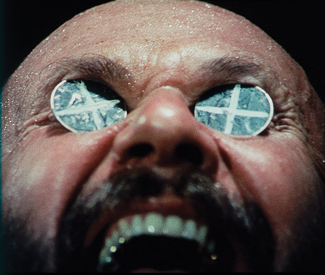
Horror fans will recognize the name of Wake in Fright star Donald Pleasence from John Carpenter’s 1978 Halloween — ’tis the season, after all, and that film happens to be screening at the Balboa Theatre Oct. 30-31. But the Carpenter movie du jour is 1988’s dystopian-future drama/true story They Live, which comes out on Blu-ray Nov. 6 — never before has Rowdy Piper’s mullet looked so crisply feathered, nor Meg Foster’s eyes so eerily seafoam, nor the black-and-white matte paintings depicting Los Angeles’ subliminally-enhanced landscape (“MARRY AND REPRODUCE”) so stark and startling.

There are some recycled extras, including Carpenter and Piper’s audio commentary, trailers, and a vintage press-kit reel featuring wrestling superstar Piper reflecting on his leading-man debut (“Ain’t a lot of difference between John Nada and Roddy Piper”). But there’s new stuff, too: separate interviews with Foster, Carpenter (who scoffs when he’s asked if he was tempted to edit down the film’s epic, legendary fight scene: “Fuck no!”), and co-star Keith David, who hilariously reminisces how he had to un-learn stage diction when he was hired for his first Carpenter film, 1982’s The Thing — and devotees of that film will want to rewind multiple times, just to hear David jokingly enunciate “You believe any of this voodoo bullshit, Blair?” in near-Shakespearean tones.

For behind-the-scenes junkies, there’s a featurette on the film’s “sights and sounds,” highlighted by an interview with veteran stunt coordinator Jeff Imada, who breaks down that iconic fight scene and reveals he played most of the aliens in the film (including the “What’s wrong, baby?” guy at the end). Just about the only thing missing from this Blu-ray package (kudos for the ridiculous cover art, Shout! Factory)? A pair of sunglasses. 

Wake in Fright opens Fri/26 in Bay Area theaters. Halloween screening info at www.cinemasf.com. They Live Blu-ray info at www.shoutfactory.com


Truffle tour

1

virginia@sfbg.com

FEAST 2012 Clearly, we can’t get enough chocolate. As chocolatiers continue to proliferate around the country, we are blessed with an endless wealth of fine sweets to choose from. Tirelessly sampling chocolates in every city and country I travel in, I’ve found standouts of all kinds. Some chocolatiers have perfected a certain truffle, others a pure bean-to-bar process. Many local greats produce treats in the city, like SF classic Recchiuti, single-minded Hooker’s Sweet Treats, playful Poco Dolce, and forward-thinking TCHO. Here are a few more, plus my notes on favorites, worldwide.

SAN FRANCISCO SHOPS

With a new Victorian-era mercantile on Haight Street, Buyer’s Best Friend has among the best gourmet food selections in the city in many categories – and it is slated to open its second shop in North Beach on October 26 (450 Columbus, SF). When it comes to chocolate, the shop often has samples from rarely-seen small chocolatiers from around the globe, for many of which they are the sole distributor. Start asking questions and you’ll discover a whole world of chocolates you never knew existed.

1740 Haight, SF. (415) 745-2130, www.bbfdirect.com

Eccentric and delightful, Noe Valley’s Chocolate Covered has long been the premier chocolate shop of SF, with a rare and varied selection. I lived directly across the street from it for six years — in dangerously close proximity.

4069 24th St., SF. (415) 641-8123, www.chocolatecoveredsf.com

Tiny but well-curated, Russian Hill’s shiny Candy Store has long been a source for rare and old fashioned chocolates and candies.

1507 Vallejo, SF. (415) 921-8000, www.thecandystoresf.com

BAY AREA CHOCOLATIERS

There’s chocolate and then there’s bean-to-bar chocolate. Whereas most chocolatiers start with already fermented cacao beans (yes, cacao beans go through fermentation), few oversee the entire process from sourcing to processing. Dandelion Chocolates was launched right here in SF by chocolate lovers whose experimentation with bean-to-bar as a hobby turned into a business. Purity of the cacao is their passion, so Dandelion makes chocolate with only bean and sugar, no cocoa butter.

Tasting their bars side-by-side is like sampling wines or coffee, with different nuances and terroir apparent in each. There’s the lush, malty notes of Rio Caribe, Venezuela (my favorite bar), bright citrus-strawberry expression in the Ambanja, Madagascar bar, and earthy, tannic notes from Elvesia, Dominican Republic. Already, Dandelion is easily one of the superior chocolates you’ll find in the Bay.

Visiting the company’s Dogpatch factory last month, I witnessed Dandelion’s entire process: roasting, cracking, sorting, winnowing, grinding, conching, tempering, molding, and packaging, all happening in one small space. Dandelion is moving to its new Mission location on Valencia (though it will keep its Dogpatch space), slated to be factory, tasting room, shop, and cafe all in one. Opening this month, it’s sure to be a hit. It’s inspiring to see passion lead to success — especially when your sweet tooth reaps the benefits.

740 Valencia, SF. (415) 349-0942, www.dandelionchocolate.com

Many artisan chocolatiers boast a couple of exceptional truffles, but none I’ve tried have the volume of Feve Artisan Chocolatier, formerly Au Coeur Des Chocolats, available in shops like Bi-Rite and on the company’s website. Owners Shawn and Kathryn Williams have traveled Europe extensively, visiting many of the world’s best chocolate makers. Besides artful, elegant, precise presentation, Shawn’s truffles succeed first and foremost in flavor.

Many chocolatiers promise flavors like curry or lemongrass or other excitement in their truffles, but often the flavor of truffles (at the standard, expensive $1.50–$3 a piece) is barely discernible or bland, leaving me disappointed, wishing I’d stuck with a straightforward piece of chocolate. Not so in Feve’s line of truffles, in which I struggle to name my favorite overall. There’s cherry-vanilla (dark chocolate and lemon ganache layered with cherry vanilla gelée), cardamom punchy with Scotch, sesame-vanilla crispy with praline, dreamy banana-caramel, pistachio-rosemary caramel with pistachio praline, and vivid passionfruit or yuzu. Each is exquisitely lush.

www.fevechocolates.com

MORE LOCAL FAVORITES

Chocolatier Blue’s truffles, served in its Berkeley shops are fresh and creative. Try the Ants on a Log, filled with celery seed, peanut butter, and currant, or the tart caramel apple or peanut brittle crunch with caramelized banana and creamy peanut butter.

www.chocolatierblue.com

Saratoga Chocolates’ Caramel Cin, a heart-shaped treat of dark chocolate oozing decadent cinnamon caramel.

www.saratogachocolates.com

Sixth Course Artisan Confections’ aromatic caramels, like rosemary, or sage and brown butter.

www.sixthcourse.com

Wine Country Chocolates’ Elvis truffle of peanut butter and banana ganache rules, while the cinnamon and clover honey oozes honey goodness.

www.winecountrychocolates.com

Maison Bouche’s Fleur de Sel is one of the Oakland producer’s elegant, French-spirited bars, a standout made using Brittany salt.

www.maisonbouche.com

NATIONAL FINDS

Alma Chocolates in Portland, Ore. makes an insanely good Thai peanut butter cup with ginger, Thai chile, lime, even red volcanic sea salt varieties. You can usually find it at Portland chocolate haven Cacao.

www.almachocolate.com

Antidote is a quality raw, NY-based bean-to-bar line made in Ecuador. It produces dark chocolate bars in flavors like banana-cayenne, lavender red salt, and almond fennel. Expect subtlety and a earth-like taste in each. Available locally at Buyer’s Best Friend.

www.antidotechoco.com

Chocolat Modern is a longtime New York favorite, making square “bistro bars” that are dark and filled with the tastes like banana and Cognac, pumpkin praline, apricot and Bas Armagnac, and zesty grapefruit. There’s a rotating selection available locally at The Candy Store.

store.chocolatmoderne.com

Responsible for some of the best local chocolates I’ve had from Los Angeles, Compartes creates dark chocolate truffles and bars, including the apricot and shichimi seven-spice chocolate bar ($8), and various truffles. Some of my favorites of these include smoked salt, peanut butter, and the pink peppercorn and Raspberry.

www.compartes.com

Fine & Raw is a Brooklyn-based raw chocolatier that creates treats with high dark chocolate content and cacao butter, managing to maintain creamy texture and flavor all the while. Its most interesting bars are its cacao and coconut, along with the lucuma and vanilla. Buy it in town at Buyer’s Best Friend.

www.fineandraw.com

Though I fear the healthy superfood label when it comes to pleasures like chocolate, Boise, Idaho-based Good Cacao creates “lemon ginger immunity” and coconut omega-3 bars that taste like a tropical vacation. Find it at Buyer’s Best Friend.

www.goodcacao.com

MarieBelle‘s elegant banana chocolate bar shines. The company is a New York favorite, with a Soho tea salon and cacao bar.

www.mariebelle.com

INTERNATIONAL TREATS

Dublin’s Cocoa Atelier makes the best chocolate I had in Ireland. It’s a chic outpost stocking drinking chocolate and elegant truffles that creates its delicacies using local specialties like pot still Irish whiskey.

www.cocoaatelier.ie

Coco Chocolate is my Edinburgh favorite, a darling shop focusing on handmade bars like its rose and black pepper, pink peppercorn and nutmeg, and a tropical-inflected lime and coconut. Coco creates invigorating flavors, embedded in dark chocolate.

www.cocochocolate.co.uk

Kopali Organics is marketed as vegan health food made by passionate founders who live off the grid in Costa Rica. Its fair trade dark chocolate-covered banana bites taste vivid and fresh, nothing at all like some dried, chocolate-covered fruits. Find it in San Francisco at Buyer’s Best Friend.

www.kopali.net

When in Bordeaux, don’t miss charming La Maison Darricau. The romantic shop sells chocolate and creative truffles made fresh daily, infused with flavors like wine-filled Médoc, basil, Szechuan pepper, curry-date, and an excellent blend of prune, almond paste, and Armagnac.

www.darricau.com

In London’s Borough Market, Rabot Estate is a rustic-hip shop with staff pouring cups of free dark hot chocolate and bars like chili with a lush Santa Lucia-grown dark chocolate.

www.rabotestate.com

Among the best chocolates I’ve had in the world are from Paul A. Young, one of the world’s best chocolatiers whose three London shops stock supreme examples of what fresh truffles and exotic bars should be. Go funky with Marmite truffles, or his herbaceous peppermint leaf. Whatever you do, when in London, don’t miss it. Young penned Adventures with Chocolate, a visually striking book that explores the ins and outs of chocolate making from the art of combining beans to yield the best flavor profiles, to making the perfect ganache. Primarily, it is a cookbook, utilizing chocolate in recipes from boozy drinks or teas to savory dishes and desserts.

www.paulayoung.co.uk

Subscribe to Virgina’s twice-monthly newsletter, The Perfect Spot, www.theperfectspotsf.com


\

Twin stars

0

arts@sfbg.com

DANCE It doesn’t happen often, but when it does, it makes you wish that it could go on forever. Such was the case of a heartbreaking pas de deux toward the end of Alonzo King’s newest work, Constellation. Created by and for LINES Ballet’s senior ballerina Meredith Webster and Ricardo Zayas, and set to Handel’s plangent “Verdi prati,” the two dancers encircled each other, locked limbs, and pulled apart only to be drawn into each others’ spheres again. They struggled with each other and within themselves only to separate in the end. I kept thinking of Aristophanes’ definition of love as the attempt by the two halves of the original human, after having been split apart by a jealous God, to become one again.

Though this extraordinary duet was the high point of the evening-length work celebrating the company’s 30th anniversary, Constellation is a major achievement of King’s distinguished career of imaginative, thoughtful, and skilled dance making. The work abounds with mesmerizing small ensembles and rich imagery though the unisons for everyone are still problematic.

As is his want, King drew out of his dancers small-scale but resonating encounters that don’t necessarily add up — except in the way that a collector’s decisions impose coherence on treasures, whether they be Monets, pebbles, or martini shakers. Constellation, however, has more of a through line than I remember seeing in other King choreographies. Weaving through the piece was the figure of Webster, apparently on a search. She first appeared out of the dark, stepping through Jim Campbell’s curtain of light bulbs. Sitting on Ricardo Zayas’ foot, she valiantly tried to pull herself up on his leg; then, she broke up a duet between David Harvey and Michael Montgomery. In between she was carried and variously supported. Yet at the end, she was spent one, left on the floor. If Webster had a counterpart, it would be in the underused Keelan Whitmore, who often appeared an outside observer.

King plugged deeply into the individuality of these so different dancers who yet looked as if poured from one mold. The trio of Montgomery (who seems to have something of a comedian inside him), Zachary Tang, and Whitmore attacked a storm of staccato phrases as if they had hot coals under their feet. Though propelled by an impetus that seemed to suck Courtney Henry, Ashley Jackson, Yujin Kim, and Caroline Rocher upstage, their responses to the thrust could not have been more different.

In a hugely effective solo, Henry, dressed in a simple black leotard, stepped out of billowing fog (courtesy of lighting design Axel Morgenthaler), folding and stretching her limbs to the ends of the universe, until she gradually pulled the other dancers from the wings. In the many duets, the dancers seemed to morph into creatures sometimes outside themselves. At one point, I was pretty sure I had seen a multi-limbed something out of Hieronymus Bosch.

The first act ended with another stunner, a duet for LINES’ newest dancers, Kim and Tang. The exquisite Kim, long-limbed yet with a voracious appetite for space, slithered around Tang — muscular, yet highly expressive — and into his arms in what looked like a lover’s spat, perhaps inspired by Vivaldi’s “Sposa son disprezzata.”

Constellation is one of King’s most musically astute works. The collage of Baroque arias, Eastern chants, and original compositions worked exceptionally well. However, how Arvo Pärt’s over-exposed Für Alina made it into this distinguished selection remains something a puzzlement.

To have mezzo-soprano Maya Lahyani — in one of Colleen Quen’s theatrical concoctions and accompanied by her sensitive pianist Hadley McCarroll — perform was a special gift not just for the audience but also for the dancers, who responded with such hunger to the live music.

Constellation was inspired by Jim Campbell’s light sculpture Exploded Views, in which hundreds of flickering LED lights create a sense of stasis as well as life. Fascinating, it looked like television snow being animated by moving silhouettes. Unfortunately, Campbell’s translation of the concept to the stage didn’t quite work: black shapes, perhaps fluttering birds, behind the light curtain; rolling lit balls; light boards; and Wheelan wrapped in Joseph’s dreamcoat (of light bulbs). *

ALONZO KING LINES BALLET

Wed/24-Thu/25, 7:30pm; Fri/26-Sat/27, 8pm; Sun/28, 5pm, $30-65

Yerba Buena Center for the Arts Theater

700 Howard, SF

www.ybca.org


Live Shots: Crystal Castles at the Fox

0

Arriving early to the Crystal Castles show Monday at the Fox Theater, discovering that one opener, HEALTH, had canceled its performance, and that the photo pit would be off limits for the other, Kontravoid, I was left with some unexpected time on my hands. Time that I spent trying to recall where I had seen the eerily familiar image hung over the stage, of a veiled figure cradling a fragile, vulnerable looking man in their arms.

Presented without context, it could be potentially tenderly romantic or gothically morbid, an ambiguity which seemed to typically invite the sort of let-me-Google-that mystery that recent bands have found so chic.*

But all that gets into a realm of meaning that is largely irrelevant here, because that’s not really what was on display at the Fox last night. Ask someone about a Crystal Castles show and they will mostly recount the spectacle. A woman walked out into the crowd supported by the hands of her fans, in a messianic rock move, or alternately crowd surfed in their arms.

All the while, she was performing with a near epileptic frenzy, mouth agape, spitting words that were largely drowned out by the barrage of beats produced onstage by her partner and a tour drummer. If singer Alice Glass were ever actually sent into a fit by the painful amount of strobes accompanying the show**, it is likely that her cries would go unnoticed.

The tradeoff with such pounding intensity is that there isn’t a whole lot of variety. The music drives and drives, largely due to the production of Ethan Kath, but rarely opens up (“Not in Love” a track featuring clear vocals from the Cure’s Robert Smith remains the exception in this regard) as Glass’s primary mode is a wrenching scream. New tracks, including one instrumental that had both of the main members at the controls, only seem to further the band’s hard, caustic edge.

I imagine that there are few casual Crystal Castles fans, and only two extreme ways to appreciate them: either in a drunken fury or with a finger twitching, phone tapping obsessiveness***. When I went home I immediately opened my laptop, to find that picture, and to look up the new songs.

* And perhaps Crystal Castles more than any other. It is after all – as anyone with a search engine could tell you – a band that emerged so rapidly from the internet underground that even the singer was late to find out about it.

** “Shoot between the beats,” the band’s handler told the photographers as he lead us to the side of the stage. “Otherwise you won’t get anything.” Quite helpful advice, really. He could be seen later in the show at the front of the pit, pulling Alice off of the audience, and he promised to give us a heads up if the singer was about to throw a mic stand in out general direction.

*** Remember watching Lost and then immediately going online to talk about the smoke monster or the map in the hatch? This is the musical equivalent of that.

Agnos and other progressives rally for Olague

72

A string of prominent local progressive leaders today offered their support to Sup. Christina Olague – including former Mayor Art Agnos, who announced his endorsement of her in the District 5 supervisorial race – in a rally on the steps of City Hall.

In the process, many voiced a need to broaden and redefine progressivism as valuing independence and diversity of perspective more than just stands on specific issues, traits they said Olague embodies. But more than anything, the rally seemed aimed to consolidating progressive support around Olague as the best hope to beat moderate London Breed in one of the city’s most progressive districts.

“District 5 is often referred to as the most progressive of San Francisco’s supervisorial districts. It includes a diversity of views and opinions on how to meet the challenges all our communities face,” Agnos said. “And it takes a supervisor who know how to listen, to hear and respect those differing views, while working for a resolution that moves us forward.”

Sup. David Campos made only a veiled, indirect reference to the problems some progressives (himself among them) have had with some of Olague’s stands since she was appointed to the job by Mayor Ed Lee, but he said, “Those of us who have worked with her know what’s in her heart…She has been the independent person we always knew she would be and I’m proud to stand with her today.”

Several speakers made reference to Olague’s working class roots, her perspective as a Latina and member of the LGBT community, and her history of progressive activism in San Francisco. Cleve Jones, Gabriel Haaland, Sandra Fewer, and Sup. Eric Mar were among those there to offer support.

“It was a big give by the Mayor’s Office to appoint someone who wasn’t always going to agree with him,” said Sup. Jane Kim, but that was about the only positive reference to the Mayor’s Office, which turned on Olague after she voted to reinstate Sheriff Ross Mirkarimi, setting the stage for her return to the progressive fold.

“To be a progressive is to share an ideology that understands and believes that the best decisions for our city require the participation of all of us, no matter who we are, where we live, or how big our checkbook is,” Agnos said. “As with so many who have endorsed her, that progressive label says she is a politician who understand this fundamental truth.”

SF Rising board member Alicia Garza kicked off the rally by saying, “We are here to set the record straight that the progressive movement is alive and well in San Francisco.” Later, she praise Olague’s history as a community organizer, saying that, “She understands deeply what it means to empower communities.”

Sup. John Avalos, another supervisor who hasn’t always agreed with Olague in the last nine months and just endorsed last week, commended her for the courage it takes to assert her values instead of simply supporting the mayor who appointed her. He said Olague recognizes that, “We live in a city of extremes, with extreme differences between the haves and have-nots.”

Another new progressive endorsement, coming in the wake of one-time progressive favorite Julian Davis’ troubles, was Quintin Mecke, who said he first worked with Olague on anti-gentrification issues 13 years ago. “I trusted her work then and I trust her work today,” he said. Activist Lisa Feldstein – like Mecke, a former D5 candidate – echoed the sentiment.

“I’m here because I really trust Christina and want to fight for her,” Feldstein said. “She comes from a place of integrity and compassion.”

When Olague finally took the podium, she said, “I am humbled by the heartfelt words of my colleagues.” She also tried to help define progressivism in San Francisco, said that it “isn’t about a cult of personality.”

Instead, she said it’s about working to building people’s capacity to create an inclusive and just city. “It’s about building a movement that can weather any storm,” Olague said, closing by saying she’ll ensure “the progressive voice is always strong in District 5 and I’ll keep working to make it heard until I’m blue in the face…I am the most progressive person in the race.”

Crucial sounds

0

MUSIC Can the declining sales from physical albums ever be replaced by digital music apps and services? Can an independent artist make a decent living from services such as Pandora radio, BAMM.TV, or SoundCloud? Will the starving musician finally get a good meal?

These questions may be answerless for now, but they maintained a heavy presence at the SF Musictech Summit hosted by the Hotel Kabuki — a semiannual conference dedicated to establishing a network among entrepreneurs, developers, record industry figures, and musicians in order to promote digital music business and find solutions for the issues plaguing the modern music industry.

Last week’s installment of the summit featured five talks — in panels with labels like “How Technology Destroyed the Music Industry” and “Artist Revenue Streams.”

It also brought some star power. Actor-musician Jared Leto’s interest with this budding industry brought him to the summit too. And despite the formal nature of the occasion, the 30 Seconds to Mars front person was besieged by attendees eager to get his take on the event, and his autograph. He told me that he’s “curious as to what solutions are being presented.”

But as the summit carried on, it became very became apparent that there are perhaps too many of these solutions being offered. In one of the early morning talks entitled “Artist Tools” moderator Hisham Dahud from Hypebot and Fame House kicked off the conversation by mentioning many of the new ways bands can distribute and promote their music and interact with their fans but also opined that “with new tools comes new responsibilities.”

http://www.youtube.com/watch?v=f7EaMxpKZZU

These new tools were well represented by David Dufresne of Bandzoogle, which designs web pages for bands, Matt Mason of file distributor BitTorrent, and David Haynes of the online audio platform SoundCloud. CEO of Global Digital Impact Taynah Reis and music industry veteran and Incubus manager Steve Rennie rounded out the panel.

During the discussion, Rennie’s stance was welcoming of the technological development, but later, when I asked him if the new digital music business could provide substantial income for the artist, he said, “I sure hope so. The fact is that more people are listening to music than ever but they are doing it different ways, including listening without buying…as people move to other formats like digital downloads and streaming services, we need more people to get comfortable with the idea that music has value and is worth paying for…We need to convince people that their favorite music is worth buying just as much as the beer they’ll spend $10 on at a concert or sporting event.”

The motivation and excitement to transform nearly every aspect of the music business was palpable at the summit. Elevator pitches were as ubiquitous as iPhones and Macbooks. However the fresh idealism was notably absent at the “Artist Revenue Streams” talk where musician Erin McKeown took center stage detailing the sobering situation independent musicians face, explaining that some obvious solutions aren’t so great

“Everyone keeps telling me to tour but the reality is that live performance revenue gets mostly eaten up by the costs and not to mention it’s also extremely taxing on my health”

But more importantly, McKeown emphatically addressed the one crucial issue that was sorely lacking attention throughout the conference: how are musicians suppose to keep up with and derive income from the rapidly evolving environment of music technology? Others on the panel brought up the fact that a lot of artists are unaware of nonprofits such as SoundExchange — an organization with the main goal of compensating artists for their royalties.

The Internet has been lauded as the great democratizer of this generation, and the adage was especially poignant for this specific realm of the digital world. Cellist and composer Zoë Keating, who spoke at the “Artists, Entrepreneurs & Technology,” panel expressed that digital music business caused her to be optimistic and it’s a more level playing field that’s “better for indie artists.” Keating has posted her 2011 income streams on her Tumblr to give her fans a glimpse of the financial situation her and other independent artists are grappling with.

No one seemed more interested in seeing the old music business vanquished than TuneCore founder (and former CEO) Jeff Price, who emphatically declared, “Artists never made any fucking money! What fucking world are you living in?!…The music industry is not collapsing, the traditional music industry is collapsing!” *


SF Stories: Mattilda Sycamore Bernstein

1

San Francisco was where I first learned to gasp and grasp at the possibilities of radical queer self-invention and communal care. This was 1992. I was 19: childhood meant suffocation, college was pointless shit. All around me, people were dying of AIDS and drug addiction and suicide, but finally I was finding other queer incest survivors, whores, vegans, runaways, anarchists, dropouts, drug addicts, sluts, activists and freaks trying not to disappear. We were scarred and broken and brutalized but determined to create something else, something we could live with, something we could call home or healing or even just help, I need help here, can you help?

Of course, we were not the first wave of queer migration to San Francisco in search of ways to cope and hope, visions of lust and love not bounded by convention, brazen challenges to the violence of status quo normalcy. But learning how to dream is always a difficult process. It’s what we needed one another for.

And yet, there is a certain kind of smugness in queer San Francisco, this sense that we have arrived, that we’ve done our work, that we’ve created something beyond the twin traps of gay assimilation and straight normalcy. The problem is that often a sophisticated rhetoric camouflages the same tired patterns of abuse and neglect, and this hurts more when it comes from those you believe in, right? I know that it has hurt me more.
Let me tell you about the friend who will always be there, no matter what. We met when I was 19: we held one another and broke apart walls. We tried to share everything about our lives, and then when we ran out of things to disclose we dug deeper. This relationship lasted for 16 years, but I lost it all when I told this friend he was the most important person in my life. I told him I felt confident about the longevity of our relationship, about our intimacy and our trust, but I never felt secure because of the five-year period when he lied about everything due to a disastrous alcoholism, a five-year period he kept telling me he’d gotten past. It’s true that he wasn’t drinking anymore. When I told him I still didn’t feel secure, I thought he would ask me what he could do, but instead he became enraged, and our relationship was over.

This is just one example of the gap between rhetoric and reality; there are too many. When I arrived in San Francisco in 1992, the city sheltered outsider queer cultures unimaginable in most places. Twenty years of gentrification, homogenization, and assimilation later, and yes, these cultures still exist in some form, even if they have been decimated in both density and imagination. Perhaps what’s changed the most for me is that now I need to live elsewhere in order to dream.

Mattilda Bernstein Sycamore (mattildabernsteinsycamore.com) is most recently the editor of Why Are Faggots So Afraid of Faggots?: Flaming Challenges to Masculinity, Objectification, and the Desire to Conform. Mattilda’s next book, The End of San Francisco, will be out in April 2013 from City Lights—it might break your heart.

UP Festival will locate urban engineering ideas within the best of the SF arts scene

0

Technology-driven “tactical urbanism” will be on display Sat/20 at the Urban Prototyping (UP) Festival. Presented by the Gray Area Foundation for the Arts, the Intersection for the Arts, Rebar, and global design firm IDEO, the UP Festival will feature over 20 projects whose creators hope will be at the forefront of urban innovation. The various projects will be showcased on the streets and in parking lots in a three-block zone centered on the corner of 5th Street and Mission, and soundtracked by a rather stellar lineup of local theater, live music, and DJs. The festival promises to be an explosion of DIY tech meets DIY civic engagement meets SF art scene.

Each digitized urban mashup venture presented will essentially be a miniature replica of the desired development. The projects will include public urinals, reimagined urban gardens, and glowing crosswalks. In addition, one particular display that caught our eye entitled “Faces,” is a facial recognition plan that takes pictures of passing pedestrians and projects them on a nearby wall. Scary? Cool?

Hip-hop collective Felonius performs with theater group Campo Santo this weekend

Expect to see an array of some the best entertainment in the Bay, too. Hot Pocket, the Latin-funk ensemble comprised of Bayonics members will perform, along with Jazz Mafia and a host of other live music groups. Festival goers will get the privilege of a performance by Intersection for the Art’s resident theater company Campo Santo who collaborate on a piece with hip-hop collective Felonius. The GAFTA stage will host DJs from Haceteria’s Tristes Tropiques to Honey Sound System’s DJ P-Play, latter doing a set with visuals by Gabriel Dunne. Kicking off the festivities will be a live graffiti battle, for which artists like Ricardo “Apex” Richey and Jan Wayne Swayze will spray up works of art as you watch (don’t get too close unless you dig aerosol-head.)

UP Festival Expo

Sat/20, free

Mint and Hallidie Plazas

5th St. between Mission and Market, SF

sf.urbanprototyping.org

Drunks, drugs, kung fu, and rock ‘n’ roll: just another week at the movies

0

This week, get thee to the Roxie for “Not Necessarily Noir III” (Dennis Harvey’s preview here), or the wind-whipped moors for Andrea Arnold’s brutal new Wuthering Heights (my chat with Arnold here). Other new stuff we haven’t reviewed yet: the not-screened-for-critics-because-let’s-face-it-these-movies-are-critic-proof Paranormal Activity 4, and Tyler Perry’s first Madea-free enterprise in some time, Alex Cross.

Read on for more new reviews!

Bel Borba Aqui “The People’s Picasso” and “Brazil’s Pied Piper of Street Art” are both apt descriptions of veteran artist Bel Borba, who has spent decades bringing color and imagination to the streets of Salvador — his seaside hometown, and a place already graced with the nickname “Brazil’s Capital of Happiness.” It’s not a stretch to imagine that Borba’s commitment to public art (a giant Christmas tree made of plastic Coke bottles, a rhinoceros sculpture crafted from old boat planks, hundreds of large-scale mosaics, even a painted airplane) has done its share to lift spirits. Bel Borba Aqui isn’t the sort of doc to delve into its mustachioed subject’s history or personal life (despite a few angry cell phone conversations randomly captured along the way); instead, it’s much like Borba himself — freewheeling and spontaneous, and most alive when it’s showing art being created. Great soundtrack, too. (1:34) Roxie. (Cheryl Eddy)

http://www.youtube.com/watch?v=d-SQ0pgjXm0

Fat Kid Rules the World It really does suck to be Troy (Jacob Wysocki from 2011’s Terri). An XXL-sized high schooler, he’s invisible to his peers, derided by his little brother (Dylan Arnold), and has lived in general domestic misery since the death of his beloved mother under the heavy-handed rule of his well-meaning but humorless ex-military dad (Billy Campbell). His only friends are online gamers, his only girlfriends the imaginary kind. But all that begins to change when chance throws him across the path of notorious local hellraiser Marcus (Matt O’Leary), who’s been expelled from school, has left the band he fronts, and is equal parts rebel hero to druggy, lyin’ mess. But he randomly decrees Troy is cool, and his new drummer. Even if he’s just being used, Troy’s world is headed for some big changes. Actor Matthew Lillard’s feature directorial debut, based on K.L. Going’s graphic novel, is familiar stuff in outline but a delight in execution, as it trades the usual teen-comedy crudities (a few gratuitous joke fantasy sequences aside) for something more heartfelt and restrained, while still funny. O’Leary from last year’s overlooked Natural Selection is flamboyantly terrific, while on the opposite end of the acting scale Campbell makes repressed emotion count for a lot — he has one wordless moment at a hospital that just might bring you to the tears his character refuses to spill. (1:38) (Dennis Harvey)

The House I Live In Much like he did in 2005’s Why We Fight, filmmaker Eugene Jarecki identifies a Big Issue (in that film, the Iraq War) and strips it down, tracing all of the history leading up to the current crisis point. Here, he takes on America’s “war on drugs,” which I put quotes around not just because it was a phrase spoken by Nixon and Reagan, but also because — as The House I Live In ruthlessly exposes — it’s been a failure, a sham, since its origins in the late 1960s. Framing his investigation with the personal story of his family’s housekeeper — whose dedication to the Jarecki family meant that she was absent when her own son turned to drugs — and enfolding a diverse array of interviews (a sympathetic prison guard, addicts and their families, The Wire‘s David Simon) and locations (New York City, Sioux City), Jarecki has created an eye-opening film. Particularly well-explained are segments on how drug laws correlate directly to race and class, and how the prison-industrial complex has played a part in making sure those laws remain as strict as possible. (1:48)  (Cheryl Eddy)

http://www.youtube.com/watch?v=i1vOw9ykpQk

Middle of Nowhere All the reasons why movie publicist turned filmmaker Ava DuVernay scored the best director award at the Sundance Film Festival are up here on the screen. Taking on the emotionally charged yet rarely attempted challenge of picturing the life of the loved one left behind by the incarcerated, DuVernay furthers the cause of telling African American stories — she founded AaFFRM (African-American Film Festival Releasing Movement) and made her directorial debut with 2008 LA hip-hop doc This Is The Life — with Middle of Nowhere. Medical student Ruby (the compelling Emayatzy Corinealdi) appears to have a bright future ahead of her, when her husband Derek (Omari Hardwick) makes some bad choices and is tossed into maximum security prison for eight long years. She swears she’ll wait for him, putting her dreams aside, making the long bus ride out to visit him regularly, and settling for any nursing shift she can. How will she scrape the money together to pay the lawyer for Derek’s parole hearing, cope with the grinding disapproval of her mother (Lorraine Toussaint), support the increasingly hardened and altered Derek, and most importantly, discover a new path for herself? All are handled with rare empathy and compassion by DuVernay, who is rewarded for her care by her cast’s powerful performances. Our reward might be found amid the everyday poetry of Ruby’s life, while she wraps her hair for bed, watches Ali: Fear Eats the Soul (1974), and fantasizes about love in a life interrupted. (1:41) (Kimberly Chun)

http://www.youtube.com/watch?v=80_L_LsOexE

Simon and the Oaks Despite being gripping or heartwarming at times, Simon and the Oaks, based on the novel by Marianne Fredricksson, fails to cohere, serving as another reminder of the perennial dilemma of converting literature to film. It tells the story of Simon (Bill Skarsgard — son of Stellan, younger brother of Alexander), a boy coming of age in World War II Sweden. He befriends Isak, son of a Jewish bookkeeper who fled Nazi Germany, and their families become close when Isak’s father nurtures Simon’s love of books and Isak begins to heal his emotional scars by diving into carpentry work with Simon’s father. The moments of true human compassion between the two families begin to falter as the story jumps around to follow Simon’s search for love and identity. More missteps: Simon’s discovery of classical music is conveyed via a series of “artsy” montages, and his brief affair with a fiery Auschwitz victim — problematic, to say the least. (2:02) (Molly Champlin)

http://www.youtube.com/watch?v=QtT1cKo4RX4

Smashed A heartbreaking lead performance from Mary Elizabeth Winstead drives this tale of a marriage tested when one partner decides to get sober. And it’s time: after an epic night of boozing, first-grade teacher Kate (Winstead) pukes in front of her class, then lies and says she’s pregnant, not anticipating the pushy delight of the school’s principal (Megan Mullally). Plus, Kate’s gotten into the habit of waking up in strange, unsafe places, not really remembering how she stumbled there in the first place. Husband Charlie (Breaking Bad‘s Aaron Paul) sees no reason to give up partying; he’s a music blogger whose “office” is the home his wealthy parents bought for the couple, and his problem isn’t quite as unmanageable as hers (at least, we never see him peeing in a convenience store). After Kate joins AA, she realizes she’ll have to face her problems rather than drinking them away — a potentially clichéd character arc that’s handled without flashy hysterics by director and co-writer (with Susan Burke) James Ponsoldt, and conveyed with grace and pain by Winstead —an actor probably best-known for playing Ramona Flowers in 2010’s Scott Pilgrim vs. the World, but just now revealing the scope of her talent. (1:25) (Cheryl Eddy)

http://www.youtube.com/watch?v=_LSX_UH0F9g

Tai Chi Zero A little boy dubbed “the Freak” for the curious, horn-like growth on his forehead grows up to be Lu Chan (Jaydan Yuan), who becomes a near-supernatural martial arts machine when the horn is punched, panic-button style. But activating the “Three Blossoms of the Crown,” as it’s called, takes a toll on the boy’s health, so he’s sent to the isolated Chen Village to learn their signature moves, though he’s repeatedly told “Chen-style kung fu is not taught to outsiders!” Stephen Fung’s lighthearted direction (characters are introduced with bios about the actors who play them, even the split-second cameos: “Andrew Lau, director of the Infernal Affairs trilogy”), affinity for steampunk and whimsy, engagement of Sammo Hung as action director, and embracing of the absurd (the film’s most-repeated line: “What the hell?”) all bring interest to this otherwise pretty predictable kung-fu tale, with its old-ways-versus-Western-ways conflict and misfit hero. Still, there’s something to be said for batshit insanity. (Be warned, though: Tai Chi Zero is the first in a series, which means one thing: it ends on a cliffhanger. Argh.) (1:34) (Cheryl Eddy)

http://www.youtube.com/watch?v=NWIAjsf9Xq0

The Waiting Room Twenty-four hours in the uneasy limbo of an ER waiting room sounds like a grueling, maddening experience, and that’s certainly a theme in this day-in-the-life film. But local documentarian Peter Nicks has crafted an absorbing portrait of emergency public health care, as experienced by patients and their families at Oakland’s Highland Hospital and as practiced by the staff there. Other themes: no insurance, no primary care physician, and an emergency room being used as a medical facility of first, last, and only resort. Nicks has found a rich array of subjects to tell this complicated story: An anxious, unemployed father sits at his little girl’s bedside. Staffers stare at a computer screen, tracking a flood of admissions and the scarce commodity of available beds. A doctor contemplates the ethics of discharging a homeless addict for the sake of freeing up one of them. And a humorous, ultra-competent triage nurse fields an endless queue of arrivals with humanity and steady nerves. (1:21) (Lynn Rapoport)

Party Radar: Rrose, Osunlade, Daniel Wang, Odyssey, more

1

First of all, what the heck are you gonna be for Halloweeeeen?

I’m vacillating between being these amazing but creepy speakers made of artificial muscles — so many of my interests intersecting? — and DJ Paris Hilton (I’ll just stand there like a stunned gazelle with one headphone, and have someone pop up from under my minidress to fiddle with a mixer). In any case, let’s all agree that this can be our Halloween–costume-choosing retro kiki house theme song:

Second, I screwed up someting major in my Super Ego column in the paper this week: The wonderful Odyssey party is actually on FRIDAY (not Saturday as your wasted columnist stupidly put forth — hey at least I’m cute in the dark!) Come and spank me on the dancefloor, loves, it’s gonna be a great one.

Here are more parties.


>>OSUNLADE

Beautifully hypnotic global-tribal, jazzy-deep house from the spiritual master — he’ll be at another installment of Marques Wyatt’s Deep parties, IMHO the most excitingly diverse experiences in SF.

Fri/19, 10pm-4am, $15-$20. Mighty, 119 Utah, SF. www.mighty119.com


>>PEACHES

It’s time to re-up your degree in the teaches of Peaches. Berlin’s bad mama-jamma of electroclash performance art is back for a rare appearance, celebrating the 17th anniversary of local art-tech-music powerhouse Blasthaus.

Fri/19, 9pm, $22.50. Mezzanine, 444 Jessie, SF. www.blasthaus.com


>>RROSE

The mindbending deep techno entity known as Rrose obliterated pretty much everyone when she played here at Public Works several months ago — c’est la vie! Joining Rrose in the blessedly banging, re-abilified Club Six basement is Sensate Focus, another cerebellum twirler. I’m kind of scared, the good scared.

Sat/20, 10pm-late, $15-$20. Club Six, 101 Sixth St., SF. www.clubsix1.com


>>DANIEL WANG

He used to live here, now he lives in Berlin — the US is less cute without him 🙁 but he will be bringing his deliciously breezy underground house magic to Honey Soundsystem 🙂 

Sun/21, 10pm, $5. Holy Cow, 1535 Folsom, SF. hnysndsystm.tumblr.com

Live Shots: David Byrne and St. Vincent at the Orpheum

2

David Byrne opened his show with St. Vincent on Monday night by thanking the Orpheum for breaking its run of The Lion King for their performance. The David Byrne-St. Vincent show wasn’t too far off from the theater’s regular selection though. The eight piece brass band doing choreographed marching behind the duo had a theatrical effect, feeling somewhere between a Stop Making Sense-themed halftime show and an instrument-bearing ensemble in West Side Story.

The 60-year-old musical giant and 30-year-old indie star brought out a diverse crowd. Byrne was carrying on the legacy of art-school punk-turned-pop band, the Talking Heads, but some in the crowd seemed to be wondering “who is this pretty young talent helping espouse his eccentric philosophies?” The scalpers outside were only selling Byrne’s name on the tickets and there was an overabundant amount of “we love you David” cries from the audience.


You’d figure, though, that St. Vincent’s three studio albums of incredibly independent and experimental style, projects with diverse artists including Andrew Bird and Kid Cudi, and wide eyes on the cover of Spin magazine might have tipped these guys off as to who she is. Though St. Vincent did call Byrne at one point, “the resident preacher of the evening,” it was clear they were in equal limelight.

The two took turns performing songs from their collaboration, Love This Giant, as well as their own numbers, occasionally fitting their voices in for the harmony. The songs they picked from their respective catalogs carried themes from their joint album, including Byrne’s dilemma of trying to be human in modern America and St. Vincent’s struggles for freedom.

Though at times incredibly personal, the show had a broader message to its audience; one about people coming together despite their differences to figure out the strangeness of life. This was clearly illuminated in Byrne’s lines, “maybe someday we can stand together/ not afraid of what our eyes may see/ maybe someday I’ll understand it better/weird things inside of me.” Byrne even mimed some of these lyrics from “I Should Watch TV” so you couldn’t miss the point.

http://www.youtube.com/watch?v=DWZpX5dQYkA

Everything about the show fit together like the perfect duet: each one had a distinct personality when you tried to focus on them but usually they flowed together seamlessly. When St. Vincent dropped her voice to fit with Byrne on the album and they gave it the egocentric sounding title, Love This Giant, (a reference to Byrne) a lot of the indie fans might have panicked that she would be overshadowed, but in fact this created really great tension.

It allowed St. Vincent to show off her tough core, like when she stood alone, legs apart, rocking on guitar and belting a cry for help in the song “Marrow” from her album Actor. Meanwhile, the band kept the energy up by standing behind her in two opposing lines, bobbing like the Sharks and Jets preparing to rumble.

Surprisingly, the two didn’t use their collaboration to develop from each other musically in the experimental way that Byrne has worked with others, like with Brian Eno. Aside from the brass band, which functioned more as a fun, symbolic decision, we saw the two employing a lot of styles from their previous work. It seemed like they knew already what they wanted their relationship to be: two people standing together despite their differences. And they pulled it off well (thankfully, without a hint of sexual tension).

In this nature, the two swapped soul-sharing moments throughout the show. It began with St. Vincent’s cries for support among flashing lights and dramatic staging while Byrne’s numbers were much more casual, with the musicians lounging around the stage.

As St. Vincent stepped into a more confident role later in the evening, Byrne began to open up with his self-mocking, “Lazy.” By the end though, both performers emerged from their calls to action and got the house on its feet for a small dance party to a few Talking Heads and St. Vincent solo hits, a rare treat in the formal theater setting.


All photos by Bennett Cox.

Win tickets to see The Foreign Exchange, Sat/20

0

Earshot Entertainment presents a night of some of the finest R&B, soul and progressive hip-hop with the hardest working band: the Grammy-nominated duo The Foreign Exchange along with Zo!, Sy Smith, Jeanne Jolly with live band, and DJs Platurn & B Bravo.

This promises to be one of the most-anticipated club performances of 2012, spotlighting cross-cultural global fusion and bringing rhythmic unity to a diverse audience, and is a must-attend event for fans of Eric Roberson, Little Dragon, Bilal, and the like.

Consisting of rapper/singer/songwriter Phonte and producer Nicolay, The Foreign Exchange came together via the online hip-hop community Okayplayer.com in 2002. After trading files through instant messenger for over a year, Nicolay (living in his native Holland at the time) and Phonte (a Raleigh, NC resident) completed their debut album Connected before they ever met each other in person and was praised by legendary DJ’s such as Jazzy Jeff, King Britt, and DJ Spinna for its inventive mix of hip-hop, R&B, and electronica.

Get your tickets to this event here. To win a pair of tickets, email your full name to sfbgpromos@sfbg.com with “Foreign Exchange” in the subject. Two winners will receive email confirmations at noon on Fri/20.

Saturday, October 20 at 10:30pm (9pm doors) @ Mezzanine, 444 Jessie, SF | $25 adv.

Live Shots: ABADA-Capoeira’s “The Spirit of Brazil”

0

Sparking machetes. Lots of them, clanking against each other, as the dancers holding them ran in circles.

I’ll be honest, sitting in the front row was slightly intimidating, and also rather exhilarating! The ABADÁ-Capoeira dance troupe, plus special guests from as far Switzerland, filled the stage with pure energy, in rehearsal for the troupe’s “Spirit of Brazil” show, running Thu/18-Sun/20. 

One of the dances tells the story of an ancient church in Brazil, where people of all religions went to be blessed. It was a moody and beautiful piece. There’s live music, soulful singing by the musicians and the dancers, and, yes, seriously speedy dance moves involving very large, sharp knives. It’s primal, wild, and filled with history. Go see it — just make sure your eyebrows don’t get shaved off!

ABADÁ-Capoeira San Francisco’s “The Spirit of Brazil”
Thur/18-Sat/20, 7pm, $23
Sun, October 21, 3pm
ODC Theater
3153 17th St., SF
www.odcdance.org