History

To thrill is divine

0

arts@sfbg.com

THEATER It’s been a different kind of thrill down at the Hypnodrome as Thrillpeddlers enters the 11th month of extensions for its runaway smash hit, The Cockettes’ musical Pearls Over Shanghai. One hundred performances strong (as of May 1) and with no end in sight, Thrillpeddlers has slyly redefined its brand of thrills to embrace a wholly different genre besides the Grand Guignol revivalism for which it is best known; setting aside its usual quotient of twisted naturalism and splattered gore for the rambunctious, over-the-top glitter and glam of Theatre of the Ridiculous.

But the two art forms are not entirely unrelated. After all, a staple of Grand Guignol was the steamy sex farce, a fitting description for the ecstatic nudity, cross-dressing, masturbation, and defloration running wild throughout Pearls. And just as the endangered-species quality of Grand Guignol first prompted Thrillpeddlers artistic director Russell Blackwood to begin mounting performances of it in 1991, so too did the precarious posterity of Theatre of the Ridiculous spark a similar interest.

“I didn’t want it to become a footnote in theatre history, or just something you read about,” Blackwood explains. “It turned me on — the fact that it was as marginalized and as conceivably to be forgotten in the way I was concerned Grand Guignol might be.” In 2008, Thrillpeddlers took the slapstick scripts of Theodora, She-Bitch of Byzantium by Charles Busch and Charles Ludlum’s Jack and the Beanstalk and mounted its first “Theatre of the Ridiculous” festival, eventually taking the whole show on the road — along with an hour-long rendition of Pearls Over Shanghai — to the HOWL festival in New York City’s East Village.

“It went really, really great,” Blackwood said. “We had two full separate bills that played in repertory with each other. And afterward, seeing a videotape of that made me realize just what to do with Pearls.”

Of course it wasn’t just Blackwood’s vision that made the Pearls revival possible; it was also the ongoing collaboration with musical director and original Cockette Scrumbly Koldewyn, who painstakingly brought together songs and scripting from multiple versions of the show despite having scarce archived material — save memories and a few recordings — to work from. Koldewyn also has been an instrumental force behind the upcoming revival of Hot Greeks, the only other “book” musical from the original Cockettes repertoire, (opening at the Hypnodrome May 2). He also accompanies the shows nightly on the piano.

One particularly interesting aspect about Pearls is the way it has brought together multiple generations worth of queer performance fixtures: the original founder of Theatre Rhinoceros, Lanny Baugniet, who performs an opium freakout clad in skintight silver lamé; Jef Valentine, whose Madame Gin Sling drips with Frank N. Furter juice and alternates with original Cockette Rumi Missabau; the eternally robust Steven Satyricon as a rosy-cheeked Naval Captain with a mysterious past; and the role of Russian VIP escort Petrushka, serially portrayed by no fewer than four drag Grand Dames.

But by no means is Theatre of the Ridiculous meant to be viewed solely through a queer lens. Blackwood estimates that slightly less 50 percent of the cast is queer-identified. And the myriad Thrillpeddlers core company members, who started off as ghoulish Grand Guignolians, mesh well with their gaily glittering counterparts.

“What struck me (about Theatre of the Ridiculous) was that it’s a decidedly queer art form, yet always seems to have involved men and women, gays and straights,” Blackwood said. “It’s also a wholly American movement, which you can almost look at as a triangle that goes from New York’s Playhouse of the Ridiculous, to John Waters in Baltimore, and the Cockettes out here.” From French horror-show to all-American glam, Thrillpeddlers has seamlessly expanded its niche: resurrection.

PEARLS OVER SHANGHAI

Through Aug. 1

Through June 26: Fri.–Sat., 8 p.m.; July 10.-Aug. 1: Sat. 8 p.m.; Sun. 7 p.m.

$30–$69

Hot Greeks

May 2– June 27 (Thurs., 8 p.m.; Sun., 7 p.m.), $30–$69

Hypnodrome

575 10th St., SF

www.thrillpeddlers.com

The odd couple

0

arts@sfbg.com

STAGE A man gets off work one hot summer day and stops at the supermarket for an air-conditioned diversion, buys a bag of cherries, and on the way out of the parking lot rolls over a woman with his Toyota Corolla. This is not a good way to meet people. But wham, crash, a relationship is born nevertheless. Not necessarily a romantic one, but then not so far away either. In Lydia Stryk’s An Accident, which closes the current season at the Magic Theater, guilt-ridden driver Anton (Tim Kniffin) and paralyzed patient Libby (Arwen Anderson) dance metaphorically and literally around one another like two lovers in a bad breakup. If only the complex collision between their respective pasts, personalities, and shared trauma angled off in our direction a little more. As drama, An Accident ranks disappointingly as a fender-bender.

This is surprising, not only because Stryk reportedly draws here in part on her own experience as the victim of a similar accident, but given the built-in intensity of the situation, which the playwright aims to heighten by keeping the rest of the world off stage. Her two protagonists have exclusive domain over the hospital room — where Libby remains rooted in bed, unable to move her body, her prognosis uncertain, and Anton slumps in a corner chair or moves frenetically about, trying to please, atone, heal (the both of them). The only other setting, until the very end, is a park bench just outside (set downstage in shadow) where Anton initially sits frozen in contemplation before addressing the audience about the day of the accident.

Moreover, Libby, who also addresses us at the outset, is suffering temporary amnesia, and is thus a "missing person" with no one else in the world as far as she knows. Anton, for his part, is a bit of a loner too, a divorced high school history teacher and Civil War buff, a bookworm and library stalker, with a grown daughter in medical school probably not much younger than Libby. In other words, he’s a guy in his head most of the time, confronted with the broken body of a young woman suddenly trapped in her own thoughts and glaring back angrily at his brazenly healthy physique.

The realism is heavily sculpted by this ideal, almost laboratory-like distillation. Director Rob Melrose and scenic designer Erik Flatmo even forgo the usual hospital equipment, sounds from the corridor, or any view beyond the large wall-size windows, which remain hidden by drawn blinds. Indeed, Flatmo’s set — one of the more impressive transformations of the Magic stage in recent memory — recedes enticingly with sloping ceiling and hard angles into the very idea of institutional isolation, rather than some real-world approximation.

Again, such an intense focus promises us something, namely intensity. But that is decidedly lacking. The actors are very expressive — Anderson’s vigorous, slightly zany performance being all the more impressive given the heavy restrictions on her movement — but the tone is oddly noncommittal, a lightness confounding even the ostensibly heaviest of scenes. The gruesome physicality of their encounter comes across in the dialogue, where the details of Libby’s injuries come to light, but the impact, so to speak, remains marginal. At times it seems as if too much realism were forgone: when Anton, desperately and slightly ridiculously pursuing a healing "life force" energy technique, obeys Libby’s command to remove her hospital gown to maximize his effectiveness, we see her body pristine rather than badly beaten, bruised, and surgically scarred.

One ruefully recalls, in way of contrast, Caryl Churchill’s A Number or David Harrower’s Blackbird. These are similarly distilled two-person dramas where the concentrated isolation of characters locked in deeply traumatic relation to one another comes off to much greater effect, laying both parties bare while digging deeply under our own skin. Unlike the characters in either of those plays, and in an intriguing twist, Libby and Anton have no mutual past predating the collision itself, so their individual pasts come to color and inform this backward relationship that begins in trauma and pain. It’s an opportunity that should have led further, but An Accident plays it all too safe.

AN ACCIDENT

Through May 9

Wed.–Sat., 8pm (also Sat., 2:30 p.m.);

Sun., 2:30 p.m., $25–$55

Magic Theatre, Bldg D,

Fort Mason Center, Marina at Laguna, SF

(415) 441-8822

www.magictheatre.org

From Cleveland with love

2

johnny@sfbg.com

MUSIC Baby Dee is not your generic person in a band, with dull quotes about the process of recording an album. Baby Dee has something to say, and she says it with light power, ever so occasionally punctuating a comment with a machine-gun laugh that’s love-at-first-hearing. Some would say Baby Dee’s music is more of an acquired taste, but the new A Book of Songs for Anne Marie (Drag City) strips her musicality down to its essence, and the result, while owing a generative debt to German Lieder, is crystalline in a manner that trumps more affectation-laden contemporaries like Joanna Newsom and the musician most often compared to Dee, her friend Antony Hegarty of Antony and the Johnsons. Mabel Mercer comes to mind. On the eve of Dee’s SF visit, I got her on the horn, and the result was good enough that I didn’t want to write or talk around it. So here it is — 100-proof Baby Dee.

On the use of the Baby Dee song “Cavalry” in Joao Pedro Rodrigues’ movie To Die Like A Man: “He told me [it was the heart of the film] when I met him and I thought he was just blowing smoke up my ass. But so many reviews have said that he lavished all his gifts on that one scene.

How truly wonderful. Most people get a song in a movie and just an inconsequential fragment is playing in the background, but here the whole movie stops and everyone listens to the song — you can’t ask for more than that.

On her hometown: “I love Cleveland. It took me a long time to love Cleveland. I hated it all the time growing up. I left when I was 18 years old like a bullet out of a gun and never went back for more than a day at a time for almost 30 years.

The house I actually live in now, my recurring nightmare was to walk into the front door of that house. That was my end-of-the-world dream, instead of a holocaust or a great tsunami.

About ten years ago I went back there and ended up staying because my parents were in such bad shape. I was just experimenting with good behavior. [Laughs]

When they died I was stuck there, I’d lost my apartment in New York. I quit music and had a tree business. Then I woke up one morning and realized that I liked Cleveland. But it took me a lifetime. I’ve loved it ever since.

I never really toured the states, I’d toured Europe, and seeing what the rest of America is like made me love Cleveland. In Cleveland there is zero attitude at all. Nobody is cool in Cleveland, and if they are, it sure as hell isn’t because they live in Cleveland. The cool cities in America are New York, New Orleans — or what’s left of it — and San Francisco. In it’s own crazy way Vegas is cool. And maybe Niagara Falls.

New York is the city that never sleeps. I used to call Cleveland the city that shits the bed.”

On Marc Almond: “I adore, I worship Marc Almond. He’s one of the greatest people in the world in addition to being a great singer. People tend to think he’s a sweetheart, but in his case it’s absolutely true — he’s as good as gold. And we’ve got history — I gave him reasons to not be as good as gold to me. [Laughs] He’s just a prince.”

On German Lieder and classical music: “It had its influence on me, but in strange ways. When I grew up, I would leave the room when people would play Schubert. I couldn’t take it. It was an irrational hatred, and I haven’t had many musical ones. But there was history there — we took piano lessons, and my father had sort of been cast [by life] in the role of the Erl King with the dying child. Ooo, oogedy-boogedy, don’t go there! That kind of thing. We had to play some simple child’s version of Schubert’s Der Erlkönig, and my father was really into it without even having self-awareness why. He’d say “Play that one again” over and over, not even realizing it was about the death of his own soul. Hideous.

I was more at home with really, really old music. As a matter of fact I avoided the entire 19th century. It isn’t that there wasn’t beautiful music — Chopin, Beethoven — but I avoided the whole thing. I discovered Bach and went backwards from there. I was fascinated by Gregorian music and I finally got as a far as the Renaissance and became obsessed with [Giovanni Pieruigi da Palestrina] and the Spanish composer [Juan Evo] Morales [Ayma] and [Tomas Luis de] Victoria.”

On Joey Arias: “It’s not like Joey Arias is underrated. He might be the most beloved living drag singer. But he’s sort of ghettoized, very unfairly. I think he’s one of the greatest vocalists alive. If you’ve ever heard Joey get serious, there’s no greater heartbreaker.”

On her relation to the New York club scene: “The whole time cool things were happening in New York, I was in some dusty old piano loft in the South Bronx playing Palestrina on an organ.”

On her drink of choice: “It depends on when and where. If it’s before dinner, J&B Scotch on the rocks. If it’s after, it would definitely be Armagnac.”

BABY DEE

With Karl Blau, Jeffery Manson

Fri/30, 9 p.m., $12

Amnesia

853 Valencia, SF

(415) 970-0012

www.amnesiathebar.com

Stage listings

0

Stage listings are compiled by Guardian staff. Performance times may change; call venues to confirm. Reviewers are Robert Avila, Rita Felciano, and Nicole Gluckstern. Submit items for the listings at listings@sfbg.com.

THEATER

OPENING

Echo’s Reach Brava Theater Center, 2781 24th St; 665-2275, www.citycircus.org. $14-35. Opens Fri/30, 8pm. Runs Fri-Sat, 8pm (also Sat, 4pm); Sun, 4pm. Through May 30. City Circus premieres an urban fairytale by Tim Barsky.

Geezer Marsh MainStage, 1062 Valencia; 1-800-838-3006, www.themarsh.org. $20-50. Opens Sat/1, 8:30pm. Runs Fri, 8pm; Sat, 8:30pm; Sun, 7pm (May 9 show at 8pm). Through May 23. Geoff Hoyle presents a workshop performance of his new solo show about aging.

Hot Greeks Hypnodrome Theatre, 575 Tenth St; 1-800-838-3006, www.thrillpeddlers.com. $30-69. Opens Sun/2, 7pm. Runs Thurs, 8pm; Sun, 7pm. Through June 27. Thrillpeddlers work their revival magic on the Cockettes’ 1972 musical extravaganza.

BAY AREA

Terroristka Berkeley City Club, 2315 Durant, Berk; (415) 891-7235, www.brownpapertickets.com. $12-20. Previews Fri/30-Sat/1, 8pm. Opens Sun/2, 5pm. Runs Thurs-Sat, 8pm; Sun, 5pm. Through May 16. Threshold: Theatre on the Verge performs Rebecca Bella’s drama, based on the true story of a Chechen woman trained as a suicide bomber.

The World’s Funniest Bubble Show Marsh Berkeley, 2120 Allston Wy, Berk; (415) 826-5750, www.themarsh.org. $10-50. Opens Sun/2, 11am. Runs Sun, 11am. Through June 27. The Amazing Bubble Man, a.k.a. Louis Pearl, performs his family-friendly show.

ONGOING

An Accident Magic Theatre, Bldg D, Fort Mason Center, Marina at Laguna; 441-8822, www.magictheatre.org. $25-55. Wed-Sat, 8pm (also Sat, 2:30pm); Sun, 2:30pm; Tues, 7pm. Through May 9. Magic Theatre closes their season with Lydia Stryk’s world premiere drama.

Andy Warhol: Good For the Jews? Jewish Theatre, 470 Florida; 292-1233, www.tjt-sf.org. $15-45. Thurs-Sat, 8pm; Sun, 2 and 7pm. Through May 16. Renowned monologist Josh Kornbluth is ready to admit his niche is a narrow one: he talks about himself, and more than that, he talks about his relationship to his beloved late father, the larger-than-life old-guard communist of Kornbluth’s breakthrough Red Diaper Baby. So it will not be surprising that in his current (and still evolving) work, created with director David Dower, the performer-playwright’s attempt to "enter" Warhol’s controversial ten portraits of famous 20th-century Jews (neatly illuminated at the back of the stage) stirs up memories of his father, along with a close family friend — an erudite bachelor and closeted homosexual who impressed the boyhood Josh with bedtime stories culled from his dissertation. The scenes in which Kornbluth recreates these childhood memories are among the show’s most effective, although throughout the narrative Kornbluth, never more confident in his capacities, remains a knowing charmer. But the story’s central conceit, concerning his ambivalence over presenting a showing of "Warhol’s Jews" at San Francisco’s Contemporary Jewish Museum, feels somehow artificial. It’s almost a stylized rendition of the secular-Jewish moral quandary and neurotic obsession driving Kornbluth works of the past — or in other words, all surface, not unlike the work of another shock-haired artist, but less meaningfully so. (Avila)

The Diary of Anne Frank Next Stage, 1620 Gough; 1-800-838-3006, www.custommade.org. $10-28. Thurs/29-Sat/1, 8pm. Custom Made performs Wendy Kesselman’s modern take on the classic.

"DIVAfest" Exit Theatre, 156 Eddy; 673-3847, www.theexit.org. Check website for dates and times. Through Sat/1. Small town girls, they’re all so tragically alike: dreaming eternally of escape, whether by land or luck or love. For stranded sisters Finn and Sarah in The Wind and Rain (part of DIVAfest), the seasons slide slowly past, like the river that powers the dead-end mill-town they bide their time in, waiting for an elusive something to change their lives. Acerbic tomboy Finn (Brynna Jourdan) leads the action and their relationship — pushing her timid sister Sarah (Jeanna Bean Veatch) to swim in the river, all the while admonishing her to remember there "is no such thing as a river." Meanwhile a mysterious fiddler (Rebecca Jackson) moves quietly about her isolated office on the periphery of the stage, occasionally underscoring the unfolding story with a mournful pull of her bow across strings. The plot is thin, and slightly scripted, but the delicately structured buildup to the presumptive murder is gently compelling. As summer fades into fall and winter into spring, so does Sarah’s budding romance with Finn’s ex (the nameless Miller’s son of the ballad on which the play is based) blossom quite literally in an explosion of petals sprinkled across the stage, followed closely by the predetermined dose of sororicidal rage and a stirring musical dénouement. (Gluckstern)
Eat, Pray, Laugh! Off-Market Theaters, 965 Mission; www.brownpapertickets.com. $20. Wed, 8pm. Through May 26. Off-Market Theaters presents stand up comic and solo artist Alicia Dattner in her award-winning solo show.

*Master Class New Conservatory Theatre Center, 25 Van Ness; 861-8972, www.nctcsf.org. $22-40. Wed/28-Sat/1, 8pm; Sun/2, 2pm. Terrence McNally’s lovingly clever and thoroughly engaging portrait-play about opera icon Maria Callas takes the inspired notion of post-career Callas (Michaela Greeley) teaching a Julliard master class of eager young singers, while naturally finding herself unable to resist dominating the stage once more. Through a set of arias performed to piano accompaniment (by Kenneth Helman) by a cast of actor-singers (Alyssa Stone, Holly Nugent, Gustavo Hernández), Callas’s unselfconsciously curt and even brutal interactions with the students finally evoke for this deeply proud yet insecure woman both past theatrical glories and backstage heartaches. The play receives an impressive, all-around satisfying production at New Conservatory Theatre under Arturo Catricala’s astute direction. Of course, even with decent to excellent work on and off stage by the entire production team — including a stately mood-setting scenic design by Kuo-Hao Lo — it would no doubt amount to little without a formidable lead actor to fill Callas’s elegant but slightly over-the-top shoes. Here a marvelously imposing yet charming Greeley delivers the part as if she were born to play it, and all goes swimmingly as a result. (Avila)

"A Night of Funny Firsts" Shotwell Studios, 3252A 19th St; www.brownpapertickets.com. $10-15. Fri/30-Sat/1, 8pm. A sharp and consistently amusing trio of short plays makes up this Footloose-sponsored "night of funny firsts," which actually leads off with a welcome return: the encore run of Cynthia Brinkman’s Evolution of a Kiss, a clever and charming trans-autobiographical solo flight that builds on the writer-performer’s incarnation of three first-kisses across three generations of Latina women, beginning with her Mexican grandmother’s 1934 snog and ending with her own wayward gropings in the late-80s. Brinkman is a competent, confident and charismatic talent who lets nothing, including the fourth wall, stand between her and a good story. She also proves an able director in the second part of the evening, given over to two expert comedic sketches by playwright Wayne Rawley — Controlling Interest and Happiness Is Like a Beautiful, Bright, Shiny Red Apple — both pretty brilliantly manifested by actors Nick Dickson, Matt Gunnison, Maria Leigh, Tavis Kammet, Jason Pienkowski and Holly Silk. (Avila)

Pearls Over Shanghai Hypnodrome, 575 Tenth St.; 1-800-838-3006, www.thrillpeddlers.com. $30-69. Fri-Sat, 8pm, through June 26; starting July 10, runs Sat, 8pm and Sun, 7pm. Extended through August 1. Thrillpeddlers presents this revival of the legendary Cockettes’ 1970 musical extravaganza.

Peter Pan Threesixty Theater, Ferry Park (on Embarcadero across from the Ferry Bldg); www.peterpantheshow.com. $30-125. Previews Wed/28 and May 5, 2pm; Thurs/29, 7pm; Fri/30-Sat/1, 7:30pm (also Sat/1, 2pm); Sun/2, 1 and 5pm. Opens May 8, 7:30pm. Runs Tues and Thurs, 7pm; Fri-Sat, 7:30pm (also Sat, 2pm); Wed, 2pm; Sun, 1 and 5pm. Through August 29. JM Barrie’s tale is performed in a specially-built 360-degree CGI theater.

The Real Americans The Marsh, 1062 Valencia; 826-5750, www.themarsh.org. $18-50. Wed-Thurs and May 28, 8pm; Sat, 5pm; Sun, 3pm. Through May 30. The Marsh presents the world premiere of Dan Hoyle’s new solo show.

Sandy Hackett’s Rat Pack Show Marines’ Memorial Theater, 609 Sutter; 771-6900. $30-89. Thurs-Sat, 8pm (also Sat, 2pm); Sun, 2pm. Through May 23. From somewhere before the Beatles and after Broadway "Beatlemania" comes this big band cigarettes-and-high-ball nightclub act, recreating the storied Vegas stage shenanigans of iconic actor-crooners Frank Sinatra (David DeCosta), Dean Martin (Tony Basile), and Sammy Davis Jr. (Doug Starks), and sidekick comedian Joey Bishop (Sandy Hackett). The excuse, if one were needed, is that god (voiced in mealy nasal slang by Buddy Hackett, appropriately enough) has deemed a Rat Pack encore of supreme importance to the continued unfurling of his inscrutable plan, and thus unto us a floorshow is given. The band is all-pro and the songs sound great — DeCosta’s singing as Sinatra is uncanny, but all do very presentable renditions of signature songs and standards. Meanwhile, a lot of mincing about the stage and the drink cart meets with more mixed success, and I don’t just mean scotch and soda. The Rat Pack is pre-PC, of course, but the off-color humor, while no doubt historically sound, can be dully moronic — and the time-warp didn’t prevent someone in opening night’s audience from laying into Hackett’s opening monologue for a glib reference to suicide. Though talk about killing: thanks to the heckler, the actor — son to Buddy and the show’s co-producer (alongside chanteuse Lisa Dawn Miller, who sings a cameo as Frank’s "One Love") — got more life out of that joke over the rest of the evening than any other bit. (Avila)

SexRev: The José Sarria Experience Mama Calizo’s Voice Factory, 1519 Mission; 1-800-838-3006, www.therhino.org. $10-25. Wed/28-Sat/1, 8pm; Sun/2, 2pm. Theatre Rhinoceros presents John Fisher’s musical celebration of America’s first queer activist.

Shopping! The Musical Shelton Theater, 533 Sutter; 1-800-838-3006, www.brownpapertickets.com. $27-29. Fri-Sat, 8pm. Ongoing. The musical is now in its fifth year at Shelton Theater.

Tartuffe Studio 205 at Off-Market Theater, 965 Mission; 377-5882, http://generationtheatre.com. $20-25. Fri-Sat, 8pm; Sun, 3pm. Through May 16. Generation Theatre performs a new English translation of Molière’s classic, in Alexandrine verse.

Tell It Slant Southside Theater, Fort Mason Center, Bldg D, Marina at Laguna; www.tixbayarea.com. $20-40. Fri-Sun, 8pm (also Sun, 2pm; no 8pm show May 16). Through May 16. BootStrap Foundation presents Sharmon J. Hilfinger and Joan McMillen’s musical about Emily Dickinson.

"Wanton Darkness: Two Plays By Harold Pinter and Conor McPherson" Phoenix Theatre, 414 Mason; 335-6087. $24-28. Thurs-Sat, 8pm; Sun, 2pm. Through May 8. Second Wind and Project 9 Productions co-present a double-bill of twisted and mysterious little-big plays under the umbrella title, "Wanton Darkness." The evening begins with Harold Pinter’s Ashes to Ashes, a pas de deux between a fortysomething couple, Rebecca (Lisa-Marie Newton) and Devlin (Lol Levy), wherein Devlin closely questions Rebecca about a certain sadomasochistic relationship and accompanying dreams, in vaguely menacing tones. The scenic design (by Fred Sharkey) suggests a psychiatrist’s office as much as "a New York penthouse apartment," which speaks to the ambiguity in the dialogue but also to the slightly heavy-handed approach taken here by the actors under Ian Walker’s direction. The touch is far more apt overall in the second play, St. Nicholas, also directed by Walker. An early effort by Irish playwright Conor McPherson (Shining City; The Seafarer), the play unfolds as a two-part monologue by a cynical drink-sodden theater critic (tell it, brother) who follows a spiral of self-loathing right down into the company of a set of fetching young vampires. With something like the quality of a gothic-styled AA testimonial, it proves a somewhat roving but intriguing yarn, nicely delivered by the capable Fred Sharkey. (Avila)

What Mama Said About Down There Our Little Theater, 287 Ellis; 820-3250, www.theatrebayarea.org. $15-25. Thurs-Sun, 8pm. Through July 30. Writer-performer-activist Sia Amma presents this largely political, a bit clinical, inherently sexual, and utterly unforgettable performance piece.

BAY AREA

*East 14th: True Tales of a Reluctant Player Marsh Berkeley, 2120 Allston, Berk; www.themarsh.org. $20-35. Fri, 9pm; Sat, 8pm. Through May 8. Don Reed’s solo play, making its Oakland debut after an acclaimed New York run, is truly a welcome homecoming twice over. (Avila)

Equivocation Marin Theatre Company, 397 Miller, Mill Valley; (415) 388-5208, www.marintheatre.org. $34-54. Wed/28, 7:30pm; Thurs/29 and Sat/1, 8pm (also Sat/1, 2pm); Sun/2, 2 and 7pm. Marin Theatre Company presents playwright Bill Cain’s award-winning hit, a sparksy drama that steeps itself in the history of Shakespeare’s life, labors and times to, among other things, draw pointed references to a barbaric period of fear, witch-hunting and state-sponsored torture ("Politics is religion for people who think they’re god," as one character has it). As staged by artistic director Jasson Minadakis, the play is nervously kinetic and pitched rather high by a cast of first-rate actors delivering surprisingly lackluster performances. The fact is Cain also bites off quite a bit in Equivocation, including "Shagspeare"’s (Charles Shaw Robinson) fraught relationship with his morosely clever daughter (Anna Bullard), neglected twin of the beloved son he lost — which is perhaps why some of it seems only half chewed by the end. The play — set in designer J.B. Wilson’s metallic two-tiered semi-circle representing the storied Globe Theatre, where the Bard wrote and occasionally acted alongside his fellow King’s Men as co-proprietor — has also a wearying tendency to spell its morals in block letters. Some genuine insight into the plays and their meaning then and now lifts interest in the fictionalized action, which otherwise skirts by on mild amusement, somewhat strained dialogue and familiar post-9/11 indignation. (Avila)

Girlfriend Berkeley Repertory Theatre, Thrust Stage, 2025 Addison, Berk; (510) 647-2949, www.berkeleyrep.org. $27-71. Wed, 7pm; Thurs-Sat and Tues, 2pm (also Sat, 2pm); Sun, 2 and 7pm. Through May 9. If you like Matthew Sweet’s songs you’ll probably like the spirited renditions in this new boy-meets-boy musical, which borrows its title from Sweet’s famous 1991 album. The songs, backed by a solid band in a recessed fake-wood-paneled den at the back of the stage, underscore the fraught but exhilarating emotional bond between two Nebraska teens at the end of their high school careers and the cusp of an anxious, ambiguous independence. The performances and chemistry generated by actors Ryder Bach and Jason Hite under Les Waters’ sharp direction are marvelous, delivering perfectly the inherent honesty and feeling in Todd Almond’s book, while Joe Goode’s beautifully understated choreography adds a fresh, youthful insouciance to the staging. But the story is a small one, not just a small town story, and its short, predictable arc makes for a slackness not altogether compensated for by the evocative tension between the lovers. (Avila)

John Gabriel Borkman Aurora Theatre, 2081 Addison, Berk; (510) 843-4822, www.auroratheatre.org. $34-55. Tues and Sun, 7pm (also Sun, 2pm); Wed-Sat, 8pm. Through May 9. A former bank manager (James Carpenter) who did time for illegally speculating with customer accounts to the ruin of all now paces like a lone wolf (in the operative metaphor) in his upstairs study, planning a return to respectability, as his estranged wife (Karen Grassle) occupies the rooms below along with a testy housekeeper (Lizzie Calogero), where her sister (Karen Lewis) competes for the love and loyalty of the patriarch’s grown son (Aaron Wilton), who contrary to the designs of all his elders is determined to marry a charming widow (Pamela Gaye Walker) and "live," as he is compelled to reiterate. Ibsen’s play has an enduring topicality that is hard to miss of course, but Aurora’s production, directed by veteran hand Barbara Oliver, also inadvertently suggests why this leaden, slightly ridiculous work is so rarely produced, despite some solid acting, especially from an imposing yet slyly comical Carpenter in the title role. (Avila)

Oliver! Julia Morgan Center for the Arts, 2640 College, Berk; www.berkeleyplayhouse.org. $24-33. Fri, 7:30pm; Sat, 2 and 7pm; Sun, 1 and 6pm. Through May 16. Berkeley Playhouse performs the Dickens-based musical.

To Kill a Mockingbird Mountain View Center for the Performing Arts, 500 Castro, Mtn View; (650) 463-1960, www.theatreworks.org. $27-62. Tues-Wed, 7:30pm; Thurs-Sat, 8pm (also Sat, 2pm); Sun, 2 and 7pm. Through May 9. TheatreWorks performs Christopher Sergel’s adaptation of Harper Lee’s literary masterpiece.

PERFORMANCE/DANCE

"Bombshell Betty’s Burlesque Bailout" Glas Kat, 520 Fourth St; 495-6620. Wed, 8pm, $10. Burlesque, dance, comedy, and more to raise money for Bay Area performers hit hard by the economic crisis.

"City Solo" Off-Market Theaters, 965 Mission; www.brownpapertickets.com. Sun, 7pm. Through May 23. $15. This showcase features works by Monica Bhatnagar, Susan Ito, Kathy Jetnil-Kijiner, Sarah Weidman, and Nicole Maxali.

"Columbia Chasing" Garage, 975 Howard, SF; 518-1517. May 4-5, 8pm, $10-20. Dance Ceres performs a work-in-progress.

"Men Think They Are Smarter Than Grass" Project Artaud Theater, 450 Florida; 267-7687. Fri-Sat and May 6, 8pm; Sun, 5pm. Through May 9. $20-25. Deborah Slater Dance Theaer performs a world premiere.

"Queerification" Mama Calizo’s Voice Factory, 1519 Mission; www.therhino.org. Sun, 3. Donations accepted. Theatre Rhinoceros and Grooviness Productions present this afternoon of "playlets and musings in progress" by Mercilee Jenkins and Jerry Metzker.

"Toe to Toe: The Grand Slam" Herbst Pavilion, Fort Mason Center, Marina at Laguna; www.slimstickets.com. Thurs, 6:30pm. $25-125. Dancers from ODC/Dance and student athletes from UC Berkeley engage in a series of physical challenges to raise money for ODC Dance Commons and Cal Athletics.

Events listings

0

Event Listings are compiled by Paula Connelly. Submit items for the listings at listings@sfbg.com.

WEDNESDAY 28

Phases Full Moon Celebration McLaren Park, 2100 Sunnydale, SF; (415) 468-9664. 8pm, free. Join in on this celebration of the passing of the Moon Phases with people from different spiritual traditions and walks of life featuring dancing, drumming, singing, readings, performances, and more.

FRIDAY 30

Journalism Innovations University of San Francisco, Fromm Hall, Golden Gate at Parker, SF; (415) 738-4975. Fri. 1pm-7:30pm, Sat. 8:30am-7:30pm, Sun. 9am-12:30pm; $15-$75 sliding scale. Join over 600 journalists, educators, advocates, and citizens for this conference on shaping the future of journalism featuring workshops, expositions, and showcases of new projects, practices, and ideas. Presented by the Society of Professional Journalists (SPJ) Nor Cal.

Poems Under the Dome North Light Court, San Francisco City Hall, 1 Dr. Carlton B. Goodlett, SF; www.poemdome.com. 5:30pm, free. Celebrate the last day of National Poetry Month by reading a poem of your choosing at City Hall. Space is limited, so readers are selected by lottery and limited to three minutes per poem. Readings will begin with a poem by Maxine Chernoff.

BAY AREA

"Are We Alone?" UC Berkeley, Sibley Auditorium, Bechtel Engineering Center, Hearst at LeRoy, Berk.; (510) 642-8678. 7:30pm, free. Attend this debate where Dan Werthimer, UC Berkeley SETI Program Director, and Geoff Marcy, Professor, UC Berkeley Astronomy Department, will present convincing arguments both for and against the existence of technological life elsewhere in the galaxy. Either the Milky Way is teeming with life or it isn’t; decide who’s right.

SATURDAY 1

May Day Dolores Park, 18th St. at Dolores, SF; www.uainthebay.org. 3pm, free. Celebrate May Day with the anti-authoritarian community at this family friendly event featuring food, drink, activities, speeches, reenactments, and information tables from organizations like Bound Together Books, Homes Not Jails, Indybay, International Workers of the World (IWW), and many more.

National Free Comic Book Day Comic book stores throughout the Bay Area, visit freecomicbookday.com for a list of stores near you. All day, free. Special edition comics from top publishers, like Marvel and DC, will be given away all day. Participating stores include Isotope, Jeffery’s Toys, Caffeinated Comics, Japantown Collectibles, Neon Monster, Comix Experience, and more.

Roots and Culture Shelton Theater, Pier 26, The Embarcadero, SF; (415) 665-8855. 8pm, $2-20 sliding scale. Attend this May Day event that promises to shake loose all the dampness from the rain and economic struggles featuring COPUS, a spoken word, bass, and percussion ensemble, and Heartical Roots, a song-writing collaborative including bass, drums, keyboards, guitar, and Nyahbinghi drums.

Russian Hill Stairways Meet at Hyde and Filbert, SF; www.sfcityguides.org. 10am, free. Learn more about San Francisco history, architecture, legends, and lore on this SF City Guides walking tour featuring magic staircases, gardens, views from 345 feet above the Bay, and stories about the former haunts of writers and artists.

Spring Plant Sale SF County Fair Building, San Francisco Botanical Garden, Strybing Arboretum, Golden Gate Park, 9th Ave. at Lincoln, SF; (415) 661-1316. 10am-2pm, free. Learn about and purchase rare and unusual plants not found at other regional plant stores at this giant sale featuring over 4,000 different kinds of plants, plant related books, treasures, garden gifts, and more.

SUNDAY 2

Art in the Alley Kerouac Alley, Columbus and Broadway, SF; (415) 362-3370. Noon – 6pm, free. Attend this open air art gallery, where over 25 emerging and established artists will showcase their work, including painting, printmaking, glass art, books, photography, jewelry, and more, and celebrate this fabled neighborhood and its artistic roots.

Escape from Alcatraz Triathlon Race begins and ends at Marina Green, Marina at Fillmore, SF; www.escapefromalcatraztriathlon.com. 8am, free. Watch as more than 2,000 amateur and professional athletes compete in a 1.5 mile swim from Alcatraz Island in the San Francisco Bay, followed by an 18 mile bike ride out to the Great Highway through the Golden Gate Park, and concluding with an 8 mile run through the Golden Gate National Recreation Area. The finish is at The Marina Green.

BAY AREA

Go Expo Day Oakland Asian Cultural Center, Suite 290, Pacific Renaissance Plaza, 388 9th St., Oak.; (510) 501-2701. 1pm, free. Learn about the game "Go," which originated in 4,000 years ago in China. Get free lessons, participate in game sets, and get instructional booklets so that you too can one day compete for some big prizes.

Women Entrepreneurs Showcase David Brower Centre, main lobby, 2150 Allston, Berk.; (510) 809-0900. 10:30am, $4 includes light lunch and raffle ticket. Show your support for local, women-owned businesses of all types, listen to live music, and enjoy some food samples.

TUESDAY 4

Beers, Brats, and Bikes Gestalt Haus, 3159 16th St., SF; www.gestaltsf.com. 7pm, $1 suggested donation. Drink beer, eat delicious sausages (veggie options available and also delicious), and commune with other bike lovers at this fundraiser for Hazon, a non profit organization dedicated to promoting sustainable food.

Herrera to San Francisco: boycott Arizona

25

I almost visited Arizona once.
I was in Nevada, visiting the Hoover Dam which crosses the border between Nevada and Arizona and took a photo next to the Arizona state sign.

But I didn’t cross the line. I already suspected that Arizona was groundzero for wingnuts, thanks to the decision of Arizona U.S. senator, Republican John McCain, to choose then Alaska governor Sarah Palin as his running mate in the 2008 presidential election.


At least, Democrat Janet Napolitano was still governor of Arizona at the time, and so was able to veto similar attempts to pass racist immigration laws in the state of


But now Republican Jan Brewer, a former Maricopa County supervisor, is governor of Arizona and has signed Arizona’s SB  1070, I think I’ll follow San Francisco city Attorney Dennis Herrera’s advice and implement a sweeping boycott of all things Arizona.


Citing San Francisco’s “moral leadership against such past injustices as South African apartheid, the exploitation of migrant farm workers, the economic oppression of Catholics in Northern Ireland, and discrimination against the LGBT community,” Herrera offered the services of his office’s contracts, government litigation and investigations teams to work closely with city departments and commissions to identify applicable contracts and to aggressively pursue termination wherever legally tenable.


“Arizona’s controversial new law makes it a state-level crime for someone to be in the country illegally, and even criminalizes the failure to carry immigration documents at all times by lawful foreign residents,” Herrera’s April 26 press release observed. “It additionally imposes a requirement for police officers to question those they suspect may be in the United States illegally. Civil libertarians have sharply criticized the law for being an open invitation for harassment and discrimination against all Latinos, regardless of their citizenship. It has also been rebuked by the nation’s law enforcement community, with the president of the Major Cities Chiefs Association, San Jose Police Chief Robert Davis, reiterating his organization’s 2006 policy statement that requiring local police to enforce immigration laws “would likely negatively effect and undermine the level of trust and cooperation between local police and immigrant communities.”


“Arizona has charted an ominous legal course that puts extremist politics before public safety, and betrays our most deeply-held American values,” said Herrera, who is the son of an immigrant from Latin America. “Just as it did two decades ago when it refused to observe Martin Luther King Jr. Day, Arizona has again chosen to isolate itself from the rest of the nation. Our most appropriate response is to assure that their isolation is tangible rather than merely symbolic. San Francisco should lead the way in adopting and aggressively pursuing a sweeping boycott of Arizona and Arizona-based businesses until this unjust law is repealed or invalidated. My office is fully committed to work with San Francisco city departments and commissions to identify all applicable contracts, and to pursue termination wherever possible.  And my office stands ready to assist in any legal challenges in whatever way it can.”


Meanwhile, Napolitano, who is serving as Obama’s Department of Homeland Security Secretary, joined Obama in calling Arizona’s new immigration law “misguided.”


Appearing on ABC News, Napolitano said of the bill: “That one is a misguided law. It’s not a good law enforcement law. It’s not a good law in any number of reasons.”
She also warned that Arizona’s law could get other states trying to pass similar legislation, which could create a patchwork of immigration rules, instead of an an overall federal immigration system.


“This affects everybody, and I actually view it now as a security issue,” Napolitano said. “We need to know who’s in the country. And we need to know, for those who are in the country illegally, there needs to be a period under which they are given the opportunity to register so we get their biometrics, we get their criminal history and we know who they are. They pay a fine. They learn English. They get right with the law.”


Here on the streets of San Francisco, immigrant advocates are asking folks to march on May Day in solidarity with the immigrant communities of Arizona.


“In 2006, the immigrant community took to the streets in huge numbers,” a press release from the May 1st coalition stated. “Millions of undocumented working people and their families sought a pathway to legalization and to a life without fear of work-place raids or middle-of-the night deportations that tear families apart. In 2010, conditions have only worsened as hate crimes have increased exponentially; intolerance has been legitimized by the rhetoric of the Tea Party; and governments (like Arizona) have instituted harsh policing and employment practices that terrorize our communities. The federal government has failed to solve the crisis of undocumented workers in this country. In San Francisco, thousands of workers face losing their jobs because of a flawed employment verification process. Our children are deported without due process and now we must fear the codification of racial bigotry in Arizona.  State and federal governments have ineffectively solved the budget crisis on the backs of the lowest paid workers.  We march in solidarity with Arizona’s immigrants; immigrants everywhere; and the hard-working people of San Francisco who’ve unfairly endured the burden of this economic crisis.


The May 1st Coalition invites the community to join them for an April 28 poster-making party at 10 a.m, City College Mission Campus at 1125 Valencia Street in preparation for a May Day march at which Olga Miranda, President of SEIU Local 87, Jane Kim, SFUSD school board president, and Pablo Rodriguez, city college faculty, will speak.


My favorite comment on this unfunny situation comes from Daily Kos contributing editor and Las Vegas resident Jed Lewison.


“What do you call a bunch of people who not only don’t see anything wrong with Arizona’s new hate law, but blame federal inaction on immigration reform for “forcing” Arizona to enact the law while simultaneously trying to block federal immigration reform legislation?” Lewison asks. “You call them conservatives.”


Welcome to Elm Street: Part One

0

In honor(?) of the new A Nightmare on Elm Street, we’re recapping all of the Elms so far. Find more on the Pixel Vision blog.

It’s with a certain sense of outrage, but not surprise, that horror fans greet the remake of 1984’s A Nightmare on Elm Street. Truly, nothing is sacred anymore. (I mean, Michael Bay’s do-over-ator already had its way with that holiest of holys, 1974’s The Texas Chainsaw Massacre, in 2003.) I can only guess that Freddy Krueger is frikkin’ pissed off right now. (Jackie Earle Haley may be an Oscar nominee, and, OK, a pretty cool actor — but Robert Englund’s the only rightful Krueger in my book.) Pretty much the only thing you can do right now is pull that A Nightmare on Elm Street box set off the shelf and start watching ‘em all. (There are seven, plus 2003’s Freddy vs. Jason, which of course you purchased separately.) Get to it!

Alternatively, you can simply follow Guardian movie geek Louis Peitzman and myself as we recap each film in the week leading up to the new A Nightmare on Elm Street’s release Fri/30. Since I have a little bit of a Freddy obsession (just part of my collection pictured here), I’ll be getting the ball rolling, with a post by Louis on A Nightmare on Elm Street 2: Freddy’s Revenge (1985) to follow later today. Whatever you do, don’t fall asleep! (Or be surprised by spoilers, because these movies are like two decades old, people.)

The sporadically inaccurate but nonetheless helpful (and gloriously illustrated) volume The Nightmare Never Ends: The Official History of Freddy Krueger and the Nightmare on Elm Street Films, by William Schoell and James Spencer, is dedicated to “Jason and Michael — because they’ll always be second best.” And indeed, when Freddy Krueger was introduced to the world, audiences were already familiar with Misters Voorhees and Myers. (Hell, Friday the 13th was already up to part four, the hilariously misnomered The Final Chapter, by 1984.) But Freddy had something neither of those dudes had: a voice. He actually spoke to his victims! With a sense of humor to boot! (Though by mid-series he was communicating mostly in bad rhymes and even worse puns. But I digress.)

Legend states that Nightmare writer-director Wes Craven named his most famous character after a junior high rival (no word if the real Freddy ever realized his influence on movie-monster history). The last name came from Krug, the evil prison escapee from Craven’s first film, 1972’s Last House on the Left. Nightmare’s opening credits, which depict Krueger fashioning his trademark glove, feature the immortal words “introducing Johnny Depp;” they also present Englund as “Fred” Krueger. In later films, Englund would get above-title billing. But in 1984, nobody knew who Freddy was, or that they and everyone they knew would probably dress up as him for Halloween at least once. Certainly young Nancy Thompson (Heather Langenkamp), who lives in the white house with the red door on Elm Street in Springwood, Ohio, has never heard of him. But her bitterly divorced parents (Ronee Blakley, loopy star of 1975’s Nashville, plays her drunk mom; cult actor John Saxon plays her cop dad) know a little something about a child killer named Krueger. Seems they executed mob justice on his sweater-clad ass some years before. So why are Nancy and her friends (including Depp as her boyfriend, cut-off sweatshirt-clad Glen) meeting the allegedly dead Freddy in their dreams?

Freddy seeks revenge, of course, and little did those murderin’ parents know their quarry had supernatural powers: when the kids die in their dreams, they die in real life. Even though the parents know all about Krueger, they act like they don’t believe their bratty, rebellious teenagers. (With that rakish fedora, how could they even pretend to forget such a character?) This is a recurring theme in the Nightmare films: parents just don’t understand. Sometimes, they’ll even put bars on your bedroom window to “protect” you after they tuck you into bed, not realizing that growing up is hard, man. Especially when there’s a creepy creep chasing you with fingerknives through your dreams.

Nancy’s the wisest character here (evidenced in part by the gray streak that suddenly appears in her voluminous ‘80s coif after a harrowing Freddy encounter). Not only does she start mainlining caffeine to stay awake, she obtains a militia handbook (“I’m into survival!”) and begins plotting her naps with battlefield-worthy precision (with plenty of booby traps in place). Meanwhile, since Nancy actually doesn’t save anyone except herself, Craven’s behind-the-scenes team does wonders with special effects. Glen being sucked into, and bloodily vomited out of, his own bed is particularly memorable.

The film’s ending is the worst thing here. According to The Nightmare Never Ends, Craven and producer Robert Shaye disagreed on how to wrap up the story, with Craven believing it should end after Nancy defeats Freddy by taking back the power she’s unknowingly given him. Bam! End of Freddy. Shaye wanted more of a “Gotcha!”, which every other slasher movie in the history of the world has, and will always have. Guess who won? Eight — no, now nine movies later — we’re still expecting Freddy to come back.

The Daily Blurgh: Is that an Archie in your pants, Banksy?

0

Curiosities, quirks, oddites, and items from around the Bay and beyond

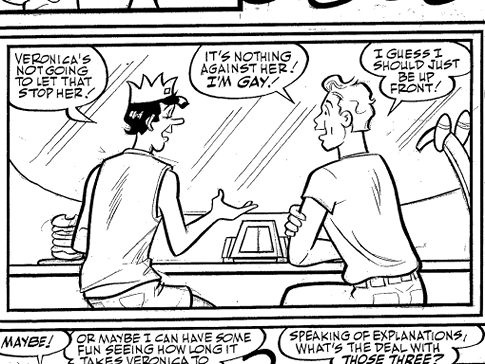
Gay! Archie gets a gay (as opposed to “Archie is a gay,” a fantasy you can live out through this NSFW-ish Choose-Your-Own Adventure wiki). Lesbian lawyers defend “not gay enough” softball players. Texas doesn’t want to let gays divorce. And Jet Blue goes pink.

******

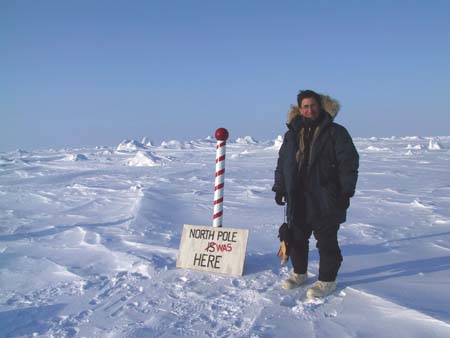
He’s not here: Banksy tags SF.

*****

“People are terrified of drugs. Drugs are linked to inner cities and crime – not mystical states. But with diligent and serious science, we can learn about all the wonderful ways that these compounds can help a stressed and troubled species.” Dropping therapeutic acid in San Jose.

******

Have you parked your keester in one of the city’s “parklets” yet? It’s lovely outside right now. Go! Editor’s recommendation: Totally hot biker parklet action at Mojo.

*****

If that constant hacking cough wasn’t enough of a warning about air pollution, you can always rely on your phone to tell you.

*****

“It refers to the sex act conducted in front of the Eucharist involving myself, as the role of Adam, and a female follower, who plays the role of Eve by her own free will. The Lord does not wish for anybody else to engage in this ritual. I was inspired to perform this ritual because I believed that there was no other way to prove Mr. Little Pebble’s innocence and the wrongful convictions of sexual assault made against him. Just a few days ago, God sent me a message saying that the woman who sued Mr. Little Pebble will confess that it was all a lie.” And there’s a whole lot more WTF where that came from.

*******

SFFD disaster drill mannequins: now more “P.C.” thanks to pants.

*****

Heads up: Remembering Playland, the full length documentary that tells the history of San Francisco’s famous 10-acre seaside amusement park, Playland at the Beach, starts a week-long run at the Balboa Theater tomorrow night.

John Ross: Time travelling down the Mississippi

1

 Editors note: John Ross is wandering the country on a book tour, sharing his observations of Obamalandia, 2010. You can read his previous dispatches here and here  

I. Role models


When I finally made Chicago, they were all waiting for me down there two blocks south of the end of the Blue Line, through the wrought-iron gates of Forest Home Cemetery, past the ostentatious mausoleums of fabulous gypsies and clustered around the heroic monument to the Haymarket Martyrs: Red Emma, looking a little dingy these days; Elizabeth Gurley Flynn, the Rebel Girl; William Z. Foster, the CPUSA’s most rigid ideologue and the leaders of its black sector Henry Winston and William Patterson; the anarchist femme fatal Voltairine de Cleyres; hobo-ologist Ben Reitman; and, of course my personal role model, Lucy Parsons, who outlived her Albert (hung by the State for the Haymarket frame-up) by 50 years, traveling this poisoned landscape from sea to stinking sea speechifying to the masses and hawking her incendiary pamphlets to make ends meet. A single wilted rose adorned the soft granite pillow that bears her name and dates.


Scattered amidst the tombstones of the 70-plus anarchists and communists, radicals and rabble-rousers that Irving Abrams and the Pioneer Aid Society planted here are the DNAs of Joe Hill and Big Bill Haywood and Eddie Balchowsky, the one-winged barrelhouse piano player who gave up his arm to Franco’s fascists in the Spanish Civil War. Irving himself has a box seat at the foot of the Haymarket marker, now a National Historical Landmark managed by the government that these brave souls in residence once sought to overthrow.

Emma Goldman and her condescending epitaph (“a people must rise up to liberty”) was unquestionably Irving’s greatest steal, having won the bidding war for her cadaver after she croaked up in Toronto, to bring her home to the country from which she had been deported decades before for counseling young men not to sign up for the First Imperialist War. But despite the old-time luminaries in repose, I had journeyed down to Forest Home to visit with a recent implant, Franklin Rosemont, the anarchist writer and majordomo of Charles Kerr, the oldest radical publishing house in the U.S., now being sustained by his widow Penelope.  

“Surrealism Forever!” reads Franklin’s slab, in keeping with the celebratory tone of this section of the old boneyard. Franklin, who passed abruptly last year, is buried within the arc of the Haymarket monument.  The Cottons, Clara and Warren (not known to be subversives), keep him company.    

I doubt that our current president, whose adopted city Chicago is, has ever communed with these noble spirits, but it would be an educational experience if ever he should make his way down to Forest Home. Enveloped by deal-making devotees of Chicago’s backroom Democratic Party politics like Rahm Emmanuel, Valerie Jarrett, and Education Secretary Arne Duncan (now neck-deep in a hometown scandal for A-listing the scions of the influential in Chicago’s elite public schools), the examples set by Lucy Parsons and Emma Goldman might have stiffened Obama’s shaky backbone and taught him to stand up for the principles he has abandoned as the CEO of the planet’s longest-running criminal conspiracy.

Michael James rules the venerable Heartland Café in Rogers Park in the extreme northwest of this windy metropolis, a schmooze and booze venue for the left side of the local Democratic Party machine for the past three decades.  Both Obama and Bill Ayers have crossed its threshold occasionally at the same time, and Michael, the facilitator of “Rising Up Angry,” a militant Uptown youth group at the tail end of the turbulent ’60s, is now the chairperson of the local Demo ward committee. Although he will never concede that Baracko has squandered the faith that millions invested in him, I sense growing disappointment with Hope Man’s wishy-washy performance 15 months into his tainted term in office.  

As always, I bunked with the James Gang — Paige, the kids, and the estimable Che, a Labrador with a most dignified demeanor — and plunged into Chicago’s stimulating cultural mix. Also in residence: the foot-stomping Irish fiddler Paddy Jones, just in from Tralee — three years ago, Mike dragged Paddy and I off to the Korean baths where the local political class conspires. We sat buck naked in the sauna and Paddy insisted I regale him with the cautionary tale of El Che (the revolutionary martyr not the mutt).  

This time around, Michael escorted me to the late Nelson Algren’s birthday party in a church close by this quintessential Chicago scribbler’s beloved Division Street neighborhood, during which mash notes from his lover Simone de Beuvoir were read, lending credence to Frankie Lyman’s pointed inquiry “Why Do Fools Fall In Love?”

Yet another highpoint of my weeklong pilgrimage to the Hog Butcher of the World were a pair of meetings in Pilsen, an industrial enclave where the U.S. Communist Party first convened hard by Blue Island Avenue back in 1919 and now the most pertinent barrio in Mexico’s second U.S. city. More than a hundred Latino activists showed up to hear me rant and rave about the prospects for a new Mexican revolution and plot this year’s May 1st march in a city where immigrant workers first took to the streets 124 years ago to demand redress for crimes inflicted upon the working class by the bosses of industry and commerce. Four years ago, a half million immigrant workers marched here to demand recognition of their rights and despite the broken promises encapsulated in the Schumer-Graham proposed Immigration “Reform” bill, Chicago’s Mexican community is warming up for another red-hot May Day.  

II.  Resurrection

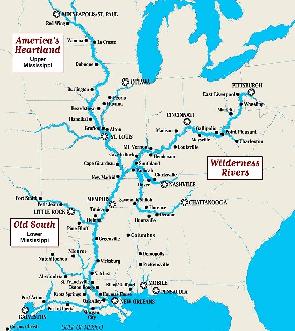
I followed the contours of the mighty Mississippi from Chicago to St. Louis through rich bottomland that is now the domain of Archer Daniels Midland. St. Louis is an urban hub that features wide, well-kept lawns and bushels of dirty money — Monsanto, Boeing, Peabody Energy, and Talx, which counsels greedy congloms on unemployment compensation, are all headquartered here.  

Yet, despite the capitalist connivance, the city has its own sui generis radical history. The 1877 railroad strike spread from the east to St. Louis and set the style for labor strife in the west, and the anarchist Flores Magon brothers published “Regeneracion,” the bible of the 100 year-old Mexican revolution, here before they were run out of town in the teens of the past century.

My days in St. Louis were well spent. I preached an Easter Sunday sermon at the Mid Rivers Ethical Society, sharing my vision of resurrection and insurrection in the aforementioned Forest Home boneyard, and offered up my palaver at a Black Green Party forum in a soul food parlor off Delmar, spreading the news of the Mexican government’s execrable persecution of  electrical workers pushed out of their workplaces last October at bayonet point by the military and police in a scheme to privatize electricity generation south of the border.  

I walked the St Louis Walk of Fame, stepping over the stars of the likes of William Burroughs, Chuck Berry, Walker Evans, and Fontella Bass, all of whom had to leave town to achieve a modicum of notoriety. I even encountered my very first St. Louie Cardinal, a crimson-hued bird perched in a sapling, spring zephyrs ruffling its crest, from which the Anheuser Busch dynasty drew the logo for the local nine in this beisbol-intoxicated town (they were previously dubbed the “Perfectos” after a popular cigar.)

III. Black & Brown

Further down river, the scrublands of Mississippi spread into the horizon beneath the cramped commuter flight in from Memphis. I had not touched down in the state since Freedom Summer 1964, when I arrived on the very day that the bodies of three civil rights workers (Michael Schwerner, Andrew Goodman, and James Chaney) were unearthed beneath a dam in Philadelphia, Miss.  

Although Black and White speak more cordially to each other these days and there are few black bodies swinging from the poplar trees, Mississippi God Damn (dixit Nina Simone) is still moldering down below. I could feel the heat at my hotel just off the Millsaps College campus in Jackson, where a statewide PTA meeting was in progress. In the conference rooms, black parents squared off against white school administrators over curriculums and the unequal quality of education. This is a commemoration year for black activism, the 40th anniversary of the killings at Jackson (and Kent) State and the 50th for SNCC — and old grievances burn long and deep.

The old civil rights movement achieved only token parity in this the poorest state in the union. Now a new civil rights movement is focusing on the flood of Mexican and Latino workers who poured into Mississippi in the wake of Katrina, and brown people are today’s niggers down at the bottom of the food chain.

Only 34,000 “Hispanics” were officially counted in the 2000 state census but Bill Chandler, a veteran of the Texas farm workers union and spokes for the Mississippi Immigrant Rights Alliance (MIRA), thinks that three times as many undocumented workers, lured to the state by casino construction, were overlooked back then. In 2010, Chandler calculates that the immigrant numbers have swelled to 200,000, nearly 10% of the state population, and taken together with close to a 40% Afro-American share, Mississippi now verges on becoming a majority People of Color entity. A similar equation is at work throughout the Deep South with Alabama and South Carolina and Georgia also hanging in the balance. Such changing demographics help to explain the vitriol the Teabaggers and White Citizen Council types shower upon the newcomers.

Back in August 2008, Immigration Control and Enforcement broke its own despicable workplace raid record by imprisoning (in Jena La., the site of other racist outrages) and deporting 595 Mexican and Latino workers who had been employed by Howard Industries down in Laurel. Chandler thinks the pogram was accomplished with the complicity of the company which was intent on cheating workers out of their wages. MIRA eventually won checks for most of those detained and deported.

An even more outrageous incidence of lingering Mississippi bigotry was the treatment of Cirila Balthazar Cruz, a mono-lingual Chatino indigena from Oaxaca who was picked up by police as she stumbled along the highway shoulder trying to get to a local hospital to give birth. Her baby daughter Ruby was subsequently stolen from her by child welfare authorities who deemed her an unfit mother because she couldn’t speak English and given to a well-appointed childless white couple. As might be anticipated, such blatant racism struck a tender nerve south of the border and a year later, Ruby was returned to her birth mother.  

Justice in Mississippi, as in much of Obamalandia, remains elusive but every once in a while the push of the people from down below captures such small prizes.

On their East Coast swing, John Ross & “El Monstruo” will visit Washington/Baltimore (Red Emma’s April 19th/ University of Maryland – Baltimore on the 20th/ Institute for Policy Studies the 21st); New York (NYU the 22nd/ Sixth Street Community Center the 23rd/Bluestockings the 25th); and Boston (Harvard Coop the 27th/David Rockefeller Center for Latin American Studies the 28th/Mass Global Action the 29th/IPS-Jamaica Plains the 30th/ topped of by a May 1st rally on the Boston Commons between Noon & Two.) All events are all free.


Taking the Waters

0

arts@sfbg.com

SFIFF Jessica Rabbit was just drawn that way, Foster Brooks just happened to stumble on his “lovable lush” act, and likewise, actor-writer-producer Derek Waters — he of Drunk History fame — just sounds like he started poking around in the liquor cabinet earlier in the day. In the same way, we all happened to just look up from our many open browser screens and realize our attention spans have drastically shrunk — one of the many reasons Waters believes the histories have been so popular, leading to offers from HBO to produce a Drunk History sketch show and spinning off a host of homemade copycat videos on YouTube.

“Attention spans are way too small to watch whole movies,” says the 30-year-old Waters, speaking from Los Angeles. “I think if these came out in the ’70s, I don’t know how popular they would be.” And who can blame the pretenders, justly inspired by the shorts — and the sight of soused comedians relating their favorite great moments in history (while occasionally losing their lunch or lying down to get more comfy) while actors like Michael Cera, Jack Black, and Will Ferrell reenact out all the blurry details, down to Ben Franklin’s improbable “Holy shit … there’s a fucking lightning storm happening right now outside!”

The fact that creator Waters could get actors like Crispin Glover and John C. Reilly to play, for instance, the battling Thomas Edison and Nikola Tesla is yet another plus. “Edison was publicly electrocuting animals to prove his point,” Waters says. “And to see Crispin Glover doing that was a dream come true.”

No fear that Drunk History will swallow up cable — or traditional academic — programming, though Waters says his old teachers have e-mailed to tell him they’ve shown the films to their students. “I think Drunk History is funny for five minutes,” he says. “I don’t think you can ask too much of a drunk person.” The actor is doing a HBO series called Derek Waters Presents LOL instead (“I like to say it stands for ‘Lots of Losers.’ I guess you write what you know”), remaining committed to the short, funny form, as well as the dream of turning his 13th Grade short, set at a community college, into a full-fledged series.

All that makes Waters a primo candidate for a drunken evening at the theater with Wholphin DVD magazine editor Brent Hoff. He’ll be showing relevant shorts such as Bob Odenkirk’s gut-busting The Pity Card — part of Waters’ and The Big Bang Theory‘s Simon Helberg’s online short series Derek and Simon — and talking about that film, as well as, no doubt, the work he’ll contribute to Wholphin‘s next edition.

Incidentally, Wholphin‘s latest issue, its 11th, is a doozy: “It’s the most edible-looking yet,” quips Hoff in San Francisco. “All bubblegum-y colors.” It includes Ramin Bahrani’s Plastic Bag short with poignant hilarious voice-of-the-bag narration by Werner Herzog, in addition to an excerpt from Bitch Academy, a doc about Russian women taking a class on how to snag millionaires — a grim, scary variant of the cheese-cloaked Millionaire Matchmaker — which Hoff describes as “the most terrifying thing we’ve ever put out.”

More terrifying that listening to writer Eric Falconer lose his eight vodka cranberries and then get back up to talk American history? For some, it might be a draw. “There’s something fascinating,” Waters observes, “about someone so passionate about something but not moving forward at all.”

A DRUNKEN EVENING WITH DEREK WATERS AND WHOLPHIN

Mon/26, 9:30 p.m.

Sundance Kabuki

1881 Post, SF

www.sffs.org


Live on screen

0

johnny@sfbg.com

SFIFF All those with curious minds, step right up, we have live cinema waiting for you in this dark room. The idea of “live” or performance-generated movies has taken on a new vitality recently via the light-projecting likes of Bruce McClure, whose ear-splitting and eye-blasting appearances in San Francisco usually sell out. On a smaller local level, Konrad Steiner’s neo-benshi programs have united local writers and a wide variety of filmic subject matter in creative and sometimes entertaining ways. At the San Francisco Film Festival, live music by bands for silent works has become a reliable main attraction. But Sam Green’s and Dave Cerf’s new meta-documentary Utopia in Four Movements adds a new facet to the phenomenon: instead of utilizing an over-familiar voice-over, it unites live narration by Green with a musical performance overseen by Cerf, allowing for degrees of spontaneity and change.

Utopian, isn’t it? At the Mission bar the Phone Booth on an early Monday evening, Green can’t help but tease out his thoughts on the very word. “To me, utopia is almost a metaphor for hope, or hope in the imagination,” he says, shortly after we’ve been flirted with (and flashed) by one fierce female patron. “It’s about trying to be hopeful these days, which is hard. Utopia is almost a way to make up hope. In some ways it’s so preposterous. The word even has negative connotations these days — people are told not to be utopian.” Half an hour later, he returns for another analogy or two: “Utopia is a thing that never really exists. It’s like a flower — it always wilts. Even if there’s a moment of great utopian energy, it can’t last.”

Utopia may not exist in fully realized forms, but the quartet of mutations in Utopia in Four Movements (five if you count the movie) fascinate as real-life fables. The first segment explores Esperanto, which was invented in the late 19th century with the aim of its becoming a universal, international language. As Green puts it, Esperanto is “a wonderful idea that can’t be,” an idea that he illustrates with short direct portraits of contemporary Esperanto speakers that, uncannily, takes on a colors-of-Benneton feel.

Esperanto has also yielded some memorable black-and-white cinema, namely a 1965 Esperanto horror film shot in Big Sur by Conrad Hall, which stars a pre-Star Trek William Shatner. San Francisco movie maniacs may recognize Incubus through the efforts of Will The Thrill and Other Cinema’s Craig Baldwin. “William Shatner wrote a memoir in which he talks about it,” Green says, before adding some information that reflects Utopia‘s ever-changing nature –and utopia’s pitfalls. “I’m trying to do an interview with him because he’s practically the most famous person to have spoken Esperanto. But the world’s most famous Esperanto person is probably [financier] George Soros.”

The idea of utopia isn’t new to Green, whose best-known feature The Weather Underground (2002) digs deep into the multi-faceted realm of ’60s radicalism, riding out its actions and repercussions. The second part of Utopia, set in Cuba, adds a new chapter to Green’s explorations of thorny political contradiction. Like Assata Shakur, the segment’s subject lives in Cuba as a fugitive. In the present, she’s engaged with Cuban hip-hop, but she remains tied to her past as a radical in America. “It’s about the last embers of revolution,” says Green.

One of Utopia‘s movements examines the potential of forensice science in a manner quite different from pro-law enforcement US true crime television, showing how the smallest reinforcement can be regained from sites of mass tragedy. But the movie’s sojourn in China is in some ways its most vivid. There, Green takes an extended trip to the world’s largest shopping mall, in China. The subject matter is akin to dramas such as Jem Cohen’s Chain and Jia Zhangke’s The World (both from 2004), but this is a case of reality trumping fiction. “Almost every article I read about China and capitalism talked about how the world’s largest mall was there now,” says Green. “But nobody described it as a total failure. We were at the mall for ten days, and it was soul-killing. There’s something about a gigantic failed mall that is profoundly depressing.” Luckily, an encounter with a Teletubby who eventually removed its mask added some life to the experience.

The world’s largest shopping mall — at least for now: Green says it is slated to be bulldozed — may be grim, but it’s also richly symbolic when history is integrated to the picture. “Victor Gruen who essentially invented the [shopping] mall in the US in the 1950s was a socialist who came to America,” Green says, as “This Monkey’s Gone to Heaven” gives way to “I Feel Love” on the Phone Booth jukebox. “In turn the mall has gone to China, and the grounds of cultural revolution became the site of a government-funded bust of a mall. In a way, it’s the trajectory of the 20th century.

Today, we tiptoe into the 21st century, with a new president and old-new ways of seeing and making movies. “A year ago, when I was looking at [Utopia], people were saying ‘Aren’t you going to change everything because of Obama?’,” Green remarks. “It felt like cotton candy hope. When [U.S. presidents] are the limits of your possibility, it’s pretty lame.” Truth: Green may have used utopia in his title, but perhaps it’s time to come up with some fresh formulations of hope as well. *

UTOPIA IN FOUR MOVEMENTS

Sun/25, 9:30 p.m., Kabuki

Love, guts, and glory

0

arts@sfbg.com

SFIFF Though there were far starrier, more expensive films debuting in the Midnight Madness section of last year’s Toronto Film Festival, the category’s prize and foot-stomping audience favor was stolen by a low-budget Australian film that arrived with no fanfare, no name actors, and a writer-director who’d made no prior features.

Sean Byrne’s The Loved Ones focuses on small-town teenager Brent (Xavier Samuel), who’s severely depressed from a recent tragedy but rouses himself to attend the school prom — or would have, if he wasn’t hijacked instead for one of the most harrowing first dates in film history.

Pegged by some as "Misery meets Pretty in Pink," this instant horror mini-classic is by turns poignant, funny, grotesque, alarming, and finally very, very satisfying. It’s sure to be a hit again in the San Francisco International Film Festival’s Late Show section. Between festival travels, Byrne was back home in Melbourne when he answered my e-mail queries.

SFBG The movie really throws you for a loop by spending the first stretch on serious psychological drama, then springing something entirely different.

Sean Byrne Well, I needed [to establish] a hero who was uniquely qualified to survive hell. Someone who is conditioned to pain, who feels like they deserve to suffer. He’s a cutter or self-mutilator, someone who tries to block out emotional pain with physical pain. He’s a kid with a death wish who’s forced to endure a literal hell, and in the process realizes he’s got everything to live for.

SFBG Your central female character is more interesting than the usual horror movie villains in that she’s so spoiled she thinks she’s a victim, which then excuses her behaving monstrously. Where did that come from?

SB I was thinking about what could make a signature, iconic, highly marketable villain and I noticed how my five-year-old niece, along with almost every little girl, is obsessed with wearing pink. It’s part of the magic and fantasy stage of childhood, where they actually believe the Disney line "someday [my] prince will come." So then I started thinking, well, what if our villain is a teenager with raging hormones but still somehow stuck in this spoiled, childish, preoperational stage of development. I imagined "Princess" as a teenage version of that irritating kid in the supermarket who demands lollies and won’t stop screaming until she gets them.

SFBG I like that her favorite song is self-pity anthem "Not Pretty Enough." Has Kasey Chambers had any reaction to the film?

SB I tried to stay within the horror genre but at the same time subvert the conventions. And having our troubled hero listen to heavy metal (the "devil’s music") and our villain listen to a top-of-the-pops ballad like "Not Pretty Enough" was a way of doing that. As far as I know, Kasey hasn’t seen the film. I’m dying to know how she’ll react.

SFBG A difference between this movie and those associated with "torture porn" is that here both the victims and the perps are pretty complicated characters.

SB I hope so. I did my research and tried to get inside the heads of these characters before I started writing. Characters in horror movies are often one-dimensional cardboard cutouts. But really great ones like The Shining (1980), The Exorcist (1973), and Rosemary’s Baby (1968) delve into the psychology of the moment. They answer the question: how do ordinary people react to extraordinary situations honestly? They explore our base instincts with emotional authenticity.

SFBG The film really does dish out some horrifying abuse, though — did you ever pull back on how graphic it would be?

SB No. Never. I’m not a fan of PG-13 horror. The middle ground is pretty boring — that’s why it’s called the middle ground.

THE LOVED ONES

May 2, 10:30 p.m., Castro

May 6, 3 p.m., Sundance Kabuki


MORE ON SFBG.COM For an extended version of Dennis Harvey’s interview with Sean Byrne, visit www.sfbg.com/pixel_vision

Top pic picks

0

The White Meadows (Mohammad Rasoulof, Iran, 2009) This latest by the recently jailed Iranian director of Iron Island (2005) is a stark, visually striking allegory whose natural settings (the salt formations of Lake Urmia) could hardly be more surreal. Aging Rahmat (Hasan Pourshirazi) rows his little boat from one tiny island community to another, collecting tears from variably aggrieved locals so they can be absolved of their sins — just how, neither they or we know. During his latest travels he gains a teenaged stowaway, then a blind-struck painter as passengers; witnesses a couple of village rituals that prove fatal for their main participants; and experiences other curious events that scarcely prompt a raised eyebrow from him. As with so much modern Iranian cinema, Mohammad Rasoulof’s film carefully renders its political symbolism so abstract you can dig endlessly for hidden meanings, or simply lose yourself in the hypnotic black-and-white-in-color imagery of black-clad people on bleached landscapes. Fri/23, 6:30 p.m., Kabuki; Sat/24, 9:30 p.m., Kabuki; Sun/25, 8 p.m., PFA. (Dennis Harvey)

Nymph (Pen-ek Ratanaruang, Thailand, 2009) Boy meets girl. Boy and girl fall in love. Girl cheats on boy with boss. Boy falls in love with tree. So are the broad strokes of Thai director Pen-ek Ratanaruang’s jungle-horror, Nymph, a city-to-country romance that deftly weaves strands of urban anomie, sexual dysfunction, and rural mythos into a dreamy, arboreal fantasia. One might be tempted to reference Lars von Trier’s Antichrist (2009) and fellow Thai helmer Apichatpong Weerasethakul’s 2004 breakout, Tropical Malady, as obvious points of reference, but that would derogate the potency and intensity of Ratanaruang’s singular, artistic design. The director of Last Life in the Universe (2003) and Ploy (2007) creates a tropical mise-en-scène that is less cinematic than immersive, developed largely by his use of tight, suspenseful close-ups, fluid camera work (including a 10-minute opening sequence that is practically gymnastic), and a transfixing ambient score. But unlike Tropical Malady, which leveraged much of its second-half’s novelty from overwrought, homoerotic tropes and a condescending nativism, Nymph‘s descent into the jungle is only the beginning of this powerful love story. Fri/23, 9 p.m., Kabuki; Sat/24, 4:30 p.m., Kabuki; April 28, 4:45 p.m., Kabuki. (Erik Morse)

Around a Small Mountain (Jacques Rivette, France/Italy, 2009) Around a Small Mountain (or 36 vues du Pic Saint Loup) is New Wave doyen Jacques Rivette’s return to the whimsy of 1984’s Love on the Ground, another exploration of theater staring eternal demoiselle Jane Birkin. In Mountain, Birkin plays Kate, a prodigal daughter who has returned to her deceased father’s circus after an unspecified trauma forced her into a 15 year absence. En route she encounters Vittorio (Sergio Castellitto), a peripatetic who instantly discovers in Kate a fellow improviser for his acrobatic feats of conversation. In hopes of learning her secret past, Vittorio follows Kate and her shabby troupe from performance to performance through the tiny towns of the Cevennes. Along the way, Rivette treats his audience to a mish-mash of sideshow sketches, enchanting dialogues and haunting soliloquies, all beneath the magical totem of the big top. The film is spellbinding ode to the theatre of everyday life and the actors who prance in and out of its cirque. Fri/23, 9:30 p.m., Kabuki; Sat/24, 4:15 p.m., Kabuki; April 28, 6:30 p.m., PFA. (Morse)

Way of Nature (Nina Hedenius, Sweden, 2008) Save for when Werner Herzog is doing the talking, documentaries about the natural world often benefit from a lack of voiceover narration. Nature’s seasons, cycles, and rhythms provide their own narrative structure, and simply, silently observing what happens can make for fascinating viewing. Nina Hedenius understands this. Her engrossing year-in-the-life portrait of Lisselbäcka Farm in northern Sweden is cut around creatures great and small — horses, cows, goats, chickens, dogs — and their routines. Although humans are part of the bucolic scene Hedenius so meticulously orchestrates (the sound editing is such that the film would be no less immersive if you watched it blindfolded), they are merely supporting actors. After watching, for the fourth time, another gangly offspring leap to its feet, minutes after being born, you start to realize the ways in which our species is quite helpless. If their keepers suddenly passed away, the animals of Lisselbäcka — domesticated though they may be — would probably manage to carry on. The way of nature is instinct, not mastery. Sat/24, 2 p.m., PFA; Sun/25, 3:45 p.m., Kabuki; Mon/26, 1 p.m., Kabuki; April 28, 6:30 p.m., Kabuki. (Matt Sussman)

Between Two Worlds (Vimukthi Jayasundara, Sri Lanka, 2009) Part vision quest, part historical allegory, Vimukthi Jayasundara’s lush and beguiling head-scratcher unfolds like the mutable folktale told between two fishermen in one of the film’s asides. A synopsis would go something like this: an unnamed South Asian man falls from the sky into an unspecified South Asian country (although the Sinhala the actors speak places us in Sri Lanka) under siege by revolutionaries intent on destroying all means of communication and killing any remaining young men. Fleeing a riot-ravaged city he winds up in the countryside where he reconnects with his sister-in-law, and undergoes several mysterious and mystical experiences at a nearby lake. “It’s possible that one can see today what has happened in the past,” cautions an old man to our protagonist, and Jayasundara — with an eye for arresting mise-en-scene, gorgeously photographed by Channa Deshapriya — attempts to offer a way to re-see the traumas of the civil war that ravaged Sri Lanka for over three decades. Like a freshly remembered dream, Between Two Worlds is as stubbornly oblique as it is hard to shake. Sat/24, 6:15 p.m., Kabuki; Sun/25, 9 p.m., Kabuki; Mon/26, 9:15, Kabuki. (Sussman)

Transcending Lynch (Marcos Andrade, Brazil, 2010) Picture it: everyone’s favorite psycho-thriller filmmaker and coffee retailer waxing beatific about peace, love, and “infinite bliss,” his American Spirit–stained teeth frozen in a perma-grin as he extols the virtues of the “unified field” of consciousness. At certain moments in Transcending Lynch, an exploration of infamous auteur David Lynch and his 35-year devotion to transcendental meditation, the director comes across as flakier than the celebrated piecrust at Twin Peaks‘ Double R diner. (At one point he even utters the phrase “Holy jumping George!”) For the irony-soaked, all the TM talk may be a little TMI, but for Lynch the practice is nothing short of the very source of his creative wellspring. Marcos Andrade’s documentary, which follows Lynch on a 2008 Brazilian book tour, won’t offer the mad-genius Eagle Scout’s more rabid followers much new insight. While the movie strives to be meditative, it’s more of an amalgam of trippy travelogue and pitch meeting. Even more frustrating, we get only teasing glimpses of how TM has directly informed and impacted the artist’s work. Lynch may be on the path to universal enlightenment, but when it comes to the man himself, the rest of us ignoramuses are still mostly in the dark. Sat/24, 6:30pm, Kabuki; Mon/26, 9pm, Kabuki; Tues/27, 12:30pm, Kabuki. (Michelle Devereaux)

14-18: The Noise and the Fury (Jean-Françoise Delassus, France/Belgium, 2009) Made for French TV, Jean-Françoise Delassus’ unclassifiable film would be arresting simply for cobbling together seldom-seen archival footage reflecting all aspects of the First World War, from its leaders to its trenches. But he and co-scenarist Isabelle Rabineau have shaped that footage into a narrative driven by the writings of a (fictional) French everyman soldier who somehow manages to survive and serve in most of its major conflicts. The result melds exquisite color tinting, first-person narration, clips from commercial films about the war (by D.W. Griffith and Chaplin as well as European directors), and ambient sound to create a brilliant kind of living history lesson that makes the events of nearly a century ago seem as immediate as yesterday’s. Mon/26, 4:30 p.m., Kabuki; May 1, 2 p.m., Kabuki; May 3, 9 p.m., Kabuki. (Harvey)

The Peddler (Eduardo de la Serna, Lucas Marcheggiano, and Adriana Yurkovich, Argentina, 2009) Daniel Burmeister is a traveling filmmaker. He drives his infirm jalopy from one small Argentine town to the next, hoping to set up camp for a month and make a movie with the locals. He’ll need food, a place to stay, and a camera. Whatever camera they can find. Usually the mayors are easy to convince, because Burmeister is essentially a regional attraction, a one-man circus they know about from the neighboring towns. It’s this strange repurposing of the filmmaking experience that makes the documentary so distinctive and special. And just watching the old man hustle from shot to shot with his bashful actors, working efficiently from one of the handful of scripts he’s been cycling through for years, is an absolute pleasure. Directors Eduardo de la Serna, Lucas Marcheggiano, and Adriana Yurcovich capture the jury-rigged process with unobtrusive admiration and an absence of condescension. As I watched it I kept thinking it was like the soul that was missing from Michel Gondry’s 2008 warmed-over DIY manifesto Be Kind Rewind. Mon/26, 6:30 p.m., PFA; May 1, 12:30 p.m., Kabuki; May 4, 6:30 p.m., Kabuki. (Jason Shamai)

Russian Lessons (Olga Konskaya and Andrei Nekrasov, Russia/Norway/Georgia, 2010) I remember watching the news two summers ago and feeling confused by the details of the Russia-Georgia War, the culmination of a dispute over the territory of South Ossetia. There seemed to be a haziness about who started what. Russian Lessons offers Olga Konskaya and Andrei Nekrasov’s version of what happened that summer and indicts Russian and mainstream international news organizations for exactly that failure to present a satisfactory chronology. Konskaya, a theater director and documentary producer, filmed events as they unfolded on the Northern end of the conflict while Nekrasov, a veteran documentarian, filmed in the South. The result is a collection of interviews with residents of recently bombed Georgian towns, confrontations with Russian soldiers, and investigations of still-smoldering battle sites. The filmmakers spend an equal amount of time scrutinizing source footage from the war and its antecedents, exposing how it was used to mislead the international community. It’s a disturbing and persuasive rebuttal to the Putin administration’s official side of the story. April 28, 3:15 p.m., Kabuki; April 29, 12:30 p.m., Kabuki; May 1, 6:15 p.m., Kabuki. (Shamai)

Restrepo (Tim Hetherington and Sabastian Junger, USA, 2010) Starting mid-’07, journalists-filmmakers Tim Hetherington and Sebastian Junger spent some 15 months off and on embedded with a U.S. Army platoon in Afghanistan’s Korengal Valley, a Taliban stronghold with steep, mountainous terrain that could hardly be more advantageous for snipers. Particularly once a second, even more isolated outpost is built, the soldiers’ days are fraught with tension, whether they’re ordered out into the open on a mission or staying put under frequent fire. Strictly vérité, with no political commentary overt or otherwise, the documentary could be (and has been) faulted for not having enough of a “narrative arc” — as if life often does, particularly under such extreme circumstances. But it’s harrowingly immediate (the filmmakers themselves often have to dive for cover) and revelatory as a glimpse not just of active warfare, but of the near-impossible challenges particular to foreign armed forces trying to make any kind of “progress” in Afghanistan. April 30, 3:45 p.m., Kabuki; May 2, 4:15 p.m., PFA; May 4, 9:30 p.m., Kabuki. (Harvey)

Animal Heart (Séverine Cornamusaz, France/Switzerland, 2009) This first feature by Séverine Cornamusaz has a story that would have fit just as well into the cinema of 1920 — or the literature of Thomas Hardy or George Eliot 50 years earlier. Paul (Olivier Rabourdin) is the gruff owner of family lands in the Swiss Alps, raising livestock whom he treats better than wife Rosine (Camille Japy). When he’s forced to hire a seasonal hired hand in the form of Eusebio (Antonio Bull), the easygoing Spaniard’s concern for ailing Rosine incites not Paul’s compassion but his brute jealousy. This elemental triangle set amid the severe elements of its spectacularly shot setting has a suitably blunt (but not crude) power; it leads not where you might expect but to a hard-won fadeout of audacious intimacy. April 30, 4 p.m., Clay; May 2, 9:15 p.m., Clay; May 3, 6 p.m., Kabuki. (Harvey)

Henri-Georges Clouzot’s Inferno (Serge Bromberg and Ruxandra Medrea, France, 2009) A painstaking craftsman who left nothing to chance, French suspense master Clouzot (1955’s Diabolique, 1953’s The Wages of Fear) decided to push his own envelope a little in 1964. He cast Serge Reggiani as a resort innkeeper who becomes pathologically, paranoically possessive of his gorgeous wife (Romy Schneider). Convincing himself she’s having an affair, he gradually snaps tether — and the film itself would reflect that downward spiral by increasingly illustrating his mental stage in distortive image and sound. Unfortunately, the project also drove Clouzot mad in a way, as his grapplings at a new filmic language ran counter to the kind of creative discipline that normally storyboarded everything within an inch of its life. Shooting endless footage, spending endless money, he finally admitted defeat and abandoned ship. Never completed, the film’s surviving pieces were restored for this absorbing unmaking-of documentary — even if the original clips, daring then but now looking like psychedelic kitsch, suggest Inferno would likely have been no masterpiece but a fascinating, instantly-dated failure. May 2, 1:45 p.m., Kabuki; May 5, 6:15 p.m., Kabuki. (Harvey)

Presumed Guilty (Roberto Hernández and Geoffrey Smith, Mexico, 2009) A fan of true crime TV programming, I all but take for granted that little coda at the end of each episode reminding viewers that the suspects shown are innocent until proven guilty. I sometimes forget that such rights are not the case in all countries, such as in Mexico where the criminal justice system employs a reverse practice requiring the accused to prove themselves innocent. In Presumed Guilty, filmmakers, lawyers, and UC Berkeley students Roberto Hernández and Layda Negrete use rarely-seen, up-close footage of the Mexican trial process in their effort to exonerate a young Mexico City street vendor who is falsely accused of murder in 2005. The proceedings, which require the defendant to stand for hours on end and are performed sans jury, is riveting stuff for fans of those A&E true crime shows and is sure to ruffle the feathers of a few sympathetic humanitarians. May 2, 3:30 p.m., Kabuki; May 3, 6:30 p.m., PFA; May 6, 3:15 p.m., Kabuki. (Peter Galvin)

Lebanon (Samuel Maoz, Israel, 2009) “Das Boot in a tank” has been the thumbnail summary of writer-director Samuel Maoz’s film in its festival travels to date, during which it’s picked up various prizes including a Venice Golden Lion. On the first day of Israel’s 1982 invasion (which Maoz fought in), an Israeli army tank with a crew of three fairly green 20-somethings — soon joined by a fourth with even less battle experience — crosses the border, enters a city already halfway reduced to rubble, and promptly gets its inhabitants in the worst possible fix, stranded without backup. Highly visceral and, needless to say, claustrophobic (there are almost no exterior shots), Lebanon may for some echo The Hurt Locker (2009) in its intense focus on physical peril. It also echoes that film’s lack of equally gripping character development. But taken on its own willfully narrow terms, this is a potent exercise in squirmy combat you-are-thereness. May 2, 9 p.m., Kabuki; May 5, 9:30 p.m., Kabuki. (Harvey)

The Day God Walked Away (Philippe van Leeuw, France/Belgium, 2009) Director Philippe Van Leeuw states in the press materials that he made The Day God Walked Away in an attempt to understand how the assassins of the 1994 Rwandan genocide could do what they did and how others could stand by and watch. I walked away from Day with a better understanding of what might draw a person to choose defeatism over an unlikely survival. The film opens as a Tutsi housekeeper (Ruth Nirere) finds herself trapped in her Belgian employers’ house, fearing for her children and surrounded by gun-toting murderers. Light on scripted dialogue and featuring local actors, van Leeuw’s nonintrusive filming lends the film an authentic atmosphere that can be slow but is never boring. In lensing the film’s horrific scenes in a simple and matter-of-fact fashion, he eerily replicates the emotional separation that survivors of the massacre were forced to adopt in order to live. May 3, 6:45 p.m., Clay; May 4, 4 p.m., Kabuki; May 5, 4:15 p.m., Kabuki. (Galvin)

The Practice of the Wild (John J. Healey, USA, 2009) “The way I want to use ‘nature’ is to refer to the whole of the physical universe,” explains the poet Gary Snyder in John J. Healy’s succinct but penetrating documentary on the octogenarian poet, essayist, and environmental activist. Snyder’s expansive definition conjoins the two areas to which he has devoted his life and creative practice to better being at peace with: the terrestrial and the existential. Healey provides the back story — covering Snyder’s farmstead childhood, his discovery of his love for the outdoors, his association with the Beats and later immersion in Zen Buddhism, and his two marriages — told in part through the obligatory scan-and-pan photography and contextual talking heads. The film’s highpoints, however, are the many lively conversations Snyder engages in with his friend and fellow writer Jim Harrison, whose grizzled countenance and chirpy demeanor make him a character in his own right. May 3, 6:45 p.m., Kabuki; May 5, 1:30 p.m., Kabuki. (Sussman)

Joan Rivers: A Piece of Work (Ricki Stern and Annie Sundberg, USA, 2010) Whether you’re a fan of its subject or not, Ricki Stern and Annie Sundberg’s documentary is an absorbing look at the business of entertainment, a demanding treadmill that fame doesn’t really make any easier. At 75, comedian Rivers has four decades in the spotlight behind her. Yet despite a high Q rating she finds it difficult to get the top-ranked gigs, no matter that as a workaholic who’ll take anything she could scarcely be more available. Funny onstage (and a lot ruder than on TV), she’s very, very focused off-, dismissive of being called a “trailblazer” when she’s still actively competing with those whose women comics trail she blazed for today’s hot TV guest spot or whatever. Anyone seeking a thorough career overview will have to look elsewhere; this vérité year-in-the-life portrait is, like the lady herself, entertainingly and quite fiercely focused on the here-and-now. May 6, 7 p.m., Castro. (Harvey)

THE 53RD SAN FRANCISCO INTERNATIONAL FILM FESTIVAL runs April 22–May 6 at Sundance Kabuki Cinemas, 1881 Post, SF; Clay Theatre, 2261 Fillmore, SF; Castro Theatre, 429 Castro, SF; and the Pacific Film Archive, 2575 Bancroft, SF. Tickets (most shows $12.50) are available by calling (925) 866-9559 or by visiting www.sffs.org>.


Rolling forward

7

By Adrian Castañeda

news@sfbg.com

San Francisco’s Potrero del Sol Skatepark is often packed with skaterboarders, a testament to the sport’s popularity and to the dearth of places in the city where it’s legal to skate. But that will soon change with the city’s commitment to build two new skateparks: one in SoMa and the other in the Haight.

Both have been tentatively approved by the Board of Supervisors. But before any concrete is poured, the skaters will have to overcome budget crises, angry homeowners, and their own bad reputations, particularly in the Haight, where the proposed park has gotten caught up in the furor over vagrants and the proposed sit-lie ordinance.

San Francisco has long been a skateboarding hub, yet there’s always been friction with police, businesses, and everyday city life. Even though it’s legal, there just aren’t that many places to do it anymore, partially because the city and property owners routinely attach barriers to any surfaces that might be appealing to skaters.

Skateboarders, long accustomed to being ignored and disenfranchised, have responded in their usual DIY fashion, such as building a few obstacles in an empty parking lot under a freeway overpass. The city took notice of the demand and after three years of planning and meetings, the newest of San Francisco’s skate parks has finally been allotted the necessary funds to begin construction around the end of summer.

The Central Freeway Skate Park will be located in what is now a parking lot at the intersection of Duboce and Stevenson streets in the north Mission District area. With $2 million collected through the Central Freeway Corridor Housing and Transportation Improvement Act of 1999, which provides for the sale and lease of parcels of city land that were under the now-demolished freeway, officials plan to develop the park to eventually include basketball courts and a dog run.

Rich Hillis of the Mayor’s Office of Economic Development said the city is considering a variety of improvements, but confirmed that “we think the skate park is the priority.” He attributes the park’s relatively unopposed approval to the demands of the city’s skaters and to the community as a whole. “They embraced the idea of a skatepark early on,” Hillis said of the forward-thinking residents of the area. He jokingly adds that the park should be named “Hornbeck Park” after Bryan Hornbeck, director of the San Francisco Skateboard Association. Hornbeck and his associates started the SFSA to push the city to build new parks designed with skaters in mind.

“San Francisco has to have a world-class skatepark,” Hornbeck said at one of the many skate events his group organizes. Hornbeck said the city has been receptive, working with skaters on the design of the park, but left SFSA to organize skaters and raise the funds. “It’s bake sale; it’s lemonade stand; it’s the best we can do,” Hornbeck said. “We’re not trying to take anything, we’re trying to make our own thing.”

Plans for the park, drawn up by notable skatepark design firm New Line Skateparks, are currently under review by civil engineers. After the plans are finalized, the project will be bid out to find a contractor. Tentative 3-D renderings have been online for months, sparking heated debate on skateboarding Web sites.

When the acclaimed Potrero del Sol Skatepark opened in 2008, many skaters felt that while it was well-designed and enjoyable, it didn’t have enough terrain that mimicked street riding. New Line has designed a number of skating plazas, most recently in Los Angeles. Its involvement gives many skaters hope that the new park will incorporate obstacles that represent the city’s rich street skating history.

But things are not moving as swiftly for the city’s other planned skate park, just beyond where Waller dead-ends at Stanyan in the Haight, which doesn’t have the same guaranteed funding stream. While bids for a design have been submitted, the Recreation and Park Department needs to get approval for $1 million–$2 million in construction funds before moving forward. The city proposed the 120,000-square-foot cul-de-sac at the end of Waller and next to SFPD’s Park Station after the original site near the Golden Gate Park horseshoe pits was found to be too small and lacking the necessary sight-lines for safety. But according to some residents groups, the parking lot is less safe for youths.

Citing police incident reports, Lena Emmery, president of the Cole Valley Improvement Association, told us the Waller park would be in an area with a high number of reported assaults and drug arrests and would add to noise pollution. “This location puts a skateboard park too close to a dense residential area, as well as some businesses that would be negatively impacted by the noise from the skaters,” she wrote via e-mail.

While the lot is occasionally used for bicycle safety classes and overflow parking at Kezar Stadium, it sits empty most of the year, although a farmers market will hold its grand opening there April 28. Will Keating, a Waller Street resident and skateboarder who works on Haight Street, is excited about the proposed park. He disagrees with claims that the park would be a negative impact on his neighborhood. “I hear homeless mutants going crazy outside my window every night, I would much prefer skateboards,” Keating said of the current noise pollution.

The Haight Ashbury Improvement Association, which is leading the charge for a sit-lie ordinance, conducted a survey on its Web site and found that many of its visitors feel the skatepark would increase noise and safety problems in the Haight. Visitors to the site also said the lot would be better used as a farmers market. Yet city officials say the two are not mutually exclusive, and early designs for the project are said to include a large public plaza adjacent to the park intended for community events.

“We realize this is going to be a multiuse space,” said Nick Kinsey, property manager for the Recreation and Park Department. “Throughout San Francisco there are thousands and thousands of skateboarders but only two places where it is legal to skate.” Kinsey called the park is “a done deal,” citing a 2007 ordinance introduced by Sup. Ross Mirkarimi that mandates the department build a skatepark on the cul-de-sac.

Kent Uyehara, merchant chair for the HAIA and owner of FTC skateshop on Haight, said the community’s fears about pedestrian safety are understandable, but that fears of increased violence and drug use are irrational. “If you can’t have a skate park next to a police station, then basically you are saying you can’t have it.”

If the city enacts the sit-lie ordinance, which Uyehara supports, it would be easy to imagine that a skate park would be a magnet for homeless and others looking to escape police harassment. But Uyehara is adamant that the park would not become a haven for Haight Street refugees. “Skateboarders self-police their own areas,” he said. “We’re not trying to kick the homeless out,” he added. “We’re trying to make the neighborhood attractive for everyone, whether they’re buying something or not.”

Uyehara is no stranger to opposition. When his shop first moved to the Haight in 1994, he had to deal with threats from residents and a neighborhood organization, similar to the one he is now a part of, because of what skateboarding represented to them. Since then skateboarding and his business have prospered, and FTC now has four locations worldwide. “For a city that hosted the X-Games, it’s pathetic how skateboarding has been treated.”

Uyehara says the Waller park, along with the Central Freeway and Potrero del Sol parks, are part of a plan developed by the San Francisco Skate Task Force, created in 2002 by then-Sup. Gavin Newsom to address the growing friction between the city and its skateboard population. The task force envisioned “a series of five parks located in a star pattern, and one in the middle of the city, [that] would make it possible for users to easily get to a park within at least two miles of their home.”

All the meetings and fundraising will be in vain if the park is poorly designed and built, said Jake Phelps, editor-in-chief of Thrasher Magazine. He says locals should design the park “so we have no one to blame but ourselves,” and avoid another flawed park like Crocker Amazon in Sunnydale where, he says, “the fence costs more than the skatepark.” Unimpressed with preliminary designs for the park on Duboce, the notoriously blunt Phelps says, “They’re going to come to our town, drop a turd, and leave.”

The veteran skater is wary of “landscape designers” with grandiose ideas. “There are people who get too involved. They don’t skate. Who are they to tell anybody what it is?” Newer skateparks are too crowded with obstacles trying to please all different kinds of skaters, he said. Instead, he urges a simple design similar to the streets of downtown. “The whole idea of skating is being utilitarian with your environment.” Regardless of the design, he believes it won’t have a dramatic effect on the Haight community: “Homeless people are gonna sleep there,” he said. “People are gonna tag on it and think it’s theirs.”

“The whole city’s a park, but people need somewhere to go when they get kicked out of everywhere,” says pro skater Tony Trujillo, who is able to skate to the Potrero park from his house and thinks others should have the same proximity to hassle-free skating. Julien Stranger, another local pro, feels a park in the Haight would benefit youth in the area by giving them a healthy, creative outlet, something the Haight symbolizes to many. “I don’t think that the neighborhood should be complaining about the energy a skate park will bring,” he said. “Skate parks are pretty positive.”

Earlier this month, an informational meeting hosted by the Haight Ashbury Neighborhood Council, Kinsey, Hornbeck, and other residents raised concerns that noise pollution and property damage would increase because of the skate park. “There’s been no public outreach,” said Martha Hoffman, who lives across from where the park is slated to be built. “If we’d known about it sooner, we would have opposed earlier.”

Thuy Nguyen of the SF Skate Club, an after-school program that promotes skateboarding as a safe and positive activity, urged residents to look beyond their property values and consider the benefits for the city’s youth. “It’s important for kids who feel that traditional sports aren’t for them.” Her partner, Shawn Connolly, added that skateboarding has grown in popularity with children. “It’s right after baseball,” he said.

“If the city doesn’t have a skatepark, the city is the skatepark,” Hornbeck said of the Waller Street lot where he often hosts skate events with donated ramps to ease the community into the idea of skateboarders using the area. But until the city budget can provide for skateboarders, the debate over the park will rage — and the underused parking lot at the end of Waller will remain just that.

The inside angle

0

rebeccab@sfbg.com

Josh Wolf’s second spell in the hot seat — and other penalties brought down against independent journalists documenting California’s defiant student movement — raise some important questions about the freedom of the press at civil disobedience protests.

Wolf, a student at UC Berkeley’s Graduate School of Journalism, faces a possible academic suspension for violating the student conduct code during a Nov. 20 student occupation of a campus lecture hall. But Wolf says he was there to document the moment as a reporter.

Brandon Jourdan, an independent journalist who was also inside the hall with Wolf, now faces his own set of misdemeanor charges after capturing footage of a March 4 student protest that broke onto a West Oakland freeway. And David Morse, a journalist and Indybay collective member who reported on a raucous Dec. 11 protest at the UC Berkeley chancellor’s residence, is now fighting the seizure of his camera and a search warrant issued by UC police for his unpublished photographs — something the First Amendment Project maintains is in violation of state law.

The footage that Wolf and Jourdan took on Nov. 20 and March 4 captured police use of physical force against protesters and documented the widely publicized actions from unique perspectives. The reports were broadcast on Democracy Now!, a popular independent news program that airs nationally on satellite television stations, public access channels, and online.

The gutsy camerapersons aren’t the first to face criminal charges. After nine reporters followed several hundred protesters seeking to block construction of the Black Fox Nuclear Power Plant onto private property in June 1979 and were arrested, an Oklahoma court of appeals ruled the First Amendment guaranteed them no immunity from prosecution for trespassing.

“That makes the position of a journalist very difficult, in areas where demonstrators are essentially exercising civil disobedience to make a point,” notes Terry Francke, executive director of Californians Aware, a watchdog organization focused on First Amendment issues. “There’s no free pass for journalists in the crowd recording what’s going on. Their principled position would presumably be yes, like [protesters] risk arrest and consequences for the greater good, they’d risk the same for the sake of giving the public … a close-up picture of what it’s like to be in those circumstances.”

Without that journalistic witness, “When you hear stories about what went on in the middle of a police and demonstrators’ confrontation … you’ll have two irreconcilable versions, from only directly interested parties,” Francke points out.

There’s been no shortage recently of civil disobedience on California college campuses, where operations have been ravaged by budget cuts. The Nov. 20 occupation was staged early in the morning at Wheeler Hall, when students barricaded themselves inside to protest a 32 percent fee hike imposed by the UC Board of Regents. While most reporters gathered outside the building or flew over in helicopters, Wolf was inside, and he’s the only student to claim being there in a journalistic capacity. He says he wore a police-issued press badge.

Wolf, a video journalist, enjoys a sort of celebrity status because he spent 226 days in jail after resisting a subpoena to testify before a federal grand jury. It started when he shot a film of a 2005 protest in San Francisco, which police tried to obtain because they believed it could help them pinpoint demonstrators who vandalized a police car and injured an officer. Since the case was pursued at the federal level, he was unable to invoke California’s shield law protecting journalists from being compelled to reveal unpublished material.

Democracy Now! aired a lengthy report of the Nov. 20 occupation featuring footage that the two embedded reporters had captured from the interior of Wheeler, coproduced by David Martinez. Show host Amy Goodman specifically named Wolf as a co-contributor when the report aired.

Now Wolf is facing a possible seven-month suspension by the campus Center for Student Conduct, which charges him with violating the student conduct code on multiple counts. “Their perspective is that I am a student and that I am a journalist,” Wolf explained. “My responsibility is no different from anyone else’s in there, and therein, my punishment should be reflective of that of everyone else.” Wolf said he had the backing of the journalism school, which confirmed to the Guardian that the dean wrote a letter of support for Wolf.

David Morse, 42, is a journalist who has covered hundreds of Bay Area protests on Indybay, an online news site that spotlights grassroots movements and protests. In a motion filed against UCPD, the First Amendment Project charges that Morse was arrested and had his camera seized Dec. 11 despite repeating six times that he was a journalist and displaying a press pass. “They told me, ‘You have a camera, we want your camera,'<0x2009>” Morse recounted. The next morning, as reports of angry, torch-wielding students storming the chancellor’s home and smashing windows made headlines, Morse was still sitting in jail in Santa Rita. “My voice as an eyewitness was completely silenced,” he said. His charges were dropped, but now he is challenging the search warrant to get his memory discs back.

When the police department sought a search warrant for Morse’s unpublished photos, they didn’t mention that he had identified as a journalist, the FAP charges. The legal nonprofit filed a motion to quash the warrant on grounds that it violates a provision in the penal code barring search warrants for journalistic work products, invoking the state shield law.

Jourdan, meanwhile, faces five misdemeanor charges after filming the March 4 freeway protest and subsequent police response, which many have characterized as excessive. (In one clip, an officer can be seen striking an individual who doesn’t appear to be resisting with a baton.) He was arrested along with two other videographers who also face criminal infractions. Footage Jourdan and Martinez captured from March 4 aired on Democracy Now!, and Jourdan’s report was also featured as a lead story on the Huffington Post. Jourdan says he wore press credentials.

“It’s unfair for them to file charges against me when they’ve dropped charges against others,” Jourdan said. The Oakland Police Department confirmed to the Guardian that Jourdan had been charged with crimes such as unlawful assembly and obstruction of a thoroughfare, but did not respond to a message asking what set him apart from other reporters.

Jourdan, who has also contributed to Reuters, The New York Times, and other outlets, has managed to capture a variety of similar events on film, including Amy Goodman’s arrest during protests outside the Republican National Convention in 2009. “Barely a month goes by that some lawyer isn’t calling me up trying to get footage of some one getting beat up,” he said. But he maintains that documenting these intense moments is crucial, not for resolving disputes, but to document these moments in history.

Reporters from mainstream television news programs toting bulky cameras were also filming on the freeway, but were allowed to leave. Guardian news intern Jobert Poblete and multimedia producer Cameron Burns with UC Berkeley’s Daily Californian were arrested on the freeway too, but their charges were later dropped after state Sen. Leland Yee intervened. “Journalists are generally provided greater access to cover news stories than other members of the public,” Yee wrote in a letter to the Alameda County District Attorney’s Office. “Unfortunately, law enforcement did not provide such leeway in this case.”

Adam Keigwin, Yee’s chief of staff, said the senator’s office got involved on behalf of the Guardian and the Daily Cal because he knew those publications. “We just need to know more about this,” Keigwin said. “Once credentialed media is present, it’s the senator’s perspective that journalists should have the right to cover these things and should not be charged.”

But when asked if there is a deficiency in state law since that right doesn’t technically exist, Keigwin responded, “This may be something we should consider.”

The Daily Blurgh: Gaga pops, unsavory whiskers

0

Curiosities, quirks, oddites, and items from around the Bay and beyond

Oaktown Art (via Eye on Blogs) takes us on a tour of “one of the largest rooftop gardens in the world” paid for with insurance premiums (we’re only kidding with that last bit).

******
“Talk about defining deviancy down. What beige days we live in, when mentioning Rilke, Warhol, and David Bowie are proof positive of edgy intelligence. Rilke isn’t exactly obscure, and Warhol and Bowie are two of the best-known brands in pop history. Gaga isn’t all that weird, despite her revisionist accounts of growing up feeling “like a freak,” as she told Barbara Walters.” Thank you, Mark Dery, for articulating (albeit, rather longwindedly) my 99 problems with Lady GaGa.

******
 William T Vollmann as a lady. ‘Nuff said.

******

Never trust anyone over-beardy? (h/t The Slog)

******

“Performance journalism” isn’t Anderson Cooper flexing his biceps in a hurricane. In fact, it happened just this last weekend here in SF when Pop-Up Magazine presented its third, live “issue” at the Herbst Theater for a sold-out audience. Boing Boing’s Elisabeth Soep attended, and took away “five things Pop-Up does better than print.” Now, I’m all for Pop-Up’s attempts to invigorate journalism by thinking beyond the written word by reconfiguring the “publication” as an actual salon. And Soep has a point. Print media has often had difficulty putting across the qualities she admired about the event – its ephemerally, spontaneity, draftiness (a slightly awkward word choice which describes how some presenters shared works in progress or pieces that had been rejected by other publications, not the temperature in the Herbst), and its seamless, thematic segue into the after-party – relying on online content, blogs (heeeey!), coordinated parties or tie-in events, and a whole bunch of other Web 2.0 tricks to offset the time lag inherent to old school publishing. However, I would counter that the flipside to Pop-Up’s in-the-moment uniqueness is its lack of accessibility. Not everyone who is interested in “reading” Pop-Up is able to. Would recording the proceedings and putting them up on online really ruin the moment? I don’t think that the “unexpected shift from media to live” Soep recounts as being a highlight of one the presentations would lose all of its unexpectedness if I were able to watch it at a remove. Besides, most people know that watching a concert on Youtube isn’t the same as being there. But more to the point: I want to hear the stories that are being told at Pop-Up. Would I love to hear Aimee Mullins speak in person? Of course. But I’m grateful that TED made what she had to say at their fancy thinking fest available to the public. Also, regarding “draftiness,” all I will say is that sometimes all one wants for dinner is a delicious stir fry, and that, at other times, only a slow-roasted pork shoulder will do.

******

And speaking of local journalism: Quis custodiet ipsos custodes?

******

Happy day:

http://www.youtube.com/watch?v=JB6rHRpuWz4

Quick Lit: April 21-April 27

0

Literary readings, book tours, and talks this weekincluding NYT Dot Earth blogger Andrew Revkin, local activist Peter Berg, McSweeny’s Issue 34, poetry readings in honor of National Poetry month, and more.


Wednesday, April 21

Cosmic Conversation
Join KQED for a conversation with Dr. Neil deGrasse Tyson, host of NOVA scienceNOW, and Paula Apsell, senior executive producer of NOVA and NOVA scienceNOW, for a behind-the-scenes look at the science series and a discussion about the show’s “Pluto files.”
8 p.m., $15
Palace of Fine Arts
3301 Lyon, SF
(415) 392-4400
www.cityboxoffice.com

 
Greenpeace’s New Rainbow Warrior
Hear from Kumi Naiboo, the new Executive Director of Greenpeace International, discuss how to lead a grassroots group at a crucial point in the international environmental movement.
6:30 p.m., $20
Commonwealth Club
595 Market, 2nd floor, SF
(415) 597-6700

Daniele Mastrogiacomo
Hear Italian journalist Daniele Mastrogiacomo discuss his new book, Days of Fear, about how the Taliban kidnapped him, his driver, and his translator, about his subsequent travel throughout a system of Taliban underground hide-outs, the televised brutal murder of his driver, and his eventual release.
6:30 p.m., free
Italian Cultural Institute
425 Washington, Suite 200, SF
(415) 788-7142


Wherever There’s a Fight

Hear authors Elaine Elinson and Stan Yogi read from and sign their new book at this installment of Betty’s List Literary Salon.
6 p.m., free
Duboce Park Café
2 Sanchez, SF
www.wherevertheresafight.com


Thursday, April 22

Reza Aslan
Hear Reza Aslan, author of How to Win a Cosmic War: Confronting religious fundamentalism, discuss her theory that in a post 9/11 world, the U.S.’s “war on terror” adopts the same religiously polarizing rhetoric and cosmic worldview as the jihadists, and is therefore fighting a war that can’t be won.
8 p.m., $10-18
Jewish Community Center of San Francisco
Kanbar Hall
3200 California, SF
(415) 292-1233

Envisioning Sustainability
Hear author and environmental activist Peter Berg discuss his new collection of essays that helped to define the bioregional movement and shape the sustainability revolution.
7 p.m., free
Modern Times Bookstore
888 Valencia, SF
www.mtbs.com

How to Cool the Planet
Hear author Jeff Goodell discuss his new book that talks about the Earth’s possibilities for geoengineering, the idea that we can use technology to reduce global warming on Earth, which was recently made more popular by the eruption of Iceland’s Eyjafjallajokull volcano.
7 p.m.,free
Books Inc.
1760 4th St., Berk.
(510) 525-7777

“Medicean Music and Francesca Caccini”
Hear a presentation from Kip Cranna, from the SF Opera, about music from the Medicean world and hear Richard Savino, from CSU Sacramento, discuss Francesca Caccini, composer of the first published opera by a woman.
6 p.m., $15
Mechanics’ Institute
57 Post, SF
(415) 393-0100

“The Natural and Unnatural History of Yerba Buena Island and What Might be Next”
Hear a panel of experts present an illustrated overview of Yerba Buena Island’s history, ecological treasures, threats, and possible plans for the future.
7:30 p.m., free
Randall Museum
199 Museum Way, SF
www.natureinthecity.org

Poetry at Pegasus
Celebrate National Poetry Month at this reading with poets Kathleen Weaver, Gretchen Stengel, Susan Elliot Jardin, Cynthia Carmichael, and Jane Downs.
7:30 p.m., free
Pegasus Books Downtown
2349 Shattuck, Berk.
www.pegasusbookstore.com

RuPaul
Attend this book signing with the world’s most famous drag queen RuPaul, celebrating her recent book, Workin’ It! RuPaul’s Guide to Life, Liberty, and the Pursuit of Style.
7:30 p.m., free
Books Inc.
2275 Market, SF
(415) 864-6777

“Truth Emergency Interantional: Censorship, propaganda, and empire”
Attend this talk and booksigning with Peter Philips and Mickey Huff, co-editors of Project Censored 2010: The top 25 stories of 2010.
7 p.m., $5-20 sliding scale
Berkeley Unitarian Universalists
1924 Cedar, Berk.
http://www.bfuu.org

Friday, April 23

“The Contradictory Legacy of Haiti’s Revolution”
Attend this talk with Robert Fatton, Jr., author, scholar, and Professor of Government and Foreign Affairs at the University of Virginia, titled, “The Contradictory Legacy of Haiti’s Revolution: History and the earthquake crisis.”
6:30 p.m., free
California Institute of Integral Studies
Social and Cultural Anthropology Department
1453 Mission, Room 308, 3rd floor, SF
(415) 575-6249

Mark Kurlansky
Hear about Mark Kurlansky’s new book, The Eastern Stars: How baseball changed the Dominican town of San Pedro de Marcoris, about one small impoverished area in the Dominican Republic that has produced a suprising number of Major League Baseball talent.
7:30 p.m., free
Booksmith
1644 Haight, SF
(415) 863-8688

WritersCorps Reading Series
Attend this “Claim the Block” reading series featuring readings by young writers.
7:30 p.m., free
Yerba Buena Center for the Arts
701 Mission, SF
(415) 252-4655 to RSVP

Saturday, April 24

“America’s Muslim Roots”
Hear Bay Area Muslim journalists Hamza van Boom and Yahsmin Binti Bobo in conversation with Jonathan Curiel about his new book, Al’ America: Travels through America’s Arab and Islamic roots, which details the historic influence of Arab and Muslim culture on America from Columbus to the modern age.
6 p.m., $7
Islamic Cultural Center of Northern California
1433 Madison, Oak.
(510) 219-2431

“Outspoken: Vietnamese Poets of the Diaspora II”
Attend this event that celebrates the thriving Vietnamese community in the Bay Area with readings by poets Anh Vu Buchanan, Andrew Lam, Kim-An Lieberman, Trinh T. Minh-Ha, Dao Strom, and Lan Tran.
7 p.m., free
Fort Mason Center
Laguna at Marina, Fleet Room, SF
www.friendssfpl.org


Sunday, April 25


I Love You and I’m Leaving You Anyway
Mad Men writer Tracy McMillan tells the story about her relationship with her father, who was a convicted pimp, drug dealer, and felon, and what it has meant for her relationships with men.
3 p.m., free
Books Inc.
2251 Chestnut, SF
(415) 931-3633

Monday, April 26

The Immortal Life of Henrietta Lacks
As part of the Ask a Scientist lecture series, scientist and author Rebecca Skloot will discuss her new book about the life of a poor tobacco farmer who died of cervical cancer in 1951 but whose cells are still alive today and used for scientific research. Skloot will discuss bioethics, race issues, history, and family.
7 p.m., free
Horatius
350 Kansas, SF
(415) 252-3500

A Thousand Sisters
Hear author Lisa Shannon discuss her book which cronicles her journey to the Congo to meet the women there and share their stories.
7:30 p.m., free
Books Inc.
2251 Chestnut, SF
(415) 931-3633

Will Grayson, Will Grayson
Not Your Mother’s Book Club (NYMBC) presents John Green and David Levithan,
the authors of Will Grayson, Will Grayson, about two teens with the same name who cross paths in Chicago.
7 p.m., free
Books Inc.
601 Van Ness, SF
(415) 776-1111

Tuesday, April 27

Andrew Revkin
Hear award winning environmental journalist and author Andrew Revkin discuss his work on the New York Times’ Dot Earth blog, 25 years covering environmental and social subjects, and his previously published books, like The North Pole Was Here.
8 p.m., $20
Herbst Theater
401 Van Ness, SF
www.cityboxoffice.com

Hunting Eichmann
Hear author Neal Bascomb discuss his new book about a Nazi who escapes American POW camps and hides in the mountains in Buenos Aires before he is eventually caught and brought to trial.
7 p.m., free
Books Inc.
1760 4th St., Berk.
(510) 525-7777

McSweeny’s Issue 34
Attend this release of the highly anticipated Issue 34 of McSweeny’s presented by Nick McDonell, Tom Barbach, and Daniel Handler.
7:30 p.m., free
Books Inc.
2251 Chestnut, SF
(415) 931-3633

Noir Literary Night
Attend the 5th annual Nior Literary Night featuring Cara Black, author of Murder in the Palais Royal, David Corbett, author of Do They Know I’m Running?, and Joe Gores, author of Spade & Archer: The prequel to Dashiell Hammett’s the Maltese Falcon.
6 p.m., $12
Mechanic’s Institute
57 Post, SF
(415) 393-0100
www.milibrary.org

Karin Sanders
Attend a reading and discussion of Karin Sanders’ new book, Bodies in the Bog and the Archaeological Imagination, in conversation with Mark Sandberg.
5:30 p.m., free
University Press Books
2430 Bancroft, Berk.
(510) 548-0585

Rep Clock

0

Schedules are for Wed/21–Tues/27 except where noted. Director and year are given when available. Double features are marked with a •. All times are p.m. unless otherwise specified.

ARTISTS’ TELEVISION ACCESS 992 Valencia, SF; www.atasite.org. $6-8. Crime Wave (Paisz, 1986), Fri, 8. Films by Kerry Laitala with music by Eats Tapes, Sat, 8:30.

CAFÉ OF THE DEAD 3208 Grand, Oakl; (510) 931-7945. Free. "Independent Filmmakers Screening Nite," Wed, 6:30.

CASTRO 429 Castro, SF; (415) 621-6120, www.castrotheatre.com. $7.50-10. The Lady from Shanghai (Welles, 1948), Wed, 7:30. Presented by Turner Classic Movies with Peter Bogdanovich and Jan Wahl introducing the film; sign up for free tickets at www.tcm.com/roadtohollywood. San Francisco International Film Festival, Thurs. See film listings. "Kubrick:" •Full Metal Jacket (1987), Fri, 7, and The Shining (1980), Fri, 9:15; •A Clockwork Orange (1971), Sat, 2:15, 8:30, and Barry Lyndon (1975), Sat, 5; •Spartacus (1960), Sun, 1:15, 7, and Paths of Glory (1957), Sun, 5:10; •The Killing (1956), Tues, 1:30, 5:10, 8:55, and Dr. Strangelove (1964), Tues, 3:15, 7.

CHRISTOPHER B. SMITH RAFAEL FILM CENTER 1118 Fourth St, San Rafael; (415) 454-1222, www.cafilm.org. $6.50-10. Exit Through the Gift Shop (Banksy, 2010), call for dates and times. The Girl With the Dragon Tattoo (Oplev, 2009), call for dates and times. The Greatest (Feste, 2009), call for dates and times. Vincere (Bellocchio, 2009), call for dates and times. May I Be Frank, Thurs, 6:30. Benefit for Beyond Hunger; tickets are $20-40. "Red Riding Trilogy:" Red Riding 1974 (Jarrold, 2009), Fri and Tues, 6:30; Sat, 2; Red Riding 1980 (Marsh, 2009), Sat and April 28, 6:30; Sun, 2; Red Riding 1983 (Tucker, 2009), Sun-Mon and April 29, 6:30.

FOUR STAR 2200 Clement, SF; www.lntsf.com. $7-9. Sleeping and Waking, Fri-Tues, check website for times.

HUMANIST HALL 390 27th St, Oakl; www.humanisthall.org. $5. A Sea Change (Ettinger, 2009), Wed, 7:30.

JACK LONDON SQUARE PAVILION THEATER 98 Broadway, Oakl; www.oakuff.org. Free. "Oakland Underground Film Festival: Leading Local Talent:" Everyday Black Man (Madden, 2009), Fri, 7:30; A Life Taken (Banville, 2009) with "A Day Late in Oakland" (Stauffer, 2008), Fri, 9:30.

MECHANICS’ INSTITUTE 57 Post, SF; (415) 393-0100, rsvp@milibrary.org. $10. "CinemaLit Film Series: Day and Noir:" Side Street (Mann, 1950), Fri, 6.

MUSEUM OF THE AFRICAN DIASPORA 685 Mission, SF; (415) 358-7200, www.moadsf.org. $5-10. Sabar: Life is a Dance (Nwoffiah, 2009), Fri, 5 and 7:30; Sat, 4 and 7.

PACIFIC FILM ARCHIVE 2575 Bancroft, Berk; (510) 642-5249, www.bampfa.berkeley.edu. $5.50-9.50. "Film 50: The History of Cinema:" The Beaches of Agnès (Varda, 2009), Wed, 3. "Dotted Lines: Women Filmmakers Connect the Past and the Present:" DDR/DDR (Siegel, 2008), Wed, 7:30. San Francisco International Film Festival, April 23-May 6. See film listings.

PIEDMONT 4186 Piedmont, Oakl; (510) 464-5980. $5-8. "Cult Classics Attack 5:" Coffy (Hill, 1973), Fri-Sat, midnight.

RED VIC 1727 Haight, SF; (415) 668-3994. $6-10. "Invisible Children Film Festival," films about Uganda, Wed, 7. "Celestial Navigations: The Short Films of Al Jarnow," Thurs, 7:15, 9:30. Labyrinth (Henson, 1986), Fri-Sun, 7:15, 9:25 (also Sat-Sun, 2, 4:15). Youth in Revolt (Arteta, 2009), Mon-Tues, 7:15, 9:15.

ROXIE 3117 and 3125 16th St, SF; (415) 863-1087, www.roxie.com. $5-9.75. Breath Made Visible (Gerber, 2009), Wed-Thurs, 8:30. It Came from Kuchar (Kroot, 2009), Wed-Thurs, 7, 9. The Most Dangerous Man in America: Daniel Ellsberg and the Pentagon Papers (Ehrlich and Goldsmith, 2009), Wed-Thurs, 6:30. Call for Fri-Tues shows and times.

SAN FRANCISCO PUBLIC LIBRARY Koret Auditorium, 100 Larkin, SF; www.sfpl.org. Free. "Canines on Camera:" Year of the Dog (White, 2007), Thurs, noon.

STONESTOWN TWIN 501 Buckingham, SF; (415) 221-8182. $7.50-10.25. The Harimaya Bridge (Woolfolk, 2009), April 23-29, call for times.

VIZ CINEMA New People, 1746 Post, SF; www.newpeopleworld.com/films. $8-10. Gravity’s Clowns (Mori, 2009), Wed-Thurs, call for times.

YERBA BUENA CENTER FOR THE ARTS 701 Mission, SF; (415) 978-2787, www.ybca.org. $6-8. "The Word and the Image: Films by Marguerite Duras:" Nathalie Granger (1972), Thurs, 7:30. "Renée Green: Endless Dreams and Time-Based Streams:" The Last Angel of History (Akomfrah), Sat, 2.

Stage listings

0

Stage listings are compiled by Guardian staff. Performance times may change; call venues to confirm. Reviewers are Robert Avila, Rita Felciano, and Nicole Gluckstern. Submit items for the listings at listings@sfbg.com.

THEATER

OPENING

Peter Pan Threesixty Theater, Ferry Park (on Embarcadero across from the Ferry Bldg); www.peterpantheshow.com. $30-125. Previews Tues/27 and April 29, 7pm; April 30-May 1, 7:30pm (also May 1, 2pm); April 28 and May 5, 2pm; May 2, 1 and 5pm. Opens May 8, 7:30pm. Runs Tues and Thurs, 7pm; Fri-Sat, 7:30pm (also Sat, 2pm); Wed, 2pm; Sun, 1 and 5pm. Through August 29. JM Barrie’s tale is performed in a specially-built 360-degree CGI theater.

Tartuffe Studio 205 at Off-Market Theater, 965 Mission; 377-5882, http://generationtheatre.com. $20-25. Opens Fri/23, 8pm. Runs Fri-Sat, 8pm; Sun, 3pm. Through May 16. Generation Theatre performs a new English translation of Molière’s classic, in Alexandrine verse.

BAY AREA

Oliver! Julia Morgan Center for the Arts, 2640 College, Berk; www.berkeleyplayhouse.org. $24-33. Opens Sat/24, 7pm. Runs Fri, 7:30pm; Sat, 2 and 7pm; Sun, 1 and 6pm. Through May 16. Berkeley Playhouse performs the Dickens-based musical.

ONGOING

An Accident Magic Theatre, Bldg D, Fort Mason Center, Marina at Laguna; 441-8822, www.magictheatre.org. $25-55. Opens Wed/21, 8pm. Runs Wed-Sat, 8pm (also Sat, 2:30pm); Sun, 2:30pm; Tues, 7pm. Through May 9. Magic Theatre closes their season with Lydia Stryk’s world premiere drama.

*…And Jesus Moonwalks the Mississippi Cutting Ball Theater, 277 Taylor; 1-800-838-3006, www.cuttingball.com. $15-30. Thurs/22-Sat/24, 8pm; Sun/25, 5pm. In this inspired poetical-historical counter-narrative from Bay Area playwright Marcus Gardley, Greek mythology, African American folklore, personal family history, and Christian theology are all drawn irresistibly along in a great sweep of wild and incisive humor, passion, pathos and rousing gospel music as buoyant and wide as the Mississippi — or rather Miss Sippi (the impressive Nicole C. Julien), personification of the mighty and flighty river. The Cutting Ball-Playwrights Foundation coproduction, lovingly directed by Amy Mueller, sports exquisite design touches from Cutting Ball regulars like Michael Locher, whose gorgeous plank-wood set serves as the ideal platform for a work both magnificently simple and eloquently evocative. (Avila)

Andy Warhol: Good For the Jews? Jewish Theatre, 470 Florida; 292-1233, www.tjt-sf.org. $15-45. Thurs-Sat, 8pm; Sun, 2 and 7pm. Through May 16. Renowned monologist Josh Kornbluth is ready to admit his niche is a narrow one: he talks about himself, and more than that, he talks about his relationship to his beloved late father, the larger-than-life old-guard communist of Kornbluth’s breakthrough Red Diaper Baby. So it will not be surprising that in his current (and still evolving) work, created with director David Dower, the performer-playwright’s attempt to "enter" Warhol’s controversial ten portraits of famous 20th-century Jews (neatly illuminated at the back of the stage) stirs up memories of his father, along with a close family friend — an erudite bachelor and closeted homosexual who impressed the boyhood Josh with bedtime stories culled from his dissertation. The scenes in which Kornbluth recreates these childhood memories are among the show’s most effective, although throughout the narrative Kornbluth, never more confident in his capacities, remains a knowing charmer. But the story’s central conceit, concerning his ambivalence over presenting a showing of "Warhol’s Jews" at San Francisco’s Contemporary Jewish Museum, feels somehow artificial. It’s almost a stylized rendition of the secular-Jewish moral quandary and neurotic obsession driving Kornbluth works of the past — or in other words, all surface, not unlike the work of another shock-haired artist, but less meaningfully so. (Avila)

The Diary of Anne Frank Next Stage, 1620 Gough; 1-800-838-3006, www.custommade.org. $10-28. Thurs-Sat, 8pm; Sun, 7pm. Through May 1. Custom Made performs Wendy Kesselman’s modern take on the classic.

"DIVAfest" Exit Theatre, 156 Eddy; 673-3847, www.theexit.org. Check website for dates and times. Through May 1. The ninth annual festival features plays and performances by women artists.

Eat, Pray, Laugh! Off-Market Theaters, 965 Mission; www.brownpapertickets.com. $20. Wed, 8pm. Through April 28. Off-Market Theaters presents stand up comic and solo artist Alicia Dattner in her award-winning solo show.

Frau Bachfeifengesicht’s Spectacle of Perfection Stage Werx Theatre, 533 Sutter; 1-800-838-3006, www.circusfinelli.com. $15-20. Fri/23-Sun/25, 8pm. San Francisco’s all-women clown troupe, Circus Finelli, performs their comedy show inspired by European circus acts and American vaudeville.

*Loveland The Marsh, 1074 Valencia; 826-5750, www.themarsh.org. $15-50. Sat/24, 8:30pm; Sun/25, 7pm. Starting May 8, runs Sat, 5pm and Sun, 2pm at the Marsh Berkeley, 2120 Allston, Berk. Through June 13. Los Angeles–based writer-performer Ann Randolph returns to the Marsh with a new solo play partly developed during last year’s Marsh run of her memorable Squeeze Box. Randolph plays loner Frannie Potts, a rambunctious, cranky, and libidinous individual of decidedly odd mien, who is flying back home to Ohio after the death of her beloved mother. The flight is occasion for Frannie’s own flights of memory, exotic behavior in the aisle, and unabashed advances toward the flight deck brought on by the seductively confident strains of the captain’s commentary. The singular personality and mother-daughter relationship that unfurls along the way is riotously demented and brilliantly humane. (Avila)

Macho Bravado Thick House, 1695 18th St; http://machobravado.eventbee.com. $15-25. Thurs/22-Sat/24, 8pm. Asian American Theater Company performs Alex Park’s drama about a Korean-American soldier dealing with life on the home front after fighting in the Middle East.

*Master Class New Conservatory Theatre Center, 25 Van Ness; 861-8972, www.nctcsf.org. $22-40. Wed-Sat, 8pm; Sun, 2pm. Through May 2. Terrence McNally’s lovingly clever and thoroughly engaging portrait-play about opera icon Maria Callas takes the inspired notion of post-career Callas (Michaela Greeley) teaching a Julliard master class of eager young singers, while naturally finding herself unable to resist dominating the stage once more. Through a set of arias performed to piano accompaniment (by Kenneth Helman) by a cast of actor-singers (Alyssa Stone, Holly Nugent, Gustavo Hernández), Callas’s unselfconsciously curt and even brutal interactions with the students finally evoke for this deeply proud yet insecure woman both past theatrical glories and backstage heartaches. The play receives an impressive, all-around satisfying production at New Conservatory Theatre under Arturo Catricala’s astute direction. Of course, even with decent to excellent work on and off stage by the entire production team — including a stately mood-setting scenic design by Kuo-Hao Lo — it would no doubt amount to little without a formidable lead actor to fill Callas’s elegant but slightly over-the-top shoes. Here a marvelously imposing yet charming Greeley delivers the part as if she were born to play it, and all goes swimmingly as a result. (Avila)

Pearls Over Shanghai Hypnodrome, 575 Tenth St.; 1-800-838-3006, www.thrillpeddlers.com. $30-69. Fri-Sat, 8pm; starting July 10, runs Sat, 8pm and Sun, 7pm. Extended through August 1. Thrillpeddlers presents this revival of the legendary Cockettes’ 1970 musical extravaganza.

The Real Americans The Marsh, 1062 Valencia; 826-5750, www.themarsh.org. $18-50. Wed-Thurs and May 28, 8pm; Sat, 5pm; Sun, 3pm. Through May 30. The Marsh presents the world premiere of Dan Hoyle’s new solo show.

SexRev: The José Sarria Experience Mama Calizo’s Voice Factory, 1519 Mission; 1-800-838-3006, www.therhino.org. $10-25. Previews Wed/21-Fri/23, 8pm. Opens Sat/24, 8pm. Runs Wed-Sat, 8pm; Sun, 2pm. Through May 2. Theatre Rhinoceros presents John Fisher’s musical celebration of America’s first queer activist.

Shopping! The Musical Shelton Theater, 533 Sutter; 1-800-838-3006, www.brownpapertickets.com. $27-29. Fri-Sat, 8pm. Ongoing. The musical is now in its fifth year at Shelton Theater.

Tell It Slant Southside Theater, Fort Mason Center, Bldg D, Marina at Laguna; www.tixbayarea.com. $20-40. Fri-Sun, 8pm (also Sun, 2pm; no 8pm show May 16). Through May 16. BootStrap Foundation presents Sharmon J. Hilfinger and Joan McMillen’s musical about Emily Dickinson.

"Wanton Darkness: Two Plays By Harold Pinter and Conor McPherson" Phoenix Theatre, 414 Mason; 335-6087. $24-28. Thurs-Sat, 8pm; Sun, 2pm. Through May 8. 2nd Wind Productions performs Ashes to Ashes and St. Nicholas in repertory.

What Mama Said About Down There Our Little Theater, 287 Ellis; 820-3250, www.theatrebayarea.org. $15-25. Thurs-Sun, 8pm. Through July 30. Writer-performer-activist Sia Amma presents this largely political, a bit clinical, inherently sexual, and utterly unforgettable performance piece.

BAY AREA

*East 14th: True Tales of a Reluctant Player Marsh Berkeley, 2120 Allston, Berk; www.themarsh.org. $20-35. Sun/25, 2pm; April 30 and May 7, 9pm; May 1 and 8, 8pm. Through May 8. Don Reed’s solo play, making its Oakland debut after an acclaimed New York run, is truly a welcome homecoming twice over. (Avila)

Equivocation Marin Theatre Company, 397 Miller, Mill Valley; (415) 388-5208, www.marintheatre.org. $34-54. Tues and Thurs-Sat, 8pm (also Sat/24 and May 1, 2pm; no show April 30); Wed, 7:30pm; Sun, 2 and 7pm. Through May 2. Marin Theatre Company presents playwright Bill Cain’s award-winning hit, a sparksy drama that steeps itself in the history of Shakespeare’s life, labors and times to, among other things, draw pointed references to a barbaric period of fear, witch-hunting and state-sponsored torture ("Politics is religion for people who think they’re god," as one character has it). As staged by artistic director Jasson Minadakis, the play is nervously kinetic and pitched rather high by a cast of first-rate actors delivering surprisingly lackluster performances. The fact is Cain also bites off quite a bit in Equivocation, including "Shagspeare"’s (Charles Shaw Robinson) fraught relationship with his morosely clever daughter (Anna Bullard), neglected twin of the beloved son he lost — which is perhaps why some of it seems only half chewed by the end. The play — set in designer J.B. Wilson’s metallic two-tiered semi-circle representing the storied Globe Theatre, where the Bard wrote and occasionally acted alongside his fellow King’s Men as co-proprietor — has also a wearying tendency to spell its morals in block letters. Some genuine insight into the plays and their meaning then and now lifts interest in the fictionalized action, which otherwise skirts by on mild amusement, somewhat strained dialogue and familiar post-9/11 indignation. (Avila)

Girlfriend Berkeley Repertory Theatre, Thrust Stage, 2025 Addison, Berk; (510) 647-2949, www.berkeleyrep.org. $27-71. Wed, 7pm; Thurs-Sat and Tues, 2pm (also Sat, 2pm); Sun, 2 and 7pm. Through May 9. If you like Matthew Sweet’s songs you’ll probably like the spirited renditions in this new boy-meets-boy musical, which borrows its title from Sweet’s famous 1991 album. The songs, backed by a solid band in a recessed fake-wood-paneled den at the back of the stage, underscore the fraught but exhilarating emotional bond between two Nebraska teens at the end of their high school careers and the cusp of an anxious, ambiguous independence. The performances and chemistry generated by actors Ryder Bach and Jason Hite under Les Waters’ sharp direction are marvelous, delivering perfectly the inherent honesty and feeling in Todd Almond’s book, while Joe Goode’s beautifully understated choreography adds a fresh, youthful insouciance to the staging. But the story is a small one, not just a small town story, and its short, predictable arc makes for a slackness not altogether compensated for by the evocative tension between the lovers. (Avila)

A History of Human Stupidity LaVal’s Subterranean Theatre, 1834 Euclid, Berk; (510) 499-0356, www.randt.org. $16-20. Thurs/22-Sat/24, 8pm; Sun/25, 7pm. Rough and Tumble presents a new play about an old subject, human folly. Actually, Andy Bayiates’ play — which under Cliff Mayotte’s direction takes the form of an out-to-the-audience physicalized history lesson before a blackboard wall — is less than comprehensive, leaping from a Dawn-of-Man slugfest to a familiar recounting of Western imperial history under an evolving definition of stupidity — initially, "a good idea gone bad." Performed unevenly by a five-member female cast, the wordier humor leans toward the quirky or goofy, while the slapstick lacks much of a punch, despite a fair amount of punching. In the end, the insights and irreverence are too pedestrian to sustain even those theoretically receptive to a wacky lecture on familiar themes. (Avila)

John Gabriel Borkman Aurora Theatre, 2081 Addison, Berk; (510) 843-4822, www.auroratheatre.org. $34-55. Tues and Sun, 7pm (also Sun, 2pm); Wed-Sat, 8pm. Through May 9. A former bank manager (James Carpenter) who did time for illegally speculating with customer accounts to the ruin of all now paces like a lone wolf (in the operative metaphor) in his upstairs study, planning a return to respectability, as his estranged wife (Karen Grassle) occupies the rooms below along with a testy housekeeper (Lizzie Calogero), where her sister (Karen Lewis) competes for the love and loyalty of the patriarch’s grown son (Aaron Wilton), who contrary to the designs of all his elders is determined to marry a charming widow (Pamela Gaye Walker) and "live," as he is compelled to reiterate. Ibsen’s play has an enduring topicality that is hard to miss of course, but Aurora’s production, directed by veteran hand Barbara Oliver, also inadvertently suggests why this leaden, slightly ridiculous work is so rarely produced, despite some solid acting, especially from an imposing yet slyly comical Carpenter in the title role. (Avila)

The Lysistrata Project Regent House, 2836 Regent, Berk; www.crowdedfire.org. $10-15. Thurs/22-Fri/23, 8pm. Crowded Fire presents Elana McKernan’s Aristophanes-inspired tale as part of its Matchbox Production development program for new works.

*A Seagull in the Hamptons Ashby Stage, 1901 Ashby, Berk; www.shotgunplayers.org. $15-30. Wed/21, 7pm; Thurs/22-Sat/24, 8pm; Sun/25, 5pm. Emily Mann’s free adaptation of Chekhov’s Seagull captures the essence of his early "comedy" — very much a human comedy, brimming with pain, turmoil and tragedy in equal measure with laughter, love and folly — and yet manages to be completely of its own (our own) time and place, so effortlessly as to seem a little miraculous. It helps, naturally, that director Reid Davis has assembled a very solid and enjoyable ensemble cast for this wonderfully tailored Shotgun Players production. (Avila)

To Kill a Mockingbird Mountain View Center for the Performing Arts, 500 Castro, Mtn View; (650) 463-1960, www.theatreworks.org. $27-62. Tues-Wed, 7:30pm; Thurs-Sat, 8pm (also Sat, 2pm); Sun, 2 and 7pm. Through May 9. TheatreWorks performs Christopher Sergel’s adaptation of Harper Lee’s literary masterpiece.

PERFORMANCE/DANCE

Alonzo King LINES Ballet Novellus Theater, Yerba Buena Center for the Arts, 700 Howard; 978-2787, www.linesballet.org. Wed-Thurs, 7pm; Fri-Sat, 8pm; Sun, 5pm. The company performs its 2010 spring season.

"Bay Area National Dance Week" Various locations; www.bayareadw.org. April 23-May 2. Over 400 free events, including performances and classes, hightlight this 12th annual celebration of dance.

"The Cat’s Pajamas" Make-Out Room, 2335 22nd St; www.makeoutroom.com. Mon, 8pm, $5. Cabaret show featuring a variety of acts under the theme "ModMambo."

"CubaCaribe Festival of Dance and Music" Dance Mission Theater, 3316 24th St; www.cubacaribe.org. Fri-Sat, 8pm; Sun, 7pm; Sun/25, 3pm. Through May 2. $12-22. The sixth annual fest showcases Cuban and Caribbean performers from the U.S. and abroad.

"Diaspora Tales #2: 1969" CounterPULSE, 1310 Mission; www.brownpapertickets.com. Fri-Sat, 8pm. $15. Asian Improv Arts, Asian Pacific Islander Cultural Center, and Oakland Asian Cultural Center collaborate on this interdisciplinary work.

"Evolution of a Kiss" Shotwell Studios, 3252-A 19th St; www.brownpapertickets.com. Fri-Sat, 8pm. Through May 1. $10-15. Cynthia Brinkman performs her solo show based on real-life accounts of first kisses.

"Kindergarde: Avant-Garde Poems, Plays, Stories, and Songs for Children" California College of Arts, 1111 Eighth St; www.sptraffic.org. Sun, 5:30pm, $5. Small Press Traffic presents this eclectic performance.

"Performance Art in Front of an Audience Ought to Be Entertaining" Marsh Studio Theater, 1062 Valencia; www.themarsh.org. Wed, 7:30pm. $10-20. Phillipe Coquet and Carla Pauli perform Sean Fletcher and Isabel Reichert’s drama set amid the 1980s avant garde art scene.

"La Semilla Caminante/The Traveling Seed" Intersection for the Arts, 446 Valencia; 626-2787. Fri-Sun, 8pm. $5-15. Intersection and Campo Santo present a new multimedia performance work by Celia Herrera Rodriguez, Cherrie Moraga, and Alleluia Panis.

"Springboard V" Meridian Gallery, 535 Powell; www.brownpapertickets.com. Fri-Sat, 8pm; Sun, 7pm. $10-25. Jump! Theater presents this staged reading of excerpts from plays by local writers.

The danger of Props. 16 and 17

2

The problem here is not just two awful laws – it’s the idea that a single company, with loads of cash, can utterly subvert the basic premise of Democracy

EDITORIAL The California Democratic Party voted at its statewide convention April 17 to oppose Propositions 16 and 17. The San Francisco Chronicle — no friend of public power and consumer rights — endorsed strongly against both measures April 18. In fact, most major newspapers and civic groups have come out against what amounts to the most blatant attempt in California history by a pair of big corporations to buy favorable legislation at the ballot box.


And for Pacific Gas and Electric Co. and Mercury Insurance, none of that matters much.

This campaign is all about money — big gobs of money — and PG&E and Mercury have it and their opponents, so far, don’t. And if that doesn’t change in the next few weeks — if Democratic Party leaders, starting with Speaker of the House Nancy Pelosi and Sens. Dianne Feinstein and Barbara Boxer — don’t immediately start making the defeat of these two measures a priority, California will send a signal to every big corporate interest in the world that its laws and policies are for sale.

Prop. 16 is being sold — in slick TV ads and mailers so deceptive they can only be called intentional lies — as giving the voters the right to have a say before local government gets into the business of selling electricity. The proposition, one PG&E flyer notes, “is our best protection against government spending your money to get into a business they [sic] know nothing about.”

Actually, government knows a lot about the electricity business. All over California, public power agencies offer better service and lower rates than the private utilities. Nationwide, residents of more than 2,000 communities have public power — and few want to give it up and return to buying electricity from private utilities.

But that’s not the point. Prop. 16 exists entirely because PG&E wanted to stop competition. The company is spending at least $35 million of its money to pass a law that would require a two-thirds vote (a nearly insurmountable obstacle) before any local agency can offer or expand local electricity service. The Chronicle, which has always opposed public power in San Francisco, argues that “Californians should be skeptical of any local government’s claim that it can deliver cheaper and cleaner power than an established utility. But they should be at least as wary when that monopoly utility wants to deprive them of that choice.”

Prop. 17 is another blatant single-interest measure, sponsored and underwritten entirely by one giant insurance company, to change the way car insurance is regulated in California. It would, among other things, allow insurers to raise rates for people who don’t already have coverage. Give up your car for a year (because you lost your job and couldn’t afford it, or decided that you could commute just as well by bicycle, or for any other reason) and the next time you buy insurance, your rates could soar — even if your driving record was clean.

The problem here is not just two awful laws — it’s the idea that a single company, with loads of cash, can utterly subvert not only the intent of California’s initiative law but the basic premise of Democracy. PG&E and Mercury were unable to get the state Legislature to do what they wanted, so they hired campaign consultants, paid millions for people to gather signatures on petitions, put the self-serving measures on the ballot, and are now flooding airwaves and mailboxes with well-crafted, effective lies. If they succeed, what’s going to stop every other sleazy big-money interest from doing the same?

Well, right now, nothing.

It’s absolutely critical, both for the issues of public power and consumer rights and for the fundamental notion that you can’t simply buy a new law, that Props. 16 and 17 are defeated. But we’re not seeing a lot of evidence that any of the most influential people in California are taking this seriously.

State Sen. Mark Leno has done tremendous work in getting the state party to oppose Prop. 16. Assembly Member Tom Ammiano has been working nonstop in Sacramento to try to get some money into the No on 16 coffers. San Francisco Sup. Ross Mirkarimi has led the statewide organizing efforts. And San Francisco City Attorney Dennis Herrera joined a lawsuit to invalidate the law.

But in all the speeches and public statements that Pelosi, Boxer, Attorney General Jerry Brown, Lt. Gov. candidates Janice Hahn and Gavin Newsom, party chair John Burton, and others delivered at the state party convention, there was nary a mention of the fundamental importance of voting no on 16 and 17. None of the people who are capable of raising millions of dollars, the sort of money needed to defeat these measures, is making much of an effort to do it.

Props. 16 and 17 can be defeated. All it takes is a massive campaign to educate voters in a low turnout election about what these two measures actually are. But if the state’s political leaders allow these two measures to pass, California in 2010 will go down in history as the most corrupt and ungovernable state in America. And it’s very close to happening.


The danger of Props. 16 and 17

0

EDITORIAL The California Democratic Party voted at its statewide convention April 17 to oppose Propositions 16 and 17. The San Francisco Chronicle — no friend of public power and consumer rights — endorsed strongly against both measures April 18. In fact, most major newspapers and civic groups have come out against what amounts to the most blatant attempt in California history by a pair of big corporations to buy favorable legislation at the ballot box.

And for Pacific Gas and Electric Co. and Mercury Insurance, none of that matters much.

This campaign is all about money — big gobs of money — and PG&E and Mercury have it and their opponents, so far, don’t. And if that doesn’t change in the next few weeks — if Democratic Party leaders, starting with Speaker of the House Nancy Pelosi and Sens. Dianne Feinstein and Barbara Boxer — don’t immediately start making the defeat of these two measures a priority, California will send a signal to every big corporate interest in the world that its laws and policies are for sale.

Prop. 16 is being sold — in slick TV ads and mailers so deceptive they can only be called intentional lies — as giving the voters the right to have a say before local government gets into the business of selling electricity. The proposition, one PG&E flyer notes, "is our best protection against government spending your money to get into a business they [sic] know nothing about."

Actually, government knows a lot about the electricity business. All over California, public power agencies offer better service and lower rates than the private utilities. Nationwide, residents of more than 2,000 communities have public power — and few want to give it up and return to buying electricity from private utilities.

But that’s not the point. Prop. 16 exists entirely because PG&E wanted to stop competition. The company is spending at least $35 million of its money to pass a law that would require a two-thirds vote (a nearly insurmountable obstacle) before any local agency can offer or expand local electricity service. The Chronicle, which has always opposed public power in San Francisco, argues that "Californians should be skeptical of any local government’s claim that it can deliver cheaper and cleaner power than an established utility. But they should be at least as wary when that monopoly utility wants to deprive them of that choice."

Prop. 17 is another blatant single-interest measure, sponsored and underwritten entirely by one giant insurance company, to change the way car insurance is regulated in California. It would, among other things, allow insurers to raise rates for people who don’t already have coverage. Give up your car for a year (because you lost your job and couldn’t afford it, or decided that you could commute just as well by bicycle, or for any other reason) and the next time you buy insurance, your rates could soar — even if your driving record was clean.

The problem here is not just two awful laws — it’s the idea that a single company, with loads of cash, can utterly subvert not only the intent of California’s initiative law but the basic premise of Democracy. PG&E and Mercury were unable to get the state Legislature to do what they wanted, so they hired campaign consultants, paid millions for people to gather signatures on petitions, put the self-serving measures on the ballot, and are now flooding airwaves and mailboxes with well-crafted, effective lies. If they succeed, what’s going to stop every other sleazy big-money interest from doing the same?

Well, right now, nothing.

It’s absolutely critical, both for the issues of public power and consumer rights and for the fundamental notion that you can’t simply buy a new law, that Props. 16 and 17 are defeated. But we’re not seeing a lot of evidence that any of the most influential people in California are taking this seriously.

State Sen. Mark Leno has done tremendous work in getting the state party to oppose Prop. 16. Assembly Member Tom Ammiano has been working nonstop in Sacramento to try to get some money into the No on 16 coffers. San Francisco Sup. Ross Mirkarimi has led the statewide organizing efforts. And San Francisco City Attorney Dennis Herrera joined a lawsuit to invalidate the law.

But in all the speeches and public statements that Pelosi, Boxer, Attorney General Jerry Brown, Lt. Gov. candidates Janice Hahn and Gavin Newsom, party chair John Burton, and others delivered at the state party convention, there was nary a mention of the fundamental importance of voting no on 16 and 17. None of the people who are capable of raising millions of dollars, the sort of money needed to defeat these measures, is making much of an effort to do it.

Props. 16 and 17 can be defeated. All it takes is a massive campaign to educate voters in a low turnout election about what these two measures actually are. But if the state’s political leaders allow these two measures to pass, California in 2010 will go down in history as the most corrupt and ungovernable state in America. And it’s very close to happening.

The Daily Blurgh: Sugar & Sassy & Death & Taxes (Donald Duck remix)

0

Curiosities, quirks, oddites, and items from around the Bay and beyond

The 53rd San Francisco International Film Festival takes place next week, but over in France preparations are being made to reset the international festival circuit clock when Cannes ’10 kicks off in May. The full-line up has been announced, and I am already curious about the new titles from Apichatpong Weerasethakul, Godard, Gregg Araki, Hong Sangsoo, Alejandro González Iñárritu, and many more. Here’s to some of these being snatched up for SFIFF 54. And yes, there were movies 54 years ago.

*******

Pot without THC: O’Douls for stoners or scientific breakthrough?

*******

Phil Bronstein pushes for journalist Fight Club: “But it’s much more lively to measure breath on the mirror of our business by its deathmatches, where our history is rich and passionate. In the 1800’s, San Francisco rivals in the newspaper world were shooting each other on the street. Charles de Young, a Chronicle founder, popped a cap in politician Isaac Kalloch. De Young’s brother, M.H., was shot by businessman Adolph Spreckels over an article in the paper. And James King, editor of the Daily Evening Bulletin, was killed right downtown on Montgomery.”

********

We completely surrender to Sugar & Sassy — and will beg them to join our electroclash-revival band. Or at least lend their names.

*********

Did you notice the Angry Americans today in Union Square (and I’m not talking about the moms who narrowly snatched that pair of Burberry mules at Lohman’s)?

*********

No one told us there would be a BLOOD CANNON!!!!!

*********

Happy tax day from Motorhead:

*********

And so, courtesy of Wonkette, does “A Walt Disney Donald Duck” — guns! guns! guns!

http://www.youtube.com/watch?v=vr9qpeOjmuQ