History

Alerts

0

alert@sfbg.com

WEDNESDAY, JULY 28

Congestion pricing revealed


The San Francisco Municipal Transportation Authority will present findings from its federally-funded "Mobility, Access, and Pricing Study" of how best to deal with traffic congestion and create a sustainable transportation infrastructure. The study includes details on using congestion pricing fees to deter driving downtown at peak times and fund alternative ways of getting around.

5:30 p.m., free

SFCTA Hearing Room, 26th Floor

100 Van Ness, SF

www.sfmobility.org

Vision California


Vision California representatives will discuss a new effort to explore the critical role of land use and transportation investments in meeting the environmental and fiscal challenges facing California in coming decades.

5:30 p.m., $21

AIA East Bay Chapter

1405 Clay, Oakl.

(510) 464-3600

FRIDAY, JULY 30

Hotel Voices


This theater project is written and performed by single room occupancy (SRO) hotel residents. POOR Magazine writers Tony Robles and Tiny collaborated with hotel residents on a 20-week writing, performance, and script-development workshop that led to Hotel Voices.

7 p.m., $10

The Redstone Building

2940 16th St., SF

(415) 863-6306

www.poormagazine.org

SATURDAY, JULY 31

Relay for Life


Celebrate the lives and struggles of former and current cancer patients, as well as their caretakers, those who have lost loved ones, and the families, businesses, and civic organizations affected by their illnesses.. Fight back by volunteering, joining a relay team, or donating to this 24-hour fundraiser and awareness building event. Featuring live music and food.

10 a.m.–10 a.m., July 31–Aug. 1, donations encouraged

Little Marina Green

Marina at Baker, SF

www.relayforlife.org/sanfranciscoembarcaderoca

Release the activists


Help raise awareness for Bay Area activists Sarah Shourd, Shane Bauer, and Josh Fatta, who are being unjustly detained in Iran after accidentally crossing the border from Iraq while hiking. Bring your instruments, bands, dancing shoes, and poetry for a rally and open mic in Dolores Park following a march from 16th and Mission streets.

Noon, free

Meet at 16th St. and Mission, SF

www.freethehikers.org

Sidewalks Are For People


Celebrate San Francisco’s public spaces by taking part in an all-day sidewalk dedicated to reclaiming SF’s unique culture and history of tolerance and compassion. Throw your own event or participate in one of the many sidewalk parties happening all over the city. All events culminate in an end-of-the-day party, location TBA.

All day, free

Everywhere in San Francisco

www.sidewalksareforpeople.org

TUESDAY, AUG. 3

Green Generations

Network at this fundraiser for SF Nature Education, Pie Ranch Youth Advocacy, and Exploring New Horizons Outdoor School, three nonprofits that provide environmental education to underserved children. The event features DJs, appetizers, drink tastings, and other surprises.

5:30 p.m., $15

111 Minna Gallery

111 Minna, SF

www.greendrinks.org 2

Mail items for Alerts to the Guardian Building, 135 Mississippi St., SF, CA 94107; fax to (415) 437-3658; or e-mail alert@sfbg.com. Please include a contact telephone number. Items must be received at least one week prior to the publication date.

Quezada says don’t let “perfect” stand in way of immigration reform

9

The SF Bay Area Coalition for Immigration Reform is organizing a rally, Wednesday July 28 at 4 p.m., at the new federal building in San Francisco, at 90 7th Street at Mission to ask Speaker of the House Nancy Pelosi to help fix the nation’s broken immigration system.

The rally occurs hours before Arizona’s harsh new law, SB 1070, is set to go into effect. Members of the local clergy will be on hand to bless local immigrant families that are facing deportation. The protest kicks off an action-packed 24 hours, with activities planned in San Francisco, Oakland, and beyond.

“Arizona’s unworkable law threatens both our safety and our ideals. And it’s a symptom of a tragically broken immigration system at the national level,” said Eric Quezada of Dolores Street Community Services in a press release that notes that thanks to federal inaction on reform, “1,100 deportations happen every day.”

“Wednesday’s rally is not a protest of Speaker Pelosi, but we want to make sure she hears from her constituents who are suffering as a result of this broken system,” Quezada said. “And we’re calling on her to exercise leadership so we can work towards real solutions that reflect our values of fairness and community.”
 
With confirmed speakers including Board President David Chiu, I asked Quezada, who heads Dolores Street Community Services, how ICE’s new Secure Communities, or SecureComm, program is impacting deportation rates locally and what he hopes will happen on the immigration front this year.

“There has definitely been an increase,” Quezada said, referring to a recent SecureComm audit that was presented to the San Francisco Police Commission a month after the federal-state-local database hook-up got switched on, linking previously separate records.
“Part of our ask with this action is that Pelosi take a more active role,” Quezada continued, noting that Congressmember Zoe Lofgren has done much of the research.

Arizona’s SB 1070 is set to go into effect on Thursday, July 29. But it faces seven lawsuits, including a challenge from the US Department of Justice (DOJ). Several of the suits call for an injunction against the law. A federal judge in Phoenix heard arguments last week, but has not released any decision to date.

“We welcome the lawsuit that DOJ put in,” Quezada said. “At the same time, the Obama administration is rolling out SecureComm across the nation and we still have 287(g) programs in place. So, if the Arizona law gets implemented, it will be a really tragic day in U.S. history.”

To fix the current immigration system, rally organizers are advocating measures that would halt dangerous police-ICE collaboration programs, and would serve as a first step toward comprehensive reform. These include the DREAM Act, which offers a pathway to legal status for immigrant students, and a just and humane immigration reform that brings immigrant community members out of the shadows.

Quezada feels that Obama currently appears to be resisting bringing administrative relief forward, but he’s not exactly sure why the President is holding his cards back, or when he plans to lay them out on the table.
“But we know that pressure is building on a couple of fronts, prior to the November elections,” Quezada added. “Folks are going to see a lot of immigrant rights groups calling on members to register to vote. And we are going to support those who support us, oppose those who oppose us, and those sitting on the fence will get nothing. That’s a message that a lot of swing Democrats need to hear.”

With the 2012 presidential election approaching (in terms of campaigning and fund raising), Quezada observes that the Latino vote played a significant role in electing Obama in 2008.
“So, every day that there is no movement on this front in D.C., Obama loses strong support from the immigrant community. But we also know that pressure from the right sometimes holds more sway than ours.”

Quezada says the immigrant community is frustrated because it’s almost two years since Obama got elected, in part because of his promise to bring millions of undocumented immigrants out of the shadows. But to date, the Obama administration has not created a mechanism to even allow people to start getting in line to legalize their status.

‘There is no line to wait in,” Quezada said. “All these folks would be willing to wait in line, but there isn’t one for these 11 million people. We need legislative fixes.”

Quezada acknowledges that many Republicans will try to stop or amend any such fixes in unacceptable ways.

“We are worried that if the Dream Act goes ahead as a stand-alone bill, the right will try and put harsh enforcement measures into the bill,” Quezada said. “So, we have to ask, are we willing to live with that, if it helps 11 million people? How about, if it only helps 2 million? These are the questions the Hispanic Caucus is conflicted about. But what if we end up with amendments that would really hurt and the bill only helps 2 million people?”

With immigrant advocates arguing that comprehensive immigration reform would translate into $1.5 trillion in cumulative U.S. gross domestic product, the fireworks over the Arizona law and similar efforts in other states, aren’t about to stop soon.

But Quezada warns folks against insisting on an ideologically pure approach if they want to win this particular war.

‘If our position is open borders and legalization for everyone, then it won’t be obtainable, and we’d be leaving a lot of people in the lurch,” Quezada said We need 270 votes in the Senate and Congress, and we want relief for our people. We can no longer count on our sanctuary city to protect us. And the second we stop paying attention to this issue, they’ll eliminate some other piece of [existing protections and services for immigrants]. A lot of groups don’t want to engage in legislation that isn’t perfect. But only from a unified front will anything get done.”

With that aim in mind, Quezada says that immigrant advocates must work with evangelical churches and Republicans who are willing to support a reform package.
“Evangelical churches may sound like an unlikely ally, but we have to work with them, it’s the responsible thing to do. And we need to win and gain some Republican support, at least enough votes to get to the 60-vote threshold.”


                                                                              .
 

Our Weekly Picks: July 21-27, 2010

0

WEDNESDAY 21

MUSIC

Nobunny

There’s no telling where Justin Champlin, clad in tighty-whiteys and a bunny mask, got his rabbit obsession, though Bunnicula comes to mind. Known for his stage antics, the Nobunny leader — and sole member, really, if you exclude the backing musicians shuffling in and out — is something of a rock ‘n’ roll animal classified in the punk rock phylum (or garage rock class). Love Visions (2008), with homages like “Chuck Berry Holiday,” produced catchy tracks faster than a rabbit could procreate. Champlin’s histrionics, and even messier sound, recall the Ramones or more recently, Hunx and His Punx. (Ryan Lattanzio)

With Spits, Scumby, and Carolyn the DJ

9 p.m., $12

Bottom of the Hill

1233 17th St., SF

(415) 621-4455

www.bottomofthehill.com


THURSDAY 22

FILM

Five Easy Pieces

A few years after creating wannabe-pop group the Monkees, Bob Rafelson wrote — along with Carole Eastman — and directed 1970’s Five Easy Pieces. Like Easy Rider (1969), it’s a man-is-a-lonely-island-unto-himself picture starring Jack Nicholson and the squalid splendor of the American landscape. Bobby leaves his affluent family for the life of an oil rigger, but what he finds are consequences both understated and overwhelming. Nominated for four Oscars, Pieces is not an easy film. Like the literature of Cormac McCarthy or Hemingway, it’s biblical, masculine stuff. Yet for all its ruggedness, it has a bittersweet side worth noting for Laszlo Kovacs’ muted cinematography, as well as the weepy country tunes of Tammy Wynette. (Lattanzio)

7 p.m., $5.50–$9.50

Pacific Film Archive

2575 Bancroft, Berk.

(510) 642-5249

www.bampfa.berkeley.edu


VISUAL ART

“Wondrous Strange: A Twenty-First Century Cabinet of Curiosities”

The medieval notion of a cabinet of curiosities or Wunderkammern holds great fascination to this day, even though a room filled with animal bones, coins, and unmarked pottery shards would seem a fairly undisciplined display format for scientific artifacts at this point. But if the Wunderkammern is academically anachronistic, the folks at SFMOMA Artists Gallery still find it a useful vehicle for conveying art and culture. The opening of “Wondrous Strange” will feature a time traveler costume contest, burlesque performance by the Burley Sisters, and music from the Grannies. The opening ceremonies will also extend to the nearby Long Now Foundation (also in Fort Mason’s Building A), where interested parties can check out their prototypes for the 10,000 Year Clock. (Sam Stander)

Through Aug 28

5:30 p.m., free

SFMOMA Artists Gallery

Bldg. A, Fort Mason Center

Marina at Laguna, SF

(415) 441-4777

www.sfmoma.org


FILM

Behind the Burly Q

While relatively tame by today’s standards, burlesque was once perceived as a scandalous art form. Featuring comedians, strippers, and satire, burlesque threatened conservative views about sex and sought to undermine accepted social norms. Even though vaudeville-inspired acts have recently made a nostalgic comeback, their roots remain widely misunderstood. Director Leslie Zemeckis’ documentary Behind the Burly Q goes straight to the source to uncover more than just pasties. By interviewing many of the women and men who starred and worked in the industry, Zemeckis traces the often overlooked history of American burlesque and honors all those who managed to use a g-string as a political weapon. (Katie Gaydos)

Thurs/22-Sat/24, 7:30 p.m.;

Sun/25, 4 and 6 p.m., $6–$8

Yerba Buena Center for the Arts

701 Mission, SF

(415) 978-2787

www.ybca.org


FRIDAY 23

MUSIC

Cynic

Along with most of the rest of his band, Cynic guitarist Paul Masvidal avoided an awkward ’90s-metal swan song by disappearing into the jazz scene. Suddenly, in 2006, Masvidal and his main collaborator, drummer Sean Reinert, resurfaced with a renewed sense of purpose, and the release of 2008’s Traced in Air ushered in an era of relentless touring that saw the prog-metallers quickly reestablish their towering reputation. This summer’s Decibel-sponsored headlining tour features the band playing its 1993 classic Focus in its entirety, so prepare for Mixolydian assault. (Ben Richardson)

With Intronaut, Dysrhythmia

8 p.m., $17

Slim’s

333 11th St., SF

(415) 255-0333

www.slims-sf.com


DANCE

Carmina Burana: Revisited

For a few years, choreographer Enrico Labayen disappeared from the local radar screen. He now has reemerged with an ambitious full-evening work based on two rituals from opposing sides of the planet. Turns out that Labayen, an early member of Alonzo King’s LINES Dance Company who also has 15 years’ experience as an independent choreographer, spent the intervening years in his native Philippines to study the matriarchal aspects of its culture that have long fascinated him. His new Carmina Burana: Revisited delves into Carl Orff’s raucous reimagining of Medieval European Christianity for a work that explores the choreographer’s own memory of Tadtarin, a Philippine ritual that celebrates femininity. (Rita Felciano)

Fri/23-Sat/24, 8 p.m.; Sun/25, 7 p.m., $30

Dance Mission Theater

3316 24th St., SF

(415) 273-4633

www.brownpapertickets.com


MUSIC

Grouper

Portland, Ore.’s Liz Harris, who records and performs ambient drone music as Grouper, has composed a new piece specifically for the Berkeley Art Museum, which incorporates video as well as tape music and live instrumentation. This continues the “L@TE: Friday Nights @ BAM/PFA” series’ dedication to avant-garde performance. Previously, L@TE has brought in such luminaries as Terry Reilly and the Residents; later this summer the series features sometime Grouper collaborator Jamie Stewart of Xiu Xiu. Grouper’s premiere of “SLEEP” will be preceded by music from Eugene Petrushansky, who plays early music on a harpsichord of his own construction, an interesting juxtaposition and perhaps fitting complement to Harris’ intense soundscapes. (Stander)

7:30 p.m., $5

Berkeley Art Museum, Gallery B

2625 Bancroft, SF

(510) 642-0808

www.bampfa.berkeley.edu


SATURDAY 24

EVENT

Tori Spelling

The Oxygen Network — the equivalent of an unclaimed baggage room for celebrities past their prime — still airs Tori and Dean: Home Sweet Hollywood, where Tori Spelling can be seen redecorating her house or renewing her vows (eep!) But unlike most stars in the dreary constellation of reality TV, Spelling actually isn’t that dumb. With a resume longer than the New York Times best seller list she topped in 2008, she’s the ultimate media mogul. In her new book, uncharted terriTORI, she returns to the Narcissus pool of sTORI Telling with some fresh anecdotes like her bout with H1N1 and her life as a Twit. Err … I mean, a Tweeter. (Lattanzio)

7 p.m., free

Books, Inc.

2251 Chestnut, SF

(415) 931-3633

www.booksinc.net


DANCE/MUSIC

“Salsa on the Fillmore”

Why watch Dancing With the Stars when you can dance under the stars? All right, the summer fog might not stay away long enough for us to actually see any stars, but thanks to dance festival “Salsa on the Fillmore,” we can safely say, for once, a night in SF will be hot and sweaty. Forget bar hopping in the Mission. With open dance floors and live music at Yoshi’s, Rasselas Jazz Club, Sheba Piano Lounge, and 1300 on Fillmore, it’s time to go rumba hopping! Start off the night at Fillmore Center Plaza with free salsa lessons by Bay Area Latin dance instructors Juan Gil and Rebecca Miller, and live music by Los Bolores. (Gaydos)

7 p.m.–2 a.m., free–$25

Fillmore between Eddy and Geary, SF

(808) 352-4315

www.salsaonfillmore.com


MUSIC

Bay Area Rockin’ Solidarity Labor Chorus

If you have any affinity at all for the American labor movement, these are depressing times. All that populist energy generated in the wake of 2008’s financial meltdown seems to have been wasted on fruitless antigovernment paranoia, while essential state services are being eliminated nationwide, taking thousands of union jobs with them. Those sympathetic to the cause of social justice can be forgiven for not feeling much like singing. On the other hand, nothing rabble-rouses like a good anthem, and no movement ever got far on despair. The Bay Area Rockin’ Solidarity Labor Chorus realizes this, and is presenting, as part of the Bay’s yearly LaborFest, a program of union songs old and new, celebrating victories won and anticipating those still to come. (Zach Ritter)

7 p.m., $5

ILWU 34 Hall

801 Second St., SF

(415) 648-3457

www.laborfest.net


SUNDAY 25

MUSIC

Queensryche

Queensryche and burlesque. On the one hand, it’s a completely arbitrary juxtaposition, akin to, say, “submarines and kumquats.” On the other, it makes perfect sense. The veteran Seattle prog-metal act have always had a flair for the theatrical, the lushly orchestrated, the ever-so-slightly over the top. And during a break in the recording of its new album, the band decided to really go for broke, setting out on the road with the “world’s only adults-only rock show,” featuring contortionists, trapeze artists, jugglers, and other delights. If you’ve been waiting your entire life to combine scantily clad women and immaculately composed concept albums, wait no longer. (Richardson)

8 p.m., $40

Regency Ballroom

1290 Sutter, SF

(415) 673-5716

www.theregencyballroom.com


MUSIC

Bomba Estéreo

While our government issues frantic safety advisories to Colombia-minded travelers, Locumbia ticks out a merry beat toward a perch atop South America’s creative culture heap. Medellín, Bogotá, Chico Trujillo, the via-L.A. party tunes of Very Be Careful — this a land where you festivate like you mean it, even if a decades-long battle between the guerrillas and army rages in the hinterlands. Lucky for media-boozled us: the international tour. Bomba Estéreo mixes hawt psychedelic cumbia beats with Caribbean folkloric sound and enough echo to qualify as a dance group. Speaking of dance group — start one under the Stern Grove green at the group’s free show. (Caitlin Donohue)

  With Jovanotti

2 p.m., free

Sigmund Stern Grove

Sloat and 19th Ave., SF

(415) 252-6252

www.sterngrove.org


TUESDAY 27

MUSIC

Obits

The album cover for Obits’ I Blame You claims it is “Xtra Compressed for Maximum Listener Fatigue,” and, while 41 minutes doesn’t seem like such a short album these days, the music itself has a tight, claustrophobic intensity that really good garage rock delivers so well. Lead guitarist Rick Froberg, formerly of Hot Snakes and Drive Like Jehu, journeys through all manner of rock in those 41 minutes, skewing the familiar sounds of surfer twang and post-punk into a nonstop groove that leaves the listener just as breathless as the cover promises. Obits knows you don’t have to break any musical barriers to crack a few eardrums. (Peter Galvin)

With Night Marchers and Moonhearts

9 p.m., $14

Bottom of the Hill

1233 17th St, SF

(415) 621-4455

www.bottomofthehill.com


EVENT

“Visions of the Gameocalypse”

In a world where gaming is “no longer just for kids!” or nerds, and where major members of the artistic establishment (cough-Ebert-cough) take up arms against the perceived aesthetic immaturity of videogames for no good reason, it would do us all a little good to get a firmer grasp on how computerized gaming has developed. Jesse Schell, CEO of Schell Games and author of The Art of Game Design: a book of lenses, will be presenting his thoughts on the “social, cognitive, and technological trends” in gaming. We can only hope the event’s gloomy title, “Visions of the Gamepocalypse,” is tongue-in-cheek, though it definitely implies a refreshingly futurist approach to games. (Stander)

7:30 p.m., $10

Novellus Theater

Yerba Buena Center for the Arts

700 Howard, SF

(415) 978-2787

www.ybca.org 


The Guardian listings deadline is two weeks prior to our Wednesday publication date. To submit an item for consideration, please include the title of the event, a brief description of the event, date and time, venue name, street address (listing cross streets only isn’t sufficient), city, telephone number readers can call for more information, telephone number for media, and admission costs. Send information to Listings, the Guardian Building, 135 Mississippi St., SF, CA 94107; fax to (415) 487-2506; or e-mail (paste press release into e-mail body — no text attachments, please) to listings@sfbg.com. We cannot guarantee the return of photos, but enclosing an SASE helps. Digital photos may be submitted in jpeg format; the image must be at least 240 dpi and four inches by six inches in size. We regret we cannot accept listings over the phone.

Bringing out the dead

4

arts@sfbg.com

SAN FRANCISCO JEWISH FILM FESTIVAL The question of how to represent the Holocaust is one that rightly haunts film history — rightly, because it was the Nazis themselves who most rigorously documented their destruction of Europe’s Jews, and thus it is to the Nazis that any filmmaker incorporating archival evidence owes a dubious debt. Certainly, documentary contemplations of the Holocaust have been instrumental not only to our philosophical understanding of the history, but also to the development of documentary form itself (I’m thinking of 1955’s Night and Fog, 1985’s Shoah, 1969’s The Sorrow and the Pity, and, less readily available, the works of Abraham Ravett and Péter Forgács). But given the relative invisibility of more recent genocides and the political inflection of what Norman Finkelstein uncharitably calls the "Holocaust Industry," it seems clear that a contemporary work needs a more dimensional rationale than "never forget."

The 30th San Francisco Jewish Film Festival includes several documentaries that at least peripherally touch on the Holocaust, but two are particularly ambitious: Einsatzgruppen: The Death Brigades and A Film Unfinished. The former is an exhaustive cataloging of the Nazi execution squads’ brutal charge to render the Eastern front: Judenfrei, incorporating textbook history, eyewitness accounts (adhering to Shoah‘s trifurcated structure of Jewish survivors, local collaborators and onlookers, and former Nazis on hidden camera), and an unrelenting case of archive fever. The same color footage of starving Jewish children we see in Einsatzgruppen washes up in Yael Hersonski’s A Film Unfinished, but here it’s the provenance of these images, filmed by Nazis in the Warsaw Ghetto, that’s being scrutinized.

Director Michael Prazan is primarily interested in how the Einsatzgruppen’s killing was done. This leaves plenty to sort out during the film’s three hours, especially given the still contentious issue of local collaboration — a Ukrainian woman he interviews movingly conveys the shattering realization that the murderers who spoke her language so well were indeed her people. But in Einsatzgruppen, eyewitness accounts like these are tangential to the grand historical perspective glued together by voice-over and traumatic archival images (Claude Lanzmann assiduously avoided both in Shoah). The voice-over speaks from nowhere, while the images of bloody pogroms and fresh corpses viewed from the vantage point of their killers are merely speechless.

Reappropriating Nazi propaganda is an old story — Frank Capra grabbed some of Triumph of the Will (1935) for Why We Fight (1943-1945), as does director John Keith Wasson at the beginning of his fine SFJFF film, Surviving Hitler: A Love Story. Contrary though the meanings may be, it’s difficult to sidestep the totalizing operation of propaganda. Keenly aware of this epistemological trouble, A Film Unfinished‘s Hersonski does everything she can to address Nazi footage in its specificity. Her coordination of primary documents is breathtaking, aligning the Nazi reels with the descriptive (and at times deconstructive) diaries of ghetto inhabitants and the court testimony of one of the cameramen. The invocatory effect acknowledges the gaps of the visible history as it articulates its layers. Hersonski is similarly clever in staging her interviews: she films survivors watching the reels in darkened theaters, alone, offering comments and startling yelps of recognition ("Oy, I knew that woman!")

Before a contemporary filmmaker leans on horrific archival images as self-evident documents, he or she really ought to see the clip in A Film Unfinished of Jewish prisoners being rounded up for a film shoot, terrified that they were being led to slaughter — which they were, of course. The filming was a rehearsal for the murders, and, as Einsatzgruppen shows us ad nauseam, the camera was occasionally present for the final moments as well. The death brigade’s supervisorial role in the Eastern European killings afforded them their "objective" camera positions — a fact that should give any well-meaning documentarian pause.

SAN FRANCISCO JEWISH FILM FESTIVAL

July 14–Aug. 9, most shows $11

Castro, 429 Castro, SF; Roda Theatre, 2025 Addison, Berk; CineArts@Palo Alto Square, 3000 El Camino Real Bldg Six, Palo Alto; Christopher B. Smith Rafael Film Center, 118 Fourth St., San Rafael

(415) 256-TIXX

www.sfjff.org

Against nostalgia

0

arts@sfbg.com

VISUAL ART/MUSIC Whether through the distorted visual crackle of old videotape or the gauzy gaze of a photograph, there is a class of artwork that challenges the spectator to engage with something not immediately present. It’s as if there is something floating behind the image at hand, which the mind is desperately hungry to grasp, but cannot perceive. This effect we call “haunting,” and often leave it at that. But 17 years ago, French philosopher Jacques Derrida developed a way of thinking about the concept of the ghost in terms of its symbolic relevance to our experience of history, and his “hauntological” approach continues to inform strains of art and music criticism as well as political philosophy.

Inspired by Derrida along with a recent spate of hauntologically inclined British electronic music, the Berkeley Art Museum’s “Hauntology” exhibit assembles an array of such unsettling works across several media. Curated by local artist/musician Scott Hewicker and BAM director Lawrence Rinder, the small but affecting gallery is composed mostly of selections from BAM’s collection that fit in one way or another into the rubric of hauntology.

Working, with a few exceptions, from within the museum’s existing collection was ultimately liberating, according to Hewicker. “I think we wanted to take it another step further in some other open direction, and kind of be very poetic about it, and not be in this defined realm that doesn’t really have a very strict … defined realm,” Hewicker laughingly explains, on the opening day of the exhibit.

Besides that circumstantial constraint, the idea of a hauntology show presents a couple other interesting conundrums. For one thing, hauntology is not a genre of art; it’s an I-know-it-when-I-see-it affair at best, more of a critical framework than a set of conventions. For another thing, there is no defined hauntological movement in visual art (though there is arguably one in music), now or at any point in the past.

What defines hauntological art is loosely derived from Derrida’s idea, as quoted in the exhibit’s manifesto, of “the persistence of a present past,” a past not immediately perceptible but always exerting itself on the present. Hewicker and Rinder interpret this in a number of ways through their selections. The 1820 painting by an unknown artist View of Providence, Rhode Island invites questions of context — who painted this? and why? — and its ominous black grids of windows necessitate a similar curiosity: what’s behind them? In Roger Ballen’s Twirling Wires (2001), on the other hand, the question has more to do with what is actually transpiring in the photograph of a blanket-swaddled man seemingly menaced by a floating mass of wires.

Besides Derrida’s foundational 1993 book Specters of Marx, the curators point to British music journalist Simon Reynolds’ writings on electronic musicians such as Burial and the various artists on the Ghost Box label. Reynolds seems to have opened up the field for discussing hauntological aesthetics in modern popular culture. Another acknowledged inspiration is Adam Harper’s blog, Rouge’s Foam (www.rougesfoam.blogspot.com), which treats music and visual art from a hauntological perspective. Hewicker elaborates: “He was sort of the motivation for the show in the sense that he called for kind of a nonstylistic approach to art in a hauntological sense — that it wasn’t just about spooky images, necessarily, but … these things that have these layered meanings beneath them.”

Perhaps the most exciting issue raised by the show is that of medium — what it communicates (i.e. artistic medium as spirit medium), and what it means to make the medium the subject of a piece. Much of the exhibit consists of two-dimensional visual art, but the few deviations stand out. On the inclusion of video, audio, and sculpture, Rinder muses over e-mail, “People don’t think in as clearly material or disciplinary categories as they used to. So it felt natural to select from this broad range of works.”

Despite the fundamental role music plays in the exhibit’s conception, only one audio piece was incorporated into the exhibit, Ivan Seal’s Stuttering Piano (2007). Seal has produced cover art for such releases as the 2008 reissue of Persistent Repetition of Phrases by hauntological ambient project the Caretaker, but none of his visual art was in the collection. His audio works often accompany his paintings, so the curators saw this as an intriguing “solution” to that unavailability.

Lutz Bacher’s video piece Olympiad (1997) is a silent stuttering image, the deteriorated quality of which makes it disorienting to watch; many works in the exhibit similarly hound the viewer via their chosen medium. Paul Sietsema’s 2009 diptych Ship Drawing, oriented as the gallery’s centerpiece, is as concerned with medium as any piece in the show. One side depicts a drawing of a ship — note, specifically a drawing of one, since the weathered paper it appears on is also rendered in ink. The other half simply shows a blank bit of the same paper. Thus, the medium becomes the subject. In this way, even the nature of their own production is part of the past that haunts these works.

So all this art, spanning centuries, cultures, and movements, brought together at BAM — why now? Hewicker cites “ghosts that people are not addressing” as evidenced by the “Tea Party movement, the sort of revisionist nostalgia, the rewriting of textbooks in Texas.” Derrida’s ideas are still relevant to today’s political world, and that resonates in how this art affects us, whether it was created in 1658 or 2008.

As one would hope from a thoughtfully curated show, motifs emerge among the included works. There are myriad obscured faces, indecipherable objects, and artworks within artworks, as well as subtler commonalities. This conspires to reinforce the sense of hauntedness in the exhibit, as if something has come down through the ages to inspire art that not only, as Rinder puts it, “[evokes] futuristic ruins, displaced subjectivities, and uncanny silences,” but more important, leaves us ill at ease.

HAUNTOLOGY

Through Dec. 5, $5–$8 (free for students and children)

Berkeley Art Museum

2626 Bancroft, Berk.

(510) 642-0808

www.bampfa.berkeley.edu

Quick Lit: July 21-July 27

0

Literary readings, book tours, and talks this week

Classic SF Noir, Cooking from the Farmer’s Market, sustaible design in the California Academy of Sciences, holistic tips for the  mind and home, Richard Walter, Yogiraj, and more.

Wednesday, July 21 

Cooking From the Farmer’s Market
Jodi Liano presents her book that helps home chefs identify, select, and prepare over 100 types of fruits and vegetables fresh from the market.
7 p.m., free
Books Inc. Berkeley
1760 4th St., Berk.
(510) 525-7777

Deep Medicine
Surgeon and holistic healer Dr. William Stewart explains how to tap into the mind’s power to heal the body.
7 p.m., free
Books Inc. Laurel Village
3515 California, SF
(415) 221-3666


Share This!

Deanna Zandt discusses the importance of social media as tools for change.
7:30 p.m., free
Books Inc. Marina
2251 Chestnut, SF
(415) 931-3633

Trust
Australian journalist and author Kate Veitch discusses her new novel about one woman’s journey to define what it means to her to be a “good woman,” balancing being a daughter, sister, wife, and mother.
7:30 p.m., free
The Booksmith
1644 Haight, SF
(415) 863-8688

Thursday, July 22

“A Roof Full of Wild Flowers”
As part of the Bone Room Presents natural history lecture series, California Academy of Sciences Senior Curator and Botanist Frank Alameda will talk about the living, growing, 2.5 acre roof on the new California Academy of Sciences building. Alameda will discuss the construction of the roof and the part that it plays in the sustainability of the museum as a whole.
7 p.m., free
Bone Room
1573 Solano, Berk.
(510)526-5252

“Down with Stereotypes”
Alison Owings will read from her two books, Hey, Waitress! The USA from the Other Side of the Tray and the forthcoming Indian Voices / Listening to Native Americans, and discuss how the tales of Beulah Compton, a waitress union leader in Seattle in the 1940’s and 1950’s, and Tom Phillips (Kiowa), a powwow emcee and drug counselor at the Friendship House American Indian Healing Center, have in common.
7 p.m., free
Modern Times Bookstore
888 Valencia, SF
www.mtbs.com

Essentials of Screenwriting
Veteran screenwriter and legendary professor at UCLA’s film school, Richard Walter will read from his new book filled with his tricks of the trade that have led to many award-winning films.
7 p.m., free
Borders
400 Post, SF
(415) 399-1633

Feng Shui Your Mind
Holistic healers Jill Lebeau and Maureen Raytis share their strategies for decluttering and destressing your life.
7 p.m., free
Books Inc. Berkeley
1760 4th St., Berk.
(510) 525-7777

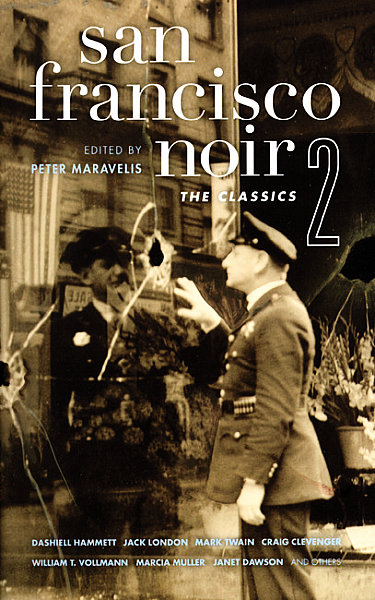
San Francisco Noir 2 vs. Los Angeles Noir 2
Hear from the editors of the lastest installments in the Noir series, San Francisco Nior 2 and Los Angeles Noir 2: the Classics. Featuring San Francisco Noir 2 editor Peter Maravelis, contributor Eddie Muller, and special guest Cara Black and Los Angeles Noir 2 editor Denise Hamilton.
7 p.m., free
Cantina
580 Sutter, SF
www.akashicbooks.com

The Thousand Autumns of Jocob de Zoet
David Mitchell brings us a new novel, set in coastal Japan in 1799, that follows a Dutch accountant that loses himself in a world of Japanese intrigue and danger.
7:30 p.m., free
The Booksmith
1644 Haight, SF
(415) 863-8688

Saturday, July 24

“The Bard in Bollywood”
Shakespearean scholar, Gitanjali Shahani, will explore the many adaptations, manifestations, and appropriations of Shakespeare in popular Hindi cinema using clips from Shakespeare Wallah, Maqbool, and Omkara to illustrate how Bollywood has re-imagined Shakespeare through the ages.
7 p.m., $8-$10 sliding scale
Artists’ Television Access
992 Valencia, SF
www.thirdi.org

 
“Fly Trap Theater”
This kid-friendly presentation by staffers from the Conservatory of Flowers offers an up close look at carnivorous plants and how they attack and eat bugs. There will even be a fly trap dissection, so onlookers can see the plants’ trapping mechanisms, followed by bug and plant puppet crafts.
2 p.m., free
Paxton Gate’s Curiosities For Kids
766 Valencia, SF
(415)252-9990

Himalayan Kriya Master Yogiraj SatGurunath Siddhanath
Attend this gathering where Yogiraj will discuss life from an enlightened viewpoint and share his mission of Earth peace through self peace.
7 p.m., $20 suggested donation
St. Gregory of Nyssa Episcopal Church
500 DeHaro, SF
1-866-YOGI-RAJ


Redstone Labor and Culture Walk

Learn about the history behind the murals in the lobby of the Redstone Building, a building that was the headquarters of the 1934 General Strike, followed by a guided walk through the vibrant surrounding neighborhood highlighting the Mission’s art, ethnic history, and class struggle.
1 p.m., free
Meet at Redstone Building
16th St. and Capp, SF
RSVP at (415) 841-1254

Sunday, July 25

Barak Obama and the Jim Crow Media
Author Ishmael Reed will read and discuss his new book, Barak Obama and the Jim Crow Media: The Return of the Nigger Breakers, about how Obama’s opponents use modern reincarnations of the ugly demons of slavery-era tactics to “break” black people.
2 p.m., free
Koret Auditorium
San Francisco Main Library
100 Larkin, SF
(415) 557-4400

Laborfest Book Fair and Poetry Reading
All day long, the Mission Cultural Center will feature multiple rooms where authors, activists, educators, and organizers will present labor themed panel discussions, book discussions, poetry readings, historical lectures, tabling, socializing, and more.
9:30am-5pm, free
Mission Cultural Center for Latino Arts
2868 Mission, SF
www.laborfest.net

Tuesday, July 27

Death is Not an Option
Suzanne Riveca’s new collection about girls and women in a world where sexuality and self-delusion collide.
7 p.m., free
Books Inc. Berkeley
1760 4th St., Berk.
(510) 525-7777

Found in Translation Book Group
Once a month, Scott Esposito of the Center for the Art of Translation and the Quarterly Conversation hand-selects fiction from around the world for a spirited discussion. Learn about the classic novel by Honoré de Balzac, Eugénie Grandet, and his epic 100- book series Comedie humaine which provides an immense panorama of post-Napoleon France.
7 p.m., free
The Booksmith
1644 Haight, SF
(415) 863-8688

“Jesse Schell: Visions of Gamepocalypse”
Hear game designer and CEO of Schell Games Jesse Schell discuss the social, cognitive, and technological trends in computer game design and use.
7:30 p.m., $10
Novellus Theater
YBCA
701 Mission, SF
(415) 978-2787

On the Cheap listings

0

P>On the Cheap listings are compiled by Paula Connelly. Submit items for the listings at listings@sfbg.com.

THURSDAY 22

RitLab Contemporary Jewish Museum, 736 Mission, SF; (415) 655-7800. 6pm, $5. Roll up your sleeves and create art with your friends at this weekly installment of the Contemporary Jewish Museum’s D.I.Y. craft workshop focusing on personalized amulets that celebrate womanhood. Featuring snacks, drinks, creative guidance, and free materials.

BAY AREA

“A Roof Full of Wild Flowers” Bone Room, 1573 Solano, Berk.; (510)526-5252. 7pm, free. As part of the Bone Room Presents natural history lecture series, California Academy of Sciences Senior Curator and Botanist Frank Alameda will talk about the living, growing, 2.5 acre roof on the new California Academy of Sciences building. Alameda will discuss the construction of the roof and the part that it plays in the sustainability of the museum as a whole.

FRIDAY 23

Black Rock Roller Disco SOMArts, 934 Brannan, SF; (415) 863-1414. 8pm; $7 in disco or playa garb, $10 no costume, $5 skate rental. Skate to some old school funk and roller disco with the Black Rock Rollers and help raise funds to bring a roller disco rink to Burning Man 2010. Participants must be 21 and over and Black Rock Roller Disco is not responsible for alcohol related crashes.

BAY AREA

E.T.: The Extra-Terrestrial Paramount Theater, 2025 Broadway, Oakl.; (510) 465-6400. 8pm, $5. Enjoy a true vintage movie experience complete with period newsreels, cartoons, previews, live music from the Mighty Wurlitzer organ, and audience participation games at this screening of E.T. in the classic, art deco Paramount Theater.

Ransanble! Humanist Hall, 390 27th St., Oakl.; www.raratoulimen.com. Fri. 6pm-9:30pm, Sat. 11am-9pm, Sun. Noon-6pm; free-$20. Gather with dancers, musicians, community leaders, scholars, activists, dance and music educators, linguists, cultural and food enthusiasts and supporters of Haiti for this Haitian arts and culture festival featuring film screenings, dance workshops, Haitian cuisine, art, lectures, performances, Kreyol language classes and more.

SATURDAY 24

“The Bard in Bollywood” Artists’ Television Access, 992 Valencia, SF; www.thirdi.org. 7pm, $8-$10 sliding scale. Shakespearean scholar, Gitanjali Shahani, will explore the many adaptations, manifestations, and appropriations of Shakespeare in popular Hindi cinema using clips from Shakespeare Wallah, Maqbool, and Omkara to illustrate how Bollywood has re-imagined Shakespeare through the ages.

“Fly Trap Theater” Paxton Gate’s Curiosities For Kids, 766 Valencia, SF; (415)252-9990. 2pm, free. This kid-friendly presentation by staffers from the Conservatory of Flowers offers an up close look at carnivorous plants and how they attack and eat bugs. There will even be a fly trap dissection, so onlookers can see the plants’ trapping mechanisms, followed by bug and plant puppet crafts.

Redstone Labor and Culture Walk Meet at Redstone Building, 16th St. and Capp, SF; RSVP at (415) 841-1254. 1pm, free. Learn about the history behind the murals in the lobby of the Redstone Building, a building that was the headquarters of the 1934 General Strike, followed by a guided walk through the vibrant surrounding neighborhood highlighting the Mission’s art, ethnic history, and class struggle.

Urban Youth Arts Festival Precita Park, Folsom at Precita, SF; (415) 285-2287. 1pm-6pm, free. Over 2,000 square feet of portable wall space will be open for artists of all ages to express themselves with free paint, brushes, and aerosol paint cans to get things started. There will also be mural performances, live music, breakdancing, spoken word performances, and free refreshments.

SUNDAY 25

Prepare for the Playa Café Cocomo, 650 Indiana, SF; www.preparefortheplaya.com. Noon-7pm, free. Over 60 burner businesses and designers will be showcasing their playa specific products and services, including lights, faux fur, goggles, dust masks, costumes, sexy playa outfits, and more. There will also be a fashion show, how-to demonstrations for playa survival, virgin burner makeovers, and more.

Laborfest Book Fair and Poetry Reading Mission Cultural Center for Latino Arts, 2868 Mission, SF; www.laborfest.net. 9:30am-5pm, free. All day long, the Mission Cultural Center will feature multiple rooms where authors, activists, educators, and organizers will present labor themed panel discussions, book discussions, poetry readings, historical lectures, tabling, socializing, and more.

Symphony in the Park Dolores Park, Dolores at 18th St., SF; www.sfsymphony.org. 2pm, free.Pack a picnic basket and bring your friends and family for the San Francisco Symphony’s free concert in Dolores Park, including a special tribute to Mexico with conductor Alondra de la Parra to celebrate the bicentennial of the independence of Mexico.

Up Your Alley Dore Alley at Folsom, SF; www.folsomstreetfair.org/alley. 11am-6pm, $5 suggested donation. If you like bondage, animal role play, kink, leather straps, whips, paddles, latex outfits, suspension, and hardcore BDSM pastimes, than the Dore Alley street fair is for you! This smaller, more gay male-focused event features demonstrations, kinky vendors, and local DJs setting the mood.

BAY AREA

Last Sundays Fest Telegraph between Bancroft and Dwight, Berk.; www.lastsundaysfest.com. Noon-7pm, free. Enjoy a whole day jam packed with East Bay culture at this street festival featuring live indie pop and rock music, craft, food, and contemporary merchandise vendors, children’s exhibits, and more.

For Lit, Talks, and Benefits listings, visit the Pixel Vision blog at www.sfbg.com/pixel_vision.

Trash Lit: Doo-dah, hoo-hah, winkie, and cooter with Janet Evanovich

0

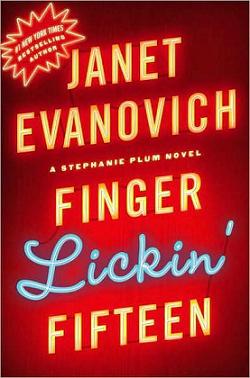
Finger-Lickin’ Fifteen
Janet Evanovich
St Martin’s Press, 318 pp, $27.95


I’m just going to come right out and say it: Janet Evanovich is the funniest writer to come along on the scene since Carl Hiassen, and in some ways, she’s got Hiassen beat. He writes about Florida, where unreal people do some bizarre stuff; her turf is Jersey, where the characters are pretty close to normal life. Which is to say, totally strange and fucked up. She is my favorite living writer, and after fourteen previous novels, the tales of Stephanie Plum and her cohorts just seem to get better.


Finger Lickin’ Fifteen is among the best of the series. Before you even get to page five, there’s a decapitation, witnessed by Lula, the ‘ho turned bounty hunter who works with Plum. And not just any decapitation: A guy swings a meat cleaver, the head hits the ground, blood spurts up like Old Faithful, Lula tells the story in vivid detail, Stephanie throws up … it’s glorious.


The scene in Trenton hasn’t changed much since the last book, except that Plum has temporarily broken up with her boyfriend Morelli. She’s still working for her cousin’s bail bonds agency, still trying to make a living catching deadbeats, still trying to figure out which hot guy she wants more, Morelli the cop or the mysterious (and even hotter) Ranger, who’s an insanely cool and tough private security mogul.


It turns out that the headless guy is a celebrity chef, and Plum and her gang think the hit may be all about barbecue sauce, and wind up investigating, sort of. And of course, Plum’s Grandma Masur, one of the great characters in the history of American literature, gets deeply involved.


I’ll just give you a few tidbits of why I love Janet Evanovich. Here’s Lula on men: “You don’t want to go around thinkin’ shit is your fault. Next thing you know, they got you makin’ pot roast and you’re cutting up your Mastercard.”


Grandma Masur on a neighbor girl: “She was Mary Jane Turley then. Up until the fourth grade, she quacked like a duck. Never said a blessed word in school. Just quacked. And then one day she fell off the top of the sliding board in the park and hit her head and started talking. Never quacked again. Not to this day.”


Some of the things that happen in this book: An exploding back yard gas grill sets off a huge fire in her family’s back yard. A toxic barbecue sauce gives everyone horrible diarrhea. An exploding pressure cooking puts a dent in Plum’s ceiling. A cross-dressing chef works days in a chicken outfit. Plum goes on a blind date with a man named Peter Pecker. Two guys in Zorro masks toss a fire bomb into her building. A car bomb blows up Lula’s ride. Grandma Masur shoots a guy’s ear off. Lula is stuck in a car window until she farts for a minute straight. There’s a lot of talk of doo-dah, hoo-hah, winkie, cooter, wangers, boners, and the knicky-knacky.


It’s enough to make me proud to be an American.

Appetite: With Campo de Encanto, SF gets its own pisco

0

You might have heard? There’s a new pisco on the streets “for bartenders, by bartenders”: Encanto Pisco, created by Duggan McDonnell of Cantina, sommelier and spirits guru Walter Moore, and Peruvian master distiller Carlos Romero. Although an authentically Peruvian pisco (distilled — and already making waves — in Peru), it’s a homegrown San Francisco product, a labor of love from locals who know their spirits.

I had the privilege of tasting this acholado (blended) pisco before its release and now with the finished product, am delighted at how balanced it is: floral, with hints of citrus and white pepper. It stands up on its own, going down smoothly much as a brandy or eau-de-vie would, but also an ideal base for cocktails, with a large number of bars around town already stocking it. Alembic was the first to do so, it’s also at pisco havens La Mar Cebichería and Pisco Lounge, while Carlos Yturria showcased it with fig, sage and lemon at the inaugural Pickled, in Absinthe’s back room.

Campo de Encanto means ‘Field of Enchantment’, a romantic spirit evident in gorgeous, vintage-style bottling to the artisanal production of this grape brandy in the Ica Valley of Peru, combining three different grape varietals: Quebranta (76%), Torontel (6%), and Italia (18%). Encanto is sustainably harvested and distilled without preservatives, sugar or even a drop of water.

San Francisco has a rich history and love affair with pisco, inventing some of pisco’s greatest drinks like the Pisco Punch, so it seems fitting that we now have a pisco to call our own. And one of the finer, more approachable piscos at that.

You can purchase Encanto at stores like Cask or The Jug Shop

www.encantopisco.com

Half-remembered kaleidescopes: the Jewish Film Festival’s youngest storytellers

0

Could the past be a kaleidescope, a pattern of images that shift with each disturbance of a sudden breeze… and if the shift is everywhere, how would we know?

-Alan Lightman

If heritage remains constant, what changes is the inheritors. In a project that will live in interactive kiosks at the Jewish Film Festival (Sat/24), as well as in our own Internet devices, young artists are using websites to tell tales that only last year would have taken the shape of a movie. Modernity, man. Their theme? “Half Remembered Stories,” subject matter that lends itself to the nebulous, fragmentary nature of our online lives.

Zoe Pollak’s multimedia project “Memory Paths,” (which makes use of the above quote from Einstein’s Dreams (2004), explores this fluctuating notion of memory. Pollak set 12 videos from her tow-headed childhood to three different sounds ‘o thought – quotes from Einstein and other Jewish thinkers, nocturnes by Chopin, heady intellectual musings all of it – on a site that centers around the image of a clock. Her inspiration came from the sense of pending mortality that strikes most recent high school grads. 

“I’ve been getting nostalgic as it’s getting to be time for me to leave for college,” Pollak told me in a phone interview. “For my project, I wanted to look at individual memories I have, like the first day of preschool, and look at how my relationship to that memory has changed over time. Sometimes when I look back at that event, like when I have a lot of homework, I might be very nostalgic, but if I’m reading a very interesting article, I might notice how now I have the ability to process more complicated ideas.”

The project was organized through the New Jewish Filmmaking Project, which hosts documentary producers from Citizen Film helping 11 young digital bards to focus on gaps in recall. It segueways nicely with the panorama of stories invoked in the film festival as a whole, even if the divergent format seems to crown the young storytellers as the new generation.

Although the project did yield one bad ass reflection on the notion of zombie takedown, family history seems to have been a natural choice for many of the participants; a young uncle’s overseas death from Hepatitis C is explored, a grandfather’s gambling addiction, a great-grandmother that had refused to emigrate to the U.S. if it meant leaving her young lover. 

The latter was the vision of a NJFP participant from year’s past, Klaira Markenzon, who in 2004 directed a movie about her family’s prolonged stay in their native Ukraine, Leap of Fate. “Half Remembered Stories” sees Markenzon develop that film into an online choose your own adventure book. “I wanted it to be about how every decision can change the rest of your life,” says Markenzon. Elect to have Grandma take that long steerage boat ride to America in Markezon’s “game,” and players can find themselves sick, rejected at the gate of Ellis Island and forced to return to the Ukraine, or perhaps Palestine. Immense historical research went into the making of the project. 

“This format is outside of the tradition of beginning, middle, and end,” says Sophie Canstantinou, one of the project’s facilitators and co founder of Citizen Film. Her cohort, Sam Ball, told me that the new format of story not only gave young people the opportunity to create their own vision (in place of the collective product of years past), but that it also reflected the gyrations of information culture today. “What’s new this year is everything that’s going on in this online media, and that the population we’re working with spends so much on time engaging in stories – we wanted to see if we could harness that.”

But do the stories pack the same punch on our computer screens as they would have screened in a dark theater? Hard to say, really – but Ball is confident that they are indeed harbingers of a new kind of cultural experience. “Eighty years ago,” he told me “the only way you could see a movie was having a shared, communal experience in a theater. In this new medium you’re back to having a communal experience, but its a different one. It’s people sitting in environments of their own making, being able to communicate.” Perhaps the past is indeed a kaleidescope: one that calls up a different jewel tone image with each generation’s shake of it’s mirrors.


The New Jewish Filmmaking Project’s “Half Remembered Stories” 

Launch party Sat/24 (through Aug 9) 12:30 p.m., $12 (includes 1:30 p.m. screening of Te Extraño

Castro Theatre

429 Castro, SF

www.njfp.org


Our Weekly Picks: July 14-20, 2010

0

WEDNESDAY 14

MUSIC

Sean Bonnette

Sean Bonnette is the guitar player for Andrew Jackson Jihad, the band that proved punk rock sounds better unplugged. He’s been with the group since its inception in 2004, and along with his comrade-in-arms Ben Gallaty, has spent the last six years writing hilariously irreverent lyrics, cutting a swath through the country’s basements, parks, and concert halls, and slowly pushing folk-punk into the mainstream consciousness. Bonnette’s solo show promises to be a showcase of the loveliest, messiest, raggedy-ist tunes this side of Neutral Milk Hotel and a reminder that, 924 Gilman’s financial woes notwithstanding, DIY’s not dead. (Zach Ritter)

With Kepi Ghoulie and Gnarboots

9 p.m., $8

Bottom of the Hill

1233 17th St., SF

(414) 621-4455

www.bottomofthehill.com


MUSIC

Bardot A Go Go

In America, Bastille Day is the only day of the year where Francophiles, if they’re not storming a prison, can revel in their obsession en masse. With drink specials and a night of decadence that would make Louis XIV’s wife blush, the Rickshaw Stop offers its very own discotheque. If Austin Powers and Marie Antoinette put their wits together and threw a party, Bardot A Go Go would be it. With swinging ’60s pop — Serge Gainsbourg, France Gall, and the titular femme fatale, to name a few — and its very own go-go girls, this long-standing shindig stares hipsters in the face and dares to ask the unaskable: Parlez-vous francais? So put down your Balzac, put on a beret, and get the hell down to Fell. (Ryan Lattanzio)

8 p.m., $7

Rickshaw Stop

155 Fell, SF

(415) 861-2011

www.rickshawstop.com


THURSDAY 15

VISUAL ART

Japanese Art Kite Show

What could be better than a Matt Furie painting? Well, maybe a Matt Furie painting on a kite. Furie is one of 21 artists contributing sky-ready works to “Japanese Art Kite Show,” a group exhibition co-curated by Shoko Toma and Yukako Ezoe that brings together kites by 21 artists from Japan and the Bay Area. Bay Area residents from the Hamamatsu City prefecture in Japan have taken part in the Berkeley Kite Festival for the past five years, while Hamamatsu kites — created with washi and rice glue — date back at least 450 years. The kites here vary in size and utilize hemp for string. On Naoki Onodera’s kite, stars evoke another historical marker: the Kanrun Maru’s journey across the Pacific from Japan to the U.S. 150 years ago. (Johnny Ray Huston)

Through July 29

5:30 p.m., free

Chandler Fine Art and Framing

170 Minna, SF

(415) 546-1113

www.chandlersf.com


COMEDY

Zane Lamprey

Do you like to go out drinking? Me too! Oh, and so does Zane Lamprey, host of Three Sheets, a TV show that’s survived the move to three different channels as Lamprey travels the world exploring fine libations, drinking games, and hangover cures. With the future of the show uncertain — again — Zane has taken to the streets with the “Drinking Made Easy Comedy Tour,” a celebration of all things alcoholic. No one can fault you for not knowing about Three Sheets, it’s had a hell of a time staying on air. But show me a San Franciscan who doesn’t look happier with a drink in their hand, and I’ll show you a liar. (Peter Galvin)

8 p.m., $29.50

Fillmore

1805 Geary, SF

www.livenation.com


MUSIC

Mary Gauthier

The story of Mary Gauthier’s rise in the ranks of musicians — a career she chose at the ripe age of 35 after stints as a teenage runaway, substance abuser, philosophy major, café manager, and restaurant owner — is full of lucky breaks and an almost charmed trajectory. Yet her first year of life, spent in the charity wards of St. Vincent De Paul, was far removed from the good fortunes of her eventual transformation to masterfully frank folk lyricist and guileless performer. In The Foundling, her sixth album, Gauthier chronicles her own history from birth date to birthright, searching for answers and finding only more questions. Her Café Du Nord appearance, however, answers our question: When’s Mary Gauthier going to come back around? (Nicole Gluckstern)

With Peter Bradley Adams

8:30 p.m., $20

Café Du Nord

2174 Market, SF

(415) 861-5016

www.cafedunord.com


MUSIC

Sextreme Ball

It’s been 15 years since the Lords of Acid-My Life with the Thrill Kill Kult Sextacy Ball Tour stomped across the continent. But since sex, drugs, and mass murder have never really gone out of style, this summer’s reprise is far from feeling dated. Maybe it’s just the humidity, but there’s an almost palpable electric charge in the air — could it be the promise of a) tissue-throbbing, groin-grinding beats b) the cheerfully lewd lyrics of classics such as “Mr. Machoman” or creepier implications of “Sex on Wheels” or c) the prospect of catching latest Lords of Acid chanteuse Lacey Conner in a leather-clad catfight? I’m going with d) all of the above. (Gluckstern)

9 p.m., $23

DNA Lounge

375 11th St, SF

(415) 626-1409

www.dnalounge.com


FRIDAY 16

DANCE

Run for Your Life! and Gadung Kasturi

Run for Your Life! … it’s a dance company! and Gadung Kasturi Balinese Dance and Music are unlikely bedfellows, but trust Dudley Brooks — he knows how to make a match. After all, he is “sleeping” with both of them. Run for Your Life! is his long-running comedy-dance theater company; Gadung Kasturi is a classical Balinese dance company whose music Brooks has performed for more than 20 years. How he keeps the two identities apart is anybody’s guess. Stylization is what keeps him going. His comedy, often with puppets, is smart, hilarious, and musical. Included in this program are the LOL-worthy Les Sillyphides, Cirque du So Little, and Roaring ’20s, Mafioso-inspired The Soldier’s Tale. Gadung, with eight-year old Chandra Ayu Davies — who blew everyone away at this year’s Ethnic Dance Festival — offers the new Nyapuh Jagat. Watch for Brooks, he’ll be hammering away in the gamelan orchestra. (Rita Felciano)

Through Sat/17

8 p.m., $18

Dance Mission Theater

3316 24th St., SF

(415) 273-4633

www.brownpapertickets.com


MUSIC

Antibalas

Afrobeat keeps growing and mutating, revitalizing club music and giving indie rock a much-needed groove. Twelve years into since their summertime birth, Brooklyn’s Antibalas can be seen and heard as true veterans of the sound, with ties to two generations of the Kuti legacy. At the same time, afrobeat is the base from which the group — who worked with producer Tortoise’s John McEntire on 2007’s Security — reach deep into other genres. Antibalas plays out often enough to have seen the world and then some, and one of its most recent songs, “Rat Race,” suits the current socioeconomic moment. Prepare to dance. (Huston) With Sway Machinery

9 p.m., $23

Great American Music Hall

859 O’Farrell, SF

1-888-233-0449

www.gamhtickets.com


DANCE

Post: Ballet

Choreographer and dancer Robert Dekkers is making himself known in the dance world for seamlessly merging contemporary and classical movement styles. The name of his new SF-based contemporary ballet company, Post: Ballet, says it all. Much like his stylistic sensibility, the words Post: Ballet imply an affiliation with and departure from the conventions of classical ballet. The company’s inaugural performance, Concert One, features classically-trained, versatile ballet dancers in a series of innovative and thought-provoking works. Dekkers’ fierce choreography — along with live music by SF composers Daniel Berkman and Jacob Wolkenhauer, as well as the engaging music of Grizzly Bear, Steve Reich, and Department of Eagles (to name a few) — will keep those who ordinarily fall asleep at the ballet wide awake. (Katie Gaydos)

Through Sat/17

8 p.m., $25

Cowell Theater

Fort Mason Center

Marina at Laguna, SF

www.postballet.org


VISUAL ART

David Byrne and Dave Eggers

Former Talking Head David Byrne and McSweeney’s founder Dave Eggers are no strangers to other disciplines of art. Both have dabbled in screenwriting and visual art outside their respective fields of popular music and prose fiction. Now SF’s Electric Works is hosting simultaneous galleries by the two Renaissance men. Byrne’s exhibition shares the name “Arboretum” with his 2006 book of branching diagrams. Eggers’ “It Is Right To Draw Their Fur” treats more animate subjects — animals, to be exact. As it happens, Eggers studied art before switching to writing novels, so these grease pencil drawings are hardly the work of a naïf. Judging from their past works and unconventional worldviews, Byrne and Eggers ought to complement each other well. (Sam Stander)

Through Aug. 21

6 p.m., free

Electric Works

130 Eighth St., SF

(415) 626-5496

www.sfelectricworks.com

SATURDAY 17

FILM

Little Shop of Horrors

Midnight movies are alive and well in San Francisco, and the Landmark Theatres are active participants in the historic cult tradition. For the next month, the Bridge plays host to a “Rocksploitation”-themed midnight program, featuring local cinephile band Citizen Midnight playing pre-show music for a variety of rock-inspired flicks. This week the series features Frank Oz’s incredibly campy 1986 musical remake of Little Shop of Horrors starring Rick Moranis and Steve Martin. Check back in the coming weeks for Brian De Palma’s gothic rock opera Phantom of the Paradise (1974) and an uncut version of David Lynch’s 1990, Palme d’Or-winning, Elvis-fueled Wild at Heart. (Stander)

Midnight, $10

Bridge Theatre

3010 Geary, SF

(415) 668-6384

www.landmarkafterdark.com


FILM/MUSIC

Psycho with the San Francisco Symphony

The symphony’s probably the last thing you’d associate with a shower scene. (Although if we’re talking porn here, maybe you missed Wet ‘n Wagner or Rusty Tromboners 2: Spit Valves Under Spray Heads.) It’s definitely the last place you’d expect to hear the stabbing “EE! EE! EE! EE!” of the shower scene from Hitchcock’s Psycho (1960) to pop up — unless you’ve an ear for esoteric snatches of Webern. But Bernard Herrmann’s fiendishly clever orchestral score for this mother of all classic slashers is catnip for the adventurous San Francisco Symphony, which will be performing it in full as the 50-year-old flick unfurls above them in all its chocolate-syrup-spattered glory. Expect expert deployment of sinister ostinato and hair-curling counterpoint throughout. Don’t forget to invite Mom. (Marke B.)

8 p.m., $30–$70

Davies Symphony Hall

201 Van Ness, SF

(415) 864-6000

www.sfsymphony.org


SUNDAY 18

MUSIC

New Pornographers

Have you been craving propulsive choruses? Hunting for hummable harmonies? Longing for a variety of vocalists? Seek no further — Canada’s foremost power pop supergroup, the New Pornographers, is now touring on behalf of its fifth album, Together. Their continued togetherness is a bit unexpected, since members Neko Case and Dan Bejar (of Destroyer) have full-blown careers of their own. But the New Porn engine keeps chugging along, a full-fledged entity rather than a side project. The latest record is perhaps their most bombastic yet, but they haven’t sacrificed the diversity of lyrical voices that makes them consistently worthwhile. They’re supported at Oakland’s Fox Theater by local concern the Dodos as well as sometime-Yeah Yeah Yeahs member Imaad Wasif. (Stander)

With Dodos and Imaad Wasif

7:30 p.m., $27.50

Fox Theater

1807 Telegraph, Oakl.

www.thefoxoakland.com

The Guardian listings deadline is two weeks prior to our Wednesday publication date. To submit an item for consideration, please include the title of the event, a brief description of the event, date and time, venue name, street address (listing cross streets only isn’t sufficient), city, telephone number readers can call for more information, telephone number for media, and admission costs. Send information to Listings, the Guardian Building, 135 Mississippi St., SF, CA 94107; fax to (415) 487-2506; or e-mail (paste press release into e-mail body — no text attachments, please) to listings@sfbg.com. We cannot guarantee the return of photos, but enclosing an SASE helps. Digital photos may be submitted in jpeg format; the image must be at least 240 dpi and four inches by six inches in size. We regret we cannot accept listings over the phone.

Minty fresh

0

DANCE/THEATER After rapidly selling out its two-week premiere in May 2009, the Joe Goode Performance Group returns to San Francisco’s lavish Old Mint for a luxurious one-month run of Traveling Light. JGPG’s haunted tour of SF’s oldest stone building, a monument to money power, unfolds as a series of made-up but history-laden vignettes scattered throughout the edifice, adding up to an inspired meditation on greed and desire, success and failure, the material and immaterial. On the eve of opening night, acclaimed Bay Area–based director-choreographer Joe Goode — who says the piece has changed only slightly since last year (“We’re filling up the space better and perhaps telling the story more clearly”) — spoke to SFBG from his East Bay home.

SFBG In addition to Traveling Light, you premiered another site-specific work last year, Fall Within, at the Ann Hamilton Tower in Geyserville. What’s the appeal with site-specific work? Do you approach such pieces very differently?

Joe Goode You have to in a way because there’s no front. People can see things from many different vantage points. Also some theatrical illusions are taken away from you. On the other hand, you have the personality, character, and history of the site, which is contributing enormous amounts of information to the moment. That is really exciting and delicious, and there’s a lot that you can do with it.

The way I work with performers—the way I elicit material from them so that it feels personal to them—[remains] similar. I’m interested in an intimate, close-up glimpse of a real human experience. Many site artists get involved with the contours of the architecture, the aural properties of the site. I’m interested in all that, too, but retain my interest in that personal narrative.

SFBG That personal aspect, though, intersects with the Mint , an edifice reverberating very strongly with a larger social crisis, namely the enormous, growing disparities in wealth.

JG That’s ultimately what the piece is all about. There’s a kind of grandeur to some of the interiors of the building, which is just a disgraceful, ostentatious display of wealth. You can’t help but feel it when you walk in there. This is the disparity that’s been present in this city since 1850! I tend to think of San Franciscans as this very egalitarian, alternative, radical, and thoughtful group of people, when in fact there’s an underpinning of those who have and those who don’t. Those who have make a lot of decisions about what happens in this city. Those who don’t, don’t have a voice particularly. [The Mint] reflects that for me.

SFBG How is that relation between social systems and personal narratives worked out in creating the performances?

JG A lot of it comes from my imagination. I spent a lot of time in those rooms. Some of the narratives don’t have anything particular to do with the history of the building, but there’s a gilded balcony or a particular corner that makes me think of a narrative—a particular time, a person, what they might have been going through. Then I begin to weave the characters, again working very intimately with the performers, asking them their stories and how they felt about this issue, what it brought to mind for them. And I go off and write it. That’s how it works.

SFBG You’ve used the term “felt performance” in referring to your work and your teaching method. Can you explain that term?

JG My theory is that I can’t make a resonant, rich, performative moment on onstage, or in a site, unless I’m having that experience. I can’t just package it. Really the job for the performer is constructing a road map, or an obstacle course even. You’re not working to create an experience for someone else; you’re working to create an experience for yourself. Human beings can share that. We have a very good authenticity meter in our hearts and minds. We [the audience] can get on the boat with you. But you have to be taking the ride as a performer; that’s what’s essential. If you’re not taking the ride, there’s no way we’re going to take it.

SFBG In your approach, dance-theater it’s sometimes called, you’ve been synthesizing forms, dialogue, movement, text, music, for over 30 years …

JG And I’m only 40! How does that work?

SFBG It’s a precocious body of work. But there must have been dance purists and theater purists who balked at the synthesis …

JG Well, there still are. Don’t suffer the illusion that those people have gone away. There are people who look at my work and say it’s not dance. There are certainly people who look at my work and say it’s not theater. It falls between the cracks; they’re unsettled by it and they don’t want any part of it. I think the contemporary viewer — I mean, we’re so much about the mashup; we’re so much about computer animation infiltrating live action. All these collisions are happening in media. For a younger audience to see dancers speak? They don’t care. “That’s cool, whatever, why wouldn’t they?” And that’s how I always felt.

There’s another element there too. When I started making this kind of work: I wanted to have some frank expression of myself as a gay man. Not in a silver jock strap waving a rainbow flag, but as a fully- dimensional human being. Not hiding that very essential part of my identity, but somehow bringing it in. I felt I needed my voice to do that. My body was going to get to an essential part of that, but there was another whole part that needed to be addressed. And pretty much from the beginning, there was a huge audience for it. I feel like I’ve definitely found my place with it. I don’t feel like there’s any going back, that’s for sure.

Beyond the rage

46

rebeccab@sfbg.com

Downtown Oakland became supercharged with emotion in the hours following the July 8 announcement of the verdict in the trial of former BART police officer Johannes Mehserle. And in the days that followed, the city remained electrified as residents struggled to make sense of the verdict, the rioting that occurred in its wake, and the historic significance of these developments.

But as the emotions dissipate, the issues behind the verdict and its aftermath remain — along with a series of questions that could determine whether this intensely scrutinized shooting of an unarmed man will lead to any changes in police practices or the justice system, as well as how the community will react if the judge imposes a light sentence.

After being moved out of the Bay Area because the publicity surrounding the case, a Los Angeles jury found Mehserle, a white officer, guilty of involuntary manslaughter for fatally shooting Oscar Grant, a 22-year-old unarmed black man who was detained on a BART train platform in Oakland on Jan. 1, 2009 following reports of a fight.

The verdict stood out as an almost unprecedented conviction of an officer in a case involving deadly use of force, and a departure from an all-too-familiar narrative in which tragedies resulting from police shootings bring no consequences for those responsible for pulling the trigger. However, in the wake of the verdict, Grant’s family members made it clear that they did not believe that justice had been served.

“This involuntary manslaughter verdict is not what we wanted, nor do we accept it,” Oscar Grant’s uncle, Cephus “Bobby” Johnson, said at a July 10 press conference at True Vine Ministries, a West Oakland church. “It’s been a long, hard road, but there are chapters in this war. The battle’s just getting started.”

To Grant’s relatives and a coalition of supporters who came together in response to the shooting, the trial is intrinsically linked to a long history of police brutality that occurs with impunity in cases involving youth of color. Meetings organized by clergy and community members have been held weekly in West Oakland over the past 19 months with the ultimate goal of bringing about greater oversight of the BART police and effective police reform on a broader scale.

On July 9, the U.S. Department of Justice announced that its Civil Rights Division, the U.S. Attorney’s Office, and the FBI have opened an investigation into the shooting and would determine whether prosecution at the federal level is warranted. Defense Attorney Michael Rains also made a motion to move Mehserle’s sentencing to a date later than Aug. 6, the date it was originally expected.

As the events of July 8 solidify into the Bay Area’s collective memory, attention is now shifting toward the next steps, and to lingering questions. Mehserle’s sentencing is key: will his sentence be light, reflecting the jury’s conclusion that he simply made a mistake — or will it include substantial prison time, reflecting the fact that he shot and killed an unarmed man without justification? Will he receive a lighter sentence than someone else without a criminal record found guilty of involuntary manslaughter simply because of his identity as a former officer with law enforcement organizations still in his corner? If Mehserle receives a long sentence, will it signify a shift in a justice system that many perceive as biased — or a stand-alone result of intense public scrutiny?

And as a result of all this, will the BART police finally get the type of training and serious civilian oversight they so badly need?


RAW REACTION

On the day the verdict was announced, thousands turned out for a peaceful rally near Oakland’s 12th Street BART Station and City Hall to hear speakers sound off about how their lives had been affected by police brutality.

As night fell, looting and rioting began to break out as the media covered scenes of rage set against small trash fires, causing anger and frustration for many Oakland residents who were dismayed and frightened by the chaos and disorder. More than 80 arrests were made, and dozens of stores including Sears, Whole Foods, Subway, Foot Locker, and numerous banks were damaged or looted. Police efforts to respond to the situation gave downtown city blocks the feeling of a war zone for several hours.

Reactions to the verdict, and the chaotic aftermath that followed, varied in the following days.

“The truth is that in American history, this is both a high point and a low point,” Olis Simmons, executive director of Youth UpRising — an Oakland nonprofit that works with youth of color — told the Guardian the following day. Speaking to the fact that an officer had been convicted in a case involving a wrongful death, she said: “I think it really is a signal that America is changing. This is the farthest we’ve ever gone.”

She said she hoped that people who were infuriated enough to react violently on the evening of July 8 would channel that energy toward constructive goals of pushing for a more satisfactory outcome. Before rallies and later rioting began that night, Youth UpRising sent people into the crowd to hand out glossy flyers proclaiming “violence isn’t justice.”

Davey D Cook, an independent radio journalist who extensively covered activity surrounding Grant’s death on a news site called Davey D’s Hip Hop Corner, said he thought the mainstream media was ready to have “a field day” with the riots, pointing out that they ran special coverage in the days leading up to verdict, building up anticipation of violent outbreaks. He also said that the scope of the rioting should be kept in perspective.

On his July 9 KPFA radio show, Hard Knock Radio, Cook added a salient point: “Broken windows can be replaced, and in two weeks, they will be. Stolen merchandise can be replaced, and it will be. But who’s going to replace this justice system that got looted? What insurance policy takes care of that?”

Just before the July 10 press conference, a town hall meeting was held inside True Vine Ministries. It was crammed full of supporters from Oakland, San Francisco, and beyond who listened as Minister Keith Muhammad — a representative of the Nation of Islam who has worked closely with the Grant family and traveled to Los Angeles to watch the trial — spoke at length. Muhammad was dressed immaculately in a suit and tie, and spoke with an air of fiery conviction.

“In the outcome of this case, there is surely more to be resolved that has yet to be addressed,” Muhammad said. He emphasized that “we’re not satisfied,” but added: “You should know that dissatisfaction is the foundation of all change.”

He raised a number of questions about the proceedings, asking why there was an absence of African Americans on the jury, and why the judge called an early recess when Grant’s teenage friend, Jamil Dewar, sobbed uncontrollably on the witness stand — but not when Mehserle sobbed on the stand. He noted that Grant’s friends were kept in handcuffs for six hours after witnessing Grant’s death.

In the days following July 8, much was also said about mainstream media coverage of the events, in particular the notion that “outside agitators” would come in and start trouble. “I do not like this divisive campaign to divide our community and protestors by calling people outsiders,” Oakland defense attorney Walter Riley wrote in a statement posted on Indybay.org. “This is a great metropolitan area … we expect people from all over the map to participate in Oakland. Calling people outsiders in this instance is a political attack on the movement. The subtext is that the outsiders are white and not connected to Oakland. From the days of the civil rights movement to now, the outsider labeling failed to address the underlying problems for which people came together. We must engage in respectful political struggle. I understand the frustration. I do not support destruction and looting as political protest.”


LOOKING FORWARD

Mehserle’s conviction suggests the jurors believed his defense that he meant to draw and fire his Taser instead of his gun. In legal terms, settling on involuntary manslaughter, rather than second-degree murder or voluntary manslaughter, means the jury was not convinced beyond a reasonable doubt that Mehserle had malice toward Grant. But the jury found that he was criminally negligent when he failed to notice that he had his gun instead of his Taser in the moments before he pulled the trigger.

“In California, and really in any state, it is extremely difficult for jurors to convict a police officer. There’s an extreme reluctance to do that,” Whitney Leigh, an attorney who formerly worked in the San Francisco Public Defender’s Office, told us.

“There are undoubtedly instances where things like this have happened at some time in the past in California, that weren’t videotaped,” Leigh continued. “But for the videotape, if you walked 10 witnesses in who said that what happened, happened, no one would believe them if the officer took the stand and said that’s not what happened. The only reason there’s a case at all is that there’s a videotape.”

Leigh said he thought that unless the public develops a better awareness that police misconduct regularly occurs, “individuals are going to continue to be victimized by a system that effectively encourages officers to believe that they can act with significant impunity.”

Asked whether he thought it was likely that the federal government would decide to step in after concluding its investigation, he said it was a tough call. “The Justice Department is highly selective in the cases it chooses to prosecute for these crimes,” he cautioned. “That said, the kinds of cases they choose are ones that tend to have a lot of public attention and concern, so this fits within that category. Since it’s such a public case, it can have more of a widespread impact.”

If Mehserle was prosecuted at the federal level, the case would invoke Criminal Code 18 U.S.C. Sec. 242, used when a government agent or an individual acting under the color of authority denies someone their civil rights through force, threats, or intimidation, based on their race, gender, or another protected category.

Then again, the federal government’s decision over whether or not to step in may be linked to the degree of severity of Mehserle’s sentence.

California Penal Code Section 193 specifies the mitigated, midterm, and aggravated sentences for involuntary manslaughter: two, three, or four years in state prison, respectively. Because Mehserle’s case involves his personal use of a firearm, a sentence enhancement of three, four, or 10 years can be added to his prison time under California Penal Code Section 12022.5.

The judge will weigh circumstances to determine Mehserle’s sentence, possibly including his record as a police officer, his criminal record, age, remorse, and other factors, explained Jim Hammer, a former prosecutor and current San Francisco Police Commission member. The judge could toss out the sentence enhancement for personal use of a gun — and there’s a possibility he would deem extreme circumstances, such as his police record, to warrant probation rather than prison time. But Hammer said he thought both of those outcomes are unlikely.

“The judge will want to appear more than fair, not giving special treatment,” Hammer said. “Judges have to stand [for] election too, and in the light of the fact that somebody’s dead, I think the chance of probation is incredibly slim.”

Even if Mehserle receives a light sentence and then faces prosecution at the federal level, there is a chance that information about his past record as an officer — which was not admitted as evidence, thanks to laws that afford protections for police officers in these kinds of cases — would continue to be shielded. The protection applies even though Mehserle resigned.

“The average person just wants courts to be fair,” Leigh said. “And there’s an inherent unfairness in a system that allows a government or a police department that has all the resources and records to … use against you while shielding what might be much more serious and relevant acts by police officers. That’s one change that would be great if that did happen.”

A key legal issue in the case and any possible federal case is reasonable doubt, Hammer said. “Reasonable doubt is everything, and no one talks about it. They just say, ‘Oh, he didn’t have intent.’ That’s not the issue. Can anybody really, honestly say that they don’t have some doubts about his intent?”

At the same time, Hammer tempered his legal analysis with some understanding of Grant’s mother’s pain in light of what happened to her son and as the verdict was reached.

“If the dictionary had three pictures of murder for a picture image, one would be shooting somebody in the back who is unarmed,” he told the Guardian. “What she’s saying is not outrageous. If it were my relative I would probably call it murder too. She’s not crazy.”

As things continue to unfold with Mehserle’s sentencing and the federal civil rights investigation, civil litigation is in the works too. Wrongful death civil lawsuits will likely be filed against BART by Oakland civil rights attorney John Burris on behalf of Grant’s mother, as well as another suit by five friends who were with Grant the night he was killed. BART settled a suit filed on behalf of Tatiana Grant, the slain man’s five-year-old daughter, in January. That total settlement should amount to more than $5.1 million, according to a media release on Burris’ website.

During an interview after the July 10 press conference, Johnson was asked how Grant’s young daughter was doing. He responded: “Tatiana is still struggling with the issue of when her daddy’s coming home. So it’s going to take time for her, when she does understand that he is not coming back home.”

Outside Grant’s family, many observers hope to see systemic change come out of this tragedy. Assembly Member Tom Ammiano introduced legislation to create civilian oversight of BART police after the shooting, but was unhappy to see how it was watered down during the legislative process. Now he wants to see stronger reforms.

“I think Oscar Grant’s death was inevitable based on the lack of caring about how those police were trained,” he told us. “If you’re going to have the kind of independent civilian oversight that’s going to prevent a repeat of what happened to Oscar Grant, you can’t have this namby-pamby law. The mantra has been, well, this is better than nothing. Unless they’re made to do it … it’s not going to happen the way we want.”

Music listings

0

Music listings are compiled by Paula Connelly and Cheryl Eddy. Since club life is unpredictable, it’s a good idea to call ahead to confirm bookings and hours. Prices are listed when provided to us. Submit items at listings@sfbg.com.

WEDNESDAY 14

ROCK/BLUES/HIP-HOP

Sean Bonnette, Kepi Ghoulie, Gnarboots Bottom of the Hill. 9pm, $8.

Cellar Door, Shapes Stars Make, Ventid El Rio. 8pm.

Excuses for Skipping, Lovers, Fake Your Own Death Hemlock Tavern. 9pm, $6.

Guitar Shorty Biscuits and Blues. 8 and 10pm, $20.

Bettye LaVette, Milton Great American Music Hall. 8pm, $26.

Rykarda Parasol, Kevin Junior (Chamber Strings), Mark Matos and Os Beaches, Dolly Rocker Movement Café du Nord. 9:30pm, $14.

Raccoons, Red Blue Yellow, Jhameel, Alee Kharim and Science Fiction Knockout. 9:30pm, $7.

Rattlesnakes, Zodiac Death Valley, Electric Sister Elbo Room. 9pm, $6.

Wakey! Wakey!, Wave Array, Doom Bird Hotel Utah. 8pm, $10.

DANCE CLUBS

*Bardot A Go Go Rickshaw Stop. 8pm, $7. Bastille Dance Day Party with DJs Brother Grimm, Pink Frankenstein, and Cali Kid.

Bastille Day on Belden Belden Place between Pine and Bush, SF; www.belden-place.com. 4pm, free. With DJs Pheeko Dubfunk, Jared F, Nima G, and Hakobo.

Booty Call Q-Bar, 456 Castro, SF; www.bootycallwednesdays.com. 9pm. Juanita Moore hosts this dance party, featuring DJ Robot Hustle.

Hands Down! Bar on Church. 9pm, free. With DJs Claksaarb, Mykill, and guests spinning indie, electro, house, and bangers.

Jam Fresh Wednesdays Vessel, 85 Campton, SF; (415) 433-8585. 9:30pm, free. With DJs Slick D, Chris Clouse, Rich Era, Don Lynch, and more spinning top40, mashups, hip hop, and remixes.

Mary-Go-Round Lookout, 3600 16th St, SF; (415) 431-0306. 10pm, $5. A weekly drag show with hosts Cookie Dough, Pollo Del Mar, and Suppositori Spelling.

Mod vs. Rockers Make-out Room. 9pm, free. A Bastille Day dance off.

Open Mic Night 330 Ritch. 9pm, $7.

RedWine Social Dalva. 9pm-2am, free. DJ TophOne and guests spin outernational funk and get drunk.

Respect Wednesdays End Up. 10pm, $5. Rotating DJs Daddy Rolo, Young Fyah, Irie Dole, I-Vier, Sake One, Serg, and more spinning reggae, dancehall, roots, lovers rock, and mash ups.

Synchronize Il Pirata, 2007 16th St, SF; (415) 626-2626. 10pm, free. Psychedelic dance music with DJs Helios, Gatto Matto, Psy Lotus, Intergalactoid, and guests.

THURSDAY 15

ROCK/BLUES/HIP-HOP

Action Design, Hypernova, Yellow Dogs Thee Parkside. 9pm, $8.

Battlehooch, Cash Pony, Wise Wives Bottom of the Hill. 9pm, $10.

Jesse Brewster, Felsen, Luce, Brad Brooks Red Devil Lounge. 8pm, $10.

Built to Spill, Fauxbois Slim’s. 9pm, $26.

Congress with Moon Candy, Mai-Lei, and Ge-ology Coda. 9pm, $10.

Shane Dwight Biscuits and Blues. 8 and 10pm, $16.

Mary Gauthier, Peter Bradley Adams Café du Nord. 8:30pm, $20.

Live Evil Make-Out Room. 5pm, free.

Lords of Acid, My Life With the Thrill Kill Kult DNA Lounge. 9pm, $23.

Part Time, Sam Flax and Higher Color, Bridget St. John, Elisa Randazzo with Robinson, Amy Blaschke Knockout. 9:30pm, $7.

Tippy Canoe and the Paddlemen, Olivia Mancini, AntonetteG Hemlock Tavern. 9pm, $6.

FOLK/WORLD/COUNTRY

Savanna Blu Atlas Café. 8pm, free.

Very Be Careful, Franco Nero, DJs Special Lord B, Ben Bracken, and Phengren Oswald Rickshaw Stop. 8pm, $10.

DANCE CLUBS

Afrolicious Elbo Room. 9:30pm, $5-7. DJs Pleasuremaker and Señor Oz spin Afro-tropical, samba, and funk.

Caribbean Connection Little Baobab, 3388 19th St, SF; (415) 643-3558. 10pm, $3. DJ Stevie B and guests spin reggae, soca, zouk, reggaetón, and more.

Club Jammies Edinburgh Castle. 10pm, free. DJs EBERrad and White Mice spinning reggae, punk, dub, and post punk.

Drop the Pressure Underground SF. 6-10pm, free. Electro, house, and datafunk highlight this weekly happy hour.

Electric Feel Lookout, 3600 16th St, SF; (415) 431-0306. 9pm, $2. With DJs subOctave and Blondie K spinning indie music videos.

Good Foot Som., 2925 16th St, SF; (415) 558-8521. 10pm, free. With DJs spinning R&B, Hip hop, classics, and soul.

Jivin’ Dirty Disco Butter, 354 11th St., SF; (415) 863-5964. 8pm, free. With DJs spinning disco, funk, and classics.

Koko Puffs Koko Cocktails, 1060 Geary, SF; (415) 885-4788. 10pm, free. Dubby roots reggae and Jamaican funk from rotating DJs.

Mestiza Bollywood Café, 3376 19th St, SF; (415) 970-0362. 10pm, free. Showcasing progressive Latin and global beats with DJ Juan Data.

Nightvision Harlot, 46 Minna, SF; (415) 777-1077. 9:30pm, $10. DJs Danny Daze, Franky Boissy, and more spinning house, electro, hip hop, funk, and more.

Peaches Skylark, 10pm, free. With an all female DJ line up featuring Deeandroid, Lady Fingaz, That Girl, and Umami spinning hip hop.

Popscene 330 Rich. 10pm, $10. Rotating DJs spinning indie, Britpop, electro, new wave, and post-punk.

Solid Thursdays Club Six. 9pm, free. With DJs Daddy Rolo and Tesfa spinning roots, reggae, dancehall, soca, and mashups.

FRIDAY 16

ROCK/BLUES/HIP-HOP

Antibalas, Sway Machinery Great American Music Hall. 9pm, $23.

Inquisition, Altar of Plagues, Velnias, Dispirit Elbo Room. 8pm, $14.

Maria Taylor Andy LeMaster, Foolproof Four, Morgan LeMaster Café du Nord. 9:30pm, $10.

Carlton Melton, Nothing People, Hans Keller Hemlock Tavern. 9:30pm, $7.

Mighty Mo Rodgers Biscuits and Blues. 8 and 10pm, $20.

Shabazz Palaces Yoshi’s San Francisco. 10:30pm, $20.

Slowness, Skeletal System, Sunbeam Rd., Nuns of Justice Retox Lounge. 8:30pm, $2.

Struts, Mighty Slim Pickins!, Minks Thee Parkside. 9pm, $10.

Teenage Bottlerocket, Banner Pilot, Complaints Bottom of the Hill. 10pm, $12.

3rdrail, Absent Society, Saint Vernon, Falling to Pieces Slim’s. 9pm, $14.

JAZZ/NEW MUSIC

Audium 9 1616 Bush, SF; (415) 771-1616. 8:30pm, $15.

Black Market Jazz Orchestra Top of the Mark. 9pm, $10.

Chris Brown, Animal Divino Project, Chad McKinney, Joe Salvatore Li Po Lounge. 9pm, $5.

Emily Anne’s Delights Revolution Café, 3248 22nd St., SF; (415) 642-0474. 8:45pm, free.

Pieces of a Dream Yoshi’s San Francisco. 8pm, $16.

FOLK/WORLD/COUNTRY

Broken Glass Beach Coda. 10pm, $10.

Going Away Party Plough and Stars. 9pm, $6-$10.

Quiet Stars Socha Café, 3235 Mission, SF; (415) 643-6848. 8:30pm, free.

DANCE CLUBS

Dirty Rotten Dance Party Madrone Art Bar. 9pm, $5. With DJs Morale, Kap10 Harris, and Shane King spinning electro, bootybass, crunk, swampy breaks, hyphy, rap, and party classics.

Exhale, Fridays Project One Gallery, 251 Rhode Island, SF; (415) 465-2129. 5pm, $5. Happy hour with art, fine food, and music with Vin Sol, King Most, DJ Centipede, and Shane King.

Fat Stack Fridays Koko Cocktails, 1060 Geary, SF; (415) 885-4788. 10pm, free. With rotating DJs Romanowski, B-Love, Tomas, Toph One, and Vinnie Esparza.

Fubar Fridays Butter, 354 11th St., SF; (415) 863-5964. 6pm, $5. With DJs spinning retro mashup remixes.

Club Dragon Club Eight, 1151 Folsom, SF; www.eightsf.com. 9pm, $8. A gay Asian paradise. Featuring two dance floors playing dance and hip hop, smoking patio, and 2 for 1 drinks before 10pm.

Good Life Fridays Apartment 24, 440 Broadway, SF; (415) 989-3434. 10pm, $10. With DJ Brian spinning hip hop, mashups, and top 40.

Hot Chocolate Milk. 9pm, $5. With DJs Big Fat Frog, Chardmo, DuseRock, and more spinning old and new school funk.

Hubba Hubba Revue: Bootie Pirate Show DNA Lounge. 9pm, $10-15. Bootleg mash-ups and buccaneer burlesque.

Noze, Worthy, and Moomaw Mighty. 9pm, $17. Spinning electronica.

Oldies Night Knockout. 9pm, $2-4. Doo-wop, one-hit wonders, and soul with DJs Primo, Daniel, and Lost Cat.

Radioactivity 222 Hyde, SF; (415) 440-0222. 6pm. Synth sounds of the cold war era.

Rockabilly Fridays Jay N Bee Club, 2736 20th St, SF; (415) 824-4190. 9pm, free. With DJs Rockin’ Raul, Oakie Oran, Sergio Iglesias, and Tanoa “Samoa Boy” spinning 50s and 60s Doo Wop, Rockabilly, Bop, Jive, and more.

Some Thing The Stud. 10pm, $7. VivvyAnne Forevermore, Glamamore, and DJ Down-E give you fierce drag shows and afterhours dancing.

TekAndHaus Anu, 43 6th St., SF; (415) 931-7292?. 10pm, $5. With DJ Raíz.

SATURDAY 17

ROCK/BLUES/HIP-HOP

Acephalix, Self-Inflicted, Vaccuum Elbo Room. 5pm, $7.

Bare Wires, Moccretro, Heavy Hills, Family Matters Hemlock Tavern. 9:30pm, $7.

Drink Up Buttercup, I Come to Shanghai Thee Parkside. 9pm, $8.

*Halford Regency Ballroom. 9pm, $40.

Howlin Rain, Sean Smith and the Present Moment, 3 Leafs El Rio. 9pm, $8.

Igor and Red Elvises, Gun and Doll Show Slim’s. 9pm, $15.

Maps and Atlases, Cults, Globes Bottom of the Hill. 10pm, $12.

Sons of Champlin, Electric Flag, Fishbear Fillmore. 8pm, $30.

Stone Foxes, Mata Leon, Strange Vine Café du Nord. 9:30pm, $12.

Sweet Baby Jai Biscuits and Blues. 8 and 10pm, $20.

Ben Taylor, Katie Herzig Bimbo’s 365 Club. 9pm, $18.

JAZZ/NEW MUSIC

Audium 9 1616 Bush, SF; (415) 771-1616. 8:30pm, $15.

Eric Kurtzrock Trio Ana Mandara, Ghirardelli Square, 891 Beach, SF; (415) 771-6800. 8pm, free.

Hillbilly Jazbos Club Deluxe. 10pm, $5.

Pieces of a Dream Yoshi’s San Francisco. 8 and 10pm, $16.

Terry Disley Experience with Erik Jekabson Coda. 7pm, $5.

FOLK/WORLD/COUNTRY

Blue Diamond Fillups Thee Parkside. 11am, free.

Hillbilly Jazzbos Deluxe, 1511 Haight, SF; (415) 552-6949. 10pm, $5.

Ian Luban Socha Café, 3235 Mission, SF; (415) 643-6848. 8:30pm, free.

Makru Revolution Café, 3248 22nd St., SF; (415) 642-0474. 8:45pm, free.

Orquesta lo Clave The Ramp, 855 Terry Francois, SF; (415) 621-2378. 5pm, free.

Robert Gastelum Latin Jazz Amnesia. 6pm, free.

Justin Roberts and the Not Ready for Naptime Players Swedish American Hall (upstairs from Café du Nord). Noon, $15.

DANCE CLUBS

Bar on Church 9pm. Rotating DJs Foxxee, Joseph Lee, Zhaldee, Mark Andrus, and Nuxx.

Bootie: Chernobyl DNA Lounge. 9pm, $6-12. John!John! presents a disaster-themed stage show, plus DJs Adrian and Mysterious D spin mash-ups.

Booty Bassment Knockout. 10pm, $5. Booty-shaking hip-hop with DJ Ryan Poulsen and Dimitri Dickenson.

Cock Fight Underground SF. 9pm, $7. Gay locker room antics galore with electro-spinning DJ Earworm.

Fire Corner Koko Cocktails, 1060 Geary, SF; (415) 885-4788. 9:30pm, free. Rare and outrageous ska, rocksteady, and reggae vinyl with Revival Sound System and guests.

Fringe Madrone Art Bar. 9pm, $5. With DJs Blondie K and subOctave spinning indie music videos.

Full House Gravity, 3505 Scott, SF; (415) 776-1928. 9pm, $10. With DJs Roost Uno and Pony P spinning dirty hip hop.

HYP Club Eight, 1151 Folsom, SF; www.eightsf.com. 10pm, free. Gay and lesbian hip hop party, featuring DJs spinning the newest in the top 40s hip hop and hyphy.

Jump Up to Get the Beat Down Club Six. 9pm, $5. With live performances by All Soul, Makeshift, Sevent Day, Ophrap, and 5th P and DJs Xole and One-Way.

Non Stop Bhangra Rickshaw Stop. 9pm, $15. Live dhol (drum) players, dance performers, and DJs.

O.K. Hole Amnesia. 10pm, $5. With live performances by Bronze, Altars, Jason Greer, and resident DJs C.L.A.W.S., Muscledrum, and Nay Nay.

Party Like It’s 1994 Paradise Lounge. 10pm, $10. With DJs Jeffery Paradise, Richie Panic, Deevice, and more spinning 90’s music.

Prince vs. Michael Madrone Art Bar. 8pm, $5. With DJs Dave Paul and Jeff Harris battling it out on the turntables with album cuts, remixes, rare tracks, and classics.

Rock City Butter, 354 11th St., SF; (415) 863-5964. 6pm, $5 after 10pm. With DJs spinning party rock.

Saturday Night Soul Party Elbo Room. 10pm, $10. DJs Lucky, Phengren Oswald, and Paul Paul spin 60s soul.

Spirit Fingers Sessions 330 Ritch. 9pm, free. With DJ Morse Code and live guest performances.

Alloy Trex Project One, 251 Rhode Island, SF; (415) 938-7173. 9:30pm, $10. CD release party with guests Cubik, Origami, Outersect, and DJ Yap.

Wet and Wild Club 8, 1151 Folsom, SF; (415) 431-1151. 9pm, $8. With DJs David Harness and Dr. Proctor and a live performance by Lady TaTas.

SUNDAY 18

ROCK/BLUES/HIP-HOP

“Jazz Mafia Presents Remix: Live” Coda. 10pm, $10.

Shanta Loecker, Arian Saleh Hotel Utah. 8pm, $8.

Loquat, Downer Party, Ross Sea Party, Mister Loveless Milk. 8pm, $8.

Mahjongg, Return to Mono, Actors Bottom of the Hill. 9pm, $10.

*Origin, Gigan, Brain Drill, Embryonic Devourment DNA Lounge. 7:30pm, $16.

Primus Great American Music Hall. 8pm, $36.

Secret History, Jetskiis, Kids on Crime Spree, Matthew Edwards and the Unfortunates Rickshaw Stop. 7pm, $10.

Secretions, Ashtray, Hounds and Harlots, Bastards of Young Thee Parkside. 8pm, $6.

Still Flyin’, Poison Control Center Knockout. 9pm.

Sweethead, Nico Vega Café du Nord. 9pm, $12.

FOLK/WORLD/COUNTY

Caravan Palace, DePedro Sigmund Stern Grove, 19th Ave at Sloat, SF; www.sterngrove.org. 2pm, free.

Ash Reiter, Fpod Bpod, Jesse Denatale, Amber Gougis Amnesia. 9pm, $7-$10.

Rolando Morales The Ramp, 855 Terry Francois, SF; (415) 621-2378. 5pm, free.

Watcha Clan, Charming Hostess Yerba Buena Center for the Arts, 701 Mission, SF; (415) 978-2787, www.ybca.org. 8pm, $25.

DANCE CLUBS

Call In Sick Skylark. 9pm, free. DJs Animal and I Will spin danceable hip-hop.

DiscoFunk Mashups Cat Club. 10pm, free. House and 70’s music.

Dub Mission Elbo Room. 9pm, $6. Dub, roots, and classic dancehall with DJs Sep, Maneesh the Twister, and guests Roy Two Thousand and DJ Quest.

Gloss Sundays Trigger, 2344 Market, SF; (415) 551-CLUB. 7pm. With DJ Hawthorne spinning house, funk, soul, retro, and disco.

Honey Soundsystem Paradise Lounge. 8pm-2am. “Dance floor for dancers – sound system for lovers.” Got that?

Jock! Lookout, 3600 16th St, SF; (415) 431-0306. 3pm, $2. This high-energy party raises money for LGBT sports teams.

Kick It Bar on Church. 9pm. Hip-hop with DJ Zax.

Lowbrow Sunday Delirium. 1pm, free. DJ Roost Uno and guests spinning club hip hop, indie, and top 40s.

Makeup Showdown, 10 6th St., SF; (415) 503-0684. 8pm, free. With host Triple Cobra and guest DJs spinning glam rock.

Mission Creek Music Festival presents the After-Park Closing Night Dance Party El Rio. 9pm, $5. With DJs Primo, Nick Waterhouse, and Carnita.

Religion Bar on Church. 3pm. With DJ Nikita.

Slick Idiot, Mona Mur Paradise Lounge. 9pm.

Stag AsiaSF. 6pm, $5. Gay bachelor parties are the target demo of this weekly erotic tea dance.

Sunday Mass The Endup. 8pm, $15. With DJs David Harness, Leonard, Greg Yuen, and more.

Watcha Clan with Charming Hostess New Frequencies, YBCA Forum and Sculptural Court, 701 Mission, SF; (415) 978-2787. 8pm, $25

MONDAY 19

ROCK/BLUES/HIP-HOP

Alex Band Café du Nord. 8pm, $15.

Dig, Amateurbation, Poison Control Center Bottom of the Hill. 9pm, $10.

Semi Feral, Spider Garage, Sorry Mom and Dad El Rio. 7pm, $5.

FOLK/WORLD/COUNTRY

Shed House Jamboree, Pick Amnesia. 6pm, free.

Ana Tijoux, Funky C and Joya, Disco Shawn Elbo Room. 9pm, $8.

DANCE CLUBS

Black Gold Koko Cocktails, 1060 Geary, SF; (415) 885-4788. 10pm-2am, free. Senator Soul spins Detroit soul, Motown, New Orleans R&B, and more — all on 45!

Death Guild DNA Lounge. 9:30pm, $3-5. Gothic, industrial, and synthpop with Decay, Joe Radio, and Melting Girl.

Krazy Mondays Beauty Bar. 10pm, free. With DJs Ant-1, $ir-Tipp, Ruby Red I, Lo, and Gelo spinning hip hop.

M.O.M. Madrone Art Bar. 6pm, free. With DJ Gordo Cabeza and guests playing all Motown every Monday.

Manic Mondays Bar on Church. 9pm. Drink 80-cent cosmos with Djs Mark Andrus and Dangerous Dan.

Musik for Your Teeth Revolution Café, 3248 22nd St., SF; (415) 642-0474. 5pm, free. Soul cookin’ happy hour tunes with DJ Antonino Musco.

Network Mondays Azul Lounge, One Tillman Pl, SF; www.inhousetalent.com. 9pm, $5. Hip-hop, R&B, and spoken word open mic, plus featured performers.

Skylarking Skylark. 10pm, free. With resident DJs I & I Vibration, Beatnok, and Mr. Lucky and weekly guest DJs.

TUESDAY 20

ROCK/BLUES/HIP-HOP

Con Brio, California Honeydrops, Blood and Sunshine Café du Nord. 8pm, $12.

Happy Birthday, Residual Exhoes, Young Prisms Rickshaw Stop. 8pm, $10.

(HED) P.E., Kutt Calhoun, Big B, Johnny Richter, Blestenation Slim’s. 8pm, $19.

*Kowloon Walled City, Rosetta, City of Ships, Litany for the Whale Knockout. 8:30pm, free.

Kevin Seconds, Emily Davis Thee Parkside. 8pm, $5.

Tan Dollar, Dash Jacket, Weed Diamond, Neighbors Sub-Mission, 2183 Mission, SF; www.sf-submission.com. 9pm.

Tunnel, Tigon, Red River Choir Hemlock Tavern. 9pm, $6.

Weiner Kids, 3 Leafs, Sudden Oak, Mira Cook, Danishta Rivero Amnesia. 9pm, $5.

FOLK/WORLD/COUNTRY

The New Things Café Royale, 800 Post, SF; (415) 641-6033. 8pm, free.

DANCE CLUBS

Alejo Aponte y Latonera, DJs Fausto Sousa and Carioca Elbo Room. 9pm, $10.

Alcoholocaust Presents Argus Lounge. 9pm, free. With DJ Crystal Meth and DJ Motley Cruz.

Eclectic Company Skylark, 9pm, free. DJs Tones and Jaybee spin old school hip hop, bass, dub, glitch, and electro.

Rock Out Karaoke! Amnesia. 7:30pm. With Glenny Kravitz.

Share the Love Trigger, 2344 Market, SF; (415) 551-CLUB. 5pm, free. With DJ Pam Hubbuck spinning house.

Womanizer Bar on Church. 9pm. With DJ Nuxx.

Film listings

0

Film listings are edited by Cheryl Eddy. Reviewers are Kimberly Chun, Michelle Devereaux, Max Goldberg, Dennis Harvey, Johnny Ray Huston, Erik Morse, Louis Peitzman, Lynn Rapoport, Ben Richardson, and Matt Sussman. For rep house showtimes, see Rep Clock. For first-run showtimes, see Movie Guide.

ANOTHER HOLE IN THE HEAD

The seventh Another Hole in the Head Film Festival runs July 8-29 at the Roxie, 3117 16th St, SF; and Viz Cinema, New People, 1746 Post, SF. For tickets (most shows $11) and schedule, visit www.sfindie.com.

OPENING

Inception Christopher Nolan takes a break from the Bat-Director’s Chair to helm this Leonardo DiCaprio thriller about futuristic mind crimes. (2:30) Marina, Presidio.

*Let It Rain Well-known feminist author Agathe Villanova (writer-director Agnès Jaoui) is taking a rare break from her busy Paris life, visiting her hometown to see family, vacation with boyfriend Antoine (Frédéric Pierrot), and do a little stumping for her nascent political career. But despite the ever-picturesque French countryside as background, all is not harmonious. Antoine complains Agathe’s workaholism (among other things) is killing their relationship, particularly once she agrees to be time-consumingly interviewed for film about "successful women" by shambling documentarian Michel (coscenarist Jean-Pierre Bacri) and local Karim (Jamel Debbouze). Her married-with-children sister Florence (Pascale Arbillot) is having a secret affair with Michel, but seems more focused on old resentments springing from Agathe being their late mother’s favorite. Karim — son of the family’s longtime housekeeper (Mimouna Hadji) — bears his own grudge against the clan and brusque, officious Agathe in particular. Being happily wed, he’s further bothered at his hotel day job by his attraction to co-worker Aurélie (Florence Loiret-Caille). These various conflicts simmer, then boil over as the documentary shooting goes from bumbling to disastrous. In 2004, Jaoui delivered a pretty near perfect Gallic ensemble seriocomedy in Look at Me. This isn’t quite that good. Still, her seemingly effortless skill at managing complex character dynamics, eliciting expert performances (including her own), and weaving it all together with insouciant panache makes this a real pleasure. The problem with Agnès Jaoui: she’s so good it chafes that (acting-only gigs aside) she’s made just three films in ten years. Pick it up, girl! (1:39) Opera Plaza. (Harvey)

*[Rec] 2 See "666-ZOMB." (1:24) Lumiere.

The Sorcerer’s Apprentice Socially awkward science nerd Dave (Jay Baruchel) toils away on his suspiciously elaborate NYU physics project, unaware that he’s about to have a Harry Potter-style moment of awakening. Enter Balthazar (Nicolas Cage), a centuries-old, steampunky sorcerer who believes Dave to be "the Prime Merlinian" — i.e., the greatest conjurer since Merlin himself. (Literally) rising from ashes to provide conflict are fellow sorcerers Horvath (Alfred Molina) and Morgana (Alice Krige); signing on for romantic-interest purposes are Monica Bellucci and newcomer Teresa Palmer. The Sorcerer’s Apprentice spins off Disney classic Fantasia (1940) in only the loosest sense, though there is a scene of dancing brooms. The bland Baruchel’s rise to fame continues to mystify, but at least Cage and Molina seem to be having a blast exchanging insults and zapping each other around. (1:43) (Eddy)

South of the Border After a prolific career of dramatic films steeped in political commentary, Oliver Stone drops the pretext. South of the Border is his Michael Moore moment, a chance for the filmmaker to make a direct and focused documentary in which his bias is readily apparent. Stone travels to South American nations and meets with their political leaders, men and women — including Hugo Chávez, Evo Morales, and Rafael Correa — who have long been considered enemies of the United States. His goal is to show that they are not ruthless dictators but rather democratically elected representatives of their country, cast in a negative light by a mainstream media with ulterior motives. Stone’s rapport with these politicians is intimate: at one point, he plays soccer with Morales. Even if you’re skeptical of his assertions, you can at least appreciate the unique perspective South of the Border offers. As a film, it’s somewhat slipshod, not nearly as glossy as a Moore production. But provided you’re willing to fill in the blanks, it’s a captivating and well-intentioned endeavor. (1:18) (Peitzman)

Spring Fever Shot surreptitiously and chock full of gay sex, Chinese director Lou Ye’s latest film isn’t likely to earn him any additional slack from Chinese government censors (his 2006 film, Summer Palace, got him banned from filmmaking for five years after he failed to preview it before it screened at Cannes). Using hand-held cameras, public settings, and natural lighting, Lou follows Wang Ping (Wu Wei), who’s been having a passionate, messy affair with travel agent Jiang Cheng (Qin Hao). Things get more complicated when the snoop Wang’s wife hires to follow her closeted husband winds up pursuing the two men in ways he never imagined. What Spring Fever lacks in continuity and psychological depth, it makes up for with sexual candor and a genuine frisson of risk, given the secretive conditions under which it was made. That thrill doesn’t quite last through the film’s duration, but as a document of defiance Spring Fever is commendable. (1:56) Four Star. (Sussman)

Standing Ovation Atlantic City teens form a song-and-dance troupe in this High School Musical-style family film. (1:48)

ONGOING

Beetle Queen Conquers Tokyo Opening with the humid buzz of crickets and the probings of bug aficionados in the thick of a forest, first-time documentarian Jessica Oreck puts Japan’s fascination with insects under the microscope. Preferring to let the images and interview subjects speak for themselves, she turns a lens to young children who clamor to buy sleek, shiny, obsidian beetles, as well as the giant big city gatherings of insect collectors — events that likely are less than familiar to western audiences. Oreck’s intent is to get at the ineffable attraction behind such astonishing sales as that of a single beetle for $90,000 not so long ago, and to that end, she weaves in looks at insect literature and art, visits to Buddhist temples, and historical factoids about, for instance, the first cricket-selling business in the early 1800s. (1:30) Sundance Kabuki. (Chun)

*City Island The Rizzo family of City Island, N.Y. — a tiny atoll associated historically with fishing and jurisdictionally with the Bronx — have reached a state where their primary interactions consist of sniping, yelling, and storming out of rooms. These storm clouds operate as cover for the secrets they’re all busy keeping from one another. Correctional officer Vince (Andy Garcia) pretends he’s got frequent poker nights so he can skulk off to his true shameful indulgence: a Manhattan acting class. Perpetually fuming spouse Joyce (Julianna Margulies) assumes he’s having an affair. Daughter Vivian (Dominik García-Lorido) has dropped out of school to work at a strip joint, while the world class-sarcasms of teenager Vinnie (Ezra Miller) deflect attention from his own hidden life as an aspiring chubby chaser. All this (plus everyone’s sneaky cigarette habit) is nothing, however, compared to Vince’s really big secret: he conceived and abandoned a "love child" before marrying, and said guilty issue has just turned up as a 24-year-old car thief on his cell block. Writer-director Raymond De Felitta made a couple other features in the last 15 years, none widely seen; if this latest is typical, we need more of him, more often. Perfectly cast, City Island is farcical without being cartoonish, howl-inducing without lowering your brain-cell count. It’s arguably a better, less self-conscious slice of dysfunctional family absurdism than Little Miss Sunshine (2006) — complete with an Alan Arkin more inspired in his one big scene here than in all of that film’s Oscar-winning performance. (1:40) Four Star. (Harvey)

Cyrus It’s tempting to label Mark and Jay Duplass’ Cyrus as "mumblecore goes mainstream." Yes, the mumblecore elements are all there: plentiful moments of awkward humiliation, characters fumbling verbally and sometimes physically in desperate attempts to establish emotional connections, and a meandering, character-driven plot, in the sense that the characters themselves possess precious little drive. The addition of bona fide indie movie stars John C. Reilly, Catherine Keener, and Marisa Tomei — not to mention Hollywood’s chubby-funny guy du jour, Jonah Hill — could lead some to believe that the DIY-loving Duplass brothers (2005’s The Puffy Chair, 2008’s Baghead) have gone from slacker disciples of John Cassavetes (informally known as "Slackavetes") to worshippers at the slickly profane (with a heart) altar of Judd Apatow. But despite the presence of Apatow protégé Hill (2007’s Superbad) in the title role, Cyrus steers clear of crowd-pleasing bombast, instead favoring small, relatively naturalistic moments. That is to say, not much actually happens. Mumblecore? More or less. Mainstream? Not exactly. Despite playing a character with some serious psychological issues, Hill comes off as likeable. Unfortunately the movie is neither as broadly comic nor as emotionally poignant as it needs to be — the two opposing forces seem to cancel each other out like acids and bases. (1:32) Empire, Sundance Kabuki. (Devereaux)

Despicable Me Judging from the adorable, booty-shaking, highly merchandisable charm of its sunny-yellow Percocet-like minions, Despicable Me‘s makers have more than a few fond memories of the California Raisins. That gives you an idea of the 30-second attention-span level at work here. Thanks to Pixar and company, our expectations for animated features are high, but despite the single lob at Lehman Brothers aimed toward the grown-ups, the humor here is pitched straight at the eight and younger crowd: from the mugging, child-like minions to the all-in-good-fun, slightly quease-inducing 3-D roller-coaster ride. Gru (Steve Carell) is Despicable‘s also-ran supervillain — a bit too old and too unoriginal for a game that’s been rigged in the favor of the youthful, annoyingly perky Vector (Jason Segel), who’s managed to swipe the Giza Pyramids and become the world’s number one bad dude. When Vector steals away the crucial shrink ray needed for Gru’s plot to thieve the moon, the latter pulls out the big guns: three adorable orphans who have managed to penetrate Vector’s defenses with their fund-raising cookie sales. It turns out kids have their own insidiously heart-warming way of wrecking havoc on one’s well-laid plans. Filmmakers Pierre Coffin and Chris Renaud do their best to exploit the 3-D medium, but Avatar (2009) this is not. Nor will many adults be able to withstand the onslaught of cute undertaken by all those raisins, I mean, minions. (1:35) 1000 Van Ness, Presidio, SF Center. (Chun)

*Exit Through the Gift Shop Exit Through the Gift Shop is not a film about the elusive graffiti-cum-conceptual artist and merry prankster known as Banksy, even though he takes up a good chunk of this sly and by-no-means impartial documentary and is listed as its director. Rather, as he informs us — voice electronically altered, face hidden in shadow — in the film’s opening minutes, the film’s real subject is one Thierry Guetta, a French expat living in LA whose hangdog eyes, squat stature, and propensity for mutton chops and polyester could pass him off as Ron Jeremy’s long lost twin. Unlike Jeremy, Guetta is not blessed with any prodigious natural talent to propel him to stardom, save for a compulsion to videotape every waking minute of his life (roughly 80 percent of the footage in Exit is Guetta’s) and a knack for being in the right place at the right time. When Guetta is introduced by his tagger cousin to a pre-Obamatized Shepard Fairey in 2007, he realizes his true calling: to make a documentary about the street art scene that was then only starting to get mainstream attention. Enter Banksy, who, at first, is Guetta’s ultimate quarry. Eventually, the two become chummy, with Guetta acting as lookout and documenter for the artist just as the art market starts clambering for its piece of, "the Scarlet Pimpernel of street art," as one headline dubs him. When, at about three quarters of the way in, Guetta, following Banksy’s casual suggestion, drops his camcorder and tries his hand at making street art, Exit becomes a very different beast. Guetta’s flashy debut as Mr. Brainwash is as obscenely successful as his "art" is terribly unimaginative — much to the chagrin of his former documentary subjects. But Guetta is no Eve Harrington and Banksy, who has the last laugh here, gives him plenty of rope with which to truss himself. Is Mr. Brainwash really the ridiculous and inevitable terminus of street art’s runaway mainstream success (which, it must be said, Banksy has handsomely profited from)? That question begs another: with friends like Banksy, who needs enemies? (1:27) Lumiere. (Sussman)

Get Him to the Greek At this point movie execs can throw producer Judd Apatow’s name on the marquee of a film and it’s a guaranteed blockbuster. It’s hard to say whether this Forgetting Sarah Marshall (2008) spin-off benefits from the Apatow sign of approval or if it would be better off standing on its own, but it definitely doesn’t benefit from comparisons to its predecessor. Russell Brand returns as the British rock star Aldous Snow, and Jonah Hill, playing a different character this time, is given the task of chaperoning the uncooperative Snow from London to LA in 48 hours. Despite a great cast, including a surprisingly animated P. Diddy, the story is pretty bland and can’t match the blend of drama and comedy that Marshall achieved. Of course, none of that matters because the movie execs are right: if you like Apatow’s brand of humor, you’re going to have a good time anyway. (1:49) Four Star, 1000 Van Ness, Presidio. (Peter Galvin)

*The Girl Who Played With Fire Lisbeth Salander is cooler than you are. The heroine of Stieg Larsson’s bestselling book series is fierce, mysterious, and utterly captivating: in the movie adaptations, she’s perfectly realized by Noomi Rapace, who has the power to transform Lisbeth from literary hero to film icon. Rapace first impressed audiences in The Girl With the Dragon Tattoo (2009), a faithful adaptation of Larsson’s premiere novel, and she returns as Lisbeth in The Girl Who Played With Fire. The sequel, as is often the case, isn’t quite on par with the original, but it’s still a page-to-screen success. And while the first film spent equal time on journalist Mikael Blomkvist (Michael Nyqvist), The Girl Who Played With Fire is almost entirely Lisbeth’s story. Sure, there’s more to the movie than the hacker-turned-sleuth — and the actor who plays her — but she carries the film. Rapace is Lisbeth; Lisbeth is Rapace. I’d watch both in anything. (2:09) Embarcadero, Smith Rafael. (Peitzman)

*The Girl With the Dragon Tattoo By the time the first of Stieg Larsson’s so-called "Millennium" books had been published anywhere, the series already had an unhappy ending: he died (in 2004). The following year, The Girl With the Dragon Tattoo became a Swedish, then eventually international sensation, its sequels following suit. The books are addicting, to say the least; despite their essential crime-mystery-thriller nature, they don’t require putting your ear for writing of some literary value on sleep mode. Now the first of three adaptive features shot back-to-back has reached U.S. screens. (Sorry to say, yes, a Hollywood remake is already in the works — but let’s hope that’s years away.) Even at two-and-a-half hours, this Girl With the Dragon Tattoo by necessity must do some major truncating to pack in the essentials of a very long, very plotty novel. Still, all but the nitpickingest fans will be fairly satisfied, while virgins will have the benefit of not knowing what’s going to happen and getting scared accordingly. Soon facing jail after losing a libel suit brought against him by a shady corporate tycoon, leftie journalist Mikael Blomkvist (Michael Nyqvist) gets a curious private offer to probe the disappearance 40 years earlier of a teenage girl. This entangles him with an eccentric wealthy family and their many closet skeletons (including Nazi sympathies) — as well as dragon-tattooed Lisbeth Salander (Noomi Rapace), androgynous loner, 24-year-old court ward, investigative researcher, and skillful hacker. Director Niels Arden Oplev and his scenarists do a workmanlike job — one more organizational than interpretive, a faithful transcription without much style or personality all its own. Nonetheless, Larsson’s narrative engine kicks in early and hauls you right along to the depot. (2:32) Four Star, Lumiere, Smith Rafael. (Harvey)

Grown Ups In order of star power, Grown Ups casts Adam Sandler, Kevin James, Chris Rock, Rob Schneider, and David Spade as five fortysomething friends who reunite to attend the funeral of their high school basketball coach, and play catch-up over a long weekend together at a cabin by the lake. If you’re expecting five of America’s biggest comedy stars to form like Voltron and make the most hilarious movie of the year, you’ve got a sad day coming. Grown Ups is never the sum of its parts, it’s about on par with Sandler’s other producing/starring affairs, and probably features a lot of the same jokes. People fall in poop and little kids say cute things designed to make audiences awww, but history has shown that’s exactly what a popcorn viewer is looking for. By these standards, Grown Ups is a perfectly summer-y movie. (1:42) 1000 Van Ness. (Galvin)

*I Am Love I Am Love opens in a chilly, Christmastime Milan and deliberately warms in tandem with its characters. Members of the blue-blood Recchi family are content hosting lavish parties and gossiping about one another, none more than the matriarch Emma (Tilda Swinton). But when prodigal son Edoardo befriends a local chef, Emma finds herself taken by both the chef’s food and his everyman personality, and is reminded of her poor Soviet upbringing. The courtship that follows is familiar on paper, but director Luca Guadagnino lenses with a strong style and small scenes acquire a distinct energy through careful editing and John Adams’ unpredictable score. Swinton portrays Emma’s unraveling with the same gritty gusto she brought to Julia (2008), and her commitment to the role recognizes few boundaries. You’ve probably seen this story before, but it has rarely been this powerful. (2:00) Embarcadero, Sundance Kabuki. (Galvin)

*Joan Rivers: A Piece of Work Whether you’re a fan of its subject or not, Ricki Stern and Annie Sundberg’s documentary is an absorbing look at the business of entertainment, a demanding treadmill that fame doesn’t really make any easier. At 75, comedian Rivers has four decades in the spotlight behind her. Yet despite a high Q rating she finds it difficult to get the top-ranked gigs, no matter that as a workaholic who’ll take anything she could scarcely be more available. Funny onstage (and a lot ruder than on TV), she’s very, very focused off-, dismissive of being called a "trailblazer" when she’s still actively competing with those whose women comics trail she blazed for today’s hot TV guest spot or whatever. Anyone seeking a thorough career overview will have to look elsewhere; this vérité year-in-the-life portrait is, like the lady herself, entertainingly and quite fiercely focused on the here-and-now. (1:24) Embarcadero. (Harvey)

John Rabe John Rabe (Ulrich Tukur) was the Oskar Schindler of Nanking: A man who, under discreetly opportunist pretenses, attempted to keep the Chinese in a safety zone from the Japanese in the late 30s. Steve Buscemi plays Robert Wilson, a surly American doctor. He’s to Tukur as Ben Kingsley was to Liam Neeson in 1993’s Schindler’s List, but without the nuance or iconic chemistry. Tukur is understated, bordering on uninteresting, and Buscemi is just over-the-top. Unlike Spielberg’s film, John Rabe grants us little access to the stories of civilians. The film is so preoccupied with people of power and those like Rabe, couched in a world of privilege, that the film lacks an emotional, human center. It’s impossible to feel much of anything because we’re never asked to feel, nor are we ever asked to endure any especially difficult scenes. Even the occasional rain of hellfire isn’t as wallop-packing as it ought to be. (2:14) Four Star, Presidio. (Ryan Lattanzio)

The Karate Kid The most baffling thing about The Karate Kid is its title: little Dre Parker (Jaden Smith) never actually learns karate. He practices kung-fu, an entirely different form of martial arts — you know, from a different country. There’s something obnoxious and absurd about the misnomer: the film seems to suggest that if you’ve seen one Asian culture, you’ve seen them all. That aside, it’s not a bad movie. Smith is mostly pretty likeable, and there’s a definite satisfaction to seeing him grow from bullied weakling to kung-fu star. And Jackie Chan gets to exercise his dramatic chops — he even gets a crying scene! But Karate Kid is a "reboot," the preferred term for the endless stream of unnecessary remakes Hollywood keeps churning out. You can’t help but think about the superior 1984 version. Jaden Smith is no Ralph Macchio, Jackie Chan is no Pat Morita, and kung-fu is no karate. Don’t even get me started on the "jacket on, jacket off" crap. Which, if you say it quickly, sounds a little adult for a PG movie. (2:20) 1000 Van Ness, SF Center. (Peitzman)

*The Kids Are All Right In many ways, The Kids Are All Right is a straightforward family dramedy: it’s about parents trying to do what’s best for their children and struggling to keep their relationship together. But it’s also a film in which Jules (Julianne Moore) goes down on Nic (Annette Bening) while they’re watching gay porn. Director Lisa Cholodenko (1998’s High Art) co-wrote the script (with Stuart Blumberg), and the film’s blend between mainstream and queer is part of what makes Kids such an important — not to mention enjoyable — film. Despite presenting issues that might be contentious to large portions of the country, the movie maintains an approachability that’s often lacking in queer cinema. Of course, being in the gay mecca of the Bay Area skews things significantly — most locals wouldn’t bat an eye at Kids, which has Nic and Jules’ children inviting their biological father ("the sperm donor," played by Mark Ruffalo) into their lives. But for those outside the liberal bubble, the idea of a nontraditional family might be more eye-opening. It’s not a message movie, but Kids may still change minds. And even if it doesn’t, the film is a success that works chiefly because it isn’t heavy-handed. It refuses to take itself too seriously. At its best, Kids is laugh-out-loud funny, handling the heaviest of issues with grace and humor. (1:47) Bridge, SF Center. (Peitzman)

*Knight and Day A Bourne-again Vanilla Sky (2001)? Considerably better than that embarrassingly silly stateside remake, though not quite as fulfilling as director James Mangold’s 3:10 to Yuma (2007) rework, this action caper played for yuks still isn’t the most original article in the cineplex. But coasting on the dazzling Cheshire grins of its stars, Tom Cruise and Cameron Diaz, reunited for the first time since Sky, you can just make out the birth of a beautiful new franchise. Everygirl June Havens (Diaz) is on her way to her sister’s wedding when she collides-cute at the airport with Roy Miller (Cruise). After killing the passengers and pilots on their plane, he literally sweeps her off her feet — thanks to some potent drugs. Picture a would-be Bond girl dragged against a spy-vs.-spy thriller semi-against-her-will — grappling with the subtextual anxiety rushing beneath all brief romantic encounters as well as some very justifiable survival fears. Can June overcome her trust issues? Is Roy the man of her dreams — or nightmares? Mangold and company miss a few opportunities to have more fun with those barely teased out ideas, and the polished, adult-yet-far-from-knowing charisma of the leads doesn’t quite live up to sophisticated interplay of Cary Grant and Grace Kelly, or even the down-home fun of Burt Reynolds and Sally Field, but it’s substantial enough for Knight and Day to coast on, for about 90 minutes tops. (2:10) 1000 Van Ness. (Chun)

The Last Airbender There must be some M. Night Shyamalan fans out there. How else does one explain the fact that he keeps making movies? And yet, most of his post-Sixth Sense (1999) work has ranged from forgettable to downright reviled. His latest disaster is sure to fall into the latter category: in The Last Airbender, he takes a much-loved Nickelodeon cartoon and transforms it into an awkwardly paced, poorly acted mess. Woefully miscast Noah Ringer stars as Aang, the avatar with the power to end the Fire Nation’s dominion. Along with his friends, siblings Sokka (Jackson Rathbone) and Katara (Nicola Peltz), Aang must — oh, just watch the damn show. For newcomers, the film is as confusing as Shyamalan’s equally self-indulgent Lady in the Water (2006). For fans of the TV show, The Last Airbender is nearly unbearable, condensing the entire first season into one film by removing the humor, the heart, and the complexity of the characters. There’s no twist here — we expect Shyamalan to disappoint, and he does. (1:34) 1000 Van Ness, SF Center, Sundance Kabuki. (Peitzman)

Micmacs An urge to baby-talk at the screen underlines what is wrong with Jean-Pierre Jeunet’s new film: it is like a precocious child all too aware how to work a room, reprising adorable past behaviors with pushy determination and no remaining spontaneity whatsoever. There will be cooing. There will be clucking. But there will also a few viewers rolling their eyes, thinking "This kid rides my last nerve." It’s easy to understand why Jeunet’s movies (including 2001’s Amélie) are so beloved, doubtless by many previously allergic to subtitles. (Of course, few filmmakers need dialogue less.) They are eye-candy, and brain-candy too: fantastical, hyper, exotic, appealing to the child within but with dark streaks, byzantine of plot yet requiring no close narrative attention at all. The artistry and craftsmanship are unmissable, no ingenious design or whimsical detail left unemphasized. In Micmacs, hero Bazil (Dany Boon) is a lovable misfit who lost his father to an Algerian landmine, then loses his own job and home when he’s brain-injured by a stray bullet. He falls in with a crazy coterie of lovable misfits who live underground, make wacky contraptions from junk, and each have their own special, not-quite-super "power." They help him wreak elaborate, fanciful revenge on the greedy arms manufacturers (André Dussollier, Nicolas Marié) behind his misfortunes, as well as various human rights-y global ones. So there’s a message here, couched in fun. But the effect is rather like a birthday clown begging funds for Darfur — or Robert Benigni’s dreaded Life is Beautiful (1997), good intentions coming off a bit hubristic, even distasteful. (1:44) Opera Plaza. (Harvey)

Predators Anyone who claims to be disappointed by Predators has clearly never seen parts one and two in the series; all three are straight B-movie affairs (though 1990’s Predator 2 takes everything oh-so-slightly over the top. Gary Busey’ll do that). And if you’ve seen either of the recent Predator-versus-Alien flicks, Predators should feel like a masterpiece. Nimród Antal directs under the banner of Robert Rodriguez’s production company, which explains the presence of Danny "Machete" Trejo in the cast. Adrien Brody stashes his Oscar in a safe place to star as Royce, a well-armed mercenary who awakes to find himself in free fall, plummeting into a strange jungle along with other elite-forces types (including Brazilian Alice Braga, playing an Israeli soldier). It doesn’t take long before Royce realizes that "this is a game preserve, and we’re the game." I wish Predators had allowed itself to have a little more fun with its uniquely skilled characters (the yakuza guy does have a nice, if culturally-stereotyped, swordplay scene); there’s also an underdeveloped "plot twist" involving the presence of the decidedly un-badass Topher Grace among the human prey. But all is forgiven when Laurence Fishburne turns up as Crazy Old Dude Who’s Been Hiding Out With Predators a Little Too Long. Fishburne’s presence also adds to the heart-of-darkness vibe the movie seems vaguely interested in conveying. (1:51) 1000 Van Ness. (Eddy)

*Restrepo Starting mid-’07, journalists-filmmakers Tim Hetherington and Sebastian Junger spent some 15 months off and on embedded with a U.S. Army platoon in Afghanistan’s Korengal Valley, a Taliban stronghold with steep, mountainous terrain that could hardly be more advantageous for snipers. Particularly once a second, even more isolated outpost is built, the soldiers’ days are fraught with tension, whether they’re ordered out into the open on a mission or staying put under frequent fire. Strictly vérité, with no political commentary overt or otherwise, the documentary could be (and has been) faulted for not having enough of a "narrative arc" — as if life often does, particularly under such extreme circumstances. But it’s harrowingly immediate (the filmmakers themselves often have to dive for cover) and revelatory as a glimpse not just of active warfare, but of the near-impossible challenges particular to foreign armed forces trying to make any kind of "progress" in Afghanistan. (1:33) Clay. (Harvey)

The Secret in Their Eyes (2:07) Opera Plaza, Red Vic.

*Stonewall Uprising On the night of June 28, 1969, police embarked on what they thought would be a routine raid on a gay bar in New York’s Greenwich Village, the sleazy, Mafia-run Stonewall Inn. The ensuing three days of rioting — during which mostly young men and drag queens accustomed to being marginalized and hauled off to jail stood their ground and fought back — became what historian Lillian Faderman has called "the shot heard round the world" for LGBT activism: a spontaneous expression of street-level outrage that fueled the birth of a movement. Kate Davis and David Heilbroner’s solid documentary Stonewall Uprising takes a "just the facts, ma’am" approach to this historic flashpoint that makes for an information-packed, if at times dry, 80 minutes. Working around the paucity of photographic documentation of the actual riots (itself a testament to the marginalization of homosexuality in the late 1960s), Davis and Heilbroner make extensive use of period news footage and photography, reenactments, and most important, the first-person testimonies of who those who witnessed and participated in what one interviewee terms "our Rosa Parks moment." The filmmakers’ contextual groundwork is as impressive for its archival research as it is repetitive in its message: pre-Stonewall life was hell. The documentary becomes more nuanced as it zeros in on reconstructing the first night of rioting via eyewitness accounts. (1:22) Lumiere. (Sussman)

Touching Home Hometown boys (Logan and Noah Miller) make good in this based-on-a-true-story tale of identical twins who must divide their time at home between training for major league baseball and looking after their alcoholic father. The brothers, who also wrote and directed the film, aim for David Gordon Green by way of Marin, but fall short of mastering that director’s knack for natural dialogue. Ed Harris is, unsurprisingly, compelling as the alcoholic father, but the actors in the film who are not named Ed Harris tend to contribute to the script’s distracting histrionics. Touching Home has some amazing NorCal cinematography, and I could see how family audiences might enjoy its "feel bad, then feel good" style of melodrama. But while it’s awkward to say that someone’s real-life experiences come off as trite, there are moments here that feel as clichéd as a Lifetime movie. (1:48) Smith Rafael. (Galvin)

*Toy Story 3 You’ve got a friend in Pixar. We all do. The animation studio just can’t seem to make a bad movie — even at its relative worst, a Pixar film is still worlds better than most of what Hollywood churns out. Luckily, Toy Story 3 is far from the worst: it’s actually one of Pixar’s most enjoyable and poignant films yet. Waiting 11 years after the release of Toy Story 2 was, in fact, a stroke of genius, in that it amplifies the nostalgia that runs through so many of the studio’s releases. The kids who were raised on Toy Story and its first sequel have now grown up, gone to college, and, presumably, abandoned their toys. For these twentysomethings, myself included, Toy Story 3 is a uniquely satisfying and heartbreaking experience. While the film itself may not be the instant classic that WALL-E (2008) was, it’s near flawless regardless of a viewer’s age. Warm, funny, and emotionally devastating—it’s Pixar as it should be. (1:49) Empire, Marina, 1000 Van Ness, Sundance Kabuki. (Peitzman)

The Twilight Saga: Eclipse The only person more bored by the Twilight franchise than I am is Kristen Stewart. In Eclipse, the third installment of the film series, she mopes her way through further adventures with creepily obsessive vampire Edward (Robert Pattinson). Look, you’re either sold on this star-crossed love story or you’re not, and it’s clear which camp I fall into. Besides, Eclipse is at least better than New Moon, the dreadful Twilight film that preceded it last year. But the story is still ponderous and predictable — Eclipse sets up a conflict and then quickly resolves it, just so it can spend more time on the Bella-Edward-Jacob love triangle. (As if we don’t know how that ends.) Then there’s the unfortunate anti-sex subtext: carnal relations are cast as dirty, wrong, and soul-destroying. I’m not saying we should be encouraging all teenagers to have sex, but that doesn’t mean we should make them feel ashamed of their desires. And what parent would approve of Eclipse‘s conclusion? Marrying your first boyfriend at 18 — not always the best move. (2:04) Empire, 1000 Van Ness, Sundance Kabuki. (Peitzman)

*Wild Grass The premise of Wild Grass, Alain Resnais’ loopy new film, could have come straight from Nancy Meyers: an older married man finds a single, middle-aged woman’s wallet. He returns it but can’t stop thinking about her. She, in turn, is intrigued by his attentions. Both are surprised by the connection they feel growing between them, one which they nevertheless have difficulty articulating. When they finally meet, sparks fly. That purloined wallet, along with the romcom set-up, aren’t the only MacGuffins in Resnais’ Wild ride, which uses Christian Gailly’s novel L’ Incindent as a rough guide for its careening tour of the irrational courses that desire can lead us down. The man and woman in question are Georges, an embittered writer with a possibly dark past, and flame-haired Marguerite, a dentist and part-time aviatrix, both played to neurotic perfection by longtime Resnais regulars André Dussollier and Sabine Azéma. Resnais’ attempt to translate what he has called the "musicality" of Gailly’s prose has resulted in a frenetic everything-but-the-kitchen-sink approach that tries to visually approximate Georges and Marguerites’ every internal monologue, fantasy, and increasingly risky instance of impulsive behavior, throwing in some knowing winks to classic Hollywood cinema for good measure. It’s a mess, to be sure (there are even two endings!). But like Mr. Magoo, the 87-year-old Resnais, as if by some unseen hand, steers clear of complete disaster. There hasn’t been a Gallic car crash this delightful to watch since Godard’s famous pile-up in 1967’s Week End. (1:44) Opera Plaza, Shattuck. (Sussman)

*Winter’s Bone Winter’s Bone has already won awards at the Berlin International Film Festival and the Sundance Film Festival, but it’s the kind of downbeat, low-key, quiet film that may elude larger audiences (and, as these things go, Oscar voters). Like Andrea Arnold’s recent Fish Tank, it tells the story of a teenage girl who draws on unlikely reserves of toughness to navigate an unstable family life amid less-than-ideal economic circumstances. And it’s also directed by a woman: Debra Granik, whose previous feature, 2004’s Down to the Bone, starred Vera Farmiga (2009’s Up in the Air) as a checkout clerk trying to balance two kids and a secret coke habit.

Drugs also figure into the plot of the harrowing Winter’s Bone, though its protagonist, Ree Dolly (Jennifer Lawrence), is faced with a different set of circumstances: her meth head father has jumped bail, leaving the family’s humble mountain home as collateral; the two kids at stake are her younger siblings. With no resources other than her own tenacity, Ree strikes out into her rural Missouri community, seeking information from relatives who clearly know where her father is — but ain’t sayin’ a word. It’s a journey fraught with menace, shot with an eye for near-documentary realism and an appreciation for slow-burn suspense; Lawrence anchors a solid cast with her own powerful performance. Who says American independent film is dead? (1:40) Embarcadero. (Eddy)

REP PICKS

*Beyond the Doors and Bigfoot This double bill in the middle of the Vortex Room’s conspiracy-focused schedule of Thursday screenings offers musings on some favorite 1970s subjects for paranoid speculation. "Our assignment: neutralize the three Pied Pipers of rock n’ roll music," recalls a government operative near the beginning of Larry Buchanan’s Beyond the Doors. Upset at Vietnam protests and drug culture, President Nixon hits on the logical solution: Jimi, Janis and Jim (Morrison) must die. Made in 1984, this late effort by Southern cheesebagger Buchanan followed three decades of such titles as Naughty Dallas (1964), Zontar: The Thing from Venus (1966), Mars Needs Women (1967), and The Loch Ness Horror (1981). Having achieved modest box-office success with his tabloid-tenored 1976 take on Marilyn Monroe, Goodbye Norma Jean, Buchanan applied the same delicate brushstrokes to this dramatized imagining of what really happened to acid rock’s martyred holy trinity. Actor "discoveries" Gregory Allen Chatman (Hendrix), Riba Meryl (Joplin), and Bryan Wolf (Morrison) were, not entirely surprisingly heard from again, though the various approximations of those musicians’ sounds could be worse. In the second half of the Vortex Room bill, John Carradine helps helps various bikers, rednecks, and cops investigate the abduction of underdressed white-meat babes which Bigfoot (or rather, several Bigfoots … or is that Bigfeet?) kidnaps to chain up in a cave so that they might squirm and scream in their bikini briefs. (The original ad line was "Breeds with anything.") Leading victim is 1950s starlet Joi Lansing, a Mormon-raised Monroe wannabe whose prior career highlights were a brief run on The Beverly Hillbillies, bits in studio features and leads in Z-grade films like the glorified ’67 country-music concert compendium Hillbillies in a Haunted House. This being a 1970 drive-in feature (by Robert F. Slatzer, who’d made the rather stupendously bad 1967 Hellcats), naturally a biker club rides to the eventual rescue, pitting one group of hairy primitives against another. Add Faster, Pussycat! Kill! Kill! (1965) star Haji, Elvis bodyguard Del "Sonny" West, some hoary Hollywood veterans, and lesser Mitchum family members, and you’ve got one weird time capsule. Thurs/15, 8 p.m., $5, Vortex Room, 1082 Howard, SF; www.myspace.com/thevortexroom. (Harvey)

Board votes on Candlestick-Shipyard project EIR appeal today

3

All images by Luke Thomas

The Chronicle’s suggestion that the city’s massive Candlestick-shipyard project may be facing smoother sailing seems like wishful thinking to those who attended a July 12 noontime rally that was organized by POWER (People Organized to Win Employment Rights) and featured two Louisiana-based advocates who protested the project’s EIR and shared many of the longstanding concerns about project cleanup, infrastructure and financing.

The Chronicle was of course referring to five amendments to the city’s massive redevelopment proposal that Board President David Chiu introduced during yesterday’s July 12 meeting of the Board’s Land Use committee. The Chron interpreted these amendments as a sign that Chiu plans to approve the project’s environmental impact report, which comes before the Board today, after several groups appealed the final EIR that the Planning Commission approved last month.

But while city officials fear the developer will walk, if the Board does not approve the final EIR, some environmental advocates hope a better plan could be reached.

At POWER’s July 12 rally, nationally acclaimed environmental scientist Wilma Subra called on the District Attorney’s environmental justice department to “step up.” Subra claimed that the project’s final EIR “failed to evaluate and assess the cumulative impacts of exposure to children, adults and the environment as a result of exposure to all of the chemicals at the site.”

Monique Harden, co-director and attorney for Advocates for Environmental Health Rights (AEHR) of New Orleans, Louisiana, pointed to “deep flaws in the environmental regulation system,” as a reason why low-income communities of color should be concerned about the proposed plan.
“Why in the middle of an environmental crisis caused by BP in the Gulf am I coming to San Francisco?” Harden asked. “Because San Francisco is providing unequal environmental protection to its residents. As a resident of New Orleans, I’m concerned that San Francisco is careening towards making a decision that can crush the future of Bayview Hunters Point,”

But as local Bayview resident Jose Luis Pavon began talking about seeing gentrification occur in his lifetime within San Francisco, he and others got shouted down by a group of yellow and green-shirted project supporters, who were led by a guy calling himself Bradley Bradley and Alice Griffith public housing resident Stormy Henry.
“This is the devil’s trick in the last hour,” Henry said of the POWER rally.

Henry shared her heartfelt belief that if the Board approves the project’s final EIR, she and other Alice Griffith residents will get desperately needed new housing units. even if it takes some years to build them. Others in her group were unable to answer media questions: they had difficulty speaking in English, but were clutching neatly written statements in support of the project that they later read aloud at the Board’s Land Use Committee hearing.

As these project supporters prepared to move inside to attend the Land Use Committee meeting and lobby supervisors for their suppor, D. 10 candidate Tony Kelly shared his concerns that the Navy has a demonstrated history of finding nasty things at the shipyard years after they say everything’s clean, and that this pattern could jeopardize the plan.

“This happened at Parcel A,” Kelly said, referring to the first and only parcel of land that the Navy transferred to the city for development in 2004. “Since then, Parcel A has gotten smaller and as they found stuff on sites they then renamed as new parcels, like UC-3, which has radiological contamination in a sewer line that goes into the Bayview. So, that means the contamination is now in the Bayview.”

Kelly is concerned that the city is trying push through EIR certification before the Navy completes an environmental impact statement (EIS) related to shipyard cleanup activities. “The EIS is supposed to go before the EIR, as far as I know,” Kelly said

At the Land Use Committee meeting, Sup. Sophie Maxwell, whose district includes Candlestick and the Shipyard,said, the project was about “revitalization and opportunity.”

She noted that the certification of the project’s final EIR has been appealed to full Board’s July 13 meeting. She further noted that she intends to introduce legislation next week to address concerns that Ohlone groups have expressed.

The next two hours were full of testimony from a bevy of city officials, beginning with Michael Cohen, Mayor Gavin Newsom’s top economic advisor in the Office of Workforce and Economic Development.

“Every single element [of this project] has been discussed and debated at countless meetings,” Cohen claimed, as he sought to quell fears that the community had not been properly consulted with over the plan. “As we get closer to a vote, all of a sudden pieces of paper start circulating, criticizing project and suggesting that community involvement just began,” he continued. ” That’s factually untrue.”

He also sought to reassure the supervisors that the Board will have a say-so as to whether the city accepts early transfer of shipyard parcels from the Navy.
“Neither the city nor the developer have any specific authority over the cleanup,” Cohen said, noting that the cleanup is governed by specific rules set out in CERCLA [Comprehensice Environmental Response, Compensation and Liability Act, aka Superfund].

“Regardless of what we do, CERCLA will continue to be the regulatory tool,” Cohen said. ” I urge you not to be confused by CEQA and CERCLA.”

So, how can the city implement Prop. P, which voters overwhelmingly supported in 2000, urging the Navy to clean up the shipyard to highest attainable standards.
“Prior to any transfer, US EPA and DTSR have to concur in writing that the shipyard is safe,” Cohen explained, noting that, thanks to Speaker of the House Nancy Pelosi, the Navy has already spent over $700 million on shipyard cleanup efforts.

“We have 250 artists at the shipyard….but not a shred of scientific evidence to say that the shipyard is not safe,” Cohen claimed. “It’s safe to develop the shipyard in precisely the manner we are proposing.”

When Sup. Eric Mar raised the question of radiological contamination on Parcel UC-3, Cohen downplayed Mar’s concerns.
“The exposure levels are lower than watching TV,” Cohen claimed. “The primary source is very low level radiation from glow-in-the-dark dials.”
Indicating a map that showed a network of old sewers (in blue) and old fuel lines (in red) under the entire development area, Cohen said, “The radiological contamination that has and will be addressed at the shipyard is quite low level. You have radiation, you get nervous. We asked EPA to come out and do a scan to deal with the issue.”

IBI Group’s David Thom, the lead architect and planner for the project said the plan is designed “to connect new development back into the Bayview.”
“And this plan connects the Bayview through to the water.”

Tiffany Bohee, Cohen’s deputy in the Mayor’s Office of Economic and Workforce Development, insisted that project’s proposed bridge is better than Arc Ecology’s proposed alternative route, which would not involve constructing a bridge over an environmentally sensitive slough.
“The non-bridge route increases the number of intersections,” Bohee said, seeking to turn an environmental question (the impact of bridge on wildlife and nature experience) into a public safety issue.”
She claimed the BRT route over bridge was 5-10 minutes faster than Arc’s proposed alternative, “because there are fewer turns, it can go at higher speeds.” But Arc’s studies suggest the BRT route over the bridge is only a minute faster, and would cost over $100 million.

Bohee noted that $50 million from the sale of 23 acres of parkland for condos at the Candlestick Point State Recreation Area (CPSRA) will be “set aside for the state, and won’t be able to be raided by the city,” with $40 million going to improvements, and $10 million to ongoing operation and maintenance costs.

She also cited additional benefits that the project would bring to the community, including thousands of construction job opportunities.

“We are working with City Build to make sure they are for local residents,” Bohee said.“And there is absolutely no displacement for the rebuild,” Bohee continued referring to proposal to place current Alice Griffith public housing iresidents n new units, on a 1-1 basis

Eric Mar said he was impressed by many elements of the plan, but continued to express reservations.
“I’m still concerned that is seems to serve newcomers as proposed to existing residents,” he said. “And I’m still not convinced that the bridge is the best for existing residents.”

Rhonda Simmons, who works in Cohen’s Office of Economic and Workforce Development,  tried to flesh out details of the project’s job creation promises.
“The most immediate workforce is related to the construction site, and as you know, this project goes over a 15-20 year span,” Simmons said, pointing to green tech and retail as job opportunities that will exist once the project is built.

Mar expressed concern that the jobs may not be at the level of D.10 residents
“How is this gonna bring their skill level up?” he asked.
“The idea is that training gives first level entry at a variety of building trades,” Simmons said, pointing to the project’s large solar component.

“What about women?” Sup. Maxwell asked
Simmons pointed to retail opportunities,
“The idea of the training is to give folks job readiness skills, like getting there and showing up on time,” she said

Mar wanted to know who would have oversight of monitoring and compliance.
“In the city we have a tapestry of folks who do contract compliance,” she said. “The oversight will come from a variety of places.”

After Kurt Fuchs of the Controller’s Office listed the estimated economic benefits of the project, Board President David Chiu observed that the city is “at a crossroads.”

“I do not plan to prejudge,” Chiu continued, as he introduced his five amendments to regulate the Parcel E-2 cleanup, the size of a proposed bridge over the Yosemite Slough, expand healthcare access in the Bayview, create a workforce development fund and lay the groundwork for bringing public power to the project.

During public comment, Bayview resident Fred Naranjo pleaded for project support.  

“Please don’t let the train leave the station,” Naranjo said. “If Lennar leaves, the Bayview will never be developed.”

And Tim Paulson, executive director of the San Francisco Labor Council expressed hope that an agreement was getting closer.
“There really is a path to getting this done,” Paulson said. “This really is a model project in many ways for the rest of the United States.”
But D. 10 resident Linda Shaffer with the Yerba Buena chapter of the California Native Plant society indicated the huge pressure exerted on folks to support the project
“I do not want to be classified as an opponent, but we have concerns,” Shaffer said, noting that her group has filed an appeal of the project’s final EIR.

And while the Sierra Club’s Arthur Feinstein thanked Chiu for proposing to reduce the size of the bridge, he pointed out that Chiu’s amendment wasn’t really a compromise.
“That’s because it’s still a bridge,” Feinstein said, as he explained how noisy the area surrounding the slough will become as traffic whizzes by.

Connie Ford of the Labor Council accused some project critics of being “disrespectful.”
Ford took particular issue with claims that the project will gentrify the area
“The neighborhood is changing,” she said. “Since 1990, African American families have been leaving the Bayview in huge numbers. I encourage you to see this project as a good plan.”

Gabe Metcalfe of SPUR expressed his unconditional support for the plan,
“This plan is being asked to fix a huge number of problems,” he said.
Noting that the bridge continues to be a sticking point, Metcalfe said he sees opposition to every transportation project these days.
“We seem to be in a moment when you can’t build anything without it being opposed.”

But other speakers from the Sierra Club reiterated their stance that there are better and viable options to the bridge, noting that it is too costly, and that the surrounding community and wildlife would be better off without it.”

All these competing viewpoints suggest that whatever decision the Board makes today, it will take some time and create plenty of uproar. So, here’s hoping the Board votes in a way that will truly benefit the D. 10 community, not career politicians, city officials and out-of-state developers. It’s about time.

Trash Lit: Nellie Bly meets old-school hacker in “The Alchemy of Murder”

0

The Alchemy of Murder
Carol McCleary
Forge, 365 pp. $24.99

Nice effort for a first novel. A fun premise, fairly well executed. Nellie Bly, the famous (for real) investigative reporter for Joseph Pulitzer’s New York World, goes to Paris in 1898, just as the World’s Fair is attracting throngs of tourists, to catch a brutal murderer.

The guy’s apparently a doctor, and has been hacking up girls and taking away parts of their bodies. Now he’s going about his nasty business in a city that’s not only overwhelmed with the fair (and trying to hush up the killings to avoid bad publicity) but in the throes of an epidemic of something called Black Fever.

The authorities think the fever is spread by miasma rising from the sewers. The anarchists, who control the Montmarte section of the city, think it’s a plot by the rich to kill the poor. And of course, as McClearly points out about Montmarte, “the immorality and depravity of its bohemian inhabitants is a scandal known throughout the world.” Bly runs into Louis Pasteur, Jules Verne (who she eventually sleeps with), Oscar Wilde, Louise Michel and a host of other characters from late 19th century Paris as she chases around, putting herself forward as bait for the killer.

McCleary isn’t terribly kind to the anarchists, but there’s a lot of (relatively) accurate historical description of the politics of the time, with ample references to Kropotkin, Bakunin, and Haymarket Square. And the scenes in Montmart, the Pasteur Institute and the Parisian sewers are worth the price of admission – even if the eventual plot twist, involving an anarchist attempt at biowarfare with anthrax, plague and cholera – is a bit of a stretch.

Lesbian sex in a café with ample absinthe. Blow jobs in another café. A bladder filled with plumbers acid that gets sprayed on a bad guy’s dick. Sex with Jules Verne. Lectures by the radical Ms. Michel. I wouldn’t sell it as a history book, but as an entertaining mystery, it actually works.

Meg, Jerry and the Latino vote

0

It’s easy for political analysts to talk about “the Latino vote” as if 15 million people in California all shared exactly the same views and cared about exactly the same issues. Which is nuts: Latino voters are a diverse group.


On the other hand, it’s safe to say that over the past 15 years or so, as the California Republican party has become more and more viciously anti-immigrant, Latinos have been rejecting GOP candidates. When Pete Wilson pushed Proposition 187 — which would have prevented undocumented Californians from receiving public health services and would have kicked their kids out of public schools — he wrote off an entire generation of Latino voters.


And Jerry Brown has a strong history of supporting causes that resonate with a lot of Latinos.


So in general, recognizing that not all Latinos remember Brown’s support for Cesar Chavez or cae about the creation of the Agricultural Labor Relations Board, it ought to be a good assumption that Brown will win the Latino vote by a pretty wide margin. The fact that Whitman is narrowing his lead among Latinos is, I think, a sign that Brown is resting too much on history and hasn’t offered much in the way of ideas about jobs, education, or any of the other crucial issues that middle-class voters of all ethnic groups care about.


Still, the Spanish language billboards were really dumb. For a campaign that’s been as disciplined and message driven as the Whitman effort, it’s kind of a surprise. All Meg has done is give Brown a nice weapon, a reason to talk about an area where she’s very weak. And the more he can keep playing on that — the more he can point out how far to the right she and her advisors really are on immigration — the more it hurts her.

Docs! More Another Hole in the Head reviews

0

More bloodthirsty coverage of the San Francisco IndieFest’s horror-fest offshoot, Another Hole in the Head, in this week’s Guardian.

Another Hole in the Head’s two documentary offerings concern themselves with the distinctly American roots of two related strains of genre filmmaking. Elijah Drenner’s American Grindhouse traces the history of exploitation film, with a particular focus on the grindhouse theater as a cultural institution. Narrator Robert Forster recounts the tendency of even the earliest films to cater to prurient interests, and how the establishment and eventual dissolution of the Motion Picture Production Code stimulated the development of exploitation subgenres. The featured film clips are impeccably selected, mixing titillation and shock with a healthy sense of humor about the over-the-top absurdity of films like Ilsa: She Wolf of the SS (1975). Surprisingly candid interviews with gore luminary Herschell Gordon Lewis and blaxploitation director Larry Cohen prevent the film from taking on a too-self-important tone — these folks knew they were making b-pictures, and were damn proud of it. One of the most charming aspects of the documentary is the juxtaposition of different attitudes, wherein one interviewee will sing the praises of a classic, followed in quick succession by another talking head declaring it to be trash. It feels like John Landis gets the most screen time of any subject, but his charisma as well as the breadth of his oeuvre make it seem appropriate.

Nightmares in Red, White, and Blue, on the other hand, focuses specifically on horror, and director Andrew Monument in turn delivers a harsher, more self-serious take on shocking cinema. Some interviewees cross over, but standouts here include John Carpenter and modern torture porn auteur Darren Lynn Bousman. The editing here is less edifying and more irritating, though since we’re dealing with horror films, sometimes the heavy-handedness works — case in point, a lengthy montage of nudity and sex from slasher films effectively communicates both the puerile interests and blunt moralizing of much of the genre. Nightmares is also more explicitly concerned with how horror films relate to America, with many interview subjects noting how each decade’s horror trends mirrored its political issues, hence the title’s direct allusion to the perversion of the American dream.

Both films provide a historical framework for films that, as Grindhouse insists, have become part of our modern mythology and mindset. Grindhouse is more watchable, but both are worth seeing for anyone who didn’t live through the long history of genre madness and brilliance.

ANOTHER HOLE IN THE HEAD FILM FESTIVAL
July 8–29, $11
Roxie, 3117 16th St, SF
Viz Cinema, New People, 1746 Post, SF
www.sfindie.com

RENE CAZENAVE, 1941-2010

5

Rene M. Cazenave died at home June 27 in the company of his wife, Sylvie, and sister, Denise. He is also survived by his son, Lucien, and two-week-old granddaughter, Drew. He was 69.

A native San Franciscan, Rene was instrumental in the creation of the community empowerment movement in the city from its modern inception in the 1970s. He was at the center of community politics for nearly 40 years. He was a key member of Citizens for Representative Government, the community-based coalition that devised and successfully campaigned for district election of supervisors in 1977, a move that led to the election of the first directly elected African American, Chinese American, and gay supervisors. He helped organize and found the Council of Community Housing Organizations, a coalition of faith- and community-based nonprofits that produce permanently affordable housing. Over the past 30 years, members of the group have developed or acquired and rehabilitated some 25,000 affordable homes and apartments in one of the most expensive housing markets in the U.S. He helped create and then save KPOO community radio. He loved his family, jazz, old San Franciscans (indeed, he became one himself), dogs and cats, and reading and debating history.

His dad, also Rene and also a native, spent his working life in newspapers, retiring as a Hearst Examiner editor. Rene learned from his dad — and mom, who was also a native — every parish, every street, every neighborhood, and every bar in San Francisco. He was invaluable to a movement centered on community organizing, but made up of folks who hailed from everywhere but San Francisco. He shared his knowledge of the city — and his love for the people of the city as well.

Rene’s special genius was in raising funds for the creation of a community controlled infrastructure, empowering residents of low-income neighborhoods in San Francisco. He was the master in the use of the federal Community Development Block Grants program (CDBG), and was an important part of a community effort to restructure the Redevelopment Agency, leading to the use of the agency’s tax-increment financing mechanism. At a conservative estimate, these two public sources — CDBG and tax increment financing — have poured more than $1 billion into low-income San Francisco communities since 1975. Thousands of lower- and fixed-income San Franciscans who didn’t even know Rene’s name found a home, got critical job training, played in a gym, ate a hot meal at a senior center, got treatment for an illness at a community clinic, and had an opportunity to vote for a supervisor who represented their interests as a result of his skillful and tireless advocacy.

Rene was a fully integrated political being. To an astounding degree, his moods were set by the politics of his city. He held a deep and unshakable belief in socialism and humanism. He was heartsick at the decline of working class San Francisco. But his depression and disappointment over political events never caused him to give up or give in. He loved the fight, he loved the action, and he worked harder than most to the very end.

We all know that we stand on the shoulders of giants. But every now and then we are lucky enough to actually stand shoulder-to-shoulder with them. Those of us who knew Rene Cazenave were that lucky. Services are pending.

Calvin Welch worked with Rene Cazenave for 39 years doing community organizing, advocacy, and politics together. He, along with hundreds of others, misses the hell out of him already.

alt.sex.column: Search that drug

0

Dear Readers:

Ah, flibanserin, we hardly knew ye.

The U.S. Food and Drug Administration’s Reproductive Health Drugs Advisory Committee voted 10 to 1 on June 18 that flibanserin, 100 mg (Girosa; Boehringer Ingelheim), was not significantly better than placebo for hypoactive sexual desire disorder (HSDD). They also voted unanimously that the benefits did not compensate for its adverse effects. (Medscape, June 21)

Bah.

Sometime last fall my friend Yvonne and I stood in front of a Sex Information class, systematically dismissing once-promising sex-enhancing drugs. This one works for men, but not for women;. this one doesn’t work at all; this one may work but causes vomiting and loss of consciousness. And there we left it, except for — what was that new one called again — flibanserin, a.k.a. Girosa! The next great hope for women suffering from hypoactive sexual desire disorder (HSSD). “We’ll be back with an update,” we promised. “Hell, if we can get our hands on some we’ll even try it for you.”

What was new and intriguing about this one was that it purported to affect the emotions, via our old neurotransmitter friends dopamine, norepinephrine and serotonin. Now that sounded promising.

To be fair, flibanserin did not in fact completely flunk the test, it just didn’t do well enough to impress a conservative (scientifically, not necessarily politically) voting panel at the FDA.

A clinical trial of flibanserin presented last year in 1,378 premenopausal women found that after 24 weeks, the frequency of satisfying sexual events increased significantly in women taking flibanserin 100 mg, from 2.8 at baseline to 4.5 at study end, compared with placebo, which was 2.7 at baseline and increased to 3.7 at the study end. Women taking flibanserin also demonstrated improved sexual desire vs. placebo as measured by a daily electronic diary and the Female Sexual Function Index desire domain.

I have to say, 4.5 vs. 3.7 “satisfying sexual events” per month for the placebo is not chopped liver. Then again, a well-marketed, completely physiologically inactive miracle sex pill, with plenty of anecdotal bolstering and a neat-o name and a very strong suggestion from a caring physician that this was the drug that would actually work better than anything out there and without any pesky vomiting and passing out even — it’s really most inconvenient that a campaign like that would be illegal as well as unethical. Not to mention short-lived — heads would roll when word got out.

I’m bummed, personally, to be denied another chance to offer myself up to science for your amusement and edification. Oh, and also that there’s still nothing out there for the millions of women who are, for whatever reason, just not feeling it.

Personally, I think those reasons include but go so far beyond biology and chemistry, into sociology, history, and politics … I hope you brought a magazine, it’s going to be a hell of a wait.

Love,

Andrea

P.S. Viagra can totally work for some women, you know, just not on the self-reported dysfunction-sufferers studied

Email your questions to: andrea@mail.altsexcolumn.com

Our Weekly Picks: July 7-13, 2010

0

WEDNESDAY 7

EVENT

The Butterfly Mosque reading

Journalist and author G. Willow Wilson is familiar to comics fans for her Vertigo-published modern fantasy series Air and graphic novel Cairo, both with artist M.K. Perker, as well as her work on various superhero properties. A woman in mainstream comics is unusual enough, but Wilson is also a Muslim. Her new prose memoir, The Butterfly Mosque: A Young American Woman’s Journey to Love and Islam, treats the experiences that led her from her home in Denver through Boston University to time spent teaching in Cairo. Much of her comics work deals with the collision of the West with the Middle East, often in fictionalized political contexts, and this reading and Q & A should include plenty of her uniquely positioned insights on this cultural dynamic. (Sam Stander)

7:30 p.m., free

Booksmith

1644 Haight, SF

(415) 863-8688

www.booksmith.com


DANCE

The Foundry

When words fail, a turn of a cheek or small shift in stance can signify a world of meaning. Choreographer, dancer, and director of the Foundry Alex Ketley is hyperconscious of the subtle secrets our bodies both hide and reveal. This consciousness allows him to deconstruct and reconstruct movement in such a way as to capture the emotional unknown that lies beyond words. Enlisting a cast of captivating dancers and former Ballet Frankfurt media artist Les Stuck, Ketley’s newest project, Please Love Me, explores how we relate to others and investigates the contradictory nature of love and relationships. (Katie Gaydos)

8 p.m., $20

Z Space at Theater Artaud

450 Florida, SF

www.conservatoryofdance.org


THURSDAY 8

FILM

Mulholland Dr.

Lucid dreams, fever dreams, wet dreams — what’s the difference in Mulholland Dr., David Lynch’s 2001 apocalyptic vision of Hollywood? Above all else, the film is a love story doomed from the very start as Rita (Laura Herring) stumbles out of a car wreck and into the arms of Betty (Naomi Watts, in a performance somewhere between Pollyanna and Patty Hearst). What follows is a Pandora’s box — and Rita’s got the key to a blue one of those you definitely shouldn’t open — of Bergmanesque female trouble, and some surrealist hell to boot: the jitterbug, Roy Orbison, and bite-size geriatrics, to name a few. In every dread-drenched scene, Lynch has our undivided attention even when we have no idea what the hell is going on. (Ryan Lattanzio)

2 and 7 p.m., $7.50–$10

Castro Theatre

429 Castro, SF

(415) 621-6120

www.castrotheatre.com


COMEDY

David Alan Grier

Although he got his start in acting by tackling serious roles and earning a master’s at the Yale School of Drama, David Alan Grier got his first taste of mainstream exposure and success as a cast member on the classic 1990s TV show In Living Color, where he brought to life hilarious characters such as Antoine from “Men on Film” and the crazy blues singer Calhoun Tubbs. In the years since, Grier has lent his considerable talents to several other projects, more recently Comedy Central’s show Chocolate News and his 2009 book Barack Like Me: The Chocolate Covered Truth. Here’s your chance to check out Grier live, uncensored, raw, and on stage. (Sean McCourt)

Through Sun/11

8 p.m. (also Fri/9-Sat/10, 10:15 p.m.)

$22.50–$23.50

Cobb’s Comedy Club

915 Columbus, SF

(415) 928-4320

www.cobbscomedyclub.com


EVENT

Cybernet Expo

It would seem like a no-brainer, filling a webmaster job at an adult Internet company. Geeks love porn, right? True as that may be, they still need a conference to link them up to the pervy, techie job of their dreams. Never fear, Cybernet Expo is here! The trade show has been linking sticky palms since 1997, and offers seminars, panel discussions, networking opportunities — and a convention-closing get down among the chains and whips of the SF Armory. “Oh yeah, it’s gonna be a fun party,” says Terry Mundell, business development manager of Kink.com, who will be organizing Saturday night’s after hours good times. Even better than a night on his website? (Caitlin Donohue)

Through Sat/10, $199

Golden Gateway Hotel (most events)

1500 Van Ness, SF

www.cybernetexpo.com


FRIDAY 9

DANCE

“Symbiosis: A Celebration of Dance and Music”

Kara Davis seems to be able to do it all. A trained ballet dancer, she has danced for the last 14 years with who’s who of modern dance in San Francisco. No matter the style and the challenge, she eats it up. Now she is also developing a strong, independent voice as a choreographer for her project agora company. This program, presented as part of Dance Mission Theater’s “Down and Dirty Series,” is half dance and half music. It reprises Davis’ two substantial ensemble pieces, A Softened Law and one Tuesday afternoon, first seen at ODC in December, and the gorgeous 2006 duet, Exit Wound, choreographed for herself and Nol Simonse. Exit‘s music was written by Sarah Jo Zaharako, whose Gojogo quartet, in the evening’s second half, will play more of Zaharako’s compositions. The lineup culminates in a premiere, Symbiosis, which features — no surprise here — Davis as a solo dancer. (Rita Felciano)

Through Sun/11

8 p.m., $20

Dance Mission Theater

3316 24th St., SF

www.dancemission.com


EVENT

Pantheon

The Temple is Burning Man’s sacred space. And this year, the Temple of Flux is really something special, among other reasons for its massive collaboration of various Bay Area tribes to build the biggest and most unusual and ambitious temple in the event’s long history (something I know from embedding myself with the project for an upcoming Guardian cover story). But to pull this off, the Temple crew has embarked on an equally aggressive and unprecedented fundraising campaign, the centerpiece of which is Pantheon, featuring Elite Force, Soul of Man, 21 of SF’s best DJs, transformative décor, and a slew of sexy gods and goddesses roaming the temple grounds. So don a toga or other Greek or Roman attire and join this bacchanalian celebration. (Steven T. Jones)

9 p.m.–5 a.m., $20–$25

103 Harriett, SF

www.pantheonsf.eventbrite.com

www.temple2010.org


SATURDAY 10

VISUAL ART

“Alien/ation”

A showcase of illustrators whose work has appeared in Hyphen magazine, “Alien/ation: An Illustration Show” will open at SPACE Gallery in SF with DJ sets by B-Haul and Gordon Gartrell and live painting from participating artists, in what is billed as “an art riot extravaganza.” Currently on its 20th issue, Hyphen is a San Francisco-based publication focusing on Asian American culture, and the crossover of its featured art into a gallery setting is a welcome development. Magazine illustration is generally frequented by talented cartoonists and fine artists, and the artists featured here are excellent and stylistically diverse enough to keep things interesting. Particularly exciting is the inclusion of oddball cartoonist Rob Sato, lush illustrator Kim Herbst, and distinctive portraitist Jon Stich. (Stander)

7 p.m. (artists’ reception, 5:30 p.m.), $5

SPACE Gallery

1141 Polk, SF

(415) 377-3325

www.spacegallerysf.com


SUNDAY 11

MUSIC

“Simcha! The Jewish Music Festival’s 25th Anniversary Party”

Rabbi Nachman, a 14th century Chassidic scholar, counted in his teachings the importance of displaying simcha (Hebrew for joy), like, all day every day so that you could effectively carry out God’s commandments. The translation for all you pagan sinners remains salient: you gotta be loose to enjoy the flow. Take simcha as your mantra when you head to the Jewish Music Festival’s 25th anniversary party, where tunes from Glenn Hartman and the Klezmer Playboys, the Red Hot Chacklas, Eprhyme, and oh so much more will trip happily through the Yerba Buena Gardens. Duck next door to the Yerba Buena Center for the Arts Sculpture Court (Third Street at Mission) to check out Jewlia Eisenberg and Charming Hostess’ “The Bowls Project: Secrets of the Apocalyptic Intimate,” an odd blending of sustainable architecture, the domestic sacred, and haunting evocations of secrets held and shared. (Donohue)

Noon–5 p.m., free

Yerba Buena Gardens

Mission at Fourth St., SF

(510) 848-0237, ext. 119

www.jewishmusicfestival.org


MUSIC

Gipsy Kings

It might seem ridiculous to argue that the Gipsy Kings are underrated, but bear with me. Sure, they’ve sold millions and millions of albums worldwide, and sure, they contributed a key cut to the iconic Big Lebowski (1998) soundtrack (their music is also featured in Toy Story 3). Despite this, or perhaps because of it, they still don’t seem to get much respect. The Gipsy Kings aren’t anyone’s favorite band. People rarely argue about the extent of their cultural influence or whether they’re “important.” This is a shame, really, because their covers reveal an unexpectedly sly, parodic impulse, while their standard flamenco tracks are actually relatively innovative in their merging of traditional Spanish dance with more modern pop influences. (Zach Ritter)

8 p.m., $85

Fillmore

1805 Geary, SF

(415) 346-3000

www.thefillmore.com


MUSIC

Weed Diamond

Though Weed Diamond hails from Denver, its conspicuous name alone suggests a sentiment we San Franciscans can relate to. Despite an insistently lo-fi, reverb-soaked gamut — like putting a beautiful indie rock seashell to the ears — these guys aren’t afraid of an infectious chorus. They also aren’t afraid of paying due respect to their influences, especially in the trippy shoegaze and heavy-on-the-feedback noise pop elements. Now on tour with Dash Jacket and Tan Dollar, Weed Diamond evolved from the solo project of Tim Perry to a full five-piece band and has since played SXSW and up and down the West. It’s like a psychoactive bonbon: delicious yet intoxicating. (Lattanzio)

With Tan Dollar and Dash Jacket

4 p.m., free

Milk Bar

1840 Haight, SF

www.milksf.com


MONDAY 12


PERFORMANCE

“What’s Cookin’ With Josh Kornbluth”

Monday special at the Contemporary Jewish Museum café: Josh Kornbluth on wry. Popular monologist Kornbluth, fresh from his latest solo flight, Andy Warhol: Good For the Jews?, is once again hanging out on the border of fine art and cultural critique, only this time there’s matzo ball soup and a Cobb salad option. It’s also more interactive. From noon to 2 p.m. (each Monday over the next five weeks) Kornbluth will be offering conversation to museum patrons bold or clueless enough to enter his well-appointed lair. It’s as simple as that. But then, if you know Kornbluth, nothing is ever that simple. (Robert Avila)

Through Aug. 9

Mondays, noon-2 p.m., free (museum admission not included)

Contemporary Jewish Museum

736 Mission, SF

(415) 655-7800

www.thecjm.org 

The Guardian listings deadline is two weeks prior to our Wednesday publication date. To submit an item for consideration, please include the title of the event, a brief description of the event, date and time, venue name, street address (listing cross streets only isn’t sufficient), city, telephone number readers can call for more information, telephone number for media, and admission costs. Send information to Listings, the Guardian Building, 135 Mississippi St., SF, CA 94107; fax to (415) 487-2506; or e-mail (paste press release into e-mail body — no text attachments, please) to listings@sfbg.com. We cannot guarantee the return of photos, but enclosing an SASE helps. Digital photos may be submitted in jpeg format; the image must be at least 240 dpi and four inches by six inches in size. We regret we cannot accept listings over the phone.

Riot awakening

0

arts@sfbg.com

FILM On the night of June 28, 1969, police embarked on what they thought would be a routine raid on a gay bar in New York’s Greenwich Village, the sleazy, Mafia-run Stonewall Inn. The ensuing three days of rioting — during which mostly young men and drag queens accustomed to being marginalized and hauled off to jail stood their ground and fought back — became what historian Lillian Faderman has called “the shot heard round the world” for LGBT activism: a spontaneous expression of street-level outrage that fueled the birth of a movement.

Kate Davis and David Heilbroner’s solid documentary Stonewall Uprising takes a “just the facts, ma’am” approach to this historic flashpoint that makes for an information-packed, if at times dry, 80 minutes. Working around the paucity of photographic documentation of the actual riots (itself a testament to the marginalization of homosexuality in the late 1960s), Davis and Heilbroner make extensive use of period news footage and photography, reenactments, and most important, the first-person testimonies of who those who witnessed and participated in what one interviewee terms “our Rosa Parks moment.”

And what damning facts they are. Stonewall Uprising is most effective in its first half, when it vividly conveys the demonization and oppression queers regularly faced at a time when homosexuality was illegal in every state except Illinois. In one excerpted clip from a 1966 CBS investigative report that I’m sure Mike Wallace would just as soon have stricken from the record, the news anchor states matter-of-factly: “The average homosexual, if there be such, is promiscuous.” In another clip, a Florida detective sternly warns a gym full of middle school students that should any of them act on their same-sex desires, “you will be caught.”

Davis and Heilbroner’s contextual groundwork is as impressive for its archival research as it is repetitive in its message: pre-Stonewall life was hell. The documentary becomes more nuanced as it zeros in on reconstructing the first night of rioting via eyewitness accounts. Howard Smith and Lucian Truscott IV, journalists for the Village Voice whose offices were nearby, remember fearing for their lives when they found themselves barricaded inside the bar with the police. But it is former police deputy Seymour Pine who emerges as the night’s unofficial antihero, having ordered his officers to hold their fire to prevent unnecessary bloodshed. Pine’s interview — as much a mea culpa as a performance of self-assurance by an elderly man that he is on the right side of history — is Stonewall Uprising‘s true revelation. 

STONEWALL UPRISING opens Fri/9 in Bay Area theaters.