History

PayPal freezes the finances of Burning Man’s Temple crew (UPDATED)

117

PayPal has frozen the account of the Flux Foundation – a large crew of Bay Area artists and burners that is headed to the Black Rock Desert this week to build the most ambitious Temple in Burning Man‘s 25-year history – claiming the right to profit from the money until the group formally attains its nonprofit status from a backlogged federal government.

“All that money is just sitting there and we can’t touch it,” says artist Jess Hobbs, referring to the tens of thousands of dollars that the crew has raised this summer through events and other fundraising drives to supplement an art grant from Black Rock City LLC that didn’t come close to meeting the project’s $180,000 budget.

PayPal — which has been criticized for its secrecy, financial manipulation, and other corporate misbehavior — was founded in San Jose in 1998 to facilitate online financial transactions and in 2002 was taken over by eBay, the company from which billionaire California gubernatorial candidate Meg Whitman acquired her wealth.

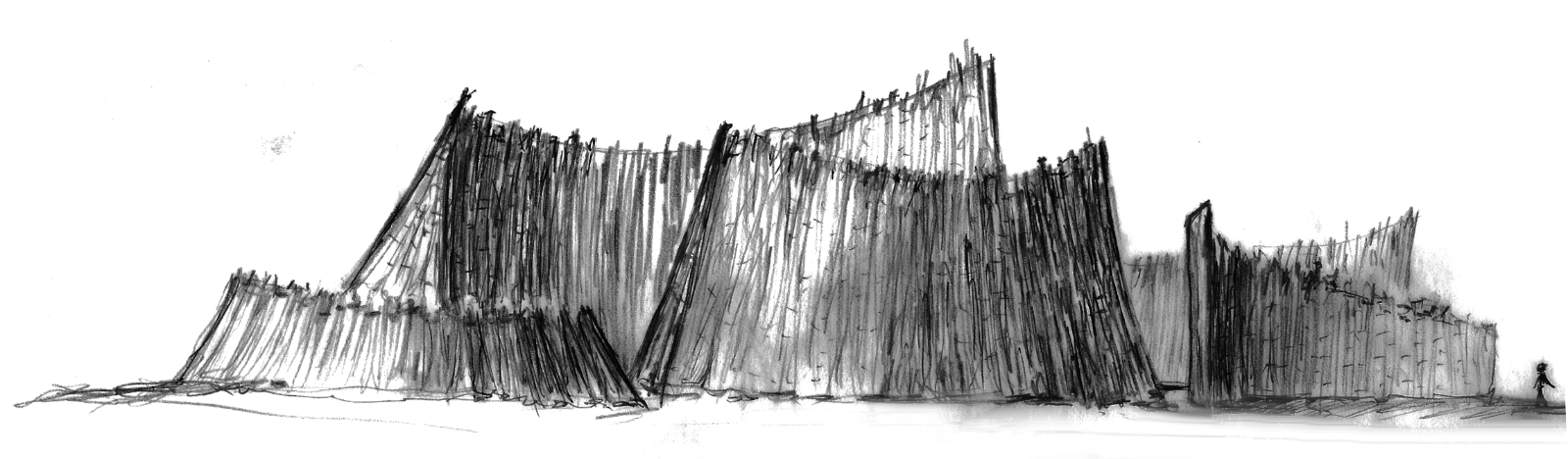
The company has not returned inquires from the Guardian made this morning. Hobbs and a crew that includes more than 200 other artists and burners have voluntarily worked almost every day this summer to build the Temple of Flux, a series of massive dunes that replicate peaks, canyons, caves, and other natural land forms – a project that I’ve been embedded with for a Guardian cover story that comes out Sept. 1.

“They will take the donations and their fees, but they won’t give us our money until we get our nonprofit status,” Hobbs told a meeting of the crew last night at the American Steel warehouse in West Oakland, where they’ve been working on the project since early June, before she and other principle artists PK Kimelman and Rebecca Anders left for the playa today. “And the IRS is so backed up they’re taking at least six months to give out nonprofit status.”

Hobbs and other Temple crew members are now scrambling for ways to support a difficult on-site build that will take more than two weeks to complete, including asking crew members for loans and encouraging everyone to put the word out to the community, hoping to find generous benefactors who can at least extend a bridge loan.

Burning Man crews and camps are traditionally informal groups, but given the scale of this project, the Temple of Flux crew this year tried to create a new model for fundraising and sustaining the organization beyond this year’s Burning Man event by filing the voluminous paperwork required to create the nonprofit Flux Foundation.

But now, PayPal has thrown the effort into a real state of financial flux, taking its cut of nearly 3 percent but refusing to even explain why the corporation has deemed it necessary to freeze the group’s finances.

UPDATE: PayPal has released the fund due to reader outcry. Read more here.

Appetite: Tales from Tales

0

In 100 percent humidity at nearly 100 degrees (and no relief at night), spending a week drinking and eating doesn’t sound like the best idea, but for eight years running, it happens every July in New Orleans at Tales of the Cocktail. For cocktail lovers and industry, this is THE drink event of the year.

My first, or virgin, year at Tales, was as sleepless and packed as everyone said it would be, but moderation is the name of my game (at least outside of the sleep arena), and I managed to indulge and enjoy without so much as one hangover from anything other than sleep deprivation. Of course, it meant merely tasting most drinks, eating a lot (NO problem in New Orleans!) and promptly turning around upon surveying nightly after crowds at Old Absinthe House, heading to quieter bars or the Monteleone lobby for civilized conversation instead.

Opening party at Elms Mansion — a truly magical setting

I already feel completely alive in my skin when I’m in New Orleans. Any reason to be in that queen of cities is a good reason for me. Tales itself grew progressively better as the week went on, despite awful heat and waning sleep… mainly because I continued to meet great people which led to further excursions, tastings, dinners, parties, and as the cumulative effect added up to a host of memories and experiences.  Let me try to summarize a mere few highlights for you – read more about the 2010 Tales and New Orleans in my upcoming 8/15 issue of The Perfect Spot:

LIFE-ALTERING TASTING of 1865 & 1805 COGNAC!
7/25 The Mysteries & Secrets of Distilling in Cognac
Cognac masters, Olivier Paultes and Alain Royer, moderator Dale DeGroff, and spirited bartender extraordinaire, Salvatore Calabrese, were keepers of the surprise that awaited at the end of a fascinating, seemingly routine seminar on the methods of distilling cognac, along with a token five cognac side-by-side tasting.

The seminar suddenly escalated to once-in-a-lifetime experience when Calabrese informed our small group that he had brought not only a bottle of 1865 Rouyer Guillet & Co. cognac to share together, but also an 1805 Maison De L’Emprereur cognac he was going to make a Sazerac with! The room erupted in applause as we stood on chairs to take photos and watch him mix what he called a “$10,000 cocktail”. We passed the Sazerac around, each savoring a profound sip.

Dale DeGroff pours us an 1865 cognac

We all had a pour of the silky 1865. I exhaled and placed my head down on the table after first taste. It was remarkably full, refined with raisin and floral notes initially, a finely balanced burn, evolving into chocolate and nutty notes. I could barely begin to fathom the history wrapped up in each sip. As Calabrese exclaimed, “This was made when Abraham Lincoln was alive!”

Worth far more than the $40 price of admission, the lucky few who happened to be in this seminar got an education beyond what we could have ever expected. We lived a moment that, for drink lovers, will remain a marker of earth-shattering tastes for the rest of our lives.

GREEN GORILLAS DESCENDING on the PELICAN CLUB
7/22 at The Pelican Club Spirited Dinner, French Quarter
Thursday night there were Spirited Dinners across town. I chose the one at Pelican Club mainly because of the all-star line-up of bartenders from across the country pairing cocktails with a six-course dinner: Marcos Tello – The Varnish, LA; Jim Meehan – PDT, NY; Misty Kalkofen – Drink, Boston; Peter Vestinos – Wirtz Beverage Group, Chicago; and our own rockstar, Neyah White, formerly of Nopa.

The food was not as fine as I’d hoped, but the atmosphere was convivial, festive, a warmly welcoming party. The cocktails all featured the night’s spirit: Bols Genever. Neyah clearly had fun creating the dessert cocktail, Drum Shag: Bols, sarsaparilla, PX sherry, infused with smoke.

But the highlight of the night? A foursome of green gorillas descended on the bar during aperitif hour before we were seated at our tables. I’d seen them at the pool of the Monteleone before, or roaming the streets, surely hot and sweaty in their cheap, neon green garb. The site of these guys at the elegant Pelican bar while some of our country’s best bartenders poured them shots was a memorable image, one that somehow typifies the wacky exuberance that is Tales.

DEL MAGUEY – RON COOPER – MEZCAL
7/25 La Verdad (The Truth) about Mezcal Seminar
Everyone who knows anything about mezcal knows Ron Cooper of Del Maguey is the master, having done more to further the mezcal gospel than anyone, even being called the “mezcal missionary”. As my friend whispered to me during the seminar, describing the panel of mezcal distillers: “They’ve all drunk the kool-aid, haven’t they?” Despite the fact that I’ve already been a mezcal fan for years, so did I… so did we all… by the end of the session.

I’m must be honest and say, much as I appreciated every distiller there (Illegal Mezcal, Los Amantes, and Sombra), as has been my common experience in previously tasting these and other mezcals, none hold a candle to Ron’s entire product line. This was sorely highlighted in a side-by-side tasting of all the above next to five Del Maguey mezcals. But all these guys were heartfelt and inspiring, while Ron himself is a small, peace-filled  powerhouse of a man… the Yoda of the mezcal world.

Every single Del Maguey mezcal is a revelation, whether the creamy, smoky sweet of Crema de Mezcal, or the chocolate earthiness of other-worldly Chichicapa. More to come soon in my Guardian column and here about his mezcals. Thanks to Neyah White, try Del Maguey by the shot at Nopalito, in cocktails throughout SF, or order some bottles. Once you dig further into mezcal, particularly through the Del Maguey lens, you, too, will “drink the kool-aid”.

SOUTHERN ROMANCE of DIXIELAND JAZZ under SWEEPING OAKS
7/22 William Grant & Sons Opening Party at Elms Mansion in the Garden District
Yes, by 1am it felt like it was actually getting hotter as I wilted in the oppressive humidity, but what could have been more romantic than the stately, white Elms Mansion with stunning wood carved fireplaces and ceilings, scotch bar in the drawing room, white lights and absinthe in the garden, and live Dixieland band playing under a white-pillared rotunda? Not much. As massive oak trees loomed over us, even larger than the mansion, I felt fully alive and grateful… I was in the South.

A SUDDEN DOWNPOUR entering the BARTENDER’S BREAKFAST
7/24 Bartender’s Breakfast – Spirited Awards after party
A second line jazz funeral was held for Sex on the Beach, a cocktail that surely needed to be buried, on the walk from the Spirited Awards Ceremony to the Bartender’s Breakfast, where the likes of Audrey Saunders and Jim Meehan were making us drinks. Before entering the building, a sultry Summer storm rushed through, dampening our dresses, suits and hair. A warm rain, it wasn’t exactly a respite from the unrelenting heat, but it somehow refreshed, invigorated, injecting us with energy to celebrate late into the night.

Stage listings

0

Stage listings are compiled by Guardian staff. Performance times may change; call venues to confirm. Reviewers are Robert Avila, Rita Felciano, and Nicole Gluckstern. Submit items for the listings at listings@sfbg.com.

THEATER

OPENING

Don’t Ask New Conservatory Theatre Center, 25 Van Ness; 861-8972; www.nctcsf.org. $24-36. Opens Fri/13, 8pm. Runs Wed-Sat, 8pm; Sun, 2pm. Through Sept. 19. New Conservatory Theatre Center presents the West Coast premiere of Bill Quigley’s play about the affair between a Private and his superior.

Skin Tight CounterPULSE, 1310 Mission; www.counterpulse.org. $20 ($35 for gala opening). Opens Thurs/12, 8pm. Runs Thurs-Sat, 8pm. Through August 28. Rapid Descent Physical Performance Company presents the SF premiere of Gary Henderson’s play.

BAY AREA


ONGOING

Abigail: The Salem Witch Trials Temple SF, 540 Howard; www.templesf.com. $10. Thurs/12, August 19, 26, 9pm. Through August 26. Buzz Productions, with Skycastle Music and Lunar Eclipse Records, presents an original rock opera based on the Salem witch trials.

Agnes the Barbarian EXIT Theatre, 156 Eddy; 289-6766, www.thunderbirdtheatre.com. $20-25. Thurs-Sat, 8pm. Through Sat/14. Most parents get annoyed when their offspring show signs of coarsening, particularly during those awkward teenage years, but not Conan the Barbarian (Jason Harding), oh no. Quite to the contrary, Conan despairs over his teenage daughter’s bookish ways and socialist inclinations, and determined to set her on the path to barbarism—partly out of fatherly pique and partly because his mind is being controlled by his evilly bureaucratic Grand Vizier (Dana Goldberg)—he sends her on a hero’s quest to kill the monstrous Gargranox (Cary Klataske). Clad in the requisite fur-and-chainmail bikini ensemble, young Agnes (Jaime Lee Currier) is aided on her journey by a pair of "Holy Grail"-styled peasants The Bastards (Jason Pienkowski and Mary Bishop), and the banished court magician Shitake (Tavis Kammet) plagued by the dread "curse of exposition". During her unwilling pursuit of her barbarian birthright—Agnes faces off with a 5,000 year-old sorceress, acquires an "enchanted sword", confronts a monster, avoids assassination, and rescues her father’s kingdom from the dread influence of Gygax’ 15-point takeover plan. Penned by Jason Harding, a core-member of the Thunderbirds for 10 years, and author of the ribald pirate farce "Lusty Booty," and directed by 6-year T-bird veteran Shay Casey. (Gluckstern)

*Streetcar Named Desire Boxcar Playhouse, 505 Natoma; 776-1747, www.boxcartheatre.org. $15-25. Wed-Sat, 8pm. Through Sept. 4. It’s no small feat, creating a sultry southern summer circa 1940’s smack-dab in the middle of a typically frosty San Francisco summer circa right here right now, but Boxcar Theatre rises admirably to the challenge. Rebecca Longworth’s creative staging of Tennessee Williams’ "A Streetcar Named Desire" includes musical interludes, ghostly apparitions, and the clattering of a cleverly impersonated streetcar that shakes the walls of Matt McAdon’s simply-detailed tenement flat and the spirits of one Blanche DuBois (Juliet Tanner), while the deliberately-muted lighting (Stephanie Buchner) and period-appropriate sound (Ted Crimy), add the appropriate layers of southern discomfort to the unfolding action. Especially captivating to watch are the performances of supporting characters Stella (Casi Maggio) and Mitch (Brian Jansen), who seem to almost helplessly orbit the hot flame of Stanley Kowalski’s sun (Nick A. Olivero) and the grimly flickering satellite of Blanche’s waning moon. As he does in "Cat on a Hot Tin Roof," Seth Thygesen stands in for one dearly-departed, in this case Blanche’s old beau, Allan Gray, whose abrupt suicide de-magnetized her moral compass. And in addition to a saucy turn as next-door neighbor Eunice, Linnea George tracks the fractured emotions of the main characters on her mournful violin. (Nicole Gluckstern)

Dead Certain Royce Gallery, 2901 Mariposa; (866) 811-4111. $12-28. Thurs-Sat, 8pm. Through Sat/14. Expression Productions presents a psychological thriller by Marcus Lloyd..

Divalicious New Conservatory Theatre Center, 25 Van Ness; 861-8972, www.nctcsf.org. $22-28. Wed-Sat, 8 p.m.; Sun, 2pm. Through August 22. Leanne Borghesi takes on the music of legends ranging from Garland to Midler.

Gilligan’s Island: Live on Stage! The Garage, 975 Howard; (800) 838-3006, www.brownpapertickets.com. $15-20. Sun, 8pm. Through August 29. Moore Theatre and SAFEhouse for the Performing Arts brings the TV show to the stage, lovey.

Peter Pan Threesixty Theater, Ferry Park (on Embarcadero across from the Ferry Bldg); www.peterpantheshow.com. $30-125. Tues and Thurs, 7pm; Fri-Sat, 7:30pm (also Sat, 2pm); Wed, 2pm; Sun, 1 and 5pm. Through August 29. JM Barrie’s tale is performed in a specially-built 360-degree CGI theater.

*Posibilidad, or Death of the Worker Dolores Park and other sites; 285-1717, www.sfmt.org. Free. Sat-Sun, 2pm; also Sept 6, 2pm; Sept 17, 8pm. Through Sept 17. It may have been just a coincidence, but it certainly seems auspicious that the San Francisco Mime Troupe, itself collectively run since the 1970’s, would preview their latest show Posibilidad on the United Nations International Day of Cooperatives. The show, which centers around the struggles of the last remaining workers in a hemp clothing factory ("Peaceweavers"), hones in on the ideological divide between business conducted as usual, and the impulse to create a different system. Taking a clip from the Ari Lewis/Naomi Klein documentary The Take, half of the play is set in Argentina, where textile-worker Sophia (Lisa Hori-Garcia) becomes involved in a factory takeover for the first time. Her past experiences help inform her new co-workers’ sitdown strike and takeover of their own factory after they are told it will close by their impossibly fey, new age boss Ernesto (Rotimi Agbabiaka). You don’t need professional co-op experience to find humor in the nascent collective’s endless rounds of meetings, wince at their struggles against capitalistic indoctrination, or cheer the rousing message of "Esta es Nuestra Lucha" passionately sung by Velina Brown, though in another welcome coincidence, the run of Posibilidad also coincides with the National Worker Cooperative conference being held in August, so if you get extra inspired, you can always try to join forces there. (Gluckstern)

Sex Tapes for Seniors Victoria Theatre, 2961 16th; (800) 838-3006. $20-40. Fri-Sat, 8pm; Sun, 2pm. Through August 22. An original musical by Mario Cossa, with a cast of characters between the ages of 52 and 75.

Show and Tell Thick House, 1695 18th St; (800) 838-3006, www.symmetrytheatre.com. Thurs-Sat, 8pm; Sun, 5:30 pm. Through August 22. $25. Symmetry Theatre Company presents a play by Anthony Clarvoe.

This Is All I Need NOHspace, 2840 Mariposa; www.mugwumpin.org. Thurs-Sun, 8pm. Through Sept. 4. $15-20. The kinetic company Mugwumpin presents a new show.

This World Is Good Phoenix Theater, 414 Mason; 913-7272, www.sleepwalkerstheatre.com. Thurs-Sat, 8pm. Through August 28. $18-24. The 1990s are giving way to a millennial moment of anti-climax known as Y2K, but the anxiety and dread are real, and the bloodiest century in human history looks poised to be outdone by the doom-drones of the next. Making at least academic sense of all that angst is Ally (Dina Percia), a brilliant young Latina writing her doctoral dissertation on Grunge and its landscape of youth alienation. Her best friend and occasional lover is a smitten young English prof (Damian Lanahan-Kalish), a dork with a degree and the pet name Scrotum Face. But as she delves into the world of ideas, Ally loses track of her family: single mother Emmy (Tessa Koning-Martinez) and, more tragically, talented but emotionally tortured younger brother Sam (Shoresh Alaudini), whose battered mind and compassionate heart craft a graphic story around a new "super hero" with no costume, no parallel identity, and indeed no special powers. When her family collapses, Ally reassembles the pieces from a new vantage, outside the ivory tower, where she makes art from a sort of crystalline "ordinariness" that complements her brother’s all-too-ordinary super hero. This World Is Good is the opening gambit in a new trilogy by local playwright J.C. Lee called This World and After, all being presented by Sleepwalkers Theatre this season. Artistic director Tore Ingersoll-Thorp helms a competently acted production, which helps lend Lee’s ambitious scope its tangible human proportions, though in truth the characters do not always feel fully drawn. There’s a fine monologue from Sam, both chilling and exhilarating, but also a proclivity throughout for awkwardly poetical speeches over dialogue. Still, there’s subtlety and real humor in the best parts, and enough here to want to see more. (Avila)

What Mama Said About Down There Our Little Theater, 287 Ellis; 820-3250, www.theatrebayarea.org. $15-25. Thurs-Sun, 8pm. Through August 28. Writer-performer-activist Sia Amma presents this largely political, a bit clinical, inherently sexual, and utterly unforgettable performance piece.

BAY AREA

Blithe Spirit Live Oak Theatre, 1301 Shattuck, Berk; (510) 649-5999, www.aeofberkely.org. $12-15. Fri-Sat, 8pm; also August 19, 8pm. Through August 21. Actors Ensemble of Berkeley essays the eternal Noel Coward comedy, about a (naturally) Coward-esque writer (Stanley Spenger) who for the purposes of research and any passing amusement it may provide invites over a celebrated medium (an amusingly puffed-up Chris Macomber), only to have her inadvertently summon the ghost of his ex-wife (Erin J. Hoffman), who mischievously begins to drive a wedge between him and his new wife (Shannon Veon Kase). Director Hector Correa’s not-always-fitting casting choices contribute to a drearily perfunctory tone at the outset, which makes the first scenes somewhat painful going. However, Spenger proves admirably dry and restrained in the lead, and things pick up measurably with the arrival of the titular ghost, played with playful, bounding energy and notable grace by Hoffman. (Avila)

*East 14th: True Tales of a Reluctant Player Marsh Berkeley, 2120 Allston, Berk; www.themarsh.org. $20-50. Dates and times vary. Through Sept 12. Don Reed’s solo play, making its Oakland debut after an acclaimed New York run, is truly a welcome homecoming twice over. (Avila)

*Machiavelli’s The Prince Berkeley City Club, 2315 Durant, Berk; (510) 558-1381, www.centralworks.org. $14-25. Thurs-Sat, 8 p.m.; Sun, 5pm. Through August 22. Set in an intimate salon-space in the Berkeley City Club, this stage adaptation of one of the most famous documents on political power ever written gains a certain conversational quality. In fact, the script, penned by Gary Graves, is really just one long conversation—an imagined encounter between Nicolo Machiavelli and the man he dedicated his treatise to, Lorenzo de Medici II. Machiavelli (Mark Farrell) has been called by de Medici (Cole Alexander Smith) to possibly regain favor in his court after a long banishment. With him he brings a notebook of his musings on gaining and retaining political power, which he bestows on Lorenzo for him to read. As the Duke of Florence, Smith plays his character with the measured dignity and watchful countenance of a career mobster. He protests the extremism of his former teacher’s philosophy of rule even as he is casually seduced by its implications. Farrell’s Machiavelli tries to play his position with calculated Mephistopheles cool. However, he cannot escape the obvious taint of his own failures, and eventually, for all his talk of power, he is revealed to be ultimately powerless, though his ideas remain with de Medici, long after he himself is let go. (Gluckstern)

The Norman Conquests The Ashby Stage, 901 Ashby, Berk; (510) 841-6500, www.shotgunplayers.com. $20-25. Dates and times vary. Through Sept. 5. Shotgun Players presents Alan Ayckbourn’s comic trilogy.

The Pirates of Penzance Mountain View Center for the Performing Arts, 500 Castro, Mountain View; 227-4797, www.lamplighters.org. $17-50. Sat/14, 8pm, Sun/15, 2pm. Lamplighters presents Gilbert and Sullivan’s swashbuckling classic.

The Taming of the Shrew Forest Meadows Amphitheatre, 1475 Grand, San Rafael; (415) 499-4488, www.marinshakespeare.org. $20-25. Fri-Sun, 8pm; also Sun, 4pm and 5pm. Through Sept. 26. Marin Theatre Company presents a swashbuckling version of the classic.

PERFORMANCE/DANCE

Charlie Ballard Purple Onion, 140 Columbus; www.brownpapertickets.com. Wed/11, 8:30pm. $10. The gay comedian records a show for DVD at Phyllis Diller’s old stomping grounds.

"Bare Bones Butoh Presents: Showcase 18" Studio 210, 3435 Cesar Chavez; 821-7124. Fri/13-Sat/14, 8pm. A pair of benefit performances for members of the butoh and performance art communities.

"City Solo" Off-Market Theater, 965 Mission; www.cafearts.com. Sun/15, 7pm. $15-20. Solo performances by Coke Nakamoto, Jawad Ali, Enzo Lombard, and Martha Rynberg.

Bobcat Goldthwait Cobb’s Comedy Club, 915 Columbus; 928-4320; www.cobbscomedyclub.com. Fri/13-Sat/14, 8 and 10pm. $20.50. The comedian and director hits town.

BAY AREA
"New Works Festival" Lucie Stern Theatre, 1355 Middlefield, Palo Alto; (650) 463-1960, www.theatreworks.org. Dates and times vary. Through August 22. $15-25 ($75 for festival pass). TheatreWorks presents its ninth annual festival, with Kevin Merritt and Kevin So’s Great Wall, Jeff Hughes’ Red Clay, and readings.

On the Cheap listings

0

On the Cheap listings are compiled by Paula Connelly. Submit items for the listings at listings@sfbg.com.

WEDNESDAY 11

Ethical Borders  Modern Times Bookstore, 888 Valencia, SF; www.mtbs.com. 6pm, free. In his new book, Bill Ong Hing examines the relationship between NAFTA, globalization, and undocumented migration and discusses policy options for immigration control, including opening the U.S./Mexican border while improving the conditions that give people incentive to migrate.

THURSDAY 12

“What Cannot Be Taken Away” SOMArts Cultural Center, 934 Brannan, SF; (415) 863-1414. This new exhibition titled, “What Cannot Be Taken Away: Families and Prisons Project,” consists of eight collaboratively designed and created portraits that resulted from creative dialogue between Bay Area youth who have incarcerated parents and fathers who are currently incarcerated in San Francisco jail.

FRIDAY 13

American Craft Council Show Herbst and Festival Pavilions, Fort Mason Center, Laguna at Beach, SF; 1-800-836-3470. Fri. 10am-8pm, Sat. 10am-6pm, Sun. 10am-5pm; $5-$12. Check out crafts made by over 250 artists from around the country, an AltCraft exhibit featuring upcycled jewelry, “trashion”, and eclectic handmade pieces, an Etsy craft bar, wine tastings, and more for DIY enthusiasts and craft lovers alike.

“New Frequencies Unplugged” Grand Lobby, Yerba Buena Center for the Arts, 701 Mission, SF; (415) 978-2700. 6pm, free. Part of YBCA’s Thursday and Friday Art Tap happy hours, this week’s party invites attendees to stroll through the galleries while enjoying live jazz from the Nice Guy Trio, playing original compositions representing folk traditions from around the globe.

SATURDAY 14

“Color en el Barrio” Mission Cultural Center for Latino Arts, 2868 Mission, SF; (415) 643-5001. 5pm, free. Learn about the challenges that graffiti artists face when trying to transition from tagging to creating murals that serve a public function at this panel discussion with celebrated urban artists Francisco “Twick” Aquino, Jonathan Brumfield, Jet Martinez, and Marina “Mincho” Perez-Wong. All panelists have participated in the StreetSmARTS program, which connects urban artists with private property owners to create vibrant murals and reduce vandalism.

DIYbca Yerba Buena Center for the Arts, 701 Mission, SF; (415) 978-2787. 9pm, free. This TechnoCRAFT inspired, do-it-yourself night highlights the Bay Area’s pioneering brand of homemade, homespun crafting weirdness by inviting participants to create their own instruments, customize their own shoes with Mrs. Vera’s Sole Makeover, create stencils with public artist Jeremy Novy, and more.

Make Piñatas! Flax Art and Design, 1699 Market, SF; (415) 552-2355. 1pm, free. Get ready for your next fiesta at this workshop where you can learn to make your own piñata out of tissue and balloons. Supplies provided.

Sea Turtle Benefit Art Show 10 Arkansas, SF; www.seaturtles.org/artshow. Noon-6pm, free. Fifteen fine artists and craftspeople will exhibit work available for purchase at a silent auction to benefit the Sea Turtle Restoration Project. Show to feature on-site artisan food vendors, music performances, and presentations throughout the afternoon.

Sideshow Happening Root Division Gallery, 3175 17th St., SF; (415) 863-7668. 7pm, $5-$20 sliding scale. Celebrate the link between conceptual art and carnival at this exhibit featuring stand-up comedy, glass eating, lectures, living sculpture, noise music, snake charming fantasy travel, film, slideshow, dance, and more from Root Division Artists, artists from their Adult Ed program, and other performers.

Tomato Cooking Contest Omnivore Books, 3885a Ceasar Chavez, SF; (415)282-4712. 4pm, $5. Cook up an inventive dish that utilizes tomatoes from August’s fabulous tomato bounty and enter for a chance to win cash. Cut your dish into as many pieces as possible for judges and tasters. Free admission for all who enter a dish.

SUNDAY 15

Candlestick Park Antique Faire Candlestick Park, Hunter’s Point Expressway at Jamestown, SF; (510) 217-8696. 6am-3pm, $5-$15. Over 500 vendor booths filled with antiques and collectibles will be selling treasures all day at Candlestick Park. Food vendors will be available.

North Beach by Night Meet at Spec’s, 12 Saroyan Place, SF; www.sfcityguides.org. 7pm, free. There is plenty to do and see in North Beach during the day, but the most interesting things happen here by the light of the neon signs. Learn about this colorful neighborhood where food, culture, and history have intersected in many unexpected ways. Bring warm layers.

BAY AREA

Bike Church Manifesto Bicycles, 412 40th St., Oakl.; (510) 595-1155. 10:30am, free. Come one, come all to a non-religious community gathering for bike lovers featuring live music, brunch by Jon’s Street Eats, and lots of friendly people.

TUESDAY 17

Idiolexicon Rancho Parnassus, 132 6th St., SF; (415) 503-0700. 7pm, free. The new creative space, art gallery, café, and community gathering venue, Rancho Parnassus, is hosting the Idiolexicon poetry reading series featuring experimental poets Carrie Hunter, Della Watson, and Jessica Wickens.

One For None Space Gallery, 1141 Polk, SF; (415) 377-3325. 7pm; $10, includes copy of book. Attend the launch for m.g. martin’s first book of poems featuring performances by spoken word poet Charlie Getter, fiction writer Alia Volz, comedian Janine Brito, music performances by Jess Silva and Andrew Paul Nelson as HoneyBaby, and DJ Benito spinning funk, dub-step, and more.


Finally, some logic on same-sex marriage

0

EDITORIAL Judge Vaughn Walker’s historic decision overturning Proposition 8 was remarkable not so much for its conclusion, but because it has taken so long for a federal court to conclude that same-sex marriage does no conceivable harm to anyone.

The legal scholars can debate whether this particular civil rights issue deserves strict scrutiny or must meet only a rational-basis test. And everyone knows the case will eventually wind up in the U.S. Supreme Court, where nine justices will decide whether official discrimination can be legal in the United States of America.

But what Walker did was crucial — he devoted the vast majority of his 138-page decision to discussing the facts of the case. As Bob Egelko notes in a nice San Francisco Chronicle piece Aug. 8, Walker provided a forum for the public debate that should have happened around the ballot measure but never did. Prop. 8 was decided after political consultants used carefully honed messages designed to play on people’s emotions; the real facts of the matter were hardly ever discussed on a statewide level.

The facts of the matter, as the record clearly shows and Walker eloquently related, are simple: there’s nothing wrong with same-sex marriage. The ability of same-sex couples to marry has no impact on the rights of opposite-sex couples. There is also no legal reason to believe that something rooted in an old tradition — from a time when gender roles were rigidly prescribed — has, in and of itself, any validity. "Tradition alone," Walker noted, citing a 1970 U.S. Supreme Court case, "cannot form a rational basis for a law." Furthermore, studies show that children brought up by same-sex couples fare just as well (and in some studies, better) than children raised in traditional households.

In fact, the judge concluded, the only real reason Prop. 8 supporters put the measure on the ballot is that they don’t like gay and lesbian people: "Proposition 8 was premised on the belief that same-sex couples simply are not as good as opposite-sex couples. Whether that belief is based on moral disapproval of homosexuality, animus toward gays and lesbians, or simply a belief that a relationship between a man and a woman is inherently better than a relationship between two men or two women, this belief is not a proper basis on which to legislate."

That record of factual evidence will make it harder for the Ninth Circuit Court of Appeals or Supreme Court to overturn Walker’s ruling. And the very essence of his decision — that no harm comes to anyone in society when same-sex couples are allowed to wed — is ample reason for him to deny any stay while the case is on appeal. A stay, which would leave Prop. 8 in effect for several more years while the case works its way through the system, would make sense only if some irreparable harm would come to some party. There’s no such harm — real or potential or imaginable — to anyone or anything except institutional and personal bigotry.

The decision demonstrates another crucial factor, one that politicians of both parties should pay attention to this fall. Courts tend to (slowly) reflect changing attitudes in society. And while the polls are still inconclusive, the demographics are not: Almost nobody under 30 opposes same-sex marriage, and every year that passes, California and the country come closer to the day when Prop. 8 will seem as silly as anti-miscegenation laws.

Both Attorney General Jerry Brown and Gov. Arnold Schwarzenegger have asked Walker not to stay his ruling. Sen. Barbara Boxer has hailed the decision. But Republican gubernatorial candidate Meg Whitman and Senate contender Carly Fiorina remain adamantly opposed to same-sex marriage. Brown and Boxer shouldn’t be afraid to make this part of their campaigns. There’s not a whole lot to bring young people to the ballot this fall, and making Prop. 8 an issue can only help the Democrats.

It’s also worth remembering that nearly every Democratic leader in the nation blanched when San Francisco, under Mayor Gavin Newsom did the right thing and legalized same-sex marriage in 2004. We warned then that Sens. Boxer and Dianne Feinstein, Speaker Nancy Pelosi, and the rest of the Washington crew would wind up on the wrong side of history. And now that a judge who has never been known as a leftist (or even a liberal) has made the case that marriage is a civil right and discrimination is never legally acceptable, they ought to admit they were wrong.

Finally, some logic on same-sex marriage

11

Same-sex marriage does no conceivable harm to anyone

EDITORIAL Judge Vaughn Walker’s historic decision overturning Proposition 8 was remarkable not so much for its conclusion, but because it has taken so long for a federal court to conclude that same-sex marriage does no conceivable harm to anyone.

The legal scholars can debate whether this particular civil rights issue deserves strict scrutiny or must meet only a rational-basis test. And everyone knows the case will eventually wind up in the U.S. Supreme Court, where nine justices will decide whether official discrimination can be legal in the United States of America.

But what Walker did was crucial — he devoted the vast majority of his 138-page decision to discussing the facts of the case. As Bob Egelko notes in a nice San Francisco Chronicle piece Aug. 8, Walker provided a forum for the public debate that should have happened around the ballot measure but never did. Prop. 8 was decided after political consultants used carefully honed messages designed to play on people’s emotions; the real facts of the matter were hardly ever discussed on a statewide level.

The facts of the matter, as the record clearly shows and Walker eloquently related, are simple: there’s nothing wrong with same-sex marriage. The ability of same-sex couples to marry has no impact on the rights of opposite-sex couples. There is also no legal reason to believe that something rooted in an old tradition — from a time when gender roles were rigidly prescribed — has, in and of itself, any validity. “Tradition alone,” Walker noted, citing a 1970 U.S. Supreme Court case, “cannot form a rational basis for a law.” Furthermore, studies show that children brought up by same-sex couples fare just as well (and in some studies, better) than children raised in traditional households.

In fact, the judge concluded, the only real reason Prop. 8 supporters put the measure on the ballot is that they don’t like gay and lesbian people: “Proposition 8 was premised on the belief that same-sex couples simply are not as good as opposite-sex couples. Whether that belief is based on moral disapproval of homosexuality, animus toward gays and lesbians, or simply a belief that a relationship between a man and a woman is inherently better than a relationship between two men or two women, this belief is not a proper basis on which to legislate.”

That record of factual evidence will make it harder for the Ninth Circuit Court of Appeals or Supreme Court to overturn Walker’s ruling. And the very essence of his decision — that no harm comes to anyone in society when same-sex couples are allowed to wed — is ample reason for him to deny any stay while the case is on appeal. A stay, which would leave Prop. 8 in effect for several more years while the case works its way through the system, would make sense only if some irreparable harm would come to some party. There’s no such harm — real or potential or imaginable — to anyone or anything except institutional and personal bigotry.

The decision demonstrates another crucial factor, one that politicians of both parties should pay attention to this fall. Courts tend to (slowly) reflect changing attitudes in society. And while the polls are still inconclusive, the demographics are not: Almost nobody under 30 opposes same-sex marriage, and every year that passes, California and the country come closer to the day when Prop. 8 will seem as silly as anti-miscegenation laws.

Both Attorney General Jerry Brown and Gov. Arnold Schwarzenegger have asked Walker not to stay his ruling. Sen. Barbara Boxer has hailed the decision. But Republican gubernatorial candidate Meg Whitman and Senate contender Carly Fiorina remain adamantly opposed to same-sex marriage. Brown and Boxer shouldn’t be afraid to make this part of their campaigns. There’s not a whole lot to bring young people to the ballot this fall, and making Prop. 8 an issue can only help the Democrats.

It’s also worth remembering that nearly every Democratic leader in the nation blanched when San Francisco, under Mayor Gavin Newsom did the right thing and legalized same-sex marriage in 2004. We warned then that Sens. Boxer and Dianne Feinstein, Speaker Nancy Pelosi, and the rest of the Washington crew would wind up on the wrong side of history. And now that a judge who has never been known as a leftist (or even a liberal) has made the case that marriage is a civil right and discrimination is never legally acceptable, they ought to admit they were wrong.

D. 10 candidates split on Lennar’s plan

3

One of the key questions at the Potrero Hill Democratic Club’s forum for D. 10 candidates revolved around Lennar’s Candlestick Point-Hunter’s Point Shipyard redevelopment plan.

The current Board of Supervisors recently approved Lennar’s plan by a 10-1 vote (D.6 Sup. Chris Daly dissented). Following that vote, Mayor Gavin Newsom rushed to sign twelve pieces of legislation that approve and enable what could shape up to be the largest redevelopment project in San Francisco´s history.

“Today is a historic day for San Francisco and a testament to so many who have worked for more than a decade to secure this critical engine for our City´s economic future,” Newsom said in a press statement, after he signed off on the Lennar deal. “I want to thank Sup. Sophie Maxwell for spearheading this effort throughout her entire tenure on the Board of Supervisors and our State and Federal representatives including Speaker Pelosi and Senator Feinstein as we take a giant leap forward towards our shared vision of jobs, housing, and hope for the Bayview-Hunters Point community.”

But with Maxwell termed out in January, the successful candidate in the D. 10 race stands to inherit a plan that has been approved, but apparently isn’t funded yet. And by my accounting, the majority of the candidates who spoke at the D. 10 forum expressed reservations with Lennar’s proposal, with only a few firmly against it, and only a few firmly in favor of it. But read their comments, decide for yourself–and keep tracking this fascinating race!

 
Asked how she would have voted on Lennar’s plan, Lynette Sweet, who voted to make Lennar the shipyard’s master developer when she was a member of the Redevelopment Commission in 1999, said she would have approved it.
“I voted for it then, and I would have voted for it now,” Sweet said. “And I want to be the person who shepherds it through in the next eight years.” But Sweet also sought to reduce the many ongoing questions about the plan–including housing affordability levels, local job creation, air quality impacts, and the  Navy’s related shipyard clean-up–to one simplistic issue: the bridge over Yosemite Slough.

“There’s been a lot of controversy over a bridge,” Sweet said. “But we don’t give up on people for a bridge. We just can’t.”

Eric Smith said he was supportive of the plan and the community benefits agreement, but he voiced criticism of the project’s environmental Impact report (EIR).
“The project’s EIR wasn’t perfect,” Smith noted. “And I wasn’t a huge fan of the bridge, but I’ve walked around Alice Griffith [a dilapidated public housing project in the Bayview] and when you see folks with moldy pipes, broken ceilings, and rats, it moves you. So, I’m supportive of it, and I’m supportive of the community benefits agreement [that the SF Labor Council negotiated with Lennar] and the jobs it can bring.”

Nyese Joshua said she would have voted against the plan, starting years ago.
“I would have voted to stop that project in 2006, when the dust issue was going on,” Joshua said. “And it’s a misnomer to claim the Board voted 10-1 for Lennar,” Joshua contined, as she pointed out that five progressive supervisors on the Board voted against the bridge and for air quality analysis, greater affordability and greater workforce protections. But ultimately, this progressive core was unable to pass those amendments, because Sups. Maxwell, Bevan Dufty, Sean Elsbernd, Carmen Chu, Michela Alioto-Pier and Board President David Chiu did not support them.
“That 10-1 vote is being called a pyrrhic victory,” Joshua added.


Kristine Enea indicated that she would have voted yes, but with reservations.
“I would have consistently voted yes to amendments, but there was no comprehensive transportation analysis,” Enea said.
Enea, who has served on the now disbanded Navy’s Hunter’s Point Shipyard Restoration Advisory Board, noted that she is “intimately familiar with the technical data,” surrounding the Navy’s shipyard clean-up plans.
“And I live a stone’s throw from the shipyard, and I believe we are safe,” Enea added.
“There is hope soon to be a restored public process on the Navy’s clean up,” Enea continued, referring to the Navy’s 2009 decision to dissolve the RAB.“But we need to be very vigilant that cleanup of Parcel E2.”

Malia Cohen said she would have supported Lennar’s plan,
“Lennar has dominated the lion’s share of our conversations,” Cohen said, noting that there are a bunch of redevelopment projects in the southeast. “So, we can’t be singular in our vision of what we want our community to look like. We can’t let Lennar dominate. But I’d have supported the project because I believe what Lennar represents is an extraordinary opportunity for us to pick ourselves up, organize and collectively voice what we’d like our community to look like. It’s imperative that Lennar’s plan moves forward, but it has to be environmentally sound.”

Steve Moss said he probably would have voted for the project’s EIR, but voiced concern about the lack of affordability within the project’s 10,500 units of housing.
“But nothing is more toxic than the shipyard than the conversation about the shipyard,” Moss added, noting that the Navy and US EPA have collectively committed to spend millions and millions on shipyard cleanup, but the community doesn’t trust the process.
“So, what went wrong with the conversation in a community that is clearly wounded?” Moss said. “We need to start having honest conversations. And we’re programming a lot of housing [within the Lennar development,] but not enough jobs.”

Stephen Weber said he would have voted for it.
“ I believe that we need it, that we can’t wait any longer,” Weber said. “But it goes back to oversight. It’s the responsibility of the city to make sure the developer and everyone connected to the development is held accountable and is made to follow through on procedures, and make sure affordable housing is mixed into the plan. It has to be a neighborhood built on diversity.”

Isaac Bowers said he’d have been in favor of sending the plan back to Redevelopment to be amended.
“This is a very difficult decision,” Bowers observed. “We all know that the area has suffered from many decades of neglect. But when I looked closely at the plan’s environmental impact report and the process, I didn’t think the range of alternatives for the bridge were sufficient. The demands for [greater oversight] of the shipyard clean-up were legitimate. The analysis of how many jobs in research and development was insufficient. There was no analysis of displacement. There were inadequate levels of truly affordable housing. We need to look at real jobs when we look at development. And the Redevelopment Agency has to be put back under the control of the Board. It can’t be allowed to put out fake projects that don’t benefit the community.”

Diane Wesley Smith suggested she’d have voted no when she pointed to Lennar’s “trail of broken promises.”
“And talk about collusion,” Wesley Smith said. “ I understand this was a done deal, five years ago.”

Geoffrea Morris said she would have voted no.
“There was a lot of money, a lot of power pushing the shipyard project,” Morris said.
“If this happened in any other community [in the city], it wouldn’t have happened,” Morris continued. And they wouldn’t have got rid of the [Navy’s community-based] restoration advisory board,” Morris added.”But ours is a poor community of minority people and a majority are African Americans.”

Chris Jackson said he would have voted yes, but with amendments.
“I would have supported the plan, but with amendments to ensure the full clean-up of the shipyard to residential standards, and to work towards on agreement on the bridge,” Jackson said.
 “We are a better city than just saying no,” Jackson continued, as he outlined ways to ensure that local workers get decent paying jobs, the community gets an expanded health clinic, the city includes a cooperative housing and land trust element to provide affordable housing, and the city is required to provide a supplemental environmental impact report.

Tony Kelly said he would have voted no–and noted that he was the only candidate to publicly testify against the certification of project’s EIR.
“I was the only candidate to testify against the environmental impact report and in support of the appeal [that three separate groups brought after the Redevelopment and Planning Commissions voted to certify the city’s EIR for Lennar’s plan],” Kelly said.
‘Michael Cohen, the Mayor of San Francisco,” Kelly half-jokingly continued, “has said the project is not going to be started to be built for at least 4 to 5 years. So, how can the city say, you must support the plan now, when it’s not going to happen for a long time?”

Marlene Tran said she can’t support the plan until the shipyard’s cleaned up.
Tran explained that initially, when Arc Ecology’s Saul Bloom gave the community a presentation about the plan, she was intrigued.
“It seemed to bring a lot of promises, but then Bloom presented ten of the deficiencies with the plan,” Tran said, referring to heavy metals and other toxins on the shipyard.
“I will make sure they will do the clean-up first,” Tran said. “If we go for it, and then construction workers and residents, get sick…well, there’s no way I can condone the project, until it’s absolutely clean. And what if the developer goes bankrupt?”

Espanola Jackson gave folks a history lesson
“When I learned that the shipyard was a Superfund site was not until 1990, because we was illiterate about environmental justice in a black community,” Jackson recalled. “I thought environmental justice was white kids chasing whales. But then I went to Monterey and learned about restoration advisory boards [RABs].”

Noting that the local community got its own RAB in 1994, Jackson recalled how former Mayor Willie Brown appointed Lynette Sweet to the Redevelopment Commission, before the Commission voted 4-3 in 1999 to select Lennar as master developer for the shipyard.
“Willie Brown brought in Lynette Sweet to be the swing vote to bring Lennar into the community,” Jackson said.

DeWitt Lacy said he wouldn’t have supported the plan, as it was, and given the Board’s limited ability to amend it under the city charter.
“I’d have supported the plan, if I’d had the power to amend the project’s environmental impact report and get it done right,” Lacy explained.
Lacy faulted the plan for carving up a state park, building a bridge over an environmentally sensitive slough, and not doing enough to ensure local jobs or guarantee benefits.
“Folks didn’t believe it was important for black folks to have state park land, but it’s important for our kids to have this,” Lacy said. “The state has spent $5 million to rehabilitate Yosemite Slough… And a ‘good faith’ agreement [around local hiring quotas] doesn’t get it for me. We have to have absolute certainties to make sure our people get the benefits.”


You can watch video of both the D. 10 forums, which were moderated by Keith Goldstein, here. And stay tuned for coverage of the endorsements and financing behind each candidates’ campaign. D. 10 is already shaping up to be one of the most fascinating and pivotal races in the fall.


Chiu left out of Gascon’s Community Ambassadors loop

2

SFPD Chief George Gascon kicked off today’s press conference about a Community Ambassadors program on the Third Street corridor by saying that it’s a grassroots pilot.

“This is not a police program, it’s a community program,” Gascon said, as he introduced Adrienne Pon from the Mayor’s Office to speak about what is being framed as a trailblazing effort to address violence on public transit at a time when money is tight all around.

Board President David Chiu, Sups. Carmen Chu, Sophie Maxwell and Eric Mar, and Chinese Chamber of Commerce consultant Rose Pak were also in attendance and everyone was all smiles and put on an apparent show of solidarity for what appears to be a desperately needed program

But Chiu did not know that the press conference was happening, when I called him last night for details. I’d assumed that he would be in the loop as the Board President and the most visible of the city’s top Asian American political leaders. But as Chiu confirmed today, he only was briefed a few hours before it took place.

Asked what was going on, Chiu waxed diplomatic.
“As you know, I didn’t know about it yesterday when you called,” Chiu said. “So, when I heard about it, I called the Chief and he sent the information. I’m happy this is happening.”

Oddly, when I called the SFPD this morning to confirm that today’s press conference was happening, I was asked who had told me about it. By then, I also knew that D. 10 candidate Marlene Tran was going to be speaking at the press conference. And while it’s great that Tran is an advocate for public safety programs, it’s weird that a candidate on the November ballot was in Gascon’s press conference loop, when Board President Chiu was not.

“We are in a neighborhood with serious public safety concerns,” Chiu told reporters today. “The issues that come from one of our ethnic communities are of concern for us all.

“We are working with the Mayor’s Office and the Chief,” Chiu continued, noting that the Board has been working hard to restore funding for violence prevention programs and to ensure there is funding for a new program for translation services.

“A multi-ethnic program is the type of program we need to move the healing process forward,” Chiu said, thanking the SFPD and the District Attorney’s Office for working to help victims of violence get help and translation services.

Sup. Maxwell talked about how the Ambassadors Program will be good for seniors, young people and very very young people.
“We need to make sure we continue these kinds of programs,” Maxwell said.

Sup. Eric Mar thanked AT& T for providing cell phones to the 12 outreach workers who have been trained as Community Ambassadors.
And Pon of the Mayor’s Office promised that this would be the first of many efforts to address public safety concerns.
‘There is no place for violence in the community,” Pon said. “Any time anyone gets hurt, it rips a hole in the fabric of society. It’s not just the recent acts of physical violence and threats against some of our residents. No one should have to contend with being spit upon and name-calling and threats.”

Thanking Sharen Hewitt, Rose Pak and “the courageous community members who came forward,” Pon said the pilot program will last until mid-September and will focus on the Number 9-San Bruno bus and the T-Third line. Funding is coming from the city’s general fund and federal job stimulus funds.

“Unfortunately, those funds are going to end in September, so we’re looking for funding from the corporate community,” Pon said, referring to AT&T.

She described the Community Ambassadors program as a “non-law enforcement presence.”
“People can get along regardless of their cultural and linguistic differences,” Pon said.

AT& T California President Ken McNeely talked about his company’s “long and storied history”, noting that the first transcontinental call happened over 100 years ago and involved a call from San Francisco’s Chinatown to New York City.

“We’re in the business of really connecting people,” McNeely said.

Sup. Carmen Chu said the pilot program is the beginning of efforts to build community across ethnic lines.
“It starts to sends a message about what we want to accomplish,” Chu said.
“Crime is not something we want to see tolerated,” Chu continued.

On August 3, the Board considered legislation that Chu authored to implement higher penalties for crimes on and around Muni. Like the Community Ambassadors program, Chu’s legislation came in response to recent attacks on Asian Americans by African-American teens. In one case, a group beat a 57-year-old woman then pushed her onto the tracks. In another, an 83-year-old man died in the hospital after he was assaulted.

If passed, Chu’s legislation would increase the penalties for aggressive pursuit and loitering while carrying a concealed weapon to $1,000 if the crime occurred on or around MUNI (as opposed to $500 for the same crime committed elsewhere.) The Board also recommended that juveniles convicted of these crimes be given community service or in-home sentences instead of probation or juvenile hall.

Police Commission President Dr. Joe Marshall was also on hand today to voice his enthusiasm for the Community Ambassadors pilot.
“This is pretty cool,” Marshall said. “We got a model. I don’t know if any other cities are doing this, but they should be. I commend the ambassadors for being involved.”

And D. 10 candidate Marlene Tran said the program represented an opportunity to work “for peace and harmony.”
“This is an auspicious occasion,” Tran said, noting that there would be “double happiness” in the Asian American community over two community hubs, one in Viz Valley, the other in the Bayview.
“We encourage more collaboration amongst our community,” she said.

Rose Pak, consultant to the Chinese Chamber of Commerce, hinted that she would be squeezing more money out of AT&T.
“I knew we had a problem, and I knew who to go to,” Pak said, noting that she wasn’t not going to let AT&T “get away with pilot support.”
“I expect them to write a big check,” she said.

Pon told reporters that the Community Ambassadors speak a total of seven languages: English, Cantonese, Mandarin, Vietnamese, Spanish, Samoan and Hawaiian.

But when reporters asked how City Attorney Dennis Herrera’s newly announced gang injunction against two warring street gangs, the Down Below Gangsters and Towerside Gang, in Viz Valley, might be compromised by the Community Ambassadors program, Gascon stepped forward.
“If thoughtfully implemented, gang injunctions can be a powerful tool,” Gascon said, noting he believes the Community Ambassadors will be a model that “we’d like to take to other neighborhoods.”

But how can 12 people armed solely with AT&T cell phones and fluorescent yellow jackets tackle what seems primarily to be youth violence against Asians? And what will happen in six weeks when the pilot program’s funding dries up?
“For the past two weeks, and continuously until mid-September, they are going through training at the SFPD and the MTA,” Pon said, noting that some of this training involved cultural and linguistic competency training.

“We’re building a pilot,” Pon continued. “The phones are preprogrammed to speed dial the SFPD, and we recruited these 12 ambassadors from over a hundred candidates in the Jobs Now program’s census outreach team. So, they are used to working in public and are comfortable with working with individuals of diverse backgrounds and ethnicities.

Pon acknowledged that the pilot has a shoestring budget.
“We are seeking private and foundation funding, so I’ll be doing lots of grant writing,” Pon continued, noting that a permanent program would need “at least half a million dollar budget.”

Asked if the Mayor’s Office was kept in the loop about today’s event more than Chiu, Pon smiled.

“SFPD called the conference and we are all making sure that we are working together,” Pon said.

But AT&T’s Ken McNeely was happy to talk about his company’s efforts to provide cell phones for connecting with first responders.
“Public-private partnerships are critically important,” McNeely told the Guardian.
“We’ve made education one of our key pillars for giving back,” he said. “ For us all to do well, it’s going to take public private partnerships.”

Gods of Distortion: The Interviews (Part Two)

1

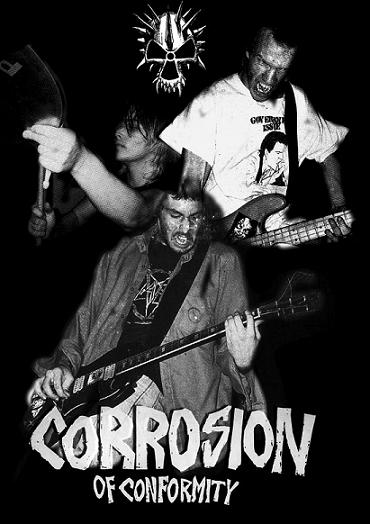
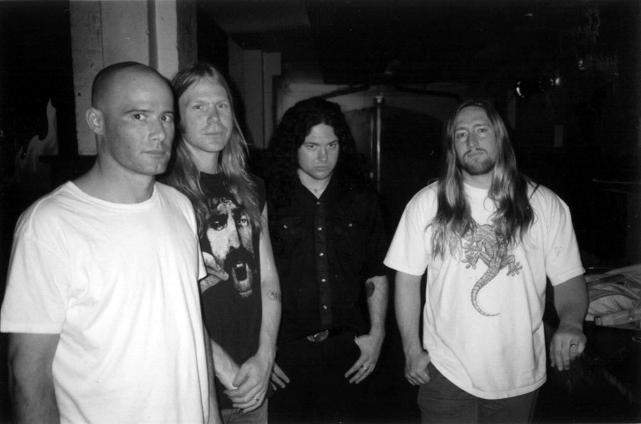
Check out Ben Richardson’s story on the Southern Lord Mini-Tour in this week’s Guardian. Here, he talks with Mike Dean, bassist and singer of Corrosion of Conformity.

San Francisco Bay Guardian: You guys are practicing in North Carolina now, in preparation for the tour?

Mike Dean: That’s right, yeah. It might be useful.

SFBG: How long has it been since you’ve played all these Animosity songs?

MD: Quite a while. Easily 23, 24 years, something like that. 23 years!

SFBG: How does that feel? Is it like putting on an old garment?

MD: Either I remember the stuff precisely, and it is like putting on an old garment – it feels just like yesterday, and I can play it – or there are parts of songs that I have no recollection of. It’s either completely natural or kind of strange.

SFBG: Can you point to any particular parts that seem unfamiliar?

MD: There’s a bridge-like part in the middle of the song “Holier,” that I completely forgot about!

SFBG: This must be due in part to the fact that your technique has changed a lot over the years. At this point you’re a veteran, a very well-schooled musician – not to say that you weren’t good to begin with…

MD: It’s funny that you should mention that. It’s an astute observation, because sometime around the time we did [1987’s] Technocracy, I started to play with my fingers more and more, and sort of leave the picking thing behind. Basically, it was like starting all over again, to some extent. Now, I can do all the things on Animosity and Technocracy with my fingers, as opposed to a pick, which I would just be dropping anyway.

SFBG: So you recorded Animosity playing with a pick, but now you can play all those parts with your fingers.

MD: Yeah, I guess I’m losing points for authenticity that way.

SFBG: Well, I’m a fan of the pick-less bass playing, in general, so I gotta support that approach.

MD: I am too, but I try to have a real open mind about it now. You’ll see videos, certain songs in which John Entwistle [of the Who] or John Paul Jones [of Led Zeppelin] use a pick to mix it up.

SFBG: Tell me a little bit about how you got involved with this Southern Lord Mini-Tour. How did it all come together?

MD: That’s an interesting story. I’ve done a little recording for a band that was on Southern Lord called Earthride. Maybe about five years ago. I kinda knew Greg [Anderson, owner of Southern Lord Records] from that business. Greg was kind of a hardcore fan when he was really young. I believe that Corrosion of Conformity stayed at his house in Seattle back in the day. I have a foggy recollection of that happening. It took me a while to sort of put that person together with the guy in SunnO)))) and Goatsnake, but eventually I made that connection. Dealing with him is pretty cool, and there are a lot of artists on his label that I admire, like Wino and Goatsnake, whom I thought were really good the first time I heard them – it’s hard to go wrong with basically the rhythm section from the California version of The Obsessed and the singer for Scream.

http://www.youtube.com/watch?v=Vk3rlgFrL3w&feature=related

SFBG: Did he reach out to you, or you to him?

MD: He reached out to us. He was looking to re-issue some old stuff, and that still hasn’t happened too much. We mentioned that we were gonna record a new release, and that may happen. So we just started talking to him about doing that, and he said “hey you wanna play some shows out here?” and we were like “oh yeah!” It kinda lit a fire under our ass to get some new songs down and go out and play ’em.

SFBG: This is the new release as a trio that I’m hearing rumors about, with the Animosity line-up?

MD: Yeah. The only tangible thing that’s done is a seven-inch vinyl, two versions of one song called “Your Tomorrow.” That should be available by the time we’re out playing on the West Coast. It was kind of a hurry-up production, though it sounds really good, and looks really good too.

SFBG: Are there any plans to do any new C.O.C. material with [singer-guitarist] Pepper [Keenan]?

MD: There are plans to do that. We have a multi-pronged general plan, to perhaps take this and do a full-length three-piece release, and get out there and play it some. That’ll be quite a story – it’s been a long time, and I think we have some new material that we’re excited about. I think at the point after we’ve done that, it’ll be a story to get the Deliverance line-up together. Before we got the three-piece together, we were supposed to go to Europe and play some festivals, we had some offers, but Pepper’s busy with his other group, Down, so his schedule’s a little jacked up. So almost as a joke, I said, “Well we should do a three-piece tour!” Everybody stopped and went “Uhhhh….maybe we should!”

SFBG: What had you been up to since C.O.C. went on hiatus, in 2006? You mentioned recording Earthride…

MD: Well, C.O.C. had been going without [drummer] Reed [Mullin], and in some point around 2004, we decided to make a record with Stanton Moore, from GalacticIn the Arms of God. That’s something I’m pretty proud of, something we did ourselves in Galactic’s now-demolished rehearsal space, which was flooded out of the warehouse district of New Orleans. We had a nice little tour with Clutch, in the UK. At that point, [C.O.C. guitarist] Woody [Weatherman] and I started a band that we tentatively called Righteous Fool, and he moved up to the mountains, to basically go into agriculture and have a kid — that kind of put a damper on our plans. Then I started getting in contact with Reed for the first time in quite a few years, and we started jamming together, and that became Righteous Fool, and through that combination of circumstances we have Righteous Fool opening up for the three-piece-C.O.C gigs we have lined up in a couple weeks. It’s a slightly greasier kind of feel.

SFBG: I was gonna ask, since there’s only one song up on the Righteous Fool MySpace, and it seems more in the uptempo vein, like the older C.O.C. stuff: what are your plans for the Righteous Fool sound? What side of your musical personality do you get to express in that project?

MD: Well…it’s kind of in its infancy. We’re a couple years into it, and some good songs have emerged, but it’s difficult to call where that’s gonna go. We have a pretty solid musical presence in the form of Jason Browning. I don’t really know what to say about that. There’re a lot of directions we could go. I think there’s going to be more of an emphasis on vocal harmonies, things like that. We have a couple fun things we do, with a Fleetwood Mac song, and a Skip James song.

SFBG: Well I think people are curious to see what’s going to happen with that, and excited to see the band live. You’ll be playing two sets in a pretty short duration on this tour. What do you think the audience reaction is going to be, going from a super-slow, enveloping Goatsnake set right into this pissed-off hardcore Animosity stuff.

MD: It’ll be interesting to see. There are a lot of people who perform that kind of music [doom metal, a la Goatsnake] at some point in their life, in their younger life, in their previous life, who might have been into the hardcore kind of thing, so there’s a lot of overlap there, in terms of the cast of characters who perform that kinda stuff well. At the time – it’s kind of humorous to think, now – some of the parts on Animosity that were slower, briefly dirge-like, somewhat Black Sabbath inspired – that was considered slow, and within a certain kind of close-minded scene, was actually controversial. It was a controversy that you would play a few measures of something slow or heavy rock-inspired.

I think we were credited with being on the forefront of that, but in a way, we were just imitating Black Flag, but taking our Black Sabbath influence a little more literally, and indulging some more regressive influences. We did something original with borrowed ideas. There are people that would say we were involved in the beginnings of that type of thing, y’know. I don’t think that would be too pompous to say. [Laughs] If it is, I just said it, so…

SFBG: You mentioned having respect for Wino earlier. Being in Saint Vitus in that SST scene, he encountered people who would really be pissed off that he would play slow, super-Sabbathy songs.

MD: That was a pretty crazy thing. I’d already been initiated to the music of the Obsessed by that time, and picked up an appreciation for it. And so to see that dude in Saint Vitus not playing a guitar! It was just absurd, but it kind of wound him up, and made him a more intense vocalist. He’s been playing some shows with Saint Vitus recently, and I’ve heard that that’s still the case. I haven’t witnessed any Saint Vitus in quite a few years.

SFBG: You should take the opportunity, if it arises. I’ve seen two shows in this resurrected Saint Vitus era and…

MD: There’s no Armando on drums…they have some other dude on drums…

SFBG: Yeah, they have a different drummer, but Wino and Dave [Chandler, guitarist] are still really potent.

MD: So Saint Vitus comes to Raleigh, NC in like 1986, and Wino stays at my house (it’s a house a lot of people live at) and here he is on this tour not playing guitar. He picks up an acoustic guitar and plays tunes in a couple funny different ways, and plays Robert Johnson songs verbatim, as they are on the one LP – Robert Johnson Complete Recordings – we were just like, “Oh, my God!”

SFBG: I’m curious as to how you got from playing hardcore with Sabbath interludes to playing that reinvented C.O.C. sound from the early nineties, which is much more directly Sabbath-influenced. But that transition corresponds with the time when you were out of the band…

MD: I think we were already looking in that direction. You go out there and you play hardcore music, and you’re on tour, and the quality of it – of some of the bands you see – isn’t that great, and you’re listening to music partially devoid of melody. You want to unwind, and listen to some older stuff, and you realize that the craftsmanship of the older stuff is a little more advanced, even though its time has come and gone. Whats the next logical thing if you’re listening to Sabbath, or the next logical regression, to try to take something new? Deep Purple! We were listening to a lot of that. It’s funny, because after I quit the band they ended up with a singer [Pepper Keenan] who’s obviously really Ian Gillian-inspired, and they hooked up with a producer who had really sound music theory ideas. That resulted in Blind.

I had kinda moved on. I met a nice girl and moved to San Francisco for half a year. I lived in Philadelphia and I was delivering things on my bike. I heard the Blind record, and I was like “Oh mah god, its really good!” That minute came and went, and around the end of 1993, they had a dispute coming up with new material, and they were looking for a bass player and a singer. They asked me, did I want to come and make a record, and I was like “Yeah, all right!”

SFBG: That’s been the thing doing research for this interview…I think the archetypal narrative for rock bands is that they have members in and out and it gets complicated, and there are a lot of hard feelings, whereas it seems like with C.O.C. there’ve been all these people in and out of the band, but it’s been very amicable. You left and came back; you’re playing in Righteous Fool with guys who had been in the band before…

MD: Well, you know, that’s not to say that there weren’t heated incidents involved in some of this revolving door activity. There might be some negativity that occasionally rears its head. But I think everybody tries to be an adult, and a compassionate person. I think Kyuss would be the band that had that more amicable situation. Drummers in and out, a couple bass players…

SFBG: I thought some guys from that band don’t even speak anymore…

MD: Well now, yeah, you’re right. The funny thing is that they were all supposed to be on Roadburn in Holland like the same day. Nick Oliveri playing his acoustic stuff. Mr. Garcia doing some Kyuss stuff…

SFBG: It seems like a lot of these differences are being put aside in the interest of these tours that are resurrecting bands – bands that have been broken up for awhile and are coming back to tour.

MD: There’s a big rash of that right now, and it’s one of things that actually kinda gives me pause about doing this, to some extent. The only thing I can do to allay my feelings of not wanting to be part of that is to attempt to offer something new. At this point, we have four or five new songs that we can perform. We’re doing this as part of readying ourselves to do something new. And I know people are excited about the old stuff, and its fun to play, fun to reinterpret, and we enjoy it, but it’s also about having something new. Because there are a lot of 40-, 45-year-old people who were in some moderately famous musical endeavor when they were 20, and they’re all coming out of the woodwork. There’s just a new market for it.

SFBG: Is it possible for you to expand on the drawbacks of these nostalgia tours? Not asking you to slag anyone off, obviously. Are there things that you could point to that give you the bad vibe with that trend?

MD: No, not really. I’m not going to point to anyone who’s substandard or insincere. At some point it just becomes a little redundant. I’m kind of an unlikely subject [for a retro-focused tour] because I’ve never been real big on the nostalgia factor. But here we are.

SFBG: It just seems like if it’s overdone, it can take away the spotlight from some of the cool new bands. But it cuts both ways, right, because if you have these nostalgia tours, you can have new bands as openers, and take advantage of the known quantity, the big name. If there’s a similarity in the music, then the fans of Saint Vitus, say, get exposed to up-and-coming bands in the same genre that the older cats who listen to Saint Vitus might not have heard of.

MD: Well Saint Vitus this doesn’t really even apply to…

SFBG: Well, yeah. You’re right…

MD: …regular time, the laws of time, don’t really apply to them. They started off working this old crazy freedom-rock ethos anyway. They started off being out of style, and they’re a special case.

SFBG: A bad example for me to cite. In general, do you think it’s a good time in musical history to be a metal band?

MD: It might be! One of these trips has a corporate sponsorship, so apparently someone believes that this can help with product placement and identity. That’s…pretty crazy.

SFBG: Do you follow any newer, up-and-coming music? I’ve been impressed in recent years by the resurgence of a lot of North Carolina-based bands that have been making names for themselves…

MD: You know, the funny thing is, Between the Buried and Me…we had no earthly idea that they were from Raleigh, North Carolina. I was just like “that band with the really badass drummer, and sort of exaggerated dynamics – they’re from Raleigh?! Really?!” I’m not actively following stuff like that, but I’ve heard of them, and I’ve heard them.

SFBG: How about Valient Thorr?

MD: Valient Thorr I’ve actually seen, and the funny thing is I do a lot of…I work a lot of events, I do rigging, and I used to do straight-up stagehand stuff, so I’ve moved Valient Thorr’s gear, at the Warped Tour. They were like, “No, no, you can’t move our gear, you’re Mike Dean!” And I was like, “Dude, the rent is due, every month, I will move it.” I like them, I like their crazy anti-war video from several years ago, with Mr. Brian Walsby. Have you seen that? Being on the Volcom label, no one ever sees their shit.

SFBG: It seems to me like Southern metal has experienced a crazy boom in the last five, 10 years or so. All these bands out of Georgia – Baroness, Mastodon, Kylesa, Black Tusk. You’re sort of in a unique position to speak to how well Southern rock can combine with heavy music.

MD: A lot of the bands that you just mentioned there are good, non-stereotypical versions of what you would call “Southern metal.” There are other acts that kind of exploit that in an uninteresting way. There’s a lot interesting musicianship in that stuff, which is pretty cool. I’m not a big flag-waver, but all those bands are pretty good. It’s kind of astounding how popular and successful Mastodon are.

SFBG: It’s crazy. I’ve seen them go from the club shows to the college amphitheaters. It’s crazy to see the change in the kind of people who you see at the show.

MD: I’ve never been to a Mastodon show. I’ve may have seen them open for somebody a long time ago, but I’ve never been to one of these big shows. I’d be curious to see.

SFBG: They’re total pros in one sense – the performance is really top notch. But the guitarist, Brent, is kind of a wild man, and I think they’re almost better when he’s three sheets to the wind, because it ups the intensity. If he’s getting angrier and angrier as the show goes on, his solos get more expressive…

MD: A whole album based on Moby Dick.

SFBG: Can’t argue with that, right?

MD: Those kids’ English teachers gotta be proud!

SFBG: One of the things I was struck by, listening to Animosity to prepare for this interview, was the strident political nature of a lot of the lyrics. Even though we live in very politically contentious times, there really hasn’t been the kind of musical reaction that existed under Reagan, when people were using music as a channel for their dissent. Do you have any insight, having written a seminal political hardcore album, about why that isn’t going on today?

MD: That’s an interesting observation. I don’t really know the answer to that. I don’t think there’s as much consensus, because of the disparate nature of media now, or the wider number of outlets. At that time, we had cable TV in its infancy, we had print media, we had three networks – I think that people would be more tuned in to the same media outlets at that point, and they would either accept it or reject it. I think there was more potential for mass consensus even in terms of dissent. Now it’s just so diffuse; people just look at things that reinforce their worldview. A lot of those worldviews don’t have anything to do with reacting to political situations, or reacting to wars that are going on. Also, I think expressing oneself through music didn’t result in any massive type of change. I don’t think its really an effective means of effecting any kind of change. It’s just blowing of steam…

SFBG: Well, Bono cured hunger in Africa. So, there’s that.

MD: I crewed for U2 on their 360 show as a local, working the spotlight, and the guy on the spotlight above me pissed himself in the spot chair – I got to watch the piss drip down.

SFBG: He couldn’t leave?

MD: Yeah, he couldn’t leave. I watched him drink some coffee beforehand, and I was wondering…

SFBG: You said it was the spotlight above you? That sounds like a bad situation…

MD: Fortunately, they were offset.

SFBG: Did you see a trickle of urine going by, a couple feet from you?

MD: I did. Yeah, I did.

SFBG: That’s brutal.

MD: They landed the truss, and the guy just left – he resigned on the spot.

THE SOUTHERN LORD WEST COAST MINI TOUR

Corrosion of Conformity, Goatsnake, Black Breath, Eagle Twin, Righteous Fool

Tue/10, 7 p.m., $25

DNA Lounge

375 11th St., SF

www.dnalounge.com

Gods of Distortion: The Interviews (Part One)

1

Check out Ben Richardson’s story on the Southern Lord Mini-Tour in this week’s Guardian. Here, he talks with Southern Lord founder and Goatsnake and SunnO))) guitarist Greg Anderson.

San Francisco Bay Guardian: So, first off, could you describe the planning of the Power of the Riff festival, and the Southern Lord Mini Tour that’s sort of spun off of that?

Greg Anderson: Well, last summer we did a Southern Lord event in Seattle with SunnO))), the other group that I play in. Basically it was two nights up there at this venue Neumo’s, and SunnO))) headlined each night, playing different sets each night. The support for both shows was Lord bands: we had Black Breath, Accused, Pelican, Earth, Trap Them. It was great! So the promoter of that venue – who put that on for us last year – called and asked if we wanted to do something similar this year – another Southern Lord event. So we were trying to put something together for that, and right around the same time, another good friend of mine told me that he’d been asked to put together something down here in Los Angeles, at the Echo and the Echoplex, and was I interested in getting involved in that. So with these things impending on the horizon, I thought I’d put together a decent line-up of Lord bands and make it happen.

Also, at the same time, I’d been talking with Mike Dean from C.O.C., who told me that they wanted to get out and play some shows with the three-piece line-up, the 80s Animosity line-up, and asked me if I was interested in working with them on that. So I thought I’d base it around them being the headliner and some of our bands on the bill as well. So that’s how it came together, and over the last couple months, I’ve been slowly putting together the pieces, getting other bands on board.

San Francisco just seemed like a natural choice, also, to do a show. San Francisco’s always been very supportive of Southern Lord and heavy music in general, so I thought “we’ve gotta do a show in San Francisco with this package – it’s gotta happen!”

SFBG: How long have you known Mike?

GA: He stayed at my house in 1986, when C.O.C. played in Seattle, actually, on the Animosity tour. It was an amazing show, and back then there were a lot of bands crashing on people’s floors. They still do, of course. I had a lot of bands stay at my house, and they were one of them. I met him then, but I didn’t reconnect with him as far as a working relationship goes until about 2003 – he was on the Probot record, as one of the vocalists on that, and I reconnected with him that way. A couple years later, he produced and recorded a record by this band on Southern Lord called Earthride.

It was kind of off and on. C.O.C.’s come to town, and I’ve talked to him and what-not. I have a lot of respect for his playing, over the years.

SFBG: Did the idea of playing the shows this summer precede the idea of releasing the seven-inch you guys are putting out, with the new track by that Animosity trio line-up?

GA: No, it all kinda came at the same time. I suggested it might be cool to have some new material, and he was really gung ho for doing that too, so we’re putting it together really for the shows that they’re playing – in time for the shows.

We thought it’d be cool. There are a lot of bands getting back together these days that rarely if ever have any new material, or really anything new. We had talked about that, and told me “hey, we’re actually playing a handful of new songs at these shows, so we’re really into writing new material.” So I said, “well, lets try to get something out there,” and that’s how the seven-inch happened.

SFBG: What’s your feeling on older, defunct, previously broken-up bands coming out of the woodwork? I saw an interesting comment of yours in another interview about the “Kyuss Syndrome,” in which a band isn’t a draw while they’re together, but if you give them some time, they build up this huge fanbase, whether or not they’re actually active and playing shows. What kind of ramifications do you see this trend having?

GA: First of all, I think it’s really great, actually. Some people kind of have a bitter attitude about it. They say “where were these people back in the day!” But the truth of the matter is that its really based around the internet, and the fact that information is so easily available, and cataloged and documented meticulously on the internet. You can find out a lot of stuff!

The other thing about the internet is that it’s like a trail, a path you can get on, on which you find one thing, and it leads to another thing, and it’s just a snowball effect. I think it’s just an amazing tool for discovery. It’s great, because there’s important music that’s been made, that before the internet, or without the internet, would have been much more difficult to learn about. Now, it’s easy, and I think people are getting turned on to all this stuff. The interest grows, and it makes it possible for these bands to come out and play to three to four times as many people as they did in their heyday.

It’s amazing! I’ve seen it in different genres. I saw At the Gates play in Los Angeles, and they sold out this huge place. I saw them in their first tour in the U.S., in the mid-nineties, and there were 50 people. It was the same thing with Saint Vitus. I saw them in the 80’s and it was a very select audience; very few people were there. Then, they come back, and they’re playing for three or four hundred people. I think it’s cool, I think it’s a real testament to the fact that this music is valid and incredible. It needs to be heard, and it needs to be given the respect that it’s due.

SFBG: Particularly in the case of At The Gates, there’s almost a sense of justice, in that a lot of people made a lot of money aping ATG when they weren’t around. Now they’re able to take advantage of a bunch of people who were introduced to the music through other bands that were playing an At the Gates style.

Do you think the proliferation of big summer metal festivals has had an effect on bands reforming? From what I can glean, that seemed to be an influence on Goatsnake getting back together, having this opportunity to play Roadburn, and you guys thinking “hey, why not?”

GA: I think there are two big factors: one – I won’t lie – the money is really attractive, especially when you get older, and you’ve got families, mortgages, etc. You can’t just crash on people’s couches – you’ve got responsibilities. When these festivals come along, or sponsorship from Scion or Converse comes along, it makes it so it can actually happen – the resources are there. And that’s something that wasn’t available – to my knowledge – in the 80s. These opportunities involving people with deep pockets who are willing to put it into underground music. It just didn’t exist. It definitely didn’t exist in the 80s and in the 90s, with the alternative music boom, stuff was available, but for underground metal and hardcore it wasn’t available.

Now, you’ve got these corporate sponsors who are putting together these insane events, and a lot of times – they’re free! Like the Power of the Riff fest that we’re putting on. We were able to get the funding to make it a free event. And at the request of the sponsor – they demanded that it be a free event – and we were like, “Wow! This is cool!” I think it’s an interesting time right now. There’s nothing like it. That wasn’t possible before. Like you’re saying with your question, it makes it so that these bands can get out there and do stuff. They have the resources to do that.

A lot of the bands I’ve seen are really kicking ass! I saw Saint Vitus a couple weeks ago, and it was mind-blowing – it was absolutely mind-blowing. They had it, man, they were killing. Eyehategod, same thing! These bands are charged! I saw Death Row play, which is like the original Pentagram – they were killer. It’s an interesting and cool time in music right now.

SFBG: Your bringing up Eyehategod and Death Row provides a good segue to my next question: does the doom metal genre have a particular affinity for a lot of interpollination between bands and musicians? For this kind of freewheeling collaboration, in which Goatsnake is tied into the Obsessed, and tied into SunnO))). I think of Eyehategod in the same way, with their connections to Down, and therefore C.O.C., and so forth. Do you think there’s something particular about doom-stoner metal that enables or inspires this kind of collaboration?

GA: I’ve never really thought about it before, to be honest with you. It’s just kind of a friendship or a brotherhood between the musicians, and kind of a desire to take things in different directions and do different things with it. You mentioned the Eyehategod thing, and that whole New Orleans scene is super, super-intertwined. Outlaw Order, Crowbar, Arson Anthem, and all these other bands that all share members. I think it’s really cool. Soilent Green. There’s tons of those bands, and I think it’s cool when bands can branch and do different side-projects. For me, as a fan, it’s interesting, and if you’re into the player or the players, and what they’re doing, it’s a real treat to have all these different outlets, rather than just doing one band, and one album a year.

I think it has to do with the punk rock roots that these people have and come from, and the DIY aesthetic of doing things on your own, and not really having to answer to a major label or someone telling you, “Well, you can’t do that, and you can only focus on this one band.” It’s kind of a shame, when you think about it. What if that spirit, and that mentality was happening with bands like Led Zeppelin and Sabbath? We’d have all these spin-offs and different projects that they were involved in, that were kind of pushing boundaries and doing different things. I think these [younger] people do what the hell they wanna do.

SFBG: Well you’re making my job easy, mentioning the punk rock ethos and the DIY ethos of these musicians, because my next question was about all the connections that exist between the 80s hardcore scene and the doom metal bands, and the doom bands that grow out of that scene and the musicians that play in hardcore bands and then do metal bands. I think I remember reading that you were a hardcore fan in your youth, and played in a more hardcore-oriented band. Do you have any insight into how those connections came to be? Stylistically, the types of music have some serious differences, and I know that at particular points in history, there was a lot of animosity between people who like their music fast and those who like it super-slow. Is there anything you can point to that speaks to the connection between those two worlds?

GA: I’m not sure I can explain or pinpoint why that’s a phenomenon, but you’re definitely right. What I was thinking when you were asking the question – I was thinking about Black Sabbath, because I think they’re one of those bands that everyone likes, and there are a couple hardcore bands like that too, like the Cro-Mags, and Bad Brains. Everyone can agree on those bands – at least a lot of people can.

I grew up in Seattle, and we didn’t get a chance to see a lot of outside, touring bands, because we were way up in the corner – we were sort of geographically isolated. There’s a lot of stuff that can happen because of that, and one result was the grunge explosion, where a strong local scene grew and was cultivated because there wasn’t a lot of outside influence. That also adds to how people got some of their open-mindedness. Grunge is a fusion of a bunch of different musical styles – punk included, metal included. What I thought was cool about Soundgarden, from the beginning, was that they sounded like a fusion of Zeppelin, Sabbath, and [Black] Flag. And the most important band in that scene growing up, at least for me, was the Melvins, who were the perfect combination of Black Sabbath and Black Flag. To have these prejudices against certain styles of music didn’t seem right to me, because there were all kinds of cool music happening around me. I know what you’re talking about – some of the punk rock attitude, and some of the metal attitude can be pretty narrow-minded at times. But at the time that I grew up in, the bands that I was heavily influenced by were available for me to see on a regular basis. That wasn’t the attitude, and it was obvious why it wasn’t the attitude.

I was turned onto metal first – Metallica, Motorhead, Raven, Slayer, Venom. Through those bands, and their attitude, and who they thanked on their records, and which T-shirts they wore, I got turned onto punk rock. And hardcore was a revelation because metal was played so fast and heavy, but then there were these hardcore bands that were playing even faster, like C.O.C. or D.R.I. The excitement involved in discovering new music has carried on throughout my entire life. And that was the start of it: being into metal, and then getting into hardcore.

SFBG: So the liner notes and sweaty T-shirts were like the internet of the 80s? Sticking with that theme of Seattle, and hardcore, and being psyched about discovering new music, can you talk to me about how you first came in contact with Black Breath, and the process of getting them on Southern Lord, and getting them on the tour this summer?

GA: It’s actually an interesting story! Over the last couple of years, especially playing with SunnO))), and working on this last record we were working on, I really turned away from, or wasn’t listening to much aggressive music. It was either experimental, or I was actually really into jazz music. It’s not like I was turning my back on heavy music, but my taste had just drifted a bit.

And then something snapped. I started listening to old hardcore records, like Jerry’s Kids, and Crucifix, which was sort of a reaction to where my mind was with the SunnO))) stuff. I wanted something that was the complete opposite of it. And so I was rediscovering stuff that I was listening to when I was younger, and I really got heavily into that. And I started searching about bands now that were happening, and I got turned onto His Hero is Gone, and a band called Cursed, and I was like “gosh, there’s actually some great music happening in the hardcore scene that I didn’t have any clue about!”

I got more into checking out the hardcore stuff that was happening over the last couple of years, and I got a record in the mail – a 12-inch, in the mail – by Black Breath. The font of their band logo was stolen from Celtic Frost, and they listed Poison Idea and Dismember as influences, and they were from Seattle, and I was like “Wow!” Because I actually get a lot of demo submissions, and most of it’s just CD-Rs, and honestly I just don’t have time to listen to ’em, but when we get a 12-inch we stop and think “that’s cool!”

SFBG: If I publish that information, you’re gonna get a lot more twelve-inches…

GA: [Laughs] If people are going to take the time to do that, it almost warrants me taking the time to listen to it. I think it’s a cool thing.

So I threw this record on, and I was totally blown away by the energy and intensity of it, and it so happened that this was close to a time that I was going back up to Seattle for Christmas. I ended up looking at the local paper to see what was going on around town, and they were playing one of the venues in Seattle. I went down to check it out, and their live show totally, totally blew me away. I hit ’em up after the show to see if they wanted to get a drink and talk about stuff, and it just kinda went from there.

SFBG: What was their reaction to that? It sounds sort of like the Miracle on 34th St. of metal…

GA: The funny thing is – and one of the things that really sold me on these guys – was that they were more impressed by the old hardcore band that I was in in Seattle – this band called Brotherhood, a hardcore band in the late 80’s. Being able to talk about that sold them on me. We bonded on a lot of different music. They’re really into the Swedish death metal of the 90s, which I’m really obsessed with as well.

Those guys actually turned me onto to a lot of other music as well. There’s this band that we just signed called Nails – they played a couple shows with Black Breath and I thought, “God, that’s great!”

SFBG: One last band-signing question. I noticed in another interview you did, you used a phrase “vigilantly heavy” to describe bands that you you appreciate. I can sort of figure out from context what you mean, but you applied it to Black Breath and I was hoping to get a more detailed description of how you’re using the word “vigilantly” in that way.

GA: I think it’s about being focused on what you’re doing. I notice a lot of intense focus from those guys on creating really amazing songs and riffs, especially. I’ve talked to them, and had in-depth conversations about that, and about how they write songs, and what they want. And they’re not just throwing the stuff together, and that’s pretty obvious. That’s one thing I’ve seen, with a lot of music these days. I won’t name any names, but there are more bands than ever, and more labels than ever – that’s kind of the curse of the internet, that there’s just too much music, too much information! It makes it more difficult to really find the good stuff. But I’m a seeker, man, and I enjoy that part of it, whether that’s going to a used record store and spending two hours flipping through all the used records, or really searching out music. When I find out about a band, I want to know everything about them – what other bands the members have been in, who’s influenced by them, who their influences were. That’s the same type of thing with Black Breath. They’re not just blowing stuff out there, and they’re really careful about what they do.

http://www.youtube.com/watch?v=HpOqsSV_S7c&feature=related

SFBG: To switch gears to a couple of Goatsnake questions to wrap up: do you remember the moment you first heard a Sunn amplifier?

GA: I do. I have two different recollections. One is Buzz Osbourne [of the Melvins], using the solid-state versions of the Sunn amps. I actually had no idea that Sunn had made a tube amp. I thought they were all about solid-state. In a lot of ways, to use a geek analogy, they were kind of the Peavey of the Northwest. They were based in central Oregon, in a town called Tualatin, and their whole thing, at least how I saw it, was that they were creating solid state amps and putting them out there at a reasonable price, for people who were getting into music. It was a good and cost-effective alternative to a Marshall, like a high-end model. Peavey was the same way – an inexpensive amplifier, usually solid-state, for people who were just learning to play guitar. Now, playing guitar is just so accepted and so huge that every company has a line of amps now that is targeted to this audience.

So this to me was what Sunn was about, and back in those days, you could go to any fucking pawn shop or any used store and get a Sunn head for really cheap! Especially pawn shops. That’s why bands like the Melvins picked up on them – because they were readily available.

The first time I heard the Model T, which is the amp I use in SunnO))), was actually in the mid-90’s. I was seeing this band in Olympia called Life, and the guitar player was this dude – actually a San Francisco dude, now – Tim Green, who went on to be in the [Fucking] Champs, and records bands now in San Francisco. And he played in this band that was amazing. Pretty Eyehategod-influenced. I went and saw him play in this basement, and he had this Sunn head, a tube amp, and I was like “what the hell is that!” It was super-loud, ripping, super-heavy, and immediately after I saw that, I searched one out – I had to have that amp. That was the beginning. I had never seen anyone play Sunn tube heads. I didn’t know they existed! And of course, after my search, I realized that they made a lot of them. But they stopped making them around the mid-70s, and that’s when they started making the solid-states, as a more reasonably-priced option.

SFBG: Do you remember the specific influences that were working on you around the time that Goatsnake was created?

GA: I moved to Los Angeles from Seattle in the mid-90s, and I had played in this band in Seattle called Engine Kid that was more – it was more about melody and dynamics, and we were really influenced by a lot of the stuff that was happening in Chicago, the Touch and Go style of bands like Shellac and Slint and Bastro and those kinda bands. But we were always into the heavy stuff too, and the Melvins, so there was that kinda influence.

When I moved to L.A., I had a chance to jam with the rhythm section from the Obsessed, because [Scott] Wino [Weinrich, singer-guitarist in the Obsessed] had just basically left town, and he was the leader of the band, and the band ended. They were just looking to do something new, and a friend of mine knew them and knew that I was looking to do something new too, so we put it together, under the guise of creating a heavy band, but with no guidelines.

At that point, I was listening to a ton of Eyehategod and a lot of Kyuss, and Slayer. Our common interests in that band – the bass player, drummer and I – were Pentagram, St. Vitus, and Trouble. That type of stuff. Basically, I started bringing them some music that I had written, and it was really heavy.

But we didn’t have a vocalist. And we thought, “how are we gonna do this?” We thought it would be too obvious to get a screamer, in the Eyehategod style. I really like that kind of music, but we wanted to go somewhere different, and to have some bit of melody in there. Pete Stahl was an old friend of all of ours, and we played him some of the demos, and he said “this is great, I think I could really do something with this.” It was a perfect combination, because the music’s really heavy, and I think you really expect someone to come screaming over it, but the vocals are really soulful, and really melodic. It was a really interesting contrast, and it set it apart from a lot of the other stuff coming out at that time.

SFBG: Was the harmonica Pete’s idea? That’s one of the things that put the music’s uniqueness over the top for me, is that it has this element that no other band takes advantage of.

GA: He’s a great harp player, too! When he first started doing it, I thought, “this reminds me of the first Sabbath record,” of “Wizard.” One thing I didn’t mention when you asked about the influences – at that point, I was overly super-obsessed with Sabbath. They’re my favorite band of all time, but at that time especially, I wanted to tap into something that had that sort of vibe. A lot of the music that was written for Goatsnake — all the time, but especially back then – was just sort of re-working Sabbath riffs. Turning them around, and playing them with much more distortion and tuned down a little bit more. Sabbath has always been, and always will be the most important inspiration for me. Also Sabbath, in my eyes, were basically just a heavy blues band. People ask me “Is Goatsnake stoner rock?” and I say, “No, it’s blues played slower, down-tuned and played a little heavier than you might have been used to hearing.”

SFBG: Can Goatsnake fans expect sort of a retrospective set? Is it gonna match up pretty closely with what you guys played at Roadburn?

GA: Yeah, it’s pretty much the same material that we’ve been working on. The big difference is that on Roadburn, we were playing with the original bass player for Goatsnake, Guy [Pinhas], who was in The Obsessed, and Acid King after that. But he lives in Europe, and he’s not able to come out for these other shows, so we’re going to be playing with Scott Reeder, who was in Kyuss, and who was actually in the Obsessed also – Guy took Scott’s place in the Obsessed. It’s amazing, because he’s actually played with Goatsnake before. He played on the last EP that we released, as well.

His playing is very different than Guy’s, and we’re going to attempt one song off the EP that we did with Scott. So we’re working on that, and he’s fitting in well with the other material. Actually, the last time Goatsnake played San Francisco was with Scott, in 2004. We played another Southern Lord showcase [at the Elbo Room].

SFBG: Is there a future plan for other Goatsnake shows down the road? I know you’re super-busy with your other band and, of course, your label, but I’m assuming that the people who read this interview will be dying to hear whether there’s a chance of a more extensive tour, or some new recordings.

GA: There definitely won’t be any extensive touring. Given all of our schedules, that’s just not possible. To be honest with you, I don’t think it’s an appropriate thing for this band to do. We’ve sort of made the decision, “We’re all having a good time, but let’s keep this special. Let’s do special events, and not beat it into the ground.” I think it’ll be every once in a while. We have actually already committed to doing one other show at the end of October, here in Los Angeles. Friends of ours and labelmates Pelican are doing their tenth anniversary show, and they asked us to play that show with them. That band Nails that I mentioned are going to open.

Other than that, we’ve gotten a lot of offers, and a lot of interesting ones, which have been really flattering. But we’re taking the mellow approach to it. Definitely not a “get in the van” kind of approach.

But I would love to make some more music with these guys. It’s just a matter of scheduling, and seeing what that’s about. That’s definitely something that I’m hoping for, but we’ll see. I don’t want to push anything. If it happens, it happens, and I’ll be stoked, but if it doesn’t, so be it.

THE SOUTHERN LORD WEST COAST MINI TOUR

Corrosion of Conformity, Goatsnake, Black Breath, Eagle Twin, Righteous Fool

7 p.m., $25

DNA Lounge

375 11th St., SF

www.dnalounge.com

The Photo Issue: Dean Dempsey

0

SFBG What’s it’s like stepping in front of your camera?
Dean Dempsey I don’t have any strong feelings about it, perhaps because I know there is so much post-production involved. I certainly behave as though I am being watched, or surveyed. A bit like what John Berger said, “Women watch themselves being looked at,” and although I’m not a biological woman that rings true for me, and perhaps for many artists who turn the camera onto themselves.There is a spectacle element involved.

SFBG How about the process of being a different person or character or being? What does it feel like — is it experimental, psychological, revelatory, any or all of the above?
DD Sometimes I surprise myself in how unexperimental it feels. I’ve never really been a fan of experiment, perhaps because I feel that it suggests a sort of aimlessness. I do, however, feel it is playful, and there certainly is a revelatory aspect to it. Psychologically, I’m constantly having to imagine the presence of characters that aren’t in fact there — especially for the multiple self-composites. I have to imagine eye-contact, gestures, and conversation. In the process, it doesn’t make any sense. I just look a bit nutty as I pose in various positions to invent relationships with characters who are not immediately present. In this respect, there again is the resurfacing of “phantom.”

SFBG Has it taken you in directions or resulted in visions you didn’t anticipate? I ask this because your series’ seem to inform each other, and in a manner that doesn’t seem predictable, even if the realized images are obviously very carefully composed.

DD The playful,psychological or phantom? Or all three?

SFBG All three. Let’s be expansive, for now.
DD The series “You, Me and the Other” has really informed the bulk of these new series’, “Fragmentations” and “Artifice.” At first I was interested in a more literal interpretation of otherness and spectacle. I wanted, and continue to want, to explore notions of belonging while questioning the ways in which ideas of normality are constructed.
But as I continued with those images, which were about the multiple and theatrical side of my work, I began to explore a little deeper why I was doing them — why I was so invested in the gaze. I’m not at all interested in making “identity art,” but I can’t deny the pivotal ways childhood has informed my practice. So from having a whole lot of myself within a single frame, there has been a complete implosion in “Fragmentations.” That erasure takes place not just to anatomically dismember my characters, but to emphasise what is left over. There is a sort of implosion in “Artifice” as well, as the characters embody something more subhuman and alienated, making it more difficult to encapsulate into specific meanings, in a way.

SFBG What kinds of reactions have you encountered to “Artifice,” and in turn to “Fragmentations”? To me, these series’ manage to be interrelated, though in a surface sense “Artifice” is quite brash and overtly performative and imaginative, while ‘Fragmentations’ is more elliptical.
DD They are very much interrelated. I’ve been working on both series’ at the same time for quite some time now. There are images in each body of work that I haven’t shown anybody because there are other images that have to come first. But yes, on the surface, there is a difference. Conceptually, they are both informed by personal biographical history and each series investigates methods of spectacle and exclusion. Although with a difference in general aesthetic, each series is about the pieces that complete us; the pieces of our body, our process, our gender – pieces of social fabric.

SFBG Biographical history is present in your work in a variety of forms or absences. How has your family responded to your photography, and in what ways might you feel a familial influence in making an image or a series?
DD It’s funny, because the only familial influence with my work is more through a variety of absences — the absence of a father, the absence of a visible Mexican identity, the absence of siblings, and so on. I met my father in 2005, just a few months before I was about to move to San Francisco to attend college. And just two years after that he was hit by a Union Pacific train, losing two limbs. So again, there is a return of absence (this time anatomical) that emerges in my photoworks. He’s been very cooperative in letting me take portraits of him, even at the site of the accident. I even showed him my reenactments of him and he asked, “I don’t remember you taking those of me, when was that?” A lifetime of transiency and drug use hasn’t made him the sharpest of knives, but it certainly has made him an interesting subject.
It was only yesterday I told my mother about it. It took over 3 years for me to process and even begin to find the language to articulate how I felt. It wasn’t so much a secret, I just didn’t know how to say it. The details of his accident continue to reveal themselves in my work, even if they are depersonalized, so I knew it was something I couldn’t avoid much longer. She hasn’t seen him in 20 years. I recorded the conversation, maybe I’ll use it for This American Life. It really is a good story.

SFBG In a different sense, just as there is absence “present” in your photography, there’s also a multiplicity of self. Does that come naturally in relation to your personality? I don’t mean this in an MPD sense, but rather do you feel a creative urge to perform and discover things through performance?
DD It must come naturally because that is in some ways a more difficult part of my process to locate. I have an idea and I know what I need, or don’t need, to materialize it. But as my various bodies of work develop and expand, I’ve become more aware of their shared concept as well as what sets them apart. It is a constant discovery. Performance is fundamental in my work, whether in the act or in the idea behind the image. My content addresses performance in relationship to the constructs of gender and race, and notions of (dis)belonging. Everybody is always performing, even when there isn’t an audience to see it. So in this way, the performer becomes its spectator. By digitally inserting myself multiple times, or even by dismembering the figures I emobody, I’m envisioning a completed project. I’m thinking of how I will see myself, or the people I perform. Not to reference Berger again, but I’m watching myself being looked at.

SFBG What drew you to photography, and what photographic works have had the strongest impact on you in life?
DD I think I was, at first, most allured by the deceptive nature of photography. The medium is often falsely attributed as being very honest and undiscerning, yet a photo (and the photographer) always omits something from the frame. They deem what is worthy enough to be documented, and they choose what is seen. And I won’t begin to mention how Photoshop and image editing software furthers this point.
A good image, or least one I personally find most engaging, is one that suggests a larger narrative but refuses to explain itself. I call them little “cinematic babies,” because these sorts of pictures act as a still, forcing us to image what is happening before and after that with which we can see. What good is a piece of art, or anything, without the implication of its audience? Without outside interest it folds. But these are all my personal opinions, I could care less about constituting what is universally “good,” I’ll leave that to the bigger-headed.
Regarding influences, it’s always a tough question for me. I tend to jump around a lot, but I’ve always enjoyed folks like Carrie Mae Weems, Andreas Gursky, and even sculptural and installation artists like Santiago Serra and Sarah Lucas.

SFBG Ah, and now we segue to the inevitable question — do you have any interest in making films?
DD Yes! It’s funny because I feel sometime these photoworks began as studies for films. Beyond the technical aspect of putting a film or video together, there is still a conceptual formula of sorts that is in the works. But working more with the moving image is definitely in my horizon, I’d say before the end of this year.

Judge rules that says same-sex marriage ban is unconstitutional

0

Judge Vaughn Walker’s ruling that California’s Prop. 8 is unconstitutional got Assemblymember Tom Ammiano, Mayor Gavin Newsom and City Attorney Dennis Herrera issuing praise-filled statements today. And Herrera’s statement included comments that reaffirmed the pivotal role that the City Attorney’s Office played in this landmark case.

“U.S. District Court Judge Vaughn Walker has issued a powerful, thoughtful, and well-reasoned decision,” Ammiano said. “In overturning Proposition 8, this court fulfilled its legacy as a champion for equality.  The court recognized that it is unconstitutional to put a minority’s rights up for a popular vote.  Today’s decision reaffirmed our U.S. Constitution’s promise of equality for all.”

Newsom, who stuck out his neck in 2004 when he decided to issue marriage licenses to same-sex couples, said Walker’s decision, “is a victory for the fundamental American idea enshrined in our Constitution that separate is not equal and that all people deserve equal rights and treatment under the law. It is a victory for the thousands of California couples, their families and friends whose lives and loving, committed relationships have once again been affirmed in the eyes of the law.

“As Judge Walker states in his ruling,” Newsom continued, “Proposition 8 fails to advance any rational basis in singling out gay men and lesbians for denial of a marriage license. Indeed, the evidence shows Proposition 8 does nothing more than enshrine in the California Constitution the notion that opposite-sex couples are superior to same-sex couples. Because California has no interest in discriminating against gay men and lesbians, and because Proposition 8 prevents California from fulfilling its constitutional obligation to provide marriages on an equal basis, the court concludes that Proposition 8 is unconstitutional.’

“In the words of Dr. King, ‘the arc of history is long, but it bends towards justice.’” Newsom commented. “Today in California, history took another great step for all Americans towards fully realizing the principals of equality and fairness on the long march to justice. I salute the team of Ted Olsen, David Boies and City Attorney Dennis Herrera for so clearly and eloquently presenting the case against Prop 8. We will look to their commitment and wisdom again as the fight for marriage equality moves through appeal and, one day, to the Supreme Court of the United States.”

Herrera, for his part, said the ruling, “strikes a resonant chord against discrimination that should not only withstand appeal, but change hearts and minds.”

“I’m extremely grateful to Judge Walker for a thorough and well reasoned decision that powerfully affirms the U.S. Constitution’s promise of equal protection,” Herrera said. He noted that today’s federal court decision relied on key arguments and evidence presented by his office about the adverse governmental consequences of Prop. 8, the 2008 ballot measure, which eliminated fundamental marriage rights for same-sex partners in California. 

Nearly a year ago, Walker granted Herrera’s motion to intervene in the case, which the American Foundation for Equal Rights orginally filed on behalf of two California couples. Today, Herrera noted that San Francisco was the first government in U.S. history to sue to strike down marriage laws that discriminate against same-sex partners.

“And the San Francisco City Attorney’s Office is the only party to have played a role in virtually every iteration of the legal battle for marriage equality in California,” Herrera continued, noting that his office entered the fight for equal marriage rights in defense of Newsom’s decision to issue marriage licenses to same-sex couples in 2004. 

“Later, the office sued to strike down the anti-same sex marriage exclusion in state courts, a legal endeavor that ultimately succeeded with the California Supreme Court’s landmark ruling in 2008,” Herrera continued.  “Later that year, after California voters narrowly passed Proposition 8, the City was among the co-plaintiffs to challenge the amendment in the California Supreme Court; that effort was unsuccessful.” 

But while today’s news is a hopeful sign, same-sex couples are urged not to rush to get a license from City Hall, at least not just yet: Shortly after issuing the ruling, Judge Walker issued a temporary stay, and an appeal is expected.

The yellow wallpaper

0

arts@sfbg.com

HAIRY EYEBALL New York City construction workers at the World Trade Center site recently unearthed an 18th-century ship hull. More interesting is that scientists believe that the structure was part of the massive landfill that extended lower Manhattan further into the Hudson River. You don’t have to read too deep to hit on the symbolism of this story, even if the occurrence at its center isn’t so uncommon in a city as densely developed and old as New York (see the 1991 discovery of a 200-year old African burial ground, also in lower Manhattan). Beneath the site where the Twin Towers fell lies further wreckage, older ruins. Nothing is ever truly gone. What lies buried will eventually surface. The present is always haunted by the past.

The same could be said of the art world, which has recently been holding some flashy curatorial séances of its own. Two exhibits don’t necessarily make a trend, but the Berkeley Art Museum’s current “Hauntology,” recently reviewed in this paper, and the Solomon R. Guggenheim Musuem’s ongoing exhibit “Haunted: Contemporary: Photography/Video/Performance,” both summon the specters of late-1980s academic theory (Derrida in name and word, in the case of BAM’s show) in their selection of works that address the unseen yet felt presences — aesthetic, historical, political — floating amid the present.

You can also add “Now, It’s About What You Can’t See” to the list, although this group show at Triple Base Gallery of paintings, drawings, and installations is not as enthralled by its organizing principle — what is absent may not be forgotten — as the previously mentioned exhibits are to critical theory and now-old debates around appropriation in photography. As Triple Base’s statement declares, though the artists vary by age and medium, their works, “provide faint shadowy traces of moments to imagine what once existed and hint at an ever-evolving history.”

The faintest traces belong to Rachel E. Foster’s wall installation, which is practically invisible from certain angles. Only by moving back and forth in front of the surface does the repeatedly painted word “ghost” emerge from the seemingly contiguous white field of the gallery’s wall. As in her older works involving text, here, Foster cleverly collapses medium and message, using a representational strategy to bring a word’s meaning to life. In this case, the word “ghost” becomes just that.

Unfortunately, it’s hard not to read Foster’s installation as a commentary on the small group of Eleanor Kent’s early oil paintings, which are hung on the same wall. Inspired by her life in Noe Valley in the 1960s when she was still associated with the Bay Area Figurative movement, Kent’s small-scale domestic scenes — her son playing, a couple talking over dinner — aren’t by themselves elegiac. But Foster’s apparitional wallpaper imbues Kent’s facelessness figures and rough outlines with an air of loss that might not be present otherwise.

Wallpaper is put to different use in Mara Baldwin’s How to remember where you put something, the sharpest and most moving articulation of the show’s preoccupation with absence and memory. Baldwin, it appears, has removed and rehung a large section of old wallpaper. The yellowish pattern of red and yellow flowers has faded with age, as revealed by two brighter rectangles near the section’s center that suggest the spaces where perhaps art or photos had once been hung (curiously, no nail holes are visible). But looking closer, you realize that the paper in the less-faded sections is not the same paper at all, but a continuation of the wallpaper’s design in watercolor.

The piece’s two painted sections aren’t simply indexes for what’s gone missing (which may not have even existed in the first place). Executed by Baldwin’s steady, patient hand, the painted sections also draw attention to what they are intended to replicate: the banal, mass-produced wallpaper that surrounds them. By flattening background and subject, Baldwin makes painting the aid to memory of the piece’s title, while also suggesting that “putting on a new coat of paint” always involves some form of erasure. Chechu Alava’s soft-focus portrait of a sylph-like young woman in a slip is more conventionally ghostly, but not nearly as haunting as Foster’s hidden graffiti or Baldwin’s yellow wallpaper.


MORE TOPOGRAPHICS

As I wrote two columns ago in my review of the multi-gallery show “They Knew What They Wanted,” the George Eastman House’s 1975 exhibit “New Topographics” — currently hanging in a reassembled version at SFMOMA — continues to cast its shadow over contemporary art and curatorial practice, particularly where landscape is concerned.

“Land Use,” at Oakland’s Swarm Gallery, could easily be a satellite to both exhibits. Bill Mattick’s color photographs documenting the ecological cost of urban and industrial development in Southern California are the closest relatives to the grim indictments of such “New Topographic” participants as Joe Deal, Robert Adams, and Lewis Baltz. Chris Sicat’s pieces of reclaimed wood “colored in” with soft graphite pencils are less successful as sculptures than as documents of the artist’s attempts to work within natural form of his materials. Sculptor Reenie Charrière takes a similar tack with manmade waste, aggregating the plastic bits that don’t make it to the recycling center into playful, biologic forms.

NOW, IT’S ABOUT WHAT YOU CAN’T SEE

Through Aug. 29

Triple Base

3041 24th St., SF

(415) 643-3943

www.basebasebase.com

LAND USE

Through Sept. 12

Swarm Gallery

560 Second St, Oakl.

(510) 839-2787

www.swarmgallery.com

Eye fidelity

0

This year, the Guardian’s photo issue brings you something new, takes you out for a wild night on the town, and gets sexy in bed — not necessarily in that order.

The six photographers showcased in our annual collection of Bay Area visions include a trio of young artists with new visions of portraiture. Cover artist Dean Dempsey mixes realism and artifice to reimagine a personal history involving lost limbs. The photos of Amanda Lopez and Parker Tilghman are supercharged by a love of California and of queer life, respectively. The issue’s other three artists — Seza Bali, Sean Desmond, and Katherine Westerhout — reveal otherwise unseen (and in at least one case, tricky) beauty within the local landscape.


Seza Bali


Highway 1 Overlook (from “New Landscapes”), 2010, archival pigment print, 16″ x 54″

ABOUT THE PHOTO With this body of work, I combine traditional photography and digital technology to create images that speak of fabrication, illusion, and truth in photography. Questioning photography’s nature of representation, the images explore the ideas of real versus imaginary, scenic beauty, and the sublime. Oceans get stretched; land masses change orientation, disturbing the landscape’s passive quality. By expanding and collapsing space and changing the perception of the real, I create a new experience of a place. I am interested in this construction of impossible lands to speak of fantasy and to challenge the viewer’s beliefs about the existence of these places. By creating these idyllic and unconventional scenes, I search for the true meaning of landscape: a place mysterious and unknown to me.

CURRENT/UPCOMING SHOWS “Counterpoint 2010: Approximating Truth,” through Aug. 21. Togonon Gallery, 77 Geary, second floor, SF. Reception: Thurs/5, 5–7 p.m. (415) 398-5572, www.togonongallery.com. “Root Division’s Ninth Annual Art Auction,” Oct. 21. Root Division, 3175 17th St, SF. (415) 863-7668, www.rootdivision.org.

www.sezabali.com


Dean Dempsey


The Director (“Artifice” series)

Hand/gun (“Fragmentations” series), both 2010, transparency in light box, 36″ x 24″

ABOUT THE PHOTOS I’m showing from two bodies of work that share parallels in biographical history to examine personhood, normality, and social agency. In “Artifice,” I create an alienated, othered person as a way of discussing hybridity and gender in the context of the viewer’s gaze, exposing paraphernalia of process and production while simultaneously staging unreal and slightly grotesque figures. In “Fragmentations,” I anatomically deconstruct the body as discourse of origin and paternalism to retrace sights of trauma. Both series are ongoing, and I’m expanding on them in unison to construct a wider and interrelated narrative.

CURRENT SHOW “Counterpoint 2010: Approximating Truth,” through Aug. 21. Togonon Gallery, 77 Geary, 2nd floor, SF. Reception: Thurs/5, 5–7 p.m. Artists’ talk: Sat/7, 4 p.m. (415) 398-5572, www.togonongallery.com.

www.deandempsey.com


Parker Tilghman


Untitled (Red), 2009, c-print on glossy paper, 16″ x 20″

ART AND LIFE I believe in Gilbert and George. They refuse to distance their art from their daily lives and insist that everything they do is art. While I don’t quite take it to such an extravagant level, I do think it’s important to incorporate my work into everything I do. Otherwise, all is for naught. I utilize traditional, analog processes the wrong way to produce unexpected results. I am rather interested in exploiting and manipulating the dying aspects of the photographic medium in order to achieve surreal and dreamlike images. I spend hours in the darkroom experimenting with and fine-tuning processes that I stumble upon in my explorations. I often take inspiration from those around me. We are so fortunate in San Francisco to be surrounded by beautiful, creative people with a lot of energy to give. With their help, I want to build a new queer history.

SHOW “Spectrum Art Auction for Access Institute,” Oct. 17. Mezzanine, 444 Jessie, SF. (415) 861-5449, www.accessinst.org.

www.icaughtaglimpse.com


Amanda Lopez


Chandra, 2009, c-print on Fuji Crystal Archive, 20″ x 30″

ABOUT THE PHOTO This photo is part of a series I’m working on called “Cali LOVE.” The series is inspired by Dia de los Muertos, and is a collaborative project with makeup artist Jenni Tay and hairstylist Justina Downs. Chandra is a friend and agreed to let me take her picture as part of the project. Thus far, I have photographed 18 people. All of my subjects are friends or family members.  

UPCOMING SHOWS “El Tecolote: Imagining the Mission — Pasado, Present, Futuro,” Sat/7 through Aug. 29. Mission Cultural Center, 2868 Mission, SF. (415) 643-5001, www.missionculturalcenter.org.

www.amandalopezphoto.com, www.amandalopezphoto.blogspot.com


Katherine Westerhout


Wards VII, 2001-07, pigment on rag paper, 20.5″ x 25.5″ and 30″ x 40″

ART AND LIFE Closely related to the language of dreams, photography reveals reflections that inform my life. Within abandoned buildings, an echo punctuates human absence; carried on the light is a harbinger … These buildings are full of mystery and promise, and the longer one lingers the more embraced one feels by a presence, beyond the prosaic, in a sweeping realm, conjoined and familiar. I want others to feel a part of these places, to feel connected to the light within. True to the initial exposure, the photograph speaks directly. This photo is of Montgomery Ward’s former Western Distribution Center in East Oakland. It was taken during the site’s demolition in 2001.

CURRENT SHOWS “Wondrous Strange: A Cabinet of Twenty-first Century Curiosities,” through August 28th. San Francisco Museum of Modern Art Artists’ Gallery, Fort Mason Center, Bldg A, SF. (415) 441-4777, www.smoma.org; “Degrees of Separation: Contemporary Photography from the Permanent Collection,” through March 14, 2011. San Jose Museum of Art, 110 South Market, San Jose. (408) 271-6840, www.sjmusart.org.

www.katwest.com


Sean Desmond


Untitled (from “The Tenderloin Project”), 2009, 35mm Giclée print, 40″ x 60″

ABOUT THE PHOTO This image is from an ongoing artistic endeavor I’ve been working on in the Tenderloin since November 2008. Through photography, I’ve had the chance to interact with the community and its residents, seeking to capture a compelling and honest portrait focused on the art of living. A common thread I’ve heard from people living on the street is that, hardships aside, they enjoy the freedom that the streets afford them. Like birds, they have no roof or limiting boundaries. For me, the photo evokes this freedom and also the capabilities that we as humans all possess. The pigeons, like the human subject in the frame, are ascending and going forth. They embark into an unknown future, where perhaps optimism will conquer adversity. It’s all in tune with my project’s aim, displaying a sense of benevolence and hope through art in one of San Francisco’s most marginalized communities.

UPCOMING SHOW “The Tenderloin Project,” Aug. 14–Sept. 7. Butter Gallery, 2303 NW Second Ave., Miami. www.buttergallery.com, www.thetenderloinproject.com

Coilhouse rules

6

Founded by three brilliant renaissance women with roots in L.A. and the Bay, the alt-everything institution known as Coilhouse exists both as a fantastic groupblog and a quasi-quarterly magazine. According to the mission statement on their website, “Coilhouse is a love letter to alternative culture, written in an era when alternative culture no longer exists.” They cover everything from fashion to visual art to film to comics, with a wealth of youtube clips and beautiful images in all their posts. These ladies — Zoetica Ebb, Meredith Yayanos, and Nadya Lev — and their various collaborators are down with Klaus Nomi and at home with esoteric Russian literature, and more than happy to share with you what made them weird.

The print incarnation of Coilhouse is on its fifth issue, released just under a month ago and already sold out online, but still available at a variety of real-world retailers. Each incarnation of the magazine has brought new experiments in design, ranging from the subtle and inspired (eerie silver foil accents on the cover of Issue 4) to the endearingly goofy (candy-colored section frontispieces in the latest issue). This issue incorporates bonus items — a pull-out poster of Chet Zar art and two trading cards featuring images from the magazine’s Dorian Gray photoshoot. The pages of the issue itself are frantically crowded with original art, photography, and outrageous pull-quotes, but in a way that ultimately suggests raw, genuine enthusiasm.

The content of the magazine is divided between interviews, photo spreads, and primer-style features. Oh, and paper dolls. The new issue features interviews with geek luminaries like horror writer Clive Barker and power-couple Neil Gaiman and Amanda Palmer. Former- Star-Trek -teen-turned-celebrity-blogger Wil Wheaton contributes a non-fiction piece excerpted from his recent book The Happiest Days of Our Lives, and Jess Nevins chronicles the history and highlights of Chinese pulp fiction as a formidable counterpart to the western version. Zoetica Ebb compiles attitudes on “shoe lust,” and Angeliska Polacheck provides a photo-heavy history of the dance part Gadjo Disko

Photography in the issue includes a tribute to the late fashion designer Tiffa Novoa as well as the aforementioned Dorian Gray concept series of photos. The images range from glamorous to grotesque, with an attractive post-goth pall over the whole affair.

Special-interest magazines have taken a huge hit in the past several years, as the Internet has expanded to cater to any and every niche curiosity, so one of the few ways to grab a wide community of readers (for a blog as well as a magazine) is to express a weird, specific aesthetic that crosses subcultural lines. The fact that Coilhouse is essentially a blog that congeals into a magazine a handful of times each year makes it squarely a product of Internet culture. Perhaps that accounts for why it’s so mad and overwhelming, but it also accounts for why it feels so fresh and energetic, and so engaged in the benefits of the magazine as a form of communication distinct from blogging.

On the Cheap listings

0

On the Cheap listings are compiled by Paula Connelly. Submit items for the listings at listings@sfbg.com.

WEDNESDAY 4

Psychedelic Bicycle Ride Club Six, 60 6th St., SF; (415) 863-1221. 5pm, $10-$20. Tune in to your cosmic consciousness at this art show starting at 5pm, featuring Stanley Mouse, Tripp Shealy, Chor Boogie, Erin Cadigan, and more followed by transcendent musical performances starting at 9pm by DJ Logic, Abstract Rude, Citizen Ten, DJ Coopdville, and more.

THURSDAY 5

Craft Lab Museum of Craft and Folk Art, 51 Yerba Buena Lane, SF; (415) 227-4888. 6pm, $5. Explore your inner book worm at this craft bar where artists Julie Schneider, Kelly Ball, Jen Hewett, and Maren Salomon will provide you with easy-to-learn bookmaking projects using found and recycled materials. The Loin SF will also be on hand to walk you through a silk-screening project or you can join in the Stitch ‘n Bitch area for some knitting and crocheting.

Sister Corita Silkscreen Workshop Levi’s Workshop, 580 Valencia, SF; www.workshops.levi.com. 3pm, free. Attend this workshop with artist Aaron Rose, where attendees are invited to create a silkscreen composition using the imagery of Sister Corita, an iconic California artist from the 1960’s and 70’s.

SATURDAY 7

Aloha Festival Presidio Parade Grounds, Lincoln at Anza, SF; www.pica-org.org. Sat.-Sun. 10am-5pm, free. Get a taste of Pacific Island culture and life at this two day festival featuring traditional and contemporary hula, slack key guitar, Tahitian dance, ukulele music, Hawaiian music, chanting, and more performances. There will also be arts and crafts vendors, island cuisine, educational exhibits and workshops, and more. This is an alcohol free event.

American Indian Market and Powwow Julian between 14th St. and 15th St., SF; www.friendshiphousesf.org. 10am-6pm, free. Celebrate the diversity and cultures represented in the American Indian community at his market and powwow featuring American Indian arts and crafts, powwow dancers, drum groups, educational booths, Indian tacos and refreshments, teepee storytelling sessions, carnival games for kids, and more.

Birding for Everyone Meet at the main gate, Strybing Arboretum, San Francisco Botanical Garden, 9th Ave. at Lincoln, SF; www.sfnature.org. 10am, $10. Take a leisurely naturalist-led walk through the micro-habitats of the San Francisco Botanical Garden in search of the California Quail and other birds that nest there.

Gem and Mineral Show San Francisco County Fair Building, Golden Gate Park, 9th Ave. at Lincoln, SF; (415) 564-4230. Sat. 10am-6pm, Sun. 10am-5pm; $7. Watch jade carving demonstrations, wire wrapping, chain maille weaving, bead stringing, and more demonstrations, exhibits of hand-crafted jewelry, gemstones, carvings, and more, and vendors selling gems, minerals, fossils, crystals, beads, jewelry, and more.

Robert Philipson Magnet, 4122 18th St., SF; (415) 581-1600. 7pm, free. Attend this poetry reading with author Robert Philipson, author of Very Good-Looking Seeks Same: Gay Profiles in Search of Love, featuring live jazz, wine, and snacks.

Progressive Film Festival ATA, 992 Valencia, SF; (415) 821-6545. Sat. 7pm, Sun. 5pm; $6 each screening. For two days, ATA will be showing films addressing the struggles of people from around the world. Showing Sat. at 7pm, Maquilapolis (City of Factories) documents the struggle of women workers in Tijuana, and at 8:30pm, 9 Star Hotel takes a look at Palestinian workers struggling for survival. Sun. to feature a two part movie, Cuba: An African Odyssey, documenting Cuba’s role in the African Liberation struggles of the 1960’s and 70’s.

Summer Gardening Fair San Francisco Botanical Garden, Golden Gate Park, 9th Ave. at Lincoln, SF; (415) 661-1316. Postpone your Saturday chores and go learn more about plants and gardening from representatives of local horticultural and conservation organizations. Join a local plant club, buy plants and plant products, or enjoy activities and demonstrations.

BAY AREA

Brainwash Movie Festival Mandela Village Arts Center, 1357 5th St., Oakl.; www.brainwashm.com. 9pm, $10. Attend the kickoff to this drive-on, bike-in, walk-in independent movie festival featuring the short With Anchovies…Without Mamma followed by Dynamite Swine. The festival to continue Fri/13 and Sat/14 with a full line up of indie films.

“Once Upon A Time, Happily Ever After…” All around Lake Merritt, pick up audio equipment at Rotary Nature Center, 553 Bellevue, Oakl.; www.onceuponatime-happilyeverafter.com. All day, through Nov. 14th; free. Take a self-guided audio tour designed by local artist Scott Oliver, local photographer Rachel Heath, and others that tells the intimate history of Lake Merritt and some of it’s most familiar and peculiar features.

SUNDAY 8

San Francisco Theater Festival Various locations, visit www.sftheaterfestival.org for more info. 11am-5pm, free. Get a taste of the Bay Area’s culturally and artistically-varied theater groups at this one-day festival showcasing 120 shows on 14 stages, including shows created specifically for kids. Participating theater groups to include Beach Blanket Babylon, Lamplighters Musical Theatre, The Big Lebowski…Over the Line!, Piano Fight, We Players, PlayGround, Ray of Light Theatre, and more.

A new community congress

0

EDITORIAL The first time a group of activists from across San Francisco met in a Community Congress, it was 1975 and the city was in trouble. Runaway downtown development was creating massive displacement and threatening the quality of life. Rents were rising and tenants were facing eviction. An energy crisis had left residents and businesses with soaring power bills. The manifesto of the Congress laid out the problem:

"Every poor and working class community in San Francisco has learned the hard way that its interests are at the bottom of the list as far as City Hall is concerned. At the top of the list are the banks, real estate interests, and large corporations, who view San Francisco not as a place for people to live and work and raise families, but as a corporate headquarters city and playground for corporate executives. By using their vast financial resources, they have been able to persuade local government officials that office buildings, hotels, and luxury apartments are more important than blue-collar industry, low-cost housing and decent public services and facilities."

The Community Congress hammered out a platform — a 40-page document that pretty much defined what progressive San Francisco believed in and wanted for the city. It included district elections of supervisors, rent control, public power, a requirement that developers build affordable housing, and a sunshine ordinance — in fact, much of what the left has accomplished in this town in the past 35 years was first outlined in that document.

Beyond the details, what the platform said was profound: it suggested that the people of San Francisco could reimagine their city, that local government could become a force for social and economic change on the local level, even when politics in Washington and Sacramento were lagging behind. It called for a new relationship between San Franciscans and their city government and looked not just at what was wrong, but what was possible.

That’s something that too often gets lost in political debate today. With urban finances in total collapse, the progressives are on defense much of the time, trying to save the basic safety net and preserve essential programs and services. It seems as if there’s little opportunity to talk about a comprehensive alternative vision for San Francisco.

But bad times are great times to try new ideas — and when the second Community Congress convenes Aug. 14 and 15 at the University of San Francisco, that’s exactly what they’ll be trying to do. It’s not going to be easy — the left in San Francisco has always been fractious, and there’s no consensus on a lot of central issues. But if the Community Congress attracts a broad enough constituency and develops a coherent platform that can guide future political organizing efforts, it will have made a huge contribution to the city.

The event also offers the potential for the creation of a permanent progressive organization that can serve as a forum for discussion, debate, and action on a wide range of issues. That’s something the San Francisco left has never had. Sup. Chris Daly tried to create that sort of organization but it never really worked out. The city’s full of activist groups — the Tenants Union, the Harvey Milk LGBT Club, the Sierra Club, and many others — that work on important issues and generally agree on things, but there’s no umbrella group that can knit all those causes together. It may be an impossible dream, but it’s worth discussing.

The organizers of the Community Congress discuss some of their agenda in the accompanying piece on this page. It should be based on a vision of what a city like San Francisco can be. Think about it:

This can be a city where economic development is about encouraging small businesses and start-ups, where public money goes to finance neighborhood enterprises instead of subsidizing massive projects.

This can be a city where planning is driven by what the people who live here want for their community, not by what big developers can make a profit doing.

This can be a city where housing is a right, not a privilege, where new residential construction is designed to be affordable for the people who work here.

This can be a city where renewable energy powers nearly all the needs of residents and businesses and where the public controls the electricity grid.

This can be a city where the wealthy pay the same level of taxes that rich people paid in this country before the Reagan era, where the individuals and corporations that have gotten filthy rich off Republican tax cuts give back a little bit to a city that is proud of its liberal Democratic values.

This can be a city where it’s safe to walk and bike on the streets and where clean, reliable buses and trains have priority over cars.

This can be a city where all kids get a good education in public schools.

Despite all the economic woes, this is one of the richest cities in one of the richest countries in the history of human civilization. There are no economic or physical or scientific or structural constraints to reimagining the city. The only obstacles are political.

In the next two years, control of City Hall will change dramatically. Five seats on the Board of Supervisors are up in November, and the mayor’s office is open the year after that. The progressives have made great progress in the past few years — but downtown is gearing up to try to reverse those advances. The community congress needs to address not just the battle ahead, but describe the outcome and explain why San Francisco’s future is worth fighting for.

A new community congress

2

Bad times are great times to try new ideas – the second Community Congress convenes Aug. 14 and 15 at the University of San Francisco

EDITORIAL The first time a group of activists from across San Francisco met in a Community Congress, it was 1975 and the city was in trouble. Runaway downtown development was creating massive displacement and threatening the quality of life. Rents were rising and tenants were facing eviction. An energy crisis had left residents and businesses with soaring power bills. The manifesto of the Congress laid out the problem:

“Every poor and working class community in San Francisco has learned the hard way that its interests are at the bottom of the list as far as City Hall is concerned. At the top of the list are the banks, real estate interests, and large corporations, who view San Francisco not as a place for people to live and work and raise families, but as a corporate headquarters city and playground for corporate executives. By using their vast financial resources, they have been able to persuade local government officials that office buildings, hotels, and luxury apartments are more important than blue-collar industry, low-cost housing and decent public services and facilities.”

The Community Congress hammered out a platform — a 40-page document that pretty much defined what progressive San Francisco believed in and wanted for the city. It included district elections of supervisors, rent control, public power, a requirement that developers build affordable housing, and a sunshine ordinance — in fact, much of what the left has accomplished in this town in the past 35 years was first outlined in that document.

Beyond the details, what the platform said was profound: it suggested that the people of San Francisco could reimagine their city, that local government could become a force for social and economic change on the local level, even when politics in Washington and Sacramento were lagging behind. It called for a new relationship between San Franciscans and their city government and looked not just at what was wrong, but what was possible.

That’s something that too often gets lost in political debate today. With urban finances in total collapse, the progressives are on defense much of the time, trying to save the basic safety net and preserve essential programs and services. It seems as if there’s little opportunity to talk about a comprehensive alternative vision for San Francisco.

But bad times are great times to try new ideas — and when the second Community Congress convenes Aug. 14 and 15 at the University of San Francisco, that’s exactly what they’ll be trying to do. It’s not going to be easy — the left in San Francisco has always been fractious, and there’s no consensus on a lot of central issues. But if the Community Congress attracts a broad enough constituency and develops a coherent platform that can guide future political organizing efforts, it will have made a huge contribution to the city.

The event also offers the potential for the creation of a permanent progressive organization that can serve as a forum for discussion, debate, and action on a wide range of issues. That’s something the San Francisco left has never had. Sup. Chris Daly tried to create that sort of organization but it never really worked out. The city’s full of activist groups — the Tenants Union, the Harvey Milk LGBT Club, the Sierra Club, and many others — that work on important issues and generally agree on things, but there’s no umbrella group that can knit all those causes together. It may be an impossible dream, but it’s worth discussing.

The organizers of the Community Congress discuss some of their agenda in the accompanying piece on this page. It should be based on a vision of what a city like San Francisco can be. Think about it:

This can be a city where economic development is about encouraging small businesses and start-ups, where public money goes to finance neighborhood enterprises instead of subsidizing massive projects.

This can be a city where planning is driven by what the people who live here want for their community, not by what big developers can make a profit doing.

This can be a city where housing is a right, not a privilege, where new residential construction is designed to be affordable for the people who work here.

This can be a city where renewable energy powers nearly all the needs of residents and businesses and where the public controls the electricity grid.

This can be a city where the wealthy pay the same level of taxes that rich people paid in this country before the Reagan era, where the individuals and corporations that have gotten filthy rich off Republican tax cuts give back a little bit to a city that is proud of its liberal Democratic values.

This can be a city where it’s safe to walk and bike on the streets and where clean, reliable buses and trains have priority over cars.

This can be a city where all kids get a good education in public schools.

Despite all the economic woes, this is one of the richest cities in one of the richest countries in the history of human civilization. There are no economic or physical or scientific or structural constraints to reimagining the city. The only obstacles are political.

In the next two years, control of City Hall will change dramatically. Five seats on the Board of Supervisors are up in November, and the mayor’s office is open the year after that. The progressives have made great progress in the past few years — but downtown is gearing up to try to reverse those advances. The community congress needs to address not just the battle ahead, but describe the outcome and explain why San Francisco’s future is worth fighting for.

Mid season huddle: roller derby’s Bay Bombers talk track

6

Oh Bay Bombers, won’t you stop in your roller derby tracks and tell us how you’ve been? San Francisco’s famed co-ed blocking, pivoting, jamming squadron has been packing ever-increasing crowds into Kezar Pavilion, their historical home this year – and no wonder, they’re killing it on track. To tell us by just how much, we wrangled a phone interview with general manager Jim Fitzpatrick, who we last checked in with shortly before his home opening match with league Lucifer Georgia Hase’s Brooklyn Red Devils.


San Francisco Bay Guardian: Jim you old so-and-so! We hear you’ve been hit with a typhoon of reality TV shows [this year Bombers have been featured on both Jerry Seinfeld’s Marriage Ref and TLC’s Ultimate Cake-Off] What’s up with that? Is derby just the larger than life kind of visuals those shows look for?

Jim Fitzpatrick: We’ve been hit with a lot of great media coverage. We even have the German version of Borat coming to film the tournament next month and there’s another potential project – that’s what’s so bizarre about this. Years ago I skated, I blew out my shoulder, roller derby ended. Then I became a firefighter, got hurt, that ended. My doctor is actually working on a reality show about dealing with people with chronic pain, and I was so successful in that, I’ll be on of the first people they profile on the show.


SFBG: Damn, superstar. So how’s the actual season been going?

JF: It’s been going great. The crowds have dramatically increased. It’s bizarre, but if you look back and trace the history of the sport from the Depression on up, during bad economic times and times of war — it’s one of those things, it’s an outlet for people that they can get their aggressions out and root for somebody that reminds them of themselves. Some of our skaters are kind of small, they wouldn’t be able to compete in traditional sports like football and basketball. But put them on skates and they’re amazing athletes! If you look at the crowd you see anything there from grandmas to little kids.

A man that just screams reality TV: Bombers general manager Jim Fitzpatrick. Photo by Tim Figueras

SFBG: What’s the Bombers’ record right now?

JF: We’ve won all four of our regular season games. 


SFBG: Nice. What’s your secret?

JF: Me. [laughs] It’s one of those things, roller derby has so many diverse people that get into it. Our group is so diverse, but we really get along – it’s the camaraderie. 


SFBG: You have a lot of history with some of the team managers you’ve been going head to head with. Does it change a game for you when you’re competing against someone you’re acquainted with?

JF: I don’t let it get to me. Dave [“Wildman”] Marez was a guy I broke in with, trained with — we both started out with the Bay Bombers, but he left the team and we skated against each other for most of our years in the league. We get together off the track and get along great — but on the track it’s an intense rivalry.

Kezar Stadium cradles those that throw the bows. Photo by Tim Figueras

SFBG: A favorite on track moment from the season so far?

JF: Theres a couple. I have a girl on my team, Lisa Hartmayer, that blows me away. She’s a registered nurse and she was one of the Olympic torch bearers in San Francisco for the Beijing Olympics. She’s taken off this year, scoring a lot of points. Very physical. She’s got an advantage because she’s an ice hockey skater, so she loves the physical. 


SFBG: Prediction for your upcoming tournament?

JF: I’m predicting we’re going to be in the finals against the Red Devils. The last few championship games we’ve ended up facing them. It’s been close, but we’ve beat them both times. They’re one of the best teams out there. 


The Bombers will be one of the top four teams in the league playing in next month’s Calvello Cup (Fri/27-Sat/28). You can also catch recordings of past games on  KFTY TV50 digital 199.  They’ll air Aug 15 and Aug 22, 11 a.m.- 12 p.m. 


The Calvello Cup

Fri/27 and Sat/28 7:30 p.m., $5-20

Kezar Pavilion

755 Stanyan, SF

www.arsdbombers.com


Best of the Bay 2010 Editors Picks: Food and Drink

1


Best of the Bay 2010 Editors Picks: Food and Drink


BEST PERKS FOR PROUD PERVERTS

A Web search for every cafe, a cafe for every Web search? All well and good, but what if your search is for the best goldarn double-sided dildo there is — and you’re sick of that uptight suit over there eyeing your Googles? Proudly pervy surf-and-sippers, you officially have a kick-it spot. Kink café and boutique Wicked Grounds not only brews steamy cups of Ritual coffee, but hosts regular meet-and-munches where you can warm up to your next dom, sub, or whatever you’re into these days. The welcoming staff can be easily convinced to serve coffee from a dog bowl for the right slave. (Caution: contents may be hot!) They might also be able to help out with that just-right vibe hunt: shelves by the front counter stock all the finest gear in Super Sexy Toyland.

289 Eighth St., SF. (415) 503-0405, www.wickedgrounds.com


BEST EFA DOSE ON TOAST

When it comes to sardines, you have to think outside the earthquake shelter. On the flavor-ometer, the tinned food of last resort (served on tarps in the shelter with Saltines and stale water) bears no resemblance to its freshly grilled or roasted self. Not only are the little silver herrings tasty, they pack a megadose of essential fatty acids, the stuff nutritionists keep nagging us to eat more of. But no one needs to tell this to the Italian-inspired chefs who created the sardine sandwich at Barbacco Eno Trattoria, the more casual relation of Perbacco in the Financial District. Unlike restaurants that play it safe with sardines by smothering them in mayonnaise and lemon juice, Barbacco tops its sardines with seared calamari. Not most people’s first choice, perhaps, but the two get along swimmingly, especially when served on an Acme torpedo roll and slathered with arugula and “roasted tomatoe condimento.”

220 California, SF. (415) 955-1919, www.barbaccosf.com


BEST HOLE IN ONE

When people start trash-talking donuts, it’s hard not to imagine a life in which the person was weaned on Hostess or Entenmann’s and maybe stepped up to Dunkin’ or Krispy Kreme on special occasions. In other words, we’re talking a lifetime of mass production, where the only donuts these people have encountered spent their nasty, brutish, and short lives being callously blended in giant vats and stuffed into huge ovens, untouched — nay, unkneaded! — by human hands. Not so at Dynamo Donuts & Coffee, the small, open-air stand in the Mission that is diligently working to give donuts a good name. Each day the artisanal bakery makes seven to 10 types of donuts, all by hand. Standouts include the maple-glazed bacon apple, spiced chocolate, and lemon Sichuan filled with lemon curd and Dynamo’s incomparable “dredge.”

2670 24th St., SF. (415) 920-1978, www.dynamodonut.com


BEST FOWL TO TABLE

Which came first: the chickens or the eggs? At Stable Cafe, what probably came first was a commitment to fresh, local, sustainable food, which led to its farm in Santa Rosa, which led to its chickens, which led to its eggs, which led to its egg and cheese breakfast sandwich, which is a savory, molten marvel of scrambled egg and cheddar on thick, toasted Acme bread. But this light, airy Mission District cafe, beautifully renovated by architect Malcolm Davis in one of SF’s original carriage houses, brings that kind of integrity to everything it does. Its credo seems to be, do a small number of things well (know thy chickens; bake thy own muffins) — and adhere it does. And if you want to pay homage to the laying lovelies who created your eggs, Stable has their photos on the wall.

2128 Folsom, SF. (415) 552-1199, www.stablecafe.com


BEST CZECHVARS WITH A TWIST OF BOHEMIA

For a city with such a strong bohemian reputation, San Francisco has surprisingly few spaces that capture some of the flavor of the actual place. Yes, Virginia, there really is a Bohemia — and its capital is Prague. (One prefers the emphatic German spelling: PRAG. No lazy French vowels trailing behind, doing nothing!) And, speaking of nothing, nothing says Prague quite like a mug of the beer known to the Czechs as Budvar but to us, we of the North American market — perhaps because of a potential conflict with Budweiser — as Czechvar. A splendid place to enjoy said beer, whatever its name, is at the aptly named Café Prague. The feel inside is wonderfully Mitteleuropean, while the calorie-rich food emphasizes such basics as starch, meat, and fat. You probably won’t leave hungry, or sober.

2140 Mission, SF. (415) 986-0269


BEST CULINARY MULTIPLE PERSONALITY

Photo by Ben Hopfer

Don’t be deceived; Red Crawfish isn’t some kind of Red Lobster knockoff. The name is (we guess) a sly joke, and the restaurant does offer crawfish. But neither the jokey name nor the serving of crawfish is what makes the restaurant special. No, the reason you’ll remember Red Crawfish is because of its split personality. And although in human beings, split personalities are generally problem personalities, it’s different — and better — with restaurants (in this case, all Jeckyll and no Hyde). By day, Red Crawfish is an ordinary-looking Tenderloin restaurant that lays out an agreeable east Asian menu. But when the sun goes down, the place morphs smoothly into a Cajun spot whose gumbo is superb. Good gumbo doesn’t exactly grow on trees in these parts, so for this dish alone, let us all give thanks to Red Crawfish, whichever one it may be.

611 Larkin, SF. (415) 771-1388


BEST MEXICAN LESSON

If Mexican cooking is underrated in this country, part of the reason must be that we’ve been exposed to fast-food chain tacos and, even in our very own Mission District, overexposed to the burrito — which isn’t even authentically Mexican. God save the burrito anyway; it gives a lot of bang for the buck, and that’s important in these shriveled times for starving students and plenty of others. But there’s a real education to be had as well in the foods of Mexico, and a good place to audit the class is Nopalito, an offshoot of the highly regarded Nopa. The care taken about ingredients matches that of the nearby mothership, and the menu ranges nimbly across regional specialties, many of which are unfamiliar. The carnitas are recognizable, but they are also spectacular. It will be as if you’ve never had them before.

306 Broderick, SF. (415) 437-0303, www.nopalitosf.com


BEST PUPUSAS AND GOOOAAAALLL!!!S

Football and food take on more global connotations at Balompié, and that’s just bueno. The restaurant is well-hung with huge flat-screen televisions showing soccer matches from around the world, and the food is splendidly Salvadorian at a modest cost. This means lots of pupusas and pasteles, along with exotica like pacaya (pickled date palm blossoms), and — to rinse down all this bounty — the Salvadorian beer Regia, which comes in bottles that resemble howitzer munitions. But the best thing about Balompié is that at its heart it’s a sports bar. Men like to watch sports on big TVs while drinking beer, and it doesn’t matter whether they’re speaking Spanish, drinking Regia, or pulling for Costa Rica, pupusas in hand.

3349 18th St. (also at 525 Seventh St. and 3801 Mission), SF. (415) 648-9199 (558-9668, 647-4000)


BEST CREPE ME UP BEFORE YOU GO-GO

What do we miss most about Paris in the spring? The hip-hop boys with their gold chains and exposed biceps, the gamine girls in strappy heels, the constant elusive threat of rain, the crowds at Paris-Plages, laden with beer bottles, acoustic guitars, and joie de vivre. But above all, we can’t help reminiscing about those street crepes, fresh off the griddle, just the ticket for staving off those inopportune late-night hunger pangs, and great for soaking up any excess vin ordinaire in the bargain. Hooray! The 11th Street corridor’s Crepes A Go Go serves up the best street crepes this far side of the Maginot line. Starting at just $2.50, each crepe is made to order, and filled to oozing point with a decidedly Californian array of savory or sweet options. Open until 4 a.m. on weekends, with complimentary French hip-hop and comfy street-side sofa seating in the bargain. Take that, bacon-wrapped hotdog cart.

350 11th St. and other locations, SF. (415) 503-1294


BEST SCONES WITH A SIDE OF ASIMOV

Do you remember when the venerable coffee shop was a place people gathered to hang out instead of network? Where gamers would shuffle their Magic decks, writers would swap paragraphs, readers would sit quietly for hours with a good book and a pot of tea, and caffeine-fueled college kids would cram like the dickens? Welcome to Borderlands Café, the newest darling of the Valencia Street corridor. An offshoot of the classic Borderlands Books sci-fi bookstore, it’s already attracted quite a cross-section of trend-spotting caffiends and café nostalgists who just want to converse without being shushed by perfectly-coiffed app-oholics. And with a huge selection of magazines, comfy chairs, and scrumptious cheddar cheese and onion scones, Borderlands has a lot to offer even the solo café dweller. Except for Wi-Fi, which is actually our favorite perk of the place.

Borderlands Café, 870 Valencia, SF. (415) 970-6998, www.borderlands-cafe.com


BEST MOUTHWATERING MAYAN

It’s not situated in a chic location, unless you’re looking for snazzy new rims or a car wash. But Poc Chuc is well worth a trip down a less-bustling stretch of 16th Street for its unique Spanish-Mayan fusion cuisine. Open for lunch and dinner five days a week, the small, unadorned restaurant offers an array of dishes that inject an ancient, mouthwatering twist into standard Latin American fare. (Think plenty of smoked turkey, grilled tomatoes, pickled onions, and, of course, maize in several iterations.) A platillo Maya appetizer platter combines some of its tastiest, bite-sized creations, with plenty to share among a group — but no fighting over the pork empanadas or turkey salbutes! Main dishes include the signature Poc Chuc — grilled citrus-marinated pork topped with grilled tomatoes — and a reliable daily specials menu. Go for the mole!

2886 16th St, SF. (415) 558-1853, www.pocchuc.com


BEST GOOEY MAGIC (NO ELVES REQUIRED)

If you don’t like cookies, feel free to skip ahead. But if you were born with taste buds and an appreciation for delicious gooeyness, you’d do well to hit up Anthony’s Cookies. There is indeed an Anthony — likely you’ll see the man himself when you stumble into his Valencia Street shop, lured by the prospect of fresh, hot, calories-be-damned treats. And if Anthony looks like the happiest guy on planet Earth, he probably is — he bakes cookies for a living, after all — using only natural ingredients. Who’s magical now, Keebler Elves? Flavors include the usual suspects, plus variations on chocolate chip (semisweet, with walnut, using white chocolate … ) done to soft-meets-crisp perfection, plus inspired creations like cookies and cream and whole wheat oatmeal.

1417 Valencia, SF. (415) 655-9834, www.anthonyscookies.com


BEST XXX

Sink happily into the dark brown booths at Baker and Banker for a memorable Cal cuisine dinner — sweet corn bisque with a plump lobster hush puppy, maybe, or sausage-stuffed quail in a coffee-molasses glaze. Husband and wife chef duo Jeff Banker and Lori Baker get it right with each dish. But you could visit for dessert alone with Lori’s ever-changing wonderland of a dessert menu. In fall, dessert might be pumpkin cobbler, steaming hot with a crunchy top and cooled with candied pumpkin seed ice cream. In summer, a cherry tarte tatin accented by salted caramel and amaretti rules. Awesomely, the Baker and Banker’s XXX triple-dark chocolate layer cake is a constant. This orgiastic slice stands tall with a bottom layer of dark, dense flourless chocolate. Not to be outdone, the middle is a tangy chocolate cheesecake, while the top finally gives you a density break with traditional chocolate cake. One of the more satisfying threesomes in town.

1701 Octavia, SF. (415) 351-2500, www.bakerandbanker.com


BEST FRESH KASHI PAN

Sandbox Bakery is a pocket-sized cafe in Bernal Heights serving Ritual Roasters and De La Paz coffee with classic pastries like Valhrona chocolate croissants or orange currant scones. But it doesn’t end there. Owner and pastry chef Mutsumi Takehara’s background ranges from Slanted Door to La Farine, and her creations span a world of taste. Sandbox’s Japanese sweet bread, or kashi pan, is a lightly sweet brioche filled with the likes of melon or yuzu marmalade with sage. Or, in its savory form, it comes challah-like with negi-miso, curry or red bean paste filling. Daily special sandwiches often express a fusion of cuisines: Thai chicken croque-monsieur; an apple, smoked gouda, and rosemary spread over fresh baguette, or a teriyaki chicken rice burger with sticky rice as bun. A Zen-like experience with Parisian spirit.

833 Cortland, SF. (415) 642-8580 , www.sandboxbakerysf.com


BEST HOT HAKKA

Not familiar with Hakka cuisine, the regional cooking style of Southeast China that’s got food bloggers in a hot lather? It’s time you became acquainted. Head to the Outer Richmond and get schooled at Hakka Restaurant. Hakka looks like any other nearby Chinese joint, but there’s a legitimate pride in the service and an uncommon freshness to the food. Dishes include salt-baked chicken, fried strips of pumpkin coated in salted egg, crisp Chinese broccoli sautéed in rice wine, and ngiong tew foo, or stuffed tofu cubes. Kiu nyuk, a beloved Hakka dish, has two known versions, the more common served here: fatty pork belly layered over preserved mustard greens and mushrooms in a dark and complexly herbal sugar-soy sauce. Slice through layers of skin and fat to the tender anise-scented meat and you’ll be hooked on Hakka.

4401-A Cabrillo, SF. (415) 876-6898 BEST FRIENDLY YEMENI

This spring, on the western edge of the Tenderloin, a humble little restaurant opened quietly: Yemeni’s. Owner Ali Abu Baker and his staff convey a warmth almost equal to that of the piping Yemeni bread coming from the oven (useful for sopping up hummus with strip steak). Shawerma, baba ganoush, tabbouleh, and other Middle Eastern favorites are available. But the real draws are traditional Yemeni dishes like salteh, the country’s national dish: a meat stew topped with hilbeh — a tomato-based, chutney-like dip spiced with fenugreek, garlic, and cardamom — and zhug/sahaweq, a hot pepper sauce. Sip Yemeni coffee accented with a spice mix called hawayij. Baker shares his passion for his native country’s food at prices that encourage feasting for mere dollars. Stop into neighboring Queen of Sheba market for Middle Eastern groceries to complete your culinary journey.

1098 Sutter, SF. (415) 441-8832, www.yemenirestaurant.com


BEST SLAMMIN’ KOREAN STEAK SANDWICH

Rhea’s Deli is an unassuming, even demure, counter hidden inside a Mission District convenience store. But then the bad-ass $8 Korean steak sandwiches come out and the gloves come off. You’ll be fighting for — or at least gladly waiting up to 30 minutes in line for — a chance to sink your teeth into one of these babies. (Smart steakers call ahead and preorder). Once you’ve scored, it’s tempting to wolf down this mountain of tender, spicy Korean beef, shredded cabbage, red onions, and cheddar cheese on a crunchy baguette. Avoid this animal urge and take it slow, allowing the pleasure to last. Rhea’s offers an array of other savory lunchables as well, from a katsu sandwich with pork loin fried in Japanese breadcrumbs to a 19 Street sandwich with roast beef, Vermont cheddar, pepper jack, avocado, and pickled jalapenos. But, you know, steak.

800 Valencia, SF. (415) 282-5255


BEST BEELZEBUB BREW

The appropriately named Coffee Bar offers a double whammy of appeal: it occupies an impeccably cool industrial-looking space for laptop workaholics and serves some truly eye-opening coffee. Mr. Espresso coffee beans provide the kick in bracing espressos and cappuccinos; an ultra-expensive, ultra-shiny Clover machine dispenses perfect single cups. Unlike chain-like offerings of watered-down, cloyingly sweet mochas and “specialty” coffees, the additional drink menu items here are crafted with punch. Vietnamese or Havana coffees (conveniently hot or iced for those variable summer days) are sure things. But our taste buds go up in flames for Coffee Bar’s El Diablo. A devilishly smooth mix of espresso, chipotle-infused milk, and Guittard chocolate, the robust brew marries a hint of cocoa sweetness to subtle heat. Yes, we’re probably going to hell for worshipping El Diablo. But at least we’ll be awake for it.

1890 Bryant, SF. (415) 551-8100, www.coffeebar-usa.com


BEST OCCASIONAL KANGABURGER

Trek to a mellow stretch of Clement Street and enter the “five-star dive” environs of Tee Off Bar & Grill. You might assume it’s all right for a beer and little else — but you’d be wrong. The place is comfortably worn, sure. But regulars and staff soon feel like old friends, often sharing one of their spare Bronx Bombers (fiery BBQ chicken wings) or beer-battered mushrooms. The next surprise comes when you exit the dim interior to a sunny back patio with picnic tables and random paraphernalia from popular pirate parties (ask your bartender). A chalkboard reveals weekend specials. Wait! Is that a $20 kangaroo burger? After you’ve balked at the price, you can’t pass up this adventurous challenge, especially when the burger is plumped up with fried onions and kiwi relish. Make sure you call ahead, since Tee Off only serves it on occasional weekends and until supplies run out. If the roo’s already hopped, other worthy eats like ostrich burgers or Paul’s Crafty mac ‘n’ cheese, a four-cheese blend with pancetta blessed by Guy Fieri himself, will satisfy.

3129 Clement, SF. (415) 752-5439, www.teeoffbarandgrill.com


BEST DEVILED DELIGHT

When the rustic-chic Marlowe first opened, it offered a seemingly straightforward menu of bistro staples like steak frites and cheesy cauliflower gratin that seemed anticlimactic. But chef Jennifer Puccio’s faith in the classics and elegant marshaling of simple ingredients soon paid off: raves began to roll in — especially for the jaw-widening burger loaded with caramelized onions, horseradish aioli, and bacon. But the burger isn’t the only star on the lunch menu. Diving into Marlowe’s deviled egg sandwich is not settling for second best. Simple in presentation, it’s one of the finest egg sandwiches out there, an open-faced beauty with a layer of crisp, meaty bacon, aged provolone, pickled chilis, and horseradish aioli on the side (perfect for accompanying fries). Order addictive brussels sprout chips and let the office know you won’t be back for a while. The only proper way to wrap up such a heartwarming lunch is to take a nap.

330 Townsend, SF. (415) 974-5599, www.marlowesf.com


BEST SOUS-VIDE SOUS-BUDGET

One expects to shell out a pretty penny to partake of gourmet cooking techniques like sous-vide, or vacuum-packed slow cooking. But Berkeley’s eVe defies such expectations with a palate-tickling, surprisingly filling two-course prix fixe menu for $25 that includes several sous-vide items. The set menu offerings change often (additional items are steadfastly priced at $11 each), but husband-and-wife chef team Christopher and Veronica Laramie always keep it lively, highlighting the tastes of Veronica’s native Peru. Grilled squid ink risotto gets a tart kick from candied kumquats and yuzu. Diver scallops are brightened by lime leaf, edamame, mint, and delicate salmon roe. A sizable piece of fatty-licious pork belly pairs with a warm watermelon radish, chive flower, and a paper-thin slice of candied Buddha’s hand. Dessert might be goat brie sweetened with apricot, red wine, and a welcome contrast of shallots and flax seeds. In other words, world-class gastronomie d’avant-garde priced to appeal to ramen-weary students.

1960 University, Berk. (510) 868-0735, www.eve-berkeley.com


BEST BAR BRUNCH WITH BUNNY CHAO

It is with humor and reverence that one dines at Three Papayas, a pop-up Sunday brunch from 12 p.m.-4 p.m. at Doc’s Clock bar. Mismatched Michael Jackson placemats abound, and Bibles and porn-laced comic books act as menu-holders. Creative chef Ta-Wei Lin emphasizes fresh and funky Vietnamese and Thai flavors. His menu of four or five changing items per week (everything is $8) might include pan-fried rabbit, Filipino sisig, chicken or vegan Vietnamese crepes, or viet banh canh with clams and coconut sauce. If it’s available, hop on the unusual Bunny Chao, a hollowed-out loaf of bread — filling piled neatly on the side — overflowing with green lentils, veggies, and cardamom pods. Chef Lin garnishes with seasonal fruits like figs, passion fruit, and, of course, papayas, making his plates fun to behold, but even better to eat. In the lovably grungy Doc’s setting, pair your food with a peppery bloody mary, and join your fellow dive-tastic brunchers in a round of hallelujahs.

2575 Mission, SF. (415) 824-3627, www.docsclock.com


BEST BIG EASY OVER EASY

Morning at Brenda’s French Soul Food: where to start? Grillades and grits or crawfish beignets? Fried shrimp po’boy or sloppy Josephine? Eggs and andouille? Oui, Oui! This wee spot on Polk Street — open for breakfast, brunch, and lunch — is a showcase of the strikingly huge flavors of New Orleans-style French and Creole cuisines. The portions are big, the atmosphere strikes a note between quaint and cosmopolitan, and wonderfully named Filipino-Creole chef (and New Orleans native) Brenda Buenviaje keeps the flavor flowing. The only drawback, besides having to brave the tiny curbside riots to get in, is having to choose among the many dreamy menu items on offer. Make sure, however, to wash down Brenda’s must-try gumbo with a glass of sweet watermelon iced tea before proceeding to the next steaming dish.

652 Polk, SF. (415) 345-8100, www.frenchsoulfood.com


BEST SLICE OF SPICE

From slammin’ New Mexican resto Green Chile Kitchen comes Chile Pies, a low-key dessert café offering a spicy paradise of crave-inducing organic sweets. Seriously, if you thought Southwestern desserts were frozen in a sticky Bimbo-landia of saturated fats, this joint will blow your buds. Blue corn waffle cones, Straus Family soft-serve, Café Gratitude raw vegan ice cream, and fantastic floats (ginger ale with cardamom ice cream, anyone?) are just a few of the tasty treats at the Panhandle hot spot. The main draw is the rotating cast of daily pie specials, from the simple, like banana cream, to the sophisticated, like a tangy green chile apple with walnuts and red chile honey drizzle. Can’t decide between a scoop of Three Twins Ice Cream or a slice of chocolate peanut butter pie? No problem, have both in the form of a frosty pie shake. And then there’s Chile’s piece de resistance: a classic Frito Pie, with organic Niman Ranch beef and Mexican red chile. You can have pie for dinner and dessert.

601 Baker, SF. (415) 614-9411, www.greenchilekitchen.com/chilepies


BEST GIANT FEAST FOR GIANTS FANS

Do thoughts of those wallet-demolishing $9 beers at AT&T Park leave you with a sinking feeling in your stomach? There’s no need to get shut out of lunch or dinner plans around game time — hightail it to nearby Hard Knox Café for a true meal steal. Heaping soul food plates of smothered pork chops, Cajun meatloaf, barbecued spare ribs, and chicken and waffles, available at super-affordable prices, will last you all 54 outs and then some. Hard Knox’s no-nonsense shrimp po’boys and hot link sandwiches to go will keep you doing the wave through extra innings at a fraction of ballpark prices. Better yet, order a perfectly battered pile of fried chicken, settle into one of the comfy booths, and watch the entire game on the flat screen. You can order round after round from Hard Knox’s stellar selection of microbrews without missing a minute of the action.

2526 Third St., SF. (415) 648-3770, www.hardknoxcafe.com


BEST VIRGIN KICK

Don’t know about you, but we periodically have these Jack Nicholson Five Easy Pieces chicken salad sandwich moments at oyster bars, where we want to say, “We’ll have an order of oysters with lemon, cocktail sauce, and horseradish. Now hold the oysters — and bring me the lemon, cocktail sauce, and horseradish.” That’s why whenever we order a virgin Mary at Rose Pistola in North Beach, we get the spooky feeling that the bartenders have read our mind. The secret of their piquant housemade mix is, according to several staff members, secret (although one staffer did divulge that the bartenders add horseradish to the traditional tomato juice-Tabasco-Worcestershire combo). On top of this, Rose Pistola adds a green olive, pickled onion, and slice of lemon. You won’t even miss the vodka — or the oysters.

532 Columbus, SF. (415) 399-0499, www.rosepistolasf.com


BEST MIX MASTER, WITH MARMALADE

Photo by Ben Hopfer

A tucked away, speakeasy-like space on the second floor of the Crescent Hotel, minus the masses and snobbery: that’s where you’ll find the Burritt Room and its founder, master mixologist Kevin Diedrich. In the brick-walled space accented with sparkly chandeliers, black and red couches, and white piano, Diedrich shakes and stirs from a reasonably-sized menu of 18 rotating cocktails. He doesn’t just craft the classics, though there are plenty of those. Diedrich also creates inventive new drinks — often featuring marmalade — like the sparkling Hitachino Sour with bourbon, orange marmalade, lemon, sugar, and orange bitters, topped with Hitachino White beer. His experience lies in some of the country’s greatest bars from East to West. Diedrich sets a welcoming, unpretentious tone, has assembled a tight team of bartenders, and will take you on tasteful journeys nostalgic and new.

417 Stockton, SF. (415) 400-0500, www.crescentsf.com


BEST VEGAN CHARCUTERIE

Oh, if all our utopias were this dreamily delish. Ideally situated on green perch of reclaimed woodland on the edge of the UC Berkeley campus, halcyon eatery Gather offers seasonally minded, meticulously sourced food (complete with a sizable, possibly TMI volume, available to diners, detailing all providers and particulars). Vegetarians and vegans will be pleased to know that former Millennium sous chef Sean Baker has given much thought to its selections: the menu is 50 percent vegetarian, the star of which is undoubtedly the artisanal vegan “charcuterie” platter, which might include the most delicate tofu-skin tower or an Tuscan Rose eggplant with cashew “ricotta” and fennel-top pesto. Expect biodynamic and organic California wines, as well as piquant cocktails like the Secret Breakfast, composed of smoked peach scotch, bacon cello, spicy honey, and egg whites.

2200 Oxford, Berk. (510) 809-0400, www.gatherrestaurant.com


BEST BOW TO THE ANCIENT BACON GODS OF CATALUNYA

With or without you, we’re set to indulge our love of refined yet pleasure-minded Catalan cooking — and the pitch-perfect Contigo, which translates as “with you,” has us murmuring “Bon profit!” like a native of the land of Gaudi and Dali. The crowds have made this industrial-moderne Noe Valley restaurant the most popular spot in the hood for its wonderfully authentic Catalan tapas, artisanal Spanish and stateside hams, and fresh Catalan flatbreads — studded with wild nettles and porcinis (add a farm egg, anchovies, or Fatted Calf bacon). Aficionados of whole-critter eating won’t shy away from the tripe and chorizo and chickpeas or the oxtail-stuffed piquillo peppers, all sourced from local organic providers. And everyone, including the finicky ankle-biters, will want the albondigas, or pork and ham meatballs. For here the pig reigns supreme, even on the cookie plate, which includes a piglet-shaped peanut butter and bacon number.

1320 Castro, SF. (415) 285-0250, www.contigosf.com


BEST ITTY BITTY TREATS FOR TWI-HARDS

Moist and addictive, this blood-red baby is so tiny it’s totally OK to sink your fangs into a foursome and not break the Eternal Oath of Your Diet. Sure, his type wasn’t born yesterday, but damn, the way he stares at you, his skinny jeans, that whipped topping that glistens in the sun … the Rich Red Velvet cupcake at Cups and Cakes Bakery, named for its deep, vampire-luring color and smooth, timeless flavor is enough to blow our Team Edward minds. (Jacobites can tear into other flavors on offer, like Pretty Pretty Princess and Rainbow Bright. Just sayin’.) Did we mention the rich swirl of cream cheese and the crimson sprinkles? Que bella! Step into Jennifer Emerson’s beckoning SoMa bakery and drool over the perfectly constructed cuppies therein. And don’t worry, these beauties won’t make you wait three sequels for your first bite.

451 Ninth St., SF. (415) 437-2877, www.cupsandcakesbakery.com


BEST AL FRESCO FEEL-GOOD

Nestled amid boxy-lofty tech startups and the frenetic energy of AT&T Park lies the small green courtyard wonderland of Crossroads Cafe. The sprightly enterprise is a component of the Delancey Street Foundation, one of the country’s most innovative self-help organizations for the homeless, which has filled up this quiet little SoMa block with 370,000 square feet of housing, vocational schools, and the well-regarded Delancey Street Restaurant. But at Crossroads, all that is readily apparent of this commendable social enterprise is the distinct impression that the staff — composed mostly of Delancey residents learning workforce skills — wants to create the best darn cafe ever. Proceeds from the large menu go toward resident education and support. Pass through the small bookstore and grab Michael Chabon’s new bestseller, order a housemade waffle or scoop of coconut ice cream, and settle into a seat on the garden patio for a little soul sunshine.

699 Delancey, SF. (415) 512-5111, www.delanceystreetfoundation.org


BEST MICROBREW MUTINEERS

You’re always down for a 40 on the corner, a Bud on the stoop, or a PBR from your purse on Corona Heights. But sometimes you want an actual beer. You know, the kind that doesn’t taste like you wrung out a hipster’s legwarmers in your mouth. You’ve considered venturing into the labyrinth of microbrews, but microbrew culture turns you off — kind of snobby, kind of midlife-crisis-y, definitely confusing. Relax and revolt: Beer Revolution, downtown Oakland’s new grade-A beer store, will guide you into superlative suds with deep knowledge and just the right amount of edge. Staff connoisseurs offer tastes of recommended nectars, and a generous deck studded with picnic tables encourages kicking up your Doc Martens and glugging with abandon. Besides bottled bounty, there’s a spirited band of ever-rotating, ever-satisfying selections on tap, like Meantime Scotch Ale, Caracole Nostradamus, and Alagash Black. Slip on a balaclava and pop a few caps at bland brewskis.

464 3rd St., Oakl. (510) 452-2337, www.beer-revolution.com


BEST SWEET BEWILDERMENT

You know those foodies (maybe you’re one) — so up on the blogs and culinary porn rags they think they’ve tasted everything under the sun. Well, unless these epicurean explorers have logged some serious hours at 100% Sweet Dessert Café in the Outer Richmond, they’ve surely left some sugary stones unturned. You simply will not find a menu that covers more enticing and bewildering acreage — at least 10 massive pages illustrated with a complex grid system that showcases a dazzling plethora of Asian desserts. Two you might want to sample: crystal rolls (clear rice paper sachets of sweet sugary goo and fresh mangos and strawberries) or a selection from the extensive jelly drink section of the menu. Sure, the many of the sample photos look like fairy tale versions of your saltwater aquarium’s decorative fauna, but your fish seem to lead delicious lives, right?

2512 Clement, SF. (415) 221-1628


BEST TOTALLY WORTH-IT TOOTHACHE

Photo by Ben Hopfer

When Jamie Kasselman hands you a box on your birthday, you better be stoked. Presentation is key. Before opening her candy store in the Marina, she was famous for her impeccable flair for arranging sweets on designer dishes — a clear inspiration for the achingly sweet décor at Sweetdish. Kasselman has it well stocked with classic candies, designer chocolates hailing from mouth-wateringly diverse locales ranging from Colombia to Ghana, and even some treats made closer to home. (Kasselman makes her own line of fantastic homemade flavored marshmallows. Want-want-want!) It can be difficult to decide between all the fanciful bulk candy options — we’re naturally drawn to all the strawberry and lemon goodies — but the pretty salesgirls will feed you samples of from bags of irregulars behind the counter if you ask … sweetly.

2144 Chestnut, SF. (415) 563-2144, www.thesweetdish.com


BEST VIRTUAL VEGGIE GURU

Vegetarian goddess Heidi Swanson started her essential 101 Cookbooks blog way back in the ancient year of 2003. It was a way to start putting her massive cookbook collection to use, combining her love of cooking with her interest in photography. The result is a comprehensive vegetarian go-to guide for making simple, delicious recipes infused with her own San Francisco flair. Swanson focuses on natural, whole foods and ingredients, frequenting SF’s many farmers markets and organic foods stores. Then she tells readers how to whip up gems like chile blackberry syrup, Tuscan ribollita, and Rajasthani buttermilk curry. Each post walks you through her experiences with colorful photos and descriptions, substitution suggestions, and cooking tips. She’s since published two meat-free meatspace cookbooks of her own — mere amuses bouches to her blog, which contains reams of virtual veggie lore. If you ever wondered what the name of that funny squash is or what to do with halloumi cheese, give her a click.

www.101cookbooks.com


BEST PICKLED PLEASURE REVIVAL

Oh, pickled egg! Like your glass-jarred, vinegar-soaked, bar-top cousins the pig’s foot and the giant gherkin, you have for years endured the tipsy sneers and simulated gagging of drinkers who never gave you a chance. Once the prince of any bar worth its salt, an easy snack for barflies and hofbrauistas alike, you slipped into ovoid obscurity. Now one bar has resurrected your sweet purple form by giving it a gourmet spin. Who’d pass up a go at pickled quail eggs at the Alembic in this age of adventurous eating? It just goes to show that if you repackage something, provide the proper ambience, and price something at $2, you can get someone to eat just about anything. Perfect with Alembic’s saucy cocktails, you’re a hit with highbrow tipplers. Now please put in a good word for your forgotten cousins.

1725 Haight, SF. (415) 666-0822, www.alembicbar.com


BEST CUTE CUBANO

Any eatery can slap some pulled pork and pickles on a panini and call it a Cuban sandwich. But true Cuban food connoisseurs venture to Market Street’s upper climes to dig in at the tiny Chan Chan Café Cubano, a cute café by day that at night becomes a paradise of traditional dishes prepared with a gourmet touch. Entrees like ropa vieja and pollo en hoya are spectacular, but you may just pack them up to go after feasting your way through the well-priced tapas menu, which includes scrumptious croquetas, hongos, and camarones criollos. Plus, hello, a couple pitchers of sangria. With true Cuban flair — when the electricity goes out, as it sometimes does, a rewarding fever of culinary improvisation descends — and a laidback, handsome staff (yes, you may have to wait a bit for your order to come out of the one-stove kitchen, but you’ll have plenty to look at), Chan Chan is indeed one of those “hidden gems.”

4690 18th St., SF. (415) 864-4199


BEST DAMN CIOPPINO

Photo by Ben Hopfer

Best cioppino? Them’s fightin’ words in San Francisco, where the thick, rich seafood stew originated. But we’re serious. As certified fish freaks always eager for a fix of this blues-obliviating local delicacy, we’ve tried our fair share. And we can safely say that the home-style cioppino at Sotto Mare is the best. The key — besides the incredible tang of the smoky tomato broth and flawlessly fresh crab and fish chunks, scallops, mussels, and shrimp loaded within — is the atmosphere. Run by beloved, no-nonsense North Beach legend Gigi Fiorucci (don’t squeeze that lemon wedge over your superbly grilled sand dabs or he’ll reprimand you), Sotto Mare has a true family feel, a bustling business of diverse diners, and a haphazard décor that recalls San Francisco’s ramshackle maritime past. When that steaming cioppino tureen, more than enough for two, is placed on the table by the gregarious waitstaff, you feel a delicious connection to SF history.

552 Green, SF. (415) 398-3181, www.sottomaresf.com


BEST WIENERAMA

Never mind the ubiquitous fancy food carts or “third wave” coffee shops springing up in back alley garages — wieners were everywhere this past year. The explosion of gourmet and not-so-gourmet hot dog stands, joints, and full-on restaurants worked to balance all the epicurean exotica with some down-home comfort for those who were raised in a broke-down Chevy on televised baseball and McDonald’s apple pies. All were worthy, but one in particular consistently heated our buns: Showdogs. This “emporium of sausages” keeps it classy with a spotless, tin-tiled interior and organic ingredients like wild boar and merguez, while still appealing to the everyday eater with a sporty sense of humor — we’re suckers for the 49er, an all-beef Schwartz dog with housemade mustard, arugula, and, gasp, real sauerkraut. Add some barbecue fries and a Trumer Pils, and this hearty barker wins best in show.

1020 Market, SF. (415) 558-9560, www.showdogssf.com


BEST PLACE TO HORK DOWN HALF A BIRD

“I just ate half a chicken.” That declaration is written on a Post-it stuck to a cubicle at the Guardian offices. The sticky piece of pastel paper has since been signed by other people besides the original chicken lover. What can you say? Unless you’re the staunchest vegetarian, sometimes you just get the urge to eat half a chicken. Thai BarBQ in Potrero Hill was ideal for such moments, but it’s flown the coop. Luckily, Baby Blues BBQ is here to satisfy those extra-intense and voracious aviary cravings. The restaurant’s Marion County slow-smoked yard bird is served with a tangy barbeque sauce, but be sure to ask for the special Sassy Molassy molasses sauce. Add in corn bread and a choice of two fixins (sautéed okra, mac ‘n’ cheese and corn on the cob are some of the best options) and at a grand total of $15, you’ve got a deal only a fool would cluck-cluck at.

3149 Mission, SF. (415) 896-4250, www.babybluessf.com


BEST RAMEN PHENOMENON

We all know about chicken soup for the soul, how about delicious soup for the skin? Because its pork bone broth contains collagen and calcium, tonkotsu ramen has a rep as the genuinely edible version of a spa facial. There are some delicious tonkotsu ramens in Vancouver and San Francisco, but they’re all matched and even superceded by the subtle one at Asuka Ramen, which manages to be rich and light within a single spoon-size sip. Ramen establishments have popped up all over the city in the last year or two, but Asuka steers clear of trendy trappings and delivers the low-priced goods. Tantanmen is Asuka’s go-to dish, but if you don’t confuse greasy strong flavor with deliciousness, its pork-and-egg laden tonkotsu is the type for you.

883 Bush, SF. (415) 567-3153


BEST BEEF LULU

If life was little more than vodka and pastries (with no hangovers), we’d be in heaven, and the best place to shop would be Royal Market & Bakery. Even here on this mortal playground, Royal Market and Bakery is in the running for greatest shop. Why? Tasty marinated quail, excellent caviar, homemade hummus, fresh fruit, savory eggplant rolls with cheese, dark Russian chocolates, Turkish coffee, a tremendous selection of chilled vodkas and other liquor, an overflowing nook of flaky pastries, and last but not least, Beef Lulu. A special seasoned dish of ground meat, Beef Lulu is as enjoyable as its name is funny. At a time when the city is being overrun by generic chain supermarkets, Royal makes the case for individuality devoted to regional cuisine. And the prices are better, too.

5335 Geary, SF. (415) 221-5550


BEST BASKET OF UBE

On a busy street south of San Francisco lies a little land of leavened love where all your Filipino baked goods needs are met with a sweet smile and an even sweeter pandecoco. We won’t require 20 questions to tell you where: the place is Bread Basket, a starkly outfitted bakery famed for its thrillas from Manila. The neighborhood favorite is BB’s pandesal, swiped fresh out of the ovens while the packs of the bun-like lovelies are still aromatically steamy. Need to bring home a little something for dessert? The joint has cornered the market on delights made from the meat of the ube, or purple yam, which Bread Basket magically transforms into the bun fillings and feathery, marzipan-like candies that sit alongside its more familiar cookies and breads.

7099 Mission, Daly City. (650) 994-7741, www.breadbasketca.com


BEST QUE SYRAH, HURRAH

Tucked in a sliver of a space in the West Portal commercial strip is the tantalizing Que Syrah wine bar, founded and presided over with skill and affection by the team of Stephanie and Keith McCardell. Que Syrah is the perfect place to savor a glass of wine in a friendly neighborhood setting: quiet, unpretentious, and specializing in unusual wines from small production wineries from all over the world. Stephanie and Keith serve by the glass or in intriguing flights and provide expert notes about the wine, the winemakers, and the regions involved. Every Thursday night, an array of delectable tapas enliven the tastings — chef Val Desuyo takes inspiration from his regular trips to the restaurants of Barcelona. Plus: quarterly paella parties! Seafood paella and a glass from Penedès? Sì, sì!

230 West Portal Ave., SF. (415) 731-7000, www.quesyrahsf.com


BEST LOBSTER ROLLIN’

Whatever queasy misgivings you may harbor about the phrase “mobile seafood shack” will instantly be dispelled once you’ve palmed (or tried to palm) a hefty Maine lobster roll from Sam’s Chowdermobile. We were turned on to this tender, brimming-over prize when one of our East Coast-native amigos texted “lobster roll = real deal” from Golden Gate Park, where you can find the edible aquarium on wheels most weekends. So we tried one for ourselves, and yep. Great lobster rolls at a reasonable price are surprisingly hard to come by ’round these Left Coast parts — we’re crabby that way. Luckily Sam’s, the mobile unit of Half Moon Bay resto Sam’s Chowder House delivers the goods. (The roll proper is enough to feed two — order a single-serving “shortie” if you want one all to yourself.) Prep yourself for crustacean heaven with a bowl of Sam’s New England chowder and a side of Old Bay fries for a true Eastern experience.

www.samschowdermobile.com

 

Film listings

0

Film listings are edited by Cheryl Eddy. Reviewers are Kimberly Chun, Michelle Devereaux, Max Goldberg, Dennis Harvey, Johnny Ray Huston, Erik Morse, Louis Peitzman, Lynn Rapoport, Ben Richardson, and Matt Sussman. For rep house showtimes, see Rep Clock. For first-run showtimes, see Movie Guide at www.sfbg.com. Due to early deadlines for this issue, theater information was incomplete at press time.

SAN FRANCISCO JEWISH FILM FESTIVAL

The 30th San Francisco Jewish Film Festival runs through Aug 9 at the Castro, 429 Castro, SF; Roda Theatre, 2025 Addison, Berk; CineArts@Palo Alto Square, 3000 El Camino Real Bldg Six, Palo Alto; and Christopher B. Smith Rafael Film Center, 118 Fourth St, San Rafael. Tickets (most shows $11) are available by calling (415) 256-TIXX or visiting www.sfjff.org. All times pm unless otherwise indicated.

WED/28

Castro Mrs. Moskowitz and the Cats 11:30am. Ingelore with "Surviving Hitler: A Love Story" 1:15. Budrus 4. Arab Labor: Season Two 6:30. Army of Crime 9.

THURS/29

Castro "Panel: Is Dialogue Possible? How Films Help Us Talk About Israel (…Or Not) 11:30am. Bugsy 1. Sayed Kashua: Forever Scared with Arab Labor: Season One, Episode 10 3:45. A Film Unfinished 8:45. The Klezmatics: On Holy Ground with "Seltzer Works" 8:45.

SAT/31

CineArts A Small Act noon. Jews and Baseball: An American Love Story 2. A Film Unfinished 4:15. Saviors in the Night 6:45. Father’s Footsteps 9.

Roda Bena noon. "Arab Labor: Season Two" 2. "Utopia in Four Movements" (live event) 4:30. The Klezmatics: On Holy Ground with "Seltzer Works" 7. Protektor 9:45.

SUN/1

CineArts My So Called Enemy noon. My Perestroika 2. The Worst Company in the World with "Baabaa the Sheep" 4. Anita 6:30. "Arab Labor: Season Two" 8:45.

Roda "Grace Paley: Collected Shorts" (shorts program) noon. Jews and Baseball: An American Love Story 2:15. A Film Unfinished 4:15. Budrus 6:45. Gruber’s Journey 9:15.

MON/2

CineArts Ahead of Time 2. Surrogate with "Guided Tour" 4. Te Extraño (I Miss You) with "Escape from Suburbia" 6:15. Bena 8:30.

Roda Long Distance with "You Can Dance" 2:15. Sayed Kashua: Forever Scared with "Arab Labor: Season One, Episode 10" 4. A Room and a Half 6. "Jews in Shorts: Focus on Israeli Narratives" (shorts program) 8:45.

TUES/3

CineArts Mrs. Moscowitz and the Cats 2. Long Distance with "You Can Dance" 4. The Wolberg Family with "Perfect Mother" 6. Jaffa with "The Orange" 8.

Roda 9 Years Later with "Perin’s Dual Identity" 2:30. Amos Oz: The Nature of Dreams 4:30. Anita 6:30. Illusiones Ópticas with "What About Me?" 8:45.

OPENING

*Alamar Pedro González-Rubio’s gorgeous Alamar ("to the sea") is set between landscapes (land and sea) and ways of telling (fiction and documentary). The bare frame of a plot places a young boy with his father and grandfather, Mayan fishermen working the Mexican Caribbean. The sweetness of this idyll is tempered by its provisional bounds: the boy will return to his mother in Rome at the end of his compressed experience of a father’s love. Every shot is earned: there are several in which the camera bucks with the boat, physically linked to the actors’ experience. The child is at an age of discovery, and González-Rubio channels this openness by fixing on the details of the fisher’s elegant way of life and the environmental contingencies of their home at sea. (1:13) Sundance Kabuki. (Goldberg)

Cats and Dogs: The Revenge of Kitty Galore Secret agent pets return, in 3-D. (1:40)

Charlie St. Cloud Zac Efron goes boating. (1:40)

Countdown to Zero This documentary takes on the nuclear arms race. (1:30) Embarcadero, Shattuck.

Dark House On a dare, a little girl enters the house "where the weird kids live," and finds a slew of children slaughtered, their murdering foster mother in suicidal death throes. Fourteen years later, Claire (Meghan Ory) is plagued by nightmares. Her therapist has the bright idea that she should "face the past" and unlock her repressed memories by visiting the house in question. Yeah, that’ll work. The arrival of high-tech spookhouse impresario Walston (Jeffrey Combs) provides a convenient plan of action, as he wants to hire her entire college acting class as live performers in a press preview of his latest creepy creation, a house of holographic horrors tastelessly located in the still-vacant site of that child massacre. Natch, before you can say "avenging evil spirit," the illusory frights turn into cast-winnowing real perils. This allows director-scenarist Darin Scott (who previously wrote 1995 horror omnibus Tales from the Hood) to toss in a bevy of genre familiars, from zombies to an axe-wielding scary clown. But Dark House isn’t meta-horror so much as a fairly ordinary slasher that’s more silly than it is self-aware (let alone scary). Meh. (1:26) Opera Plaza. (Harvey)

Dinner for Schmucks When he attracts favorable notice and a possible promotion from his corporate boss, Tim (Paul Rudd) is invited to an annual affair in which executives compete to see who can dig up the freakiest loser dweeb for everyone to snicker at. He literally runs into the perfect candidate: Barry (Steve Carrell), an IRS employee whose hobby is making elaborate tableaux with stuffed dead nice in tiny human clothes. He’s also the sort of person who, in trying to be helpful, inevitably wreaks havoc on the unlucky person being helped. Which means the 24 hours or so before the "Biggest Idiot" contest provide plenty of time for well-intentioned Barry to nearly destroy Tim’s relationship with a girlfriend (Stephanie Szostak), reunite him with Crazy Stalker Chick (Lucy Punch), and imperil his wooing of a multimillion-dollar account. Director Jay Roach (of the Austin Powers and Meet the Fockers series) has a full load of comedy talent on board here. So why are the results so tepid? This remake softens the bite of Francis Veber’s 1998 original French The Dinner Game by making Tim not a yuppie scumbag but a nice guy who just happens to have a jerk’s job (his company seizes ailing firms and liquidates them), and who doesn’t really want to expose hapless Barry to humiliation. But even with that satirical angle removed and a wider streak of sentimentality, it should cough up more laughs than it does. (1:50) (Harvey)

Farewell In Joyeux Noel (2005) director Christian Carion’s new drama, a KGB agent slips top-secret documents to a French businessman, hoping to bring about the end of the Cold War. Fun fact: Fred Ward plays Reagan. (1:53) Embarcadero, Shattuck, Smith Rafael.

*Kisses Sweet as a lingering caress or a smooch swiftly snatched, Kisses is besotted with the feel, lights, and ambiance of Dublin and the sensation of being young, free, and all too ready to plunge into the mysteries of adulthood. Next-door neighbors living on the outskirts of the big city, Kylie (Kelly O’Neill) and Dylan (Shane Curry) have a few things in common: they’re both children forced to grow up far faster than they like. When Dylan strikes back at his abusive father, the two flee, vowing never to return. Their goal is to find Dylan’s older brother, who ran from their father’s beatings long ago. And through their street-wise but still innocent eyes — and Kisses‘ gradual, graceful transition from black and white to color — Dublin takes on a subtle magic, one that darkens as the night and its dangers progress. To his credit, director and writer Lance Daly avoids striving for epic statements with Kisses. Rather, he keeps his unashamedly romantic focus tight on the moment and his two riveting leads, coaxing a wonderful performance in particular from O’Neill, whose angelic contenance, giving-as-good-as-it-gets lip, and bulldog feistiness stays with you long after Kisses‘ tender touch has faded. (1:15) (Chun)

*Orlando The director Sally Potter recently revealed during a panel discussion in New York that she was once told, "There’s only one golden rule: nobody should ever try to adapt Virginia Woolf!" Eighteen years later Potter’s fantastic Orlando (1992) stands as proof to the contrary. As whip smart and thick with history and allusion as Woolf’s 1928 "biography" of its titular time-traveling, gender-bending hero, Orlando feels less like an adaptation of its source material than a collaboration with it. While the sumptuous costumes and lush production design certainly do their part, Woolf’s sharp humor and nuanced observations about art, nature, gender, and, well, nearly everything else, truly come alive thanks to Tilda Swinton’s performance in the title role. With her androgynous features, dry delivery, and winking, direct addresses to the camera, Swinton carries Orlando‘s journey from male consort to Queen Elizabeth (Quentin Crisp, in a brilliant bit of casting that would be his last onscreen appearance), to the most desired woman in 18th century London, to modern day published author and mother, with the practiced ease of a prima ballerina. Orlando elevated the flame-haired actor from Derek Jarman-muse to full-blown art house star. Come and see why. (1:33) Lumiere, Shattuck. (Sussman)

Winnebago Man This documentary tells the strange story of Jack Rebney, a YouTube sensation (thanks to a cussin’-tastic RV commercial outtake) who has no idea of his viral fame. (1:15) Shattuck.

ONGOING

Agora There’s a good movie somewhere in Agora, but finding it would require severe editing. It’s not that the film is too long, though it does drag in stretches. The problem is that there are too many stories being told: Hypatia of Alexandria, the central figure, only emerges as the focus well into the film. Meanwhile, there’s Davus (Max Minghella), the slave boy in love with her; Orestes (Oscar Isaac), the student who tries to win her affection; Synesius (Rupert Evans), the devout Christian. We jump from character to character and plot to plot — the conflict between the pagans and the Christians, the conflict between the Christians and the Jews, and Hypatia’s studies in astronomy. Agora is so scattered that by the time it reaches its tragic conclusion — only a spoiler if you haven’t already Googled Hypatia — there’s little room to breathe, let alone grieve. While Hypatia herself is a fascinating subject, Agora is weighed down by all the stories it’s intent on cramming in. (2:06) (Peitzman)

*Anton Chekhov’s The Duel Conformity vs. freedom, small-town whispers vs. the heavy hand of the law — Georgian director Dover Kosashvili successfully teases out some of the tensions in the Anton Chekhov novella, encapsulating the provincial pressures brought to bear on deviants and nonconformists during a steamy summer in a seaside resort town in the Caucasus. Dissolute civil servant and would-be intellectual Laevsky (Andrew Scott) is in the bind, as he gripes to the town doctor Samoylenko (Niall Buggy). Laevsky has everything he wants: he’s coaxed the creamy, married Nadya (Fiona Glascott) into living with him openly, yet now that her husband has died, he desires nothing more than to be free of her. In the meantime upstanding zoologist Von Koren (Tobias Menzies) simmers in the background, gaging Laevsky’s social mores and practically oozing contempt. Matters come to a head as Laevsky begs a loan from Samoylenko to escape his ripening paramour, who is also beginning to feel the gracious perimeters of the town closing in around her. From the buttons-and-bows millinery details to the oppressive dark wood furnishings, Kosashvili even-handedly builds a compelling Victorian-era mise en scene that seems to perfectly evoke the Chekhov’s milieu — it’s only when the title entanglement comes to pass that we finally see which side he’s on. (1:35) Smith Rafael. (Chun)

Beetle Queen Conquers Tokyo Opening with the humid buzz of crickets and the probings of bug aficionados in the thick of a forest, first-time documentarian Jessica Oreck puts Japan’s fascination with insects under the microscope. Preferring to let the images and interview subjects speak for themselves, she turns a lens to young children who clamor to buy sleek, shiny, obsidian beetles, as well as the giant big city gatherings of insect collectors — events that likely are less than familiar to western audiences. Oreck’s intent is to get at the ineffable attraction behind such astonishing sales as that of a single beetle for $90,000 not so long ago, and to that end, she weaves in looks at insect literature and art, visits to Buddhist temples, and historical factoids about, for instance, the first cricket-selling business in the early 1800s. (1:30) (Chun)

Breathless (1:30)

*City Island The Rizzo family of City Island, N.Y. — a tiny atoll associated historically with fishing and jurisdictionally with the Bronx — have reached a state where their primary interactions consist of sniping, yelling, and storming out of rooms. These storm clouds operate as cover for the secrets they’re all busy keeping from one another. Correctional officer Vince (Andy Garcia) pretends he’s got frequent poker nights so he can skulk off to his true shameful indulgence: a Manhattan acting class. Perpetually fuming spouse Joyce (Julianna Margulies) assumes he’s having an affair. Daughter Vivian (Dominik García-Lorido) has dropped out of school to work at a strip joint, while the world class-sarcasms of teenager Vinnie (Ezra Miller) deflect attention from his own hidden life as an aspiring chubby chaser. All this (plus everyone’s sneaky cigarette habit) is nothing, however, compared to Vince’s really big secret: he conceived and abandoned a "love child" before marrying, and said guilty issue has just turned up as a 24-year-old car thief on his cell block. Writer-director Raymond De Felitta made a couple other features in the last 15 years, none widely seen; if this latest is typical, we need more of him, more often. Perfectly cast, City Island is farcical without being cartoonish, howl-inducing without lowering your brain-cell count. It’s arguably a better, less self-conscious slice of dysfunctional family absurdism than Little Miss Sunshine (2006) — complete with an Alan Arkin more inspired in his one big scene here than in all of that film’s Oscar-winning performance. (1:40) (Harvey)

Cyrus It’s tempting to label Mark and Jay Duplass’ Cyrus as "mumblecore goes mainstream." Yes, the mumblecore elements are all there: plentiful moments of awkward humiliation, characters fumbling verbally and sometimes physically in desperate attempts to establish emotional connections, and a meandering, character-driven plot, in the sense that the characters themselves possess precious little drive. The addition of bona fide indie movie stars John C. Reilly, Catherine Keener, and Marisa Tomei — not to mention Hollywood’s chubby-funny guy du jour, Jonah Hill — could lead some to believe that the DIY-loving Duplass brothers (2005’s The Puffy Chair, 2008’s Baghead) have gone from slacker disciples of John Cassavetes (informally known as "Slackavetes") to worshippers at the slickly profane (with a heart) altar of Judd Apatow. But despite the presence of Apatow protégé Hill (2007’s Superbad) in the title role, Cyrus steers clear of crowd-pleasing bombast, instead favoring small, relatively naturalistic moments. That is to say, not much actually happens. Mumblecore? More or less. Mainstream? Not exactly. Despite playing a character with some serious psychological issues, Hill comes off as likeable. Unfortunately the movie is neither as broadly comic nor as emotionally poignant as it needs to be — the two opposing forces seem to cancel each other out like acids and bases. (1:32) (Devereaux)

Despicable Me Judging from the adorable, booty-shaking, highly merchandisable charm of its sunny-yellow Percocet-like minions, Despicable Me‘s makers have more than a few fond memories of the California Raisins. That gives you an idea of the 30-second attention-span level at work here. Thanks to Pixar and company, our expectations for animated features are high, but despite the single lob at Lehman Brothers aimed toward the grown-ups, the humor here is pitched straight at the eight and younger crowd: from the mugging, child-like minions to the all-in-good-fun, slightly quease-inducing 3-D roller-coaster ride. Gru (Steve Carell) is Despicable‘s also-ran supervillain — a bit too old and too unoriginal for a game that’s been rigged in the favor of the youthful, annoyingly perky Vector (Jason Segel), who’s managed to swipe the Giza Pyramids and become the world’s number one bad dude. When Vector steals away the crucial shrink ray needed for Gru’s plot to thieve the moon, the latter pulls out the big guns: three adorable orphans who have managed to penetrate Vector’s defenses with their fund-raising cookie sales. It turns out kids have their own insidiously heart-warming way of wrecking havoc on one’s well-laid plans. Filmmakers Pierre Coffin and Chris Renaud do their best to exploit the 3-D medium, but Avatar (2009) this is not. Nor will many adults be able to withstand the onslaught of cute undertaken by all those raisins, I mean, minions. (1:35) (Chun)

*Exit Through the Gift Shop Exit Through the Gift Shop is not a film about the elusive graffiti-cum-conceptual artist and merry prankster known as Banksy, even though he takes up a good chunk of this sly and by-no-means impartial documentary and is listed as its director. Rather, as he informs us — voice electronically altered, face hidden in shadow — in the film’s opening minutes, the film’s real subject is one Thierry Guetta, a French expat living in LA whose hangdog eyes, squat stature, and propensity for mutton chops and polyester could pass him off as Ron Jeremy’s long lost twin. Unlike Jeremy, Guetta is not blessed with any prodigious natural talent to propel him to stardom, save for a compulsion to videotape every waking minute of his life (roughly 80 percent of the footage in Exit is Guetta’s) and a knack for being in the right place at the right time. When Guetta is introduced by his tagger cousin to a pre-Obamatized Shepard Fairey in 2007, he realizes his true calling: to make a documentary about the street art scene that was then only starting to get mainstream attention. Enter Banksy, who, at first, is Guetta’s ultimate quarry. Eventually, the two become chummy, with Guetta acting as lookout and documenter for the artist just as the art market starts clambering for its piece of, "the Scarlet Pimpernel of street art," as one headline dubs him. When, at about three quarters of the way in, Guetta, following Banksy’s casual suggestion, drops his camcorder and tries his hand at making street art, Exit becomes a very different beast. Guetta’s flashy debut as Mr. Brainwash is as obscenely successful as his "art" is terribly unimaginative — much to the chagrin of his former documentary subjects. But Guetta is no Eve Harrington and Banksy, who has the last laugh here, gives him plenty of rope with which to truss himself. Is Mr. Brainwash really the ridiculous and inevitable terminus of street art’s runaway mainstream success (which, it must be said, Banksy has handsomely profited from)? That question begs another: with friends like Banksy, who needs enemies? (1:27) Roxie. (Sussman)

Get Him to the Greek At this point movie execs can throw producer Judd Apatow’s name on the marquee of a film and it’s a guaranteed blockbuster. It’s hard to say whether this Forgetting Sarah Marshall (2008) spin-off benefits from the Apatow sign of approval or if it would be better off standing on its own, but it definitely doesn’t benefit from comparisons to its predecessor. Russell Brand returns as the British rock star Aldous Snow, and Jonah Hill, playing a different character this time, is given the task of chaperoning the uncooperative Snow from London to LA in 48 hours. Despite a great cast, including a surprisingly animated P. Diddy, the story is pretty bland and can’t match the blend of drama and comedy that Marshall achieved. Of course, none of that matters because the movie execs are right: if you like Apatow’s brand of humor, you’re going to have a good time anyway. (1:49) (Peter Galvin)

*The Girl Who Played With Fire Lisbeth Salander is cooler than you are. The heroine of Stieg Larsson’s bestselling book series is fierce, mysterious, and utterly captivating: in the movie adaptations, she’s perfectly realized by Noomi Rapace, who has the power to transform Lisbeth from literary hero to film icon. Rapace first impressed audiences in The Girl With the Dragon Tattoo (2009), a faithful adaptation of Larsson’s premiere novel, and she returns as Lisbeth in The Girl Who Played With Fire. The sequel, as is often the case, isn’t quite on par with the original, but it’s still a page-to-screen success. And while the first film spent equal time on journalist Mikael Blomkvist (Michael Nyqvist), The Girl Who Played With Fire is almost entirely Lisbeth’s story. Sure, there’s more to the movie than the hacker-turned-sleuth — and the actor who plays her — but she carries the film. Rapace is Lisbeth; Lisbeth is Rapace. I’d watch both in anything. (2:09) Smith Rafael. (Peitzman)

*The Girl With the Dragon Tattoo By the time the first of Stieg Larsson’s so-called "Millennium" books had been published anywhere, the series already had an unhappy ending: he died (in 2004). The following year, The Girl With the Dragon Tattoo became a Swedish, then eventually international sensation, its sequels following suit. The books are addicting, to say the least; despite their essential crime-mystery-thriller nature, they don’t require putting your ear for writing of some literary value on sleep mode. Now the first of three adaptive features shot back-to-back has reached U.S. screens. (Sorry to say, yes, a Hollywood remake is already in the works — but let’s hope that’s years away.) Even at two-and-a-half hours, this Girl With the Dragon Tattoo by necessity must do some major truncating to pack in the essentials of a very long, very plotty novel. Still, all but the nitpickingest fans will be fairly satisfied, while virgins will have the benefit of not knowing what’s going to happen and getting scared accordingly. Soon facing jail after losing a libel suit brought against him by a shady corporate tycoon, leftie journalist Mikael Blomkvist (Michael Nyqvist) gets a curious private offer to probe the disappearance 40 years earlier of a teenage girl. This entangles him with an eccentric wealthy family and their many closet skeletons (including Nazi sympathies) — as well as dragon-tattooed Lisbeth Salander (Noomi Rapace), androgynous loner, 24-year-old court ward, investigative researcher, and skillful hacker. Director Niels Arden Oplev and his scenarists do a workmanlike job — one more organizational than interpretive, a faithful transcription without much style or personality all its own. Nonetheless, Larsson’s narrative engine kicks in early and hauls you right along to the depot. (2:32) Smith Rafael. (Harvey)

*Great Directors Sussing taste in movies isn’t always as easy as perusing a shelf — not everyone necessarily cares to watch repeatedly even the films they esteem most. (Of course 1941’s Citizen Kane is brilliant, but do I own that? Nix. But 2000’s Dude, Where’s My Car? Yup.) Thus Angela Ismailos’ new documentary Great Directors is as interesting for what it reveals about the curator as for insights from "great" filmmakers themselves. Ismailos has tony taste: good if idiosyncratic, the kind you can respect yet argue with. She’s a real cineaste. And a narcissist, falling into that realm of filmmakers who make movies about other people yet incessantly insert themselves into the frame. Still, there have been far worse offenders in the realm of Gratuitous Me: The Documentary, and Ismailos chooses her subjects — plus filmic excerpts — with beguiling intelligence. The interviewees are very articulate. Are all "great"? Well, it’s hard to argue against Bernardo Bertolucci and David Lynch. Richard Linklater and Todd Haynes are inspired next-generation American choices. With John Sayles we enter the land of good intentions. Likewise Ken Loach and Stephen Frears. The jury’s still out on Catherine Breillat, while one truly odd choice is Liliana Cavani (1974’s S–M Nazi romance The Night Porter); offering contrast is Agnès Varda, whose puckish cinema is hobbit-like in its denial of sex. Several participants share tales of production travails, like Lynch claiming "It’s beautiful to have a great failure" (i.e., 1984’s Dune) since it freed him to make smaller, more personal projects like next-stop Blue Velvet (1986). Preening and adoring her idols in camera view, Ismailos flashes her good taste around. This would be more annoying if her taste wasn’t, in fact, pretty choice. (1:26) Opera Plaza, Shattuck. (Harvey)

Grown Ups In order of star power, Grown Ups casts Adam Sandler, Kevin James, Chris Rock, Rob Schneider, and David Spade as five fortysomething friends who reunite to attend the funeral of their high school basketball coach, and play catch-up over a long weekend together at a cabin by the lake. If you’re expecting five of America’s biggest comedy stars to form like Voltron and make the most hilarious movie of the year, you’ve got a sad day coming. Grown Ups is never the sum of its parts, it’s about on par with Sandler’s other producing/starring affairs, and probably features a lot of the same jokes. People fall in poop and little kids say cute things designed to make audiences awww, but history has shown that’s exactly what a popcorn viewer is looking for. By these standards, Grown Ups is a perfectly summer-y movie. (1:42) (Galvin)

*I Am Love I Am Love opens in a chilly, Christmastime Milan and deliberately warms in tandem with its characters. Members of the blue-blood Recchi family are content hosting lavish parties and gossiping about one another, none more than the matriarch Emma (Tilda Swinton). But when prodigal son Edoardo befriends a local chef, Emma finds herself taken by both the chef’s food and his everyman personality, and is reminded of her poor Soviet upbringing. The courtship that follows is familiar on paper, but director Luca Guadagnino lenses with a strong style and small scenes acquire a distinct energy through careful editing and John Adams’ unpredictable score. Swinton portrays Emma’s unraveling with the same gritty gusto she brought to Julia (2008), and her commitment to the role recognizes few boundaries. You’ve probably seen this story before, but it has rarely been this powerful. (2:00) (Galvin)

Inception As my movie going companion pointed out, "Christopher Nolan must’ve shit a brick when he saw Shutter Island." In Nolan’s Inception, as in Shutter Island, Leonardo DiCaprio is a troubled soul trapped in a world of mind-fuckery, with a tragic-vengeful wife (here, Marion Cotillard) and even some long-lost kids looming in his thoughts at all times. But Inception, about a team of corporate spies who infiltrate dreams to steal information and implant ideas, owes just as much to The Matrix (1999), Eternal Sunshine of the Spotless Mind (2004), and probably a James Bond flick or two. Familiar though it may feel, at least Inception is based on a creative idea — how many movies, much less summer blockbusters, actually require viewer brain power? If its complex house-of-cards plot (dreams within dreams within dreams) can’t quite withstand nit-picking, its action sequences are confidently staged and expertly directed, including a standout sequence involving a zero-gravity fist fight and elevator ride. Though it’s hardly genius — and Leo-recycle aside — Inception is worth it, if you don’t mind your puzzle missing a few pieces. (2:30) (Eddy)

*Joan Rivers: A Piece of Work Whether you’re a fan of its subject or not, Ricki Stern and Annie Sundberg’s documentary is an absorbing look at the business of entertainment, a demanding treadmill that fame doesn’t really make any easier. At 75, comedian Rivers has four decades in the spotlight behind her. Yet despite a high Q rating she finds it difficult to get the top-ranked gigs, no matter that as a workaholic who’ll take anything she could scarcely be more available. Funny onstage (and a lot ruder than on TV), she’s very, very focused off-, dismissive of being called a "trailblazer" when she’s still actively competing with those whose women comics trail she blazed for today’s hot TV guest spot or whatever. Anyone seeking a thorough career overview will have to look elsewhere; this vérité year-in-the-life portrait is, like the lady herself, entertainingly and quite fiercely focused on the here-and-now. (1:24) Smith Rafael. (Harvey)

John Rabe John Rabe (Ulrich Tukur) was the Oskar Schindler of Nanking: A man who, under discreetly opportunist pretenses, attempted to keep the Chinese in a safety zone from the Japanese in the late 30s. Steve Buscemi plays Robert Wilson, a surly American doctor. He’s to Tukur as Ben Kingsley was to Liam Neeson in 1993’s Schindler’s List, but without the nuance or iconic chemistry. Tukur is understated, bordering on uninteresting, and Buscemi is just over-the-top. Unlike Spielberg’s film, John Rabe grants us little access to the stories of civilians. The film is so preoccupied with people of power and those like Rabe, couched in a world of privilege, that the film lacks an emotional, human center. It’s impossible to feel much of anything because we’re never asked to feel, nor are we ever asked to endure any especially difficult scenes. Even the occasional rain of hellfire isn’t as wallop-packing as it ought to be. (2:14) (Ryan Lattanzio)

*The Kids Are All Right In many ways, The Kids Are All Right is a straightforward family dramedy: it’s about parents trying to do what’s best for their children and struggling to keep their relationship together. But it’s also a film in which Jules (Julianne Moore) goes down on Nic (Annette Bening) while they’re watching gay porn. Director Lisa Cholodenko (1998’s High Art) co-wrote the script (with Stuart Blumberg), and the film’s blend between mainstream and queer is part of what makes Kids such an important — not to mention enjoyable — film. Despite presenting issues that might be contentious to large portions of the country, the movie maintains an approachability that’s often lacking in queer cinema. Of course, being in the gay mecca of the Bay Area skews things significantly — most locals wouldn’t bat an eye at Kids, which has Nic and Jules’ children inviting their biological father ("the sperm donor," played by Mark Ruffalo) into their lives. But for those outside the liberal bubble, the idea of a nontraditional family might be more eye-opening. It’s not a message movie, but Kids may still change minds. And even if it doesn’t, the film is a success that works chiefly because it isn’t heavy-handed. It refuses to take itself too seriously. At its best, Kids is laugh-out-loud funny, handling the heaviest of issues with grace and humor. (1:47) (Peitzman)

*Knight and Day A Bourne-again Vanilla Sky (2001)? Considerably better than that embarrassingly silly stateside remake, though not quite as fulfilling as director James Mangold’s 3:10 to Yuma (2007) rework, this action caper played for yuks still isn’t the most original article in the cineplex. But coasting on the dazzling Cheshire grins of its stars, Tom Cruise and Cameron Diaz, reunited for the first time since Sky, you can just make out the birth of a beautiful new franchise. Everygirl June Havens (Diaz) is on her way to her sister’s wedding when she collides-cute at the airport with Roy Miller (Cruise). After killing the passengers and pilots on their plane, he literally sweeps her off her feet — thanks to some potent drugs. Picture a would-be Bond girl dragged against a spy-vs.-spy thriller semi-against-her-will — grappling with the subtextual anxiety rushing beneath all brief romantic encounters as well as some very justifiable survival fears. Can June overcome her trust issues? Is Roy the man of her dreams — or nightmares? Mangold and company miss a few opportunities to have more fun with those barely teased out ideas, and the polished, adult-yet-far-from-knowing charisma of the leads doesn’t quite live up to sophisticated interplay of Cary Grant and Grace Kelly, or even the down-home fun of Burt Reynolds and Sally Field, but it’s substantial enough for Knight and Day to coast on, for about 90 minutes tops. (2:10) (Chun)

The Last Airbender There must be some M. Night Shyamalan fans out there. How else does one explain the fact that he keeps making movies? And yet, most of his post-Sixth Sense (1999) work has ranged from forgettable to downright reviled. His latest disaster is sure to fall into the latter category: in The Last Airbender, he takes a much-loved Nickelodeon cartoon and transforms it into an awkwardly paced, poorly acted mess. Woefully miscast Noah Ringer stars as Aang, the avatar with the power to end the Fire Nation’s dominion. Along with his friends, siblings Sokka (Jackson Rathbone) and Katara (Nicola Peltz), Aang must — oh, just watch the damn show. For newcomers, the film is as confusing as Shyamalan’s equally self-indulgent Lady in the Water (2006). For fans of the TV show, The Last Airbender is nearly unbearable, condensing the entire first season into one film by removing the humor, the heart, and the complexity of the characters. There’s no twist here — we expect Shyamalan to disappoint, and he does. (1:34) (Peitzman)

*Let It Rain Well-known feminist author Agathe Villanova (writer-director Agnès Jaoui) is taking a rare break from her busy Paris life, visiting her hometown to see family, vacation with boyfriend Antoine (Frédéric Pierrot), and do a little stumping for her nascent political career. But despite the ever-picturesque French countryside as background, all is not harmonious. Antoine complains Agathe’s workaholism (among other things) is killing their relationship, particularly once she agrees to be time-consumingly interviewed for film about "successful women" by shambling documentarian Michel (coscenarist Jean-Pierre Bacri) and local Karim (Jamel Debbouze). Her married-with-children sister Florence (Pascale Arbillot) is having a secret affair with Michel, but seems more focused on old resentments springing from Agathe being their late mother’s favorite. Karim — son of the family’s longtime housekeeper (Mimouna Hadji) — bears his own grudge against the clan and brusque, officious Agathe in particular. Being happily wed, he’s further bothered at his hotel day job by his attraction to co-worker Aurélie (Florence Loiret-Caille). These various conflicts simmer, then boil over as the documentary shooting goes from bumbling to disastrous. In 2004, Jaoui delivered a pretty near perfect Gallic ensemble seriocomedy in Look at Me. This isn’t quite that good. Still, her seemingly effortless skill at managing complex character dynamics, eliciting expert performances (including her own), and weaving it all together with insouciant panache makes this a real pleasure. The problem with Agnès Jaoui: she’s so good it chafes that (acting-only gigs aside) she’s made just three films in ten years. Pick it up, girl! (1:39) Smith Rafael. (Harvey)

The Lottery (1:21) Roxie.

Micmacs An urge to baby-talk at the screen underlines what is wrong with Jean-Pierre Jeunet’s new film: it is like a precocious child all too aware how to work a room, reprising adorable past behaviors with pushy determination and no remaining spontaneity whatsoever. There will be cooing. There will be clucking. But there will also a few viewers rolling their eyes, thinking "This kid rides my last nerve." It’s easy to understand why Jeunet’s movies (including 2001’s Amélie) are so beloved, doubtless by many previously allergic to subtitles. (Of course, few filmmakers need dialogue less.) They are eye-candy, and brain-candy too: fantastical, hyper, exotic, appealing to the child within but with dark streaks, byzantine of plot yet requiring no close narrative attention at all. The artistry and craftsmanship are unmissable, no ingenious design or whimsical detail left unemphasized. In Micmacs, hero Bazil (Dany Boon) is a lovable misfit who lost his father to an Algerian landmine, then loses his own job and home when he’s brain-injured by a stray bullet. He falls in with a crazy coterie of lovable misfits who live underground, make wacky contraptions from junk, and each have their own special, not-quite-super "power." They help him wreak elaborate, fanciful revenge on the greedy arms manufacturers (André Dussollier, Nicolas Marié) behind his misfortunes, as well as various human rights-y global ones. So there’s a message here, couched in fun. But the effect is rather like a birthday clown begging funds for Darfur — or Robert Benigni’s dreaded Life is Beautiful (1997), good intentions coming off a bit hubristic, even distasteful. (1:44) (Harvey)

Predators Anyone who claims to be disappointed by Predators has clearly never seen parts one and two in the series; all three are straight B-movie affairs (though 1990’s Predator 2 takes everything oh-so-slightly over the top. Gary Busey’ll do that). And if you’ve seen either of the recent Predator-versus-Alien flicks, Predators should feel like a masterpiece. Nimród Antal directs under the banner of Robert Rodriguez’s production company, which explains the presence of Danny "Machete" Trejo in the cast. Adrien Brody stashes his Oscar in a safe place to star as Royce, a well-armed mercenary who awakes to find himself in free fall, plummeting into a strange jungle along with other elite-forces types (including Brazilian Alice Braga, playing an Israeli soldier). It doesn’t take long before Royce realizes that "this is a game preserve, and we’re the game." I wish Predators had allowed itself to have a little more fun with its uniquely skilled characters (the yakuza guy does have a nice, if culturally-stereotyped, swordplay scene); there’s also an underdeveloped "plot twist" involving the presence of the decidedly un-badass Topher Grace among the human prey. But all is forgiven when Laurence Fishburne turns up as Crazy Old Dude Who’s Been Hiding Out With Predators a Little Too Long. Fishburne’s presence also adds to the heart-of-darkness vibe the movie seems vaguely interested in conveying. (1:51) (Eddy)

Ramona and Beezus (1:44)

*Restrepo Starting mid-’07, journalists-filmmakers Tim Hetherington and Sebastian Junger spent some 15 months off and on embedded with a U.S. Army platoon in Afghanistan’s Korengal Valley, a Taliban stronghold with steep, mountainous terrain that could hardly be more advantageous for snipers. Particularly once a second, even more isolated outpost is built, the soldiers’ days are fraught with tension, whether they’re ordered out into the open on a mission or staying put under frequent fire. Strictly vérité, with no political commentary overt or otherwise, the documentary could be (and has been) faulted for not having enough of a "narrative arc" — as if life often does, particularly under such extreme circumstances. But it’s harrowingly immediate (the filmmakers themselves often have to dive for cover) and revelatory as a glimpse not just of active warfare, but of the near-impossible challenges particular to foreign armed forces trying to make any kind of "progress" in Afghanistan. (1:33) (Harvey)

Salt Angelina Jolie channels the existential crisis of Jason Bourne and the DIY spirit of MacGyver in a film positing that America’s most pressing concern is extant Russian cold warriors, who are plotting to reestablish their country’s pre-glasnost glory via nuclear holocaust and a Dark Angel–style army of spy kids. Jolie plays CIA agent Evelyn Salt, a woman who can stymie the top-shelf surveillance system at work using her undergarments and fashion a shoulder-mounted rocket out of interrogation-room furniture and cleaning supplies. These talents surface after Salt is accused of being a Russian operative in league with the aforementioned disturbers of the new world order and takes flight, with her agency coworkers (Liev Schreiber and Chiwetel Ejiofor) in hot pursuit. What ensues is a vicious and confounding assault on the highest levels of the U.S. government, most known rules of logic, and the viewer’s patience and powers of suspending disbelief. Salt’s off-the-ranch maneuverings are moderately engaging, particularly in the first leg of the chase, but clunky expository flashbacks, B-movie-grade dialogue, and an absurd plotline slow the momentum considerably. (1:31) (Rapoport)

The Secret in Their Eyes (2:07)

The Sorcerer’s Apprentice Socially awkward science nerd Dave (Jay Baruchel) toils away on his suspiciously elaborate NYU physics project, unaware that he’s about to have a Harry Potter-style moment of awakening. Enter Balthazar (Nicolas Cage), a centuries-old, steampunky sorcerer who believes Dave to be "the Prime Merlinian" — i.e., the greatest conjurer since Merlin himself. (Literally) rising from ashes to provide conflict are fellow sorcerers Horvath (Alfred Molina) and Morgana (Alice Krige); signing on for romantic-interest purposes are Monica Bellucci and newcomer Teresa Palmer. The Sorcerer’s Apprentice spins off Disney classic Fantasia (1940) in only the loosest sense, though there is a scene of dancing brooms. The bland Baruchel’s rise to fame continues to mystify, but at least Cage and Molina seem to be having a blast exchanging insults and zapping each other around. (1:43) (Eddy)

South of the Border After a prolific career of dramatic films steeped in political commentary, Oliver Stone drops the pretext. South of the Border is his Michael Moore moment, a chance for the filmmaker to make a direct and focused documentary in which his bias is readily apparent. Stone travels to South American nations and meets with their political leaders, men and women — including Hugo Chávez, Evo Morales, and Rafael Correa — who have long been considered enemies of the United States. His goal is to show that they are not ruthless dictators but rather democratically elected representatives of their country, cast in a negative light by a mainstream media with ulterior motives. Stone’s rapport with these politicians is intimate: at one point, he plays soccer with Morales. Even if you’re skeptical of his assertions, you can at least appreciate the unique perspective South of the Border offers. As a film, it’s somewhat slipshod, not nearly as glossy as a Moore production. But provided you’re willing to fill in the blanks, it’s a captivating and well-intentioned endeavor. (1:18) (Peitzman)

*Stonewall Uprising On the night of June 28, 1969, police embarked on what they thought would be a routine raid on a gay bar in New York’s Greenwich Village, the sleazy, Mafia-run Stonewall Inn. The ensuing three days of rioting — during which mostly young men and drag queens accustomed to being marginalized and hauled off to jail stood their ground and fought back — became what historian Lillian Faderman has called "the shot heard round the world" for LGBT activism: a spontaneous expression of street-level outrage that fueled the birth of a movement. Kate Davis and David Heilbroner’s solid documentary Stonewall Uprising takes a "just the facts, ma’am" approach to this historic flashpoint that makes for an information-packed, if at times dry, 80 minutes. Working around the paucity of photographic documentation of the actual riots (itself a testament to the marginalization of homosexuality in the late 1960s), Davis and Heilbroner make extensive use of period news footage and photography, reenactments, and most important, the first-person testimonies of who those who witnessed and participated in what one interviewee terms "our Rosa Parks moment." The filmmakers’ contextual groundwork is as impressive for its archival research as it is repetitive in its message: pre-Stonewall life was hell. The documentary becomes more nuanced as it zeros in on reconstructing the first night of rioting via eyewitness accounts. (1:22) (Sussman)

*Toy Story 3 You’ve got a friend in Pixar. We all do. The animation studio just can’t seem to make a bad movie — even at its relative worst, a Pixar film is still worlds better than most of what Hollywood churns out. Luckily, Toy Story 3 is far from the worst: it’s actually one of Pixar’s most enjoyable and poignant films yet. Waiting 11 years after the release of Toy Story 2 was, in fact, a stroke of genius, in that it amplifies the nostalgia that runs through so many of the studio’s releases. The kids who were raised on Toy Story and its first sequel have now grown up, gone to college, and, presumably, abandoned their toys. For these twentysomethings, myself included, Toy Story 3 is a uniquely satisfying and heartbreaking experience. While the film itself may not be the instant classic that WALL-E (2008) was, it’s near flawless regardless of a viewer’s age. Warm, funny, and emotionally devastating—it’s Pixar as it should be. (1:49) (Peitzman)

The Twilight Saga: Eclipse The only person more bored by the Twilight franchise than I am is Kristen Stewart. In Eclipse, the third installment of the film series, she mopes her way through further adventures with creepily obsessive vampire Edward (Robert Pattinson). Look, you’re either sold on this star-crossed love story or you’re not, and it’s clear which camp I fall into. Besides, Eclipse is at least better than New Moon, the dreadful Twilight film that preceded it last year. But the story is still ponderous and predictable — Eclipse sets up a conflict and then quickly resolves it, just so it can spend more time on the Bella-Edward-Jacob love triangle. (As if we don’t know how that ends.) Then there’s the unfortunate anti-sex subtext: carnal relations are cast as dirty, wrong, and soul-destroying. I’m not saying we should be encouraging all teenagers to have sex, but that doesn’t mean we should make them feel ashamed of their desires. And what parent would approve of Eclipse‘s conclusion? Marrying your first boyfriend at 18 — not always the best move. (2:04) (Peitzman)

*Winter’s Bone Winter’s Bone has already won awards at the Berlin International Film Festival and the Sundance Film Festival, but it’s the kind of downbeat, low-key, quiet film that may elude larger audiences (and, as these things go, Oscar voters). Like Andrea Arnold’s recent Fish Tank, it tells the story of a teenage girl who draws on unlikely reserves of toughness to navigate an unstable family life amid less-than-ideal economic circumstances. And it’s also directed by a woman: Debra Granik, whose previous feature, 2004’s Down to the Bone, starred Vera Farmiga (2009’s Up in the Air) as a checkout clerk trying to balance two kids and a secret coke habit.

Drugs also figure into the plot of the harrowing Winter’s Bone, though its protagonist, Ree Dolly (Jennifer Lawrence), is faced with a different set of circumstances: her meth head father has jumped bail, leaving the family’s humble mountain home as collateral; the two kids at stake are her younger siblings. With no resources other than her own tenacity, Ree strikes out into her rural Missouri community, seeking information from relatives who clearly know where her father is — but ain’t sayin’ a word. It’s a journey fraught with menace, shot with an eye for near-documentary realism and an appreciation for slow-burn suspense; Lawrence anchors a solid cast with her own powerful performance. Who says American independent film is dead? (1:40) (Eddy)

Rep Clock

0

Schedules are for Wed/28–Tues/3 except where noted. Director and year are given when available. Double and triple features are marked with a •. All times are p.m. unless otherwise specified.

ARTISTS’ TELEVISION ACCESS 992 Valencia, SF; www.atasite.org. $6. “Cut and Run: Evolution of the Mind, Body, and Medium,” short films, Sat, 8.

BAY MODEL 2100 Bridgeway, Sausalito; www.tiburonfilmfestival.com. Free. Still Bill (Baker and Vlack, 2009), Tues, 6.

BERKELEY FELLOWSHIP OF UNITARIAN UNIVERSALISTS 1924 Cedar, Berk; (510) 841-4824, www.bfuu.org. Free. Saving the Bay: Marvel of Nature, Thurs, 7:30.

BRIDGE 3010 Geary, SF; (415) 668-6384. $10. “Rocksploitation with Citizen Midnight:” Wild At Heart (Lynch, 1990), Sat, midnight.

CASTRO 429 Castro, SF; (415) 621-6120, www.castrotheatre.com. $7.50-10. San Francisco Jewish Film Festival, Wed-Thurs. See film listings. •Rosemary’s Baby (Polanski, 1968), Fri, 7, and See No Evil (Fleischer, 1971), Fri, 9:35. “Midnites for Maniacs: Macho Man-iacs Quadruple Feature:” Nighthawks (Malmuth, 1981), Sat, 2; Bloodsport (Arnold, 1987), Sat, 4:15; Big Trouble in Little China (Carpenter, 1986), Sat, 6:30; They Live (Carpenter, 1988), Sat, 9:30; “Secret Midnite Film,” Sat, 11:45. “Cinematic Titanic:” War of the Insects (Nihonmatsu, 1968), Tues, 8. Tickets ($30) at www.sfsketchfest.com.

CHRISTOPHER B. SMITH RAFAEL FILM CENTER 1118 Fourth St, San Rafael; (415) 454-1222, www.cafilm.org. $6.50-10.25. Anton Chekhov’s The Duel (Koshashvili, 2010), call for dates and times. The Girl Who Played With Fire (Alfredson, 2009), call for dates and times. The Girl With the Dragon Tattoo (Oplev, 2009), call for dates and times. Joan Rivers: A Piece of Work (Stern and Sundberg, 2010), Wed-Thurs, call for times. Let It Rain (Jaoui, 2010), call for dates and times. Farewell (Carion, 2009), July 30-Aug 5, call for times. “San Francisco Opera Grand Opera Cinema Series:” “La Rondine by Giacomo Puccini,” Thurs, 7 and Sat, 10am. Emma’s Time Machine: Adventures in Time and Space Burtt, 2010), Sun, 6:30. Tickets ($20-40) benefit the Marin History Museum.

“FILM NIGHT IN THE PARK” This week: Creek Park, 451 Sir Francis Drake, San Anselmo; (415) 272-2756, www.filmnight.org. Donations accepted. Fantastic Mr. Fox (Anderson, 2009), Fri, 8; Jaws (Spielberg, 1975), Sat, 8.

PACIFIC FILM ARCHIVE 2575 Bancroft, Berk; (510) 642-5249, www.bampfa.berkeley.edu. $5.50-9.50. “Akira Kurosawa Centennial:” One Wonderful Sunday (1947), Wed, 7; Sanjuro (1962), Sat, 6:30; Scandal (1950), Sat, 8:30. “A Theater Near You:” Lourdes (Hausner, 2009), Thurs and Sun, 7. “Criminal Minds: True Crime Cinema:” The Lodger (Brahm, 1944), Fri, 7; The Boston Strangler (Fleischer, 1968), Fri, 8:45. “Modernist Master: The Cinema of Francesco Rosi:” More Than a Miracle (1967), Sun, 5.

PARAMOUNT THEATRE 2025 Broadway, Oakl; 1-800-745-3000, www.ticketmaster.com. $5. King Kong (Cooper and Schoedsack, 1933), Fri, 8.

RED VIC 1727 Haight, SF; (415) 668-3994. $6-9. Harold and Maude (Ashby, 1971), Wed, 2, 7:15, 9:15. Stop Making Sense (Demme, 1984), Thurs-Sat, 7:15, 9:15 (also Sat, 2, 4). The Room (Wiseau, 2003), Sat, midnight. El Topo (Jodorowsky, 1970), Sun-Mon, 7, 9:35 (also Sun, 2, 4:30). Dead Man (Jarmusch, 1996), Aug 3-4, 7, 9:25 (also Aug 4, 2).

ROXIE 3117 and 3125 16th St, SF; (415) 863-1087, www.roxie.com. $5-11.50. Exit Through the Gift Shop (Banksy, 2010), Wed, 7:15, 9:15. The Lottery (Sackler, 2010), Wed-Thurs, 7, 9. “Arab Film Festival Presents:” Gaza-strophe: The Day After (Abdellah), plus “Gaza’s Winter,” short films about Gaza and Operation Cast Lead, Thurs, 7. The Cremaster Cycle (Barney, 1995-2002) plus “De Lama Lamina” (Barney, 2004), July 30-Aug 5. Check web site for schedule.

VIZ CINEMA New People, 1746 Post, SF; www.sfindie.com $11.50. “Another Hole in the Head Film Festival”: Death Kappa (Haraguchi, 2010), Thurs, 5; Mutant Girls Squad (Iguchi, 2010), Thurs, 7.

YERBA BUENA CENTER FOR THE ARTS 701 Mission, SF; (415) 978-2787, www.ybca.org. $6-8. “Something From Nothing: Films on Design and Architecture:” The Greening of Southie (Cheney, 2008), Sun, 2.