History

Practiced distance

0

arts@sfbg.com

FILM The first time I met Paul Clipson, we quickly discovered that we shared an intense regard for Nicholas Ray’s On Dangerous Ground (1952). I had just seen material that would become Clipson’s short film Union at a San Francisco Cinematheque screening a few days prior and found that its psychically charged shift from rural to urban spaces reminded me of the Ray movie (specifically, a single dissolve as Robert Ryan’s character drives back into the city). Union belongs to a different species of cinema, of course. It’s shot on Super 8 and 16mm, wordless, with a narrative situation (a girl running) refracted as pure kinesis. As became apparent talking with Clipson, however, his deep knowledge of film history is attuned to texture rather than taxonomy. The second time I watched Union, I realized that On Dangerous Ground was just a convenient name for the deeper, more elusive sense of recognition it stirred in me.

Since that first meeting, I have seen Clipson project films on a billowing screen under the stars; in the squat confines of the Café Du Nord for the On Land music festival, where his work expanded several performances; and on the sides of a dome structure atop Yerba Buena Center for the Arts. There have been more traditional screenings as well, though Clipson’s eclectic live projections are drawing attention — he’s fresh back from a brief European tour and will be featured in New York’s Views from the Avant-Garde this weekend. Before then, he’ll present a ranging survey of his recent efforts at SFMOMA, where he works as head projectionist.

The shifting context of live collaborations and crystallized short subjects is crucial to understanding Clipson’s work, and so "The Elements" will feature both: a suite of finished films sandwiched between projections with frequent collaborator Jefre Cantu-Ledesma and an ensemble, Portraits. An open frame of performance is a crucial catalyst for the searching lyricism of Clipson’s cinematography. He shoots frequently, building long reels to run with the music. Clipson refers to these unrehearsed dives as his research.

The camera style is at once impressionistic in its technique and boldly graphic in its compositions, haunted by familiar visual forms that, loosed from conventional perspective, are revealed to carry unexpected resonances and rhythms. What do we see? A million suns, made multiple by the surface of water and the curve of the camera lens; neon signs; flitting vertical obstructions; telephone wires; vegetation; intimate, handheld disclosures of vast distances; architectural surfaces. As with Joris Ivens’ early shorts, Clipson’s films register the city in its minor variations. Within the frame, a storm of vision emerges of superimpositions, dissolves, rack focus, zooms, and the interlacing of color and black-and-white stocks. It often seems that the objects he films are bringing the camera into focus and not the other way around.

When I ask about this, Clipson says, "I’ve found that the pulpy intensity of the Super 8 film decides the subject matter in a way. It’s like the film is in your brain telling you to shoot this or that — you can just imagine the luster." The intuitive nature of his in-camera montage meshes well with the aural landscapes of the live performances; a floating minimalism prevails. As a former member of Tarantel and co-steward of the Root Strata label, Cantu-Ledesme has been Clipson’s primary point of entry to this musical world. Speaking over the phone, he notes their easy camaraderie: "Once Paul is in the moment of filming, he’s just really responding to what is happening on the other side of the lens … and at least when I’m playing by myself, I try to have that same attitude."

In concert, the physical waves of sound and Clipson’s disembodied images are rich soil for a trance. It’s only in the concentrated shorts, however, that one finds the full extension of Clipson’s lyricism. The elliptical Sphinx on the Seine (2008) is still my favorite. Only eight minutes long, its shots seem to trace a voyage. We see the golden gleam of the sun as reflected by criss-crossing railways and snaking waterways, the shadow-world of a sidewalk, a phantasmal vision of Mount Fuji. Each of these lucid views slides away just as it ripens. Clipson’s collation of different cities is formally embedded in his composited images, which here appear as the fragile clues of some unknown existence. Like Sans Soleil (1983) and Mr. Arkadin (1955), two similarly itinerant films, Sphinx on the Seine evokes a tantalizing sense of placelessness.

One afternoon, both of us a little scatterbrained from a long week, Clipson and I get hung up on CinemaScope. He expresses admiration for the anamorphic framings of Ben Rivers’ I Know Where I’m Going (2009), and then draws a zigzag of appreciation between George Cukor’s 1954 A Star is Born ("The first 20 minutes"), Vincent Minnelli’s 1958 Some Came Running ("When you see it in the theater, it’s so much darker than on a television. You see shadows under people’s eyes"), and Otto Preminger’s general mastery of the form ("To me, those aren’t even compositions; they’re movements of thought"). It strikes me again and again that Clipson’s acute observations regarding film aesthetics are very much part of his creative force — yet his filmmaking doesn’t feel overcooked. Ben Rivers’ films work in a similar way: betraying a cinephile’s intimate knowledge of the medium, but out in the world all the same.

"Sometimes a few seconds of a film can live with you your whole life," Clipson tells me later that same afternoon, locating one such epiphany in the opening of Orson Welles’ Macbeth (1948): "There are all these dissolves going through the witches’ cauldron. You see a smoke circle, a storm cloud, what maybe is the surface of clouds from above, the cauldron and hands … I could just make films entirely inspired by that for 10 years because it’s so intangible, with such a beautiful, dense logic of images that resists immediate understanding." Indeed, it sounds like a Paul Clipson film.

"PAUL CLIPSON PRESENTS THE ELEMENTS"

Thurs/30, 7 p.m., $5

San Francisco Museum of Modern Art

151 Third St., SF

(415) 357-4000

www.sfmoma.org

When you’re having more than one

1

tiredmond@sfbg.com

BEER I saw a great T-shirt in upstate New York this summer, and it’s become my official motto: “You can’t drink all day if you don’t start in the morning.”

Well, maybe that’s a bit of an exaggeration — I’m not as young as I used to be, and the days of morning (or even afternoon) drinking are becoming rarer. But I’m still the guy Schaefer Beer was thinking about when they wrote that slogan in the 1960s about the “one beer to have when you’re having more than one.” Frankly, I’d rather down three or for (or five) cheap light beers than sit around all evening nursing one fine IPA.

So I’ve taken quite an interest in session beers — craft brews with an ABV (alcohol by volume) level of less than 4.5 percent. You can drink a session beer at lunch and still go back to work. You can drink a couple-three after work and not be too blotto to make dinner and put the kids to bed. Or, as one of our tasters put it: “If I hit a happy hour, I’m usually done for the night. But after these beers, I was still ready for an evening of drinking.”

The term “session beer” is usually traced back to England in the World War II era, where the pubs were only open for a short “session” during the lunch hour so the workers could get back to the munitions plants. They’ve become pretty popular on the East Coast, where session beer festivals abound, and they’re making their way west.

It’s still not easy to find good session beer — we live in the land of high-craft, high-alcohol brews, and a lot of the smaller breweries (scared, perhaps, of the evil “light beer” rep) stay away from the weaker, or at least less alcoholic, stuff. But if you shop around a bit, you can find some excellent local choices.

Our willing lab rats sampled six local brews — well, one, Stone Levitation Ale, comes from San Diego, but you can buy it locally — with Bud Light thrown in as a ringer. The tasting was blind, the labels on the bottles well disguised; I was the only one who knew which beer was which.

What we found: There are some truly excellent session beers out there. But not every craft session beer is created equal; our panel liked some a lot better than others. “None of them will grab a beer snob,” one taster noted. “But there were some good ones.”

(A note: Some of these brews — particularly the ones from Haight Street’s Magnolia Pub and Brewery — are available only from the brewhouse. Others can be found in bottles anywhere that carries a wide assortment of craft beers.)

The two samples from Magnolia were the clear winners. Our tasters uniformly liked the Dark Star Mild, calling it “dark and rich tasting, with a light finish and soft aftertaste.” One noted: “I could see sitting on a roof on a hot day and drinking this with my lunch.” Even one of our skeptics, who wasn’t thrilled with any of the offerings, noted “I could drink this one.”

Magnolia’s Sarah’s Ruby, a dark, thick brew, was a close second. One panelist noted: “It has a lot of flavor going on, something I would be happy to order in a bar.” Another liked the “nice taste of toasted barley and hops” while another called it “very robust, not at all like a light beer.”

Anchor Brewing Company’s Small Beer was a close third. The beer, which comes in at just 3.3 ABV, has an interesting history. Anchor brews a barleywine ale, Old Foghorn, that’s almost 10 percent ABV. The brewers then take the once-used mix of malt mash and brew from it a second time, getting a much lighter result. But it doesn’t taste like a rerun at all; one of us said it was “a nice beer that I’d like to keep at home and drink a lot of.” Another called it “musty and earthy” and noted that it would “go well with a cheeseburger or pizza.” And even the critics said, in the words of one, “this is pretty damn okay.”

Ale Industries’ Bliss got points for being “very drinkable.” Our panelist noted a nice malty taste and called it “woodsy and smooth,” although some described it as a bit watery. Stone Brewery’s Stone Levitation Ale came off as “strong, with a bit of licorice flavor,” although one drinker said its strength was also a weakness: “A bit to hoppy to drink a lot of it.”

The Bud Light, I fear, didn’t fare so well. We threw this in for fun (I, for one, remain a Bud Light fan) and for comparison. Although not technically defined as a session beer, it does clock in at 4.5 ABV, 20 percent lower than a standard Bud. Our tasters were not impressed: “This tastes like the 3.2 beer I had to drink during basic training in Fort Carson,” our resident former infantryman wrote. Or, as another put it, “Has the metallic finish that makes for great keg parties and awful hangovers.” Still the Bud Light got points for sessionability; “For sure the best choice for beer pong. You could probably consume mass quantities and still be OK in the morning.”

Ale Industries Orange Shush came in last, probably because its flavor is unique and quite different from the other samples. The critics called its flavor too fruity. The people who liked it, though, said that it was a “good light beer that I could drink all night.”

Which is, after all, the point.

The test of the Tenderloin

16

caitlin@sfbg.com

This is a story about love and money. Or a story about love, money, and location. — Rebecca Solnit, Hollow City (Verso 2000)

It’s a sunny day in the most maligned neighborhood in San Francisco. I’m walking down a busy sidewalk with an excited Randy Shaw, long-time housing advocate. He’s giving me a tour of his Tenderloin.

“There’s history everywhere you look here,” he notes as we rush about the dingy blocks of one of the city’s most densely populated, economically bereft communities. In a half-untucked navy button-down and square-frame glasses, Shaw reels off evidence of this legacy faster than I can write it down and still maintain our walking pace.

To our left, Hyde Street Studios, where the Grateful Dead recorded its 1970 album American Beauty. Across the street, a ramshackle building that once housed Guido Caccienti’s Black Hawk nightclub, where the sounds of jam-fests by the likes of Billie Holiday and John Coltrane would echo out onto the streets during its heyday in the 1950s. Throughout its history, the Tenderloin has been renowned for its nightlife: music, theater, sex work — and the social space that occurs between them.

Shaw came to the Tenderloin 30 years ago as a young law student and founded and built the Tenderloin Housing Clinic, a nonprofit agency that is now one of the largest property owners in the neighborhood and employs more than 250 full-time workers. Shaw has spent the last few decades fighting to improve conditions in the single-room occupancy hotels, or SROs, once notorious for malfunctioning heating systems and mail rooms that would dump the letters for their hundreds of low-income residents into a pile on the floor rather than fit them into personal lock boxes (which now line the walls of THC’s lobbies).

But that activism isn’t the reason for this tour. No, today Shaw is showing me why tourism can work in the Tenderloin. The heavy iron gate of an SRO is quickly buzzed open as the doorman recognizes him. Inside, working-class seniors mill about aided by walkers — this particular property is an old folks’ home — but over our heads, affixed to a majestically high ceiling, looms a triple-tiered glass and metal chandelier, evidence of the area’s architecturally important past.

“When I show people this,” Shaw smiles at my amazement at this bling in a nonprofit apartment building, “they’re amazed at the quality of the housing.” Further down the road, we peep in at a vividly Moorish geometric vaulted ceiling and a lobby that once housed a boxing gym where Miles Davis and Muhammad Ali liked to spar. Both are now home to the inner city’s poorest residents.

Of course, it’s not just tours that we’re talking when it comes to Shaw’s plans for the future. Shaw has acquired a 6,400-square-foot storefront in the Cadillac Hotel on the corner of Eddy and Leavenworth streets, where he plans to open the Uptown Tenderloin Museum in 2012. He says it will showcase the hood’s historical legacy as well as house a nighttime music venue in the basement. The increased foot traffic, he says, will do good things for public safety (a problem that has been identified as a high priority by the resident-run Tenderloin Neighborhood Association) and bring business to the neighborhood’s impressive collection of small ethnic restaurants.

An increased focus on the Tenderloin’s heritage and public image, Shaw says, will translate to more jobs and a better quality of life for the people who live here. “My goal is to have this be the first area in an American city where low income people have a high quality of life,” he says.

If Shaw is correct, it will indeed be a first. Many cities have attempted to transform low income areas with arts districts — and the end result has typically been the displacement of the poorer residents. Coalition on Homelessness director Jennifer Friedenbach described the process: “Gentrification follows a very specific path. First come police sweeps, then the arts, then the displacement. That’s the path that we’re seeing. Hopefully we’ll be able to avoid the displacement part,” she says.

It’d be great if the Tenderloin took the road less traveled — but will it?

Shaw’s best-case scenario seems unlikely, according to Chester Hartman, a renowned urban planning scholar and author of the numerous studies of San Francisco history and the activist handbook Displacement: How to Fight It (National Housing Law Project 1982). Hartman doubts the Tenderloin will remain a housing option for the city’s poor, given its central location and market trends. “The question is, what proportion will move and what will stay?” he said in a phone interview.

Earlier this summer, the National Endowment of the Arts awarded the SF Arts Commission $250,000 toward an arts-based “revitalization of the mid-Market neighborhood.” The area, which is adjacent to the Tenderloin, is considered by many to be the more outwardly visible face of the TL. In truth, the two neighborhoods share many of the same issues and public characteristics, including high density living and prominent issues with drugs.

Amy Cohen, Mayor Gavin Newsom’s director of neighborhood business development, said the Newsom administration is using the money “to implement arts programming that would have an immediate impact on the street. These activities would then build momentum for the longer-term projects.” At this point, plans for that “immediate impact” have started with the installation of lights on Market Street between Sixth and Eighth streets. Two other projects are also in effect: a city-sponsored weekly arts market on United Nations Plaza and an al fresco public concert series.

It’s hard to distinguish these moves from a general trend toward rebranding the image of the Tenderloin. These streets have already seen Newsom announce a historic preservation initiative that put $15,000 worth of commemorative plaques on buildings; it was also announced they would be added to the National Register of Historic Places, a move that allows property owners deep tax cuts for building renovations.

Cohen said her office has spent time trying to attract a supermarket (something the neighborhood, although flush with corner stores, currently lacks), but efforts seem to be faltering. “Grocery store operators and other retailers perceive that the area is unsafe and have expressed concerns about the safety of their employees and customers,” Cohen said. “The arts strategy makes sense because it builds on the assets that are there. Cultivating the performing and visual arts uses that are already succeeding will ultimately enhance the neighborhood’s ability to attract restaurants, retail, and needed services like grocery stores.”

These days, many of the small businesses in the area have window signs hyping “Uptown Tenderloin: Walk, Dine, Enjoy” over graphics of jazzy, people-free high-rises. Looking skyward, one observes the recent deployment of tidy street banners funded by the North of Market/Tenderloin Community Benefit District that pay homage to the number of untouched historic buildings in the neighborhood. The banners read “409 historic buildings in 33 blocks. Yeah, we’re proud.”

Figuring out who benefits from these new bells and whistles can seem baffling at times. Even the museum plan, which Shaw says will draw inspiration in part from New York’s Tenement Museum, has drawn criticism. A July San Francisco Magazine blog post was subtitled “An indecent proposal that puzzled even the San Francisco Visitors Bureau” and likened Shaw’s attempts to the “reality tourism movement” that takes travelers through gang zones in L.A. and poverty-stricken townships in South Africa.

This seems to be a misconstruction of what he’s attempting. “You know what no one ever calls out? The Mission mural tours, the Chinatown tours,” Shaw says.

And Shaw scoffs when I bring up that PR bane of the urban renewer: gentrification. He takes me through a brief rundown of the strict zoning laws in the Tenderloin, adding that many people don’t believe that poor people have the right to live in a high-quality neighborhood: “I haven’t been down here for 30 years to create a neighborhood no one wants to live in.”

Indeed, thanks to the efforts of Shaw and others, it would be hard for even the most determined developers to get rid of the SRO housing in the Tenderloin.

In the 1980s, community activists struggled to change the zoning designation of the neighborhood, which lacked even a name on many city maps. The area was zoned for high-rise buildings and was being encroached on by the more expensive building projects of tourist-filled Union Square, Civic Center, and the wealthier Nob Hill neighborhood. Their success came in the form of 1990s Residential Hotel Anti-Conversion Ordinance, which placed strict limits on landlords flipping their SROs into more expensive housing.

Hartman remains unconvinced of the efficacy of the protective measures activists have won in years past; indeed, even SRO rental prices have soared. According to the Central City SRO Collaborative, in the decade after the Anti-Conversion Ordinance, rental prices increased by 150 percent, not only pricing residents out of the Tenderloin but out of the city. “Where do they move?” Hartman asked. “It’s probably the last bastion of low-income housing in the city. That changes the class composition of the city.”

“The neighborhood has been changing slowly but steadily,” says District Six Sup. Chris Daly when reached by e-mail for comment on the Tenderloin’s future. He writes that rents in the neighborhood have been consistently rising and that several condo development proposals have crossed his desk. Daly has been involved in negotiating “community benefits” and quotas for low income housing in past mid-Market housing projects, but has been disappointed by subsequent affordable housing levels in projects like Trinity Plaza on the corner of Sixth and Market streets. In terms of the Tenderloin, he said, “it is untrue to say that the neighborhood is immune from gentrifying forces. It is shielded, but not immune.”

But some see the influx of art-based attention to the area as a possible boon to residents. Debra Walker, a San Franciscan artist who is running for the District 6 supervisor post, said she believes arts can be used “organically to resolve some of the chronic problems in the Tenderloin, street safety being the primary one in my mind.”

Though most of her fellow candidates expressed similar views when contacted for this story, western SoMa neighborhood activist Jim Meko said he thinks artists in the area are being used to line the pockets of the real estate industry. “The idea of creating an arts district is an amenity that the real estate dealers want to see because it makes the neighborhood less scary for their upper class audience” he says.

The area clearly has a rich legacy of nightlife, arts, and theater. The Warfield is here, as is American Conservatory Theater, the Orpheum, and the Golden Gate. So is the unofficial center of SF’s “off-off Broadway district,” which includes Cutting Ball Theater and Exit Theater. The Exit has been located in the TL since its first performance in 1983, held in the lobby of the Cadillac Hotel, and sponsors the neighborhood’s yearly Fringe Festival. There are art galleries and soup kitchens, youth and age, and more shouted greetings on the streets than you’ll hear anywhere else in the city.

No one is more aware of this diversity of character than Machiko Saito, program director of Roaddawgz, a TL creative drop-in center and resource referral service for homeless youth. I met Saito in the Roaddawgz studio, which occupies a basement below Hospitality House, a homeless community center that also houses a drop-in self-help center, an employment program, men’s shelter and art studio for adults in transition.

Despite its being empty in the morning before the open hours that bring waves of youth to its stacks of paints and silk-screens, Roaddawgz is in a glorious state of bohemian dishevelment that implies a well-loved space. It could be a messy group studio if not for the load-bearing post in the center of the room covered with flyers for homelessness resource centers and a “missing” poster signed “your Mom loves you.”

We talk about how important it is that the kids Saito works with have a place like this, a spot where they can create “when all you want to do is your art and if you can’t you’ll die.” A career artist herself, she cuts a dramatic figure in black, safety pins, and deep red lipstick painted into a striking cupid’s bow. Her long fingernails tap the cluttered desk in front of her as she tells me stories from the high-risk lives that Roaddawgz youth come to escape: eviction, cop harassment, theft, rape.

The conversation moves to some of the recent developments in the area. Saito and I recently attended an arts advisory meeting convened by the Tenderloin Economic Development Corporation’s executive director, Elvin Padilla, who has received praise from many of the TL types I spoke with regarding his efforts to connect different factions of the community. Attendees ranged from a polished representative from ACT, which is considering building another theater, for students, in a space on Market and Mason streets, to heralded neighborhood newbies Grey Area Foundation, to Saito and longtime community art hub Luggage Store’s cofounder Darryl Smith. Talk centered on sweeping projects that could develop a more cohesive “identity” for the neighborhood.

I ask Saito how it felt for her to be involved with a group whose vision of the neighborhood might be focused on slightly different happenings than what she lives through Roaddawgz. She says she’s been to gatherings in the past where negative things about the Tenderloin were highlighted. Of Padilla’s arts advisory meeting, she says, “I think that one of the reasons I wanted to go was that it’s important [for attendees] to remember that there’s a community out there. Things can get really complicated. It’s hard to come up with decisions that affect everyone positively. If we’re going to say, ‘The homeless are bad; the drug addicts are bad; the business owners that don’t beautify their storefronts…” She trails off for a moment. “I don’t want to lose the heart of the Tenderloin.”

In yet another Tenderloin basement — this one housing the North of Market-Tenderloin CBD, an organization that is known for its work employing ex-addicts and adults in transition — Rick Darnell has created the Tenderloin Art Lending Library. The library accepts donated works from painters and makes them available for use by Tenderloin residents, many of whom have recently moved into their SRO housing and are in need of a homey touch.

Darnell is rightfully ecstatic at the inclusive nature of his library, but has been hurt over its reception at an arts advisory meeting he attended to publicize its creation. “Someone whispered under their breath ‘I would never lend anything to anyone in the Tenderloin,’ ” he tells me. The exclusion that Saito and Darnell sometimes feel highlights the reality that the definition of the Tenderloin might well vary, even among those who are set on making it “a better place.” The arts community appears to suffer from fractures that appear along the lines of where people live, their organizational affiliation, their housing status, and how they think art should play a role in community building.

Sammy Soun is one Tenderloin resident who would welcome an increased focus on art in the Tenderloin. Soun was born in a Thailand refugee camp to Cambodian parents fleeing the civil wars in their country. He grew up in the Tenderloin, where his family lived packed into small studios and apartments.

But he was part of a community, with plenty of support, and lives in the neighborhood to this day, as do one of his four siblings and his daughter. Soun paints, does graffiti, draws — he’s considering transferring from City College to the San Francisco Art Institute. He has worked at the Tenderloin Boys and Girls Club for nine years, giving back to the kids he says “are the future. They’re going to be the ones that promote this place or keep it going — if they want to.” His sister, cousins, and uncles still live in the neighborhood. You might say he has a vested interest in the area’s future.

He finds the incoming resources for the Tenderloin arts scene to be a mixed bag. Soun has never been to the Luggage Store, although it’s one of the longtime community art hubs in the area. He can’t relate to the kinds of art done at the neighborhood’s recent digital arts center, Grey Area Foundation for the Arts, though he says the space has contacted him and friends to visit. His disconnect from the arts scene implies that future arts projects need to work harder on their community outreach — or even better, planning — with artists who call the Tenderloin home.

But Soun loves the new Mona Caron mural the CBD sponsored on the corner of Jones Street and Golden Gate Avenue. Well-known for her panoramic bike path mural behind the Church Street Safeway, Caron painted “Windows into the Tenderloin” after dozens of interviews and tours of the neighborhood with community members. Its “before and after” panels are a dummies’ guide for anyone seeking input on ways to strengthen the Tenderloin community — though the “after” does show structural changes like roads converted into greenways and roof gardens sending tendrils down the sides of buildings, the focal point is the visibility of families. Where children were ushered through empty parking lots single-file in the “before” section, the second panel shows families strolling, children running, a space that belongs to them.

Our interview is probably the first time somebody has asked Soun where he thinks arts funding in the Tenderloin should go. “For projects by the kids in the community,he said.

Truth be told, more art of any kind can only make the Tenderloin a better place — but if you’re trying to improve quality life, focus needs to be on plans that positively affect residents of all ages — art can be a vital part of that, but it should be one part of a plan that ensures rent control, safe conditions, and access to services. After all, if you’re going to rebrand the Tenderloin, you might want to look at the painting on the wall.

Stage listings

0

Stage listings are compiled by Guardian staff. Performance times may change; call venues to confirm. Reviewers are Robert Avila, Rita Felciano, and Nicole Gluckstern. Submit items for the listings at listings@sfbg.com.

THEATER

OPENING

Hamlet Alcatraz Island; 547-0189, www.weplayers.org. By donation. Opens Sat/2, call for time. Runs Sat-Sun, times vary. Through Nov 21. As part of an artistic residency, We Players presents an island-wide interactive performance of the Shakespeare play.

Kiss of Blood Hypnodrome Theatre, 575 10th; (800) 838-3006, www.brownpapertickets.com. $25-35. Opens Thurs/30, 8pm. Runs Thurs-Fri, 8pm. Through Nov 19. Thrillpeddlers presents its signature Halloween show, with three one-act Grand Guignol terror plays.

The Shining: Live The Dark Room, 2263 Mission; 401-77891, www.darkroomsf.com. $7-10. Opens Fr/1, 8pm. Runs Fri-Sat, 8pm. Through Oct 23. The Dark Room becomes the Overlook Hotel in this stage production of the horror classic.

ONGOING

Absolutely San Francisco Phoenix Theatre, Stage 2, 414 Mason; 433-1235, www.absolutelysanfrancisco.com. $20-25. Fri-Sat, 8pm. Through Oct 23. A one-woman musical starring Karen Hirst, with book and music by Anne Doherty.

Aida War Memorial Opera House, 301 Van Ness, 864-1330, www.sfopera.com. $25-320. Wed/29, 7:30pm; Sat/2, 8pm; Oct 6, 7:30pm. San Francisco Opera presents Verdi’s classic, a co-production with English National Opera and Houston Grand Opera.

And Then They Came for Me: Remembering the World of Anne Frank New Conservatory Theatre Center, 25 Van Ness; 861-8972, www.nctcsf.org. Call for reservations. Mon-Thurs, 10 and 11:45am. Through Oct 10. YouthAware Educational Theatre presents a multimedia play by James Still, directed by Sara Staley.

Anita Bryant Died For Your Sins New Conservatory Theatre Center, 25 Van Ness; 861-8972, www.nctcsf.org. $24-40. Wed-Sat, 8pm; Sun, 2pm. Through Oct 24. New Conservatory Theatre Center presents a show by Brian Christopher Williams.

The Brothers Size Magic Theatre, Bldg D, Fort Mason Center; 441-8822, www.magictheatre.org. $20-60. Dates and times vary. Through Oct 17. Magic Theatre presents the West Coast premiere of Tarell Alvin McCraney’s play, directed by Octavio Solis.

Cat on a Hot Tin Roof Actors Theatre, 855 Bush; 345-1287, www.actorstheatresf.org. $26-38. Wed-Sat, 8pm. Through Oct 22. Actors Theatre presents Tennessee Williams’ sultry, sweltering tale of a Mississippi family, directed by Keith Phillips.

*Etiquette Yerba Buena Center for the Arts, 701 Mission; 978-2787, www.ybca.org. $8-10. Thurs-Sat, noon, 1pm, 2pm, 3pm, 4pm, 5pm, 6pm, 7pm, 8pm; Sun, noon, 1pm, 2pm, 3pm, 4pm, 5pm, 6pm. Through Sun/3. Rotozaza presents a participatory performance piece for two people.

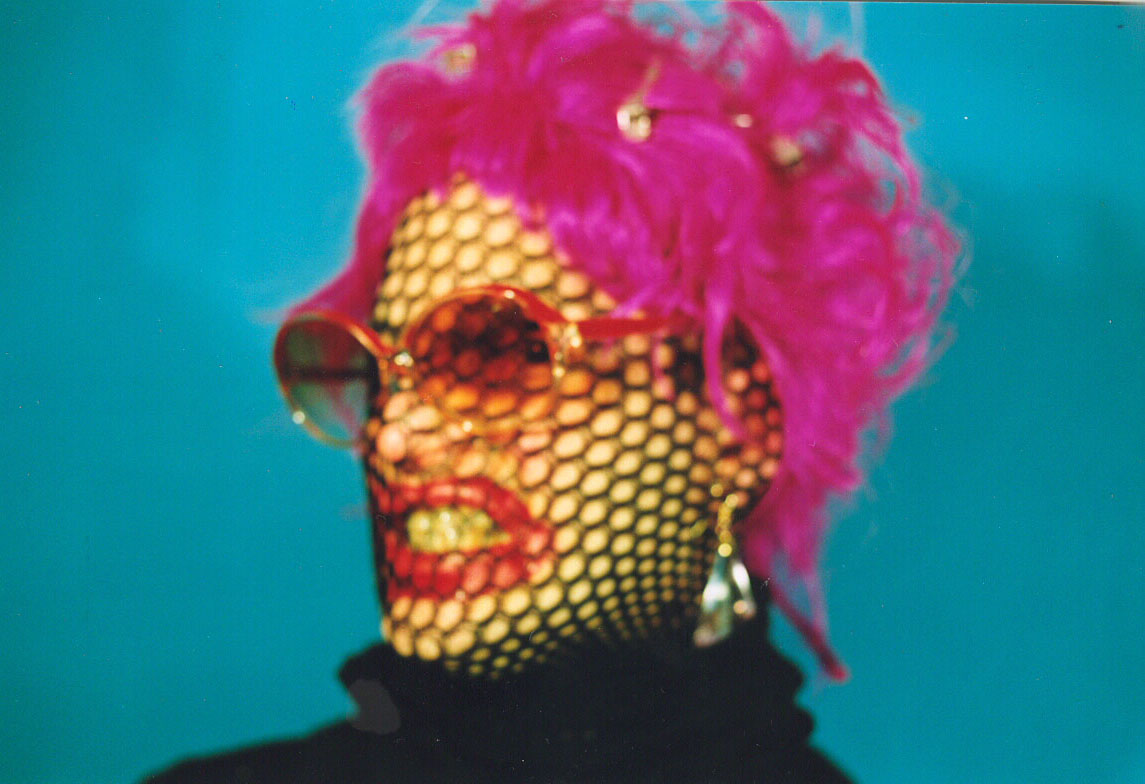
*Faux Real Climate Theater at TJT, 470 Florida; (800) 838-3006, www.brownpapertickets.com. $15-20. Wed-Sat, 8pm (also Sat/9, 10pm). Through Oct 9. A drag queen stripped bare? Not on your life. But in baring some soul and some truth (“two lies” per), Fauxnique (aka Monique Jenkinson; aka a woman as a man as a woman&ldots;) does some productive and fascinating (re)working of this sly semi-confessional form. In a show that begins by asking, via David Bowie, “whatchya gonna say to the real me?”, Fauxnique undresses drag by singing (very ably) as often as syncing and otherwise playing knowingly with the “reveals” inherent in the drag tradition, taking audiences back with her to high school in Denver in the 1980s for a herstory lesson like few others. Questions about identity and art mingle with hip, hilarious, wonderfully “haute,” and seriously hardworking solo cabaret (assisted by transgresser-dresser and prop boy Kegan Marling). Originally unveiled in 2009, and fresh from a London debut, Faux Real returns for an extended but still too-brief run courtesy of the mighty little Climate Theater, currently ensconced in the Jewish Theatre’s luxurious little space. (Avila)

Futurestyle ’79 Off-Market Theater, Studio 250, 965 Mission; (8008) 838-3006, www.brownpapertickets.com. $15-20. Wed, 8pm. Through Oct 27. A fully improvised episodic comedy played against the backdrop of SF in 1979.

IPH… Brava Theater, 2781 24th St, 647-2822, www.brava.org. $15-35. Thurs-Sat, 8pm; Sun, 3pm (also Mon/4, 8pm). Through Oct 16. Brava Theatre and African-American Shakespeare Company present the US premiere of an adaptation of Iphigenia at Aulis.

Jerry Springer the Opera Victoria Theatre, 2961 16th; www.jerrysf.com. $20-36. Wed-Sat, 8pm. Through Oct 16. Ray of Light Theatre presents the West Coast premiere of the operatic farce by Stewart Lee and Richard Thomas.

KML Holds the Mayo Zeum Theater, 221 4th St; www.killingmylobster.com. $10-20. Thurs-Fri, 8pm; Sat, 7 and 10pm; Sun, 7pm. Through Sun/3. Killing My Lobster presents its fall comedy show, directed by co-founder Paul Charney.

Last Days of Judas Iscariot Gough Street Playhouse, 1620 Gough; (510) 207-5774, www.CustomMade.org. $10-30. Thurs-Sat, 8pm; Sun, 7pm. Through Oct 30. Custom Made Theatre presents Stephen Adly Guirgis’ meditation on the meaning of forgiveness.

Olive Kitteridge Z Space at Theater Artaud, 450 Florida; (800) 838-3006, www.zspace.org. $20-40. Wed-Thurs, 7pm; Fri-Sat, 8pm; Sun, 5pm. Through Oct 10. Page-to-stage company Word for Word takes on two chapters’ worth of Elizabeth Strout’s celebrated 2008 novel, comprised of a loosely connected set of stories surrounding the title character (played with cunning subtlety by Patricia Silver) and her immediate circle in a coastal town in Maine. In “Tulips,” we find the thorny but shrewd Olive, a former math teacher, and her patient husband Henry (Paul Finocchiaro), the town’s longtime pharmacist, transitioning not so smoothly into their retirement years. Olive—itchy, cantankerous and vaguely at a loss despite her sharp wit—resents her grown son’s (Patrick Alparone) happily distant life in New York and battles with the neighbors until her husband’s stroke leaves her at sea, unexpectedly vulnerable and open to the kindness of neighbors and strangers alike (played by an ensemble that includes Jeri Lynn Cohen, Nancy Shelby, and Michelle Belaver). In “River,” Olive, now a widow, begins a gradual, unlikely and bumpy romance with a recently widowed former academic (Warren David Keith). Director Joel Mullennix grabs hold of colorful details along the way—like the summer influx of rollerbladers and bicyclists—to further enliven the verbatim staging of these stories, but the effort can feel a little forced at times, as if betraying a sense that these well-acted, gently poetical and thoughtful stories and their complex protagonist do not always make for the most stimulating drama. (Avila)

A Picasso Royce Gallery, 2901 Mariposa; (866) 811-4111, www.apicassoonstage.com. $12-28. Thurs-Sat, 8pm. Through Oct 9. Expression Productions presents Jeffery Hatcher’s drama about the authenticity of three Picasso paintings.

Pinocchio Young Performers Theatre, Fort Mason Center, Bldg C, Third Floor, Room 300; 346-5550, www.ypt.org. $7-10. Sat-Sun, 1 and 3:30pm. Through Oct 10. Young Performers Theatre presents a new production of Carlo Collodi’s puppet tale.

*The Real Americans The Marsh MainStage, 1062 Valencia; (800) 838-3006; www.themarsh.org. $20-50. Wed-Fri, 8pm; Sun, 5pm. Through Nov 6. The fifth extension of Dan Hoyle’s acclaimed show, directed by Charlie Varon.

*Scapin American Conservatory Theatre, 415 Geary; 749-2228, www.act-sf.org. $10-90. Tues-Sun, times vary. Through Oct 23. Bill Irwin, the innovative former Pickle Family clown and neo-vaudevillian turned Broadway star, makes a San Francisco return at the helm—and in the title role—of American Conservatory Theater’s production of Moliere’s classic farce. It’s an excuse for some arch meta-theatrical high jinx as well as expert clowning, a love fest really, with many fine moments amid a general font of fun whose heady purity seems like it should fall under some FDA regulation or other—clearly, somebody has paid someone to look the other way, and for once the corruption is unreservedly welcome. Joining the fun is Irwin’s old comrade-in-arms and, here, sacks, Geoff Hoyle, as miserly and dyspeptic daddy Geronte. Other ACT regulars and veterans flesh out a winning cast, among them the ever versatile and inimitable Gregory Wallace as Octave, a flouncing Steven Anthony Jones as put-out patriarch Argante, René Augesen as boisterously unlikely “virgin” Zerbinette, and a wonderfully adept and scene-stealing Jud Williford in the role of Scapin sidekick Sylvestre. As for Irwin, his comedic sensibility shows itself scrupulously apt and timeless at once, and his sure, lithesome performance intoxicating and age-defying. As a director, moreover, he gives as generously to each of his fellow performers as he does to his adoring, lovingly tousled audience. (Avila)

The Secretaries Boxcar Playhouse, 505 Natoma; 255-7846, www.crowdedfire.org. $15-25 (pay what you can previews). Wed-Sat, 8pm. Through Oct 9. Crowded Fire revives the 1994 black comedy by New York’s Five Lesbian Brothers, a gleefully inappropriate bit of feminist satire that feels like the love child of John Waters and Valerie Solanas. Set in the front offices of the Cooney Lumber Mill in Big Bone, Oregon (delightfully rendered in Nick A. Olivero’s scenic design with New Yorker-like illustrations of the surrounding environs), the story follows narrator Patty (Elissa Beth Stebbins) as she recounts her initiation into a snappy coven of office ladies who not-so-secretly fell (rather than fall for) the town’s lumberjacks as if they were so much old growth forest. The mayhem and humor amuse, but probably seemed a lot fresher 16 years ago, making the simple plot seem thinly stretched. Nevertheless, the play’s details are nicely taken care of in artistic director Marissa Wolf’s fluid staging, featuring lots of play with fluids and a robust ensemble. In addition to Stebbins’s well-wrought and raunchy innocent, Leticia Duarte rocks her power-suit commandingly as no-nonsense supervisor and pack/pact-leader Susan; Eleanor Mason Reinholdt proves scarily endearing as the deceptively mincing, food-obsessed Peaches; Khamara Pettus has Norma Desmond eyes as Susan’s jealous onetime favorite Ashley; and Marilee Talkington approaches comic perfection in lovingly crafted twin roles: the boundingly predatory butch Dawn; and Patty’s hetero love interest and sexual-harassment-workshop–graduate, Buzz. (Avila)

BAY AREA

Angels in America, Part One Pear Avenue Theatre, 1220 Pear, Mtn View; (650) 254-1148, www.thepear.org. $15-30. Thurs-Fri, 8pm; Sat, 2 and 8pm; Sun, 2pm. Through Oct 16. Pear Avenue Theatre kicks off its fall “Americana” program with the Tony Kushner play.

Bleacher Bums Contra Costa Civic Theatre, 951 Pomona, El Cerrito; (510) 524-9132, www.ccct.org. $18. Fri-Sat, 8pm; Sun, 2pm. Through Sun/3. A sports comedy conceived by Joe Mantegna, directed by Joel Roster.

La Cage Aux Folles San Mateo Performing Arts Center, 600 N. Delaware; (650) 579-5565, www.broadwaybythebay.org. $20-48. Dates and times vary. Through Sun/3. Broadway By the Bay presents the gay musical based on the play of the same title.

*Compulsion Berkeley Repertory Theatre, Thrust Stage, 2025 Addison; (510) 647-2949, www.berkeleyrep.org. $29-85. Dates and times vary. Through Oct 31. Director Oscar Eustis of New York’s Public Theater marks a Bay Area return with an imaginatively layered staging of Rinne Groff’s stimulating new play. Compulsion locates the momentous yet dauntingly complex cultural-political outcomes of the Holocaust in the career of a provocative Jewish American character, Sid Silver, driven by real horror, sometimes-specious paranoia, and unbounded ego in his battle for control over the staging of Anne Frank’s Diary. A commandingly intense and fascinatingly nuanced Mandy Patinkin plays the brash, litigious Silver, based on real-life writer Meyer Levin, a best-selling author who obsessively pursued rights to stage his own version of Anne Frank’s story. The forces competing for ownership of, and identification with, Anne Frank and her hugely influential diary extend far beyond her father Otto, Silver, or the diary’s publishers at Doubleday (represented here by a smooth Matte Osian in a variety of parts; and a vital Hannah Cabell, who doubles as Silver’s increasingly alarmed and alienated French wife). But the power of Groff’s play lies in grounding the deeply convoluted and compromised history of that text and, by extension, the memory and meanings of the Holocaust itself, in a small set of forceful characters—augmented by astute use of marionettes (designed by Matt Acheson) and the words of Anne Frank herself (partially projected in Jeff Sugg’s impressive video design). The productive dramatic tension doesn’t let up, even after the seeming grace of the last-line, which relieves Silver of worldly burdens but leaves us brooding on their shifting meanings and ends. (Avila)

*East 14th: True Tales of a Reluctant Player Marsh Berkeley, 2120 Allston, Berk; www.themarsh.org. $20-50. Dates and times vary. Through Nov 21. Don Reed’s solo play, making its Oakland debut after an acclaimed New York run, is truly a welcome homecoming twice over. (Avila)

In the Red and Brown Water Marin Theatre Company, 397 Miller, Mill Valley; 388-5208, www.marintheatre.org. $32-53. Tues, 8pm; Thurs-Sat, 8pm; Wed, 7:30pm, Sun, 7pm (also Sat/2, 2pm). Through Oct 10. Marin Theatre Company presents the West Coast premiere of Tarell Alvin McCraney’s play.

In the Wound John Hinkel Park, Berk; (510) 841-6500, www.shotgunplayers.org. $10 (no one turned away). Sat-Sun, 3pm. Through Sun/3. Shotgun Players’ annual free performance in Berkeley’s John Hinkel Park is this year an impressively staged large-cast reworking of the Illiad from playwright-director Jon Tracy. In the Wound is actually the first of two new and related works from Tracy collectively known as the Salt Plays (the second of which, Of the Earth will open at Shotgun’s Ashby stage in December). Its distinctly contemporary slant on the Trojan War includes re-imagining the epic’s Greek commanders as figures we’ve come to know and loath here in the belly of a beast once know by the quaint-sounding phrase, “military-industrial complex.” Hence, Odysseus (Daniel Bruno) as a devoted family man in a business suit with a briefcase full of bloody contradictions emanating from his 9-to-5 as a “social architect” for the empire; or Agamemnon (an irresistibly Patton-esque Michael Torres) as the ridiculously macho, creatively foul-mouthed redneck American four-star commander-clown ordering others into battle. While the alternately humorous and overly meaningful American inflections can feel too obvious and dramatically limiting, they’re delivered with panache, amid the not unmoving spectacle of the production’s energetic, drum-driven choreography and cleverly integrated mise-en-scène. (Avila)

*Loveland The Marsh Berkeley, 2120 Allston Way; (800) 838-3006, www.brownpapertickets.com. $20-50. Fri, 7pm; Sat, 5pm. Through Nov 13. Ann Randolph’s acclaimed one-woman comic show about grief returns for its sixth sold-out extension.

MilkMilkLemonade La Val’s Subterranean, 1834 Euclid, Berk; www.impacttheatre.com. $10-20. Thurs-Sat, 8pm. Through Sat/2. Impact Theatre presents Joshua Conkel’s off off Broadway play about a lonely gay man trapped in a chicken farm.

She Loves Me Lesher Center for the Arts, 1601 Civic Drive, Walnut Creek; (825) 943-7469, www.CenterREP.org. $36-45. Wed, 7:30pm; Thurs-Fri, 8pm; Sat, 2:30 and 8pm; Sun, 2:30pm. Through Oct 10. Center REPertory company presents a musical choreographed and directed by Robert Barry fleming.

Trouble in Mind Aurora Theatre, 2081 Addison, Berk; (510) 843-4822, www.auroratheatre.org. $10-55. Wed-Sat, 8pm; Sun, 2 and 7pm; Tues, 7pm. Through Sun/3. It’s old enough be considered a period piece, but at no time does Aurora Theatre’s production of Alice Childress’ 1955 comic drama Trouble in Mind feel dated. Set backstage on Broadway, Trouble depicts the rehearsals of a play entitled Chaos in Belleville—an anti-lynching melodrama penned by a white author. The often hilariously manic director, Al Manners (Tim Kniffin) alternately patronizes, bullies, and flatters the predominantly black cast into portraying the basest plantation stereotypes—right down to the names “Petunia” and “Ruby”—all the while touting the work as an important statement about race relations. But the real lessons in race relations and breaking through the color barriers occur as the rehearsals progress and the cast, middle-aged “character actress” Wiletta Mayer (Margo Hall) in particular, begin to question the veracity of the script and the directorial instincts of Manners. Trouble’s exceptional cast keeps the dialogue crackling and the pace urgent, save for a heart-breakingly deliberate reminiscence powerfully delivered by Rhonnie Washington. As for the timeliness of a piece which highlights among other things the dearth of strong theatrical roles for African-Americans, it’s interesting to note that actors Elizabeth Carter, Jon Joseph Gentry, Margo Hall, and Rhonnie Washington are all making their Aurora Theatre debut with this particular play. (Nicole Gluckstern)

PERFORMANCE/DANCE


“Best of the Fringe Encore Performances” EXIT Theatre, 156 Eddy; 673-3847, www.sffringe.org. Fri/1-Sat/2, 7 and 8:30pm; $20. Four highlights from this year’s SF Fringe Festival get repeat performances.

“Blue Room Comedy” Club 93, 93 9th St; 264-5489. Free. Tues/5, 10pm. A weekly series that takes comedy to new lows.

“Body and Sound Arts Festival Concert” Kunst-Stoff Arts, 929 Market; www.dancemonks.com. Fri/1, 7pm; $15-30. An interdisciplinary arts festival dedicated to improvisation.

“Clown Cabaret at the Climate” The Jewish Theater, 470 Florida; 704-3260, www.climatetheater.com. Mon/4, 7 and 9pm; $10-15. Rising star clowns and seasoned pro clowns perform.

“The Ethel Merman Experience” Martuni’s, 4 Valencia; 241-0205, www.dragatmartunis.com. Sun/3, 7pm; $5. Rock gets the brassy Merman treatment.

“Free Night of Theatre” Union Square; www.tixbayarea.com. Wed/29, 10-am-4pm and 6pm; free. A sixth anniversary kick-off performance celebration in which free theater tickets are distributed.

“Funny Girlz” Brava Theater, 2781 24th St; (800) 838-3006, www.brownpapertickets.com. Wed/29, 8pm; $25. Kung Pao Kosher Comedy presents a smorgasboard of female comedians.

Insides Out!/Indecision Collision Stage Werx, 533 Sutter; (800) 838-3006, wwwbrownpapertickets.com. Thurs-Fri, 8pm (Insides Out!); Sat, 8pm (Indecision Collision); $12-20. A pair of solo performances by Katie O’Brien.

“ODC/Dance: Architecture of Light” ODC Theater, 3153 17th St; www.odctheater.org. Thurs/30-Sat/2, 8pm; $20-500. ODC celebrates the opening of its new building with performances.

“Qcomedy Showcase” Martuni’s, 4 Valencia; www.Qcomedy.com. Mon/4, 8pm; $5-16. Karen Ripley, Zoe Dunning, Pippi Lovestocking, and others perform.

Lizz Roman and Dancers Danzhaus, 1275 Connecticut; 970-0222, wwwlizzromandancers.com. Thurs/30-Sat/2 (also Oct 7-9), 8pm; $20. A new performance by the local company, with lighting by Jenny B.

“The Romane Event” Make Out room, 3225 22nd; 647-2888, www.pacoromane.com.Wed/29, 7:30pm; $7. Paco Romane hosts Tim Lee, Harmon Leon, and others.

“Rotunda Dance Series” San Francisco City Hall; www.dancersgroup.org. Fri/1, noon; free. Performances by Joanna Haigood/ZACCHO Dance Theatre.

Smuin Ballet Palace of Fine Arts Theatre, 3301 Lyon; (415) 978-2787, www.smuinballet.org. Fri/1 (through Oct 9), 8pm; call for prices. The company kicks off a new season with two premieres by Trey McIntyre.

“Swan Lake: Ballet for the People By the People” CounterPULSE, 1310 Mission; (800) 838-3006, www.brownpapertickets.com. Fri/1-Sat/2, 8pm; $10-15. ArtFace Performance Group presents an unconventional take on a classic.

“Trine” The Garage, 975 Howard; 518-1517, www.975howard.com. Fri/1-Sat/2, 8pm; $10-20. RAW presents work by Paco Gomes and Dancers and Damage Control Dance Theater.

BAY AREA

Bay Area Playback Theatre Belrose Theatre, 1415 5th Ave, San Rafael; 499-8528, www.BayAreaPlayback.com. Sat/2, 7:30pm; $18. Stories told by audience members are turned into imrpov theater by a troupe.

“The Funniest Bubble Show on Earth” The Marsh Berkeley, 2120 Allston; (800) 838-3006, www.themarsh.org. Sun/3, 11am (through Nov 21); $8-11. The Amazing Bubble Man (aka Louis Pearl) returns with his show.

Mark Morris Dance Group Zellerbach Hall, UC campus, Berk; (510) 642-9988, www.calperfs.berkeley.edu. Thurs/20-Sat/2, 8pm; Sun/3, 3pm; $34-72. The acclimaed dance company returns with a triple-bill of premieres.

Appetite: Highlights of SF Cocktail Week, part 1

0

The magical settings, moments and drinks were many in the 4th Annual SF Cocktail Week, which set the bar high for all future Cocktail Weeks… consider attending next year, as it’s far from being just for drink aficionados. It’s for those who love a memorable party done in true San Francisco style.

I have watched Cocktail Week grow from intimate nights out at bars in prior years to this year’s galas and ferry rides. Camaraderie was strong and I couldn’t help but think that though there were even grander galas at major cocktail weeks like Tales of the Cocktail or Manhattan Cocktail Classic, the quality of the settings and drinks I had every night at SF Cocktail Week were far superior to most everything I tasted at either of those two events. SF, once again, does drink proud. (Check out part 2 here.)

9/21 – Inauguration of Boothby Center

SF now has a cocktail center to call its own: the “Cocktail Bill” Boothby Center for the Beverage Arts, which debuted opening night of Cocktail Week, named after SF bartending legend Cocktail Bill Boothby. A multi-use space in the Mission, it will be community center, beverage lab, and event space, preserving the art and history of the cocktail. The Barbary Coast Conservancy of the American Cocktail(BCCAC), headed up by H. Joseph Ehrmann (Elixir), Jeff Hollinger (Comstock Saloon), Duggan McDonnell (Cantina), calls it home base. Opening night was a raucous toast to the still raw space with, what else? Classic cocktails, including the week’s official drink, a Papa Ghirardelli.

9/23 – Ragtag Rabble Gaming Soiree  

The back room of one of my favorite bars, Burritt Room, was transformed into a turn-of-the-century, Barbary Coast-era saloon/parlor with craps, blackjack, roulette and poker (sans real money), and a beautiful menu of classic cocktails prepared with skillful care, from The Last Word to a Boulevardier with scotch. A jazz quartet (with talented female vocalist) set the mood, transporting me to another time, as did the decked-out crowd who filled but did not overcrowd the room with bowler hats, suspenders, boas, saloon or retro attire. It was a swank affair that carried on late into the night with an after-party at Comstock Saloon.

9/25 – Cocktail Carnival Gala

The event of the week, Cocktail Carnival Gala in the stunning, historic Old Mint, was a brilliant night. I only wish even more people filled  (not overcrowded) the spacious mansion we were given free reign in. This was a one-of-a-kind night I’d plan towards next year. The Barbary Coast-Era carnival theme included roving minstrels, talented musicians, contortionists, man-on-stilts, jugglers and acrobats, roving among us through each high-ceilinged room as we sipped punches from antique punch bowls.

Leave it to Martin Cate from Smuggler’s Cove to wow us with a 40-gallon rum punch bowl with flaming volcano shooting out of a sea of spiced punch. Daniel Hyatt and the Alembic crew scooped some mighty tasty ‘swill’ out of a swampy bucket. One cachaca-based punch sported an ethereal liquid nitrogen top. Bartenders from Elixir, Cantina and 15 Romolo ensured there was not one bad drink in the house.

Chef Chris L’Hommedieu of Restaurant Michael Mina and William Werner of Tell Tale Preserve Co. sent out small but impeccable bites like lobster corn dogs, chips topped with caviar and creme fraiche, and lush dark chocolate caramel cake squares.

The courtyard of the Old Mint was a surreal setting transporting me directly to an ancient Spanish or Italian square. Chipped building facades contrasted against a deep, midnight blue sky. As minstrels serenaded us on this warm, sultry night while the full moon cast a glow over the courtyard, I felt alive with the night… one of those perfect moments that lives illuminated in memory.

The evening ended (at 2am) with a bang: Brass Mafia played and we began to dance. Circling in and among us, their blaring brass brought to life songs from musicians as random as Michael Jackson, Salt-n-Pepa, Men at Work, even Montell Jordan’s “This Is How We Do It”, all in New Orleans’ brass band style (they threw in a few classic Nola Dixieland tunes, too). It was a joyous, raucous dance.

Thanks to the Bon Vivants for co-hosting a tremendous event none who attended will soon forget (which I hope you will all attend next year).

Alerts

0

alert@sfbg.com

WEDNESDAY, SEPT. 29

Celebrate Fair Trade


Temple San Francisco is kicking off Fair Trade Month with a party to raise awareness and funds to support the Fair Trade movement. Taste appetizers made with Fair Trade certified ingredients, get a sneak peak at Fair Trade certified clothing, try cocktails made with FAIR vodka, a Fair Trade spirit made with quinoa, and mingle with other ethical consumers.

8 p.m., $15

Temple San Francisco

540 Howard, SF

www.transfairusa.org

THURSDAY, SEPT. 30

Earth Made of Glass


Attend this screening of director Deborah Scranton’s documentary about the wounds that remain after the 1994 Rwandan genocide. The films chronicles the continuing struggles of an ordinary citizen and head of state as they try to uncover the past and face the future. The film will be followed by a panel discussion on the functions, roles, and processes of documentary film as a form of investigative journalism featuring Deborah Scranton; Robert Rosenthal, executive director of the Center for Investigative Reporting; Mathilde Mukantabana, president of Friends of Rwanda; and moderator Phil Bronstein, editor-at-large for the San Francisco Chronicle.

7 p.m., $12.50

Embarcadero Center Cinema

1 Embarcadero Center, SF

(415) 561-5000

FRIDAY, OCT. 1

"Emerging Autonomous Movements in Cuba"


Learn about some of the challenges facing Cubans today as they try to form new movements using horizontal organizing models that seek alternatives to a bureaucratic centralized state and include autonomy and creative and political freedom. The panel, videos, and discussion include a history of Cuban anarchism. Come early at 6 p.m. for a vegan Cuban dinner. Proceeds support autonomous and antiauthoritarian collectives in Cuba.

7 p.m., $20–$100 donation

Modern Times Bookstore

888 Valencia, SF

(415) 282-9246

SATURDAY, OCT. 2

Bunny Art Show


Browse and buy bunny art, inspired by rescued bunnies, to benefit East Bay rabbit rescue shelters. All art was created by well-known and young Bay Area artists. You can also meet and adopt a bunny from East Bay Rabbit Rescue, Harvest Home Animal Sanctuary, House Rabbit Society, and more local shelters and rescues. Bring your bunny for bunny speed-dating or for a free nail trim.

11 a.m.–4 p.m., free

East Bay SPCA Tri-Valley Adoption Center

4651 Gleason, Dublin

www.eastbayrabbit.petfinder.com

SUNDAY, OCT. 3

Take a Kid Mountain Biking


Kids 8 to 16 and their families are invited to participate in this day of free mountain biking activities in McLaren Park. The event offers skill instruction, guided short and long loop rides, bike maintenance, helmet fitting, information about urban bike routes, a raffle, photo booth, free Clif Bar snacks, and more. Bring your own bikes. Sponsored by SPUR, Specialized Bicycles, Clif Bar, IMBA, and the YMCA.

9 a.m.–12:30 p.m., free

McLaren Park

Mansell at Visitacion, SF

www.sfurbanriders.org

Mail items for Alerts to the Guardian Building, 135 Mississippi St., SF, CA 94107; fax to (415) 437-3658; or e-mail alert@sfbg.com. Please include a contact telephone number. Items must be received at least one week prior to the publication date.

False witness: Yael Hersonski on “A Film Unfinished”

0

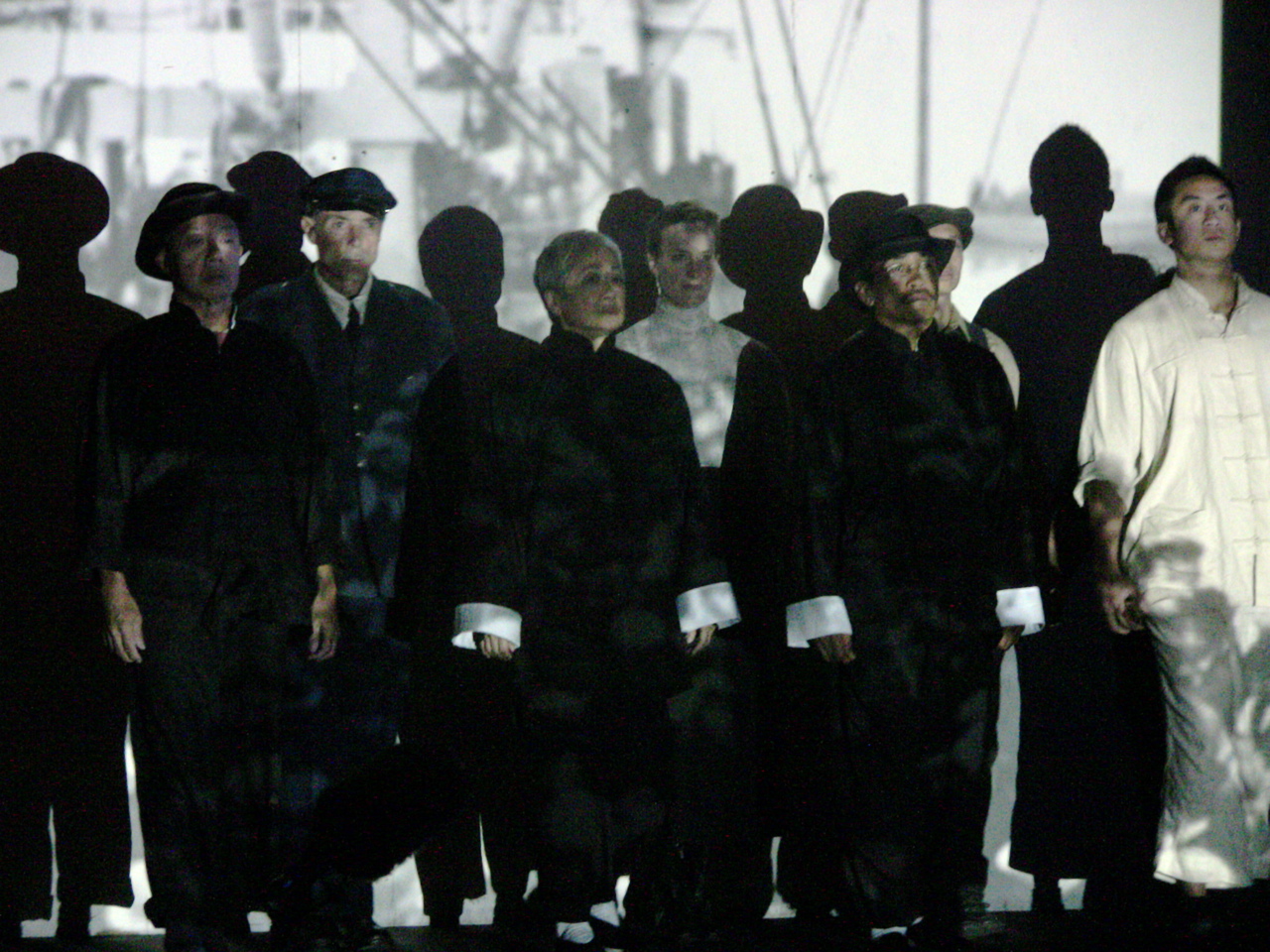
Documentaries that “tell” the Holocaust tend to employ archival footage generically as a kind of historical flavoring. It’s rare that we are asked to contemplate either the provenance of the images or the individual lives depicted. Yael Hersonski’s A Film Unfinished simultaneously confronts both of these gaps with a taut historiography of several reels of Nazi propaganda footage. Even in the German film’s inchoate form, we easily apprehend the propagandistic moves to further manipulate an already constructed reality (the Warsaw Ghetto) for objective “proof” of the necessity of Hitler’s Final Solution. And yet here before us, flowing at the speed of life, are the faces and places that would be destroyed within months of the filming.

Hersonski attempts to extricate the documentary value of this footage using frame-speed manipulations and edits which call attention to telling movements. She also films elderly survivors watching the footage alone in a darkened theater. In their capacity for recognition and incredulousness, they unravel the German point-of-view. By weaving these live responses with diary entries of those consigned to the ghetto along with the deposition of a German cameraman, Hersonski draws a fragmentary, highly specific account of the Holocaust’s crisis of representation. We discussed the film in a recent email exchange.

San Francisco Bay Guardian: The question of how to use archival footage responsibly is one that haunts the great Holocaust-themed films — Night and Fog (1955), Shoah (1985), and the films of Péter Forgács all find very different solutions. Can you describe the way your own attitudes regarding the appropriation of this archive developed during the time you worked on A Film Unfinished?

Yael Hersonski: During the last decade I became more and more preoccupied with the thought of the near future, when no Holocaust survivors will be left to remember — the time when the archives will be the only source of witness. I’ve tried to examine the possibilities of exploring the image like an archaeologist analyses a palimpsest, and to excavate, by cinematic means, new layers of reality from beneath the known imagery. I admit that [at one] time I felt that Night and Fog and Shoah were all that a filmmaker could express facing such an inconceivable, unprecedented event. For [Shoah director Claude] Lanzmann, the Holocaust lies firmly outside the archive as the ultimately Other, a black hole which threatens to swallow every visual witness, and thus resists the film archive and its raptures.
Forgács faces the impossibility of bearing witness exactly by confronting the contemporary viewer (who knows how it all ended) with private documentation which was abruptly stopped when the photographer himself was no longer capable of documenting, nor his dear ones of being documented. Forgács’ films introduce me again and again to the immense capacity of footage to reveal, in the form of a private history, the traces of an inconceivable past.

My aim in showing the Warsaw Ghetto footage (for the first time in its entire length) and confronting the images with many points of view about the filmmaking itself was not to tell “the true story” of the Warsaw Ghetto, nor to expose the evil of Nazi propaganda (which was obvious even to the German filmmaker who discovered the reels in 1954), but to make the viewers question the way they see these images and through them perceive the past.

SFBG: Did you set out to interrogate the decontextualization of these images in more conventional visual histories of the Holocaust and Warsaw Ghetto? The logic of many Holocaust documentaries, wittingly or not, is that the content of these images can be separated from the context in which they were made — that what we see speaks for itself. Your film challenges this assumption in many ways.

YH: I’ve always felt that the images from the Holocaust were mainly used the same way: as illustrations for many different stories, as visual background between interviews. We see the same images over and over again, [both] because the quantity of footage is finite (only 10 percent from what the Nazis documented on film survived the war), [but also] because of sheer laziness of filmmakers who find it more comfortable to use what’s [familiar]. The superficial use of an image enables it to show almost nothing — or merely repeats the humiliation of the victims that were captured on film as an anonymous helpless crowd. I emphasize a moment [by slowing it down] in which a woman is protesting against the humiliation caused by filming merely by means of her gaze and her body language. When I know this woman was probably murdered a short time after her image was taken, and when I hear at the same time the cameraman who was filming her speaking about how he could not even imagine what was going on, I feel closer to the reality of that image than I did before.

SFBG: How did you come to the idea of having the survivors respond to the archival footage in place of a more traditional question-and-answer interview? As viewers separated from these events, we’re able to treat these archival images as content — whereas I imagine for the person who was there, it’s inescapable that the footage literally represents how they were seen by the Germans. Were you concerned that you might be putting your subjects through a kind of secondary trauma by having them view the footage in such a way that they didn’t have their hands on the controls?

YH: I was looking not only for survivors from the Warsaw Ghetto, but for those who could actually recall the event of the filming in May 1942. I was quite amazed to locate more than the five survivors I interviewed for the film, because obviously the filming was a negligible event compared with the unimaginable horrors that went on there. When speaking with the survivors, I explained to them in detail how the filming would be done — that they would watch the whole film, alone, on the big screen, that it contained atrocious scenes (I described these), and that obviously it would be a difficult experience. Some of the survivors indeed refused to watch it, and some hesitated. Only those who felt it was their personal obligation to [speak to] the silent images, those who told me that the worst horrors exist not in any footage but in their own memories, [those who thought] it important to add their own point of view to the Nazi perspective — only these people were invited to be filmed. Still, I stopped the screening every time a reel was over and asked if they wished to continue. All of them asked to watch to the very end and felt a great relief after doing so.

The decision to film [the survivors] inside a cinema hall and to show the footage in 35mm stemmed from three [priorities]. First of all, I wanted to intensify the experience of the screening as much as I could, for I knew I would not — not in any case — film these survivors again. After they had given me their approval, I knew I had only one chance. I was also aware that the time of interview would be short, since all of them are physically too fragile to sit for more than two hours in such an intense emotional state. If there was a chance someone could recognize a person in the film or add any other important historical information about the footage, the only way to help them remember was to isolate them from their domestic surroundings and show them the film on the big screen.

The second reason relates to the character of the survivors as witnesses. Roughly [speaking], we can say that there are those survivors who won’t talk about the past, who remain silent merely to be able to live…and there are those who ceaselessly tell their stories, who give lectures and interviews, write books, and so on. They find witnessing [to be] their very vocation and destiny. The survivors who were filmed belong to the group who speaks. They have told their stories many times, and because they can’t tell it all any one time, their memory [often narrows] to [a] single narrative. Other details have remained in a less accessible memory. By changing the traditional scenery of the interview and creating a new interactive space [in which] the survivors were not just storytellers but also viewers and witnesses who comment, I hoped to help them to release some of the memories which [remained unspoken] by them.

The third reason was aesthetic: it was important for me to maintain [every aspect] of the film in relation to the archival documents and documentation itself. My initial idea, even before watching the footage for the first time, was to think of these archives as if they were a brain, with memories and even a subconscious. The labyrinth of the archive, with its knowns and unknowns, the desire to restore and remember, which is simultaneously the impulse to destroy and forget, can be used as a metaphor for our own memories and forgetfulness.

SFBG: Given your film’s deliberate consideration of the way the Nazi footage represents a constructed, stage-managed view of the Jews in the ghetto, I think many viewers might be curious why you choose to visually recreate the interview with Willy Wist. Why is this transcript recreated visually, while the various diary entries are only read?

YH: First of all, the diaries were written, [whereas] the preliminary interrogation with the cameraman was recorded on audio reels (the audio reels were recycled for the next interrogation, and therefore only the paper protocols survived). I insisted on emphasizing the various manners of documentation. Until we found the interrogation’s protocol, the only fact we knew about the cameraman was his name. When I first read the protocols, I was amazed to [discover] what a rare witness I was faced with. These images that we were educated to see in bits and pieces, as if they were some kind of an “objective” anonymous documentation of past events — suddenly there was a specific gaze of a cameraman, with his own impressions, speculations, inner monologues and so on, and he describes himself shooting scenes we can actually see in the footage. [It] enabled me to see the footage not merely as a sequence of images but as a real trace of reality, and as the atrociously painful (for the viewer) medium between the perpetrators and their victims. I knew I’d have to create the cameraman’s witness with different tools to distinguish it from other kinds of testimony, to emphasize the presence of a single gaze behind a single camera.

There is another crucial reason for delivering the texts from the protocols visually. After watching the footage for the first time, I felt there was no way to show it all without having any visual breaks between the different reels. At a certain point, our psychological mechanism of self-defense [prevents us from] absorbing more images, and we find ourselves looking yet not seeing. My goal here was quite the opposite: I was trying to figure out a way to enable the viewer to keep his gaze constantly fresh and involved. My solution was to produce visual breaks which would allow the viewer to dive into these dark waters again and again. Delivering the cameraman’s protocols in a visual way was something that helped me do this. But I was very strict in not changing even a single word from the protocols, not dramatizing it in any way, not working with the actors to establish an imaginary character of a cameraman, not interpreting his words, and most of all, not judging him in any way.

http://www.youtube.com/watch?v=Khut0kKn-c8

A Film Unfinished opens Fri/1 in Bay Area theaters.

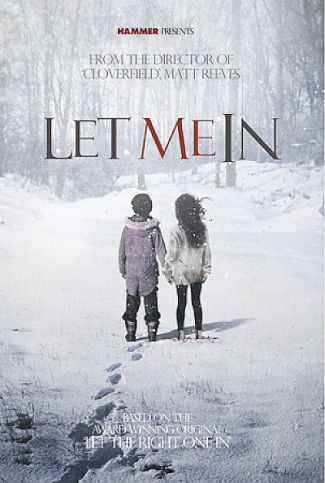
Matt Reeves on vampires, remakes, and “Let Me In”

3

When Let Me In — the film which dares an Americanized do-over of 2008 Swedish import Let the Right One In — was first announced, fans of the original film let rip synchronized screeches of “Whyyyyy?”, shortly followed by angry, ten-point arguments as to why Hollywood is really sucking balls lately. Consensus was that Let the Right One In, which picked up armloads of festival and critical awards (including the San Francisco Film Critics’ Circle’s Best Foreign Language Film honors), was not a film that deserved to be put through the remake machine. Sure, it only made a couple of million bucks stateside, but maybe it wasn’t the kind of film (unlike 2008’s similarly vampire-themed Twilight) that the masses were supposed to gobble up. After all, it had subtitles. Such a drag.

Matt Reeves, he of Cloverfield (2008) and Felicity fame, is aware of the fanboy-hater contingent that awaits his latest release. His Let Me In is a largely faithful retread, with some recognizable kid actors — Kodi Smit-McPhee (stronger here than he was in last year’s The Road) and tween It Girl Chloë Grace Moretz (Kick Ass) — and the lure of legendary British horror house Hammer (back in the producing biz after decades) helping him attract audiences. I suspect many people who’ll go see Let Me In may not have seen Let the Right One In — either because the original’s release wasn’t wide or lengthy enough, or because of that whole foreign-film bias. (Also, diehard fans of the first film may boycott the new version, just on principle. Hey, I did it with the recent A Nightmare on Elm Street, which in my mind NEVER HAPPENED).

Gotta say, though, Let Me In could have been worse than “faithful,” which is way better than “redundant” or “totally offensive.” Reeves, who penned the script from John Ajvide Lingqvist’s novel (Lindqvist himself wrote the script for the 2008 film) stays true to the material, shifting the action to the snowy New Mexico mountains and injecting some Cold War and new wave flair into the 80s setting. I spoke with him recently, just after the film’s screening at Austin, TX’s Fantastic Fest — coincidentally the very festival where Let the Right One In won the Jury Prize for Best Horror Feature in 2008. He kindly put up with my many remake-themed queries.

San Francisco Bay Guardian: How was Fantastic Fest?

Matt Reeves: It was great. It’s been fantastic (laughs). It’s really cool that they chose Let Me In to open the festival, because this is one of the places that Let the Right One In was incredibly well-received. I knew that there’d be a passionate audience for Lindqvist’s story here, and that also we’d have to past the test of being watched by people who really have a passionate love for Tomas Alfredson’s [2008] film. I thought, if we’re embraced here, and if we pass that test, then that will be a really big hurdle, and the screening went really, really well. It was very exciting.

SFBG: I didn’t realize until I was watching the movie that it was a Hammer Films production. How’d you get hooked up with them?

MR: Well, they got the rights to the film. I think that the Swedish producers met with lots of different places, and I think maybe they were drawn to the idea of being the first Hammer vampire film in over 30 years. But they were the ones who got the rights, is the answer. It’s interesting because I think a lot of people, in terms of their concern about this movie being a remake — there’s a lot of question about it being, “Oh, well, Hollywood comes in with a lot of money and ups the effects, and does all this stuff,” but Hammer is an independent company. And we didn’t have a lot of resources. It was a pretty small film, actually. It was definitely a labor of love, and one that we made in this kind of passionate way.

I think it’s pretty cool to be part of the relaunching of Hammer, especially since as a kid these are the kind of movies that terrified me (laughs). All of the Christopher Lee vampire films, I watched. But I was so afraid of them that my biggest memory of Hammer is actually watching them from behind a chair, late at night on local television. They’d show these Hammer films, and I’d come across them, and there’d be some kind of garish blood or lurid scene. I found them very disturbing! And there’s something ironic about the idea that, after they invaded my nightmares, now I’m somehow part of the relaunching. It’s cool but also kind of ironic.

SFBG: Why do you think vampires are such a consistently popular film subject, especially today?

MR: In the best genre films, you’re able to smuggle in something under the surface that you exploit through the metaphor. In this case, I think Lindqvist was really telling a story about the pain of adolescence and coming of age. But I think it really says something about the vampire myth that all of these vampire stories are so different: True Blood is different from Twilight, which is different from Let Me In. And it really does say something about what an incredibly durable myth that is, that you can translate it into so many different contexts. It can be about so many different things, even though on the surface they seem like they’re about the same subject. I don’t think those three versions of the story could be any more different, and that is very interesting, I think.

It’s always about what you use that metaphor for, and I think what attracted me to this one was that it was such a different way of presenting actually a very realistic story. It seems kind of contradictory to say, but it isn’t. He’s using this horror story, this vampire story, to describe how growing up, being bullied and having that difficulty, essentially feels like a horror story. It’s talking specifically about that kind of trauma, of growing up in that way and it feeling like a nightmare.

SFBG: You mentioned that the audience in Austin embraced the movie, but I feel like there’s been a lot of people, especially on the internet, who’ve been horrified by the idea of remaking Let the Right One In. What’s your response to that reaction?

MR: When I first got involved, it was almost a year before the movie was even released, and nobody had ever heard of it. When they showed it to me — I was trying to get a passion project of mine made, and they felt that it didn’t have an overt genre to it. It was more of kind of an independent character piece. And they said, “You know, right now it’s a challenging time to make this. We really love the writing, but we’re not going to make this. But we’d love to work with you, and we want to remake this film. We’re trying to get the rights to it.” After I watched it, I literally called them up the next day and said, “I don’t know if you should remake this movie. It’s great.” And they said, “Yeah, but we think there’s a way to bring it to an audience that won’t necessarily see a subtitled film, and we love this story. Think about it.”

The thing about it is, I so connected to that coming-of-age story, and then I found out it was based on a book. So I read Lindqvist’s book, and he had actually written the screenplay for Alfredson’s film. He did a very faithful adaptation of his book. And I kind of fell in love with the story even more. I ended up writing to Lindqvist, because I kind of saw this opportunity to take that story and translate it into an American context. He grew up in the 80s, I’m about his age, and he’s talking about this coming-of-age in Sweden. And I started thinking about that kind of story in the 80s America that I remember, the Reagan era. I thought that might be very interesting, and would be a film that essentially would be another interpretation of this story, as opposed to being anything that is trying to step on the toes of this beautiful film.

I entered it with that in mind: I wanted to find a way to do something that was personal and yet still faithful to this story. The level at which I was daunted at that point was just that I felt a responsibility that it had to be done in this way that was very personal, because I didn’t want in any way to seem to be, I don’t know, dissing that movie. I thought it was remarkable. And then when the movie came out, it earned such acclaim. I wasn’t surprised, because I thought, “Well, the movie’s a masterpiece. So of course it’s gonna get that kind of reaction.” But then I was sort of like, “Uh-oh. What did I do?” Because by that point I’d already written the screenplay and I was deeply committed to it. I thought, “Wow, I wonder if people will even give this film a chance.”

On the outside, I totally get it, because most remakes are horrendous, and they’re usually one of two approaches: there’s the soulless retread, where somebody goes through the motions but none of the passions or emotions come through, or the kind of run-roughshod bastardization version of the story, where you kind of use some piece of the story, but you kill all original intentions. I think those are both very dispiriting approaches, and they’re what people are used to from a lot of Hollywood remakes. When people were having that response, I couldn’t even say that I was like, “What’s the matter with them?” I put myself in their shoes and thought, “You know, I would think the same thing.” But I knew I was making it really as a labor of love, and it was a story I cared about. And I thought, well, we’ll see what happens. I know that I’m a fan. So if I’m a fan I feel, not the responsibility to the fans, I feel the responsibility as a fan. And so I was just trying to do as personal and committed version of the film as I could, and I knew the rest would have to take care of itself.

SFBG: Why do you think horror is the genre that’s been remade the most?

MR: That’s a good point. I think because the stories are incredibly visual, and people see a chance to take that kind of story —

SFBG: And make it 3D.

MR: I don’t know about making it 3D. It’ll be interesting to see if there’s more of that. Although now, I see that there is this feeling that adding 3D to something as a magic formula does not necessarily work either. I think [remakes happen] because horror movies are very cinematic, visual storytelling that works at a universal level, but there’s still this sense that, to reach a wider, English-speaking audience, that they could be [remade] in English. [Like the Japanese Ring movies, for example.] I think that people who see those movies, producers and studios, they see how that translation might work, because they see a visual medium, and they see those stories being told, and they think, “Oh, well we know that story works, and it’s not just about language.” I’m gonna guess that’s why, but to be honest with you, I have no idea.

SFBG: Do you think all of the horror ideas are used up? Why can’t people come up with original scripts?

MR: Oh, people can come up with original scripts. We should throw in the towel now if somebody can’t come up with an original script that isn’t a remake.

SFBG: Are there more remakes than there used to be?

MR: There have been remakes always in the history of Hollywood. But I will say, at the same time that there are probably just as many remakes, there are also fewer movies that were ever made than there were in the past. I think, percentage-wise, the amount of remakes is much higher. And it is dispiriting because you do want to see original ideas coming through. Part of me thinks and hopes that it’s cyclical. I know there will always be remakes, but I think that there are some great ones: I love John Carpenter’s The Thing. There are lots of remakes that I think are tremendous.

It comes down to, you understand why a studio or a producer is interested in remaking. You hope that they fall in love with the story first, but they certainly see an opportunity to sell a story to another audience. But it comes down to the intention of the filmmakers and their personal commitment, and if they are connected in a way that you can see their passion, and that there’s something expressed there that’s worthwhile, then that’s totally valid. I think that movies like that are great. And obviously that’s what I tried to do. But I’m totally with you: it’d be horrible if the only thing that happened was that we only saw things that were being remade. The thing is, though, if you’re not seeing a remake, you’re still oftentimes seeing movies are the same movie [as one that came before], with a different title, but the same story, the same plot. It is dispiriting. You want to see some vitality and risk-taking.

As ironic as it sounds, that was what I loved about this story: yes, it’s a remake, but it’s a very risky story. It’s a story on the shoulders of two 12-year olds. It’s an adult story with mixtures of tones. It’s got tremendously dark, adult things with really, really tender childlike stuff. That juxtaposition is quite powerful, and it’s certainly not an easy sell by any means. Who knows how we’ll even do. But I loved Lindqvist’s story, and I connected to it on a personal level. My druthers in life is not to go out and [do remakes]. In fact, I resisted even this one when it was first presented to me. But it was an opportunity to do something, ironically, that felt personal to me.

Let Me In opens Fri/1 in Bay Area theaters.

Allen town: Toronto International Film Festival 2010

0

Every time a new Woody Allen film arrives (a near-annual event since 1969) the same old, lazy complaints (“It’s not one of his best”) arrive faster than you can say “pontificate.”  Yet 10 or 20 years later it seems that somehow many of those uncelebrated films seem to become “one of his best.” See Broadway Danny Rose (1984), Husbands and Wives (1992), or Sweet and Lowdown (1999).

With his latest entry, You Will Meet a Tall Dark Stranger (opening locally Fri/1), Allen delivers another pitch-perfect mini-guide to the hilarious horrors of growing old … something Allen (according to the director himself, speaking at his Toronto International Film Festival press conference) wouldn’t wish on anyone. What looks and feels like a whimsical rom-com about aging is, in fact, a sobering and even paralyzing blueprint of what exists in most relationships or marriages. Don’t let the fun and breezy vibe of quirky narration deter you. Not only is there more of a bittersweet edge to Allen’s familiar archetypes, but the UK-produced film works as a perfect counterpart to Mike Leigh’s latest monument Another Year (2010). I wouldn’t be surprised if Stranger‘s Gemma Jones earns an Oscar nomination for her performance in what will surely be one of the year’s most truthful films.

After talking to a handful of critics at the TIFF this year about their unimpressed or indifferent reactions to Woody Allen’s latest, I feel it’s important to take a moment to revisit exactly what Allen has made over this past decade of films. Wrapping up his fourth full decade of prolific filmmaking, he has somehow stayed surprisingly strong in such a bipolar industry.

Here’s a quick guide to the brilliance of Woody Allen during the Y2Ks.

1. Vicky Cristina Barcelona (2008) While it’s wonderful to see directors like Noah Baumbach, David O. Russell, and Wes Anderson making cinema inspired by Allen, he can still beat all of them at his own game. Showcasing defining roles for Rebecca Hall and Scarlet Johansson as well as juicy parts for Javier Bardem and Penélope Cruz, the film also features gorgeous cinematography by Javier Aguirresarobe (of Pedro Almodóvar fame) that punctuates this realistic-romance to transcendental heights. Woody + Almodóvar = blissful chronic dissatisfaction.

2. Match Point (2005) and Cassandra’s Dream (2007) Who would have ever guessed that making films in the UK would reawaken Allen’s serious side? Of course, there were hints; see also: Interiors (1978) and Another Woman (1988). While Match Point was perhaps overly hyped and Cassandra’s Dream utterly dismissed, both of these morality tales contain profound character studies, hauntingly performed by Jonathan Rhys Meyer, Colin Farrell, and Ewan McGregor. Both are well worth revisiting. Who says people aren’t making movies about the new Depression?

3. Melinda and Melinda (2004) While this masterful deconstruction may have left audiences cold the first time around, what shines so brightly about this gem is how deftly the same story being told both from a comedic and tragic perspective slowly starts to blend into one. Radha Mitchell was robbed of an Oscar nod here and Will Ferrell delivers one of the all time best Woody impersonations.

4. Small Time Crooks (2000) When Woody Allen’s character in the 1980 masterpiece Stardust Memories, Sandy Bates, is approached by his fans, they often make the comment “I love your work … especially the earlier, funny ones.” Well, if you wanna talk about one of Allen’s funniest films, it’s right here. Not only do Tracey Ullman, Jon Lovitz, and Michael Rapaport deliver laugh-out-loud performances, nothing will prepare you for Allen’s girlfriend in the film — she’s played by Elaine May, director of The Heartbreak Kid (1972) and Ishtar (1986). The two of them together light up the screen.

5. Anything Else (2003) Rounding out the top five is this overlooked treasure championing both Christina Ricci as a neurotic 20-something and Stockard Channing as her newly reenergized single mother. While it could be said that Jason Biggs is a bit too awkward, both Danny DeVito and Allen shine in what even Quentin Tarantino ranked as one of the best films of the decade.

Throw in the hilarious little rainy day ditties such as the match made in heaven Whatever Works (2009) with Larry David and the ScarJo-starring, surprisingly sweet if not a bit silly Scoop (2006) and you’ve got one helluva great decade. I understand that sometimes it’s easier to move on from your favorite artists of the past to find the hot new Hollywood or Sundance sensation. But to paraphrase Preston Sturges’ Sullivan’s Travels (1941): don’t forget about the clowns and buffoons who attempt to lighten our burden a little with laughs while putting a mirror up to the society around us. All that … plus a little sex too, of course.  
 
Jesse Hawthorne Ficks is the Film History Coordinator at the Academy of Art University and programs Midnites for Maniacs, a monthly series at the Castro Movie Theatre that celebrates dismissed, underrated, and overlooked cinema. 

The Performant: Site (-specificity) for sore hearts

0

Under the benevolent neon rainbow of Twin Peaks Tavern, a bearded man with a battered trunk strolls up and addresses a group of people seated at café tables in the little plaza tucked beside the F-Market turnaround at Castro and 17’th. It’s the sort of thing that happens a lot in San Francisco, the difference in this case being that the figure is none other than Walt Whitman (robustly channeled by No Nude Men’s Ryan Hayes), and the assembled crowd a diverse group of Fringe Festival patrons,

Castro habitués, and curious bystanders sucked in by the moment. Average of build yet bold of purpose, this is not the “Old Father Graybeard” of Allen Ginsberg’s “A Supermarket in California”—but rather a younger, lustier Whitman, who perambulates easily about the crowd and speaks desire to the bustle of passerby and impatient streetcars.

This site-specific piece entitled “Boys Together Clinging: the Gay Poetry of Walt Whitman” brings to vibrant life the “Calamus” poem-cluster, contained within Whitman’s definitive tome Leaves of Grass. Written 150 years ago, the “Calamus” poems speak frankly of “manly attachment,” “athletic love,” and a multitude of “comrades”.

Walt speaks! Ryan Hayes channels in the Castro

Insinuating himself into his audience, the present-day incarnation of the poet grasped hands, caressed shoulders, chased after a hottie in a hoodie, a “passing stranger,” calling out after him: “I slept with you”. He is gentle, candid, sweetly-frustrated, threatening to drop allegiance to his poetry for his unnamed love. “I am indifferent to my own songs,” he confesses, but “determined to unbare this broad breast of mine, I have long enough stifled and choked.” His confession come to an end, he hoists his trunk once more, his burden, and prepares to follow the F-Market, and his desires, to the end of the line.

On the opposite side of town, another site-specific piece was also airing out some secrets. Genny Lim’s “Paper Angels” might have been written in 1980, and set in 1915, but the politics of the still-controversial 14th Amendment regarding birthright citizenship which permeate it are uncomfortably close to the present moment.

Set on Angel Island, (though performed more accessibly at Portsmouth Square, on the edge of Chinatown) “Paper Angels” follows the detention of seven Chinese immigrants, awaiting their release, or deportation. Because of the Chinese Exclusion act of 1882, many Chinese immigrants could expect to be turned back before ever setting foot past the Immigration Station, but thanks to a curious loophole—the fact that all of San Francisco’s birth and immigration records had been destroyed in the fires of 1906—a wave of “paper sons” were able to claim birthright citizenship by changing their identities to match those of families who had already been granted citizenship.

It’s a complex and painful history, told by NYC’s Direct Arts through a kaleidoscopic series of short vignettes against a backdrop of projections of the over-crowded barracks and anguished poetry carved into the walls by the incarcerated detainees. Though much more robust in terms of production values than “Boys Together,” both pieces shared a deliberate resonance with their chosen sites, the heartache of secrecy, the resolute power of poetry, and the transcendence of release.

Redevelopment throws Arc Ecology under the bus

3

No one was really surprised when the Redevelopment Commission voted 4-0 not to renew Arc Ecology’s contract to provide environmental information services regarding remediation plans at Hunters Point Shipyard and award it to Circle Point.

Sad and disgusted, yes. But surprised, no. That’s because everyone expected that Commissioners Leroy King, Darshan Singh, Rick Swig and Francee Covington, who are all appointees of Mayor Gavin Newsom, would throw Arc under the bus as payback for Arc’s decision to comment on the EIR for Lennar’s Candlestick Point/shipyard redevelopment plan and oppose the giving away of state parklands so Lennar could build luxury condos.

“The message was that we shouldn’t have commented ” Arc’s executive director Saul Bloom told the Guardian after the Commission vote went down. “But this you’re-either-on-our-side-or-out-of-a- contract attitude is completely bogus. It’s tactics that Republicans use against Democrats.”

And with the exception of Al Norman (who had the bad manners to burst out laughing when Arc got voted out) and Circle Point staffers, who obviously wanted the contract, those who attended the Commission’s September 21 meeting agreed that the outcome symbolized everything that’s wrong with Redevelopment’s current model of governance, in which political appointees, not elected officials, make decisions that majorly impact the city’s land use.

Thor Kaslofsky, Redevelopment’s shipyard project manager, kicked off the Commission’s contract discussions by explaining why Redevelopment Agency staff were recommending that the Commission award the contract to Arc Ecology.
As Kaslofsky explained, Circle Point received 0.2 points more than Arc from the Agency’s scoring panel, “making it difficult for the panel to determine who is the most qualified.”

Kaslofsky noted that there had been “concerns about Arc Ecology’s multiple roles in the community.”
This was a reference to the fact that, besides, providing independent assessments on the Navy’s clean-up plans, Arc produced “Alternatives For Study,” a report that studied alternatives to a plan that Lennar and the city refused to change–a public-private stubbornness that most recently resulted in a lawsuit from the Sierra Club and the Golden Gate Audubon Society.

“But the panel voted for Arc as the most qualified firm,” Kaslofsky concluded, noting that there were “concerns about Circle Point’s ability to ramp up”—a reference to the fact that though Circle Point has offices in Sacramento and downtown San Francisco, it doesn’t have a presence in the Bayview and little-to-no experience of the military base clean-up process.

Bloom then talked about how Arc has been active in the Bayview for decades.

“We’ve been in the Bayview for 25 years,” Bloom told the Commission. “We’ve read every environmental document that’s been produced. And our office is on Third Street,”
Bloom noted that after Arc scored the highest for Redevelopment’s environmental services contract in 2009, the Agency withdrew its request for proposals (RFP) leaving the community without Arc’s services—and without the services of the Navy’s community-based Restoration Advisory Board—at a time when the Navy was pushing clean-up plans that favor capping the shipyard’s heavily polluted Parcel E-2, rather than digging and hauling out the contamination.

As Bloom noted, the Agency’s contract RFP switcheroo, “caused significant costs to the community because we were unable to provide services at the same time the Navy’s RAB was closed down.”

After Bloom spoke, a stream of Bayview advocates testified in support of Arc.

“Arc is more knowledgeable about clean-up issues than most government regulators,” said Scott Madison, a member of the shipyard’s citizen advisory committee.
“The community asked for—and you granted—an independent contractor, a watch dog, not a lap dog,” Madison continued. “Circle Point may be technically qualified, but they are strangers to the Bayview. The Commission should have the courage to hire a watchdog, even at the risk of a nip at the heels.”

Michael Lynes, conservation director with the Golden Gate Audubon Society, which recently joined the Sierra Club in suing to block the city’s EIR on Lennar’s Candlestick/ shipyard plans, told the Commission that he found “the value provided by Arc to be absolutely essential.”

D10 candidate Eric Smith, a member of the Navy’s now defunct RAB, praised Arc for, “being fantastic in sharing the information.”
“There is no other organization that has their history, has done the work they’ve done, and has the relationship with the community,” Smith said, “With the loss of the RAB, Arc was the only place to go.”

Jackie Phillips of ACCE (Alliance of Californians for Community Empowerment) noted that how a lot of organizations come to the Bayview, but unlike Arc, few stay the course.
“I’ve gone to their workshops,” Phillips said. “They sat us down, they’ve taken us on tours, they’ve taken us to the toxic sites, they have shown us what these changes will mean.”

Phillips also expounded on the difficulty of winning the trust of the Bayview community.
“In the Bayview, we don’t know who to trust, because there have been a lot of broken promises,” Phillips said. “Arc did not try to hide things from us. They have a relationship with the community.”

Next up was Claude Eberhart, who said ordinarily he’d be happy to see Circle Point get the contract, because he likes their staff.
“But by rights, I can’t recommend that,” Eberhart said. “The issue is trust.”
Noting that he has worked with Arc since 1987 when he and Bloom fought plans to homeport the USS Missouri at the shipyard, Eberhart said that in terms of getting “clear, concise and correct information,” Arc is “one environmental organization we can rely on.”

Eberhart also noted that last year, when there was pressure to take a large chunk out of the Candlestick Point State Recreation Area so that the city/Lennar could build luxury condos on state parklands, “Arc stepped forward and provided the information we needed to achieve a community consensus and have the Sierra Club come up with the final deal that allowed for an exchange [of state parklands].”

John Eller, an organizer with ACCE, which co-signed the community benefits agreement that the Labor Council negotiated with Lennar to secure living wages and higher levels of affordable housing, noted that Commission President Rick Swig had spoken earlier in the meeting about how Cohen, Newsom’s former economic advisor, was a consensus builder.

“And that’s exactly what Arc has done over the years,” Eller said.

Kate Kelley, director of the Sierra Club’s San Francisco Bay Chapter, praised Arc’s integrity.
“The information it provided was balanced, responsive and certainly technically competent,” she said.

“This is not a baseball game,” Kelley continued, referring to Circle Point’s understandable claim that it rightfully won the contract based on the Agency’s scoring process. “This is about relationships and trust—and I trust Arc Ecology to do the right thing.”

Al Norman, who heads the Bayview Merchants Association, was the sole dissenter among Bayview residents who spoke at the meeting.
Norman claimed that Arc’s critique of the city’s EIR was somehow “a conflict of interest.”

But instead of providing evidence to support his claims, Norman launched into a personal attack.
“[Bloom] went against this agency and the community, concerning his alternative plan, when we already had a plan in place,” Norman said. “I think Circle Point deserves a chance.”

The son of the late Jesse Mason, who worked for Arc until he died this summer, spoke in support of Arc and Bloom.
“My father believed in Arc, he trusted Arc,” Mason said.

And Christine Johnson, secretary of the shipyard’s Citizen Advisory Committee, spoke of the pressing need in the Bayview for independent review of technical environmental documents.
“We feel it’s imperative to get immediate advice and expert opinion and to properly assimilate information,” Johnson said, referring to the Navy’s shipyard clean-up plans.
‘We’ve been without that advice for nearly a year.”

Terry Ander, whose organization is a member of the Southeast Jobs Coalition, which includes Brightline, Inner City Youth, Visitacion Valley Community Development Coalition and Young Community Developers, spoke highly of Arc.
“Arc Ecology deserves this contract,” Anders said, noting that the Bayview community has been part of “enough neglect and B.S. to last for ten life times.”

And D10 candidate Kristine Enea, a former member of the Navy’s RaB, urged the Commission to “support Arc and focus on the community’s need for information.”

Bayview community advocate Espanola Jackson stressed the need for accurate information from a trusted source, as opposed to politically comfortable lip service.
“We need the correct information and not the lies and the politics that have been played upon my community,” Jackson said.

After 17 folks spoke in favor of Arc, many of them registering surprise that there was talk of taking the contract away from a small Bayview-based non-profit, Bloom sought to correct any misinformation that had been spread about his organization.
Noting that Arc’s Alternative for Studies “was an attempt to do some problem solving,” Bloom observed how, “Instead, we got painted as an opponent to a bridge. We are a strong supporter of the development and we have put 300 people to work in the Bayview.”

But all this support and clarification was not enough to save Arc from being thrown under the bus.

Commissioners Leroy King, Francee Covington and Darshan Singh joined Commission President Rick Swig in calling for Arc’s ouster. And along the way, they variously accused Bloom of disloyalty, dishonesty and expectations of winning the contract. (The latter accusation was a tad ironic given that there are currently no term limits for Redevelopment commissioners, as evidenced by King who has sat on the commission for decades and has just been renominated by Mayor Gavin Newsom to serve yet another term.)

“I’m opposed to giving the contract to Arc,” Commissioner King said. “Each time, [Bloom] spoke opposed to Redevelopment,” King continued, without proffering any details to support his claims, but giving a disturbing insight into how he thinks organizations that contract with Redevelopment for $282,000 a year (the amount Circle Point will be paid for four years for the environmental services contract) should position themselves on all Agency-related issues.

“[Lennar’s] Kofi Bonner called me and said. ‘Will you chance your vote? We need him’” King said, acknowledging that he didn’t want to award the contract to Arc, when it first applied, four years ago.  “But every time [Bloom] was opposed to basic things to fill that shipyard. He talks against Lennar.”

Commissioner Covington confused the audience by pulling out a copy of the city’s response to comments on its EIR for Lennar’s redevelopment plans, even though the Redevelopment contract in question concerns assessing the environmental issues related to the Navy’s shipyard clean-up plans.

Covington then pointed to, but did not identify, letters that she claimed were from individuals who alleged their names were falsely included in a letter supporting Arc’s EIR comments.

Covington then told the audience that the Agency’s 50 percent small business enterprise standard in contract awards “ is a goal but does not apply to non-profits”.

And Commission President Swig, a hotel and tourism industry consultant, sought to frame Arc, which is respected as an independent non-profit, as an ungrateful consultant.
“As a consultant myself, I don’t agree with all my customers, but I don’t bite the hand that feeds me,” Swig said.

And then the Commission voted 4-0 to reject Arc—and award the contract to Circle Point.

Outside the meeting, a black mood reigned.
“It was political payback,” Scott Madison said. “I think the Commission made a bad choice.”

Mike McGowan. Arc’s senior scientist, noted that public support was 17-3 in favor of Arc.
“But I guess only four votes counted,” he observed. “It seemed that Redevelopment’s staff was in favor of Arc, as was the community except for a few voices, but the Commission kept harping on incidental issues. The truth is that there are no holes in our qualifications.”

McGowan noted that the environmental services contract relates primarily to Navy clean-up.
“Arc never got in the way of the development,” McGowan said. “What it did was participate more fully in the EIR process, and, as I understand, Lennar incorporated some of Arc’s suggestions into their design. But by Arc not having its contract for the last 18 months, a lot of misinformation floated to the top.”

McGowan noted that the spirit of the Agency’s policy on small business enterprises is to foster the development of small firms that are disadvantaged and local.
“And Arc definitely is smaller, less advantaged and based in the Bayview, but it seemed like a lot of personal animosity came up,” he said.

Bloom acknowledged that the loss of this contract is a serious economic blow for Arc.
“They screwed a local small non-profit in the face of a multi-million dollar organization that swathed itself in a couple of small Bayview businesses,” Bloom continued, referring to Circle Point’s inclusion of three local SBEs as sub-contractors in its contract proposal.

Others, speaking off the record for fear of political reprisal, told the Guardian that the Commission’s treatment of Arc—and its refusal to listen to community members and community-based organizations that represent many thousands of local residents—calls into question the need for Redevelopment to exist in its present configuration, if the Commission believes its priority is to fire contractors that disagree with its plans in other arenas.

“The Board can eliminate the Redevelopment Agency and/or change its governance,” a Bayview resident said. “The Bayview is the last frontier of the eastern side of San Francisco. It’s a historically neglected neighborhood that many folks in City Hall now see as the next potential gold mine.”

Hot sluts!

59

culture@sfbg.com

SEX ISSUE Forget those uptight pricks: sluts are awesome. There’s no shame in harboring a voracious appetite for sexiness in all its myriad expressions. Combined with a well-developed ethical stance and safe practices, it’s one of the joys of being human. In honor of the enormous, charitable Folsom Street leather and fetish fair (Sun/26, 11 a.m.–6 p.m., donations requested. www.folsomstreetfair.org), we wanted to honor some of our favorite local sluts with the pervy attention they want and deserve. 

>>CLICK HERE FOR PICS OF OUR FAVORITE HOT SLUTS!

SLUTTIEST CELLULOID

You’ve always wanted to watch your neighbors bang, right? Well moan enthusiastically in honor of the Good Vibrations Indie Erotic Film Festival, which every year puts the call out for the cream of the amateur blue filmmaker crop, then assembles the spunkiest for your viewing pleasure at the Castro Theatre. You too can be in the audience, which will ooh and aah its approval to choose the sexiest, steamiest home-screw, the lucky winner receiving a $1,500 money shot. So how does SF get it on? This year’s 12 finalists include preggo smut (Jeannie Roshar’s “Bun in the Oven”), good old-fashioned wordplay like Benjamin Williams’ “The Filth Element,” and sci-fi sexin’ (“Orgasm Raygun” by Martin Gooch). The fest precedes a range of specialty nights around town coordinated by Good Vibes, including Lebso Retro: A Dyke Porn Retrospective (Wed/22 at the Women’s Building). It’s gonna be a hot ticket, so grab a seat, relax your rear, and revel in the sight of sexy San Francisco.

Thurs/23 pre party: 7 p.m., $10; screening: 8 p.m., $10. Castro Theatre, 429 Castro, SF. (415) 621-6120, www.gv-ixff.org


SLUTTIEST QUEEN

“I’m so honored to be named Sluttiest Queen,” inimitable alternative drag goddess Suppositori Spelling tells us. “It’s nice to see that my work hasn’t gone unnoticed. I have so many performances that require nudity that when I drop my skirt lately it’s often met with a wave of yawns from my audience. I think they’re more shocked by the presence of panties nowadays.” (Her audience, found at her raucous weekly drag show Cocktailgate — Sundays, 9 p.m., $5. Truck, 1900 Folsom St., SF. www.trucksf.com — sheds a few panties themselves when she’s on stage.) “I could tell you stories so dirty hot that this paper would burn like a Koran in Florida” she continues, “but I’m so shy and reserved. I will say this, though: as far as the queer sex scene in San Francisco goes, we seem to be in the flush of a renaissance. I keep stumbling upon things that even make me blush — like the gentleman who preferred a visible handjob on public transportation during rush hour as foreplay. But I encourage whatever floats your boat or creams your Twinkie. I just want to clarify, however, that “ouch” is not a safe word!”

Suppositori emcees the Seventh Street stage at Folsom Street Fair from 11 a.m.–2 p.m., followed by a special performance at 2:30 p.m., and then a “hanky code” themed Cocktailgate at its regular time.


SLUTTIEST BOYS

Dan and JD, a.k.a. Two Knotty Boys, are no strangers to the twists and loops of BDSM performance. Native San Franciscans both, they not only create mesmerizing stage shows in which they bind nubile flesh to their will, but also produce end results so visionary that you’d be excused for leaving off the “fetish” and dubbing it merely “fashion.” A ever-so-tightly cinched halter top of gleaming white cord, a barely there cobweb bikini that requires an expert hand to remove, overlays of skirts and dresses that hobble the wearer seductively and at the same time, show off the contours of the female body. It’s neat, it’s adjustable, it’s sexily professional work. It’s easy to see why the duo has filmed more than 100 video tutorials and taught countless workshops in the Bay and beyond for their eager fans: the Boys have tied up hundreds of women but, unlike some humiliation artists, they have never tied down their subjects’ beauty and comfort.

www.twoknottyboys.com


SLUTTIEST PARTIERS

Was it written on the rock hard abs of some San Franciscan sex god that all coital gatherings in this city have to be stark and stoic? Thankfully, the colorful gang over at Kinky Salon never got that memo. Creators Polly and Scott have created a swinger’s playland party in the pink and purple rooms of Mission Control whose focus is flair: playful costume themes have focused on everything from kitty cats (the upcoming Pussyfest) to undersea adventure and fairy tale characters. You’ve never lived, it would seem, until your Snow White costume has been peeled off on the couch in the Harem Room by Tinkerbell and Captain Hook. More recently, the team has created a new magazine to celebrate the vast array of sexualities that their partygoers lay claim to: San Fran Sexy. The rag includes erotic history lessons from sexologist Dr. Carol Queen, memoir pieces from Bawdy Storytelling’s Dixie De La Tour, photos from recent Kinky Salon soirees, and news of sensual events to come.

www.kinkysalon.com


SLUTTIEST ROCKERS

“If the Meat Sluts were a Pink Lady, we’d be Rizzo! We ain’t no prudes like Sandy!” says BB Rumproast of rockin’ band the Meat Sluts (www.myspace.com/themeatsluts). In a world of vegan dogs, her XXX-chromosomed trash rock-punk explosion is an all-beef foot long. The four women are cookin’ on stage — literally. In addition to the occasional back up steak dancing alongside their guitar licks and growls, the Meat Sluts have shared space at shows with a live hot dog-maker and a meat grinder flinging sausage and baloney onto hungry fans. It’s messy, carnivorous fun — the perfect expression of the group’s embrace of hedonistic appetite that could care less about what’s considered “ladylike” at the table of the musical establishment. “We are loose and crazy and not ashamed of it! We love man meat! We love weenies! Beef baloney, Slim Jims, T-bones, bring it ON!” says Rumproast. To quote the Sluts’ rager rally cry “Johnny Con Carne,” that’s what we call makin’ bacon.

The Meat Sluts play Dodgyfest 3, Oct 2, 7 p.m., $10. Thee Parkside, 1600 17th St., SF. www.theeparkside.com


SLUTTIEST BLOGGER

Fleur De Lis SF has a bone to pick with the way hot and horny females are portrayed. “Women are just as sexual as men and they should own it,” the blogger tells us. Need proof? Check out the blog she started this summer — just make sure your hands are free and you’ve got a little privacy while you do so. Her posts are missives from a professional woman’s enthusiastic exploration of sensual subcultures in “one of the sexiest cities in the world.” Though her identity is clad in secrecy, Fleur De Lis SF’s escapades with Craig’s List Casual Encounters, BDSM clubs, and randy run-ins at the grocery store will leave you slicker than a Slip ‘N Slide in 90 percent humidity. Erotic inspiration notwithstanding, what we love about this new It slut is her candor and assertiveness. “Mainly, I want to educate people to embrace sex and sexuality,” she says. “I want people to accept who they are, and who are we are sexually is a huge part of who we are as people.”

fleurdelissf.wordpress.com


SLUTTIEST MAN ACTION

For the past few years, hunky leatherman cruisers have been blessed with the return of a SoMa bar crawl, which, while hardly rivaling the infamous Miracle Mile of the 1970s and ’80s, at least offers hide-lusting bar-hoppers an array of options. Truck, Hole in the Wall, Powerhouse, the Eagle, Lone Star — all make for a daisy chain of fellow cock-seekers. But the piece de resistance is surely Chaps II, which gives itself wholly over to man-action bliss. The original Chaps, owned by Chuck Slaton and Ron Morrison, was notorious for its Crisco-minded shenanigans, and Chaps II, opened in 2008 by David Morgan, continues the proudly perverse tradition, with parties devoted to rope play, piss play, fisting, and sports gear aficionados, as well as regular nights simply dedicated to the Holy Grail of slutty manhood: cheap ass. (For those unfamiliar — cheap ass tastes like chicken parmesan.) Kudos to you, Chaps II, for keeping the BDSM spirit alive — and serving a healthy round of Jäger shots to boot.

1225 Folsom, SF. (415) 255-2427, www.chapsbarsanfrancisco.com


SLUTTIEST ROBOTS

Drilldo, Intruder MK II, the Satisfyher, Scorpion, the Little Guy, Annihilator, the Octapussy — these are some of the friendly, dripping sex robots you’ll meet at FuckingMachines.com, part of the Kink.com kingdom. The machines put a bevy of heaving beauties through the motions with their dildo-studded fingers and pulsating hacksaw thrusts. Designed by lucky site users, who submit their moving-parts fantasies, and the fiendishly clever sex-elves at the Fucking Machines workshop (with many of the machines fabricated on site at Kink’s HQ in the Mission Armory), these fascinating thingamabobs range from devilishly dirty to actually kind of cute. There’s even one modeled on Johnny 5 from Short Circuit, albeit renamed Fuckzilla and outfitted with a huge silicone phallus. The whole shebang is overseen by the enthusiastic Tomcat, who drives the point home that, yes, a chainsaw outfitted with 20 fake tongues “challenges the whole idea that women need someone to buy them dinner to get pleasure.” Fucking machines themselves have been around since the 1960s, he notes, “but when we started in 2001, we wanted to capitalize on the tech wave, while approaching the machine construction like sculpture.” Good thing the Fucking Machine bubble didn’t burst.


SLUTTIEST SLÜT

Burlesque heroine Baroness Eva Von Slüt knows what she’s got, and she’s happy to show it to you. The inked, buxom platinum blonde dove into burlesque in 2002, but she’s never been afraid of flaunting her dangerous curves onstage. “Whatever the thing is that women have that they hate their bodies, I just don’t have it. I don’t compare myself to other people because I know I look good.” Von Slüt produces her own burlesque shows, plays party-jumping jams with partner DJ Mod Days, and heads up the vocals for no less than two sexy bands — Thee Merry Widows, an all-girl psychobilly explosion of fishnets, red lipstick, and leather dresses, at whose shows Von Slüt will bust out in pasties and sequined panties, and the White Barons, a stripped down, hard-edged punk outfit in which Von Slüt lets her rebel growl loose. So what gets this freight train whistling? Purrs the lady, “Self-confidence and kindness. Also, I am a bit of a cougar, so gentlemen 10 years younger. I’m not opposed to men my age or older, but gosh they’re just so sweet when they’re young!”

Catch Von Slüt’s DJ session on Wednesday, Oct. 13 at Butter, 354 11th St., SF. www.myspace.com/missevavonslut


SLUTTIEST FREE-FOR-ALL

There are a lot of gay musclemen at the Folsom Street Fair, and there are a lot of steamy, shirtless gay man-parties surrounding the event (causing quite a few Monday morning tragedies). But what about everyone else? “I was talking to my friends at Kink,” says Folsom organizer Demetri Moshoyannis, “and they said that once the fair ended, all the leathermen had a place to go, but everyone at the Kink booth just had to go home. So this year we teamed up with them to change that.” The result? A glorious-sounding omnisexual dance party called Deviants that’s open to everyone. The acknowledgment that gay muscle men aren’t the only ones who can get down and dirty into the wee hours is refreshing. But so is the musical lineup — the Juan Maclean, Zach Moore from Space Cowboys, Australia’s Stereogamous — which offers something beyond the carnival circuit-music at many of the other parties. Musclemen are welcome, too, of course, as long as they’re willing to shake their chains on the dance floor.

Sun/26, 6 p.m.–2 a.m., $30 advance. 525 Harrison, SF. www.folsomstreetfair.org/deviants


SLUTTIEST PIE

It’s not too many harems that offer you 40 different ways to satisfy your cravings. But hot, lip-smacking loving can be yours — in three different locations or for delivery, no less! — whenever that urge to do something naughty hits, whether you like it on your lunch hour or for a post-bar dirty stopover. Oh, Pizza Orgasmica, you sure do know what gets us going. The local chain has umpteen big, salacious pies with nookie-themed names for your perusing. And although the Ménage à Trois, with it’s cuddle puddle of five salty cheeses, will leave you panting, and the Latin Lover’s barbeque sauce, chicken, zucchini, onions, and cilantro make for a meaty, spicy affair, the sluttiest pie award has got to go to the Farmer’s Daughter. She looks like a demure little milkmaid (after all, you can find her on the vegetarian menu) — but once her drizzles of creamy bianca cheese hit your tongue, and her fresh corn and broccoli fill your mouth … it’s a tumble in the hay you won’t soon forget. Old MacDonald would be scandalized.

Various locations, www.pizzaorgasmica.com


SLUTTIEST CLOWN

When it comes gender-bending sexual escapades, we landlubbing bipeds tend to give short shrift to our finned, feathered, and multi-legged Earthmates. That’s why we’re giving a hearty bottoms up to the California Academy of Science’s Amphiprion ocellaris. The showy orange and white striped fish, whose common name is clownfish, is best known as the aquatic brat in Finding Nemo. But we don’t care about Nemo’s celebrity — or his billions. We salute him for his ability to shift from male to female when needed, giving her access to the entire spectrum of fishy sexuality. One of the planet’s rare sequential hermaphrodites, all clownfish are born male (protandrous hermaphrodites) but become female when the female in a breeding pair dies. You may never look at a clownfish the same way again — and you should certainly go and look at them at the Cal Academy aquarium (www.calacademy.org), where the San Franciscan clownfish ride tiny fixies, design websites, and sip Blue Bottle. Kidding! But maybe we should rethink always calling them “Nemo.” How about Nema for a change? Or Nemo-ma. Or, oh goddess of LGBT fish love, Nemaphrodite.


SLUTTIEST BUFFET

It’s lunchtime Friday and you need a juicy thigh in your mouth: Gold Club is there. And no, we’re not talking about the lovely ladies popping, dropping, and locking it all over the SoMa strip club’s pleasure poles. Carnal urges take on new meaning when it comes to the joint’s $5 all you can eat Friday buffet, an omnivorous affair stuffed with roast beef, lasagna, fresh veggies, hummus, brownies, and their signature breasts (or as one Yelper so memorably dubbed them, “fried chicken tit-tays!”) The spread attracts a diverse crowd of office workers and lap-dance connoisseurs of all genders, endowed with an appetite for crispy skin and jiggling glutei maximi alike. So pair your plate with a $4 happy hour cocktail — available until 7 p.m. — and don’t forget to share your savings with the working women up front.

Gold Club’s all you can eat buffet Fridays 11 a.m.– 2 p.m., $5. 650 Howard, SF. (415) 536-0300, www.goldclubsf.com

Slutty profiles written by Marke B., Caitlin Donohue, Johnny Ray Huston, and Diane Sussman.

Dreams untrue

0

arts@sfbg.com

FILM Alternatively hailed as a sensitive cine-poet and derided as a brazenly ethnocentric pseudo-anthropologist cloaking shoddy fieldwork with mystification, Robert Gardner remains a controversial figure — when he is remembered at all. With a younger generation of filmmakers (Lisandro Alonso, Apichatpong Weerasethakul, Ben Russell, Claire Denis) rewiring the tropes of sensory ethnography to their own ends, the troubling beauty of Gardner’s work seems freshly relevant if no less problematic. Yerba Buena Center for the Arts opens this Pandora’s box the right way, with restored 35mm prints of three of Gardner’s best known works.

I first encountered Gardner’s work in the classroom, where it made an appealing target for students eager to sniff out colonialist discourses in documentary form. The argument against a film like Dead Birds (1964) is well rehearsed: Gardner depicts the Nuer people as a primitive culture untouched by history or politics; masks the participatory aspects of ethnographic filmmaking; allows himself a ranging voice-over while leaving all Nuer speech untranslated; and contrives two protagonists to act as convenient ciphers for Hollywood narrative conventions of simultaneity and suspense. Then there is the Harvard credit. Gardner led the university’s Film Study Center for 40 years, and the films say so: “Produced for the Film Study Center, Harvard University.” The charges of cultural paternalism come easily enough.

Even taking the charitable view that Gardner acted more on allegorical ambition than innate arrogance, he clearly avails himself of the least reputable power base of anthropology — I speak about them; they do not speak back to me. Moreover, he does so with a formal insouciance that would drive most anthropologists nuts. What burned me about the line taken on Gardner in my seminar was that it came of watching his films on projected VHS, a degraded medium that implicitly treats films as content rather than experience. And indeed, it’s on the level of content that Gardner’s failings are most manifest. But seen in 35mm, when the filmmaker’s attention to sensory detail (sound, color, texture) and psycho-kinetic cutting might at the very least provoke unexpected feelings, the argument against loses some of its inevitability.

The second film of the Yerba Buena program, Rivers of Sand (1974), is even thornier than Dead Birds. Whereas in the earlier work, Gardner considers the universal impulse to draw battle lines in the Nuer’s ritual warfare, here he lets the Hamar of Ethiopia stand for the common issue of sexism. Throughout the film, a Hamar woman tells the camera about the abusive treatment of women in her culture (“He’s beating you even when he’s not”). Alas, any dialogic potential of this thread is diluted by her being the only speaker and, more important, there being no context for her testimony. At the aural level, however, the film’s dense, impressionistic catalog of sounds makes for distinctly lyrical, at times surreal viewing. In certain passages, like when an afternoon downpour sends a sudden river across the hard land, it seems we’ve left empirical reality behind altogether.

Arresting fragments like these point the way to Forest of Bliss (1986), Gardner’s feature-length contemplation (sans voice-over) of life rhythms and funeral rites on the Ganges. The India quest is an orientalist standby, of course, and brings into focus the counterculture strain that’s always run through Gardner’s work (remember, Timothy Leary was a Harvard man too). But while the fluid camerawork may be touristic, it’s also more modest than in his previous work. More often than not we’re following a single person’s movements: at home, through the streets, to the river, relying more on intimacy than intimation. The striking glimpses of the sacred in view of the profane suggest a solitary traveler rather than a scientific observer. It is one thing to caution against ascribing knowledge to this passing view and quite another to claim it does not have any foothold in the imagination; the first is common sense, the second wishful thinking.

“OTHERS/OURSELVES: THE CINEMA OF ROBERT GARDNER”

Sept. 23–30, $6–$-8

Yerba Buena Center for the Arts

701 Mission, SF

(415) 978-2787

www.ybca.org

Quick Lit: Sept. 22-Sept. 28

0

Literary readings, book tours, and talks this week

Jonathan Safran Foer, Mattilda Bernstein Sycamore, Radar Lab Showcase,  The Architecture of Timothy Pflueger
and more.

Wednesday, Sept. 22

Radar Lab Showcase
Featuring authors Ali Liebegott, Annie Sprinkle, Beth Stephens, Justin Chin, Kat Marie Yoas, Deez Nutsian, Rose Tully, Elyssa Joy Kilman, and Michelle Tea.
7 p.m., $10
The Luggage Store
1007 Market, SF
(415) 255-5971

Jonathan Safran Foer
Hear the author of Eating Animals, Extremely Lound and Incredibly Close, and Everything is Illuminated discuss vegetarianism, argue for humane agricultural methods, and examine the cultural meaning of food.
8 p.m., $20
Herbst Theater
401 Van Ness, SF
www.cityboxoffice.com

T.J. Stiles
The award-winning author of The First Tycoon: The Epic Life of Cornelius Vanderbilt will give a talk titled, “The Significance of One Life: The Individual’s Role in History, and Biography’s Place in the Digital Age,” where he will discuss the importance of the individual in the course of human events, how to reflect on life with the short attention span of the digital age, and other current challenges to writing biography.
6 p.m., $12
Mechanics’ Institute
57 Post, SF
(415) 393-0100

Thursday, Sept. 23

“The Architecture of Timothy Pflueger”
Theresa Poletti, author of Art Deco San Francisco,  will lead this lecture about Pflueger, who shaped the skyline of San Francisco with his mastery of the Art Deco style.
6 p.m., $12
Bayside Conference Room
Pier 1
Embarcadero, SF
www.sfheritage.org

City of Stairways
Attend this reading with the young authors of WritersCorps of their new book of poetry, photography, artwork, maps, and tips titled, City of Stairways: A Poet’s Field Guide to San Francisco.
7 p.m., $5-$10
Red Poppy Art House
2698 Folsom, SF
(415) 826-2402

 
Guillermo Del Toro
Del Toro returns with his second novel, The Strain, the second in The Strain series, about a vampiric infection spreading across America. Del Toro is best known for his films, including Cronos, Blade II, Hellboy I and II, and Pan’s Labyrinth among others.
7:30 p.m., $12
Kabuki Sundance Theater
1881 Post, SF
www.booksmith.com

Monday, Sept. 27

Michael Lewis
Hear this journalist and author of Money Ball and The Blind Side discuss his latest book, The Big Short, describing the build up of the housing credit bubble that led to the financial crisis of 2007-2008.
8 p.m., $20
Herbst Theater
401 Van Ness, SF
www.cityboxoffice.com

Tuesday, Sept. 28

The End of San Francisco
Get a special preview reading of writer and activist Mattilda Bernstein Sycamore’s memoir in progress about the past two decades she spent in San Francisco, full of the political, literary, and artistic. Refreshments and discussion to follow.
6:30 p.m., free
Modern Times Bookstore
888 Valencia, SF
www.mtbs.com

Nothing Left for the Dead
Local author M. Cazadores will read and discuss his first novel, a piece of non-existential literature that touches on themes of indentured servitude, technology, American corporate plutocracy, racims, sheep, sex, love, music, drugs, and time. Accompanying music will be provided by David and Joanna.
7 p.m., free
Vesuvio
255 Columbus, SF
(415) 362-3370

On the Cheap listings

0

On the Cheap listings are compiled by Paula Connelly. Submit items for the listings at listings@sfbg.com.

WEDNESDAY 22

Big Book Sale Festival Pavilion, Fort Mason Center, Laguna at Beach, SF; (415) 626-7500. Wed.-Sat. 10am-8pm, Sun. 10am-4pm; free. Head out to the annual big book sale and browse through a half a million books, DVDs, CDs, books on tape, vinyl, and more, all for $5 or less. Proceeds to benefit the San Francisco Public Library and literacy programs.

Party with Carnivores Conservatory of Flowers, 100 John F. Kennedy Dr., SF; (415) 831-2090. 5:30pm, $5. Take a tropical vacation for a night at the Conservatory of Flowers special exhibition, "Chomp 2: Return of the Carnivorous Plants" featuring artists Sarah Filley and Yvette Molina, who are working on a project to float a giant terrarium on Lake Merritt. This event is 21 and over, cocktails will be available for purchase.

THURSDAY 23

City of Stairways Red Poppy Art House, 2698 Folsom, SF; (415) 826-2402. 7pm, $5-$10. Join the young authors of WritersCorps for a reading of this new travel guide and literary anthology, packed with poetry, photography, artwork, maps, and tips on seeing some of the most memorable sites and neighborhoods in San Francisco. Also featuring live music by Hopie Spitshard, Tbird, and the Invisible Cities.

"Copyright Criminals" Mighty, 119 Utah, SF; www.theslayersclub.com/cc. 8:30pm, $10. Attend this screening of Copyright Criminals, a film about the history of music sampling, followed by a panel discussion with hip hop historian Jeff Chang, entertainment lawyer Tony Berman, Tim Jones, and more. Featuring live performances by controversial music collage master Steinski and DJ Amp Live, live painting by Nick Fregosi, b-boy performances, and more.

Fancy French Cologne Casanova Lounge, 527 Valencia, SF; www.fancyfrenchcologne.com. 7pm, free. Attend the launch party for this new web boutique inspired by classic San Francisco style and curated by two local ladies to carry fashion-forward clothing, bag, and accessory labels and handmade items from independent designers. Featuring complimentary treats and music by DJ Eli Glad.

FRIDAY 24

Farm Film Night Hayes Valley Farm, 450 Laguna, SF; www.hayesvalleyfarm.com. 6pm; free, $5 suggested donation for honeybee outreach efforts and programming. See the newly released eco-documentary Vanishing of the Bees, co-directed by Maryam Henein and George Langworthy and presented in partnership with Holos Institute. Featuring live music by local duo The Secrets. The film will start at sundown.

Leather Art The Eagle Tavern, 398 12th St., SF; (415) 626-0880. 9pm, free. Celebrate leather week at this art show and auction of homoerotic leather and exotic art by celebrities, known, and unknown artists, curated by Leather Daddy IV Tom Rodgers. Proceeds to benefit Visual Aid, a support program for artists living with HIV/AIDS and other life-threatening illnesses.

24 Days kickoff Mint Plaza, Jesse at Mary, SF; www.centralmarketarts.org. Fri. Noon-7pm, Sat. and Sun. 1pm-5pm; free. Enjoy three days of music and performances at Mint Plaza to kickoff a three week visual art and performance schedule happening at various locations in the Central Market district. The kickoff to include a free concerts and performances throughout the weekend by twenty dance and performance companies, including Project Bandaloop, Labayen Dance, Virginia Iglesias, LEVY Dance, KUNST-STOFF Dance Company, and many more.

SATURDAY 25

Dragon Boat Festival Treasure Island, SF; www.sfdragonboat.com. Racing Sat.-Sun. 8am-5pm, Festival Sat.-Sun. 10am-5pm; free. Watch the 15th annual dragon boat races following the Chinese tradition, where each boat uses 20 paddlers, a drummer, and a steers person to compete to win. There will also be a festival featuring live dance and music performances, international food vendors, arts and crafts, and more.

Festa Coloniale Italiana San Francisco Athletic Club, 1630 Stockton, SF; (415) 781-0165. 11am-6pm, free. Celebrate San Francisco’s rich Italian and Italian-American heritage at this festa featuring live Italian music, a pizza toss demonstration, dancers, delicious food, drinks, and wares. Promenade through the temporary piazza in the main ballroom and you’re sure to sing "vita bella."

Green Presidio Enter at the 15th Ave. gate, 15th Ave. at Lake, SF; (415) 561-5418. 11am-4pm, free. Attend the grand opening of the Presidio’s new Public Health Service District, a re-imagining of landmark buildings and homes to create a welcoming park, new apartments, cultural and educational programs, and new trails. The opening to feature local food, art, live music, and sustainable vendors.

North Beach Art Walk Start at Live Worms Gallery, 1345 Grant, SF; www.northbeachartwalk.org. Sat.-Sun. 11am-5pm, free. Pick up a map at Live Worms Gallery while you check out the group show by all participating art walk artists and then visit various venues along Columbus, Grant, and other neighboring streets for poetry, music, and art.

Polk Street Blues Festival Polk from Pacific to Union, SF; 1-800-310-6563. Sat.-Sun. 10am-6pm, free. Attend this first annual blues festival featuring two days of live blues on two stages, vendor booths, arts and crafts, gourmet food, a family area, café seating, and more.

Tour de Fat Lindley Meadow, Golden Gate Park, SF; www.sfbike.org. 11am-5pm, free. The day begins with a Bike Parade through Golden Gate Park at 11am and continues with fire-jumping bicycle acts, cycling games, live music, New Belgium beer, bike maintenance, and, of course, free bike valet parking. All proceeds to benefit the San Francisco Bicycle Coalition and the Bay Area Ridge Trail Council.

SUNDAY 26

BAY AREA

Tropical Time Machine Forbidden Island Tiki Lounge, 1304 Lincoln, Alameda; (510) 749-0332. 2pm, free. Browse through vintage tiki, Hawaiiana, rockabilly, vinyl, collectibles along with original art, collectible mugs, vintage furniture, and more. DJ Tanoa will be spinning exotica and the Reefriders will be playing live surf music in the evening. Food will be available from the La Piñata Taco Truck and drink specials and surprises will be on hand all day.

Stage listings

0

Stage listings are compiled by Guardian staff. Performance times may change; call venues to confirm. Reviewers are Robert Avila, Rita Felciano, and Nicole Gluckstern. Submit items for the listings at listings@sfbg.com.

THEATER

OPENING

Absolutely San Francisco Phoenix Theatre, Stage 2, 414 Mason; 433-1235, www.absolutelysanfrancisco.com. $20-25. Opens Fri/24, 8pm. Runs Fri-Sat, 8pm. Through Oct 23. A one-woman musical starring Karen Hirst, with book and music by Anne Doherty.

And Then They Came for Me: Remembering the World of Anne Frank New Conservatory Theatre Center, 25 Van Ness; 861-8972, www.nctcsf.org. Call for reservations. Opens Mon/27, 10 and 11:45am. Runs Mon-Thurs, 10 and 11:45am. Through Oct 10. YouthAware Educational Theatre presents a multimedia play by James Still, directed by Sara Staley.

Anita Bryant Died For Your Sins New Conservatory Theatre Center, 25 Van Ness; 861-8972, www.nctcsf.org. $24-40. Previews Wed/22-Fri/24, 8pm. Opens Sat/25, 8pm. Wed-Sat, 8pm; Sun, 2pm. New Conservatory Theatre Center presents a show by Brian Christopher Williams.

Futurestyle ’79 Off-Market Theater, Studio 250, 965 Mission; (8008) 838-3006, www.brownpapertickets.com. $15-20. Opens Wed/22, 8pm. Runs Wed, 8pm. Through Oct 27. A fully improvised episodic comedy played against the backdrop of SF in 1979.

IPH… Brava Theater, 2781 24th St, 647-2822, www.brava.org. $15-35. Previews Sat/25, 8pm; Sun/26, 3pm. Opens Mon/27, 8pm. Runs Thurs-Sat, 8pm; Sun, 3pm (also Oct 4, 8pm). Through Oct 16. Brava Theatre and African-American Shakespeare Company present the US premiere of an adaptation of Iphigenia at Aulis.

Last Days of Judas Iscariot Gough Street Playhouse, 1620 Gough; (510) 207-5774, www.CustomMade.org. $10-30. Previews Fri/24-Sat/25, 8pm. Opens Tues/28, 8pm. Runs Thurs-Sat, 8pm; Sun, 7pm. Through Oct 30. Custom Made Theatre presents Stephen Adly Guirgis’ meditation on the meaning of forgiveness.

The Secretaries Boxcar Playhouse, 505 Natoma; 255-7846, www.crowdedfire.org. $15-25 (pay what you can previews). Opens Wed/22, 8pm. Wed-Sat, 8pm. Through Oct 9. Crowded Fire Theatre brings the irreverent feminist satire by Five Lesbian Brothers to the stage.

BAY AREA


ONGOING

Aida War Memorial Opera House, 301 Van Ness, 864-1330, www.sfopera.com. $25-320. Fri/24, 8pm; Sept 29, 7:30pm; Oct 2, 8pm; Oct 6, 7:30pm. San Francisco Opera presents Verdi’s classic, a co-production with English National Opera and Houston Grand Opera.

Bi-Poseur StageWerx Theatre, 533 Sutter; (800) 838-3006, www.brownpapertickets.com. $20. Thurs-Sat, 8pm. Through Sat/25. W. Kamau Bell directs a solo piece by Oakland native Paolo Sambrano.

The Brothers Size Magic Theatre, Bldg D, Fort Mason Center; 441-8822, www.magictheatre.org. $20-60. Dates and times vary. Through Oct 17. Magic Theatre presents the West Coast premiere of Tarell Alvin McCraney’s play, directed by Octavio Solis.

Cat on a Hot Tin Roof Actors Theatre, 855 Bush; 345-1287, www.actorstheatresf.org. $26-38. Wed-Sat, 8pm. Through Oct 2. Actors Theatre presents Tennessee Williams’ sultry, sweltering tale of a Mississippi family, directed by Keith Phillips.

*Dreamgirls Curran Theatre, 445 Geary; (888) SHN-1749, www.shnsf.com. $30-99. Wed, 2 and 8pm; Thurs-Fri, 8pm; Sat, 2 and 8pm, Sun, 2pm; Tues, 8pm. Through Sun/26. The touring version of director-choreographer Robert Longbottom’s revamped revival of the 1981 Broadway sensation (with book and lyrics by Tom Eyen and music by Henry Krieger, under original direction by A Chorus Line‘s Michael Bennett) is a visually and aurally dazzling spectacle that is also a knowing (if now familiar) take on the history and business of latter-20th-century American pop music from the perspective of African American R&B. The cast, operating with ease against and within a remarkable videoscape projected onto large draped screens center stage, charms from the outset of this story about the rise of a female vocal group called the Dreams (a loose composite of the Supremes and the Shirelles). The first act enthralls with the plot’s gathering possibilities, the sparkling music and the irresistible performances—not least Moya Angela’s unstoppable Effie and Chester Gregory’s heroically soulful, funky Jimmy "Thunder" Early. But the second act stretches things unnecessarily with one too many power ballads (albeit lunged to perfection) and a slowpoke approach to the all but predictable plot resolution. Still, this is a masterful production on many counts and an infectious evening overall. (Avila)

*Etiquette Yerba Buena Center for the Arts, 701 Mission; 978-2787, www.ybca.org. $8-10. Thurs-Sat, noon, 1pm, 2pm, 3pm, 4pm, 5pm, 6pm, 7pm, 8pm; Sun, noon, 1pm, 2pm, 3pm, 4pm, 5pm, 6pm. Through Oct 3. Rotozaza presents a participatory performance piece for two people.

Jerry Springer the Opera Victoria Theatre, 2961 16th; www.jerrysf.com. $20-36. Wed-Sat, 8pm. Through Oct 16. Ray of Light Theatre presents the West Coast premiere of the operatic farce by Stewart Lee and Richard Thomas.

KML Holds the Mayo Zeum Theater, 221 4th St; www.killingmylobster.com. $10-20. Thurs-Fri, 8pm. Through Oct 3. Killing My Lobster presents its fall comedy show, directed by co-founder Paul Charney.

Law and Order San Francisco Unit: The Musical! (sort of) Metreon Action Theater, Metreon Cineplex, second floor, 101 4th St; www.brownpapertickets.com. $10. Mon, 8pm. Through Mon/27. Funny But Mean comedy troupe presents an original production.

Olive Kitteridge Z Space at Theater Artaud, 450 Florida; (800) 838-3006, www.zspace.org. $20-40. Wed-Thurs, 7pm; Fri-Sat, 8pm; Sun, 5pm. Through Oct 10. Page-to-stage company Word for Word takes on two chapters’ worth of Elizabeth Strout’s celebrated 2008 novel, comprised of a loosely connected set of stories surrounding the title character (played with cunning subtlety by Patricia Silver) and her immediate circle in a coastal town in Maine. In "Tulips," we find the thorny but shrewd Olive, a former math teacher, and her patient husband Henry (Paul Finocchiaro), the town’s longtime pharmacist, transitioning not so smoothly into their retirement years. Olive—itchy, cantankerous and vaguely at a loss despite her sharp wit—resents her grown son’s (Patrick Alparone) happily distant life in New York and battles with the neighbors until her husband’s stroke leaves her at sea, unexpectedly vulnerable and open to the kindness of neighbors and strangers alike (played by an ensemble that includes Jeri Lynn Cohen, Nancy Shelby, and Michelle Belaver). In "River," Olive, now a widow, begins a gradual, unlikely and bumpy romance with a recently widowed former academic (Warren David Keith). Director Joel Mullennix grabs hold of colorful details along the way—like the summer influx of rollerbladers and bicyclists—to further enliven the verbatim staging of these stories, but the effort can feel a little forced at times, as if betraying a sense that these well-acted, gently poetical and thoughtful stories and their complex protagonist do not always make for the most stimulating drama. (Avila)

A Picasso Royce Gallery, 2901 Mariposa; (866) 811-4111, www.apicassoonstage.com. $12-28. Thurs-Sat, 8pm. Through Oct 9. Expression Productions presents Jeffery Hatcher’s drama about the authenticity of three Picasso paintings.

*The Real Americans The Marsh MainStage, 1062 Valencia; (800) 838-3006; www.themarsh.org. $20-50. Wed-Fri, 8pm; Sun, 5pm. Through Nov 6. The fifth extension of Dan Hoyle’s acclaimed show, directed by Charlie Varon.

BAY AREA

Angels in America, Part One Pear Avenue Theatre, 1220 Pear, Mtn View; (650) 254-1148, www.thepear.org. $15-30. Thurs-Fri, 8pm; Sat, 2 and 8pm; Sun, 2pm. Through Oct 16. Pear Avenue Theatre kicks off its fall "Americana" program with the Tony Kushner play.

Anton in Show Business Marion E. Green Black Box Theater, 531 19th St; (510) 436-5085; www.theatrefirst.com. $10-30. Thurs-Sat, 8pm; Sun, 2pm. Through Sun/ 26. TheatreFIRST presents Jane Martin’s theater comedy, under the direction of Michael Storm.

Antony & Cleopatra Forest Meadows Ampitheatre, 1475 Grand, San Rafael; 499-4488, www.marinshakespeare.org. $20-35. Fri-Sat, 8pm. Through Sat/25. Marin Shakespeare Company’s summer season continues with the tale of the Egyptian queen.

Bleacher Bums Contra Costa Civic Theatre, 951 Pomona, El Cerrito; (510) 524-9132, www.ccct.org. $18. Fri-Sat, 8pm; Sun, 2pm. Through Oct 3. A sports comedy conceived by Joe Mantegna, directed by Joel Roster.

La Cage Aux Folles San Mateo Performing Arts Center, 600 N. Delaware; (650) 579-5565, www.broadwaybythebay.org. $20-48. Dates and times vary. Through Oct 3. Broadway By the Bay presents the gay musical based on the play of the same title.

*Compulsion Berkeley Repertory Theatre, Thrust Stage, 2025 Addison; (510) 647-2949, www.berkeleyrep.org. $29-85. Dates and times vary. Through Oct 31. Mandy Patinkin stars in a world premiere of Rinne Groff’s play, directed by Oskar Eustis.

*East 14th: True Tales of a Reluctant Player Marsh Berkeley, 2120 Allston, Berk; www.themarsh.org. $20-50. Dates and times vary. Through Nov 21. Don Reed’s solo play, making its Oakland debut after an acclaimed New York run, is truly a welcome homecoming twice over. (Avila)

In the Red and Brown Water Marin Theatre Company, 397 Miller, Mill Valley; 388-5208, www.marintheatre.org. $32-53. Tues, 8pm; Thurs-Sat, 8pm; Wed, 7:30pm, Sun, 7pm (also Thurs/23, 1pm; Oct 2, 2pm). Through Oct 10. Marin Theatre Company presents the West Coast premiere of Tarell Alvin McCraney’s play.

In the Wound John Hinkel Park, Berk; (510) 841-6500, www.shotgunplayers.org. $10 (no one turned away). Sat-Sun, 3pm. Through Oct 3. Shotgun Players’ annual free performance in Berkeley’s John Hinkel Park is this year an impressively staged large-cast reworking of the Illiad from playwright-director Jon Tracy. In the Wound is actually the first of two new and related works from Tracy collectively known as the Salt Plays (the second of which, Of the Earth will open at Shotgun’s Ashby stage in December). Its distinctly contemporary slant on the Trojan War includes re-imagining the epic’s Greek commanders as figures we’ve come to know and loath here in the belly of a beast once know by the quaint-sounding phrase, "military-industrial complex." Hence, Odysseus (Daniel Bruno) as a devoted family man in a business suit with a briefcase full of bloody contradictions emanating from his 9-to-5 as a "social architect" for the empire; or Agamemnon (an irresistibly Patton-esque Michael Torres) as the ridiculously macho, creatively foul-mouthed redneck American four-star commander-clown ordering others into battle. While the alternately humorous and overly meaningful American inflections can feel too obvious and dramatically limiting, they’re delivered with panache, amid the not unmoving spectacle of the production’s energetic, drum-driven choreography and cleverly integrated mise-en-scène. (Avila)

*Loveland The Marsh Berkeley, 2120 Allston Way; (800) 838-3006, www.brownpapertickets.com. $20-50. Fri, 7pm; Sat, 5pm. Through Nov 13. Ann Randolph’s acclaimed one-woman comic show about grief returns for its sixth sold-out extension.

MilkMilkLemonade La Val’s Subterranean, 1834 Euclid, Berk; www.impacttheatre.com. $10-20. Thurs-Sat, 8pm. Through Oct 2. Impact Theatre presents Joshua Conkel’s off off Broadway play about a lonely gay man trapped in a chicken farm.

She Loves Me Lesher Center for the Arts, 1601 Civic Drive, Walnut Creek; (825) 943-7469, www.CenterREP.org. $36-45. Wed, 7:30pm; Thurs-Fri, 8pm; Sat, 2:30 and 8pm; Sun, 2:30pm. Through Oct 10. Center REPertory company presents a musical choreographed and directed by Robert Barry fleming.

The Taming of the Shrew Forest Meadows Amphitheatre, 1475 Grand, San Rafael; (415) 499-4488, www.marinshakespeare.org. $20-25. Fri-Sun, 8pm; Sun, 4pm and 5pm. Through Sun/26. Marin Theatre Company presents a swashbuckling version of the classic.

Trouble in Mind Aurora Theatre, 2081 Addison, Berk; (510) 843-4822, www.auroratheatre.org. $10-55. Wed-Sat, 8pm; Sun, 2 and 7pm; Tues, 7pm. Through Oct 3 Aurora Theatre presents Alice Childress’ look at racism through the lens of theater.

PERFORMANCE/DANCE

along the way CounterPULSE, 1310 Mission; 626-2060, www.counterpulse.org. Fri/24-Sat/25, 8pm; $10. A series of contemporary dance pieces by detour dance.

"Blue Room Comedy" Club 93, 93 9th St; 264-5489. Free. Tues/28, 10pm. A weekly series that takes comedy to new lows.

"Clash of the Titans" Make Out Room, 3225 22nd St; www.myspace.com/thetitanups. Mon/27, 8pm; $5. The Cat’s Pajamas present an evening of performance.

"Latin Comedy Fever" Yoshi’s, Fillmore and Eddy; www.yoshis.com. Wed/22, 8pm; $20-25. Bill Santiago, Marga Gomez, and Rudy Moreno perform.

Losing My Religion: Confessions of a New Age Refugee Yoga Loft, 321 Divisadero; (800) 838-3006, www.brownpapertickets.com. Fri/24-Sat/25, 8pm; $12-15. A one-man show by Seth Lepore.

"Music for People and Thingamajigs Festival" Various venues; Berk and SF; (510) 418-3447, www.thingamajigs.org. Thurs/23-Sun/26, various times; $10-15. An annual event devoted to experimental music on innovative instruments.

"New Choreography" The Garage, 975 Howard; www.975howard.com. Fri/24-Sat/25, 8pm; $10-20. An evening of work by Jenni Bregman, Jen Mellor, Zack Bernstein, and Miriam Wolodarski.

"Other Cafe’s 30th Reunion Comedy Concert" Palace of Fine Arts, 3301 Lyon; www.The OtherCafe.com. Sat/25, 7:30pm; check for prices. An evening of comedy in honor of the legendary Haight-Ashbury club.

Passages: For Lee Ping To Dance Mission Theater3316 24th; (800) 838-3006, www.dancemission.com. Fri/24-Sat/25, 8pm; Sun/26, 2pm; $14-20. An evening of dance by Leonora Lee.

RAW The Garage, 975 Howard; www.975howard.com. Wed/22-Thurs/23, 8pm; $10-20. Performances by PunkkiCo and Alyce Finwall Dance Theater.

Somei Yoshino Taiko Ensemble Randall Museum Theater, 199 Museum; (510) 397-8501, www.taikoensemble.com. Sat/25, 7pm; $20. "Eek! Peek!," an evening of works inspired by bugs.

"Super Sunday With the Nutballs" Actors Theatre, 855 Bush; Sun/26, 8pm; $20. An evening of alternative comedy hosted by Tony Sparks.

"WestWave Dance" Cowell Theater, Fort Mason Center; 345-7575, www.westwavedancefestival.org. Mon/20, 8pm. The 19th annual season of contemporary choreography kicks off with Amy Seiwert, Kat Worthington, and three others.

BAY AREA

Bayanihan Philippine National Dance Company Zellerbach Hall, UC campus, Berk; (510) 642-9988, www.calperformances.org. Fri/24, 8pm; $20-48. A program of traditional and contemporary dance and music by the 33-person company.

"Fall Free for All" Various venues, Berk; (510) 642-9988, www.calperformances.org. Sun/26, 11am-6pm; free. A day of performances by Kronos Quartet, Mark Morris Dance Group, and others.

"The Funniest Bubble Show on Earth" The Marsh Berkeley, 2120 Allston; (800) 838-3006, www.themarsh.org. Sun/26, 11am (through Nov 21); $8-11. The Amazing Bubble Man (aka Louis Pearl) returns with his show.

"Saturday Night Comedy" The Marsh Berkeley, 2120 Allston; (800) 838-3006, www.themarsh.org. Sat/25, 8pm; $15-50. Comedy by Ann Randolph, Betsy Salkind, and Emily Levine.

PG&E’s secret pipeline map

9

news@sfbg.com

>>CLICK HERE TO VIEW THE FULL-SIZE PG&E SECRET PIPELINE MAP (PDF)

It’s been nearly two weeks since the pipeline in San Bruno exploded and killed four people, injuring many more and destroying 37 homes. And it’s left a lot of people in San Francisco wondering: could it happen here?

Of course it could. PG&E has more than 200 miles of major gas pipelines under the city streets that are scheduled to be replaced — and that means they’re reaching the end of their useful life. Just like the pipe that blew up in San Bruno.

Are any running under your home or business? PG&E isn’t going to tell you.

That’s bad. “The public has a right to this information,” City Attorney Dennis Herrera told us. And Sup. Ross Mirkarimi has introduced a resolution calling on PG&E to make the locations of its pipelines, electric lines, and other potentially parts of the company’s infrastructure public.

But here’s what worse: even the city’s public safety departments — the ones that would have to respond to a catastrophic event involving a gas main break — don’t know where those lines are.

“I’m still looking for that map myself,” said Lt. Mindy Talmadge, a spokesperson for the Fire Department.

The city’s Public Utilities Commission, which, among other things, digs its own trenches to install and repair water pipes, doesn’t have the PG&E map. Neither does the the California PUC, which regulates PG&E.

It might also make sense for the City Planning Department to have the map; after all, zoning an area for the future development of dense housing that sits on top of an explosive gas main might be an issue. “People need to start holding PG&E accountable,” Planning Commission member Christina Olague told us. “Why shouldn’t PG&E release [the map] given the recent tragedy?”

PG&E insists that the exact location of the gas mains should remain secret because someone might want to use the information for a terrorist attack. But if the San Francisco Fire Department and Department of Emergency Services can’t get the map of the pipelines, something is very wrong. Even Sup. Sean Elsbernd, who has been allied with PG&E against public power issues, agreed that “the public safety agencies should certainly have that information.”

The Mirkarimi resolution urges PG&E “to cooperate with the city’s request for infrastructure information.” Mayor Gavin Newsom has already appointed the fire chief and city administrator to conduct a utility infrastructure safety review that would evaluate the location, age, and maintenance history of every pipeline underneath city streets.

Not every state allows utilities to keep this information secret. In both Washington and Texas, maps of underground pipelines are easily accessible, said Carl Weimer, executive director of the Bellingham, Washington-based nonprofit Pipeline Safety Trust. Texas even has an online system, he said.

But in California, PG&E keeps even essential safety agencies in the dark. If a fire came near where a PG&E pipeline was buried — or if an earthquake fractured some of the lines and gas started to leak — Talmadge said the San Francisco Fire Department wouldn’t be able to do anything about the explosive gas except call PG&E. Only the private utility can shut off the gas, which is under high pressure in the main lines.

“We radio to our dispatch center and request PG&E to respond … They would contact PG&E and have them respond,” she explained.

The department doesn’t prepare specifically for that sort of event. “We do not have a specific gas leak training … it would be more of a hazardous material training,” Talmadge said.

The remarkable thing is that much of the data the city doesn’t have — and PG&E won’t give up — can be pulled together from publicly accessible data. The major news media, particularly The Bay Citizen, have been pursuing the story and have run pieces of the map. Several newspapers and websites have published rough maps outlining where the major underground pipes are.

But as far as we know, nobody’s done a full-scale look at what the existing public records show.

Using information that the U.S. Department of Transportation has put on the Web, we’ve managed to put together a pretty good approximation of the secret map PG&E doesn’t want you to see.

We took a map from the DOT’s Pipeline and Hazardous Materials Safety Administration and layered it over a map of San Francisco. The maps of the southeast part of the city are more accurate; the information on gas mains going through the north and west side of town are sketchier. But the lines appear to run parallel to major streets, and we’ve put together a guide that at the very least can tell you if there’s a potentially explosive gas line in your neighborhood — and maybe even under your street.

Obviously, every house or business that has natural gas service — and that’s most of San Francisco — is hooked up to a gas pipe, and those feeder pipes run under almost every street. But the gas in those lines is under much lower pressure than the gas in the 30-inch main lines shown on this map, where pressure can reach 200 pounds per square inch. It was a main pipe that blew up under San Bruno.

It’s not surprising that the southeast — traditionally the dumping ground for dangerous and toxic materials — would have the most gas mains, and the most running through residential areas. One line, for example, snakes up Ray Street and jogs over to Delta Street on the edge of McLaren Park and near a playground. It continues under Hamilton and Felton streets, under the Highway 280 and onto Thornton Street before heading into the more industrial areas near Evans Avenue.

Another main line goes under the south side of Bernal Heights, running below Banks Street, around the park, then down Alabama Street to Precita Street, where it connects with 25th Street. That line then heads to Potrero Hill, where it follows Rhode Island Street to 20th Street.

Research assistance by Nichole Dial.


Ammiano calls the Other Cafe’s record on gays not so funny

1

“When people tell someone a history it’s always one side of it. What I know is a little darker.” Assemblyman Tom Ammiano had seen our post on this weekend’s Other Cafe reunion (Sat/25), and had a bone to pick with our description of the defunct Haight-Ashbury stand up club’s progressive approach to comedy. Namely, the Other’s attitude when it came to gay comics during its 1980s heyday – a view which club founder Bob Ayres vehemently disputes.

Ammiano should know – in addition to his early career as a special education teacher and current one as the political voice of the 13th Assembly District, he was a gay stand up comedian in a city that has been hollered at as the modern day creche of homo wisecracking. He founded the gay comedy night Valencia Rose Cabaret in 1980, thereby earning himself the grand distinction of “Mother of Gay Comedy.”

But he couldn’t get work just everywhere. “The interesting thing is that this was San Francisco – I can’t really think of a gayer city than that,” he told me on the phone today. “When we tried entry to the Other Cafe and Punchline [another club open to this day], we were denied access.” Ammiano said that club schedulers would tell them that due to the AIDS crisis, audiences weren’t comfortable with “gay material.” Or else that audiences just didn’t like listening to gay jokes, or they would be less direct but still firm on the fact that no gigs with them would be forthcoming. “It was really a bummer. We had our audiences and everything, but [club owners and schedulers] were homophobic.”

Ayres’ comments on the matter implies a bit of sour grapes on the part of Assemblyman Ammiano. Quoth he:

 “At the height of the comedy boom it was tough for many comedians to get gigs there. We were able to pick from among the very brightest of acts from around the country. It was the hardest thing about owning a high profile comedy room, saying no to deserving comics. The charge that we closeted comics or disallowed gay material is blatantly untrue nor is it supported by the facts. We had many gay comedians play and even headline the club. Must we list them? Tom as a beginning comedian back then may have felt he deserved more stage time and maybe he knows others that feel that way. But there are also hundreds of straight comedians who feel they deserved more gigs there. We simply tried to bring the funniest comedians we could find to our club every night. Their sexual preference was of no concern to us ever. It still isn’t. We would never have survived nor prospered as a comedy club had we told comedians what material to do.” 

When I read Ammiano a list that Ayres had sent me of gay comedians that had performed at the club, Ammiano said that most of the names were people that had performed there “in the ’90s” (note: the club had already closed by then), or had performed closeted, or hadn’t done explicitly “gay material.”

Which is not to negate all of Ammiano’s respect for the Other’s comedic legacy. “It was just amazing. People got their careers started, we had a lot of heavyweights get their start here, they’re absolutly right that way,” he said.


Appetite: The great vodka debate

0

Vodka — it’s a spirit that in sophisticated drink communities like San Francisco can sometimes elicit more scorn than love, even if most of the country drinks it well above other spirits. I’m not alone in saying it tends to be the last spirit I’d order at a bar. The SF chapter of the USBG (US Bartenders’ Guild) recently re-created their Great Vodka Debate for USBG members and industry folk, which was a popular seminar at 2010 Tales of the Cocktail in New Orleans.

An all-star bartender, brand ambassador, and drink writer panel discussed vodka’s merits (rich history, a “blank slate” from which to create cocktails) and negatives (aggressive marketing, “blank slate”/lack of flavor, sometimes unchallenging ingredient to make cocktails with). The debate never got nasty but it was, by all accounts, lively. Brand ambassadors for more conscious brands, like H. Joseph Ehrmann with Square One Organic Vodka or Borys Saciuk with 42 Below, talked convincingly of quality vodka beyond heavily-marketed, celebrity-sponsored brands that overpower the market. (Case in point, a recent Sobieski Vodka event at the Fairmont Hotel where none other than Bruce Willis came out for about two seconds to give his stamp of approval – granted, it is better than most mainstream brands). Then I visit bars like the icy, cold Vodbox of Nic’s in Beverly Hills, tasting through a range of vodkas from around the globe, and it’s clear vodka has its place.

While I may never be a vodka fanatic, I appreciate those are who are doing vodka “right”… and readily admit there are times when a vodka martini satisfies (I like mine dry, thank you). Besides craft vodka kings (who also happen to be local), like Hangar One and Charbay, here are three more that stand out from the fray:

STILLWATER SPIRITS – In a side-by-side tasting, this is the most complex, full-bodied of the three, an under-the-radar, single malt vodka made locally in Petaluma. Consequentially, Stillwater is also the pricier and hardest to find of the three. It’s a stand-alone vodka you can sip neat, made from 100% barley malt and copper-distilled. K&L has it for special order at $49.99.

FAIR – Ethically produced, fair-trade-certified ingredients, the first fair trade vodka… what other reasons do you need? Oh, it tastes good, too. This vodka is made from Bolivian quinoa and French distillers, notes of white pepper and berries give way to a creamy finish. Retails around $35. Available at Cask.

42 BELOW – The most accessible, easiest to find of the three is New Zealand’s 42 Below, claiming the pristine qualities of Kiwi water in its pure taste. Made from winter wheat, it does go down smooth and easy with hints of anise and a lightly sweet finish… it is also the right price. Retails around $19.95. Available everywhere from The Jug Shop to Bev Mo.

The Other kind of SF comedy makes a comeback

0

“The stage used to be right here.” Bob Ayres, founding partner of the classic Haight-Ashbury stand up comedy club, The Other Café, is sitting in his old yuckster stomping grounds, now a neighborhood crepery. He’s gesturing to the corner of the restaurant, roughly where we’re sitting, and where his small stage used to host everyone from Robin Williams to Jerry Seinfeld. Now in its place it’s just me and Bob and a guy eating a sandwich two tables down. Could a desire for resurrection be driving Ayres’ Other Café reunion show this weekend (Sat/25)?

Ayres, fresh back from living in Nevada City (“I missed my peeps”) is now rocking an impressive Jew ‘fro and a distinctive pendant under a partially unbuttoned shirt.  Over a bottle of mineral water and a cup of coffee we chat about just what San Francisco misses about the scene at The Other, which he opened with partner Steve Zamek in 1977. It was initially a place for bluegrass shows as well as the comedy it eventually chose to specialize in. 

Located in a neighborhood known for its progressive values – “the Haight was ground zero for that,” Ayres tells me — the club gained a reputation for comedians that avoided berating their audience and using swear words or “take my wife” jokes as a cheap crutch for laughs. Eschewing liquor sales and smoking inside the club doors (perhaps the first venue in California to do so), the team cultivated an environment that was less a meat market, bar-like ambience, and more a place where people came to hear consistently good jokes. 

A generation of comedians with sitcoms built around their act would come up from L.A. to play the cafe, agents sent up their big name clients to practice their material for the Tonight Show in front of an audience that could appreciate clean jokes. When the club first opened, the glut of comedy now available on cable was merely a glimmer in the distance, long before the 1990 merger of the Ha! Channel and Comedy Central that brought stand up into living rooms from San Francisco to San Antonio. Clubs like these were where comedy lovers came to see everyone who was new and hot. “It became the hottest thing around for three to four years,” says Ayres.

A young Jay Leno holds the mic to his chin at the Other, circa 1980

With an official crowd capacity of 49, the Other would regularly squeeze in 180 comedy fans for local favorites like Dana Carvey, who pioneered his “Church Lady” character right where I’m sipping my cup of soy milk and medium roast. “Our doorman was always on the lookout for the fire marshall,” Ayres tells me. So you could squeeze everyone out the back door real quick if he came? “We didn’t have a back door. That was another problem,” he laughs.

A community of sorts formed around the Other, whose staff was dedicated to promoting unique, non-repetitive shows that they themselves would watch. Some employees were more passionate about punchlines than others – Paula Poundstone washed dishes in the Other Café’s kitchen before she made the leap to the stage, knowing the neighborhood well enough to even time comments about the perennially empty 10 p.m. #37 Corbett Muni bus, which would thunder past the club each evening when the headliner was onstage. 

One such night, Poundstone stopped her set, strode out the door and boarded the bus, leaving club staff to cover the mid-set interruption. Slightly uncomfortable for those left behind, yes, but indicative of a place where comedians felt comfortable experimenting with their act. “That was a time when it was more funny to tell the story later,” Ayres tells me. That said, he relished those moments when the stars would go off script into moments of improv. “That’s usually when they were the best.”

I ask him what makes good comedy, and he answers with a story about his “hero,” Steve Martin. Before shows, Ayres says, Martin would stuff baloney into his shoes “so if he didn’t get laughs he could always think of the baloney.” The point being that if you can make yourself laugh, you stand a good chance of making your audience laugh as well. “I think that plays out in every part of life,” Ayres counsels me.

So what does he miss most about the days of fire code violations and impromptu sets? “Knowing there’s a great comedian in your club that night, and inviting all your friends and family. After you see a good comedy show you are happy.” Ayres remembers standing at the front door on Cole and Carl after such a night’s performance, watching smiling faces leave the club. “Then you’re high. You’re, like, doing something good for the people.”

But when I ask Ayres what young comedians he recommends for a night on the town like the ones he’s reminiscing about, he demurs to name a single one, telling me that he’s not well enough acquainted with the scene today. Look for that coyness to change: Ayres is setting up young comedian showcases in Boston, Chicago, and New York over the next year. He says he’ll be checking out possible acts for upcoming shows he’ll be putting together in the Bay Area. 

“It’s clear to me that we have a following: an older crowd who wants a more focused, comfortable setting,” he tells me with an air of a man who knows that he knows what he knows. Look to his reunion show this weekend, then, not just for a look at once was, but possibly what will be for San Francisco comedy.

The Other Café reunion show

Sat/25 7:30 p.m., $70

Palace of Fine Arts

3601 Lyon, SF

(415) 563-6504

www.theothercafe.com


The Asylum: an appreciation

1

By Landon Moblad

The fine art of creating shitty movies can be divided into two camps — intentional and unintentional. And while I have to admit, I’m much more a fan of the latter (Troll 2, The Room and the Blair Witch sequel all come to mind), I really love what the folks at the Asylum are up to. Any film studio with the balls to release a movie called Titanic II (“Looks like history is repeating itself”) is just fine in my book.

Based out of Burbank, CA, the Asylum produces truly awful rip-offs of major Hollywood blockbusters, which they’ve dubbed “mockbusters.” These straight-to-video travesties are hastily thrown together (the studio makes a movie a month) with a mix of embarrassing CGI, surreal casting decisions (Debbie Gibson, the scientist!) and insulting plots. They’re then promptly thrown into stores to coincide with the theatrical releases of the films they’re capitalizing on. Transformers becomes Transmorphers. I Am Legend turns into I Am Omega. And Snakes on a Plane is now Snakes on a Train (a spoof of a spoof — so meta!) But here’s the thing. These films are supposed to be bad and the guys calling the shots wouldn’t have it any other way. In fact, they think it’s hilarious.

“There’s a part of me that thinks that anyone who walks into a store, sees Transmorphers on the shelf and thinks that it’s the Michael Bay film on the same day that it’s entered into the theater, to a certain extent deserves to be fooled,” said Asylum partner, Paul Bales during this YouTube interview.

The self-awareness the studio employs in making these films and the fact that a lot of the audience is in on the joke leads to some opportunities to push the limits of what defines a bad movie. Sure, a lot of films have wooden acting, grade-school level writing and hilarious plot holes. But do they have a giant shark leaping out of the water and attacking a plane at full elevation, like in Mega-Shark vs. Giant Octopus? Nope. They don’t.

I also love how much the Asylum seems to revel in its shamelessness. You called your movie, Indiana Jones and the Kingdom of the Crystal Skull? Well, ours is called Allan Quatermain and the Temple of Skulls. Deal with it.

Really though, there’s something wonderful about consciously creating trash. Especially in the world of film, where we’ve grown accustomed to movies being synonymous with insane budgets, top-notch special effects, and elaborate scores. To turn that all on its head and make something terrible in the interest of just allowing people to laugh and be entertained is pretty awesome.

And to the sourpusses who find this all to be offensive or harmful to the Hollywood system, Asylum partner David Rimawi has offered up this advice: “If you want this to stop, you’ve gotta stop watching these movies.” Love ‘em or hate ‘em, that’s going to be easier said than done.

Chron endorsement dishonestly attacks marijuana measure

5

Once again proving itself to be an corporate-run embarrassment to a city that has been at the forefront of progressive reform – including the movement to legalize medical marijuana – the San Francisco Chronicle this morning recommended that voters reject Prop. 19, which would allow cities and counties to legalize marijuana use by adults. And it did so with tortured logic and a cowardly, disingenuous claim to support legalizing marijuana.

As a journalist who has covered the medical marijuana industry in the Bay Area, I didn’t recognize the chaos that Chron editorial writers say resulted from the landmark 1996 measure Prop. 215, the medical marijuana measure written right here in San Francisco, home to a well-regulated, professional network of cannabis dispensaries, thanks to the city proactively setting guidelines. The cities cited in the Chron all did nothing to set standards for medical marijuana dispensaries, whereas in cities like San Francisco that did, an increasingly important sector of the local economy flourished with few problems.

Prop. 19 would similarly allow cities and counties to create systems for regulating marijuana for recreational use – or to not allow it if they so chooses. Yet the Chron takes issue with this localized approach, writing, “The measure establishes no state controls over distribution and product standards; it does nothing to help cure the state’s budget deficit.”

Both statements simply aren’t true. The measure explicitly gives the state authority to tax and regulate marijuana, Assembly member Tom Ammiano already has proposed legislation to do so if the Prop. 19 passes, and the California Legislative Analyst’s Office has estimated it could bring in more than $1.5 billion annually into state coffers.

Although the Chron claims “that the ‘war on drugs’ – especially as it applies to marijuana – has been an abject failure,” it bemoans a provision in the measure that prevent employers from firing employees simply for having marijuana in their systems, as it would be if someone smoked a joint three weeks ago, despite having no impact on job performance. “Pre-employment testing would be banned,” the Chron writes, as if that were a bad thing. The editorial also complains that people would be allowed to grow small plots of marijuana in their backyards. Again, and the problem with that is what exactly?

Bottom line: Chron editorial writers fall into the same old tired reefer madness stereotypes that have driven the drug war’s “abject failure,” but they just aren’t honest enough to admit the contradiction with their stated claim that “if this were simple a referendum on the status quo, and the ability of a 21-or-older Californian to possess an ounce or less for personal use, it might be an easy ‘yes’ vote.”

Because the reality is that’s what this measure does, simply lift the prohibition on pot, while also including language supporting local control and basic civil rights. There are some valid arguments against Prop. 19 – such as it lets jurisdictions tax or regulate pot too much – but those honest disagreements weren’t raised by the newspaper.

Instead, the paper made it sound like measure would fill the roads with stoned drivers and every neighborhood with the stench of marijuana, which is laughably alarmist. San Francisco’s experience with medical marijuana should serve as an indicator. This city has been the most accepting and legitimizing of marijuana for decades. It’s part of our culture. But drug surveys from our school district and others show that the rate of marijuana use among young people here is lower than the state average, and we have been at the forefront of world-renowned technological innovation and academic research, so clearly the normalization of marijuana hasn’t corrupted our youth or turned us all into menacing zombies.

The Chronicle’s presentation of the issue, and its recommendation on this measure, are anachronistic throwbacks to another era and should be tossed into the dustbin of history where they belong.