History

Slough Feg’s Mike Scalzi talks metal, philosophy

6

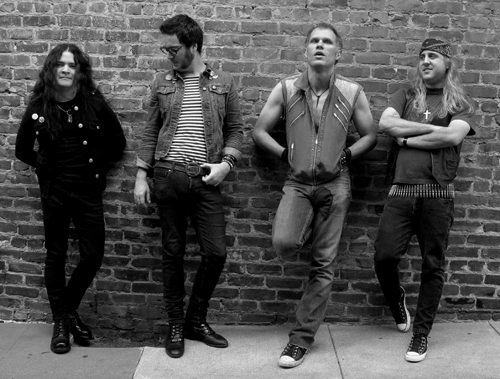
(For a review of Slough Feg’s latest, The Animal Spirits, go here. Read on for an interview with the band’s guitarist-singer, Mike Scalzi.)

San Francisco Bay Guardian: I noticed a clear theological theme running through the album. Was that – the Reformation – an area of historical interest to you? I’m interested in that choice, of a less exciting historical topic than maybe a more violent event…

Mike Scalzi: It’s not as metal, certainly. But in another way, Martin Luther was very metal, in that he was dedicated. Though he was Christian, in his dedication and his rebellion, he was metal. I was reading about all that stuff in an anthology of Western cultures. It was very general – I had to teach it. I’m a teacher. I started teaching Philosophy of Religion a year ago for the first time, and I’m not really that into teaching it, because its not my area of expertise, but I kinda had to.

[Writing music] helps me, actually. If I can write a song about it, it becomes more ingrained in my everyday thought. It becomes more second nature to say “oh, the 95 Theses!” It’s not just as a teaching aid, though. When it comes to Renaissance Christian theologians, he’s the most metal one. He’s out in the world. He’s out doing stuff, being a revolutionary. And a lot of his views are funny, a lot of the things he said were really funny and really extreme.

SFBG: Less metal for being ultimately successful, though. A lot of those so-called heretics were metal in the sense that they died for their principles, or were burnt at the stake or what have you.

MS: But he was the most badass one! Obviously, I don’t agree with him – he was a fundamentalist and all that, and he brought on fundamentalism in a way, I guess. But at least he said that trying to believe that the Bible is literal fact by reason alone is preposterous. That’s why he thought you had to exercise faith – because it’s preposterous. Everything in the Old Testament is preposterous, but you have to believe in it, purely to test your faith.

After seven records, you have to think of new things. I don’t want to repeat myself.

SFBG: What was the rubric for the lyrics that were included in the liner notes?

MS: Oh, those are the lyrics to “Trick the Vicar”

SFBG: Oh, so it’s just the one song?

MS: That was my decision. I’m sick of like…I’ve done that on every record and…

SFBG: People parse your lyrics?

MS: Oh, I don’t care about that. They come up with all sorts of weird interpretations, as if I really care that much. “Oh this means this and that means that. This is the deep meaning in this.” There’s no deep meaning in this shit! At least not that I know about! But at this point, trying to find things to say is a challenge.

With “Trick the Vicar,” I thought the lyrics to that would be important because it’s all one big pun. There’s obviously no deeper meaning, other than just being entertaining. It’s like something from a Benny Hill skit or something. So on the inside of the CD, I had all the puns – I came up with all those puns in the same month. They’re really silly, obviously.

SFBG: Well I did mean to confirm whether or not “boister” was a word.

MS: Good, good! No, its not. But when I say “There’s a boister that goes on in the cloister”…

SFBG: …from context it’s pretty clear.

MS: Yeah. It’s just a bunch of silliness, but it works for the song. I like silliness, and that’s one of the things that’s missing from a lot of metal: a good sense of humor. Metal used to have a sense of humor, in the 70s and 80s.

SFBG: That’s something that I was meaning to ask you about, if there’s a way to account for that sudden lack of humor. You have this form of music that has this potential to be taken seriously, but also the potential to be looked at with a sense of humor, or with an understanding of its many tongue-in-cheek aspects. It seems like a lot of its biggest fans, a lot of the people with the kind of familiarity with it that would enable them to see the humor, are the people least able to see it.

MS: Well, there are a lot of stupid people. You go to a metal show and you run into a lot of morons. Around here, you don’t have as many.

SFBG: I think it’s sort of like a dumbbell shaped-graph. On the one end, it attracts a lot of stupid people, but on the other end, it attracts a lot of people who are discerning and smart.

MS: I think, basically, they’re going to laugh at you one way or another. Being a metal guy, especially when you’re old, or older, or from the last generation of metal, they’re going to laugh at you. You make the choice of whether they’re going to laugh at you or with you. And I choose to laugh with them!

Also, metal, or indeed all rock and roll, is inherently funny. It is! People used to know that!

SFBG: Or inherently fun. That’s what a lot of people seem to lose sight of.

MS: Metal is inherently funny. No matter what! It’s funny. That’s one of the best things about it! It’s ridiculous, and it’s great because it’s ridiculous. People realized that way back. Black Sabbath, maybe not Led Zeppelin — they never had much of a sense of humor – Deep Purple, Judas Priest. The New Wave of British Heavy Metal. Early glam metal – Twisted Sister, Quiet Riot – they all had a sense of humor. Van Halen! Give me a break…that band was all humor until Sammy Hagar came, and it lost its sense of humor, and it started to suck.

The way that these things incorporated humor resembled vaudeville. That was David Lee Roth’s whole thing. Humor is part of entertainment. The most serious, heavy band, Black Sabbath, was also the most funny, because they realized – they were a British band with a British sense of humor.

SFBG: It’s interesting that you mention that. Do you think the trans-Atlantic shift had anything to do with that loss of humor?

MS: No, because Van Halen is the funniest. Maybe they’re not metal. Manowar! I don’t know if you want to open that can of worms. There’s a lot of evidence that they started out as a joke. They started out tongue-in-cheek and got serious as they went along. They know they’re funny; they may not want to acknowledge it, but they are.

SFBG: And the humor is bound up in the fact that everyone knows there is a joke, but no one will actually admit it. You can listen to it and pretend that you’re taking it seriously.

MS: It’s true of hardcore too. It used to be funny, now its all [imitates hardcore singing]. It’s lost its humor – some of it hasn’t, but most of it has. That’s one of my problems with a lot of the metal in this country, or in Germany too – people take it too seriously.

It’s the same thing with entertainment. I’m accused of being too traditionalist and narrow, but I’m bored by anything else. The way that entertainment used to be, in my opinion, was better. Period. It just used to be better. And now, it lacks.

I guess the question you’re asking is “why?” I don’t know why. I think it’s something about the world and the way people see entertainment. It has a much wider scope than it used to. People are much more involved in it as fans, and take it seriously as a statement, which is great, but maybe some of the actual enjoyment of it – from the performance standpoint and the artists’ standpoint – has been diminished by the fact that people hold it too close to their heart. The fragility of their egos and their identity are wrapped up in it in a way that causes problems.

SFBG: Like many discussions about the evolution and history of metal, I blame Nirvana. They taught people, or people took away from them this idea that if a band was trying to entertain you, that was somehow false.

MS: Well, that happened way before Nirvana, but that’s when it hit mainstream.

SFBG: There’s that line in Smells Like Teen Spirit: “Here we are now/Entertain us.”

MS: I don’t know if I have much to say about that. At the time, I didn’t like it. I heard their first album, before they were really popular, and I didn’t like it then. I was playing shows in San Francisco at the time, and I knew that I was not down with what was happening as a result of them. “Don’t try.” “Don’t give a shit.” “Nevermind.” “Be a loser.” I mean, sure, I thought that when I was a teenager. That’s the 14-year-old mentality: “everything sucks, so fuck it, man.” By the time you’re in your twenties you’ve grown out of that, you try to do something, unless you end up like Kurt Cobain, and you just fade off into negative, negative, everything sucks, and then die. [Sarcastically.] That’s great! That’s my hero! [Chuckles ruefully.] What the fuck is that?

SFBG: So, part and parcel of the conversation we’ve been having is the fact that you’re a very opinionated guy…

MS: So you’ve read my blog posts. There’s a new one today! I was just reading the comments.

SFBG: I did read them. I can only imagine what kind of comments you’re going to get on the most recent one. I was wondering if there’s something you can identify about metal that helps it attract opinionated people. Or, to reverse the chicken and the egg, if there’s something about being into metal that makes people opinionated?

MS: Well, I don’t think people get into metal for some other reason, and then get opinionated once they’re into metal. Unless you want to get into the fact that most metal is so bad now that you can get into it and say “oh god I’m so opinionated because there’s so much garbage out there. That’s true of a lot of kinds of music though.

It attracts opinionated people because it is extreme music. It attracts people who are into a certain kind of mentality. It happens from such an early age! I can’t analyze it. I got into metal, like a lot of people, when I was pretty young, and that was a long time ago! I don’t remember exactly. I don’t have immediate access to that feeling first being attracted to it. To me, its something that happened so far back that its like…

SFBG: …it’s like asking “why do you like mac ‘n’ cheese?”

MS: Exactly. And I have more access to what’s happened since then. But I don’t feel like I’m actively opinionated. People take things in, and they call them like they hear them. To me, things assault my sense, not the other way around. Nobody remembers being born into the world of music or food or anything and going “Hmm, I’m going to investigate this thing!” It’s more you hear something and you’re passed into this impression that you have. And some things, you get an impression and you go “Argh, that sucks! That really bothers me!” So my opinions, like those of most people who are opinionated, come from being stimulated by something in a positive or negative way. I would say I call it like I hear it.

I never thought of myself as opinionated until I moved here. People said that if I moved to San Francisco there would be all this great music. They said, “People out there are very enlightened.” And then I got here – 20 years ago – and I thought, “Everybody here’s not really that enlightened. There’s a lot of stupid bullshit going on out here.”

SFBG: Switching tacks completely, I’m curious about your master’s degree in philosophy. I read a little bit in another interview about what you teach, but I’m curious about what you focused on in your studies.

MS: I ended up studying Descartes for my thesis. I was interested in Descartes as a graduate student because his method was very simple and intuitive, and the whole point of it was a do-it-yourself type thing, rather than getting involved in this long academic tradition. Obviously, like anyone else, he comes from an academic tradition, but his point in Meditations [on First Philosophy] was to say “let’s erase everything that happened beforehand in philosophy and science and start on your own, with what you can know by yourself.”

I just found Descartes pretty easy to understand. I was able to maneuver in that ontology. I started taking seminars on Descartes, and I subsequently got interested in German idealism, like Kant and Schopenhauer, and like every metalhead, I was interested in Nietzsche.

In a master’s degree, you end up focusing on major guys because they have these comprehensive exams that test your knowledge of Plato, Descartes, Hume, etc. I stuck to a lot of that, because I knew I would have to take an exam on it.

SFBG: That Kantian or Cartesian originalist thinking – wiping the slate clean, starting with the Categorical Imperative, or something like that…

MS: …well, Kant is much more in the tradition, he’s not trying to wipe the slate clean. He’s just trying to be revolutionary.

SFBG: I’ll admit I’m only tenuously familiar with Kant, but I remember his ethics being founded on a sort “first principle” that ignores cultural baggage and so forth.

MS: Well, that’s what people say, but his point is to come up with something that is not dependent on circumstance in any way at all. Something that’s not empirical, that’s totally dependent on reason. Just like Descartes’ “I think, therefore I am,” in a way.

It’s something that you try to universalize by saying “what if everybody did this?” [Motions toward cookie on the table.] What if I were to steal this cookie? What if everybody did that? If it produces a contradiction – if its unreasonable for everybody to do something – you have to decide if it would be possible. Not if it would be right or wrong.

In order to establish a standard of right and wrong, you have to decide if it’s reasonable – could everyone do it. Suppose I don’t keep a promise – I say I’m going to show up here at 11, and I don’t. If I don’t do that, and I don’t keep my promise, what happens? It undermines the principle of the promise in the first place. If I don’t keep a promise, whatever, no big deal. What if nobody keeps promises. Could everybody do what I did? If no one keeps promises, there wouldn’t be promises in the first place.

SFBG: There’d be no point.

MS: You couldn’t make promises, because there’d be no such thing.

SFBG: Like if everyone stole, there would be no point in having property.

MS: If there were no property, you couldn’t steal. If there were no taking anybody’s word for anything, you couldn’t make a promise. It undermines its own possibility. It’s a contradiction that makes the act itself impossible. If its irrational to that extent, to the point where it makes the act itself a contradiction, then, according to Kant, its not morally permissible. That’s a little bit of a long answer.

SFBG: I’m going to attempt a sort of interviewer Triple Lutz here. Is Descartes’ idea of discarding what has come before, or Kant’s idea of ignoring circumstance to come up with principle…

MS: …Rational principle…

SFBG: …purely rational principle. Can that be applied to your creative process? In the sense that…

MS: No. [Laughs.] I wish I could say that it could. That’d be a brilliant piece of journalism. But as much as I’d love to be able to say that there’s some heavy metal calculus that I use in order to write by sheer principles of reason…no. At least, not for me. It’d be cool if there was some guy, some alchemist songwriter guy who was trying to find the principle of guitar or whatever.

SFBG: You could sort of take a stab at the categorical imperative of metal though, being like Maiden, Priest, and Sabbath, and not being affected by sort of the whims of circumstance.

MS: That’s the problem I’m encountering though. I don’t want to say that everything’s all based on the past. I don’t want to be a heavy metal anachronism. That’s what I’m getting in a lot of these responses to my Invisible Oranges articles. Again, to be philosophical about it, I get this confusion of cause and consequence. A lot of people say to me: “you don’t like death metal because you haven’t explored it.”

I try to keep the analysis somewhat objective, about why I don’t like the cookie monster vocals, the guitar sounds that are very brittle, and the drums that are triggered – clickety, clackety, clickety doesn’t sound “brutal.” It sounds like some bullshit to me.

People say, “You haven’t explored it enough. You haven’t heard the good stuff. You haven’t gone to the lengths that it takes to appreciate it.”

SFBG: If it’s good, it shouldn’t take any “lengths.”

MS: It’s confusing the cause with the consequence. It’s not that I don’t like extreme metal because I haven’t listened to enough of it. I haven’t listened to enough of it because I don’t like it. People think that I’ve come up with some sort of rigid heavy metal calculus and say “I like Priest, I like Maiden, I like Sabbath, Saint Vitus, whatever, some underground stuff too. These are the criteria of what I will listen to.”

It’s not like that! I grew up with the evolution of the whole thing, listening to it happen, and I heard things, and I said “I don’t like that! That’s crap! That sounds like someone who doesn’t care about what they’re doing.” It just sounds like shit to me, for whatever reason. And I heard more and more of it, and I chose not to investigate it.

SFBG: Getting back to philosophy just briefly, I saw in another interview that you described your music as having a Machiavellian aspect. I understand a Nietzschian aspect, but how does Machiavelli come into it?

MS: I was probably joking! I’m not sure. I was just being macho, talking about taking over the world. It’s a very vague characterization of Machiavelli, who I don’t really know shit about anyway.

SFBG: I was struck by the William Blake references in one of your old songs, “Tiger! Tiger!” Blake has always struck me as very metal.

MS: The reason that I put that stuff in there is not because of William Blake. It’s because of Alfred Bester, who quoted him.

SFBG: I noticed that you mentioned that author a lot in other interviews.

MS: A lot of sci-fi fans haven’t read him! This is insane to me. When people read The Stars My Destination – the original title of which was Tiger! Tiger! – they say “that’s the greatest fiction book I’ve ever read.” I was not a sci-fi or fantasy reader until I was 26, and someone got me that book. It was completely a fluke. I got it and I was like, “Ehh, I don’t really like science fiction books,” and then I finished it and said, “This is the best book I’ve ever read in my life.” Only on the basis of that did I get into science fiction.

SFBG: It’s tempting to ask you questions about Slough Feg’s distinctive sound, but seeing where my fellow interviewers have gone before, I was wary. It seems like we journalists want to get you to say “Oh, I choose to write songs with major chords because of this reason which is easy to print,” and your response is to say, “Look, this just my creative process; it’s how it sounds good to me.”

MS: Well, something that sounds good to me vocally sounds good because it’s catchy. If I remember it. I don’t always tape everything that I do. So, why do I remember it? That’s a whole question. Maybe I remember it because it sounds a little bit unique, maybe for some other reason.

SFBG: I think the music stands out to people, whether on record or live, because it makes melodic choices that almost seem like a deliberate subversion of the conventions of metal, like all those major chords. But I’m assuming that wasn’t a choice to subvert. That there wasn’t a point at which you were like, “Heavy metal is in minor keys – I’m going to do it a different way.”

MS: Well maybe there was! Again, it wasn’t a conscious choice. I don’t write Slough Feg songs according to music theory. I don’t say, “Now we’re going to do a song like this; now we’re going to do a song with these chords, or with this type of vocals.” If you do that, it ends up sounding overly stiff and deliberate.

But having said that, that’s not to say that there isn’t some kind of overall approach. When I do write stuff, what do I edit out? What do I keep? Stuff that reaches a certain criteria after the fact. Not when I come up with riffs, or vocals – that just happens. But what do I choose to keep? I don’t think about it consciously – it’s second nature to me now, so its hard to say – but basically, at one point, I wanted to write things that imitated Maiden, Sabbath, Thin Lizzy, Alice Cooper, Saint Vitus, Black Flag, and all that.

It became second nature to say “I want to pick up where Maiden left off,” but not to use major chords. The first “Irish-sounding” song I ever did was called “The Red Branch,” and I was sitting around in my living room, in a place I lived in years and years ago, I was sitting in my living room with an acoustic guitar, just joking around, singing to somebody as a joke, and I thought, “That’s a cool chord change!”

I keep a lot of things that other people would throw away, that they’d be scared to put on a record because it’s too silly-sounding. I say to myself “this is actually something that someone else wouldn’t do, and have the nerve to take seriously.” I think a lot of people are embarrassed to play Slough Feg-type songs. They were 20 years ago, at least. And now we’ve developed the sound to the point that it’s sort of obnoxious. People are like “what the hell man! This guy is willing to do this?!”

That’s what happened in San Francisco in the mid-nineties, playing this music. People would be like “God, you’re willing to get up onstage and play that? That sounds like nursery-rhyme music with metal instruments. It’s major. You’re singing like you’re in a 50s musical!”

Those are the kind of influences that I incorporate, maybe because it was something people weren’t willing to do, and so it sounded fresh to people.

SFBG: That sort of discomfort you describe is interesting, because you have this whole other offshoot of metal that’s built on discomfort. Black metal is based around saying “which chords can I play that will make people uncomfortable, that are the most dissonant.” You’ve come up with an incredibly unique way to do the same thing. You challenge people’s expectations, you make them uncomfortable, you take them out of their comfort zone, but instead of being really really heavy, or really fast, or really dissonant, or really down-tuned, you just have your own personal approach: to write chord changes that are, you know, silly.

MS: Or just really, really, traditional. Not that I intended that. But this is good, I think we hit the nail on the head in sense. When I started developing the sound, in the early nineties, a lot of it was a reaction. I didn’t write these looney tunes in 1989. I wrote them when I got here, and I started playing some shows, and I noticed that all the bands were drab, and all the bands played sort of one-dimensional speed metal. And I was totally nonplussed by it.

What I was writing was a reaction. I was saying “what can be done at this point?” Punk rock and speed metal and grindcore are just an extension of the same dirge – being obnoxious by being a dirge.

SFBG: And it’s an arms race, right? You can only go so fast. And then the next band that comes along has to go faster than that.

MS: And also it’s the attitude that’s so passe after a while. Spitting blood and whatever. I wanted touch on what people inevitably heard – kid’s music, or what your parents were playing – and pose the question: “are you willing to admit that this is enjoyable to you?” Slough Feg songs that do sound like they’re from a 50’s musical. Are you able to admit that this is catchy to you? That’s the punk rock maneuver, that I was able to think of it in those terms. And that’s what set us apart. But in a totally different way, in a way that goes back to like, “This is inherently enjoyable. Are you willing to partake in it, or are you too cool for it?”

SFBG: And it’s diametrically opposed to black metal. Black metal is “I will alienate you by doing something that is not enjoyable.” Your approach is “I will alienate you by doing something that is too enjoyable.”

MS: After the fact, that’s how we can analyze it. I think that’s a proper way to look at it. My songs do assault the listener, and people say “I can’t get it out of my head!” Because it’s written in very simple way – they’re really not that hard to write, but it’s a kind of songwriting that people aren’t willing to do.

Someone said to me in the 80’s, when I liked Venom a lot – they’re a very silly, vaudevillian form of Satanic metal – “Why do you like this? Anybody can do that. Anybody can play Venom songs.” And I said “yeah, that’s true. But nobody is willing to. That’s what makes it special.”
www.sloughfeg.com

Appetite: 3 escaped-from-New York egg creams

0

Sipping an egg cream soda is an all-American, very New York pastime, but nowadays the nostalgic sodas are popping up in increasing numbers in our fair city. I rounded up a trifecta of perfect SF spots to get your cream on, but first a historical rundown.

Though the identity of the creator of the original egg cream is somewhat debated, many credit Louis Auster, a Brooklyn candy store owner in the late 1800s. In his well-researched tome on the history of soda fountains, Fix the Pumps, Art of the Drink‘s Darcy S. O’Neil says the New York egg cream evolved as a variation on the original milkshakes served at soda fountains in the late 19th century.

The classic recipe, which contains no egg whatsoever, traditionally consists of milk (or cream, for added richness), chocolate syrup, and soda water, making for a gently effervescent imbibement. It has a creamy, chocolate-y tinge, and a pleasurable hint of sour from the soda. The best creations have a foamy, seltzer “head” and are reminiscent of an ice cream soda sans ice cream. Some claim the original recipe included actual egg, which was replaced when they became expensive and harder to procure during World War II.

Speculations aside, I find egg creams a delightful reminder of my high school years on the East Coast, when I sipped at diners in Manhattan, Brooklyn, and Jersey. To this day, I can’t be in proximity of Katz Deli in the Lower East Side without ordering one to go. 

The recent proliferation of egg creams in San Francisco is a welcome trend. Though I can never seem to track down the Egg Cream Cart, which was launched earlier this year by a mysterious “Madame Bubbles” (and serves egg creams and Jewish treats like rugelach), there are a few more easy-to-find places to wash down a soda, whether you go for the original Brooklyn recipe with chocolate syrup, New York style with vanilla, or even a San Francisco egg cream made with both chocolate and hazelnut syrups. 


Grand Coffee

Months back, I wrote about the new Grand Coffee on Mission Street, a humble little counter-window service  that pumped out expertly prepared Four Barrel coffee, creative jam sodas, layered iced coffees, and yes, egg creams. Owner Nabeel Silmi makes a Brooklyn egg cream ($2.75), for which he first drizzles the glass with Brooklyn-made Fox’s U-bet chocolate syrup, then douses it with milk and seltzer water, ultimately handing you a freshly frothy drink.

2663 Mission, SF

(415) 206-1238


Tony’s Coal-Fired Pizza & Slice House

The new take-out shop next to Tony’s Pizza Napoletana is just what North Beach needed: addictive Neapolitan and East Coast pizzas, ordered by the pie or the slice (cheese, pepperoni and daily specials). Eat in at one of the couple of tables in the joint or trot across the street to Washington Square Park with pizza or giant Italian beef sandwich in hand. The deal is sweetened with three egg cream options: New York, Brooklyn, and SF versions. The downside? They’re a whopping five dollars each. But the balance is right and kudos to Tony for offering all the classic egg creams. 

1556 Stockton Street, SF

(415) 835-9888


Cowgirl Creamery’s Sidekick

Cowgirl Creamery‘s brand new Ferry Building cafe, Sidekick, is a take-out venue for all things cheese, from challah rolls filled with the stuff to a fresh mozzarella bar where you can choose which mozza type you’d like to heap over salad. Sidekick starts with a San Francisco egg cream (chocolate and hazelnut syrups for four dollars), then offers three non-traditional versions: raspberry, coffee cream, and caramel cream ($3.75). The SF soda enhances that light, chocolate-drenched froth with a whisper of nuttiness. Consider it egg cream with a California twist. 

1 Ferry Building, SF

(415) 362-9354

www.cowgirlcreamery.com


Subscribe to Virgina’s twice monthly newsletter, The Perfect Spot


GOLDIES 2010 LIFETIME ACHIEVEMENT: Slumberland Records

0

Look at the key critically acclaimed and popular indie (or subsidiary) releases of the past few years, and certain label names recur: Captured Tracks, Mexican Summer, Sincerely Yours, True Panther, Slumberland. Most of these names belong to new kids on the block, but Mike Schulman has been at the helm of Slumberland for more than 20 years. If anything, his label, a home for perfect guitar pop, is stronger than ever, with bands such as Pains of Being Pure at Heart and Crystal Stilts on the roster. Slumberland has outlived many of the legendary indie labels — from Postcard to Creation to Rough Trade — that inspired it. Sometimes dedication reaps rewards.

In 1989, when Slumberland began in Washington, D.C., indie rock was a postal affair. The foundation of an international pop underground was being forged through letters and records and zines sent among fans and small record stores. From the beginning, Schulman was uniquely out of step, focusing on melodicism when the D.C. scene was known for punk abrasion. When Slumberland relocated to the Bay Area a few years later, releases by Stereolab, Henry’s Dress, Aisler’s Set, and the unjustly obscure Rocketship had nothing to do with grunge mania. “I felt painted into a corner,” Schulman, who was working at the Berkeley record store Mod Lang, remembers. “It seemed like there weren’t a lot of opportunities to get stuff heard, unless you took bigger deals. It was a craven time.”

Slumberland endured, and Schulman’s deep and abiding love of music is a major reason. One can argue that the label is more refined or restrictive in terms of sound than most — simply put, it offers the true wild heart of what has been more calculatedly and generically marketed as noise pop. But Schulman’s musical taste runs deep and wide. In the mid-1990s he started an electronic label, Drop Beat, and today he DJs at Oakland’s Actual Cafe, spinning rock steady, ’60s hard bop, Blue Note classics, and ’70s soul, funk, and reggae.

Schulman draws from a deep library — he has 30,000 records in his basement. “It’s out of control,” he admits with a smile. “I don’t sell anything. I buy new records every week: dubstep, soul and jazz reissues, and more indie than I have in the recent past. But currently it’s hard for me to listen to new stuff because I’m spending so much time listening to [Slumberland] test pressings.”

For Schulman, the process of assembling an album is one of the greatest pleasures of running a label. “I was really happy when they started sending me mixes,” he says when asked about the newest Slumberland release, Sports by the Bay Area trio Weekend, an album that promises future greatness and mass appeal. “The only reason I do this is to help bands get their music out there. I’ve been doing it long enough that I can give advice to a young band doing their first record. It’s gratifying talking to a band, listening to demos, and hearing an album come to fruition.”

Another gratifying moment for Schulman was Slumberland’s 20th anniversary mini-tour, when new bands and older bands — including his own, Black Tambourine — united for shows on both coasts. “The SF show was crazy,” he says. “There were so many people I hadn’t seen since the Aisler’s Set broke up [in the late ’90s]. So many people came to see Henry’s Dress.” Contrary to what one might assume from Slumberland’s music, Schulman is the opposite of a sentimentalist, but in this instance, he’s unabashedly romantic: “It was magical. It was kind of heartwarming. When I started doing a label I was so into music and supporting labels and I wanted to contribute. There was something about those shows that made me feel like, oh, maybe I did.”

He did — and he’s still contributing, with support and inspiration from his wife Nomi and son Theo. Through well-timed and still-strong acts of fidelity, Slumberland has forged its own community of friends who now have a shared history. The label’s present — 2010 brought powerful debut albums by Weekend and Frankie Rose and the Outs — is vital. Its future looks even livelier. Schulman is excited about upcoming releases by Brown Recluse and Emitt Rhodes-like baroque pop troubadour Devon Williams, and he drops some big name hints regarding the next Pains of Being Young at Heart album. For Slumberland, the pains of being young at heart have matured into the rewards of being true.

www.slumberlandrecords.com

>>MORE GOLDIES 2010

GOLDIES 2010 LIFETIME ACHIEVEMENT: Rick and Megan Prelinger

0

“Juxtaposition,” “serendipity,” “appropriation,” and “collaboration” are all words that come up frequently when you talk to Rick and Megan Prelinger about the Prelinger Library.

Tucked above a SoMa carpet store, the space (“a free offering, an installation, a workshop, and an extension of our living room,” according to the handout given to visitors) is stuffed floor-to-ceiling with books, maps, magazines, and other ephemera. It is a place where artists, students, teachers, architects, T-shirt makers — basically anyone with a curious, creative mind — can seek information and inspiration. Visitors are encouraged to photograph, copy, and scan materials for future use in their own projects.

“This is a completely unconventional library,” Rick says. “It’s much more a place where serendipity rules.”

A certain magic comes courtesy of the library’s unconventional shelving system, designed by Megan to maximize what she calls “browsing-based discoveries.” It’s based on a continuum of ideas and interests, not Dewey Decimals. In a section dedicated to the American South, for example, a dusty government tome about Georgia’s river system might nestle next to a paperback copy of Deliverance.

“[Library visitors] tend to start going where they think they’re headed,” Megan said. “Then they find something they’d never seen before, and they just go in a different direction. They come out going, “Wow! I thought I was looking for this, but I found this.'<0x2009>”

Opened to the public in June 2004, the Prelinger is tailored to its current location. Though the fit is snug, Prelingers have no plans to upsize. “The collection is composed in such a way that there’s a relationship between the aisles,” Rick explains.

But the collection is anything but static. In addition to what they call the “user-based chaos” that arises when visitors remove and replace books on the shelves, the Prelingers are constantly adding to, and editing, their highly selective inventory. Subjects range from transportation and land-use to media studies and political history (they joke that the stacks harbor “98 percent bad ideas”). “[The library is] specific to what we’re interested in,” Rick says. “But we’re interested in a lot of things.”

The Prelinger also boasts an online component composed of thousands of digital books that may be downloaded for free. Though this represents only a fraction of the physical collection, it’s a useful tool for those who can’t visit the library in person. As it is, the place has limited hours, and both Prelingers support it with other endeavors.

Megan is also a historian, a wild-bird rehabilitator, and an author; her 2010 release, Another Science Fiction: Advertising the Space Race 1957-62 (Blast Books), is a gorgeous, hefty volume that culls and contextualizes imagery from magazines like Missiles and Rockets, bound editions of which can be admired in the library. Rick is widely known for the Prelinger Archives, a groundbreaking moving image archive he founded in 1983. It eventually grew to include more than 60,000 works — all originally made by amateurs or earmarked for industrial, educational, and advertising use. Much of it was acquired by the Library of Congress in 2002 and 2003 (some 2,500 titles are also available online). The archive inspired Rick’s 2004 collage film, Panorama Ephemera, as well as his popular “Lost Landscapes” presentations, which meld lively discussions about history with found footage.

Along those lines, the Prelingers have a new-old passion: home movies. “Megan and I now run a really fast-growing and exciting home movie collection,” Rick says. “Home movies — that’s the only cinema that matters for me. Each one is unique. We think we understand home movies, but they’re shallow and deep at the same time.”

Rick’s latest film (“slowly in the works”) will be based on this burgeoning collection. “One of the things that we say we’re trying to do — it’s a little grandiose, but it’s actually true — is putting together a complete ethnographic portrait of 20th century North America through home movies,” Rick says. Looking at what they’ve accomplished so far, it’s not hard to conclude that if anyone can pull off such a feat, it’ll be the Prelingers.

www.archive.org/details/prelinger; www.prelingerlibrary.org

>>MORE GOLDIES 2010

GOLDIES 2010: Amanda Curreri

0

Five minutes into talking with Amanda Curreri over a slice and coffee at Mission Pie, I’ve agreed to take part in a piece she’s working on as part of Shadowshop, the in-gallery artists’ marketplace Stephanie Syjuco is organizing for SFMOMA’s upcoming survey of work made in the past decade.

“It’s called Afghanistan Insert,” Curreri explains, speaking in the measured fashion of someone who carefully considers her words. “I’m trying to insert Afghanistan into SFMOMA and into San Francisco’s art community.”

Curreri’s commitment to getting the local arts scene to engage with what has become commonly dubbed by the mainstream news media as “the forgotten war” is not just politically motivated. It’s also personal. Her husband has been working in Afghanistan for the past five months as a security contractor, during which he has sent her snapshots of local graffiti. They are documents of his ground truth.

Curreri plans on physically inserting herself and her husband’s images into Shadowshop, much in the same way she holds one of his pictures in the portrait accompanying this feature. Indeed, the photo, this profile, Curreri’s new status within the local arts community as a Goldie winner, and the conversations this increased attention might encourage will all become part of the discourse surrounding Insert Afghanistan and contributing to its impact.

All this is consonant with Curreri’s view of herself as more of an instigator than an artist. “I’m trying to make art that crosses out of the art world,” she says, echoing Joseph Beuys’ notion of social sculpture. Her projects thrive on participation, using the exhibition space as a kind of social laboratory in which she arranges shared cultural touchstones and institutions — campfire songs, the judicial process, family recipes — as prompts for personal reflection and shared conversation on the “big subjects” that undergird them: history, politics, memory, and in the case of Afghanistan Insert, their intersection within a seemingly endless and fruitless foreign occupation thousands of miles away.

Engaging with Curreri’s art often entails an extended encounter with the artist herself (given how unexpectedly my interview at Mission Pie has turned out, the reverse seems true as well). The last conversation I had with Curreri was this past July, when she videotaped my extemporaneous responses to her off-camera questioning about the topic of last words. My interview was to be incorporated into her concurrent exhibit “Occupy the Empty,” for which she transformed Ping Pong Gallery via hand-sculpted “props” into a courtroom in which various associates, friends, and strangers, such as myself, volunteered their time and testimony.

As with Insert Afghanistan, the inspiration for “Occupy the Empty” was also personal: after participating in a court hearing concerning her late father, Curreri found out it had been held in the same Massachusetts courthouse in which Italian-American anarchists Sacco and Vanzetti were sentenced to death in the early 20th century. Curreri, also of Italian-American descent, saw the coincidence as a chance to connect to that history and, in the process, build a community around a larger discussion of remembrance. Curreri recalls one participant for whom the show served an almost therapeutic function.

“I want to create art that has an interpersonal function, in real-time,” she says. “I want my work to set a specific frame around our inherent connectivity.” 

www.amandacurreri.com

>>MORE GOLDIES 2010

GOLDIES 2010: DJ Bus Station John

0

“Listening to records is really the closest thing we have to a time machine,” says DJ Bus Station John. “Rest the needle in the groove, close your eyes, and the sensory experience can take you right back to 1979 — if you’re lucky enough to be that old, ha ha!”

Perhaps the most important DJ on the San Francisco gay scene in the past decade, Bus Station John has been the musical conduit for a huge cultural reawakening among younger homos. Called “the godfather of bathhouse disco,” he’s revered throughout the dance music world for his fastidious attention to party detail and his inimitable blend of extremely rare 1970s and early ’80s soul, boogie, garage, funk, Italo disco, Hi-NRG, and NYC no-wave.

But his influence goes far beyond helping to inspire the underground disco revival that has displaced techno as the music of choice on many of the world’s sophisticated dance floors. Believe it or not, disco and Hi-NRG used to be verboten in most gay clubs in the ’90s and early ’00s, sonic reminders of the early AIDS crisis that were trampled beneath pounding circuit music beats and generic diva screams. Imagine queers being ashamed of disco!

The arrival of life-extending protease inhibitors for HIV-positive men in the late ’90s opened the door for a not-so-painful appreciation of the recent gay past, and the time was ripe for a DJ to reprise the fantastic sounds of a generation tragically swallowed by disease — sounds that San Francisco had a huge hand in creating through the likes of producer Patrick Cowley, singer Sylvester, and dozens of other integral analog musicmakers.

Enter DJ Bus Station John in 2000, tastefully flaunting his dedication to the hot and heavy bathhouse and backroom days of yore. (The city, still gripped by AIDS panic, continues to outlaw these queer sexual venues.) Although the music is central to his mission, his parties are a complete package. From Xeroxed flyers of hand-made Gluesticked collages featuring Grace Jones or Joan Crawford in a spiky forest of exaggerated phalluses to his notorious “no cell phone” policy on the dance floor, he conjures the heady lust of gay history before social networking and the Internet replaced genuine human contact. “I work without a net, as it were,” he says. “There’s still a sense of discovery when you walk into my parties — no pretedermined list of ‘friends’ who are going. It’s a fresh and spontaneous mix.”

Bus Station John parties have also fostered the discovery of new spaces for homos to get down — past gigs have brought Deco Lounge, the Gangway, and the old Transfer to light as viable venues. His current regular parties include the disco-drenched Tubesteak Connection (Thursdays, 10 p.m., $4. Aunt Charlie’s Lounge, 133 Turk, SF. www.auntcharlieslounge.com) and the wonderfully named Le Perle Degli Squallor (first Saturdays of the month, 10 p.m., $5. The Hotspot, 1414 Market, SF.).

Musically, Bus Station John’s most meaty contribution to clubs, besides fostering the rediscovery of past genius, may be the renewal of classic disco song structure. His selections bring back the notion of dancing as erotic hold-release, an embarkment on a series of expertly crafted journeys. As a DJ, it’s OK (heroic, even) to let people’s attentions wander when a new track is abruptly introduced, then have them relax into an ultra-melodic verse-chorus-verse format as they freshen their drinks and eye a hottie or two. Because when the hypnotic extended outro hits and the red lights kick in, everything falls into place and it’s pure sexytime on the dance floor.

For more information, contact Bus Station John at djbusstationjohn@gmail.com.

>>MORE GOLDIES 2010

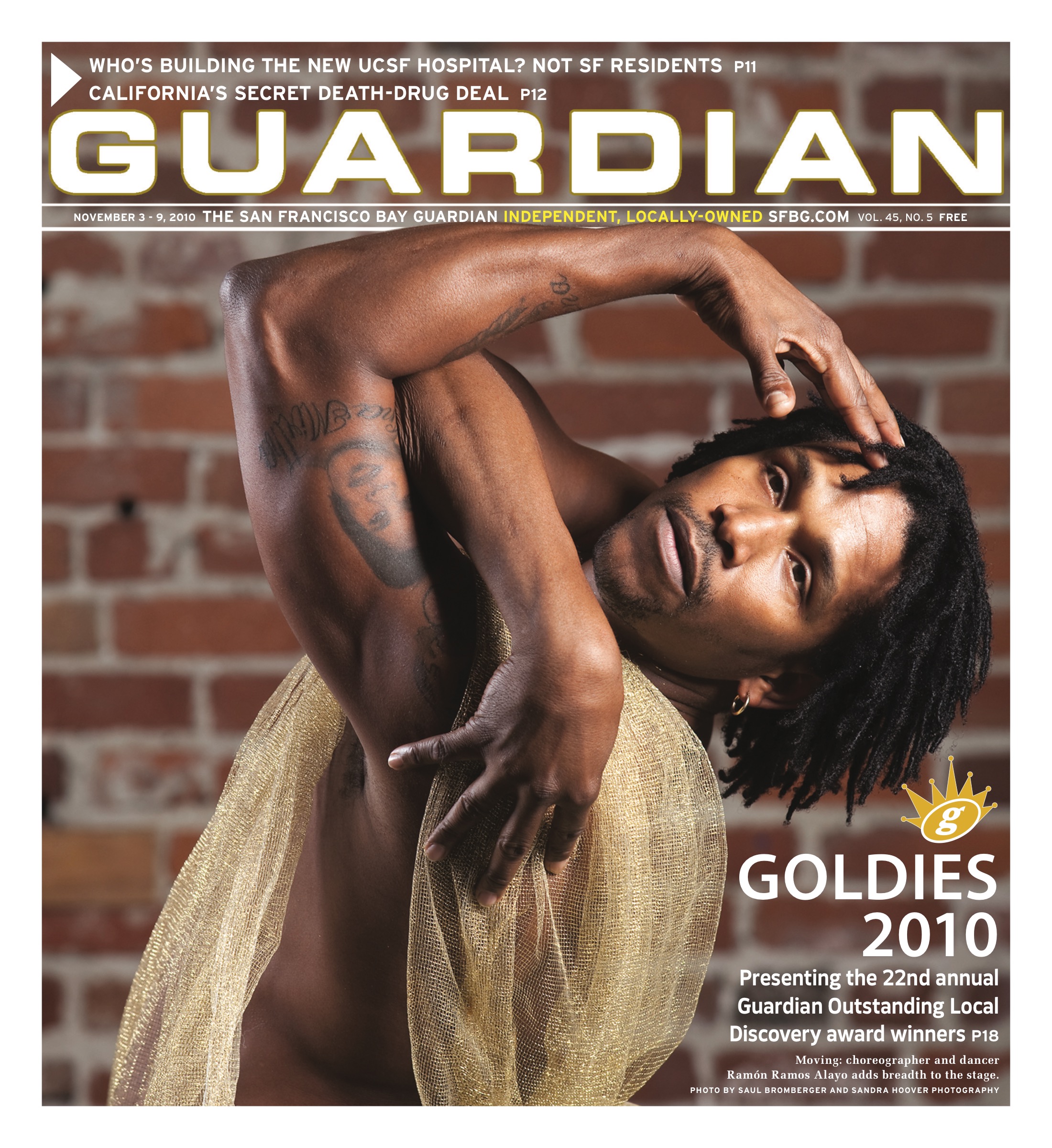
GOLDIES 2010: Ramón Ramos Alayo

1

Whoever coined the phrase “jack of all trades, master of none” didn’t foresee an artist like Ramón Ramos Alayo, who is a stunning dancer, a socially committed choreographer, a passionate advocate of Afro-Caribbean culture, scholar of Yoruba spirituality, and an inspiring teacher of modern dance and salsa.

With his tall, powerfully built frame, Ramos Alayo is a mesmerizing presence whether he dances the West African Warrior God Ogun, the Tibetan Lord of Death, the son in La Madre — his tribute to family — or a prisoner trying to shed his shackles. Most recently he assumed Bob Hope’s mantle — unusual even for an open-minded artist like him — by spending a month entertaining American troupes stationed in Europe. “It was a good experience,” the Cuban-born dancer explains. “It was needed. These people have no entertainment. All they do is walk around with guns all day.”

Ramos Alayo regularly returns to Cuba. Next year he’ll go to choreograph and, even more important, to take classes. “The training in Cuba is very strict. There is no choice — you have to go to class,” he says. At 11, he began studying modern and folklórico. He still remembers that unless you met established standards, you couldn’t move to the next level. That kind of discipline paid off. Locally, he has danced with ensembles and choreographers as diverse as Robert Moses’ Kin, Zaccho Dance Theater, Sara Shelton Mann, and Krissy Keefer.

Ramos Alayo has two other passions: choreography and spreading the word about Caribbean culture.

For his Alayo Dance Company, he uses song, music, visuals, and narration to create theatrically potent works that include Afro-Cuban, modern, folkloric, and popular dance styles. Structurally these pieces can be rough, but they have an intoxicating quality — and often a no-holds-barred political perspective — that can prove irresistible. “Mixing things the way he does comes to him by nature and training,” Deborah Valoma, textile artist and costume designer for some of the choreography, explains. “The results are vibrantly alive pieces, approached from an unusually broad set of disciplines.”

After Rain looks at destruction and regeneration from an individual and social perspective. Blood and Sugar traces the passage of slavery through history and geography. A Piece of White Cloth metaphorically explores the movement of culture from Africa via Cuba to the Bay Area. These are big-themed endeavors, but Ramos Alayo also embraces athletic intimacy in works such as Wrong Way and last year’s Grace Notes. Still, Keefer, who first met Ramos Alayo when she took over Dance Mission Theater in 1999, appreciates him above all as a storyteller. “There are so few choreographers in modern dance who create narratives,” she explains.

The Cuba Caribe Festival, which Ramos Alayo founded in 2003, has become a mini ethnic dance festival, showcasing groups from the Cuban diaspora on the first weekend and Ramos Alayo’s ensemble on the second. The festival is always a rollicking, joyous affair. If sometimes there is a friendly rivalry between ensembles, it’s all in good spirit.

In the past, most of Cuba Caribe’s participating groups have been grounded in folklórico traditions. Lately, however, reflecting both the changes taking place within that community and Ramos Alayo’s personal interests, modern dance groups like Paco Gomes and Dancers and Liberation Dance Theater have made successful appearances. Master classes, workshops, and lectures augment the offerings.

Just how successfully Ramos Alayo will be in helping the Caribbean diaspora deepen its roots in the Bay Area remains to be seen. He has two daughters. “One of them is a dancer, the other a soccer player.”

www.alayodance.org; www.cubacaribe.org

>>MORE GOLDIES 2010

The attack on Latinos

0

OPINION The San Francisco-based Ninth Circuit Court of Appeals heard oral arguments on Monday for United States v. State of Arizona. Latinos in California were watching closely.

The case addresses the constitutionality of Arizona’s SB1070 law. SB1070 is one of the broadest and strictest immigration enforcement measures ever enacted by any state in the nation. The court’s decision will send a strong signal not just to Arizona, but to the 13 other states considering similar laws. As an immigration lawyer and a first-generation Mexican American from Orange County, laws like SB1070 remind me of how much history repeats itself.

Every day I see families face deportation due to minor encounters with the law. When a broken tail light is used as a reason to stop, overcharge, and deport an individual, then something is seriously wrong with our law enforcement priorities, our laws, and even our morals.

After the Great Depression, Operation Wetback, a strategy enforced by the INS, expedited the deportation of 80,000 “Mexican-looking” Americans, including many Mexicans and Latinos born in the United States — and some Native Americans.

The movement by states to enact immigration laws and scapegoat Latinos started in California with Proposition 187. Passed in November 1994, Prop. 187 sought, among other things, to require police, health care professionals, and teachers to verify and report the immigration status of all individuals, including children. Well-funded anti-immigrant groups like FAIR created a blueprint for states and cities to become immigration law enforcement agents. In light of the discrimination that ensued — even though Prop. 187 was ultimately found unconstitutional — many view this period as one of the worst moments for Latinos in recent California history.

In the wake of SB1070, other states are attempting to pass similar or more extreme laws at an alarming rate. Republican state legislator Randy Terrill, who coauthored Oklahoma’s strict 2007 immigration bill (HB1804), has promised to pursue an even stricter second-generation version of the bill that he has called an “Arizona-plus” law. He is undeterred by the fact that key provisions of HB1804 were ruled unconstitutional by the U.S. Tenth Circuit Court of Appeals.

Arizona’s Republican state Sen. Russell Pearce recently announced that state legislators will propose a bill to deny U.S. citizenship to children born of undocumented immigrants. Even though many, if not all, of these bills will be struck down as unconstitutional, they testify to the current anti-immigrant — and anti-Latino — climate.

There is little political will for immigration reform. Both the Democratic and Republican parties see Latinos largely as a source of votes, but show scant interest in ensuring that the law treats our community fairly. Even President Obama, who during his race for the presidency promised to bring change we can believe in and co-opted the United Farm Workers’ slogan “Yes We Can!,” has turned his back on us. Obama has earned the label “deportation czar.” Under his watch, more immigrants have been deported than at any time since Operation Wetback.

As long as the nation lacks comprehensive immigration reform, laws similar to SB1070 will continue to be introduced in states across the country. Right now it is up to our judicial branch to uphold the Constitution. We, Latinos who are able to vote, must vote for those candidates whose track records show a commitment to fairness for our community — regardless of party affiliation.

Laura Sanchez is staff attorney for the Central American Resource Center (CARECEN) in San Francisco.

Editor’s Notes

1

tredmond@sfbg.com

Here’s what really scares me about Republicans in Washington: they don’t want the economy to get better.

I’m not just saying that they’re wrong on the issues, or that their prescriptions — tax cuts for the rich, fewer regulations for big business, privatization of health care and Social Security — will only make things worse. I’m saying that, right now, in November 2010, the GOP leaders want continued high unemployment. They want Americans to suffer. They want conditions to get worse and worse — because all they really care about right now is defeating Barack Obama in 2012. And they know and I know and everyone else knows that if the economy improves, he’ll be a two-term president.

I’m not the only one who sees this open conspiracy. Former Secretary of Labor Robert Reich has been Twittering about it, and bloggers have been floating it out, but the mainstream news media doesn’t’ seem to want to take the risk of saying what’s right in front of everyone’s face: Republicans are lying, outright. They’ve campaigned on the promise that their ideas and agenda will put America back to work — but they know that’s not true. What the agenda is going to be is obstruction.

The Democrats have never done that, at least not in recent history. Oh, they fought W. on all sorts of policy issues, but they never tried to make sure that the country collapsed. That’s a big difference between the two parties, and it comes down to a basic question: How many people are you willing to hurt, how much suffering are you willing to promote, just to get back in power??

I’ve been talking to a lot of political activists, elected officials, and outside agitators of late about the next president of the Board of Supervisors (with all that implies) and I keep hearing the same name: David Campos.

Campos has been one of the great success stories of the class of 2008, an effective legislator who can work with just about everyone. He’s a solid progressive, but with a gentle personality — someone who sticks to his principles but doesn’t pick personal fights. I don’t know how he puts together six votes, but he might surprise us.

I’m writing this the day before the election and it comes out the day after, by which time Jerry brown will be the governor-elect, Barbara Boxer will have won another Senate term, and the Giants will be holding their World Series victory parade. You read it here last.

SF needs a local hire law

2

EDITORIAL A billion-dollar hospital project, built by a public agency using taxpayer dollars, just broke ground on the edge of District 10, the corner of the San Francisco with the highest unemployment rate and some of the city’s worst economic problems. That’s something job-hungry residents ought to be celebrating — more than 1,000 construction workers will be earning steady paychecks over the next few years.

And yet, when dignitaries including Rep. Nancy Pelosi showed up for the groundbreaking ceremony, they were met with protests. Bayview residents showed up to complain that very few of those jobs are going to the people who live in the project’s neighborhood. In fact, not that many jobs are likely to go to San Francisco residents. That’s because the University of California, San Francisco, which is building the hospital at Mission Bay, has no policy whatsoever requiring its contractors to hire local residents. As Sarah Phelan reports on page 11, San Francisco residents may turn out to make up fewer than 20 percent of the people who work on the project.

That’s a problem for a significant number of local construction projects financed and managed by government agencies. A recent study released by the San Francisco Redevelopment Agency Office of Economic and Workforce Development found that only 20 percent of the workers on public works job sites in the city were San Francisco residents.

Obviously, private construction companies can hire anyone they want — but when San Francisco tax dollars and San Francisco public land are involved, local residents ought to get a fair share of the work. That’s not just a political argument; it’s solid economics. Just as money spent at a locally owned independent business stays in town and does more for the local economy than money sent at big chains, local workers are more likely to spend their paychecks here in town.

Sup. John Avalos has introduced a bill that would set a 50 percent requirement for local hiring on projects paid for by the city. It’s a great idea, and needs strong support. There’s resistance from the building trade unions, which is no surprise — the unions want to keep the seniority system in place and give jobs to the members who have been unemployed the longest, no matter where they live. And a significant percentage of the membership of the building trade unions live out of town.

May of the residents of low-income areas like Bayview lack the specific skills for unionized trade jobs. But with so many longtime members out of work, the unions don’t want to add apprenticeship programs to train new workers for jobs that don’t exist.

But there has to be room for compromise here. The building trades leaders need to understand that San Francisco taxpayers have every right to demand that when they finance public works projects, some of that money will stay in town. And Avalos isn’t pushing for 100 percent local hire — nor is he trying to undermine the time-honored tradition of the union hiring hall.

The UC project is trickier. As a state agency, UC is exempt from local laws — and has a long history of defying San Francisco’s efforts to hold it accountable. The Bayview activists aren’t asking for 50 percent local hire — but they are demanding that the university adopt some sort of enforceable rules to ensure that some percentage of the jobs at the new hospital go to city residents. That’s more than reasonable.

San Francisco’s state legislative delegation ought to be in touch with the UCSF chancellor and send a clear message: This is a problem that needs to be resolved, now — and if it’s not, legislation setting local hire goals for all UC projects ought to be on next year’s agenda.

Appetite: David Wondrich on Punch

0

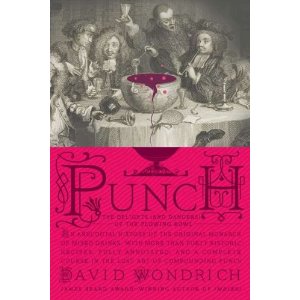
When cocktail historian and Esquire columnist David Wondrich speaks about drink, you listen — or read, as the case may be. His latest book Punch, debuts Nov. 2, the first of its kind on the glories and history of the punch bowl. I had the privilege of speaking with Dave over the phone from his New York home. The question at hand: why punch? Or to quote from the book, what makes punch “necessary”?

Wondrich stands by his punch bowl. He tells me it’s “the greatest social beverage of all time,” that “now more than ever we need beverages that promote friendship.” He calls punch “more gentle than cocktails”, its preparation “easy and utterly pleasurable.” The punch bowl is communal, ideal for a group or festive gathering, less laborious than individual cocktails, and a hell of a lot more fun. As Dave states in the book’s preface: “most of punch’s stories are of warm fellowship, and conviviality, and high-spirited gatherings afloat on oceans of witty talk” — not to mention a few “battles and brawls.”

We’re not talking about “frat juice” here. We’re talking honest-to-God punch: boozy yet delicious, layered with citrus, raw sugar, and varying spirits. The book starts with a comprehensive history — who drank punch and where. Wondrich says the book started as a big chunk cut out of his first book Imbibe.

The convivial punch houses of antiquity that feature in Punch sound so appealing that I ask Dave if he envisions their return. “I certainly hope so,” he replies. Besides Rickhouse here in SF, some of his favorite bars for punch around the globe include Hix in London, Brooklyn’s Clover Club (which lies a dangerously close distance from his present location), and Manhattan’s Death & Co. He’s also a fan of Savoy Cocktail Night at SF’s own Alembic (hear, hear!)

Like most classic concoctions, the name of punch’s first mixologist has been lost to the sands of time — though there are countless early references to the drink. One of Wondrich’s strongest sources is Google Books, where he digs up old newspapers, pamphlets, and rare books before he cross references them in the libraries of New York and London. Another research source?  “I am trained as an academic so I have a lot of 1600s books,” he says. “I start with a lot of blank space and start to fill that in using every kind of source possible… I’ll track down the original source, and don’t settle for first mention.”

I asked if he’d ever write the book he wishes existed, a dream mentioned on page six of Punch, which is a detailed source on distilling, the drink’s origins, its history, and importance. He says it’s a project “too big for any one person to bite off, unless they have all the time in the world and know multiple languages.” Wondrich says he “could tackle parts of it.” He estimates that it would take at least three co-writers: someone fluent in Dutch, German, Chinese, and Indian.

What we’re more likely to see Wondrich write about next is how the American style of drinking — particularly our contributions in cocktails and spirits — went global. He’s already done “tons of research” for past presentations on the subject. Spots of particular interest for him include our country’s legendary World’s Fair cocktail showcases and the way the techniques they highlighted spread across the rest of the globe. 

Wondrich expects the section called Book II of his recently released Punch will be limited to “total mixology geeks.” But I found Book II a useful, necessary account of the ingredients, tools, and proper measurements needed for the drink, particularly his recommendations for spirits in the “Ingredients” chapter.

A good half of Punch is recipes, ranging from Milk Punch to American Fancy Punch. When asked which ones he makes the most, Wondrich named the bracing Chatham Artillery punch on page 248 (a Savannah original, a poorly-crafted version of which I’ve imbibed whilst walking down the city’s streets). Back in the day, a local paper described this punch thusly: “as a vanquisher of men its equal has never been found.” Dave says the recipe in this book (there’s yet another included in Imbibe!) “claims to be the original, and very well might be,” though when it comes to  traditional recipes “they get passed down like a game of telephone,” each iteration evolving from the last.

One of his biggest crowd-pleasers — which he says people consume in “shocking amounts” — is his own recipe of Royal Hibernian punch (p. 269):

Prepare an oleo-saccharum with the peel of three lemons and six ounces of white sugar. Add six ounces strained lemon juice and stir until the sugar has dissolved. Add to this 12 ounces Sandeman Rainwater Madeira, stir and pour the Madeira shrub into a clean 750-milliliter bottle. Add enough water to the bottle to fill it, seal and refrigerate. Fill another clean 750-milliliter bottle with filtered water and refrigerate that too.

To serve, pour the bottle of the shrub, the bottle of water, and one 750-milliliter bottle of Jameson 12 or Redbreast Irish whiskey into a gallon Punch bowl, add a 1 1/2 quart block of ice and grate nutmeg over the top.

Yield: 9 1/2 cups.


Subscribe to Virgina’s twice monthly newsletter, The Perfect Spot


FEAST: Distilled genius

1

It’s a thrilling time in Bay Area spirits. The same players who’ve made us proud in years past continue to reinvent themselves, while newcomers add flavor — literally — to the scene. In visits to four local distilleries, I came away inspired by their inventiveness and skill. And while none of the spirits I tasted use extracts or flavorings (like many of their big-brand counterparts), they do manage to fit in countless pounds of local, unexpected fruits, even natural herbs.

Even more exciting to the small batch booze enthusiast? Most of the following distilleries open their tasting rooms by schedule or appointment so the tippling public can discover for itself the motto emblazoned on the bottles of Old World Spirits: “Good stuff needs no special effects.”

ST. GEORGE’S SPIRITS

At the mighty St. George, inventiveness reigns, with a rock star attitude to boot. The distillery’s small staff experiments broadly and distillers Lance Winters and Dave Smith drive this license into genius. A behind-the-scenes journey through their labs unveiled nothing short of a wonderland apothecary: test tubes and bottles of spirits flavored with herbs, fruits, vegetables, foie gras — even beef jerky. You may (rightly) love their eaux de vie, absinthe, agave spirits, rum, vodkas, and whiskeys, but have you heard they’re toying with a carrot brandy? Clear and vegetal, it showcases the essence of the orange vegetable with a delicate hand. We can only pray they’ll bottle this one.

I also sampled St. George’s bourbon aging in charred American white oak that was a few years away from being officially bottled. Only five months young and made from the required minimum amount of corn (it needs at least 51 percent to qualify as bourbon) plus barley, crystal malt, wheat, and rye, it’s full of malty, rich promise. The same holds true of its white dog (clear-white whiskey) made from the same grains — one we could possibly see sooner on the shelves.

St. George’s next single malt whiskey, Lot 9, has been aging five to 12 years in barrels blended with 17 woods, including used American bourbon oak, sherry refills, port refills, and French oak. If you’re lucky, you soon may be able to purchase (in limited quantities) a single malt-single barrel selection that has been aged eight years in bourbon barrels then finished for four years in French oak apple brandy barrels. It is a wonder of complexity compared to their regular whiskey releases.

Only the brave attempt to down the scorching fire that is St. George’s in house habanero vodka. Grown men confessed of crying or throwing up just sipping it — only a handful of people have downed a legitimate amount and have been permitted to sign the distillery’s bottle of the burn. But my name is on that bottle — no tears, no throwing up, just a raging habanero sizzle.

2601 Monarch, Alameda. (510) 769-1601. www.stgeorgesspirits.com


CHARBAY

On a winding road above St. Helena and under peaceful Spring Mountain pines, there’s more going on than this distillery’s impeccable line of vodkas. Thirteen generations have gone into this family business, founded in 1983 and run by Miles and Susan Karakasevic, their son Marko, and his wife Jenni. The distillery’s lineage is evident to the discerning tippler who sips their port, rums, pastis, brandy, grappa, wines — even their herbaceous tequila. Charbay’s father-son distilling duo traveled to Mexico to painstakingly learn traditional tequila-making technique, which they expertly riff on to make their distinct blends.

Don’t even get me started on Release II of Charbay whiskey! 110 proof, aged six years with a pilsner beer base, it’s a stratospheric $325, but one of the most exceptional things I’ve ever tasted. From its astounding complexity, I caught everything from hops to echoes of the pine trees surrounding the distillery. I also sampled an unreleased 12-year version of Release II: higher proof, rich, a stunner.

But there’s no rest for the Karakasevics. Future whiskeys are already aging in French oak barrels — the one I’m most thirsty for, a stout whiskey, won’t be ready until 2012. If early tastes are any indication, it’s already brilliantly complex with coffee, spice, and dark chocolate notes. Made with neighboring Bear Republic’s stout in copper alembic stills, it’ll age for two years to reach 90 proof and is expected to retail around $90 — part of a younger, more affordable line of whiskeys compared with the divine but costly Release II. The bold explorer spirit that propels Charbay to Mexico to make a fine tequila shines in their future whiskeys.


TEMPUS FUGIT SPIRITS

These importers have already made waves with their Swiss-produced Gran Classico Bitter, which I hailed for reinventing classic cocktails like the Negroni. They also import some of the best French and Swiss absinthes in existence. Absinthe historians and spirits experts Peter Schaf and John Troia are the masterminds behind Tempus Fugit — and owners of one of the finest vintage absinthe poster collections in the world. It was a thrill to check out these rare pieces while tasting the history and forward-thinking vision in their bitters and liqueurs.

Tempus Fugit’s modus operandi is reinventing classic recipes and distilling them locally. Petaluma-produced Liqueur de Violettes is next up for the duo, a taste along the lines of Creme de Violette and other violet liqueurs yet somehow unlike any of them. Made with less sugar, the liqueur is a more appropriate cocktail ingredient — it’s less cloying, more purely floral and light. Each time I sample it, its bouquet blossoms like a layered wine: a sophisticated, botanical aperitif.

Tempus Fugit future project (a two-man team, after all, only has four hands) is Crème de Cacao-Chouva, a chocolate liqueur that will change chocolate cocktails the way St. George’s Firelit transformed coffee liqueur. It’s dark, lightly sweet, lush and earthy. Tasting it, I envision a resurgence of my guilty pleasure cocktail, the Grasshopper, refined and grown up with Crème de Cacao-Chouva and creme de menthe. It came alive with soda water — an elevated egg cream soda materialized in my cocktail windshield.

Keep an eye on these guys. They have more spirits and bitters as exciting as the ones I’ve listed in the works. Their dizzying knowledge of the history and intricacies of forgotten or neglected spirits, along with refined taste, suggests revelatory possibilities for the future pours of Tempus Fugit.

(707) 789-9660, www.tempusfugitspirits.com


OLD WORLD SPIRITS

Just north of San Carlos in a nondescript smattering of office buildings, is Old World Spirits, which has been in production since 2009. Davorin Kuchan, its third-generation distiller from Croatia, says family plays an irreplaceable part in the operation, as is evident from the photos lining the walls of the distillery. The whole clan is involved — Kuchan’s young daughter even drew the girl peeking out from foliage that graces Old World’s playful absinthe label. The output of both Davorin and business partner Joseph Karakas is astounding for a two-person operation, with two absinthes, a gin, a black walnut liqueur, three eaux de vie/brandies, and more liquors slotted for future release.

Old World uses custom-made German stills and local fruits like the Indian blood peach, which Davorin calls the “heirloom tomato” of stone fruit. As with the best natural fruits, the Indian blood has cracks and flaws, its lower sugar content imparting a lush understatement of taste. Though he grew the peaches himself in Croatia, in California Davorin orders in from Placerville’s Goldbud Farms. The clear blood peach eau de vie impresses with notes of ripe, juicy fruit flesh and spicy skin. I found Old World’s eaux de vies well-balanced, both the pear-inflected Poire Williams and the three- to seven-months oak-aged O’Henry Peach. I sipped a raspberry eau di vie it has yet to release: clear and lightly floral, free of the cloying sugar common in raspberry liqueurs.

Watch for Old World’s sold out dark black walnut liqueur — another batch is out in two years. Kuchan’s Blade Gin stocks the shelves of many a Bay Area bar, journeying down a nontraditional, California-inspired gin route with whispers of ginger, citrus, cilantro, lemon verbena, and black cardamom. Two kinds of absinthe, a green (verte) and clear blanche/white (referred to as Bleue, as in Switzerland), take cues from classic absinthes but resound with Davorin’s interpretation of 20 percent more herbs than what enlivens a traditional absinthe. Old World’s next release: a Cognac-style double barrel brandy aged in French and American oak and finished in Kentucky bourbon casks, which they hope to release soon. My early taste straight from the barrel yielded an already rich, spicy brandy.

Thirsty yet? Visit Davorin and Joseph during their monthly Friday Flight nights. Davorin will turn on some fine French pop tunes as both pour spirits, transforming the distillery into a warm familial party.

121 Industrial, Belmont. (650) 622-9222. www.oldworldspirits.com 

You can also find these spirits at Cask (17 Third St., SF), John Walker & Co. (175 Sutter, SF), and K&L Wine Merchants (638 Fourth St., SF).


Falling for Fallout — again

0

Fallout: New Vegas

(PC, PS3, Xbox 360) Obsidian Entertainment/Bethesda Softworks

GAMER Despite the reverence it commands, the Fallout series has a tortured history. The first two games (both classics) were developed by Black Isle Studios and published by Interplay. Out of nowhere, Micro Forte and 14 Degrees East stepped in to produce a licensed spin-off in 2001. Interplay’s 2003 financial difficulties led to the demise of Black Isle, and the publisher produced a fourth game in-house before selling the Fallout name to Bethesda Softworks, which released the mega-hit Fallout 3 in 2008.

The creative core of Black Isle, meanwhile, went on to form Obsidian Entertainment, which cut its teeth on ambitious-but-flawed follow-ups to popular franchises like Knights of the Old Republic and Neverwinter Nights. After the success of Fallout 3, the company got permission from Bethesda to return to its roots, producing a new game in the post-apocalyptic Fallout universe, superintended by series vets Josh Sawyer and Chris Avellone.

The result was Fallout: New Vegas. Though its outward appearance is defined by the wooden character models and awkward animations of the Gamebryo engine (a holdover from Fallout 3 and Bethesda’s swords-and-sorcery smash OblivionNew Vegas feels and plays more like one of Black Isle’s isometric 1990s classics.

This distinctive sensibility is most notable in the writing, which oozes dark comedy and pulpy, hard-boiled dialogue in a way that Fallout 3 never did. Questing and character creation have also been redesigned in accordance with the Black Isle games’ core principles, necessitating difficult choices whose outcomes are not always immediately clear. The score, by delightfully named Israeli composer Inon Zur, deftly echoes the series’ bizarre, dystopian musical tradition.

There is one element of the original Fallout titles that nobody missed: the bugs. Unfortunately, Black Isle’s questionable quality assurance survived the name change, and New Vegas is not without its many hiccups. Given the sheer scope of the game, however, it’s hard to complain too stridently.

When Interplay shuttered Black Isle in 2003, many of the company’s leading lights felt that the Fallout franchise, every bit their brainchild, had been unfairly taken from them by the vicissitudes of corporate law. Seven years later, they’ve gotten the opportunity to welcome the gaming public back to wasteland. And nothing, after all, says “we’ve missed you” like a dual-mohawked psychopath with a belly full of mutated cockroach steak and a rusty machete.


Rep Clock

0


Schedules are for Wed/27-Tues/2 except where noted. Director and year are given when available. Double and triple features are marked with a •. All times are p.m. unless otherwise specified.

 ARTISTS’ TELEVISION ACCESS 992 Valencia, SF; www.atasite.org. $6. “Deep Leap Microcinema:” “Zaum/Beyonsense” and work by Jesse Malmed, Fri, 8. “Other Cinema:” War of the Gargantuas (Honda, 1966), Ishiro Honda tribute with Japanese monster movie clips, Sat, 8.

CASTRO 429 Castro, SF; (415) 621-6120, www.castrotheatre.com. $7.50-10. “15th Berlin and Beyond Film Festival,” Wed-Thurs. Visitwww.berlinbeyond.com for complete schedule and tickets ($10-11.50). •Fahrenheit 451 (Truffaut, 1966), Fri, 3:10, 7, and The Beast From 20,000 Fathoms (Lourie, 1953), Fri, 5:20, 9:10. “Mark Huestis Presents:” Poltergeist (Hooper, 1982), noon, 7:30, 9. With star JoBeth Williams in person at first two shows; 7:30pm show also features a pre-show performance. “Matinees for Maniacs: Monsters Are Coming to Town!:” •Something Wicked This Way Comes (Clayton, 1983), Sun, 2:30, and Escape to Witch Mountain (Hough, 1975), Sun, 4:30.

CELLSPACE 2050 Bryant, SF; www.sfindie.com. Free (donations to benefit CellSpace appreciated). “Eli Roth’s Midnight Movie Marathon:” The Thing(Carpenter, 1982), Sat, noon; Zombie (Fulci, 1979), Sat, 2; The Vanishing (Sluizer, 1988), Sat, 3:45; Pieces (Simon, 1982), Sat, 6; The Wicker Man(Hardy, 1973), Sat, 7:45; Who Can Kill a Child? (Serrador, 1976), Sat, 9:30; Eraserhead (Lynch, 1977), Sat, 11:45; Suspiria (Argento, 1977), Sun, 1:30am; Cannibal Holocaust (Deodato, 1980), Sun, 3:15am; Evil Dead (Raimi, 1981), Sun, 5:15am; Audition (Miike, 1999), Sun, 7am; Torso (Martino, 1973), Sun, 9am.

CHRISTOPHER B. SMITH RAFAEL FILM CENTER 1118 Fourth St, San Rafael; (415) 454-1222, www.cafilm.org. $6.50-10.25. The Girl Who Kicked the Hornet’s Nest (Alfredson, 2009), Oct 29-Nov 2, call for times. “Global Lens 2010:” Becloud (Bicecci, 2010), Wed, 6:45; The Night of Truth(Nacro, 2004), Wed, 9; Masquerades (Salem, 2008), Thurs, 6:45; The Shaft (Zhang, 2008), Thurs, 8:45. Inside Job (Ferguson, 2010), call for dates and times. Leaving (Corsini, 2009), Oct 29-Nov 3, call for times. My Dog Tulip (Fierlinger and Fierlinger, 2009), Wed-Thurs, call for times. Straight to Hell Returns (Cox, 2010), Mon, 7:15. With Alex Cox in person.

EMBARCADERO One Embarcadero Center, Promenade Level, SF; www.sffs.org. $12.50. “French Cinema Now:” Copacabana (Fitoussi, 2010), Thurs, 6:45 and Fri, 9:30; Rapt (Belvaux, 2009), Thurs, 9:30 and Mon, 9:15; Irène (Cavalier, 2009), Fri, 5 and Sat, 1:45; Love Like Poison (Quillévéré, 2010), Fri, 7 and Sun, 9:15; Sisters (Faucher, 2009), Sat, 3:45 and Sun, 6:45; The Princess of Montpensier (Tavernier, 2010), Sat, 6:30 and Sun, 3:45; A Real Life (Leonor, 2009), Sat, 9:30 and Tues, 6:30; Two in the Wave (Laurent, 2009), Sun, 1:30; Hidden Diary (Lopes-Curval, 2009), Mon, 6:30 and Tues, 9:15; Certified Copy (Kiarostami, 2010), Nov 3, 7, 9:15.

HUMANIST HALL 390 27th St, Oakl; www.humanisthall.org. $5. The Cove (Psihoyos, 2009), Wed, 7:30.

JACK LONDON SQUARE East lawn, Oakl; www.jacklondonsquare.com. Free. “Waterfront Flicks:” Twilight (Hardwicke, 2008), Thurs, 7:30.

MECHANICS’ INSTITUTE 57 Post, SF; (415) 393-0100 (reservations required). $10. “CinemaLit: Apocalypse Noir:” Night of the Demon (Tourneur, 1958), Fri, 6.

PACIFIC FILM ARCHIVE 2575 Bancroft, Berk; (510) 642-5249, www.bampfa.berkeley.edu. $5.50-9.50. “Alternative Visions:” “Photographic Memory: Bay Area Student Experimental Film Festival 2010,” Wed, 7:30. “Readings on Cinema:” Safety Last (Newmeyer and Taylor, 1923), Thurs, 7. “Days of Glory: Revisiting Italian Neorealism:” Chronicle of Poor Lovers (Lizzani, 1954), Fri, 7; La Terra Trema (Visconti, 1948), Sat, 7; Miracle in Milan (De Sica, 1951), Sun, 4. “Shakespeare on Screen:” Macbeth (Welles, 1948), Fri, 9:05. “Left in the Dark: Portraits of San Francisco Movie Theatres,” slide show presentation with photographer R.A. McBride and readings with contributors to Left in the Dark, Sat, 5. “Drawn From Life: Comic Books and Graphic Novels Adapted:” Swamp Thing (Craven, 1982), Sun, 7:30.

RED VIC 1727 Haight, SF; (415) 668-3994. $6-10. Scott Pilgrim vs. the World (Wright, 2010), Wed-Thurs, 7, 9:20 (also Wed, 2). Winnebago Man(Steinbauer, 2010), Fri-Sat, 7:15, 9:15 (also Sat, 2, 4). The Room (Wiseau, 2003), Sat, midnight. Planet Terror (Rodriguez, 2007), Sun-Mon, 7:15, 9:15 (also Sun, 2, 4). The Kids Are All Right (Cholodenko, 2010), Nov 2-3, 7:15, 9:30 (also Nov 3, 2).

“ROCKY HORROR PICTURE SHOW” Clay, 2261 Fillmore, SF and Albany, 1115 Solano, Albany; www.landmarktheatres.com. $9.50-10. The 1975 Jim Sharman musical plays at both theaters Fri, midnight (also Sat, midnight at the Clay).

ROXIE 3117 and 3125 16th St, SF; (415) 863-1087, www.roxie.com. $5-9.75. “SF DocFest,” Wed-Thurs. Program information at www.sfindie.com.Larry Wessel’s Iconoclast: Boyd Rice (Wessel, 2010), Mon, 7. “Halloween Spooktacular:” •The Man From Planet X (Ulmer, 1951), Fri, 6:35, 9:30, and The Creature With the Atom Brain (Cahn, 1955), Fri, 8; •Corruption (Hartford-Davis, 1968), Sat, 2:30, 6:15, 9:45, and The Brood (Cronenberg, 1979), Sat, 4:15, 8; •Straight to Hell Returns (Cox, 2010), Sun, 3:15, 7, 9, and Searchers 2.0 (Cox, 2004), Sun, 5. Alex Cox in person at Sunday shows.

SAN FRANCISCO MUSEUM OF MODERN ART 151 Third St, SF; www.sfmoma.org. $5. “Witches!”: •Season of the Witch (Romero, 1973) andSuspiria (Argento, 1977), Thurs, 7.

VARIETY SCREENING ROOM 582 Market, SF; (650) 724-5544, www.unaff.org. Free. “United Nations Association Film Festival:” Strange Birds in Paradise: A West Papuan Story (Hill-Smith), Wed, 4; Kites (Dzianowicz), Wed, 5:25; “Panel Discussion: Images That Provoke,” Wed, 6:45; Secrets of the Tribes (Padilha), Wed, 8; The Rage of Images (Scharf and Duregger), Wed, 9:40.

VIZ CINEMA New People, 1746 Post, SF; www.vizcinema.com. $10. “Mizoguchi and His Muse: Kinuyo Tanaka,” Wed-Tues, check website for schedule.

VORTEX ROOM 2961 16th Sf, SF; www.sfcinema.org. $10. “Remembering Dennis Hopper:” Night Tide (Harrington, 1961) with “The Wormwood Star” (Harrington, 1955), Wed, 7:30. YERBA BUENA CENTER FOR THE ARTS 701 Mission, SF; (415) 978-2787, www.ybca.org. $6-8. “Muppet History 201: Rarities from the Henson Vault,” Thurs, 7:30 and Sat, 2.


Playlist

0

E.M.A.K.

A Synthetic History of E.M.A.K. 1982-88

(Universal Sound)

This banana-yellow retrospective comp devoted to a small collective-group of electronic musicians in Cologne, Germany offers a number of John Carpenter-like pleasures. E.M.A.K. member Kurt Mill provides two of the best. The vaguely sinister bass line, otherworldly organ, and synth stabs of “Bote des Herbstes” would fit in perfectly alongside tracks from Carpenter’s soundtrack for Christine (1983), and “Filmmusik” has a dancefloor as well as cinematic appeal. A fun document of a time when sampling was being invented and Commodore 64s were making music.


THE FRESH & ONLYS

Play It Strange

(In the Red)

A half-dozen or so listens in, this is shaping up to be the best album by SF’s Fresh & Onlys to date, thanks in part to its widescreen production (the album was recorded by Tim Green). With its Duane Eddy twang, ghost harmonies, propulsive rhythms, and dovetail lyric about bickering between dying forms of media, “Waterfall” is as terrific as it is catchy. I kinda wish the group would slow down the tempo from time to time for more variety, particularly because they seem more than capable of pulling off a big ballad. But not many groups can evoke both Morrissey and late-period Damned while sounding like themselves, and “I’m All Shook Up” offers exactly the kind of irresistible classic rock ‘n’ roll its title promises.


NICK GARRIE

The Nightmare of J B Stanislaus

(Cherry Red/Rev-Ola)

In 1970, when The Nightmare of J B Stanislas was released, Nick Garrie was young, blond, and beautiful. But one need only look to Scott Walker at the time to see that pop idol looks and ambitious melancholic talent didn’t necessarily equate to record sales. Garrie’s debut album isn’t as dramatically symphonic as Walker’s solo efforts of the time, but it features beautifully lush orchestration. His purple lyrical style — which bears some similarity to Donovan’s — and gentle choir-schooled voice meet up with strings to best effect on the plaintive “Can I Stay With You?,” a love song to a girl in his French lit class.


SMALL BLACK

New Chain

(Jagjaguwar)

Last summer I saw Small Black play after Pictureplane and before Washed Out on a chillwave triple bill of sorts that was disappointing in terms of how the sound translated to a live context. At the time, Small Black came off as the closest to an actual band, calling New Order to mind in terms of sound if not songwriting caliber. A year or so later, with a chillwave backlash in effect, Small Black’s debut album arrives amid a blogosphere’s worth of dodgy enthusiasm about the latest microgenre du jour: drag (or haunted house, or witch house). You can hear some trendy witch house elements in the production of New Chain, especially the album’s variety of woozy and wheezy speedball sounds, but Small Black is far more musical and melodic than the wretched hype-magnet Salem, and fond of vintage hi-NRG touches. A little pretty goes a long way, and at least “Search Party” and “Photojournalist” have incandescent moments.


T. REX

The Slider

(Fat Possum)

Kudos to Fat Possum for reissuing this hard-to-find 1972 T. Rex all-time great, which moves from high point to high point as quickly as Marc Bolan’s lyrics find new nicknamed characters to describe. Every once in a while — say, on “Baseball Ricochet” — Bolan’s playful language is a bit too nonsensical for its own good, but glam gems such as “Telegram Sam” and “Metal Guru” are matched by most of the album tracks. One peculiarity — how much the riff of “Chariot Choogle” resembles Led Zeppelin’s “Whole Lotta Love,” recorded two year earlier.


VARIOUS ARTISTS

Califia: The Songs of Lee Hazlewood

(Ace)

There are all kinds of treats and discoveries to be made within this grab-bag of Lee Hazlewood obscurities. Who else could write a song called “The Girl On Death Row,” not to mention deliver it with the authority of a winking Johnny Cash? (Turns out the song was for an American International Picture that went and changed its title.) Califia also includes some squalling girl-pop by Hazelwood’s early flame Suzi Jane Hokom and his later muse Ann-Margret, and a number of guitar-themed gems penned for his buddy Duane Eddy. It all closes with a song in German by the formerly “Little” Peggy March.


WEEKEND

Sports

(Slumberland)

To hear how extraordinary Weekend can be, check out “Age Class,” a rock song of instant classic status because of its furious guitar, ghost rider breakdown, and Shaun Durkan’s vocal, which builds to a crescendo that grasps extremes of love and death from the repeated line “There’s something in our blood.” Sportsis an always-promising and sometimes powerful debut album, with a peculiar track sequence — its first half is erratic and largely opaque, but it hits stride with “Age Class” and the songs that follow. The Bay Area group’s antecedents range from Joy Division to Ride to the Wedding Present but they’re already on their own path. I’m excited to hear where they go next.


The. Rent. Is. Too. Damn. High!

3


As continued reports of unprecedented, record-breaking amounts of cash from corporate real estate developers and big landlords flood the Board of Supervisor races, the damaging impact of the Supreme Court’s Citizens United decision is becoming more and more clear. But even worse, Thomas J. Coates, a far-right extremist Republican real estate developer and landlord, is trying to buy the Board of Supervisors so that he can end rent control. Last week, Coates made the largest donation to supervisors races in the 150-year history of San Francisco.

Who is Coates? He spent more than $1 million on Proposition 98 in 2008 trying to repeal rent control statewide. He was the largest single contributor to that campaign, which was so extreme that even Gov. Schwarzenegger and former Republican Gov. Pete Wilson opposed it. Coates gave the maximum contribution allowed by law to George Bush and Dick Cheney’s campaign and funded GOP candidates across the country. Now he’s spending more than $200,000 to elect anti rent control San Francisco supervisors: Mark Ferrell in District 2, Theresa Sparks in District 6, Scott Wiener in District 8, and Steve Moss in District 10.

With this one donation, the stakes in this election for every San Franciscan — especially renters and progressives — became even higher. By spending his fortune here, Thomas Coates hopes to erode San Francisco’s strong rent control laws by electing supervisors who are less sympathetic to renters. Through influencing the election of the supervisors, he also influences the selection of the interim mayor (since the supervisors will choose the next mayor by a majority vote if Gavin Newsom is elected lieutenant governor), which would result in an anti rent control mayor.

To make matters worse, workers and their families are already on the defense fighting Jeff Adachi’s anti-labor ballot initiative proposal (Proposition B), which would make city workers pay huge increases in their health care coverage. Adachi is mischaracterizing his initiative as pension reform even though the bulk of the cuts will come from forcing low-wage workers to pay for their children’s health care.

Wall Street speculators crashed the stock market, causing workers’ pension funds to lose billions and wiping out retirement savings. The losses require local and state governments to spend more to keep the funds solvent. So who do Gov. Schwarzenegger, Republican gubernatorial candidate Meg Whitman, and Adachi blame? The victims: the workers.

Renters and city workers aren’t the only ones under attack. Newsom’s cynical sit/lie initiative (Proposition L) demonizes young homeless kids. Many of these youth are queers who ran away to San Francisco because it is a queer haven, and others are abused kids who left home because it wasn’t safe. If Prop. L passes, for 12 hours a day these kids will be criminalized if they sit or lie on the sidewalk.

All this in one of the most progressive cities in America? If we are under attack from conservatives in San Francisco on some of the most fundamental issues of our city, it’s no wonder the Tea Party is raging in the rest of the country.

Now more than ever we need labor, progressives, and renters to come together to fight back by voting Tuesday, Nov. 2. Harvey Milk once said, “Give ’em hope.” Show us that hope on Election Day by voting for progressive supervisors, rejecting Adachi’s so-called pension reform, and opposing the so-called sit/lie ordinance. Remember to vote and vote for Debra Walker in District 6, Rafael Mandelman in District 8, No on B, No on K, No on L, and Yes on J and N.

Gabriel Haaland is a local queer labor activist.


Don’t stop this crazy thing

0

arts@sfbg.com 

Coldcut used to brag that it was “Ahead of Our Time.” In the late 1980s, they slapped the phrase onto a host of groundbreaking forays into cut-and-past sound mathematics like “Beats + Pieces,” “Doctorin’ the House,” and “Stop This Crazy Thing,” freewheeling tunes that treated the history of sound as an enormous candy shop, copyright laws be damned.

And now? Coldcut’s long-running company Ninja Tune reflects the musical times in all its heterogeneous subgenres and variations on familiar themes. When Matt Black and Jonathan More launched Ninja Tune in 1990, it was to create an outlet for the group’s abiding passion in instrumental beats (which the British press would soon garnish with colorful nicknames like “trip-hop” and “sampledelia”). It was built on Coldcut-related productions like DJ Food’s Jazz Brakes series and Bogus Order’s Zen Brakes. Over time, the label flowered into a major indie with two sublabels (Counter and Big Dada) and dozens of artists passing through its doors, from Amon Tobin and Roots Manuva to Antibalas and Mr. Scruff. Today, it releases iconoclastic statements from the L.A. beat scene (Daedelus), the Baltimore indie/electro scene (Spank Rock and the Death Set), and London’s grime and bass worlds (the Bug).

During a phone interview from London, Coldcut’s Black says, “All the artists on the label have their own character. It’s like a collection of audibles, really. There’s a consistency in the fact that we’re all quite out there.” He adds that Ninja Tune is more “advanced” than it was in its first decade, when most of the roster — including production units like the Herbaliser and Funki Porcini — fit under the “trip-hop” rubric. “I felt that some of the early releases interpreted the Coldcut blueprint too literally, just getting some funky loops and sounds and stringing it out for a bit.” Part of this is due to maturity. The Herbaliser, for example, began making beat “loops” for discerning headz but has since grown into a full-fledged band. Even DJ Food, which now solely consists of producer Strictly Kev, has become a purveyor of soundtrack music inspired as much by David Axelrod as Marley Marl.

The mutating Ninja Tune amoeba is being chronicled through a series of 20th anniversary promotions. The deluxe box set Ninja Tune XX includes a hardcover book, six CDs, and six 7-inch vinyl records. The book, Ninja Tune: 20 Years of Beats & Pieces (Black Dog Publishing, 1992 pages, $29.95), is also available separately as a paperback. “If you look at the arrangements and the musicality on the music on the XX set, it’s a lot more advanced than it was a few years ago,” says Black, pointing to San Francisco’s Brendan “Eskmo” Angelides as an example.

Eskmo isn’t the first Bay Area artist to record for Ninja Tune; that honor belongs to rap experimentalist cLOUDDEAD, which released the U.K. edition of its 2001 self-titled album through Big Dada. However, he gives Ninja Tune a foothold in the thriving bass and organic electronic music scene through the symphonic boom of tracks like “Hypercolor.” Eskmo says that signing with Ninja Tune, which just released his self-titled debut, has been “really inspirational,” adding, “It’s a unique thing in this day and age for an independent to be flourishing and still put out creative stuff.”

According to Stevie Chick’s book 20 Years of Beats & Pieces, Ninja Tune emerged in the wake of the music industry’s brief yet disillusioning courtship of Coldcut, who dazzled with a game-changing remix of Eric B. & Rakim’s “Paid In Full” (the classic “Seven Minutes of Madness” mix) and U.K. pop hits like Yazz’ “The Only Way Is Up” and Queen Latifah’s “Find a Way.” The label began as Coldcut’s middle finger to demands that they become another group of pop-dance hacks like Stock Aitken Waterman. “We really liked making instrumental hip-hop, fucking around, not having to make another ‘pop’ track,” Black tells author Chick. On albums such as 1997’s Let Us Play, Coldcut found an equilibrium between advocating the wonders of cutting-edge technology and vinyl consumption and promoting anticapitalist themes.

An inevitable byproduct of Ninja Tune’s success (as well as that of its great rival, Warp Records) is that its fashion-forward yet radical communal lifestyle seems more myth than reality. In 2005, the label released Amon Tobin’s soundtrack for the Ubisoft video game Splinter Cell: Chaos Theory. Last year, Speech Debelle won the U.K. Mercury Prize for her Speech Therapy debut. A few months later, the British rapper announced that she wanted off the Big Dada label because it didn’t promote her work enough. Meanwhile, several roster artists have scored popular car commercials, from Mr. Scruff’s “Get a Move On” for the Lincoln Navigator to the Heavy’s “How You Like Me Now?” for KIA Sorento minivans.

“We’ve adapted our game,” Black explains. “We’ve got a company called Sync, Inc. and they specialize in getting sync licenses or getting our music placed in films, TV, video games, and adverts. That’s become an important part of our business.” When asked if that contradicts Coldcut’s earlier independent philosophy, he answers, “We give our artists a lot of freedom. If an artist wants to license a track to Coca-Cola, we wouldn’t necessarily block them. Coldcut has turned down a lot of syncs, particularly car ads, ever since we did one for Ford and realized that was a terrible idea.” Ironically, the song used was “Timber,” an instrumental decrying the eradication of rain forests. Even though Coldcut gave half of the licensing money to Greenpeace, says Black, “We didn’t feel comfortable with it.”

Two decades on, Ninja Tune continues to weather the rapid changes of the music industry while sustaining Coldcut’s dream of an independent haven for progressive artists. But the future ain’t free. “I believe the corporations are the Nazis of our age,” Black says. “But you sometimes have to talk to the Nazis because they’re a reality.”

NINJATUNE XX

With Amon Tobin, Kid Koala, DJ Food and DK, Toddla T and Serocee, Dj Kentaro, Eskmo, Ghostbeard, An-Ten-Nae, Motion Potion

Fri/29, 9 p.m.-4 a.m.; free with rsvp

1015 Folsom

103 Harriet, SF

www.ninjatunexx.xlr8r.com


Stage

0


Stage listings are compiled by Guardian staff. Performance times may change; call venues to confirm. Reviewers are Robert Avila, Rita Felciano, and Nicole Gluckstern. Submit items for the listings at listings@sfbg.com. For further information on how to submit items for the listings, see Picks. For complete listings, see www.sfbg.com.


OPENING

Equus Boxcar Theatre Playhouse, 505 Natoma; 776-1747, www.boxcartheatre.org. $10-25. Opens Wed/27, 8pm. Runs Wed-Sat, 8pm. Through Nov 20. Boxcar Theatre kicks off its fifth season with Peter Shaffer’s drama, directed by Erin Gilley.

Failure to Communicate The Garage, 975 Howard; (800) 838-3006, www.brownpapertickets.com. Call for prices. Opens Fri/29, 8pm. Runs Fri-Sat 8pm; Sun, 2pm. Through Nov 14. Perfomers Under Stress opens its sixth season with the world premiere of a physical theater piece by Valerie Fachman.

The Unexpected Man EXIT Theatre, 156 Eddy; (800) 838-3006, www.brownpapertickets.com. $18-25. Opens Fri/29. Runs Fri-Sat, 8pm; Sun, 3pm. Through Nov 14. Spare Stage revives Yasmina Reza’s ironic comedy, starring Ken Ruta.

BAY AREA

Becoming Britney Center REPortory Company, Knight Stage 3 Theatre, 1601 Civic Drive, Walnut Creek; (925) 943-SHOW, www.centerREP.org. $25. Previews Thurs/28-Fri/29, 8:15pm. Opens Sat/30, 8:15pm. Runs Thurs-Sat, 8:15pm; Sun, 2:15pm. Through Nov 14.Center REPortory Company presents an original musical about a naïve pop star, written by Molly Bell and Daya Curley.

Palomino Aurora Theatre, 2081 Addison, Berk; (510) 843-4822, www.auroratheatre.org. $10-55. Previews Fri/29-Sat/30 and Nov 3, 8pm; Sun/31, 2pm; Tues/2, 7pm. Opens Nov 4, 8pm. Runs Wed-Sat, 8pm; Sun, 2 and 7pm; Tues, 7pm. Through Dec 5. David Cale brings his new solo play about a gigolo to Aurora Theatre for its Bay Area premiere.

Pirates of Penzance Novato Theatre Company Playhouse, 484 Ignacio, Novato; 883-4498, www.novatotheatercompany.org. $12-22. Opens Thurs/28, 8pm. Runs Thurs-Sat, 8pm; Sun, 3pm. Through Nov 21. Novato Theatre Company revives the popular Gilbert and Sullivan swashbuckling tale.

ONGOING

Christian Cagigal’s Obscura: A Magic Show EXIT Cafe, 156 Eddy; (800) 838-3006, www.brownpapertickets.com. $15-25. Thurs-Sat, 8pm. Through Dec 18. Magician Christian Cagigal presents a mix of magic, fairy tales, and dark fables.

Dracula’s School for Vampires Young Performers Theatre, Fort Mason Center, Bldg C, Third Floor, Room 300; 346-5550, www.ypt.org. $7-10. Sat, 1 pm; Sun, 1 and 3:30pm. Through Nov 14. Young Performers Theatre presents a Dracula comedy by Dr. Leonard Wolf.

Equus Boxcar Theatre Playhouse, 505 Natoma; 776-1747, www.boxcartheatre.org. $10-25. Opens Wed/27, 8pm. Runs Wed-Sat, 8pm. Through Nov 20. Boxcar Theatre kicks off its fifth season with Peter Shaffer’s drama, directed by Erin Gilley.

Futurestyle ’79 Off-Market Theater, Studio 250, 965 Mission; (800) 838-3006, www.brownpapertickets.com. $15-20. Wed, 8pm. Through Wed/27. A fully improvised episodic comedy played against the backdrop of SF in 1979.

Glory Days Boxcar Studios, 125 Hyde; www.jericaproductions.com. $30. Fri-Sat, 8pm; Sun, 2pm (no performance Sun/31). Through Nov 7. Jerica Prodcutions and the Royal Underground Theatre company present Nick Blaemire’s and James Gardiner’s one-act musical.

Habibi Intersection for the Arts, 446 Valencia; 626-2787, www.theintersection.org. $15-25. Thurs-Sun, 8pm. Through Nov 7. Intersection for the Arts and Campo Santo present the world premiere of a play by Sharif Abu-Hamdeh.

*Hamlet Alcatraz Island; 547-0189, www.weplayers.org. By donation. Sat-Sun, times vary. Through Nov 21. Outside of an actual castle, it would hard to say what could serve as a more appropriate stand-in for Kronborg castle of Helsingør—also known as Elsinore—than the isolated fortress of Alcatraz Island, where WE Players are presenting Hamlet in all its tragic majesty. As audience members tramp along

stony paths and through prison corridors from one scene to the next, the brooding tension the site alone creates is palpable, and the very walls impart a sense of character, as opposed to window-dressing. Deftly leaping around rubble and rock, a hardy troupe of thespians and musicians execute the three-hour

production with neat precision, guiding the audience to parts of the island and prison edifice that aren’t usually part of the standard Alcatraz tour package. Incorporating movement, mime, live music, and carefully-engineered use of space, the Players turn Alcatraz into Denmark, as their physical bodies meld into Alcatraz. Casting actress Andrus Nichols as the discontent prince of Denmark is an incongruity that works, her passions’ sharp as her swordplay, the close-knit family unit of Laertes, Ophelia, and Polonius are emphatically human (Benjamin Stowe, Misti Boettiger, Jack Halton), and Scott D. Phillips plays the

appropriately militaristic and ego-driven Claudius with a cold steel edge. (Gluckstern)

Hedda Gabler Phoenix Theatre, suite 601, 414 Mason; (800) 838-3006, www.offbroadwaywest.org. $35.

The action unfolds in the parlor of the newly married Tesmans, young mediocre academic George (Adam Simpson) and town beauty Hedda, née Gabler (a crisp, tightly wound and nicely understated Cecilia Palmtag), a woman of exceptional intelligence, ambition and pride—to call her fiery wouldn’t be bad either, especially since she’s so fond of shooting off her late father’s pistols. Frustrated by her paltry new life, Hedda seeks news of an old flame, Eilert Lovborg (Paul Baird), via the admiring and vaguely lecherous Judge Brack (Peter Abraham) and a timid acquaintance from school days, Thea (Joceyln Stringer). The semi-wild but brilliant Lovborg has published a new book that imperils George’s chances for a professorship. Less interested in securing George’s career than controlling Lovborg’s destiny, Hedda soon manipulates events around her with bold determination and tragic consequences. Passionate, violent and psychologically complex, Henrik Ibsen’s titular heroine is at turns sympathetic and disturbing, an independent soul trapped in and warped by a society that allows her too little scope—a modern predicament that has inspired many modern and postmodern adaptations. Off Broadway West’s straight-ahead production of the late-19th-century drama, helmed by artistic director Richard Harder, remains faithful to the period setting. This includes Bert van Aalsburg’s respectable scenic design and Sylvia Kratins impressive costumes, as well as the old if fine translation by William Archer, who first introduced Ibsen to the English-speaking world. Unfortunately, the quaint diction is not handled with equal grace across an uneven cast. Palmtag’s solid, at times admirable performance in the lead, however, goes a good way toward grounding an otherwise patchy production. (Avila)

Last Days of Judas Iscariot Gough Street Playhouse, 1620 Gough; (510) 207-5774, www.CustomMade.org. $10-30. Thurs-Sat, 8pm. Through Sat/30. Custom Made Theatre Company presents the 2005 play by New York’s Stephen Adly Guirgis (Our Lady of 121st StreetJesus Hopped the A Train), which places purgatorial Judas (Kristoffer Alberto Barrera) on trial to determine his deserved fate for dropping a dime on Jesus and all that jazz. Flamboyant, sycophantic and horny prosecutor El-Fayoumy (Ben Ortega) and defense attorney Loretta (Amelia Avila) call between them a series of brow-raising witnesses—including Mother Teresa (Brandy Leggett), Sigmund Freud (Catz Forsman), and Satan (Richard Wenzel)—as Judas (seated on the upper tier of Sarah Phykitt’s suitably imposing split-level set) stares stoically in relative silence or appears in a series of childhood flashbacks. Characteristically funny and streetwise, as well as versed in the Catholic rigmarole as filtered through a NYC-boroughs sensibility, Guirgis’s play is also unusually tedious in its jokey, poky unfolding since—offering not much more than a cipher in the largely mute Iscariot—the proceedings lack a strong sense of dramatic stakes. It feels more like a revue than a play, or like an unnecessarily long-winded excuse for the final, well-turned concluding monologue by a heretofore marginal character (a speech delivered with admirable understatement by director Brian Katz). (Avila)

Law and Order: San Francisco Unit: The Musical! EXIT Theater, 156 Eddy; (800) 838-3006, www.brownpapertickets.com. $10. Mon, 8pm. Through Nov 15. Funny But Mean comedy troupe extends its newest show at a new venue.

Mary Stuart The Ashby Stage, 1901 Ashby, Berk; (510) 841-6500, www.shotgunplayers.org. $15-30. Thurs-Sat, 8pm; Sun, 5pm. (also Wed/27, Nov 3; 7pm). Through Nov 7. Shotgun Players presents Friedrich Schiller’s historical drama, directed by Mark Jackson.

*Pearls Over Shanghai Thrillpeddlers’ Hypnodrome, 575 10th St; (8008) 838-3006, www.brownpapertickets.com. $30-69. Sat, 8pm. Through Dec 19. Thrillpeddlers’ acclaimed production of the Cockettes musical continues its successful run.

Proof Exit Stage Left Theatre, 156 Eddy; www.belljartheatre.com. $20. Fri-Sat, 8pm. Through Sat/30. Bell Jar Theatre presents David Auburn’s award-winning play.

*The Real Americans The Marsh MainStage, 1062 Valencia; (800) 838-3006; www.themarsh.org. $20-50. Wed-Fri, 8pm; Sun, 5pm. Through Nov 6. The fifth extension of Dan Hoyle’s acclaimed show, directed by Charlie Varon.

*SHIToberfest Off-Market Theaters, 965 Mission; (800) 838-3006, www.brownpapertickets.com. $20. Fri-Sat, 8pm. Through Sat/30. This special October run of PianoFight’s bowel-loosening comedy series, the S.H.I.T. Show (for acronym fans, that’s the Stop Hating Imagination Time Show), revolves dizzyingly around the subject of beer, Germans and, perhaps less explicably, flatulent dolphins, among much else in the wide open seas of poor taste. Is it hilarious? It is. And you don’t even need to smuggle in a forty to make it so, though it certainly doesn’t hurt. Fine comic acting throughout a charismatic cast (including writer-director-producers Alex Boyd, Zach Cahn, Jed Goldstein, Ray Hobbs, Devin McNulty, Evan Winchester and Duncan Wold, with help from Nicole Hammersla, Gabrielle Patacsil, Rob Ready, Derricka Smith, Andy Strong, Jacque Vavroch and Dan Williams) combines here with generally solid to exceptional sketch work, video and song. Add in a permeating spirit of revelry, debauchery and irreverence and the evening becomes a diversion of the first order, culminating in an utterly sacrilicious sketch about a bunch of toasted beer-brewing monks treated to a papal visit—one of the best venial sins for your buck. When it comes to Octoberfesting this year, “Bavaria” is just S.H.I.T.–faced for Bay Area. (Avila)

Shocktoberfest!! 2010: Kiss of Blood Hypnodrome Theatre, 575 10th; (800) 838-3006, www.brownpapertickets.com. $25-35. Thurs-Fri, 8pm (Thurs/28-Sun/31 include performances of The Forsaken Laboratory by the Brazilian Grand Guignol group Vigor Mortis). Through Nov 19. Thrillpeddlers’ seasonal slice of eyeball is comprised of three playlets variously splattered with platelets, all directed by Russell Blackwood and bridged by a rousing burst of bawdy song from the full cast. Rob Keefe’s Lips of the Damned (after La Veuve by Eugene Heros and Leon Abric) takes place in a rat-infested museum of atrocities just before the fumigating starts, as an adulterous couple—comprised of a kinky married lady (a vivacious Kara Emry) and a naïve hunk from the loading dock (Daniel Bakken)—get their kicks around the guillotine display, and their comeuppance from the jilted proprietor (Flynn DeMarco). Keefe’s delightfully off-the-wall if also somewhat off-kilter Empress of Colma posits three druggy queens in grandma’s basement, where they practice and primp for their chance at drag greatness, and where newly crowned Crystal (a gloriously beaming Blackwood) lords it over resentful and suspicious first-runner-up Patty Himst (Eric Tyson Wertz) and obliviously cheerful, non-sequiturial Sunny (Birdie-Bob Watt). When fag hag Marcie (Emry) arrives with a little sodium pentothal snatched from dental school, the truth will out every tiny closeted secret, and at least one big hairy one. Kiss of Blood, the 1929 Grand Guignol classic, wraps things up with botched brain surgery and a nicely mysterious tale of a haunted and agonized man (Wertz) desperate to have Paris’s preeminent surgeon (DeMarco) cut off the seemingly normal finger driving him into paroxysms of pain and panic. Well-acted in the preposterously melodramatic style of the gory genre, the play (among one or two other things) comes off in a most satisfying fashion. (Avila)

Sunset Limited SF Playhouse, 533 Sutter; 677-9596, www.sfplayhouse.org. $40-50. Tues-Wed, 7pm; Thurs-Fri, 8pm; Sat, 3 and 8pm. Through Nov 6. This 2006 play by Cormac McCarthy exhibits some of the best and worst of the celebrated author, but significantly more of the latter. It sets an aging white academic and failed suicide (Charles Dean) in a room with his rescuer and would-be savior, a poor black social worker (Carl Lumbly), who has just snatched him from a railway platform ahead of a tête-à-tête with a train called the Sunset Limited. Both characters remain nameless, emphasizing the abstract pseudo-Socratic dimensions attendant on the dialogue-driven realism here (staged with a knowing wink in director Bill English’s scenic design, a partially walled wood-framed shack with see-through slits between the thin horizontal planking). The black man is a born-again Christian and ex-con convinced Jesus has just given him a major assignment. His dogmatic certainty is matched by the white man’s nihilism and despair. “I believe in the primacy of the intellect,” the miserable prof tells his host, who’s locked the door on his self-destructive guest in an effort to buy time to change his mind. Leaving aside the historically clichéd, problematic and baggage-heavy dynamic of a poor black American devoted to the welfare of a rich white one, neither man moves from his respective position one inch (at least until perhaps and partially at the very end), which constrains the dramatic development. Moreover, both sides argue feebly, mainly by gainsaying whatever it is the other one says, making this not a great intellectual debate either. SF Playhouse’s production sets two fine actors at this heavy-handed twofer, but little can be done to redeem so static and arid an exercise. (Avila)

Susie Butler Sings the Sarah Vaughan Songbook Exit Theater Cafe, 156 Eddy; (510) 860-0997, www.brownpapertickets.com. $15-20. Sat, 8:30pm. Through Nov 20. Local actress and singer Susie Butler takes on the Sassy songbook.

Zombie Town Stage Werx Theatre, 533 Sutter; www.stagewerx.org. (800) 838-3006, www.brownpapertickets.com. $24. Thurs-Sat, 8pm (also Sun/31, 5pm). Through Sun/31. Catharsis Theatre Collective presents a documentary play about zombie attacks in Texas.

BAY AREA

*Compulsion Berkeley Repertory Theatre, Thrust Stage, 2025 Addison; (510) 647-2949, www.berkeleyrep.org. $29-85. Dates and times vary. Through Sun/31. Director Oscar Eustis of New York’s Public Theater marks a Bay Area return with an imaginatively layered staging of Rinne Groff’s stimulating new play. Compulsion locates the momentous yet dauntingly complex cultural-political outcomes of the Holocaust in the career of a provocative Jewish American character, Sid Silver, driven by real horror, sometimes-specious paranoia, and unbounded ego in his battle for control over the staging of Anne Frank’s Diary. A commandingly intense and fascinatingly nuanced Mandy Patinkin plays the brash, litigious Silver, based on real-life writer Meyer Levin, a best-selling author who obsessively pursued rights to stage his own version of Anne Frank’s story. The forces competing for ownership of, and identification with, Anne Frank and her hugely influential diary extend far beyond her father Otto, Silver, or the diary’s publishers at Doubleday (represented here by a smooth Matte Osian in a variety of parts; and a vital Hannah Cabell, who doubles as Silver’s increasingly alarmed and alienated French wife). But the power of Groff’s play lies in grounding the deeply convoluted and compromised history of that text and, by extension, the memory and meanings of the Holocaust itself, in a small set of forceful characters—augmented by astute use of marionettes (designed by Matt Acheson) and the words of Anne Frank herself (partially projected in Jeff Sugg’s impressive video design). The productive dramatic tension doesn’t let up, even after the seeming grace of the last-line, which relieves Silver of worldly burdens but leaves us brooding on their shifting meanings and ends. (Avila)

Dracula Center REPertory Company, 1601 Civic, Walnut Creek; (925) 943-SHOW, www.centerrep.org. $36-42. Wed, 7:30pm; Thurs-Sat, 8pm; Sun, 2:30pm (also Nov 20, 8pm). Through Nov 20. Eugene Brancoveanu stars as the Count in a production directed by Michael Butler.

*East 14th: True Tales of a Reluctant Player Marsh Berkeley, 2120 Allston, Berk; www.themarsh.org. $20-50. Dates and times vary. Through Nov 21. Don Reed’s solo play, making its Oakland debut after an acclaimed New York run, is truly a welcome homecoming twice over. (Avila)

*The Great Game: Afghanistan Roda Theatre, 201 Addison, Berk; (510) 647-2949, www.berkeleyrep.org. $17-73. Call for times. Through Nov 7. Berkeley Rep presents the West Coast premiere of a three-part show about Afghanistan.

*Loveland The Marsh Berkeley, 2120 Allston Way; (800) 838-3006, www.brownpapertickets.com. $20-50. Fri, 7pm; Sat, 5pm. Through Nov 13. Ann Randolph’s acclaimed one-woman comic show about grief returns for its sixth sold-out extension.

Superior Donuts TheatreWorks at the Mountain View Center for the Performing Arts, 500 Castro; (650) 463-1960, www.theatreworks.org. $19-67. Tues-Wed, 7:30pm; Thurs-Fri, 8pm; Sat, 2 and 8pm; Sun, 2 and 7pm. Through Sun/31. This latest from Tracy Letts (August: Osage CountyKiller Joe) starts out as a delicious treat but a hollowness in the center of it all leaves one less than fully unsatisfied. Director Leslie Martinson’s cast shines, however, as the action unfolds in crisp, engaging scenes set in the titular run-down donut shop in Chicago’s slowly gentrifying Uptown neighborhood. Owner-operator Arthur Przybyszewski (Howard Swain) is an aging baby boomer and second-generation Polish immigrant who fled to Canada to avoid the Vietnam draft and returned years later to take over his parents shop, alienated and hesitant, though well liked by his regulars. At least most: As the play opens his shop has been vandalized. Two beat cops are on the scene, James (Michael J. Asberry) and Randy (Julia Brothers), the latter eventually displaying a visible crush on an oblivious, then discombobulated Arthur. When an impressive young African American man named Franco (Lance Gardner) comes in and charms his way into a job, Arthur gradually finds himself drawn out of his shell and faced with the challenge of valuing another human being more than his own hide—a challenge underscored by Arthur’s several monologues, in which his personal history comes to the fore. The play feels pat and a little lazy-sentimental in the end, but there’s no denying the entertainment afforded here, especially by the magnetic pairing of leads Swain and Gardner. (Avila)

Winter’s Tale Live Oak Theatre, 1301 Shattuck, Berk; (510) 649-5999, www.aeofberkeley.org. $12-15. Fri-Sat, 8pm (also Sun/31, Nov 7, and Nov 14, 2pm; Nov 18, 8pm). Through Nov 20. Actor’s Ensemble of Berkeley presents the rarely-performed Shakespeare play.

PERFORMANCE/DANCE

“Beloved: A Requiem for Our Dead” CELLspace, 2050 Bryant; (510) 207-6101. $10-20. Fri/29, 8pm. Mangos With Chili presents a night of conjuring, memory, mourning and celebration.

“The ChatRoulette Halloween Show” Makeout Room, 3225 22nd St; www.chatrouletteshow.com. $12-15. Sat/30, 7:30pm. The Illuminated Theater presents a special Halloween edition of its show.

Alicia Dattner Off-Market Theater, 965 Mission; (917) 363-9646, www.aliciadattner.com. $20. Fri/29, 8pm.

“Fright Nights at the Wharf” Castagnola’s, 286 Jefferson; (800) 838-3006, www.brownpapertickets.com. $10. Fri/29-Sat/30, 8pm. An evening of stand-up comedy by the water.

“Ghost Stories and other Horrors!” Jellyfish Gallery, 1286 Folsom; www.firesidestorytelling.com. $5. Wed/27, 8pm. Fireside Storytelling presents an evening of ghoulish tales.

“Kaleidoscope Cabaret” Brava Theater, 2781 24th St; (800) 838-3006, www.brownpapertickets.com. $20-25. Sat/30, 8pm. An evening of drag, burlesque, song, and aerial art by performers of color.

“Karaghiozis Saves the Economy” Hallidie Plaza, Market and 5th; 648-446, www.shadowlight.org. Free. Sun/31, 7pm. A Greek shadow theatre performance by Leonidas Kassapides.

“Make Drag, Not War!” Dance Mission Theater, 3316 24th St; www.dancemission.com. $15-20. Sun/31, 8pm. A drag show and dance party hosted by Artist Malcolm Drake.

“MUNI Diaries Live!” Makeout Room, 3225 22nd St; 647-2888, www.munidiaries.com. $5. Fri/29, 7:30pm. An evening of MUNI stories.

“Road trip to Pluto” 4 Star Theatre, 2200 Clement; (800) 838-3006, www.brownpapertickets.com. $9.99-12. Thurs/28, 8:30pm. Bitter Show reprises its contribution to the SF Fringe Fest.

“Romane Event Comedy Show: Super Special Election and Halloween Edition” Makeout Room, 3225 22nd St; 647-2888, www.pacoromane.com. Wed/27, 7:30pm. Paco Romane’s guests include Will Durst, Casey Ley, Grant Lyon, and Pamela Ames.

Devendra Sharma CounterPULSE, 1310 Mission; www.counterpulse.org. $14-24. Thurs/28-Sat/30, 8pm; Sun/31, 2pm. CounterPULSe’s “Performing Diaspora” program presents a contemporary take on Nautanki theater by Sharma.

“Stories From a Haunted Forest” Presidio’s Log Cabin, 1299 Story; www.bindlestiffstudio.org. Free. Sat/30, 7pm. Bindlestiff Studio presents a one-night-only phantasmic experience.

“Teatro Zinzombie!” Pier 29 at Battery; 438-2668, www.love.zinzanni.org. 117-167. Sun/31, 5:15pm. TeatroZinzanni is haunted for one night.

Trailer Park Boys Palace Fine Arts Theatre, 3601 Lyon; 567-6642, www.ticketmaster.com. $45-58. Thurs/28, 7:30pm. The fabled boys appear live in concert.

“Twilight Vixen Revue” SOMArts, 934 Brannan; (800) 838-3006, www.brownpapertickets.com. $12. A special Halloween edition.

“Upper Cut” The Dark Room, 2263 Mission; www.darkroomsf.com. $10. Thurs/28, 8pm. A weekly improve and sketch comedy open mic.

BAY AREA

Hubbard Street Dance Chicago Zellerbach Hall, UC Berkeley campus, Berk; (510) 642-9988, www.calperformances.org. $31-68. Fri/29-Sat/30, 8pm. The acclaimed dance company performs some West Coast premieres.

“Persephone’s Boots” Codornices Park, Berk; www.raggedwing.org. Free. Wed/27-Sun/31, 5:30pm. Ragged Wing Ensemble presents the world premiere of a performance created by Anna Schneiderman and the ensemble.


Hold onto yer Wiggs, change comin’ to Western Addy

0

Morgan Fitzgibbons isn’t thinking small when it comes to goals for his Western Addition sustainability group, the Wigg Party. “We want to make our community a leader in the transformation in resilience,” he tells me during our coffee date to discuss the group’s upcoming anti-boycott “carrotmob” at Matching Half Cafe (Sat/23). 

It’s no coincidence that his language sounds a little new age-y. The basis for Fitzgibbons’ vision for the Wigglers seems grounded in the PhD of Philosopy, Cosmology, and Consciousness he received at California Institute for Integral Studies. “We’re these sacred beings,” he tells me earnestly of his San Francisco community. “This is a sacred movement – I want people to look back in a hundred years and see that.”

Woo-woo? Well yeah, but hold your jaded mutterings until you hear what the guy’s done with his convictions in “cosmological evolution,” as he puts it. Fitzgibbons has assembled a core group of Western Addition residents who operate in four different arenas of turning the area around SF’s “Wiggle” (the well-trafficked bike route through the Panhandle and between the hills in Lower Haight and Duboce Triangle) into a leader in scaled-back, neighborhood-focused living.

Bicycling barristers: Morgan Fitzgibbons and Wigger Dave Bryson on a city-wide urban farms bike tour. Photo by Jenny Sherman

Their areas of attack, you ask? There’s a sustainable business group, who works on incentives for local outfits that find ways of greening their ways. For example, this Saturday’s carrotmob (you can read more about the nationally recognized concept here) is a concentrated effort to storm Matching Half’s doors with business in support of their pledge to buy a bike trailer to transport farmer’s market-purchased goods, switch to organic milk, and chuck the plastic wrap for reusable food containers. 

There’s also a local food group who works with local markets to freecycle unpurchased produce at the neighborhood’s Hayes Valley Farm, a “rescaling” group focusing on ways to limit commercial consumption, and the Wiggle Transformers, who are collaborating with the SF Bike Coalition on the Wiggle portion of their Connecting the City Initiative, a comprehensive plan to improve bike passage throughout San Francisco.

Like I said, comprehensive. And most of the core group – which Fitzgibbons pegs at around 20 party members – are under 30 years old. Which is neat-o, and most likely made possible by the group’s party ethos when it comes to fighting for what they believe. I mean, I say fighting but I think I really mean loving, or something equally hippie. A bunch of them live in a place called the Sunshine Castle, for god’s sakes, where they throw “shenanigans” (according to Fitzgibbons) after-parties for their events, like the recent 10/10/10 day of action that saw the Wigglers conduct a 50-60 person bike tour of the city’s urban farms and a coordinated garden plant in collaboration with Kitchen Garden SF

In the works are plans for a Bernal Bucks-esque local currency, which the group hopes will inspire Western Addition residents to patronize more heavily the wealth of small businesses along the Divisadero Corridor and surrounding areas (holler, happy hour at Bean Bag). 

Fitzgibbons says the hyper-localism of the Wigg Party is perfectly suited for the history and relative youth of the Western Addition neighborhood.

The Wiggle itself provides a apt symbol for the group. The Wiggle Transformers’ work is making bike traffic better for everybody, but also a physical passage that Fitzgibbons hopes will say “you’re stepping into a different place now” to bikers entering the Western Addition.

“San Francisco has always been a seed of revolution,” he reflects. “Of the younger neighborhoods – the Mission and Western Addition – Western Addition is a lot less nihilistic. With University of San Francisco near the area, there’s always going to be a lot of young people living out here, and that’s who our message resonates with. It’s such a new community.”

This last comment raises a red flag in my mind. The parties, the bike tours, it all sounds grand, but given that all this is coming from a twenty-something guy with a complicated mullet and a hoody, how much does the Wigg Party truly represent the Western Addition, an area that’s been wracked by recurring waves of gentrification and is subject, like everywhere else in the city these days, to ever-increasing rent prices and displacement of long time residents? Despite the free food at Hayes Valley, are we being sustainable, or are we being hipster-sustainable? 

“To be a truly successful movement, we’ll have to organize everybody,” Fitzgibbons says, who himself has lived in the neighborhood for three years. Among those that regularly attend Wigg meetings, there is but one long-time resident, he tells me, who plays an active role advising on how to better integrate with the neighborhood’s ongoing goals and activities. Past that, “there’s tacit support among the long-term residents, and we get a lot of family participation in our Wiggle events,” Fitzgibbons tells me.

But I trust that he’s learning as he goes. After all, in explaining his philosophy on activism to me, Fitzgibbons appropriates that sustainability champion himself: Socrates. “The only thing I know is I don’t know everything,” he smiles. “We don’t have to have all the t’s crossed and i’s dotted, but we can whip up excitement and hopefully inspire people to do this in their communities. Create that showcase.” And if figuring it all out looks like a party in the streets, sayeth the Wigglers, so be it. 

Wigg Party Carrotmob

Matching Half Cafe

Sat/23 3-6 p.m., free

1799 McAllister, SF

www.wiggparty.org


POTRERO HILL HISTORY NIGHT

0

The 11th annual Potrero Hill History Night is this Saturday, October 23, at the International Studies Academy. There will be a barbeque with a jazz band from 5:30-6:30 PM and a free program from 7-9PM. As always, the focus will be on interviews with long-time Potrero Hill residents, this year 3 buddies who grew up in Hill public housing in the 50s & 60s. Over the next 12 years, Bridge Housing plans to rebuild Hill public housing and create an economically integrated community on the south slopes of Potrero Hill.
BAYCAT will premiere a video on public housing, and the woman who started the community garden in 1969 at 20th & San Bruno will be interviewed. Also, a special surprise performance.
 
Call (415) 863-0784 for more info.
Saturday, October 23rd at 5:30 PM @ International Studies Academy, 655 De Haro (at 18th St.), San Francisco

Inside Iran: journalist Houshang Asadi reads in Berkeley tonight

0

Iran’s authoritarian regime still gets away with locking up artists and intellectuals for their opinions. (The renowned Iranian filmmaker Jafar Panahi spent three months in prison this year for speaking his mind in public.) The contours of this system of political persecution come to the fore in the most personal and riveting of terms as longtime Iranian dissident, journalist, and author Houshang Asadi talks about (and reads from) his new memoir, Letters to My Torturer: Love, Revolution, and Imprisonment in Iran, in conversation with journalist and author Jonathan Curiel (Al’ America: Travels Through America’s Arab and Islamic Roots) at Berkeley Arts and Letters. The event is co-sponsored by the National Iranian American Council, Amnesty International, the Center for Middle Eastern Studies, and the Graduate School of Journalism at UC Berkeley.

Asadi, who as a committed journalist had faced arrest and repression under the Shah, was arrested in 1983 under the then-new Islamic Republic in a wave of repression against opposing political parties and speech. He spent a harrowing and deeply scarring six years in prison, two of those in solitary confinement. His eye-opening and moving memoir, detailing conditions inside Iran’s penal and justice systems for himself and other political prisoners, chronicles a crucial period in recent Iranian history with inescapable relevance for today. Told in epistolary form, the memoir highlights the perverse relationship with Asadi’s torturer while in prison, “Brother Hamid,” now an ambassador for Iran.

Asadi, who among much else was for a time the editor of leading Iranian film magazine Gozaresh-e-Film (Film Report), has lived in exile in France since 2003. You can find more information about the new book at his website.

Thurs/21

7:30 p.m., $6-15

Hillside Club

2286 Cedar, Berk

1-800-838-3006

http://berkeleyarts.org/

Our Weekly Picks: October 20-26

0

THURSDAY 21

THEATER

“The Laramie Residency”

Just when you thought it was safe to come out of the closet, a chilling spike in suicide rates among gay teenagers who have been bullied or harassed has reemerged as national news. Which makes this rare double-header of The Laramie Project and its sequel, The Laramie Project: Ten Years Later, Epilogue uncannily apropos. Written in response to the notorious murder of Matthew Shepard, a young gay man in small-town Wyoming, both plays were created from hundreds of interviews with the inhabitants of Laramie. The results offer a detailed examination of how violence affects not only the perpetrators victims, but an entire community. “The Laramie Residency” also includes a special Thursday dialogue between director and coauthor Moisés Kaufman and Tony Taccone of the Berkeley Rep. (Nicole Gluckstern)

Thurs/21, 7 p.m.; Fri/22–Sat/23, 8 p.m., $10–$55

Jewish Community Center of San Francisco

3200 California, SF

(415) 292-1233

www.jccsf.org

FILM/PERFORMANCE

All About Evil: The Peaches Christ Experience in 4-D”

Horror fans are well familiar with the tag line for Wes Craven’s 1972 Last House on the Left: “To avoid fainting, keep repeating ‘It’s only a movie … It’s only a movie…'” Well, it wouldn’t be Halloween in San Francisco without Peaches Christ, whose alter ego, the less-flashy but no less fabulous filmmaker Joshua Grannell, brings his All About Evil to life at the very Mission District theater where it was shot. The film and its accompanying pre-show performance have been out roaming the U.S. and the U.K. for the past several months; expect the hometown gig to be extra-specially spooky, with musical and multimedia numbers by Peaches and Evil cast members. And since the Victoria plays an important supporting role in the film, expect interactive surprises galore. Only a movie? Don’t be so sure! (Cheryl Eddy)

Through Sun/24

8 p.m., $20

Victoria Theater

2961 16th St, SF

www.peacheschrist.com

MUSIC

Joshua Bell with the San Francisco Symphony

An average street performer isn’t always average. In 2007, the acclaimed violinist Joshua Bell participated in an experiment in which he played for 45 minutes as an anonymous busker in the D.C. Metro. The few who bothered to pause in their morning bustle and pull out their headphones realized they were in the presence of greatness. Renowned worldwide, virtuoso Bell joins the San Francisco Symphony in Bruch’s Violin Concerto No. 1. Conducted by James Conlon, the evening also includes Wagner’s Prelude to Act I of Die Meistersinger von Nürnberg, as well as Dvorák’s In Nature’s Realm and the overtures to Carnival and Othello. (Emmaly Wiederholt)

Thurs.–Sat., 8 p.m.; Sun, 2 p.m., $15–$150

Davies Symphony Hall

201 Van Ness, SF

www.sfsymphony.org

MUSIC

Steve Lawler

You can either love or hate seminal Ibiza club Space, and there’s been plenty of room to do both in its 20-year history. But just when you throw up your hands in a bad way at all the astringent trance, tipsy Brits, and noodling minimal, boom!, a DJ comes along who can drag you back to the dance floor. Rightly respected Brit Steve Lawler, known as the “King of Space,” scored that tiara by leapfrogging styles and keeping his sets limber. There’s some fluttering bass, chunky old-school breakdowns, and searing tech in his bag as well as, gasp, snippets of wistful melody. Lawler especially rocks the hard-driving, samba-esque Spanish-Berlin sound that’s become Ibiza’s best recent export. (Marke B.)

9:30 p.m., $10–>$20

Vessel

85 Campton Place, SF

(415) 433-8585

www.vesselsf.com

DANCE

Kunst-Stoff and LEVYdance

Dancers are famous for their kinesthetic memory. Without activating the brain, their muscles recall whole dances — or at least fragments. Show them a step or two and the rest follows. But dancers also seem to be able to dig even deeper, into something akin to an ancestral memory. It may take personal affinity but also a lot of hard research to unearth the kind of treasure trove that then can be used creatively. Two temperamentally different choreographers, Yannis Adoniou, of Greek descent, and Ben Levy, from a Jewish-Persian family, have done the excavations. Adoniou’s Rebetiko, commissioned by CounterPULSE’s Performing Diaspora Program, and Levy’s Our Body Remembers should make for an intriguing evening of might be called “kinetic history.” (Rita Felciano)

Through Oct. 30

Thurs.–Sat. and Sun/24, 8 p.m., $18

ODC Theater

3153 17th St., SF

(415) 863-9834

www.odctheater.org

FRIDAY 22

MUSIC

Stone Foxes

Let’s talk foxes, shall we? The native gray one is uncommon in San Francisco. The exotic red species, however, is a regular interloper of the Presidio. The Stone Foxes, four young dudes who play mean blues, are more like the former: genuine, rare, and always a treat to see in the wild. Sometimes you don’t want indie or nu-gaze or psych-doom-metal — you simply need real rock ‘n’ roll. Their sophomore album Bears and Bulls was released this past July, and though not as raw as their killer debut, it exudes a new and natural confidence. This is their official vinyl release show, so bring extra cash. (Kat Renz)

With Soft White Sixties and Real Nasty

10 p.m., $12

Bottom of the Hill

1233 17th St., SF

(415) 621-4455

www.bottomofthehill.com DANCE

Paco Gomes and Dancers

In his choreography, Brazilian-born Paco Gomes speaks with a powerfully articulated and mature voice. His dances beautifully integrate modern and Afro-Brazilian influences; as a company director he gathers around him — and trains — multi-ethnic dancers who seem to thrive under his tutelage. Now, with guest choreographers Jorge Silva and J. Pazmino, Gomes is presenting Amor O, an evening of works old and new that circles around love: of self, of friends, and also as remembered and lived within families. In addition, the program includes an excerpt of a new work in progress planned for an upcoming international tour. It examines love within another “family,” the Orixas, from the Yoruba religion. Perhaps it’s a consolation that in the world of the gods, not everything went smoothly either. (Felciano)

Through Sat/23

8 p.m., $15

Garage

975 Howard, SF

(415) 518-1517

www.975howard.com

MUSIC

Karl Blau

Eclectic K Records artist Karl Blau throws a wrench into the indie/folk scene with a chameleon-like ability to work within multiple genres. Ignoring the usual expectations of singer-songwriter stereotypes, Blau is known to inject everything from hip-hop and electronic influences to world and reggae music into his solo albums. He’s also worked with some notable names in Phil Elvrum (The Microphones, Mount Eerie) and Laura Veirs. Blau can currently be found playing bass for droney doom-metal band, Earth. It’ll be interesting to see how he melds all these elements together in a live setting. (Landon Moblad)

With Dina Maccabee and Birds and Batteries

7 p.m., free ($5 donation suggested)

Viracocha

998 Valencia, SF

(415) 374-7048

www.viracochasf.com

MUSIC

Lyrics Born

If it was any other rapper describing his newest album as “more synth-oriented” and “dealing with a lot of issues that are more mature than the last few albums, from abandonment to betrayal to incredible joy,” I’d say watch out for a lawsuit from one Mr. West. But since half of Latryx (with Lateef the Truthspeaker) and cofounder of Quannum Records, Lyrics Born is known for bringing his own brand of substance to the scene while pushing the genre forward. His new material, which features emerging artists Trackademicks, Francis and the Lights, and Sam Sparro, will be on display at this release party. (Ryan Prendiville)

With Chali 2na and the House of Vibe and Rakaa

9 p.m., $25

Independent

628 Divisadero, SF

(415) 771-1421

www.theindependentsf.com

SATURDAY 23

MUSIC

Triptykon

After almost 30 years in the arena, Tom G. Warrior has earned his status as heavy metal royalty. The Swiss singer and guitarist formed Hellhammer in 1982 and went on to found Celtic Frost two years later. Both bands contributed immeasurably to the development of extreme metal, and their influence reverberates throughout the genre today. Having parted ways with Celtic Frost in 2008, Warrior formed Triptykon, planning to pick up where Monotheist (Celtic Frost’s 2006 LP) left off. The new band’s music combines slabs of doomy guitar, razor-wire black metal, and Warrior’s paint-peeling vocals, breaking down genre boundaries in pursuit of heaviness. Come out and play. (Ben Richardson)

With 1349 and Yakuza

9 p.m., $23

Slim’s

333 11th St, SF

(415) 255-0333

www.slims-sf.com

EVENT

“SF DocFest Roller Disco Costume Party”

Have you ever stared longingly at the roller skaters in Golden Gate Park? Always wanted to join in but too embarrassed by your lack of boogie? Still hung up over the accident you had at a fifth grade skate party? Well, get over it. The Roller Disco Costume Party offers a simple solution: anonymity. As part of DocFest, admission is free with a ticket stub or just $5 if you strap on your best costume (which could potentially double as padding in case of collision.) (Prendiville)

8 p.m., free–$10

CELLSpace

2050 Bryant, SF

www.sfindie.com

MUSIC

Taj Mahal, Toumani Diabaté, Vieux Farka Touré

Tonight the Paramount plays host to a blues exploration featuring American bluesman Taj Mahal, Malian kora player Toumani Diabaté, and Malian guitarist Vieux Farka Touré. To trace the roots of the blues immediately leads to Africa, and in particular to Mali, and each of these three frontmen represents a different facet of that exploration. Mahal has spent decades reinterpreting the blues through far-flung musical traditions from the Caribbean and Hawaii to Europe and Latin America; Diabaté brings to the fore the centuries old West African tradition of the kora; and Touré, the torch-bearing son of the late Ali Farka Touré, represents a more recent cross-pollination of traditional Malian sounds with American blues and rock. While each of the three musicians is a monster in his own right, together they represent a veritable blues trifecta. (Mirissa Neff)

8 p.m., $25–$75

Paramount Theatre

2025 Broadway, Oakl.

(510) 465-6400

EVENT

“B.Y.O.Q.: Bring Your Own Queer”

Gurla-Q, you better bring it: a cavalcade of queer artists, musicians, and performers is avalanching Golden Gate Park for a full day of heady debauchery. Vinyl soul from the Hard French party DJs, homo-futurist sounds from Honey Soundsystem, Las Bomberas de la Bahia’s Afro-Puerto Rican percussion and dance, local indie faves Excuses for Skipping, fashion shows, a candygram booth, art displays, and so much more to turn you hot pink with multitasking. Plus, special guest John Cameron Mitchell giving you Hedwig fierceness. The annual B.Y.O.Q. has been a sweet, sweet success, conjuring up the activist days of yore while introducing some amazing new talent. Don’t wrap your internal pansy up in a plain brown bag, let her shine and shine. (Marke B.)

Noon–6 p.m., free

Golden Gate Park Music Concourse, SF

www.byoq.org

SUNDAY 24

MUSIC

Reigning Sound

Reigning Sound burst out of the gates in 2002 with the garage-punk classic, Time Bomb High School. Since then, the Tennessee-based group — performing as part of the ninth Budget Rock festival — has continued to refine its brand of country, soul, and classic R&B touches by way of organ-filled, distorted guitar-driven rock ‘n’ roll, most recently on 2009s Love & Curses. The band also recently backed up original Shangri-la member Mary Weiss on her 2007 comeback album, further evidence of the range its capable of. As far as modern garage rock goes, Reigning Sound is as classy and fun a group that you’re likely to find. (Moblad)

With Flakes, Ty Segall, and Touch-Me-Nots

9 p.m., $15

Bottom of the Hill

1233 17th St, SF

(415) 621-4455

www.bottomofthehill.com 

The Guardian listings deadline is two weeks prior to our Wednesday publication date. To submit an item for consideration, please include the title of the event, a brief description of the event, date and time, venue name, street address (listing cross streets only isn’t sufficient), city, telephone number readers can call for more information, telephone number for media, and admission costs. Send information to Listings, the Guardian Building, 135 Mississippi St., SF, CA 94107; fax to (415) 487-2506; or e-mail (paste press release into e-mail body — no text attachments, please) to listings@sfbg.com. We cannot guarantee the return of photos, but enclosing an SASE helps. Digital photos may be submitted in jpeg format; the image must be at least 240 dpi and four inches by six inches in size. We regret we cannot accept listings over the phone.